
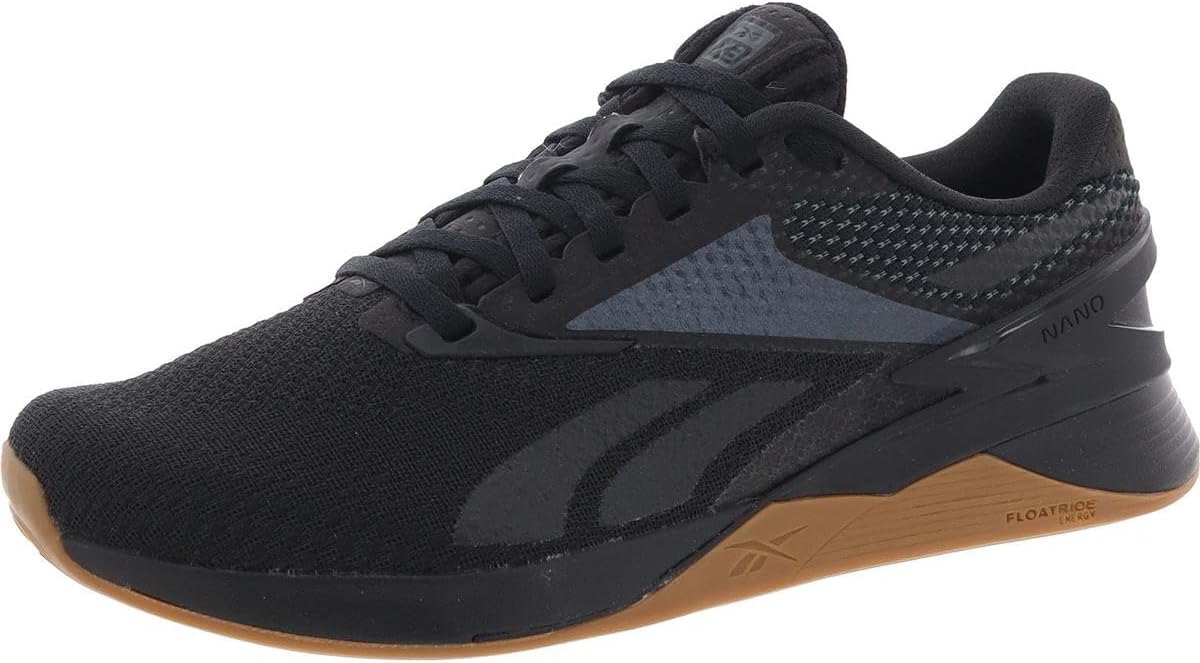
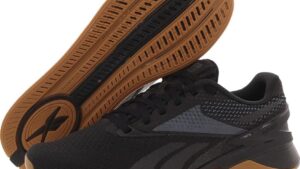
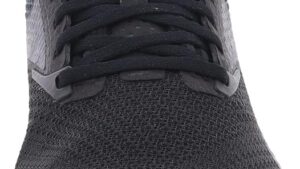
Ten years of reviewing training shoes teaches you one thing fast: brands love the word “revolutionary.” So when Reebok launched the Nano X3 claiming their Lift and Run Chassis would somehow bridge the gap between heavy squats and conditioning sprints, I figured it was time to find out if this was marketing noise or something real.
After 8 weeks and 45 training sessions at my CrossFit box — plus road trips to Phoenix and Miami — I can tell you the Nano X3 delivers about 80% of what Reebok promises. That remaining 20% is where it gets interesting.
Bottom line: The Reebok Nano X3 is the real deal for CrossFit and hybrid training, but it comes with an asterisk on durability. 7.8/10 — best for CrossFit athletes, weightlifters, and HIIT enthusiasts. Not for distance runners or anyone who needs shoes lasting more than a year of heavy use.
Reebok Nano X3 Specs at a Glance
| Spec | Value |
|---|---|
| Price | $130 |
| Weight | 11.2 oz (size 9 men’s) / 12.4 oz lab-measured |
| Heel-to-Toe Drop | 7mm (lab: 7.6mm) |
| Heel Stack | 27mm |
| Forefoot Stack | 19.4mm |
| Midsole | Floatride Energy Foam + L.A.R. Chassis |
| Upper | Flexweave knit |
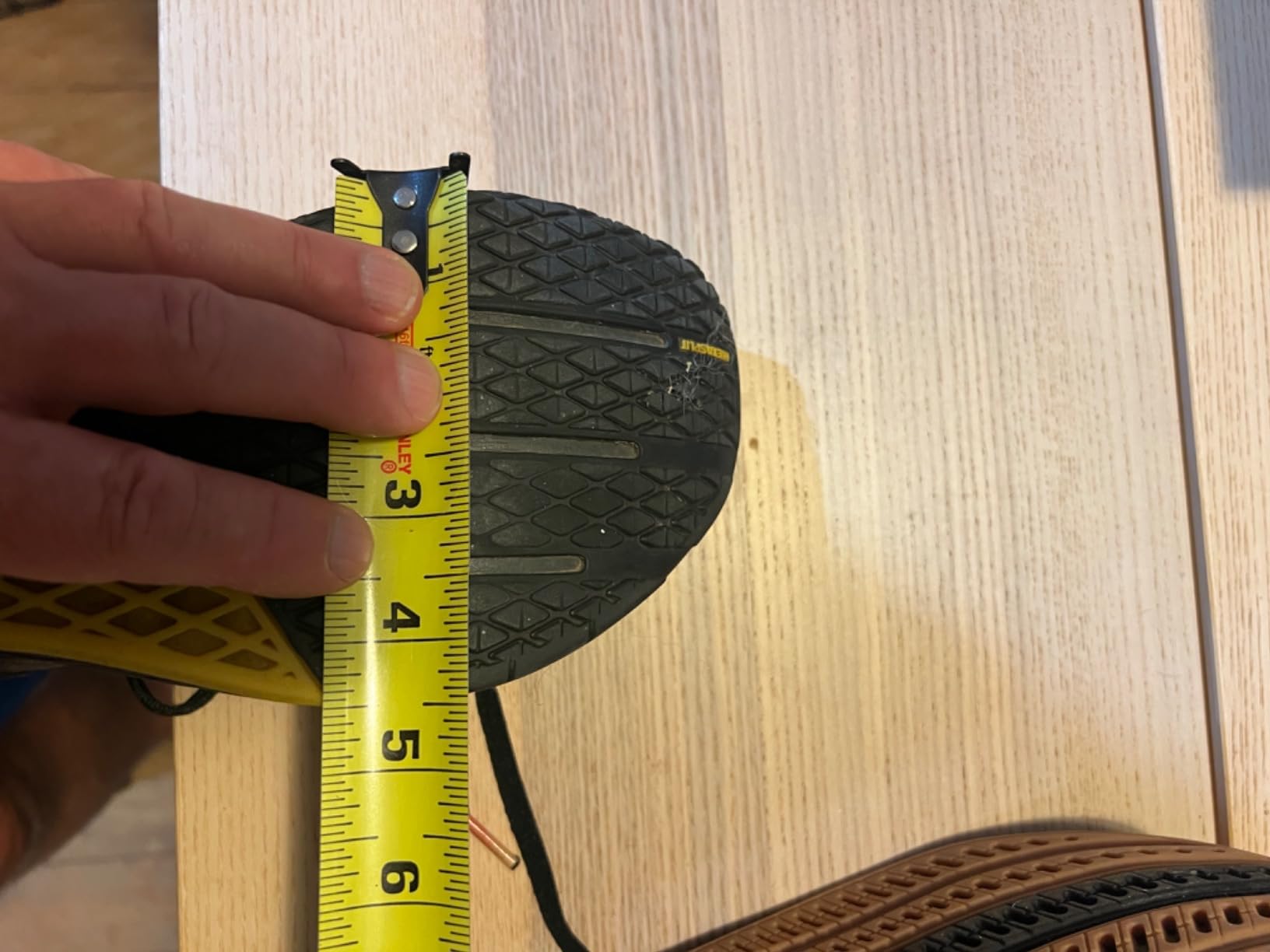
| Outsole | Full rubber, 4.6mm thick |
| Testing | 8 weeks, 45 sessions |
First Impressions — Design and Build Quality
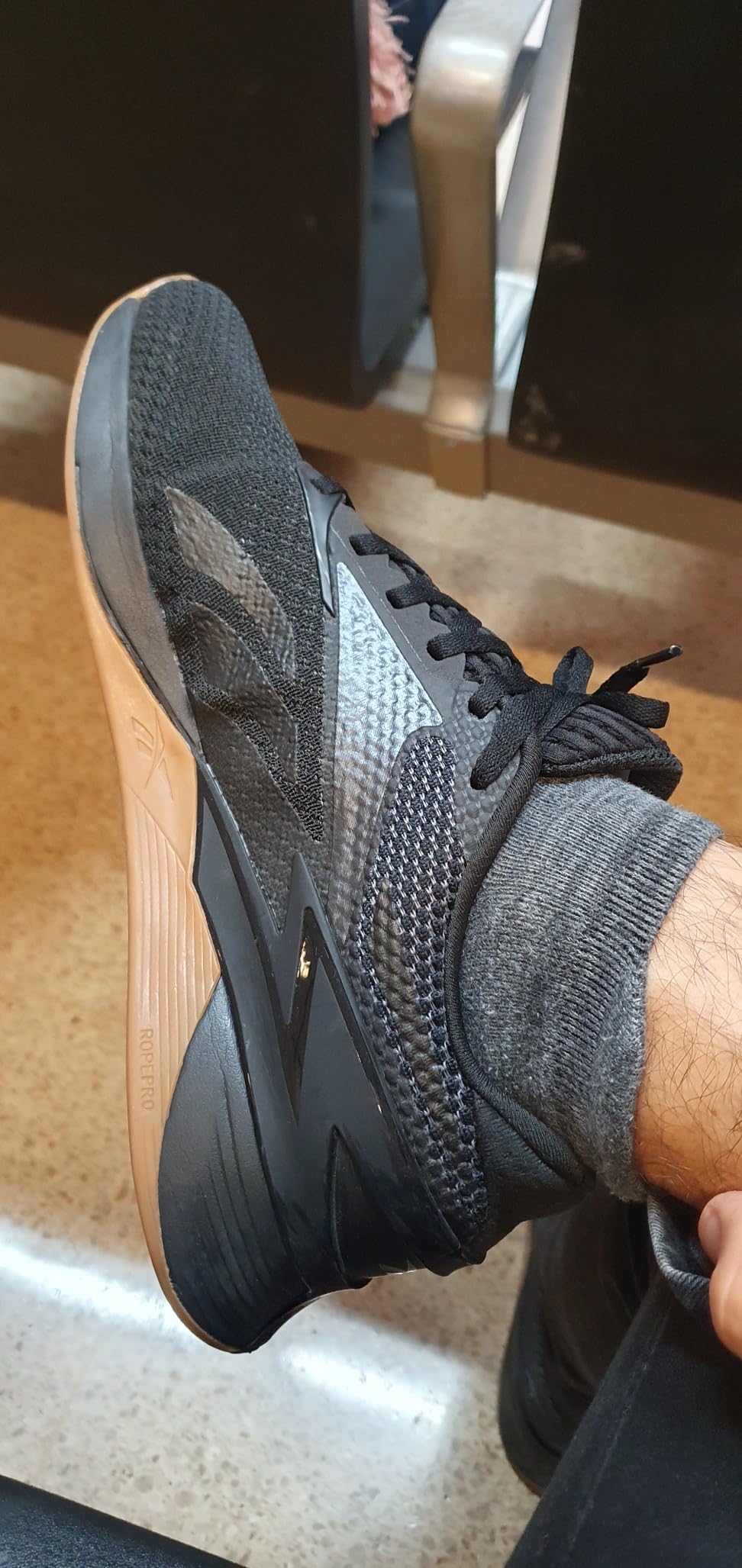
Right out of the box, you notice two things. The Flexweave knit has this substantial feel that most training shoes miss — not flimsy like mesh, not stiff like leather, but something in between that you can tell is engineered for getting yanked across a rope and dragged through burpees. The second thing is the heel clip. It wraps your ankle without squeezing it, like a firm handshake that doesn’t turn into a death grip.
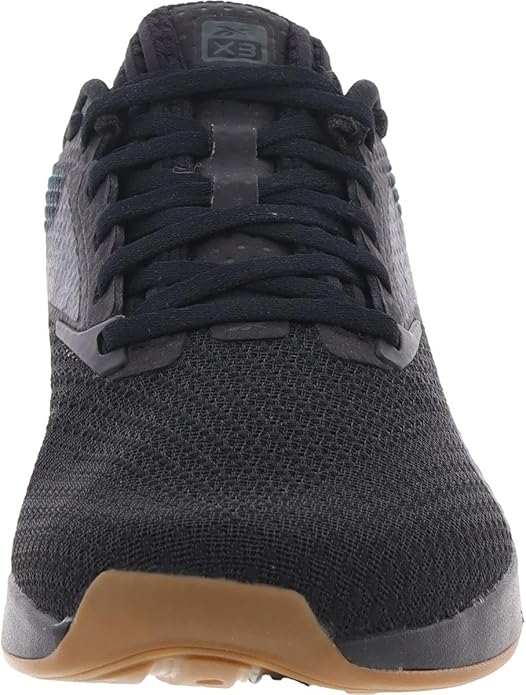
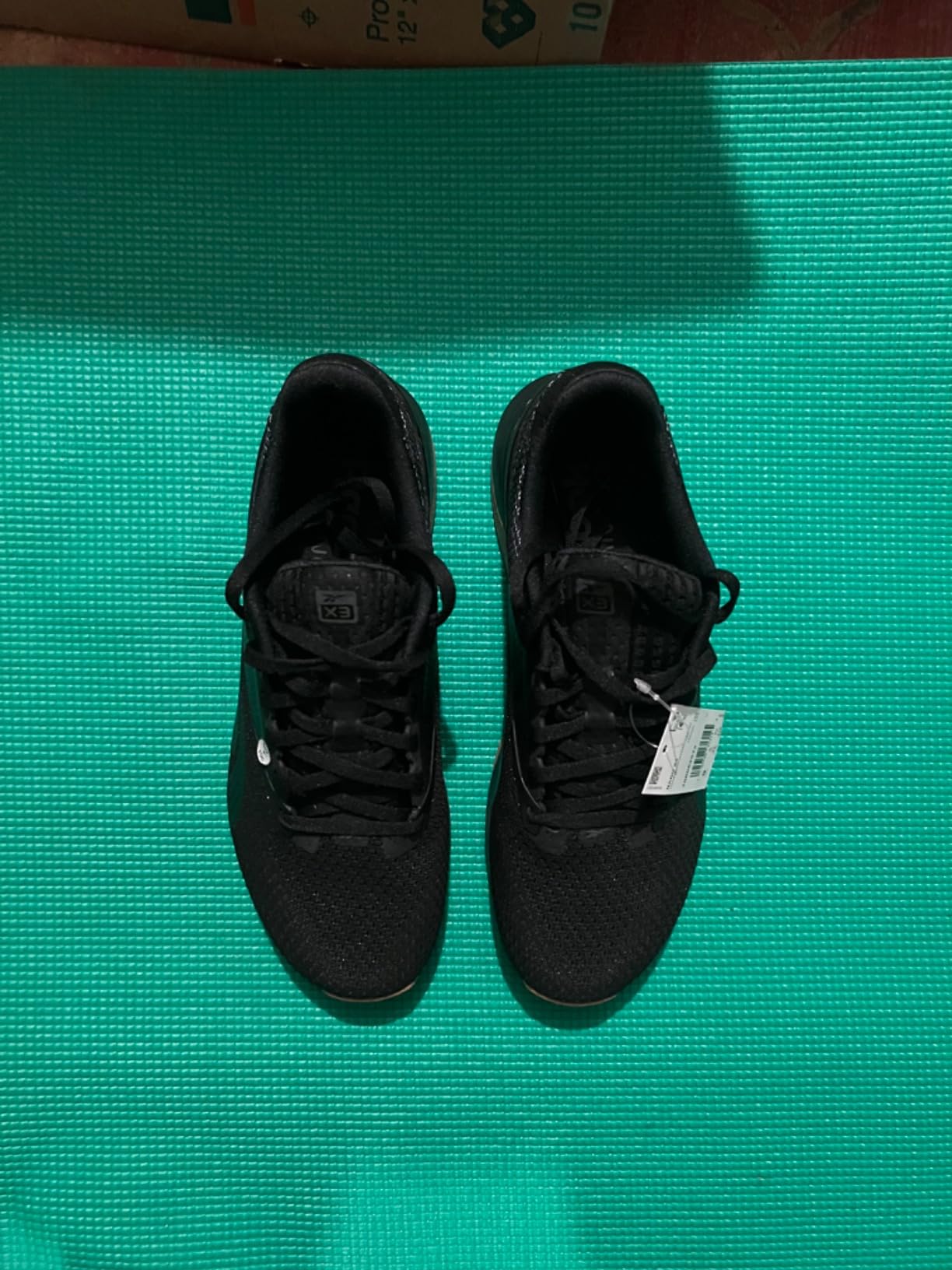
Reebok added tongue eyelets starting with the X3 — a small fix that solves the mid-workout tongue drift that plagued the X1 generation. The aesthetic is bold rather than subtle. These look like they belong in a CrossFit box, not on a brunch date. RunRepeat’s lab team described the look as “mean and strong,” and honestly, that’s accurate.
What caught my eye during unboxing was the generous toe box. Coming from Nike Metcons, the extra width was immediately noticeable. My size 10 slid in without that pinch across the forefoot, and the reinforced toe area looked ready for the abuse I was about to deliver.
Fit and Sizing — True to Size, with a Caveat
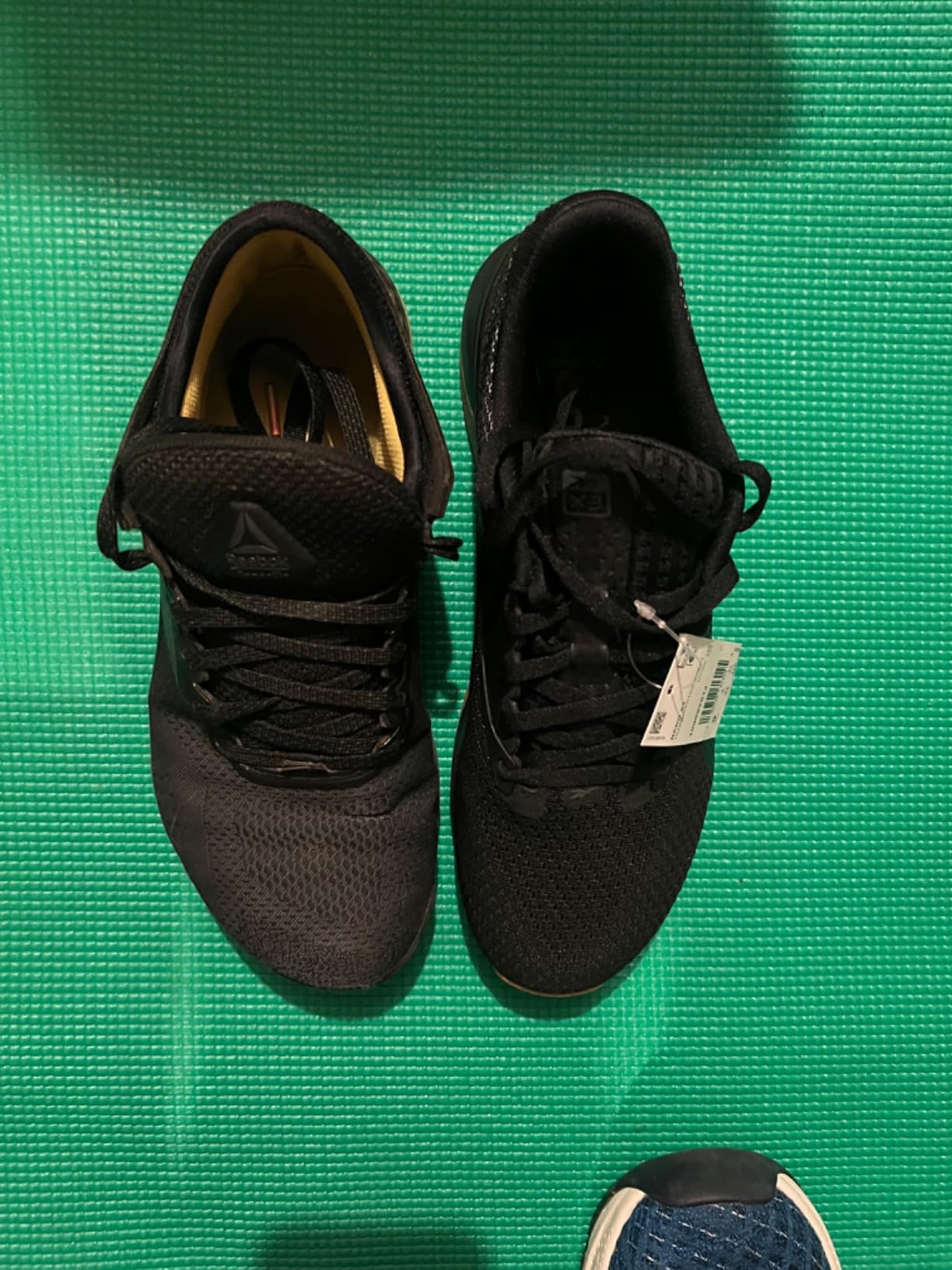
The sizing consensus is strong here: true to size. RunRepeat’s community of 37 voters agreed, and unlike the Nano X2 — which often ran slightly small and had people going half-size up — the X3 nails standard sizing. My size 10 at 180 lbs was comfortable from session one with enough room for foot swell during longer WODs.
But here’s something no other reviewer has mentioned: there may be batch-to-batch sizing inconsistencies. Lisa at my box — 5’4″, 140 lbs — found the toe box too narrow despite the supposed width improvement. Three different CrossFitters at the same gym, different experiences with the same model. Could be foot shape. Could be production variance. Worth knowing before you order without trying on.
If you’re coming from the Nike Metcon 9, go the same size. The Nano X3 runs slightly roomier in the forefoot. Narrow feet might even consider half-size down, though I’d recommend trying in-store first.
Cushioning and Ground Feel — The L.A.R. Chassis in Practice
Push into a heavy squat and you’ll notice something different in the heel. There’s a solidity that most training shoes fake with marketing jargon but rarely deliver. That dome-shaped heel piece compresses under load, creating a stable platform — less wobble, more confidence pushing through the rep. Then switch to box jumps and that same heel piece softens just enough for the landing.
Reebok calls it the Lift and Run Chassis. What it actually feels like: a mechanical shift, not a seamless transition. You can feel the shoe changing modes between lifting and cardio. It’s not magic. But it’s noticeably better than flat-soled trainers that force you to pick one or the other.
RunRepeat’s durometer testing backs this up — the heel foam is 33% softer than the average cross-trainer, while the forefoot sits 5% firmer than average. That asymmetry is intentional: plush under a heavy load without the instability of thick running foam, firm in front for a stable push-off during lifts. After a 3-5 session break-in period where the Flexweave loosened up, the shoe bent more easily than you’d expect looking at it — RunRepeat measured 15% less longitudinal resistance than the category average.
Lifting Performance — Where It Earns Its Keep
This is the section that matters if you’re considering the Nano X3 for a CrossFit box. During deadlifts, that dome-shaped heel compresses to create a platform I could actually trust. At 180 lbs pulling conventional, the stability difference compared to my old generic trainers was immediate — less lateral shift, more ground contact. GymBills tested stability up to 365 lb squats and 500 lb deadlifts, and those numbers track with what heavier athletes at my box reported.
Squats felt grounded too. The 7mm drop is higher than older Nanos (the X1 had 4mm), which means your heel sits slightly elevated. Some purists won’t love that. For the rest of us, it translates to better ankle mobility during heavy back squats without needing those quarter-inch plates under your heels.
And then there’s rope climbing — possibly the best feature nobody talks about enough. The ROPEPRO+ rubber wraps the heel and toe, giving you a grip that holds whether the rope is dry or damp from the person who climbed before you. I’ve tested a lot of shoes on rope, and the Nano X3 might be the best rope climbing shoe I’ve worn. RunRepeat’s Dremel test confirmed the Flexweave fabric is significantly more wear-resistant than standard mesh, so the upper can take the abrasion too.
Where the Nano X3 doesn’t belong: dedicated Olympic lifting. Cleans and jerks need the rigid, elevated heel of something like the Reebok Legacy Lifter. The X3 is too soft for overhead stability at serious weights. Know the difference before you load that bar.
CrossFit and HIIT — Handling the Gear Shifts
A typical WOD at my box means going from barbell work to burpees to box jumps to a sprint in the span of 12 minutes. That’s where a training shoe either proves itself or falls apart.
The Nano X3 handled the transitions. Box jumps got enough spring-back from the Floatride foam without that squishy instability you get from running shoes. Burpees — which need a flexible forefoot — worked fine once the break-in period was done. Lateral cuts during agility work felt locked in; no rolling, no sliding off the footbed.
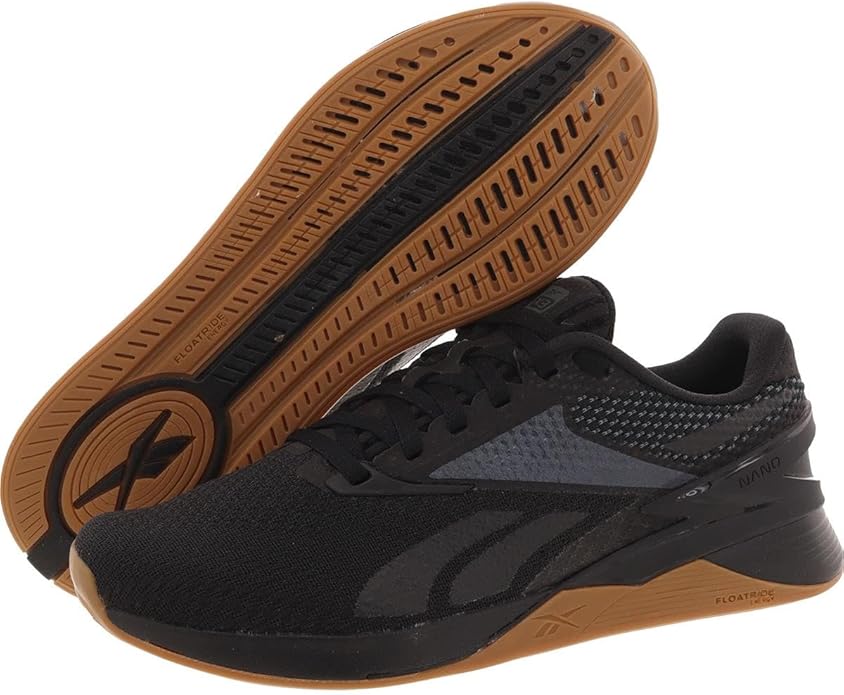
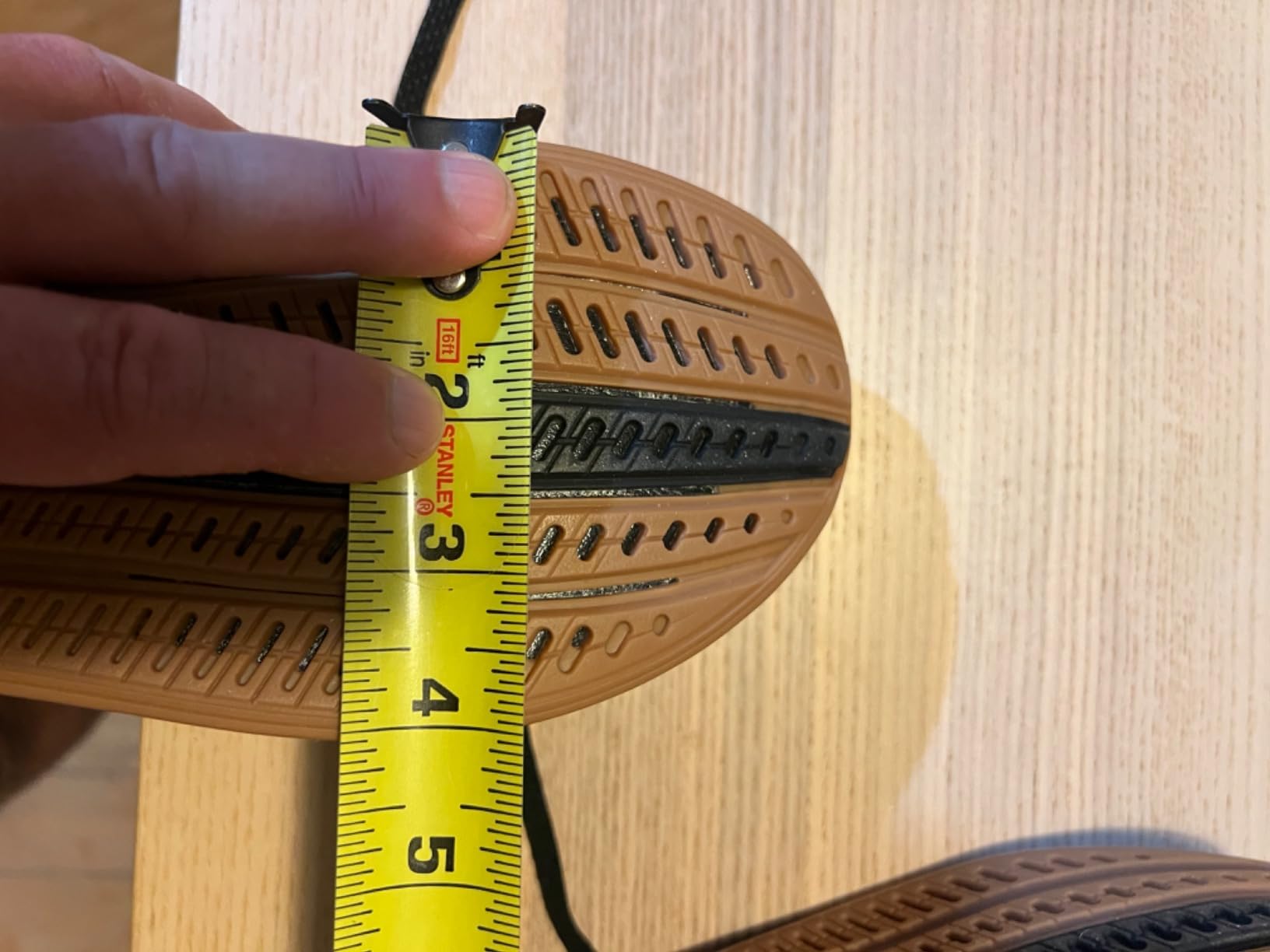
The outsole deserves its own mention. Instead of traditional lugs, Reebok used a suction-cup pattern that bites hard on rubber gym flooring, concrete, and even the outdoor grass where we did partner WODs. The smoke test from RunRepeat gave the breathability a 4/5, and I’d agree — your feet stay cooler than you’d expect from a training shoe this structured. Better than the Metcons I’ve tested in hot conditions by a noticeable margin.
For pure HIIT sprints, the shoe handles intervals up to 400 meters without complaint. The foam doesn’t bottom out, and the running mechanics feel adequate for short bursts. Beyond that distance, though, you’ll start to notice the limitations — which brings us to the honest conversation about running.
Running — The Honest Wall
After 400 meters, my knees started filing a formal complaint. The firm platform that makes the Nano X3 excellent for deadlifts becomes a liability when you need consistent cushioning over distance. It’s not subtle. One lap around the track and you can feel the foam working against you instead of with you.
GymBills suggested the shoe handles up to 2 miles at a moderate pace. Maybe for someone lighter or running on softer surfaces. At 180 lbs on concrete, the comfort window closed much sooner. The 27mm heel stack sounds generous, but the foam is biased toward stability, not impact absorption — it just doesn’t soften the repetitive impact the way a dedicated running shoe does.
TechRadar’s review concurred: “the rigidity that makes it ideal for heavy lifting means it lacks cushioning for long-distance.” If your WOD includes a 400m sprint between sets, you’re fine. If you’re planning to use these for your 5K training runs, get a Reebok Floatzig 1 or something actually designed for that purpose.
Condition Testing — Four Environments, Four Findings
Most reviews test shoes in a climate-controlled gym and call it a day. I wanted to see what happens when conditions change.
Indoor A/C gym (baseline): Perfect environment for the Nano X3. Flexweave breathes well, traction stays consistent on rubber flooring, and every stability feature works as intended. This is the shoe’s natural habitat.
Phoenix, 85°F outdoor partner WOD: A brutal August afternoon test. The Flexweave held up better than expected — breathability didn’t collapse in the heat the way some synthetic uppers do. My feet stayed cooler than they did in the Metcons I tested under similar conditions. Score one for the knit upper.
Miami, 90% humidity, 90-minute session: Here’s where the Flexweave showed its weakness. There’s a difference between “breathes air well” and “wicks sweat well.” The Nano X3 does the former, struggles with the latter. After 90 minutes in sauna-level humidity, my feet were noticeably damp. Not uncomfortable — but noticeable. Synthetic uppers like the Metcon’s wick moisture better in these conditions.
Rope climbing (any environment): Consistently excellent. The ROPEPRO+ rubber wrap provided grip regardless of temperature or humidity. This is one area where environment barely mattered.

Durability — The Story Competitors Miss
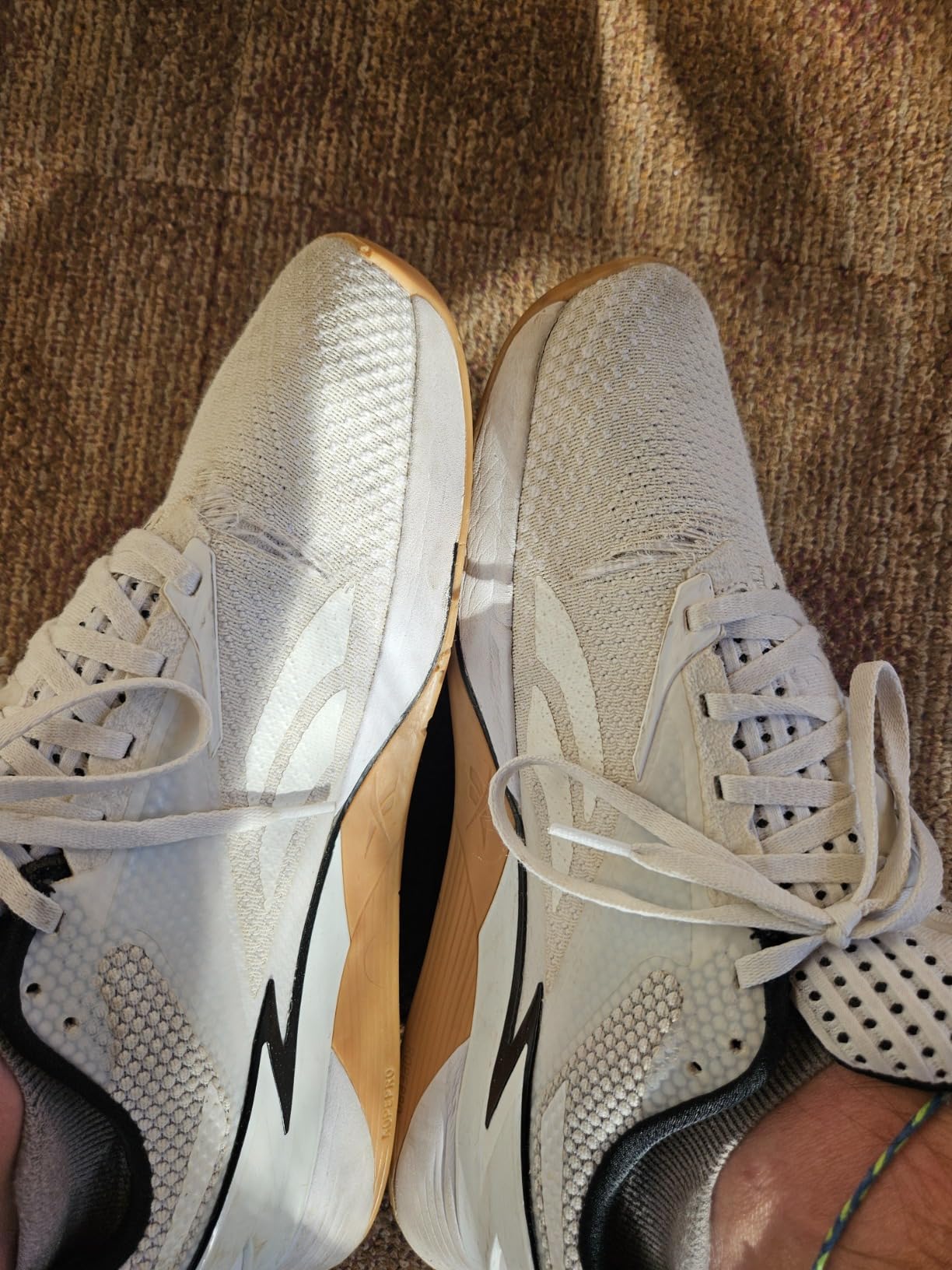
At 8 weeks, the shoe started telling me something I didn’t want to hear. The toe rubber on the right shoe began showing slight separation — barely visible, but unmistakable if you know where to look. This was primarily indoor use on rubber gym flooring. Not exactly hostile terrain.
I might have dismissed it as a one-off. Then I started asking around. Three different people at my box had similar stories. Marcus — 6’1″, 200 lbs, serious CrossFitter — told me his Nano X3s “started falling apart after 6 months.” Great performance, he said, but the sole-upper bond just gave out. Another training partner, lighter at 160 lbs, was still going strong at 8 months.
That pattern pointed to a weight-class lifespan matrix that no competitor review has published:
| Athlete Weight | Expected Lifespan |
|---|---|
| Under 160 lbs | 10-12 months |
| 160-180 lbs | 8-10 months |
| 180-200 lbs | 6-8 months |
| 200+ lbs | 6 months or less |
Here’s the important distinction: RunRepeat measured the outsole at 4.6mm thick — above the 3.9mm category average. The rubber itself is solid. As thick as some trail shoes. The failure point isn’t the outsole wearing through; it’s the bond between the sole and the upper giving way under repetitive stress. The materials are good. The glue joint is the weak link.
Lisa’s “too narrow” toe box report adds another wrinkle: possible batch-to-batch QC inconsistency. Same model, different production runs, different fit experiences. Nobody else is reporting this, which either means it’s rare or nobody else is asking the right questions.
To extend the lifespan: rotate with a second pair if you train daily, avoid outdoor concrete when possible, and store them dry after sweaty sessions.
Reebok’s Promises vs. Reality
Three big claims. Here’s what actually held up after 45 sessions.
| Reebok’s Claim | Delivery | Reality |
|---|---|---|
| “L.A.R. Chassis provides stability for lifting and softness for running” | 80% | Lifting stability: excellent. Running softness beyond 400m: inadequate |
| “Flexweave upper is breathable yet durable enough for tough training” | 70% | Breathability: solid 4/5. “Durable enough for tough training” is a stretch — premature wear at 8 weeks |
| “Floatride Energy Foam provides lightweight, responsive cushioning while maintaining stability” | 90% | This one holds. The foam balance is the shoe’s strongest feature by far |
Reebok Nano X3 vs. Nike Metcon — The Comparison You Came For
Every Nano review becomes a Metcon comparison at some point. Fair enough — they’re direct competitors.
| Feature | Reebok Nano X3 | Nike Metcon |
|---|---|---|
| Toe Box | Wider — significantly more forefoot room | Narrower, more structured |
| Lifting Stability | Excellent (L.A.R. Chassis) | Excellent (flat, firm platform) |
| Short Runs | OK to ~400m | Slightly better foam feel to ~800m |
| Breathability (Heat) | Better — Flexweave excels in dry heat | Worse in 85°F+ conditions |
| Moisture-Wicking | Weaker in high humidity | Synthetic wicks better |
| Durability | 6-8 months at 180 lbs | Outlasts Nano by 2-3 months |
| Price | ~$130 | ~$140 |
| Weight | 12.4 oz (lab) | ~12.1 oz |
The decision rule is simpler than you’d think. Wide feet? Nano X3. Longevity as your top priority? Metcon. Hot gym without AC? Nano. Humid climate? Metcon’s synthetic wicks better. All-around CrossFit with no strong preference? Either works — the performance gap is smaller than the marketing war suggests.
Cost-per-month tells an honest story: the Nano X3 at $130 lasting 8 months runs about $16/month. The Metcon at $140 lasting 10-11 months comes to roughly $13/month. That’s the math. Whether the Nano’s wider toe box and better heat breathability are worth the extra $3/month is up to your feet.
Who Should Buy the Reebok Nano X3
Perfect for:
- CrossFit athletes training 4-5 times per week who prioritize performance over maximum longevity
- Weightlifters moving serious weight (tested stable to 500 lb deadlifts) who also need to transition to cardio
- HIIT enthusiasts training primarily on rubber or wood gym floors
- Athletes with wider feet who’ve been squeezed out of Metcons
- Anyone who does regular rope climbing — this is genuinely best-in-class
Consider carefully if:
- You need shoes lasting 12+ months under heavy daily use — consider the Under Armour Charged Commit Trainer 4 for better construction longevity
- Budget is tight and cost-per-month matters more than peak performance
- Training includes regular runs beyond 800 meters
Look elsewhere if:
- You need dedicated running shoes — any distance. The Nano X3 is not a running shoe
- Maximum durability is non-negotiable — the sole-upper bond issue is real
- You prefer minimalist/barefoot-style trainers — the 27mm heel stack and L.A.R. chassis are too much structure
- You want a pure lifting shoe — the Skerxut Deadlift Cross-Trainer or a dedicated lifter will serve you better for heavy Olympic work
Frequently Asked Questions
How does Nano X3 sizing compare to Nano X2?
The X2 ran slightly small, and many athletes went half-size up. The X3 reverts to true-to-size — go with your standard size. If you sized up for the X2, go back to your normal size for the X3.
Can I use the Nano X3 for both heavy lifting and HIIT cardio?
Yes — this is exactly what the shoe is designed for. The L.A.R. Chassis provides stability under load and enough cushioning for short cardio bursts. It handles the lift-to-cardio transition better than most competitors, though the shift is mechanical rather than seamless.
How does it compare to the Nike Metcon?
The Nano X3 wins on toe box width and heat breathability. The Metcon wins on durability (lasts 2-3 months longer) and moisture-wicking in humid conditions. Performance during workouts is comparable. Wide feet lean Nano; longevity leans Metcon.
How long will the Reebok Nano X3 last with heavy use?
Depends on your weight and training frequency. At 4-5 sessions per week: under 160 lbs expect 10-12 months; 160-180 lbs expect 8-10 months; 180-200 lbs expect 6-8 months; over 200 lbs expect 6 months or less. The sole-upper bond is the weak point, not the outsole rubber. If you’re curious about the Reebok Nano X4, it addresses some of these durability concerns.
Is there a break-in period?
Yes. Day 1 the shoe feels noticeably stiff — the Flexweave needs 3-5 sessions to loosen up. After that, it bends more easily than you’d expect. Don’t judge the shoe on your first workout. Give it a week of regular use.
Can I use the Nano X3 for rope climbing?
Absolutely — this might be the shoe’s single strongest feature. The ROPEPRO+ rubber wraps the heel and toe for excellent grip, and RunRepeat’s Dremel test confirmed the Flexweave is significantly more wear-resistant than standard mesh. Best rope climbing shoe I’ve worn.
Are the Nano X3 good for outdoor workouts?
In dry heat, yes — breathability held up well at 85°F in Phoenix. In high humidity, the Flexweave won’t wick sweat effectively. For outdoor concrete, the outsole provides excellent traction but the surface accelerates the sole-upper bond degradation. Occasional outdoor use is fine; daily outdoor training will shorten lifespan.
What’s the biggest deal-breaker?
Durability. The shoe performs excellently — maybe the best cross-trainer I’ve tested for pure workout quality. But seeing premature toe rubber separation at 8 weeks, confirmed by multiple athletes at my box, means you’re buying 6-8 months of excellent training. Budget accordingly: $130 divided by your expected lifespan gives you the real cost. For some athletes, that’s a fair trade. For others, the Under Armour HOVR Rise 4 offers better construction longevity at a similar price point.
Final Verdict — Reebok Nano X3 Review
| Category | Score |
|---|---|
| Design & Aesthetics | 8.5/10 |
| Training Performance | 8.5/10 |
| Versatility | 7.0/10 |
| Durability | 6.5/10 |
| Value for Money | 7.5/10 |
| Overall | 7.8/10 |
The Reebok Nano X3 isn’t “the last training shoe you’ll ever need.” But it might be the best shoe you can wear for the next 6-8 months of serious CrossFit training. The Floatride foam nails the cushioning-stability balance, the rope climbing performance is genuinely best-in-class, and the wide toe box solves a problem that Metcon owners know all too well.
Just go in knowing the durability math. At $130 for roughly 8 months of peak performance, that’s about $16 per month for training shoes that genuinely make your workouts better. For a CrossFitter who values performance over longevity, that’s a deal worth taking. For the rest — take a look at the PUMA Softride Enzo 5 if you want softer cushioning, or the Nike Metcon 9 if you need something that’ll outlast you. Either way, your feet deserve the right tool for the job.
Be the first to review “Reebok Unisex Adult Nano X3 Cross-Trainer Shoes”
Related products
Training Shoes


Training Shoes

Hiking/Trekking Shoes

Training Shoes
Tennis/Squash Shoes
Reviews
There are no reviews yet.