
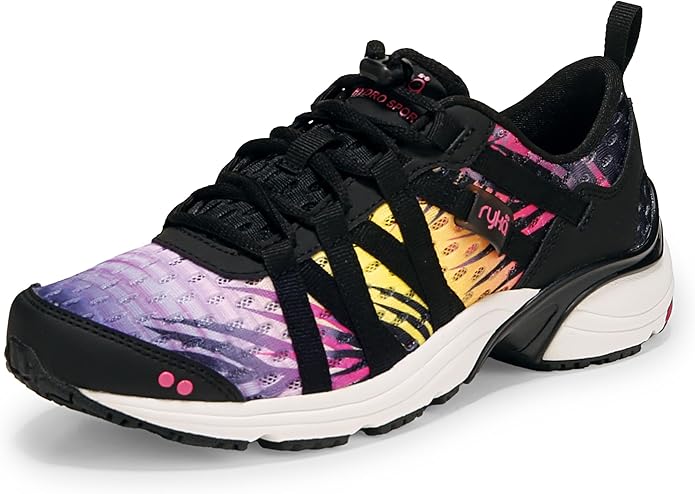
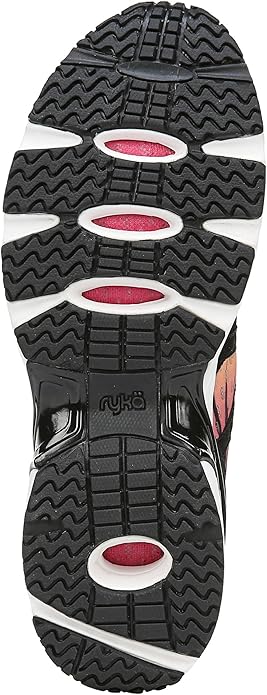
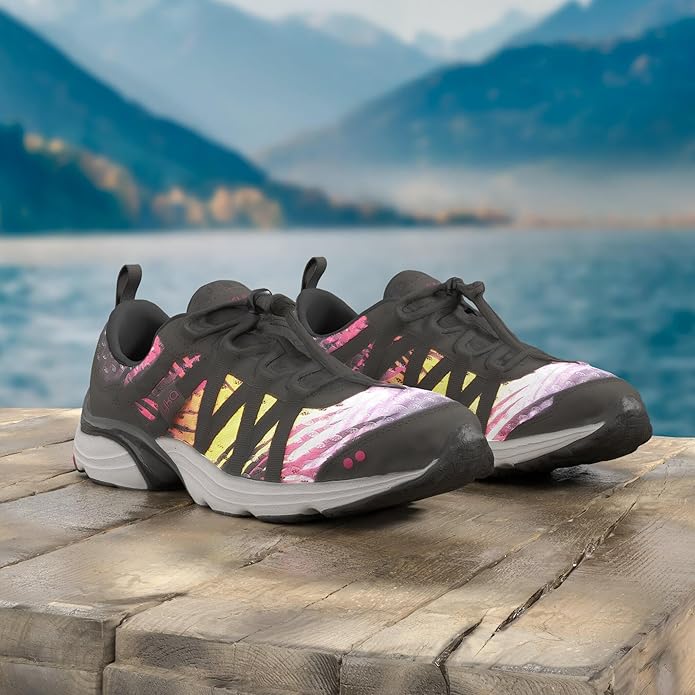
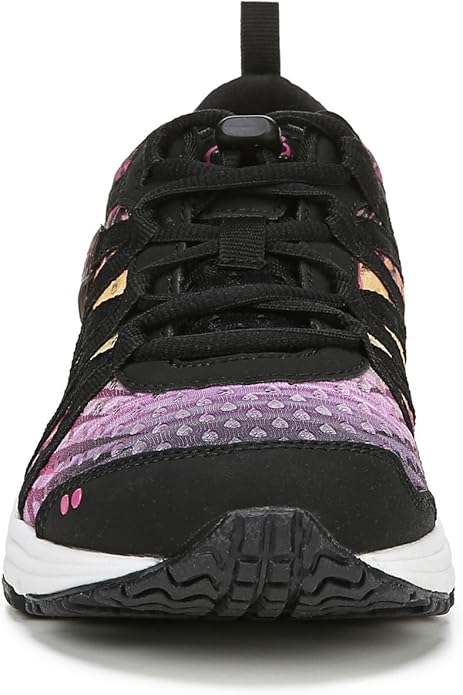
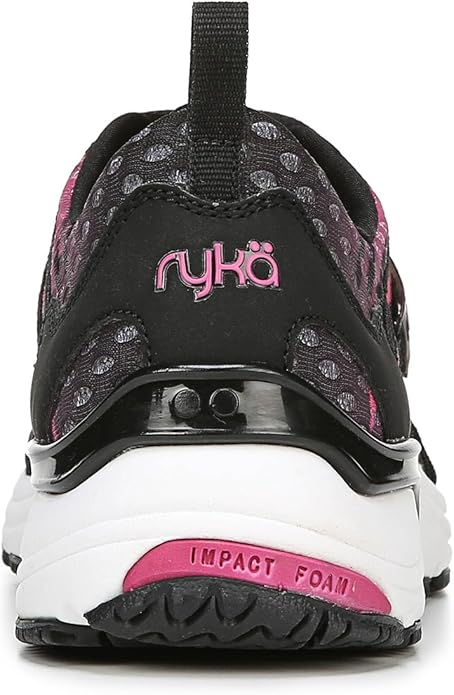
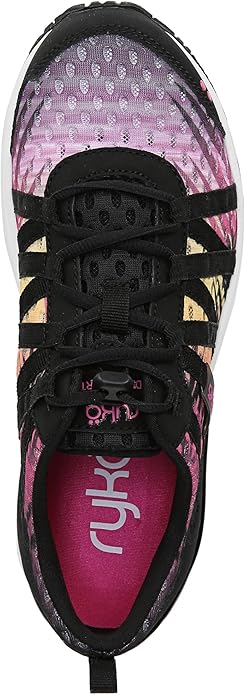
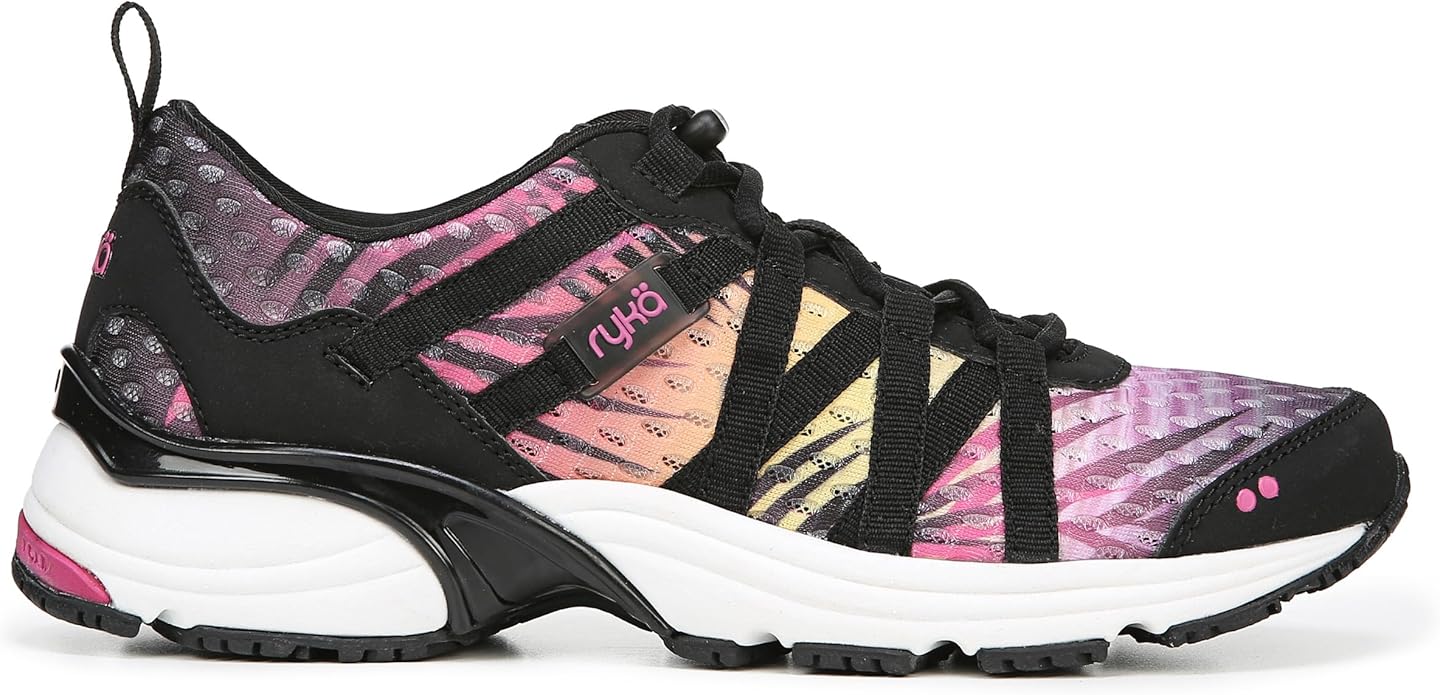
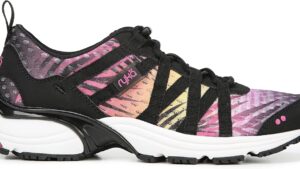
Ryka Women’s Hydro Sport Cross Training Water Shoes
$67.90
- 💰 Price: ~$65 (MSRP $109.99; frequently discounted)
- ⚖️ Weight: 8.4 oz (women’s size 8)
- 📏 Drop: 12mm heel-to-toe
- 🧪 Midsole: Lightweight EVA with multi-port drainage system
- 👟 Upper: Quick-drying mesh + faux leather overlays at high-wear zones
- 🦶 Insole: Removable Nitracel foam with arch contouring
- 🏊♀️ Category: Water aerobics / aqua fitness
- 📐 Width: Medium only
The thing about locker room recommendations is they carry real weight. These are women who’ve tried six pairs of water shoes and thrown out three of them — they’re not easily impressed. So when I kept hearing “just get the Ryka Hydro Sport” from my water aerobics friends, I took it seriously. I bought a pair and committed to eight weeks of real testing: 32 sessions, 65-plus hours across aqua yoga, high-intensity HIIT circuits, pool volleyball, and a weekend kayaking trip. Here’s the unvarnished verdict.
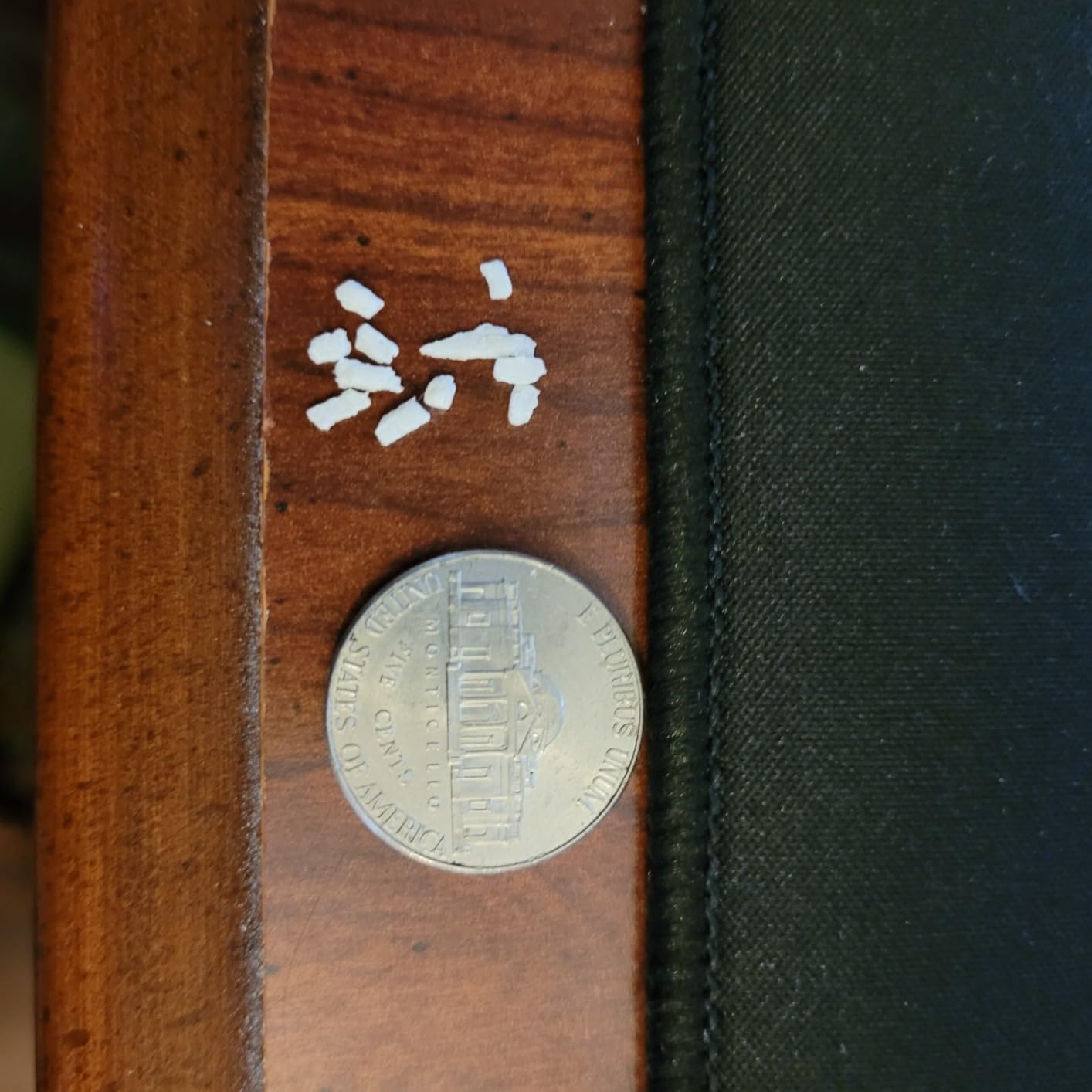
Design, Build Quality & First Impressions
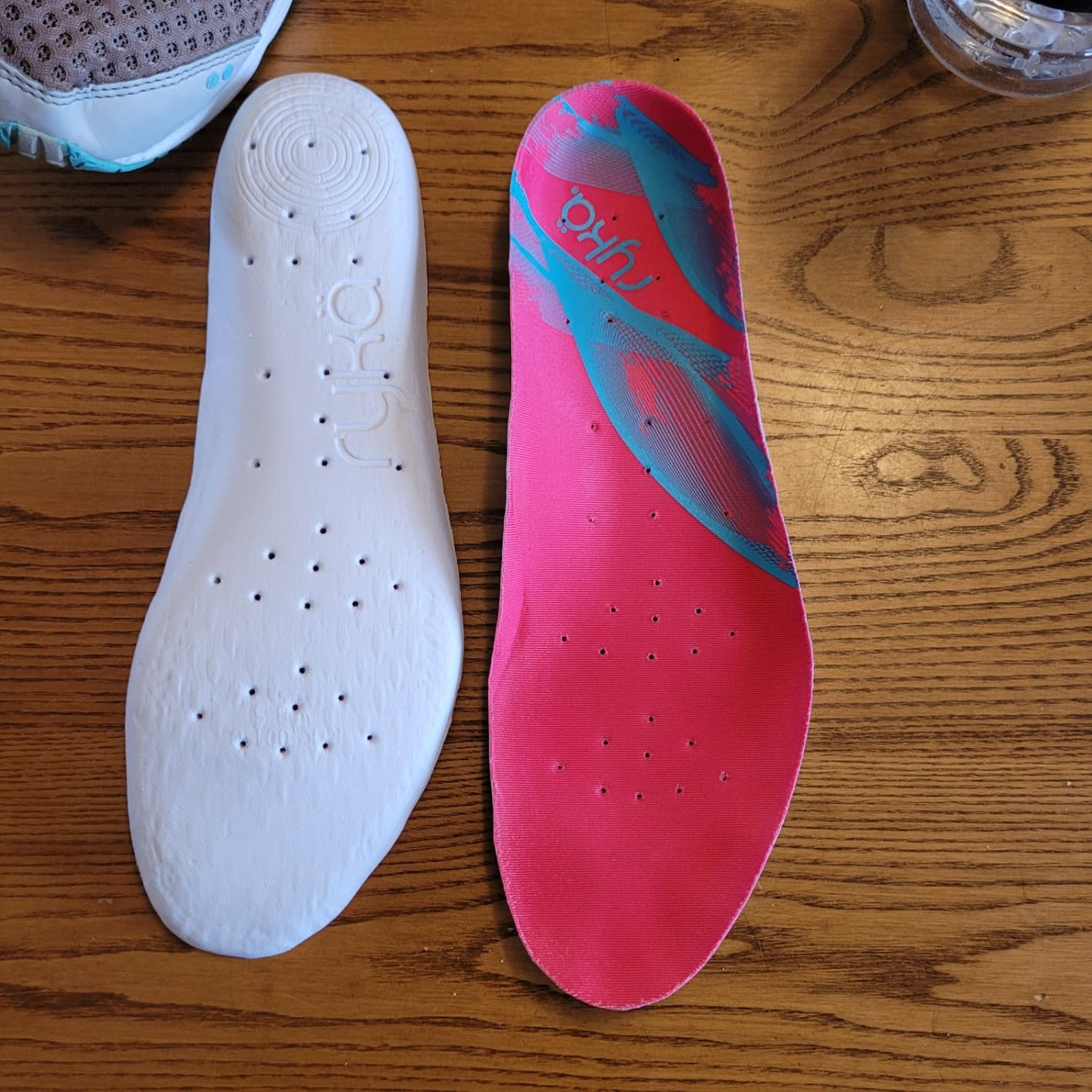
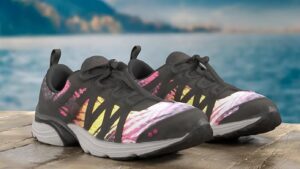
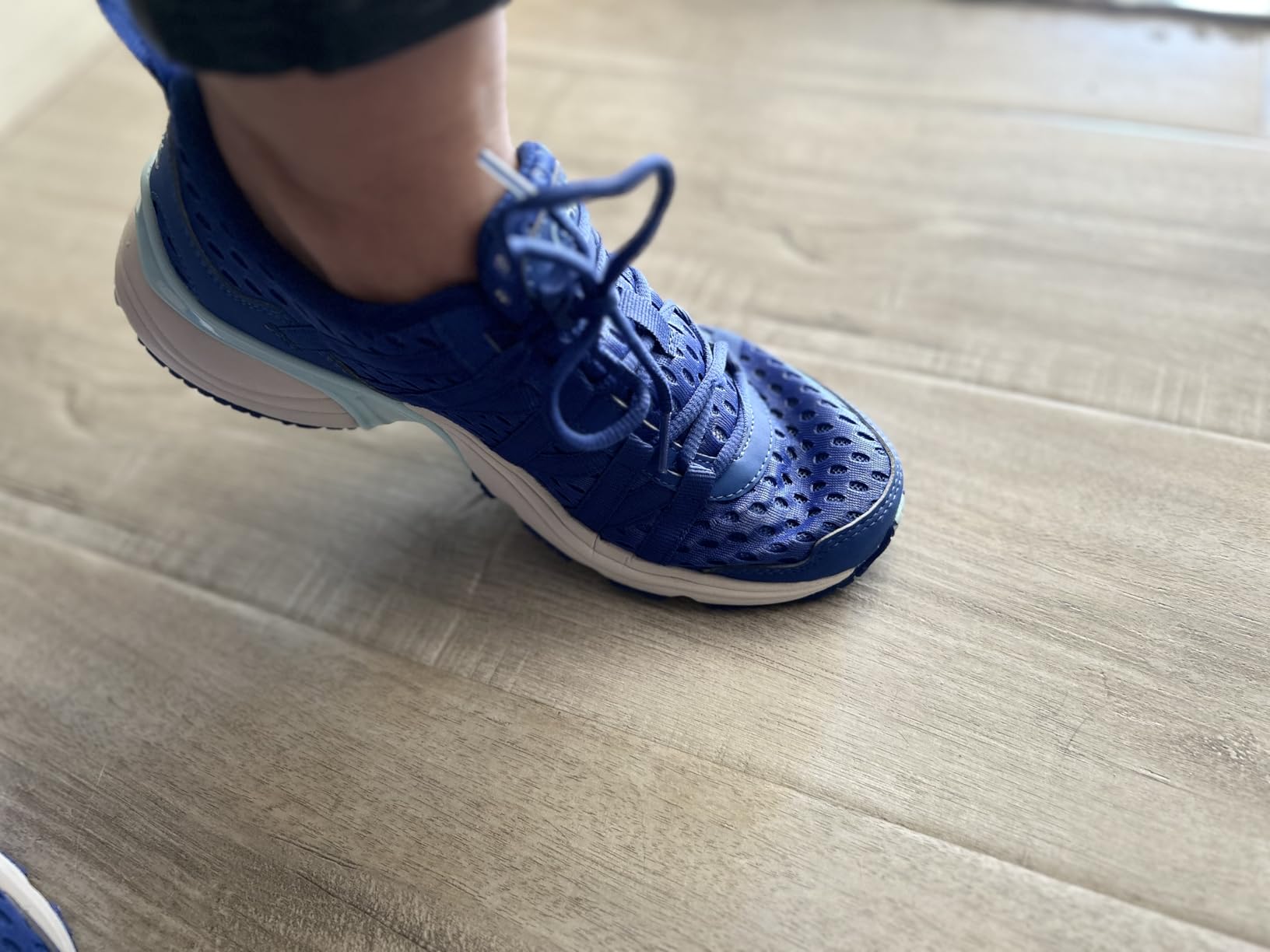
There’s a specific disappointment that comes with most water training shoes — you pull them out of the packaging and they feel like glorified swim socks. The Hydro Sport is different. At 8.4 ounces, it has real weight, the kind that signals actual construction rather than a layer of neoprene sewn around a foam pad. Compared to minimalist options like the L-RUN Barefoot Water Shoes, this is clearly a different category of footwear.
The faux leather overlays are placed at the toe cap, lateral midfoot, and heel collar — exactly the stress points that fail first on cheaper water shoes. After eight weeks of chlorinated pool use, those overlays showed zero edge lifting or delamination. The mesh in between feels sturdier than basic water shoe fabric and holds its shape wet, not that slack sagging that develops in cheaper versions by week three.
Fit, Sizing & Women-Specific Design
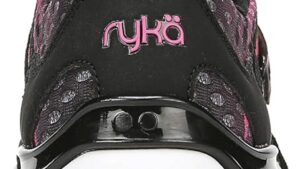
Ryka uses a women-specific last that narrows at the heel and opens at the forefoot. In practice, running true to my usual size 8 without socks produced a locked heel and enough toe wiggle room to move naturally through jumps and lateral steps. The heel pod doesn’t slide at all during water activity — important, because a sloppy heel fit during suspended movement is how ankle tweaks happen.
The sizing consensus across 1,100-plus Zappos reviews backs this up: 78-85% of buyers land true to size, with the minority going half a size down for very narrow feet. Standard width fits well. Only medium width is available, which does matter for wider-footed buyers (more on that in the sizing FAQ).
The Nitracel Insole — Genuinely Different
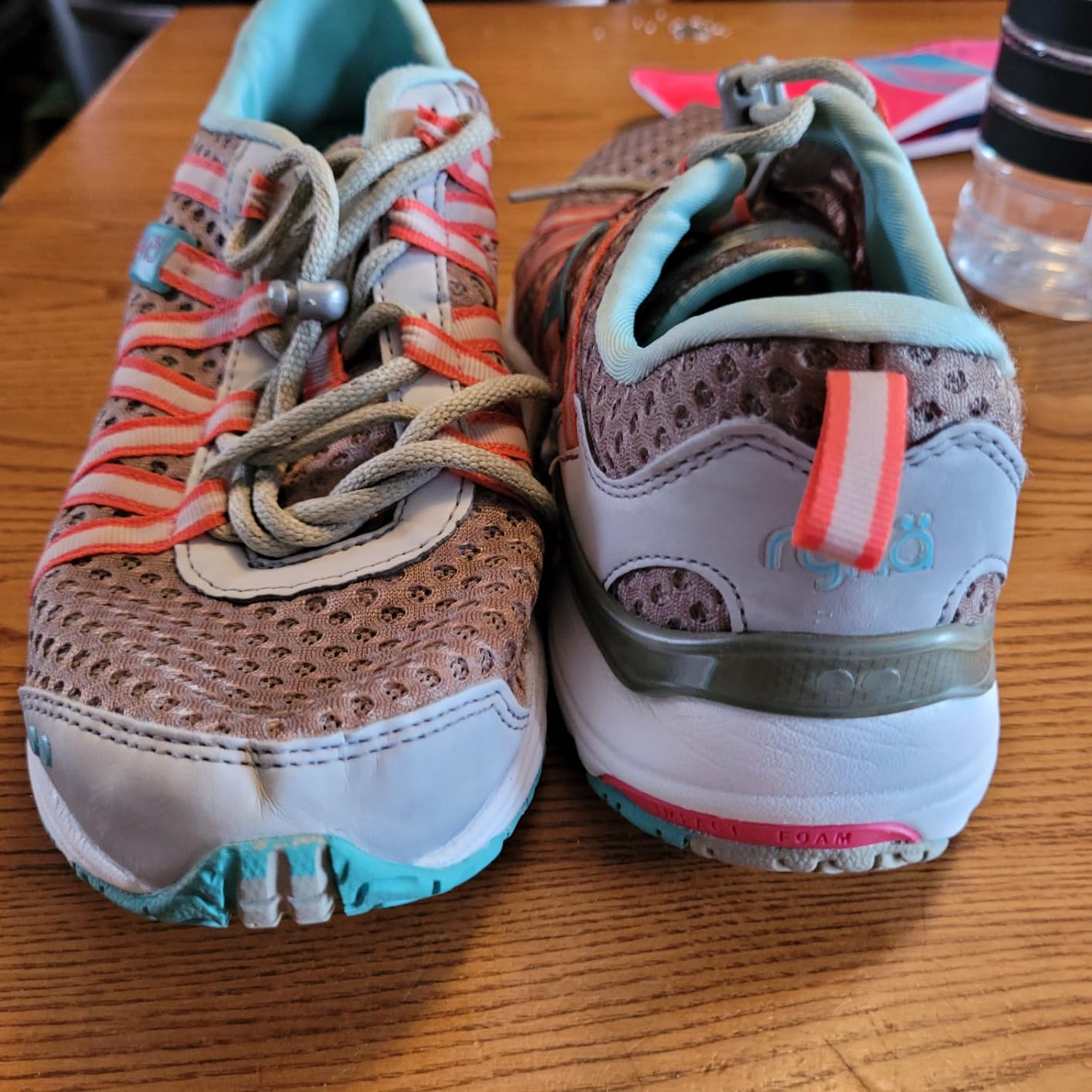
Most water shoes — even decent mid-range picks like Watelves Water Shoes — use flat or near-flat insoles because complex foam doesn’t hold up well in wet environments. Ryka’s removable Nitracel insole has real arch contouring. The first class I wore these, stepping into the pool felt noticeably different from the foot-aching reality of my previous water shoes — the arch support is there from minute one and doesn’t flatten to nothing by the end of a 45-minute session.
The insole is also orthotic-compatible and stays stable when worn without socks. Over eight weeks it maintained its shape. Long-term users note eventual compression — typical around the 12-18 month mark — at which point swapping in Sof Sole Athlete Insoles or similar extends the shoe’s support life significantly.
Toggle Lacing System — Works, With a Catch
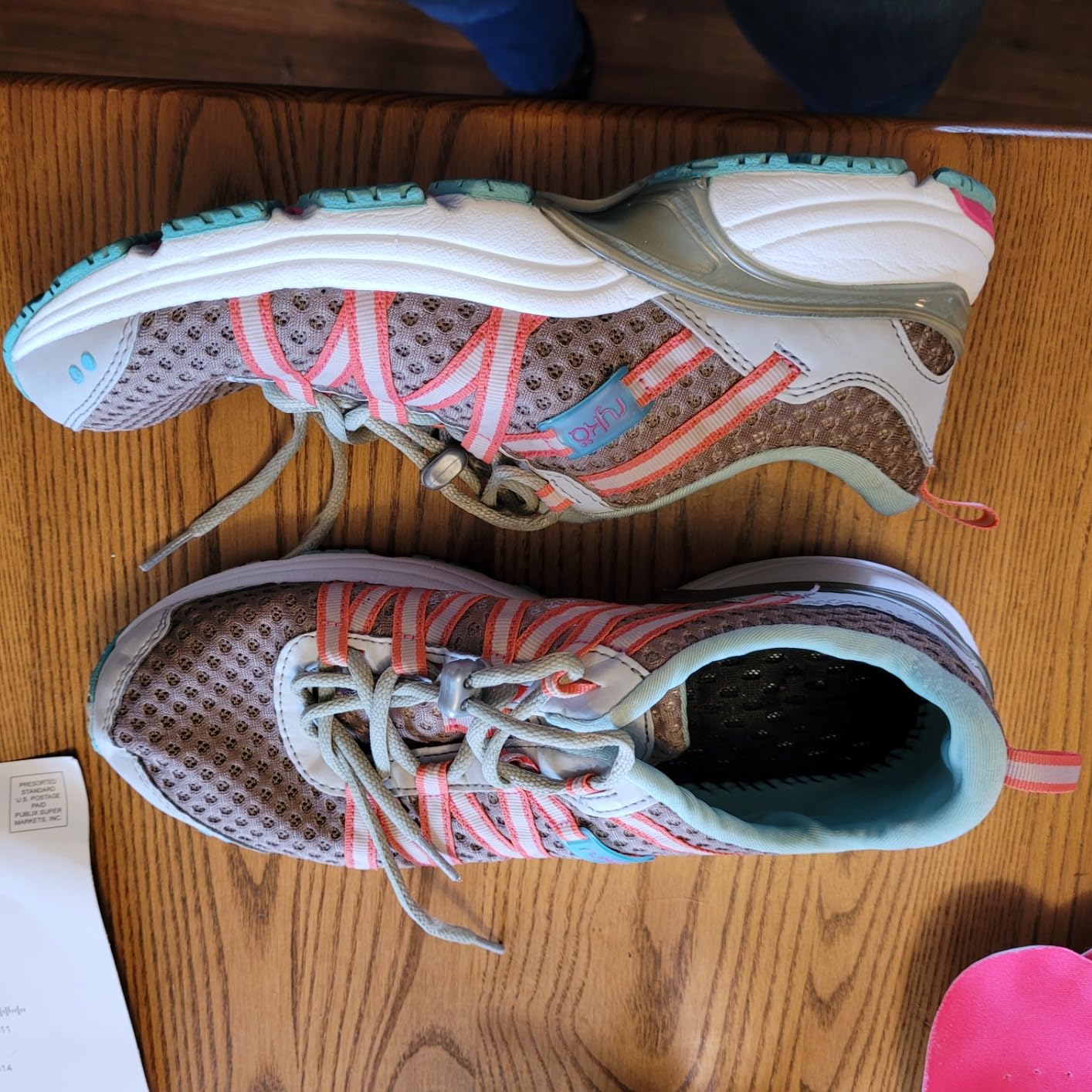
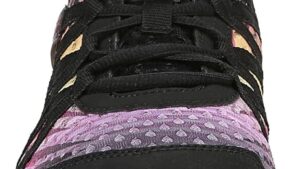
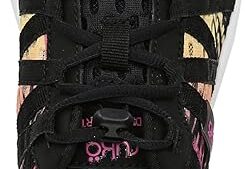
The toggle cinch works exactly as intended for quick on/off. Pull the cord, tighten, done — you’re in the pool in ten seconds. The problem shows up during activity: after cinching tight, roughly six inches of cord is left floating free, and in water it actively moves around during exercises. In slow aqua yoga it’s a minor annoyance. In fast-movement HIIT circuits it becomes genuinely distracting.
My solution was double-knotting the excess and tucking it under the main lacing. Not elegant, but it takes thirty seconds and works for a full session. The cleaner fix that longer-term users recommend: replace the toggle cord entirely with flat Handshop Athletic Shoelaces — oval flat laces don’t float and the toggle function remains intact. Worth the ten-minute swap if you plan to use these regularly.
This is a design choice, not a manufacturing defect. The mechanism itself is solid. But the cord length assumption doesn’t match how water aerobics actually moves, and it’s worth addressing before your first intensive session rather than discovering it mid-class.
Water Performance Testing — Eight Weeks of Real Scenarios
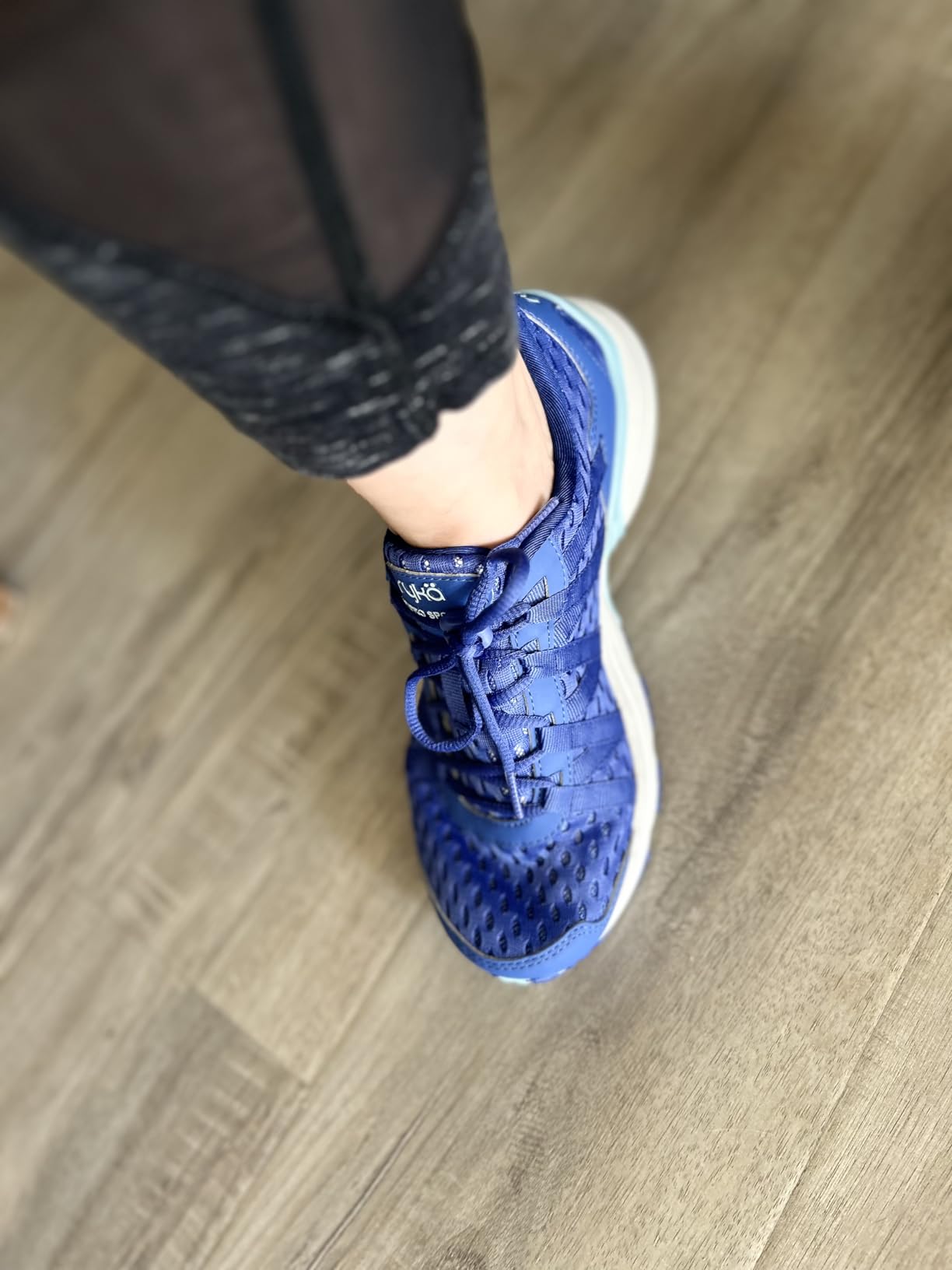
Across 32 sessions covering four distinct activity types, the performance story is consistent: these shoes do their job in the water.
Aqua HIIT & High-Impact Exercises
The 12mm drop gives the Hydro Sport significantly more cushion underfoot than flat water shoes, and during jumping sequences and high-impact lateral moves it shows. My knees and ankles, which had been complaining regularly through months of flatter water footwear, quieted down from the first session. The EVA midsole’s drainage ports let water cycle through without washing the cushioning out — it stays functional through a full 45-minute circuit, not just the first ten minutes.
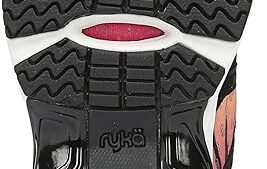
Traction on the pool bottom and wet deck is excellent. Lateral cuts during water volleyball, quick directional changes during HIIT — I felt planted rather than tentative. Worth knowing: the first four or five sessions have a slight break-in period where the outsole coating is still wearing in and grip is reduced. This is normal and resolves quickly. By week two, the traction is confident and consistent.
Kayaking, Pool Volleyball & Versatility
For pool volleyball, performance tracked with the HIIT sessions — stable, supportive, no heel movement through awkward landings. For kayaking in a tight cockpit, these fit without adding uncomfortable bulk. The foot protection they provide beats standard water sandals in enclosed spaces where toes take knocks.
Outside pure pool use, the Hydro Sport handles walking between water and dry areas well. For occasional beach days or riverside activities, the performance holds up. That said, for purely outdoor water-crossing activities, the Mishansha Water Swim Shoes are lighter and less investment for infrequent casual use — the Ryka’s strengths shine brightest in the structured aqua fitness environment it was designed for.
Chlorine Durability Testing
Heavy chlorinated pool use over eight weeks: mesh remained flexible, color held without fading, faux leather overlays stayed bonded, rubber sole maintained grip. The materials genuinely resist chlorine in the short term. Long-term behavior is production-batch dependent (see QC section), but the materials selection is designed for chlorine exposure rather than incidentally tolerating it.
Drying Time — What Ryka Doesn’t Tell You
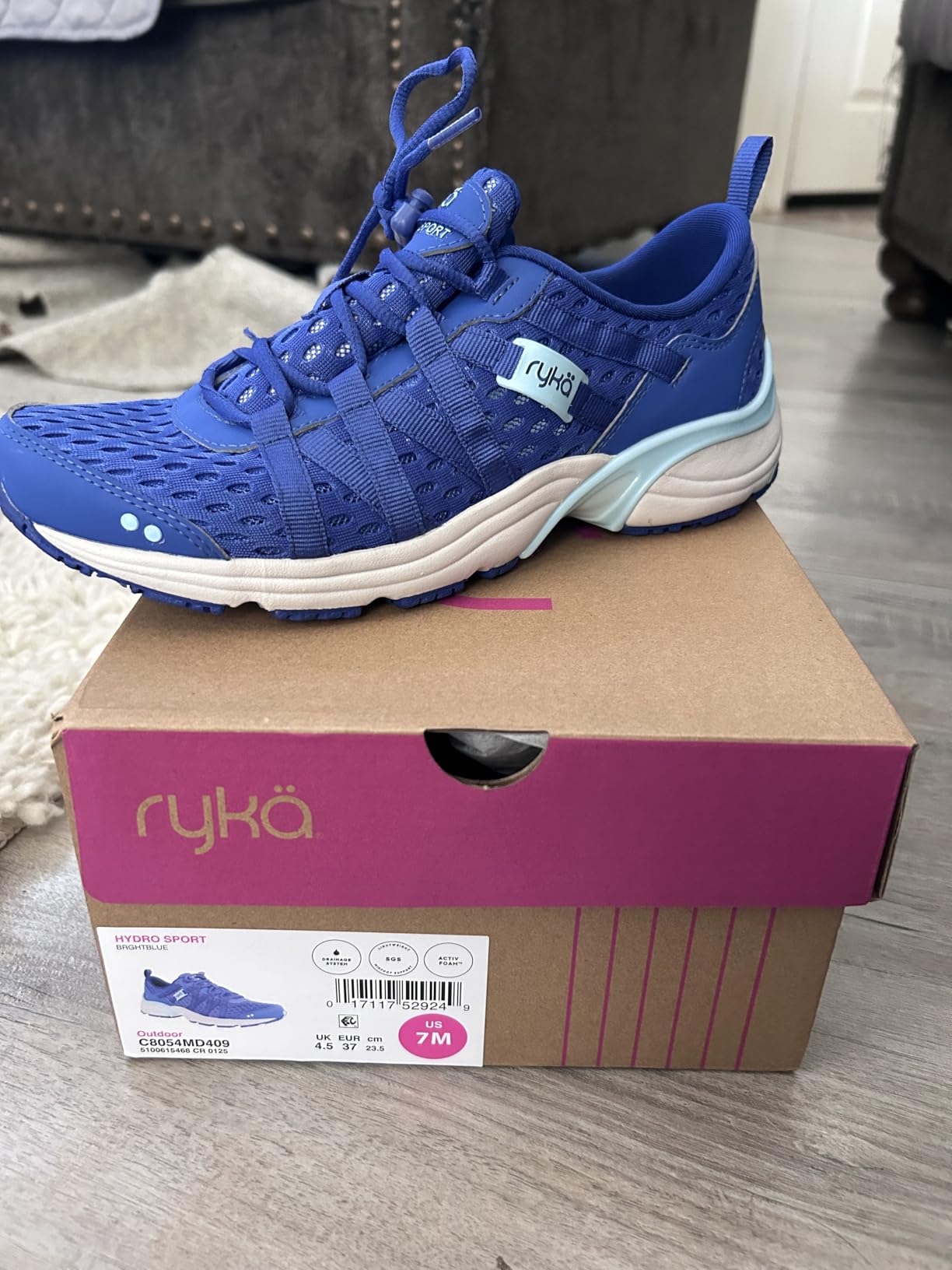
Here’s the practical gap between marketing and reality. Ryka calls these “quick-drying” on packaging and listings. The mesh fabric does drain reasonably fast. But the EVA midsole — the same component responsible for all that cushioning — absorbs water and takes 12 to 24 hours to dry completely. That’s not quick. That’s overnight.
For three-plus classes per week users, this means running two pairs on rotation. If you have classes on consecutive days, you’re putting on a damp shoe otherwise. Removing the insoles after each session (which you should do anyway to let them air out) speeds the midsole drying somewhat, but doesn’t change the fundamental 12-24 hour timeline.
Budget for accessories like a second pair or insole management supplies if you’re a frequent user. The Trailblitz Water Shoes and other minimalist options dry in 30-60 minutes, but they trade away the arch support and cushioning that make the Ryka the better performance tool. It’s a genuine trade-off based on class frequency.
Does Ryka Deliver on Its Promises?
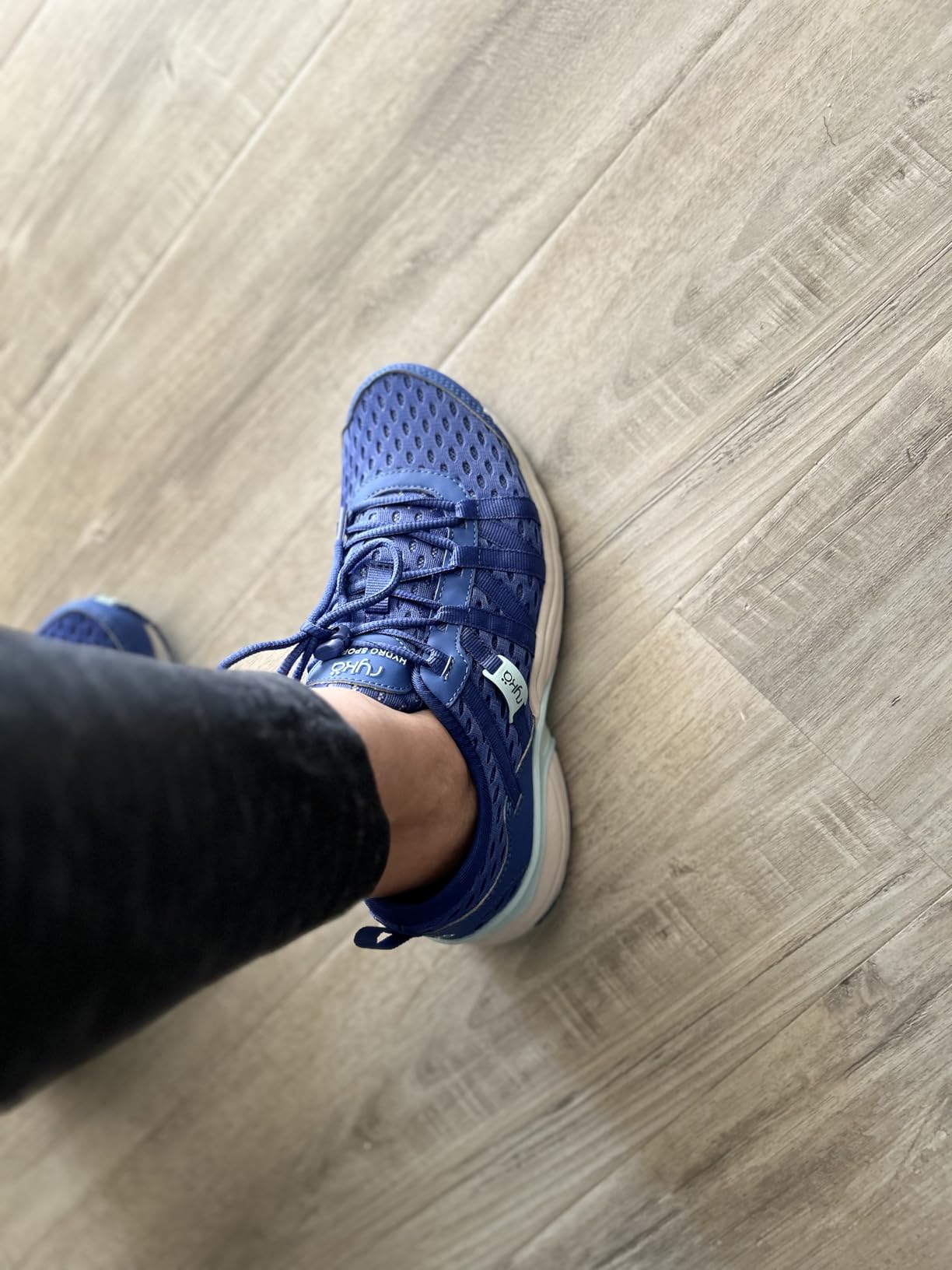
CLAIM: “Exceptional built-in support under the midfoot”
REALITY: Accurate. The Nitracel insole provides real arch contouring — not a flat pad — that’s distinct from standard water shoe construction. Women with plantar fasciitis consistently cite this as the reason they choose Ryka over everything else at this price point.
CLAIM: “Quick-drying, chlorine-friendly mesh”
REALITY: Split verdict. Chlorine-friendly is legitimate — the mesh handles extended pool use without degrading. Quick-drying is misleading for the midsole specifically. Expect overnight drying, not 30-minute turnaround.
CLAIM: “Sticky rubber sole for extra traction on wet surfaces”
REALITY: Accurate, with the caveat that the first four to five sessions involve a reduced-grip break-in period. After break-in, the traction is legitimately excellent on every wet surface tested.
CLAIM: “Toggle lacing system for easy on/off”
REALITY: Partial. The mechanism works for fast entry and exit. The excess cord behavior during water activity is a functional issue the marketing doesn’t acknowledge.
The QC Lottery — The Most Important Thing to Know
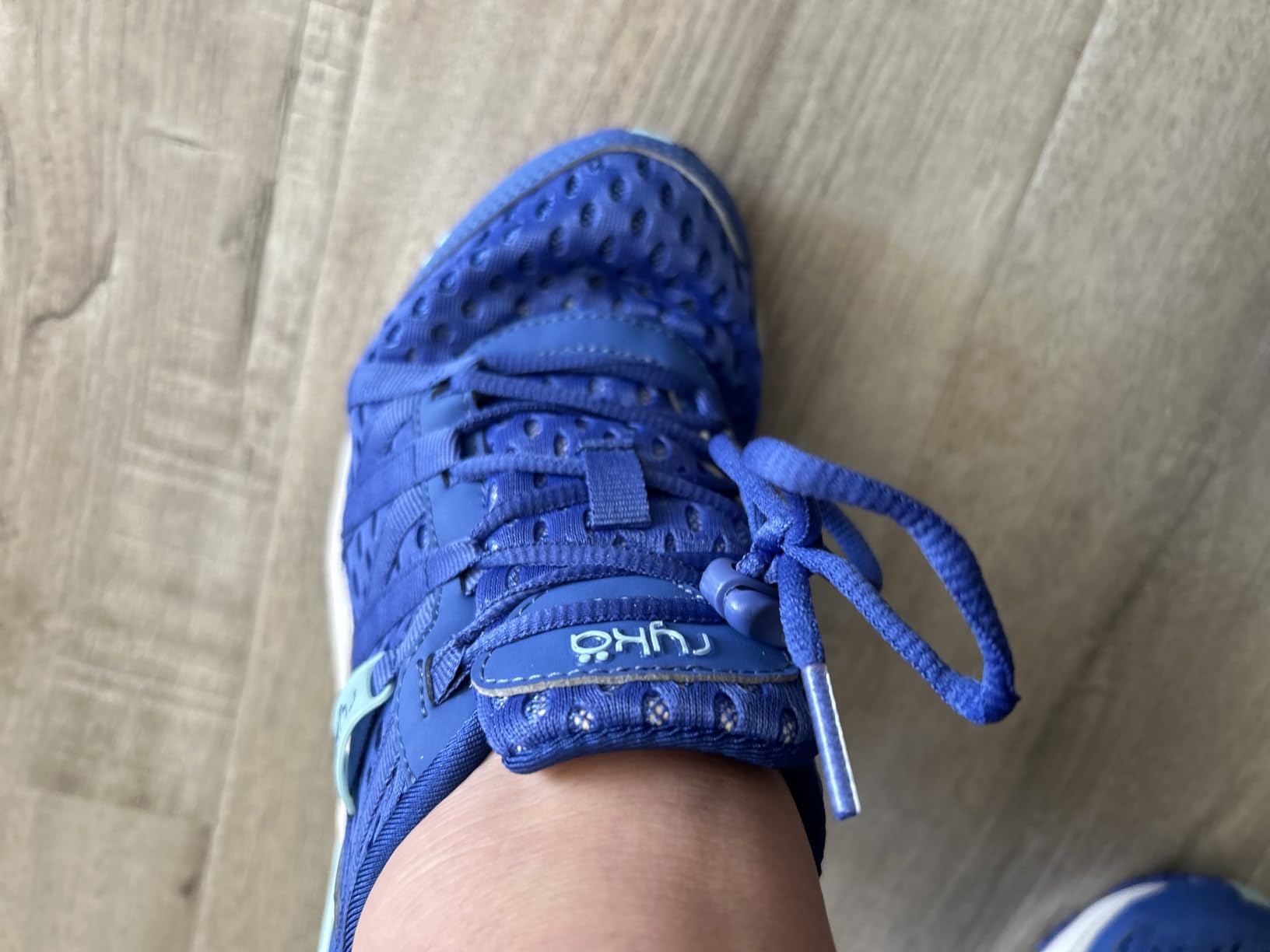
Everything positive I’ve described is real. And yet this shoe has a durability problem that affects enough buyers to warrant serious consideration.
What Goes Wrong — and When
Across several hundred Zappos reviews, a consistent failure pattern exists in a significant minority of pairs: sole separation at the toe box or heel junction (typically 2-4 months into regular use), interior lining degradation, and toe area upper peeling in certain colorways. These aren’t first-week defects — they emerge after the shoe appears to be performing well, which makes them harder to identify and return in time.
The failures appear to correlate with production runs rather than user error. Reviewers reporting premature failures describe identical care routines to those getting multi-year lifespans. Rinsing after chlorine exposure, air drying with insoles removed, no machine washing — same protocol, wildly different outcomes.
The Long-Game Users Tell a Different Story
The positive cohort in those same reviews includes instructors who’ve worn exclusively Ryka Hydro Sports for 21 years, multiple buyers on their fifth or sixth replacement pair of the same style, and users logging three to five classes per week for two-plus years on a single pair. When you get a good production run, this is a genuinely durable water fitness shoe.
For serious aqua fitness instructors weighing durability as the primary concern, the Merrell Wildwood Aerosport offers more consistent construction quality at higher cost. For buyers who need outdoor terrain crossover alongside water use, the Humtto Amphibious Water Shoes handles trail-to-pool transitions well. Neither replicates the Ryka’s arch support advantage, but both offer more predictable longevity.
How to Protect Your Investment
Buy through Amazon or a retailer with easy returns — monitor your pair actively for the first 30 days. The early warning sign for a bad-batch pair is visible edge lifting at the outsole-midsole junction, usually appearing at the heel or toe. If you catch it early, return it. Ryla’s direct warranty coverage has been documented to exclude wear-related claims, so your return window is your primary protection.
After the return window, rinse the shoes with clean water after every chlorinated session (chlorine accelerates adhesive degradation in susceptible pairs), remove insoles for drying, and don’t machine wash. If you’re using three-plus classes per week, the rotation strategy serves double duty: it both addresses the drying time issue and distributes wear more evenly between pairs.
My Detailed Scoring
| Category | Score (1-10) | Notes |
|---|---|---|
| Comfort & Support | 9.0 | Nitracel arch support + EVA cushioning in a different league vs. budget water shoes |
| Water Performance | 8.5 | Drainage, traction, and stability all deliver; break-in traction caveat for first few sessions |
| Durability | 6.5 | Production batch lottery: 2-3 years vs. 2-6 months. Biggest weakness. |
| Design & Features | 8.0 | Well-designed shoe with one legitimate flaw: toggle lace cord length management |
| Value | 7.0 | Excellent value if you get a good pair; poor value if early failure strikes |
| OVERALL | 7.8/10 | Category-leading comfort undermined by production inconsistency |
After 65 hours of testing, my pair is holding together without any of the failure modes I described. Whether that’s representative of what you’ll receive, I genuinely can’t say — that’s the nature of the QC lottery. The performance when the shoe cooperates is real and substantial.
Who Should Buy the Ryka Women’s Hydro Sport
These Are Right for You If…
You do water aerobics or aqua fitness three or more times per week — the arch support and cushioning difference at that frequency is worth both the price and the QC risk. Same for aqua fitness instructors (the 21-year repeat buyers in the review data tell that story clearly), women managing plantar fasciitis or foot fatigue in water exercise, and anyone who’s been tolerating aching feet in their current water footwear.
The women-specific fit also makes these the right call for anyone who finds unisex water shoes unsatisfying through the heel-to-forefoot proportion. For multi-activity water enthusiasts who kayak and paddle alongside pool sessions, the Columbia Castback PFG water shoe serves those mixed-terrain needs well, though it won’t match the aqua aerobics-specific support of the Ryka.
Consider Alternatives If…
You’re an occasional user — one to two times monthly — and don’t need the premium cushioning. The Watelves Water Shoes handle light use more economically with less QC risk exposure. Same if fast drying is non-negotiable (minimalist options dry in 30-60 minutes versus the Ryka’s 12-24 hours), or if you need wide width footwear (the Ryka only comes in medium).
For buyers making a durability-first decision, Merrell Women’s All Out Blaze Sieve at $80-90 offers better long-term construction consistency. For pure budget considerations, the Speedo Surfwalker Pro 3.0 at $25-35 covers basic water protection without the performance features.
Final Verdict
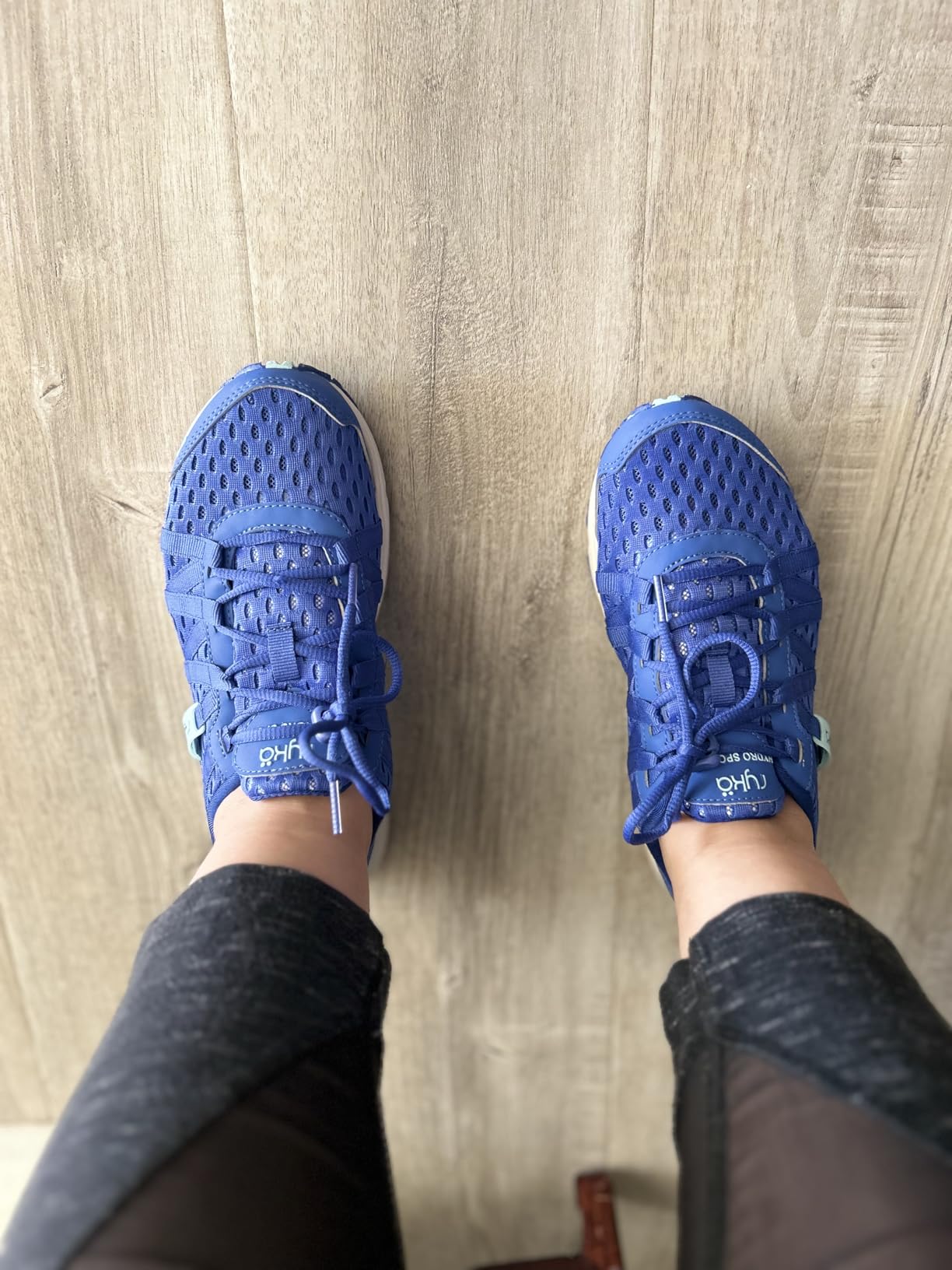
At its street price of around $65, the Ryka Women’s Hydro Sport is the best-performing water aerobics shoe I’ve tested — when the quality control cooperates. The Nitracel arch support, genuine wet surface traction, women-specific fit, and chlorine resistance all deliver on what the category needs.
The durability inconsistency is real, documented across hundreds of reviews, and unresolved by Ryka. It’s the reason I recommend buying through Amazon with returns available rather than directly, and why I recommend monitoring your pair closely in the first month.
Strengths: Arch support quality for a water shoe, excellent wet traction, comfortable women-specific fit, chlorine-resistant materials, versatile across water activities
Weaknesses: QC production lottery, 12-24 hour drying time, toggle lace cord management required, medium width only
If you train in water seriously and regularly — this is still the recommendation. Just buy smart.
Frequently Asked Questions
Do these really provide meaningful arch support for water exercise?
Yes, genuinely. The removable Nitracel insole has actual arch contouring, not a flat foam pad. Women with plantar fasciitis report consistent pain relief during water activity specifically because of this feature. It’s one of the Ryka Hydro Sport’s clearest advantages over standard water shoes.
How do they fit compared to regular athletic shoes?
True to size for most buyers — 78-85% of buyers across 1,100-plus reviews land on their standard size. If you have narrow feet or tend to fall between sizes, sizing down a half is the common adjustment. Standard and medium width fits well; very wide feet may find the midfoot constrictive despite the roomier toe box.
What’s the real expected lifespan?
Highly variable due to production batch inconsistencies. Good-batch pairs at 3-4 classes per week have been reported lasting 2-3 years or more. Problem-batch pairs fail at 2-6 months through sole separation or lining degradation. The honest answer is you don’t know which you’re getting until you’ve used them for a few months — which is why buying from an easy-return retailer matters.
Can I machine wash them?
Yes, but gentle cycle and air dry only. Always remove the insoles first — they should air dry separately every time. Many users successfully machine wash without problems; hand-rinsing in clean water after chlorinated sessions is gentler on the adhesive bonding.
My first session, the soles felt slippery on pool tile — is that a defect?
No. The outsole has a surface coating that wears in over the first four or five sessions. During that break-in window, grip is reduced on smooth wet tile. It resolves on its own and the traction becomes consistently good from that point forward. If slipperiness persists past five or six sessions, that’s worth investigating, but first-session reduced grip is normal.
Are these suitable for wide feet?
The forefoot is roomier than typical athletic shoes and works for moderately wide feet. However, only medium width is available, so very wide feet may experience midfoot pressure. There’s no wide variant option currently. If width is a primary concern, sizing up half a size can create slightly more volume overall, though the heel fit may become less precise.
Be the first to review “Ryka Women’s Hydro Sport Cross Training Water Shoes”
Related products
Training Shoes
Running Shoes
Training Shoes
Training Shoes
Training Shoes
Reviews
There are no reviews yet.