
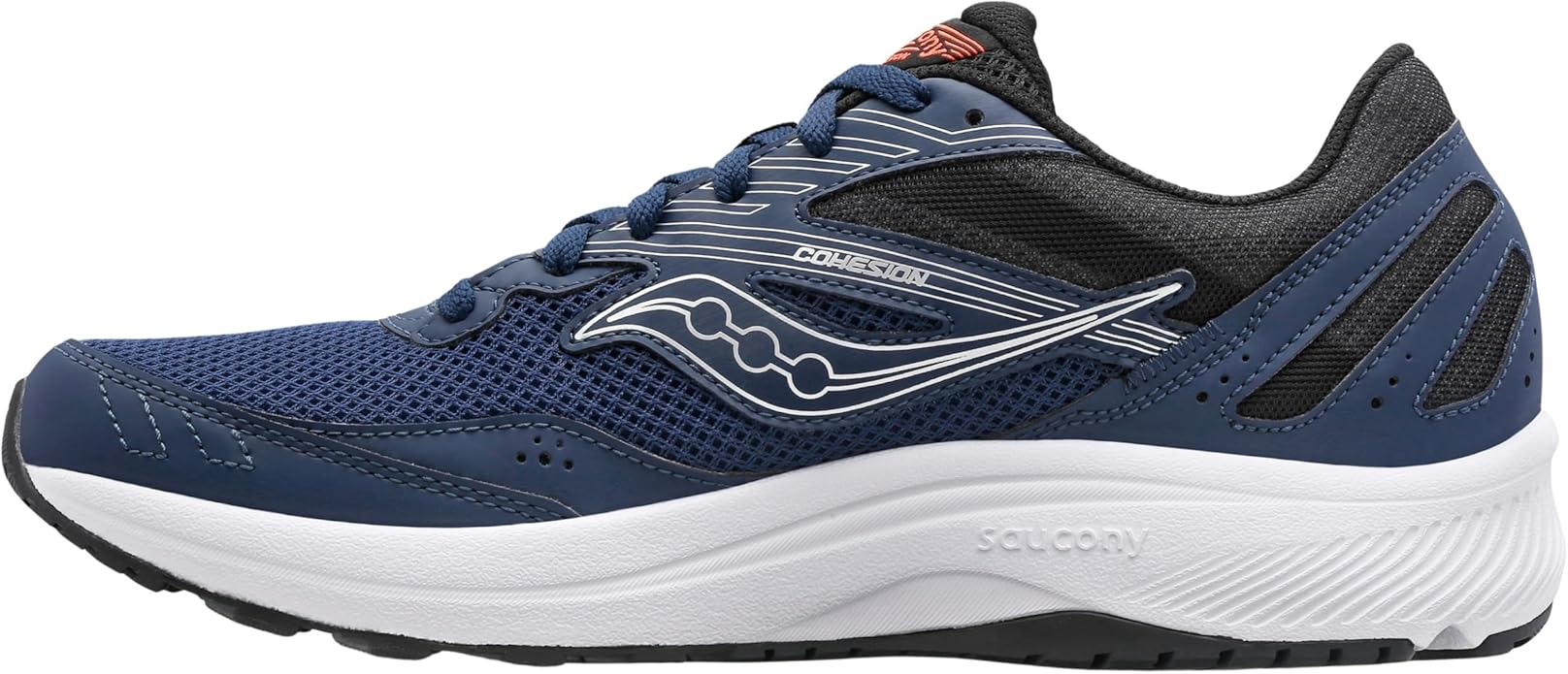
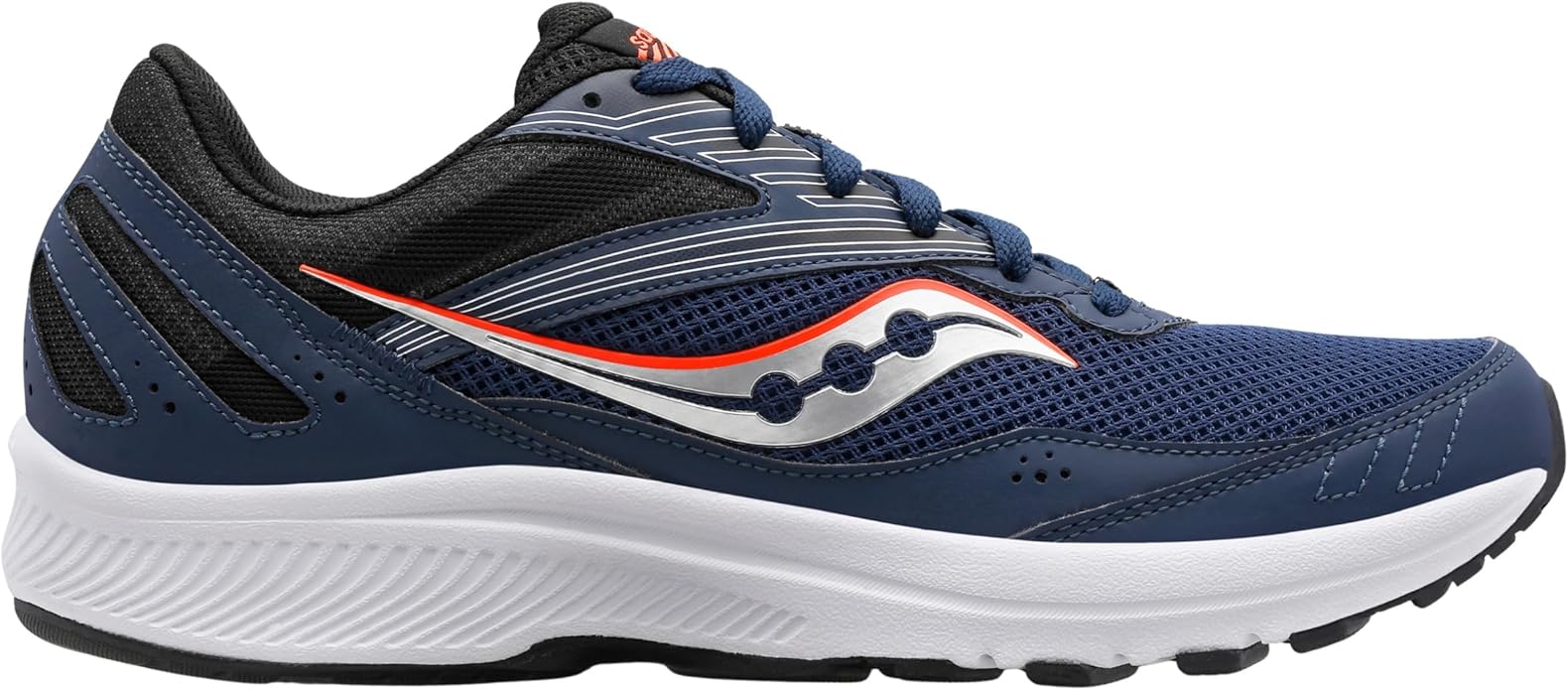
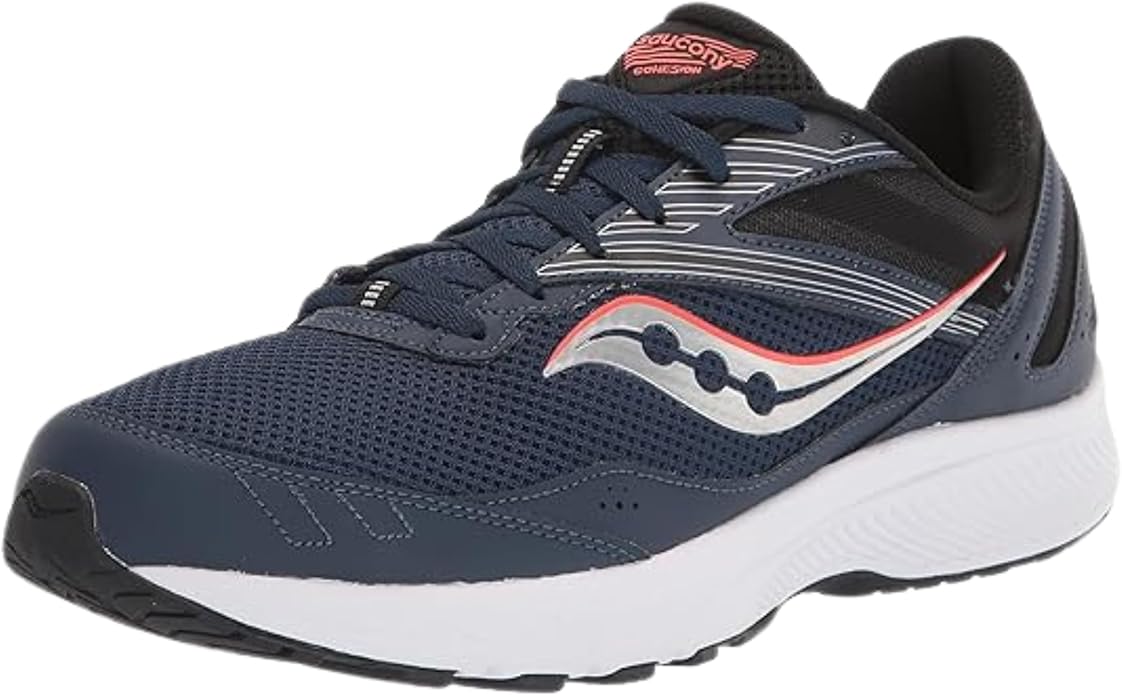
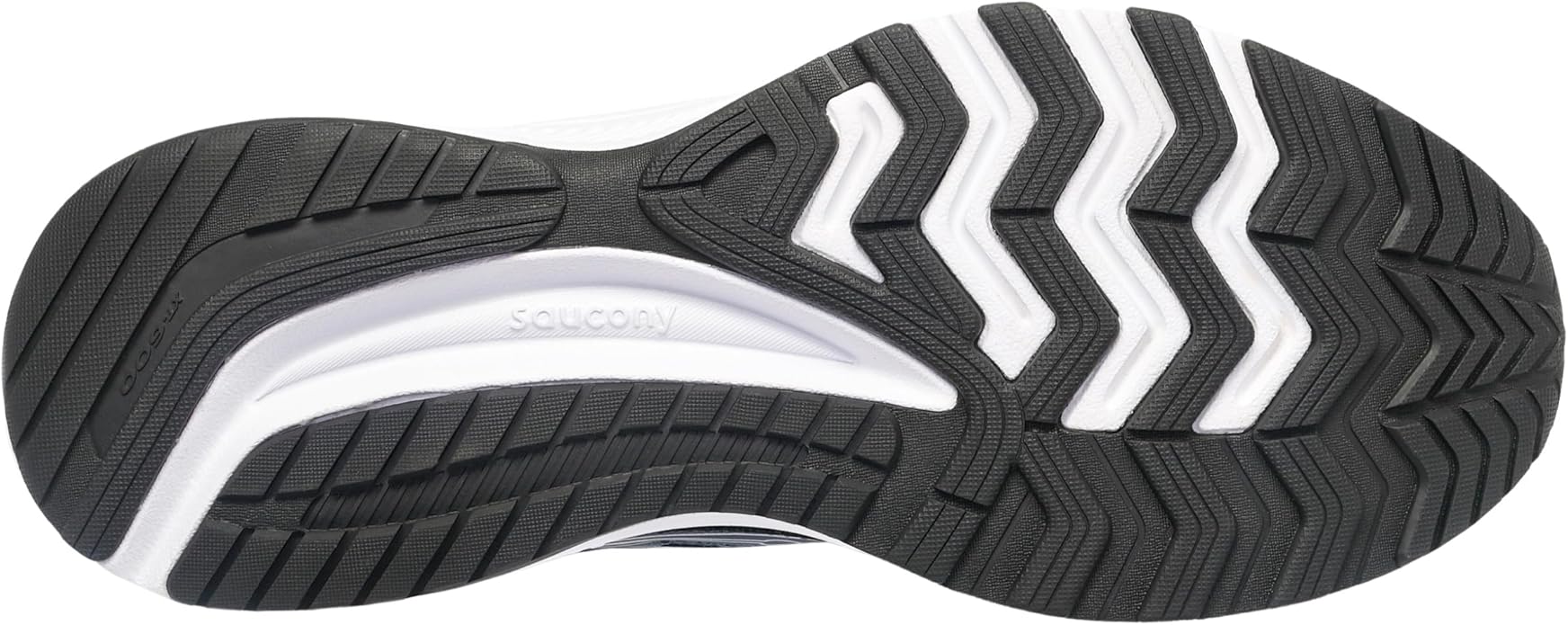
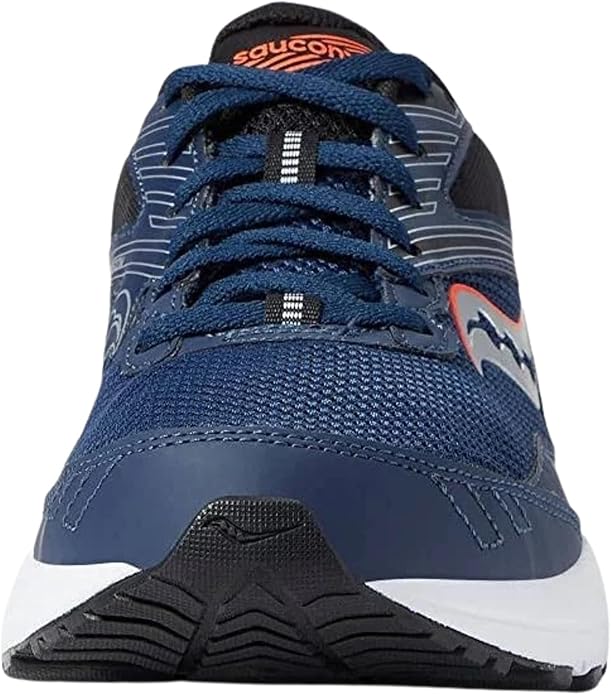
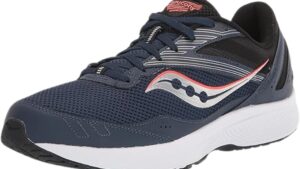
Four pairs of $120 trainers in fourteen months. That’s nearly $500 in running shoes, and I’d started wondering if the premium price was buying me anything beyond marketing. So when I spotted the Saucony Cohesion 15 sitting in the clearance section at $45, still tagged, I figured six weeks and 180 miles would give me a real answer. I’m Mike, and this is what budget running actually looks like up close.
Technical Specifications
- 💰 Price: $40-55 (clearance pricing; $55-60 at current MSRP)
- ⚖️ Weight: 9.1 oz (258g, men’s size 9)
- 📏 Heel-to-toe drop: 12mm
- 📐 Stack height: 28.5mm heel / 16.5mm forefoot
- 🧪 Midsole: VERSARUN cushioning
- 👟 Upper: Synthetic mesh with synthetic overlays
- 🏃♂️ Category: Neutral running shoe, budget daily trainer
- 🎯 Best for: Recreational runners 10-25 mpw, dry climates, new runners, treadmill use
- ⏱️ Testing: 6 weeks, 45 runs, 180 miles
Opening the Box: First Impressions Count
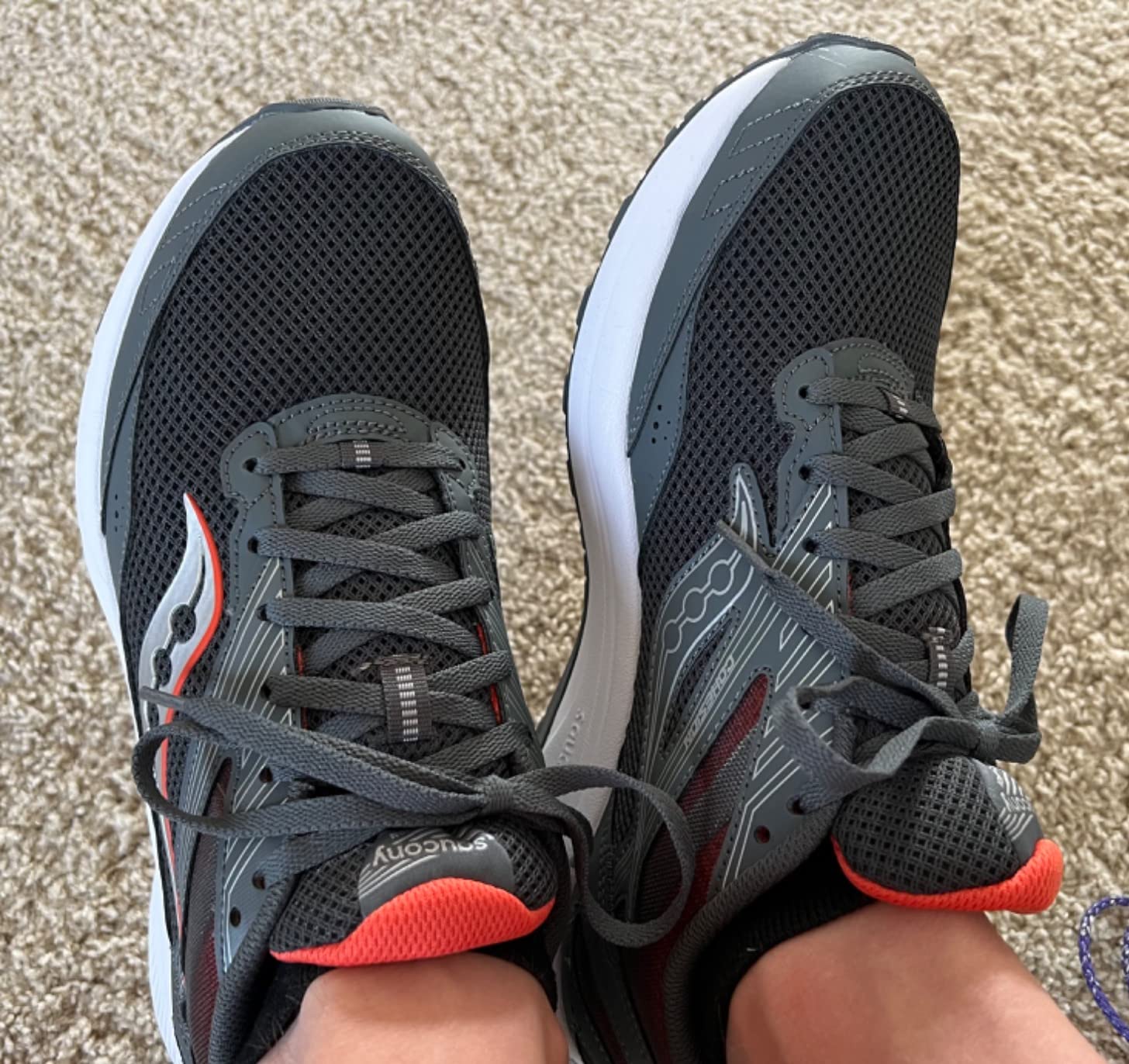
At 9.1 ounces, the Cohesion 15 sits exactly where a budget trainer should — not a featherweight, but not noticeably heavy either. Pick it up and the synthetic mesh upper has a soft, flexible quality that doesn’t feel cut-rate. Squeeze the midsole and there’s genuine plushness, more cushion than you’d predict from a $45 price tag.
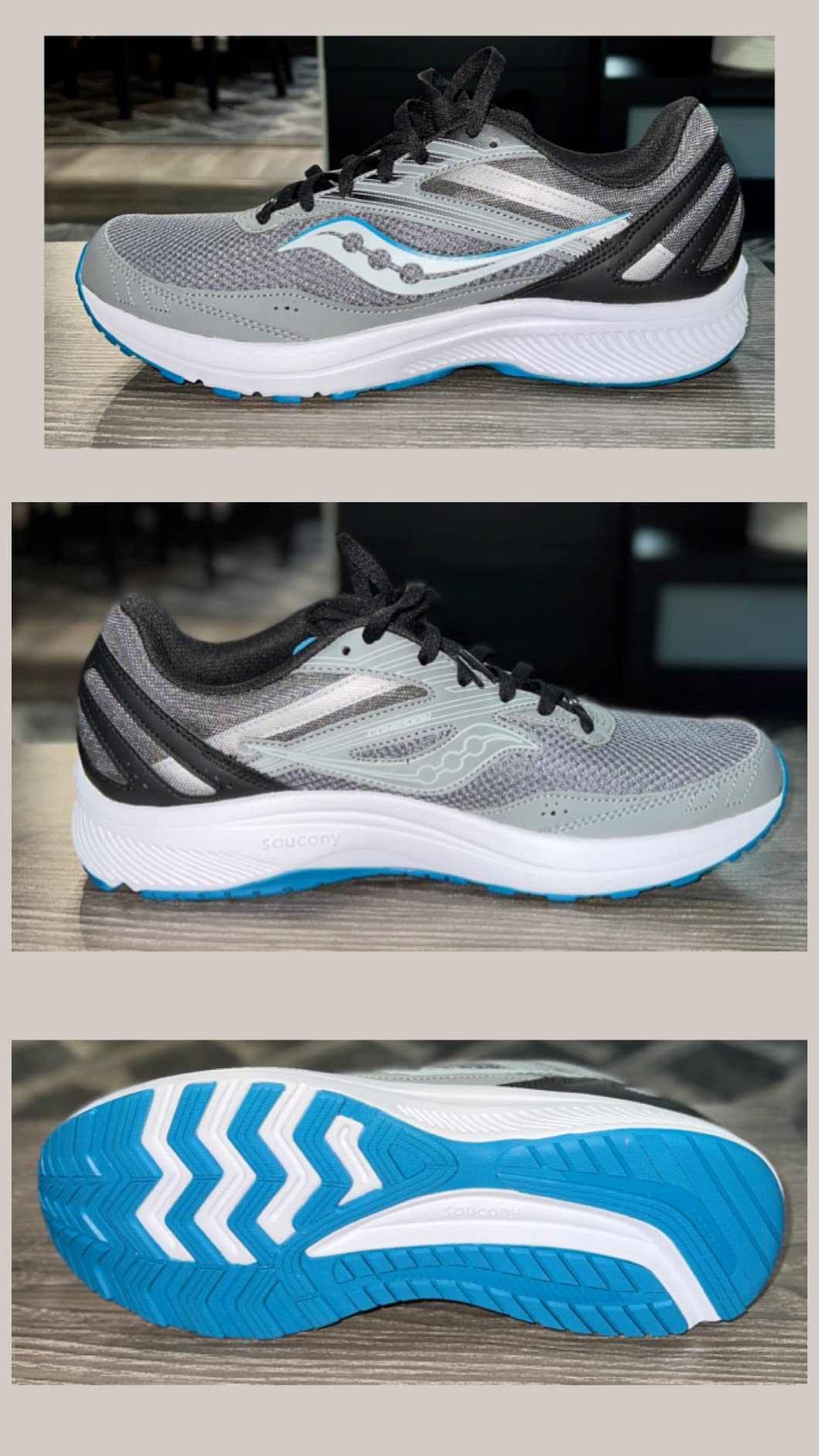
Two things caught my attention before the first run. The colorways are bluntly utilitarian — “dad shoe” is the phrase one Running Shoes Guru reviewer used, and it’s not entirely wrong. If Instagram content is part of the plan, these aren’t the shoes. But for actual running, the look is irrelevant.
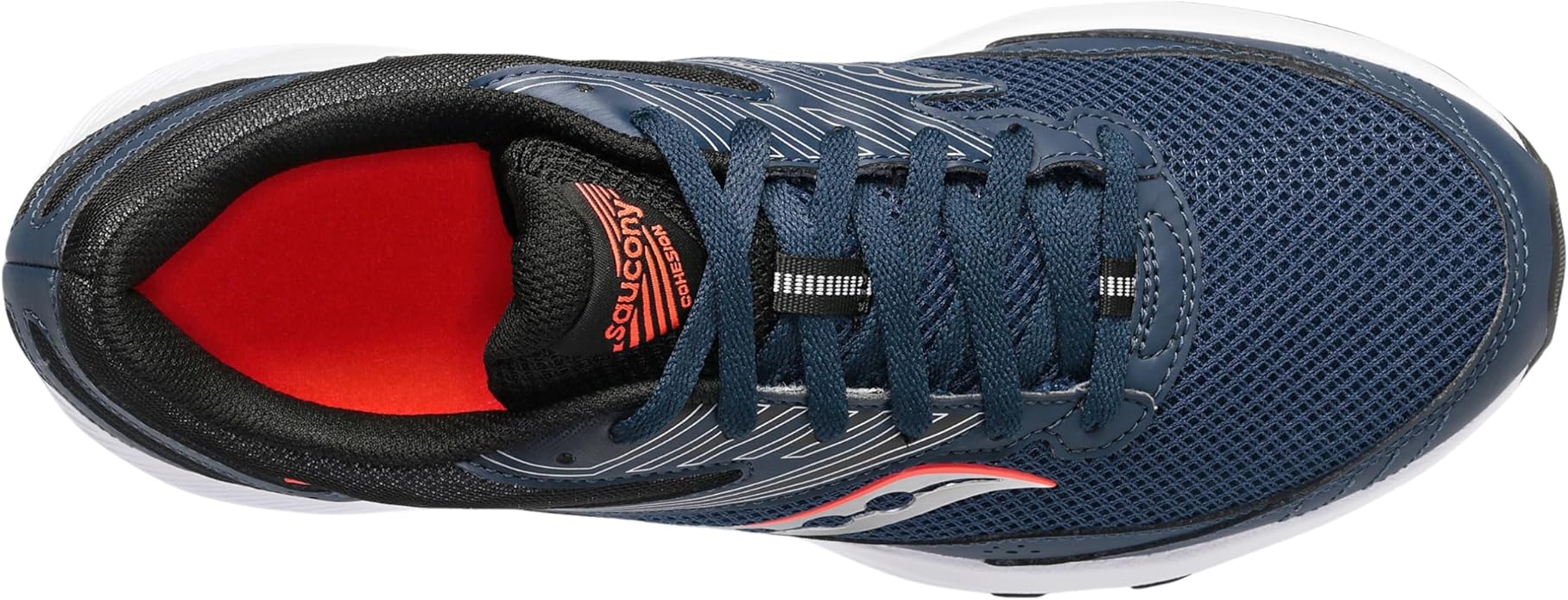
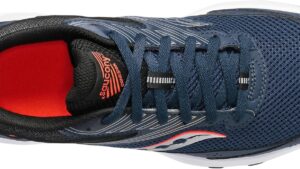
The second thing: the laces. They came out of the box noticeably long — two to three inches more than I’d expect on a size 10 — and the material has a mild stretch to it. I cinched them harder than usual to get a secure lockdown. Filed that away for later.
First run was three easy miles. No break-in period, no friction points, no heel rubbing. The cushioning felt soft and accommodating at 8:30 pace, the platform stable, the toe box comfortably spacious without being sloppy. For a shoe that costs about as much as a tank of gas, the out-of-box experience was genuinely encouraging. The problem — if there is one — doesn’t show up until later.
VERSARUN Cushioning: What Six Weeks Actually Reveals
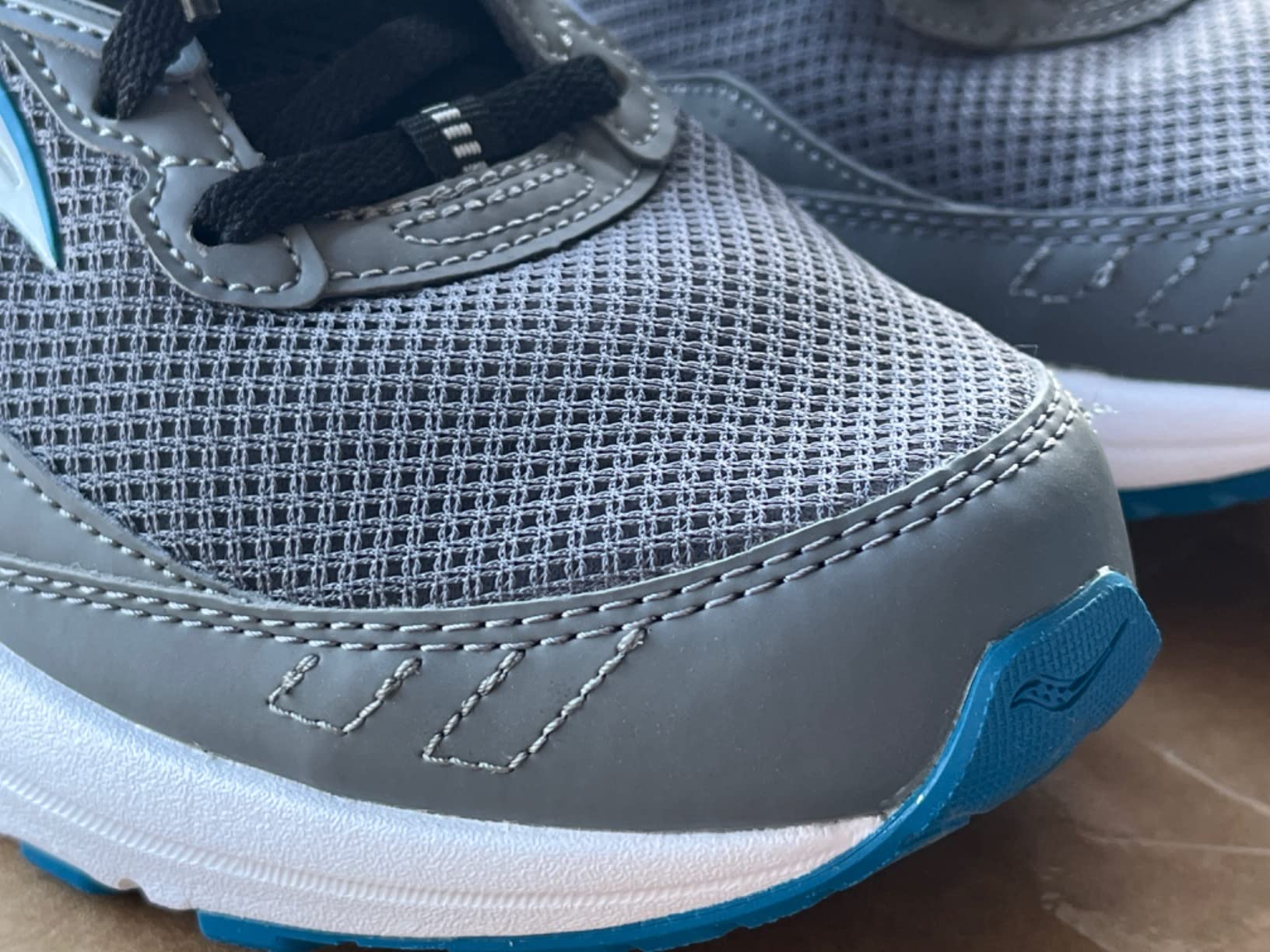
VERSARUN is a budget-tier foam. It’s not Nike React, not ASICS FlyteFoam Blast, not Saucony Tempus-level technology. It’s engineered to provide comfortable cushioning at a price that doesn’t require installment payments, and in that first month, it does what it promises.
Weeks 1–3: The Comfortable Phase
Easy recovery runs at 8:30/mile felt soft and forgiving, with solid impact absorption that kept the legs from feeling beaten up on back-to-back training days. Tempo efforts at 6:45–7:15/mile were adequate — not bouncy, not responsive, but stable and predictable underfoot. My 8-mile long run in week two was comfortable throughout, with no noticeable fatigue from the midsole.
Week 4 Onward: The Compression Problem
Right around the 80-mile mark — week four at 20 miles per week — the midsole started behaving differently. Not dramatically at first, more of a “something’s changed” sensation underfoot. By week six it was unambiguous: what started as plush had settled into firm. The shoe still absorbs impact, but that initial soft response is gone.
The practical consequence matters more than the feel change. On back-to-back running days — a five-mile easy Thursday followed by a six-mile tempo Friday — I noticed mild shin discomfort by the end of the second session. The firm midsole, combined with the traditional 12mm drop, transfers more heel-strike impact than softer foam would. The Doctors of Running review described the VERSARUN as becoming “mushy and unresponsive” — “neither firm nor soft” in warmer conditions — which tracks with what I experienced above 80°F. If you run consecutive days regularly, this timeline is worth knowing before you buy.
The Cost-Per-Mile Reality
At 200–300 miles of useful life, a $45 Cohesion 15 works out to $0.15–0.23 per mile. At current Amazon pricing of $55–60, that’s $0.18–0.30 per mile. The Brooks Launch 10 runs around $100 with a 400-mile lifespan — approximately $0.25 per mile. The math doesn’t automatically favor the budget shoe once durability enters the equation. That said, if you’re buying at clearance prices ($40–45), the value case is much stronger.
The Upper Problem Nobody’s Talking About
Every review I found before testing emphasized the Cohesion 15’s “good breathability.” Six weeks in, I’d push back on that characterization.
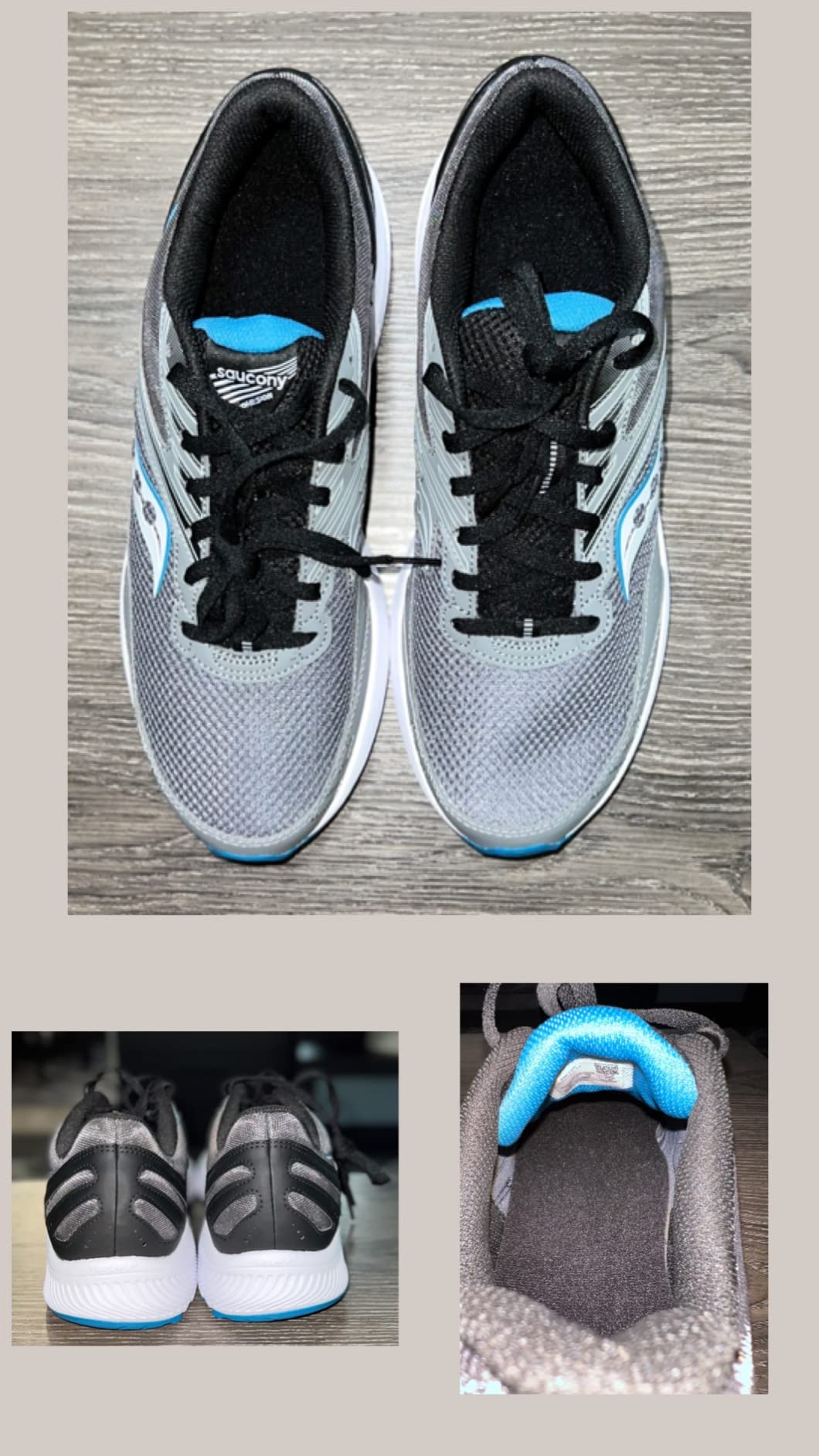
Yes, the mesh upper allows airflow. But breathability and heat management aren’t the same thing, and above 75°F — especially during longer humid runs — the synthetic overlays retain heat in a way that mesh-dominant uppers don’t. Running Shoes Guru’s reviewer described feet “on fire” past four miles in summer heat. I didn’t hit that level, but by mile six on an 82°F morning, my feet were noticeably warmer than in my previous trainers.
Water In, No Water Out
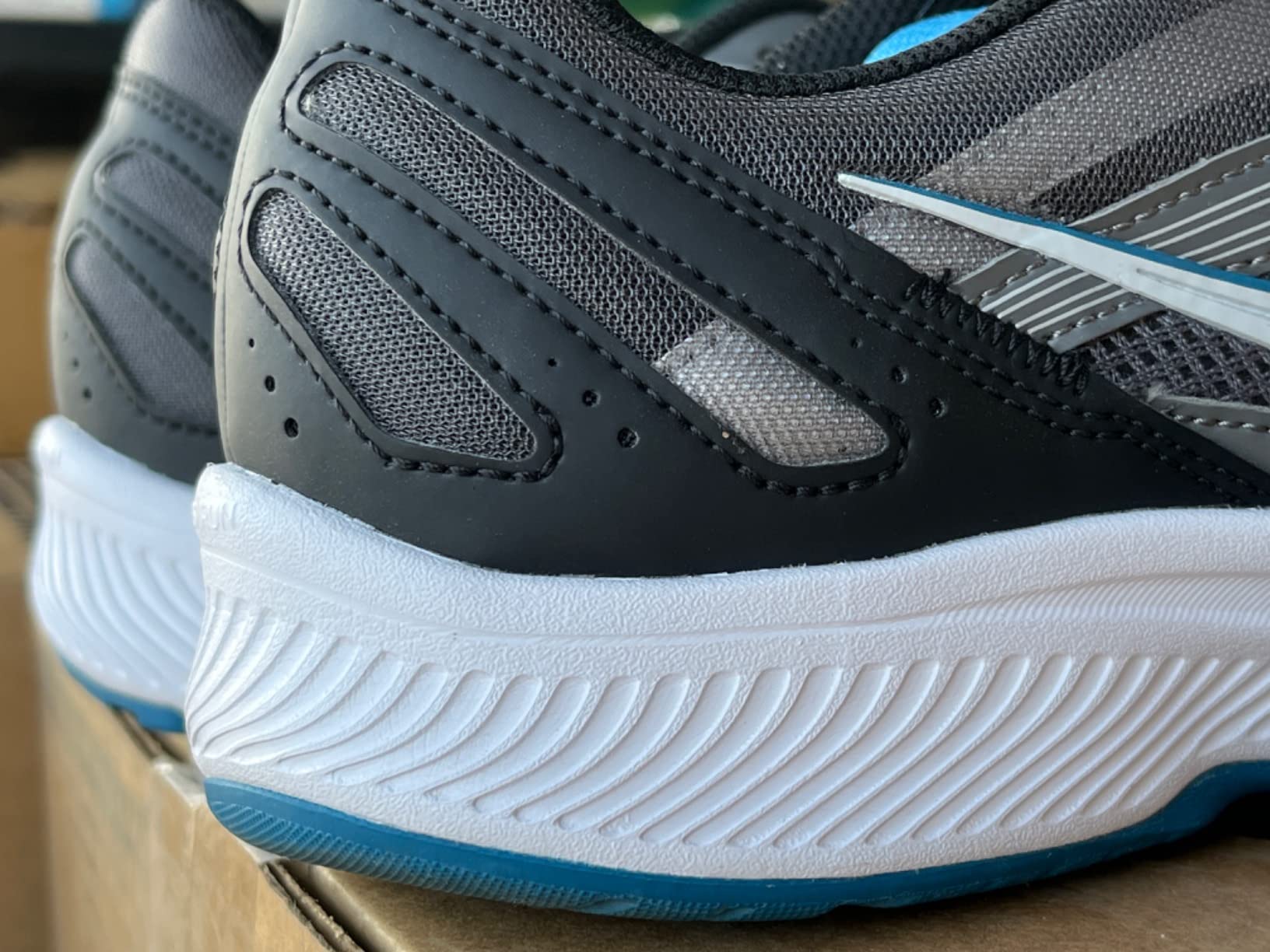
The upper has no drainage design. Water enters through the mesh and has nowhere to exit. Running Shoes Guru’s reviewer ran in rain once — not voluntarily — and described the interior holding water entirely: “no exit holes of any kind.” My one wet-weather run confirmed this pattern: light drizzle had the interior noticeably damp within five minutes, feet getting heavier as the miles added up.
The Sock Liner Issue Competitors Miss
Here’s the finding that almost no other review mentions, and it’s arguably the most important for anyone in a wet climate. The removable sock liner has minimal friction against the midsole when dry; in a wet interior, that friction drops significantly. Running Shoes Guru’s reviewer experienced the liner shifting laterally mid-run during a rain session. The deformation was permanent — the liner couldn’t be repositioned, toes hanging off the edge of the reformed shape. That shoe was done after one wet run.
Dry-climate runners won’t encounter this. Anyone in the Pacific Northwest, Seattle, or genuinely rainy regions should treat this as a structural design limitation, not a quality control issue. It’s how the shoe is built.
Outsole & Durability: Where This Shoe Surprises You
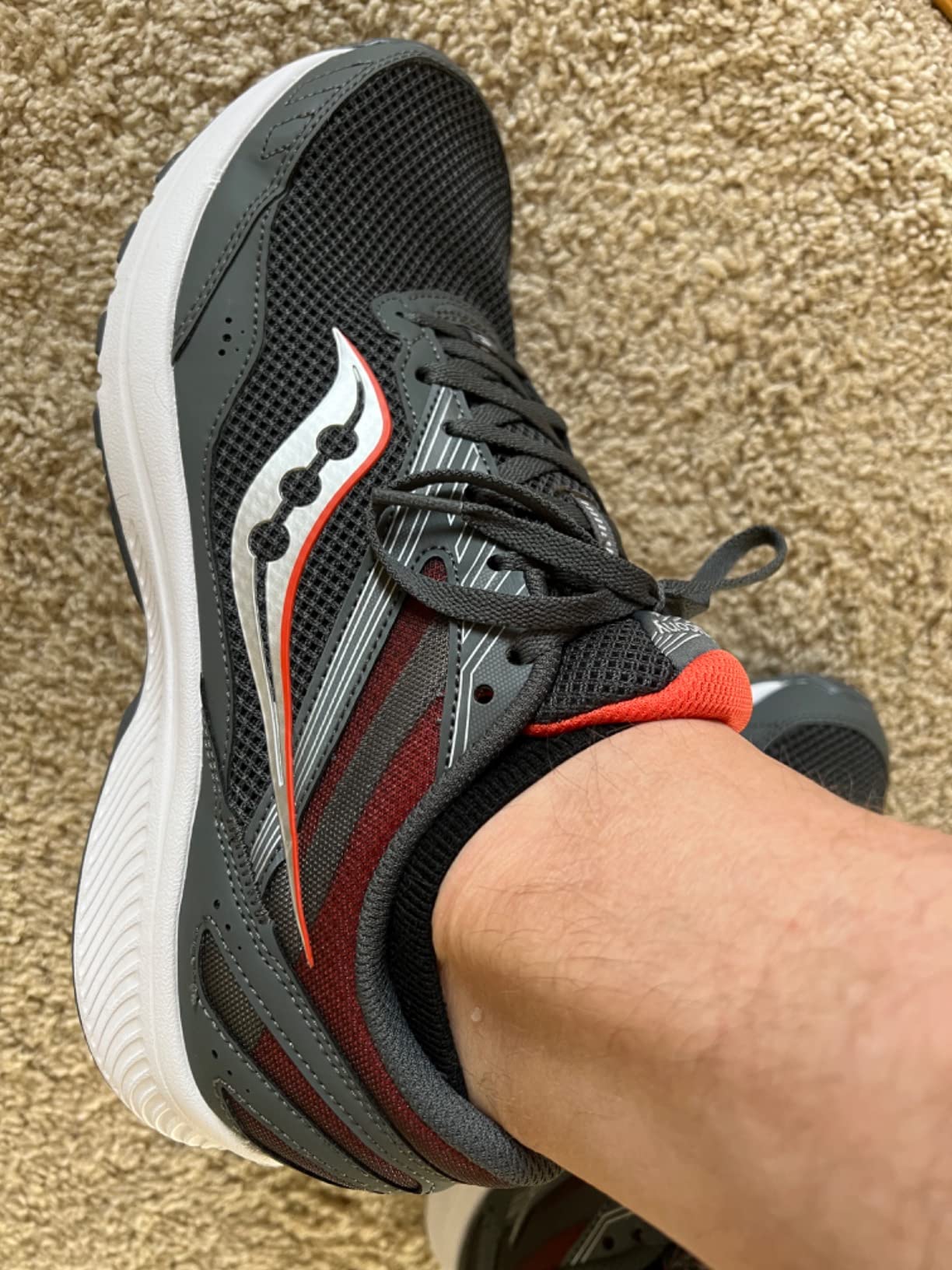
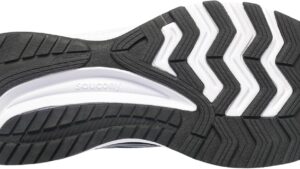
The heavy rubber outsole is one of the Cohesion 15’s genuine strengths. After 180 miles of mixed pavement — including rougher stretches and one gravel path — the tread shows wear but remains fully functional. Running Shoes Guru made the same call: the outsole is built to outlast the midsole. That’s an unusual situation for any shoe, but it checks out in testing.
Traction on dry pavement was consistent throughout. Wet pavement was adequate without inspiring confidence — I’d be cautious on polished surfaces after rain. Hill climbs and descents handled without slipping issues.
Sole Separation: A Real Pattern, Not Isolated Reports
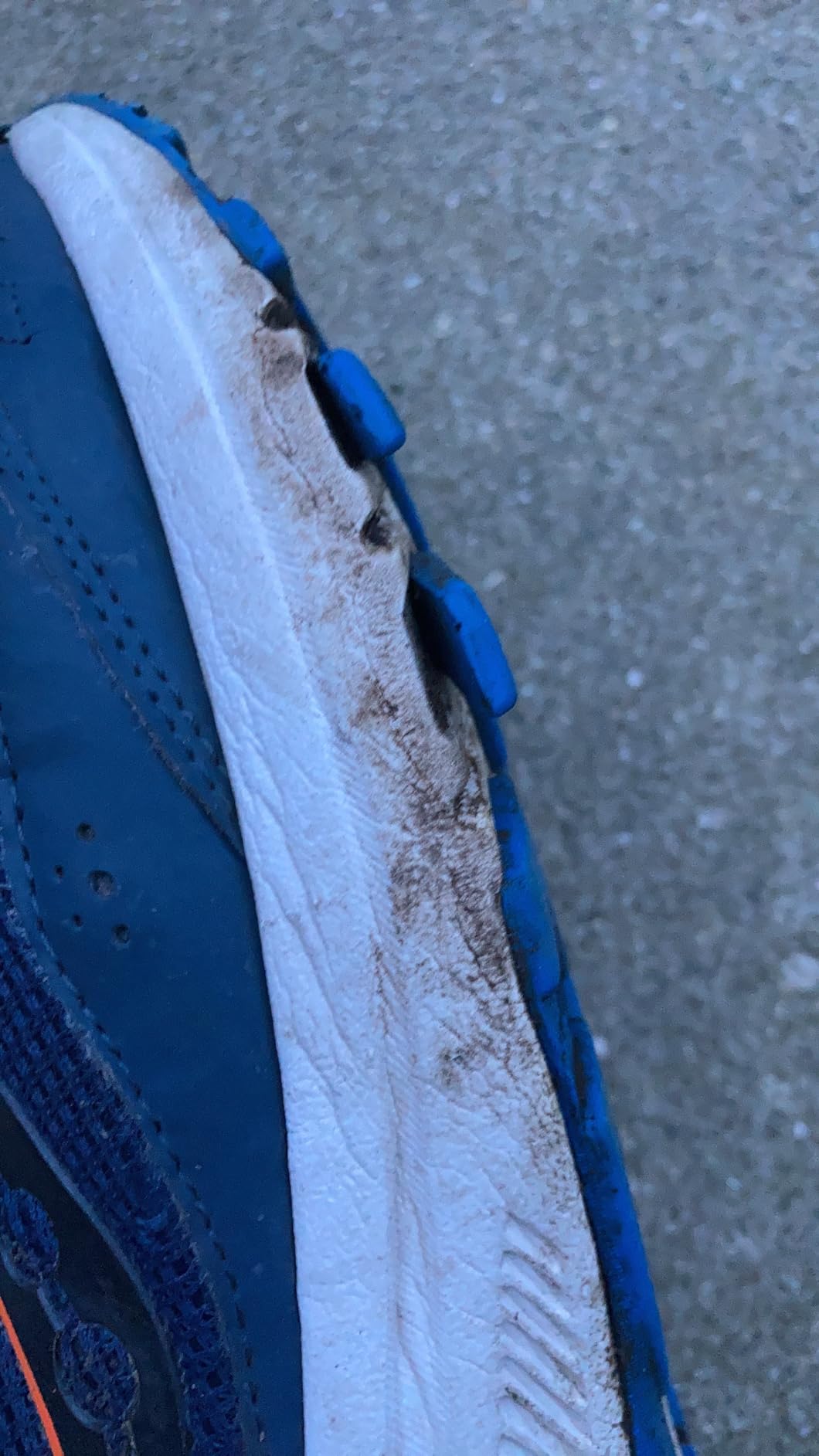
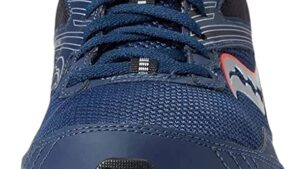
By week five, I noticed a stress signal at the toe box — the natural flex point where the outsole bends with every stride. It wasn’t structural failure yet, but the beginning of a gap forming. Multiple Amazon reviewers report complete sole separation within 30–60 days under heavier use. The pattern fits: toe box flex stress breaks down the bond between upper and sole, and once started, separation accelerates.
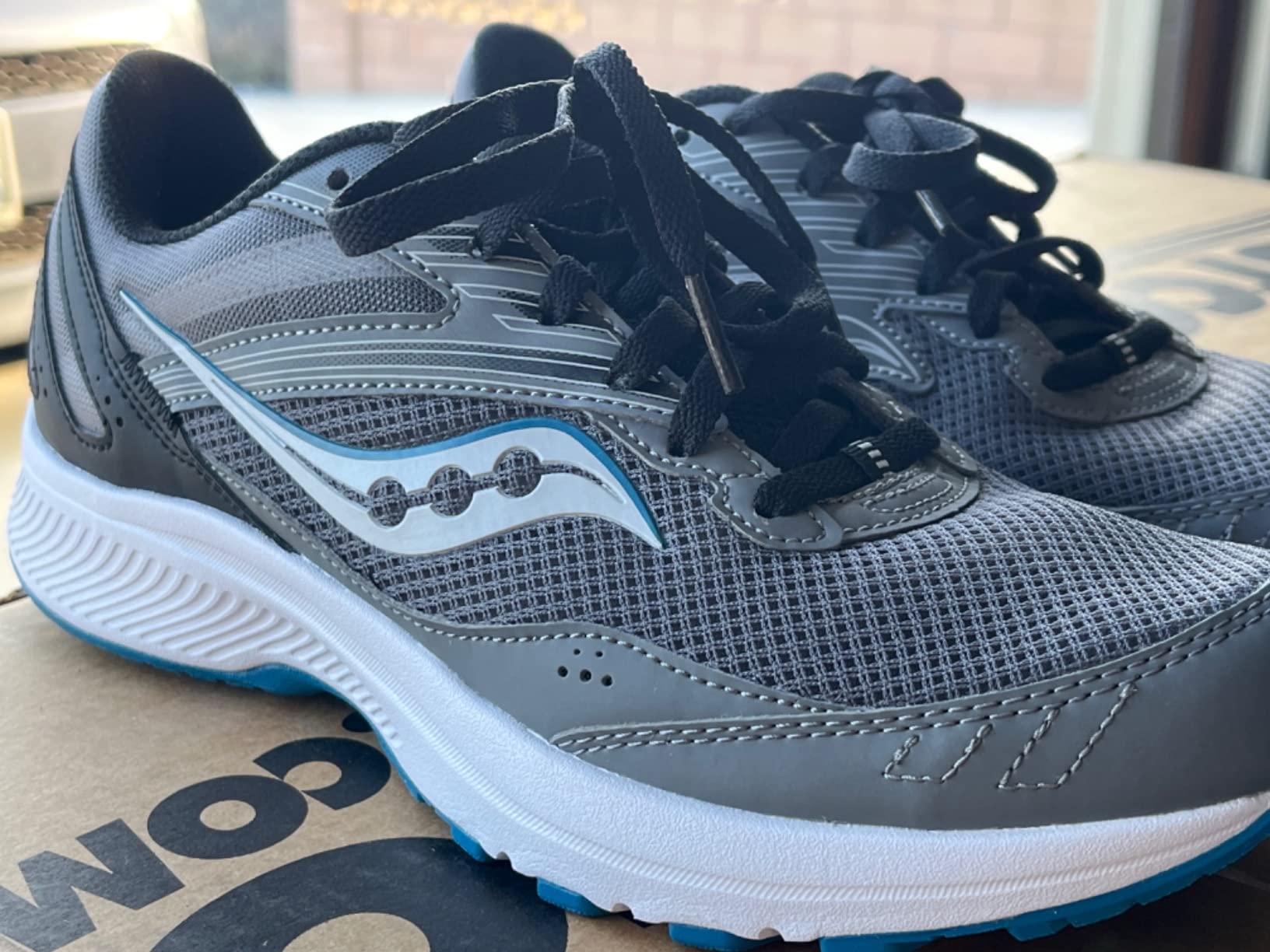
The heel counter maintained structural integrity through testing — minor compression by week six, but no collapse. The upper stayed intact over 180 miles. Projected durability of 200–300 miles is consistent with the price tier; it’s not an indictment of the shoe, just an accurate description of what budget construction delivers.
Fit, Sizing & That Lace Situation
True to size — consistently, across multiple testers and hundreds of Amazon reviews. Size 10 fit accurately: spacious toe box without sloppiness, snug heel cup, neutral arch platform that doesn’t force any particular foot mechanic. Zero break-in period is genuine; box to run with no friction or blisters.
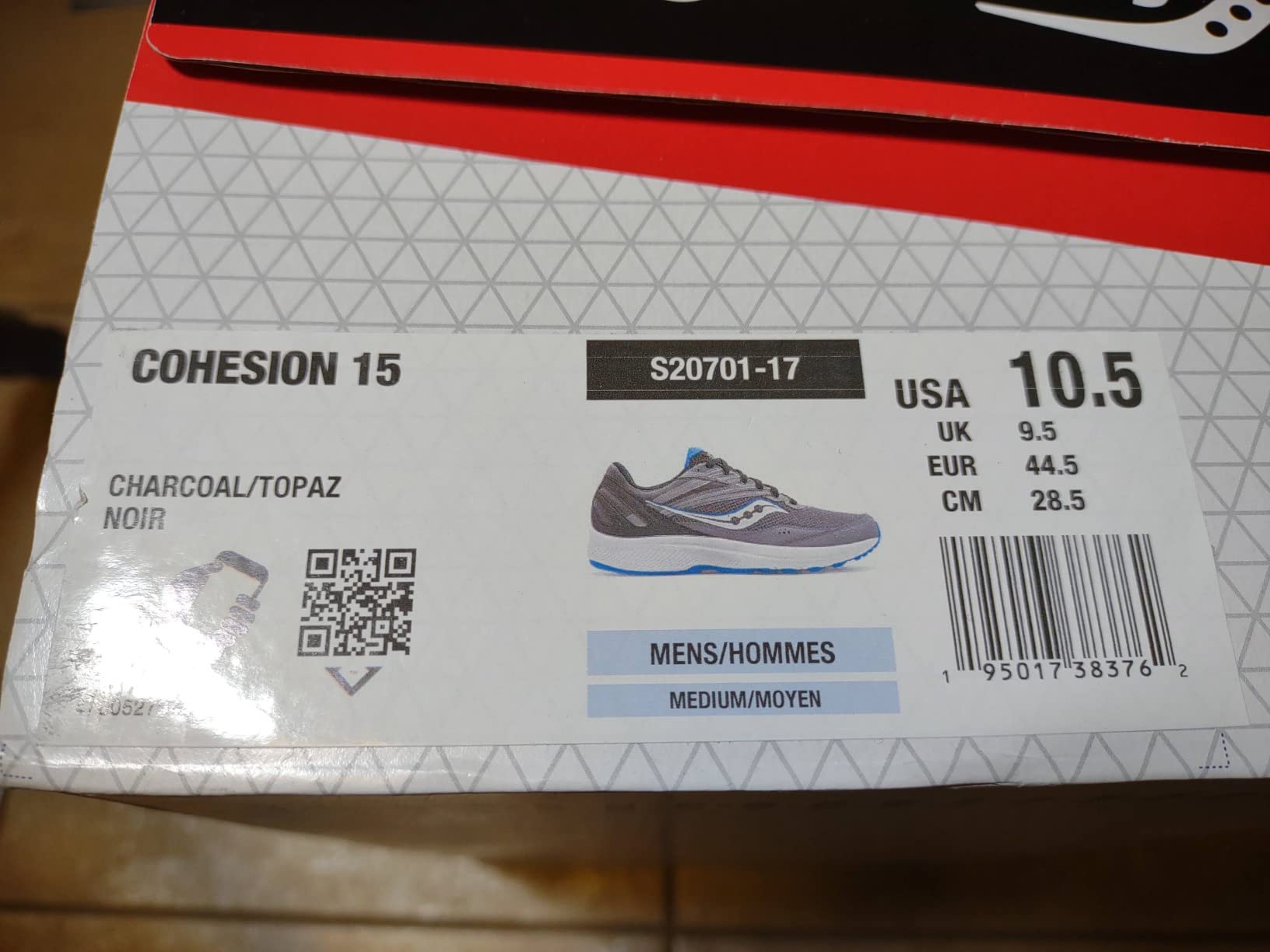
Wide feet need the wide option — the standard width isn’t forgiving for wider profiles. Doctors of Running noted the shoe runs snug overall and recommended half a size up for wide-footed runners if the wide version isn’t available.
Now, the lace situation. The stock laces run about two to three inches too long and are made from a mildly elastic material. Running Shoes Guru described needing to “tighten them down pretty hard to get a secure fit” — same experience here. On easy runs it’s manageable, but during a 9-miler at week five, the laces had loosened enough by mile 6 to require a mid-run retighten. Aftermarket flat oval laces at the correct length for your size ($5–8) fix this completely. Consider it a known cost of ownership.
The removable insole is thin — basic foam liner, not cushioning technology. For custom orthotics, the removable construction is a legitimate advantage at this price point. By week four, when the VERSARUN compression becomes noticeable, an aftermarket insole (Superfeet, Dr. Scholl’s Run) adds meaningful comfort at modest cost.
Performance Across Paces: An Honest Breakdown
Easy runs (8:30–9:30/mile): This is where the Cohesion 15 earns its value. Weeks 1–3, it handles easy miles comfortably through 7–8 miles. Weeks 4–6, the compressed midsole is more apparent on anything over 6 miles, but the shoe is still functional. As a dedicated easy-day trainer for the first 8–10 weeks of the shoe’s life, the Cohesion 15 delivers.
Tempo work (6:45–7:15/mile): Adequate in the first month, with a notable caveat: no energy return, no pop at toe-off. The wide stable platform is actually a strength here — it doesn’t flex excessively at speed. But the foam feels “dead” in the same way budget foam typically does, and after compression sets in around week four, tempo runs beyond four miles felt noticeably more fatiguing than they would in a responsive shoe.
Long runs: My 10-mile test run came at week four — the early compression phase — and the final two miles were uncomfortable: ground feel pronounced, arch fatigue setting in, upper heat adding to overall tiredness. For runners whose long runs top out at 8 miles, the Cohesion 15 works through month two. For anyone building toward half marathon distance, the shoe won’t hold up across the full training cycle.
Treadmill and gym use: A genuine strength for the Cohesion 15. Treadmill belts are far more forgiving than pavement, the water-trapping upper isn’t an issue in air-conditioned gyms, and the firm midsole is less of a factor on cushioned surfaces. For training days that include treadmill miles and light gym work, this shoe delivers real value.
Who Gets Real Value Here — and Who Doesn’t
This shoe is right for you if:
- Budget genuinely caps at $40–55 and you need a functional running shoe
- You’re new to running and don’t yet know what shoe type suits your gait
- Your weekly mileage is 10–20 miles in dry conditions
- Most of your running happens on a treadmill
- You’re buying for a teenager who will outgrow the shoe before wearing it out
- You understand the 200–300 mile lifespan and have budgeted for seasonal replacement
Look elsewhere if:
- You run in a rainy climate — the sock liner instability issue is a structural risk, not a fluke
- You train on consecutive days regularly — the firm midsole causes shin fatigue pattern
- Your weekly mileage exceeds 25 miles — the durability window is too short
- You’re building toward a half marathon or longer — the shoe won’t survive a full training cycle
- You need consistent cushioning for joint protection — compression rate is too fast
The $10–20 stretch worth making: The Under Armour Charged Assert 9 and the Nike Air Winflo 10 land in the $65–85 range and offer meaningfully better durability. Once the durability math is factored in, the value equation tilts toward those options for anyone running more than casual mileage.
How It Stacks Up Against the Alternatives
| Spec | Cohesion 15 | Brooks Launch 10 | ASICS Novablast 5 | NB 880 V14 |
|---|---|---|---|---|
| Price | $45–60 | ~$100 | $140 | $120 |
| Drop | 12mm | 10mm | 6mm | 10mm |
| Lifespan (est.) | 200–300 mi | 400+ mi | 350–450 mi | 400–500 mi |
| Best use | Budget easy miles | Daily training | Tempo / race | Long runs |
| Heat management | Poor above 75°F | Good | Excellent | Good |
| Rain suitability | Avoid (sock liner risk) | Fine | Fine | Fine |
My Overall Assessment
Six weeks and 180 miles later, the Cohesion 15 is exactly what Saucony designed it to be: an honest entry-level shoe for recreational runners who prioritize cost. Nothing about it is dishonest. The VERSARUN cushioning is genuinely comfortable for the first two months. The fit runs true to size with zero break-in friction. The rubber outsole holds up better than the midsole — an odd irony, but accurate. At $40–50 on clearance, the price is hard to argue with for a new runner or a seasonal buyer.
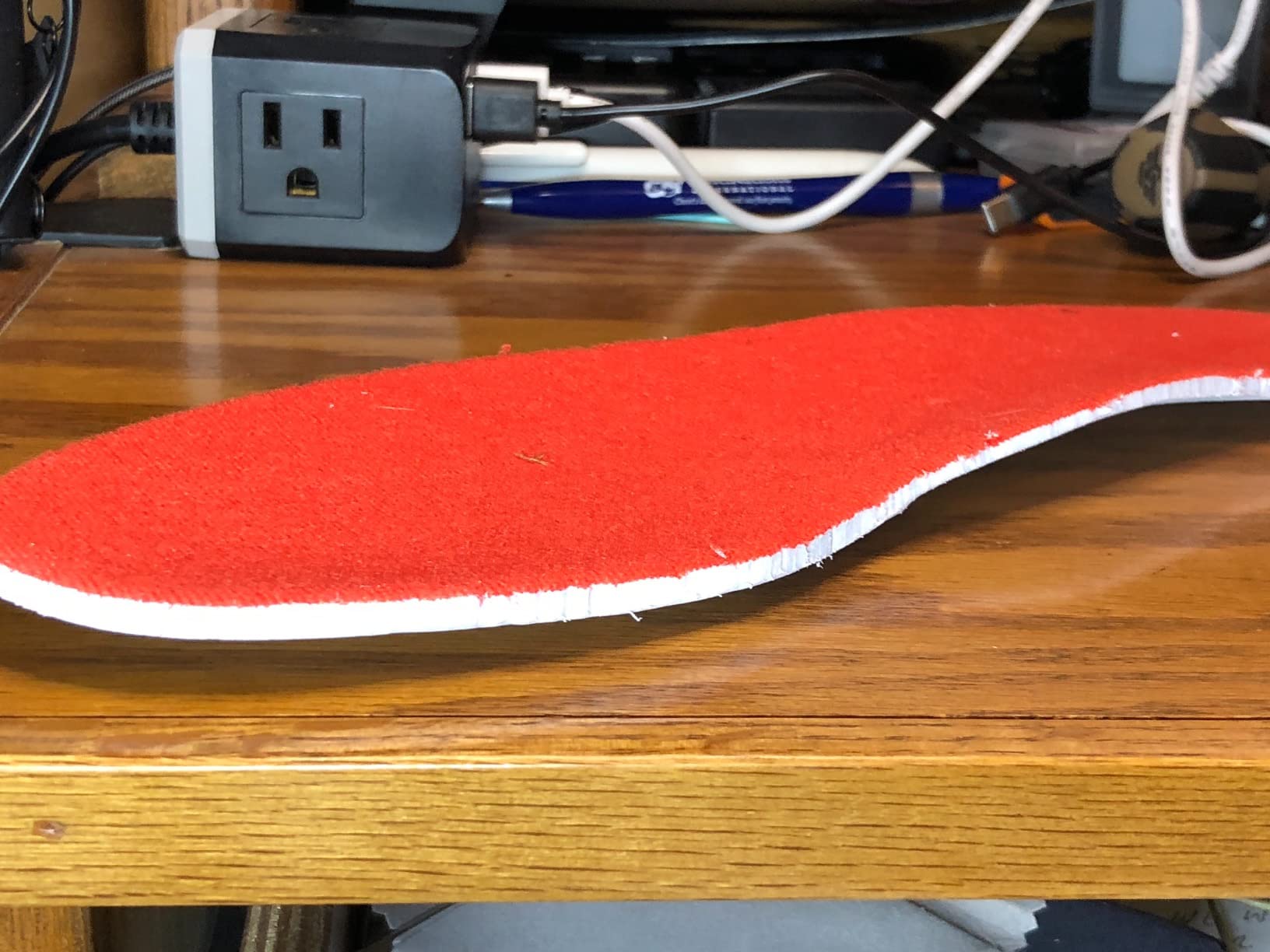
But the limitations are concrete. Midsole compression starts at week four. The upper traps water rather than managing it, and the sock liner can permanently deform in wet conditions — a risk almost no review bothers to mention. The laces need replacing. Consecutive-day shin fatigue is a real pattern from the firm midsole. At 200–300 miles of useful life, two pairs per year for a 20 mpw runner is the math.
Performance Scoring
| Category | Score (1-10) | Notes |
|---|---|---|
| Comfort | 7.5 | Plush weeks 1–3; compressed and firmer weeks 4–6 |
| Durability | 5.5 | 200–300 mile lifespan; sole separation risk at 100+ miles |
| Performance | 6.5 | Fine for easy miles; not designed for speed or distance training |
| Value | 8.5 | Compelling at $40–50; durability math weakens at $60 |
| Fit & Sizing | 8.0 | TTS, zero break-in; lace length issue noted |
| Versatility | 7.5 | Running, treadmill, casual wear; avoid in wet conditions |
| OVERALL SCORE | 7.0/10 | Solid budget option for recreational runners in dry climates |
If the Cohesion 15 leaves you wanting more — more cushion, more durability, more technology — the upgrade path within Saucony is the Saucony Endorphin Shift 3 for daily training at a meaningful step up in foam quality. Outside the brand, the ASICS Gel-Cumulus 26 holds cushioning integrity consistently through 500 miles — a genuinely different proposition for runners who train seriously. The Cohesion 15 sits in a longer line of budget Saucony trainers — the Cohesion 13 before it shared the same tradeoffs — and within its price bracket and the right use case, it does its job without apology.
Frequently Asked Questions
How long do Saucony Cohesion 15 running shoes last?
Based on 180 miles of testing and community feedback across hundreds of Amazon reviews, expect 200–300 miles before significant performance degradation. The rubber outsole holds up well past that point, but midsole compression is the limiting factor. At 15–20 miles per week, that’s roughly 3–4 months of regular use before the shoe starts feeling meaningfully different than day one.
Do Cohesion 15s run true to size?
Yes, consistently across multiple sources. Order your standard running shoe size. Wide feet should use the wide width option — the standard is fairly narrow for wider profiles. Doctors of Running noted the fit runs snug overall; if you’re between sizes or have wide feet, consider a half size up when the wide version isn’t available.
Is this shoe good for marathon training?
No. A standard marathon training cycle covers 400–600 miles over 16–20 weeks. The Cohesion 15 will compress and potentially fail structurally before the halfway point. For training distances that long, look at the New Balance Fresh Foam X 880 V14 or ASICS Novablast 5, which hold cushioning integrity through a full training block.
What’s the sock liner instability issue in wet conditions?
The removable sock liner sits in the midsole cavity on friction alone — no adhesive, no mechanical lock. When the shoe interior gets wet, that friction drops significantly, and the liner can shift laterally mid-run. Once deformed under foot pressure, it doesn’t return to its original shape. Running Shoes Guru’s reviewer experienced this on a single rain run, with the liner permanently deformed and the shoe effectively unusable afterward. Dry-climate runners won’t encounter this. Runners in rainy regions should treat it as a design limitation rather than a defect.
What’s different about the Cohesion 16?
The Cohesion 16 (released May 2023) addresses several issues: more breathable mesh with fewer synthetic overlays, a moisture-wicking lining, snugger heel fit, and slightly wider toe room. MSRP climbed to approximately $75. For new buyers deciding between the two, the 16 is the better-constructed shoe. The 15 is worth buying only at meaningful clearance discount — $40–45, not $59.
Can I use custom orthotics in the Cohesion 15?
The insole is removable, making custom orthotic use theoretically compatible. I didn’t test this, but the cavity depth after insole removal appears standard. Worth noting: the stock insole is thin enough that lightweight aftermarket insoles can often be layered without removing the stock liner, depending on your foot volume.
Is the lace problem fixable?
Completely. Replace the stock laces with standard flat oval running laces at the correct length for your shoe size — typically 45 inches for a size 10. The elastic stretch in the stock laces is the source of the lockdown problem, and flat replacement laces ($5–8 at any running shop) eliminate it entirely. It’s a minor annoyance with a simple, cheap fix.
What does the Amazon listing that says “100% Leather” mean?
That’s a product data error in the Amazon listing. The actual upper is synthetic mesh with synthetic overlays — confirmed by every reviewer who has physically handled the shoe and by Saucony’s own product descriptions. The Cohesion 15 does not have a leather upper. Do not purchase expecting one.
Be the first to review “Saucony Men’s Cohesion 15 Running Shoe”
Related products
Running Shoes
Running Shoes
Running Shoes
Running Shoes
Running Shoes
Running Shoes

Running Shoes
Running Shoes
Reviews
There are no reviews yet.