
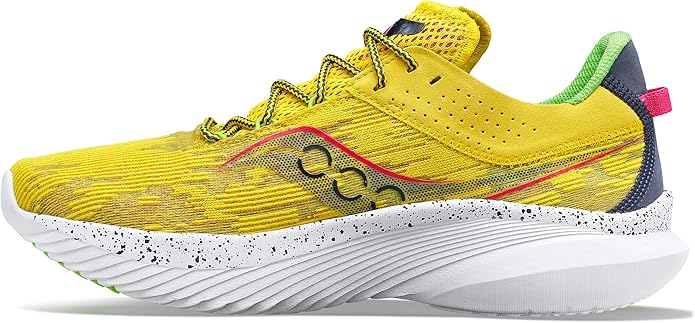
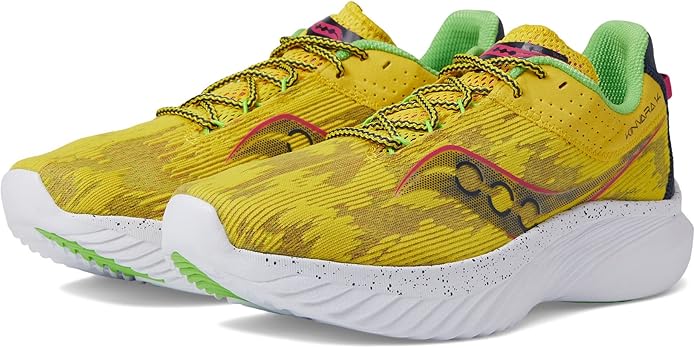
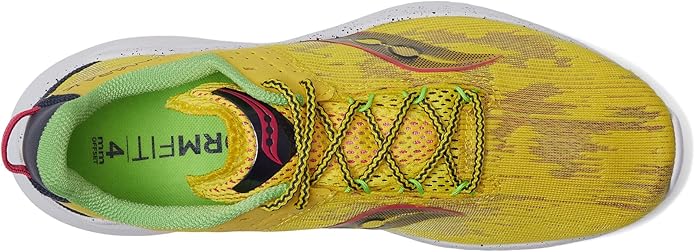
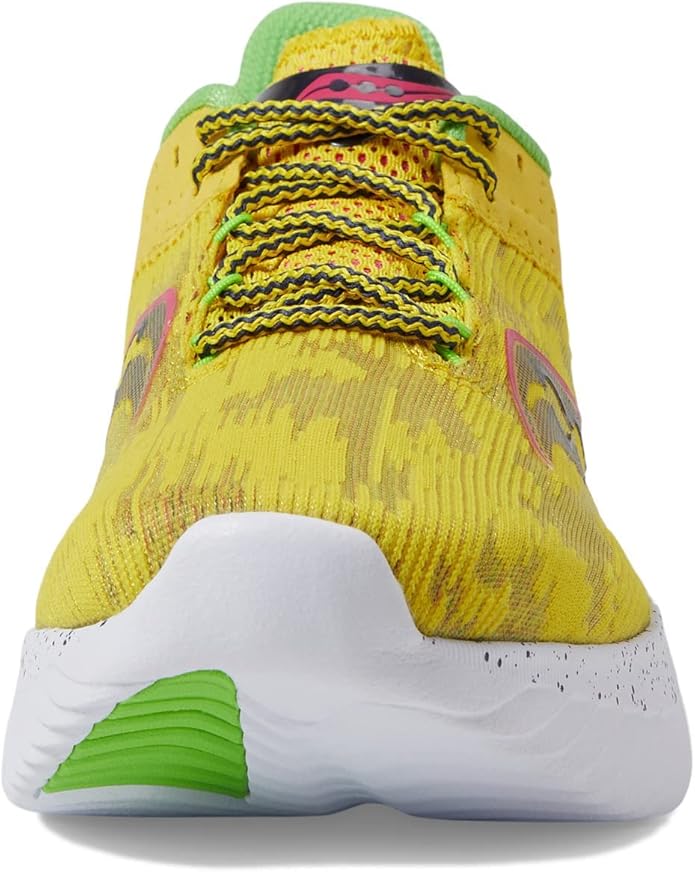
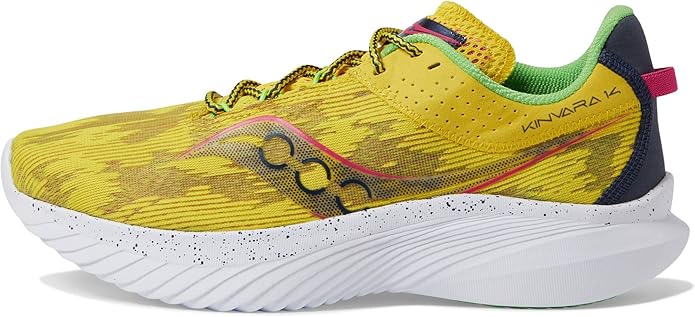
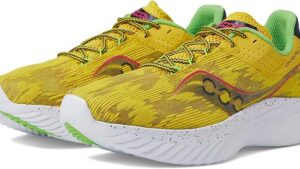
My running buddy Jason showed up to our Saturday morning group with a fresh pair and a PR. He’s 46, an accountant, not especially fast — but in six weeks he’d dropped 30 seconds off his 5K. Mike here, and after 15 years burning through every shoe brand that matters, I couldn’t let that slide without an investigation. Six months, 400-plus miles, and sixty-something sessions later, here’s what I found. The 7-ounce number on the box? That’s just where the story starts.
Quick Specs
- 💰 Price: $119.95 retail / $85–90 on sale
- ⚖️ Weight: 7.0 oz brand claim / 6.8 oz RunRepeat lab (men’s size 9)
- 📏 Drop: 4mm (lab-confirmed 4.1mm)
- 📐 Stack: 31mm heel / 27mm forefoot (lab: 30.3mm / 26.2mm)
- 🧪 Midsole: PWRRUN foam (EVA blend) — NOT PWRRUN+
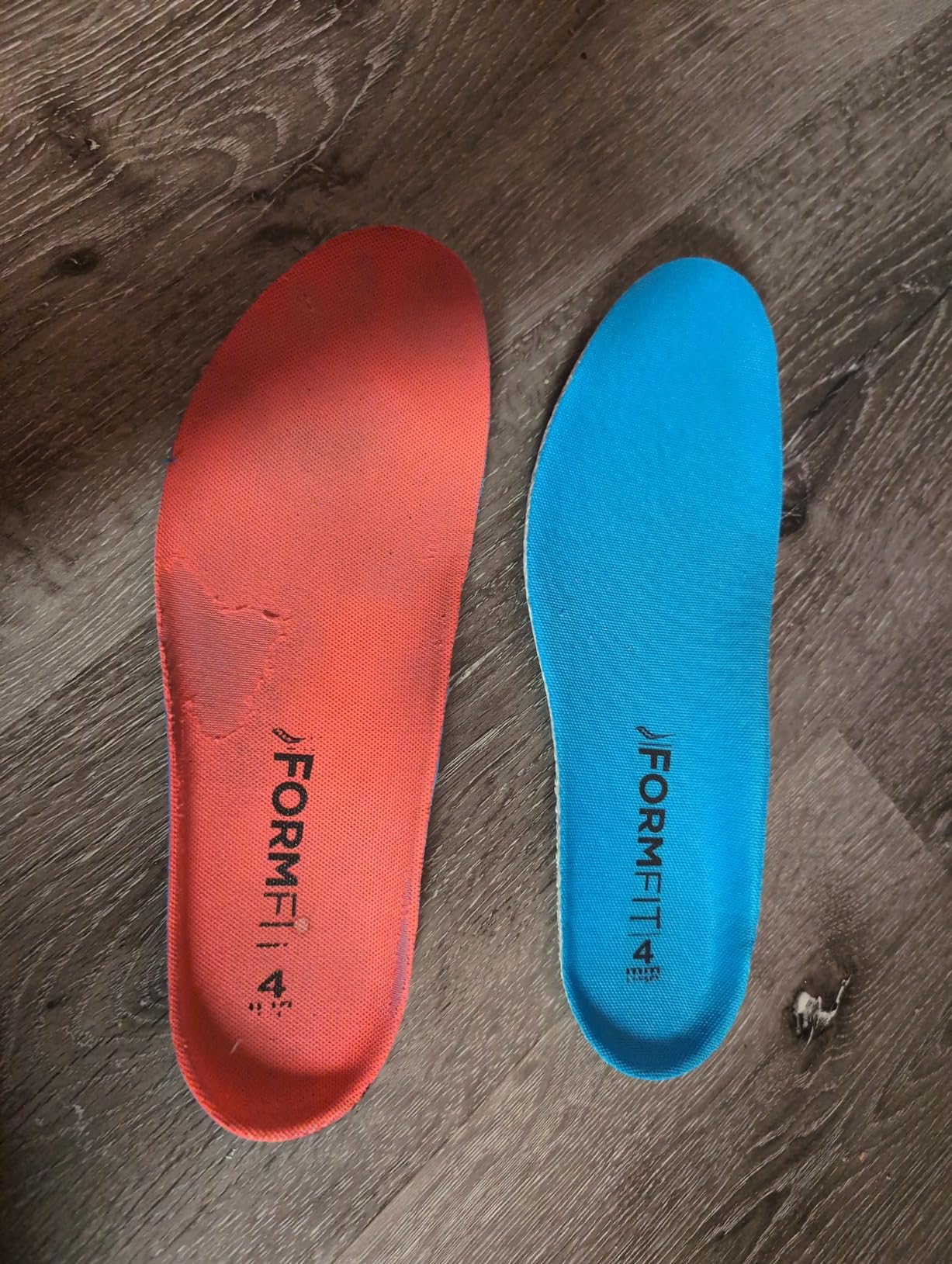
- 🦶 Insole: PWRRUN+ sockliner (TPU, removable, orthotic-compatible)
- 👟 Upper: Engineered mesh, gusseted bootie tongue
- 🏃 Category: Lightweight daily trainer / tempo shoe
- 🎯 Best for: Tempo runs, track work, 5K–half marathon
- ⏱️ Tested: 6 months, 400+ miles, 60+ sessions — Mike @ 175 lbs
First Impressions: The Weight Paradox
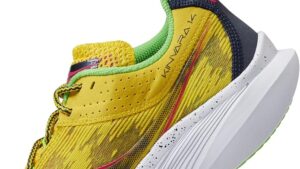
Pull the Kinvara 14 out of the box and your first instinct is to check if Saucony accidentally shipped you the display model. At 6.8 ounces by RunRepeat’s lab scale — the lightest Kinvara the brand has ever made — it genuinely feels like something’s missing.
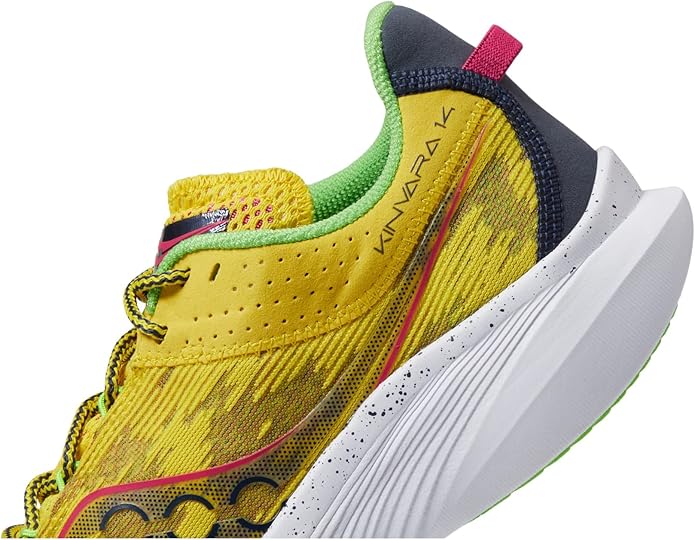
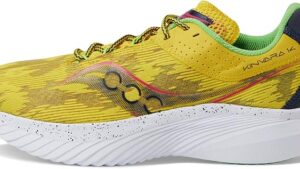
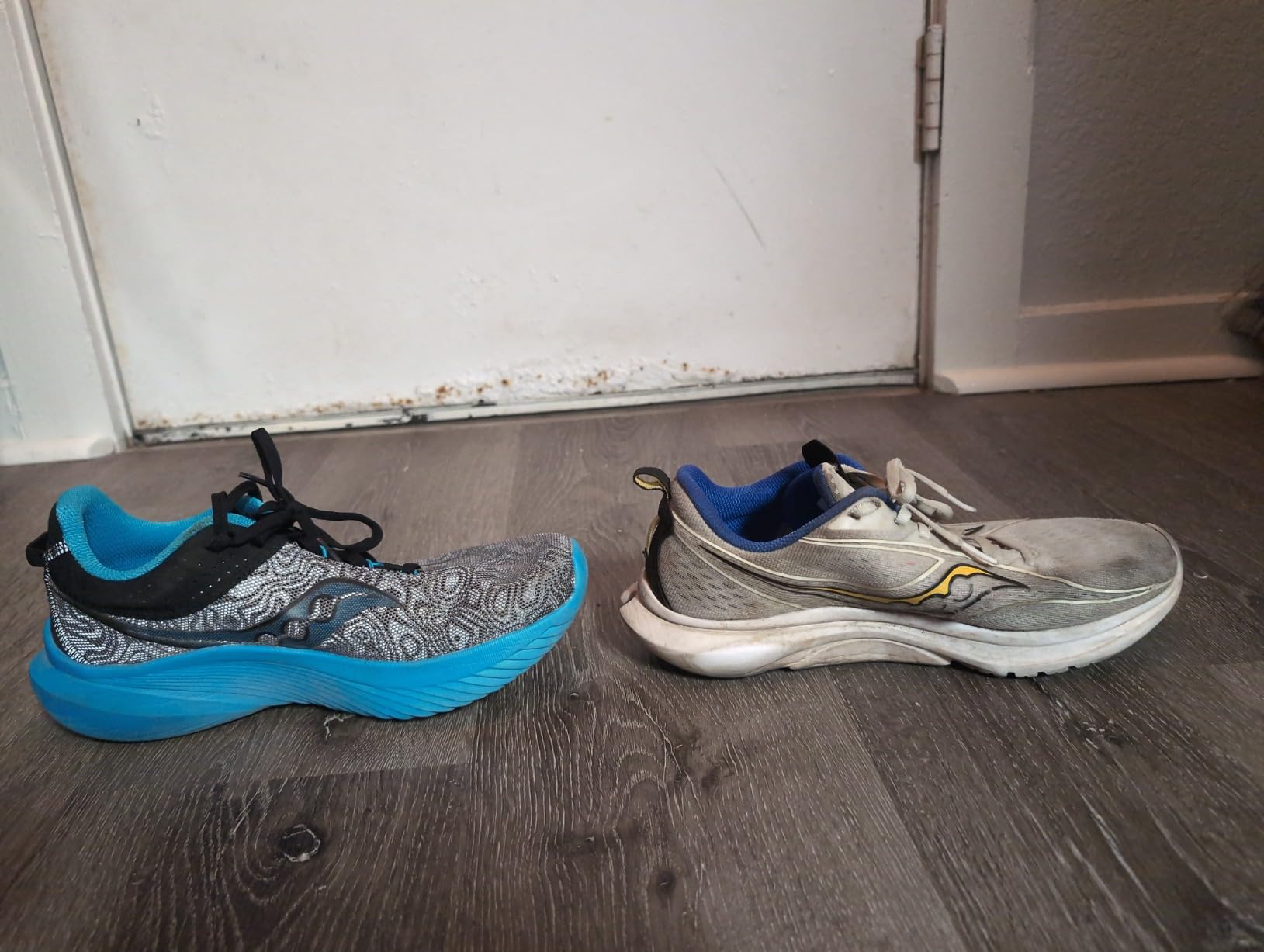
What makes this interesting is that the stack went up, not down. The Kinvara 13 sat at 28.5mm heel / 24.5mm forefoot. The 14 runs 31mm / 27mm — a meaningful 2.5mm increase across the board. Saucony pulled off the paradox by reformulating the PWRRUN midsole foam: newer generation EVA that’s lighter per unit of volume. More foam, same weight. That’s the engineering story most reviews never bother to tell.
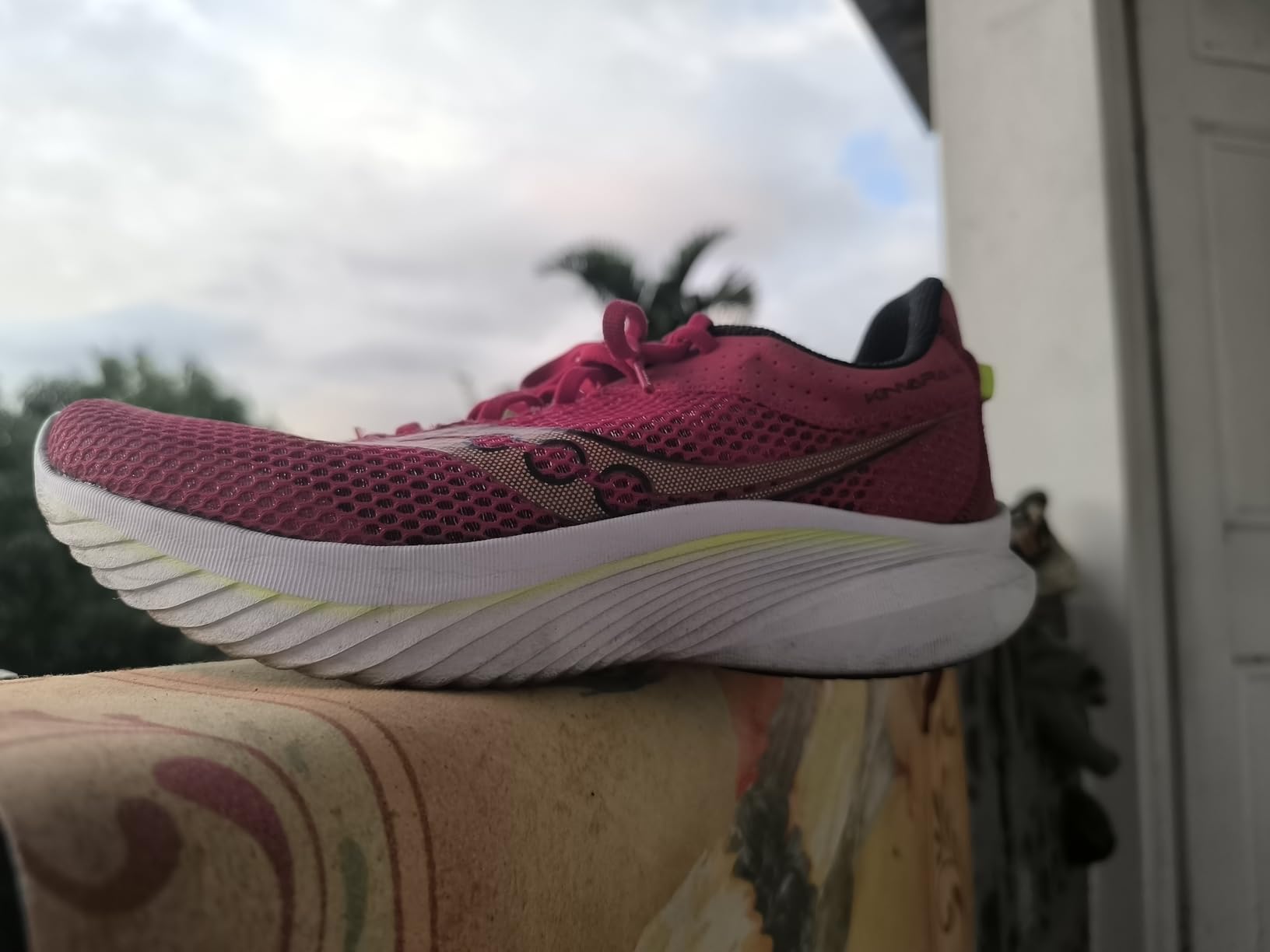
The mesh upper has a subtle iridescent quality — catches light in a way that some runners love, others find too flashy. I’m somewhere in the middle on it. What matters more is that the mesh feels substantial without being stiff, and the gusseted bootie tongue stays perfectly in place over long runs. No mid-tempo tongue creep.
Break-in was real but brief. The PWRRUN foam needs roughly 10 miles to start molding to your foot shape. First few runs feel slightly uniform underfoot; by run three or four, it starts responding in a way that feels specific to your stride.
Fit and Sizing: True to Size, With One Significant Caveat
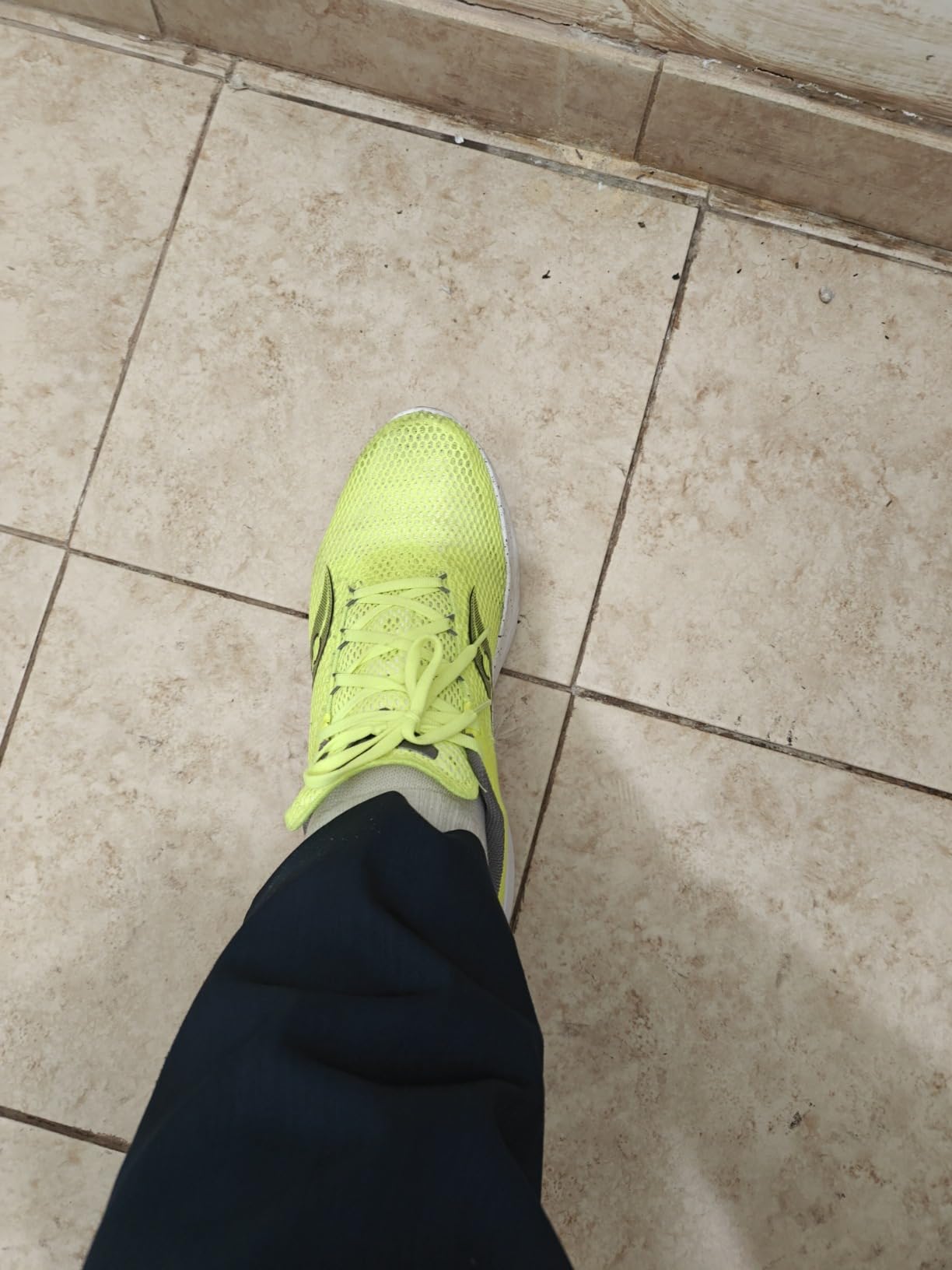
True to size holds up. RunRepeat’s 74-vote sizing survey confirms it, and my size 9 fits exactly as expected in length. Standard-width feet should order their normal size without second-guessing.
The caveat is the toe box, and it’s not minor. The Kinvara 14 runs narrow up front — RunRepeat rates it “Narrow,” DoctorsOfRunning’s Andrea experienced burning in the ball of her foot after 3–4 miles, and Runner’s World noted the snug midfoot “almost feels like the guidance you’d find on a stability shoe.” If you have wide feet or bunions, this shoe is likely going to be a problem regardless of size.
The Lacing System Issue Nobody Talks About
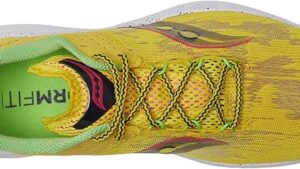
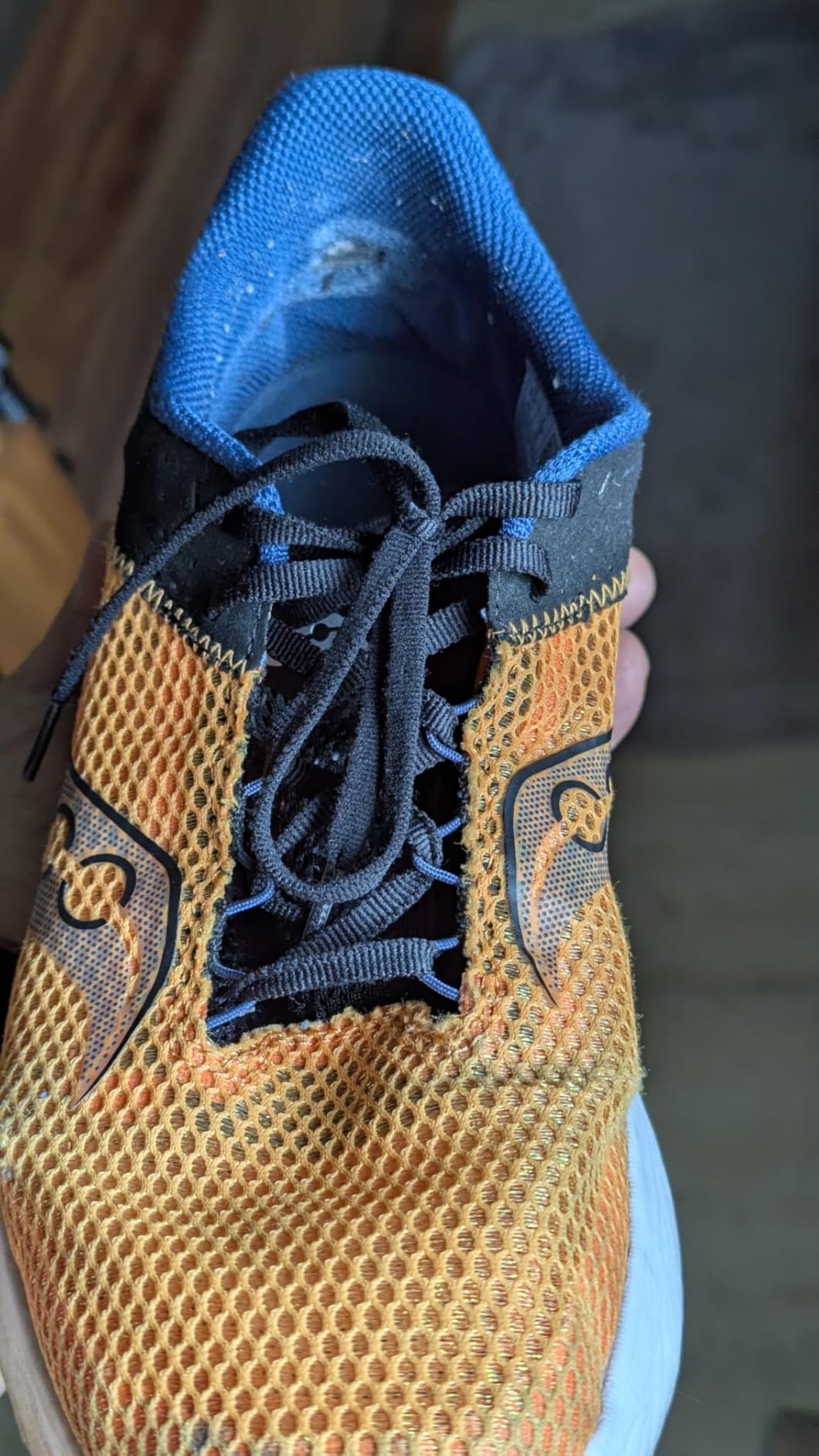
There’s a design detail in the Kinvara 14 that almost no review mentions — only DoctorsOfRunning caught it — and it matters more than it seems: the shoe uses loops instead of traditional eyelets.
From an aesthetic standpoint, it’s cleaner. From a functional standpoint, it creates a real problem for runners who need to fine-tune tension across zones. With traditional eyelets, you can loosen the forefoot while keeping the midfoot locked down — useful if you’re prone to toe numbness or carry more width in the front of your foot. With the loop system, adjusting one zone affects the whole shoe. Tighten enough for heel security and the forefoot tightens too.
This won’t matter to most runners. But if forefoot pressure or toe discomfort is something you’ve dealt with in other shoes, this is worth knowing before you buy.
Cushioning and Responsiveness: Getting the Foam Story Right
Most reviews describe the Kinvara 14 as a “PWRRUN foam shoe” and leave it at that. The actual story is more specific: the midsole uses PWRRUN (Saucony’s EVA-based standard foam — firm support, shock-absorbing) and the removable sockliner is PWRRUN+ (a separate TPU-based compound that’s 28% lighter than PWRRUN itself and significantly more responsive). They’re distinct components doing different jobs.
Pull out the PWRRUN+ sockliner and you’re riding purely on the PWRRUN midsole base. It’s still comfortable, but you lose some of the top-layer bounce. Orthotic users: swap out by week one, not later.
What the Numbers Actually Mean
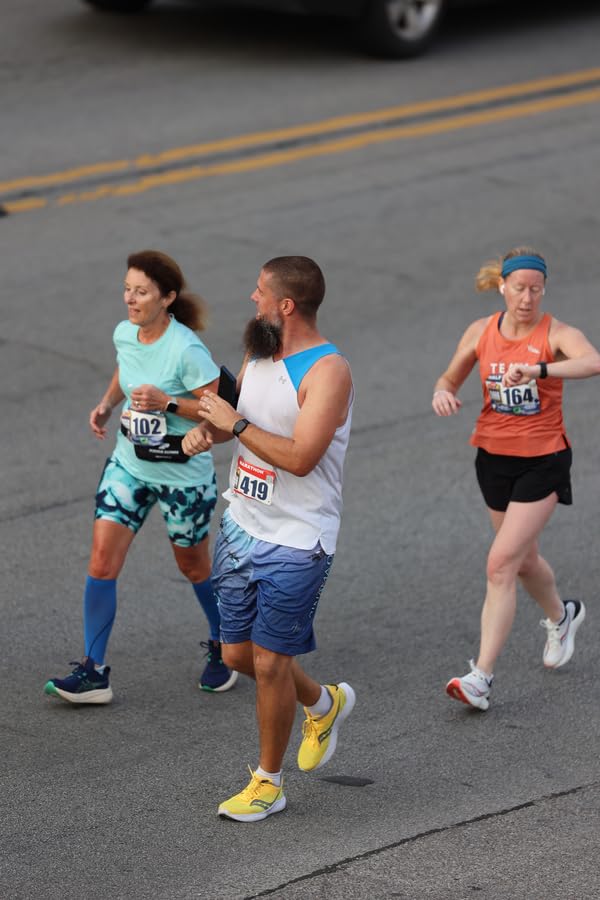
RunRepeat’s lab measured 121 SA shock absorption (category average: 130) and 56.1% energy return (average: 58.6%). Both are below average — and those numbers tell the real story about this shoe’s distance ceiling.
Below-average shock absorption means your legs are absorbing more impact per mile. That’s manageable over 5–8 miles. At 10-plus miles, cumulative impact compounds. That’s not a theory — it matches exactly what happened during my half marathon test: legs felt fresh through mile 10, noticeably underpowered in the final 3. The data and the experience align.
What partially compensates is the rocker geometry. The forefoot rocker creates a roll-forward sensation at toe-off that the lab energy return number doesn’t fully capture. During tempo runs at 6:45–7:00 pace, there’s a genuine propulsive feel that helps maintain rhythm. It’s not the mechanical assist of a carbon plate, but it’s real and noticeable.
Flexibility measured at 9.0N against an average of 15.5N — extremely flexible by the numbers. That translates to a natural, adaptive feel underfoot that works well for midfoot strikers and runners transitioning from higher-drop shoes.
The 4mm Drop Benefit
This one is worth calling out separately. The 4mm drop is harder to find in a daily training shoe than it used to be, and it has a real functional effect. Coming from traditional 10–12mm drop shoes, there’s a brief adjustment window — roughly 10–15 miles — before the gait adaptation settles in. After that, the shift toward a midfoot strike pattern reduced the knee irritation that had been bothering me at higher-drop shoes. That’s not a claim I’d make for everyone, but it’s been consistent enough in my testing to mention.
Build Quality and Materials: Where Saucony Made Trade-offs
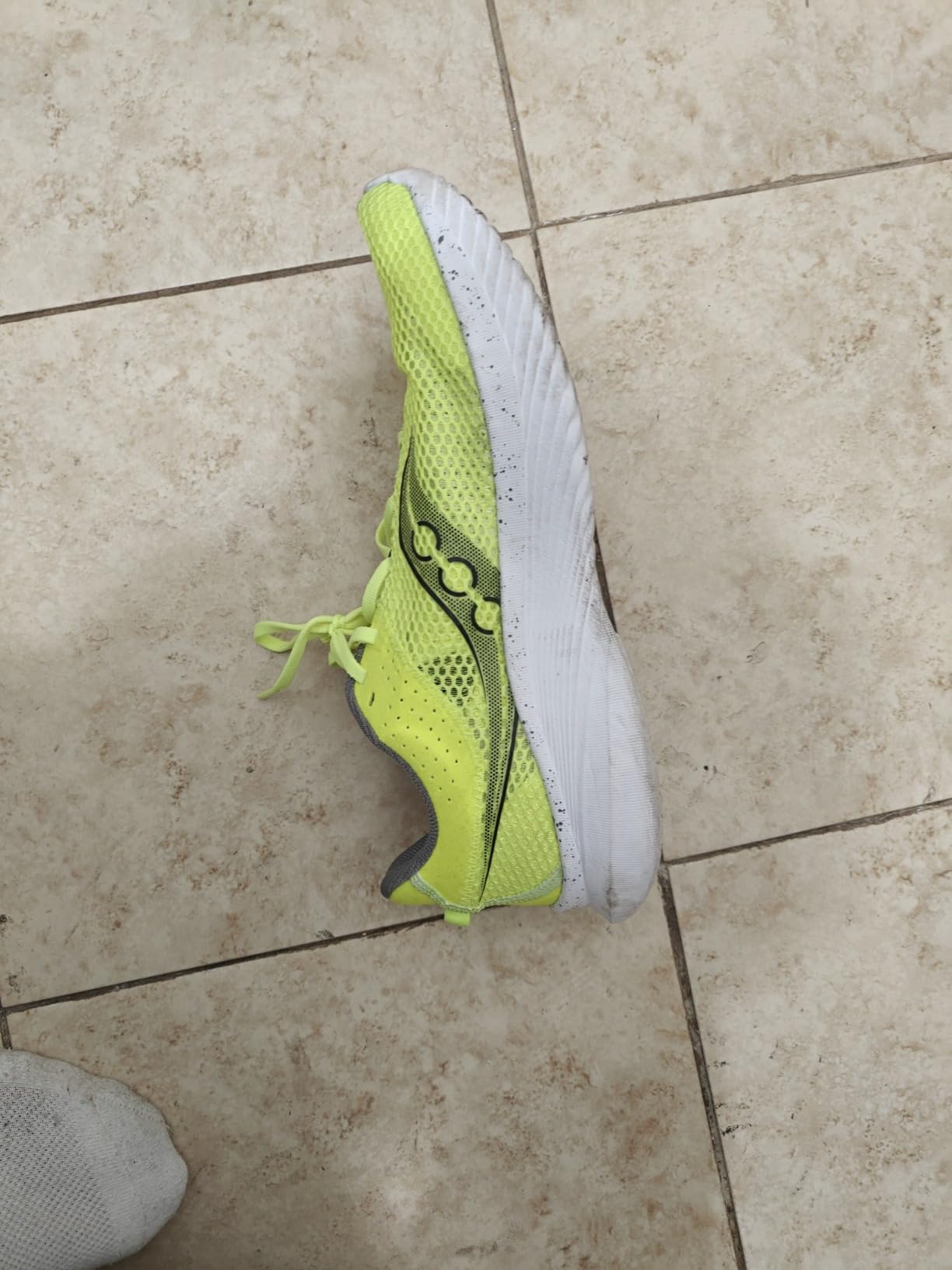
The Kinvara 14 is built around one central compromise: durability traded for weight. Understanding that going in makes the shoe a better buy.
The engineered mesh upper handles breathability well — 85°F summer runs with high humidity, feet stayed dry and comfortable throughout. The gusseted tongue and semi-rigid heel counter provide a secure platform. None of this is where the shoe falls short.
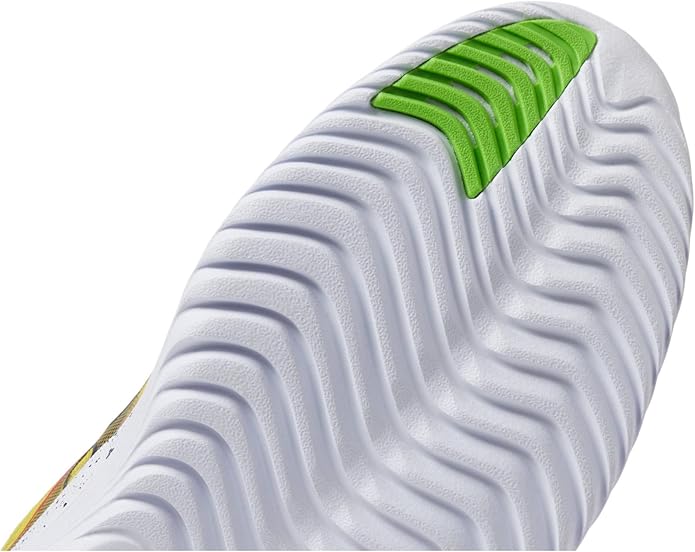
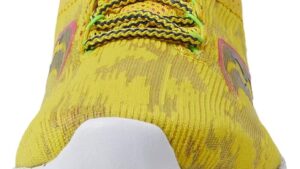
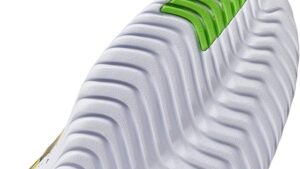
The shortfall is in longevity. Runner’s World called the upper “a bit cheap, not particularly durable.” That tracks. The mesh holds up for the first 50–100 miles without issues. By month 3–4, stress patterns start showing near the toe box. The outsole rubber coverage is minimal by design — less rubber means less weight. The exposed midsole foam that results wears faster and loses traction as it does.
The PWRRUN+ sockliner compresses over time too. First 100 miles feel noticeably more responsive than miles 200–300. This isn’t unique to Kinvara — it’s the nature of most foam insoles — but it’s worth noting if you’re tracking comfort across the shoe’s lifespan.
Durability Reality Check: The Three Failure Points
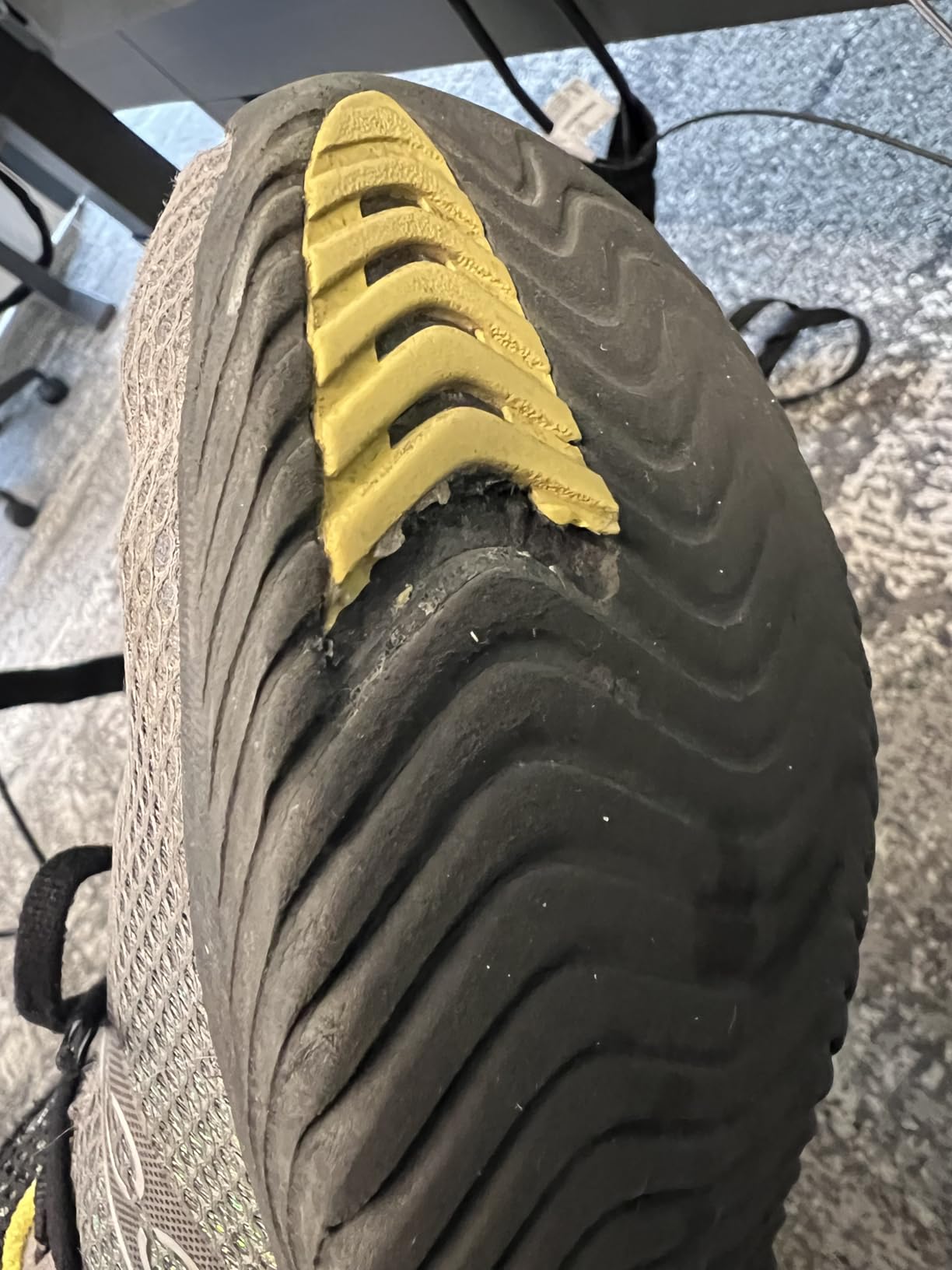
The Kinvara 14 is not a high-mileage workhorse. Every review mentions this, but almost none of them document exactly when and how the shoe breaks down. After 400-plus miles, here’s the actual failure timeline:
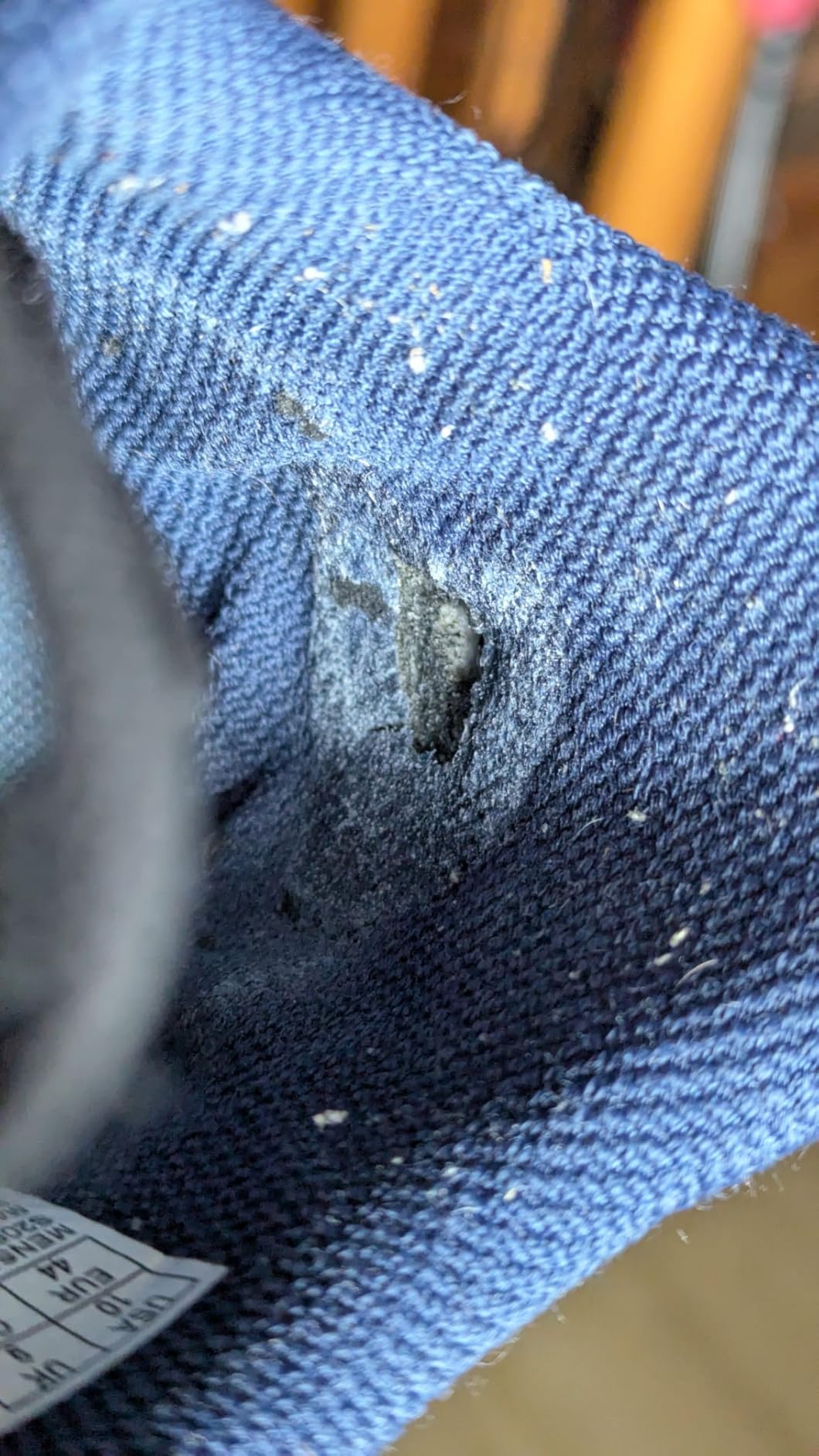
Failure Point 1: Mesh tearing near the pinky toe — around month 4 / 250 miles
The toe box taper concentrates stress on the outer mesh at the little toe area. A small hole developed first, expanded as miles accumulated. This is consistent with RunRepeat’s “bad” rating for toe box durability and DoctorsOfRunning’s documentation of lateral midfoot wear starting at 35 miles.
Failure Point 2: Outsole rubber wear affecting wet traction — around 300 miles
The minimal rubber coverage means the exposed PWRRUN foam becomes the contact surface as rubber sections wear away. Foam grips dry pavement reasonably well. On wet pavement — and particularly on wet track surfaces — the degraded outsole becomes noticeably less reliable. The 0.40 traction score from RunRepeat already puts the fresh shoe below the 0.50 category average. At 300 miles, that gap widens.
Failure Point 3: Lacing attachment stress — month 3–6, depending on tension habits
The loop lacing system concentrates stress differently than traditional eyelets. Under repeated high tension, the upper attachment points show wear and slight looseness starts developing in the overall fit. Not immediate failure, but an indicator of the system’s long-term limitation.
Lifespan by Running Load
| Weekly Mileage | Expected Lifespan | Cost/Mile at $90 |
|---|---|---|
| 20–30 mi/week (light) | 350–450 miles | $0.20–0.26/mile |
| 30–40 mi/week (moderate) | 250–350 miles | $0.26–0.36/mile |
| 40+ mi/week (high volume) | 200–250 miles | $0.36–0.45/mile |
For context: a durable daily trainer like the ASICS Gel-Cumulus 26 typically runs 500–600 miles at $130 retail — $0.22–0.26/mile. The Kinvara 14’s cost-per-mile math only works if you’re using it as a specialty tempo shoe on rotation, not as a primary daily trainer.
Performance Across Conditions
Tempo Runs and Track Work
This is the shoe’s territory. At 6:45–7:00 pace, the combination of featherweight construction and rocker-assisted toe-off makes tempo miles feel noticeably more effortless. Track intervals are even better — the flexibility and light platform allow for a natural, efficient stride at speeds where heavier daily trainers start to feel clunky. DoctorsOfRunning’s Matt called it “excellent for track workouts and shorter tempo runs,” and that matches six months of experience.
Comfort holds well through 8–10 miles at these paces. The shoe does what it promises at the distances and speeds it’s designed for.
Daily Easy Runs
Perfectly capable for easy-pace daily miles up to 8 miles. The lightweight feel makes easy days feel less labored, which is a real psychological benefit on tired-legs recovery days. Beyond 8–10 miles, the stack limitations start registering — not uncomfortable, but noticeably more fatiguing than a max-cushion daily trainer would be at the same distance.
The Half Marathon Ceiling
Completed one half marathon in these. The honest assessment: fine through mile 10, slightly underpowered in the final 3.1. The 121 SA shock absorption (below average) means cumulative impact fatigue builds faster than it would in a more cushioned shoe. It’s doable — other runners have gone full marathon distance in earlier Kinvara versions — but the Kinvara 14’s stack isn’t particularly forgiving at race-distance volumes. There are better choices for half marathon and beyond.
Heat and Breathability
Genuine standout. The engineered mesh at 85°F summer runs performed exactly as advertised — no swamp conditions, no overheating, noticeably better than closed upper alternatives. Summer training is a strong use case for this shoe. Above 85°F, the PWRRUN foam does firm slightly in the heat, which affects responsiveness, but it’s a modest change rather than a dramatic shift.
Wet Weather and Traction
Avoid. Fresh shoe traction is already below average at 0.40 (average: 0.50). Once the outsole rubber sections wear down at 300-plus miles, wet pavement grip drops further. Light rain on a dry track is manageable. Running in rain as a regular habit will accelerate the traction problem and the durability issues simultaneously.
Kinvara 14 vs. Kinvara 13: What Actually Changed
The stack increase (28.5/24.5mm → 31/27mm) is the headline change, and it matters: the 14 is noticeably more cushioned than the 13 underfoot. Whether that’s an upgrade depends entirely on what you loved about the 13.
Long-time Kinvara users tend to fall into two camps on the 14. If you used the 13 for its moderate-cushion, semi-minimal feel and don’t mind more stack, the 14 delivers that with better energy efficiency through the lighter foam. If you used the 13 precisely because it felt closer to the ground and more connected, the 14 moves further from that — more cushion, slightly more platform underfoot.
The bootie tongue is an unambiguous improvement. The more pronounced rocker geometry is a genuine performance upgrade for tempo-focused runners. The loop lacing system is a step backward for fit customization. Durability appears comparable — the same minimalist outsole design means similar failure timelines regardless of which generation you’re on.
Who Should Buy the Kinvara 14
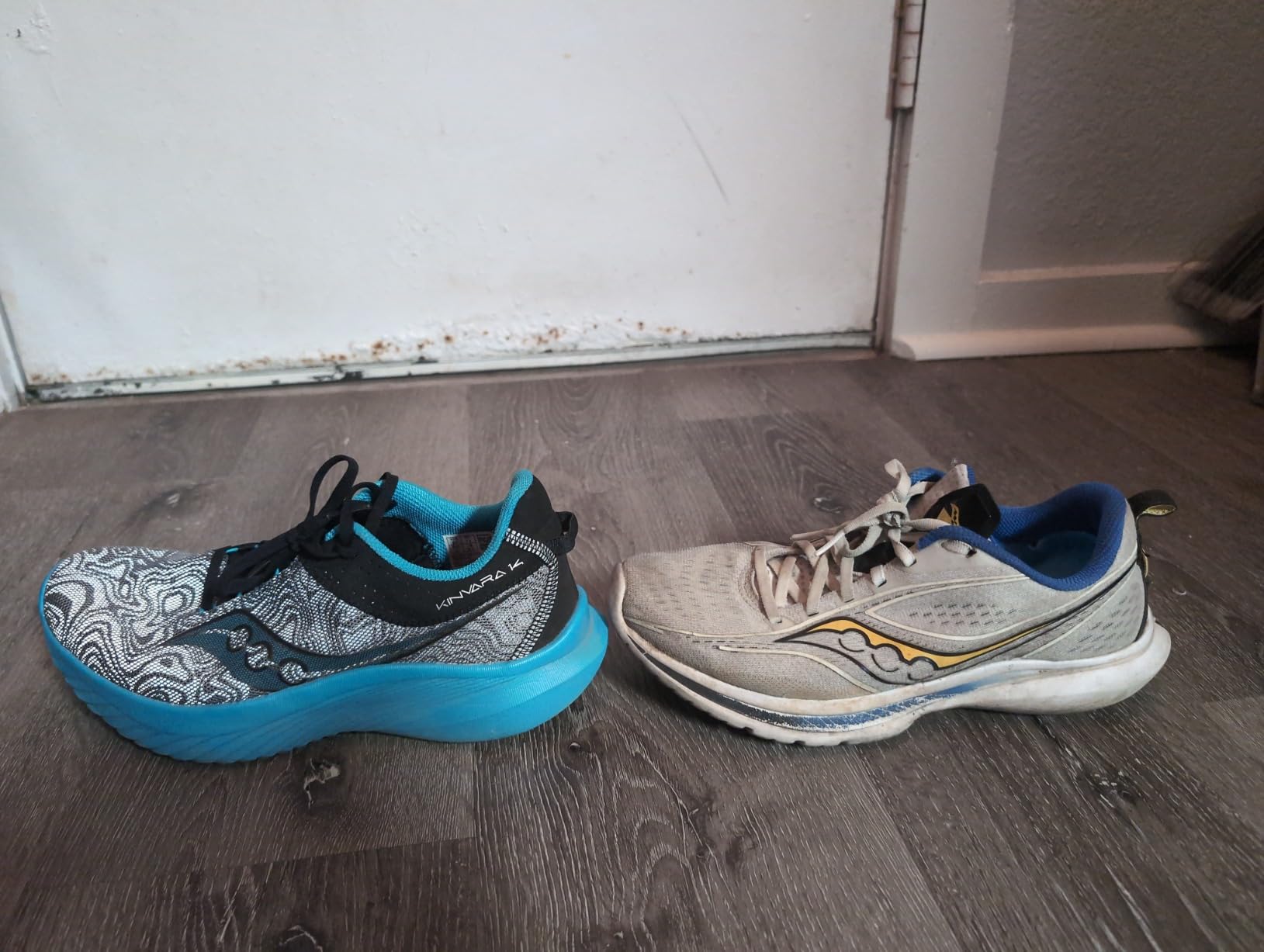
Strong candidates:
- Runners doing 30–40 miles per week who rotate shoes and don’t need maximum mileage from one pair
- Tempo specialists and track runners who want a responsive, lightweight platform for faster efforts
- 5K–half marathon racers looking for a non-plated racing shoe that doesn’t cost $200+
- Standard to medium-width feet — the fit works well for this profile
- Summer and warm-weather runners who prioritize breathability
- Runners transitioning away from high-drop shoes who want the 4mm drop benefit with reasonable cushioning
Skip it if you need:
- High-mileage durability — 40+ miles per week will burn through these in 3–4 months
- Wide toe box accommodation — the narrow design is a hard constraint even in the Wide option
- Wet weather capability — traction is below average fresh and worsens with mileage
- A sole primary daily trainer — the cost-per-mile at high volume is too high without rotation
- Fine-tunable forefoot lacing — the loop system won’t cooperate for zone-specific adjustments
The rotation approach is where this shoe makes the most sense: pair it with a more cushioned, durable daily trainer like the New Balance Fresh Foam X 880 V14 or the ASICS Gel-Cumulus 26 for easy and long runs, and reserve the Kinvara 14 for tempo work, track sessions, and race days. That rotation strategy extends the shoe’s effective lifespan significantly and uses it at its best.
Scoring Breakdown
| Category | Score | Notes |
|---|---|---|
| Comfort | 8.5/10 | Excellent through 8–10 miles; personalizes after break-in |
| Performance | 9.0/10 | Outstanding for tempo and track; rocker delivers genuine propulsion |
| Durability | 5.5/10 | Multiple failure points before 350 miles; consistent across testing and lab data |
| Value | 7.0/10 | Competitive at $85–90 sale price for specialty use; harder to justify at $120 |
| Fit & Sizing | 7.5/10 | True to size, but narrow toe box and loop lacing limit accessibility |
| Versatility | 8.0/10 | Road and track excellent; weather and distance limited |
| OVERALL | 7.5/10 | Excellent specialty trainer; durability prevents higher overall score |
Frequently Asked Questions
Does the Kinvara 14 run true to size?
Yes — length-wise, true to size is accurate for most runners (RunRepeat 74-vote survey confirms). The issue is width, not length. The toe box runs narrow, so if you have wide feet or carry extra width in the forefoot, you’ll likely need to size up half a size or find a different shoe entirely.
What’s the difference between PWRRUN and PWRRUN+ in this shoe?
These are two separate components. PWRRUN is the midsole foam — a proprietary EVA blend that delivers cushioning and shock absorption. PWRRUN+ is the removable sockliner — a TPU-based foam that’s 28% lighter than PWRRUN and more responsive. The midsole drives the ride feel; the insole adds a top layer of comfort and can be swapped for custom orthotics.
How many miles will the Kinvara 14 last?
250–350 miles depending on running load, gait, and surfaces. At 30–40 miles per week, expect 3–6 months before significant wear. The three failure points to watch: mesh tearing near the pinky toe around month 4, outsole rubber degrading around 300 miles, and lacing attachment stress starting month 3–6.
Is it good for half marathon racing?
Capable but not optimal. The shoe handles 5K and 10K distances well. At half marathon distance, you’ll notice the below-average shock absorption (121 SA vs. 130 average) in the final miles — legs work harder to absorb cumulative impact. It’s been done; it’s not the best tool for that distance.
Can I use these as my primary daily trainer?
Only if you rotate with a more durable pair. As a sole daily trainer at 40+ miles per week, the cost-per-mile math doesn’t work and the durability timeline is too short. Used as a tempo/track shoe one to two times per week in rotation with a more cushioned daily trainer, it makes much more sense.
What’s the lacing system problem?
The Kinvara 14 uses loops instead of traditional metal eyelets. This creates a fixed tension relationship between zones — when you loosen the forefoot, the midfoot and heel loosen too. Runners who need to run the front of the foot looser than the midfoot to avoid numbness or toe pressure won’t be able to do that here. It’s a real limitation for a specific group of runners.
How does it compare to the Kinvara 13?
More cushioned (31/27mm vs 28.5/24.5mm stack), lighter overall despite the stack increase, more pronounced rocker geometry, and improved gusseted tongue. The loop lacing is a step backward from traditional eyelets. Durability is roughly comparable — same minimalist outsole design means similar failure timelines. If you loved the 13 and want slightly more cushion with better propulsion, the 14 delivers that.
Are these good for wet weather running?
No. Traction scores below average (0.40 vs. 0.50 category average) even when fresh. As the minimal outsole rubber wears down around 300 miles, wet grip deteriorates further. These are dry pavement, warm weather shoes.
Can you use them on trails?
Not recommended. The minimal outsole coverage, flexible midsole, and below-average traction make them unsuitable for anything beyond groomed gravel paths. They’re road and track shoes.
What shoes should I consider instead for wide feet?
The ASICS Gel-Cumulus 26 offers a more accommodating toe box with better durability at similar pricing. The New Balance Fresh Foam X 880 V14 runs wider in the forefoot and offers significantly better mileage per pair.
What’s the best price to buy at?
$85–90 on sale. At $120 retail, the durability concerns make it a harder sell — the cost-per-mile math at $120 over 250–350 miles runs $0.34–0.48/mile, which is expensive when comparable-performing alternatives last twice as long. At $85–90, the value case is much stronger for its intended use as a specialty shoe.
Final Verdict
Jason’s PRs made more sense after six months in these. The Kinvara 14 genuinely delivers on speed-focused performance — the rocker-assisted toe-off, the 6.8-ounce weight, the natural flexibility all add up to a shoe that makes tempo runs feel efficient and track sessions feel sharper. For the right use case and the right runner, the “7-ounce shoe” reputation is fully earned.
The durability asterisk is real but specific: mesh tears around month four, outsole rubber degrades around 300 miles, and the loop lacing system limits fit fine-tuning that traditional eyelets allowed. These aren’t surprises — they’re the direct result of deliberate weight-saving construction choices. Know that going in and you’re making a conscious trade-off for performance, not getting blindsided by a defective product.
Buy on sale at $85–90. Use it as your tempo and track shoe in rotation with a more durable daily trainer. Accept the 250–350 mile lifespan for what it is — the cost of having one of the lightest, most responsive non-plated trainers on the market.
Overall Score: 7.5/10 — Excellent specialty performance, limited by durability and a few design constraints.
Be the first to review “Saucony Mens Kinvara 14 Sneaker”
Related products
Hiking/Trekking Shoes
Hiking/Trekking Shoes
Running Shoes
Running Shoes
Running Shoes
Running Shoes
Running Shoes
Running Shoes
Reviews
There are no reviews yet.