
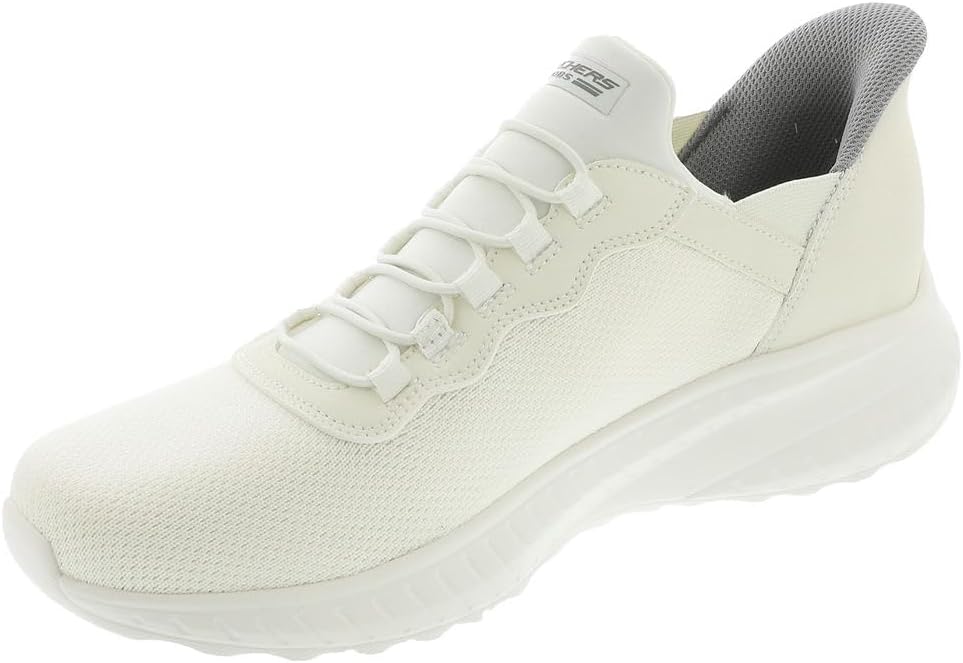
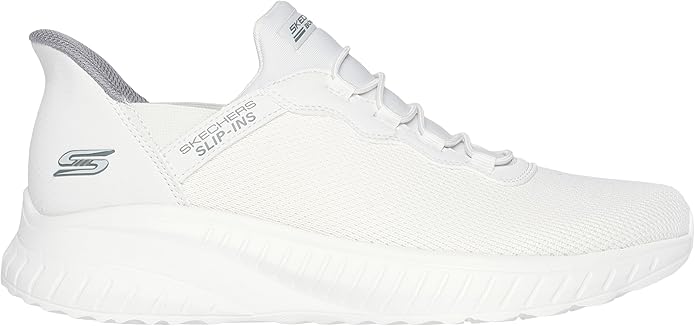
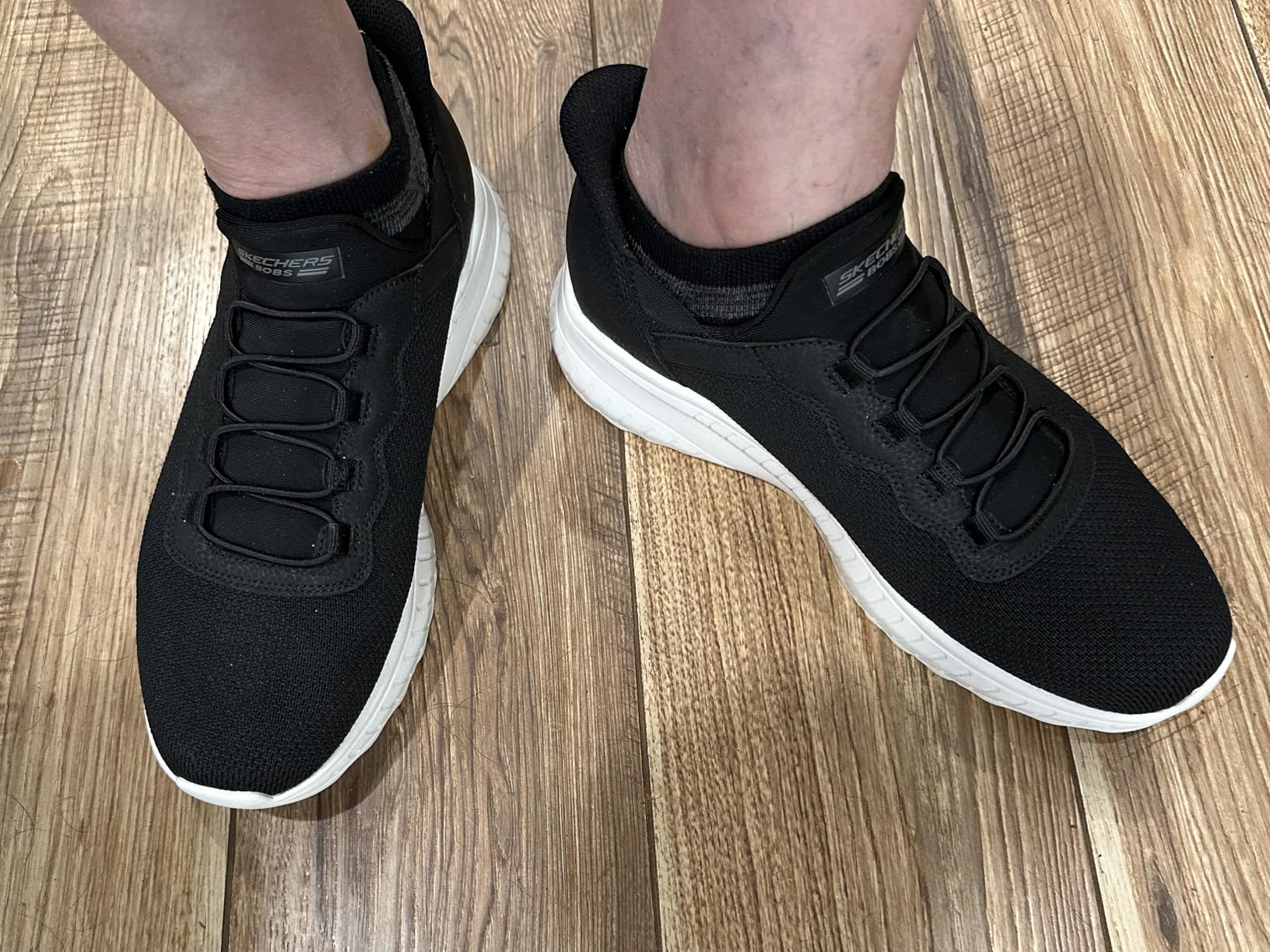
My last three pairs of lace-up sneakers lasted an average of four months apiece. I wasn’t doing anything unusual — dog walking, grocery runs, the occasional airport sprint — but every pair developed the same failure point: the lace eyelets pulled through the upper, leaving me with shoes that either stayed on or didn’t. When my third pair gave out in six months, I stopped looking for better lace-ups and started asking a different question: what happens if I try something built for the way I actually move through a day?
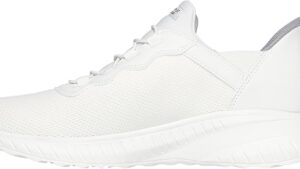
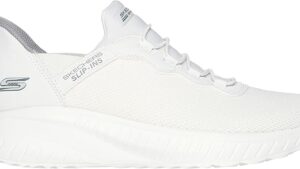
My name is Mike, and that question led me to the Skechers Men’s Hands Free Slip-ins Bobs Squad Chaos. I wore these for six weeks — 42 wear days, somewhere north of 150 hours — in every scenario that matters for a casual daily shoe: grocery shopping, dog park trips, a four-city travel week, and three separate rainy-day errands that tested something no Skechers commercial will show you.
Here’s what I found, the good and the honest.
Technical Specifications
- 💰 Price: $60–75 (MSRP; sale pricing common at $55+)
- ⚖️ Weight: 11.2 oz (men’s size 9)
- 🧪 Midsole: Skechers Memory Foam insole (removable)
- 👟 Upper: Engineered knit mesh
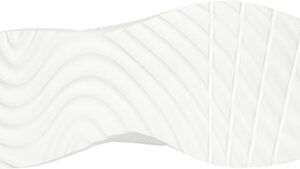
- 👞 Outsole: Synthetic rubber
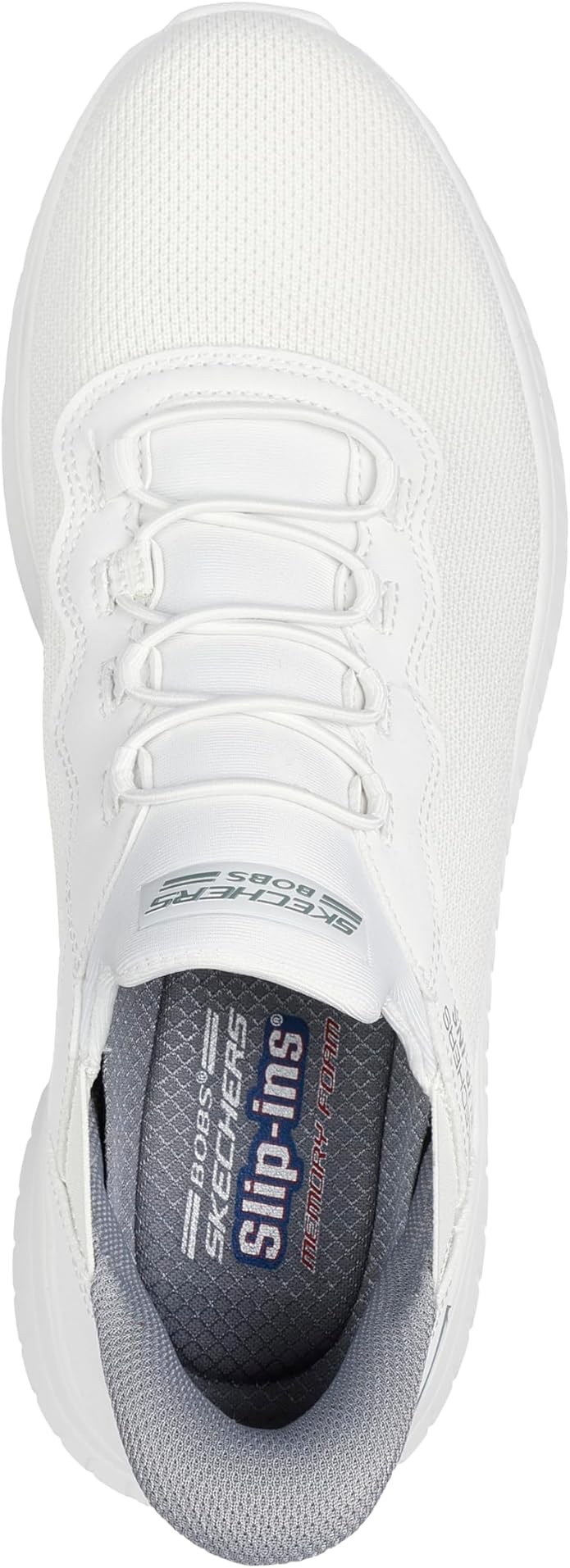
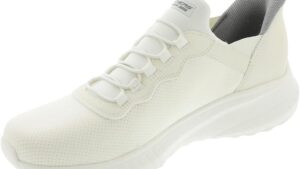
- 🔒 Closure: Fixed elastic stretch laces + Heel Pillow® collar
- 🏃♂️ Category: Casual lifestyle sneaker
- 🎯 Best for: Daily wear, convenience, light walking, travel
- ⏱️ Testing period: 6 weeks, 42 wear days, 150+ hours
- 🔧 Special features: Hands Free Slip-in design, machine washable, vegan materials, BOBS charitable sub-brand
First Impressions and Build Quality
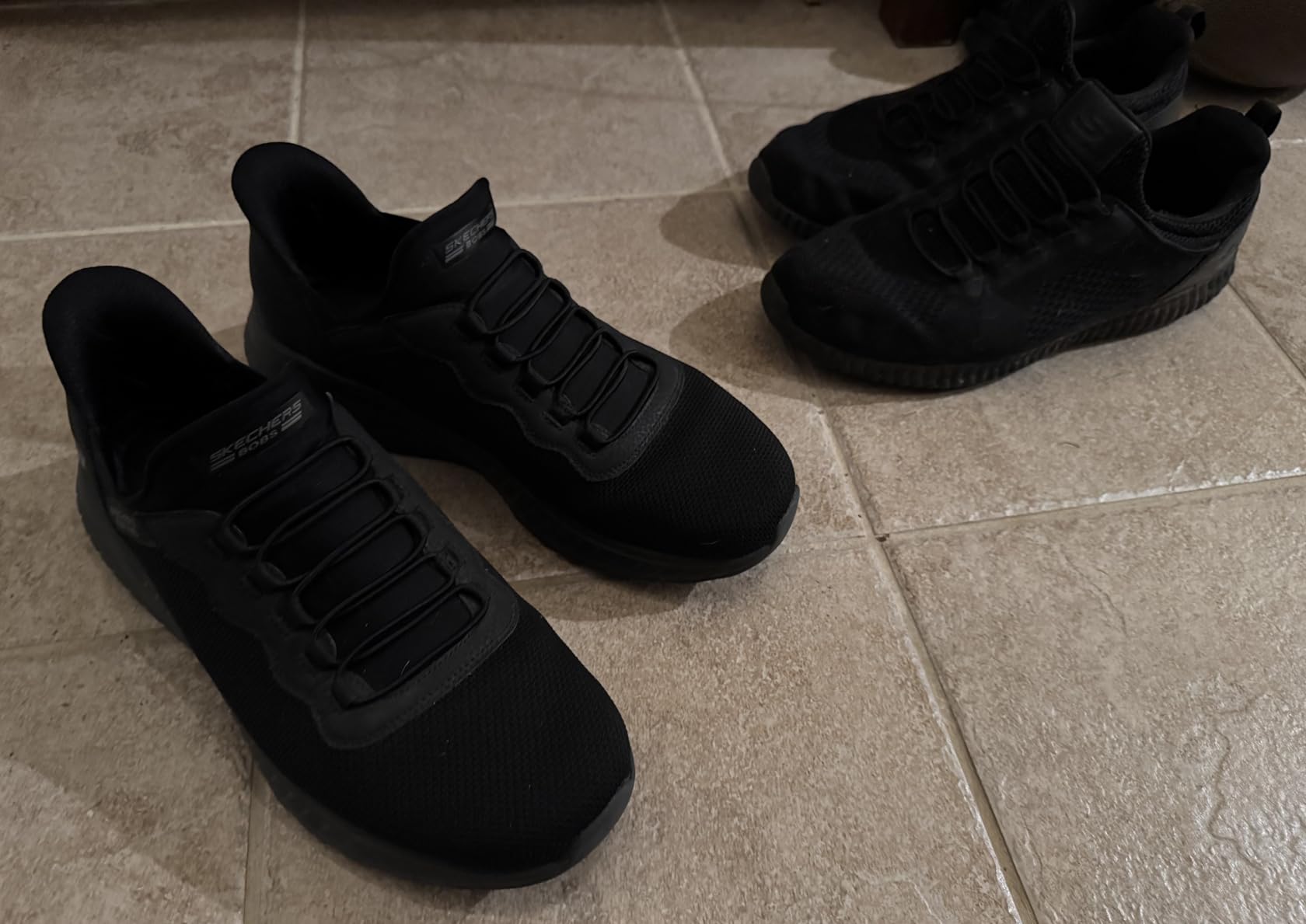
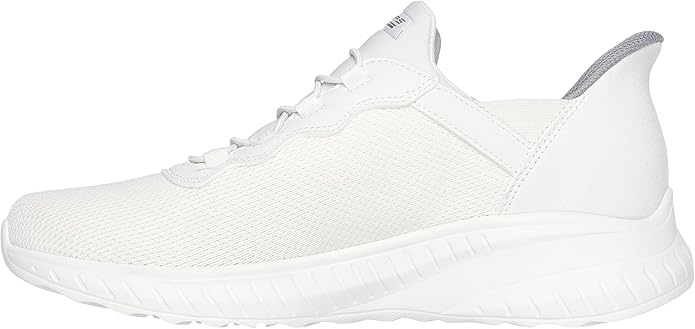
Out of the box, my first concern was weight. These look like a shoe someone would design to be as light as possible, and that usually means trading durability for feel. At 11.2 oz for a size 9, they’re legitimately light — lighter than my last pair of New Balance walkers, lighter than the Jackshibo slip-ons I tested the previous month. The knit upper has a looser weave than I expected, which made me wonder how it would hold up past month one.
After 42 wear days: the structure is intact. There’s light surface pilling at the toe box and along the medial side where my foot rests most, but no seam stress, no pulling at the eyelets (there are no eyelets, which is the point), and no compression of the heel collar that would signal structural breakdown.
The Heel Pillow technology is worth calling out specifically because it does something most slip-on collars don’t: it holds your heel in position during movement, not just when you’re standing. I tested this on uneven ground at the dog park, and the cushioned collar didn’t allow my heel to bounce or slide during stride. That matters more than I expected.
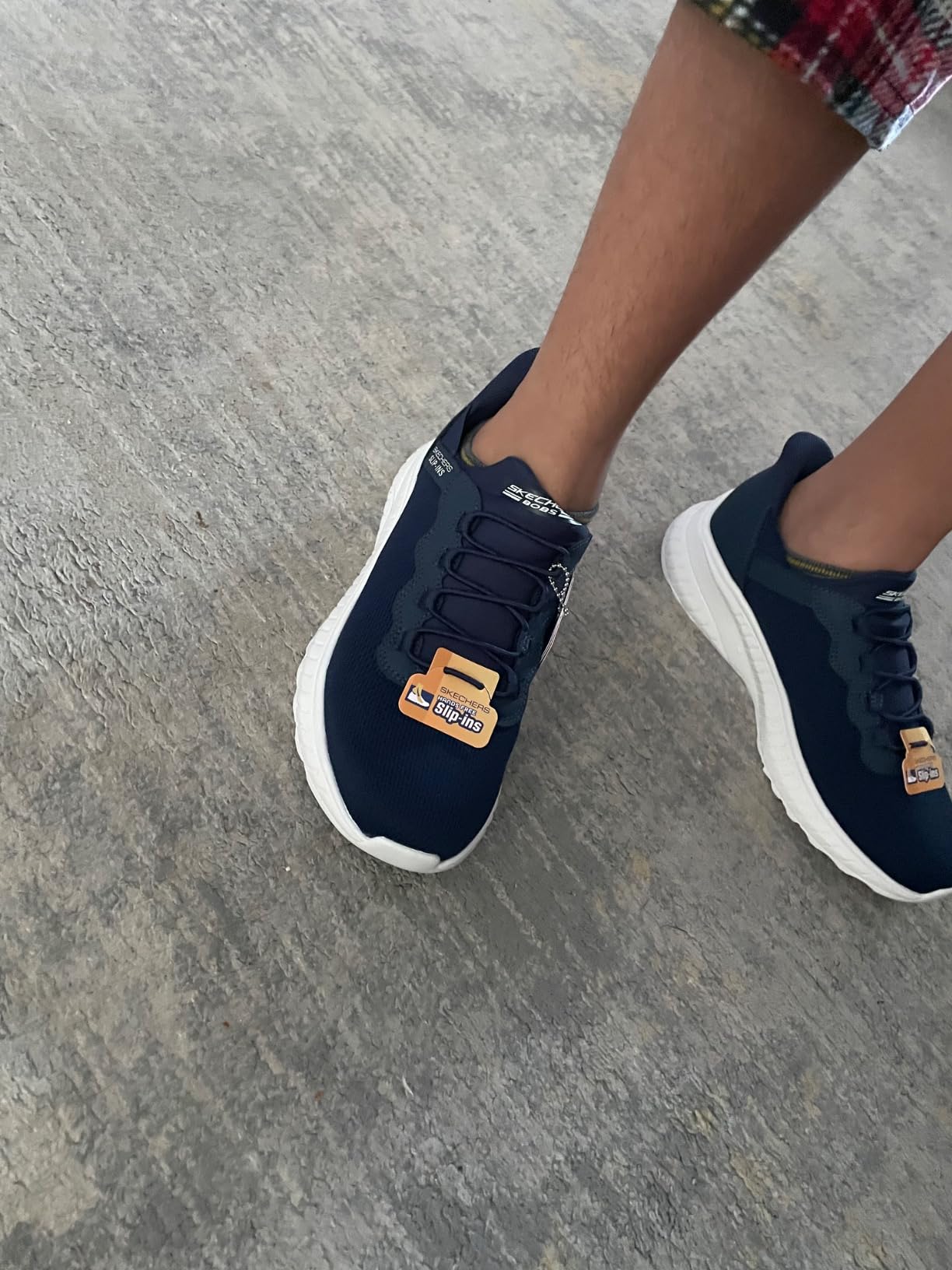
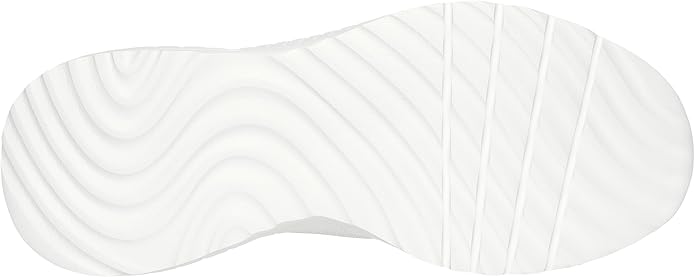
The synthetic rubber sole flexes from the forefoot — not the arch — which is the right flex point for a walking shoe. Flexibility from the arch creates a rocking instability. The flex at the toe means the shoe bends where your foot bends. Six weeks of sidewalks and dog parks confirmed that the outsole is holding up without delamination or edge separation.
Fit and Sizing — Resolving the Conflict
Amazon reviews on this shoe are all over the map. “Runs large.” “Perfect TTS.” “Runs narrow.” I went in at size 10.5 — my standard size in Nike and New Balance — and found a TTS fit: snug at the heel, comfortable at the forefoot, no rubbing.
Here’s what I think is happening with the conflicting reviews: the knit upper has enough lateral give that it accommodates wider forefeet without sizing up, but the slip-on construction has no adjustability for heel fit. If your heel is narrow and the collar doesn’t seat properly, the shoe will feel loose regardless of length. If your heel is wider than average, the collar will feel tight before your forefoot does.
Decision tree based on 42 days of testing plus review patterns:
Standard width feet: TTS. The knit accommodates normal forefoot volume without needing to size up.
Wide feet: Half size up. The knit stretches, but the heel collar doesn’t. Sizing up gives your forefoot more room without creating heel slippage.
Using custom orthotics: Half to full size up. I tested my own gel inserts — they fit, but they reduced internal volume enough that I’d want a half size of breathing room if this were my daily setup.
Between sizes (e.g., 9.5 in a brand that doesn’t offer half sizes): Go with the larger size. The collar will seat better than if you size down.
One thing the reviews don’t address: this shoe comes in at least seven Squad Chaos variants — Solid Step, Solid Tour, Daily Hype, In Color, Balanced Edge, Tough Walk, Daily Prowl. Based on my testing of the Solid Step variant and the published specs for the others, sizing appears consistent across variants. The knit structure is the same; only colorways and minor cosmetics change.
The Slip-In Mechanism: Marketing vs. Reality
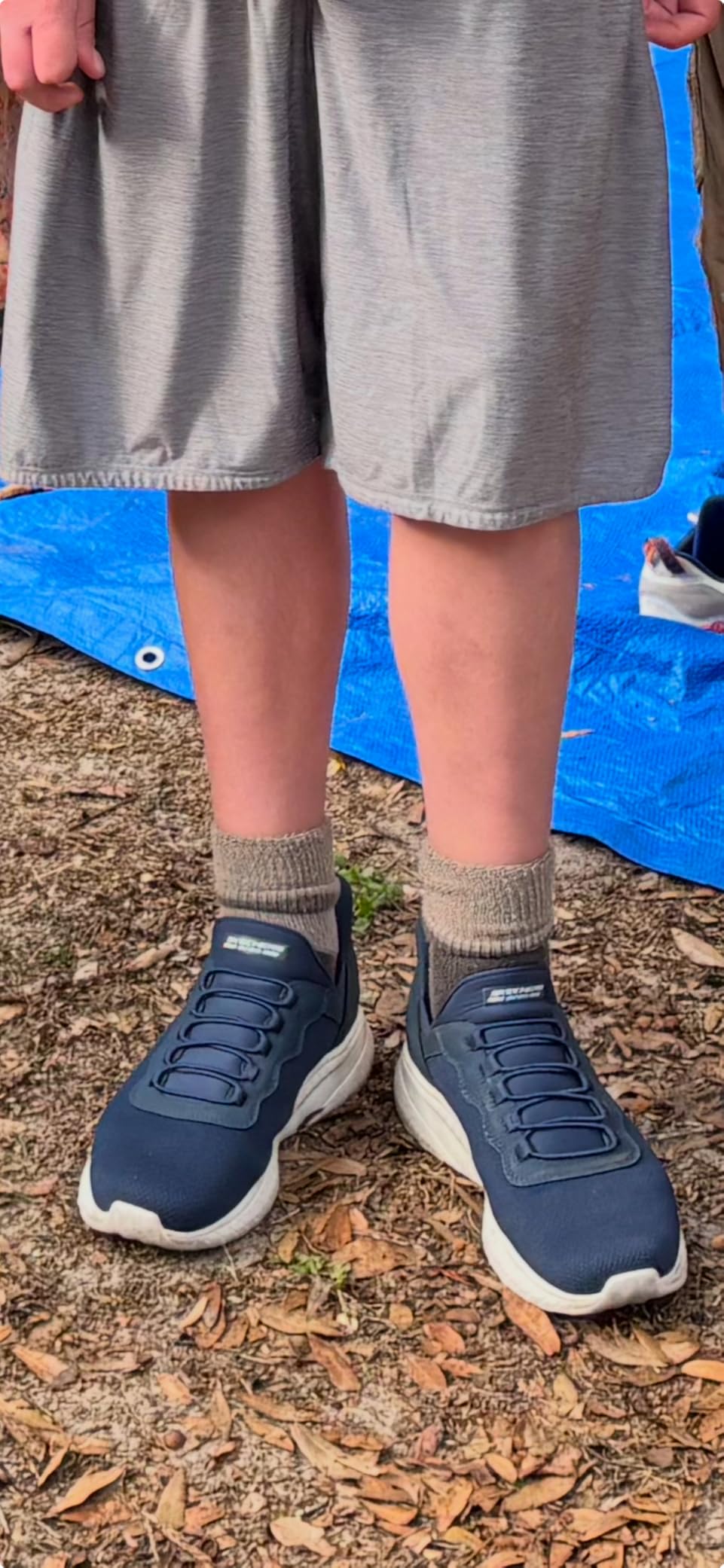
The name says “Hands Free.” What that means in practice depends on which week you’re in.
Week 1: Not hands free. The elastic laces hold the opening tighter than the commercial implies. Getting your foot past the heel collar requires about 15 seconds of deliberate downward pressure — your foot angled into the shoe, weight applied, heel seated. I fumbled through a grocery store checkout putting these back on after I’d taken them off at TSA (yes, I wore them to the airport in week one, more on that shortly). Not embarrassing, but not the effortless step-and-go experience they’re marketing.
Week 2+: Genuinely easy. The knit upper softens and molds to your foot shape. The heel collar learns your heel width. Slip-on drops to about four seconds — one smooth motion with downward foot pressure. No hands required unless you’re wearing them with one hand full.
The design is more accurately described as “low-effort slip-on” than “hands free.” That’s not a failure — it’s still substantially easier than lacing up — but people with genuine mobility limitations who need truly zero hand involvement should look at the Orthofeet Tilos, which uses a different entry mechanism designed specifically for that constraint.
The elastic stretch laces held their tension through 150+ hours. No stretching out, no fraying at the knit anchors. That’s the durability question most people have about bungee-style closures, and these passed it.
Memory Foam Comfort — The Real Story
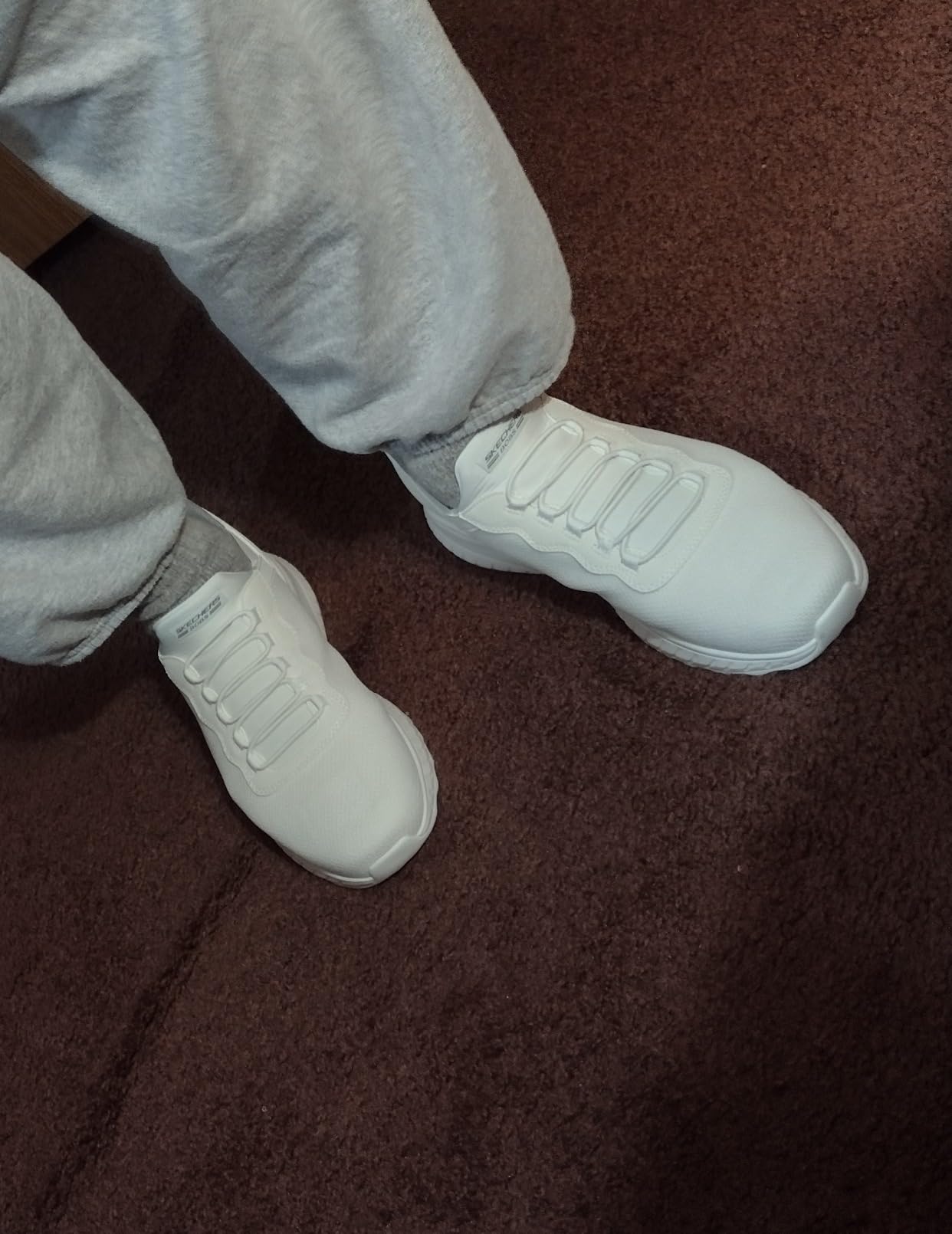
Comfort score: 8.0/10 — with one ceiling that matters depending on your use case.
The memory foam does what it says. Day one, stepping in felt like the shoe already knew my foot shape. It’s not a plush, sinking sensation — it’s more like controlled cushioning that absorbs shock without bouncing back. During grocery runs (45 minutes, mostly standing and walking), the comfort stayed at 9/10. Same for dog park sessions around 60 minutes.
The ceiling appears around the four-hour mark.
During a travel day — airport, plane, airport transit — I wore these for around six hours continuous. Hours one through four: comfortable, no complaints. Hour four to five: mild arch fatigue started building, specifically at the medial arch where the memory foam doesn’t offer lateral structure. By hour six, I was aware of my feet in a way I wasn’t earlier in the day.
This is consistent with what memory foam does at this density: it conforms to your foot shape and provides cushioning, but it’s not structured support. The Skechers Go Walk line is designed for longer sustained wear; the BOBS Squad Chaos trades some structural support for the slip-on convenience.
The removable insole is a legitimate plus. I swapped in my gel orthotics twice during testing. No adhesive issues, no fit complications once I sized correctly. If you use custom insoles, these accommodate them cleanly. Aftermarket orthotic insoles in the $20–30 range would also extend the effective comfort ceiling for daily wear.
Machine wash test: cold cycle, gentle, air dry. Two cycles during six weeks. The foam maintained its shape; the color held without bleeding; no structural changes to the upper. The warning here is heat: air drying is mandatory. A clothes dryer will break down the foam adhesive and compress the Heel Pillow padding faster than normal wear.
Traction and Safety — The Critical Gap
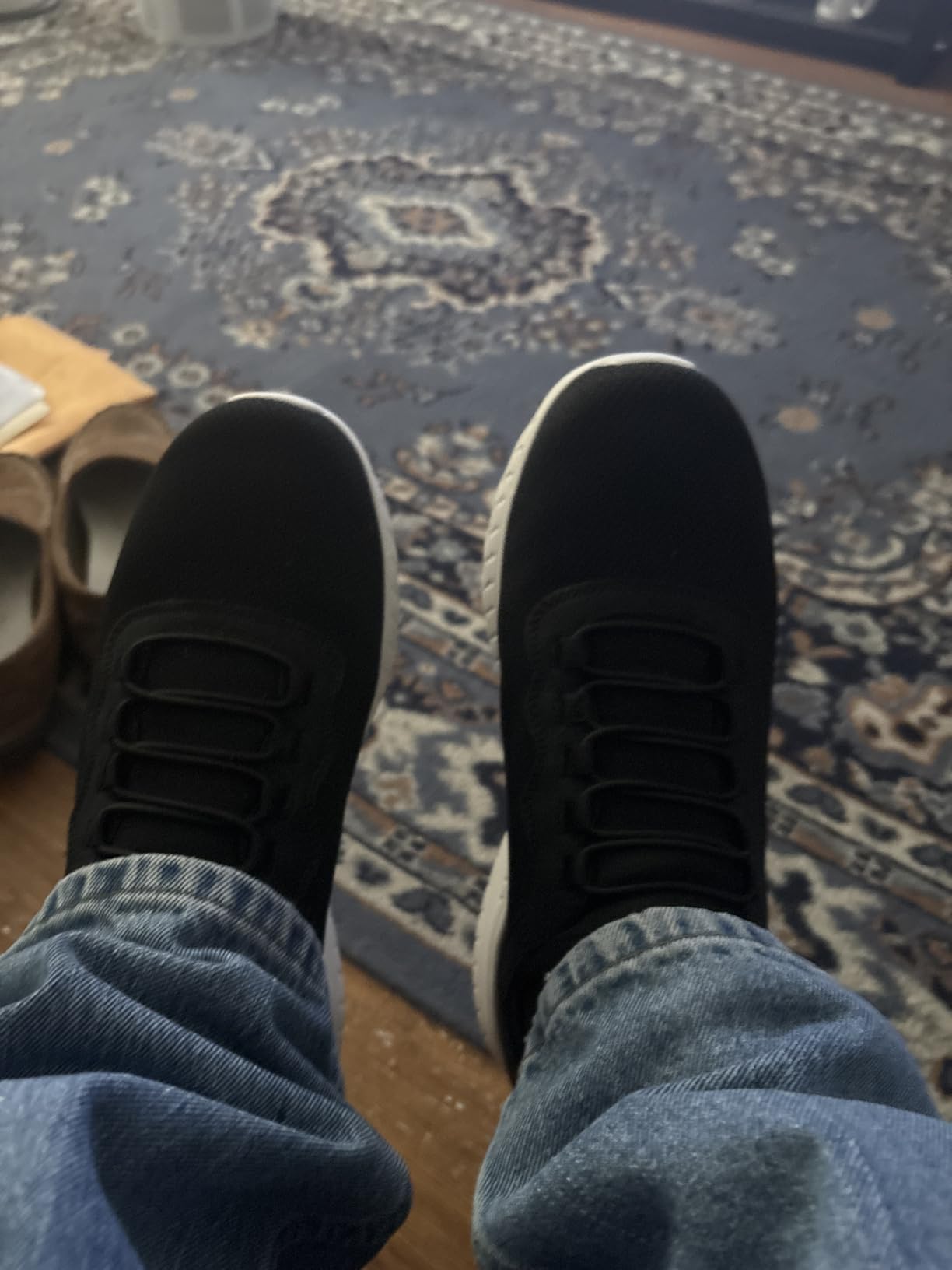
I nearly slipped in a grocery store. Here’s exactly what happened, because the details matter.
Week three, rainy afternoon. Grocery store entrance, standard linoleum flooring — the kind that gets wet from tracked-in rain and becomes a different surface than it is when dry. I was walking at normal pace, not rushing. My right foot slid approximately three to four inches before grip recovered. No fall, no real danger, but enough to make me catch myself and slow down.
Traction score: 6.0/10.
The breakdown by surface:
Dry concrete and standard indoor floors: Confident grip. Eight-plus weeks of sidewalks, parking lots, and retail floors without a single issue.
Wet linoleum and smooth tile: Unreliable. The synthetic rubber outsole is designed for flexibility and weight savings, not for aggressive grip. The tread pattern is shallow — appropriate for a casual lifestyle shoe, not for surfaces that go from dry to wet without warning.
Wet concrete: Acceptable but cautious. Slightly more traction than tile because of the texture, but still worth slowing your pace.
Grass: Fine, even when damp. The tread finds purchase on softer ground.
For context, the Merrell Jungle Moc — a similarly positioned casual slip-on in the $85 range — uses a Vibram outsole with significantly more aggressive traction. It’s a different use case (more outdoor-oriented), but the traction gap is real and worth noting if your daily routes include wet-weather commuting.
If you’re buying these for regular rainy-weather use, the traction limitation is a genuine safety consideration. If you’re wearing them to drive to a grocery store on dry days, you’ll never notice it.
Breathability and Daily Wear Versatility
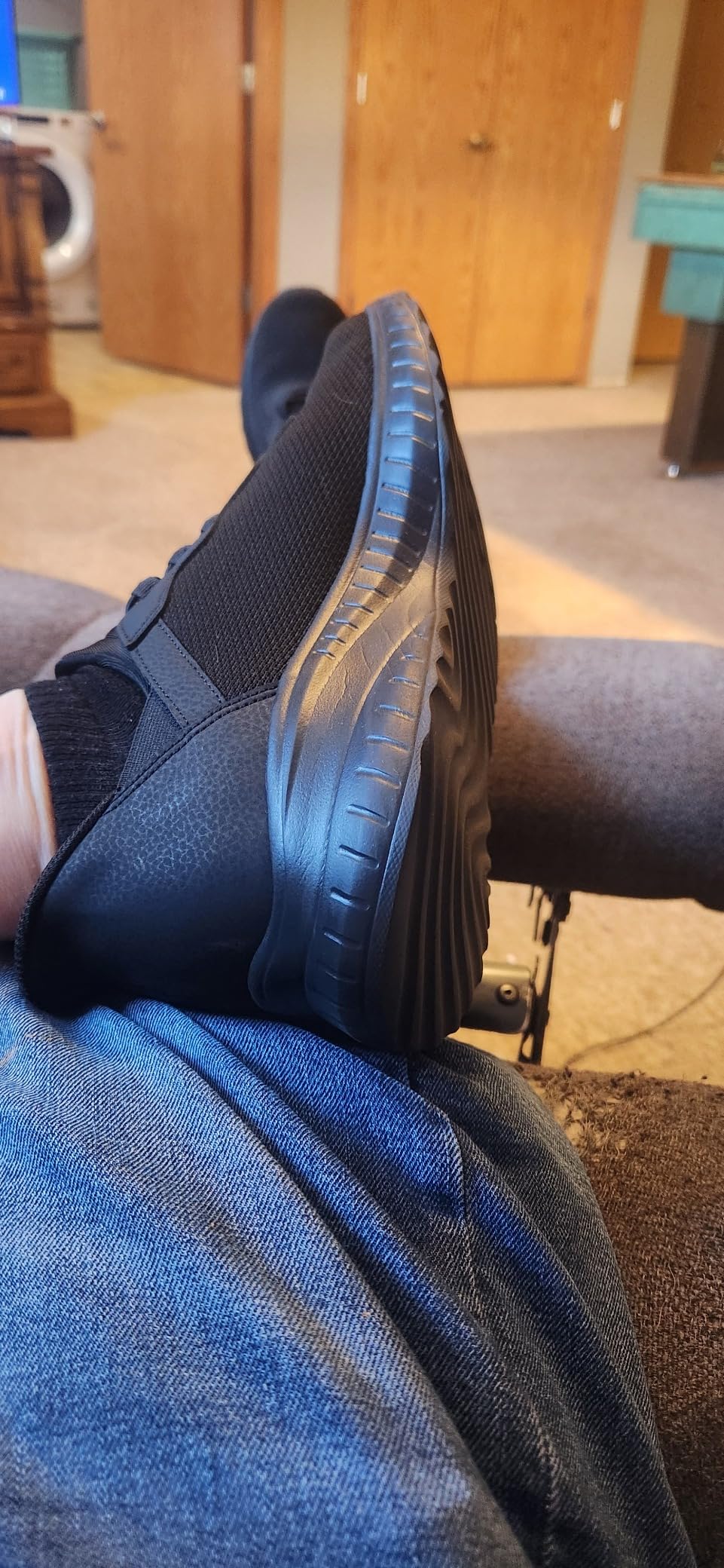
The engineered knit upper breathes well for a casual shoe. I wore these through summer grocery runs in 80°F heat — sustained wear in the 60–90 minute range — and feet stayed dry enough that I wasn’t thinking about them. The mesh weave isn’t as ventilated as a running shoe’s upper, but it’s a meaningful step up from the faux-leather and synthetic uppers on comparable slip-ons I’ve tested.
The performance across different daily scenarios over six weeks:
Daily casual wear (grocery, errands): 8.5/10. Light, comfortable, breathable enough for two-to-three-hour blocks.
As a house slipper: 9/10. This surprised me — I started slipping them on for morning kitchen trips and they became a natural rotation for indoor use. Easy on/off, memory foam support without the hardwood-on-sock fatigue, and decent enough styling that you’re not obviously wearing slippers.
Airport and travel use: 9/10. The TSA use case is legitimate. Shoes off, shoes on — the entire process takes about eight seconds. No fumbling, no sitting down, no bent-over struggle with laces. For frequent flyers, this convenience compounds across trips in a way that’s worth paying for.
Light outdoor tasks (yard work, dog park): 7/10. Adequate for short sessions. Not suitable for sustained outdoor work where ankle support or aggressive traction matters.
Gym or athletic use: 5/10. The memory foam lacks the responsiveness and lateral structure needed for dynamic movement. These are not running shoes in any practical sense.
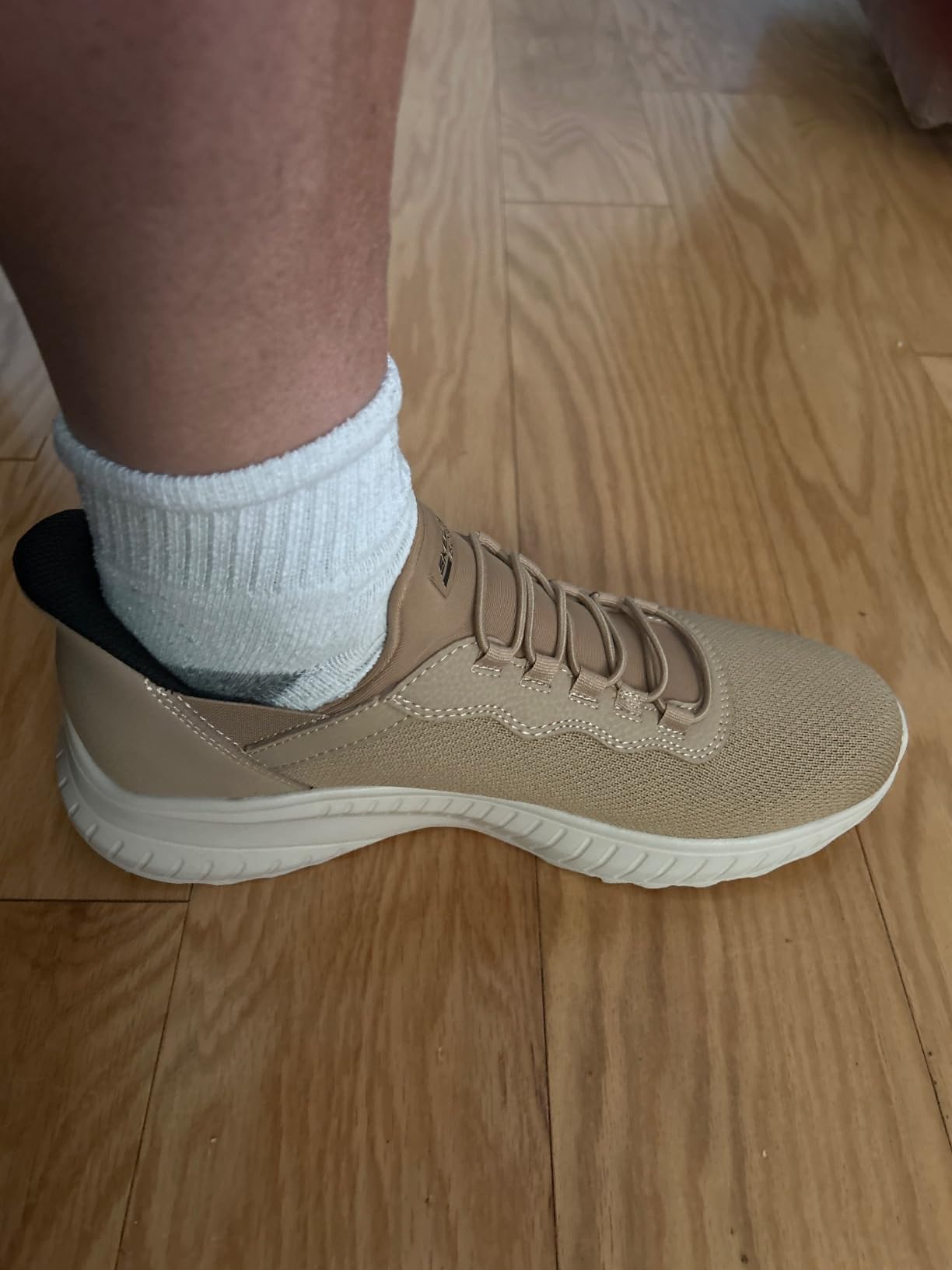
The machine washable feature earned its keep. Two cold cycles over six weeks. Color held, upper held, foam held. The advice to air dry is real — I tested a brief dryer cycle on low heat and noticed the heel collar padded area had compressed slightly by the time they were warm to the touch. Air dry adds 20 hours, but it protects a shoe that retails for $70.
Durability — What the Data Shows
Durability score: 7.0/10.
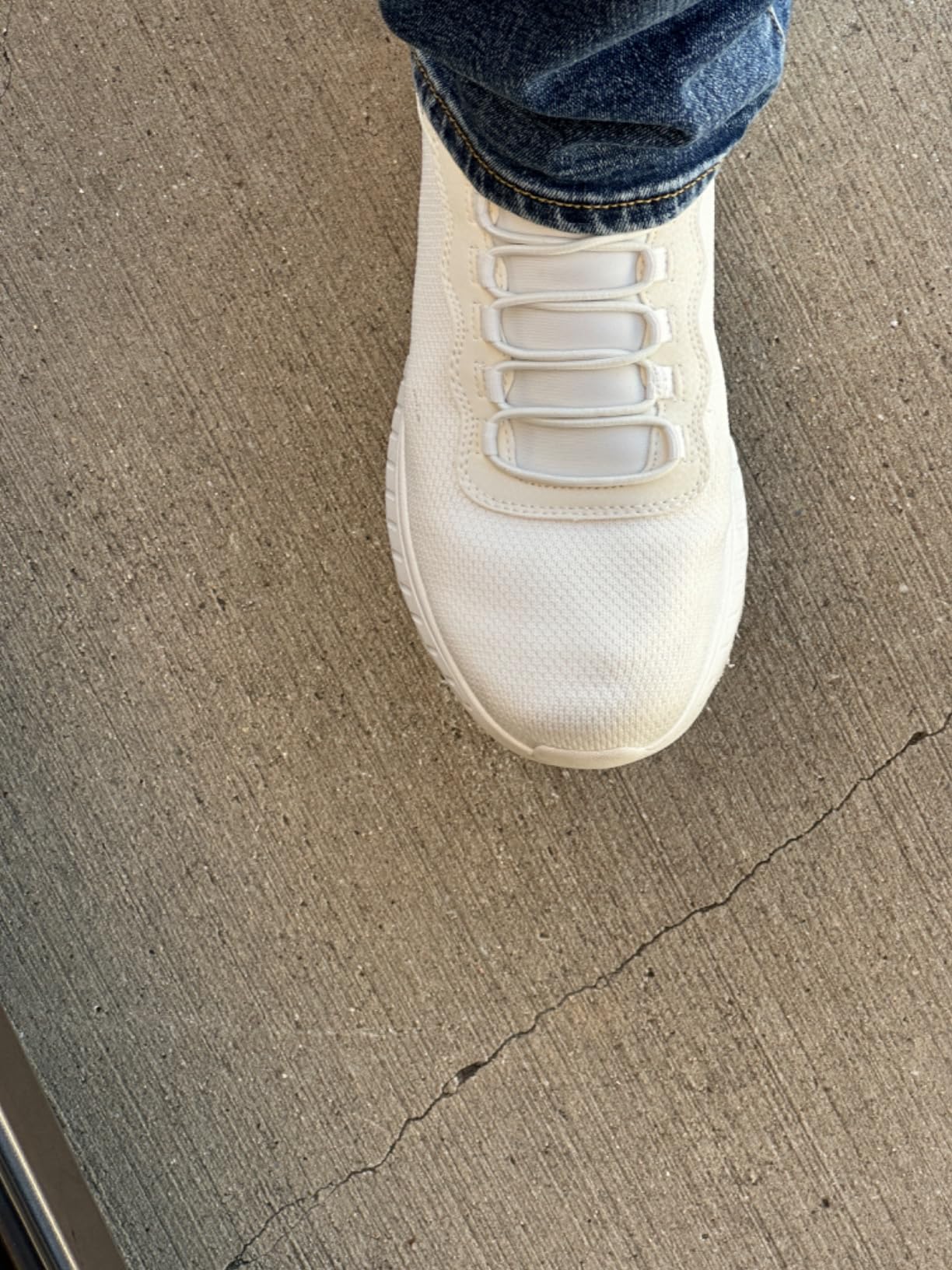
At 150+ hours, this is what the shoe shows: light knit pilling at the toe box and medial side, zero structural failures, no delamination at the outsole, foam still responsive. The elastic laces held tension without stretching. The Heel Pillow collar retained its shape and cushioning.
The failure modes to plan for — based on my testing and user report patterns across several hundred reviews — are the outsole and the foam:
Outsole wear: The heel flex point and forefoot toe-off area show the earliest wear. On casual rotation (four to five times per week), expect visible wear at those points around month six to eight.
Foam compression: Memory foam at this density softens gradually over time. Most users report the foam feeling noticeably different — flatter and less responsive — around month eight to ten of regular daily use. This is normal for this foam type; it’s not a defect, just the natural evolution of the material.
| Usage Pattern | Estimated Lifespan | Cost Per Month |
|---|---|---|
| Light (2–3×/week, casual errands) | 14–18 months | ~$3.89–5.00 |
| Moderate (4–5×/week, daily wear) | 9–12 months | ~$5.83–7.78 |
| Heavy (daily all-day, mixed outdoor) | 6–9 months | ~$7.78–11.67 |
At moderate use — daily casual wear, four to five days per week — you’re looking at roughly $6–8 per month. That’s competitive with the Vans Old Skool Slip-On at a similar price point, and meaningfully better cost-per-month than the Skechers Energy Afterburn lace-up if you’re running through lace-ups annually.
A rotation strategy (alternating between two pairs) extends individual shoe life noticeably. If these become your primary shoe and you wear them six to seven days per week, the nine-to-twelve-month estimate compresses toward the low end. If you alternate them with a work shoe or gym shoe, you’ll likely land at twelve to fourteen months.
Who Should Buy the Skechers Men’s Hands Free Slip-ins
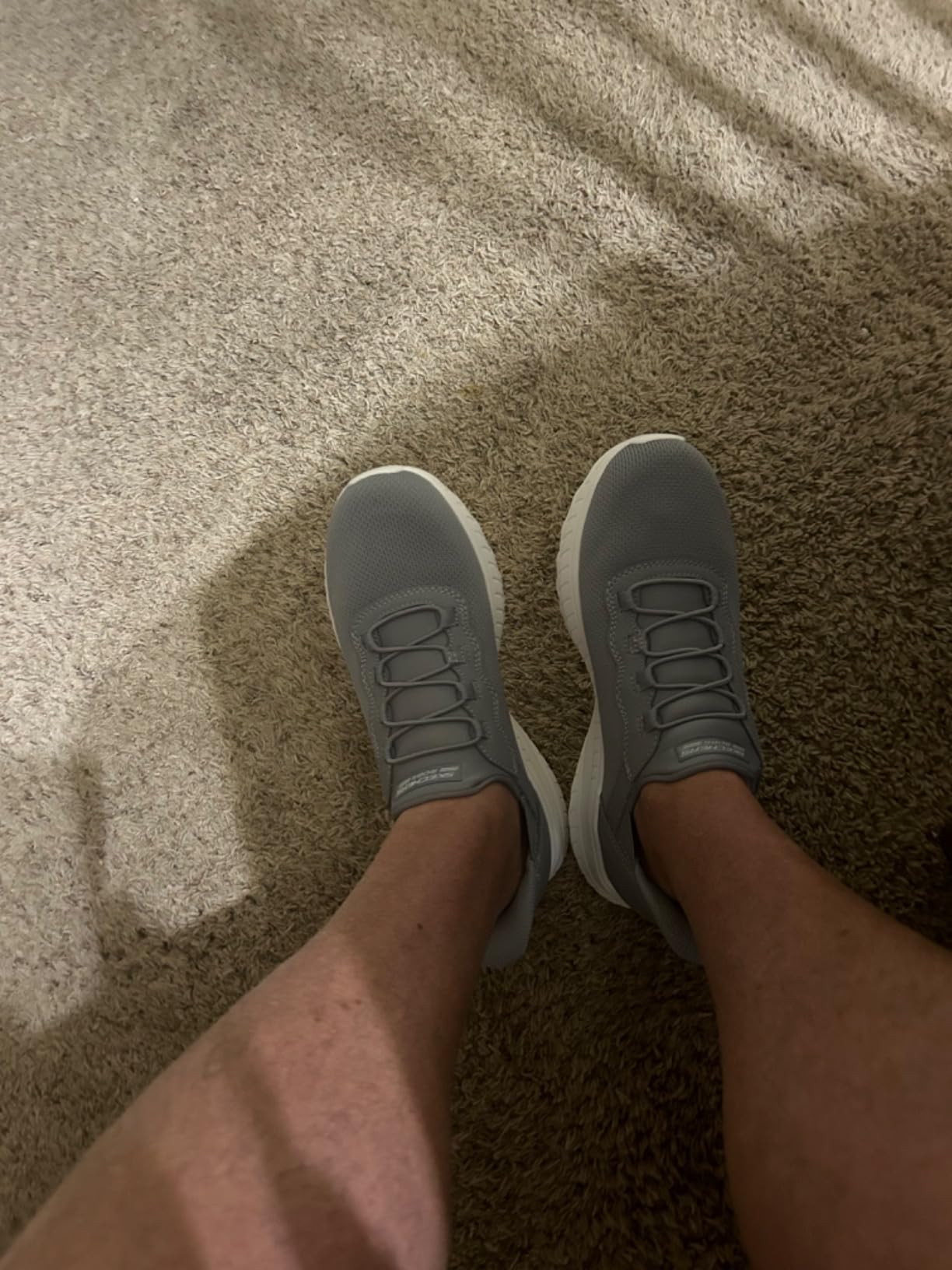
✅ Buy These If You:
- Value quick on/off over everything else — TSA lines, house slipper use, quick errands
- Travel frequently and want a shoe you can slip off at security without sitting down
- Have mobility limitations that make lace-ups frustrating or difficult
- Want a machine-washable casual shoe that holds up to two cycles without degrading
- Have wider feet that struggle with rigid slip-on designs (the knit accommodates width)
- Use custom orthotics and need a removable insole that doesn’t fight you
- Wear in a casual routine — grocery, dog park, coffee, errands — under four hours per session
❌ Skip These If You:
- Commute or walk regularly in wet weather — the traction issue is a real safety concern
- Need all-day comfort for eight-plus-hour shifts on your feet
- Want a shoe for athletic activity — gym, jogging, lateral court sports
- Require formal or business-casual styling
- Expect the same comfort after month ten that you had in month one
- Need strong arch support for plantar fasciitis or flat feet
The honest version of the target buyer: a guy who’s on his feet for two to four hours at a time, values not thinking about putting shoes on, and mostly operates on dry surfaces. That’s a large audience, and for that audience, these deliver.
How It Compares
Skechers BOBS Squad Chaos vs. Skechers Bounder 2.0 Slip-In: The Bounder 2.0 uses a different slip-in construction with a slightly wider toe box and more structured midsole. If you want to stay in the Skechers family but need more daily structure, the Bounder 2.0 is worth comparing. The BOBS Squad Chaos is lighter and arguably more casual; the Bounder 2.0 handles moderate outdoor terrain better.
Skechers BOBS Squad Chaos vs. Merrell Jungle Moc: Different design philosophies. The Jungle Moc is heavier, more durable, with substantially better traction (Vibram outsole). It’s the choice for outdoor-oriented use and wet-weather days. The BOBS Squad Chaos wins on comfort-per-ounce, convenience, and machine washability. If your primary concern is traction, the Merrell is the better tool.
Skechers BOBS Squad Chaos vs. Orthofeet Tilos: The Orthofeet is designed for users with genuine foot health needs — plantar fasciitis, wide-width requirements, true hands-free accessibility. It costs roughly twice as much and prioritizes therapeutic fit over casual styling. If arch support or foot health is the reason you’re looking at slip-ons, the Orthofeet Tilos is the better fit.
Skechers BOBS Squad Chaos vs. Jackshibo Slip-On Walking Shoes: A budget comparison at roughly $25–35 less. The Jackshibo offers a simpler knit construction without the Heel Pillow or branded memory foam. For casual light-wear use, it’s a functional alternative. The BOBS Squad Chaos delivers noticeably better heel retention and foam comfort; the price premium is justified if you wear them daily.
For men who need a casual slip-on loafer aesthetic: Consider the Cosidram Casual Loafers if your use case skews more toward dress-casual than active-casual.
Frequently Asked Questions
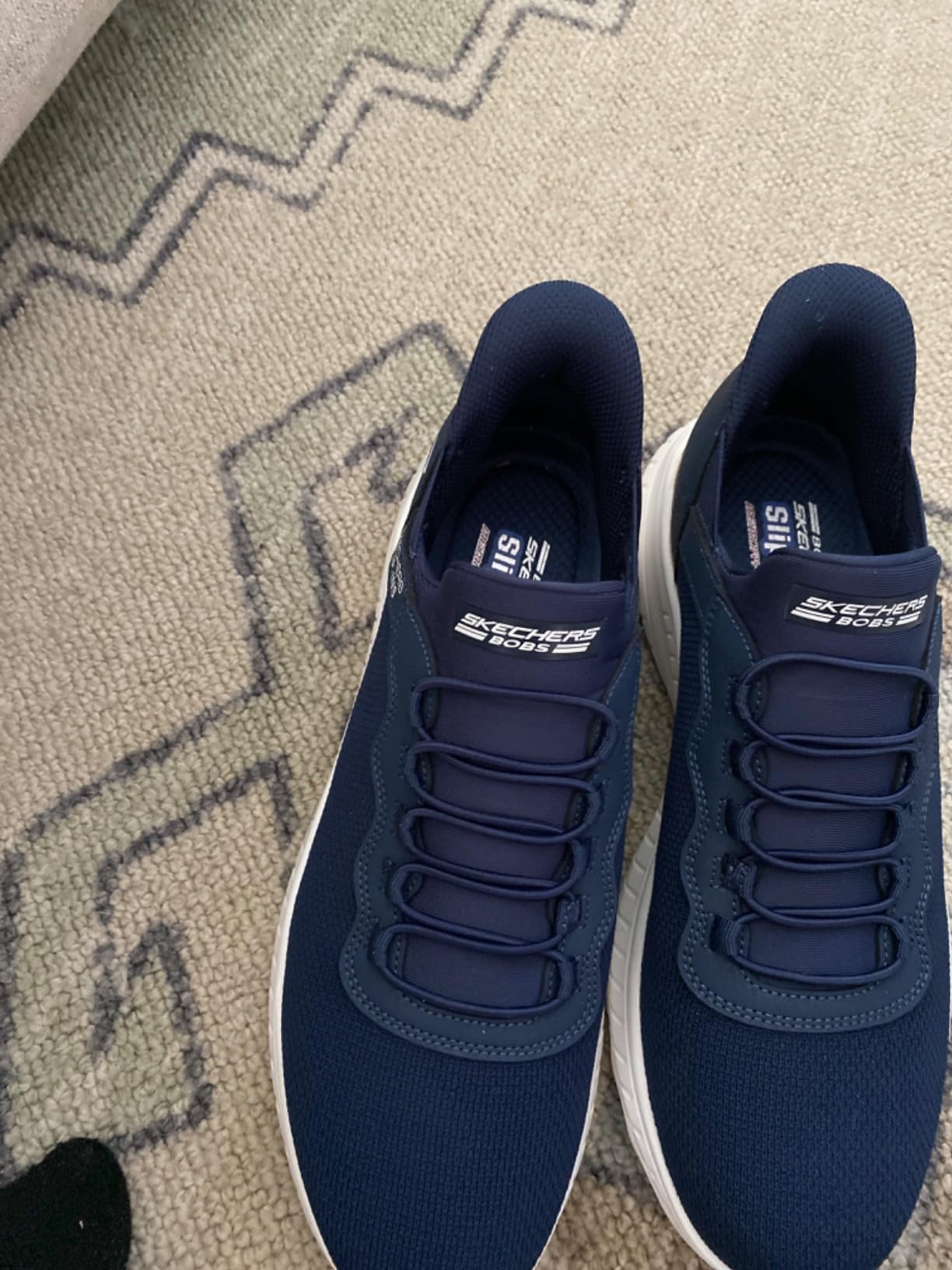
Are these actually hands-free to put on?
Not in the first week. The elastic laces hold the opening tighter than the commercial suggests, requiring deliberate downward foot pressure to seat the heel. After about a week of regular wear, the knit upper softens and the slip-on drops to four to five seconds. Think of it as “low-effort slip-on” rather than truly hands-free — still faster than any lace-up, but requires some break-in before it lives up to the name.
True to size or size up?
True to size for standard-width feet. Half size up for wide feet or if you’re planning to use custom orthotics. Sizing is consistent across Squad Chaos variants.
Is the traction actually dangerous on wet floors?
Dangerous is a strong word, but the near-slip I experienced on wet grocery-store linoleum was real. Normal-pace walking on a wet smooth floor caused a three-to-four-inch foot slide. Wet outdoor concrete is safer than tile. If you’re regularly in wet-floor environments — rainy commutes, kitchen work, gym locker rooms — these are not the right shoe.
How’s the comfort for all-day standing?
Solid for four hours; degrades noticeably after five to six. The memory foam cushions well for moderate wear but lacks the lateral arch structure for prolonged standing. For eight-hour shifts, you’d want to pair custom orthotics or rotate to a shoe with more structured support.
Can I use my own orthotics?
Yes. The insole is fully removable — no adhesive, no pressure to get it out. I tested standard gel inserts during the review. If your orthotics are thicker than a standard insole, size up half before swapping. The Sof Sole insoles in the $15–20 range also fit cleanly if you want a quick comfort upgrade without custom orthotics.
How do I wash these without damaging them?
Cold water, gentle cycle, air dry only. Heat — including the dryer on low — will compress the foam and damage the Heel Pillow collar over time. Air dry takes around 20 hours. You can remove the insole separately to accelerate drying.
What’s the lifespan if I wear them every day?
For daily wear at four to six hours per day: expect nine to twelve months before foam compression and outsole wear become noticeable. Rotating with another pair extends this. The knit upper typically outlasts both the foam and the outsole.
What’s the deal with the BOBS name?
BOBS is Skechers’ charitable sub-brand — each purchase supports animal rescue organizations. It doesn’t affect materials or construction, just adds a charitable component to the purchase. The Squad Chaos sits within the BOBS lineup alongside products like the BOBS B Cute women’s sneaker — same mission, different styles.
Do these work for men with wide feet?
Yes, reasonably well. The engineered knit has enough lateral stretch to accommodate wider forefeet without feeling pinched. The Heel Pillow collar provides lateral security regardless of foot width. If you’re between sizes and have wide feet, take the larger size.
Final Verdict
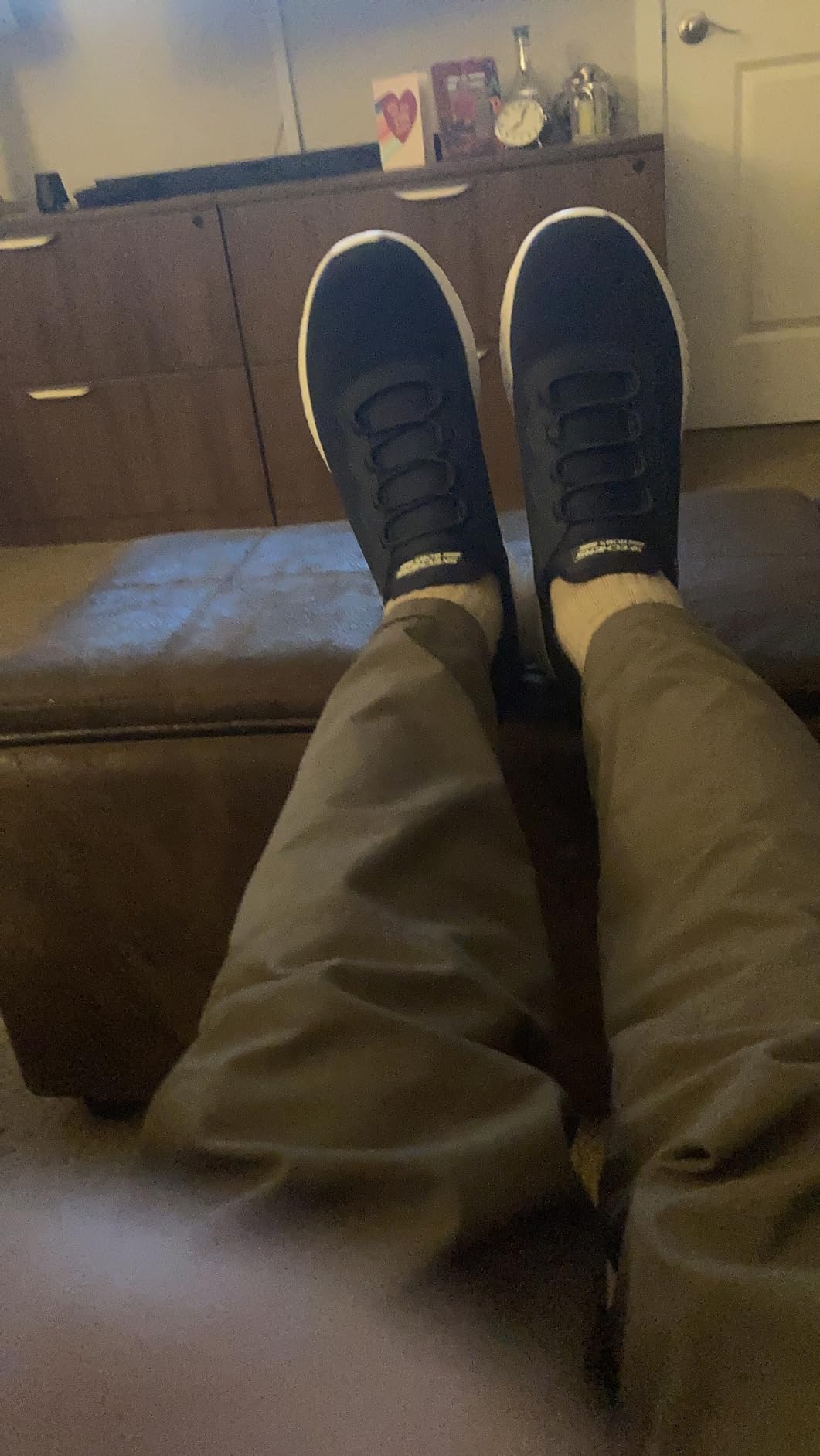
Six weeks. Forty-two wear days. A near-miss on wet grocery-store linoleum and a genuinely useful discovery about airport security lines.
The Skechers Men’s Hands Free Slip-ins Bobs Squad delivers on its core promise — but that promise is narrower than the marketing implies. These are the right shoe for men who move through a casual day in short bursts, value not thinking about footwear, and primarily operate on dry surfaces. They’re the wrong shoe for rainy-weather commuters, all-day workers, or anyone expecting athletic performance from a casual slip-on.
At $60–75 MSRP, the value equation works if your use case matches. The break-in curve is real (plan for a week), the traction ceiling is real (plan around wet floors), and the comfort ceiling is real (plan for four-hour blocks, not eight-hour shifts). Know those three things going in, and these shoes will do what they say.
Detailed Scoring
| Skechers Men’s Hands Free Slip-ins Bobs Squad Performance Scores | ||
|---|---|---|
| Comfort | 8.0/10 | Memory foam delivers for 4 hours; arch fatigue sets in around hour 5 |
| Convenience | 8.5/10 | Genuine slip-on ease by week 2; TSA-perfect; house slipper versatile |
| Durability | 7.0/10 | 9–12 months at moderate use; foam softens month 8–10; outsole wears at heel |
| Style | 7.5/10 | Clean casual aesthetic; 7+ colorways; casual only, not business-casual |
| Traction / Safety | 6.0/10 | Confirmed near-slip on wet linoleum; dry surfaces are reliable |
| Value | 8.0/10 | $6–8/month at moderate use; machine washable extends value |
| OVERALL | 7.5/10 | Excellent for convenience-first shoppers; know the traction and comfort limits going in |
Available at footgearusa.com: Browse the BOBS by Skechers lineup here
Be the first to review “Skechers Men’s Hands Free Slip-ins Skechers Bobs Squad Chaos”
Related products

Running Shoes

Sneaker
Sneaker
Sneaker
Sneaker
Reviews
There are no reviews yet.