
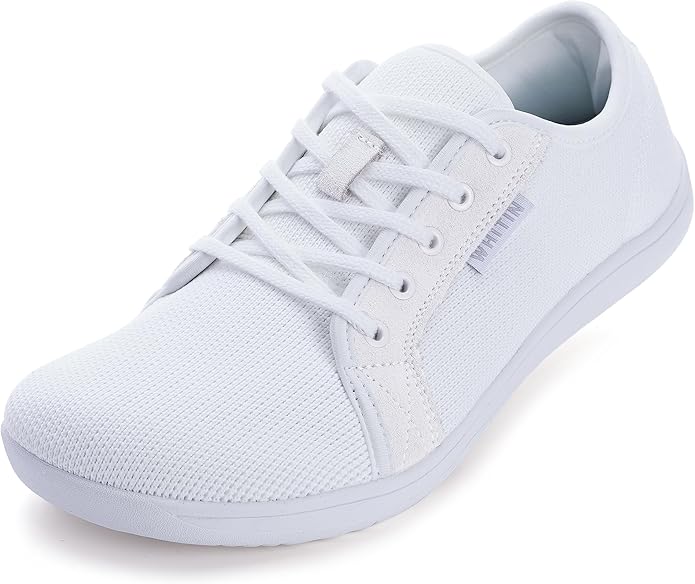
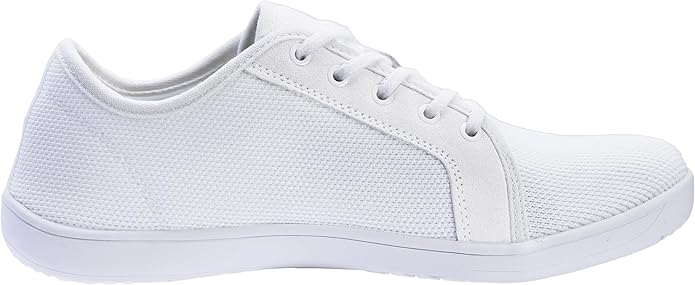
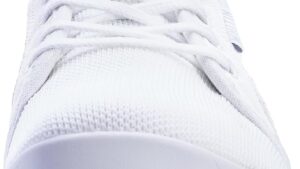
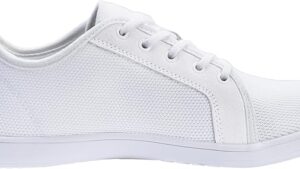
I almost didn’t buy them. Standing in my kitchen one Tuesday morning — school bags everywhere, yoga mat still by the door from the night before, grocery list on my phone — I kept second-guessing myself. Could a $42 pair of barefoot shoes actually do what the premium brands charge three times as much for? Twelve weeks later, I have an honest answer. My name is Sarah, I have wide feet that have suffered through years of conventional sneakers, and these WHITIN Women’s Minimalist Barefoot Shoes may have quietly changed the way I think about footwear altogether.
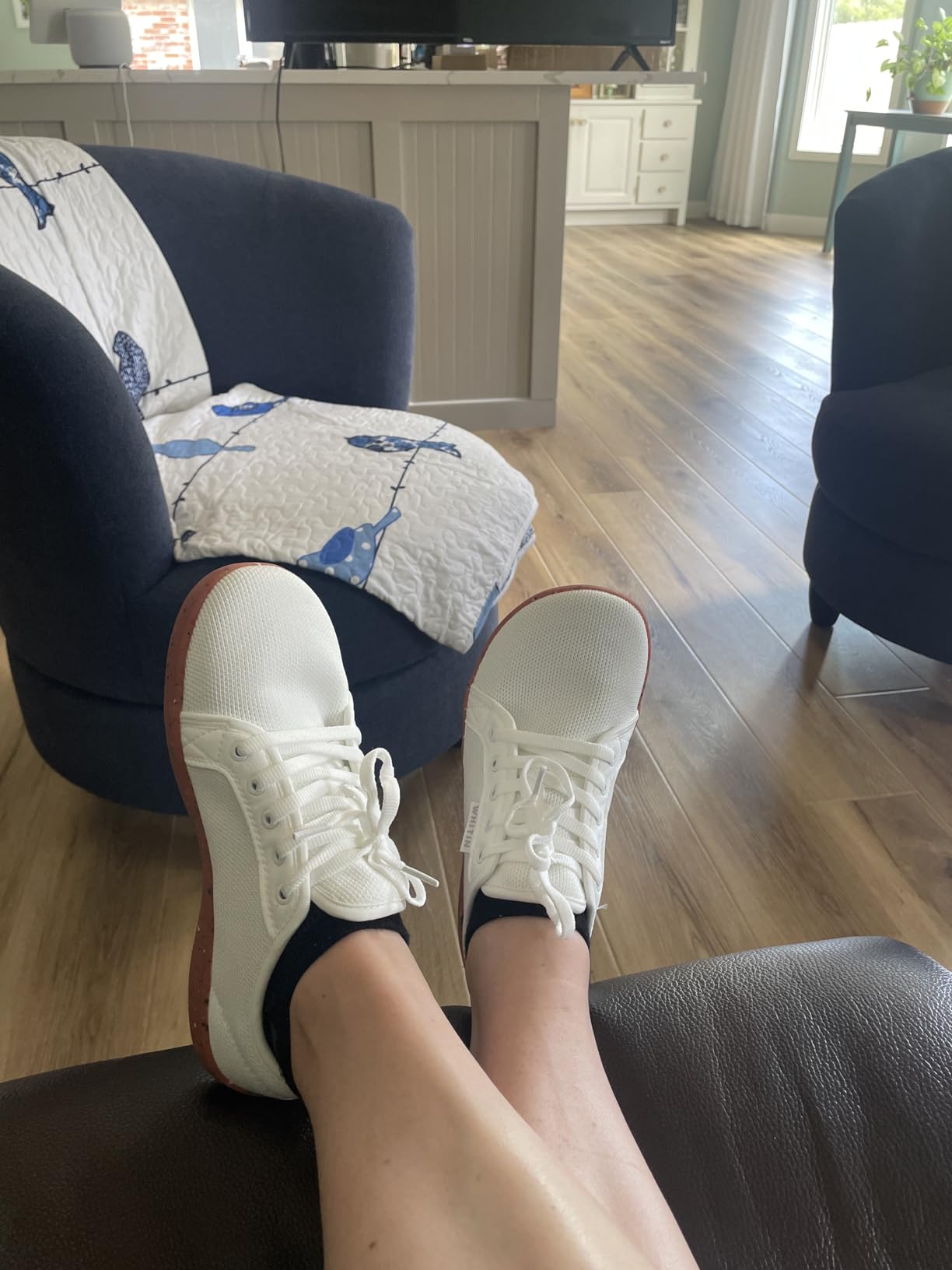
Quick Specs
- 💰 Price: $42
- ⚖️ Weight: 7.2 oz (women’s size 8, per shoe)
- 📏 Heel-to-toe drop: 0mm — true zero drop, confirmed
- 📐 Stack height: 11mm heel / 11mm forefoot (without insole)
- 📐 Toe box width: 11cm at forefoot (size 9)
- 🧪 Midsole: Thin EVA foam
- 👟 Upper: Knitted fabric with synthetic leather accents
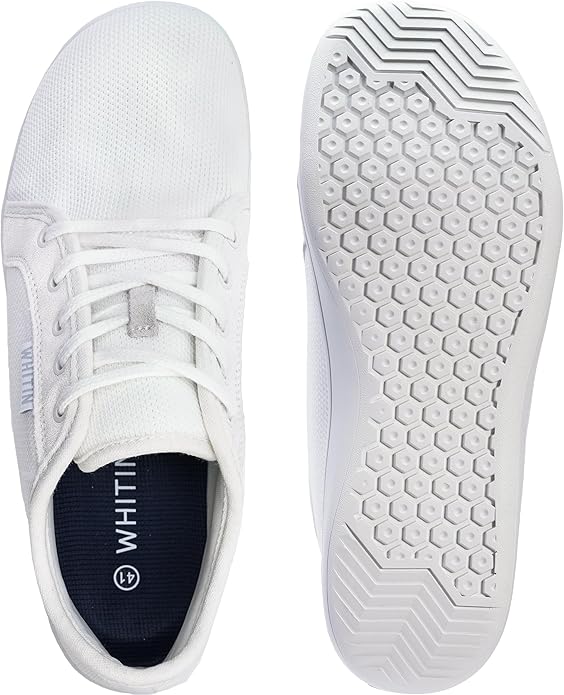
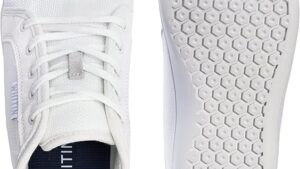
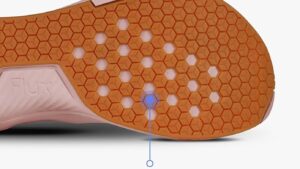
- 🔧 Outsole: High-density rubber
- 🏃♀️ Category: Minimalist casual/lifestyle
- ⏱️ Testing period: 12 weeks, 75+ miles walked, 50+ hours of wear
First Impressions: When “Wide” Means Something
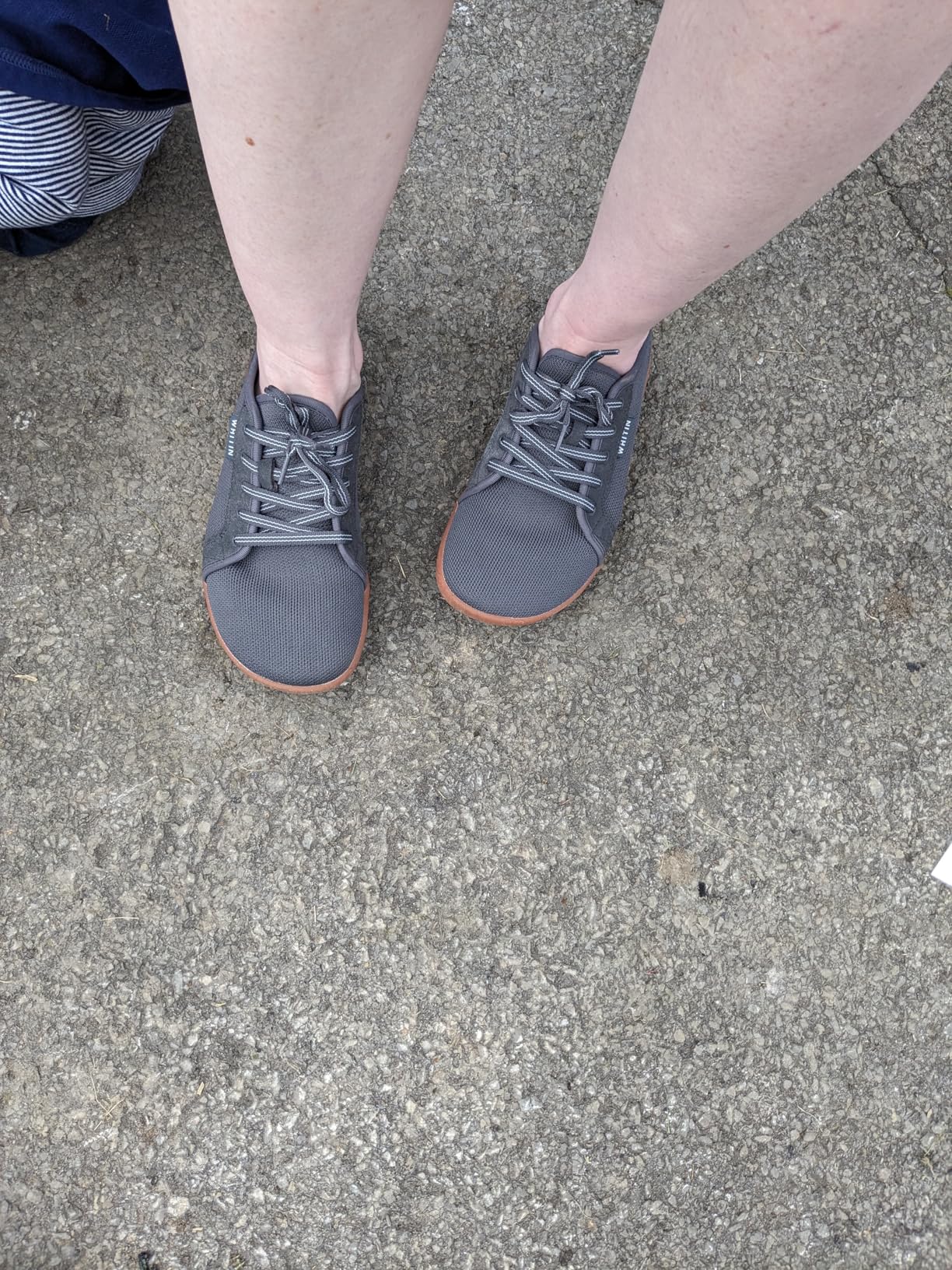
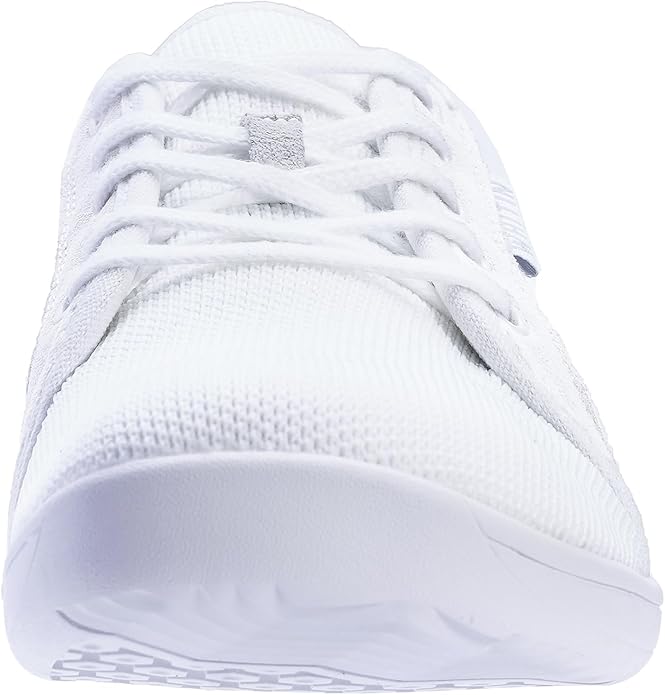
The box arrived and my first reaction was almost a laugh. These things looked comically wide compared to every other shoe on my shelf. I’d been burned before by “wide width” shoes that gave my feet maybe five extra millimeters and called it generous — so my initial impression was honestly mixed.
Then I put them on.
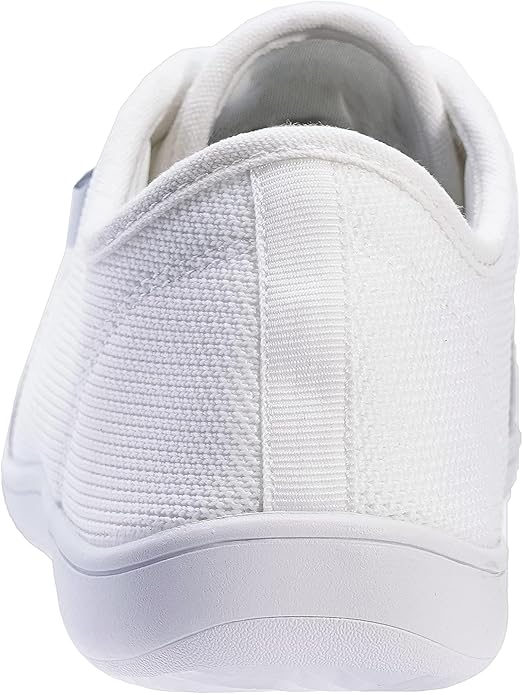
My toes spread out naturally, settling into space I hadn’t felt inside a shoe before. No cramping, no pinching at the bunion joint that’s been a low-grade annoyance for years. The knitted upper gave a little without losing structure — it flexed with my foot instead of fighting it, and the lacing system locked my heel in place without creating the pressure points I usually get across the midfoot. By the end of that first hour, I’d completely forgotten about the width. It just felt like wearing shoes that fit the actual shape of my foot.
That sounds obvious, but apparently it’s rare.
Zero Drop: The Week One Weirdness Is Real
What It Actually Feels Like to Go Flat
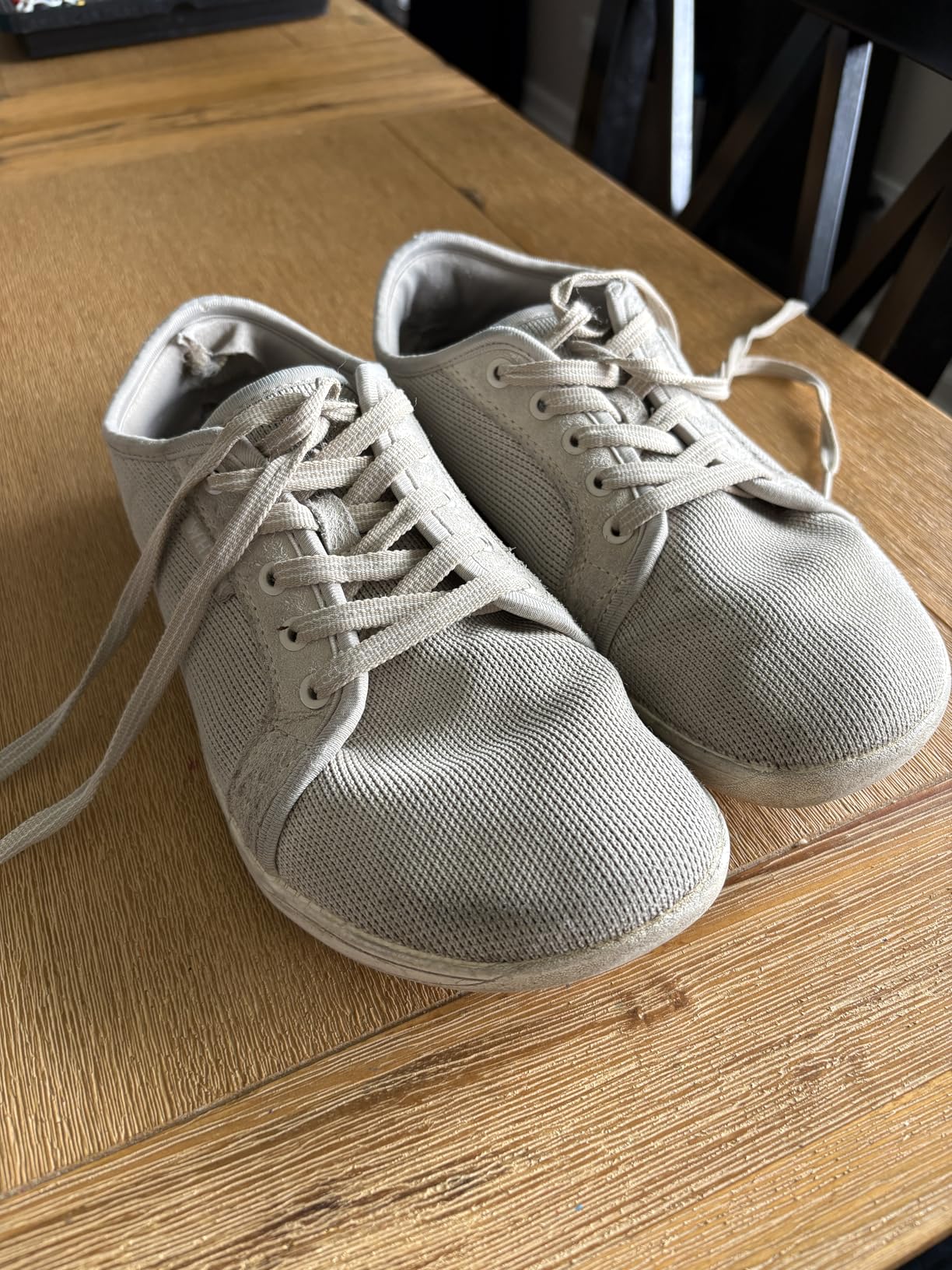
Let me be straight with you: the first week in zero drop shoes is a genuine adjustment period. My calves noticed — not painfully, but noticeably — during school pickup standing, grocery runs, the usual Tuesday rhythm. Your heel and forefoot sitting at exactly the same height feels strange when you’ve spent years in elevated heels, even low ones.
By week three, that strangeness had completely dissolved. What replaced it was something harder to describe: a more grounded feeling while walking, less lower-back tension during long shopping sessions, and a strange moment where I slipped on my old work flats and felt like I was leaning forward. My old shoes felt like heels now. That’s when I understood what people mean when they talk about barefoot shoe conversion.
The adaptation timeline matters. Don’t judge zero drop in week one.
Ground Feel: Playground Wood Chips and All
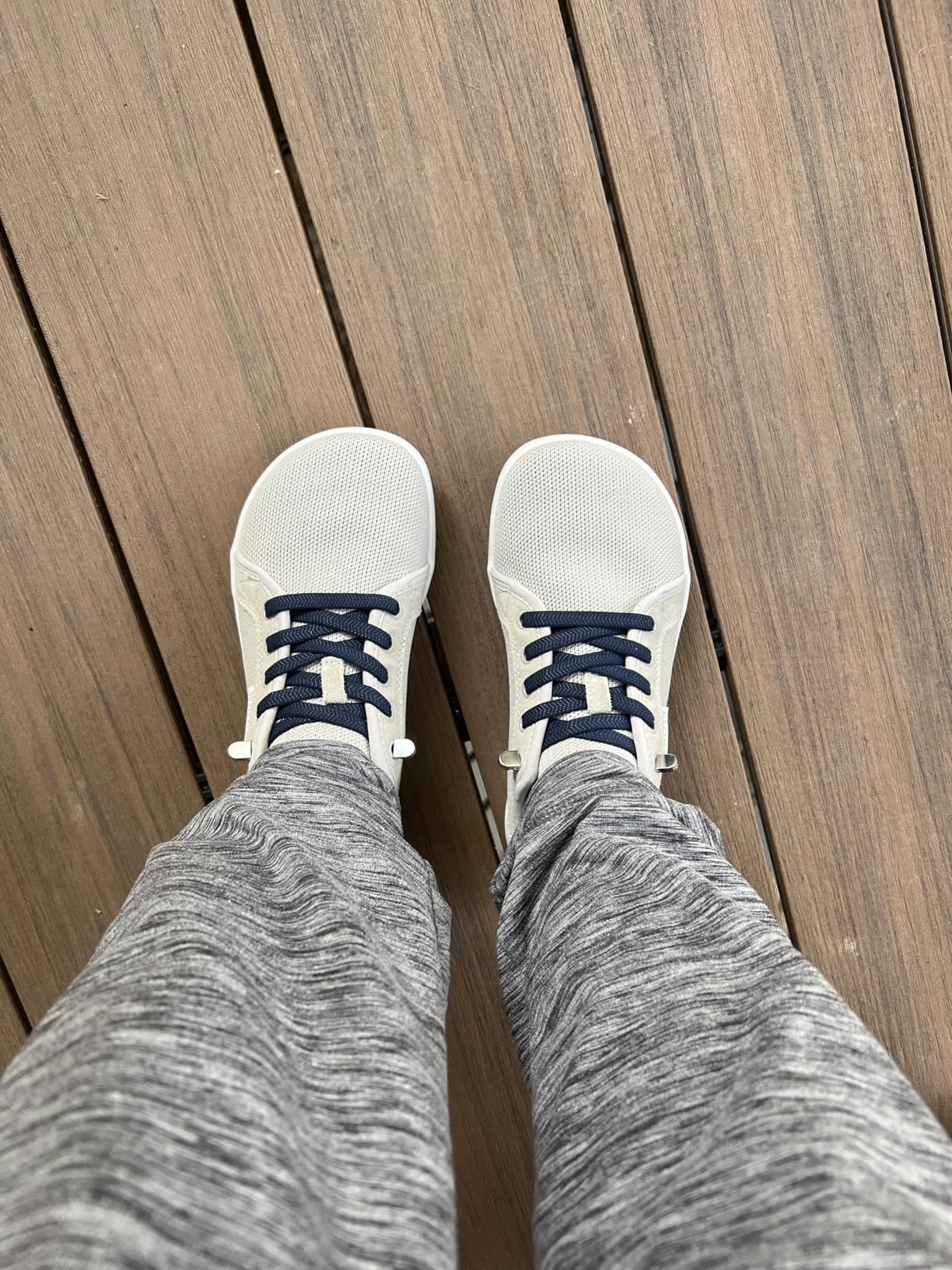
The 11mm stack height gives you just enough rubber between foot and pavement to handle urban surfaces without protection theatre. I can feel smooth concrete differently from rough asphalt. At the playground one afternoon, I could feel the individual wood chips and small stones — and here’s the thing that surprised me: it enhanced how I was moving rather than bothering me. My feet were awake and communicating with the ground in a way they never do in cushioned shoes.
Sharp objects haven’t been a problem across 75+ miles of testing on city sidewalks, parking lots, and mixed terrain. For anything approaching technical trail, these aren’t the shoe. But for the surfaces most of us actually walk on daily, the protection-to-feedback balance is dialed in well.
Real-World Performance: 12 Weeks Across Actual Life
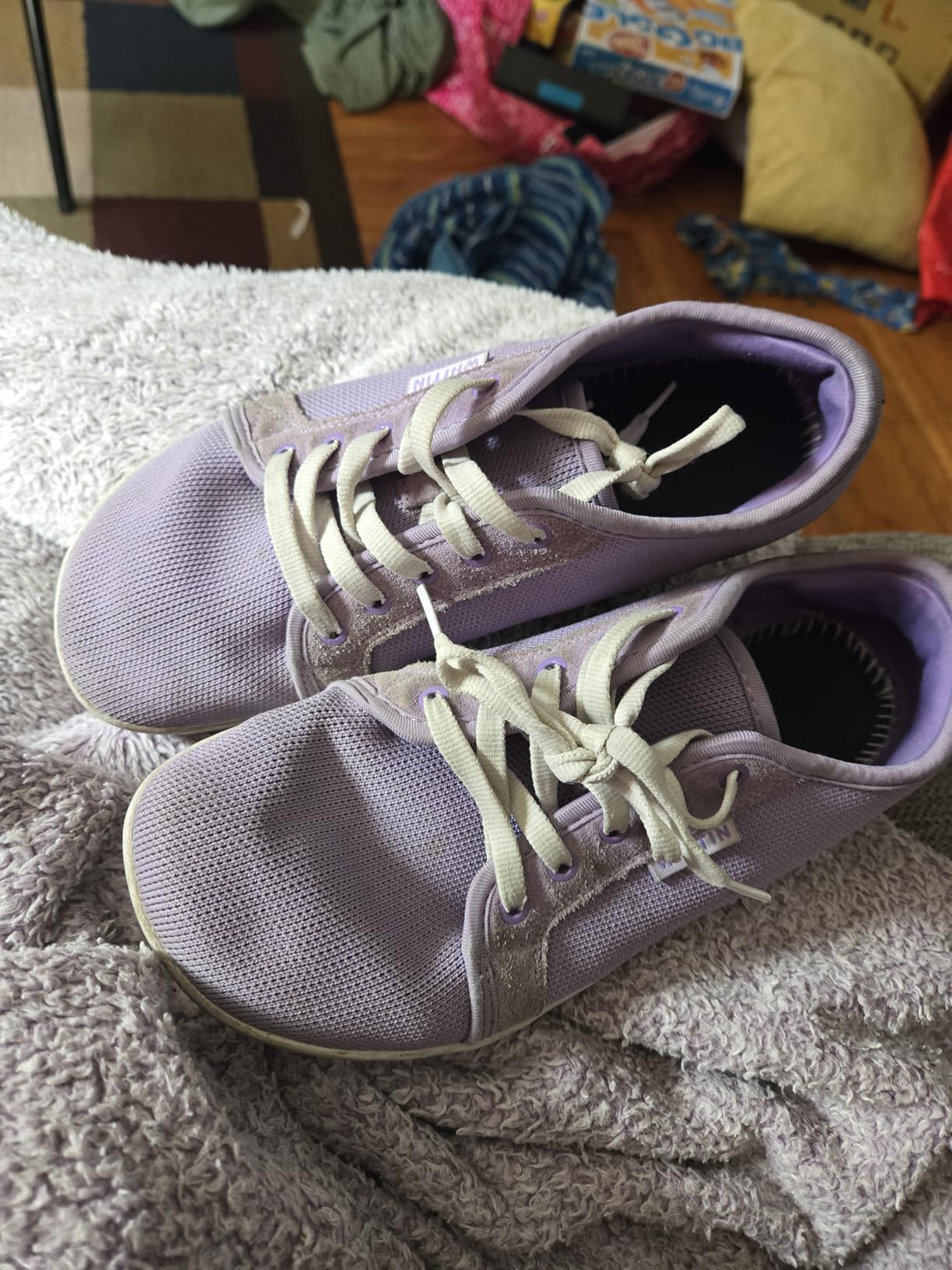
School pickup involves standing on a mix of concrete, grass, and asphalt for 20–30 minutes daily. After two months of this in the WHITINs, I can say my feet never felt the accumulated fatigue I used to notice by Friday. Farmers market Saturdays — concrete, then grass, then gravel, then back — became more enjoyable because the ground feedback made me more confident stepping rather than less.
Traction on dry surfaces is solid. The high-density rubber outsole handles polished concrete in places like Target and Costco well, which is where a lot of shoes fail me. I did slip — once — at the entrance of a grocery store during rain, which served as a clear reminder that these aren’t engineered for wet pavement. That’s not a design flaw; it’s a use-case boundary. For dry daily life, the grip is genuinely adequate.
The real durability proof came during a family vacation: six to eight hours of daily walking across cobblestone, museum floors, and park paths. No end-of-day aching. My teenage daughter noticed I’d stopped complaining about my feet — which, if you have a teenager, you’ll understand is the highest possible endorsement.
Lifestyle Fit: From Parent-Teacher Conferences to Yoga
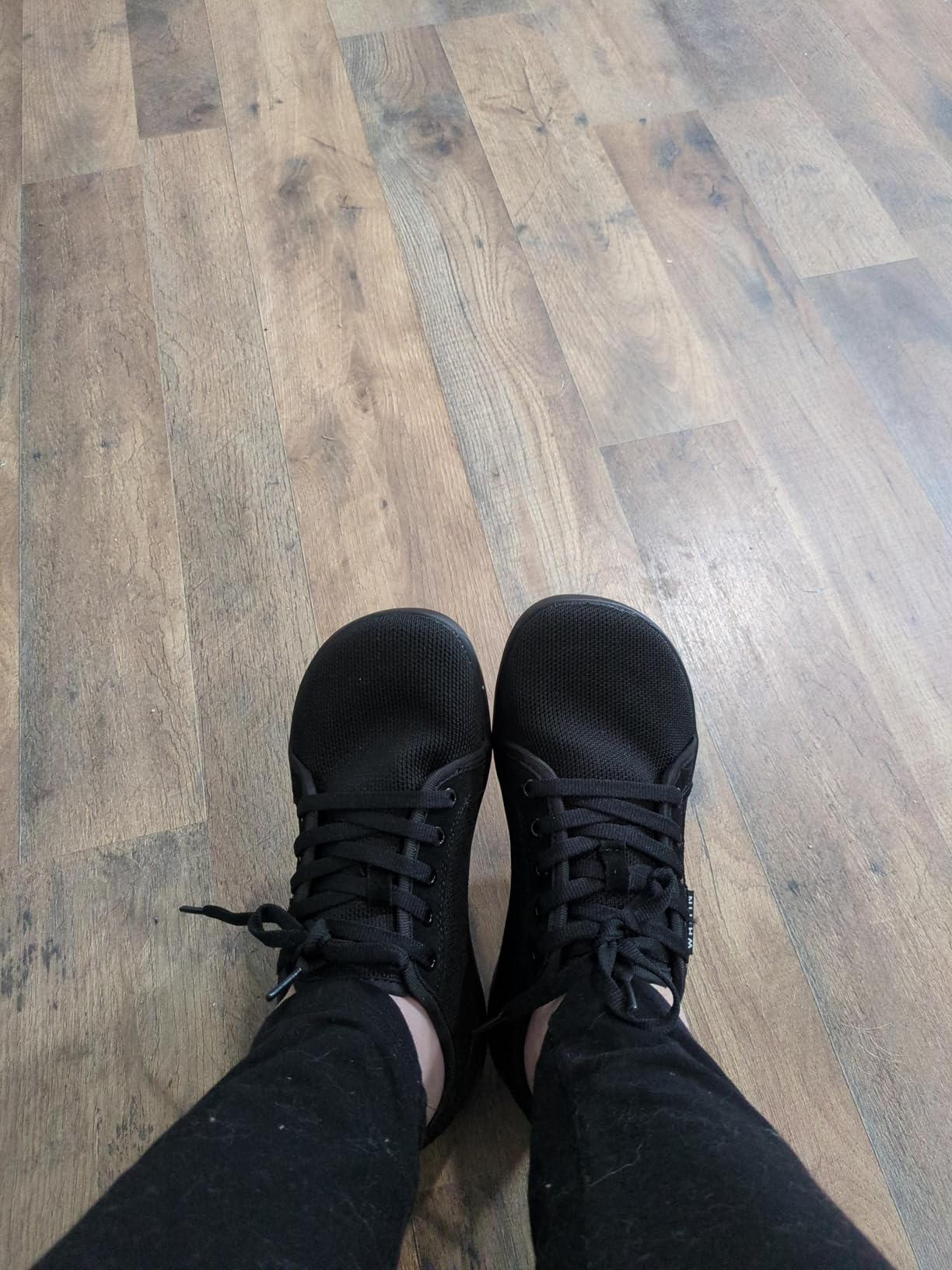
These transitioned between contexts better than I expected. The clean, unfussy silhouette worked with jeans for a parent-teacher conference. Comfortable enough for two-hour shopping trips. Flexible enough to move through gentle yoga flows at home — the zero drop actually helps ground poses feel more stable, which isn’t something I anticipated.
They’re not training shoes in the performance sense, and I wouldn’t use them for any serious running. But as a lifestyle shoe that genuinely handles the full spectrum of a busy day — standing, walking, low-impact movement — the versatility is real and not marketed.
Strengths and Honest Limitations
What Works
- Toe box that’s actually wide — 11cm at the forefoot, shaped like a foot, not a marketing claim
- No break-in period — comfortable from the first hour
- True zero drop — heel and forefoot at the same level, confirmed across multiple independent reviewers
- Lightweight — at 7.2 oz per shoe (size 8), the forget-you’re-wearing-them sensation is real
- Versatile styling — works across casual contexts without screaming “specialty shoe”
- Machine washable — cold water, gentle cycle, air dry; practical for real life
- Value — $42 for genuine barefoot benefits typically priced at $80–$150+
What Doesn’t
- Not weather-resistant — one rainy entrance is enough to remind you
- Durability ceiling — 12–18 months with regular wear; the materials reflect the price
- Basic insole — functional but some people swap it immediately for an aftermarket option
- Zero grip on wet surfaces — this isn’t for wet climates as a daily driver
- Week-one calf adjustment — expect it; don’t fight it
- Occasional squeaking — on linoleum particularly; decreases with wear; mostly harmless
Environment-by-Environment Testing
Indoor Surfaces
The thin sole excels on indoor flooring. I was skeptical about polished concrete before testing, but the grip is better than several conventional shoes I’ve owned. The zero drop posture benefit is most noticeable during stationary standing — grocery checkout lines, museum exhibits, anywhere you’re upright without moving. Less lower-back tension. Linoleum produces occasional squeaking when pivoting; it’s not constant, and it fades as the shoes break in.
Urban Outdoor
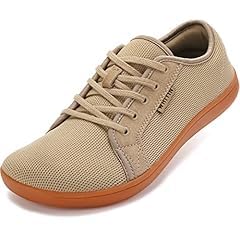
City sidewalks, parking lots, mixed-material farmers markets — this is the shoe’s native terrain. The outsole flexes over uneven surfaces and the ground feedback makes you walk more deliberately without being uncomfortable. Light neighborhood trails with packed dirt and occasional roots are manageable. For actual hiking terrain — rocky, technical, extended elevation — look elsewhere.
Seasonal Considerations
The knitted upper breathes well enough for warm-weather daily use; during 80°F days, my feet stayed comfortable through normal activity. With appropriate socks, cold-weather performance is adequate — the upper provides more warmth than the minimal design suggests. Rain is the one condition where I’d reach for a different shoe. Not waterproof, full stop.
Do the Claims Hold Up?
| Brand Claim | Reality After 12 Weeks | Verdict |
|---|---|---|
| “Wide toe box for optimum toe space” | Genuinely the widest I’ve found under $50. Toes splay naturally without pressure. | ✅ TRUE |
| “Zero drop heel for proper posture” | 0mm confirmed. Postural difference noticeable by week 4, lower-back fatigue reduced. | ✅ TRUE |
| “Flexible sole for barefoot feeling” | Bends and twists easily. Ground connection is real, not just marketing language. | ✅ TRUE |
| “Lightweight minimalist design” | 7.2 oz per shoe (size 8). Forget-you’re-wearing-them is accurate description, not hyperbole. | ✅ TRUE |
The $42 Value Question
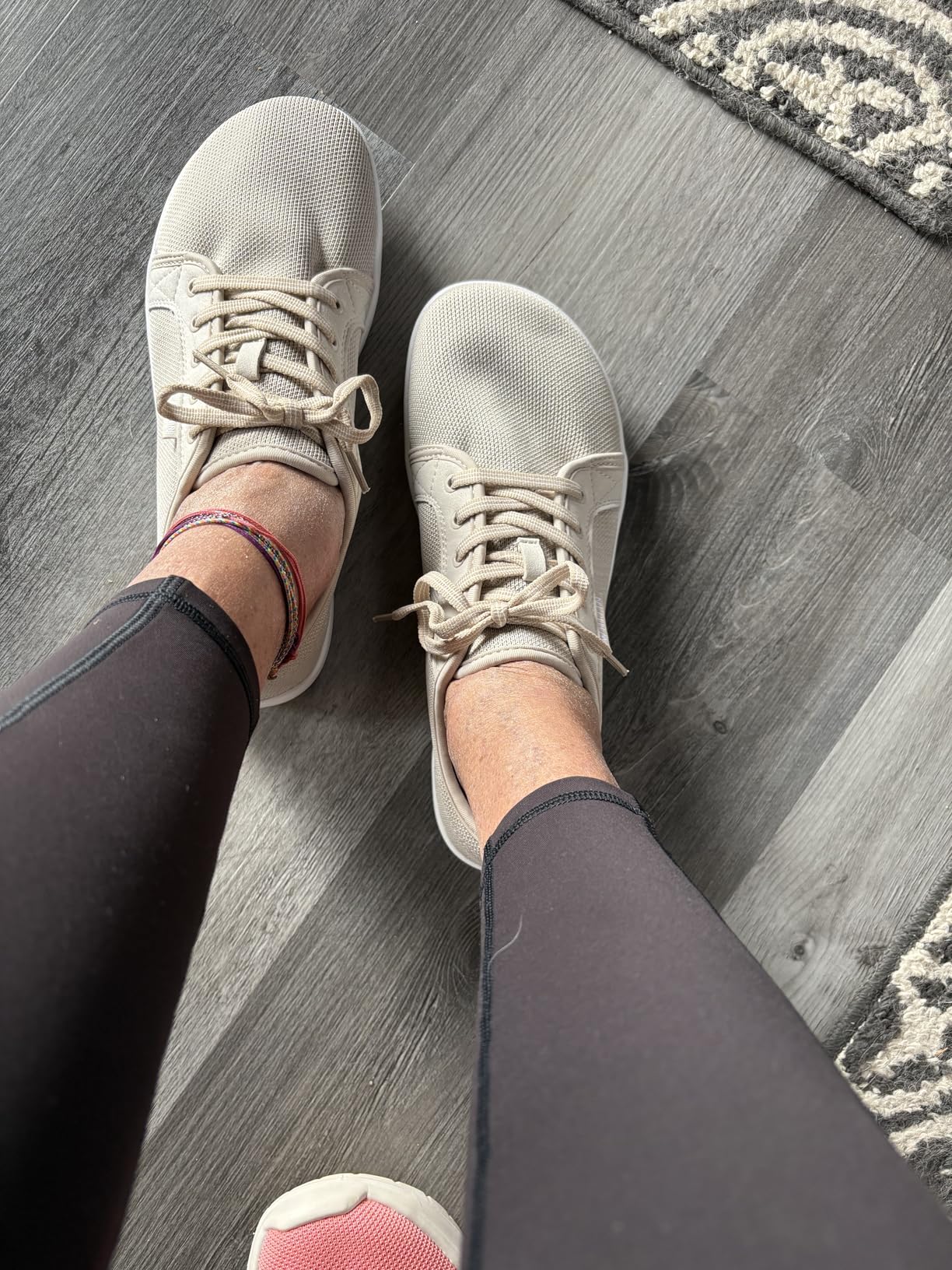
Premium barefoot brands — Lems, Xero, Vivobarefoot — run $80 to $150+. Those prices buy you better materials, longer durability, and in some cases more refined design. They’re worth it if you’ve already committed to barefoot footwear.
But here’s the honest calculus: if you’re not sure yet whether barefoot shoes suit your feet and your life, spending $42 to find out carries minimal financial risk. These WHITIN shoes provide roughly 80% of the genuine barefoot benefits at about 30% of the cost. The 20% you’re missing is mostly in material quality and expected lifespan — not in the core functional proposition of wide toe box, zero drop, and ground connection.
Several women in the barefoot shoe community have reported relief from plantar fasciitis and bunion pain after switching. I can’t make medical claims, but I can say the improved toe space and level foot positioning clearly provide relief for many people who’ve been cramped into conventional narrow shoes. My own bunion pressure dropped noticeably within the first two weeks.
If the shoe converts you to barefoot footwear, you can upgrade to an Airhas Barefoot Zero Drop or the UBFEN Barefoot Minimalist later. If it doesn’t work for you, $42 is not a painful lesson.
Overall Score
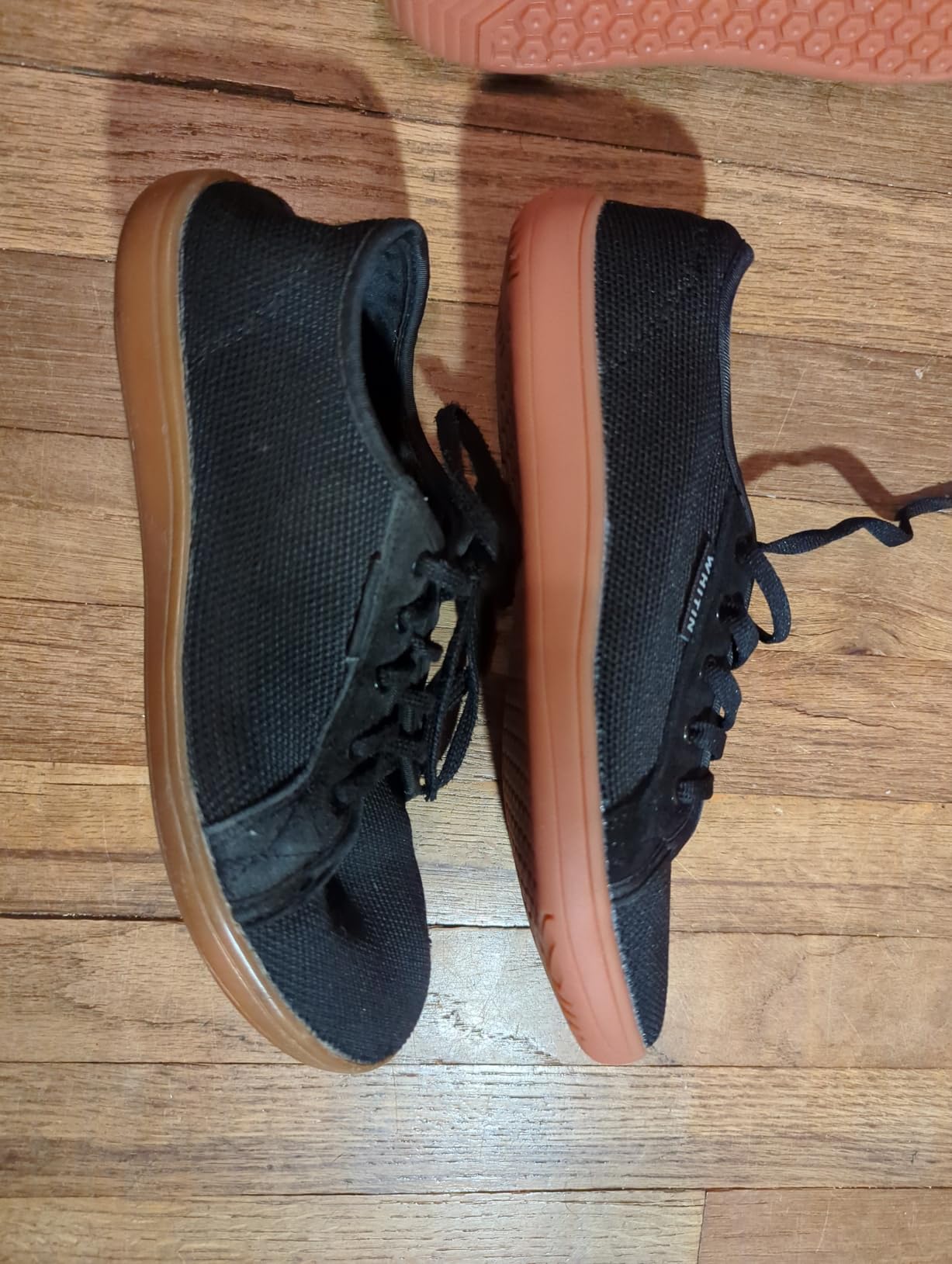
| Category | Score | Weight | Notes |
|---|---|---|---|
| Daily Comfort | 8.5/10 | 25% | Immediate, sustained, no foot fatigue across 75+ miles |
| Value for Money | 9.0/10 | 20% | $42 for genuine barefoot benefits is exceptional |
| Foot Health Benefits | 8.5/10 | 20% | Real toe splay, posture improvement, bunion relief |
| Durability & Construction | 7.0/10 | 15% | 12–18 months; acceptable for budget materials |
| Versatility & Style | 7.5/10 | 10% | Clean look, adapts across daily contexts |
| Weather/Surface Performance | 7.0/10 | 10% | Strong on dry; not for rain or wet surfaces |
| OVERALL | 7.9/10 | 100% | Strongly recommended for the right buyer |
Who Should Buy These — and Who Shouldn’t
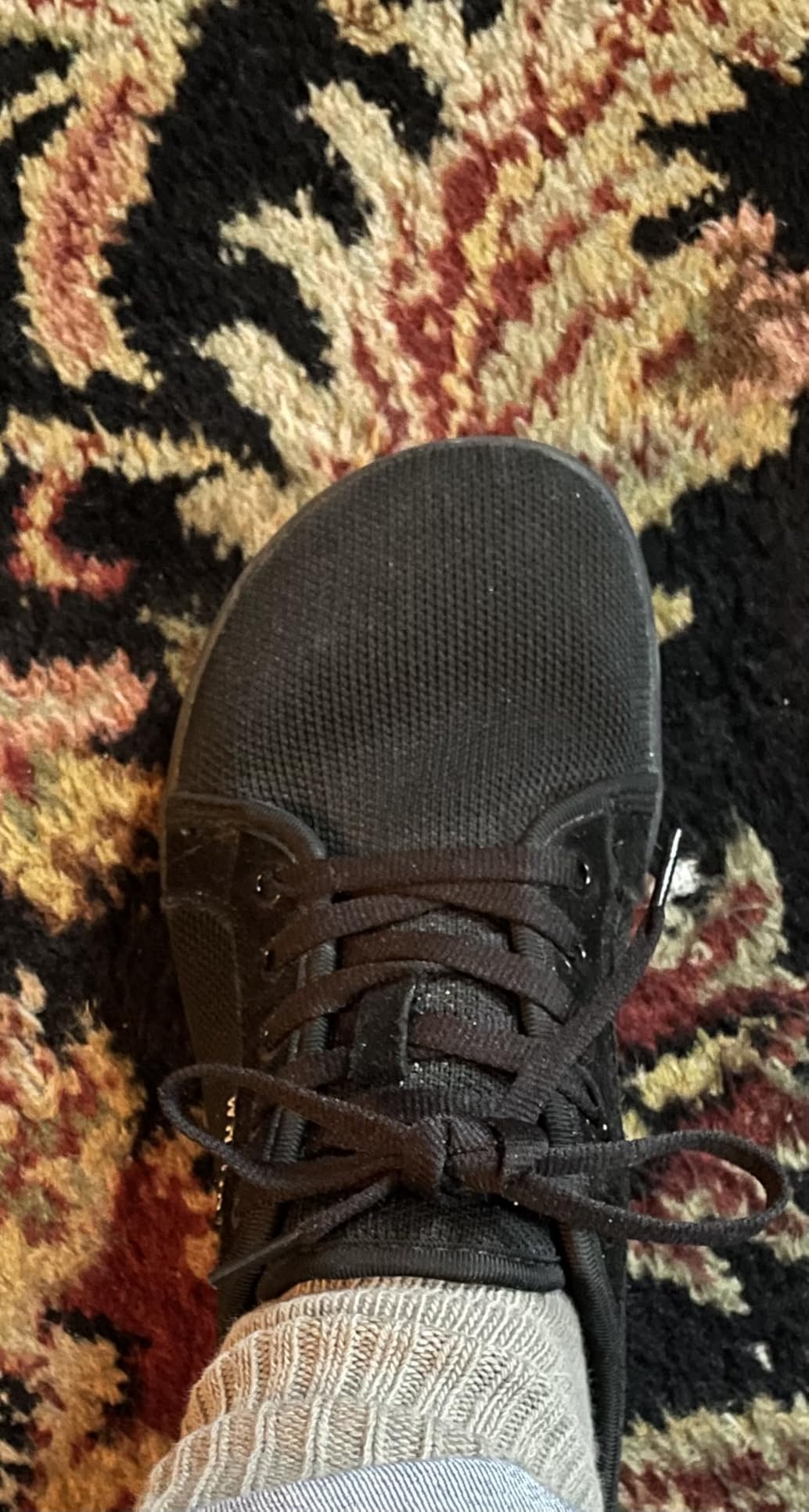
Buy these if:
- You’re curious about barefoot shoes but not ready to invest $120+
- Your feet are wide, or you deal with bunions that conventional shoes aggravate
- Your days involve extended standing and walking across varied surfaces
- You want casual shoes that can cover multiple contexts without a second pair
- You live somewhere with mostly dry weather
Skip these if:
- You need performance footwear for running or sport
- You live in a wet climate and want a single daily-driver shoe
- You’re expecting a shoe to last three or more years
- Style is your top priority and you want something more fashion-forward
Better alternatives for specific needs:
- Wider selection of wide-toe-box styles: Somiliss Wide Toe Box or Jackshibo Wide Toe Box Shoes
- Budget barefoot with more style options: Joomra Wide Barefoot
- Men’s equivalent from the same brand: WHITIN Men’s Minimalist Trail Running Shoes
- Grounding footwear adjacent options: Addbili Grounding Shoes
Final Verdict
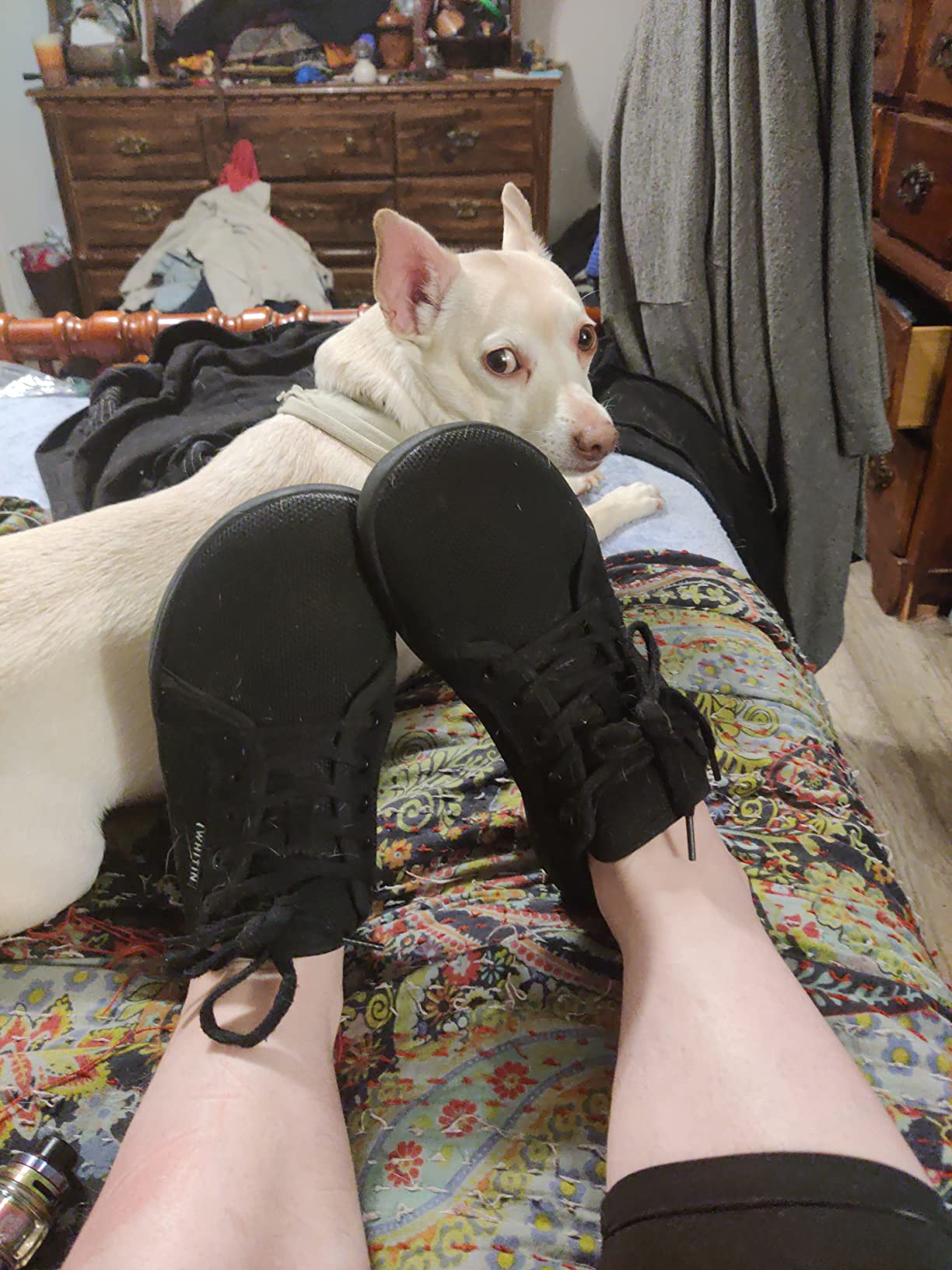
After 12 weeks and 75+ miles, the WHITIN Women’s Minimalist Barefoot Shoes earn my honest recommendation — for the right buyer, at the right price point. They do what they claim: genuine wide toe box, true zero drop, flexible sole, lightweight construction. None of those are exaggerated.
What they’re not: a premium product. The materials are budget-appropriate, they won’t outlast a more expensive shoe, and they have real use-case limitations in rain and serious athletic contexts.
But for a busy mom with wide feet who wants to understand whether barefoot footwear is worth pursuing? These are the ideal starting point. The $42 price means the financial risk matches the uncertainty of trying something new. And if they work for you — as they did for me — you’ll have found something that genuinely changes how your feet feel at the end of a long day.
That’s worth a lot more than $42.
Frequently Asked Questions
Q: Do these run true to size?
A: Generally yes. Size 8 fits correctly with room for natural toe splay. If you’re between sizes, go up — the wide toe box rewards the extra space.
Q: Are they actually wide enough for people with genuinely wide feet?
A: The 11cm forefoot width (tested at size 9) is the widest I’ve found under $50. Women with bunions and wide feet consistently report real relief, not marginal improvement.
Q: Can I wear orthotics with these?
A: Yes — the insole is removable, and thin custom orthotics fit. Many people find the wide toe box eliminates their need for orthotics entirely after a few weeks.
Q: How long do they realistically last?
A: 12–18 months with regular daily wear. Light users may get two years; heavy daily use could mean 8–10 months. Budget construction, budget lifespan — that’s the honest equation.
Q: Can I use them for exercise?
A: Yoga, weightlifting, and light walking exercise — yes, well-suited. Running, HIIT, court sports — no. These are lifestyle shoes, not training shoes.
Q: How do they handle cold weather?
A: Better than you’d expect. The knit upper provides reasonable warmth with appropriate socks. Not waterproof, so wet winter conditions require a different shoe.
Q: Machine washable?
A: Yes. Cold water, gentle cycle, air dry. They hold their shape well and come out looking clean. Practical for active lifestyles.
Q: What’s the squeaking issue about?
A: Occasional squeaking on linoleum or very smooth floors, particularly during pivots. It tends to fade as the shoes break in. Most people find it more amusing than annoying — but it’s worth knowing about.
Q: What are the best alternatives if I want more durability?
A: The Joomra Women’s Trail Running Barefoot Shoes offer more outdoor versatility at a comparable price point. For premium durability, Xero and Lems run $80–$120 with significantly longer lifespans. If weather resistance is the priority, Vivobarefoot offers waterproof barefoot options.
Be the first to review “WHITIN Women’s Minimalist Barefoot Shoes”
Related products

Running Shoes
Sneaker
Sneaker
Sneaker

Sneaker
Running Shoes
Reviews
There are no reviews yet.