
My kids are brutal on white sneakers. Between the school hallways, the muddy soccer field, and whatever chaos happens between pickup and dinner, every pair in our house was looking rough by mid-semester. When SneakERASERS kept showing up in my social media feed — people holding up gleaming white soles like they’d discovered some kind of cleaning sorcery — I figured it was worth a proper test. Sarah here, and I spent four weeks running these sponges through everything our family could throw at them. Here’s the unfiltered verdict.
Quick Verdict
These sponges genuinely work — but only on the right materials. Rubber soles and leather uppers? Genuinely impressive. Fabric and mesh panels? Save your money and try something else. The biggest thing competitors get wrong is calling this a universal sneaker cleaner. It’s not. It’s a rubber-and-leather specialist with excellent portability, and that’s actually more than enough for a lot of families.
Overall: 7.2/10 — An exceptional convenience tool with clear limits. Perfect for quick family shoe maintenance; less suited for heavy restoration or fabric-heavy collections.
Technical Specifications
- Price: $11.95 (10-pack standard) / $19.99 (20-pack bulk)
- Package contents: 10 dual-sided cleaning sponges
- Sponge design: White cleaning side + orange textured scrubbing side
- Activation: Water-only — no chemicals, no mixing
- Best materials: Rubber soles, leather uppers, synthetic
- Eco claim: Biodegradable materials, recyclable packaging (brand claim)
- Brand founded: 2018 — 8,000+ reviews, 30,000+ annual sales
- Testing scope: 4 weeks, 15+ pairs including kids’ school sneakers, soccer cleats, leather work shoes
What’s Inside the Tube
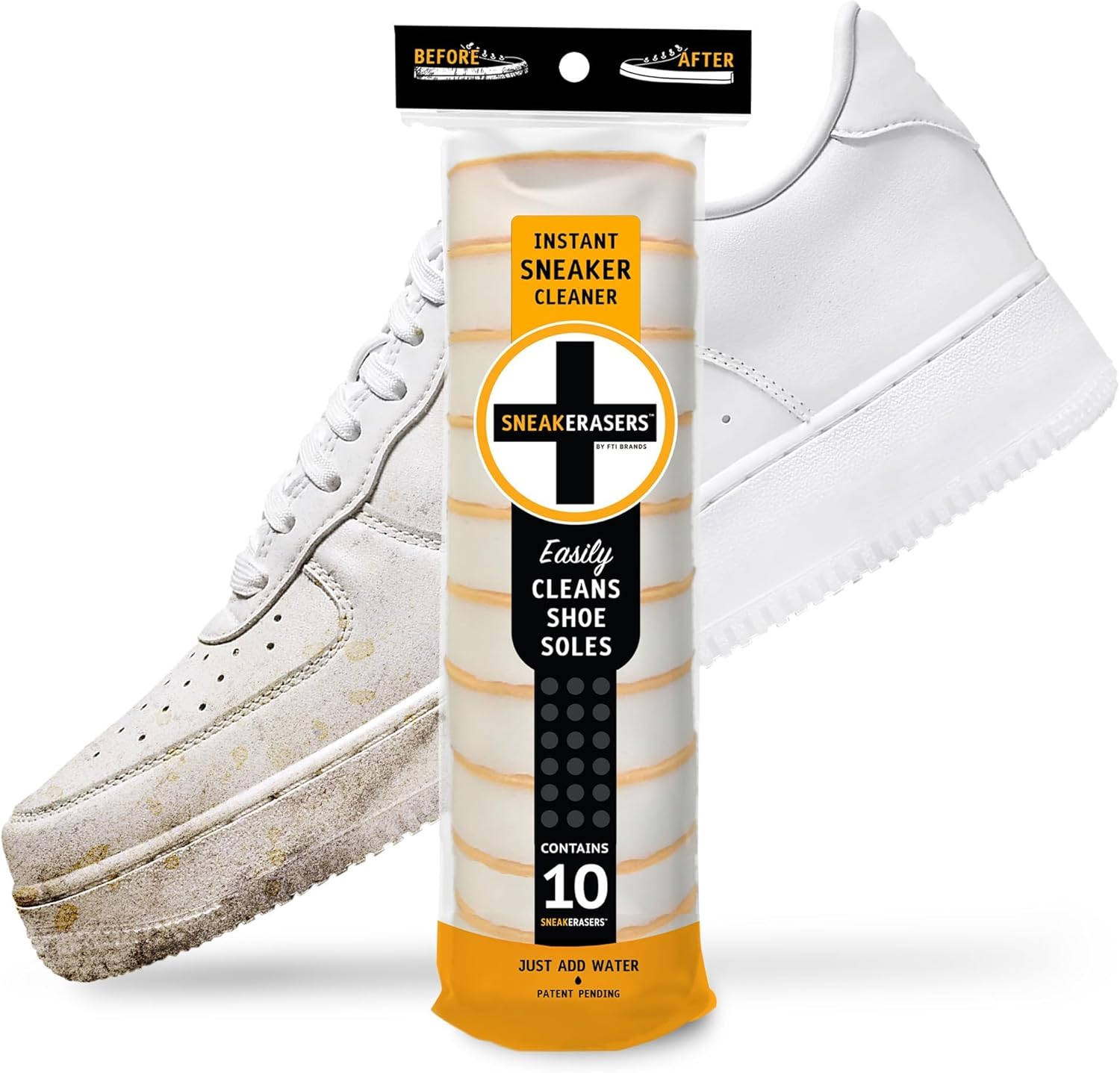
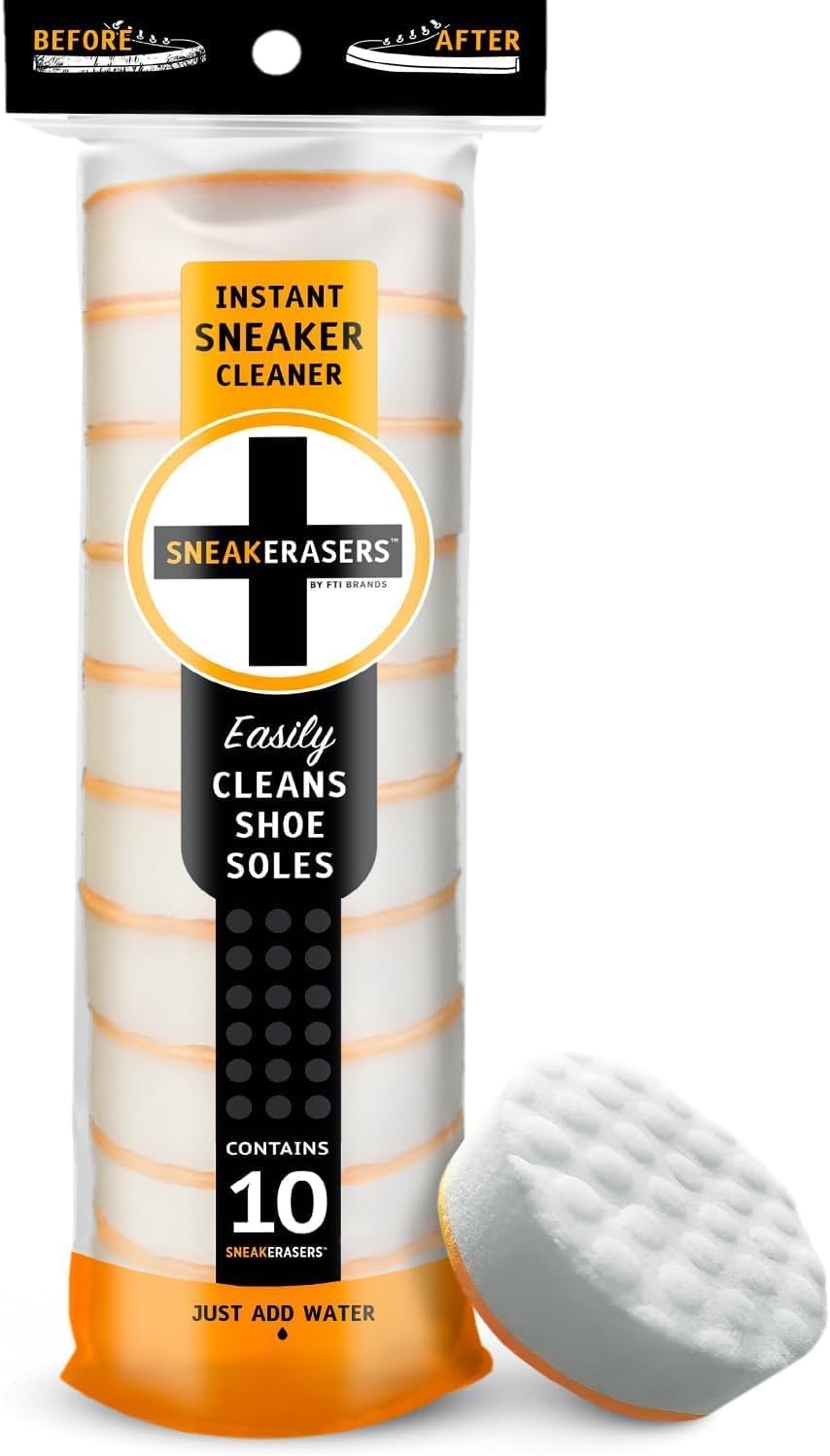
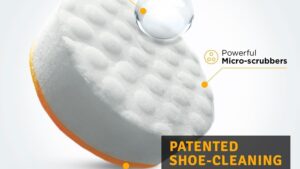
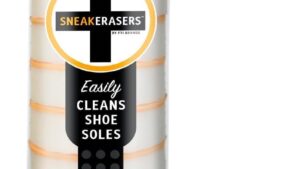
The packaging is smarter than it looks. A tight cylinder holds 10 round sponges stacked like poker chips, and the cap screws on properly — no loose lid rattling around in the bottom of your bag. Each sponge is roughly the size of a large coin, which honestly surprised me when I opened the first tube. The product photos made them look palm-sized. They’re not.
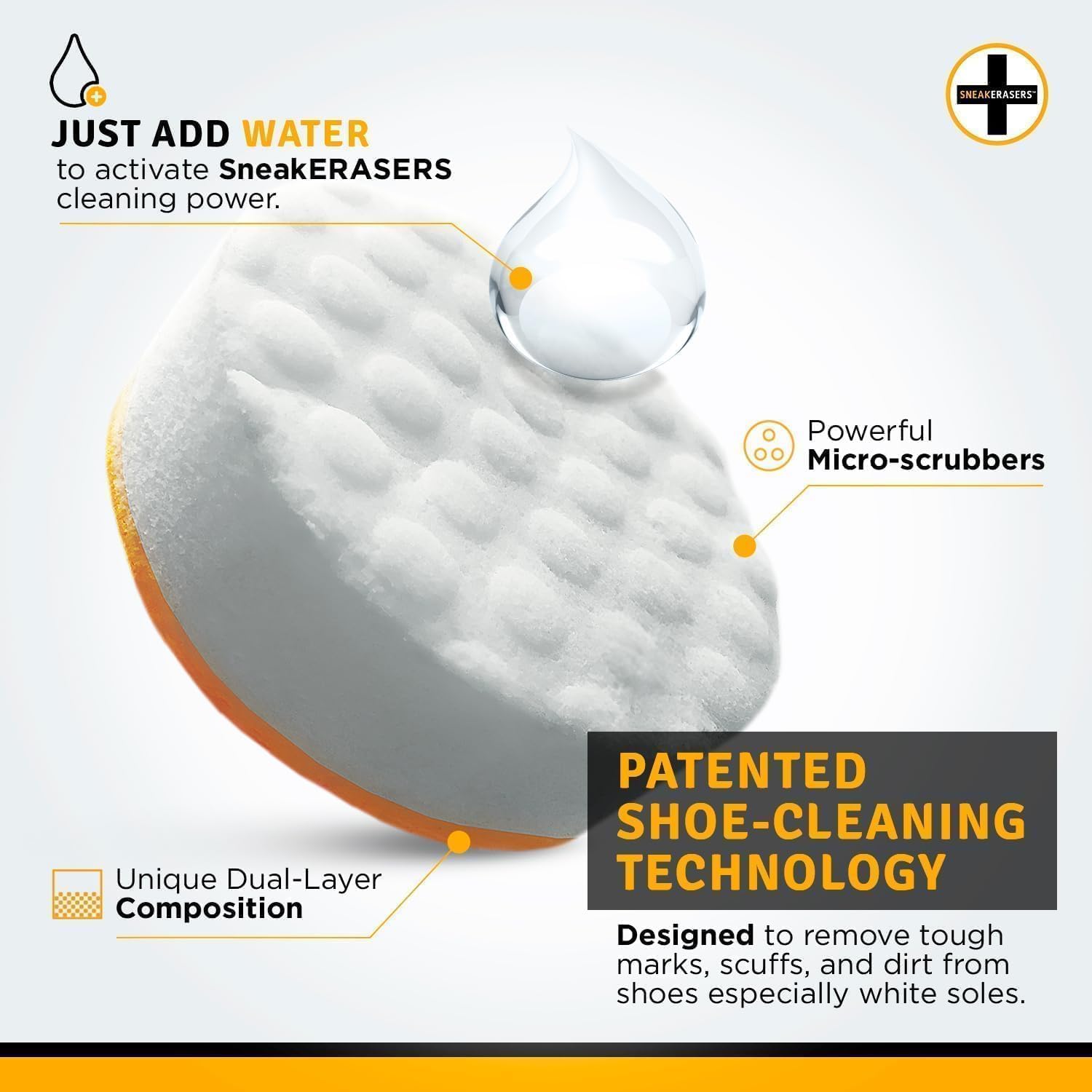
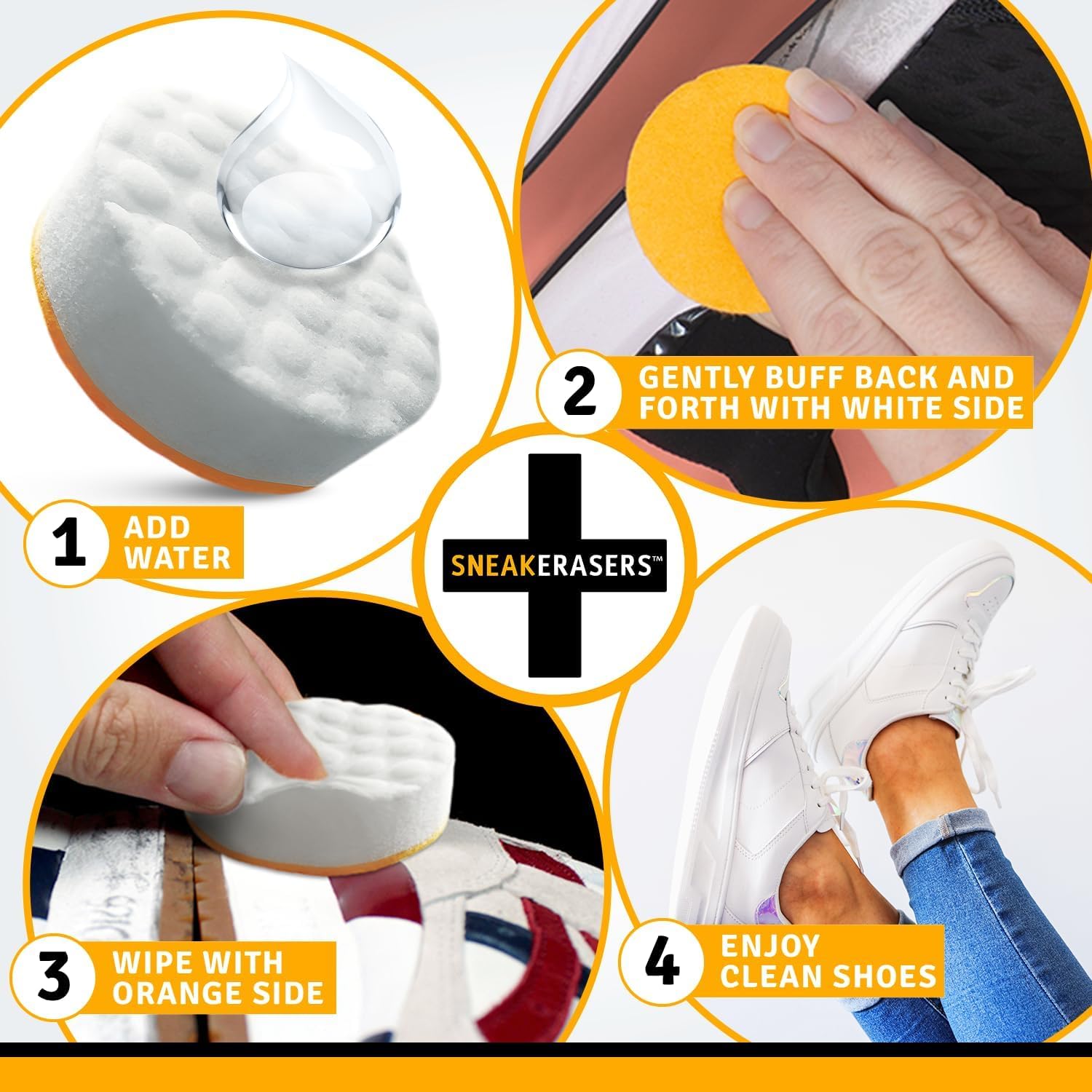
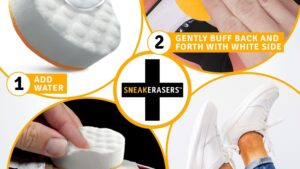
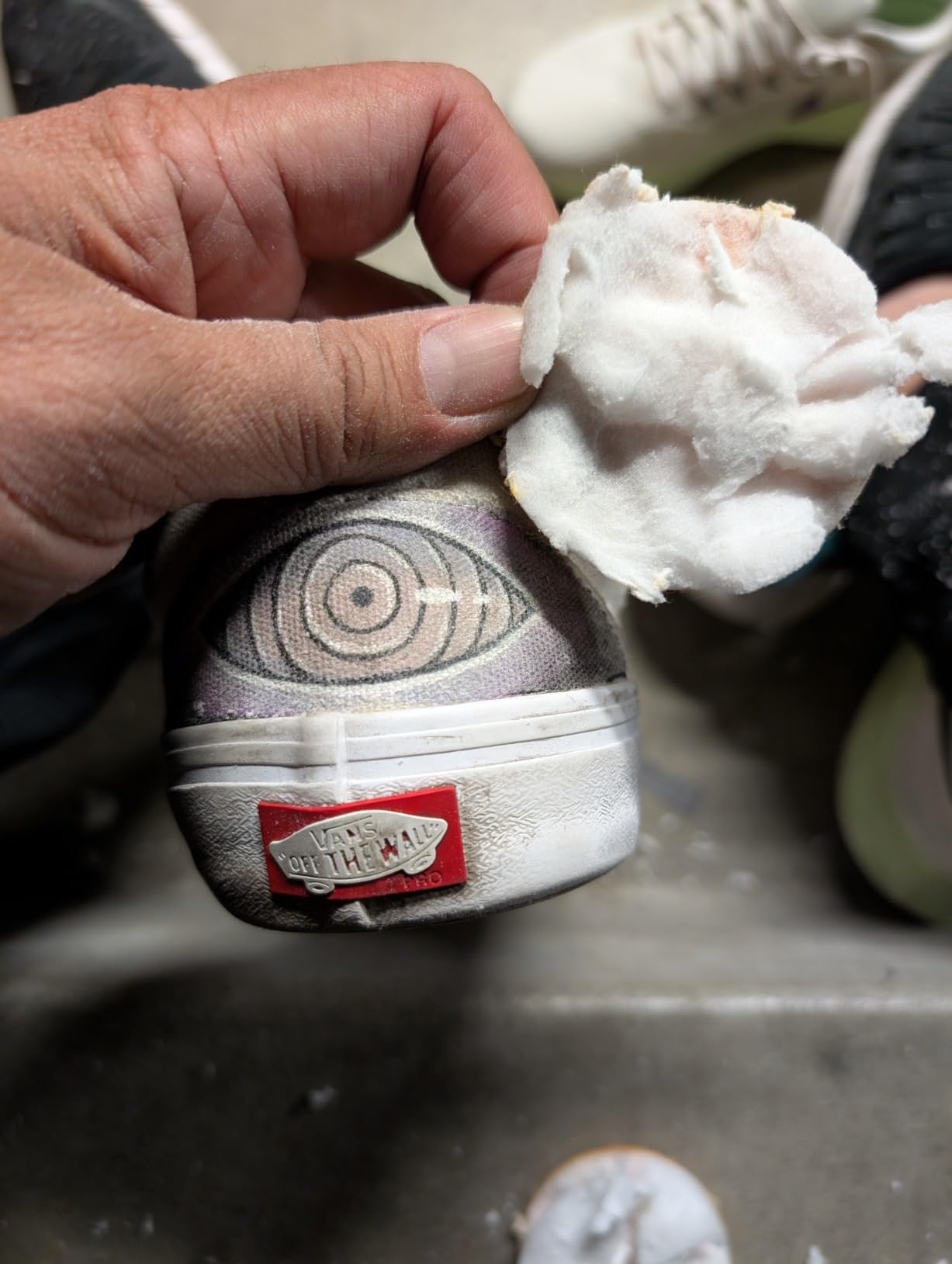
That said, the compact dimensions turned out to be genuinely useful. Round sponges hug curved midsole edges the way a flat Magic Eraser can’t, and when you’re working around the ribbed rubber at the toe cap of a kid’s shoe, that matters. The dual-sided design makes more sense once you’re using it: the white face is a soft melamine foam that breaks down dirt through micro-abrasion, while the orange side has a rougher texture for more stubborn scuff marks that won’t yield on the first pass.
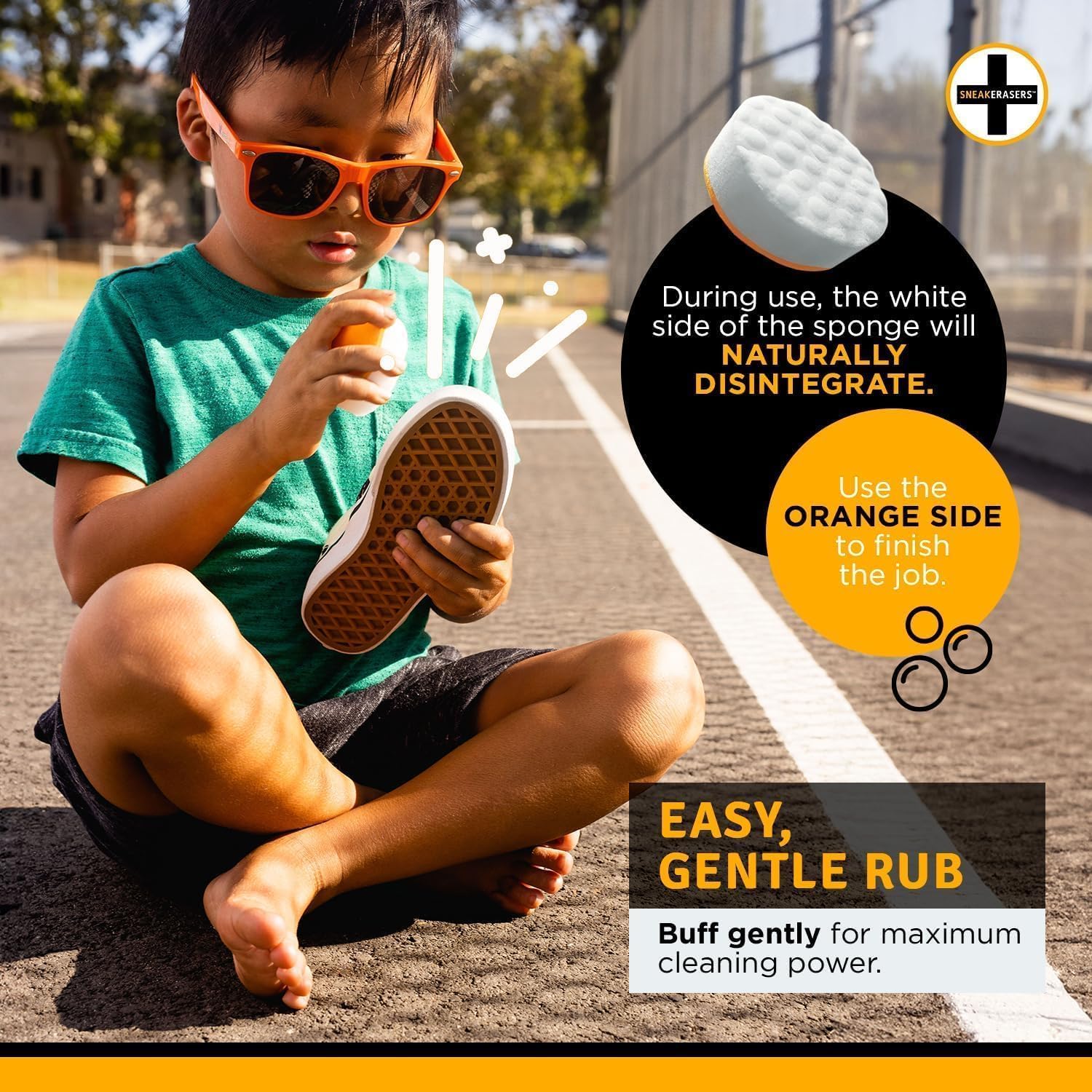
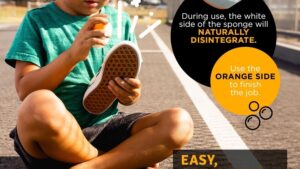
Setup is as simple as it gets. Wet the sponge, squeeze out the excess water until it stops dripping, and rub. That’s the whole process. No containers, no brushes, no pre-rinsing the shoe. I didn’t expect to appreciate the no-mess aspect as much as I did, but with three kids circling around while I’m trying to do shoe maintenance, uncapping a liquid cleaner and pouring it into a bowl is two more steps than I want.
One thing the instructions don’t mention: these sponges absorb a lot more water than you’d expect. They nearly double in size when fully saturated. You need to squeeze them out at least three times to get to the right moisture level. Too wet, and the foam starts pulling apart after the first few strokes. Too dry, and you’re just pushing dirt around. The sweet spot feels like damp rather than dripping — this is genuinely the most important technique tip the brand doesn’t tell you.
Performance by Material — The Honest Breakdown
This is where most reviews go vague. “It works great!” or “It’s okay.” Neither tells you anything useful. After four weeks, here’s what I actually found:
Rubber Soles — Where These Earn Their Price
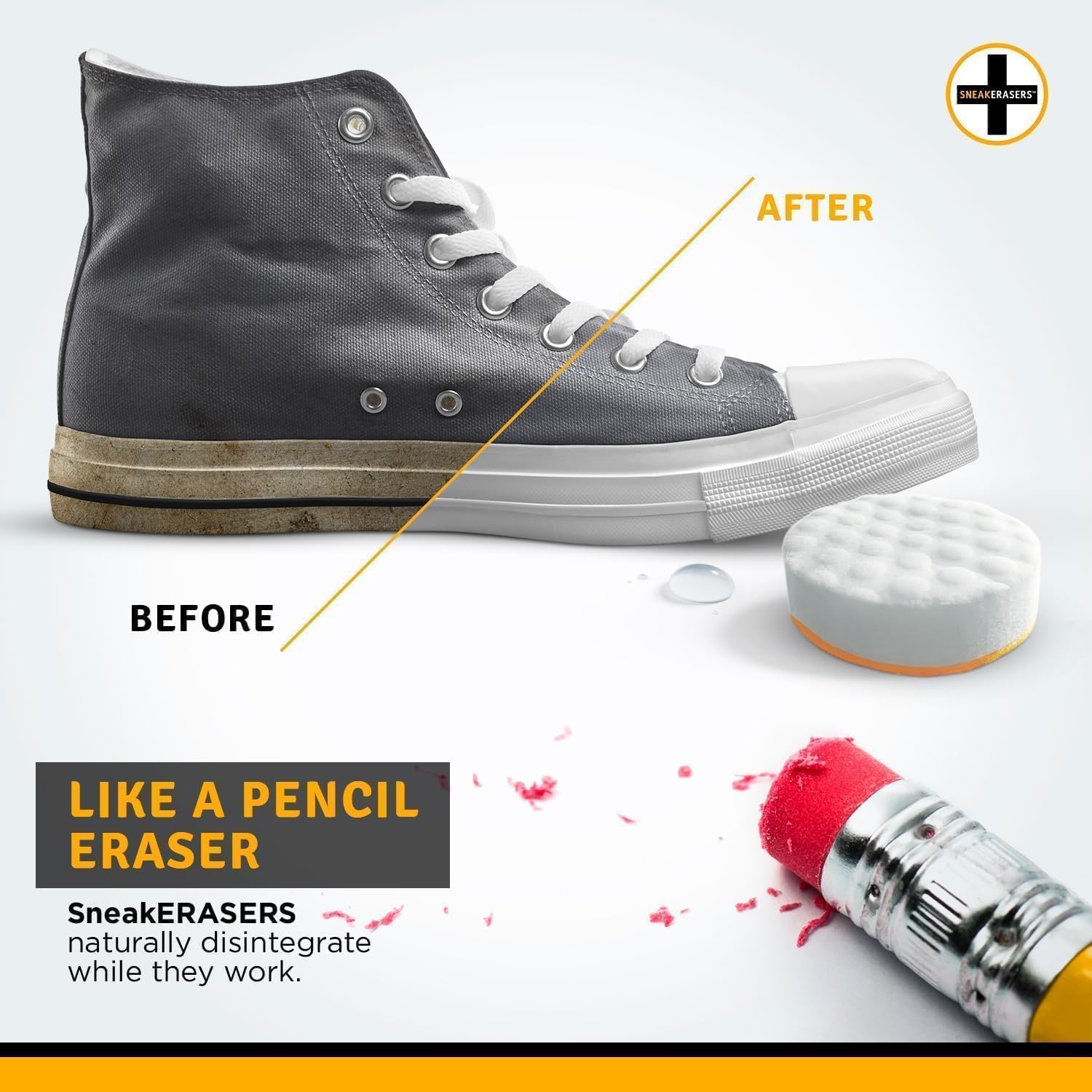
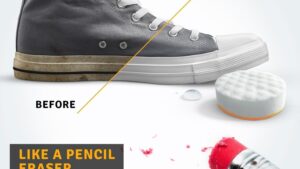
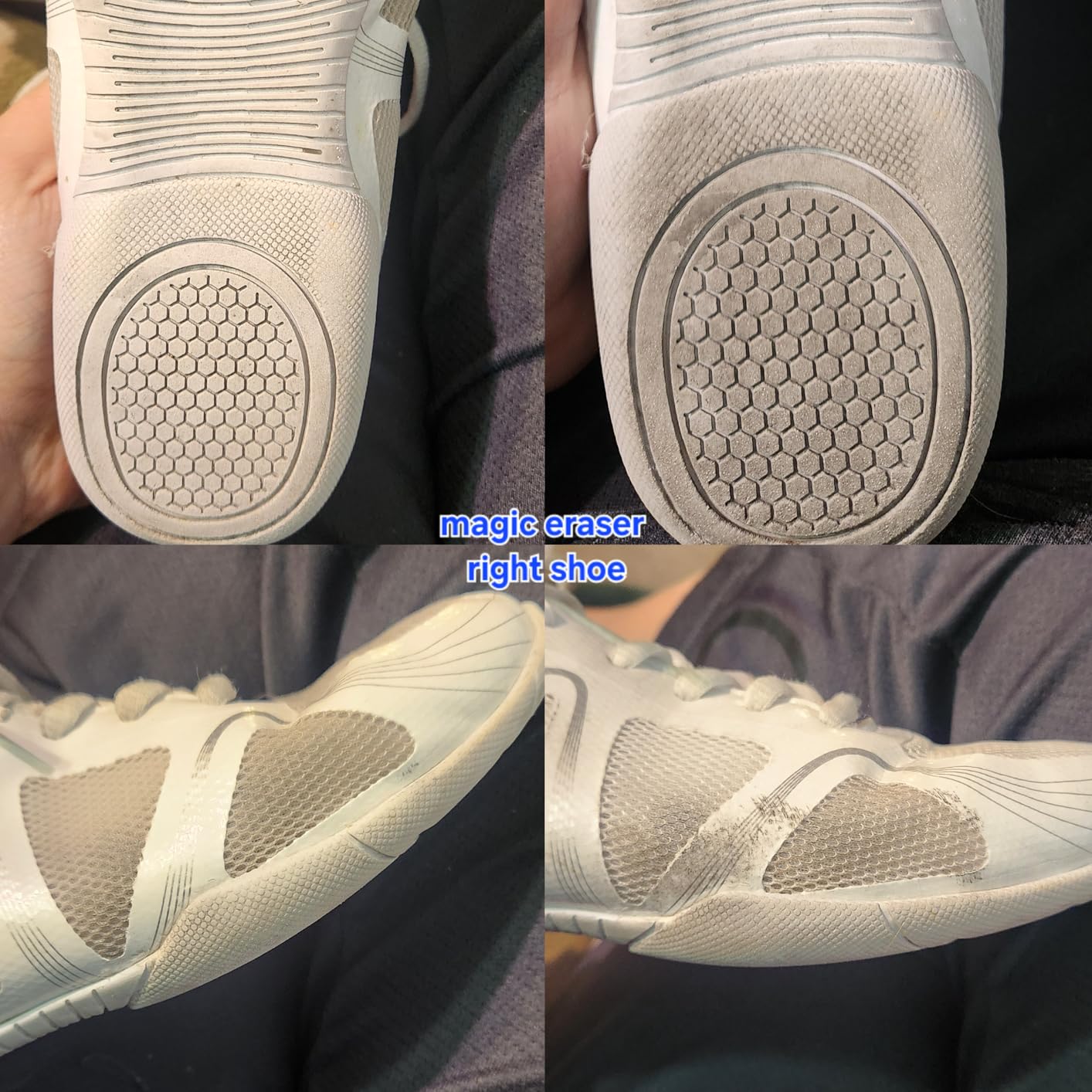
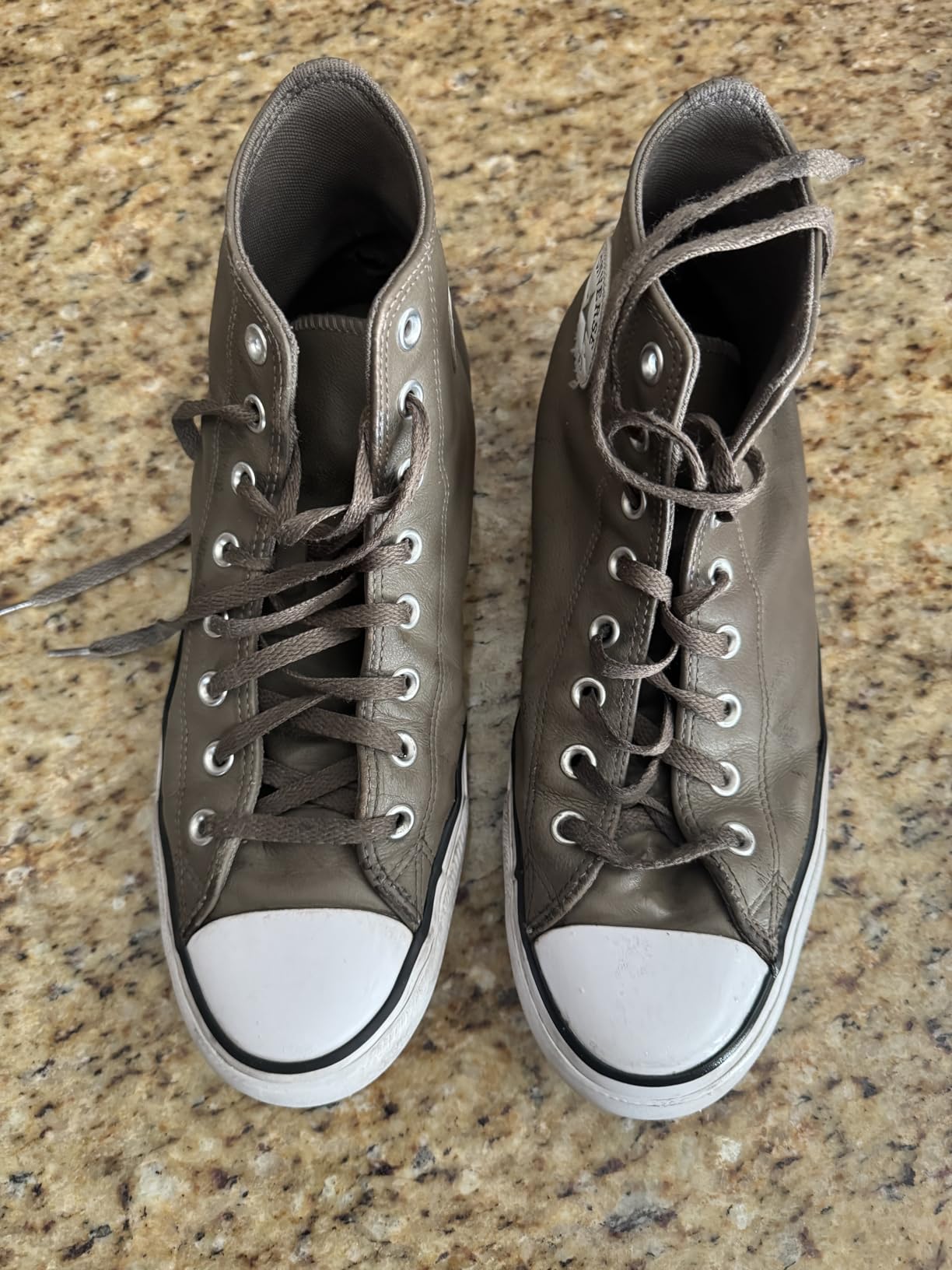
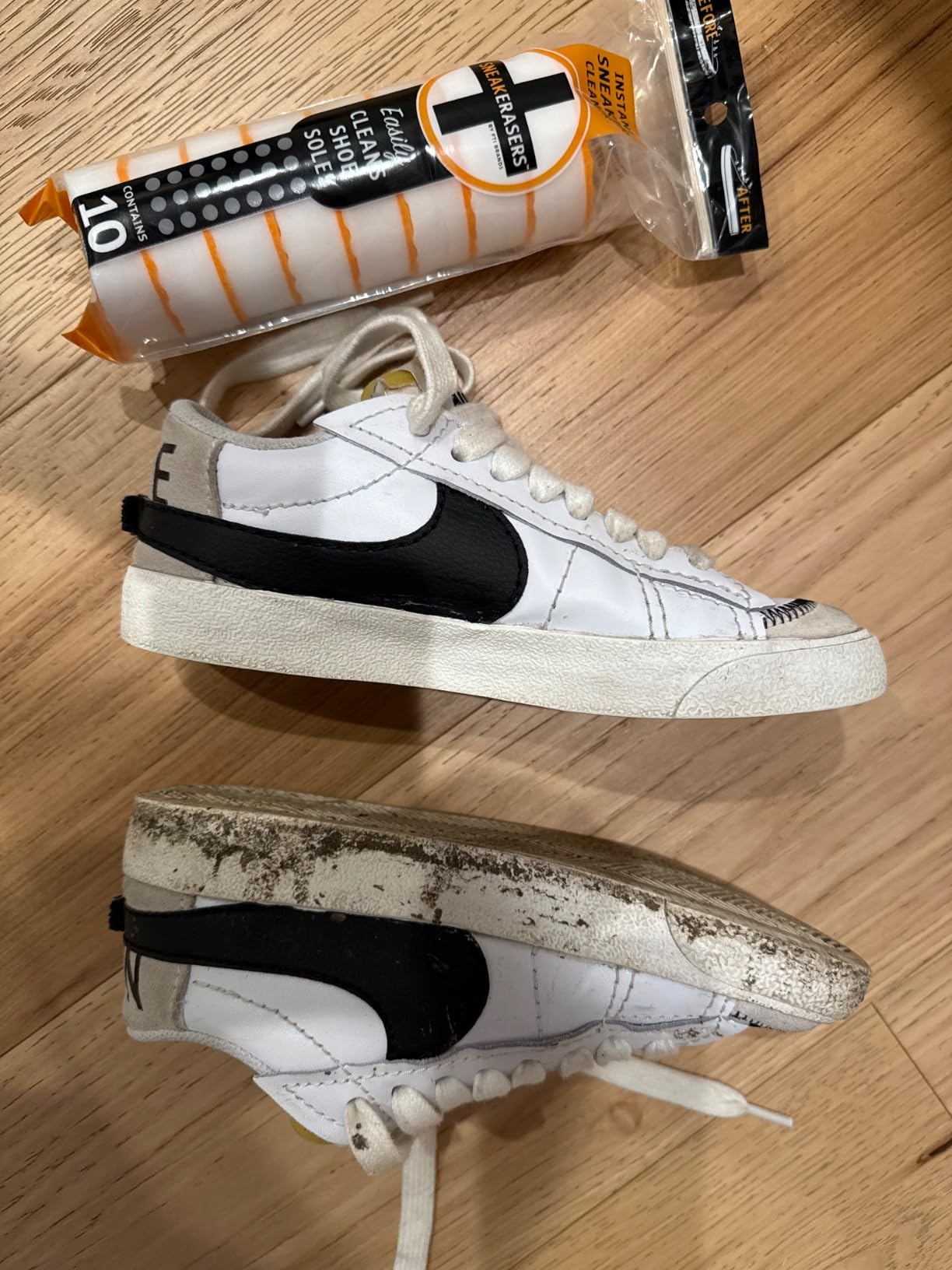
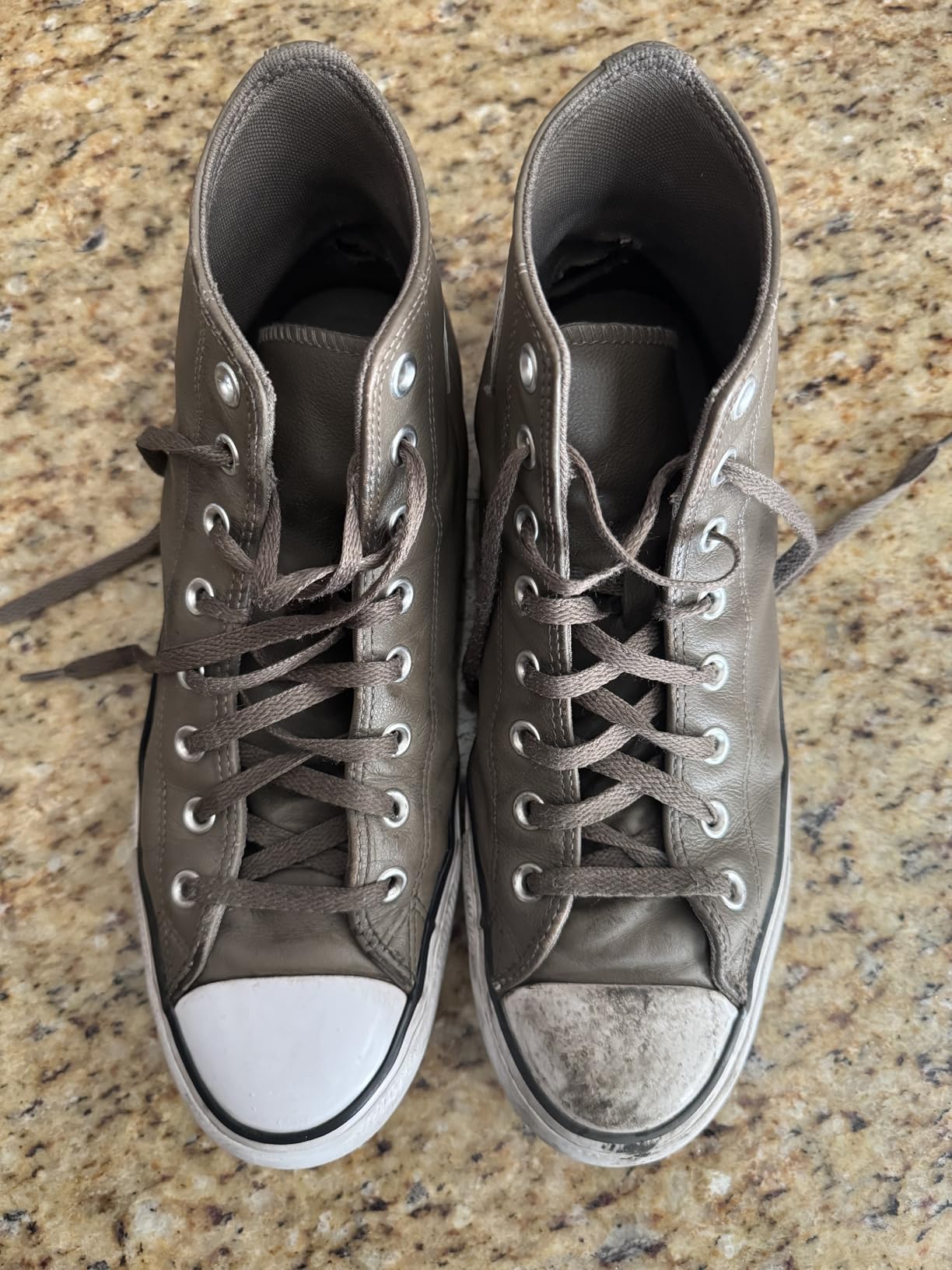
The transformation on white rubber soles is the kind of result that makes people post videos to social media. My daughter’s Converse had accumulated months of hallway scuffs, and after two minutes with a properly dampened sponge, the white midsole looked like it had been professionally cleaned. Not 90% there. Actually clean.
What’s happening mechanically is that the melamine foam acts as an ultra-fine abrasive — it doesn’t dissolve the dirt so much as physically lift it out of the surface texture. For rubber, which has a relatively hard, non-porous surface, this works exactly right. The dirt sits on top and the foam pulls it off.
Rubber soles: 8.5/10. Scuffs, ground-in dirt, even some sticky residue from gym floors — it handles all of it with minimal effort.
Leather and Synthetic Uppers — Effective with One Caveat
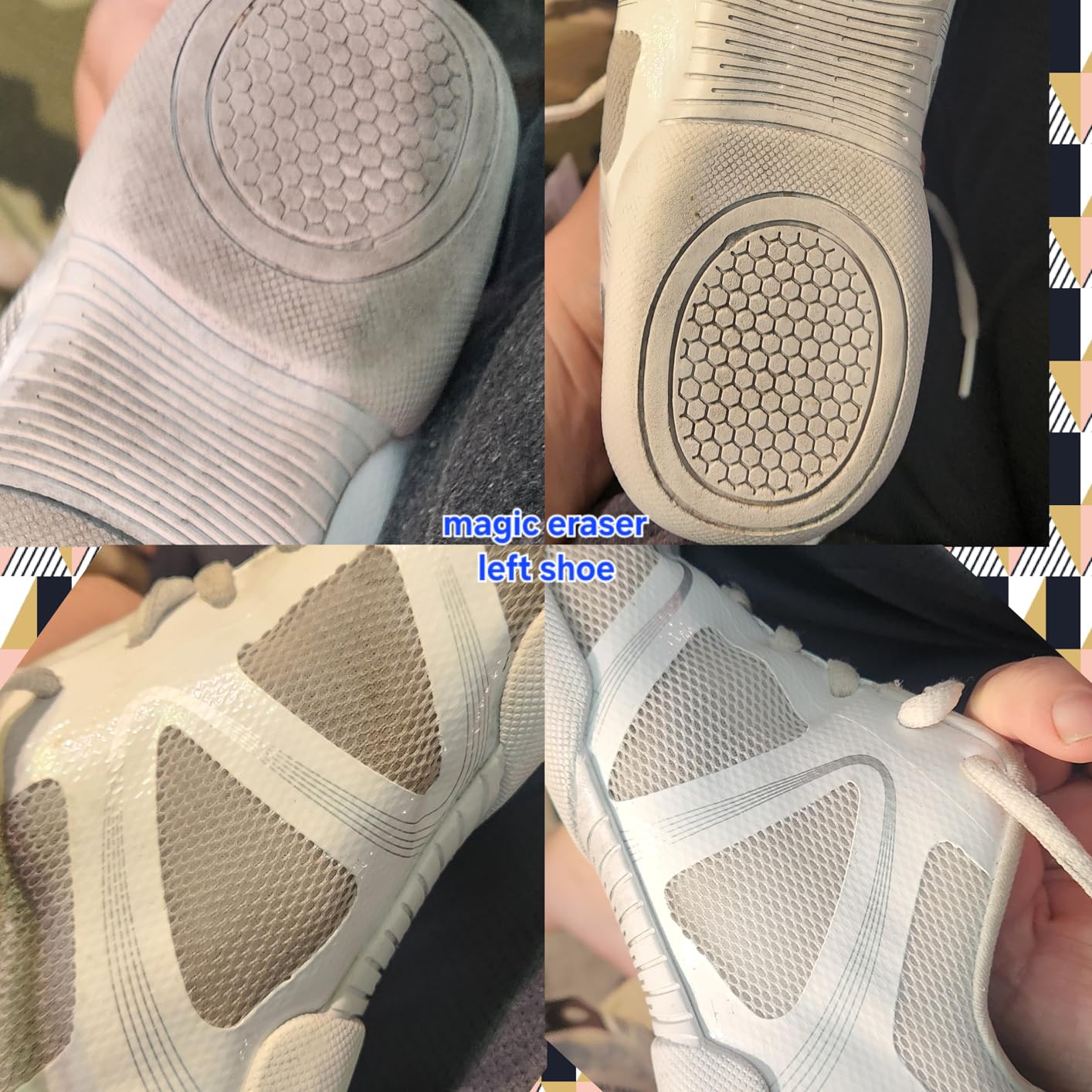
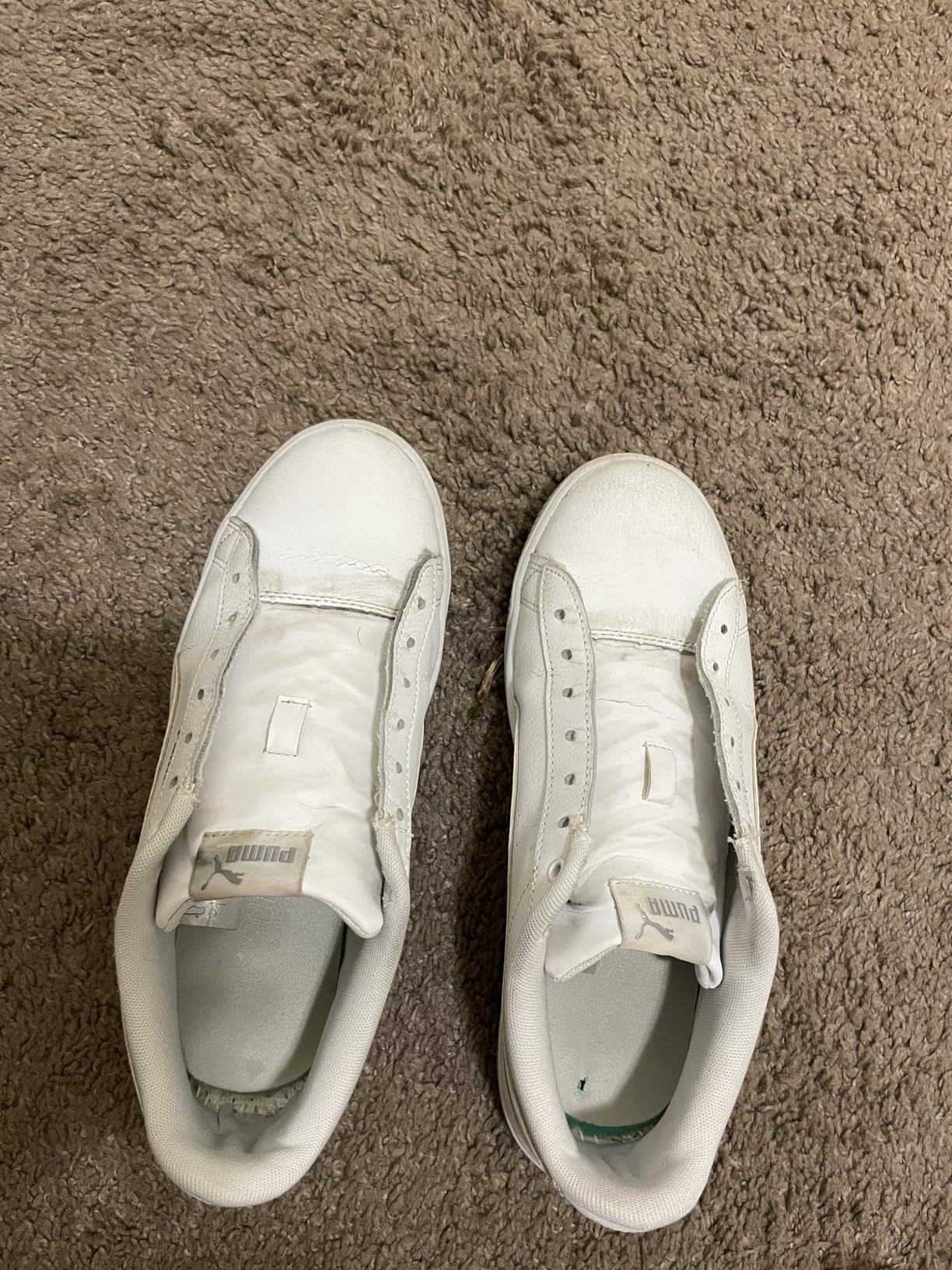
My white leather sneakers had developed those gray shadow marks from daily wear — the kind that accumulates slowly until you suddenly notice the shoe looks old. I was nervous about using an abrasive on the leather, but the results were better than I expected. The gray marks lifted, the leather surface looked refreshed, and there was no dulling or damage to the finish after multiple uses.
The key caveat: this works on smooth finished leather. I wouldn’t use it on suede, nubuck, or delicate patent leather without testing on an inconspicuous spot first. The brand says it’s safe for those materials, but the micro-abrasion process that makes it effective on rubber could potentially affect delicate surface textures. For everyday smooth leather — gym shoes, casual training shoes, leather sneakers — it’s safe.
Leather/synthetic uppers: 7.5/10. Effective on smooth surfaces; proceed carefully on anything delicate.
Fabric and Mesh — This Is Where People Get Disappointed
Let me be direct: these sponges are not a fabric cleaner. They’re not close to a fabric cleaner.
My son has a pair of mesh running shoes that picked up a mud stain near the toe box. After three passes with a SneakERASERS sponge, the surface dust was gone and the area looked slightly better. The mud stain was still there. The foam can remove loose dirt that’s sitting on top of fabric fibers, but anything that’s actually set into the weave doesn’t move.
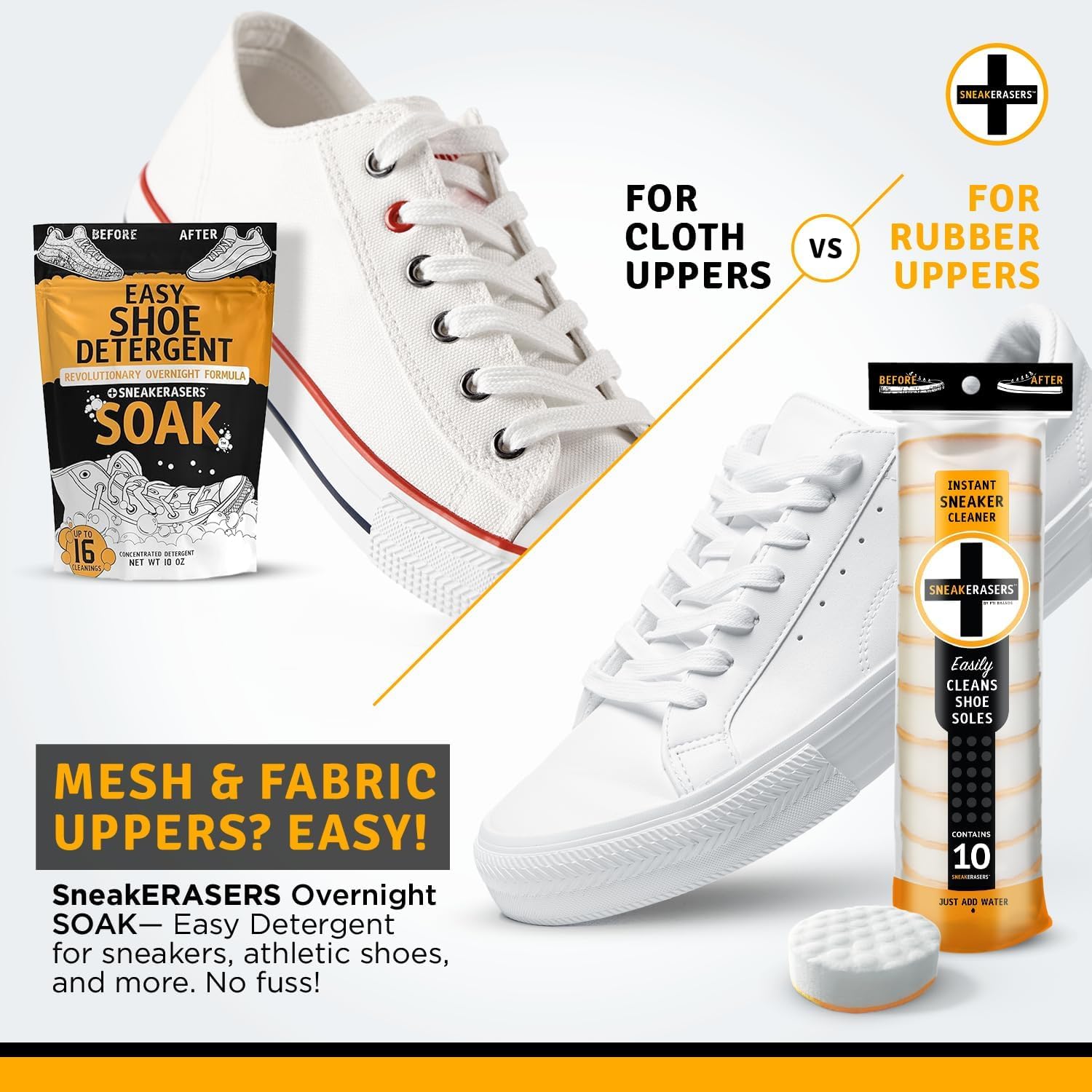
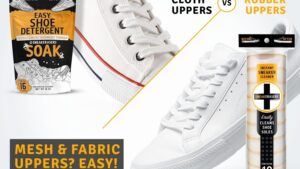
This isn’t a flaw — it’s a design reality. The melamine foam works on hard non-porous surfaces. Fabric is porous and flexible; the cleaning mechanism doesn’t translate. The brand actually sells a separate Soak liquid detergent for fabric and mesh, which tells you something.
If your shoe collection is primarily mesh running shoes, canvas lifestyle kicks, or fabric athletic shoes, SneakERASERS addresses maybe 30% of your cleaning needs. If your collection skews rubber-soled and leather-upper, you’re in the right place.
Fabric/mesh: 4.0/10. Surface dust only — stains will remain.
| Material | Score | Best Use | Skip If |
|---|---|---|---|
| Rubber soles | 8.5/10 | Scuffs, dirt, sticky residue | — |
| Leather/synthetic uppers | 7.5/10 | Gray marks, surface grime | Patent leather, suede — test first |
| Fabric/mesh | 4.0/10 | Light surface dust | Any set-in stains |
How Dirty Is Too Dirty?
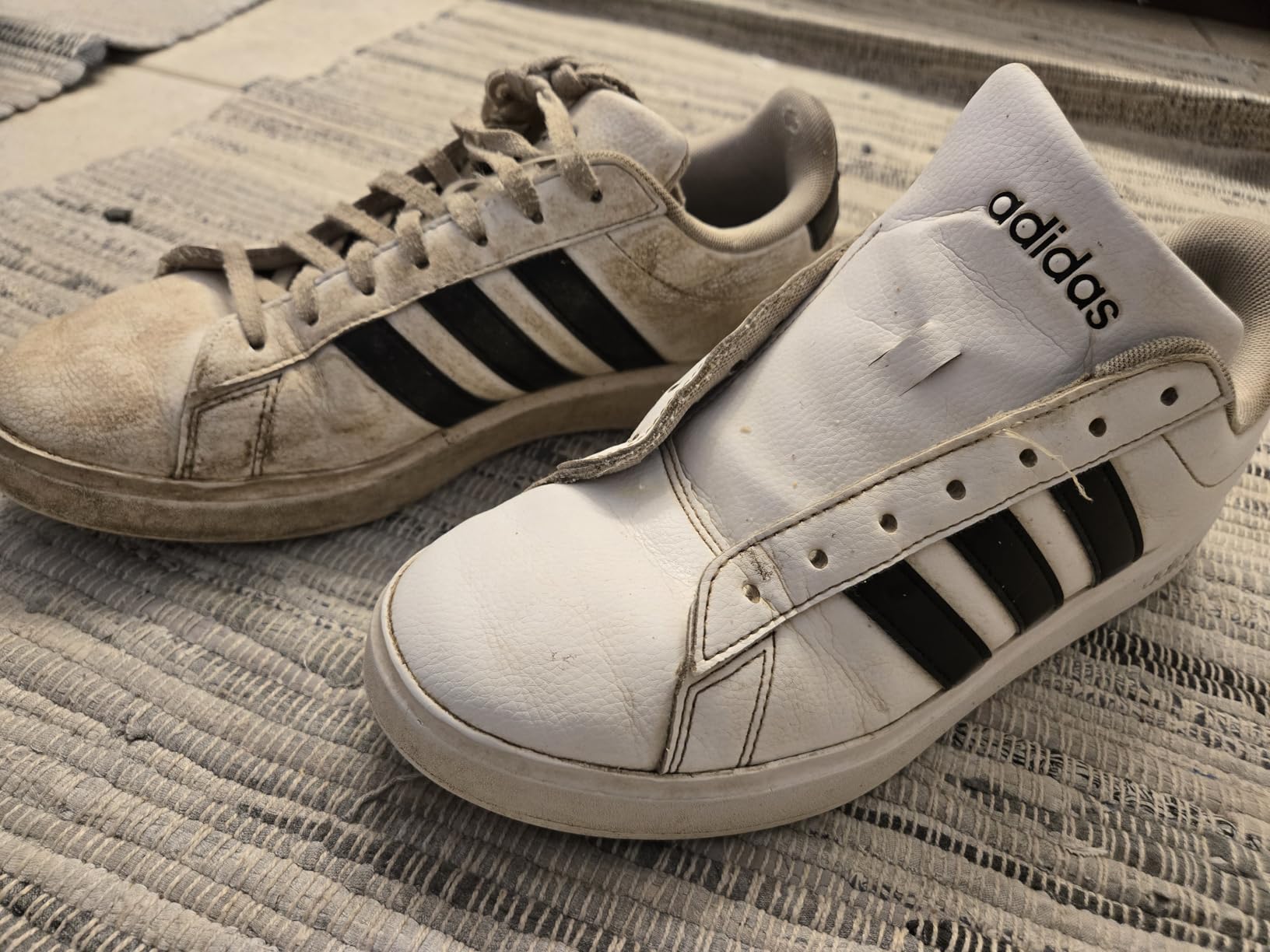
Soil level matters as much as material type. Here’s how the sponges performed across three different scenarios our family actually encountered:
Light Maintenance
Our baseline test: shoes that just needed a refresh after a week of normal wear. A little dust, maybe a scuff or two. One sponge handled four pairs without any trouble — I had to actively try to exhaust it. This is genuinely where the product shines. The effort is almost nothing, the results are consistently good, and at roughly $0.30 per pair for light maintenance, the value is real.
If you’re building a habit of quick weekly touch-ups rather than waiting for shoes to become disasters, a 10-pack will last a busy family two to three months.
Moderately Soiled Shoes
Regular wear over a week or two — accumulated dirt on the soles, some gray buildup on midsoles. One sponge per pair, about 10 minutes of work. Visible improvement every time, though I’d put it at 85–90% restoration rather than 100%. For everyday shoe maintenance in a family rotation, this is the realistic sweet spot.
The Muddy Cleats Test
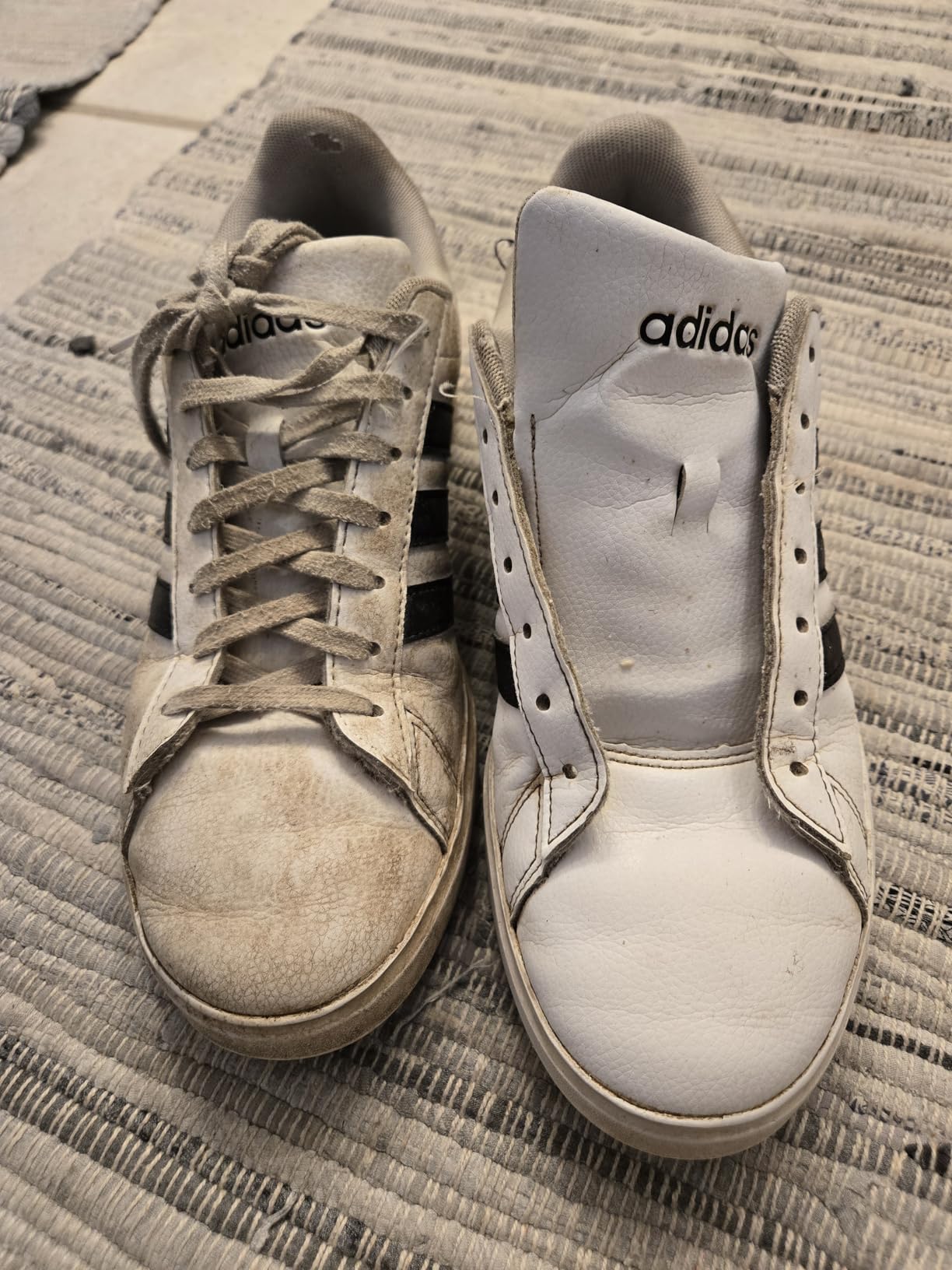
When my son walked in from a Friday practice with soccer cleats that looked like they’d been buried, I decided this was the real stress test.
The good news: those sponges pulled dried mud off rubber studs and the sole edge that I genuinely did not expect to come clean. The white areas went from gray-brown to about 80% of their original brightness after patient work — multiple passes, using both sides of the sponge, re-wetting twice. The bad news: I went through nearly two full sponges for one pair of cleats. That’s $2.40 worth of sponge for a single cleaning session.
For regular light maintenance, that cost is fine. For heavily soiled shoes on a weekly basis — youth sports families, I’m looking at you — the economics get uncomfortable fast. Budget $40–50 annually if you’re cleaning muddy cleats regularly. That’s manageable, but it’s not the economy solution some reviews imply.
The Portability Factor
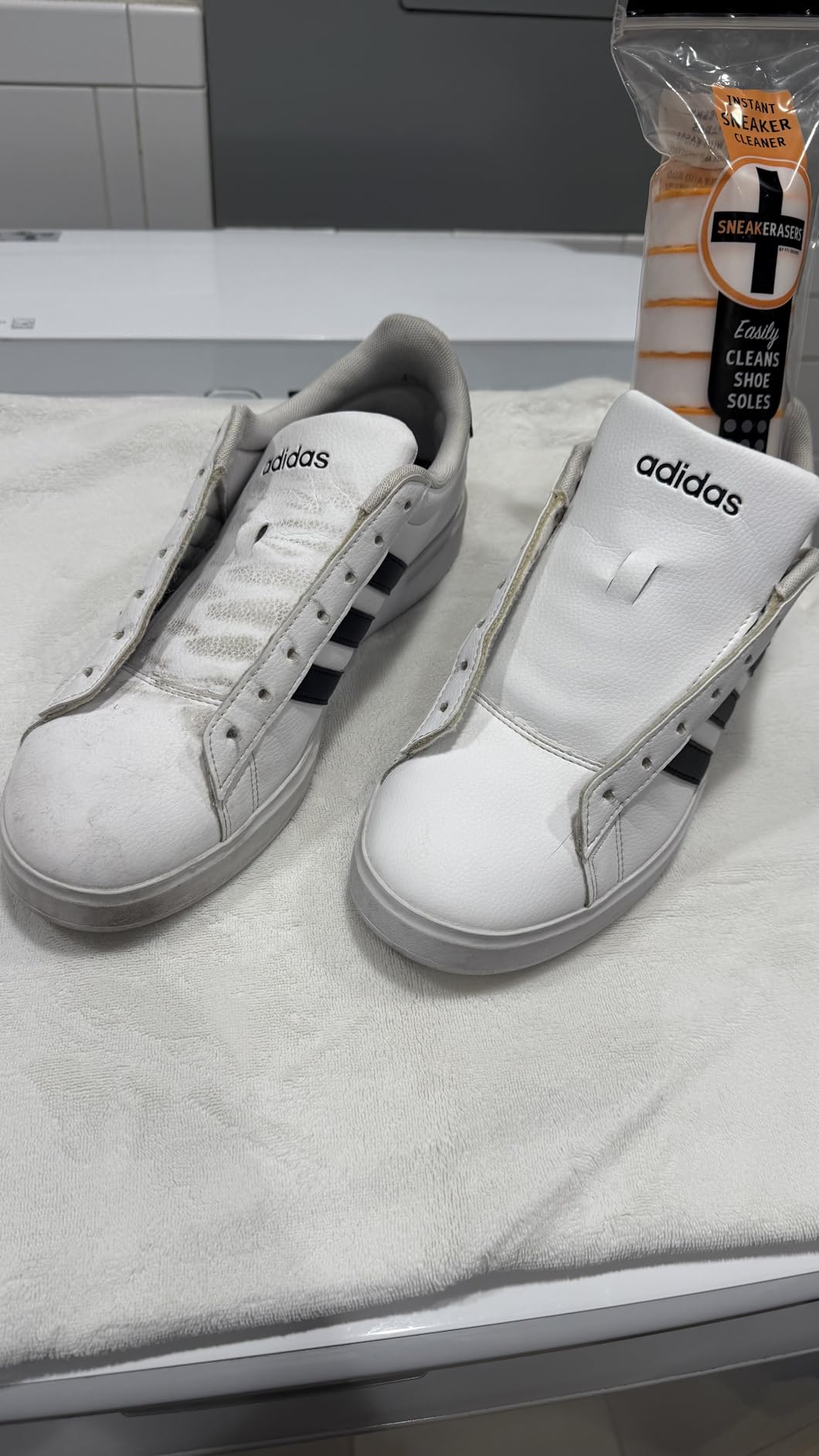
This might be the product’s strongest genuine selling point, and it’s one that competitors underemphasize.
The tube fits in a purse without bulk. I kept four sponges separated from the main tube in a small zip-lock bag and dropped them in my bag before a family vacation. During the trip, quick touch-ups before dinners, before a wedding brunch, before a day of sightseeing in white sneakers — all took about two minutes in a hotel bathroom. No kit to unpack, no brush to clean afterward, no chemical smell.
The one actual limitation: you need water access. For shoe maintenance at your kitchen sink, that’s a non-issue. For true on-the-go situations — a sports sideline, a parking lot before an event — you’d need a small water bottle nearby. Not a dealbreaker, but worth knowing if you picture yourself cleaning shoes in the car.
For travel specifically, the pre-moistened 3-pack variant (sold separately) solves even the water problem, though at a higher per-sponge cost.
Durability: The Honest Conversation
The durability score of 5.0/10 isn’t a failure — it’s a design reality that the brand undersells.
Melamine foam, which is what the white cleaning side is made of, is inherently self-consuming. The cleaning action works because foam particles abrade the dirty surface, and those particles break off in the process. That’s not a defect. That’s how the technology functions. But it means the sponge visibly shrinks and crumbles during use, which feels alarming if you’re expecting a traditional sponge’s lifespan.
The disintegration rate depends heavily on pressure and moisture:
- Light pressure, well-dampened: 3–4 shoes before significant degradation
- Medium pressure, correct moisture: 1–2 shoe pairs
- Heavy scrubbing, over-saturated: sometimes less than one pair
The pieces that fall off during use are harmless — just foam — but they do create a small mess that needs wiping. Not a big deal, but not zero mess either, despite some reviews claiming a completely clean process. After cleaning, stuffing your shoes with FootFitter Cedar Shoe Trees helps maintain shape and absorbs residual moisture — a good pairing for anyone doing regular maintenance.
What Does $12 Actually Buy You?
Let’s run the math that most reviews skip.
Light maintenance family of four (weekly quick clean, 3–4 pairs per sponge): ~3 sponges/month → $3.60/month → $43/year.
Active youth sports family (soccer cleats + kids’ school shoes, weekly heavy clean): ~6–8 sponges/month → $7.20–$9.60/month → $86–$115/year.
For context, professional shoe cleaning runs $15–25 per pair. Even at the sports-family pace, SneakERASERS come out ahead financially. The real comparison is against doing nothing, against soap-and-brush time investment, and against dollar-store alternatives.
Dollar store Magic Erasers cost about $0.50 each versus $1.20 per SneakERASERS sponge. The melamine foam is similar, but the round shape and orange scrubbing side do provide meaningfully better access to shoe geometry. Whether that 2.4x price premium is worth it depends on how often you’re doing detailed maintenance — for casual monthly cleaning, Magic Erasers are fine; for regular family use, SneakERASERS are worth the premium.
How SneakERASERS Compare
| Feature | SneakERASERS | Dollar Store Magic Eraser | Jason Markk Kit | Crep Protect Cure |
|---|---|---|---|---|
| Price | $11.95 (10-pack) | $2–4 (2-pack) | $20–25 | $30–35 |
| Best for | Rubber/leather quick clean | Budget rubber soles | Full restoration, all materials | Fabric/canvas specialist |
| Ease of use | 9/10 | 8/10 | 5/10 | 6/10 |
| Rubber cleaning | 8.5/10 | 8.0/10 | 9.5/10 | 7.0/10 |
| Fabric cleaning | 4.0/10 | 3.0/10 | 7.0/10 | 9.0/10 |
| Portability | 9/10 | 7/10 | 3/10 | 6/10 |
| Per-session cost | $0.30–1.20 | $0.50–1.00 | $2–3 | $2–4 |
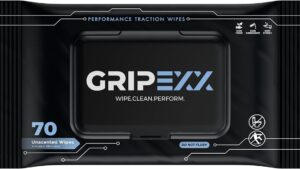
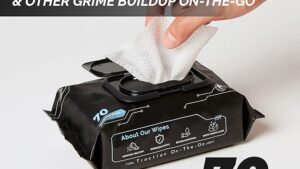
One thing worth noting: these comparisons aren’t always either/or. For families with mixed shoe collections, pairing SneakERASERS for rubber and leather maintenance with Crep Protect for the fabric shoes covers nearly every scenario. Some parents even keep Gripexx Sneaker Wipes in the car for situations where water access isn’t available. And throwing a pair of Sneaker Balls in the cleaned shoes takes care of the odor side of the equation that cleaning sponges don’t address.
Who Should Buy These — And Who Shouldn’t
Buy Them If:
- You have multiple kids with white-soled shoes. School sneakers, casual shoes, basketball shoes — the weekly quick-maintenance use case is exactly what these are made for.
- You travel with white sneakers. The portability advantage is real. A few sponges in a zip-lock weigh almost nothing and solve a genuine problem.
- Most of your shoes are rubber-soled or leather-upper. Court shoes, leather training shoes, casual leather sneakers — this is the product’s wheelhouse.
- You hate the mess and complexity of liquid cleaners. No bottles, no brushes to clean, no setup. If the friction of getting out a cleaning kit means you never actually clean your shoes, SneakERASERS removes that friction.
- You’re maintaining shoes before they become disasters. These work best as prevention, not restoration. Weekly light cleans extend shoe life significantly.
Think Twice If:
- Your collection is mostly mesh running shoes or canvas shoes — you’ll want a fabric-specific cleaner instead.
- You expect one sponge to handle heavily soiled shoes from an entire sports season — the economics get painful.
- Budget is the primary concern — dollar store Magic Erasers do 80% of what SneakERASERS do at 40% of the cost.
- You own delicate suede or patent leather shoes that need specialized care — test on a hidden area first, or use dedicated suede products.
Final Verdict
| Category | Score | Key Finding |
|---|---|---|
| Ease of Use | 9.0 | Water only — no setup, no cleanup |
| Cleaning (Rubber/Leather) | 8.5 | Genuine results, minimal effort |
| Cleaning (Fabric/Mesh) | 4.0 | Surface dust only — not a fabric cleaner |
| Durability | 5.0 | Sponges consume during use — by design |
| Value for Money | 7.0 | Excellent for light maintenance; costly for heavy cleaning |
| Family Practicality | 8.0 | Kids’ shoes, quick maintenance, low friction |
| Portability / Convenience | 9.0 | Compact, travel-ready, no mess |
| Overall Rating | 7.2/10 | Excellent convenience tool with real material limitations |
Four weeks in, my honest take is this: SneakERASERS solved most of my family’s shoe-cleaning problems. The white rubber soles on the kids’ shoes look consistently good now because a 90-second cleanup each week is realistic in a way that a full soap-and-brush session every time just isn’t. My husband’s work shoes get a quick pass before meetings. I keep a few in my bag for unexpected situations.
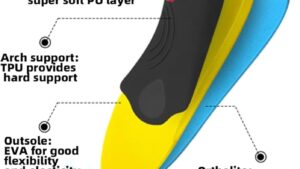
What they didn’t solve: my son’s mesh running shoes still need a proper fabric wash, and my daughter’s canvas shoes are beyond what these sponges can fix. If you’re also dealing with flat insoles from frequent wear, pairing cleaning sessions with a swap to Sof Sole Athlete Insoles keeps the whole shoe — inside and out — in better shape longer. For those, the brand’s own Soak product or a fabric-specific cleaner is the right tool.
The 7.2/10 rating reflects a genuinely good product that’s honest about what it does. If your household mirrors mine — rubber-soled everyday sneakers, leather shoes, some athletic footwear needing regular maintenance — these are worth keeping in the cabinet. Just know what you’re getting before you buy.
Frequently Asked Questions
How many shoes can one sponge clean?
Depends entirely on soil level. Light maintenance (dust, light scuffs): one sponge handles 3–4 pairs. Moderate soil: one pair per sponge. Heavy mud or ground-in dirt: expect to use 1–2 sponges per pair. The key variable is how much pressure you apply — lighter pressure significantly extends sponge life.
Do SneakERASERS work on all shoe types?
No. They work exceptionally well on rubber soles and leather or synthetic uppers. On fabric, mesh, and canvas, they remove surface dust but cannot lift set-in stains. If your collection is primarily mesh running shoes or canvas sneakers, a fabric-specific cleaner like Crep Protect Cure will serve you better.
How do I get the sponges to last longer?
Two things matter most. First, moisture level: the sponge should feel damp, not dripping — squeeze it out three times after wetting. Second, pressure: these don’t need to be scrubbed aggressively. Let the foam do the abrasion work with light, steady passes. Some users report that distilled water extends sponge life compared to hard tap water, though this hasn’t been rigorously tested.
Are these safe to use on expensive shoes?
For rubber soles and smooth leather, yes — four weeks of testing on multiple surfaces showed no damage. For delicate materials like patent leather, suede, or nubuck, always test on an inconspicuous spot first. The micro-abrasion that makes these effective on rubber can potentially affect softer surface textures.
What’s the difference between the standard 10-pack and the pre-moistened version?
The standard 10-pack requires water activation and is better value for regular home use. The pre-moistened 3-pack comes already dampened for true on-the-go use where water access isn’t available — convenient for travel or sports sidelines, but costs more per sponge. For travel, consider splitting the difference: bring a few standard sponges in a bag and carry a small water bottle.
Do SneakERASERS work on colored shoes, not just white?
Yes, though most testing focuses on white soles because that’s where the dramatic visual results are clearest. The cleaning mechanism works on any rubber surface regardless of color. On leather uppers, test on a small area first — the micro-abrasion is gentle, but colored finishes can occasionally lighten with repeated use.
How long do unused sponges stay good in the packaging?
Indefinitely, as long as the tube stays sealed and the sponges remain dry. The cylinder packaging is reasonably airtight. Don’t store them in humid environments like gym bags with wet gear — humidity can cause premature activation and deterioration.
Can these be used on anything other than shoes?
Customers report success on leather bags, rubber equipment handles, and similar surfaces. The foam works on any hard, non-porous surface where melamine abrasion is appropriate. Avoid porous materials (canvas bags, suede accessories) for the same reasons they underperform on fabric shoes. The accessories applications are real, just understand the same material rules apply.
Is SneakERASERS eco-friendly?
The brand claims biodegradable materials and recyclable packaging, founded in 2018 with what they describe as sustainability as a core value. The water-only formula means no chemical runoff, which is a genuine environmental benefit. No third-party certification data was available to verify the biodegradability claim specifically.
What about shoe odor — does cleaning help?
Cleaning the exterior helps maintain appearance but doesn’t address interior odor. For smell, you’d want a separate product. Sneaker Balls work well in combination with SneakERASERS — clean the outside with the sponges, freshen the inside with deodorizers. The brand also sells StinkERASERS deodorizer bags as part of their lineup if you want to stay in the same product family.
Bottom line: SneakERASERS deliver real results on rubber and leather with unmatched convenience. Know the fabric limitation going in, set realistic expectations for heavy cleaning, and they’ll become a regular part of your shoe maintenance routine. For most families with active kids and white-soled shoes to maintain, the combination of effectiveness and zero-friction setup makes them worth it.
Be the first to review “SneakERASERS Instant Sneaker Cleaner”
Related products
Accessories
Accessories
Accessories
Accessories
Accessories
Accessories
Accessories
Reviews
There are no reviews yet.