
Soulsfeng Mens Running Shoes Lightweight Fashion
$39.99
- ⚖️ Weight: ~10.5 oz (men’s size 9, per ShoeExpert testing)
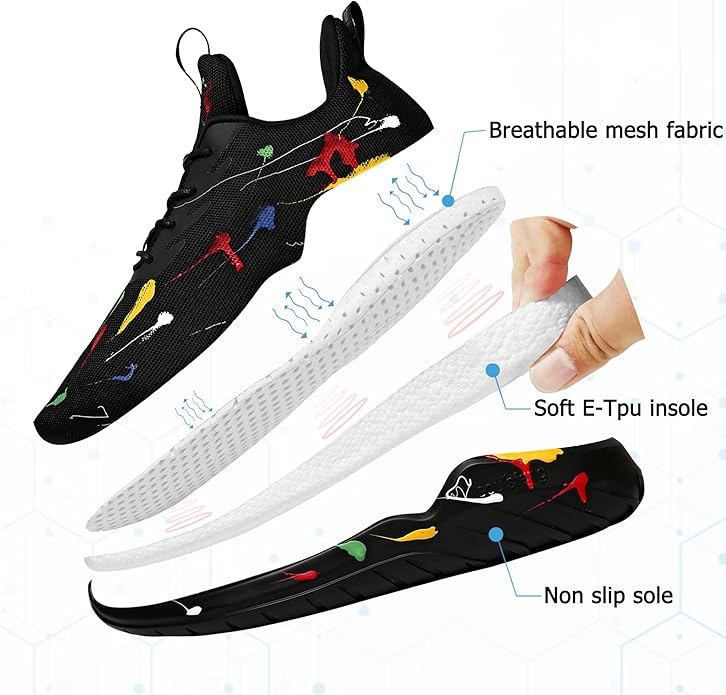
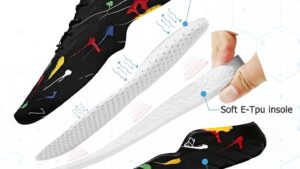
- 🧪 Midsole: E-TPU cushioning
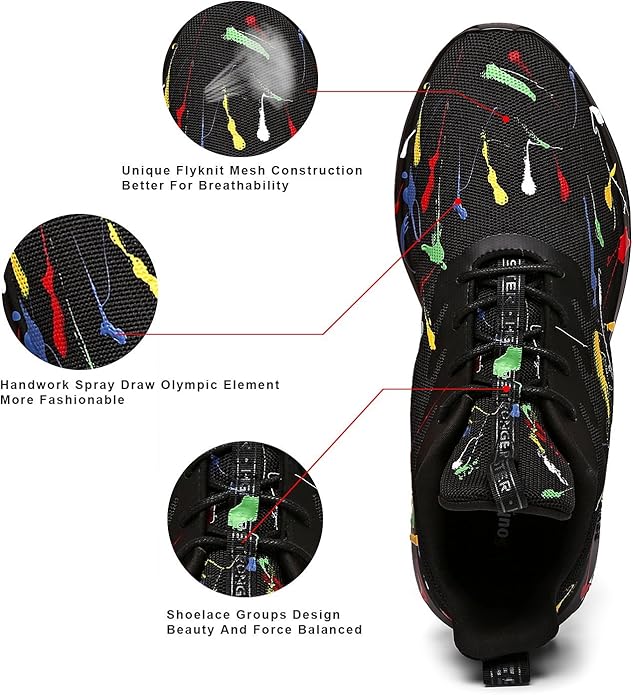
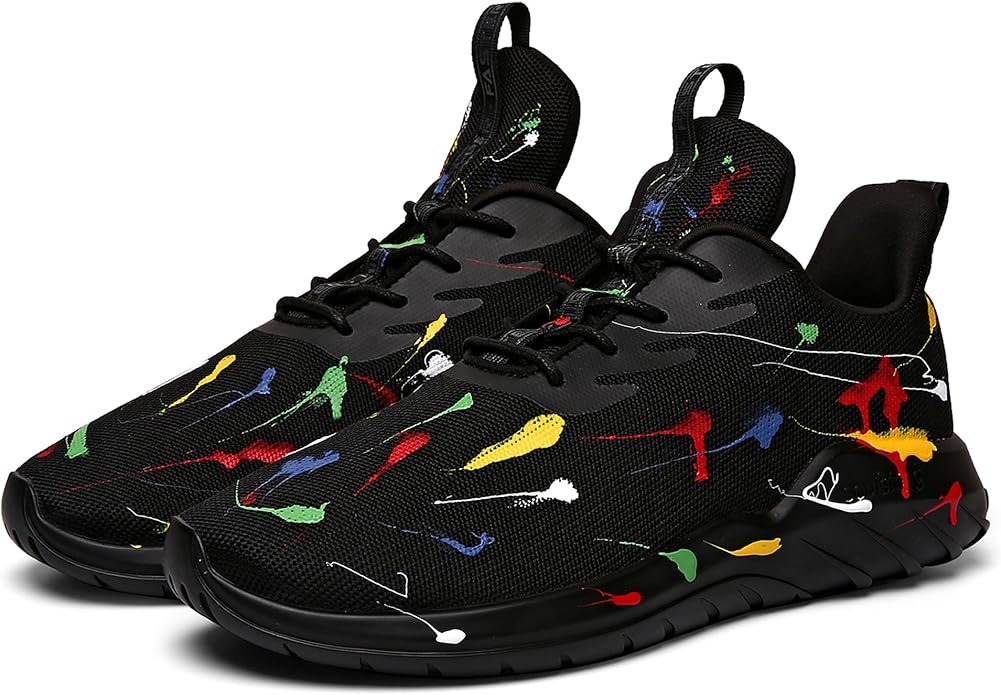
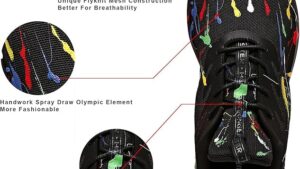
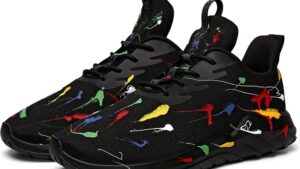
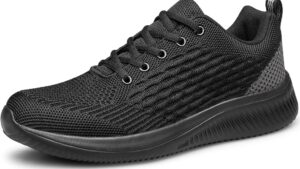
- 👟 Upper: Polyester mesh fabric with TPU overlays, artistic paint design
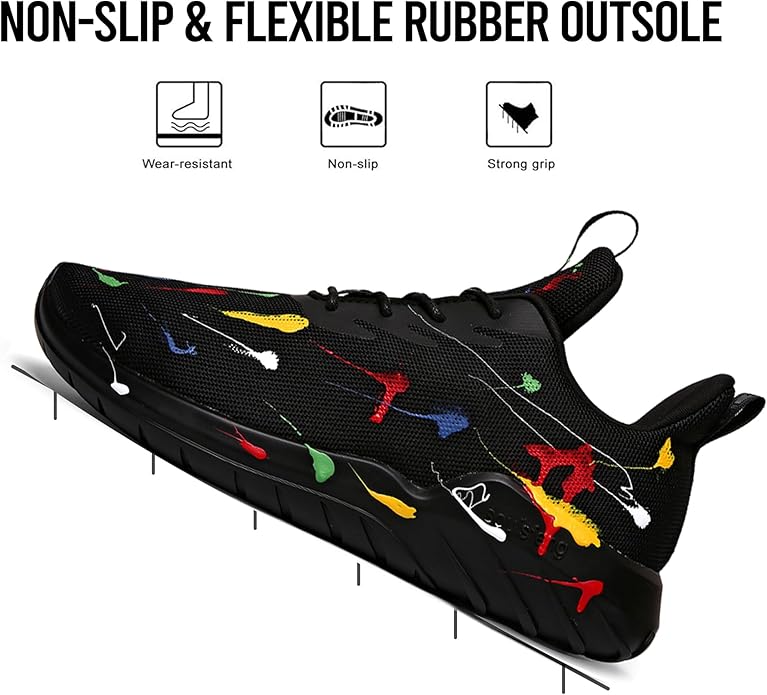
- 👟 Outsole: Anti-slip rubber compound
- 🏃 Category: Lifestyle / gym sneakers
- 🎯 Best for: Gym training, casual daily wear, light jogging
- 📏 Sizing: Runs half a size small — order up
Fifty dollars doesn’t buy what it used to — except when it does. I ran my friend’s Soulsfeng pair through a quick loop during a lunch break and ended up testing my own for six weeks. Mike here, and after burning through more than $400 on athletic shoes this year with mixed results, finding genuine value at the $50 mark felt worth documenting properly. Here’s what 35-plus wear sessions and 40-plus miles across gym floors, city sidewalks, and weekend errands actually showed me.
What $50 Actually Gets You
Let’s answer the real question upfront: are these worth the money? For gym use, casual daily wear, and light jogging at a recreational pace — yes, clearly. If you need dedicated running shoes for serious mileage, no — look elsewhere.
What you get is a genuinely comfortable, surprisingly well-constructed shoe with a design that generates more compliments than anything I own at twice the price. What you don’t get is advanced cushioning technology, premium durability, or consistent quality control across every batch. At $50, that’s an honest trade-off, not a dealbreaker.
The test conditions: 6 weeks of real-world use, not controlled lab testing. That means weightlifting sessions, a 45-minute HIIT circuit, a 4-mile urban walk as a deliberate endurance test, and enough 2-mile dog walks to know how the cushioning holds over time. I wore them for full 8-hour days on at least four occasions and logged their condition week by week.
First Look: The Box, the Build, the Vibe
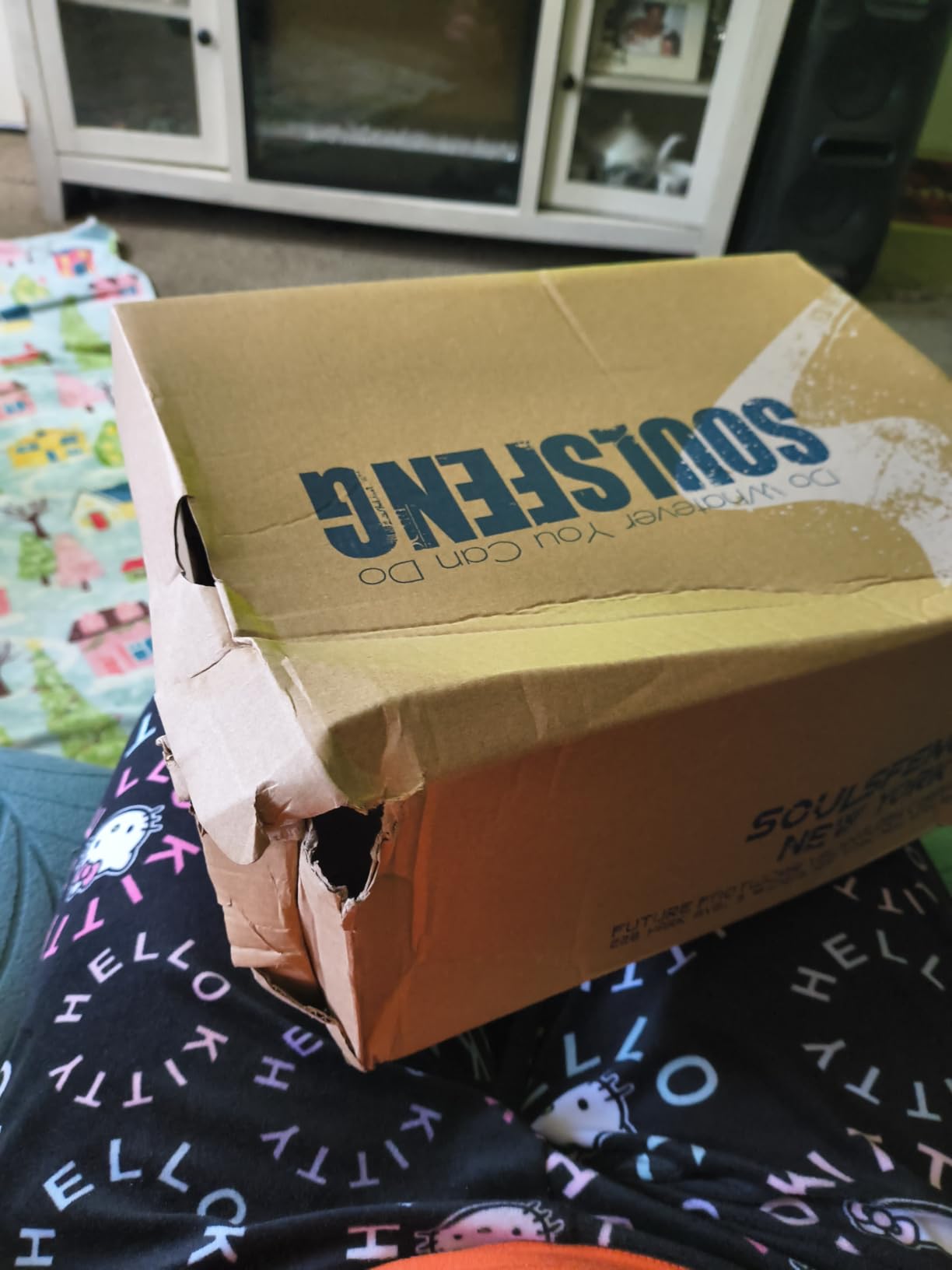
Something small but telling: the packaging is a drawer-style box that feels noticeably more premium than the price tag suggests. It’s a minor detail, but it sets an early tone — this isn’t a $30 generic shoe in a flimsy sleeve.
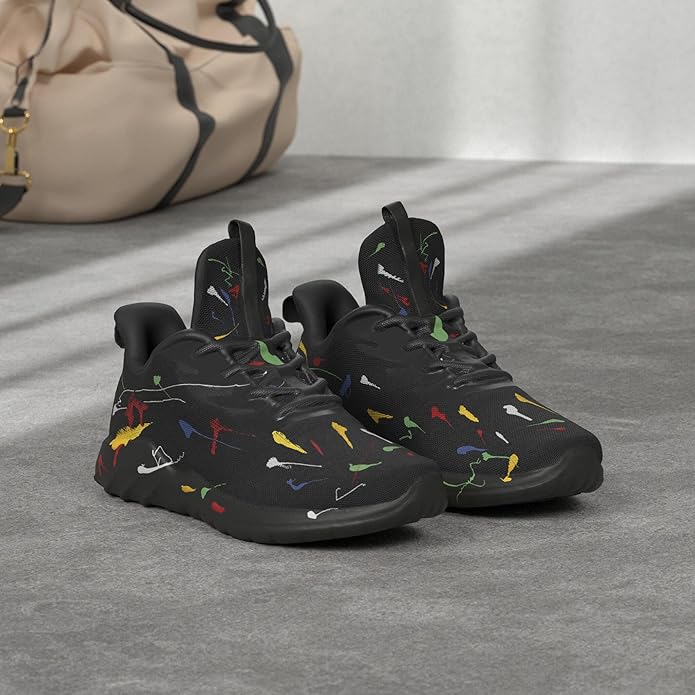
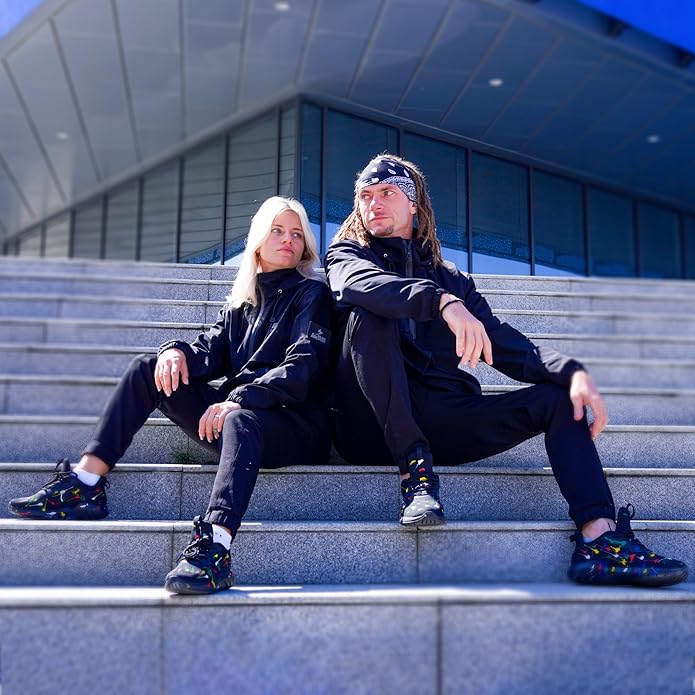
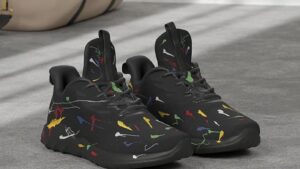
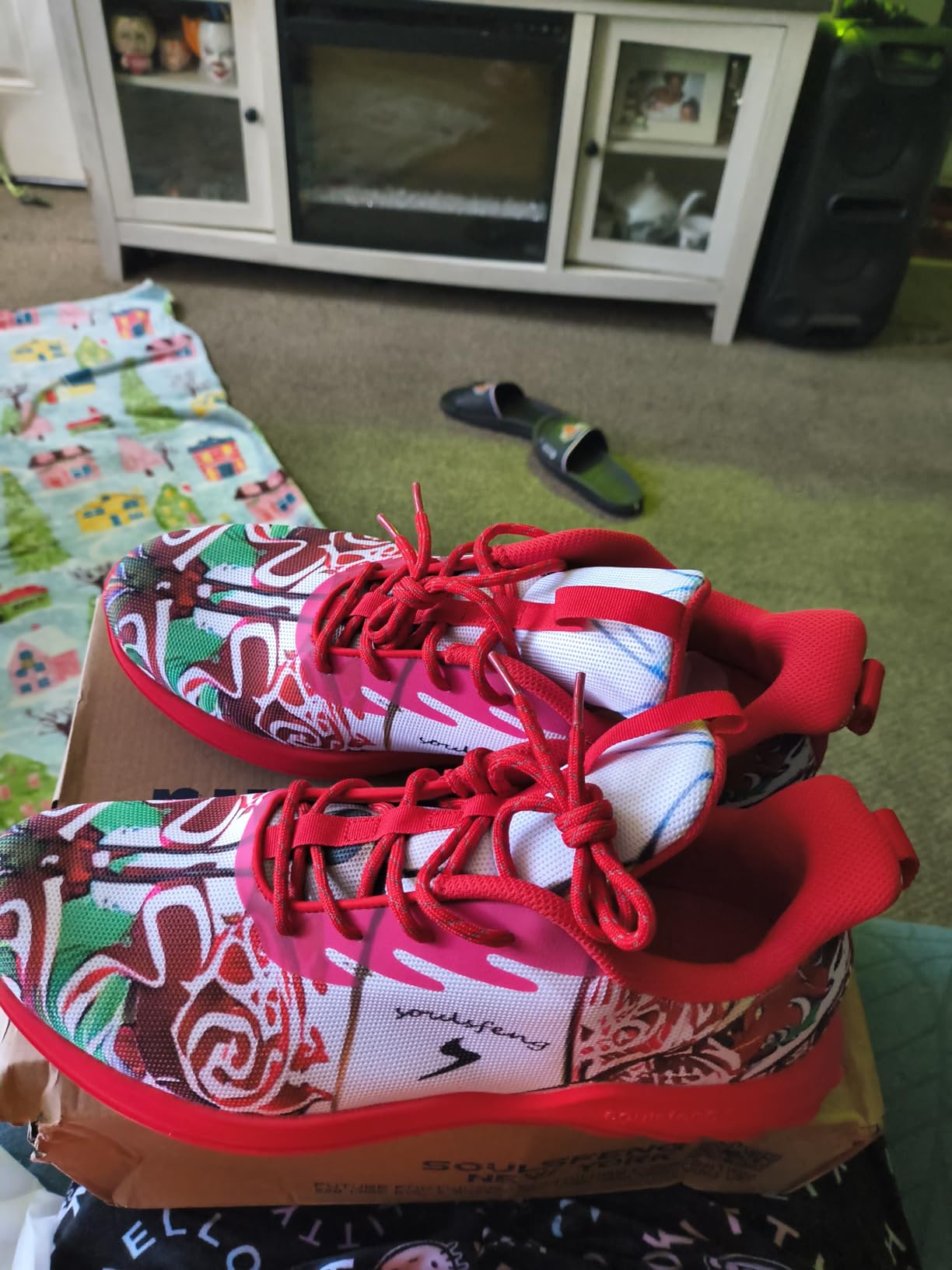
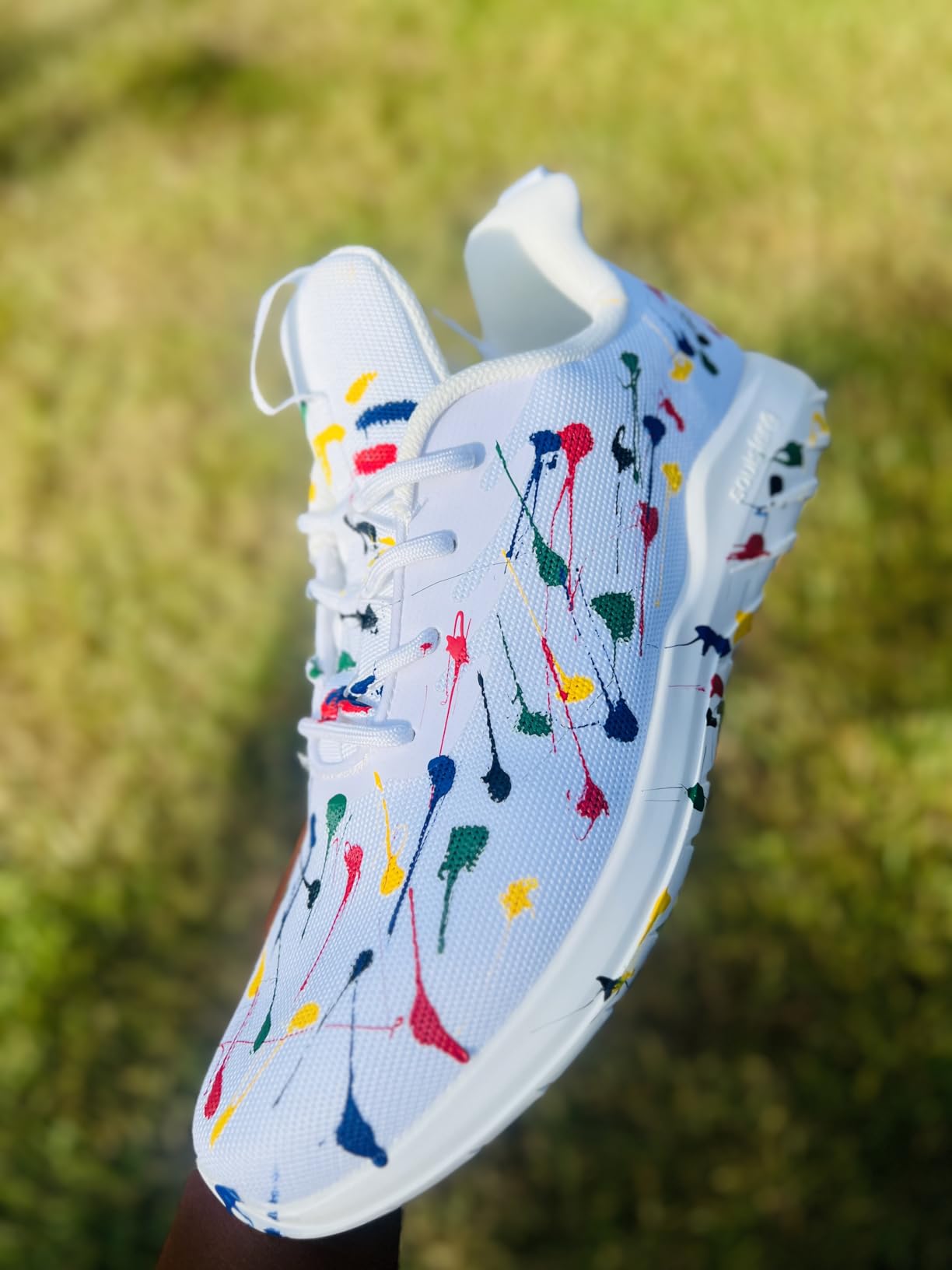
The design itself is the main event. Black base with a multicolor paint-splatter application that’s hand-applied, meaning each shoe carries its own unique pattern. That’s not marketing copy — the left and right shoes on my pair genuinely look distinct. Whether you find that charming or chaotic depends on your aesthetic, but it’s hard to call it boring. These are conversation-starter shoes.
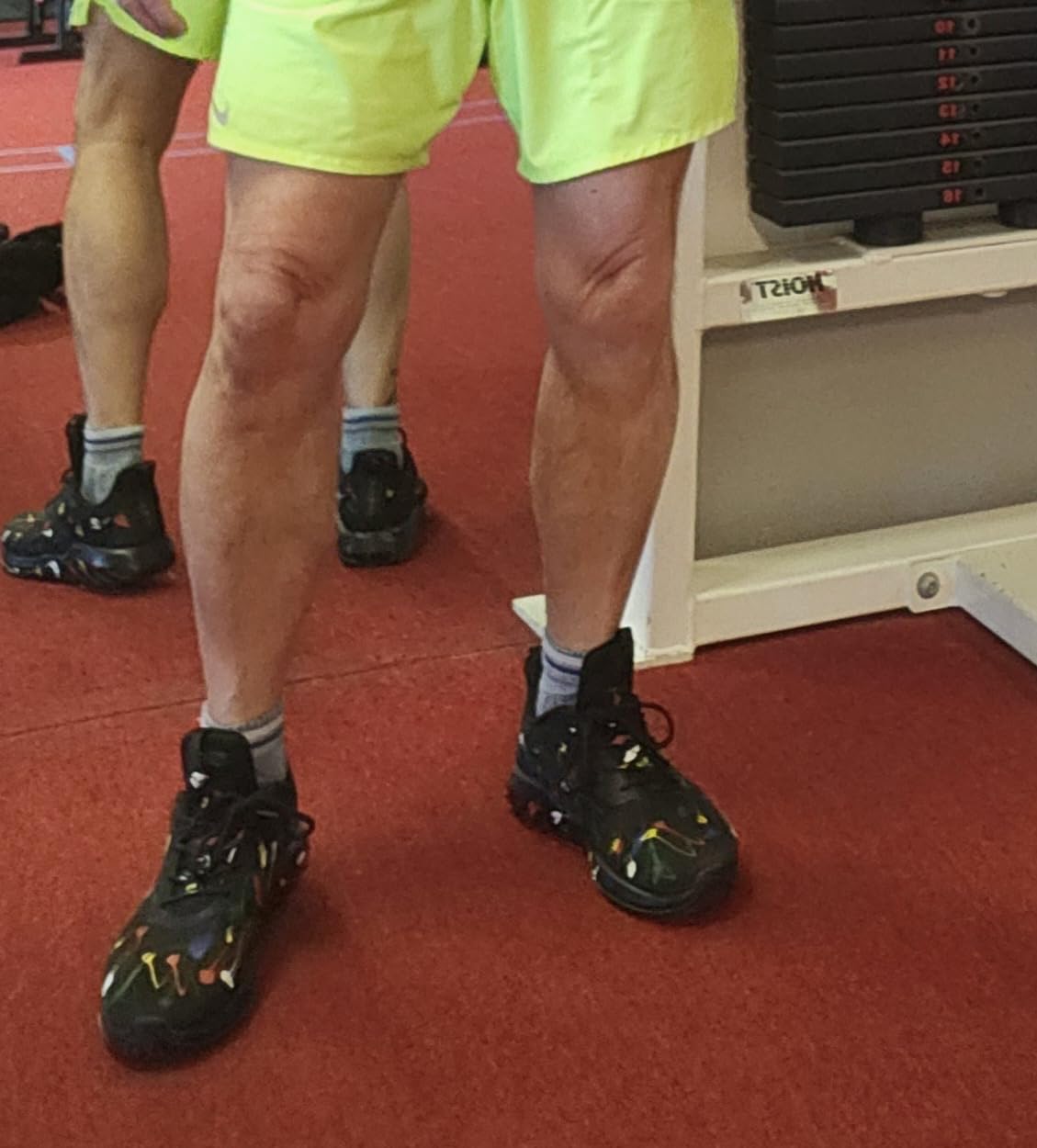
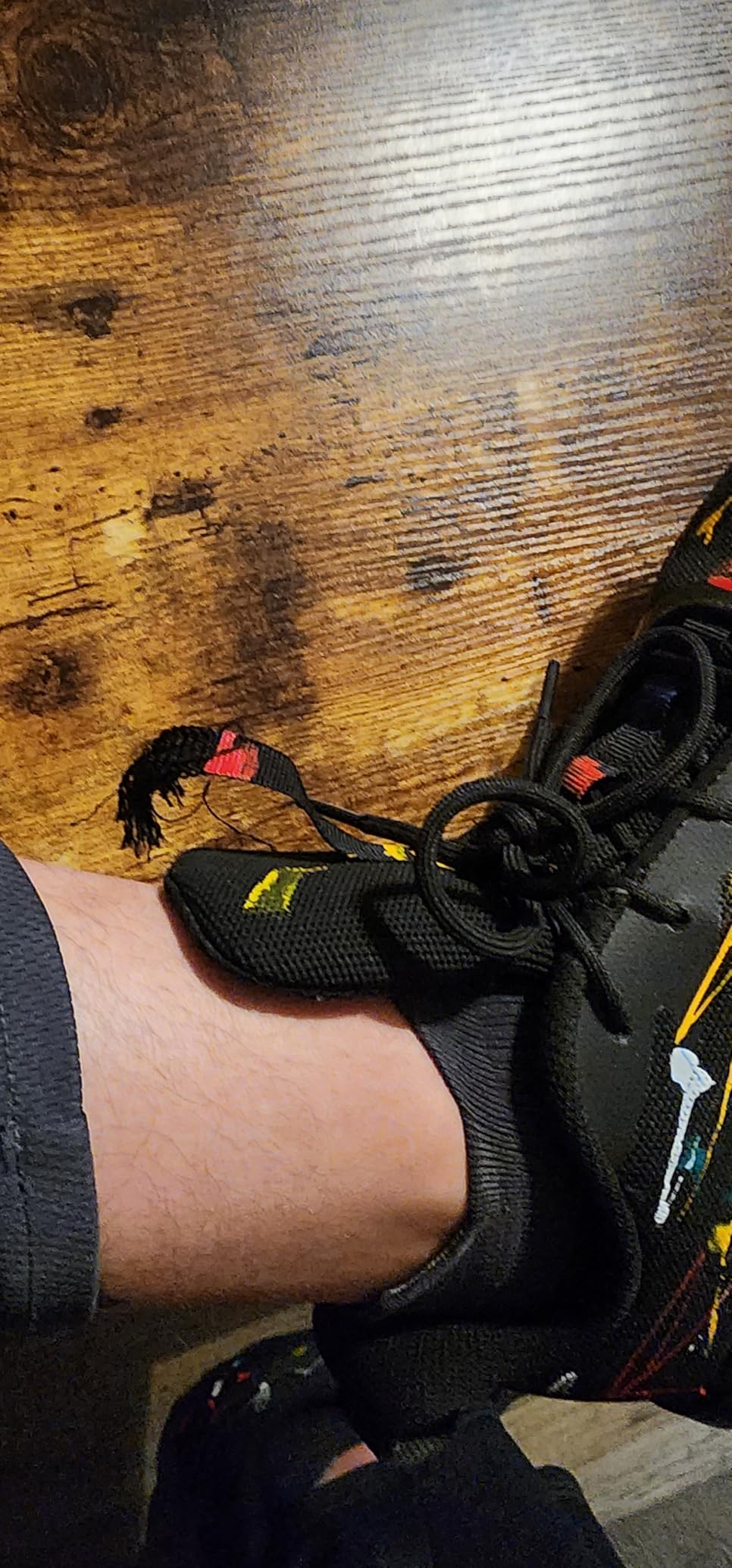
The upper is polyester mesh fabric with TPU reinforcement overlays — not the engineered knit you’d find on a $130 shoe, but breathable and flexible enough for the use cases they’re designed for. The lacing system uses flat ribbon-style laces. They look thin but held up across the full test period without fraying or slipping. The tongue is noticeably large — some reviewers find this excessive; I stopped noticing it after about a week.
Build quality for the price is solid. Nothing felt flimsy or cut-corner in a way that would make you send them back. That said, there’s a QC issue worth knowing about before you buy, which I’ll cover in the durability section.
The Sizing Question — Answer It First
Every single source that tested or reviewed these shoes agrees: they run about a half size small. This isn’t a “might” situation — it’s a “will.” I normally wear a US 9 and the 9 fit snug enough to be uncomfortable for extended wear. The 9.5 was noticeably better — proper length, toe box with actual breathing room.
| Normal Size | Order This Size | Notes |
|---|---|---|
| 7 / 7.5 | 7.5 / 8 | Standard width fits well |
| 8 / 8.5 | 8.5 / 9 | Standard width fits well |
| 9 / 9.5 | 9.5 / 10 | Confirmed: tested 9 → wore 9.5 |
| 10 / 10.5 | 10.5 / 11 | Standard width fits well |
| Wide feet | Full size up or avoid | Toe box is snug even when sized up |
If you’re between sizes naturally (say, your foot measures between a 9 and 9.5), go with the larger number. The toe box has decent width once you’re in the correct length — the snugness is primarily a length issue, not a width issue for standard-width feet.
The heel padding deserves its own note. It’s generous to the point of feeling bulky in the first few days. By day 5 or 6 of regular wear, it had settled and started doing its job — solid lockdown without the bulk sensation. If the break-in period is your first impression, give it a full week before judging.
Performance Where It Counts: The Gym
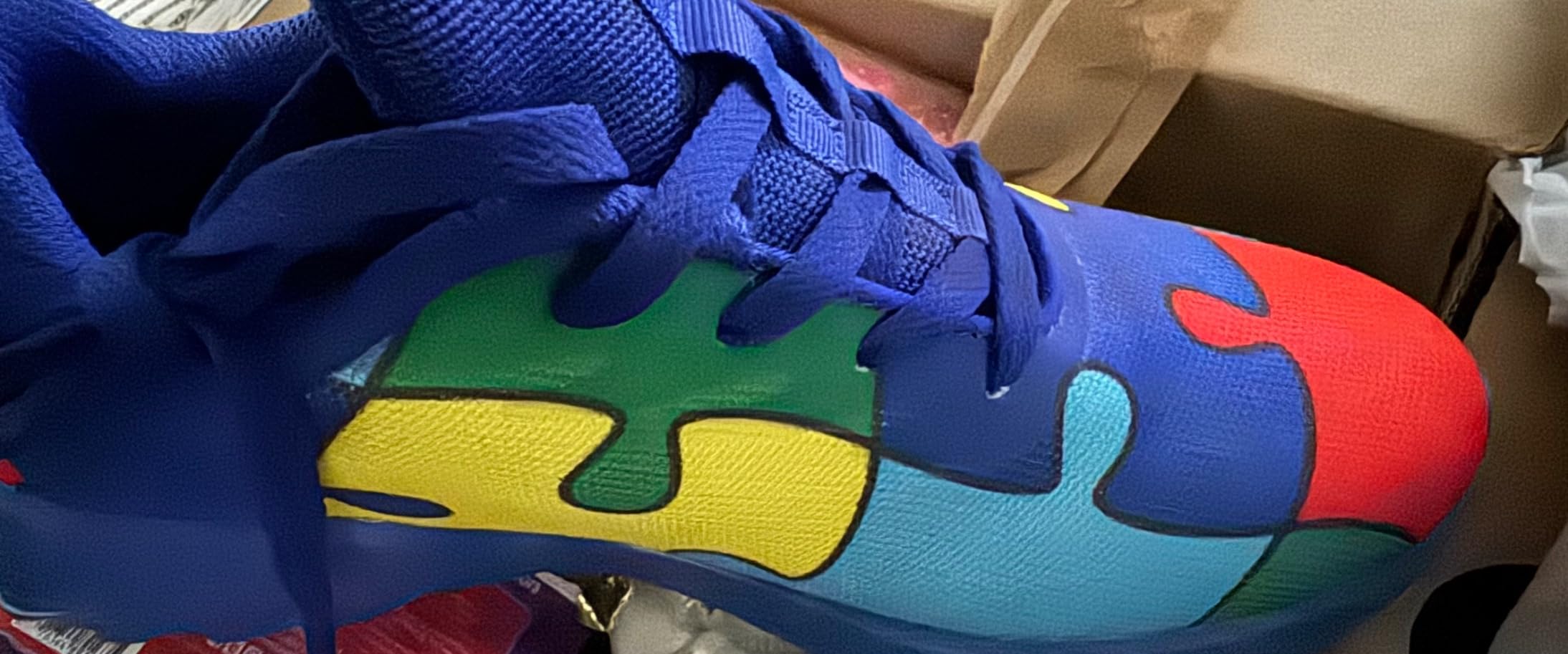
This is where the Soulsfeng earns its money. During squats and deadlifts, the stable platform underfoot is genuinely reassuring — no rolling, no instability, solid heel contact. Lateral support through direction changes in circuit training was better than I expected from a shoe at this price. The rubber outsole grips gym floors cleanly, no slip-and-stick issues on machine transitions.
I ran the 45-minute HIIT session that originally got me interested — kettlebells, box jumps, resistance band work, rowing intervals. The shoe held up through all of it. The E-TPU midsole provides enough cushioning to reduce impact fatigue without feeling spongy underfoot. It’s a firm-ish, supportive platform, not a cushioned cloud — which is actually what you want for weighted gym work.
One comparison that’s useful: among training shoes in the $50-70 range, the Soulsfeng’s gym performance is competitive. The stable sole and lateral support hold up well against shoes like the Under Armour Charged Assert 9 for gym use specifically — different shoe, different use case, but similarly priced and similarly adequate for lifting.
Daily Walking and All-Day Wear
The 4-mile urban walk was the main endurance test. No hot spots, no arch fatigue, no pain points. The cushioning held well through the distance. For context, 4 miles on concrete is the kind of outing where cheaper shoes start making themselves known somewhere around mile 3 — these didn’t.
Prolonged daily wear — 8+ hour days on my feet — tested well. Retail workers and others who stand all day report good results, and my own test days confirmed this. The cushioning holds steady through a full work day without the progressive fatigue that some budget shoes impose after hour 5.
The comfort ceiling I found was around the 8-hour mark of continuous wear. After that, foot fatigue starts accumulating. That’s not a failure at this price point — most shoes under $100 hit a similar wall. But if you’re facing a 12-hour shift on hard floors, you’ll want something with more cushion depth.
Running: Fine Until It Isn’t
For treadmill sessions under 30 minutes or a neighborhood jog at a casual pace, these work fine. The cushioning provides adequate impact absorption at slower speeds, the outsole grips treadmill belts and concrete without issue, and they’re comfortable enough to run in.
But 10.5 oz is heavier than typical dedicated running shoes, which typically run 8–9.5 oz in this size. Over short distances, that difference is irrelevant. Beyond 2–3 miles, or at any pace you’d call a training run, you feel the extra weight and the absence of energy return. The E-TPU midsole doesn’t provide the spring or responsiveness that purpose-built running platforms like New Balance FuelCell or ASICS Novablast offer.
Think recreational jogging — not 5K training. If you’re running for fitness 2–3 times a week at an easy pace and keeping sessions under 30 minutes, you’ll manage. If you’re training toward a race distance or logging consistent weekly mileage, the Soulsfeng isn’t the right tool.
Durability: The Honest Timeline
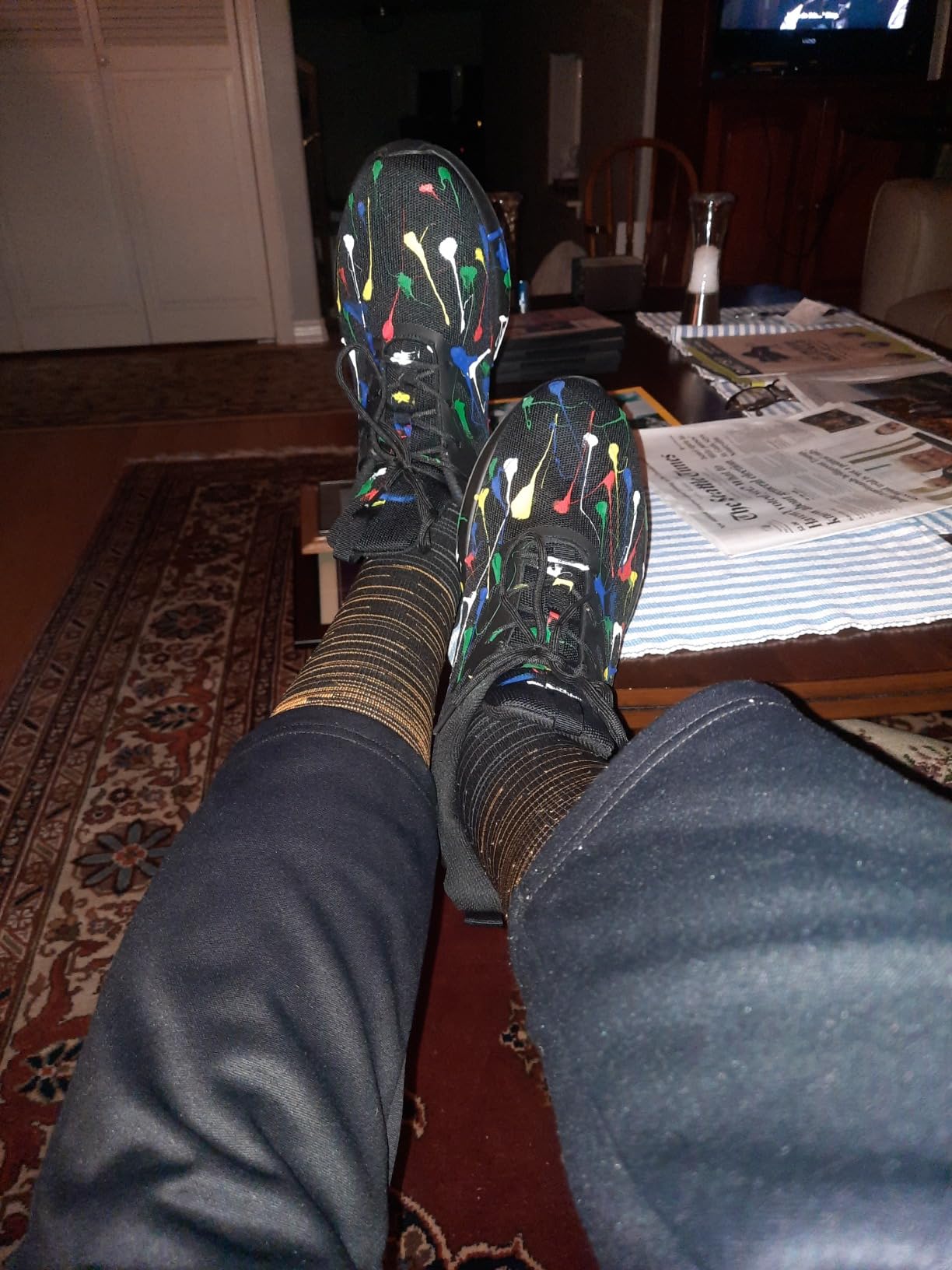
Six weeks in, my pair showed light heel-strike wear on the outsole and no upper deterioration. The stitching held, the paint showed no peeling, and the midsole hadn’t compressed noticeably. But six weeks isn’t a durability verdict — here’s a realistic projection based on build quality:
- Casual use (gym 2–3x/week, occasional daily wear): 12–18 months before outsole significantly wears
- Regular use (gym 4–5x/week plus daily errands): 6–9 months of solid performance
- Heavy daily use (gym 6–7x/week, full-time daily driver): 4–6 months before noticeable degradation
The outsole is the limiting factor — not the upper. Heel-strike rubber and lateral flex areas are where wear concentrates. The upper fabric is unlikely to fail before the sole does.
The QC Issue You Need to Know About
Some pairs have a diamond-shaped cutout in the rubber sole that lets water and debris into the shoe. This is a documented quality control defect, not a design feature. It appears to affect specific colorways or production batches rather than all units.
The fix is simple: flip the shoes over within 30 seconds of opening the box and check the sole. If there’s a diamond-shaped hole, send them back — it makes the shoes impractical in any wet conditions. If the sole is solid (as mine were), you’re fine. Outside of this batch issue, I haven’t found widespread reports of structural failure in the upper, midsole, or stitching.
The Style Conversation and What $50 Really Means
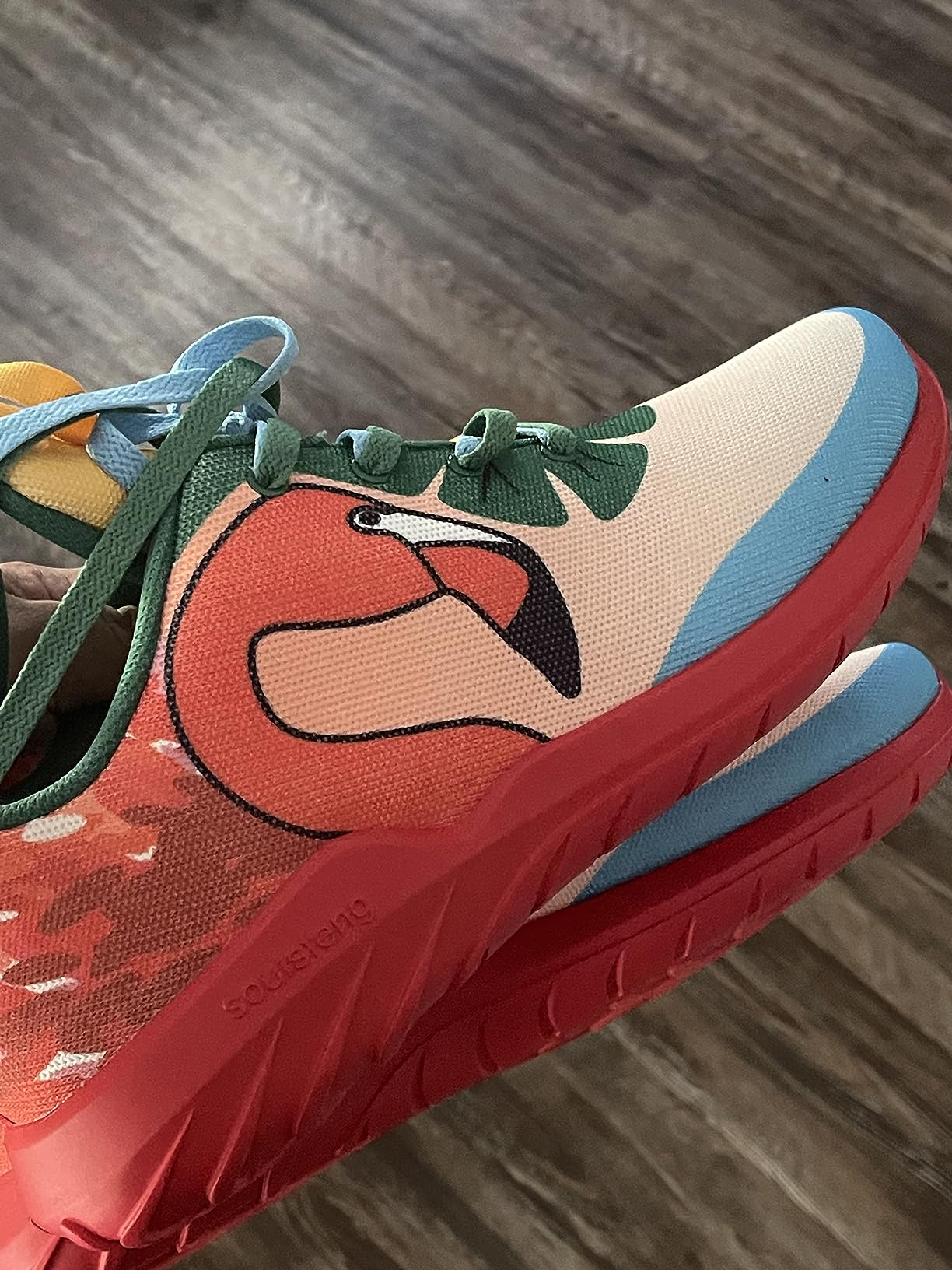
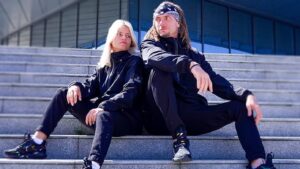
I’ll be direct: these got more unsolicited compliments over six weeks than shoes I own that cost $120. The paint-splatter design reads as deliberate and artistic rather than loud-for-its-own-sake. People asked where I got them more than once, and not in a polite way — in a “I actually want to know” way.
That social dimension matters for certain buyers. If you’re buying for the gym and keeping them on-campus, the style is secondary. If you’re wearing them out in the world, the design carries weight.
On value: cost-per-month math at casual use (9-month lifespan): $50 ÷ 9 = $5.56/month. Cost per wear at 45 sessions: $50 ÷ 45 = $1.11. For context, an Adidas running shoe at $90 with 18-month lifespan comes out to $5.00/month — the gap shrinks considerably when you factor in Soulsfeng’s lower entry price.
What you’re missing at $50 versus $90–120: advanced cushioning foam tech (Fresh Foam, GEL, DNA LOFT), premium outsole rubber compounds, and consistent manufacturing QC. What you’re gaining: distinctive style, genuinely adequate gym performance, and $40–70 in savings.
Who Should Buy This and Who Shouldn’t
✅ Buy These If You Are:
- A gym-goer who wants a stable, comfortable training shoe at $50
- Someone who values distinctive style and gets compliments wearing them
- A casual jogger (recreational pace, under 30 minutes, 2–3 times a week)
- On your feet all day and need reliable 8-hour comfort without spending $100+
- A seasonal or rotation buyer — this as one of two or three pairs
- A parent buying a teenager a shoe that won’t look generic
❌ Skip If You Need:
- A serious running shoe for 5K training or longer — look at ASICS Gel-Cumulus 26 or Brooks Launch 10 in the $90–120 range
- 2+ year durability from a single pair
- A shoe that handles rain, commutes, and wet weather reliably
- Consistent manufacturing quality (sole-hole risk exists across batches)
- Wide-foot accommodation — even sized up, the toe box is snug
- A conservative, understated look for professional settings
For casual all-day walkers who want something simple and breathable, the Amansse Walking Shoes are worth comparing — slightly different design language but comparable comfort in the budget range.
Frequently Asked Questions
Do these really run half a size small?
Yes, consistently. Every source that tested them — ShoeExpert, Walmart buyers, Amazon feedback — agrees. Order a half size up from your normal shoe size. If you’re between sizes naturally (8.5 or 9.5 typically), go to your larger option. The toe box has decent width once the length fits correctly.
Are they comfortable for all-day wear?
Yes, up through about 8 hours of continuous standing and walking. Retail workers and people with long daily shifts report solid results in that range. Beyond 8–9 hours of uninterrupted wear, fatigue builds. If you’re logging 12-hour shifts on hard concrete, you’ll want additional cushion depth from a purpose-built work shoe.
What’s the diamond hole in the sole I keep hearing about?
It’s a quality control defect, not intentional design. Some pairs arrive with a diamond-shaped cutout in the rubber outsole that allows water and debris to enter the shoe. It affects certain colorways and production batches. The inspection takes 30 seconds: flip the shoe over and look at the sole. If a hole is present, return the pair immediately — retailers including Walmart and Amazon both offer returns on this. If the sole is intact, you’re fine.
Can I run in them?
For casual jogging — treadmill sessions under 30 minutes, neighborhood runs at conversational pace — yes. For training runs, 5K training, or anything you’d call a workout run, no. At 10.5 oz and with modest energy return, they’re heavier and less responsive than purpose-built running shoes. The performance gap becomes obvious around 2–3 miles.
How long will they last?
Depends entirely on how you use them. Casual gym use (2–3 sessions per week plus occasional daily wear): 12–18 months before outsole wear becomes noticeable. Regular use (gym 4–5 days/week plus daily errands): closer to 6–9 months. Heavy daily driving (gym every day): 4–6 months. The outsole wears before the upper does. For $50, casual lifespan math is solid.
How do they compare to name-brand budget runners?
Versus a $90 budget Adidas: you’re missing better foam tech and longer outsole life, but saving $40 and gaining distinctive style. Versus generic $30 budget shoes: the Soulsfeng has noticeably better construction, a more substantial midsole, and design that doesn’t look mass-produced. The 67% price premium over generic is justified. Versus $110+ performance trainers like the ASICS Gel-Nimbus: different leagues — those are for serious runners who need premium cushioning over long mileage.
Are they good specifically for weightlifting and strength training?
Yes — this is the shoe’s clearest strength. Stable platform for squats and deadlifts, lateral support for circuit work, reliable traction on gym floors. If your primary use is gym training rather than running, the Soulsfeng performs well above its price point. Several reviewers specifically called it out as their go-to gym shoe over more expensive options.
What if I’m unhappy with them?
Soulsfeng advertises a satisfaction guarantee. Walmart offers 90-day returns. Amazon standard return policy applies. If the sole cutout defect is present, don’t hesitate — that’s a legitimate return. For sizing issues, exchange for the appropriate half-size-up before writing them off.
Final Verdict
| Category | Score | Notes |
|---|---|---|
| Comfort | 7.5/10 | Strong for 8-hour wear; solid gym cushioning |
| Style / Design | 8.5/10 | Genuine conversation starter; unique per pair |
| Build Quality | 6.5/10 | Solid construction, dragged down by QC batch issues |
| Gym Performance | 8.0/10 | Strong stable platform, good lateral support |
| Running Performance | 5.5/10 | Adequate for casual pace only; too heavy for training |
| Durability | 6.5/10 | Use-dependent; casual lifespan is reasonable at $50 |
| Value for Money | 8.0/10 | Hard to beat at $50 for style + gym combo |
| Overall Score | 7.2/10 — Good Value | |
The Soulsfeng Mens Running Shoes work because they don’t try to be everything. They’re a gym shoe with interesting aesthetics that doubles as a comfortable daily driver. At $50, the style and gym performance combination is genuinely hard to beat. The limitations — weight, energy return, weather resistance, batch-level QC — are real, but they’re honest trade-offs for the price, not product failures.
Size up half a size. Check the sole on delivery. Use them for what they do well. That’s a solid $50 shoe.
Be the first to review “Soulsfeng Mens Running Shoes Lightweight Fashion”
Related products
Sneaker
Sneaker
Sneaker
Running Shoes
Sneaker
Reviews
There are no reviews yet.