
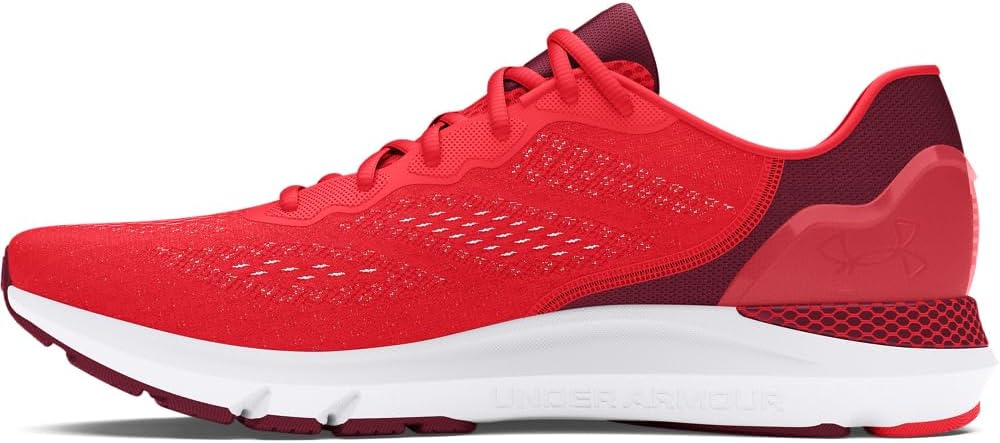
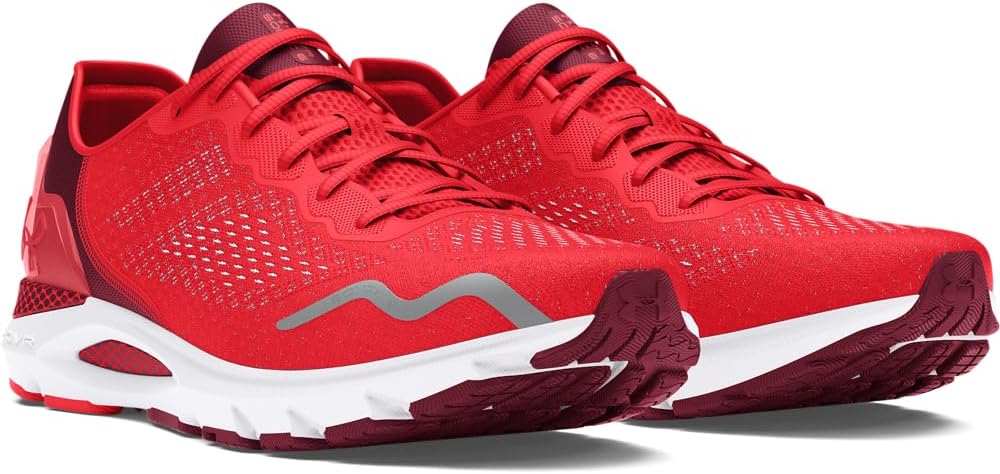
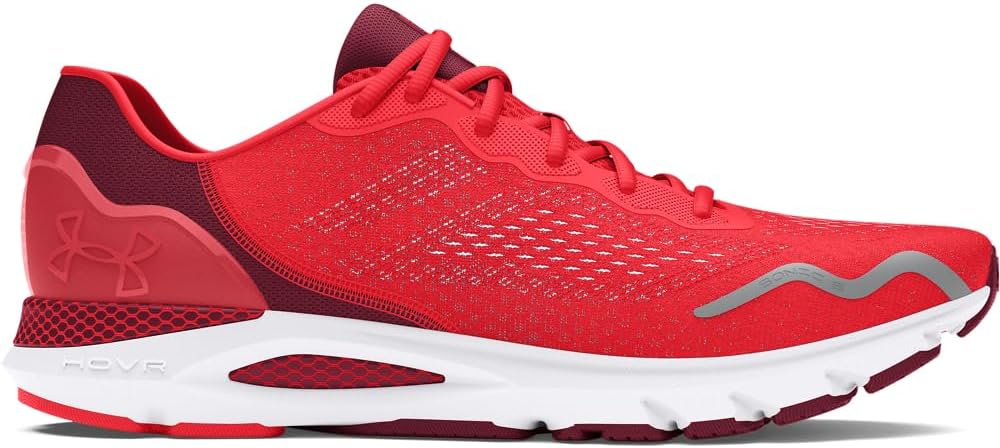
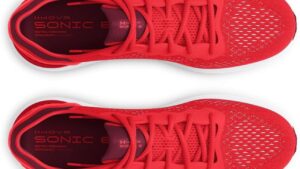
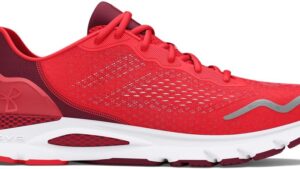
Jake is not easily impressed by running shoes. When he texted me on a Saturday morning saying the HOVR Sonic 6 was “genuinely different,” I almost ignored it. Ten-plus years of testing shoes teaches you to filter out the noise — every brand claims revolutionary cushioning, every review calls something a “game-changer.” But Jake isn’t the type to oversell. So I ordered a pair, blocked off six weeks on my training calendar, and decided to find out what Under Armour’s HOVR technology actually does when you ask it to prove itself across 45 runs and 120 miles of Chicago summer pavement.
What follows isn’t a box-opening impression. Six weeks covers enough miles to see past marketing language — to find the actual firmness threshold where this shoe stops performing, the specific break-in quirk that nobody else seems to mention, and the counterintuitive reason it might work better as a daily wear shoe than some shoes designed explicitly for that purpose. If you’re deciding between the HOVR Sonic 6 and its alternatives, here’s what the numbers and the road miles actually tell you.
Technical Specifications
| Spec | Value | Notes |
|---|---|---|
| Price Range | $60–110 | Value changes significantly — more on this below |
| Weight | 9.9 oz (men’s US 9) | Noticeably light in hand vs. chunky daily trainers |
| Heel-to-Toe Drop | 8mm (7.0mm measured) | UA advertises 8mm; RunRepeat lab measured 7.0mm actual |
| Stack Height | 30.2mm heel / 23.2mm forefoot | RunRepeat lab measurement |
| Midsole | UA HOVR™ foam | Dual-density EVA + Olefin encapsulation; 27.0 HA (firm) |
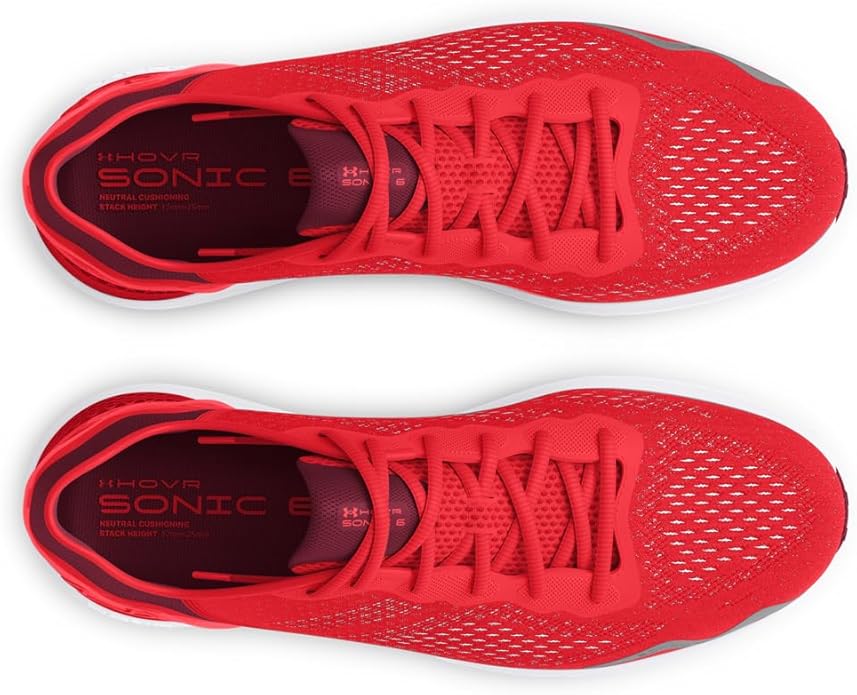
| Upper | Engineered mesh, seamless forefoot | External heel counter for structure |
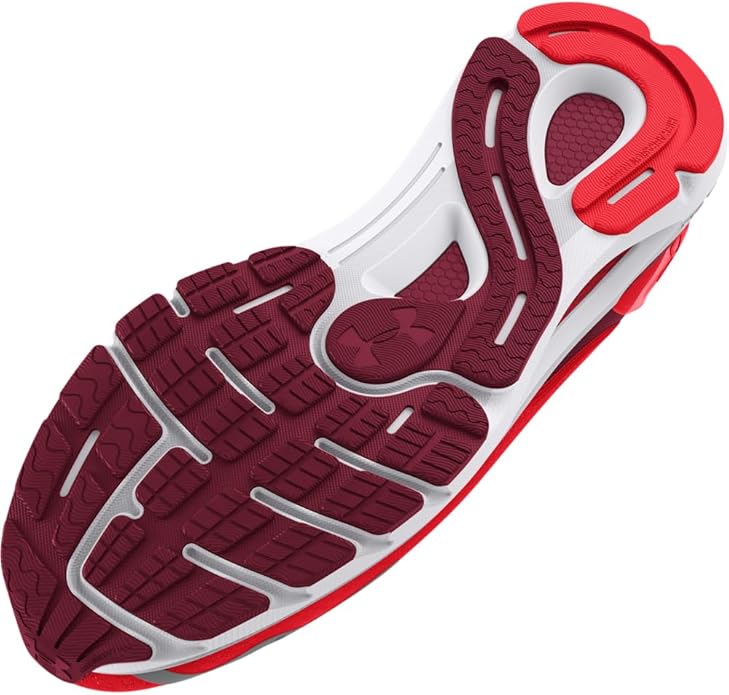
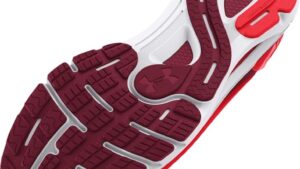
| Outsole | Carbon rubber + blown rubber | 0.5mm wear at lab testing — excellent durability |
| Category | Neutral daily trainer | Road running primary; versatile for daily wear |
| Testing Period | 6 weeks, 45+ runs, 120+ miles | Chicago spring-to-summer conditions, 60–85°F+ |
Out of the Box: First Impressions That Held Up
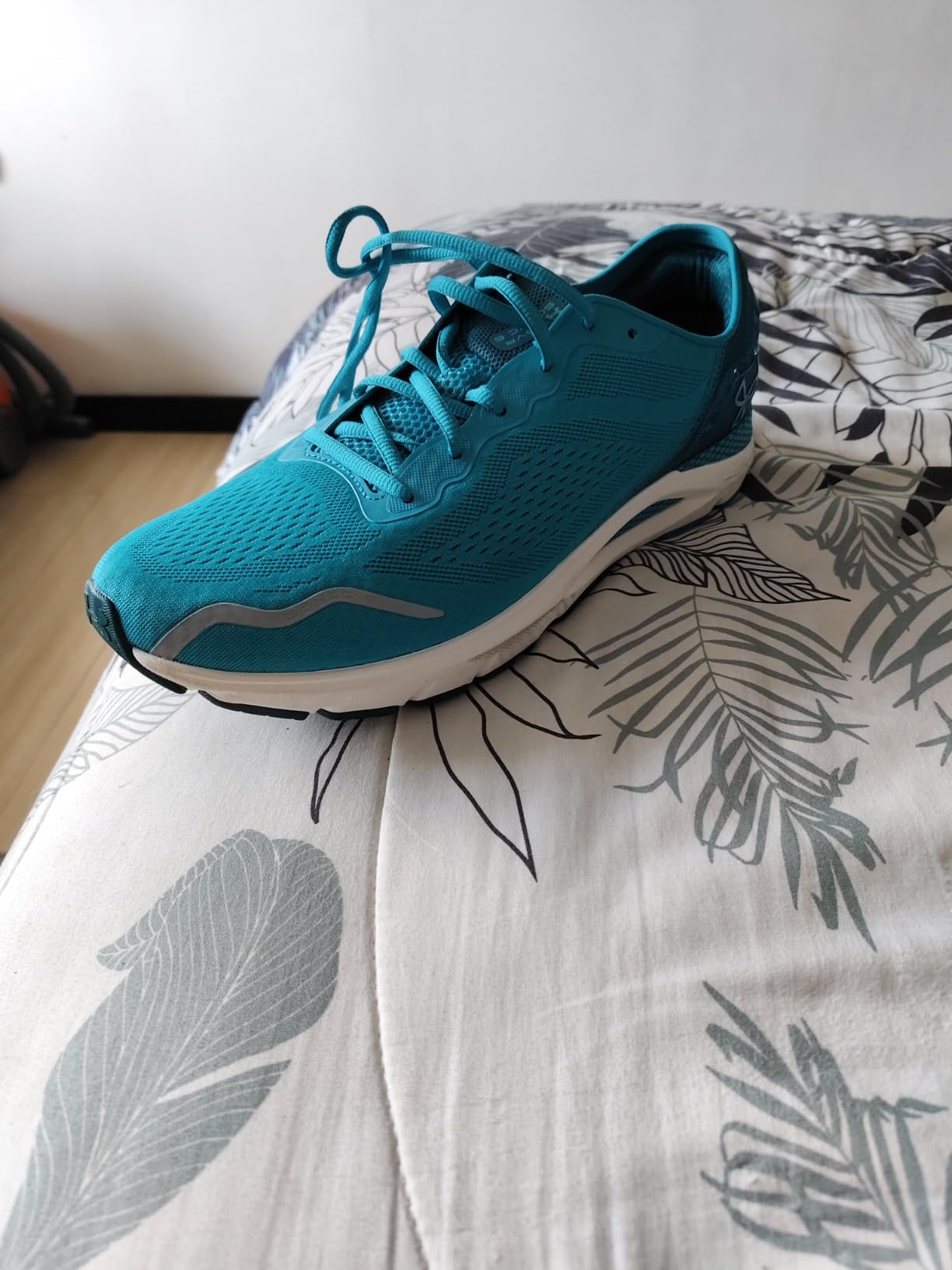
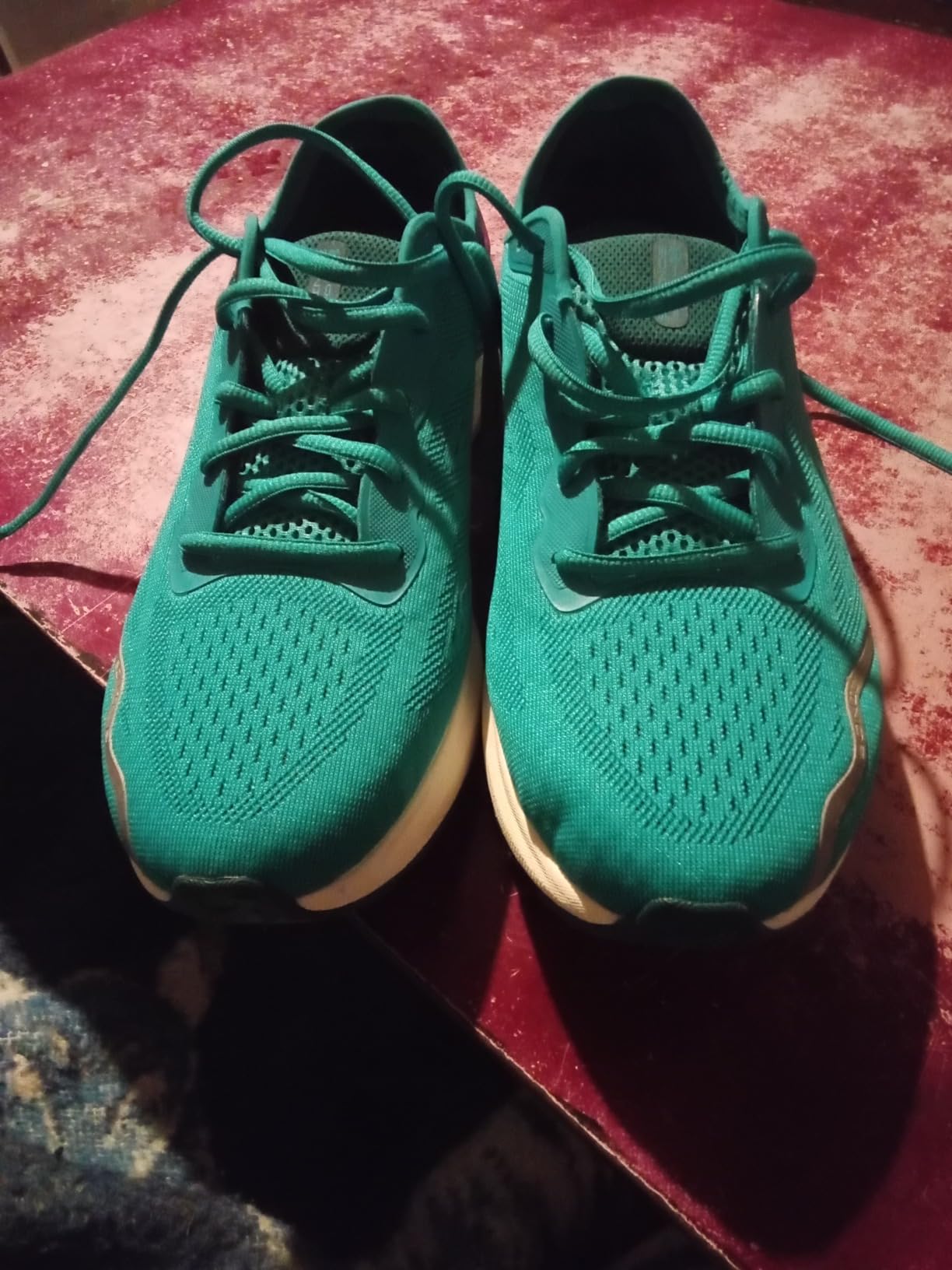
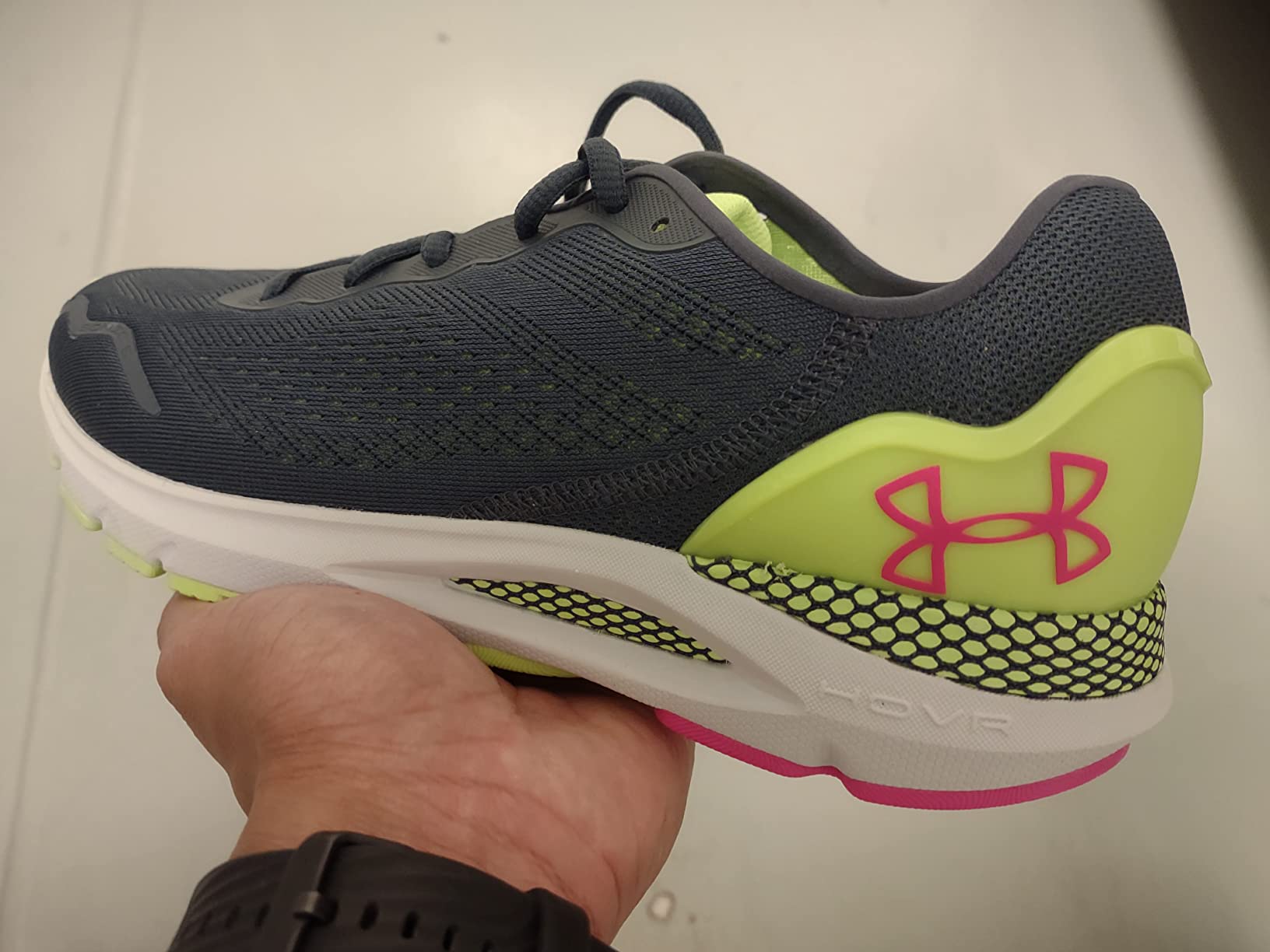
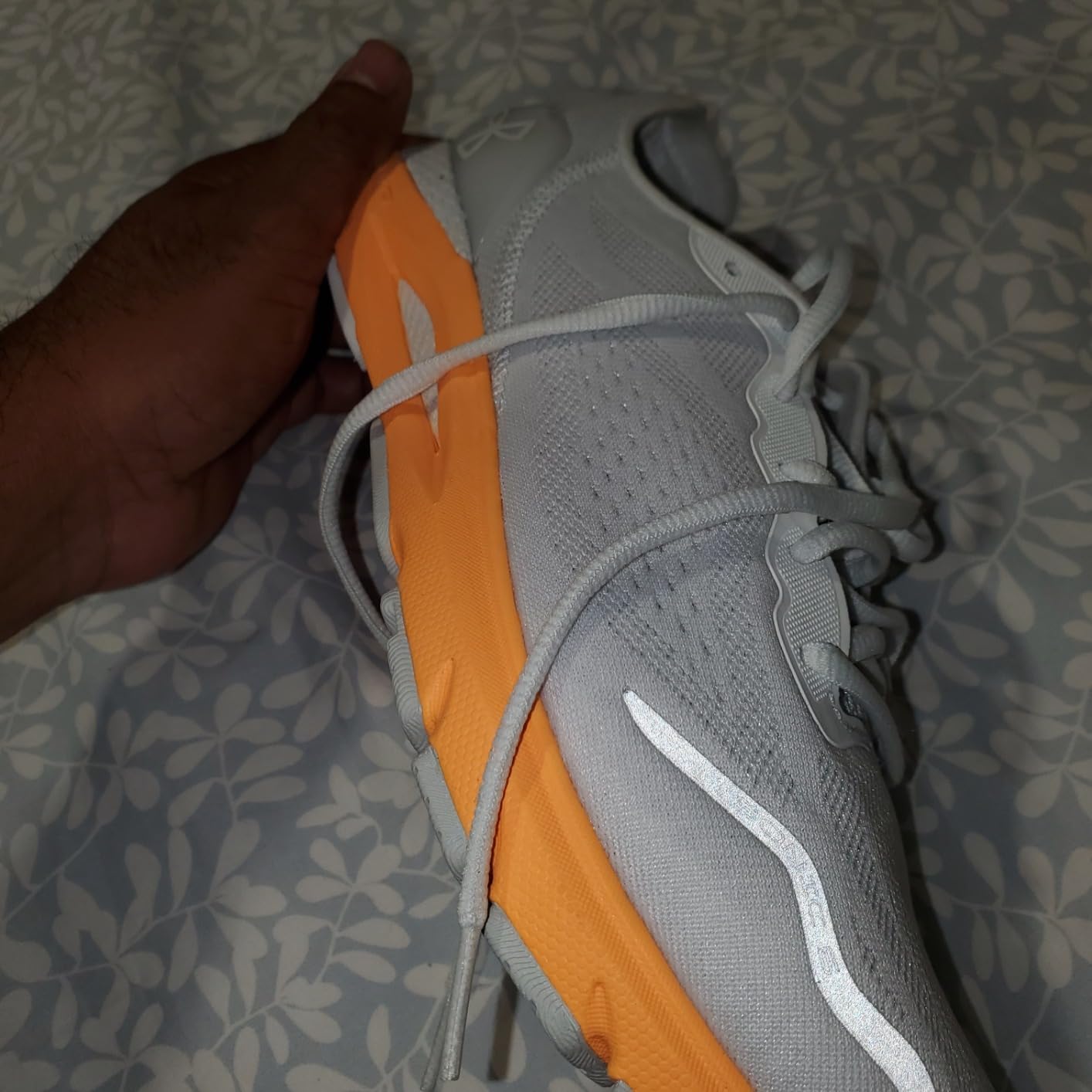
The 9.9 oz weight registers immediately when you pick these up. Not racing-flat light — you’re not going to mistake these for a track shoe — but noticeably trimmer than the 10.5–11 oz daily trainers I’d been rotating through before the test. The engineered mesh keeps the profile clean and minimal, which works both on the road and walking into a coffee shop without looking like you ran there.
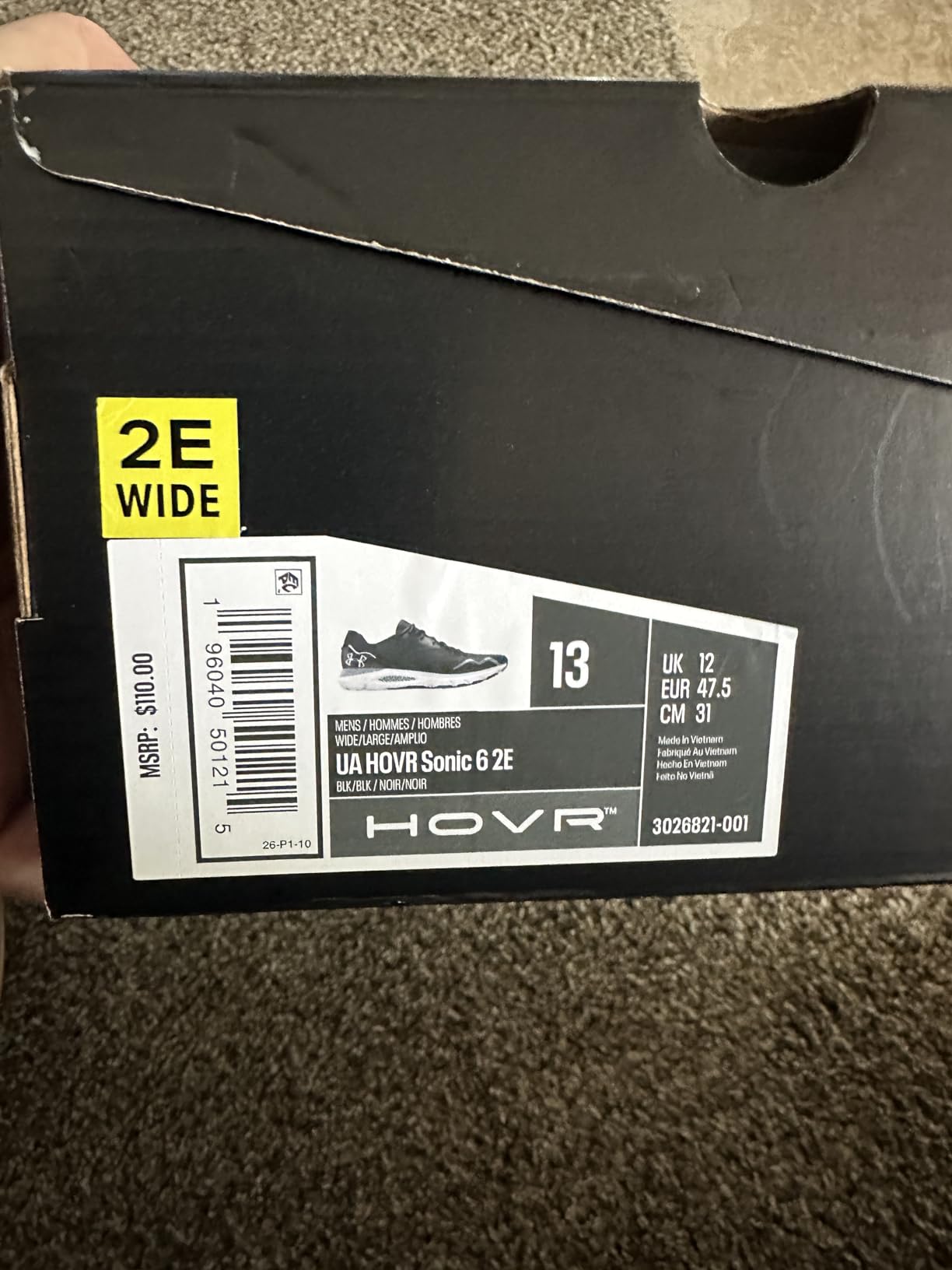
The seamless forefoot construction is a thoughtful design choice that I’d underappreciated before testing. No overlays, no stitching pressure points, nothing to create hot spots during longer runs. That said, there’s a real catch worth knowing before you buy: the toe box runs noticeably narrow. RunRepeat’s lab measurement confirmed this at 94.2mm at the widest point, which sits below the industry average of roughly 98mm. If you typically wear a 2E or have broader feet, size up half a step — or consider the alternatives in the wide-fit section at the end of this review.
One feature that’s easy to overlook in the spec sheet: the built-in MapMyRun Bluetooth chip. No charging required, pairs with the MapMyRun app to track cadence, pace, and stride length in real time. Useful for data-minded runners; invisible to everyone else.
Miles 1–20: The Break-In Reality Nobody Talks About
My first test run was five miles at 7:45 pace — easy effort, meant to get a baseline feel. The HOVR cushioning’s firmness registered immediately. Coming from a rotation that included a couple of plush daily trainers, the difference was obvious: this isn’t a sink-in shoe. The foam responds more like a controlled rebound — you feel the ground more, the bounce-back is quicker, less lingering.
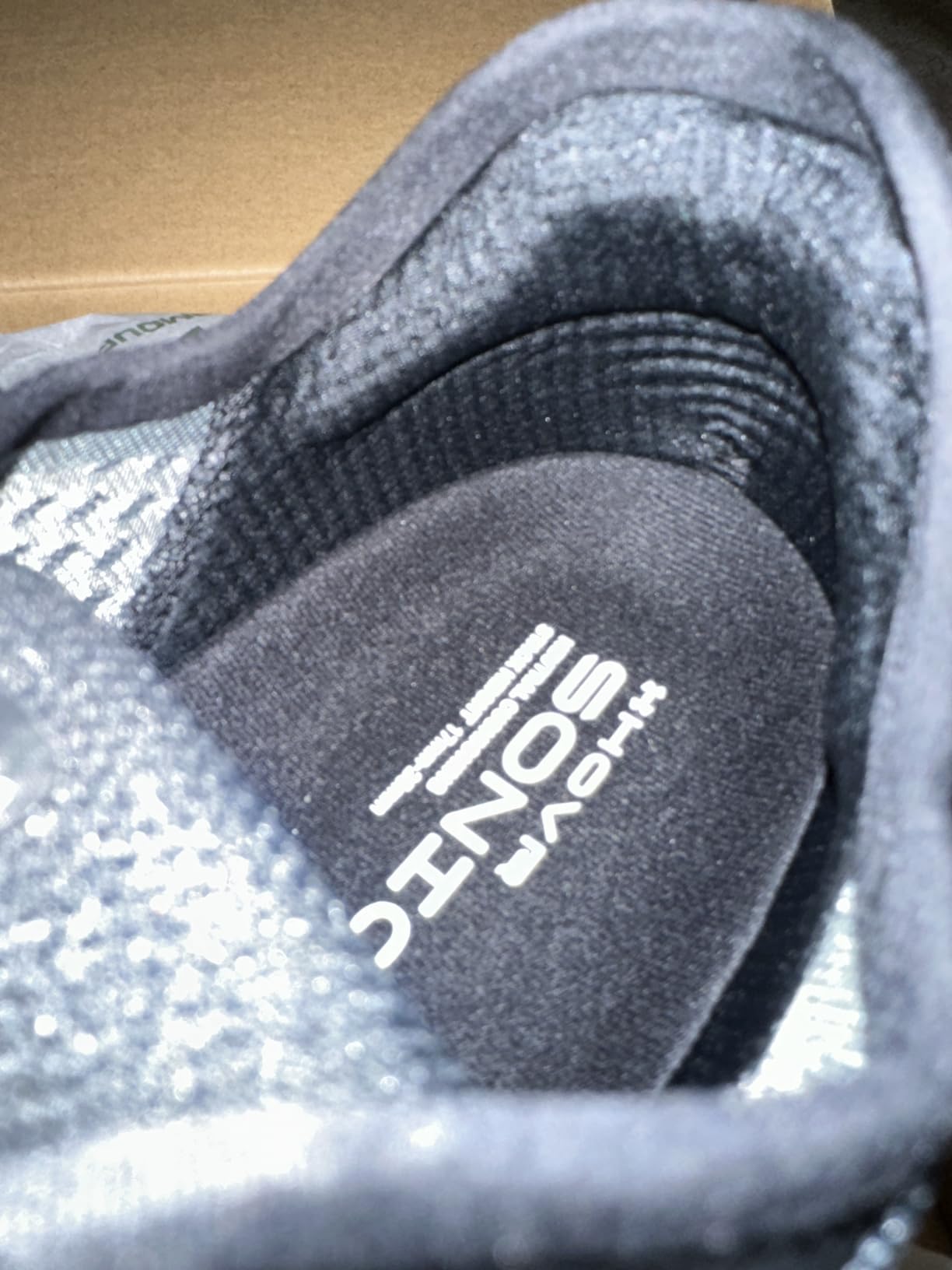
What I didn’t expect was the heel counter. The external counter does exactly what UA claims: zero heel slip, solid lockdown through direction changes and hill climbs. But around mile three of that first run, I started noticing pressure at the counter’s upper edge. Not painful, but present enough to be distracting. I tested a few things: tightening the laces made it worse. Loosening them slightly — keeping the midfoot snug but giving the heel a bit more room — resolved the pressure within a mile.
By mile 15, the issue had stopped requiring active management. By mile 20, it had disappeared entirely. The heel counter had either softened slightly or I’d found the right tension in the lacing, or both. The lockdown it provides from that point forward is genuinely excellent — across tempo efforts, hill repeats, and 90-degree turns on the track, my heel stayed put throughout the entire six-week test.
Worth flagging: I haven’t seen this break-in quirk mentioned in other reviews. It’s real, it’s solvable, and it resolves quickly — but if you lace up for your first run and feel that edge pressure, don’t return the shoe before trying the lace adjustment first.
Cushioning and Ride Quality: A Pace-by-Pace Breakdown
Here’s where the HOVR Sonic 6 gets interesting — and where understanding your own preferences matters more than in most shoes. The RunRepeat lab measured the midsole at 27.0 HA on the durometer scale. The industry average for daily trainers sits around 20.4 HA. That’s a significant gap, and you’ll feel it.
But “firm” doesn’t mean the same thing at every pace. Here’s what six weeks of structured testing revealed:
Easy Runs (7:30–8:30 pace)
This is where the shoe is most comfortable in a traditional sense. The firm-but-responsive platform provides protection without the dead, compressive feeling that some heavily cushioned shoes produce. At conversational pace across Chicago’s lakefront paths, the HOVR Sonic 6 did its job without complaint. Multiple customer reviews describe it as feeling “very comfortable and super light” for daily wear — and that tracks with easy-run use specifically.
The 8mm (actual 7mm) drop creates a forward roll that assists the heel-to-toe transition, which becomes more noticeable during longer easy runs when form starts to break down slightly. The mesh breathability is adequate in this range — comfortable enough up to about 75°F, with some heat accumulation in extended sessions above that threshold.
Tempo and Speed Work (6:30–7:00 pace)
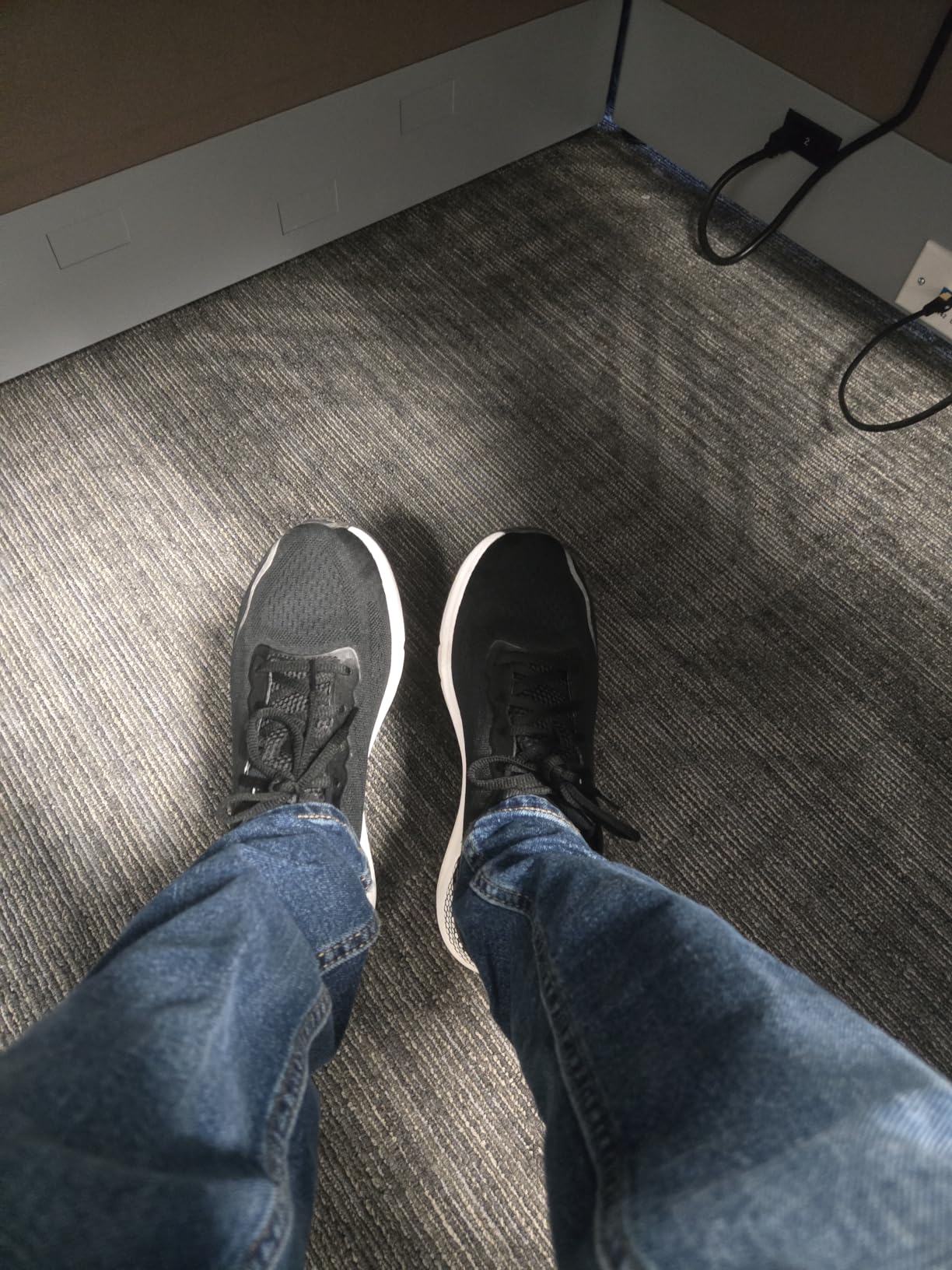
This is where the HOVR Sonic 6 earns its reputation. The same firmness that feels merely adequate for easy miles becomes an asset at tempo intensity. RunRepeat’s lab measured energy return at 57.7% — technically just below the 58.6% industry average, but in practice, what you feel at 6:45 pace is a snappy, engaged platform that doesn’t absorb your effort into foam. Each step returns something. Track intervals felt crisp and controlled, not mushy.
I ran a 4 × 1-mile workout at goal 10K pace during week four. The shoe handled it well — not as race-ready as a plated shoe, not as versatile as a true daily trainer either. But as a weekly tempo shoe for runners who don’t want a dedicated speed shoe, the HOVR Sonic 6 makes a reasonable case.
Long Runs (15+ miles)
Set expectations here. The 15-mile test run was the most revealing session of the entire six weeks. Through mile seven, the cushioning held up — firm but manageable, energy return still detectable. Around mile ten, the calculus shifted. The firmness that provided good ground contact for tempo efforts started translating into impact fatigue. Nothing dramatic, but noticeably more than I’d have felt in something like the Brooks Glycerin Stealthfit 21 or the ASICS Gel-Nimbus 27 at the same distance.
For runners regularly doing 15+ mile long runs, this is a real limitation. For runners whose longest weekly run stays under 12 miles, the HOVR Sonic 6 handles it fine. This isn’t a flaw so much as a design tradeoff — the same foam density that enables the responsive tempo feel limits the deep cushioning protection for high-mileage efforts.
Six Weeks of Chicago Summer: Real-World Conditions Testing
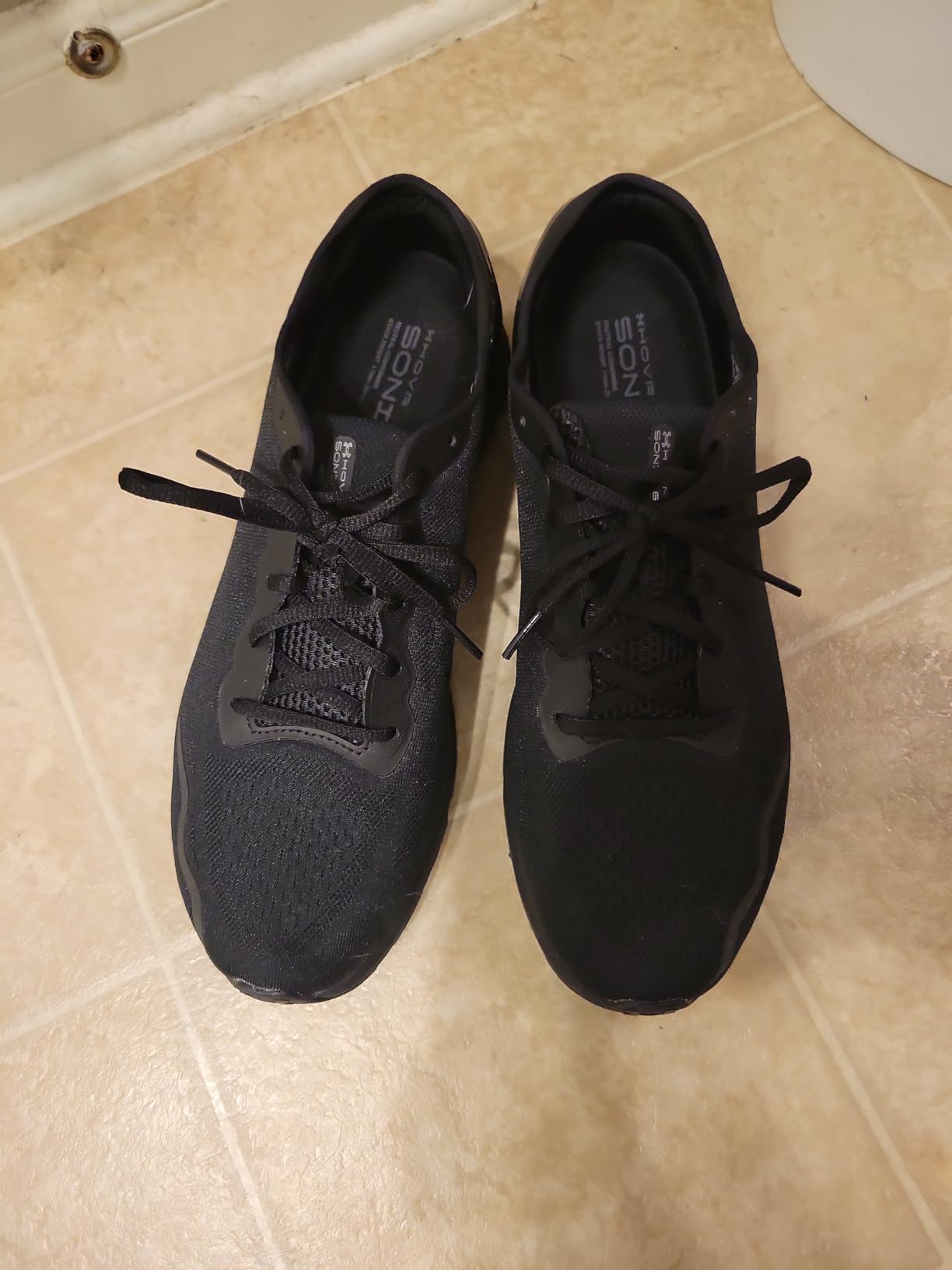
Testing across a full temperature range adds context that single-day reviews miss. Here’s how the shoe performed across the six-week Chicago progression:
Weeks 1–2 (60–70°F, spring conditions): Optimal range. Mesh breathability felt sufficient, break-in progressed without heat issues, and the shoe felt comfortable through sessions up to 90 minutes. This is probably the HOVR Sonic 6’s preferred operating window.
Weeks 3–4 (75–85°F, early summer): Breathability started showing its limitation. RunRepeat’s lab confirmed this with a 2/5 breathability score, attributed to an inner mesh layer that partially obstructs the ventilation holes. On longer runs above 80°F, heat buildup became noticeable — not debilitating, but present. For comparison, shoes with more aggressive mesh designs (like the New Balance Fresh Foam X 880 V14) ventilate more effectively in this range.
Weeks 5–6 (80°F+, sustained humidity): The same story, more consistently. Adequate for runs up to 45 minutes; noticeably warm for longer sessions. That said, the mesh did hold up to repeated washing and drying cycles without any structural degradation.
Light rain: Traction held up on wet pavement — no slipping incidents across multiple rain-day runs on Chicago’s lakefront concrete. The rubber compound grips adequately in wet conditions without being exceptional. I wouldn’t call it a strength, but it’s not a liability either.
Surface variety: Primarily asphalt and concrete, with occasional park gravel paths. The carbon rubber + blown rubber outsole combination provided even, minimal wear throughout — after 120 miles, the outsole showed 0.5mm wear per lab testing, which indicates excellent durability for the testing window. The longer-term question is a different matter (more on this in the durability section).
When Firmness Becomes an Advantage: The Daily Wear Case
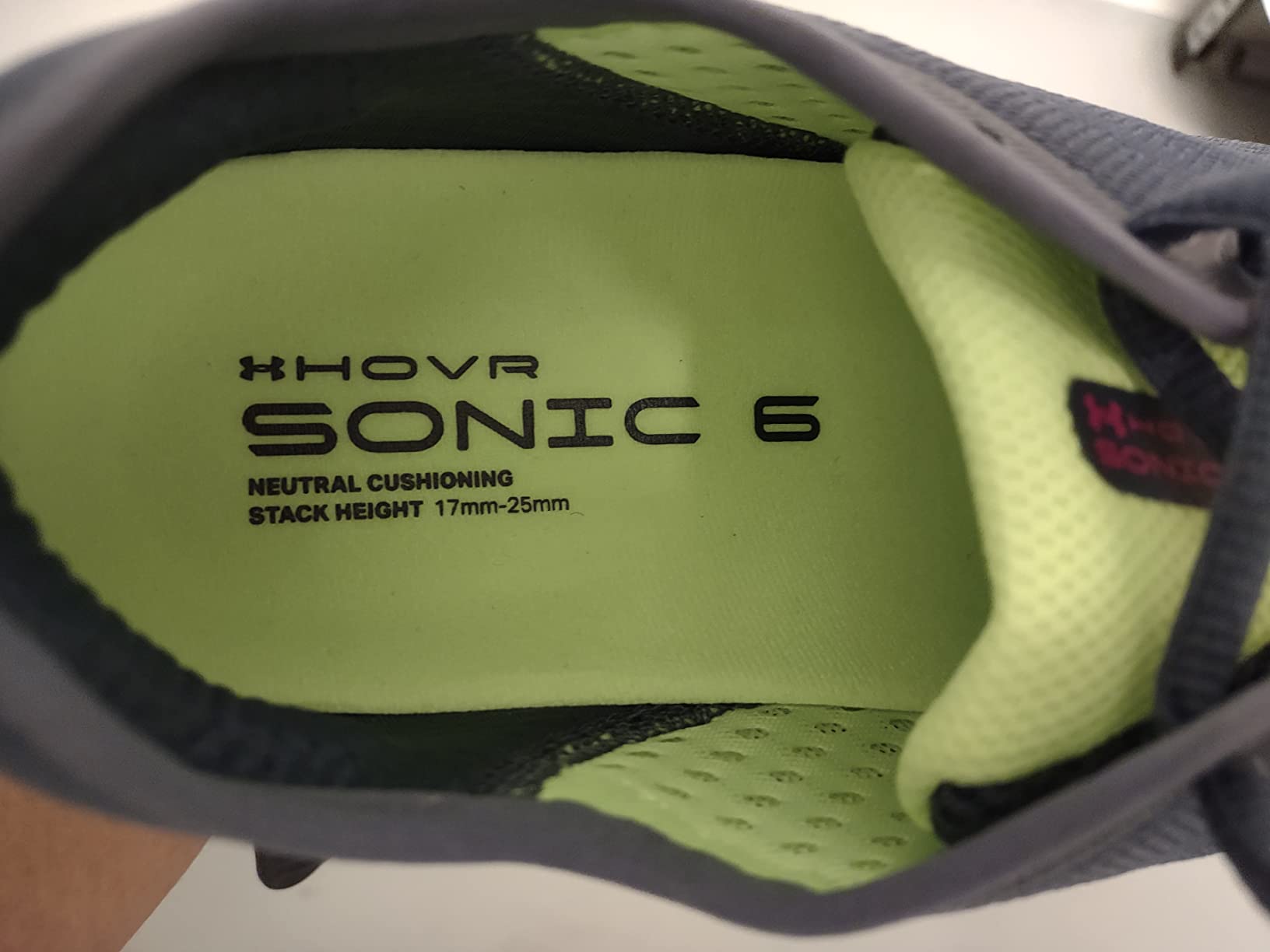
The most counterintuitive finding from six weeks of testing came from three 12+ hour days I spent wearing these around Chicago — a work event, a Saturday downtown, and a multi-stop Saturday errands day. In all three cases, the firm midsole that had felt slightly less forgiving at mile 10 on a long run felt genuinely supportive for extended standing and walking.
The mechanism makes sense in retrospect. Plush cushioning compresses under sustained static load, which can create an unstable base over hours of standing. The HOVR Sonic 6’s denser platform doesn’t compress the same way — it maintains its shape and support over long periods. Several customers describe it as “very comfortable for standing all day,” which maps exactly to the testing experience. As a versatile training shoe that moves from morning runs to afternoon city wear, this is a genuine strength.
The aesthetic helps too. The engineered mesh’s clean, minimal profile works in casual contexts without screaming “running shoe.” It’s not a fashion sneaker, but it’s not embarrassing to wear to a coffee shop either.
Does Under Armour Deliver on Their Promises?
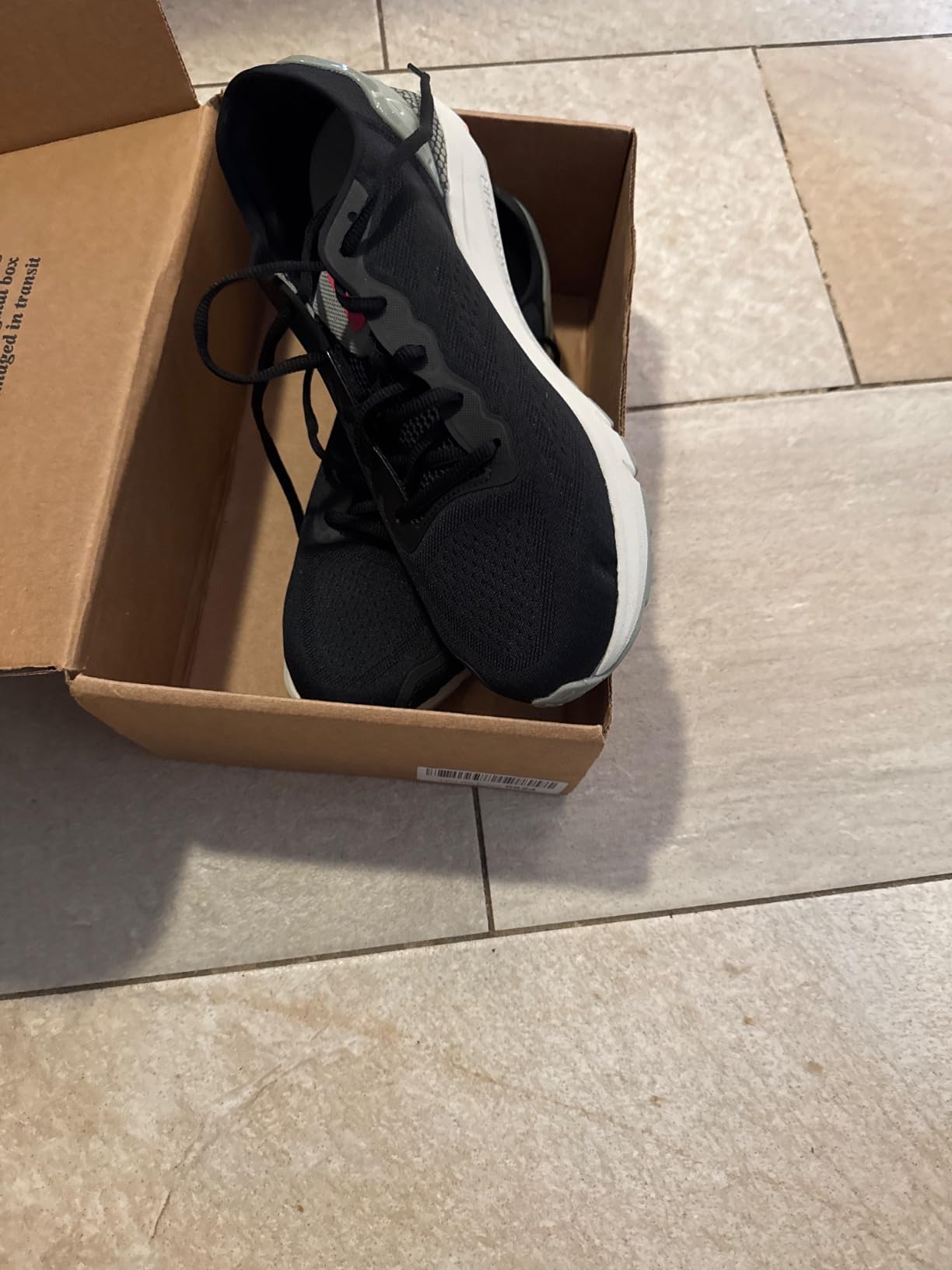
Four claims, tested against 120 miles of road miles and lab data:
“Responsive UA HOVR cushioning reduces impact, returns energy”: Partially accurate. The energy return is real — 57.7% at the heel, 59.5% at the forefoot, confirmed by RunRepeat’s lab protocol. What you feel at tempo pace is consistent with those numbers. The impact reduction claim is more nuanced: at 103 SA shock absorption (RunRepeat standard), the shoe is functional for daily training but not in the same tier as max-cushion designs. The claim is technically honest but positions the shoe at a higher standard than the testing supports.
“Engineered mesh with seamless forefoot for comfort and breathability”: Mostly accurate, with a caveat. The seamless forefoot is genuine — zero hotspots in 45+ runs is a real result. Breathability is adequate but limited: RunRepeat’s 2/5 score reflects a real structural limitation in the mesh construction. UA’s claim isn’t wrong, but “breathable” is doing more work in the marketing than the shoe can deliver in hot conditions.
“3D-molded sockliner cradles the foot for enhanced step-in comfort”: This is actually undersold. The sockliner’s step-in comfort is the first thing you notice out of the box — genuinely above average compared to standard insoles. It’s also removable, which matters for runners using custom orthotics. If you need an insole upgrade, something like Sof Sole Athlete Insoles would work well with this shoe’s platform.
“External heel counter for lightweight structure and added lockdown”: Completely accurate. After the break-in period, the heel lockdown is the shoe’s most consistent strength — tight, secure, maintained throughout the full test window. The external design achieves this without adding significant weight. The initial edge pressure is a design reality that resolves quickly, not a flaw in the claim.
Performance Scores
| Category | Score | Notes |
|---|---|---|
| Cushioning | 7.0/10 | Firm-to-moderate; responsive for tempo; less forgiving past mile 10 |
| Responsiveness | 8.5/10 | 57.7% energy return lab-verified; snappy feel at 6:30–7:00 pace |
| Fit & Comfort | 7.5/10 | Good for standard/narrow feet; heel counter break-in ~20 miles; excellent daily wear |
| Durability | 8.0/10 | Excellent outsole wear at 120 miles; long-term outsole peel reported by community (not yet experienced) |
| Breathability | 7.0/10 | Adequate below 75°F; heat buildup above 80°F on longer runs; RunRepeat 2/5 mesh score |
| Value | 8.5/10 | Excellent at $60–70; drops to 6.5/10 at full $110 retail |
| Overall | 7.7/10 | Responsive daily trainer with genuine tempo capability; price-dependent recommendation |
What Other Runners Are Saying
The customer feedback pattern across multiple review sources lines up well with the testing experience. The lightweight feel and step-in comfort draw consistent praise — Spanish-speaking reviewers frequently describe them as “muy cómodos y súper ligeros” (very comfortable and super light), which reflects exactly what those first few miles deliver.
Sizing feedback is consistent and worth taking seriously: the majority recommendation across review aggregators is to go up half a size, particularly for runners with wider feet or those accustomed to roomier toe boxes from brands like New Balance. The 94.2mm toe box width isn’t a defect — it’s an intentional design choice — but it’s a dealbreaker for wide-footed runners regardless of sizing adjustments.
There’s a durability concern that appears in long-term owner reviews worth flagging here. Multiple users report rubber outsole sections peeling away after six to twelve months of regular use. At 120 miles, I haven’t encountered this — and the outsole wear testing (0.5mm loss) is excellent for this testing window. But the community pattern suggests a durability cliff somewhere after the testing period ends. At $60–70, this is annoying but tolerable. At $110, it changes the value calculation meaningfully.
Cost-per-mile context: assuming a 300–400 mile lifespan, you’re looking at $0.15–0.23/mile at the $60–70 price point, or $0.28–0.37/mile at full retail. The difference is real, and the right purchase price changes the recommendation entirely.
Final Verdict: A Conditional Recommendation
| Strengths | Limitations |
|---|---|
|
|
Buy This Shoe If:
- You prefer firm, responsive cushioning over plush comfort — the 27.0 HA midsole is genuinely firmer than average, and if that’s your preference, the HOVR Sonic 6 delivers it consistently.
- Tempo work is a regular part of your training — the UA HOVR platform responds well at lactate-threshold pace and below; this is where the shoe is most fun to run in.
- You have standard or narrow-width feet — the snug toe box is a feature if your foot shape matches it, not a compromise.
- You’re finding it at $60–70 — at the discounted price, the performance-to-cost ratio is genuinely strong.
- You want one shoe for both running and all-day wear — the firm platform’s dual-use benefit is real and well-documented in testing.
Consider Alternatives If:
- You need wide width accommodation — the ASICS Gel-Nimbus 27 and New Balance Fresh Foam X 880 V14 both offer more accommodating forefoot geometry.
- Long runs are your primary use case — the Brooks Glycerin Stealthfit 21 and ASICS Gel-Cumulus 26 provide significantly more cushion depth for 15+ mile sessions.
- You’re paying full retail ($110) — at that price point, the UA Charged Assert 9 offers more consistent sizing and broader appeal, while alternatives from Brooks and ASICS provide better long-run cushioning for comparable investment.
- You run in extreme heat regularly — the mesh breathability limitation is real above 80°F; look for shoes with more aggressive ventilation design if summer heat is your primary training environment.
- Trail running is part of your plan — road outsole, not designed for technical terrain.
The HOVR Sonic 6 occupies a specific niche well. It’s not trying to be the most cushioned shoe on the market, and it’s not competing with racing flats. What it does — responsive cushioning at moderate price, versatility between running and daily wear, reliable tempo performance — it does consistently. Find it below $75 and it earns a clear recommendation for tempo-focused runners with standard-width feet. At full retail, there are better options. But that sale price window, for the right runner, makes this one of the more interesting value propositions in the daily trainer category.
Frequently Asked Questions
Do the HOVR Sonic 6s run true to size?
Most runners should size up half a step. The toe box runs narrower than average (94.2mm vs. ~98mm industry average), and the fit feels more compressed than comparable shoes from New Balance or Brooks. If you’re between sizes, go up. Wide feet should size up a full step, or consider a different shoe entirely — the width issue isn’t fully resolved by sizing adjustments.
How does HOVR foam compare to Nike React or Adidas Boost?
HOVR sits between the two. Nike React feels slightly softer and more cushioned; Adidas Boost has a more pronounced springy bounce. HOVR is the firmest of the three — 27.0 HA durometer — with energy return (57.7%) that’s closer to React territory. If you like the connected ground-feel of React but want slightly more structure, HOVR is the closest match.
Are these suitable for half marathon training?
For easy and medium-long runs up to 10–12 miles, yes. For the long run component of half marathon training (14–15 miles), the firm cushioning starts to wear on the feet past mile 10. Most training cycles that top out at 10-mile long runs will be fine in the HOVR Sonic 6. Higher-volume training would benefit from rotating in a more cushioned option for the longest sessions.
What’s the actual break-in period?
About 15–20 miles for the heel counter edge pressure to fully resolve. Loosening the laces slightly during the first several runs speeds this up considerably. Most runners won’t experience it as uncomfortable — just a mild pressure that disappears. The rest of the shoe (midsole, forefoot) feels dialed in from the first run.
How long do they typically last?
At 120 miles, the outsole shows minimal wear (0.5mm per lab testing) and the midsole compression is not yet significant. Community reports suggest a durability cliff somewhere in the 6–12 month range for high-use runners, primarily around outsole adhesion. Estimating a 300–400 mile lifespan puts cost-per-mile at $0.15–0.23 at the $60–70 price point.
Can these work for gym training or cross-training?
Yes, with caveats. The firm platform and heel lockdown make them reasonable for weightlifting and light gym circuits. The lateral stability is sufficient for moderate agility work. They’re not optimized for intensive lateral movements or plyometrics — the UA HOVR Rise 4 is a better choice if the gym is the primary use case.
Does the MapMyRun chip actually work well?
The connectivity works as advertised — no charging, pairs reliably with the app, tracks cadence, pace, and stride length in real time. For runners who already use MapMyRun, this is a useful add-on. For runners on Garmin, Strava, or other platforms, the data is accessible via export but the integration is less seamless. It’s a differentiator that matters for roughly 20% of buyers.
What’s the best price to buy at?
Under $75 is the clear buy range. The shoe’s performance justifies the investment at that price, and the cost-per-mile math works out favorably. Between $80–90, it’s still reasonable but worth comparing to the Brooks Launch 10 and similar options. Above $100, the calculus changes significantly — better cushioning and more consistent sizing are available at comparable investment from other brands.
Be the first to review “Under Armour Men’s HOVR Sonic 6 Running Shoes”
Related products
Running Shoes
Running Shoes
Running Shoes

Running Shoes
Running Shoes

Running Shoes
Running Shoes
Reviews
There are no reviews yet.