
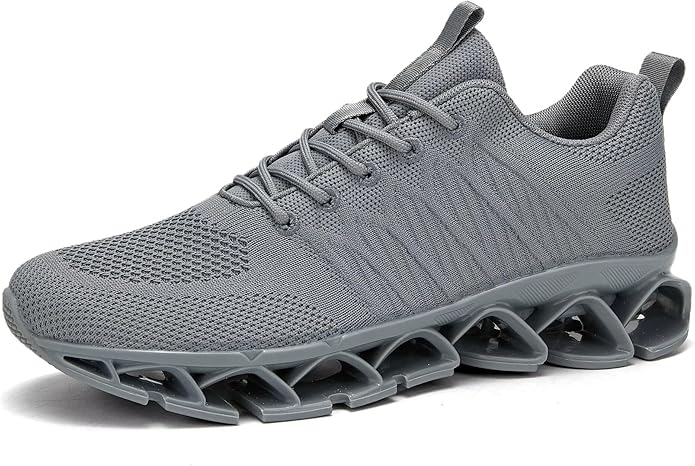
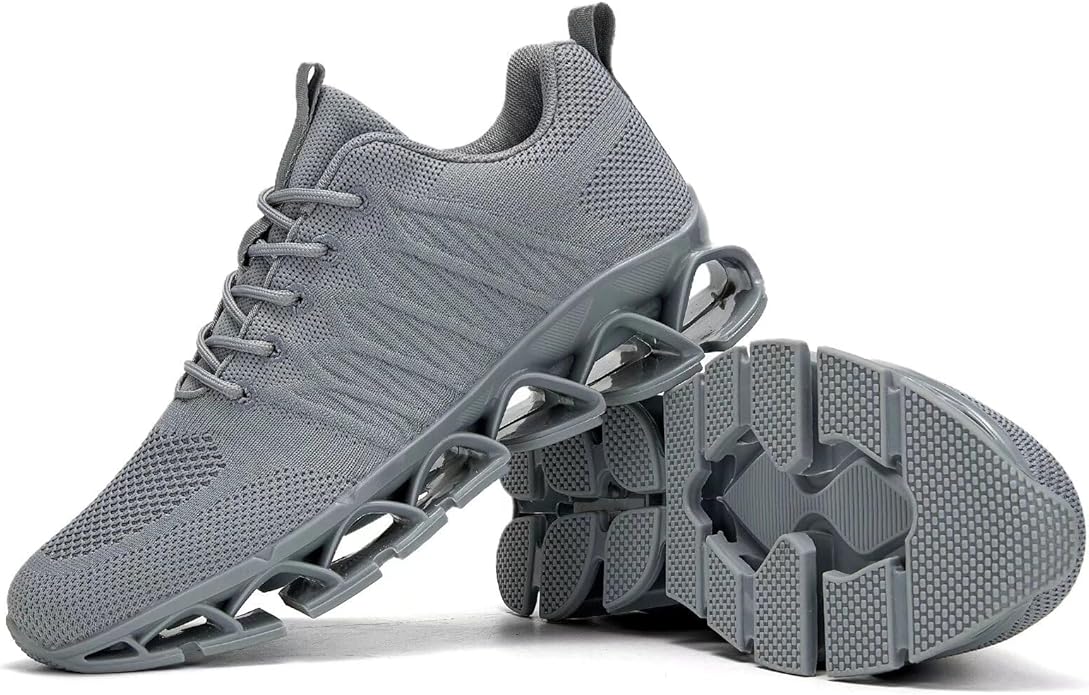
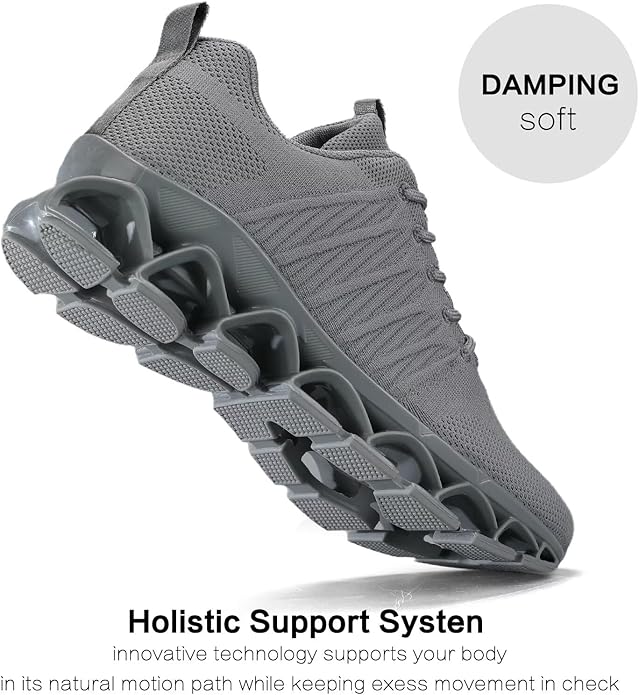
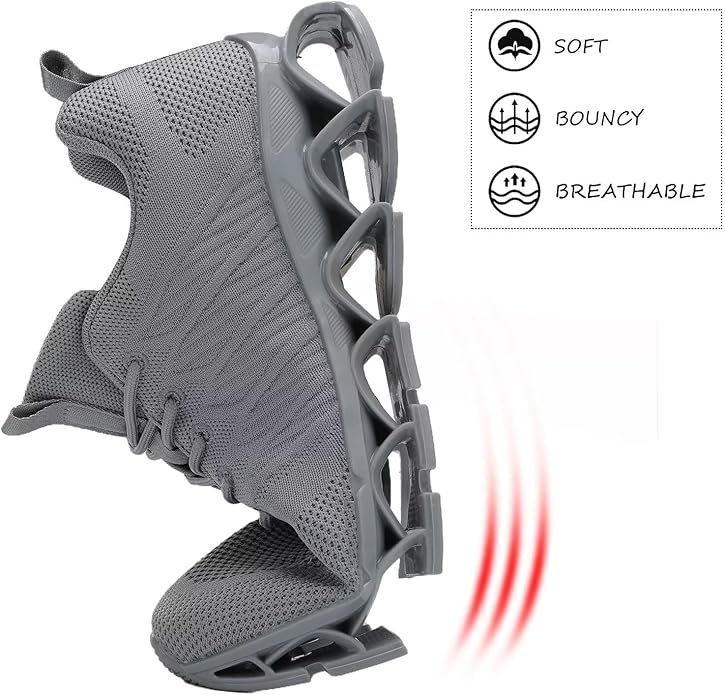
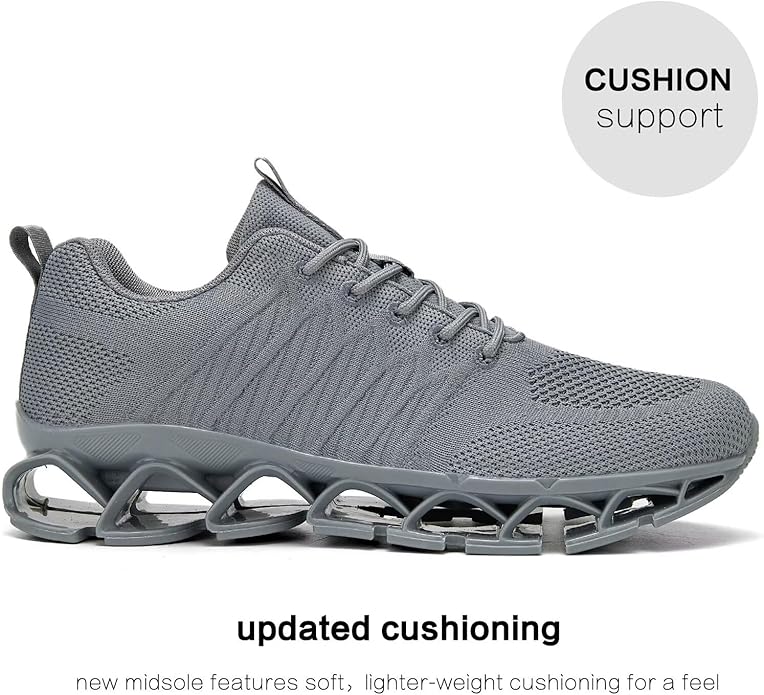
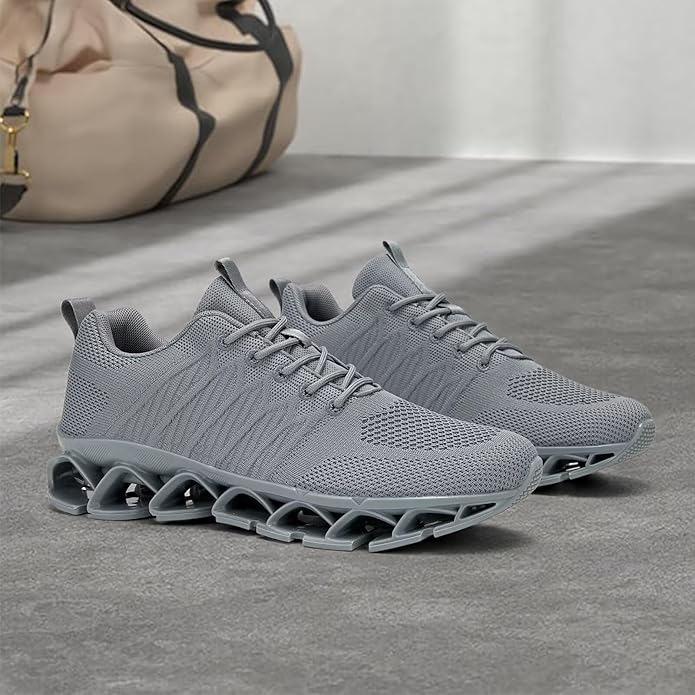
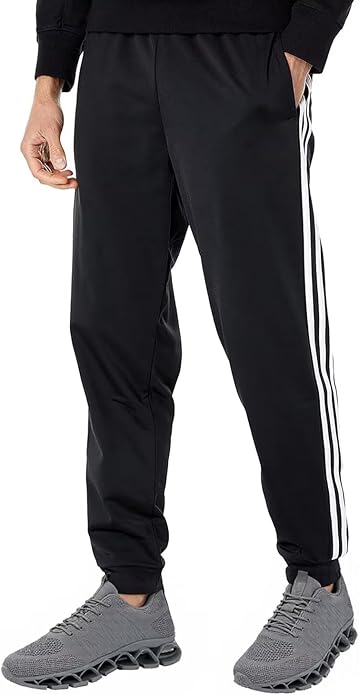
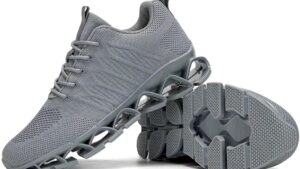
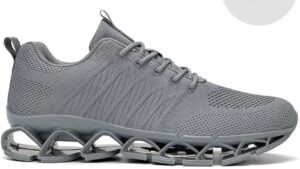
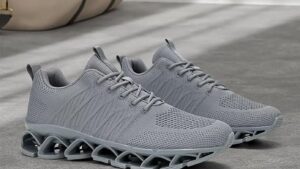
Srenket Mens Slip on Running Walking Shoes Blade Tennis
$19.99
- Price: Under $50 (typically $30–40 on Amazon)
- Weight: ~8 oz (men’s size 9)
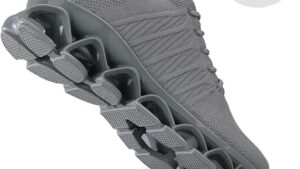
- Sole: Hard plastic/rubber composite lattice (“blade”) design
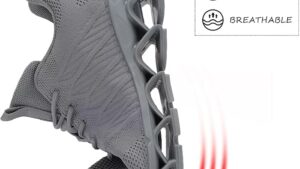
- Upper: Lightweight knit mesh
- Closure: Slip-on with decorative lacing
- Insole: Minimal factory insert (aftermarket upgrade strongly recommended)
- Category: Casual fashion sneakers
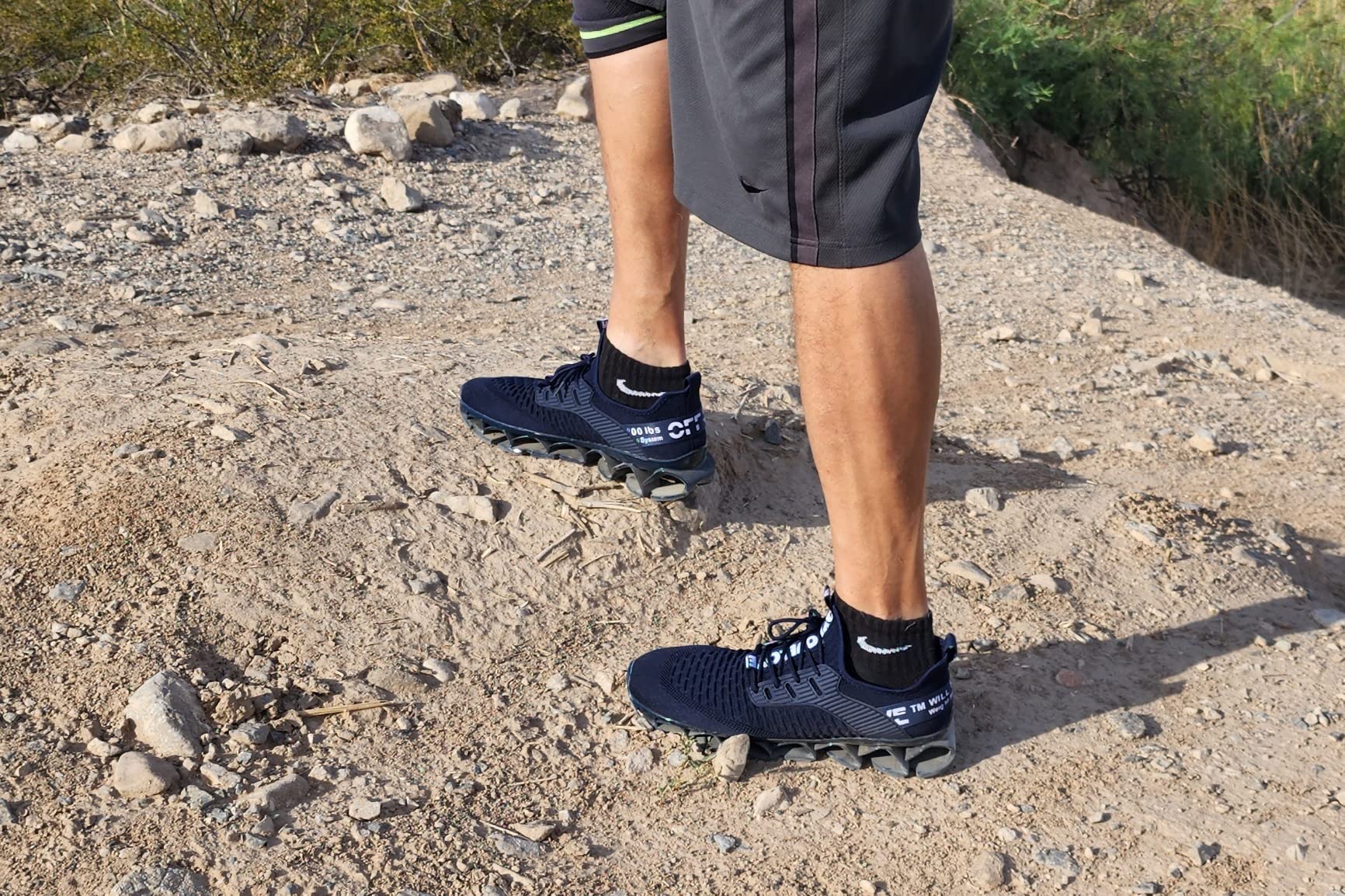
Three guys at the coffee counter. Same lattice-sole sneakers in three different colorways. That was enough to get me off the couch and onto Amazon. I’m Mike — remote worker, chronic shoe procrastinator, and the last person who’d normally chase a trend. But after four weeks and 25+ hours of real-world testing in the Srenket Men’s Blade Sneakers (beige-orange), I can tell you exactly where the hype holds up and where it falls flat. Spoiler: that futuristic sole is both the best and worst thing about this shoe. Overall rating: 6.2/10 — a genuine head-turner with serious comfort and durability caveats that every buyer should understand before clicking “Add to Cart.”
First Impressions: The Compliment Machine
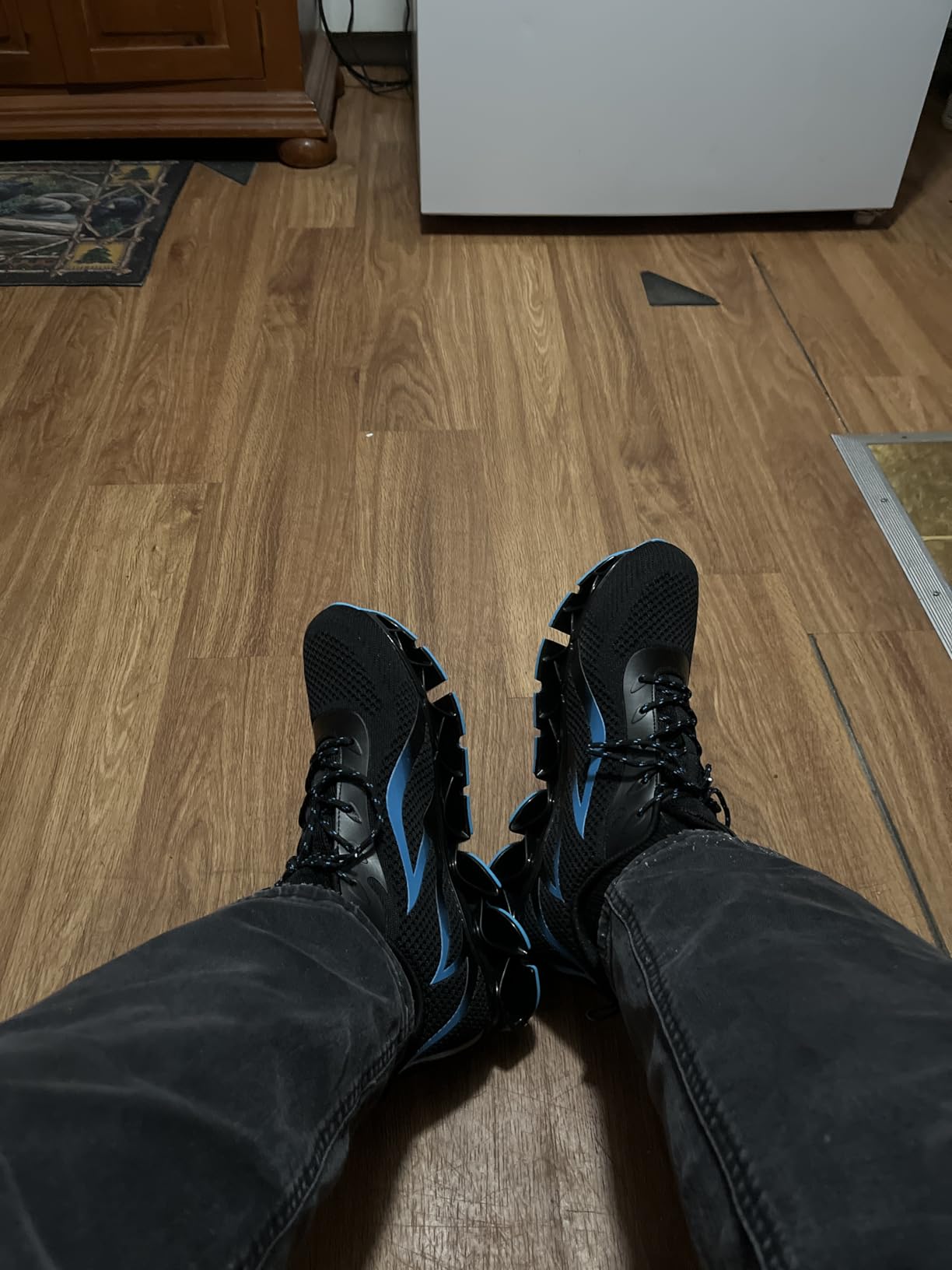
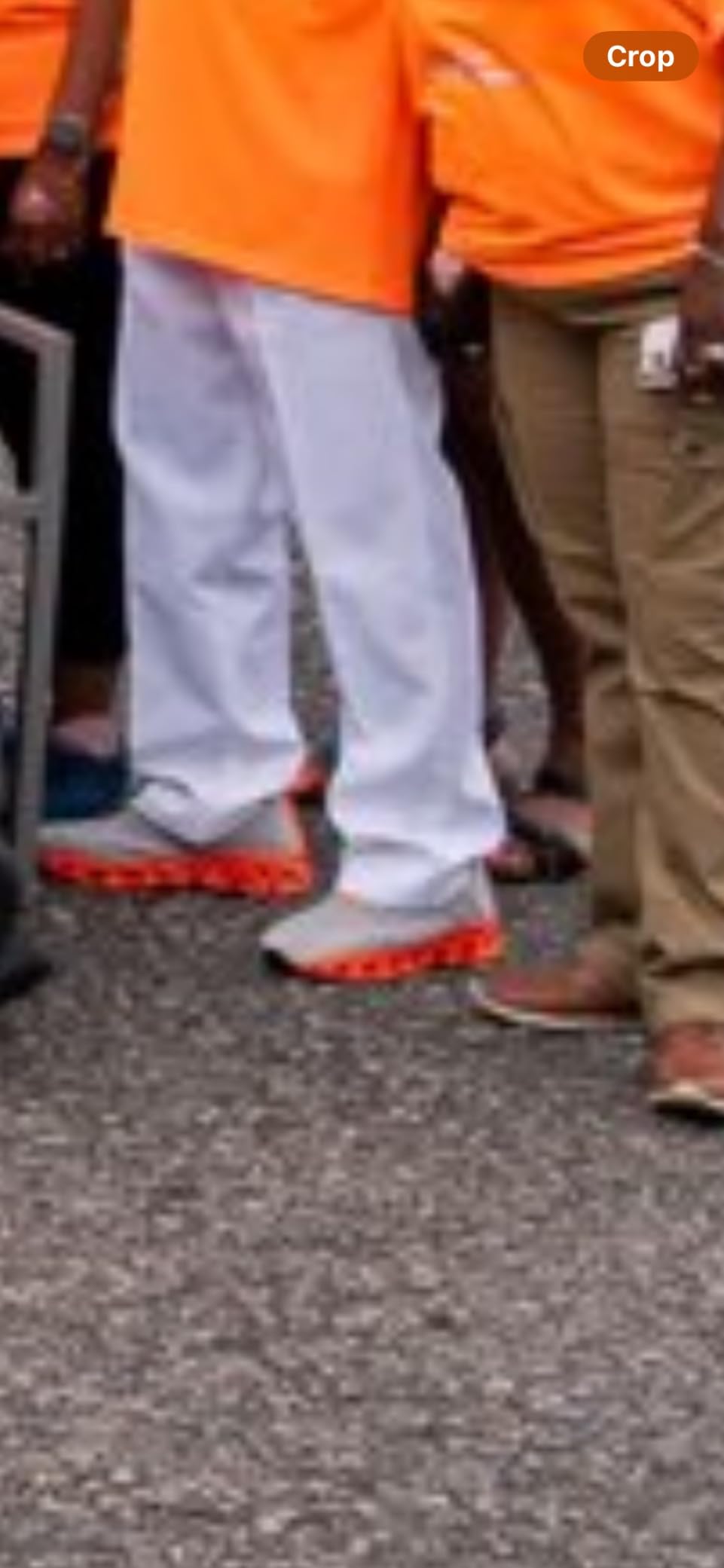
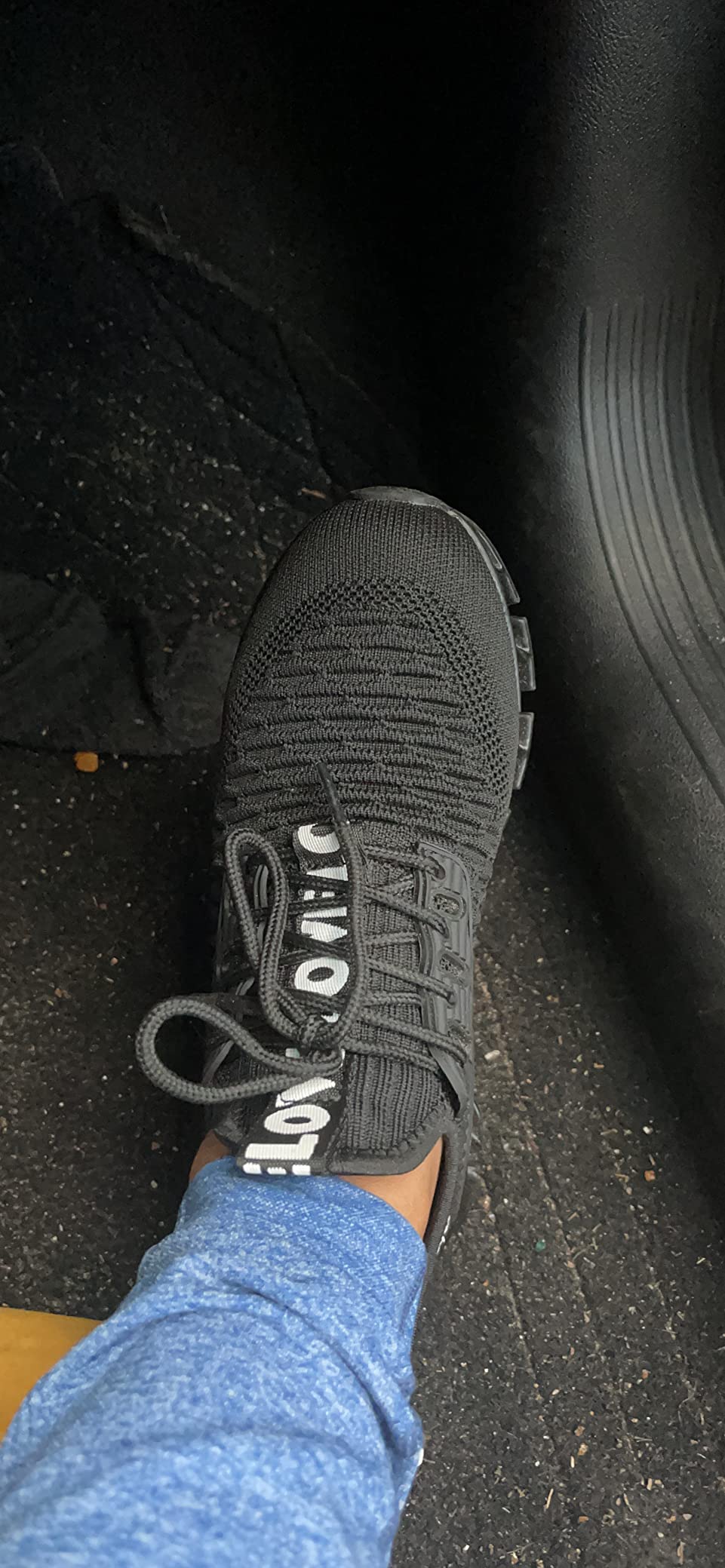
People noticed these shoes. Not in a “nice kicks” nod-and-move-on way — I’m talking full-stop conversations. During my first week wearing the beige-orange colorway, I counted at least seven unprompted comments from strangers and coworkers on video calls. The lattice sole is genuinely unlike anything else at this price point, and the color balances neutral enough for jeans and chinos while still standing out with athletic shorts.
The knit mesh upper feels featherweight straight out of the box. At roughly 8 ounces, these are noticeably lighter than my old Vans Atwood pair, which clocked in around 12 ounces. You register the difference the moment you pick them up — it’s like holding a slipper that happens to have a structured sole.
Sliding them on takes a couple of seconds — they fit like a stretchy sock, though you’ll need both hands to position them properly since there’s minimal heel structure holding the shape. The decorative laces are purely cosmetic; there’s no tightening mechanism at all. True to size for my standard-width size 9, with no pinching or excess room. If you have wider feet, though, know that there’s no width variant and no way to adjust the fit short of sizing up.
That trade-off between slip-on ease and structural rigidity shows up later in more significant ways.
The Blade Sole: Where Style Meets Hard Reality
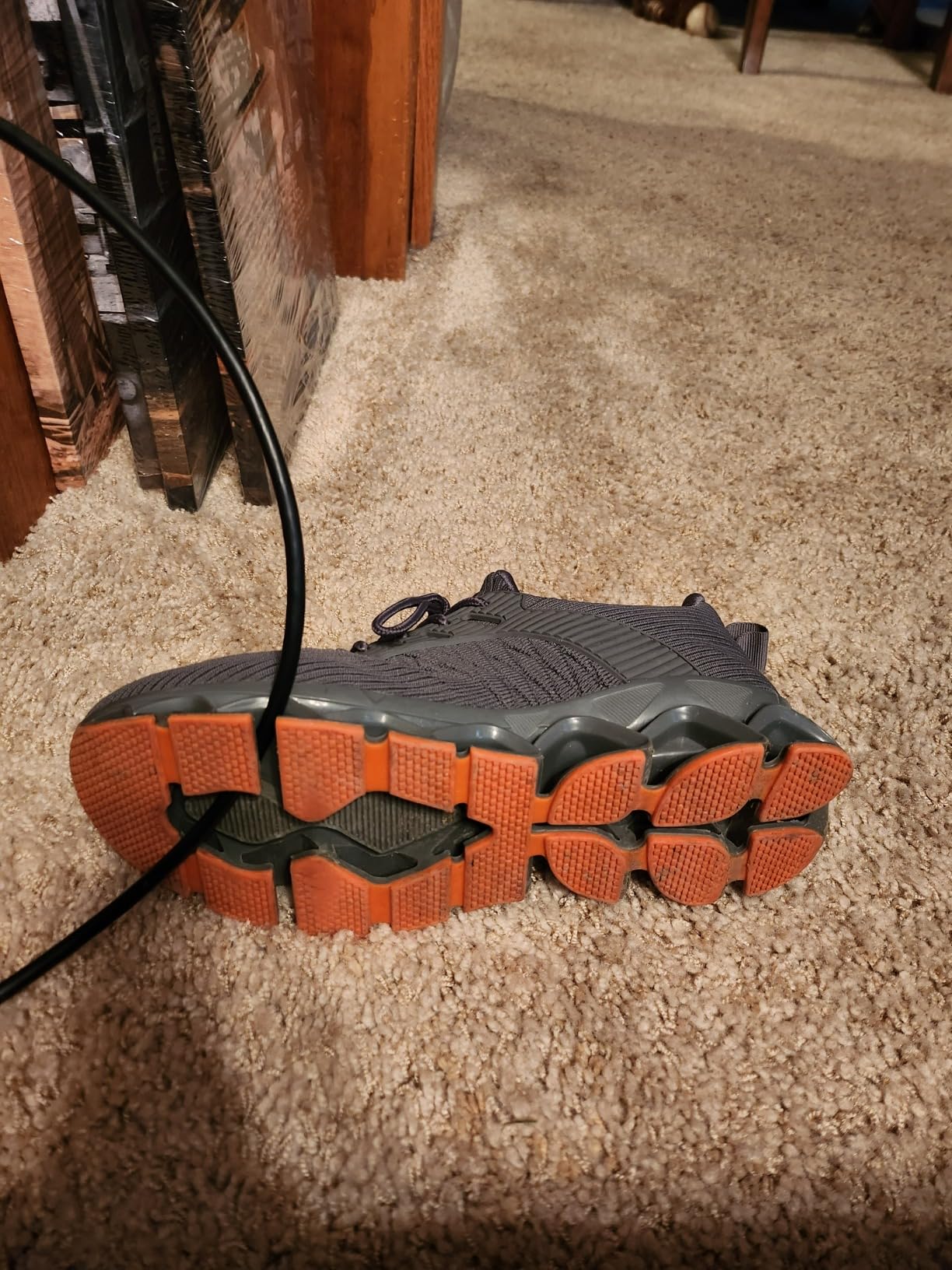
That lattice sole looks like it belongs on a concept car. It does not, however, feel like it belongs under your feet.
The First Hour Problem
Within sixty minutes of wearing these on a concrete sidewalk during errands, I could map every ridge and gap of the sole pattern through the factory insole. At 180 pounds, the lack of cushioning went from “hm, that’s firm” to genuine discomfort around the 30-minute mark. The plastic composite doesn’t flex or absorb impact the way traditional running shoe rubber does — it transmits ground feel directly into your foot. Think less “walking on air” and more “walking on a plastic crate.”
For context, blade and lattice sole designs have a documented history of load distribution problems. The gridded structure creates high-pressure points where the blades contact your foot, while the hollow gaps between them offer zero support. Your insole compresses into those gaps over time, making the uneven surface progressively worse.
The Snag Factor Nobody Mentions
Here’s something I haven’t seen in a single competitor review: those lattice gaps catch on things. I documented two incidents during testing. The first happened getting out of my car — the toe section snagged on a rubber floor mat hard enough that I stumbled. The second time, a loose cable at a friend’s garage threaded into the sole gap and yanked me sideways for a step.
Neither was dangerous, but both were genuinely annoying. And once you know about it, you start subconsciously watching where you step — avoiding rubber mats, stepping over cables, being more deliberate on uneven surfaces. For a shoe that’s supposed to be casual and effortless, that constant awareness tax defeats the purpose. I don’t think about where my feet land in any other shoe I own.
The Click Track
Hard plastic on tile, hardwood, or polished concrete produces a rhythmic clicking with every step. During a couple of work-from-home days when I had the shoes on for video calls and kitchen runs, the tap-tap-tap became background noise I couldn’t unhear. In an open office? This would be a legitimate distraction for anyone sitting within earshot.
Comfort: The $15 Turning Point
Factory Insole: Barely There
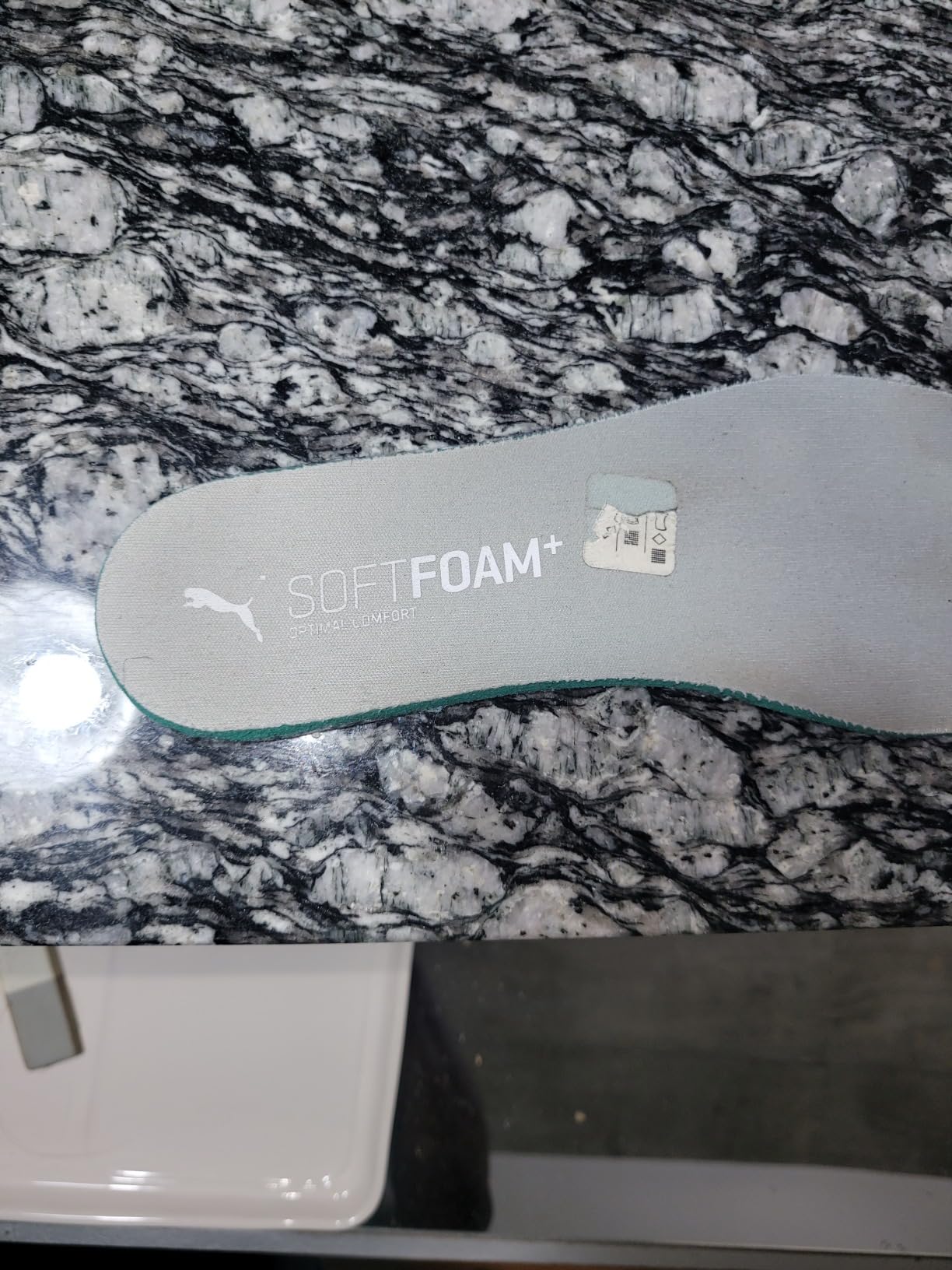
The stock insole is a thin layer of foam that does almost nothing to buffer the lattice pattern underneath. Some Amazon reviewers described the sensation as “walking on broken Legos,” and after three days I understood exactly what they meant. The uneven pressure from the blade pattern creates hotspots under the ball of the foot and heel that get worse with every hour of wear.
After day three, I ordered a pair of gel inserts — around $18 with shipping. The improvement was dramatic and immediate. Comfort jumped from roughly 3/10 to a solid 6.5/10. That’s a 70% improvement, and the breathable mesh upper meant the added insole thickness didn’t create heat problems. Even on warm afternoons, no sweat pooling.
But here’s the math that matters: those insoles take your total investment from under $50 to roughly $65–70. And that changes the value conversation entirely.
Comfort Duration Testing
| Scenario | Duration | Rating (with inserts) | Notes |
|---|---|---|---|
| Quick errands, coffee run | Under 1 hour | 7.5/10 | No complaints |
| Grocery shopping | 2–3 hours | 6.5/10 | Slight forefoot fatigue at hour 3 |
| Office/WFH all day | 6–8 hours | 4.5/10 | Arch fatigue accumulates, need breaks |
| 2-mile walk | ~40 minutes | 4/10 | Shin discomfort by the halfway mark |
| Gym session | Any duration | 2/10 | Zero lateral support, unstable on any dynamic movement |
The practical comfort ceiling with aftermarket insoles sits around 2–3 hours of casual activity. Beyond that, fatigue builds regardless of what you put inside the shoe — the rigid plastic sole simply doesn’t have the flex or return that extended wear demands. The insoles address the surface-level pressure problem but can’t compensate for the complete absence of shock absorption in the sole itself. That’s a material limitation, not something a $20 insert can overcome.
Materials and Build: One Strong Component, One Weak Link
The Upper Holds Up
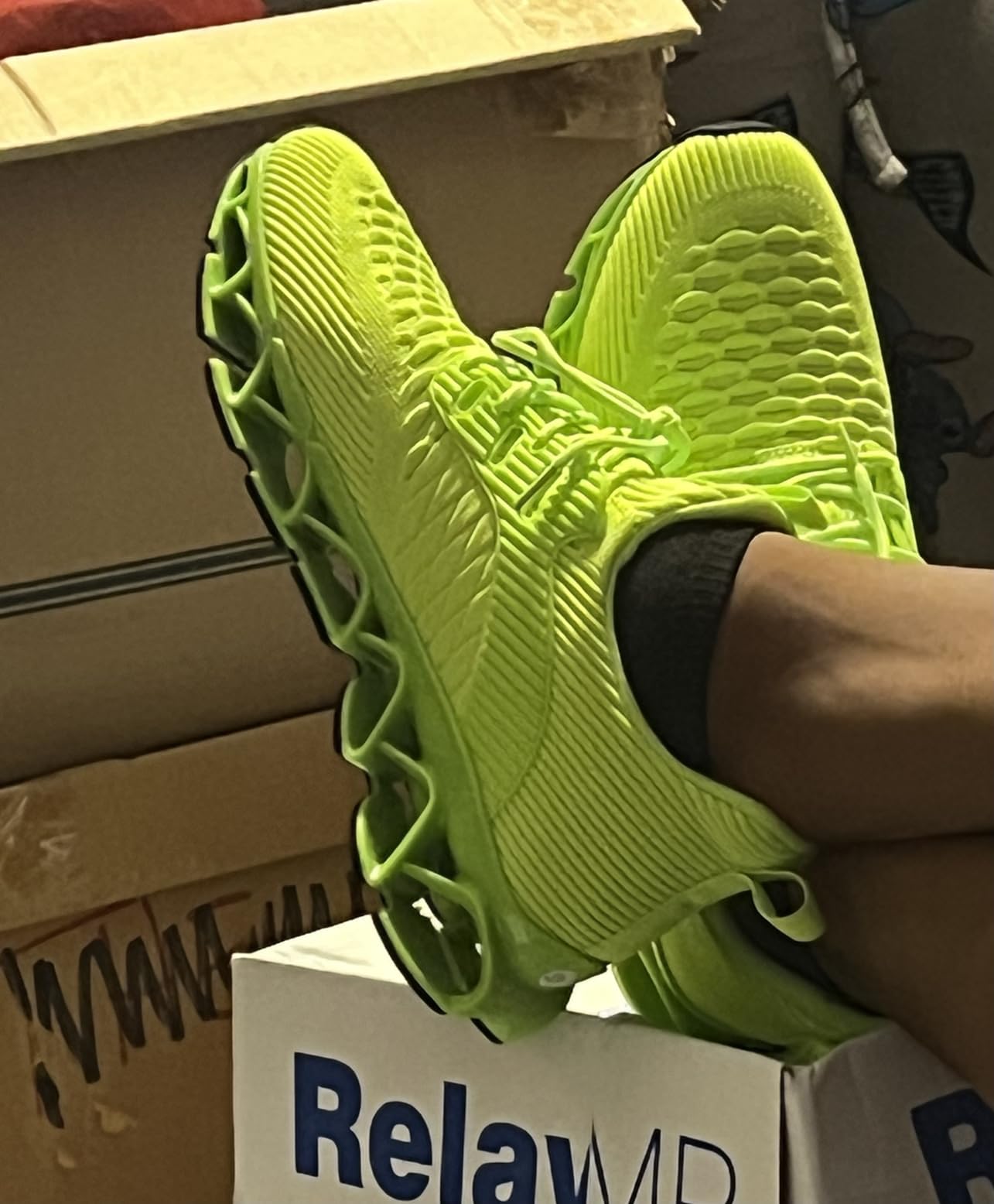
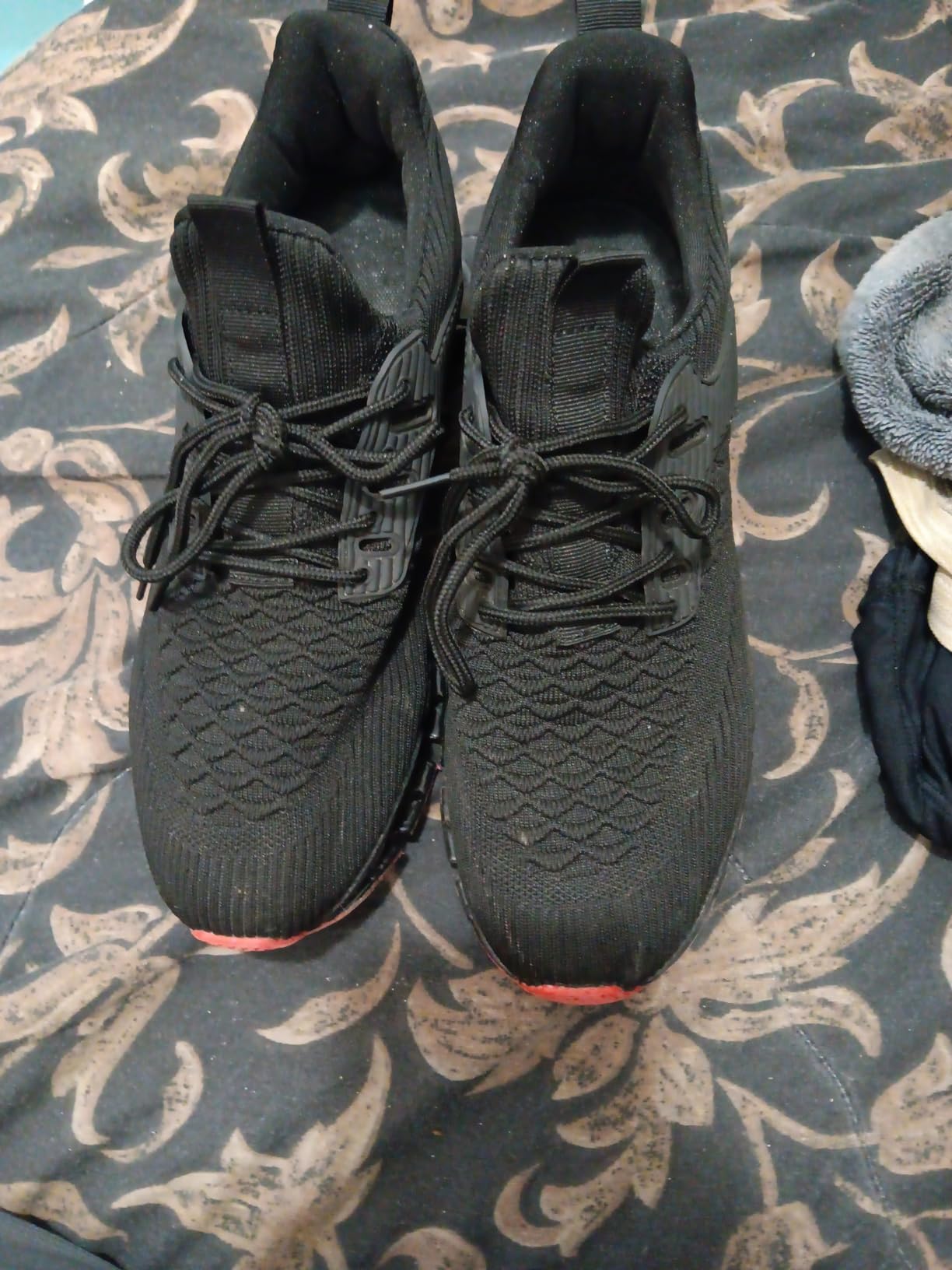
After four weeks and 25+ hours of varied wear, the knit mesh upper showed zero signs of deterioration. No fraying at the seams, no stretching beyond the initial break-in, no color fading on the beige-orange surfaces. Breathability is legitimately excellent — this is a shoe you can wear comfortably in July heat without your feet turning into saunas.
The mesh also bounced back from a water splash without staining, and dried within a couple of hours. One unexpected bonus: rinsing mud out of the lattice sole gaps takes about 30 seconds with a garden hose. It’s genuinely one of the easiest shoes to clean that I’ve ever owned.
The Sole Bond: Where It All Falls Apart
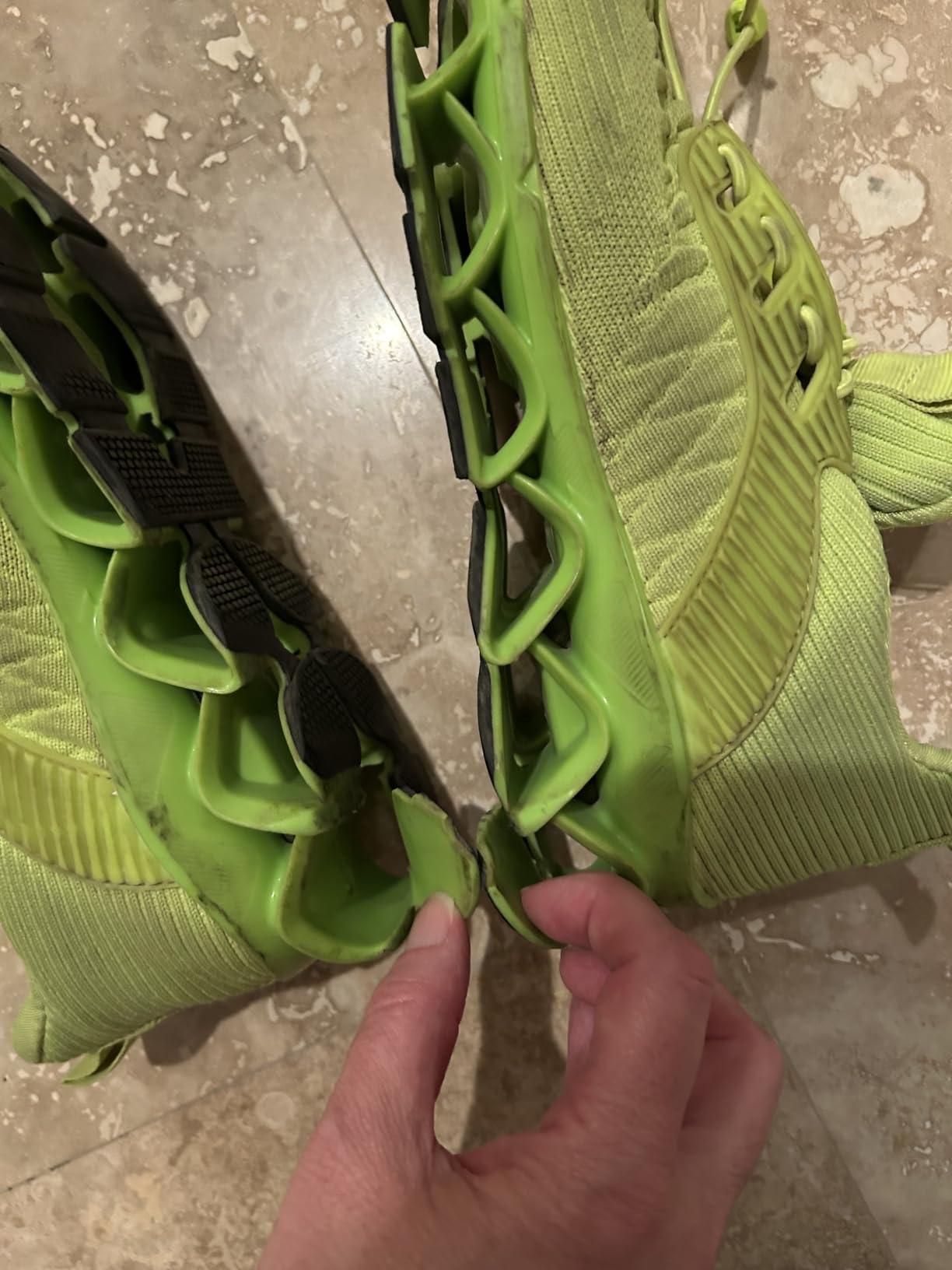
Multiple Amazon reviewers documented sole separation within 2–3 months of regular wear. During my four-week test, I noticed subtle flexing at the toe box connection point — the area where the hard plastic sole meets the soft mesh upper. That junction handles the most stress during normal walking, and the adhesive bond between two fundamentally different materials (rigid plastic and flexible textile) is the engineering weak point.
The blade sole material itself is fine — it doesn’t crack or deform. The mesh upper is fine — it doesn’t tear or fray. But the bond between them? That’s the failure mode. The engineering challenge is straightforward: you’re gluing a rigid material to a flexible one, and every step applies shear force at the junction. Budget adhesives in a sub-$50 shoe simply can’t hold that bond indefinitely.
For context, Srenket as a brand carries an average 4.2 out of 5 rating across their product line, with prices ranging from $10 to $40. They’re a volume-play Amazon brand, not a performance footwear company — and this shoe’s durability reflects that positioning. Expecting 1–2 seasons of light casual use is realistic. Daily wear will accelerate that timeline to 2–3 months.
Performance Testing: Finding the Boundaries
Where They Work
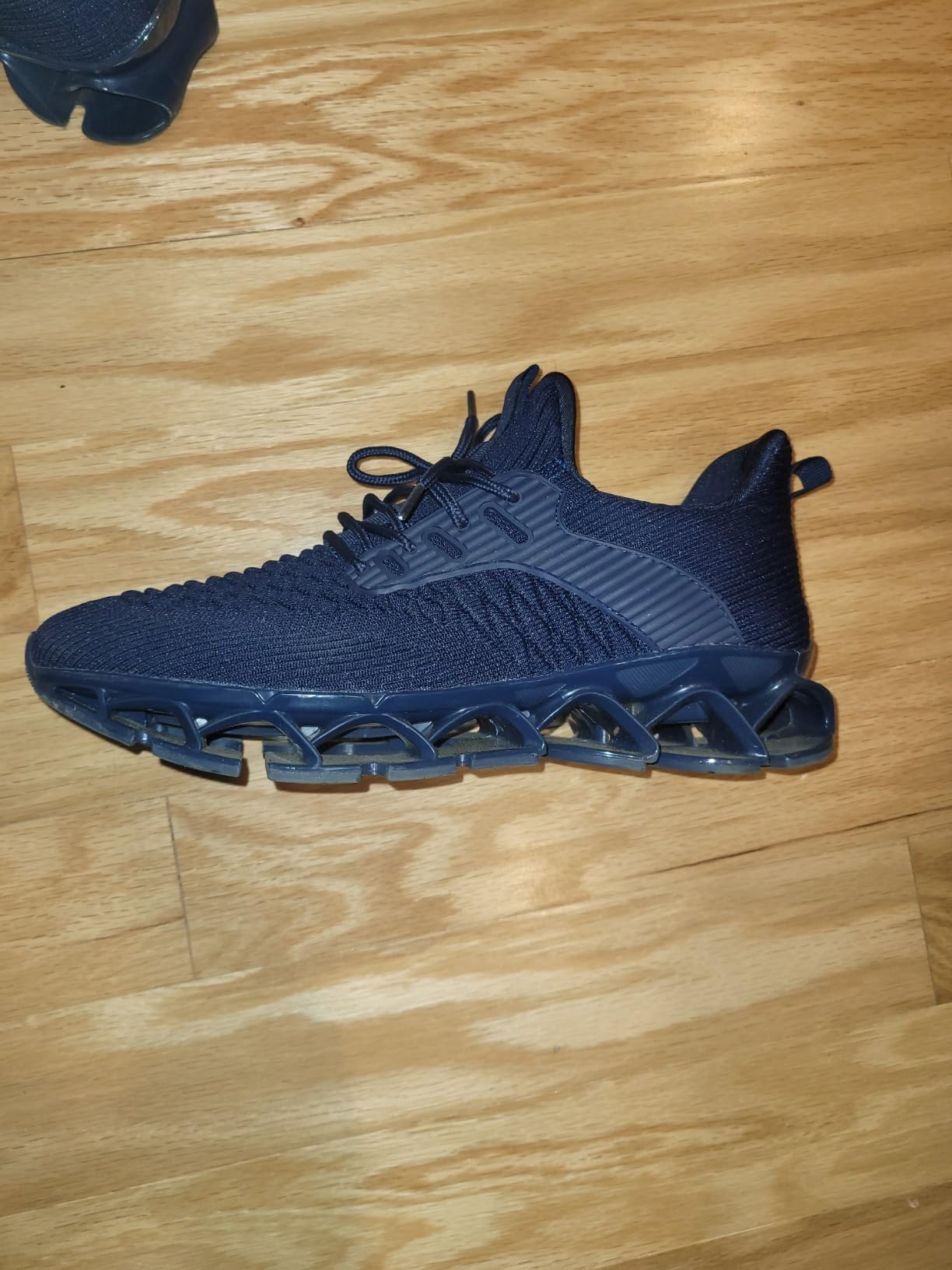
Short casual outings with aftermarket insoles are the sweet spot. Grocery runs, coffee shop hangs, weekend errands — situations where you’re on your feet for under three hours and care about looking good more than performing. The lightweight feel and visual impact make them solid warm-weather casual shoes within those boundaries.
Where They Fail
I attempted a 2-mile exercise walk and felt shin discomfort before reaching the turnaround point. The rigid sole transmits too much impact through the legs for sustained walking, especially on concrete. I also tried a light gym session — training shoes these are absolutely not. Zero lateral stability, zero cushioning for dynamic movement. Even basic lunges felt sketchy.
Wet pavement performance is poor. The lattice pattern doesn’t channel water away from the contact surface, and the smooth plastic sections between blades become slippery. After a light rain one evening, my first few steps on wet concrete felt genuinely unsafe — a half-slide on a slightly graded sidewalk that made me grab a parking meter. That’s not a confidence-inspiring experience in a shoe marketed as “non-slip.” Stick to dry conditions, full stop.
What Other Buyers Are Saying
The community response splits along predictable lines. Younger buyers — teens through early twenties — tend to rate these higher because they’re buying for style and wearing them in short bursts. Spanish-speaking reviewers on Amazon frequently noted “muy cómodos” for short-term wear but flagged “suela muy dura” (very hard sole) as a persistent complaint. Military and former military buyers specifically advised against these for any physical activity, which tracks exactly with my gym and walking test results. The pattern is clear: if your primary use case is looking good for a few hours, satisfaction is high. If you need the shoe to actually perform, disappointment follows.
Marketing Claims: A Reality Check
| What They Claim | What Testing Showed | Verdict |
|---|---|---|
| “Comfort Non Slip Work Sport Athletic Trainer” | Uncomfortable without insoles; slips on wet surfaces; unsuitable for sports | FALSE |
| “Elastic blade soles have high flexibility” | Hard rigid plastic with minimal flex | FALSE |
| “Greater fun in sports” | Zero lateral support; unstable for any athletic movement | FALSE |
| “Lightweight and breathable upper” | 8 oz confirmed; mesh stays cool even in warm weather | TRUE |
| “Suitable for Walking, Running, Gym, Tennis, Basketball” | Only suitable for casual walking under 3 hours | MISLEADING |
The product listing reads like someone threw every athletic keyword at a wall. Three of the five major claims don’t survive contact with reality. The lightweight and breathable claim is the only one that held up without qualification during my testing.
The Value Equation: Style-Per-Dollar Math
Here’s where I land on value, because a sub-$50 shoe gets judged differently than a $150 one:
- Base price: ~$35–45
- Aftermarket insoles (essential): +$15–20
- Total investment: ~$50–65
- Realistic lifespan: 2–3 months regular use; up to 6 months occasional/rotation wear
- Cost per month: ~$17–33 (regular) or ~$8–11 (rotation)
For comparison, a pair of Skechers Go Walk Joy at $45–55 delivers dramatically better all-day comfort, genuine walking performance, and a 6–12 month lifespan — but doesn’t turn heads the way the blade sole does. A pair of Bruno Marc KnitFlex Breeze at a similar price point gives you a breathable mesh sneaker with conventional cushioning and better longevity.
The Srenket blade makes sense as a style piece you rotate with other shoes — not as a daily driver. If you treat it like a conversation-starter for weekend outings and accept the 2–3 month reality, the cost-per-impression is actually reasonable. Just don’t make the mistake of thinking the base price tells the full story. When you factor in mandatory insoles and limited lifespan, this is really a $17–33 per month shoe — which puts it squarely in the “acceptable for what it is” category rather than the “great deal” territory the sticker price suggests.
Who Should Buy These (And Who Really Shouldn’t)
Good Fit For
- Style-first casual buyers who want an eye-catching shoe for weekend outings, social events, or casual dates — and don’t mind buying aftermarket insoles
- Rotation shoe buyers who’ll wear these 1–2 times per week alongside more functional daily shoes
- WFH workers who want something comfortable enough for quick errands but mostly sit at a desk
- Younger buyers / trend experimenters who prioritize appearance and don’t need extended wear durability
Skip These If You Need
- All-day work shoes — arch fatigue accumulates past 3 hours even with insoles
- Actual athletic performance — zero lateral support, zero stability for training, running, or court sports
- Wet weather reliability — poor traction on wet surfaces, mesh offers no water protection
- Long-term durability — sole separation at 2–3 months is a documented pattern, not an outlier
- Wide feet — no width variants, and the slip-on design offers no adjustment
- Foot sensitivity / plantar fasciitis — even with aftermarket insoles, arch support is limited. Consider orthotic insoles like Valsole if you insist on trying these
Better Alternatives by Need
| If You Need | Consider Instead | Why |
|---|---|---|
| All-day comfort on a budget | Skechers Go Walk Joy | Genuine cushioning, 6–12 month lifespan, proven all-day comfort |
| Budget casual sneaker | Bruno Marc KnitFlex Breeze | Similar breathable mesh, conventional sole, better durability |
| Unique style + better function | Vans Atwood | Distinctive look with proven comfort and vulcanized rubber durability |
| Budget athletic training | Nike Air Max Alpha Trainer 5 | Real cushioning, lateral support, designed for actual workouts |
| Lightweight breathable walking | Wonesion Breathable Walking | Similar weight class, conventional sole, better walking comfort |
Rating Breakdown
| Category | Score | Notes |
|---|---|---|
| Style & Appearance | 8.5/10 | Genuinely unique; consistent compliments; versatile colorways |
| Comfort (with aftermarket insoles) | 6.5/10 | Acceptable for 2–3 hour casual wear |
| Comfort (factory insole) | 3/10 | “Broken Legos” territory — upgrade is mandatory |
| Performance | 4/10 | Casual walking only; fails at anything athletic |
| Durability | 5/10 | Sole separation at 2–3 months under regular use |
| Value | 6/10 | Reasonable as a style rotation piece; poor as a daily driver |
| Fit & Sizing | 7.5/10 | True to size; no wide option available |
| Overall | 6.2/10 | A style statement with clear functional boundaries |
Frequently Asked Questions
Do I absolutely need aftermarket insoles?
Yes, practically speaking. The factory insole is too thin to buffer the blade pattern, and you’ll feel every ridge during walking. A $15–20 gel or orthotic insert transforms these from barely wearable to genuinely comfortable for short outings. Without that upgrade, comfort sits around 3/10.
How long do they actually last?
Expect 2–3 months of regular wear (3–4 times per week) before sole separation becomes visible. In a rotation with other shoes (1–2 wears per week), you might stretch that to 5–6 months. The mesh upper outlasts the sole bond significantly — it’s the adhesion between sole and upper that fails first.
Are these good for running or gym workouts?
No. Despite “Running” and “Athletic” appearing in the product listing, the rigid blade sole provides zero shock absorption for running impact, and the slip-on design offers no lateral stability for gym movements. A 2-mile walk caused shin discomfort; a light gym session felt actively unsafe. For actual running or training, invest in purpose-built shoes.
How’s the sizing?
True to size for standard-width feet in my testing at size 9. The knit mesh has slight stretch, so there’s minimal break-in required. If you’re between sizes or have wider feet, consider going up half a size — there’s no wide variant available, and the slip-on design offers no adjustment.
Why do they click on hard floors?
The rigid plastic blade sole produces a noticeable clicking sound on tile, hardwood, and polished concrete. It’s an acoustic property of hard plastic meeting hard surfaces — not a defect, but a real consideration for office environments or shared living spaces.
Can the sole gaps cause tripping?
I documented two snagging incidents: once on a rubber floor mat and once on a loose cable. Neither caused injury, but both were jarring. The lattice gaps are wide enough to catch on raised edges and thin objects. It’s more of an ongoing annoyance than a safety hazard, but worth knowing about.
How do they handle rain or wet surfaces?
Poorly. The plastic blade sections become slippery on wet pavement, and the lattice pattern doesn’t channel water away from the contact area. After light rain, I felt noticeably less stable on my usual sidewalk route. The mesh upper soaks through quickly too. These are dry-weather shoes.
What’s the real total cost including insoles?
Budget $50–65 total. The shoe itself runs $30–45 depending on the colorway and retailer, and quality gel inserts add $15–20. Factor in a 2–3 month regular-use lifespan, and you’re looking at roughly $17–33 per month of wear — or about $2.50–2.60 per hour of actual use based on my 25+ hours of testing.
How do they compare to other Srenket shoes?
Srenket makes several models including a more conventional air running shoe with traditional rubber soles and memory foam insoles. That model gets better comfort reviews but doesn’t have the distinctive blade aesthetic. If you want the Srenket brand at a lower comfort risk, the non-blade models are a safer bet. But if the lattice sole design is specifically what drew you in — which is most buyers — there’s no way around the trade-offs documented above.
Are they worth buying at all?
If you understand what you’re getting — a fashion statement shoe for short-duration casual wear that requires an insole upgrade and won’t survive daily use beyond a few months — then yes, the style-per-dollar ratio is solid. If you need comfort, performance, or durability as your primary concern, look at the alternatives table above. The Srenket blade excels in exactly one lane, and that lane is narrow but real. Own the limitations and these can be a genuinely fun addition to your rotation. Ignore them and you’ll end up frustrated, sore-footed, and shopping for replacements within two months.
Be the first to review “Srenket Mens Slip on Running Walking Shoes Blade Tennis”
Related products
Running Shoes
Running Shoes
Running Shoes
Running Shoes
Running Shoes

Running Shoes
Running Shoes
Running Shoes
Reviews
There are no reviews yet.