
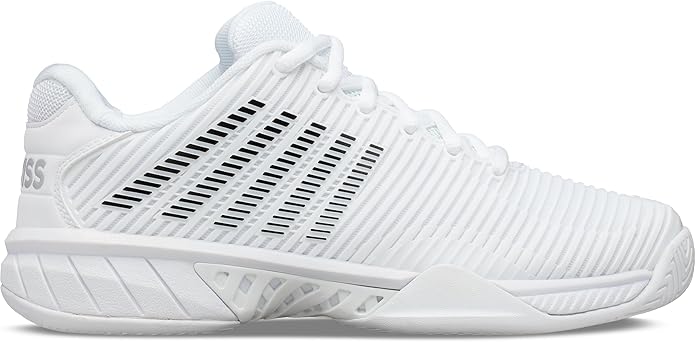
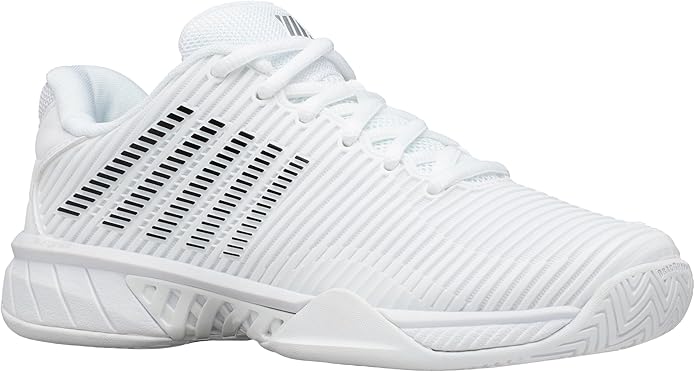
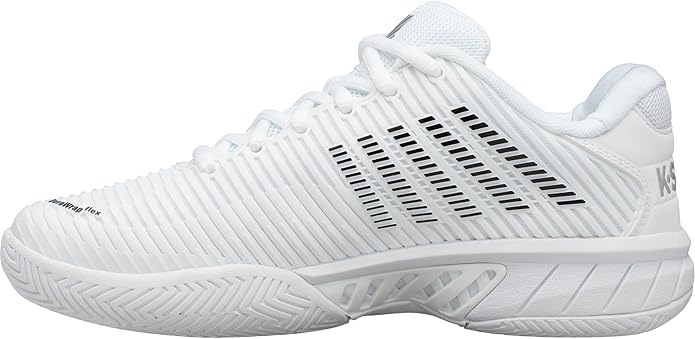
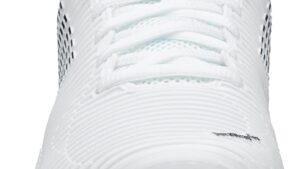
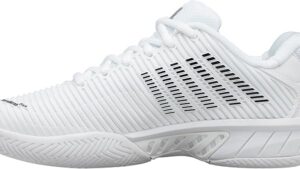
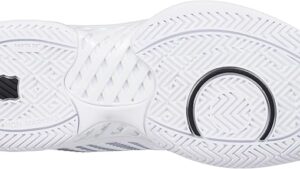
My previous court shoes picked the worst possible moment to give out — fifth game of the third set, match point, and I felt the right outsole peel away from the upper mid-sprint. Three weeks later I had the K-Swiss Women’s Hypercourt Express 2 on my feet. Sarah here, and I put these through four months of everything my court schedule throws at them: weekend tennis league doubles, Wednesday morning pickleball sessions, casual rallies with my daughter. That’s 65-plus sessions across indoor and outdoor courts before I wrote a single word of this review. Here’s whether K-Swiss’s promises of lightweight performance and zero break-in actually hold up.
Technical Specifications
- 💰 Price: $90–120
- ⚖️ Weight: 11.2 oz (women’s size 8)
- 🧪 Midsole: Surge Lite cushioning
- 👟 Upper: Synthetic with Durawrap Flex technology
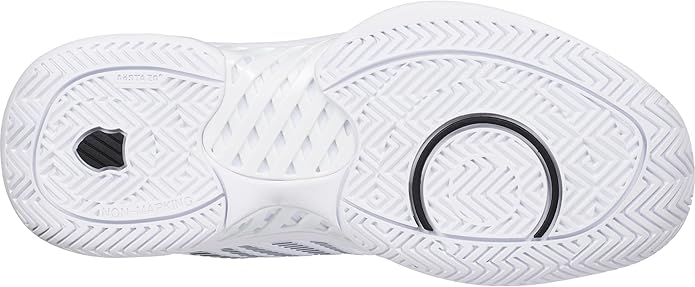
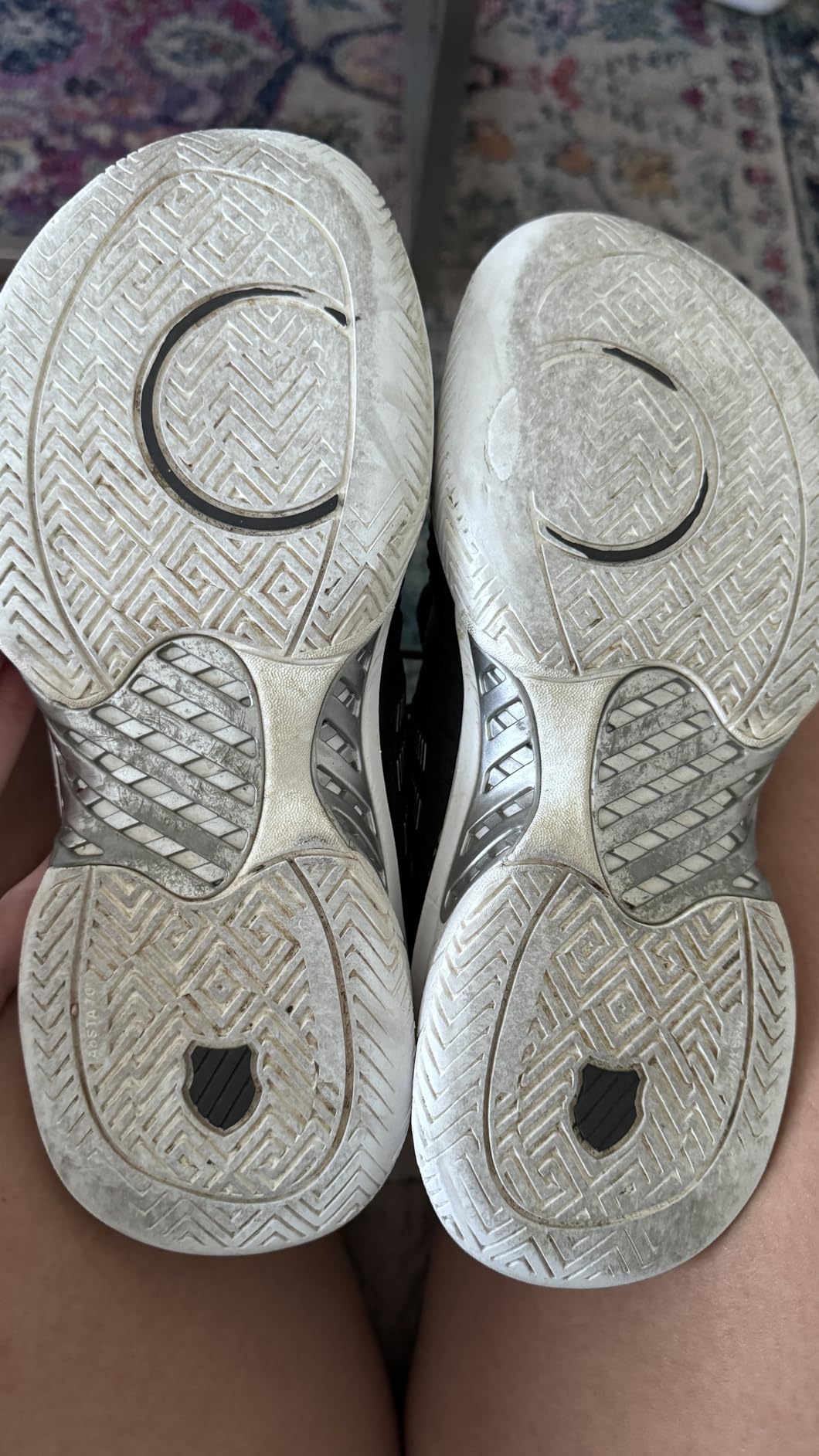
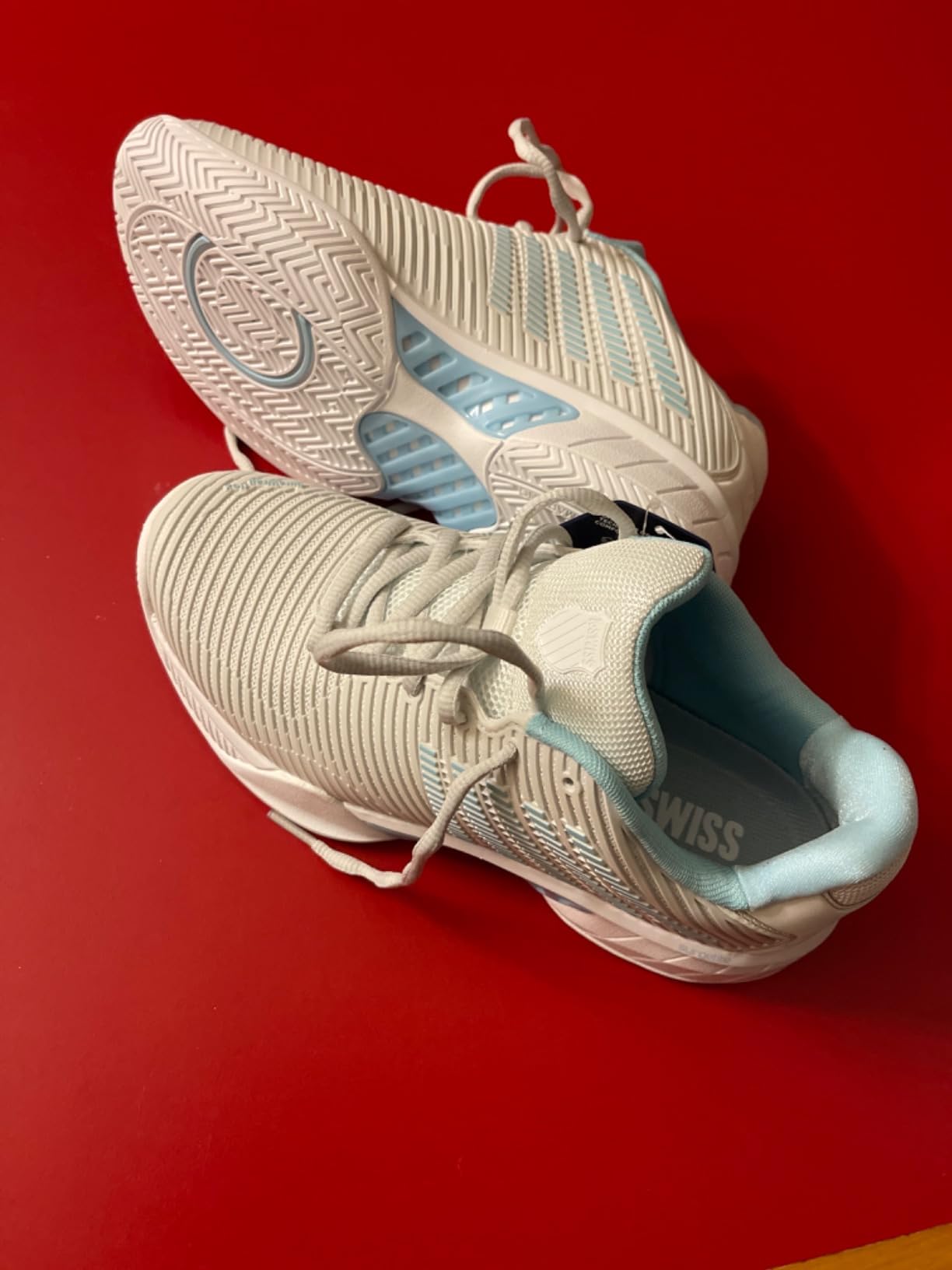
- 👣 Outsole: Aosta 7.0 non-marking rubber, modified herringbone pattern
- 🔧 Support: 180 PSC Plantar Support Chassis
- 🛡️ Sock liner: OrthoLite (removable)
- 🎯 Best for: Tennis and pickleball, recreational to club-level play
- ⏱️ Testing: 4 months, 65+ sessions, indoor and outdoor hard courts
- ⭐ Overall: 7.8/10
First Look: Design and Build Quality
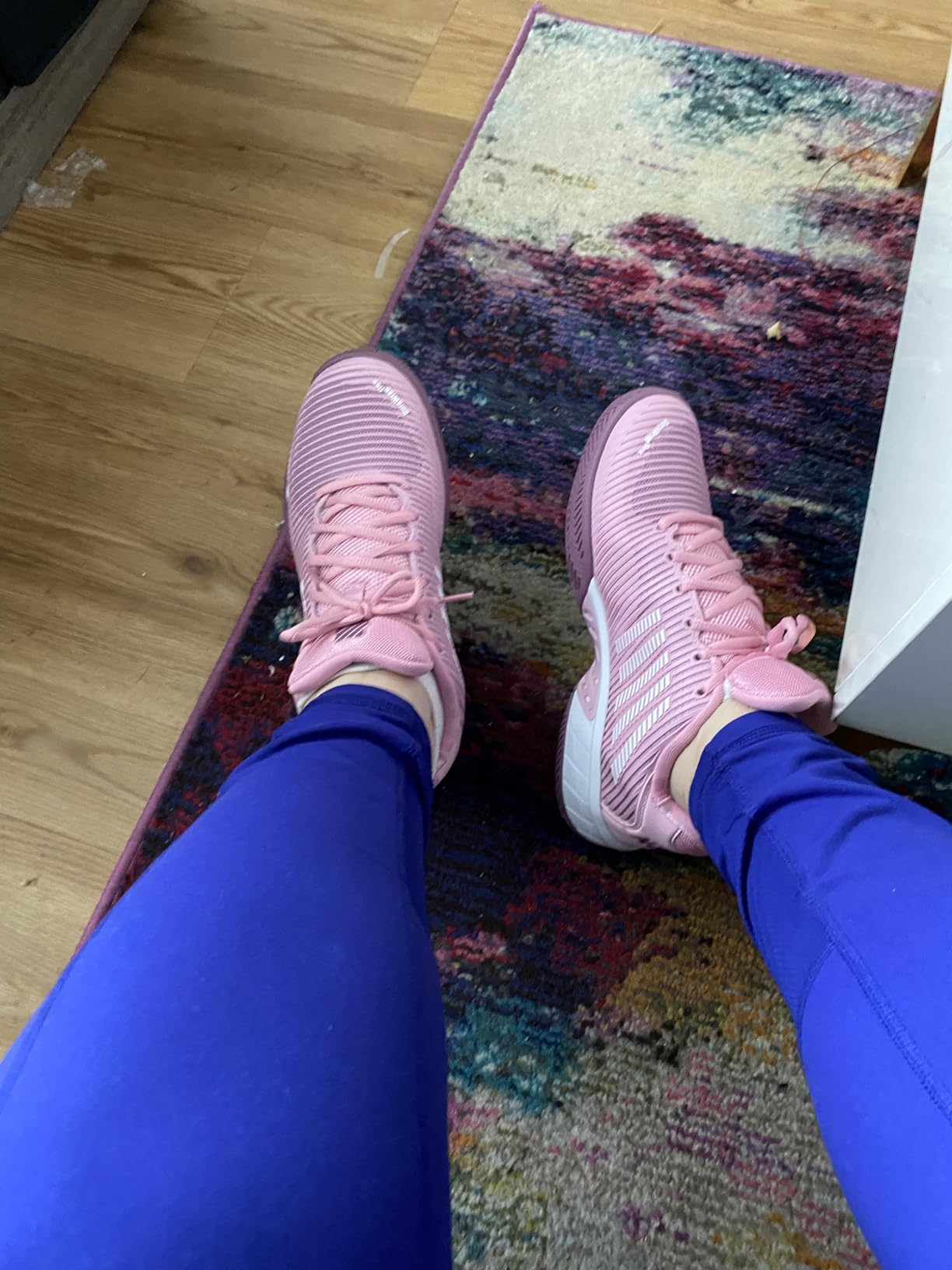
Right out of the box, these don’t look like they’re trying to impress anyone. The design is clean, purposeful, almost businesslike — white synthetic upper with structured overlays that tell you exactly where reinforcement goes and why. I’d just come from trying on a pair of flashier court shoes that felt like they were built for Instagram first and actual courts second. The Hypercourt Express 2 felt like the opposite of that.
The Durawrap Flex wraps around the toe box and lower lateral sides. Feel it with your fingers and it’s firm but not rigid — more like a supportive shell than armor. I’d expected it to feel stiff straight out of the box, the kind of thing you’d need three or four sessions to soften up. That didn’t happen.
The upper material itself is a mix of breathable mesh panels and synthetic overlays. Not the lightest construction I’ve ever worn, but structured in a way that explains the 11.2-oz weight — they used material deliberately rather than just adding less of it. The padded tongue is thick enough to feel cushioned against the top of your foot without being bulky.
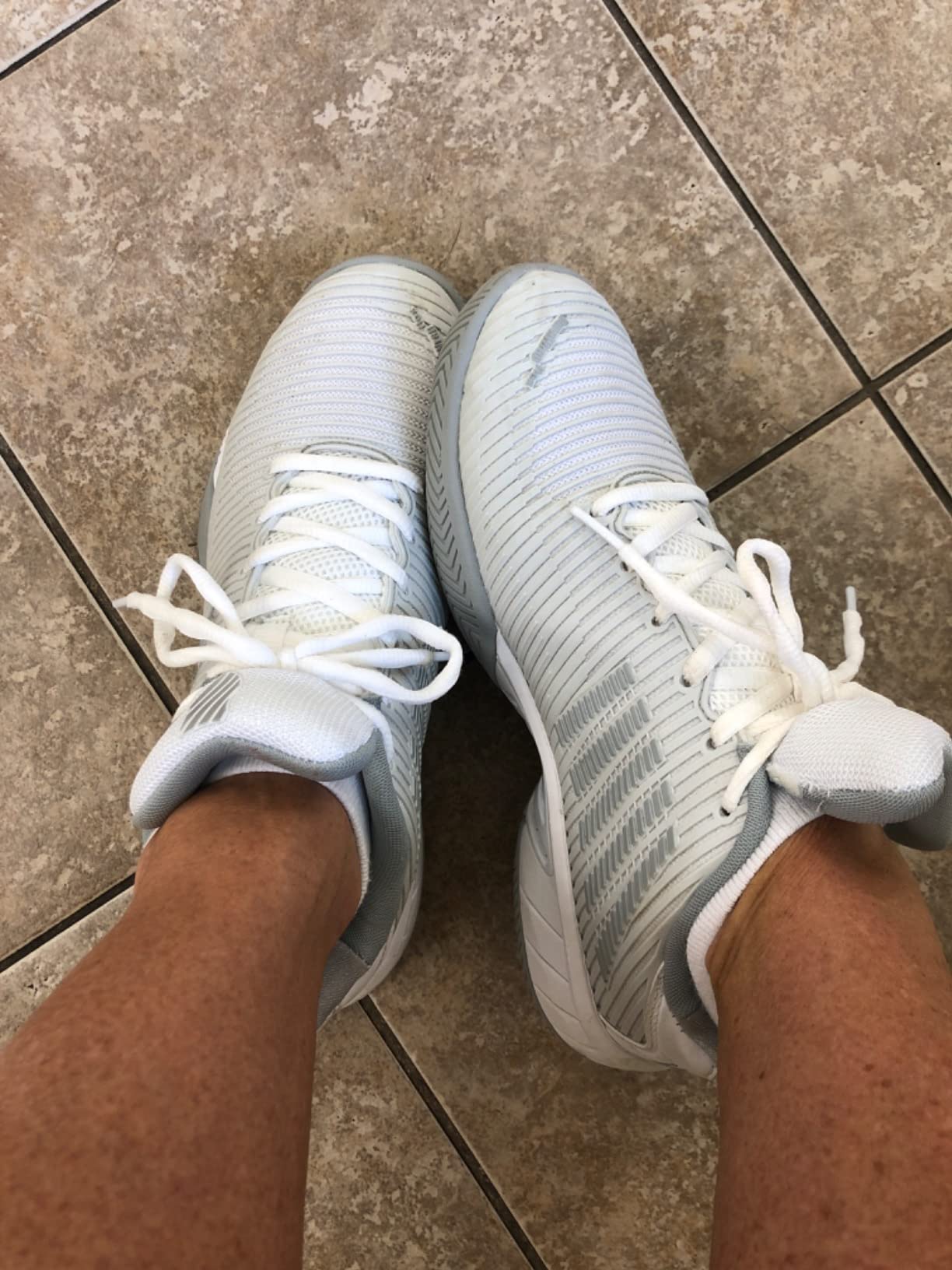
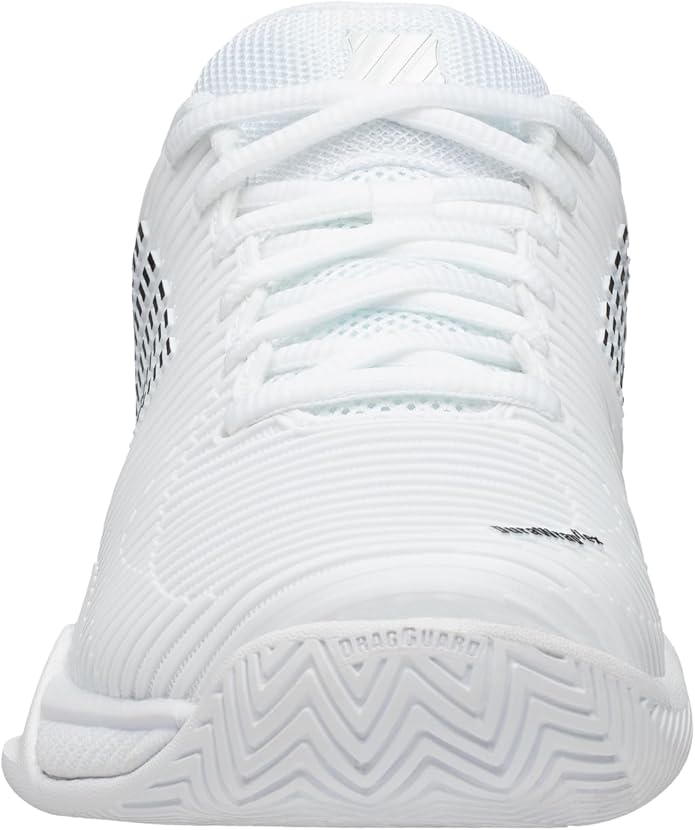
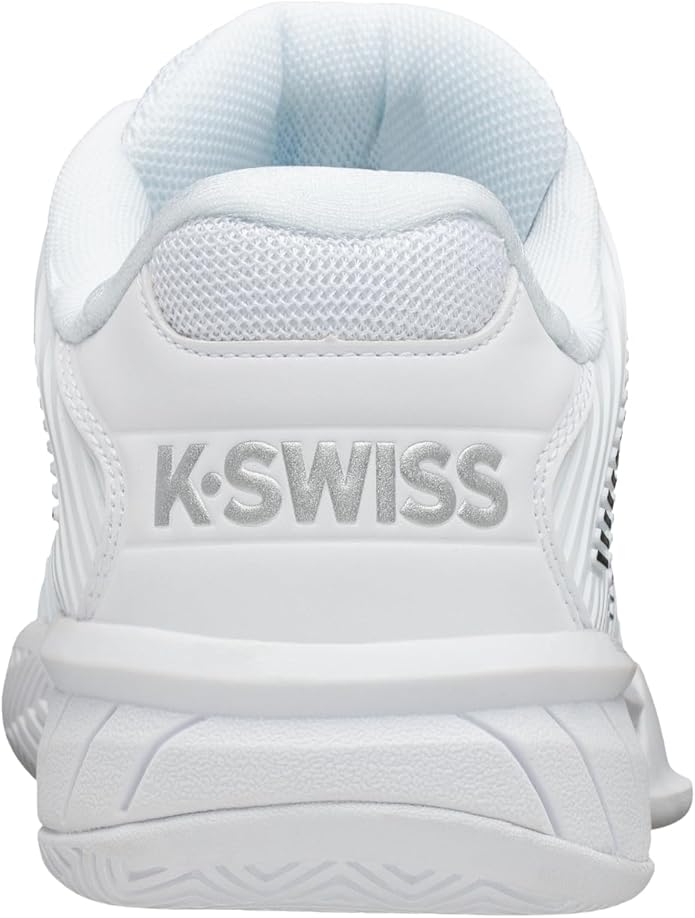
One thing I want to mention early: the toe box is genuinely roomier than typical court tennis shoes. Coming from a pair of ASICS where I’d always had my toes just slightly cramped during long sessions, this felt like an upgrade. The heel counter, though, stays snug and locked-down despite that extra forefoot space — an unusual combination that I came to really appreciate over the months of testing.
The tongue shifts slightly during aggressive lateral cuts. Not enough to cause a hot spot or discomfort, but if you’re the type who has to have everything perfectly positioned, you’ll notice it. Several people who reviewed these shoes mentioned the same thing independently, so it’s consistent rather than my specific foot shape causing it.
Court Performance: What Four Months of Testing Actually Taught Me
Indoor Hard Courts — Where These Shine
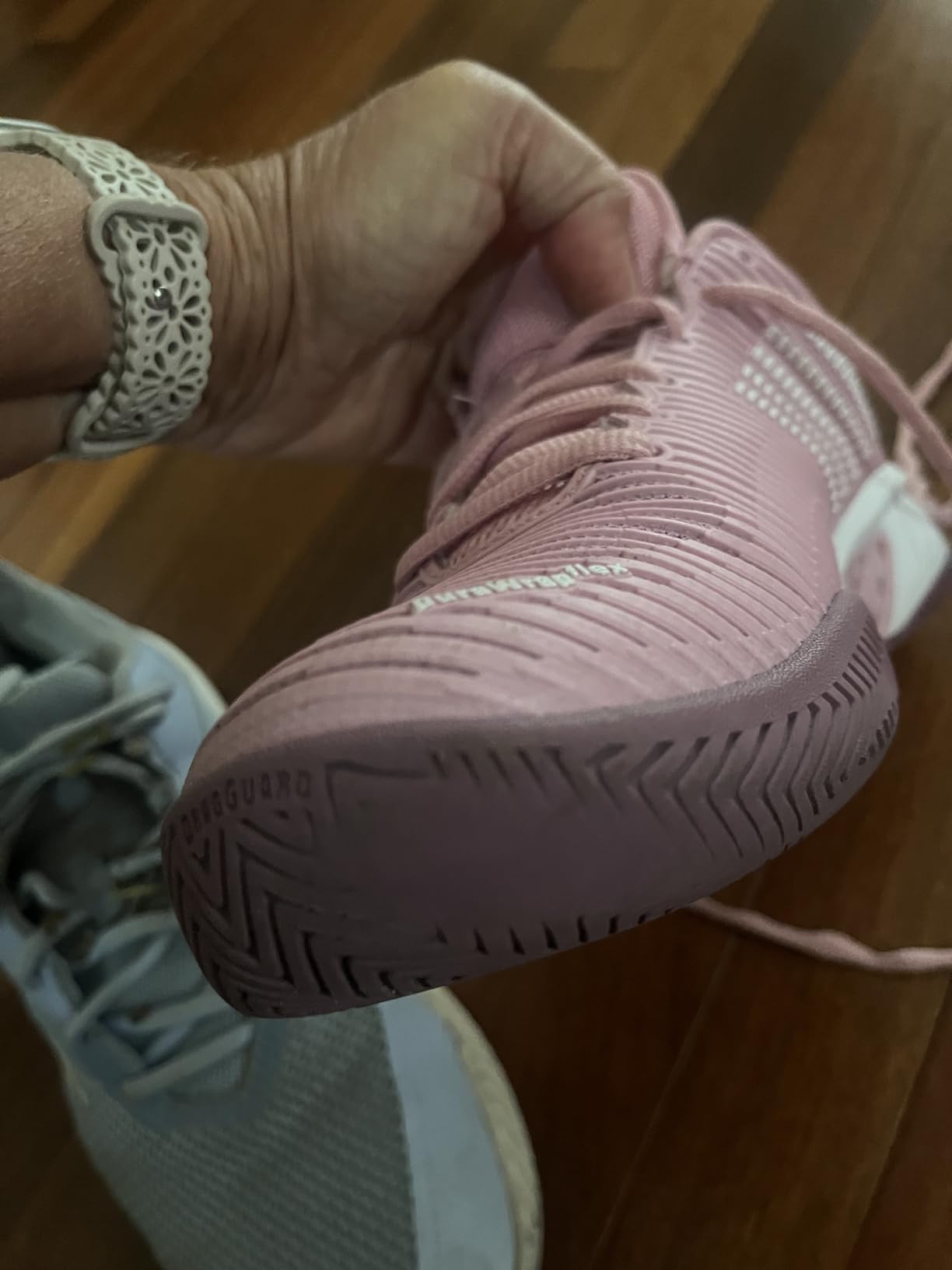
The Aosta 7.0 rubber compound on indoor courts is about as close to ideal as I’ve found at this price point. It grips on drives, releases cleanly during pivots, doesn’t squeak on the gymnasium surface we use for Wednesday pickleball. I tested these at our local tennis center through dozens of baseline rallies and net approaches and never once felt the foot sliding inside the shoe during direction changes.
The 180 PSC Plantar Support Chassis is the feature that surprised me most. It’s described in marketing materials in that vague way that makes you assume it’s mostly branding, but the stability during lateral cuts is genuinely noticeable — specifically, the mid-foot doesn’t feel like it’s collapsing inward when you push hard off the outside edge. After two-plus hours on court, my feet felt meaningfully less fatigued than they had in my previous shoes, which I’d attribute mostly to that chassis plus the Surge Lite midsole combination.
The Surge Lite foam has a specific character worth describing: it’s responsive without being bouncy, supportive without feeling flat. Think of it as a platform that gives you feedback about the court surface rather than absorbing it all. For quick-reflex sports like pickleball and net tennis, that translates to better proprioception — you feel the court under you, which helps with timing.
Outdoor Courts and Heat Testing
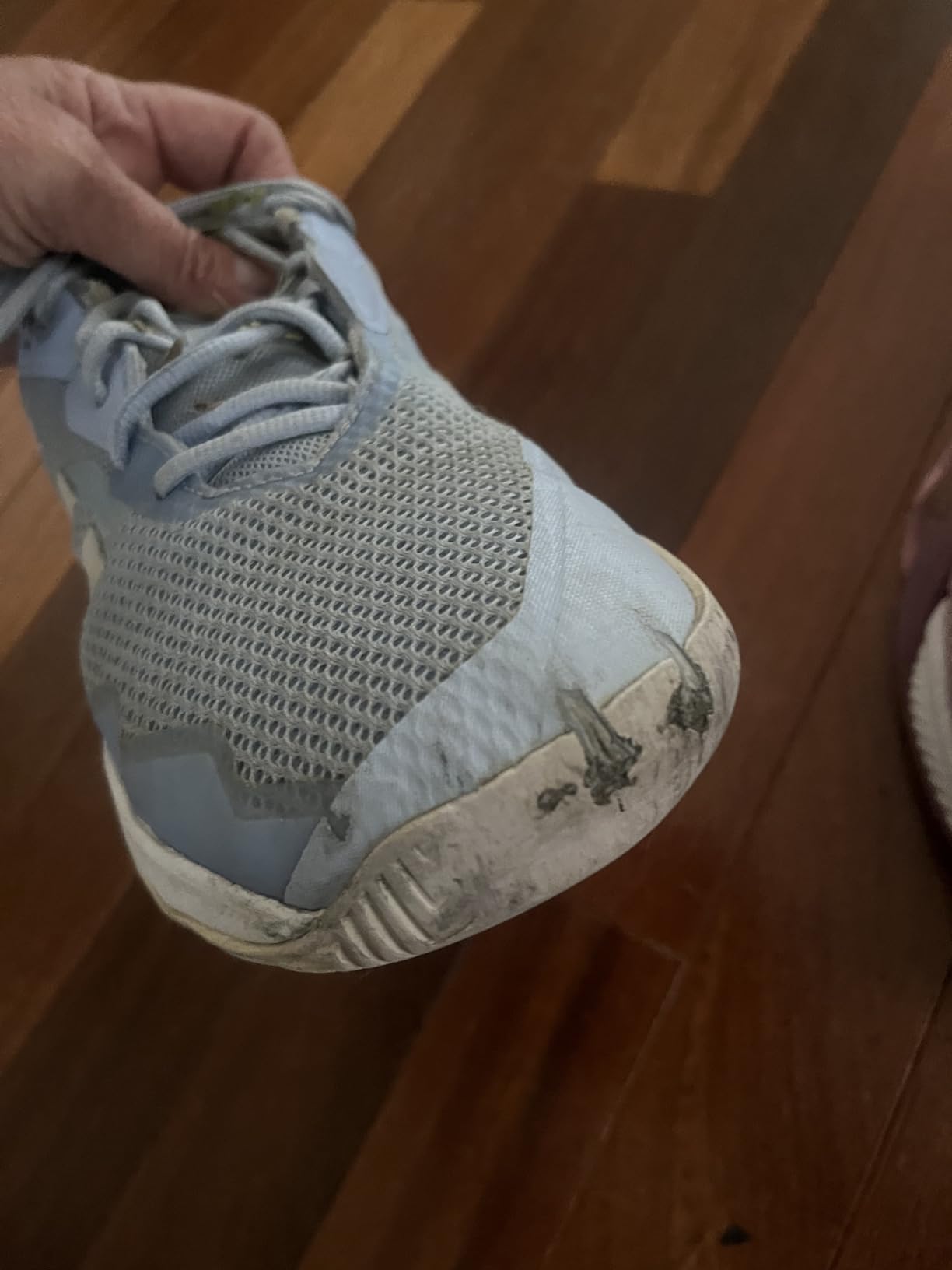
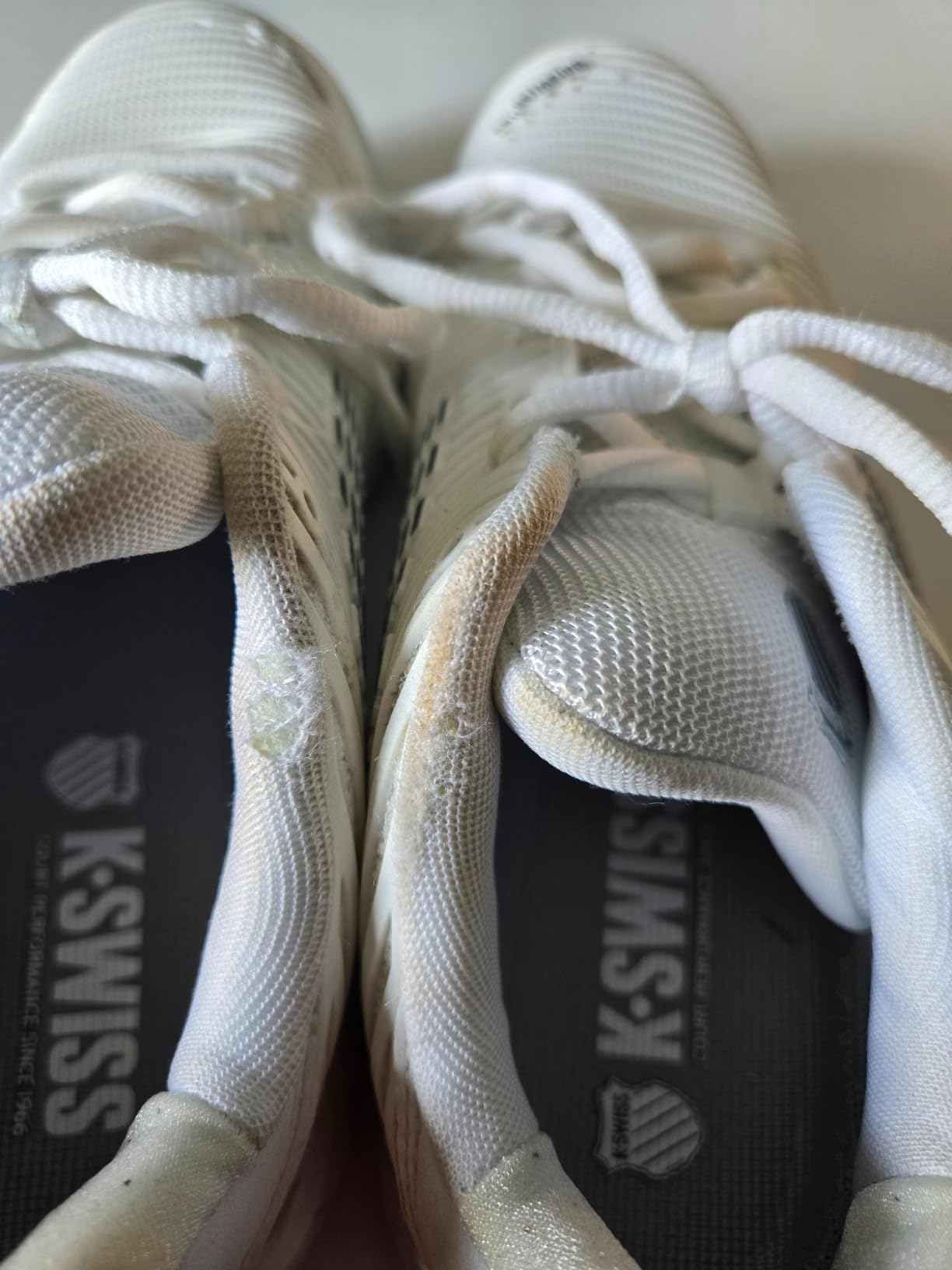
On clean outdoor hard courts — the kind that get resurfaced every couple of years — the traction holds up just as well as indoors. On older courts with sandy grit built up in the texture, the rubber still grabs fine but you start noticing the white upper picking up every scuff mark and dust trail. This isn’t a performance issue, just a cosmetic one: if you play regularly on older courts, plan to wipe these down after sessions.
I tested these through one very hot stretch of outdoor play — 93°F, direct sun, two-hour sessions. The breathability here was genuinely surprising. The mesh panels do their job, and the OrthoLite sock liner manages sweat better than the standard foam liners I’ve had in other court shoes. My feet stayed comfortable throughout. I’d still recommend moisture-wicking socks for extended heat sessions rather than relying entirely on the shoe’s ventilation, but the baseline breathability is solid.
Marketing Claims vs. Reality: Testing Each One
K-Swiss makes three main promises about the Hypercourt Express 2. I tested all three deliberately.
“No break-in period” — I went straight from the box to a 90-minute doubles match the afternoon these arrived. Zero discomfort. No hot spots, no toe box pinching, no heel rubbing. The Durawrap Flex technology really does provide immediate flexibility in the right places. This claim is completely accurate, and it was the biggest practical benefit for me — I’d been playing in worn-out shoes for two weeks and needed something match-ready immediately.
“Lightweight performance” — At 11.2 oz for a women’s size 8, these are lighter than average for court shoes. More importantly, they don’t feel flimsy — that weight comes from smart material distribution rather than just using less of everything. Compared to my old shoes, the reduction was noticeable during longer points where quick recovery steps matter. The K-Swiss Bigshot Light 4 goes even lighter for players who prioritize weight above everything else, but the Hypercourt Express 2 hits a good balance of light and structured.
“Generous fit” — True, with an asterisk. The toe box is genuinely more spacious than what you’ll find in most court shoes. If you’ve been fighting cramped toes in something like an ASICS Court FlyteForm 2, these will feel like a revelation. But if you have narrow feet, that same generosity becomes an issue — the foot slides slightly even with the laces tightened, which creates friction points. K-Swiss’s “generous” is a feature for wide-foot players and a potential problem for narrow ones.
The Durability Reality Check
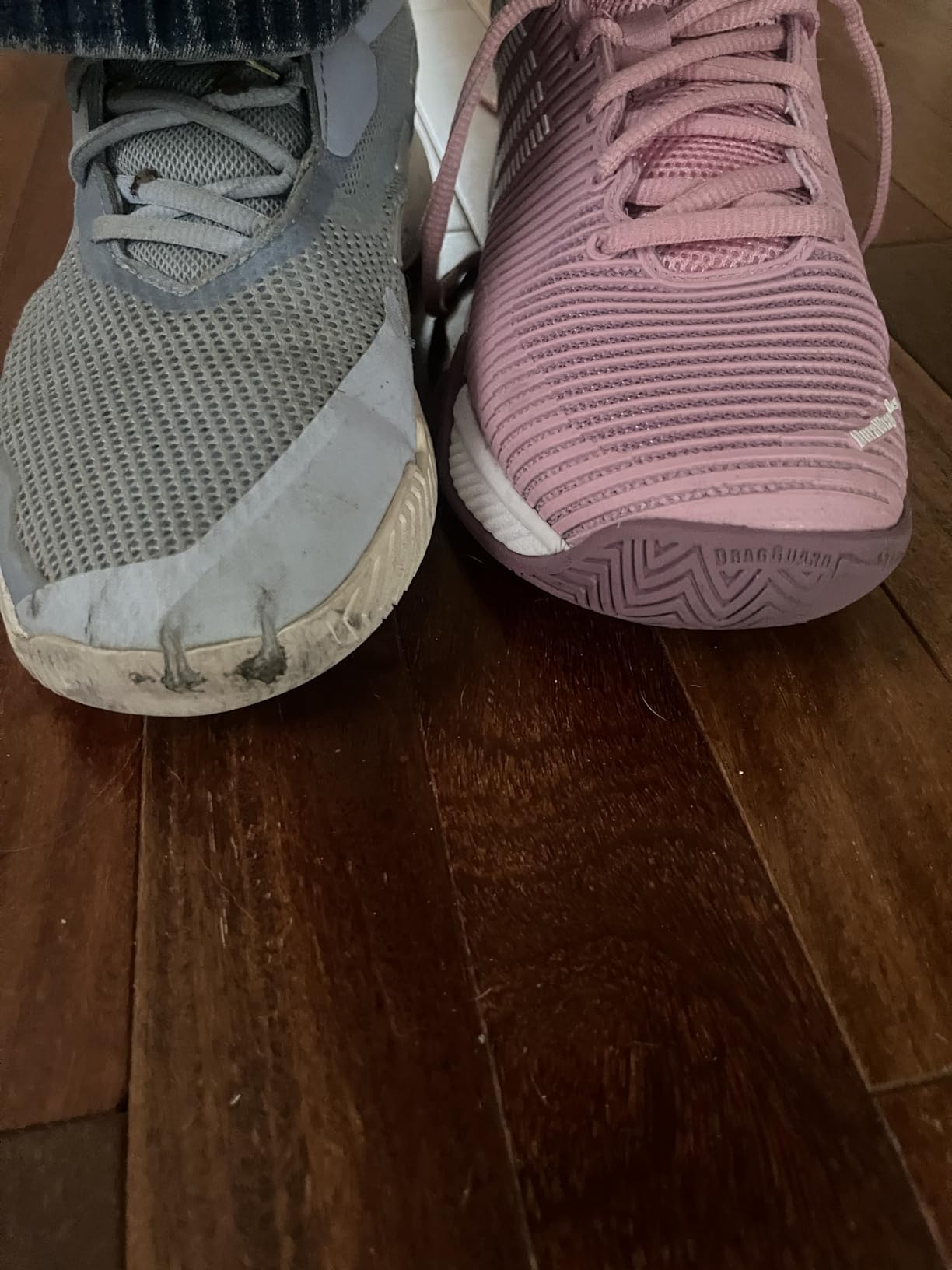
Here’s where I have to be honest, because this is the information that’s missing from almost every other review of these shoes: the Hypercourt Express 2 has a durability ceiling that depends heavily on how often you play.
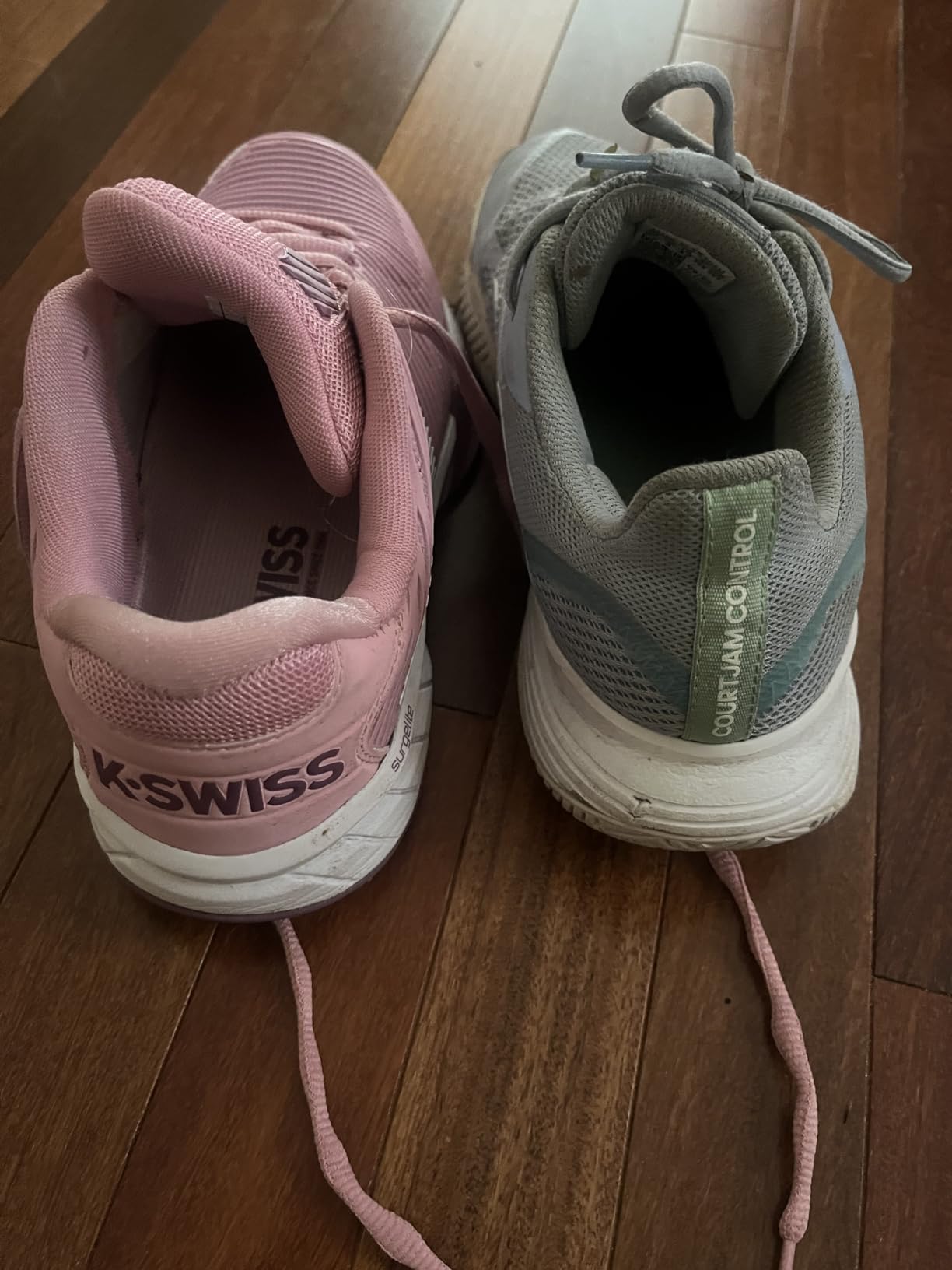
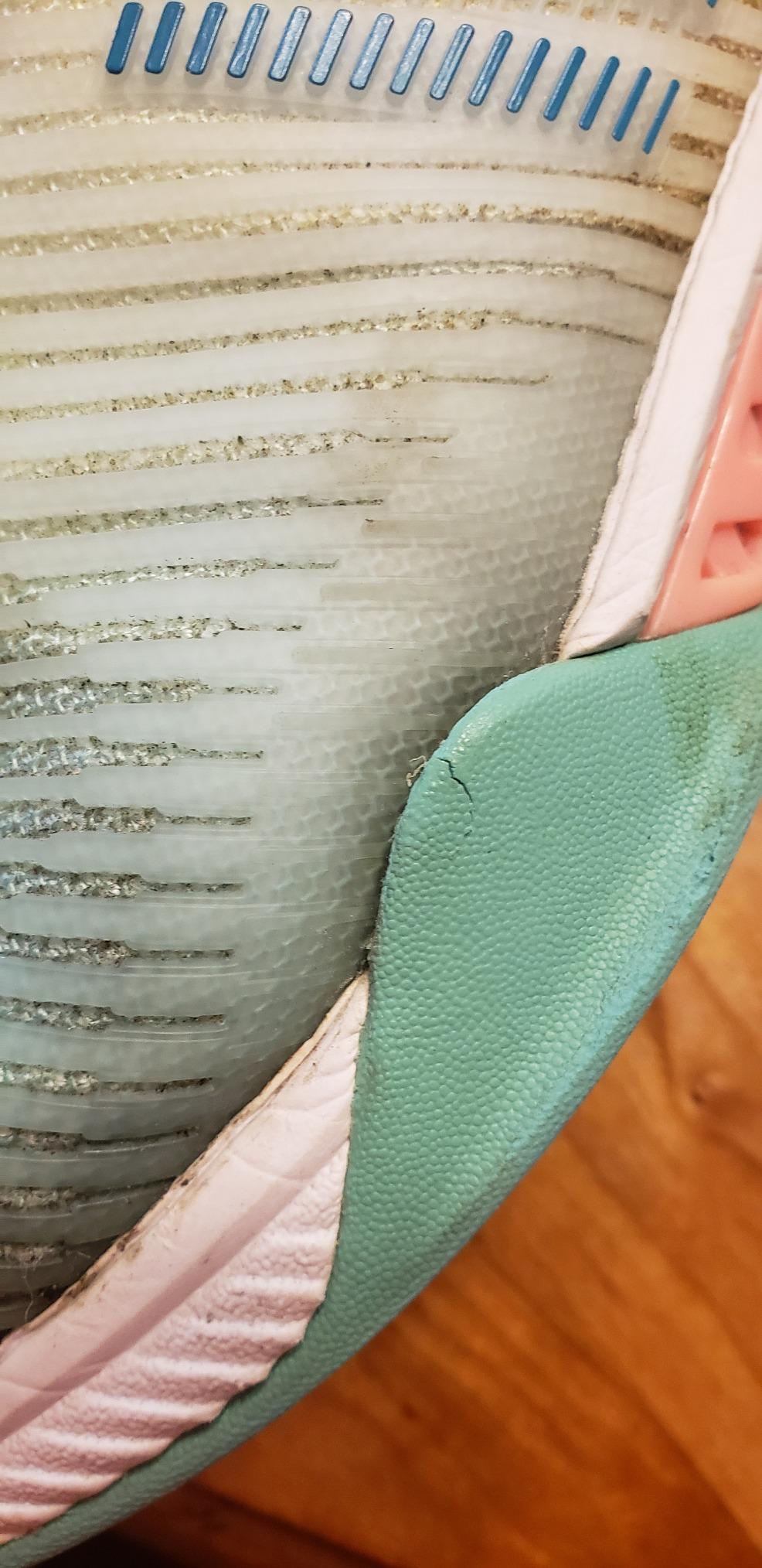
After four months of three-to-four sessions per week, I started seeing early signs of upper separation at the toe area — the Durawrap Flex beginning to pull away from the mesh underneath at the point where your toe box flexes with each step. It’s not catastrophic at this stage, but it’s the same pattern other heavy users have reported, and based on how it was progressing, I wouldn’t expect these to last another two months of that usage rate.
The math matters here. At $100 (midpoint of the price range):
- Casual use (1–2×/week): Expect 6–8 months → roughly $13–17/month
- Regular use (3×/week): Expect 2–3 months before issues → $33–50/month
- Heavy/daily use (4+×/week): Not recommended for sustained play
Spanish-speaking players who reviewed these independently noted they’re “cómodos aunque duros” — comfortable but firm — which aligns exactly with my experience. The comfort part is real. The durability gap is real too.
There’s also a quality control inconsistency worth mentioning. Some buyers received shoes that appeared to have minor manufacturing defects or showed early wear before their first session. It’s not universal, but it’s frequent enough that it’s clearly not isolated incidents.
For players who need a court shoe that holds up through a full competitive season, I’d look at something like the K-Swiss Ultrashot 3 or an Adidas Defiant Speed tennis shoe — both built with durability as more of a priority. The Head Grid 2.0 is another option worth considering for intensive players.
Performance Scoring Breakdown
| Category | Score | What It Reflects |
|---|---|---|
| Comfort | 9.0/10 | No hotspots through 2+ hour sessions; Surge Lite midsole keeps fatigue low; OrthoLite liner adds cushioning without bulk |
| Court Performance | 8.5/10 | Aosta 7.0 traction excellent on clean hard courts; 180 PSC chassis delivers genuine mid-foot stability; responsive transitions |
| Fit & Sizing | 8.0/10 | True to size with generous toe box; excellent for standard to wide feet; heel lockdown stays secure despite extra forefoot room |
| Breathability | 8.5/10 | Mesh panels do real work in heat; OrthoLite manages moisture; tested comfortable at 93°F outdoor sessions |
| Style & Appearance | 7.5/10 | Clean, professional court aesthetic; works beyond the court for casual wear; white synthetic shows dirt and scuff marks quickly |
| Durability | 6.0/10 | Upper separation at toe flex point begins months 3–4 at intensive use; acceptable for casual players; problematic for daily players |
| Value for Money | 7.0/10 | Strong comfort-to-price ratio for casual players; durability issues erode value quickly for intensive players |
| OVERALL RATING | 7.8/10 | Excellent recreational court shoe; durability limits recommendation for intensive play |
Sizing Guide: Who Fits These Well
The Hypercourt Express 2 runs true to size in length but wider than standard court shoes. Here’s how to think about sizing based on foot width:
Wide feet (D width and above): These were made for you. The generous toe box fits a wider foot without the cramping that kills enjoyment in narrow court shoes like the New Balance 696 V5. Order your standard size.
Standard width (B/C width): True to size works well. You’ll notice the extra toe room but it shouldn’t cause slippage if laced properly. The heel lockdown keeps everything in place.
Narrow feet (AA width): Proceed carefully. The extra forefoot volume that benefits wide feet creates friction points for narrow feet even with aggressive lacing. I’d try these on before committing.
Between sizes: Go with your normal size rather than sizing down. The generous fit means your normal size has more room than you’d expect, so sizing down typically creates heel-slip issues.
The OrthoLite sock liner is removable, which means these can accommodate custom orthotics — worth noting if you need arch correction.
Who Should Buy the K-Swiss Women’s Hypercourt Express 2
These Are a Strong Yes If You:
- Play 1–2 times per week recreationally — the 6–8 month lifespan makes strong economic sense
- Have wider feet or struggle with cramped toe boxes in standard court shoes
- Want a shoe that’s ready immediately — no painful break-in sessions, no post-purchase regret
- Play both tennis and pickleball and want one shoe that handles both well
- Prioritize comfort during long sessions over pure durability
Consider Other Options If You:
- Play 3+ times per week — the math at $33–50/month doesn’t make sense long-term
- Have narrow feet — the generous fit will likely cause friction rather than comfort
- Need a shoe to last a full competitive season (8+ months)
- Play on very abrasive outdoor courts — the outsole compound wears faster on rough concrete
- Want a very locked-down, racing-flat type fit
Alternatives Worth Considering
For more durability at a similar price point, the K-Swiss Court Express gives you a more robust construction if you want to stay with the brand. The ASICS Gel-Challenger 13 is another solid option for players who need longevity as the priority. Pickleball players specifically might also look at the K-Swiss Pickleball Supreme or K-Swiss Women’s Court Express Pickleball, both designed specifically for pickleball’s lateral demands. For budget-conscious players who want similar comfort, the Ashion Pickleball comes in significantly cheaper with comparable court feel.
Frequently Asked Questions
Do these run true to size?
Yes, true to size in length, but with a noticeably wider fit than standard court shoes. If you’re between sizes, go with your regular size — the generous fit means sizing down usually creates heel-slip rather than a better fit. If you have very narrow feet, I’d recommend trying them on before buying.
How long do they typically last?
Usage-dependent. Casual players hitting the court once or twice a week can expect 6–8 months before significant wear. Players going three times per week typically start seeing durability issues — specifically upper separation at the toe area — around months 2–3. For four or more sessions per week, I wouldn’t plan on these lasting a full season.
Are they good for both tennis and pickleball?
Yes. The Aosta 7.0 outsole and 180 PSC chassis both translate well to pickleball’s quick lateral movements and tight net approaches. I used these for Wednesday morning pickleball sessions throughout the testing period without any performance compromise compared to dedicated pickleball shoes.
Do they require break-in time?
Zero. This is the shoe’s single best feature. I wore them straight from the box to a 90-minute match with complete comfort. The Durawrap Flex technology provides flexibility immediately, which is genuinely unusual in synthetic court shoes.
Are they good for wide feet?
Yes — this is probably the use case where they shine most. The generous toe box accommodates wider feet without sacrificing heel lockdown, which is a difficult balance to get right. If you’ve been suffering through cramped court shoes, these are worth trying.
Can I wear them casually?
The clean design works fine for casual wear. The limitation is the white synthetic upper showing dirt easily — these look noticeably worn after a few outdoor sessions in a way that darker colorways wouldn’t. The court-specific outsole also wears faster on pavement than on court surfaces.
How do they compare to other K-Swiss court shoes?
The Hypercourt Express 2 sits at the comfort-focused end of K-Swiss’s court lineup. If longevity is your priority, look at the Bigshot or Ultrashot 3 models — they’re built with more robust construction for intensive play. The Hypercourt Express 2 trades some of that durability for better comfort and that zero-break-in feel.
Is the OrthoLite sock liner removable for custom orthotics?
Yes. The OrthoLite liner is removable, which makes these compatible with custom orthotics if you need arch support beyond what the 180 PSC chassis provides.
Final Verdict
Would the Hypercourt Express 2 have saved my match the day my old shoes gave out? Absolutely — I’d have been in these straight from the box, comfortable, moving confidently. Would they have lasted me an entire competitive season of three-plus sessions per week? Based on what I saw over four months, probably not.
That tension is what defines this shoe. K-Swiss got the comfort formula right. The no-break-in claim is genuine, the court feel is responsive and well-tuned, the breathability holds up in heat. For recreational players who play once or twice a week and want something that feels good immediately without investing in premium durability, the Hypercourt Express 2 makes a solid case for itself at $90–120.
The limitation is real, though, and it’s not minor: heavy players will spend more on replacement pairs in a year than they’d have spent on a more durable shoe upfront. If that’s your usage pattern, be honest about it before purchasing.
At 7.8/10, these earn their score by delivering genuinely on the promises that matter for their target audience — then losing ground on durability that matters for a different audience entirely. Know which audience you are before buying.
Be the first to review “K-Swiss Women’s Hypercourt Express 2 Tennis Shoe”
Related products
Tennis/Squash Shoes
Tennis/Squash Shoes
Tennis/Squash Shoes
Tennis/Squash Shoes
Tennis/Squash Shoes


Tennis/Squash Shoes
Tennis/Squash Shoes
Tennis/Squash Shoes
Reviews
There are no reviews yet.