
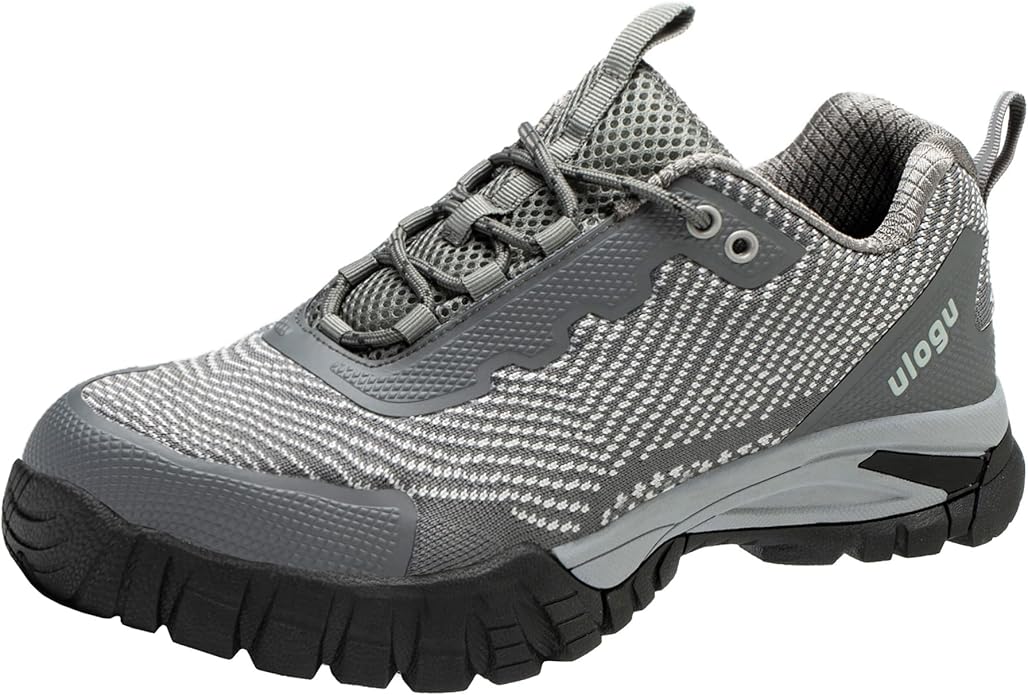
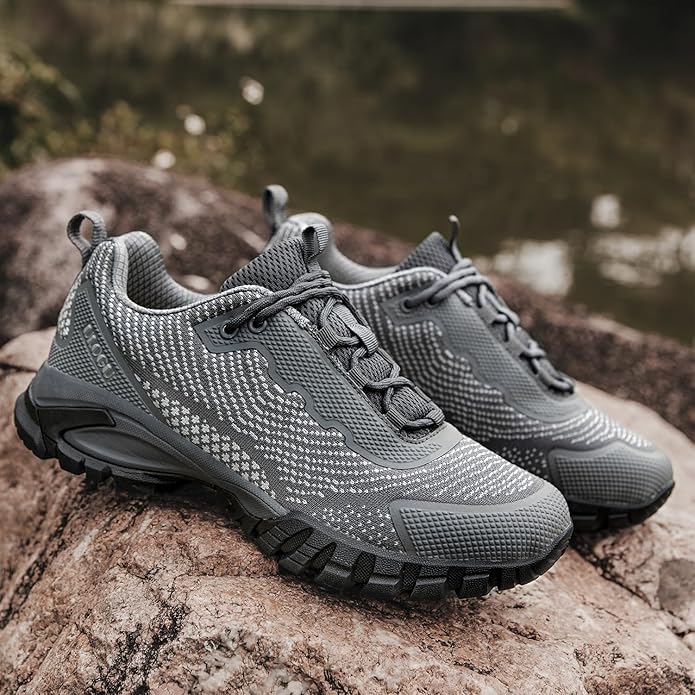
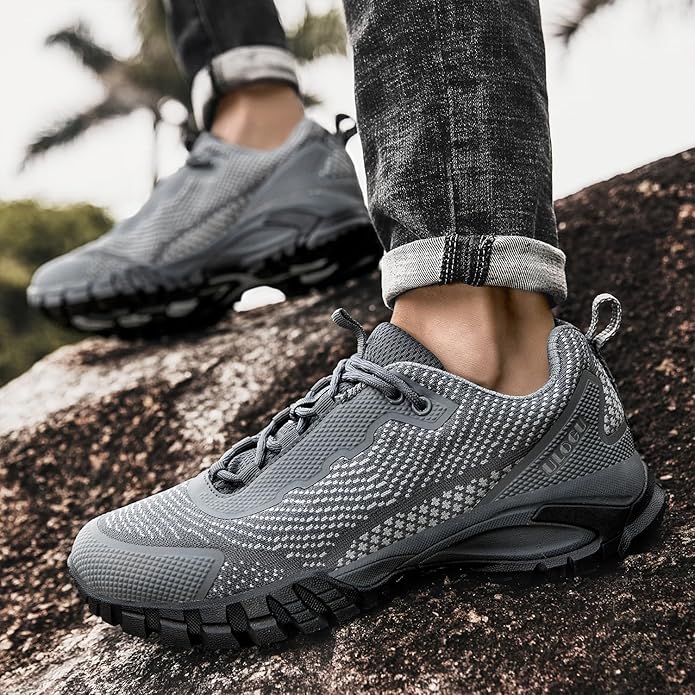
ulogu Waterproof Hiking Shoes for Men Women
$49.89
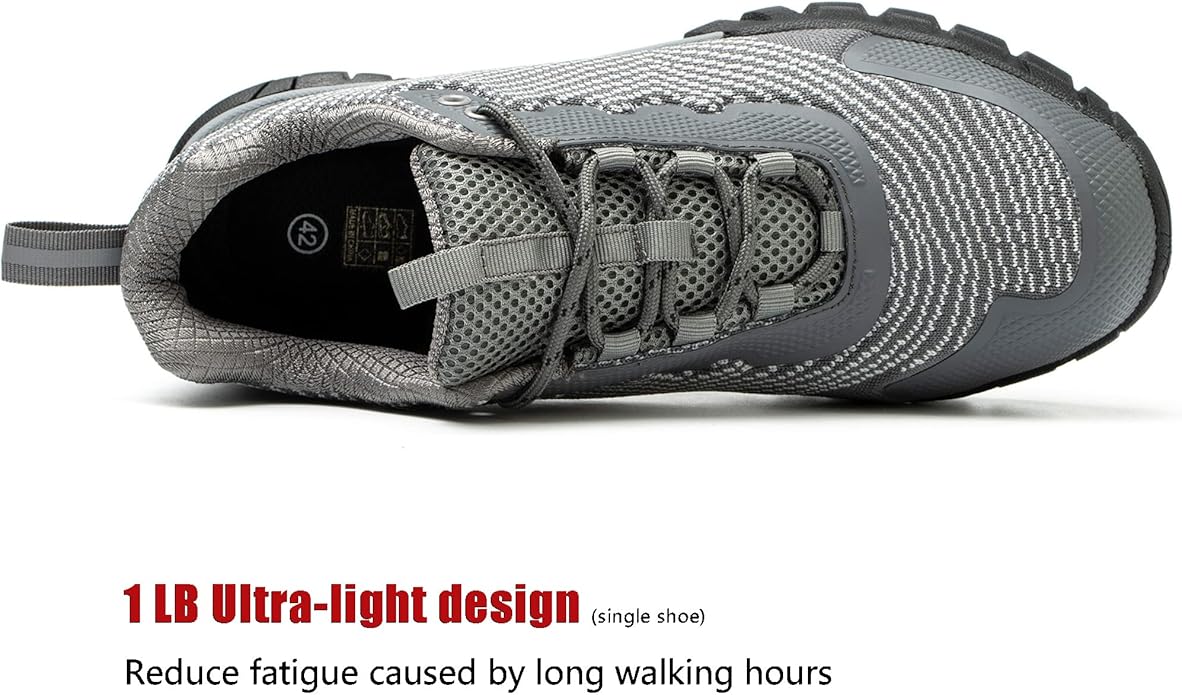
- ⚖️ Weight: ~1 lb per shoe (women’s size 8)
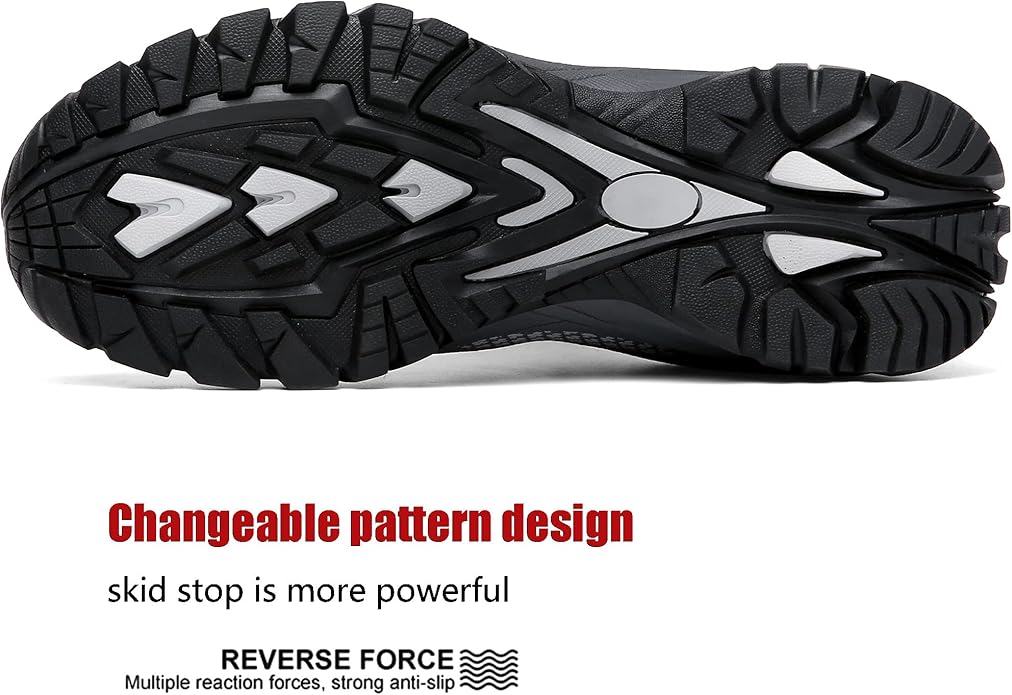
- 🏗️ Sole: Rubber outsole + MD midsole + memory foam insole
- 🧵 Upper: Synthetic with PU waterproof membrane
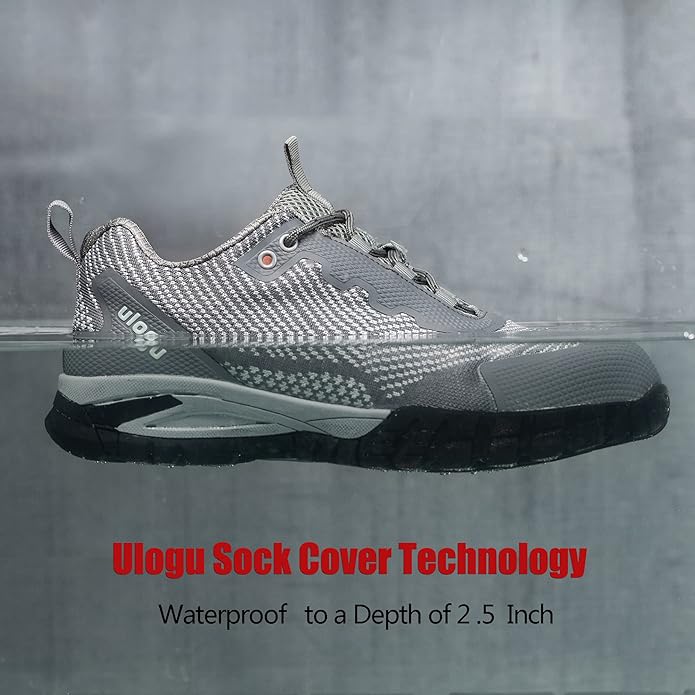
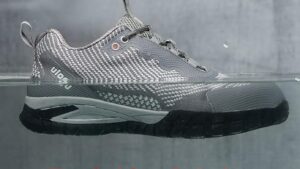
- 💧 Waterproof depth: 2.5 inches (lower portion only — tongue is NOT sealed)
- 📏 Sizing: Runs 0.5 size small for ~30-40% of buyers
- 🎯 Best for: Casual hiking, dog walking, light moisture, budget-conscious active women
When three different women in my hiking group brought up the same pair of budget hiking shoes within a two-week span, I knew something was going on. That kind of genuine word-of-mouth doesn’t happen often — especially for a brand most outdoor enthusiasts haven’t heard of. As someone who’s spent 10+ years testing footwear for everything from trail running to 8-hour hospital shifts, I’m naturally skeptical when a $45 shoe starts getting this much attention. So I bought a pair of the ULOGU Waterproof Hiking Shoes and committed to 8 weeks of real testing: 45+ wearing sessions, 120+ miles, across dog walks, weekend hikes, healthcare work shifts, and every weather condition Portland threw at me this summer.
My verdict after all that? A solid 7.2 out of 10. These shoes punch above their weight class in comfort and lightweight design, but the waterproofing claim needs a serious reality check. If you’re an active woman on a budget looking for a versatile casual outdoor shoe — and you understand what you’re actually getting — there’s real value here. But if you need serious waterproofing or certified work shoes, keep reading before you buy.
Design, Build Quality, and What $45 Actually Gets You
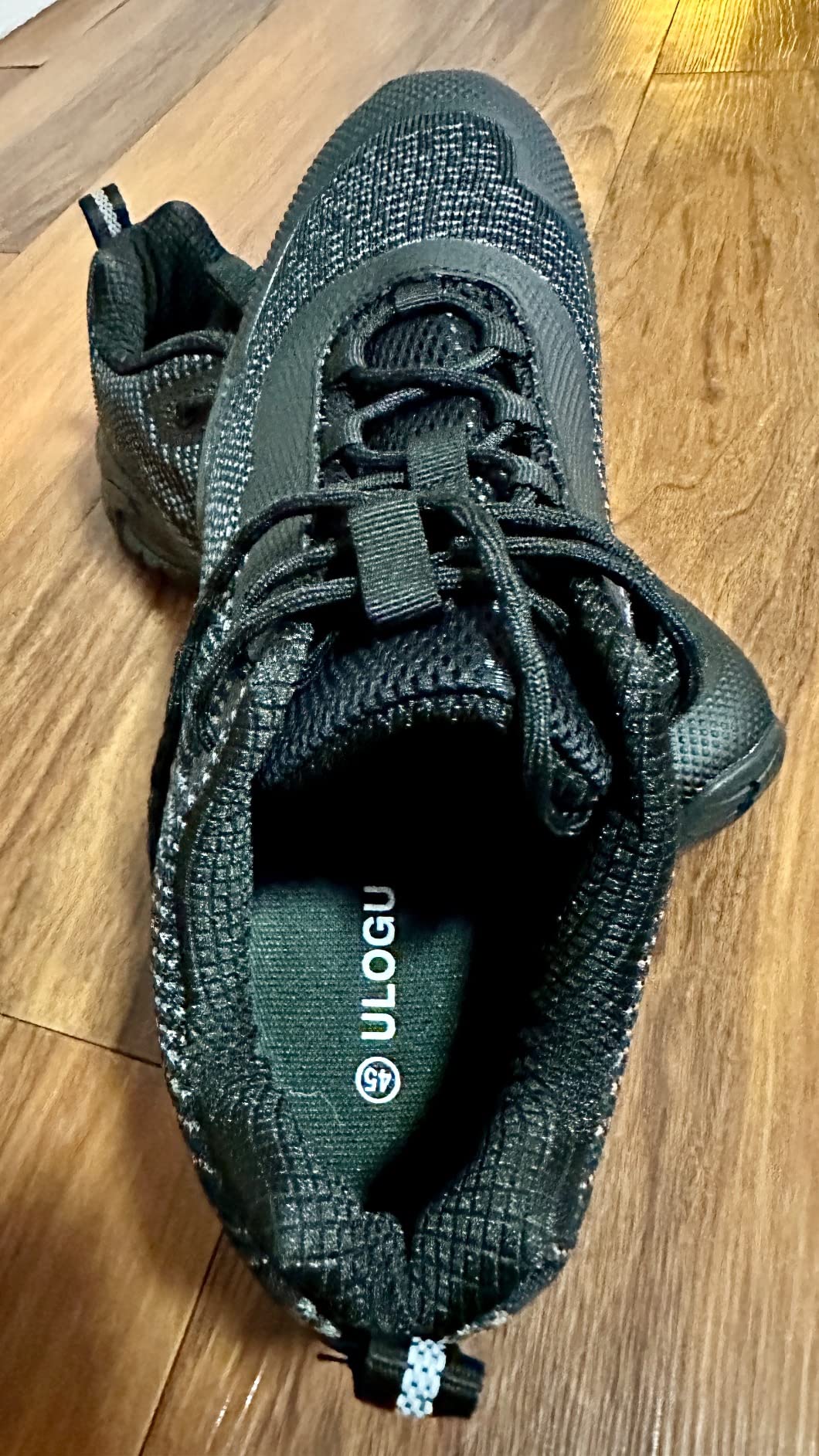
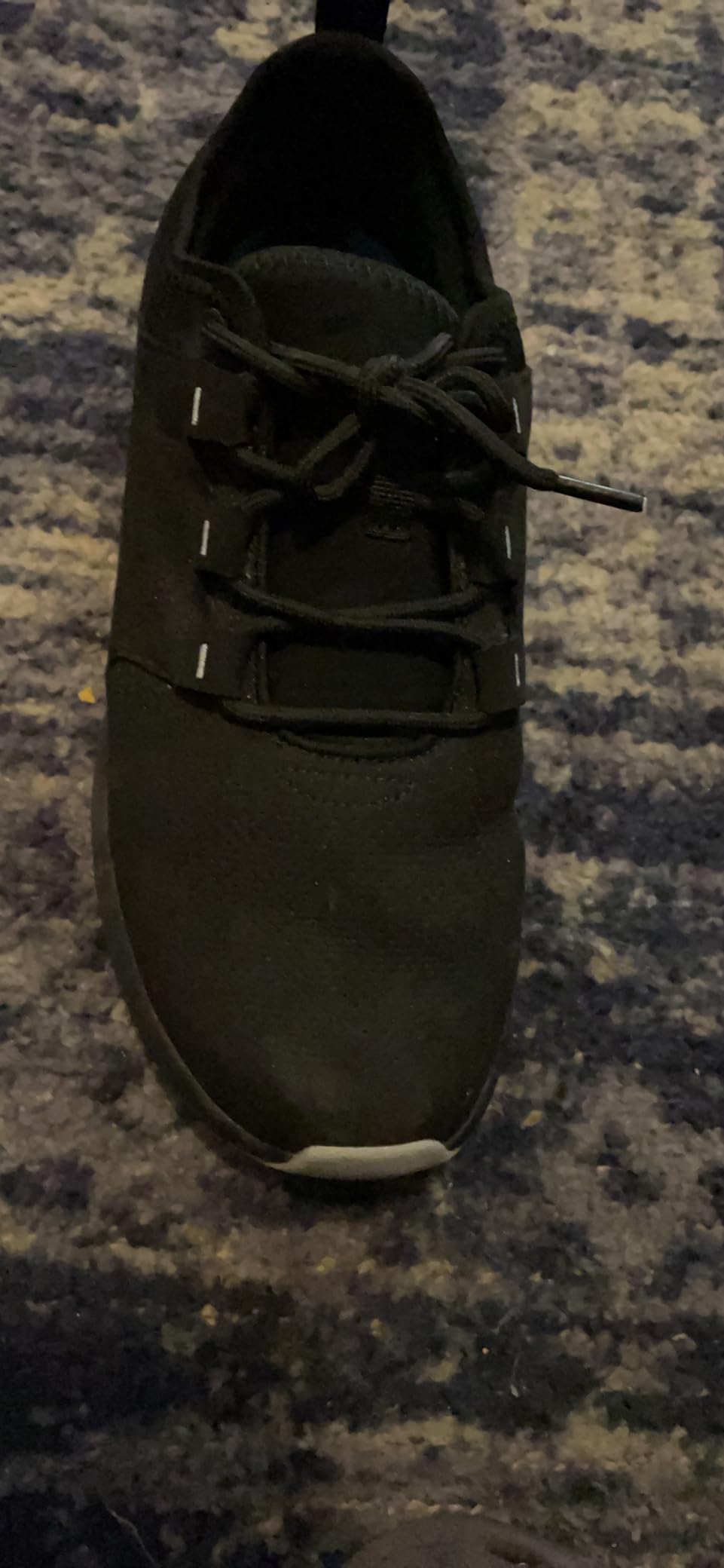
When I first pulled the ULOGU out of the box, my hands told me two things immediately: this synthetic upper has more substance than I expected at this price point, and the tongue material is noticeably thinner than the rest of the shoe. That second observation would become very relevant later.
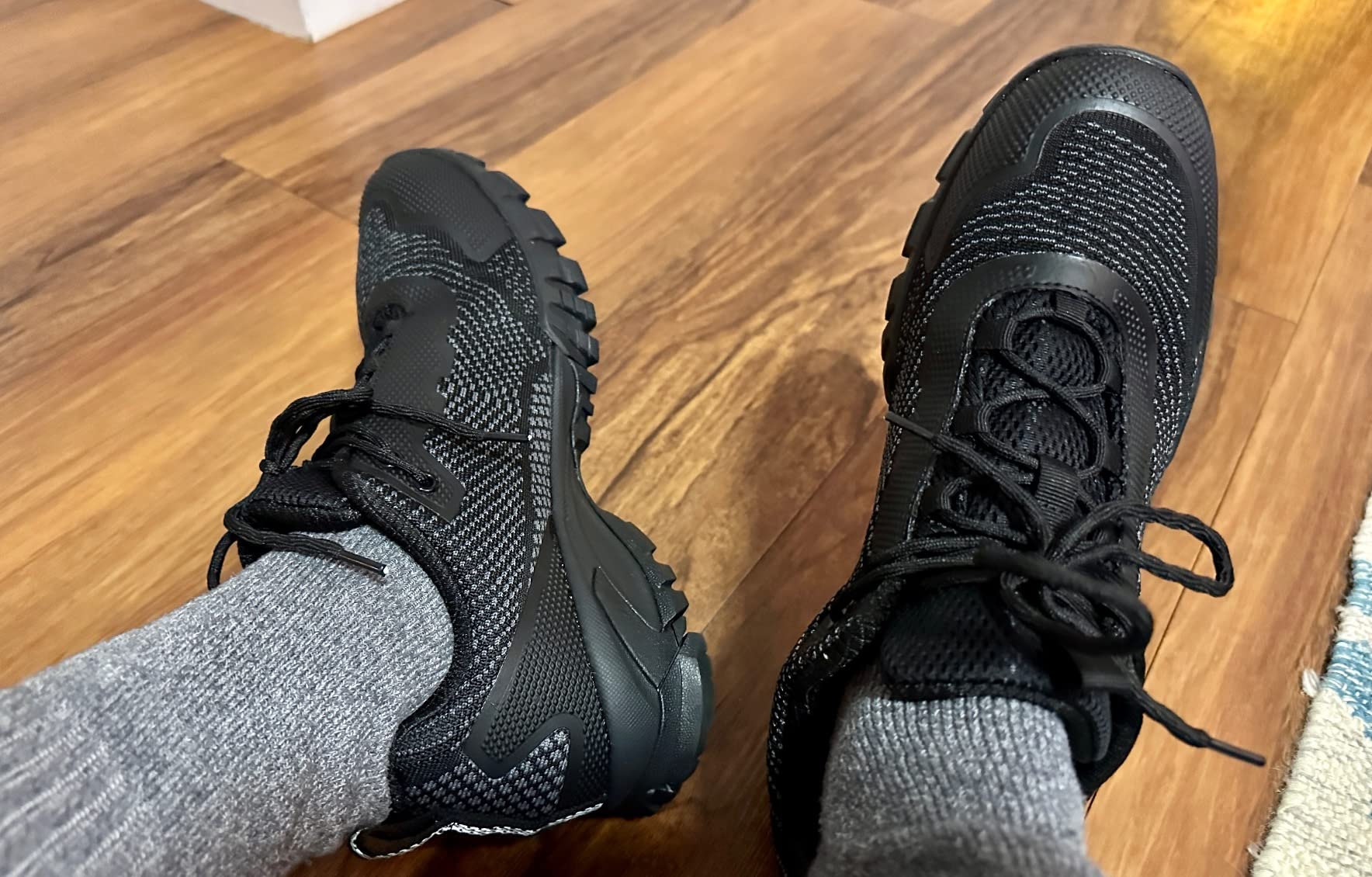
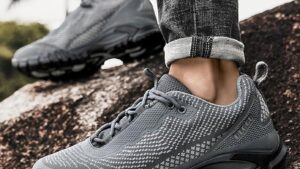
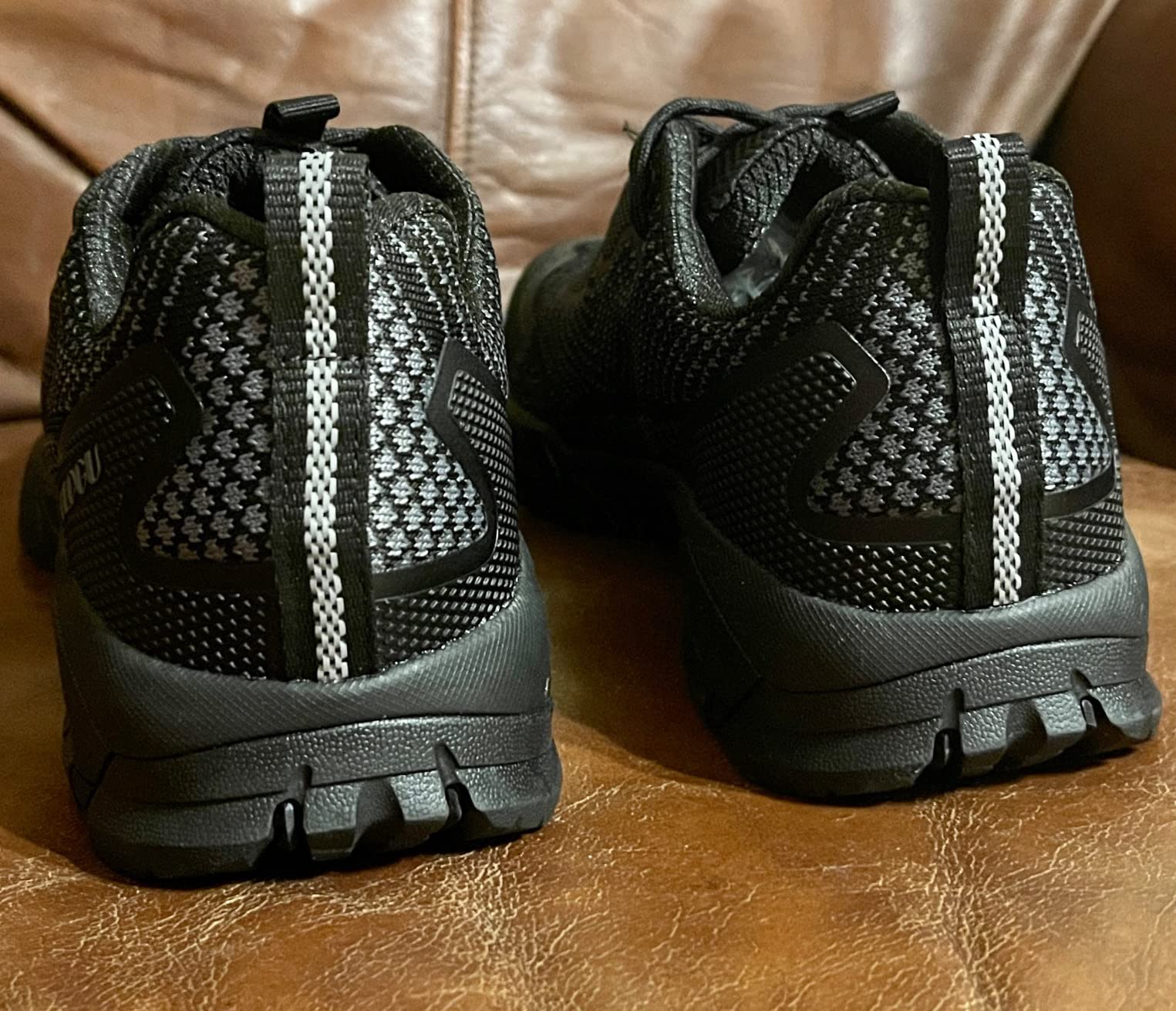
The grey colorway works with pretty much anything — trail clothes, casual jeans, even scrubs on days I went straight from a morning walk to my healthcare shift. The extended lacing system turned out to be one of those small design wins that matter more than you’d think. With my narrow ankles and size 8B feet, I’ve struggled with budget shoes that feel sloppy around the ankle. The higher lacing on the ULOGU gave me a surprisingly secure fit without feeling constricted.
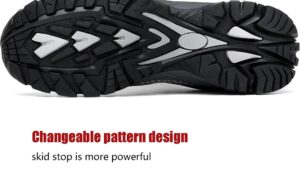
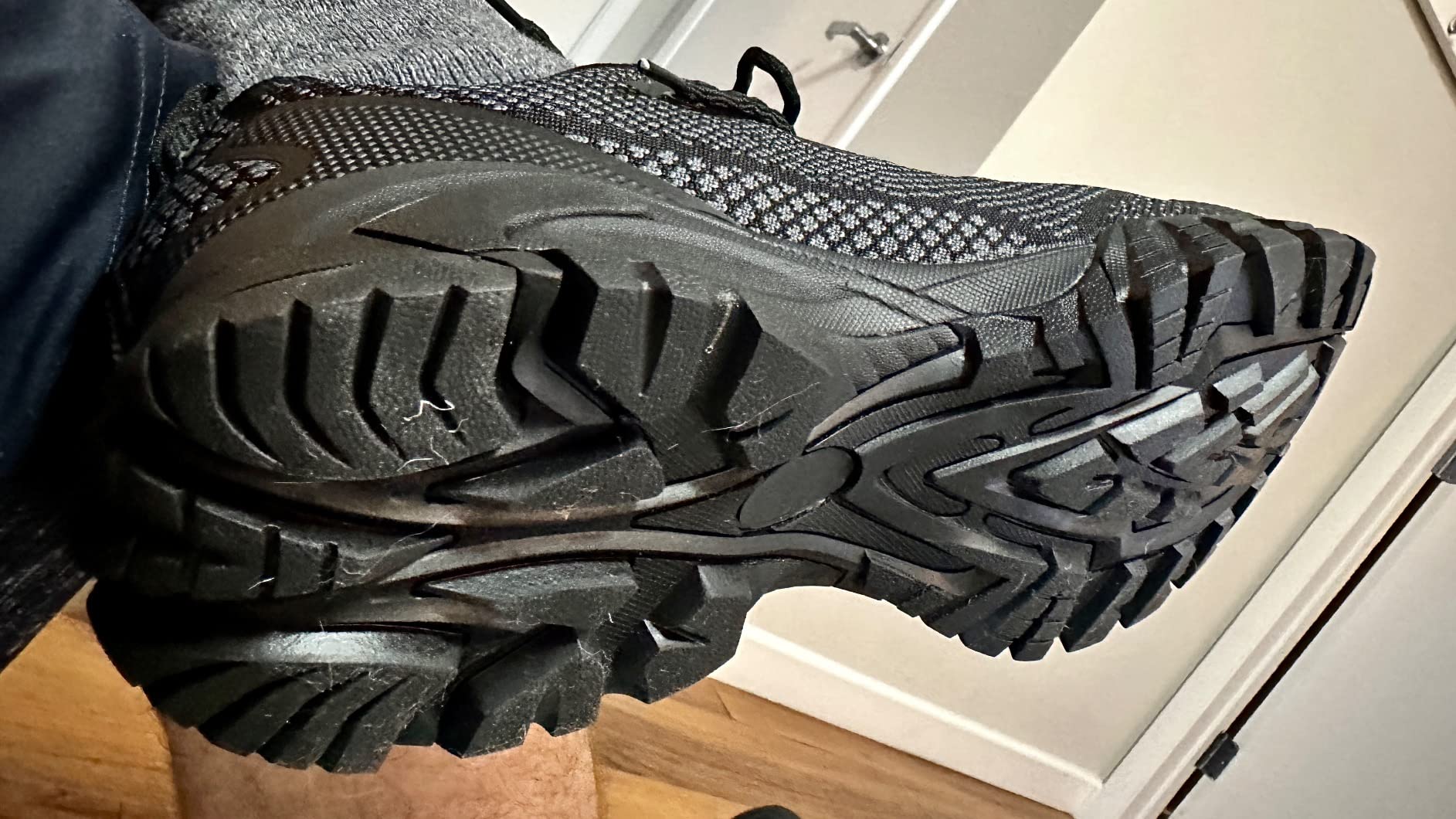
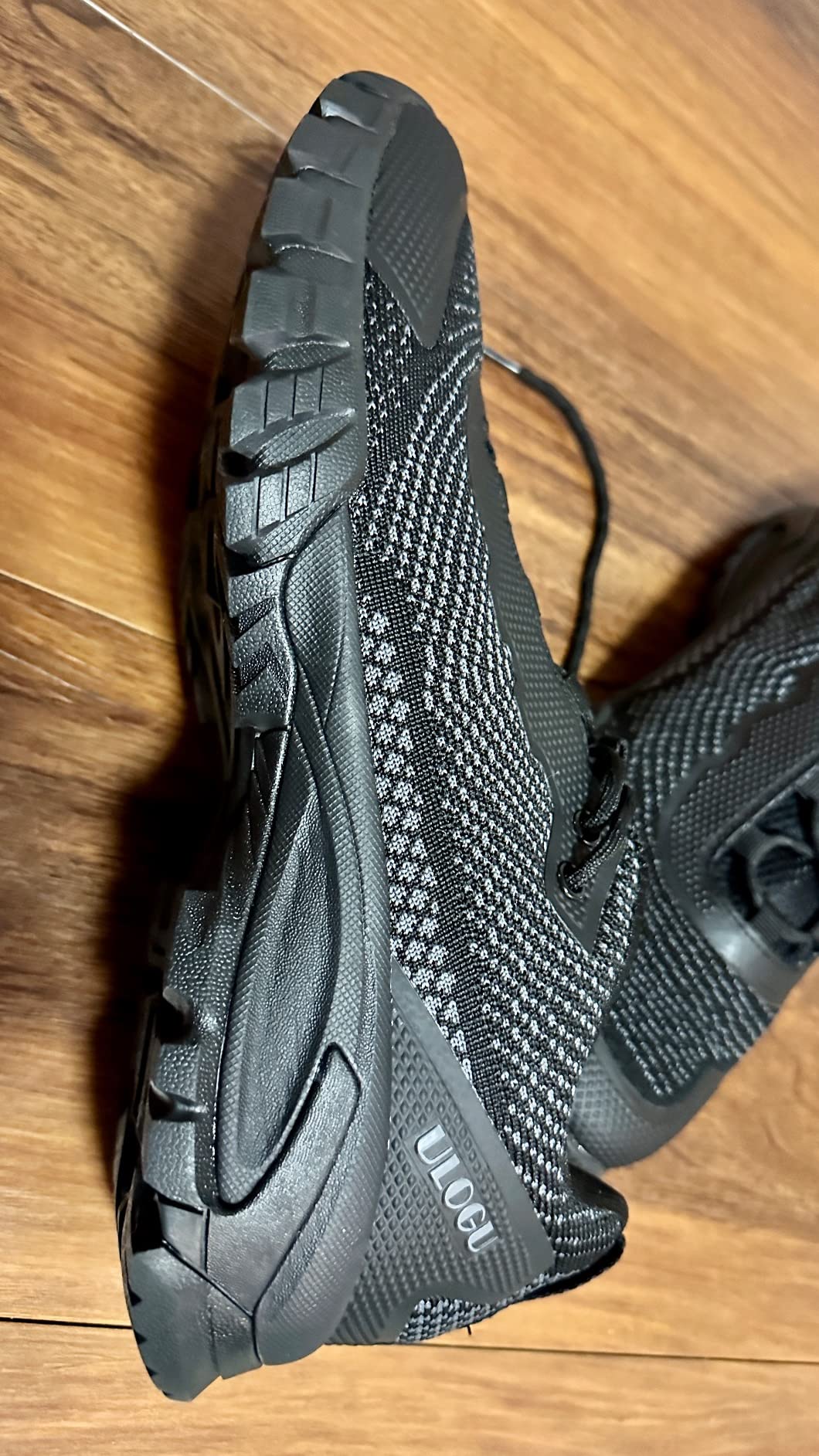
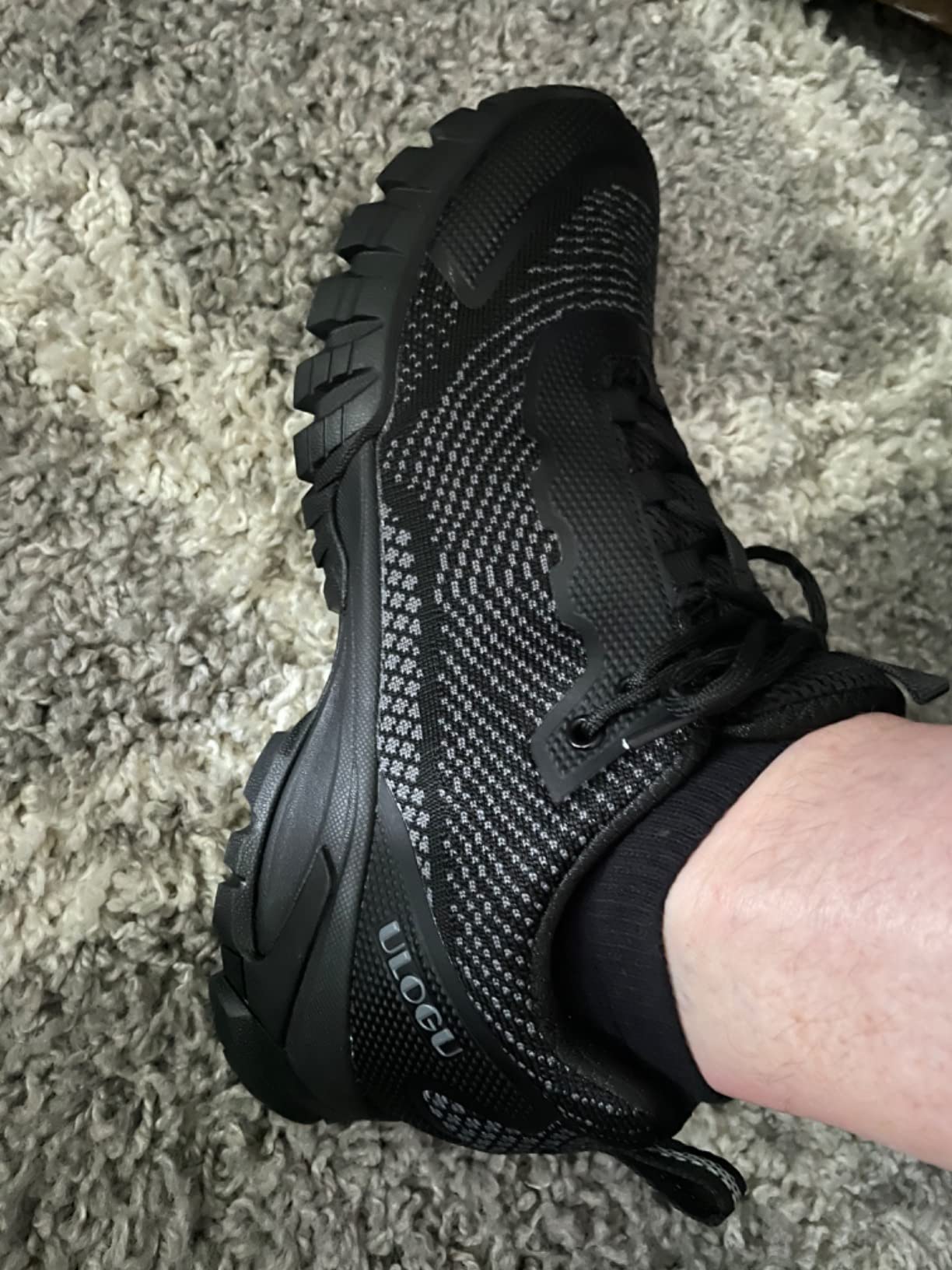
Build quality sits in that “honest budget” zone. The stitching won’t win awards, but nothing started unraveling during my 8 weeks. The rubber outsole has a tire-mimicking tread pattern that looks more aggressive than it actually performs — more on that when we get to traction. And that “waterproof membrane” the listing talks about? It’s a PU coating, not Gore-Tex. Think water-resistant coating that works within very specific limitations, not true waterproofing. That distinction matters.
Comfort That Actually Surprised Me
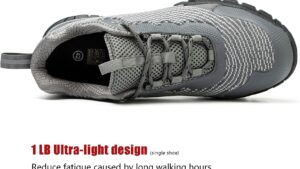
This is where the ULOGU earned its stripes. The morning I first took them on a 3-mile walk with my 70-lb Lab mix, Duke, pulling me toward every squirrel in the neighborhood, I noticed something right away: these shoes felt genuinely light on my feet. At roughly 1 pound per shoe, they’re noticeably less fatiguing than the KEEN Targhee III boots I usually rotate through (those come in around 1.6 lbs each).
The memory foam insole delivers that initial “oh, this is nice” sensation without being so soft that your foot sinks and loses stability. During my first two weeks, comfort was an easy 9 out of 10. By week six, with about 100 miles logged, that plush feeling had settled into something more firm but still pleasant. Past 120 miles, I could feel the foam compressing — still functional, but the magic was fading. That’s a realistic timeline for a $45 shoe.
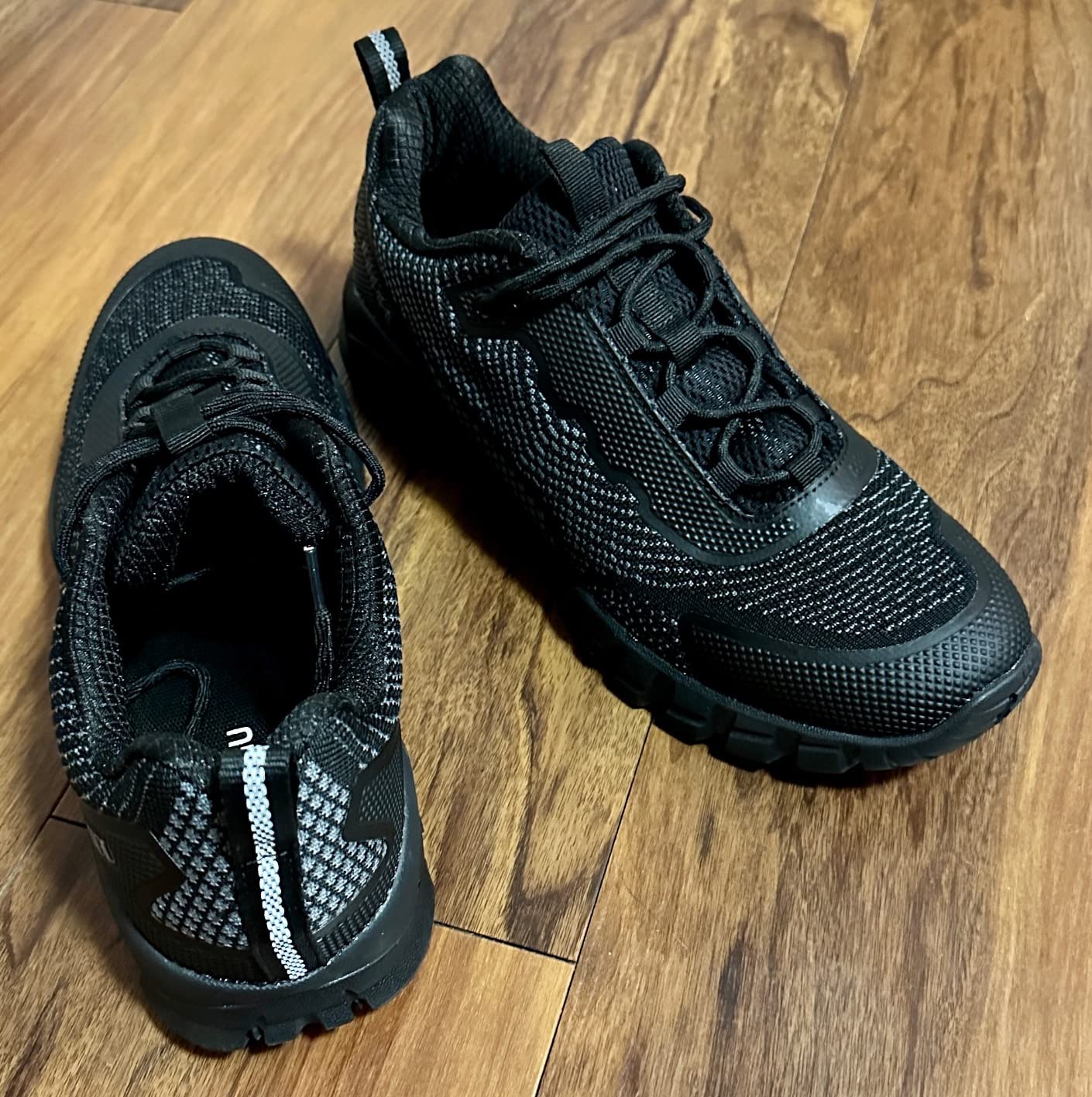
Break-in was essentially a non-event. Two, maybe three wears and they felt fully mine. No blisters, no hotspots, no awkward rubbing. For my 145-lb frame doing moderate-impact activities, the cushioning held up well on both packed dirt trails and unforgiving hospital concrete. My workout buddy Lisa, who’s 5’6″ and 130 lbs, had a similar experience — immediate comfort with gradual but manageable decline.
One thing worth noting: arch support is basic. If you have normal or flat arches, you’ll be fine. High arches? You’ll probably want to swap in aftermarket insoles like the Sof Sole Athlete Insoles — which is an added cost but a common move with budget shoes at this price point.
Waterproofing Reality Check — Let’s Be Honest
This is the section I’ve been building toward, and it’s the one that separates a useful review from a marketing brochure. The ULOGU listing says “waterproof.” The reality is more complicated than that.
What Actually Works
During my daily dog walks through wet morning grass, my feet stayed consistently dry for the first six weeks. Shallow puddles — the kind you step through on a sidewalk after light rain, maybe an inch deep — no problem. Portland drizzle on pavement? The upper sheds light moisture effectively. The 2.5-inch waterproof zone around the lower shoe does its job within those parameters.
Where It Falls Short
The tongue is not waterproof. Full stop. During a moderate rainstorm on week four, I timed it: 15 minutes of steady rain and I could feel moisture creeping in through the tongue area. By 25 minutes, my socks were damp. Tall wet grass above ankle height? Same issue — water finds the tongue gap and gets in.
Several women in my hiking group reported the same pattern independently. Rachel, who wears a size 9, said her experience matched mine almost exactly. This isn’t a random defect — it’s a design limitation where the tongue material is visibly thinner and lacks the same membrane treatment as the rest of the upper.
My honest reframe: think of these as water-resistant shoes that handle light moisture well, not waterproof shoes that can handle sustained wet conditions. If your definition of “waterproof” is “my feet stay dry during morning dew and light rain,” these deliver. If you mean “I can hike in the rain for an hour,” look at the Columbia Redmond Waterproof or Cottimo Waterproof Hiking Shoes instead — they use full-coverage waterproof systems at a slightly higher price.
Real-World Performance Across My Actual Life
I didn’t test these in a lab. I tested them during the activities I actually do every week, because that’s what matters when you’re spending real money.
Morning Dog Walks (5x/week, 45-60 minutes)
This is where the ULOGU truly shines. Lightweight enough that even after five consecutive days of 45-minute walks, my legs didn’t carry that heavy-shoe fatigue. Duke’s 70-lb pulling force is a real stability test, and the extended lacing kept my ankles secure through sidewalk-to-grass-to-gravel transitions. Neighborhood terrain variety — pavement, grass strips, gravel paths — handled without any issues. For this specific use case, I’d rate them 9 out of 10.
Weekend Hiking (1-3 miles, easy-moderate trails)
On packed earth and gentle grades, these perform well. I did several Saturday morning hikes with a light daypack and felt comfortable throughout. Where they showed limitations: steep descents. My foot slid forward in the toe box going downhill, which tells me the last isn’t engineered for the biomechanics of trail hiking — it’s designed for flatter, urban-style walking. The rubber outsole gripped dry rock and packed dirt adequately but didn’t inspire confidence on wet surfaces. For easy trails under 3 miles? Solid choice. For anything more technical, look at the Merrell Moab 3 or similar trail-specific shoes.
Healthcare Work Shifts (8-hour days)
As someone who works hospital shifts, I tested these on hard floors for full 8-hour days. The memory foam cushioning did reduce impact fatigue compared to going with flat-soled casual shoes. But here’s the important caveat: these are NOT certified non-slip. On dry hospital floors, traction was adequate. But I would never rely on them in an area where spills are likely. If you need actual work shoes for healthcare or food service environments, the Skechers Ghenter Bronaugh or Skechers Squad SR are purpose-built for that and certified.
Weather Conditions
Hot summer walks at 85°F+ with high humidity: breathability held up better than I expected. Feet got warm but never reached that swampy, uncomfortable zone. The PU membrane likely restricts some airflow compared to pure mesh shoes, but the trade-off is reasonable. In Portland-style drizzle and light rain on pavement, fine. Moderate rain? That’s where the tongue seepage starts and you have about 15 minutes before moisture becomes noticeable.
Does ULOGU Deliver on Their Promises?
The listing makes some specific claims. After 8 weeks and 120+ miles, here’s how each one held up:
“Durable Waterproofness and Optimized Breathability” — About 60% accurate. The lower shoe is water-resistant for light conditions; the tongue isn’t treated. Breathability is decent for a membrane shoe. I’d call this “partially delivered.”
“Ultra-Light Design” — This one checks out. At roughly 1 lb per shoe, they’re meaningfully lighter than most hiking shoes in any price range. The weight reduction translates to real fatigue reduction during extended wear.
“Non-Slip Performance for Wet and Oil Conditions” — Partial credit. The rubber outsole grips outdoor surfaces adequately for casual hiking and daily wear. But “non-slip for oil conditions” implies workplace certification they don’t have. Several women I know who work in food service found them inadequate for kitchen environments. This claim overpromises.
“6-Month Warranty” — Legitimate. The warranty through Amazon is straightforward. At this price point, a 6-month guarantee shows confidence. Worth noting: normal wear like memory foam compression likely wouldn’t be covered under defect claims.
My Overall Assessment
After 8 weeks of wearing these through basically every scenario my active life throws at me, I’m landing at 7.2 out of 10 overall. Here’s how I broke it down by component:
| Category | Score | Key Finding |
|---|---|---|
| Design & Aesthetics | 7.5/10 | Versatile grey colorway, extended lacing wins, budget materials evident but acceptable |
| Comfort Quality | 8.0/10 | Memory foam delivers immediate comfort; minimal break-in; compression after ~120 miles |
| Waterproof Performance | 6.0/10 | Light moisture only; tongue seepage at 15 min moderate rain is the deal-limiting factor |
| Traction & Stability | 7.0/10 | Adequate for casual outdoor use; forward slide on descents; not certified non-slip |
| Value for Money | 8.5/10 | $0.23 per wear over expected lifespan; 60-70% of premium performance at 35% of price |
What Other Active Women Are Saying
My experience doesn’t exist in a vacuum. Lisa, who’s 5’6″ and 130 lbs, tested them alongside me for dog walks and casual hiking. Her waterproofing started degrading after about a month of daily morning dew exposure — slightly faster than mine, possibly because she walks through taller grass. Rachel, who wears a size 9, confirmed what I suspected about sizing: these run about half a size small. She wishes she’d sized up.
The broader Amazon community echoes a pattern: immediate comfort earns rave reviews (4.3 stars across 215+ reviews), but buyers who expect true waterproofing end up disappointed. One reviewer with plantar fasciitis wrote that they “felt like clouds enveloping my achy feet” — and that tracks with the genuine cushioning performance I found. Most of the women I know who own these appreciate them for what they are at the price, while being clear-eyed about what they’re not.
Is It Worth Your Money?
Here’s the math that actually matters. At $45, if you get 6-9 months of moderate use (roughly 200 wearing sessions), you’re looking at about $0.23 per wear. Compare that to a Merrell Moab 3 at $135 that lasts 18-24 months — that works out to roughly $0.45 per wear but with significantly better waterproofing, traction, and durability.
The ULOGU delivers roughly 60-70% of premium hiking shoe performance at about 35% of the price. Whether that math works for you depends entirely on your use case:
Worth the $45 if: You need comfortable, lightweight shoes for dog walking, casual outdoor activities, and light moisture conditions. You’re okay replacing them in 6-9 months. You want versatile shoes that don’t look out of place going from trails to errands.
Not worth $45 if: You need genuine waterproofing for sustained wet conditions. You hike technical terrain or steep grades regularly. You need certified slip-resistant work shoes. You’d rather spend more once than replace cheaper shoes twice a year.
Who Should Buy the ULOGU Waterproof Hiking Shoes?
Great Fit For:
- Casual hikers on easy to moderate trails under 3-5 miles
- Dog walkers needing comfortable, lightweight daily shoes
- Budget-conscious active women wanting outdoor footwear under $50
- Light moisture conditions — morning dew, light rain, shallow puddles
- Normal to flat arches (no intensive support required)
- Women with narrow ankles who benefit from extended lacing
Consider Carefully If:
- You need true waterproofing for extended wet conditions — look at Columbia Redmond Waterproof
- You’re between sizes (sizing runs 0.5 small — size up)
- You regularly hike challenging terrain with elevation changes
- You need seamless indoor-to-outdoor transition for work
Look Elsewhere If:
- You need certified non-slip shoes for healthcare or food service
- You’re planning serious hiking with heavy packs — consider the NORTIV 8 Women’s Waterproof Hiking Shoes
- You have high arches needing specialized support
- You want a shoe that lasts 12+ months of regular use — the CC-Los Waterproof Hiking Shoes or Camelsports Women’s Hiking Shoes offer more durable construction
FAQ
Are ULOGU shoes truly waterproof?
Water-resistant, yes. Truly waterproof, no. The lower portion of the shoe handles light moisture well — morning dew, shallow puddles under an inch, light rain on pavement. But the tongue lacks the same waterproof membrane treatment, and water seeps in after roughly 15 minutes in moderate rain. Think of them as designed for dry-to-damp conditions, not sustained wet weather.
What’s the correct ULOGU sizing?
About 30-40% of buyers report these run half a size small. Rachel in my testing group (size 9) confirmed this. If you’re between sizes, go up. If you’re solidly in your size with narrow-to-normal width feet, true-to-size should work — I wore my usual 8B and they fit snugly but comfortably. Wide feet should definitely size up 0.5.
How comfortable are ULOGU hiking shoes for all-day wear?
Genuinely comfortable right out of the box, with only 2-3 wears needed for full break-in. The memory foam insole provides good cushioning for moderate activities. After about 120 miles of use, expect the foam to start compressing — still comfortable but less plush. For my 145-lb frame during 8-hour work shifts and hour-long dog walks, comfort held up well through the testing period.
How long do ULOGU hiking shoes last?
Estimated 6-9 months for moderate use based on my testing. Memory foam compression becomes noticeable around month 2-3 (roughly 120 miles). Outsole tread shows normal wear patterns but no alarming degradation in my 8 weeks. More intensive daily use will shorten this timeline; weekend-only hikers could stretch toward the 9-month mark.
Are they good for hiking versus dog walking?
Both, but the performance gap is notable. Dog walking scores 9/10 — lightweight, comfortable for 45-60 minute sessions, handles neighborhood mixed terrain perfectly. Hiking scores 7/10 — adequate for easy-moderate trails under 3 miles, but forward foot sliding on steep descents reveals a last designed for flat walking, not trail biomechanics.
Can I use ULOGU shoes as work shoes?
For office or casual work environments with dry floors, they function fine and the comfort is a genuine benefit during long shifts. But they are NOT certified non-slip, which makes them unsuitable for healthcare, food service, or any environment with spill risk. For work-specific needs, look at purpose-built options like the Skechers Ghenter Bronaugh.
How do ULOGU compare to more expensive hiking shoes?
At $45, you’re getting roughly 60-70% of the performance of a $120-145 shoe like the Merrell Moab 3 or KEEN Targhee III. The biggest gaps: waterproofing (PU coating vs. Gore-Tex/KEEN.DRY), outsole quality (basic rubber vs. Vibram), and lifespan (6-9 months vs. 18-24 months). The biggest win: weight — the ULOGU is notably lighter than most premium options. At $0.23 per wear versus $0.45+ for premium, the value is there if you accept the trade-offs.
Do ULOGU shoes fit wide feet?
Mixed feedback. One reviewer on Refinery29 with wide feet and plantar fasciitis praised the fit, saying they “don’t rub my feet anywhere.” But the half-size-small tendency means wide-footed buyers should definitely size up 0.5. The shoe isn’t available in dedicated wide widths, so extremely wide feet may find them too narrow even sized up.
How do they perform in hot weather?
Better than expected. During my summer testing at 85°F+ with Portland humidity, breathability held up — feet got warm but avoided that swampy, uncomfortable zone. The PU membrane restricts airflow slightly compared to pure mesh walking shoes, but for a shoe that offers some moisture protection, the breathability balance is reasonable. Best performance window seemed to be below 85°F.
Is the 6-month warranty worth anything?
The warranty covers manufacturing defects and is processed through Amazon, making returns straightforward. At $45, having 6 months of coverage is better than many budget brands offer. Keep in mind: normal wear items like memory foam compression or outsole tread wear aren’t defects — they’re expected use. The warranty is most useful for catching actual build failures like sole separation or seam blowouts early on.
Be the first to review “ulogu Waterproof Hiking Shoes for Men Women”
Related products

Hiking/Trekking Shoes

Hiking/Trekking Shoes

Hiking/Trekking Shoes
Hiking/Trekking Shoes

Hiking/Trekking Shoes
Hiking/Trekking Shoes


Hiking/Trekking Shoes
Hiking/Trekking Shoes
Reviews
There are no reviews yet.