
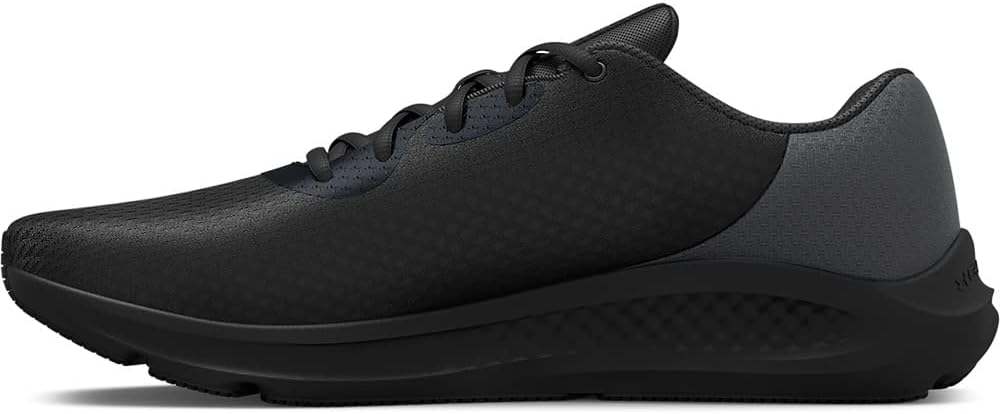
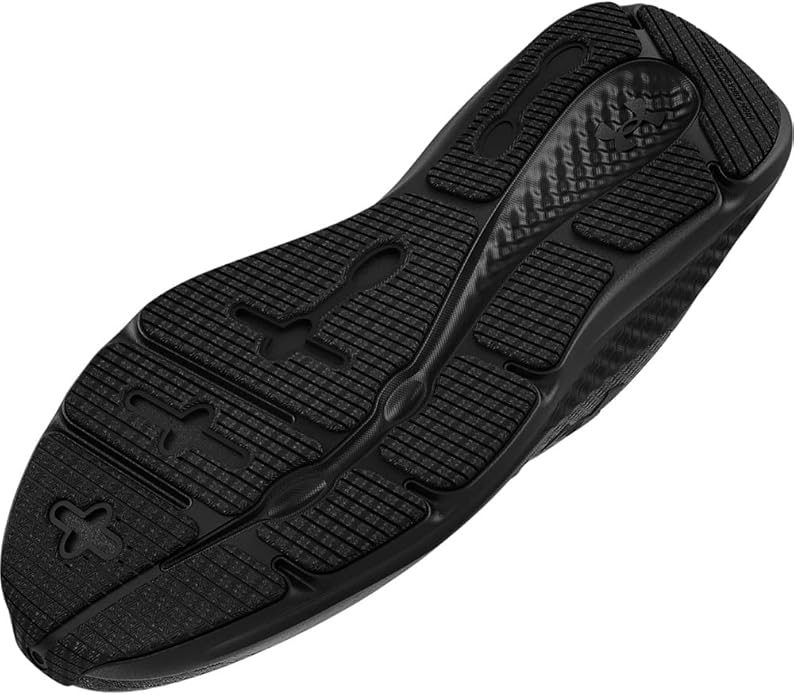
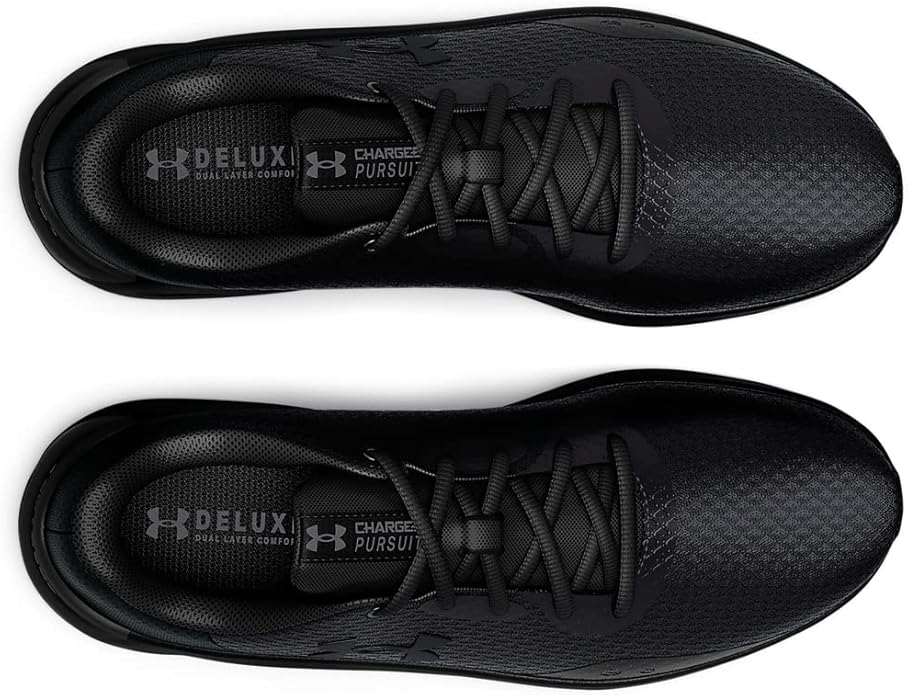
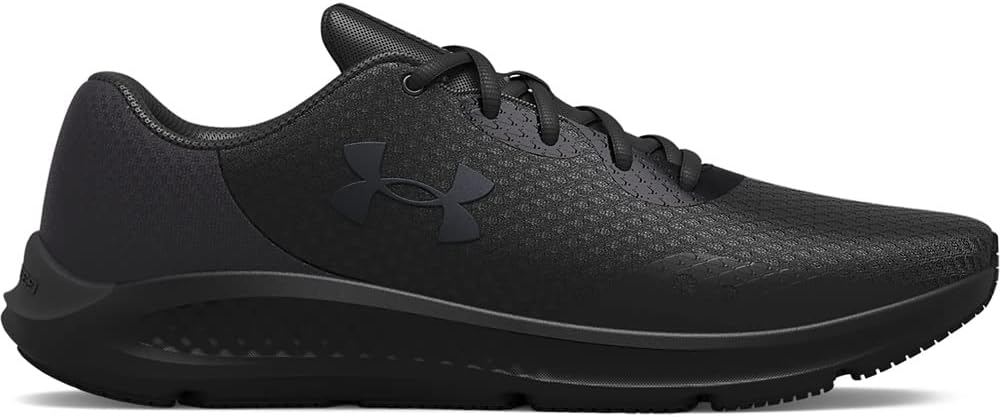
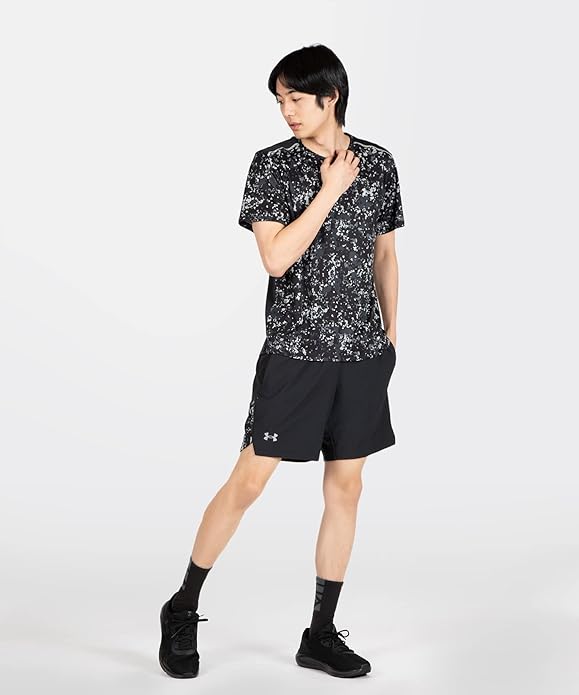
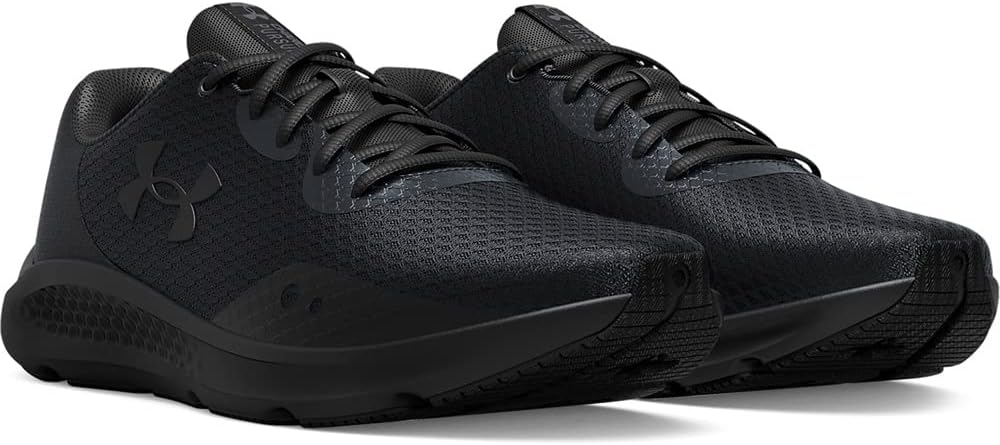
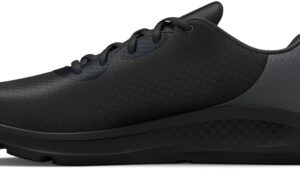
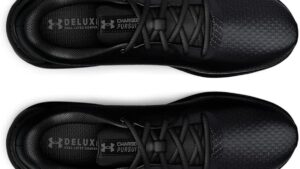
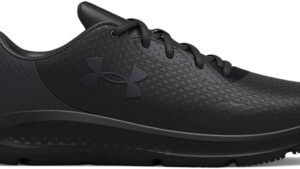
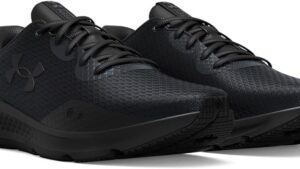
Under Armour Mens Charged Pursuit 3
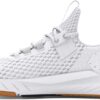
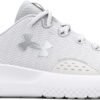
- 💰 Price: $50 (sale: $35–40 during promos)
- ⚖️ Weight: 9.3–9.8 oz (men’s size 9)
- 📏 Drop: 8mm (brand) / 9.6mm (RunRepeat lab)
- 🧪 Midsole: Charged Cushioning compression-molded foam (29.5 HA)
- 👟 Upper: Performance mesh + synthetic overlays
- 🏃♂️ Category: Neutral running shoe
- 🎯 Best for: Budget runners logging 15–30 miles/week, gym cross-trainers
Three pairs of running shoes in eight months. That was my record before I finally snapped. The last straw was a pair of $60 Nike Free RNs that quit on me during mile 4 of what should have been an easy 6-mile Sunday run — mesh pulling away from the midsole, traction gone, just… done. I’m Mike, 175 pounds, and I’d been caught in the same budget runner trap long enough to know the pattern by heart: buy cheap, feel good for three weeks, watch it fall apart by month two. A guy at my local track mentioned the Under Armour Charged Pursuit 3s had held up for him at just $50. I was skeptical. Then I ran 156 miles in them over 8 weeks and here’s what I found.
Out of the Box: Not What I Expected
I unboxed these expecting the usual $50-shoe experience: thin mesh that you could read a newspaper through, stretchy laces that loosen by mile 2, and the kind of tongue padding that disappears after your first few runs. What I got was different enough to make me pause.
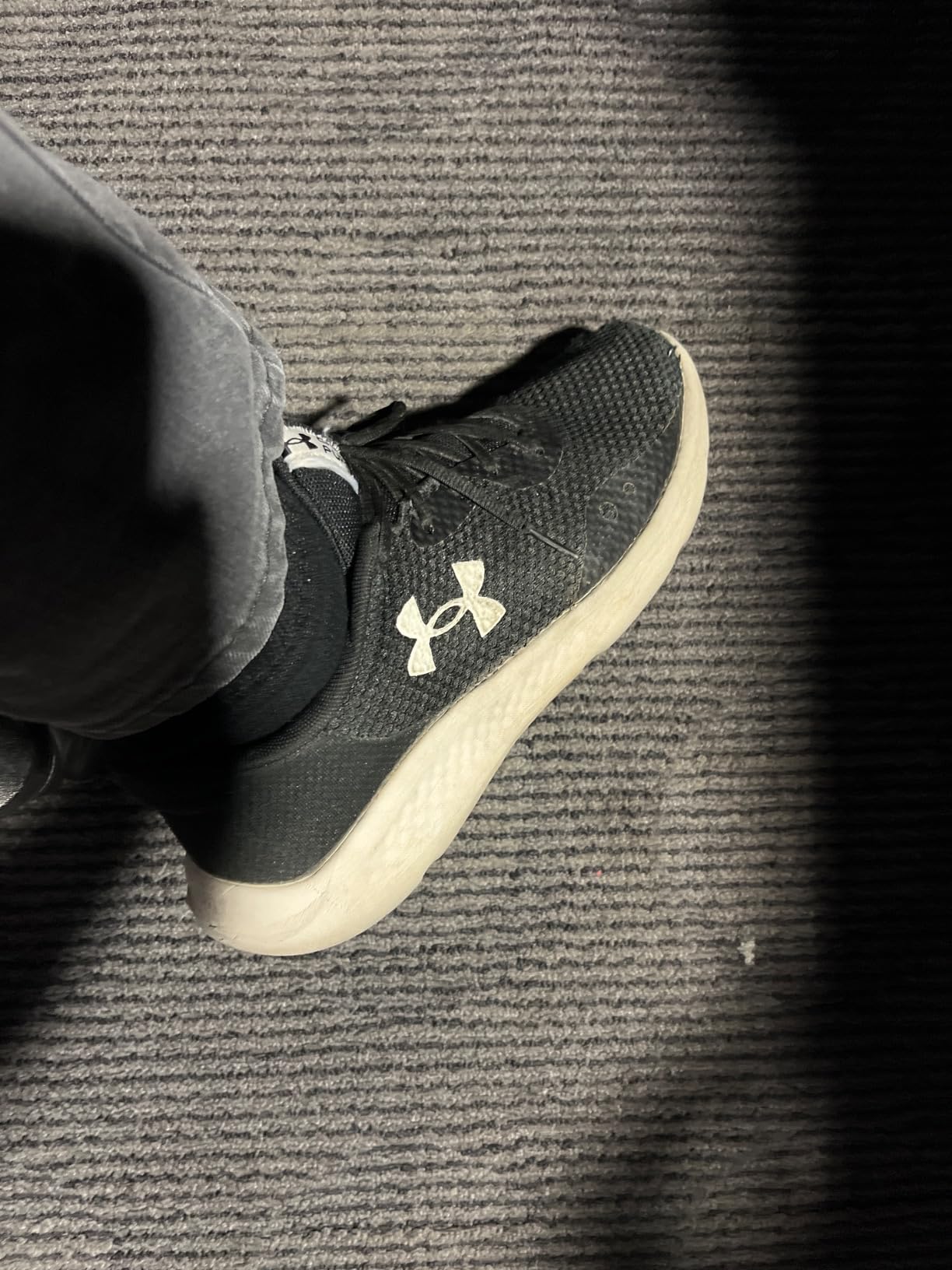
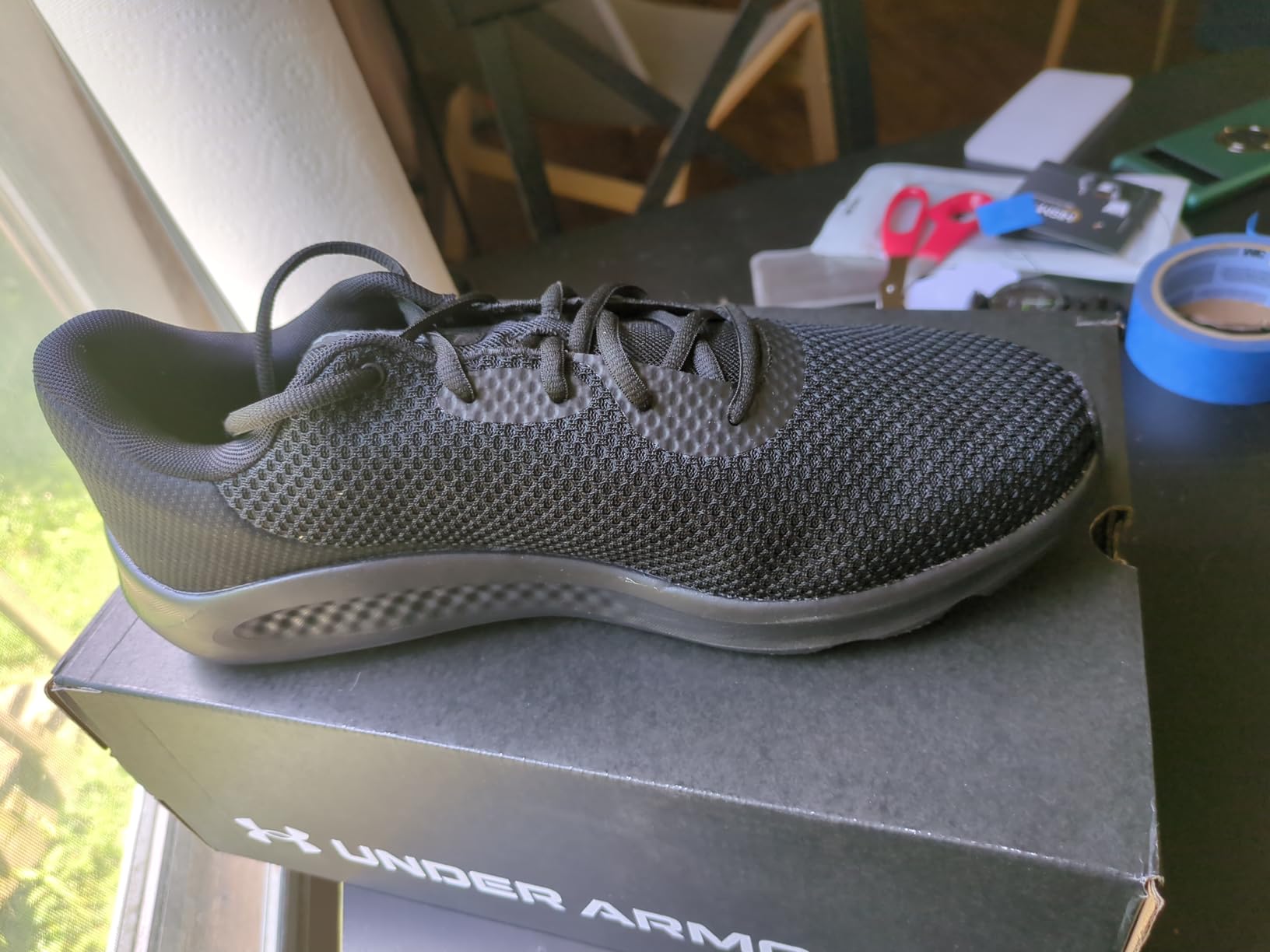
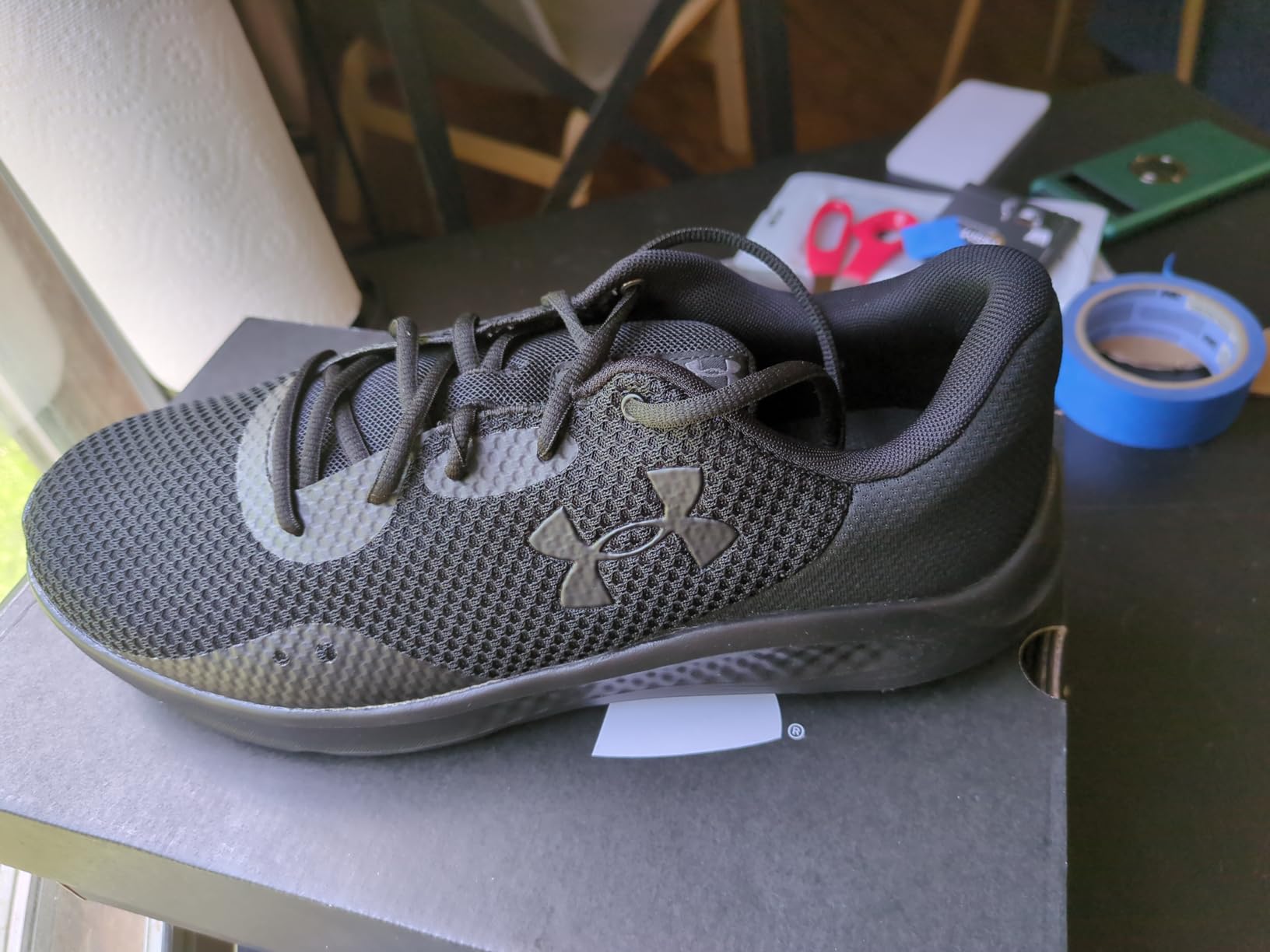
The mesh upper has actual structure — not stiff, but not the flimsy, translucent material that shows up in most budget running shoes at this price. Synthetic overlays wrap the midfoot and heel in a way that creates a genuine locked-in feel, the kind I associate with shoes in the $80–100 range. The flat laces are a detail nobody talks about, but they matter: they hold tension without loosening mid-run, unlike the thin round laces that come standard on most budget options. Forty-seven runs in, I haven’t re-tied once.
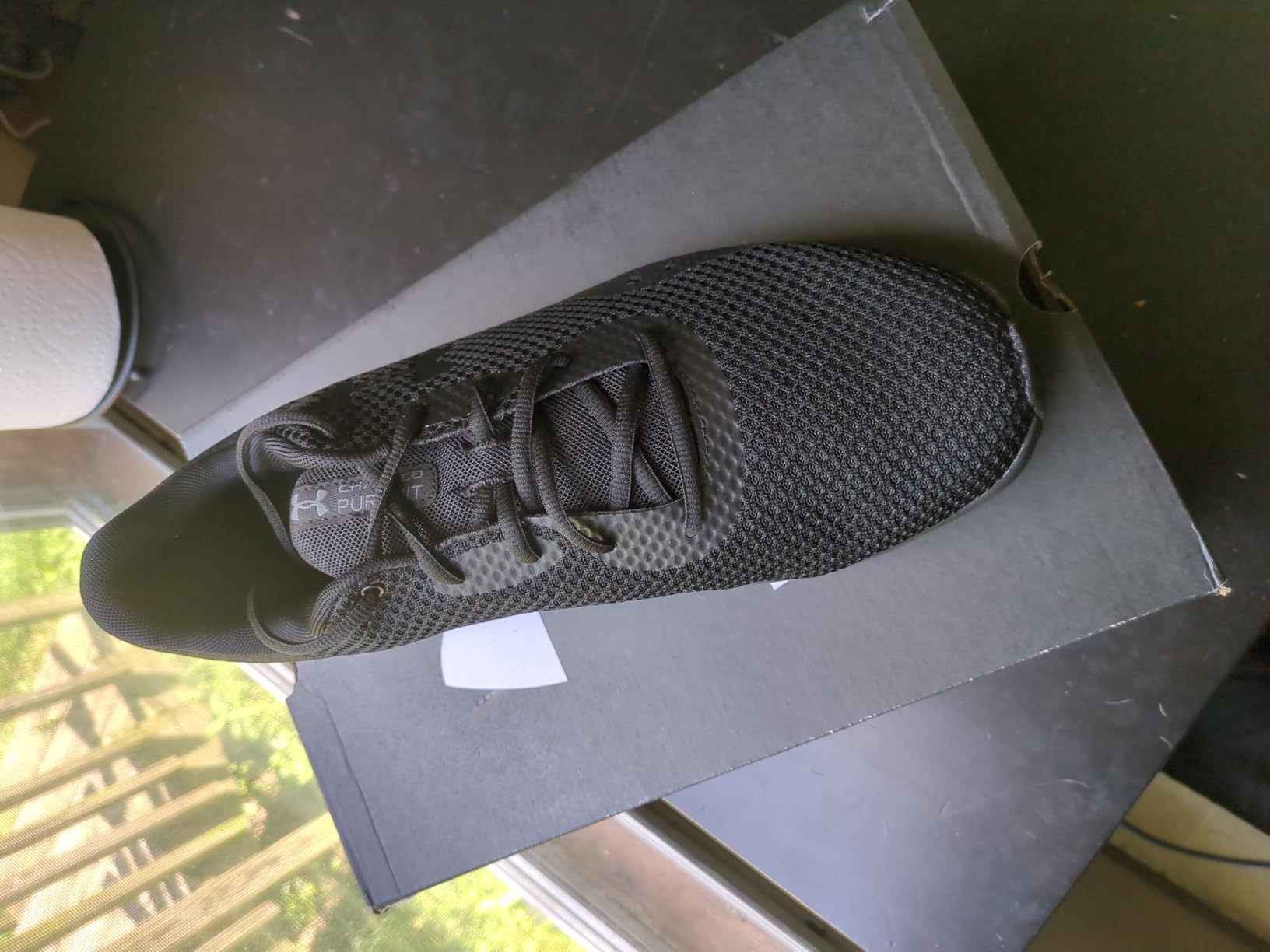
Tongue padding is generous without being bulky — hits a sweet spot that prevents pressure points on longer runs. No hot spots across 156 miles says more than any marketing claim could.
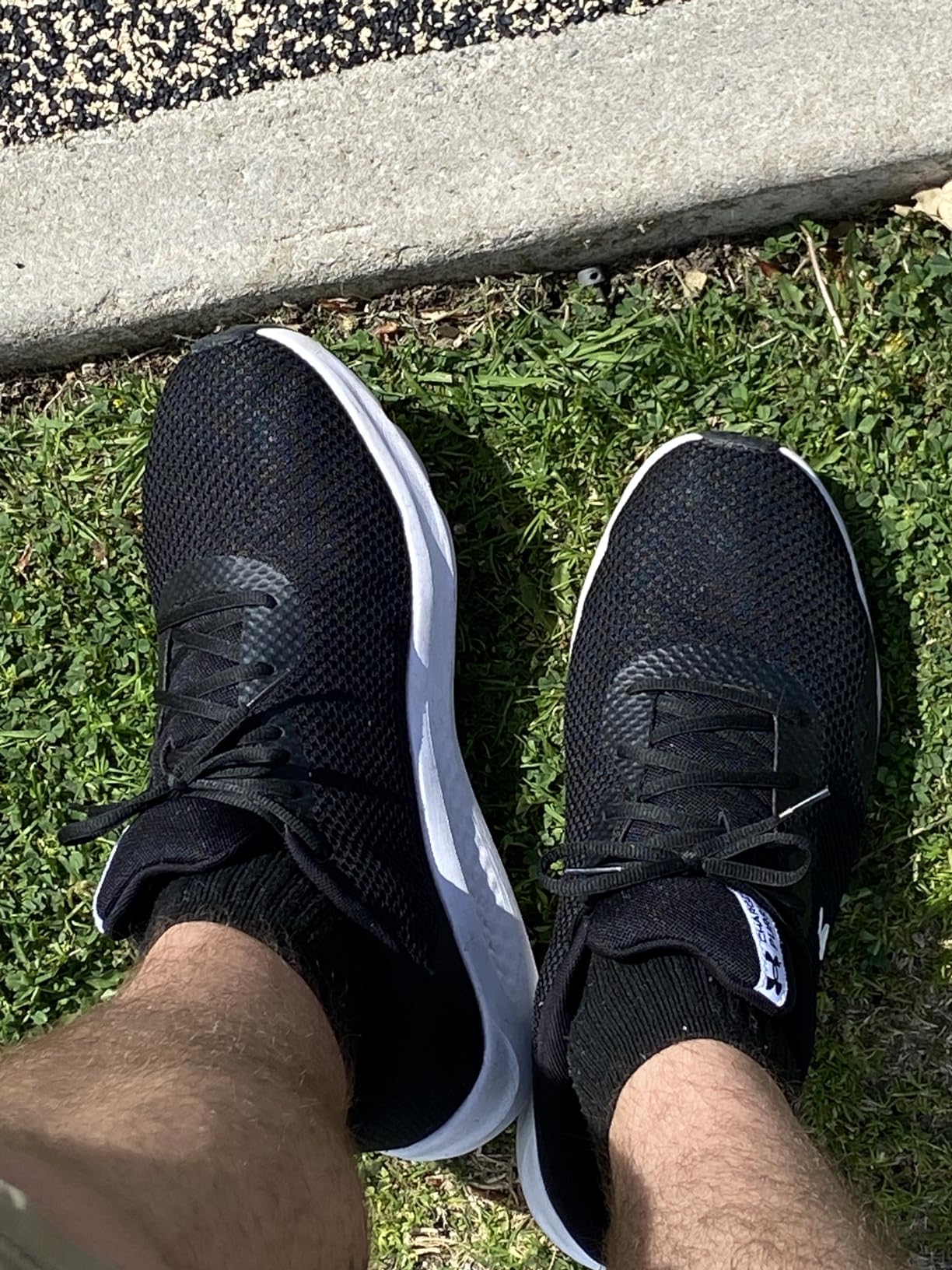
The first time I slipped these on, my immediate reaction was: firmer than I expected. Not harsh, but definitely not the marshmallow-soft foam you get from some budget trainers. That firmness took about 15 miles to fully appreciate, which I’ll get into shortly.
The Mile-8 Test: Where Charged Cushioning Actually Matters
What Firm Really Means at 175 Pounds
Week 1, I ran 3 miles in these and came back with mixed feelings. The cushioning felt responsive — almost stiff compared to the softer EVA I’d been wearing — and I wasn’t sure if that was a feature or a flaw. By week 4, I had my answer.
My Sunday 8-miler is where the shoe either proves itself or gets replaced. At 175 pounds, I’ve had cheap shoes bottom out on me by mile 6 — you know the feeling, when every footfall suddenly lands a little harder and your knees start complaining. The Charged Pursuit 3 didn’t do that. Miles 1 through 6 were responsive and consistent. By mile 6, my calves were working harder than usual — the firm platform requires more muscle engagement to push off — but the shoe itself held form right through mile 8. That’s the difference between cushioning that performs and cushioning that pretends to.
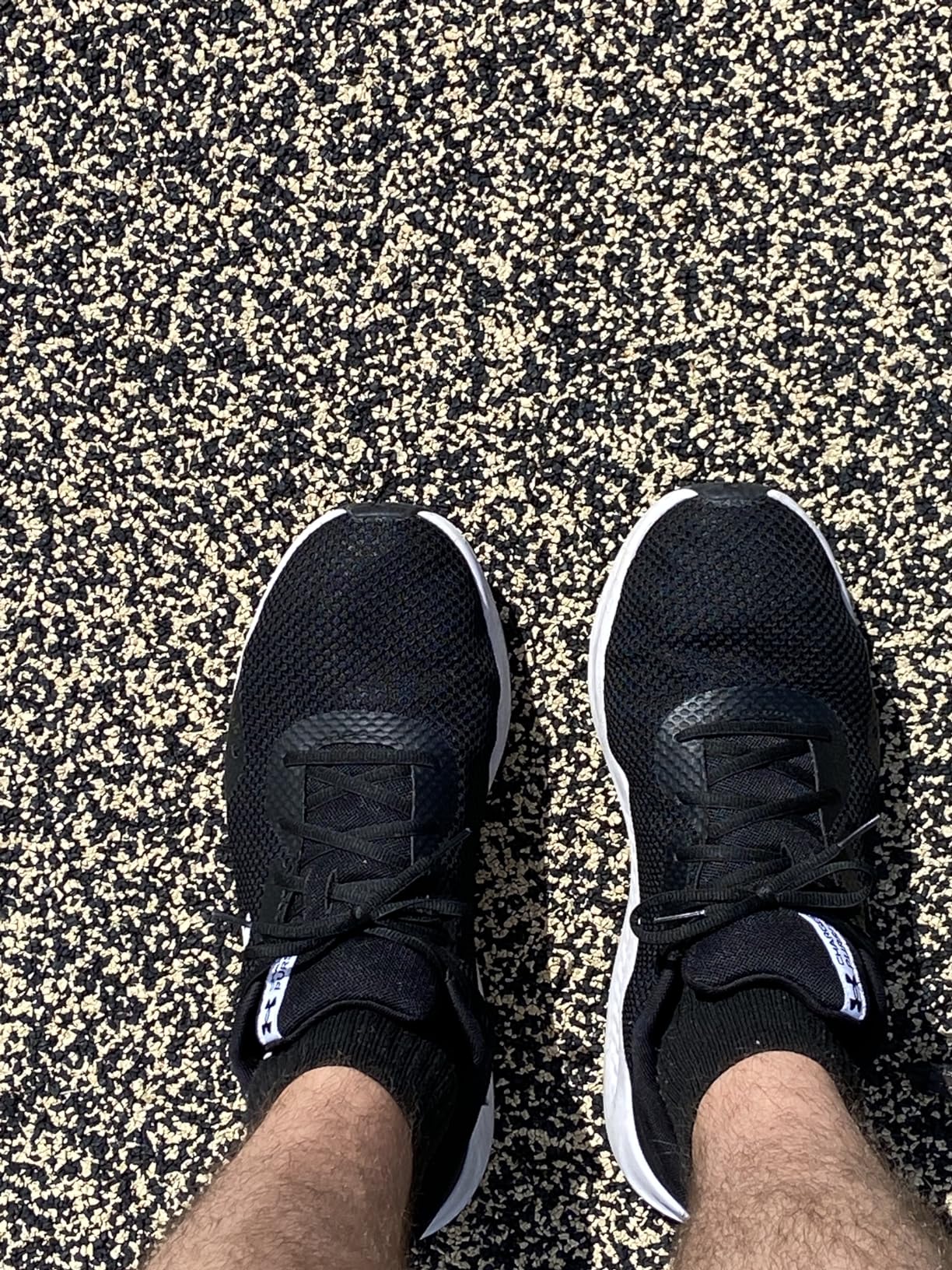
For interval work at the track, that firmness becomes a clear advantage. Running my tempo pace around 7:15 minutes per mile, the responsive underfoot feel actually helped maintain turnover — I wasn’t losing energy to foam compression the way I would in a softer shoe. It’s not the same as wearing carbon-plate New Balance FuelCell Rebel V4 (don’t kid yourself), but for a $50 trainer, the energy return is genuinely there.
One note for the data-minded: RunRepeat’s lab measured the actual drop at 9.6mm, slightly higher than the 8mm advertised. For most runners this won’t register, but if you’re drop-sensitive, worth knowing.
Surface-by-Surface: Where These Actually Run
Road and Track Performance
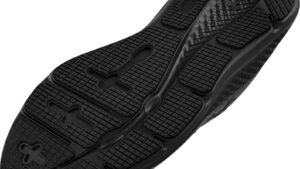
Asphalt and concrete make up about 80% of my running mileage, and the Charged Pursuit 3 handles both without drama. The outsole grip is reliable without being sticky — traction is sufficient even on light rain-dampened pavement. After 156 miles, the tread shows even wear with no premature thinning. RunRepeat’s lab measured the outsole at 84.3 HC hardness and 4mm thick, which puts it above average in durability. Harder rubber trades some wet-surface grip for longevity; on dry roads and rubberized track surfaces, it’s more than adequate.
The Gym Angle Nobody Mentions
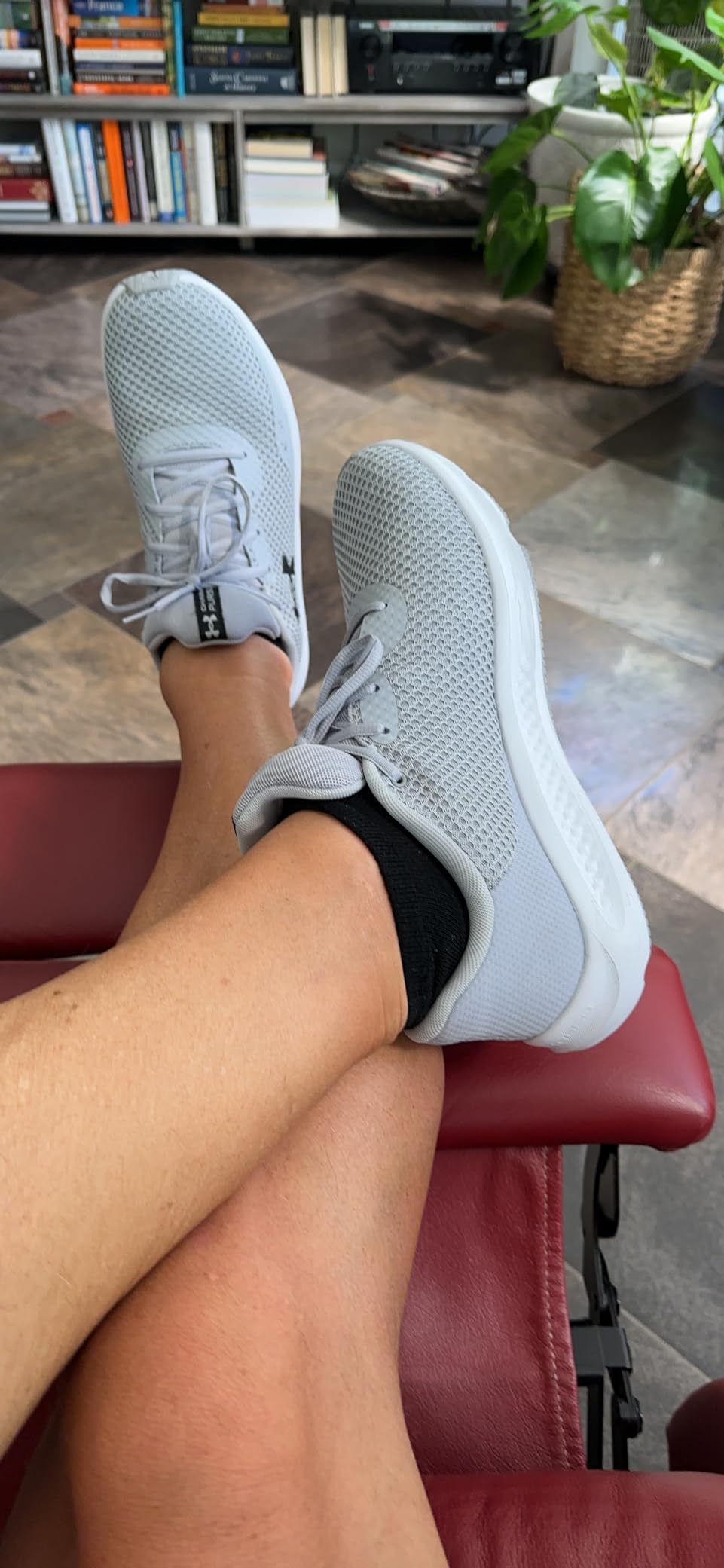
Here’s something that surprised me: these cross-train better than most dedicated training shoes I’ve worn. The firm Charged Cushioning, which feels stiff on easy runs, becomes an advantage in the weight room. Soft foam compresses under lateral force during split squats or side shuffles — you lose the stable base. The Charged Pursuit 3 doesn’t do that. I’ve done deadlifts, heavy squats, HIIT circuits, and plyometric work in these without issues. None of the competitors review this angle, and it’s a real differentiator for runners who lift.
Treadmill performance was also better than I expected — consistent grip, no slipping, and the responsive cushioning handles impact precision better than mushy foam alternatives.
Eight Weeks of Weather: What the Mesh Actually Handles
Between January and March, my runs covered conditions from 32°F morning sessions to 78°F humid afternoons. A few things became clear.
The structured upper doesn’t stiffen in cold weather, which was my biggest concern. At 35°F, the shoe felt identical to how it performed at 60°F — no brittleness, no reduced flexibility. Cheaper budget materials often get stiff in the cold and lose some of their flex-groove mobility; the Charged Pursuit 3 avoided that problem entirely.
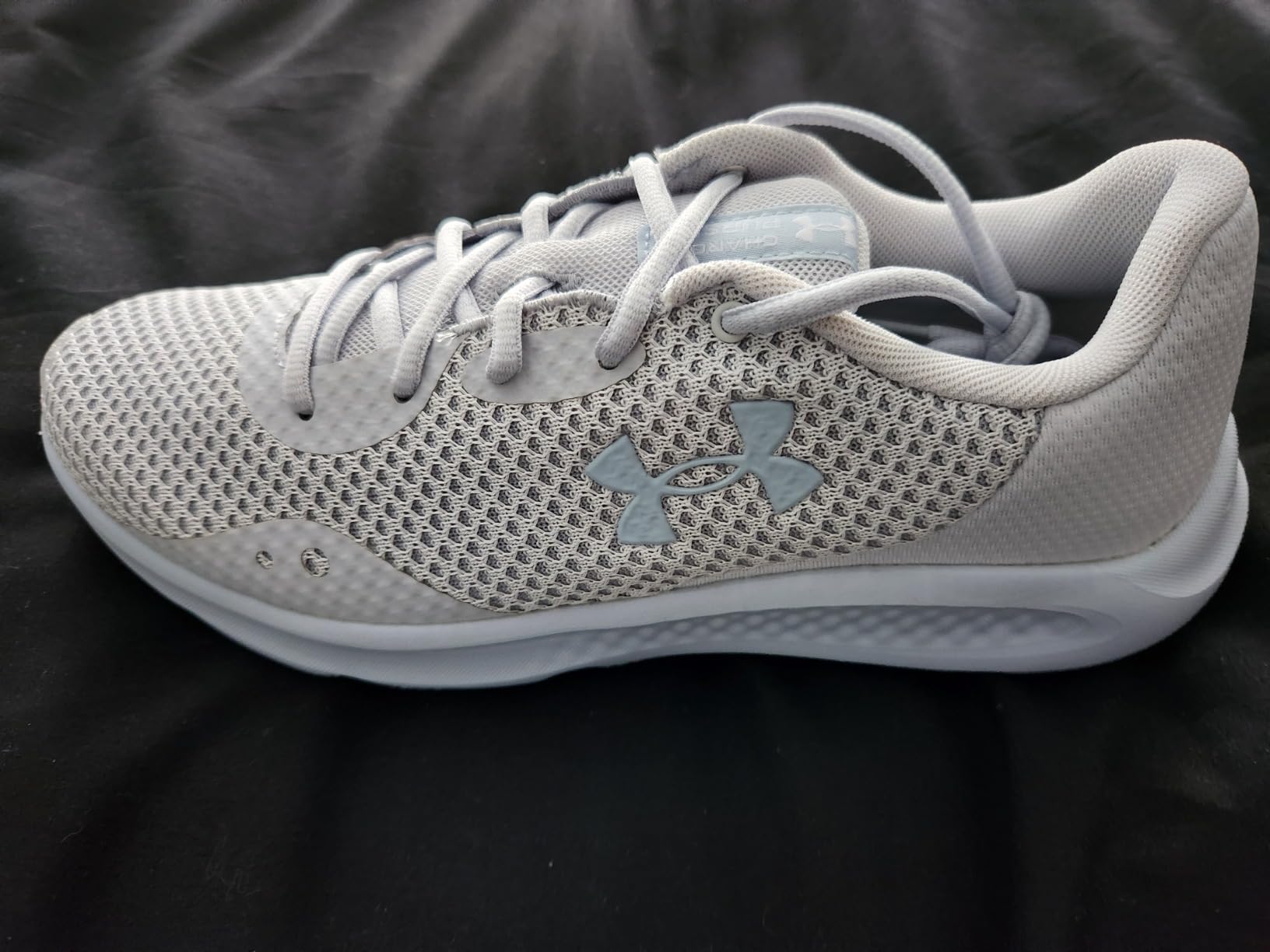
Hot-weather breathability is adequate but not exceptional. During a 78°F 6-miler in high humidity, my feet stayed reasonably comfortable — not the steam-room experience I’ve had in non-mesh shoes, but not as cool as premium engineered knit uppers either. For $50, the ventilation is more than acceptable.
The waterproofing situation is simple: there is none. Performance mesh soaks through in about 20 minutes of moderate rain. That’s not a design flaw — it’s just an honest trade-off for the breathability. Know it going in and plan accordingly.
Durability After 156 Miles
At week 8, the shoe looks like it’s been run in but not beaten up. The mesh upper is intact with no fraying or separation at the overlays. The midsole shows no visible compression or breakdown — the Charged Cushioning still feels close to how it did on day one. Outsole wear is even across the heel and forefoot, which is what you want to see.
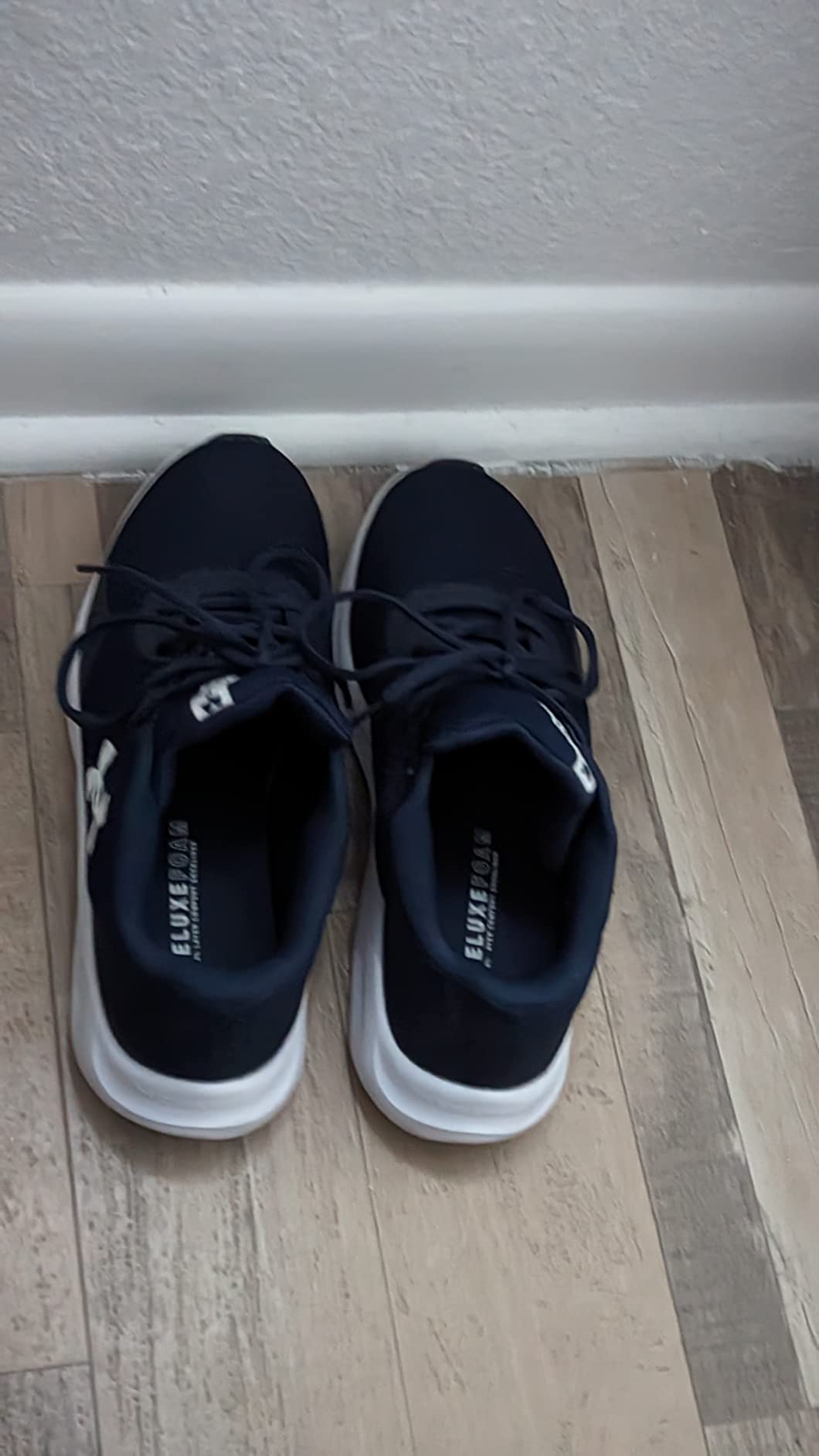
The one area showing early signs of wear is the heel padding. RunRepeat’s lab rated it 1/5 on durability — the weakest component in the shoe. By month 2–3 with daily use, you’ll feel it thinning. For runners logging 15–20 miles a week, this isn’t urgent; for daily runners doing 35+ miles, plan on either a Sof Sole insole upgrade around month 3 or accepting some cushioning reduction at the heel.
The cost-per-mile math still holds up: at 350-mile lifespan, $50 ÷ 350 = about $0.14 per mile. Compare that to the ASICS Gel-Nimbus 27 at $160 for roughly 500 miles — $0.32 per mile, more than twice the cost. Or the Brooks Glycerin StealthFit 21 at $160 for similar mileage. The value math isn’t even close.
The Details That Add Up
The deluxe foam sockliner molds to your foot shape over the first few runs and stays comfortable through the testing period. Critically, it’s removable — if you run with custom orthotics, the Charged Pursuit 3 accommodates them without hassle. Some flat-foot runners find this particularly useful since the stock arch support is moderate rather than aggressive.
Sizing runs true for most runners, with one important caveat: the toe box feels narrower than the actual measurement suggests, thanks to the overlay construction. RunRepeat measured 100.9mm toebox width (technically wide), but the overlay wrap creates a firmer feel around the toes. For standard-width feet, TTS is the right call. Wide-foot runners should size up or look elsewhere. If you’re switching from the Charged Pursuit 2, size up half a size — the 3 runs slightly smaller.
Quality Control: The Honest Assessment
Under Armour’s QC at this price point is inconsistent. My test pair arrived clean and well-assembled, but community feedback across Amazon and running forums documents two recurring issues: visible glue marks on the upper panels (not widespread, but enough to be a consistent complaint), and color inaccuracy on the red/blue colorway — it photographs red/blue but arrives looking orange. The light grey colorway I tested matches the product images accurately.
These aren’t defects that affect performance, but they’re below what you’d expect from the Under Armour name. At $50, it’s a trade-off you accept; order from a retailer with free returns and do a quick inspection when the box arrives.
My Scores
Performance Scores — Mike’s 8-Week Assessment
Comfort
7.5/10
Durability
8.2/10
Performance
7.8/10
Value
9.1/10
Versatility
8.5/10
Overall
8.0/10
Comfort (7.5/10): No break-in needed, lace and tongue design are genuinely good. The firm platform works well for the first 6 miles; calf engagement and fatigue onset for 175-lb runners around mile 6–7 pulls the score down from higher. Not the shoe for max-cushion seekers.
Durability (8.2/10): Outsole and upper construction are impressive at this price. Heel padding weakness (1/5 RunRepeat) and QC inconsistency prevent a higher score. Expected 300–400 mile lifespan is realistic.
Performance (7.8/10): Handles pacing, intervals, treadmill, and gym work without compromise. Not specialized for any one activity, but competent across all of them. Wet-surface grip is its weakest performance point.
Value (9.1/10): $0.14 per mile at 350-mile lifespan. Hard to find better at this category. The one score that’s objectively high without caveats.
Versatility (8.5/10): Road, track, treadmill, and gym floor covered. The firm cushioning is an asset for cross-training, not just running. Not for trails or wet-weather running.
Who Should Buy This (and Who Shouldn’t)
✅ Right shoe if you:
- Run 15–30 miles per week on roads and track
- Cross-train or lift weights and want one shoe that handles both
- Prefer responsive, ground-connected cushioning over plush foam
- Have standard-width feet (medium/D width)
- Want genuine $80-shoe performance at $50
- Are switching from the Charged Pursuit 2 (size up half a step)
❌ Consider alternatives if you:
- Have wide feet — the overlay construction will feel restrictive
- Need maximum cushioning for joint issues or runs beyond 10 miles regularly
- Run in wet or rainy conditions frequently — this shoe soaks through
- Log 40+ miles per week where durability becomes a monthly cost calculation
- Run trails — the outsole compound isn’t designed for technical terrain
Better Options for Specific Needs
For plush cushioning: The Brooks Glycerin StealthFit 21 delivers a noticeably softer ride, though at $160 you’re paying more than 3× the price. For a middle ground, the Nike Air Winflo 10 (~$90) offers better heel cushioning without the premium price.
For wide feet: The ASICS Gel-Cumulus 26 comes in wide widths with a genuinely roomier toe box, or consider the New Balance Fresh Foam X 880 V14 which is available in 2E and 4E widths.
For more Under Armour: If you want to stay in the UA ecosystem with a step up in cushioning, the Under Armour Charged Assert 9 is worth considering as a comparable budget option, or the Under Armour HOVR Rise 4 for a premium foam upgrade.
Final Verdict
After 156 miles and 8 weeks, the Charged Pursuit 3 earns 8.0/10. At $50, it’s one of the better value propositions in budget running, and the firm Charged Cushioning actually delivers on its energy-return promises if you give it 15 miles to click in. The gym versatility is a genuine bonus nobody talks about.
The honest limitations: heel padding wears faster than the rest of the shoe, the toe box doesn’t accommodate wide feet well, and you’ll have wet socks in anything beyond light drizzle. QC varies — inspect on arrival.
Would I buy them again? Already did. A second pair sits in my closet for rotation. At $0.14 per mile, running two pairs simultaneously extends both pairs’ lifespan — it’s simple math that budget runners figured out long before I did.
Frequently Asked Questions
How do the Charged Pursuit 3s fit compared to Nike or Adidas?
True-to-size for standard-width feet — sits close to Nike running sizing. The toe box feels slightly narrower than Adidas due to overlay construction, though the actual measurement (100.9mm per RunRepeat lab) is technically wide. If you’re switching from the Charged Pursuit 2, go half a size up; the 3 runs slightly smaller than its predecessor.
Are these good for the gym and weight training?
Better than most dedicated running shoes, actually. The firm Charged Cushioning doesn’t compress under lateral force, making it more stable for squats, deadlifts, and HIIT circuits than soft-foam alternatives. I used them for strength training throughout my 8-week test without issues.
Are they waterproof?
No. Performance mesh breathes well but offers no water resistance — soaked in about 20 minutes of moderate rain in my testing. Not designed for wet conditions. If waterproofing matters for your running environment, look at dedicated trail or waterproof shoes.
How long do they typically last?
Based on 156 miles of testing and community feedback: 300–400 miles is realistic. The heel padding shows wear first, usually around month 2–3 with daily use. At $50 and approximately $0.14 per mile, that’s strong cost-per-mile value at this price tier.
Are these suitable for marathon training?
Reasonable for casual marathon prep under 40 miles per week. For serious marathon training (50+ miles/week), the heel padding durability becomes a meaningful cost factor, and you’d want more specialized cushioning for high-mileage long runs. A dedicated long-run shoe alongside the Charged Pursuit 3 for shorter workouts would be a smarter setup.
Do they work in cold weather?
Better than expected. I ran in 32–35°F conditions and the structured upper stayed flexible — no stiffening or reduced flexibility that sometimes happens with cheaper budget materials in the cold. The synthetic overlays hold their flexibility in cold temps. Below 25°F I can’t confirm; above 30°F, they performed identically to warmer-day runs.
Can I put custom orthotics in them?
Yes. The deluxe foam sockliner is fully removable, making the Charged Pursuit 3 orthotic-friendly. For flat-footed runners or those with plantar fasciitis, swapping the stock liner for a custom orthotic is straightforward. The toe box depth accommodates most aftermarket insoles without creating pressure issues.
What about the color accuracy issues?
The red/blue colorway is the main offender — it photographs as red and blue but arrives looking orange to many buyers. The light grey and black colorways I’ve seen are accurate. If color matters, stick to the neutral colorways or order from Zappos where returns are easy.
Performance Summary
| Category | Score | Key Finding |
|---|---|---|
| Initial Comfort | 7.8 | No break-in needed; firm but not harsh from day one |
| Cushioning Performance | 7.5 | Holds through mile 8 at 175 lbs; calf engagement cost for firm runners |
| Durability & Build | 8.2 | Upper and outsole excellent; heel padding weakness at month 2–3 |
| Breathability | 7.4 | Adequate for 40–78°F range; not premium knit level |
| Traction & Grip | 8.0 | Reliable on dry surfaces; hard outsole reduces wet grip slightly |
| Fit & Sizing | 7.6 | TTS for standard width; overlays create narrow feel for wide feet |
| Gym Versatility | 8.5 | Firm cushioning advantage for lateral training and lifting |
| Value | 9.1 | $0.14/mile; competes with $80–100 alternatives |
| OVERALL | 8.0 | Best value at $50; strong daily trainer with honest limitations |
Be the first to review “Under Armour Mens Charged Pursuit 3”
Related products
Running Shoes
Running Shoes
Running Shoes
Running Shoes

Running Shoes
Running Shoes
Running Shoes
Running Shoes
Reviews
There are no reviews yet.