
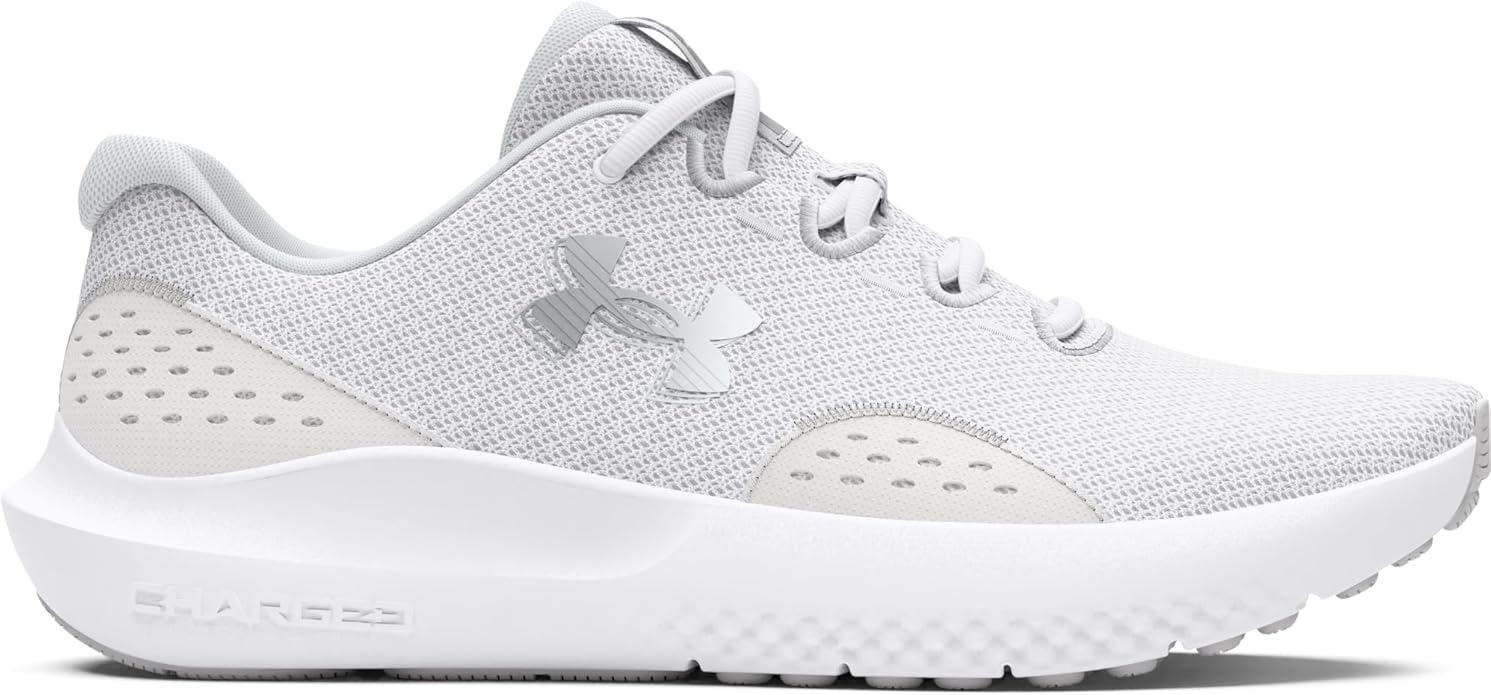
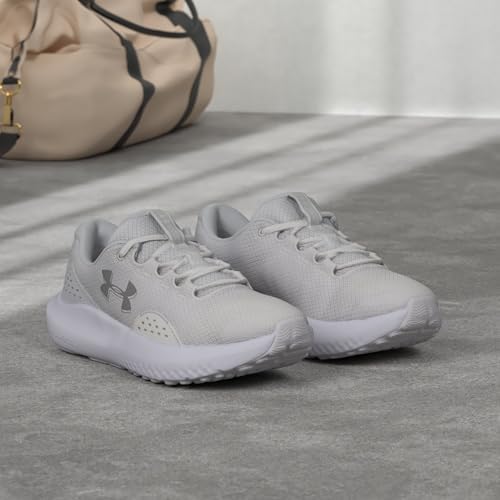
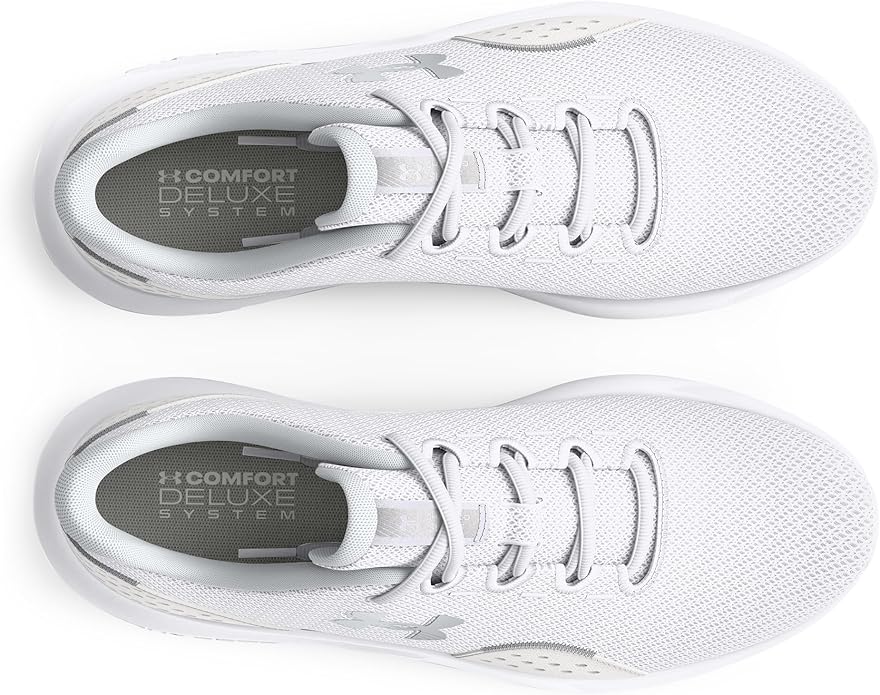
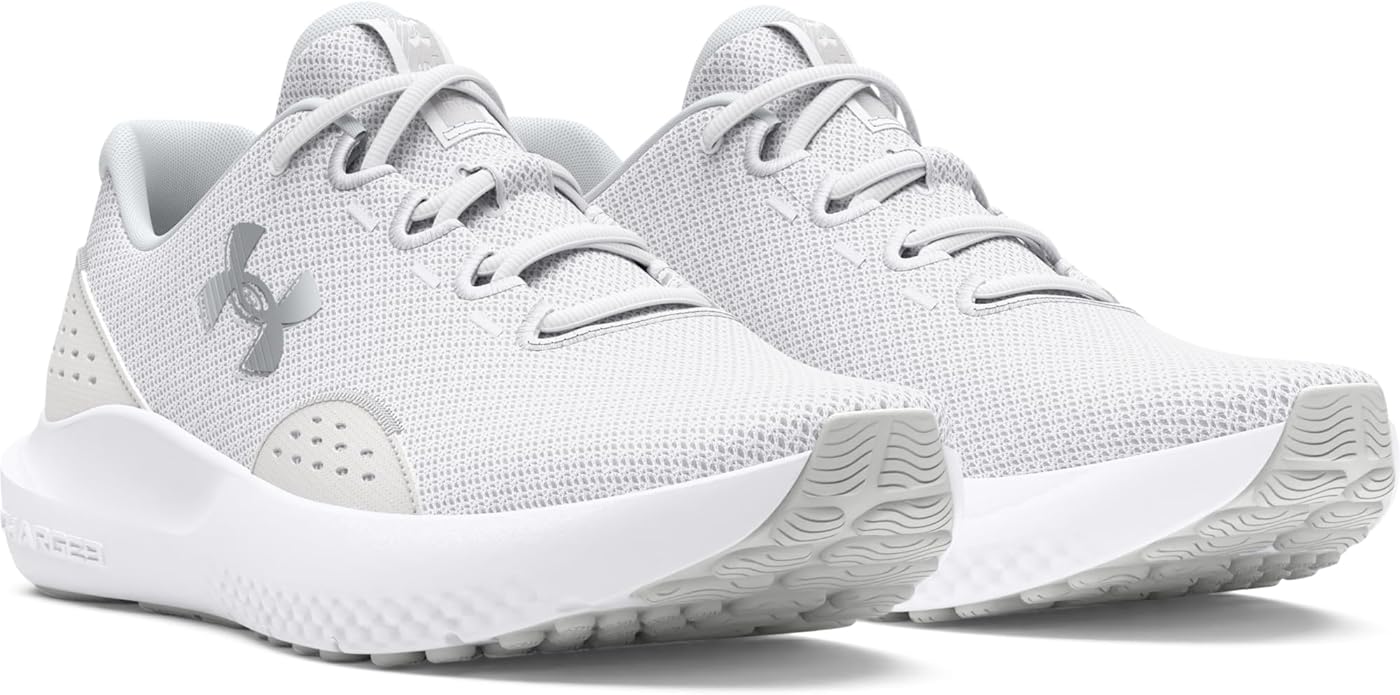
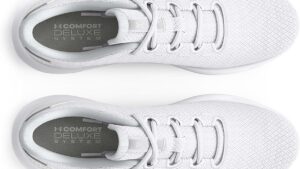
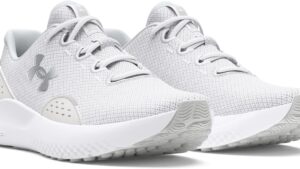
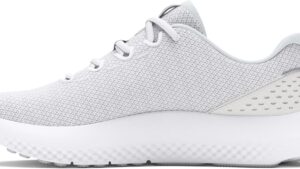
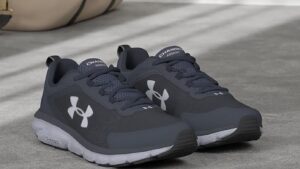
Six weeks ago I picked these up half-skeptical. At $65, the Under Armour Women’s Charged Surge 4 doesn’t come with hype or a foam with a clever name — just a clean polyester upper and a promise of all-day comfort. I’m Sarah, and my typical day runs from a 6 AM treadmill session to 9 PM school pickup with roughly everything else jammed in between. What I needed wasn’t a running shoe. I needed something that could quietly handle real life without making me regret buying it. What I found after 40+ sessions and 120+ miles — including a Disney trip with 25,000 steps in a single day — was a shoe that taught me something I didn’t expect: a low lab score can be exactly the right score for the right person.
Technical Specifications
- 💰 Price: $65 MSRP (frequently on sale $50–60)
- ⚖️ Weight: 10.4 oz lab-measured (RunRepeat) / 10.05 oz brand claim (size 8)
- 📏 Drop: 9.0mm lab / 8mm brand spec
- 🧱 Heel Stack: 33.5mm | Forefoot: 24.5mm
- 💡 Midsole: Charged Cushioning® — firm (26.0 HA vs. avg 20.4 HA)
- 👟 Upper: Polyester mesh with synthetic overlays
- 🏃♀️ Category: Daily trainer / lifestyle sneaker
- 🎯 Best for: All-day standing, shift workers, gym + errands
- ⚠️ Energy Return: 42.4% heel (bottom 3 of 300+ tested) — read why this is fine below
- ✅ Removable Insole: Yes — orthotic-compatible
- ⚠️ Reflective Elements: None — safety gap for night walkers
- 📊 Sizing: 83% true-to-size (163 Zappos reviews)
- ⏱️ Testing: 6 weeks, 40+ sessions, 120+ miles
First Impressions: What $65 Actually Looks Like
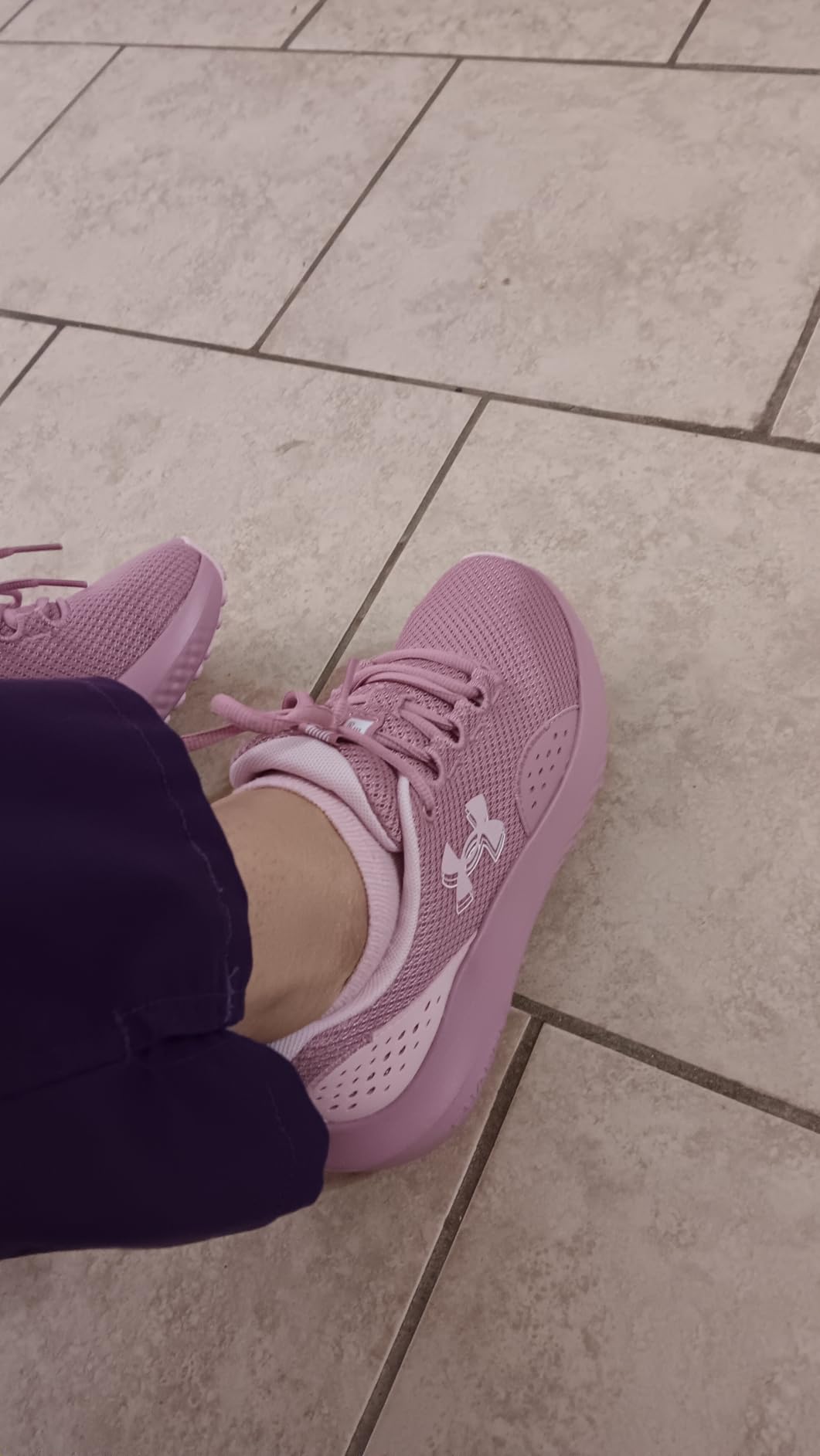
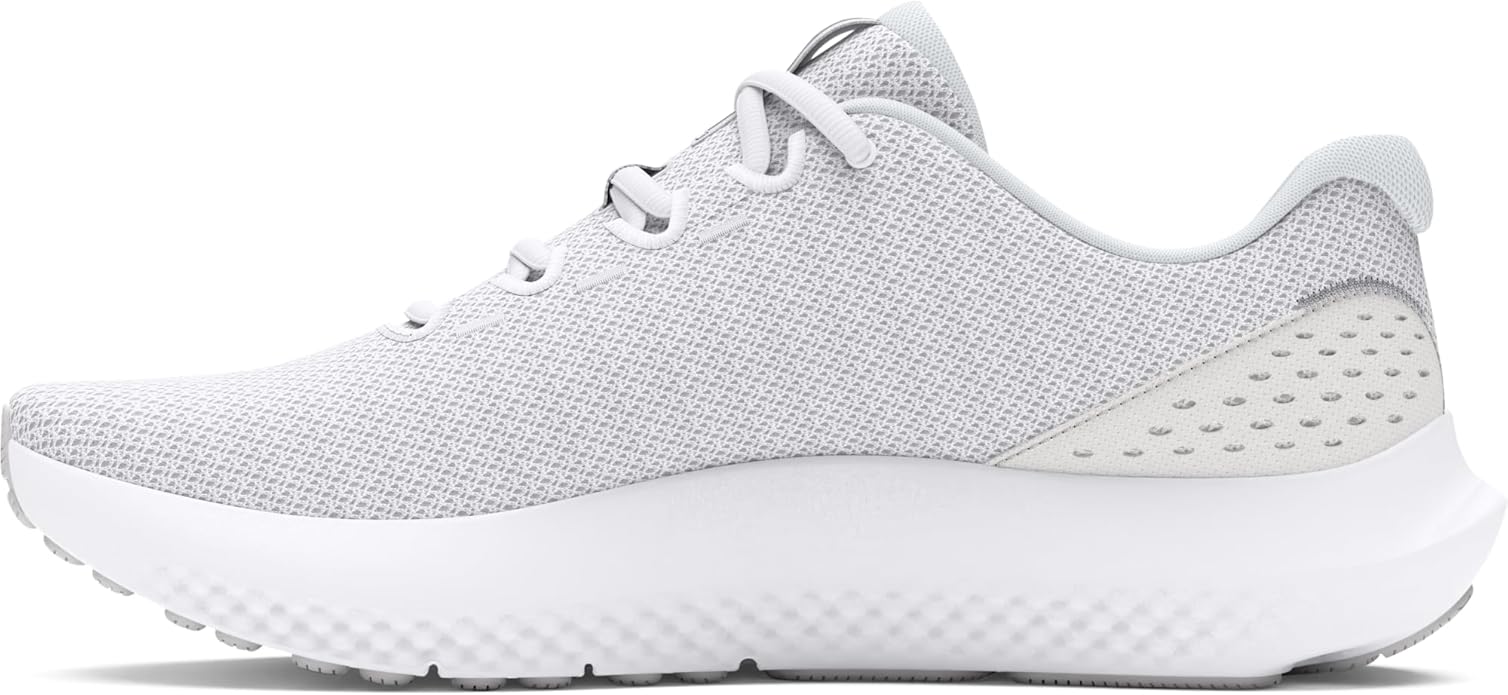
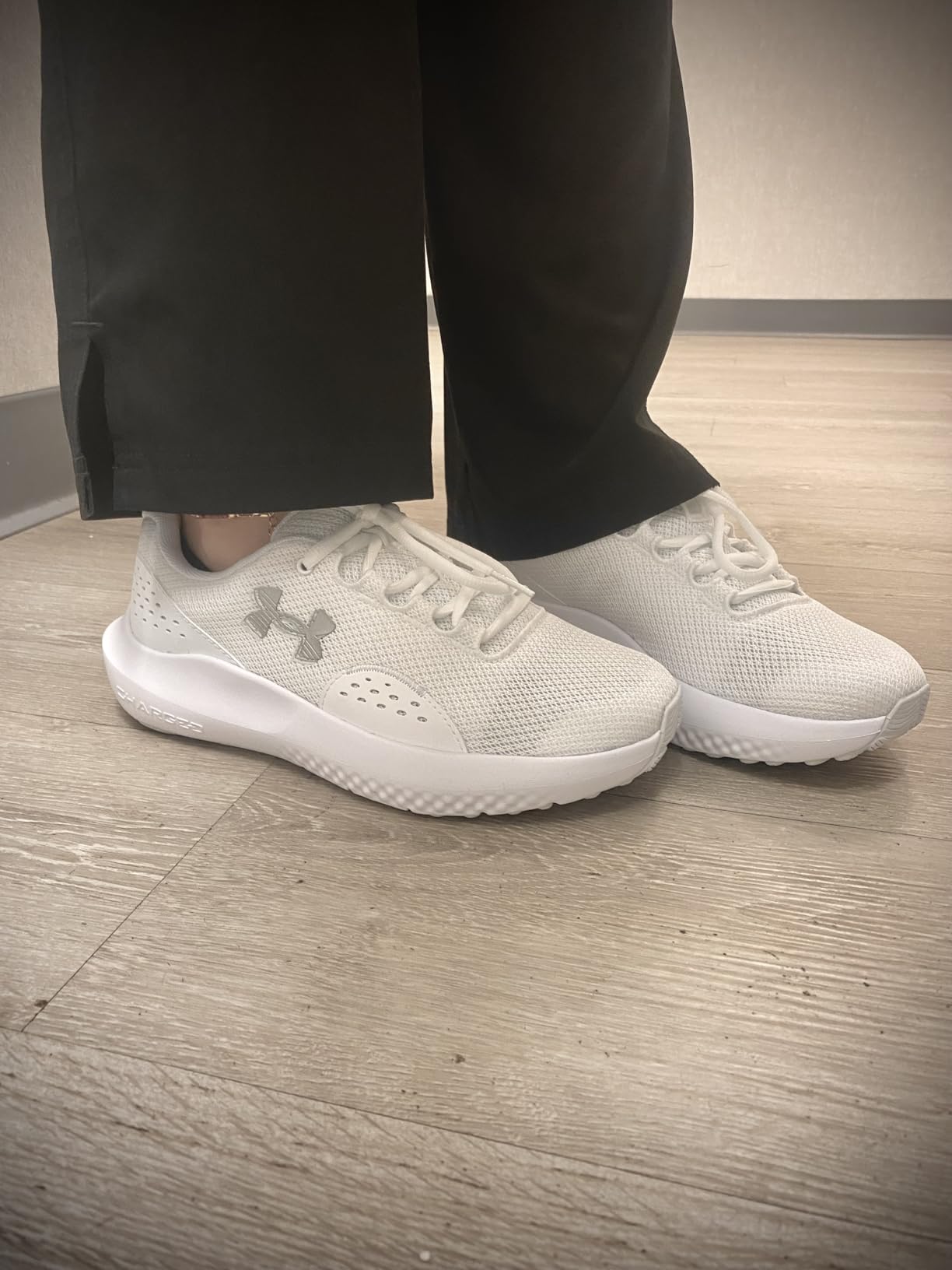
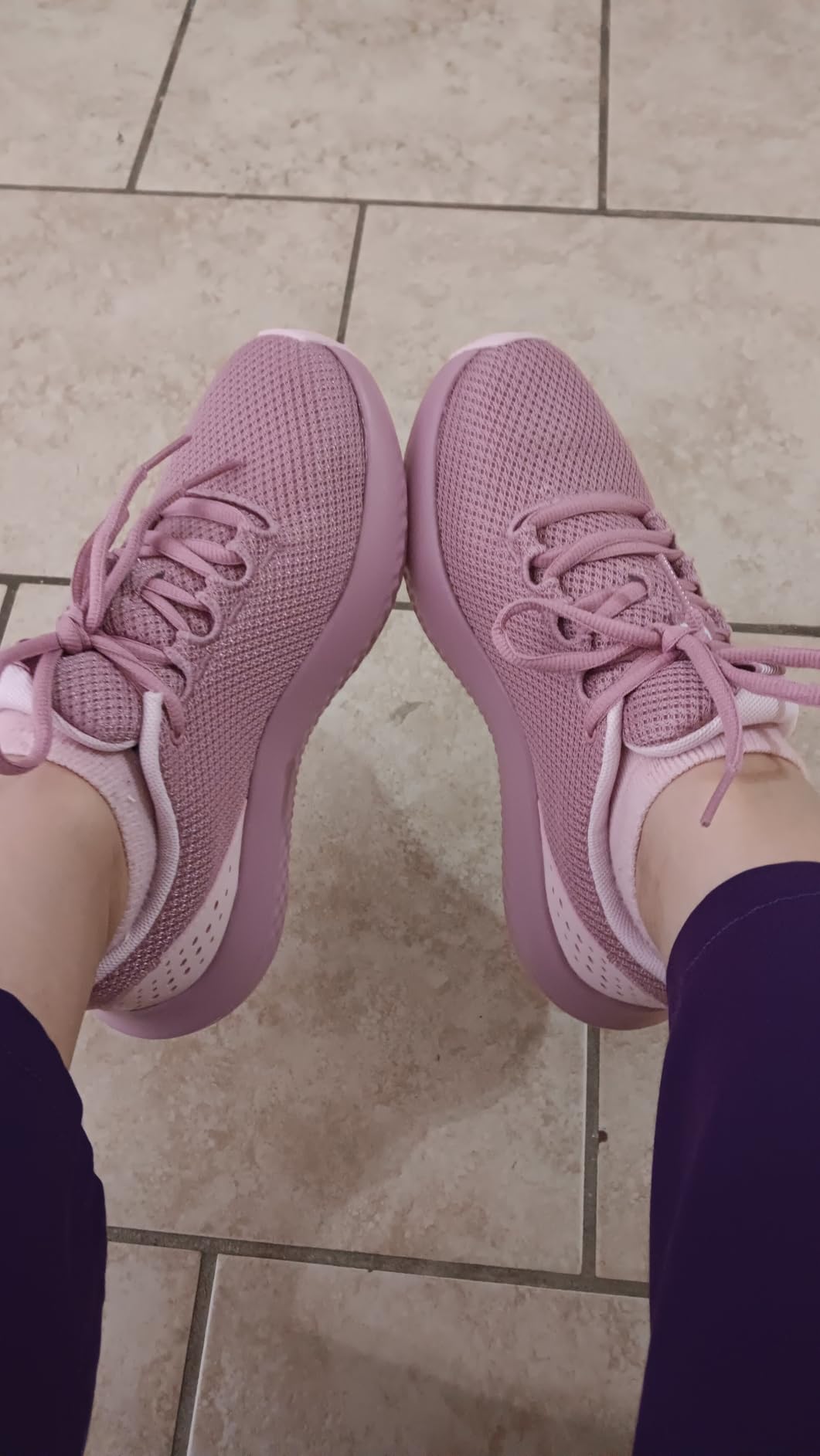
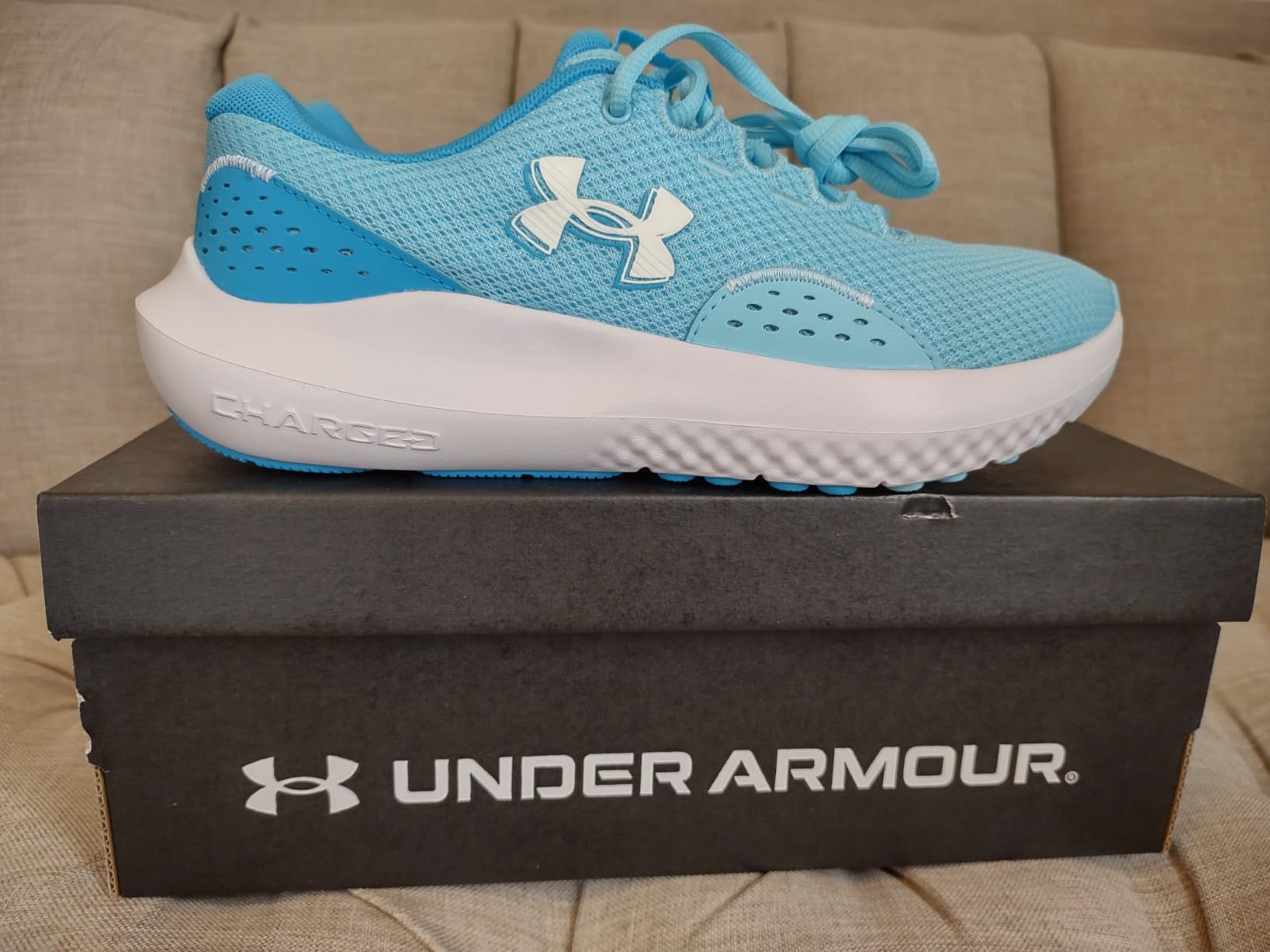
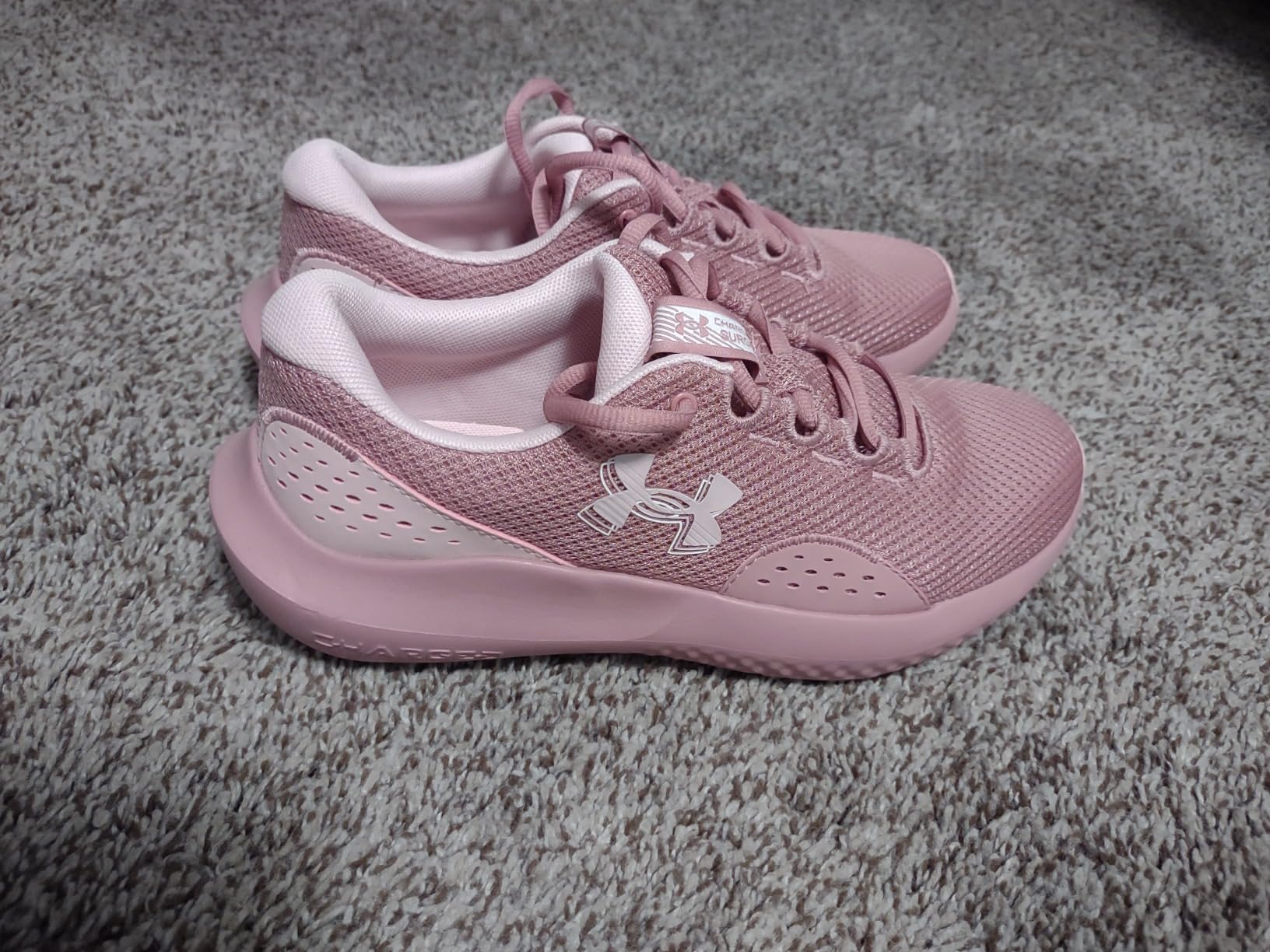
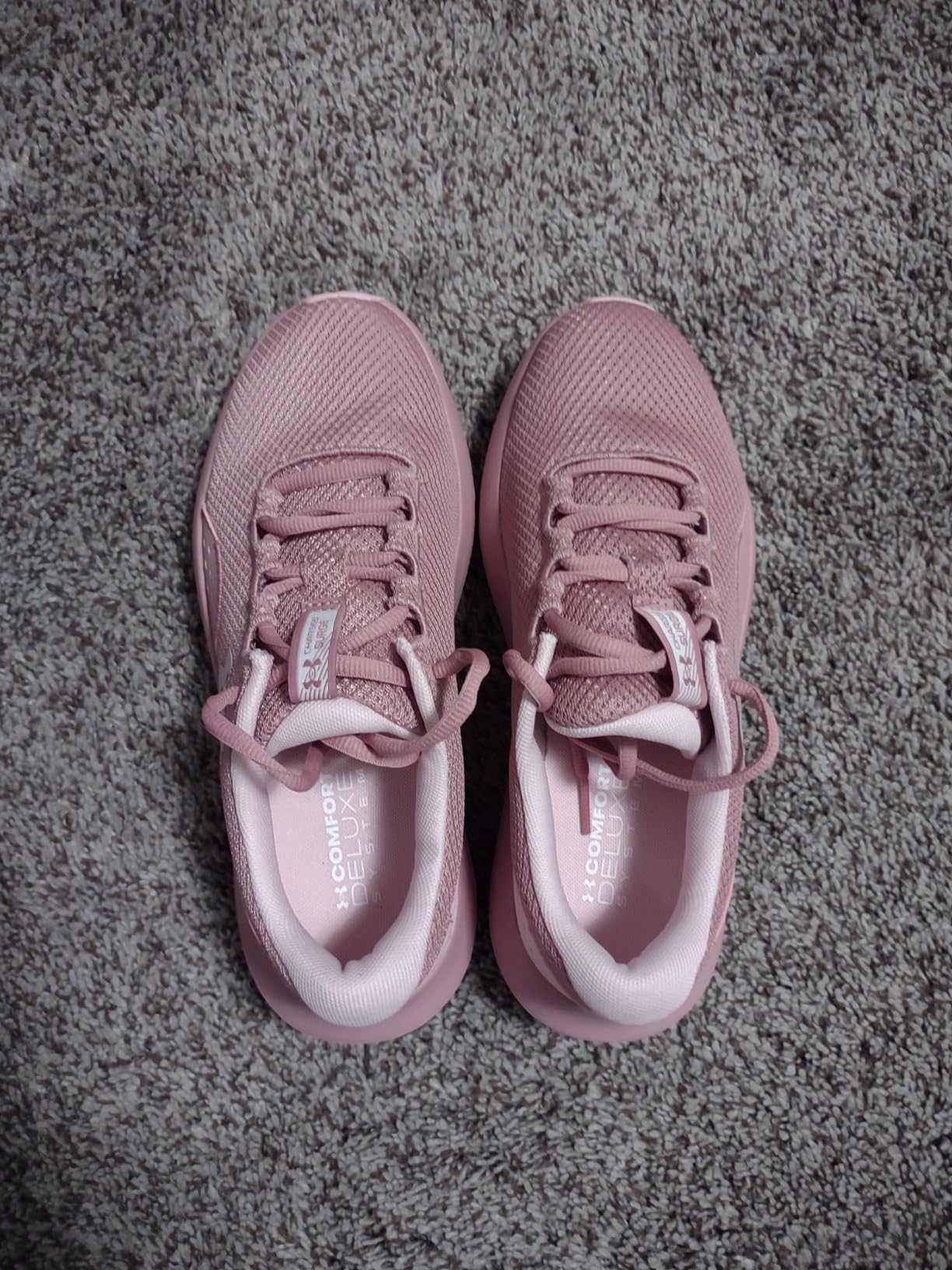
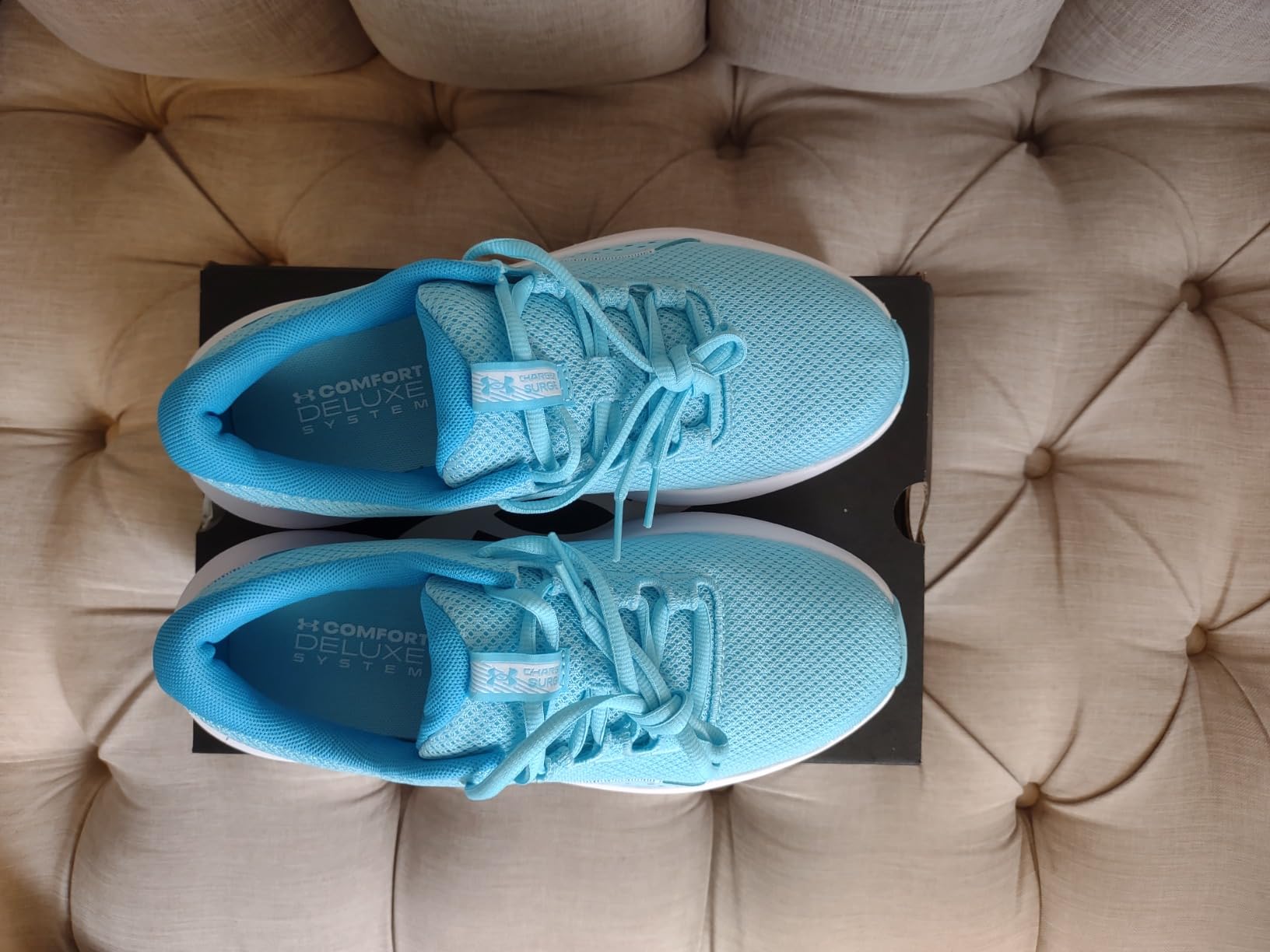
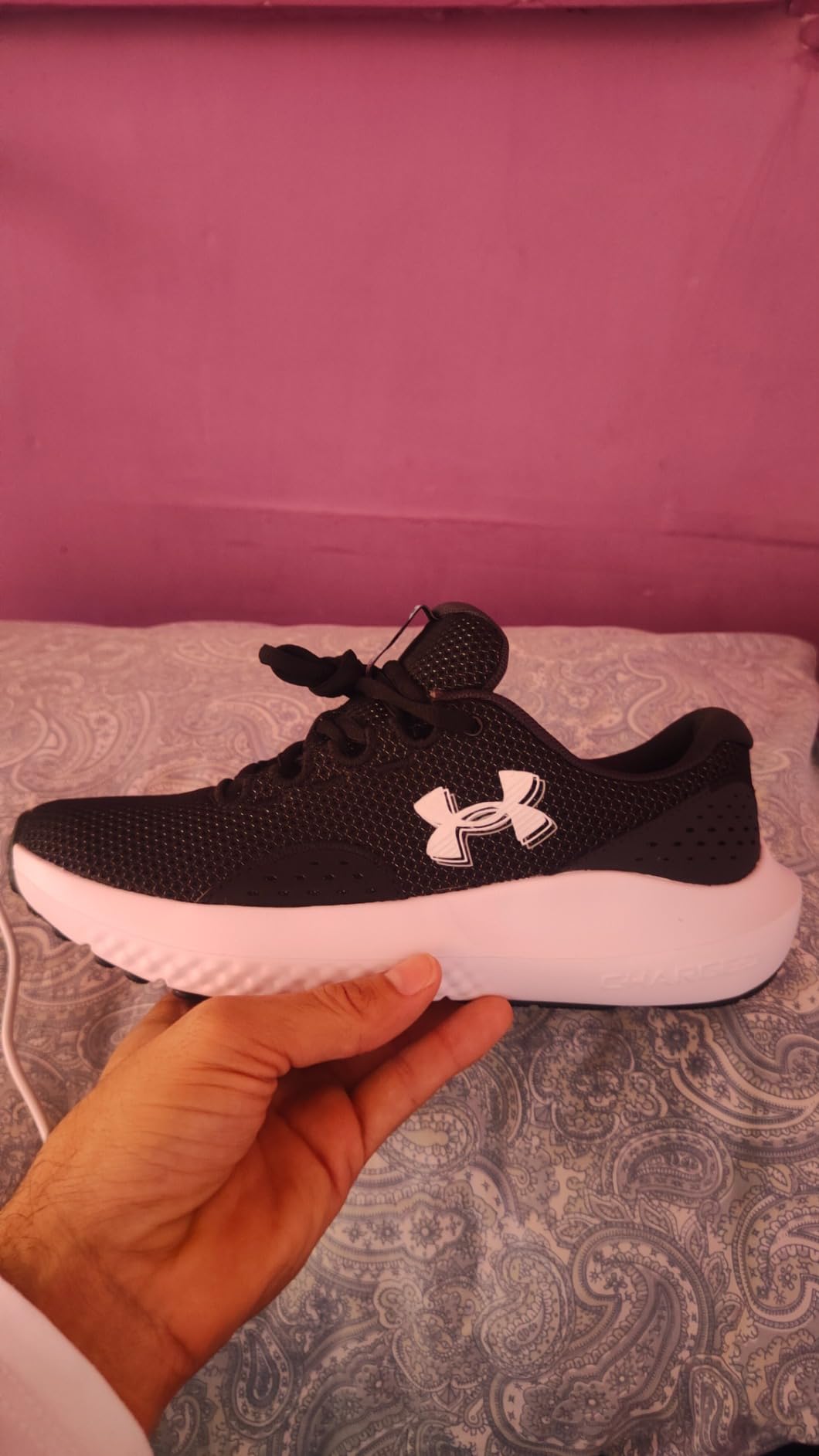
Out of the box, nothing shouts at you. No aggressive sole geometry, no flashy branding parade across the upper. The polyester mesh feels thin to the touch — not cheap, but utilitarian. The synthetic overlays give it structure without adding bulk. The laces are long. Like, genuinely too long. Double-knot them on day one and don’t think about it again.
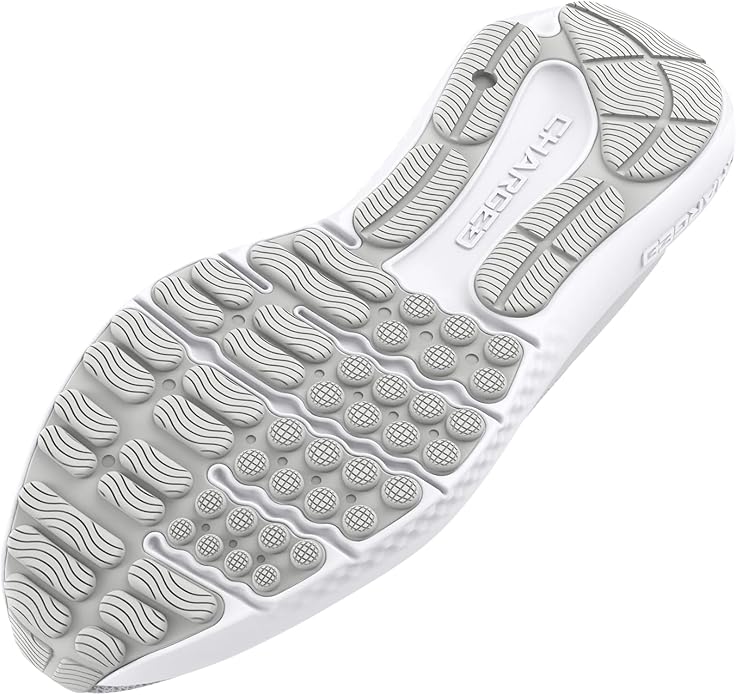
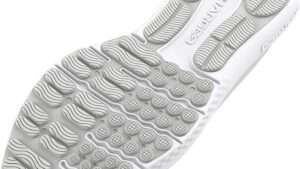
What did catch my attention immediately was the outsole. It’s thick. RunRepeat’s lab measured 4.5mm of rubber — that’s 40% thicker than the category average of 3.2mm. When you’re building a shoe at this price point, you make trade-offs. Under Armour apparently traded cushioning plushness for sole durability. That decision ripples through everything else about the shoe.
The ankle collar padding is noticeably generous for the price tier. RunRepeat measured the tongue at 7.8mm — the category average is 5.7mm. That’s not marketing padding. It prevents lace-bite during extended wear. The heel counter is moderate — solid enough to keep your foot placed, not stiff enough to cause friction. One thing you won’t find: a heel tab. Getting these on is a two-handed operation every time.
The Energy Return Paradox (The Most Important Thing I Can Tell You)
Here’s where the review gets interesting, and where every other write-up on this shoe falls short.
RunRepeat lab cut the Charged Surge 4 in half and measured its energy return. The result: 42.4% in the heel and 39.2% in the forefoot. For context, the category average is around 58%. That puts this shoe in the bottom three of the three-hundred-plus shoes RunRepeat has ever tested.
That sounds terrible. It isn’t. Let me explain why.
Energy return measures how much the midsole bounces back after each footstrike. High energy return shoes — Nike React, ASICS FLYTEFOAM BLAST, PUMA NITRO — push stored energy back up into your foot with each step. For runners chasing pace, that rebound matters. Every bit of energy returned means your legs work slightly less. Over 10 miles, it adds up.
But I’m not running 10 miles. Most of us aren’t. Most of us are standing in a pharmacy queue for 20 minutes, walking through three airport terminals, or doing what I did at Disney World — 25,000 steps across mixed terrain in 8 hours. For that kind of wear, you don’t want bounce. You want a stable platform that absorbs impact quietly and holds. A reactive midsole under hours of low-intensity walking actually creates a subtle but real accumulation of leg fatigue. The shoe becomes work instead of support.
The Charged Surge 4’s midsole is firm (26.0 HA vs. the average 20.4 HA). It absorbs shock and stays there. No bounce-back. That’s the entire design philosophy: a predictable, stable foundation. And it’s exactly why 163 Zappos reviewers rate it 4 or 5 stars — 98% positive, with nurses specifically citing 12-hour shifts where they didn’t need to add custom insoles. Shift workers don’t want reactive shoes. They want reliable ones.
The energy return score isn’t a flaw. It’s the feature. Once you understand that, the whole shoe makes sense.
Cushioning Reality: What the Firm Midsole Means Over Hours
On the treadmill, the firm midsole felt exactly right. During my 6 AM gym sessions — 45 minutes of walking and light jogging at easy pace — the stability was actually better than my previous softer trainers for weight work. No sinking, no wobble. A solid platform to push off from.
Where the firmness tells a different story is during extended low-intensity wear. The shock absorption score is 114 SA versus the category average of 130 SA. In practice, what that translates to is a comfort ceiling somewhere around the 7–8 hour mark. The Disney test confirmed this precisely: hours 1 through 6, no issues. Step 18,000 into the day, I still felt fine. By hour 8, with around 22,000 steps accumulated, my feet were heavy but not painful. The shoe had done its job — it just reached its limit at about the same time I did.
One thing I genuinely didn’t expect: cold weather consistency. RunRepeat tested the midsole in their freezer (20 minutes at 32°F) and found only a +12% firmness increase. The category average is +23%. What this means practically: the shoe feels essentially the same in January as it does in July. For someone who runs year-round errands, that’s a quiet advantage no competitor bothered to mention.
A word on the insole: it’s 3.9mm thick, below the category average of 4.5mm. And it’s fully removable. If you have plantar fasciitis or custom orthotics, you can swap it out immediately. Pair these with Sof Sole Athlete Insoles or Valsole Orthotic Insoles and you’ve got a very different shoe — one that extends the comfort ceiling by another two to three hours.
Fit and Sizing: The Honest Version
The good news: 83% of 163 Zappos reviewers said these fit true to size. 82% felt true to width. That’s a strong consensus for a budget shoe.
But batch variance exists. One Zappos reviewer wore a 9.5 in her old pair, sized to a 9 in her new order, then later got a second 9.5 and found it too big. A separate source noted a customer received a pair two full sizes off. This isn’t a systemic design problem — it’s the expected quality variance at $65. It can be navigated, but it requires ordering from a retailer with generous returns. Zappos’ 365-day return policy essentially turns the website into your fitting room. Order from there, not Amazon.
The shape of this shoe is asymmetrical in an interesting way. The upper’s widest point measures 98.5mm — wider than the category average of 95.2mm. That’s genuinely good news for wider feet. However, the toebox height is 24.5mm versus the category average of 27.0mm. That’s a low-volume toebox. For standard and low arches, there’s ample room. For high arches, that compression point can cause discomfort after 4–6 hours as the upper pushes against the arch. No competitor mentions this. It’s worth knowing before you buy.
Sizing decision: order TTS first. If you have high arches, consider going up a half size to create more vertical room. If you have wide feet and normal arches, TTS should work immediately. Use Zappos’ return window as your buffer.
Real-World Testing: Gym, Conferences, and a Disney Marathon
The gym test was simple and positive. Treadmill, easy jogging at conversational pace, light weights — the firm midsole shone for strength work. The traction score of 0.53 (category average 0.50) held up on the gym floor without any slipping. No cushioning complaints for 45-minute sessions. For dedicated cross-training shoes, the Charged Surge 4 functions perfectly as a secondary gym option at a fraction of the cost.
The all-day conference was the more revealing test. Seven AM to seven PM in a convention center — standing at booths, walking from session to session, occasional sitting. Hours one through six: nothing to report. The shoe was just there, quietly doing its thing. Hour seven: a faint awareness of my feet that wasn’t pain, just acknowledgment. By hour ten, I would have wanted relief. The 8-hour comfort ceiling is real. Plan accordingly if your workday runs longer.
Disney: 25,000 steps, eight-plus hours, mixed surfaces (concrete, tile, carpet, wet floors near a splash zone). The traction score proved itself on wet tile — zero slips. The midfoot stability held through uneven transitions. At step 12,000, I expected the fatigue to start. It didn’t until around step 20,000. Two days in a row in these shoes, and I finished each day with tired feet but no acute pain, no blisters, no hotspots.
Who These Shoes Are Actually Built For
The shift worker signal in Zappos reviews is impossible to ignore. A nurse writing “I stand 12 hours and didn’t need my custom insoles.” A service professional reporting “months of wear and still like new.” Spanish-language reviews confirming “tengo varios meses ya con ellos y están prácticamente iguales” — months in, still performing. The consistent pattern: healthcare, service, retail. People who need durable, stable, non-reactive footwear for jobs that would destroy cheaper shoes.
For shift workers buying two pairs in rotation — wear Pair A three days, Pair B two days, let each rest — the math works out well. Two pairs at $65 each equals $130. That’s less than a single premium daily trainer and gives you two shoes, both resting between uses, both lasting potentially twice as long. At an estimated 8-month lifespan per pair with regular use, you’re looking at roughly $8 per month per shoe.
The breathability score is 3/5 — below the 3.7 average. The polyester upper doesn’t breathe as well as open-weave mesh. One user testing at 300 pounds on concrete all day reported the shoes “breathe really well.” That’s a specific context, but it’s also the worst case. For most users at moderate temperatures, the breathability is adequate but not exceptional. Above 80°F with prolonged activity, expect warmth.
One safety note before the pros and cons: these shoes have no reflective elements. None. RunRepeat confirmed it. If you walk early mornings or evenings in low-light conditions, you need additional hi-vis gear. No competitor mentions this gap.
✅ Who Should Buy
- Shift workers — nurses, retail, security, food service — needing 8–10 hour daily comfort
- Busy women using one shoe for gym, errands, and school pickup
- All-day standers needing a stable, non-reactive platform
- Budget-conscious buyers who want durability over luxury feel
- Women with wide or standard feet, normal to low arches
- People who want orthotic compatibility from a removable insole
- Cold-climate wearers (excellent year-round midsole consistency)
- Gym-goers doing weight training who want a stable floor connection
❌ Who Should Skip
- Runners training for 5Ks or longer — low energy return limits performance. Consider Brooks Women’s Launch 10 or Nike Women’s Renew Ride 3 instead
- High-arch feet — 24.5mm toebox height may cause pressure after 4–6 hours
- Night walkers — zero reflective elements is a real safety gap
- Anyone who needs plush, reactive cushioning
- Hot climates (above 85°F regularly) — breathability is below average
- Narrow feet — the generous upper width (98.5mm) may feel sloppy
How It Compares to the Alternatives
The natural comparisons at this price tier are the Nike Downshifter 12 (around $65–70), New Balance Fresh Foam Arishi V4 (around $55–65), and the ASICS Gel-Nimbus series (higher tier, but ASICS budget options sit nearby). RunRepeat actually recommends Nike Downshifter 12 and NB Fresh Foam Arishi as “better bounce” alternatives for people who want energy return. That’s accurate — and also the wrong choice if you’re a shift worker.
Nike Downshifter 12 offers softer, more reactive foam. It feels more like a traditional running shoe. The outsole is thinner than the Charged Surge 4’s 4.5mm. For runners, Nike edges ahead. For someone standing 10 hours on concrete, the UA’s firmer, more durable build is more practical.
New Balance Fresh Foam Arishi V4 is in the same tier and the midsole is softer. For foot comfort in a purely casual context, it’s competitive. But the wider, more accommodating fit of the Charged Surge 4 at the midfoot is a real advantage for women with wider feet.
If you need more arch support than the Charged Surge 4 offers — and some people with flat feet will — look at Under Armour Women’s Charged Assert 9, which trades some stability for a slightly more supportive insole geometry, or consider adding aftermarket insoles to the Charged Surge 4 and keeping the price advantage. For dedicated running shoes, the Charged Surge 4 isn’t the right tool. For everything else at $65, it’s hard to beat on durability.
Detailed Performance Scores
| Category | Score (1–10) | Notes |
|---|---|---|
| Daily Comfort (0–8 hours) | 8.5 | Stable, no hotspots, handles varied surfaces |
| Shift Worker Performance | 9.5 | Confirmed by 12-hr nursing use across multiple reviews |
| Durability | 8.0 | 4.5mm outsole; 6–12 months moderate use expected |
| Traction | 8.5 | 0.53 score; excellent on wet surfaces |
| Breathability | 6.0 | Adequate below 75°F; runs warm above 80°F |
| Value for Money | 9.0 | ~$8/month at 8-month lifespan |
| Sizing Reliability | 7.0 | 83% TTS but batch variance; Zappos ordering recommended |
| Running Performance | 5.0 | Bottom-3 energy return; not a running shoe |
| Overall Score | 7.8 | Excellent for intended use; poor outside it |
Final Verdict
After six weeks and 120+ miles, what I can tell you is this: the Charged Surge 4 doesn’t try to be a premium shoe. It tries to be the best $65 daily shoe for women who spend most of their day on their feet. For that specific brief — gym, errands, school pickup, 12-hour shifts, Disney marathons — it delivers exactly what it promises.
The energy return paradox turned out to be the story: a shoe rated bottom-three in bounce that 98% of real purchasers still love. Because bounce isn’t what daily wear needs. Stability, durability, and a consistent platform are. Under Armour built that. They charged $65 for it. That’s the deal.
If you’re a runner, look at a proper running shoe. The Charged Surge 4 isn’t built for you and won’t pretend to be. But if you’re a busy woman who needs a reliable, affordable daily trainer that can handle real life without falling apart? This is the shoe. Buy it from Zappos, use their return window as your fitting room, and double-knot those too-long laces on day one.
Frequently Asked Questions
If the energy return is in the bottom 3, doesn’t that mean these shoes are bad?
No — it means they’re designed differently, for a different purpose. Low energy return equals a stable, passive platform. That’s exactly what shift workers, daily walkers, and gym users need: a shoe that absorbs impact quietly without bouncing back against fatigued legs. The 98% positive rating across 163 Zappos reviews confirms this design works for its audience. For runners who need bounce for speed, this shoe is wrong. For everyone else on their feet 8+ hours, it’s often right.
Will they fall apart after a few months?
The outsole durability suggests not. RunRepeat measured 4.5mm of rubber — 40% thicker than the category average. Spanish-language reviews confirmed months of wear with essentially no visible degradation. Expected lifespan: 6–12 months moderate use (5 days per week, 6–8 hours per day). Light use gets you 12–18 months. Rotating two pairs extends both significantly.
I have high arches. Should I buy these?
Proceed carefully. The toebox height is 24.5mm — below the category average of 27mm. For standard and low arches, this is fine. For high arches, that low volume can create upper pressure after 4–6 hours. Try from Zappos (365-day returns) and wear them for two weeks. If arch pressure develops, return free and try the UA Women’s Charged Assert 9 instead, or add custom orthotics via the removable insole option.
Are they actually true to size?
83% of 163 Zappos reviewers said yes. However, manufacturing batch variance exists — multiple sources document isolated sizing inconsistencies. Strategy: order from Zappos (not Amazon), try your normal size first, and treat the 365-day return window as your fitting room.
How long do they last?
Rough estimates by intensity: light use (2–3x per week, under 4 hours) = 12–18 months. Moderate (5x per week, 6–8 hours) = 6–12 months. Heavy daily (7 days per week, 10–12 hours) = 4–6 months. Rotating two pairs can roughly double individual lifespans and total cost-per-month value.
Are they good for running?
Not really. The energy return (42.4%) is too low for speed work or training runs beyond easy-pace treadmill use. For casual 20-minute treadmill sessions at walking pace, fine. For anything involving pace targets, look at dedicated running shoes — the Nike Women’s Renew Ride 3 or NB Fresh Foam Arishi V4 offer better energy return at similar prices.
Are they waterproof?
No. The polyester upper is not water-resistant. Light drizzle for a minute or two? Manageable. Steady rain? Your feet will be wet in under five minutes. These are dry-weather daily shoes.
Can I use custom orthotics?
Yes. RunRepeat confirmed the insole is fully removable. Custom orthotics or aftermarket insoles like the Sof Sole Athlete Insoles swap directly in. This is one of the better features for people with specific foot needs — a budget shoe that accepts orthotic upgrades is not always a given.
Why are the laces so long?
Standard UA spec for this model — not a defect, just a design choice that multiple reviewers have noted. Double-knot on day one. Problem solved.
What about night walking safety?
There are no reflective elements on these shoes. Zero. If you walk in low light — early mornings, evenings, winter months — you need hi-vis clothing or accessories to compensate. This is a real gap that no other review mentions. Worth knowing.
| Overall Performance Summary | Rating |
|---|---|
| Daily Comfort & All-Day Wearability | 8.5/10 |
| Shift Worker / Extended Wear Validation | 9.5/10 |
| Durability & Build Quality | 8.0/10 |
| Traction & Stability | 8.5/10 |
| Value for Money | 9.0/10 |
| Final Overall Score | 7.8/10 |
Bottom Line: The Under Armour Women’s Charged Surge 4 is exactly what it’s designed to be: a stable, durable, affordable daily trainer built for the demands of real busy life. The low energy return score isn’t a weakness — it’s a deliberate trade-off for the stability and durability that daily sneaker wearers actually need. Order from Zappos, go true-to-size first, and double-knot those laces.
Be the first to review “Under Armour Women’s Charged Surge Running Shoe 4”
Related products
Running Shoes
Running Shoes
Running Shoes
Hiking/Trekking Shoes
Running Shoes
Hiking/Trekking Shoes
Running Shoes
Running Shoes
Reviews
There are no reviews yet.