
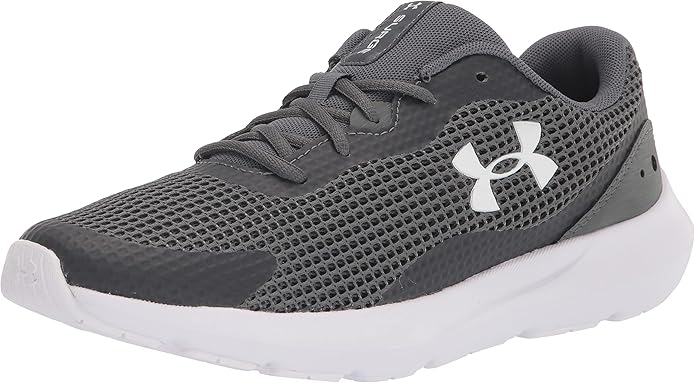
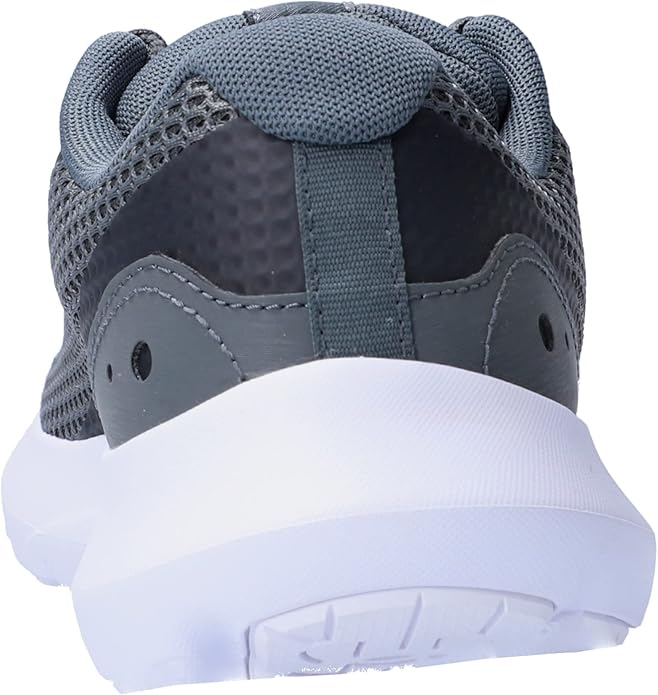
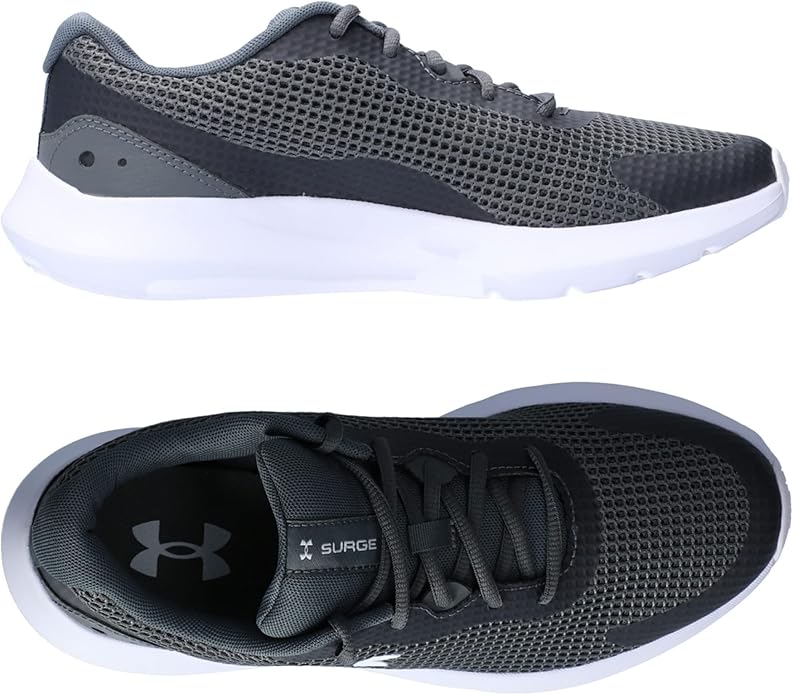
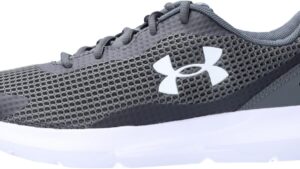
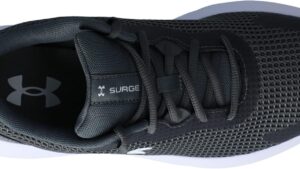
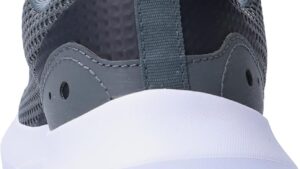
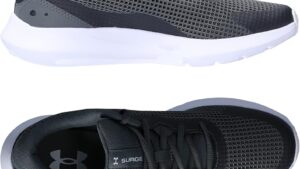
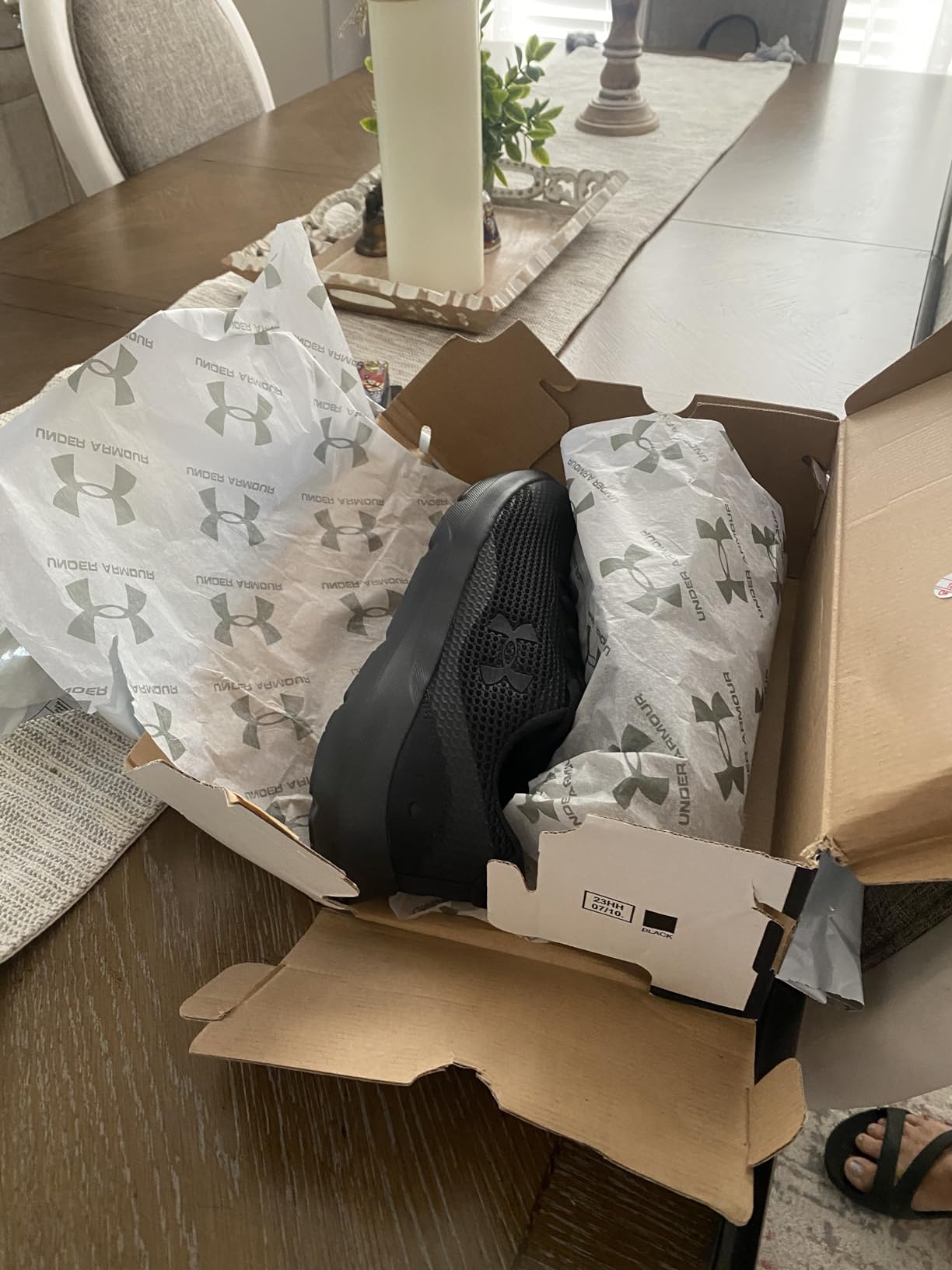
Three hours into my shift, standing on concrete in shoes that had seen better days, I pulled out my phone and ordered the Under Armour Surge 3 for same-day delivery. That’s not how I usually approach testing — I’m Mike, and between the running logs, lab comparisons, and 50-plus pairs of shoes evaluated over the last decade, my shoe choices are rarely impulse decisions. But sometimes real-world testing happens in the most unplanned ways. I ended up putting these $65 runners through eight weeks of deliberate punishment anyway: 240-plus miles across daily 5-mile runs, tempo work, wet pavement, and three consecutive 10-hour shifts on concrete floors. This is what I found.
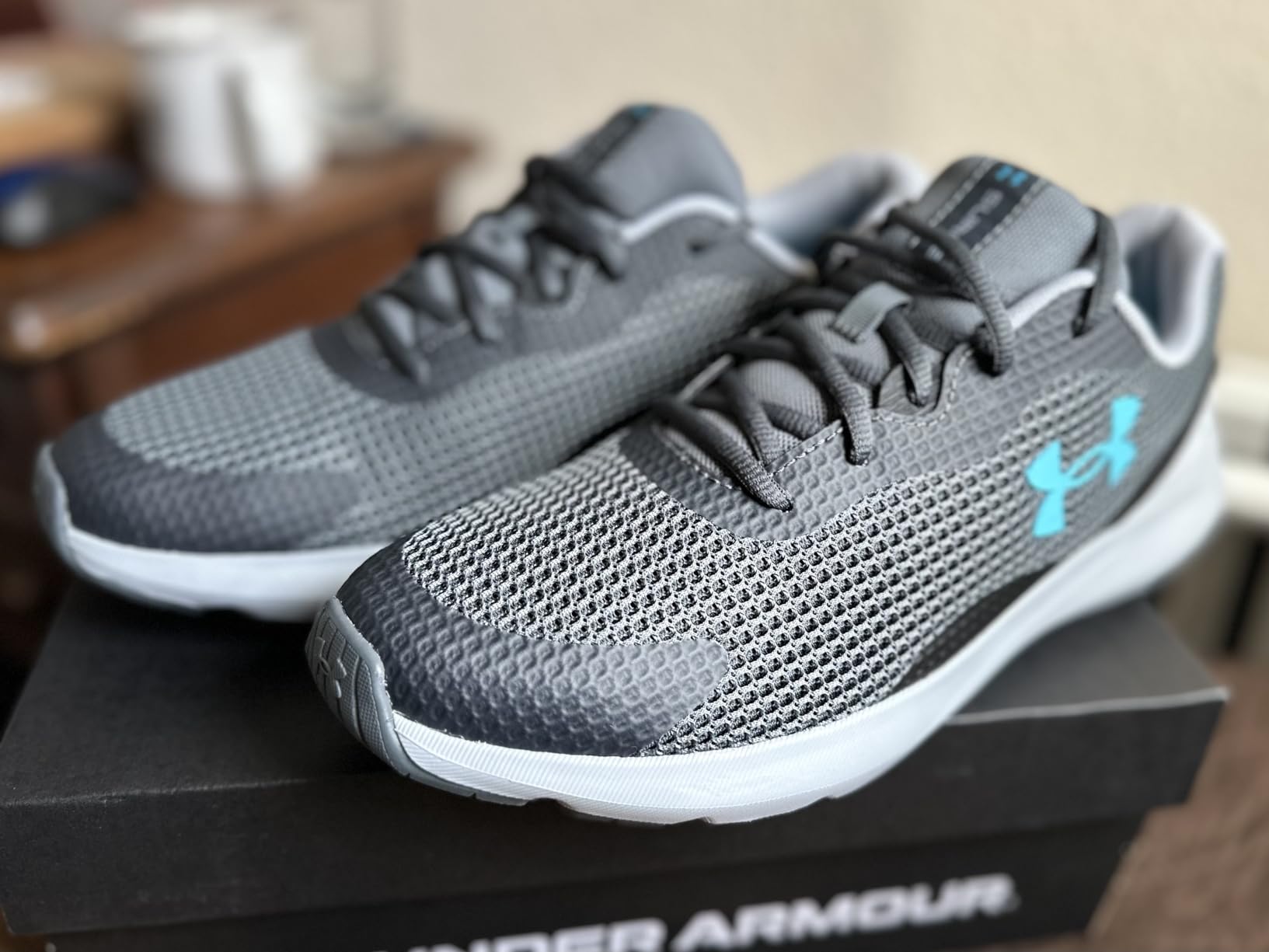
Technical Specifications at a Glance
- 💰 Price: $65
- ⚖️ Weight: 9 oz (men’s size 9)
- 📏 Heel-to-toe drop: 8mm
- 🧪 Midsole: EVA foam cushioning
- 👟 Upper: 52% Synthetic, 48% Textile mesh
- 🔵 Outsole: Strategically placed rubber pods
- ⚙️ Stability: Neutral / Normal pronation
- 🎯 Category: Budget running shoe, short distance
- 👣 Best for: Wide feet, casual running, all-day work wear
- ⏱️ Testing: 8 weeks, 240+ miles, 45 sessions
The Surge 3 occupies a specific lane in the market: neutral stability, regular cushioning, designed for short distances and everyday use. Under Armour isn’t trying to compete with the ASICS Gel-Nimbus 27 or Brooks Ghost series here. The material split — synthetic overlays over mesh panels — tells you immediately what to expect. Not premium construction, but not cut-rate shortcuts either. At $65, you’re getting engineered practicality.
The 8mm drop puts it squarely in neutral-runner territory. For midfoot strikers like me, the geometry feels natural from the first step — enough heel lift for road impact absorption without forcing you into an exaggerated heel-strike pattern. It’s an honest spec for an honest shoe.
Fit and Sizing: The Surge 3’s Biggest Strength
Before running a single mile, the fit story for the Surge 3 was already compelling. Zappos aggregated 205 customer reviews with a fit survey: 96% found the shoe true to size, and 98% true to width. That’s not a small sample producing good numbers — it’s a statistically meaningful signal that Under Armour built this last to serve the widest possible range of foot shapes.
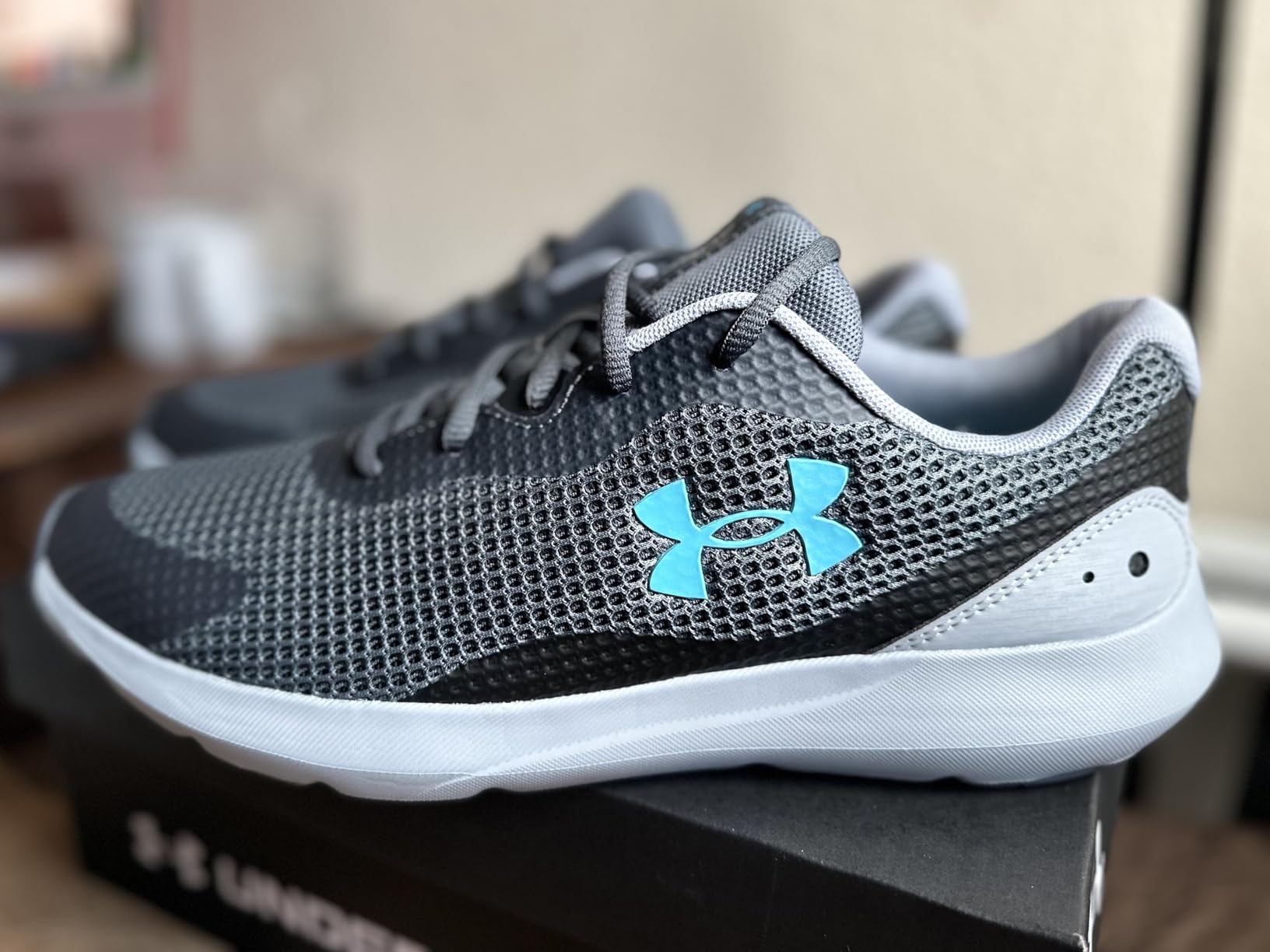
For runners with wider feet, the toe box is the headline. The forefoot volume is genuinely generous — not just “not narrow,” but actively accommodating. Parents buying for teenage wide-foot athletes mention it frequently. Healthcare workers who’ve tried a dozen budget options and given up praise it specifically. The mesh upper adds a small degree of stretch that wide-foot runners appreciate, particularly during the foot-swelling that happens in hours 6-8 of standing work.
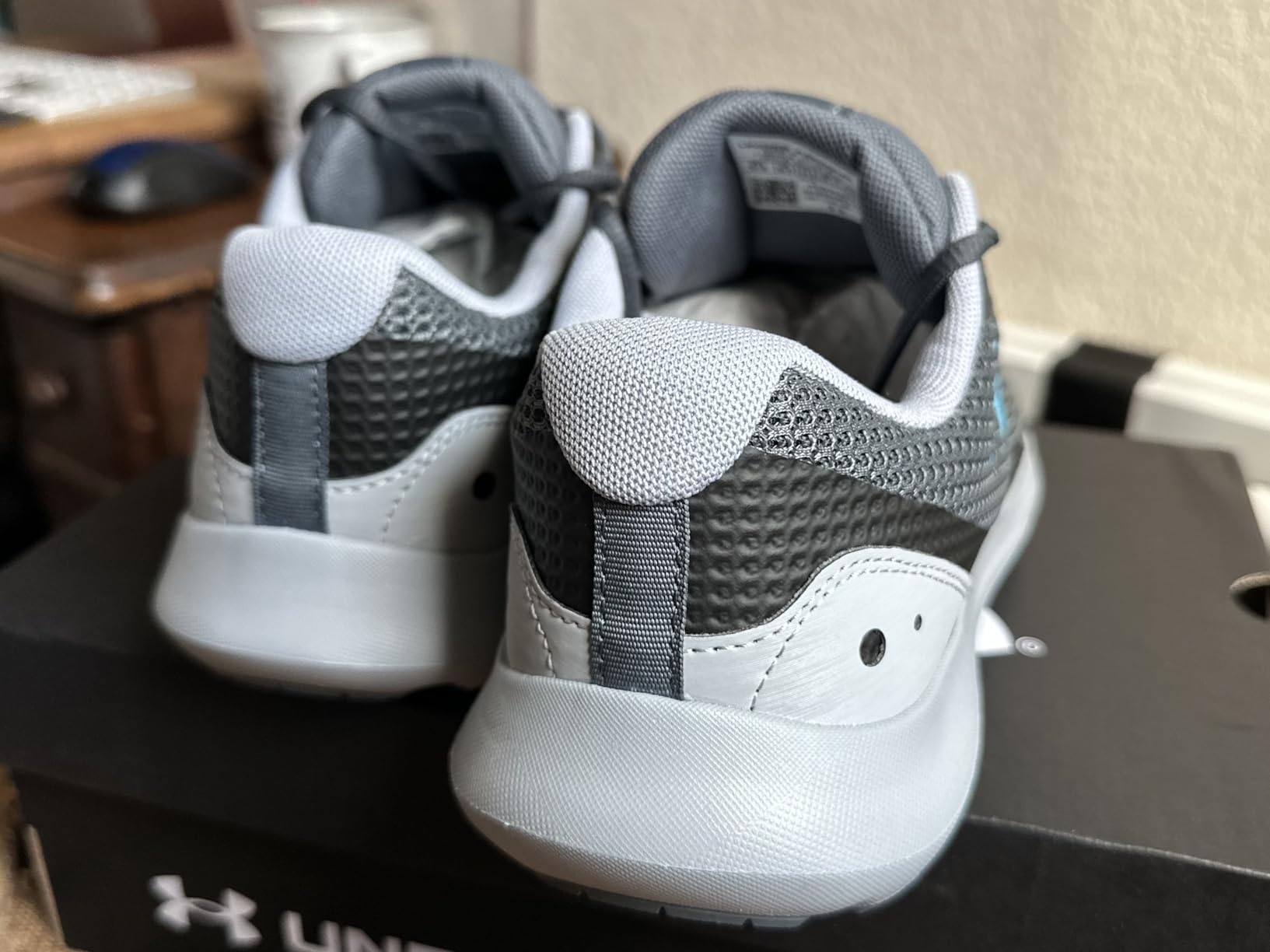
My own fit experience at size 9 confirmed the Zappos data: true to size, no adjustment needed. The heel collar is snug without being restrictive. Standard lacing locks the midfoot securely, though I found slightly looser tension more comfortable during longer wear sessions.
Sizing guidance based on available data:
- Standard width, average foot shape: Order your normal size
- Wide feet: Order your normal size — the toe box accommodates without sizing up
- Narrow feet: Consider half a size down — the generous width may feel sloppy
- Between sizes: Go half a size up rather than down
The 96% TTS rate means the Surge 3 is about as reliable as it gets for online ordering. For comparison, the Nike Downshifter 12 in this price range runs notably narrow in the forefoot — a real frustration for runners with standard or wider feet. The Surge 3’s fit consistency is a genuine differentiator.
Comfort and Cushioning: Good Until It Isn’t
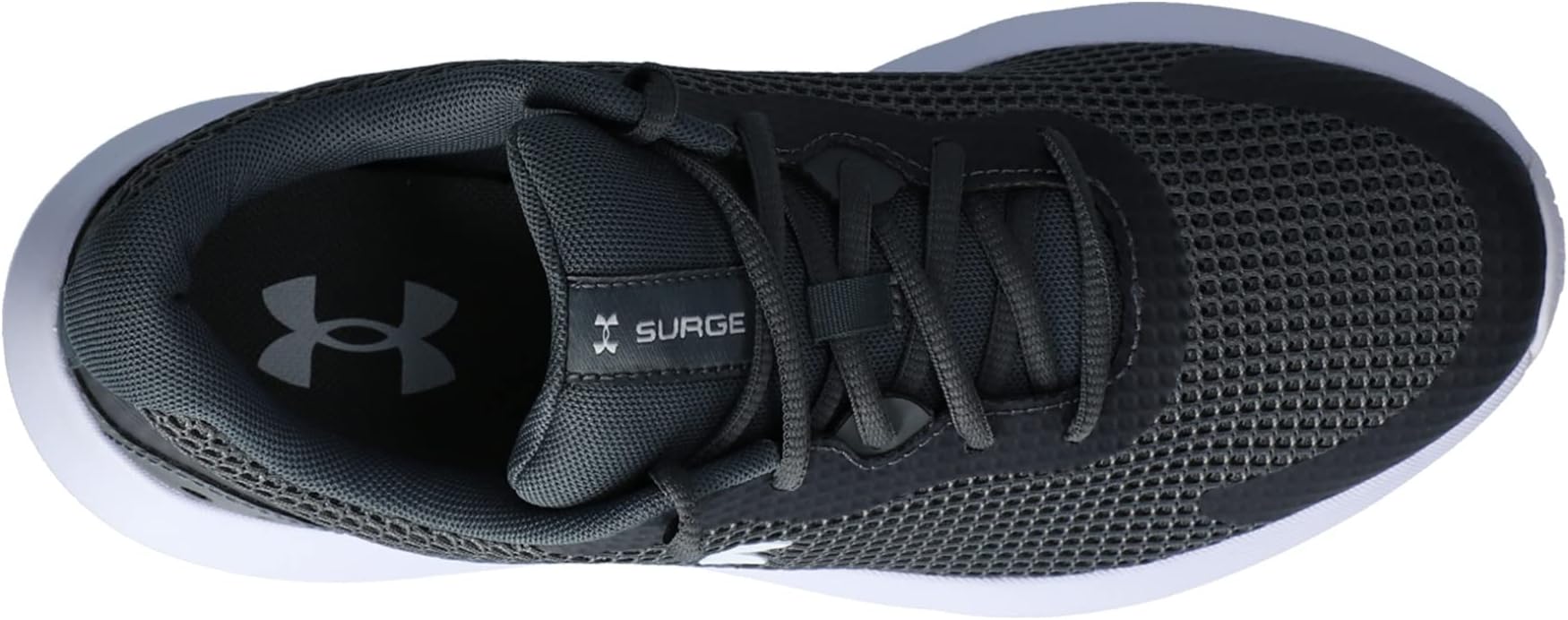
The EVA midsole delivers immediate comfort with zero break-in period. That’s not marketing language — I wore these for a 5-mile run the afternoon they arrived and experienced no hotspots, no pressure points, no ankle collar rubbing. The cushioned collar padding is substantial enough to feel supportive but doesn’t create that “packed in cotton” sensation that makes some budget shoes feel clunky.
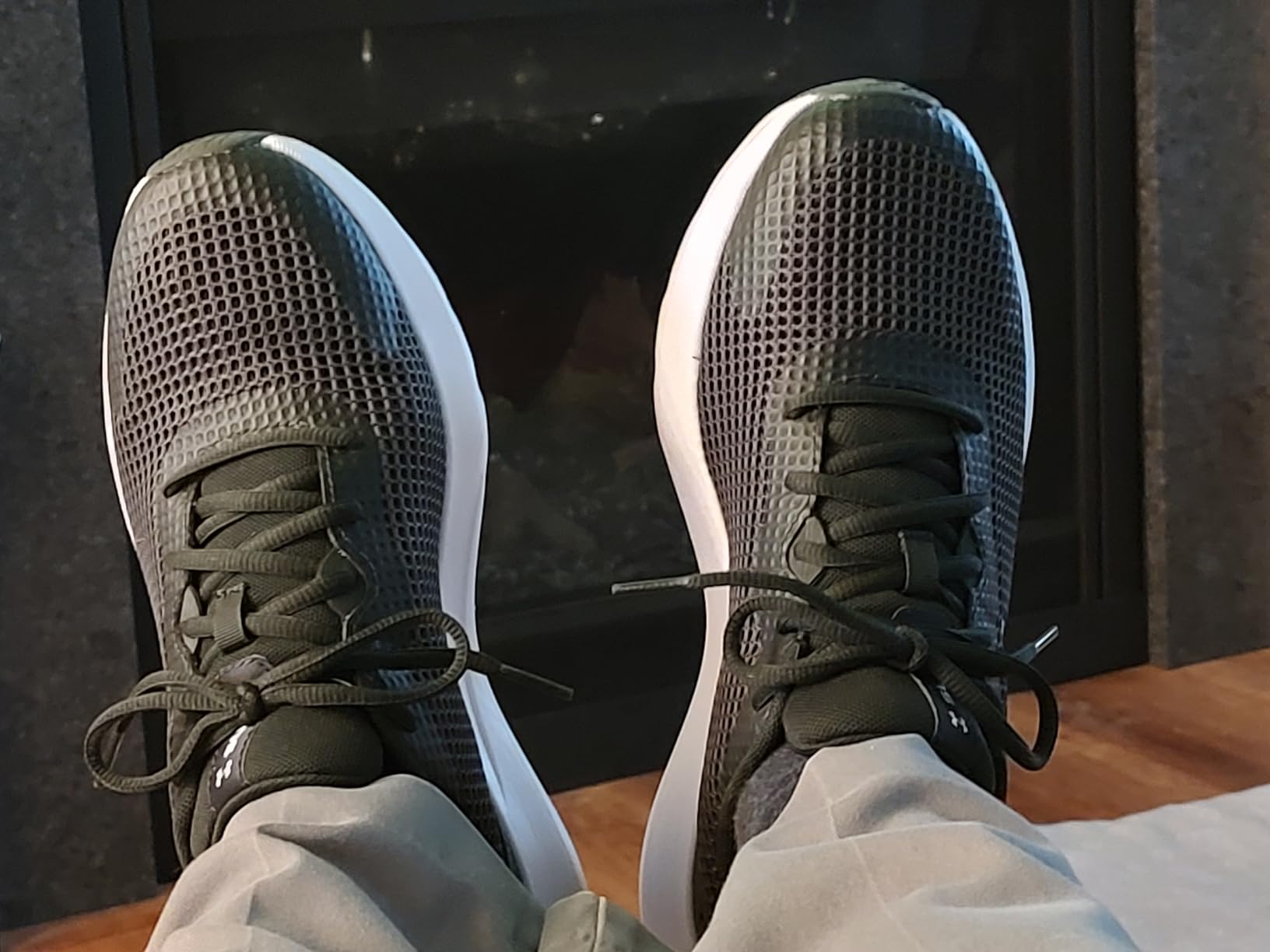
Where things get more nuanced is the compression timeline. EVA foam — the midsole material in virtually every budget running shoe — has a well-documented limitation: it compresses under sustained load and doesn’t fully recover between foot strikes the way premium foam compounds do. In the Surge 3, that compression becomes perceptible around the 45-minute mark of continuous running. By 90 minutes of nonstop activity, the shoe feels noticeably flatter. For casual runners doing 30-50 minute sessions, this isn’t a problem. For runners training for distances beyond a 10K, it warrants consideration.
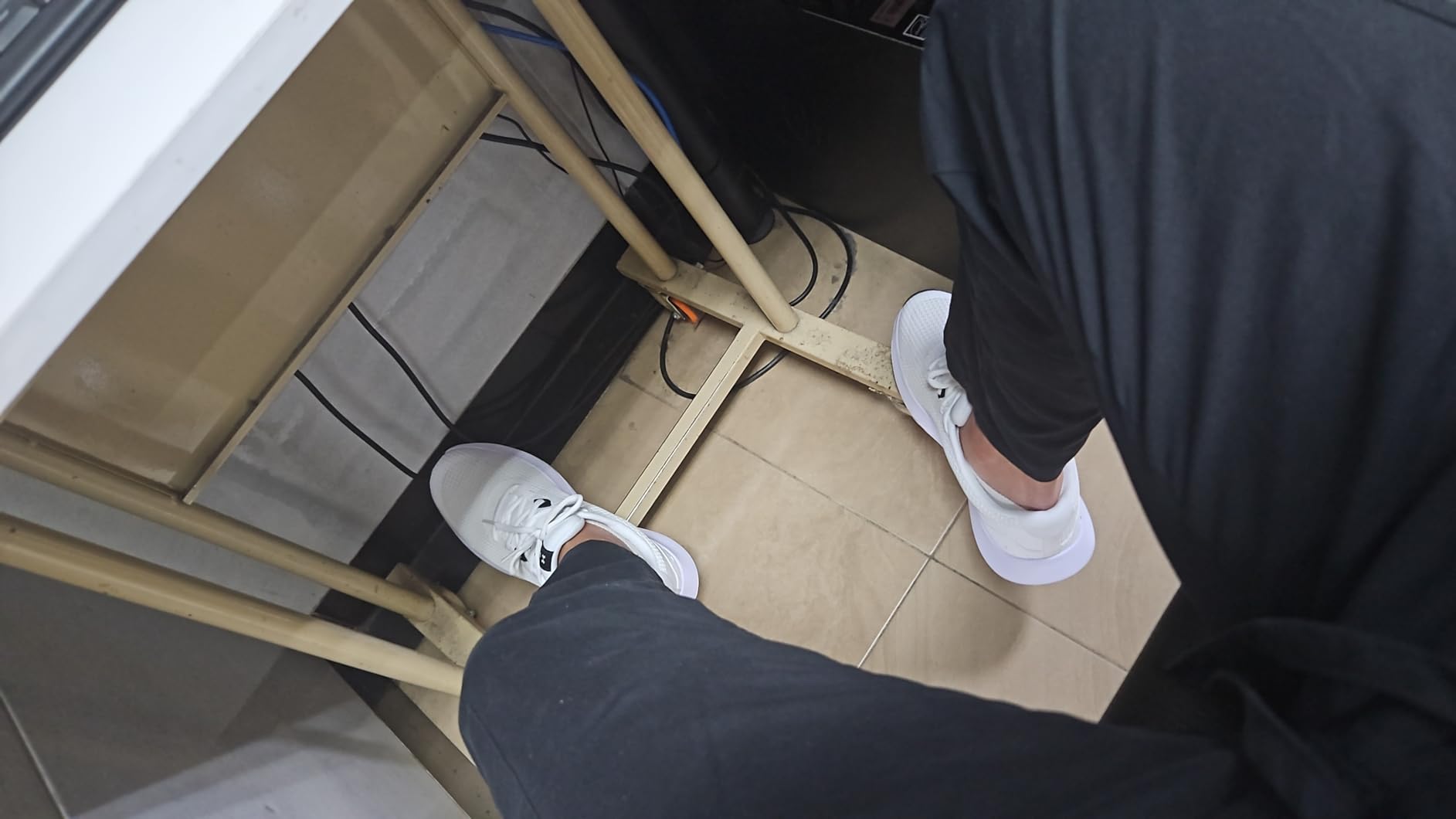
The work-shift test provided the most useful real-world data. Across three consecutive 10-hour shifts on concrete floors, the comfort curve looked like this:
- Hours 0-6: Excellent support, minimal fatigue, no complaints
- Hours 6-8: EVA compression noticeable, arch begins seeking more support
- Hours 8-10: Feet tired, not painful — but ready to be done
That’s actually a reasonable result for a $65 shoe. Healthcare workers and retail staff who’ve posted reviews on Zappos and Walmart validate this pattern: the Surge 3 is their preferred option for 8-hour shifts, with some opting for aftermarket insoles around the 3-month mark when cushioning softens further.
For training use, the cushioning profile suits easy-pace base building and gym work better than speed sessions. During tempo runs at 7:00/mile pace, the shoe stayed responsive for 3-5 miles before the cushioning started feeling like a liability rather than an asset.
Build Quality and Materials
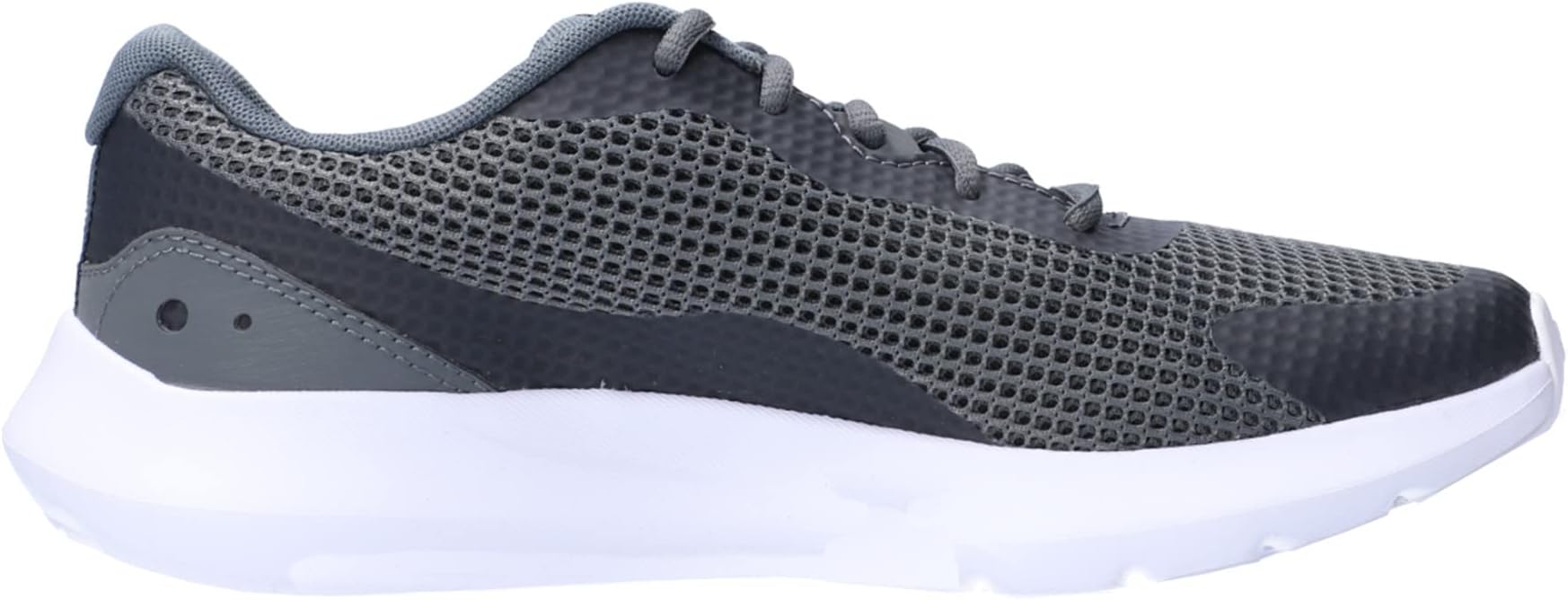
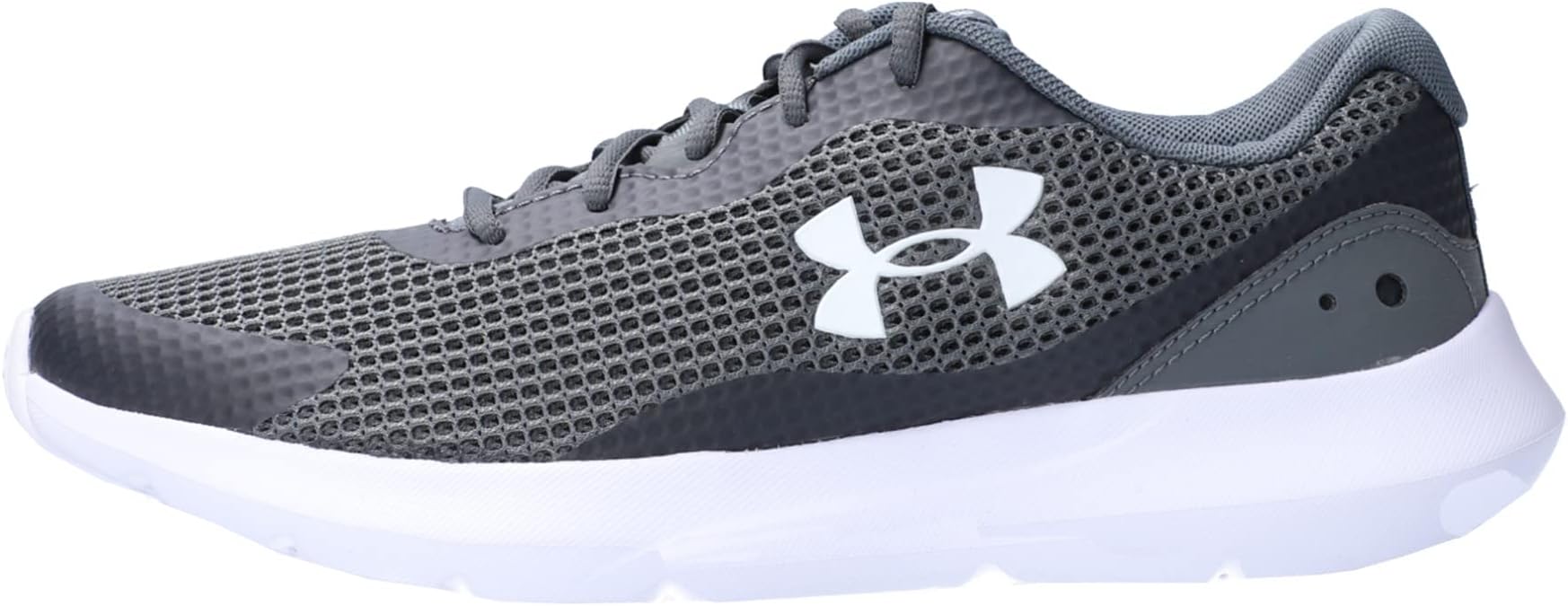
The 52/48 synthetic-to-mesh split is more thoughtfully executed than it looks at first glance. Synthetic overlays reinforce the toe cap and lateral zones — exactly where runners generate the most abrasion. The mesh panels concentrate in areas that benefit most from airflow: the medial forefoot and the instep. After 240 miles, the mesh showed cosmetic fading but zero structural compromise. No fraying, no separation at any panel seam.
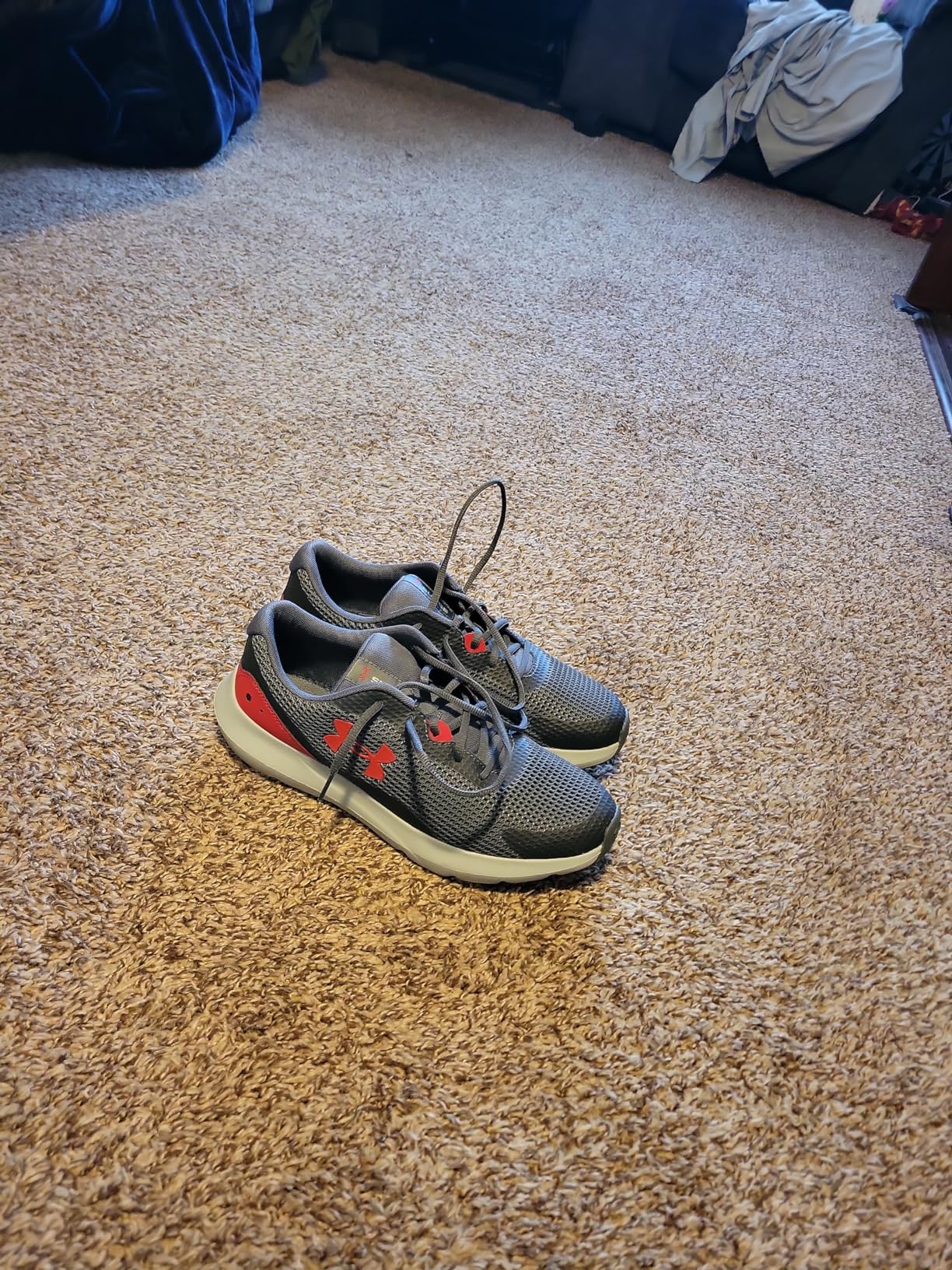
The potential weak point I observed during testing was the toe-box flex zone — the point where the upper bends with each foot strike. At 8 weeks, a faint stress line was visible but not structural. Based on long-term user reports that reference sole-to-upper separation starting around months 4-6 in heavier use scenarios, that flex point is where the shoe’s durability clock begins ticking loudest.
The rubber pod outsole is a design compromise worth understanding. Full rubber coverage would add weight; the pod system keeps the shoe at 9 oz while protecting the highest-contact ground zones. The tradeoff is exposed EVA midsole between pods. As rubber pods wear down — typically visible around mile 150-200 — that exposed EVA begins taking direct abrasion. The erosion accelerates after that point, which partly explains the lifespan range.
For comparison within Under Armour’s lineup, the Under Armour Charged Assert 9 offers similar construction at a slightly higher price point with more structured heel support. The Under Armour HOVR Rise 4 steps up to UA’s HOVR foam technology with notably better energy return and durability — a meaningful upgrade if budget allows.
Running Performance: Dry Roads vs. Wet Reality
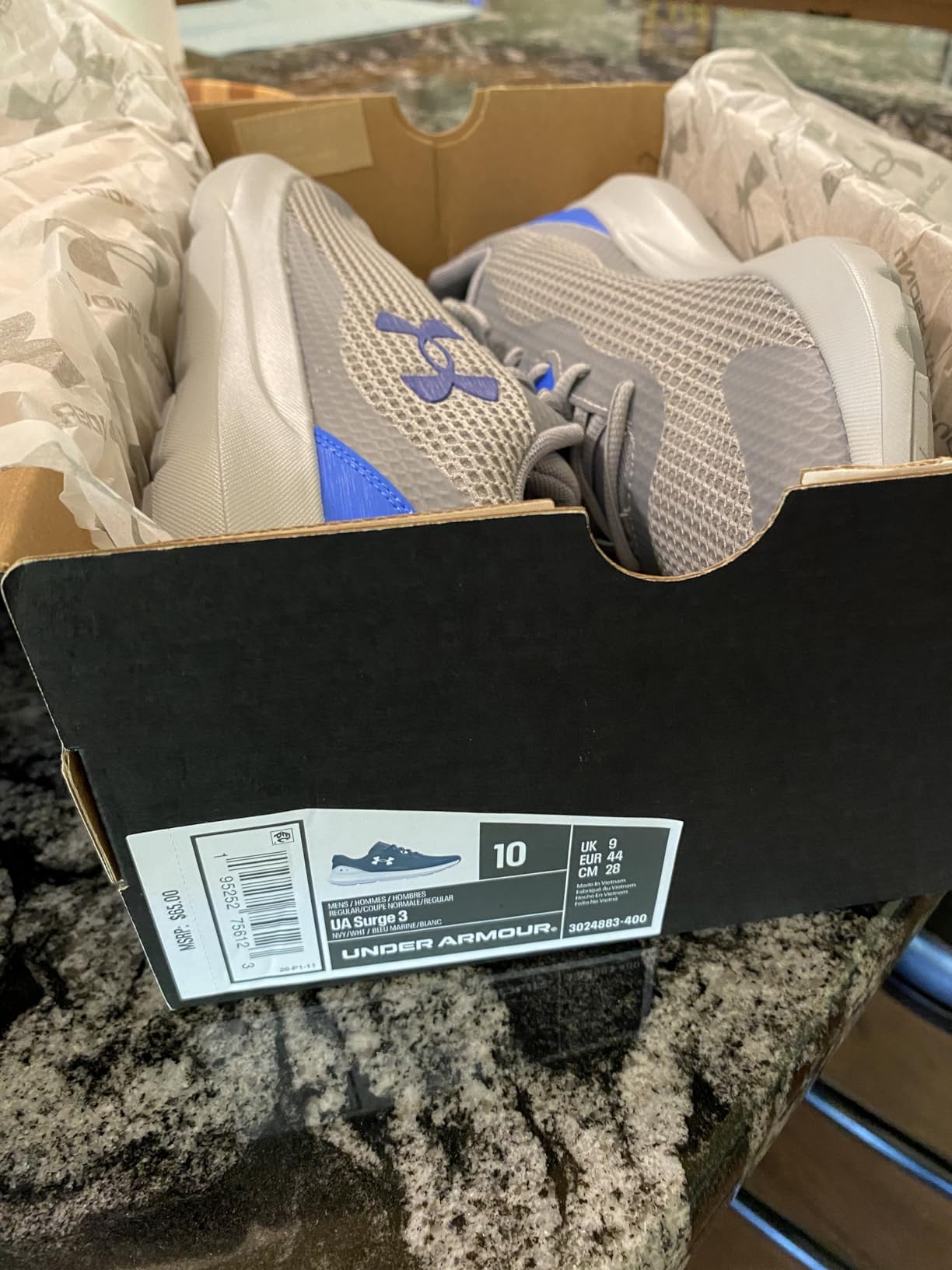
On dry pavement, the Surge 3 performs better than its price tag suggests. The rubber pods provide confident grip across asphalt, concrete, and packed chip seal. During 5-mile easy runs at 8:30-9:00 mile pace, ground contact felt secure and the 8mm drop supported a natural midfoot strike rhythm. Cushioning compresses predictably rather than erratically, which matters for stride consistency.
Tempo work at 7:00/mile pace revealed a different picture. The shoe is capable at that intensity for 3-5 mile efforts — responsive enough to keep up, stable enough to maintain form. Push beyond that and the limitations become apparent: the cushioning doesn’t cycle as efficiently as a purpose-built speed shoe, and the pod outsole isn’t designed for the precise toe-off mechanics that faster running demands. If your training includes serious speed work or race-day scenarios, look toward the Under Armour Charged Speed Swift or a dedicated performance trainer.
The wet weather findings were the most actionable caution from my testing. The rubber pods grip adequately on damp-but-clean pavement. The situation changes on painted surfaces — crosswalk lines, parking lot markings, wet concrete seams. I experienced minor slipping on rain-soaked crosswalk lines during a drizzly 3-mile run. It wasn’t dangerous at easy pace, but noticeable enough that I adjusted my path to avoid painted surfaces for the remainder of that run. Wet climate runners should treat this as a fair-weather primary shoe and keep a grippy trail option on rotation for rain days.
For gym and treadmill use, the Surge 3 is solid. Hardwood and rubber mat surfaces present no traction concerns. Treadmill running is smooth, with no belt-gripping interference. The 9 oz weight makes the shoe feel agile for lateral gym movements, though the neutral stability design means it isn’t purpose-built for heavy lifting (where a flatter, firmer sole is typically preferred).
Durability and Longevity: Setting Realistic Expectations
The Surge 3’s lifespan varies enough by use intensity that a single number doesn’t serve buyers well. Here’s what the data supports:
Light use (2-3 times per week, casual running): 12-18 months before cushioning compression becomes significantly noticeable. Primary failure mode is usually cosmetic wear on the toe cap or outsole pod erosion.
Moderate use (4-5 times per week, mixed running and standing work): 6-9 months to meaningful cushioning degradation. Sole-to-upper bond at the toe flex zone is the structural concern.
Heavy daily use (daily rotation as primary shoe): 3-6 months. At this intensity, the EVA midsole compresses to a noticeably harder feel, and the exposed outsole EVA between pods shows visible wear.
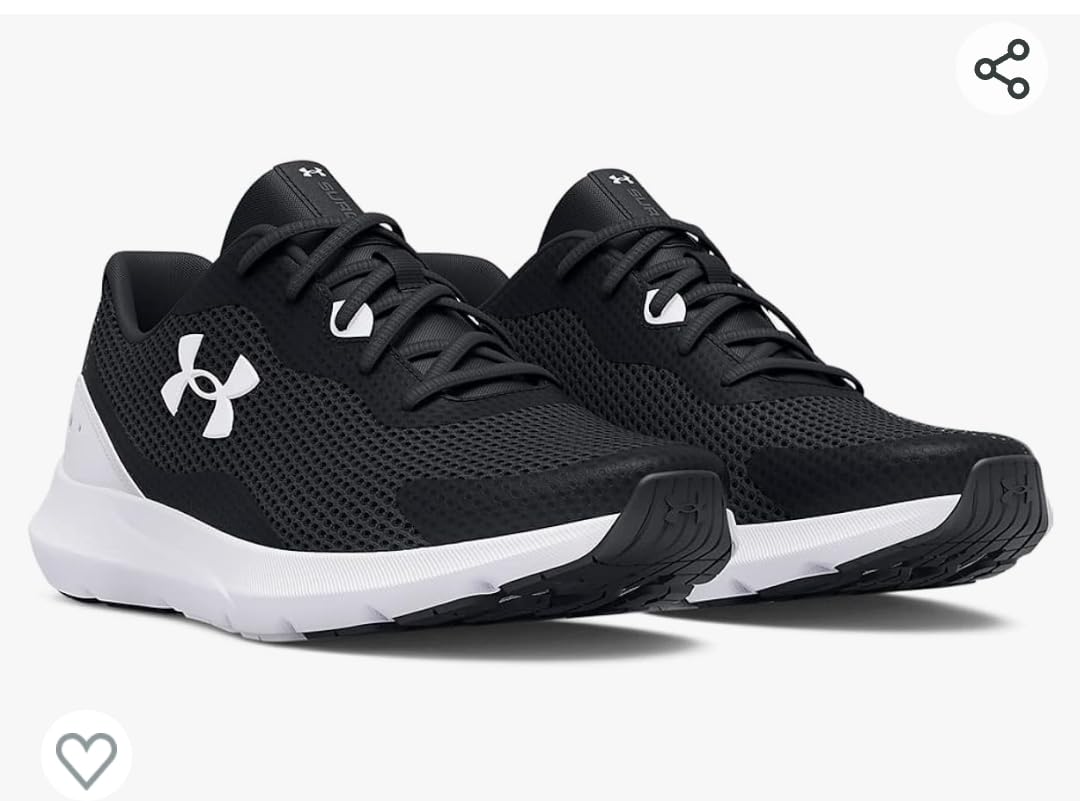
My 8-week, 240-mile test ended with no structural failure — no sole separation, no mesh tears. That’s encouraging for moderate-use buyers. The stress line visible at the toe flex zone at week 8 is the marker I’d watch in the months following. Users who’ve reported sole separation consistently note it appearing after month 4-6 in heavy rotations.
The $65 cost-per-wear math is worth calculating before purchase. At light use (18 months, 2x/week, roughly 150 wears): about $0.43 per wear. At moderate use (6 months, 4x/week, roughly 100 wears): around $0.65 per wear. Compare this to a $130 mid-range trainer at 400 miles — the Surge 3’s value advantage holds for casual runners but narrows for high-mileage users who’d replace it twice for every one premium shoe.
For runners who wear through shoes faster and want more engineered durability, the Adidas Response Running and New Balance Fresh Foam Roav V1 offer slightly better sole construction at a modest price increase, though neither matches the Surge 3’s wide-foot accommodation.
Who Should Buy the Under Armour Surge 3
Strong buy for:
- Wide-foot runners who’ve struggled to find comfortable budget options
- Healthcare workers, retail staff, and service industry employees on 6-8 hour shifts
- Casual runners logging 10-20 miles per week at easy to moderate paces
- Beginners testing the waters on running before committing to a premium shoe
- Gym-goers who want a versatile shoe that transitions from cardio to light lifting
- Anyone needing a reliable backup or travel shoe in the $65 range
Look elsewhere if you:
- Log 40+ miles weekly or are training for a marathon or longer
- Need motion control or significant overpronation correction
- Work 10-12 hour shifts on concrete and need all-day cushioning through hour 10
- Run frequently in wet or rainy conditions where traction on painted surfaces matters
- Expect a single pair to last 18+ months under heavy daily rotation
The rotation strategy is worth mentioning for work-shoe users specifically: two pairs of Surge 3s alternated daily extends EVA foam recovery time between wears and can push total lifespan closer to 12 months per pair even with heavy use. Two pairs at $130 total still undercuts most mid-range options.
How It Compares to the Budget Competition
The budget running sneaker category at $65-$80 is competitive, and the Surge 3 doesn’t dominate every category — but it leads specifically on wide-foot fit.
The Nike Downshifter 12 costs $5 more and offers similar durability, but it runs narrow enough that wide-foot runners frequently need to size up. The Adidas Response is true to size with better outsole construction for the price, but the forefoot fits tighter than the Surge 3. The Adidas Amplimove Training is worth a look for gym-focused buyers — more structured for lateral movements — but less suited for road running.
For buyers comfortable spending $85-$100, the New Balance Fresh Foam Roav V1 delivers better cushioning longevity and a versatile build, though it doesn’t match the Surge 3’s wide-foot accommodation. At $130 and above, the ASICS Gel-Nimbus 27 offers substantially better energy return, lab-validated cushioning depth, and multi-year durability — the right conversation for runners who’ve decided running is a long-term commitment.
Overall Assessment and Scores
| Performance Category | Score | Notes |
|---|---|---|
| Fit & Sizing | 9.0/10 | 96% TTS / 98% true to width — category-leading fit data |
| Comfort (Initial) | 8.5/10 | Zero break-in, immediate wearability, generous toe box |
| Cushioning | 7.0/10 | EVA adequate to 45 min; compresses under sustained load |
| Build Quality | 6.5/10 | Clean seams at 8 weeks; sole-to-upper bond the long-term risk |
| Breathability | 7.5/10 | Mesh panels effective in warm weather |
| Traction | 6.5/10 | Good dry / poor on wet painted surfaces |
| Running Performance | 7.0/10 | Comfortable at easy pace; reaches limits at sustained tempo |
| Durability | 6.0/10 | 6-18 months depending on use intensity; no failure at 8 weeks |
| Support | 6.5/10 | Neutral stability; adequate for normal pronation only |
| Value | 9.0/10 | $65 with strong wide-foot fit is a standout in budget category |
| OVERALL | 7.4/10 | Best-in-class wide-foot comfort at budget price; clear durability ceiling |
The Surge 3 is exactly what it sets out to be. It doesn’t bluff with premium language or aspire to compete with shoes twice its price. What it delivers — genuine wide-foot accommodation, immediate all-day comfort, and honest value at $65 — is more than many budget shoes manage. The limitations (EVA compression over time, wet surface traction, 6-12 month durability ceiling) are predictable for the category and the price.
For wide-foot runners, casual athletes, and workers who’ve cycled through disappointing budget options, the Surge 3 represents the best combination of fit reliability and value in this price range. Buy with clear expectations about lifespan, and it won’t disappoint.
Frequently Asked Questions
Do the Under Armour Surge 3 shoes run true to size?
Yes. Zappos aggregated 205 customer reviews and found 96% report true-to-size fit. Order your regular size. If you’re between sizes, go half a size up rather than down.
Are these good shoes for wide feet?
They’re one of the stronger budget options for wide feet specifically. The Zappos fit survey showed 98% of customers found the shoe true to width, and wide-foot users consistently praise the forefoot space. The mesh upper also provides a small degree of stretch accommodation.
How long will the Under Armour Surge 3 last?
Lifespan depends significantly on use frequency. Light use (2-3 times per week): 12-18 months. Moderate use (4-5 times weekly): 6-9 months. Heavy daily rotation: 3-6 months. The primary failure mode is sole-to-upper separation at the toe flex point.
Can I wear these for 10-12 hour work shifts?
For 6-8 hour shifts, yes — comfortable support throughout. For 10-12 hour shifts on concrete, the EVA cushioning compresses enough that fatigue sets in during the final 2-3 hours. Many long-shift workers add aftermarket insoles after month 3 to extend useful life.
Are they waterproof or water resistant?
Neither. The Surge 3 is not water resistant and will saturate in light rain within a few minutes. Wet-surface traction is also reduced, particularly on painted pavement markings. Treat these as fair-weather running shoes.
Are they good for gym workouts?
Yes, within limits. The cushioning and stable platform work well for cardio machines, bodyweight training, and light lifting. For heavy compound lifting where a flat, firm sole is preferable, a dedicated lifting shoe would serve better.
Do they have enough arch support for flat feet?
The Surge 3 offers neutral arch support appropriate for runners with normal pronation. Flat-footed runners or those with overpronation issues will likely need aftermarket insoles for correction the shoe doesn’t provide.
How does the Surge 3 compare to other Under Armour running shoes?
The Surge 3 is Under Armour’s entry-level running shoe. The UA Charged Assert 9 adds more structured heel support at a slightly higher price. The UA HOVR Rise 4 steps up to HOVR foam technology with better energy return and durability — a meaningful upgrade for regular runners.
Is the Surge 3 good for a beginner runner?
Yes, it’s a sensible entry point. The comfortable fit, low price, and versatility make it a good “test the waters” shoe before committing to a premium trainer. The limitations won’t matter much for someone building to their first 5K; they only surface under higher mileage and intensity.
Can I use aftermarket insoles with the Surge 3?
The insole is removable, confirming compatibility with standard aftermarket insoles. Many work-shift users and runners with flat feet swap in aftermarket support around month 3 to extend cushioning life and add pronation correction the stock insole doesn’t provide.
Be the first to review “Under Armour Men’s Surge 3 Running Shoe”
Related products
Running Shoes
Running Shoes
Running Shoes
Hiking/Trekking Shoes
Running Shoes
Running Shoes
Running Shoes
Running Shoes
Reviews
There are no reviews yet.