
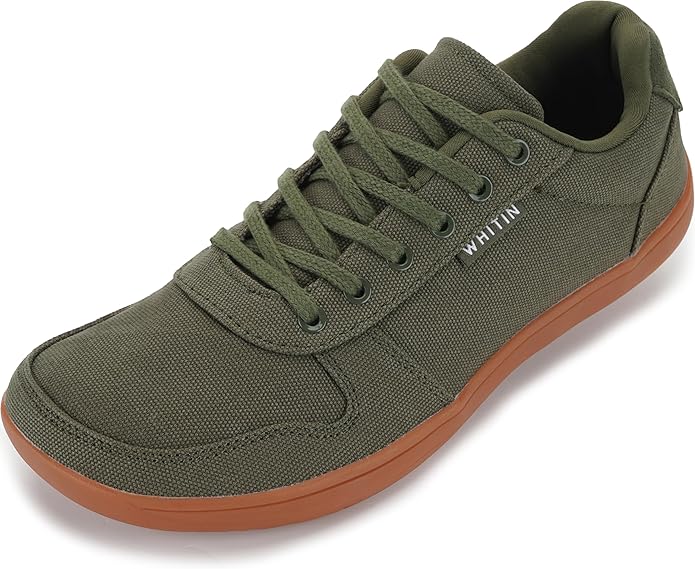
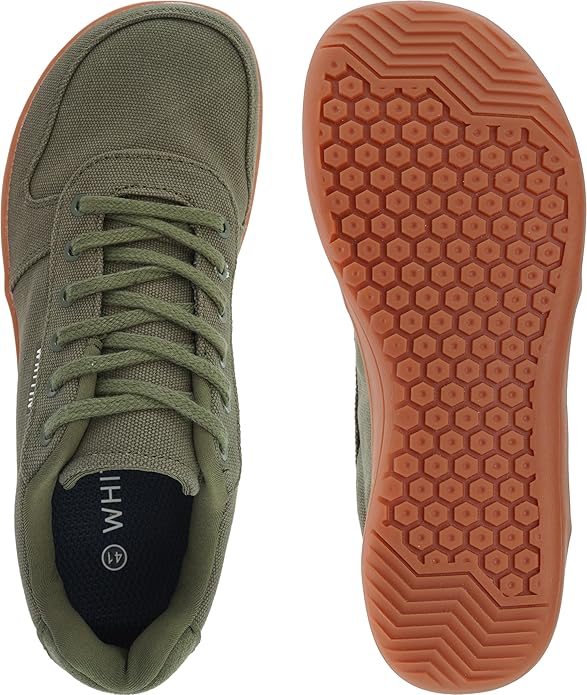
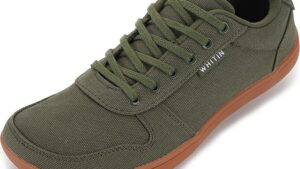
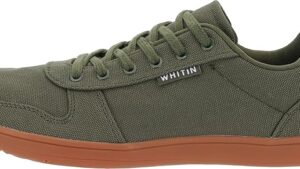
My third pair of Vans died in less than eight months. Same story every time — the sole peels from the toe box right around the time I finally break them in. After years of the same cycle on retail concrete, I decided to try something completely different. Mike here. I tested the WHITIN Men’s Wide Barefoot Shoes for 12 weeks straight across 8-hour shifts at work, weekend trails, and basic gym sessions. Here’s whether a $40 canvas minimalist can genuinely replace what conventional sneakers couldn’t deliver.
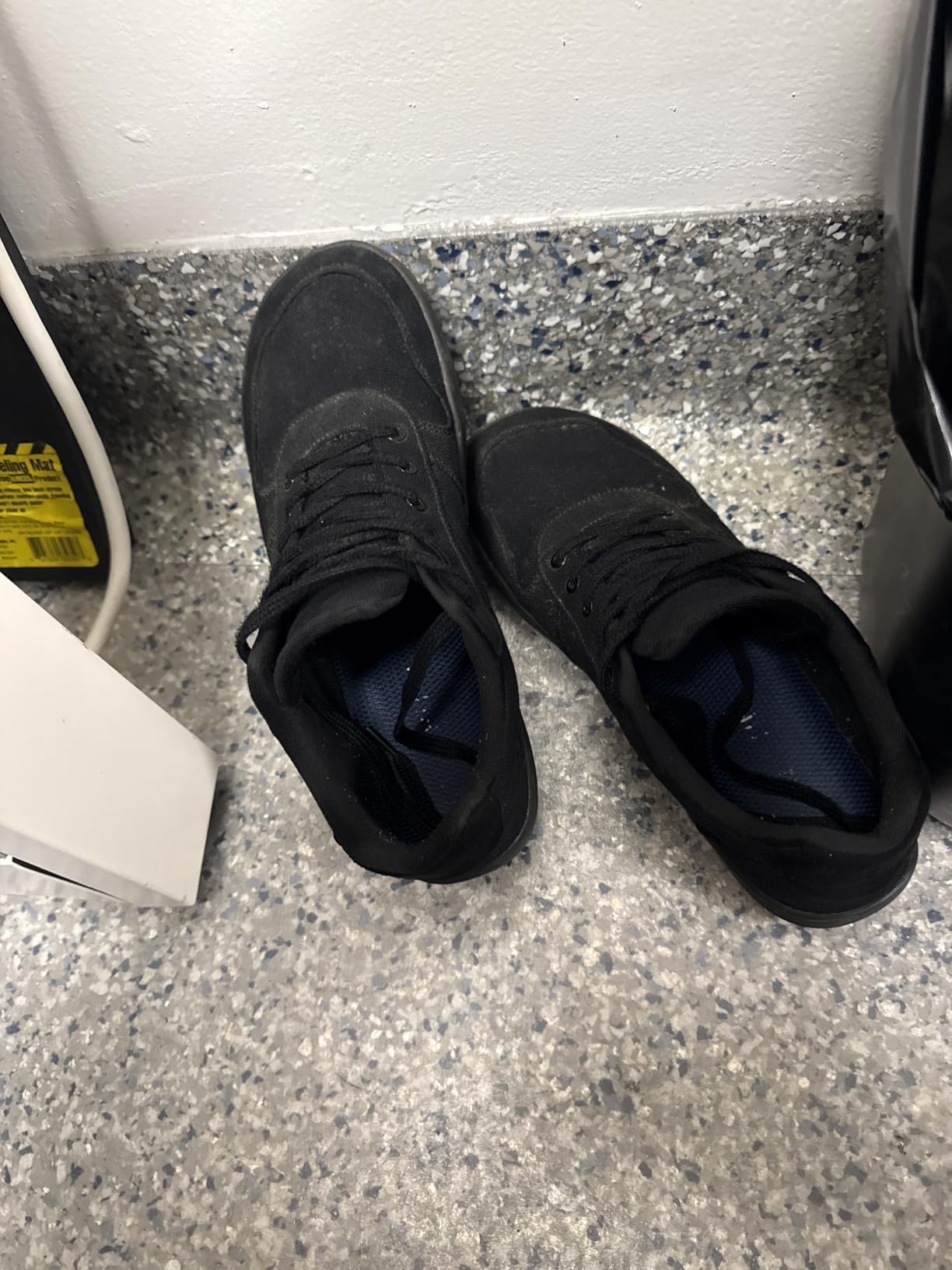
Technical Specifications
| Spec | Value | Notes |
|---|---|---|
| Price | ~$40 | Budget leader in minimalist category |
| Weight | 8.2 oz (size 10) | ~33% lighter than typical casual sneakers |
| Heel-to-toe drop | 0mm | True zero drop — heel and forefoot at same height |
| Stack height | 8–10mm | Insole-in figure; lower with insole removed |
| Midsole | Minimal EVA foam | Basic formula, adequate for casual use |
| Upper | Canvas + synthetic overlays | Workwear aesthetic, breathable |
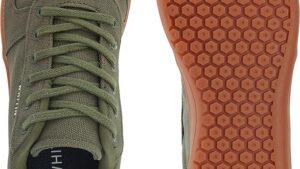
| Outsole | Rubber (non-marking) | Works on most indoor/outdoor surfaces |
| Insole | Removable EVA | Customizable barefoot intensity |
| Category | Minimalist lifestyle sneakers | Not a running or trail shoe |
| Testing period | 12 weeks, 85+ hours | Retail, trail, gym — multiple surfaces |
First Impressions and Build Quality
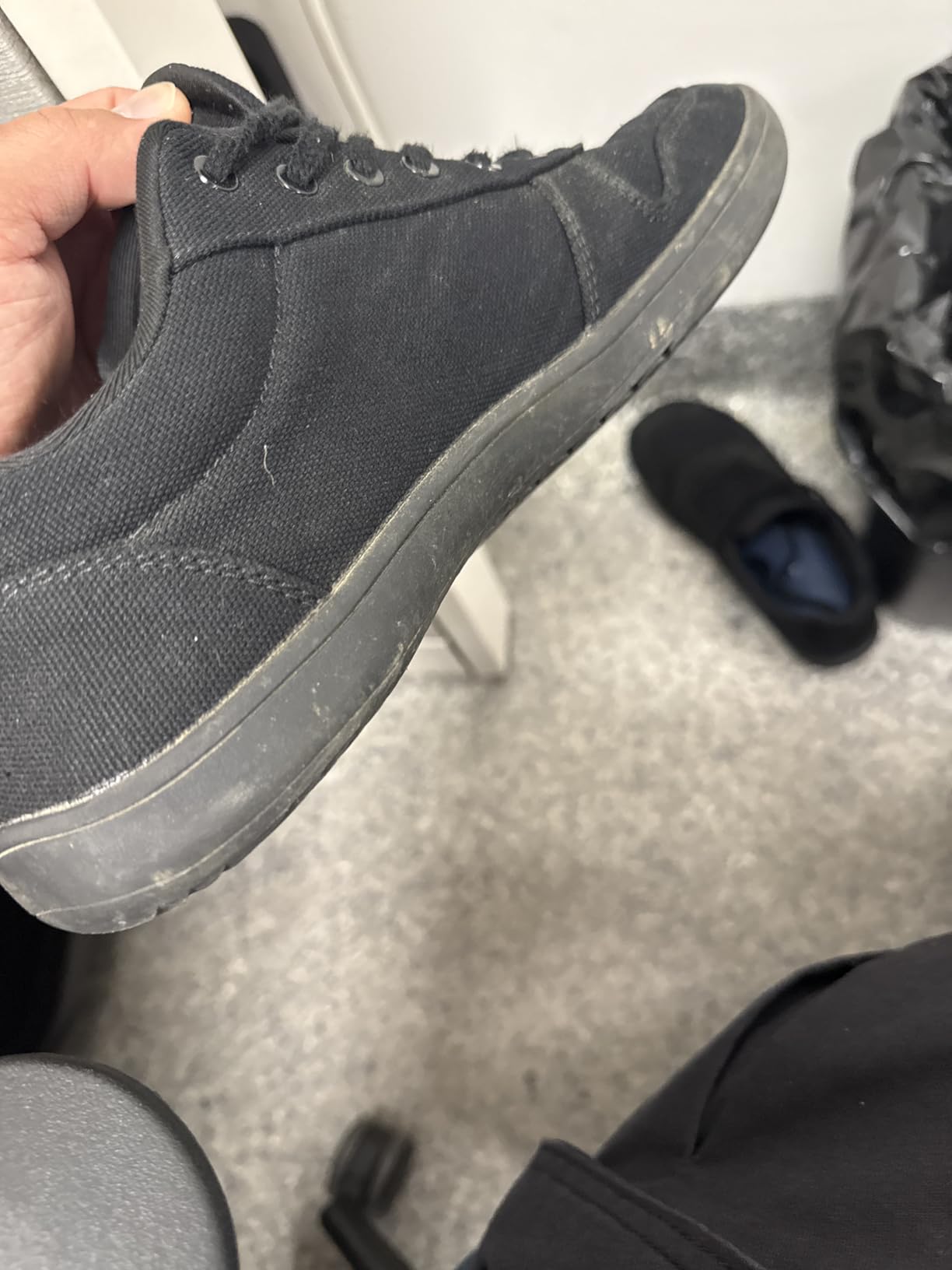
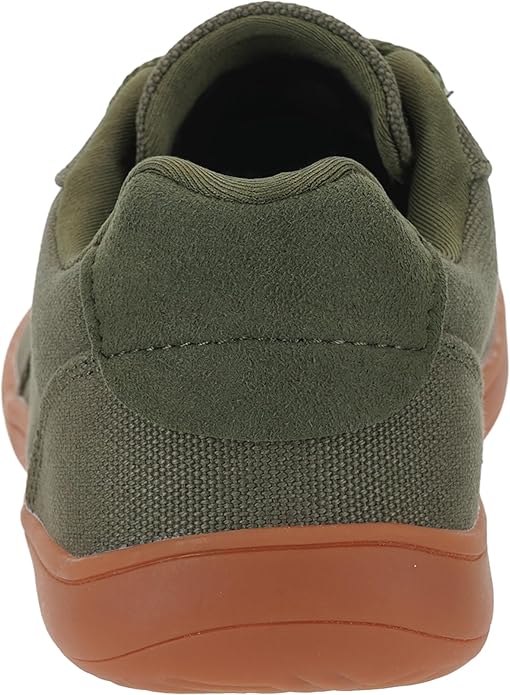
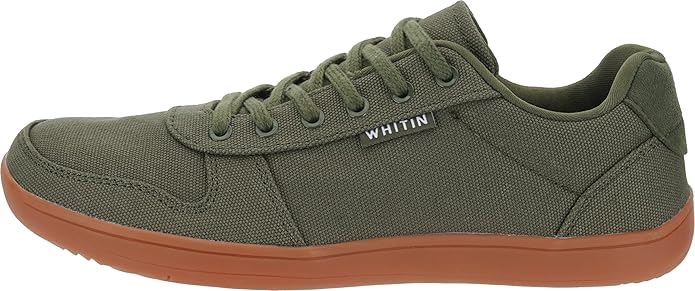
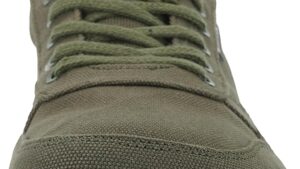
Opening the box, my first thought was that someone had shipped me a pair of Converse knockoffs. That’s not a dig — the canvas has a satisfying density to it, the kind you associate with workwear rather than throwaway fashion sneakers. I’d handled plenty of budget minimalist shoes before this review, and the texture told me immediately these were at the better end of that spectrum.
The green gum colorway works harder than I expected. It’s earthy enough for trail use but doesn’t look out of place in a retail environment. Three coworkers asked where I got them during the first week, and none of them believed me when I said they were barefoot shoes.
Canvas Construction Deep-Dive
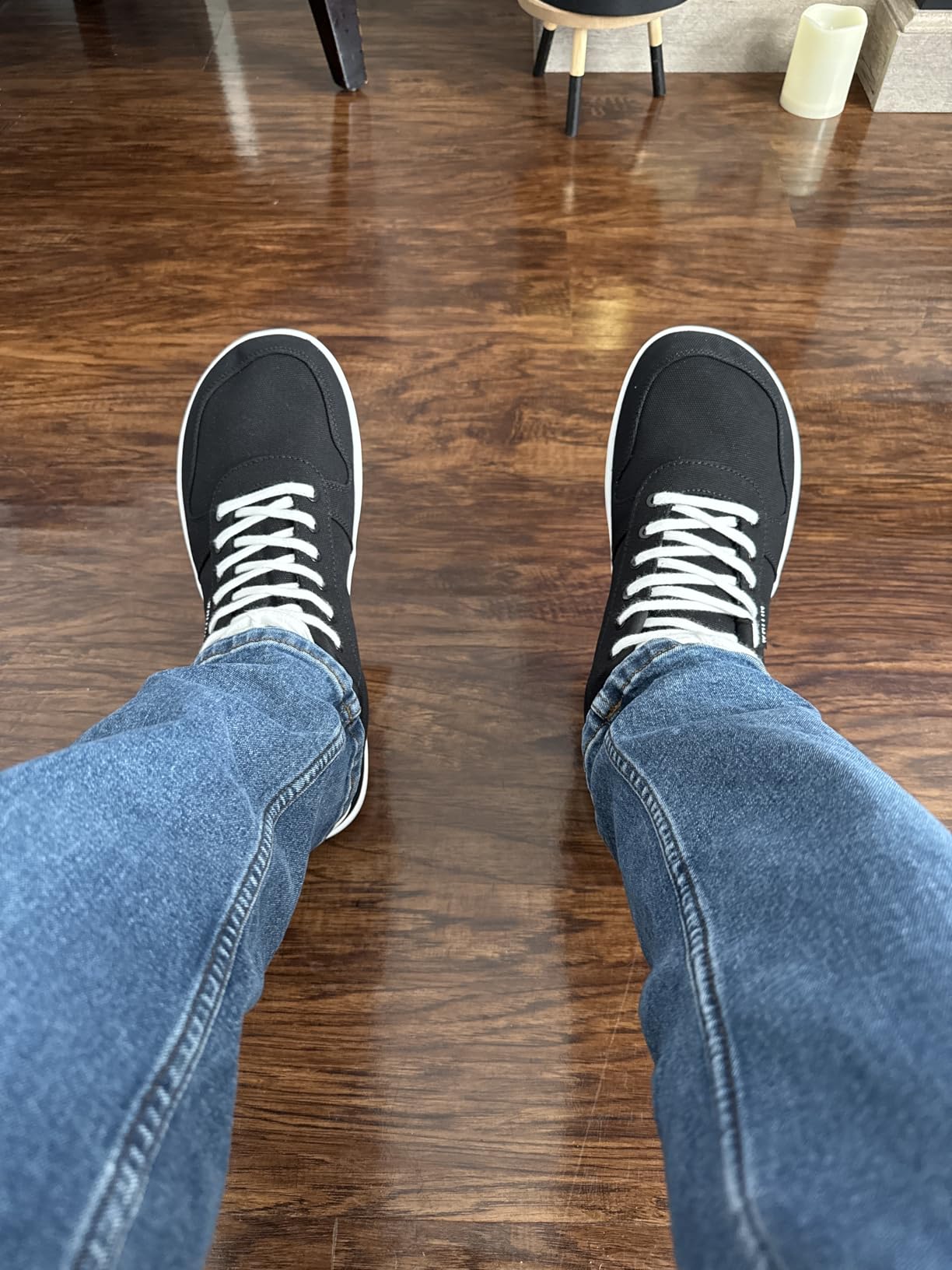
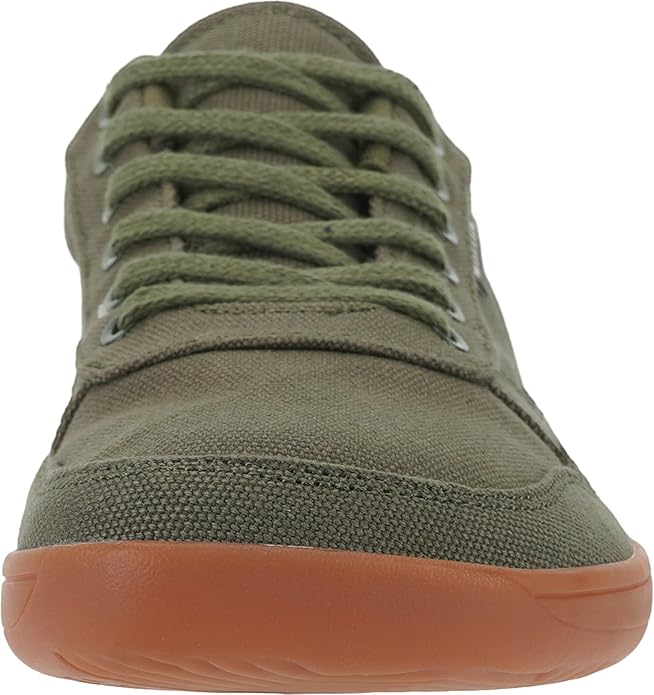
The stitching at the toe box and heel counter looks reinforced in ways that budget shoes often skip. The glue lines are clean with no visible overflow, which matters more than it sounds — raised adhesive ridges create weak points that separate faster under flex stress.
One thing to flag before you fall in love: multiple users across Amazon reviews and forums report tongue detachment beginning around the 4–6 month mark under regular wear. I didn’t hit that failure point during my 12 weeks, but the pattern is consistent enough across sources to treat as a design characteristic rather than a QC fluke. Budget accordingly.
Fit and Sizing: The Only Rule That Matters
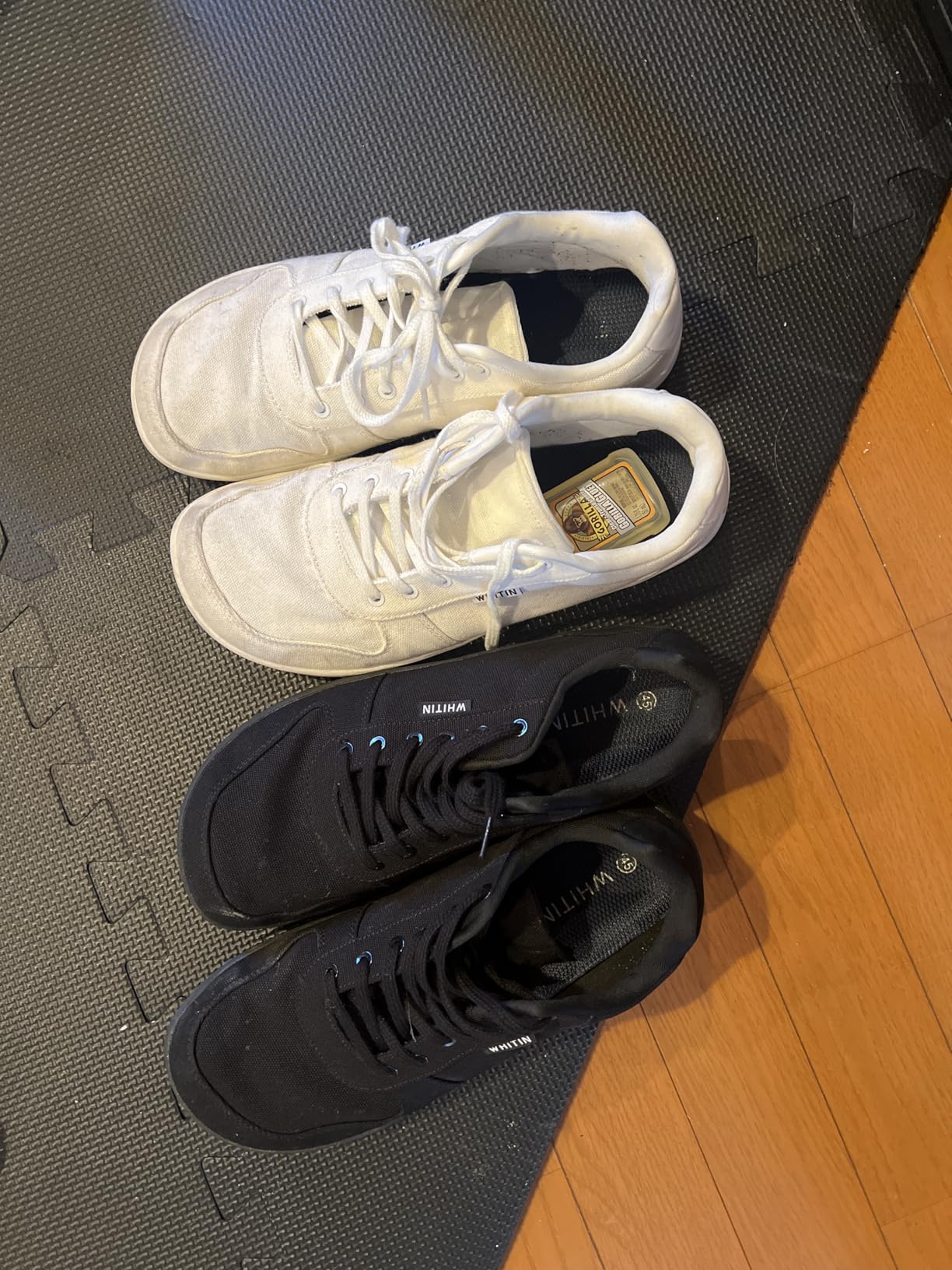
Size up 0.5 from your normal shoe size. Full stop.
I wear a size 10 in almost everything else. I ordered 10.5 here and got the fit right on the first try — no cramping, no heel slip, and enough toe room for my toes to actually spread the way they’re supposed to in a barefoot shoe. Had I ordered my true size, I’d have written a very different review.
This is the single strongest sizing consensus I’ve encountered across nearly 10 review sources and multiple Amazon survey data points. The canvas construction doesn’t stretch to accommodate, so undershoot here and you’re stuck with cramp-inducing tightness in a shoe specifically designed to do the opposite.
The Wide Toe Box in Practice
The toe box is genuinely wide — not “wide for a budget shoe” wide, but properly wide. My toes can splay without hitting the sidewalls, which eliminated the low-grade cramping I’d normalized from years in Vans. The interesting thing is how it looks from the outside: not clownish, not oversized, just a clean rounded silhouette that reads as a regular canvas sneaker to people who don’t know barefoot shoes.
Wide feet especially benefit here. A lot of supposedly “wide” options on the market have wide toe boxes paired with narrow heel cups — this one actually fits the whole foot.
Barefoot Feel: With vs. Without Insoles
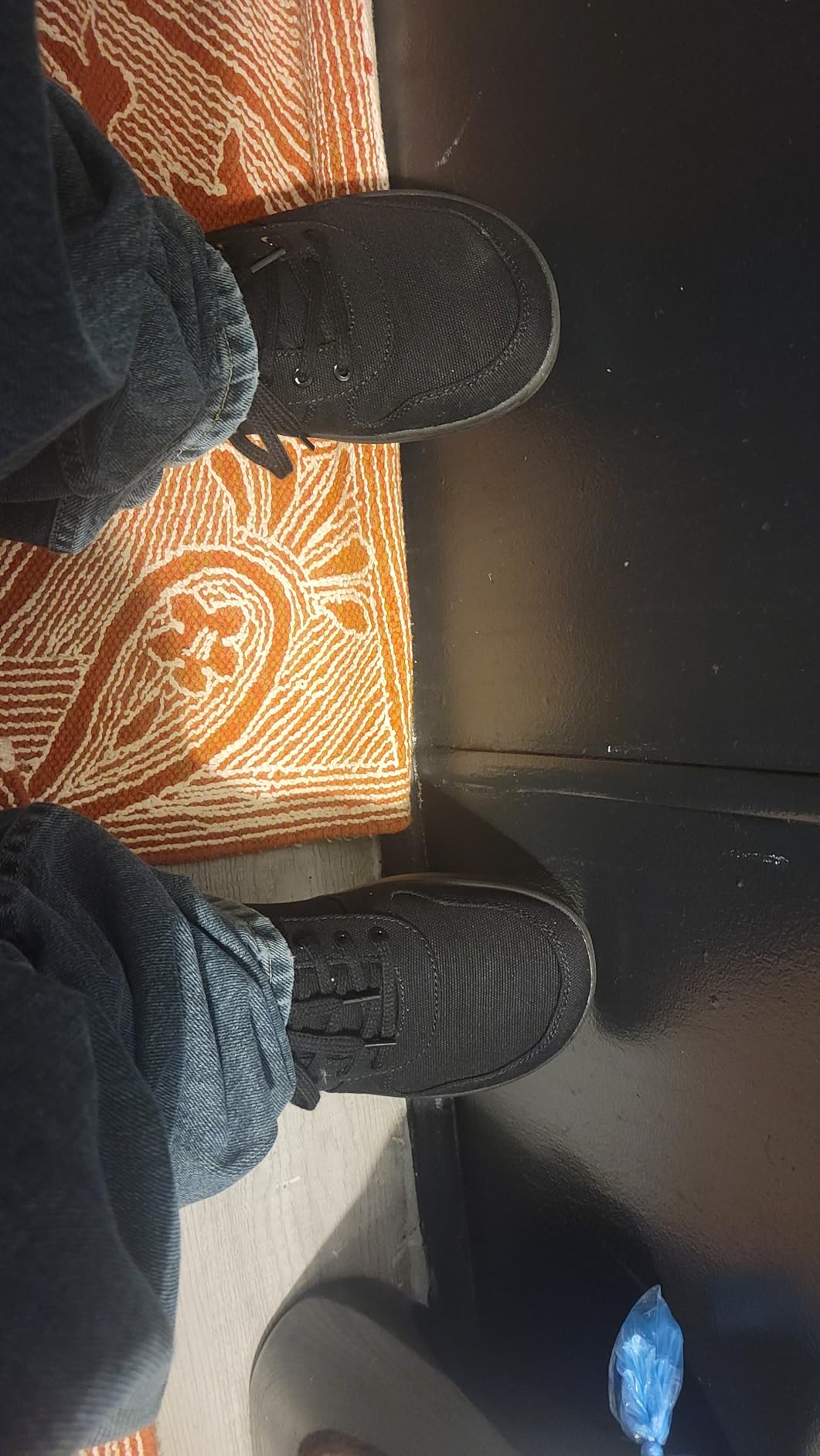
These shoes behave like two different products depending on whether the insole is in.
With the insole: you’re getting a solid minimalist transition experience. There’s enough EVA cushioning to handle concrete comfortably, but the ground feedback is significantly higher than conventional sneakers. Think of it as “minimalist-lite” — most of the benefits with a small cushion buffer for adaptation.
Without the insole: the barefoot experience becomes much more direct. You’ll feel the pavement topology under the 8–10mm rubber sole, which sounds extreme until you realize how quickly your feet learn to use that information. By week six without the insole on shorter 2-hour sessions, I was unconsciously adjusting my gait in ways that felt more efficient.
The Adaptation Timeline
This isn’t a drop-in replacement for cushioned shoes. The zero-drop design puts your heel at the same elevation as your forefoot, which initially strains the Achilles and calves in unfamiliar ways. Here’s what the realistic timeline looks like:
– Week 1–2: Canvas stiffness + strange sensation from flat platform. Limit to 3–4 hours.
– Week 3–4: Calf tightness from zero-drop adjustment — this is normal, stretch daily.
– Month 2: Full 8-hour shifts become manageable on most surfaces.
– Month 3+: Comfortable insole-free for 4–6 hour blocks. Kept insoles for full concrete days.
Anyone skipping this gradual approach and wearing them for 10-hour shifts on day one will have a bad time.
Real-World Performance: 12 Weeks on Concrete
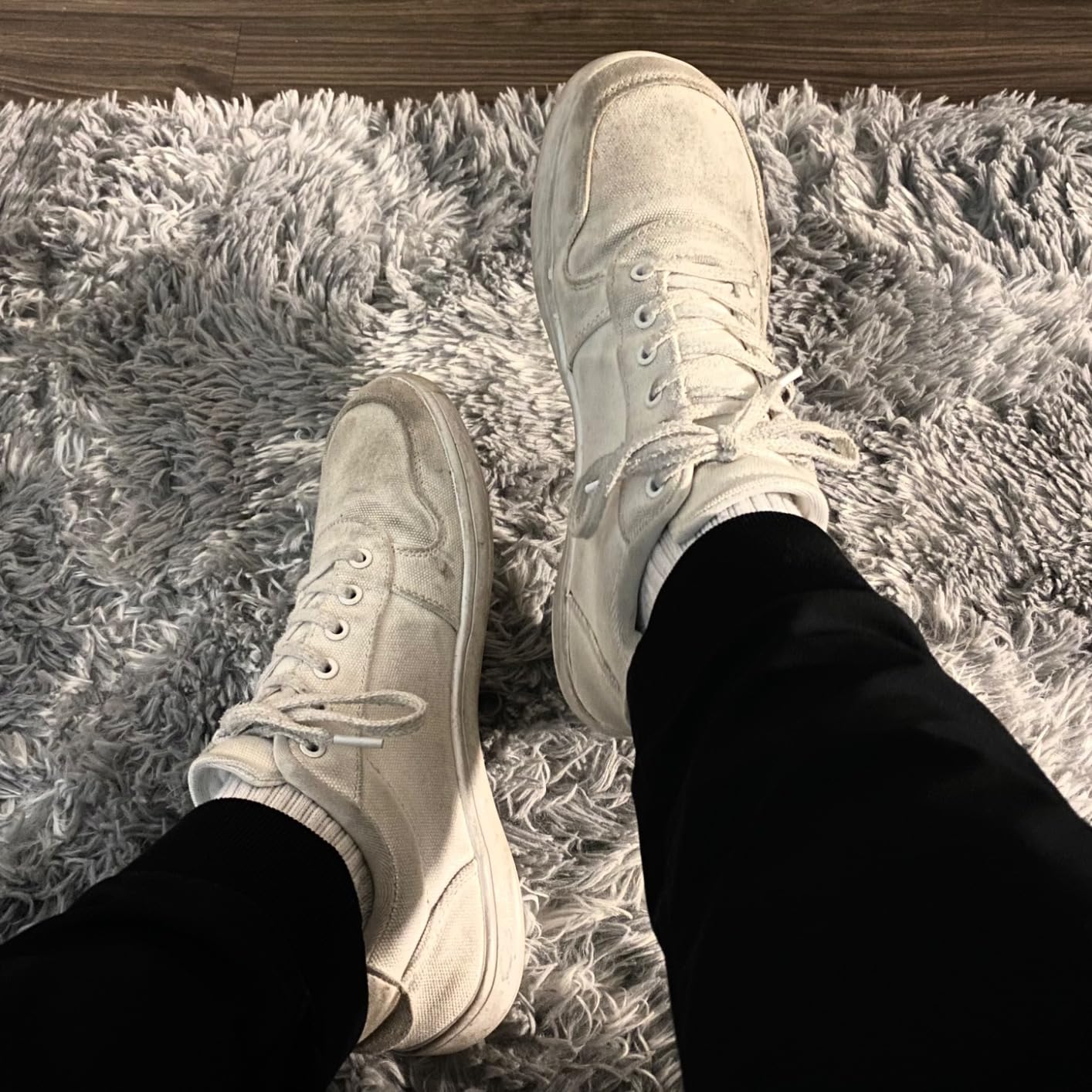
Retail Work Testing (8+ Hours on Concrete)
The weight difference hit me during the first shift. My previous sneakers were north of 12 ounces per shoe; these are about 8.2 oz. Over eight hours of walking and standing, that gap matters in ways that sound trivial until you’ve done a full holiday season on retail floors. My legs felt noticeably less tired by close of business, and the knee discomfort I’d accepted as a normal end-of-shift condition had largely disappeared by the end of week two.
The grip holds well on typical commercial flooring — polished concrete, rubber mats, standard tile. One exception: on particularly glossy polished surfaces with quick direction changes, these can squeak. Not dangerous, just audible. At my workplace it became a running joke that you could hear me coming.
Gym Use: Surprisingly Good for Strength Work
I didn’t expect the gym to be where these shine. For deadlifts and squats, the zero-drop flat sole provides a stability platform that most cushioned training shoes can’t match — there’s no foam compressing and destabilizing the bar path. The wide toe box lets your foot load naturally during the pull.
Don’t expect these to serve double duty for cardio. They’re fine for walking on a treadmill or casual rowing, but the minimal cushioning makes anything high-impact — running, box jumps, plyometrics — progressively uncomfortable past 20–30 minutes. These are a strength shoe that happens to also work for daily casual wear, not a cross-trainer.
Trail Performance
Light established trails work fine. Over five-mile weekend walks on packed dirt and gravel paths, the rubber outsole held traction well on dry terrain. Technical trails — loose rocks, steep descents, wet roots — are outside what these are designed for. The tread pattern is minimal, and there’s no lateral support for technical footwork. For casual nature walks they’re perfectly capable; for anything more demanding, a proper hiking shoe makes more sense.
Weather and Durability
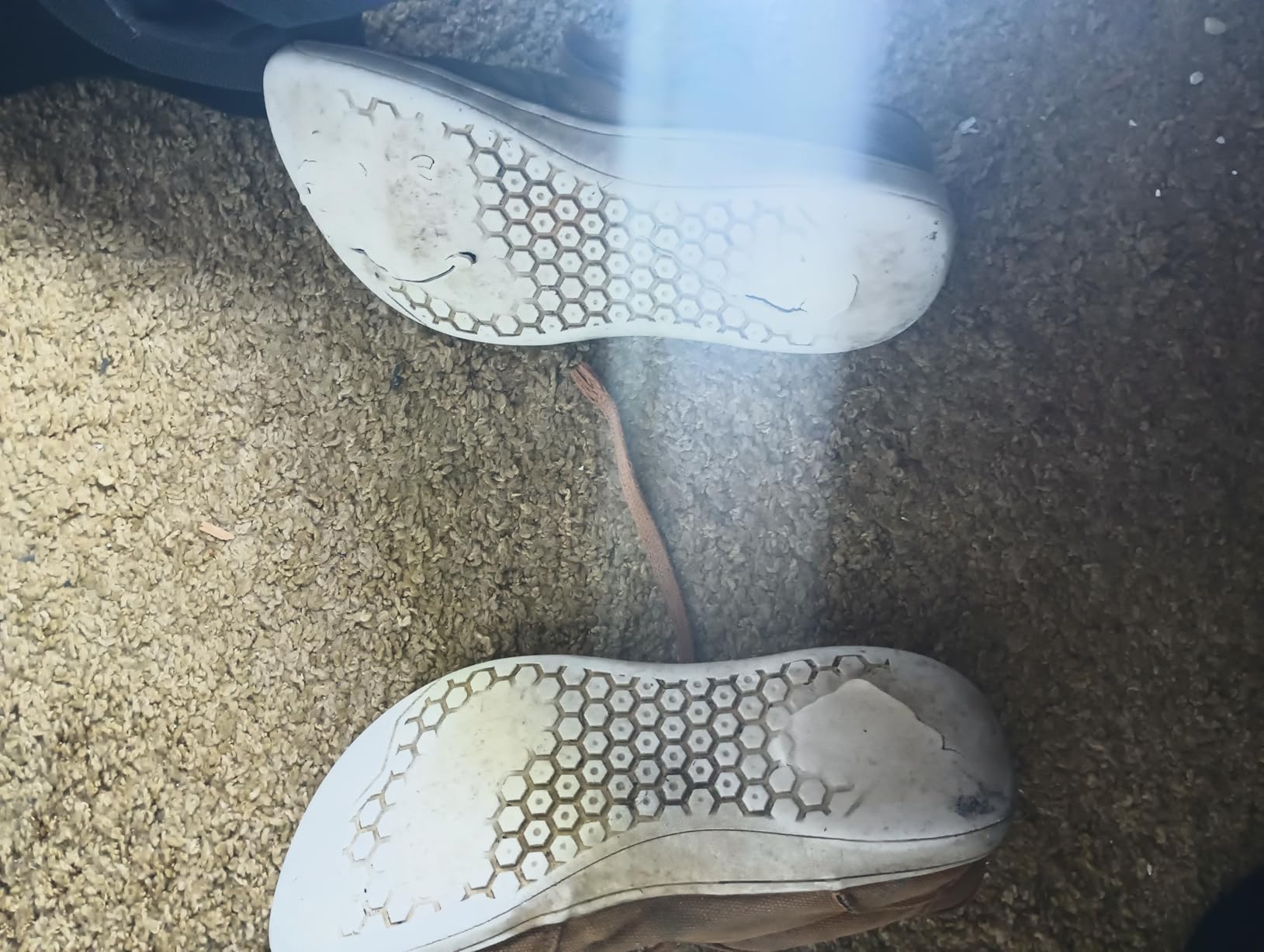
Canvas and water have a complicated relationship. In light drizzle these held up for roughly 20–25 minutes before the uppers began to saturate. That’s actually better than uncoated canvas sneakers I’ve tested before, but nowhere near waterproof. Caught in a proper downpour, your socks are wet in under a minute.
At the 12-week mark, the outsole showed minimal wear despite constant concrete use — more than I expected from a budget rubber compound. The canvas itself had softened and flexed noticeably compared to day one, which actually improved comfort. The midsole showed no visible compression at 85+ hours, though I’d expect that to change significantly in months four through six under heavy use.
Known durability risks from community data (not personally experienced within testing window):
– Tongue detachment: 4–6 months under 4+ days/week use
– Sole separation at toe box flex point: 3–6 months with aggressive use
– Insole sliding and bunching: primarily an issue with incorrect sizing
If you want to extend lifespan, the rotation strategy works well at this price point — two pairs at $80 total, alternating between them, extends the combined useful life considerably beyond what one pair delivers solo.
Marketing Claims vs. Reality
| Claim | Reality | Verdict |
|——-|———|———|
| “Wide toe box provides ample space for toes to spread” | Genuinely wide — toes splay freely, no sidewall contact | ✅ Accurate |
| “Extraordinary barefoot feeling” | With insole removed, yes. With insole in, it’s excellent minimalist feel | ⚠️ Partial — insole-dependent |
| “Zero-drop design for posture and balance” | Verified — measurable knee discomfort reduction by day 10 | ✅ Accurate with adaptation caveat |
| “Non-slip rubber sole” | Good traction on most surfaces; squeaks on high-polish floors | ⚠️ Surface-dependent |
| “Lightweight canvas for maximum comfort” | 8.2 oz confirmed, breathable, leg fatigue reduction real | ✅ Accurate |
| Implied durability for price | 6–12 months casual, 4–6 months heavy — appropriate for $40 | ✅ Realistic |
Durability Expectations by Use Pattern
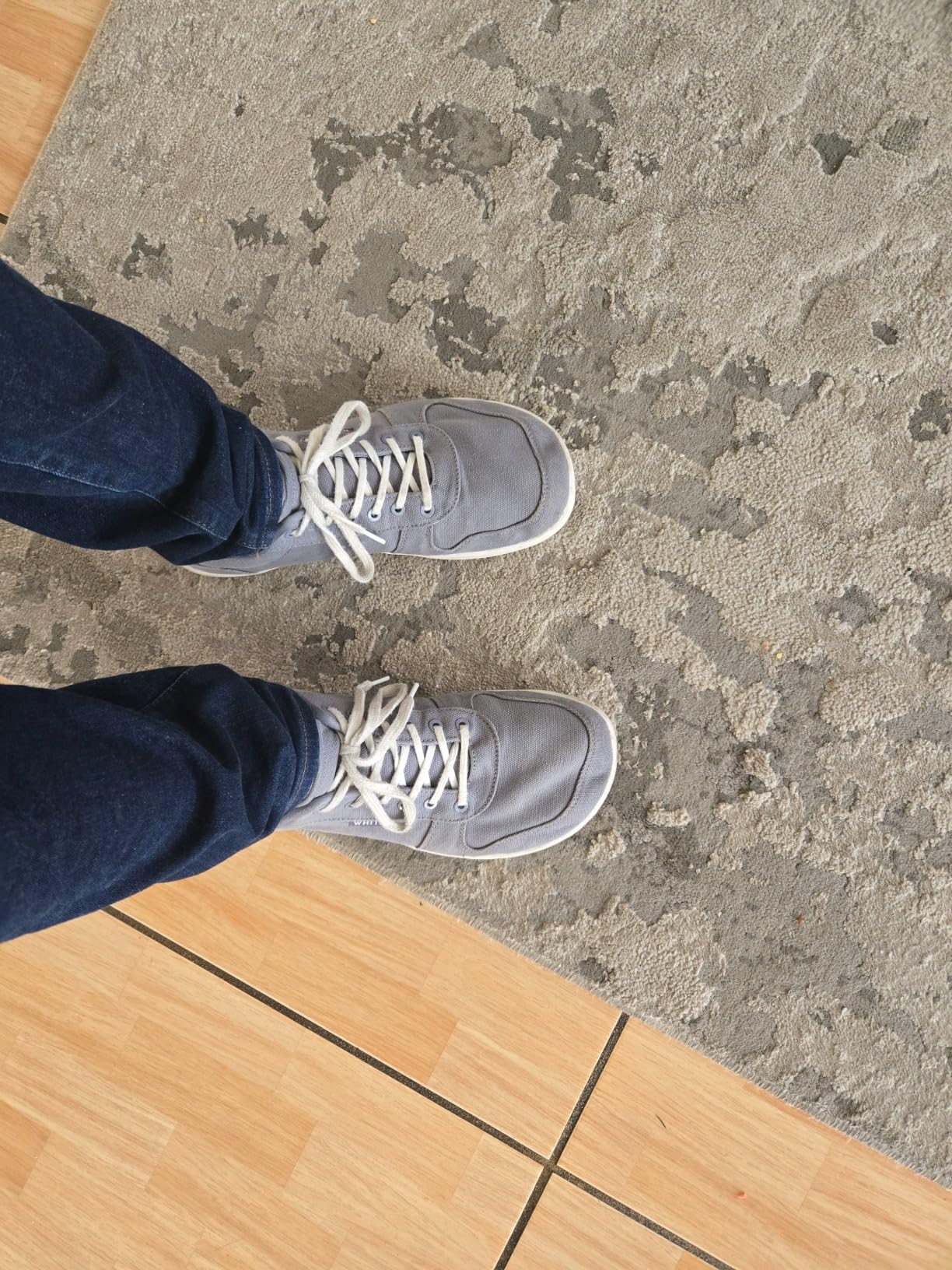
Casual rotation (1–2x per week): 12–18 months is achievable, especially if you rotate with another pair.
Moderate daily wear (3–4x/week): 6–12 months is the realistic target.
Heavy daily (5–7 days/week, full shifts): Plan for 4–6 months. At $40, that’s $6.67–$10/month — still below most conventional sneaker amortization.
For reference, my previous $70 Vans averaged about 8 months of daily wear. The WHITIN shoes at $40 for 6–8 months of daily use aren’t dramatically worse on a cost-per-month basis, and they’re actively better for my feet during those months.
Maintenance tips that extend lifespan: Hand wash only with cold water — machine washing weakens the canvas bond at the toe reinforcement. Air dry completely before wearing again. Check the laces around month 4; the stock laces are a known weak point and replacement flat shoelaces improve both durability and grip significantly. If you use custom orthotics, the removable insole means you can swap in a quality replacement insole from day one.
Value: How $40 Stacks Up
The math is simple: premium barefoot brands like Vivobarefoot run $150–200 and deliver excellent materials and 24–36 month lifespans. The WHITIN shoes deliver roughly 70% of that functional experience at 20–25% of the price. For a first-time barefoot shoe buyer, that trade-off is arguably ideal — you get to verify whether the barefoot philosophy actually works for your feet before committing to a significant investment.
For comparison, the Airhas Barefoot Zero Drop sits in a similar price bracket with a comparable feature set if you want to compare before buying. For a different approach from the same brand, WHITIN also makes a minimalist trail running shoe with a more aggressive tread pattern for readers who want more traction.
At $40, the value is strongest for: wide-footed men who’ve struggled to find comfortable casual shoes, retail and service workers who spend 8+ hours daily on concrete, and anyone curious about barefoot footwear who isn’t ready to commit triple digits to test the concept.
Comprehensive Scoring
| Category | Score (1–10) | Weight | Weighted | Notes |
|---|---|---|---|---|
| Comfort & Fit | 8.0 | 25% | 2.0 | Excellent post-break-in; wide toe box eliminates pressure points |
| Build Quality | 7.5 | 20% | 1.5 | Better than expected for price; tongue detachment risk at 4–6mo |
| Barefoot Feel | 7.0 | 15% | 1.05 | Strong without insoles; good minimalist feel with insoles |
| Durability | 6.5 | 15% | 0.975 | 6–12mo casual realistic; 4–6mo heavy daily |
| Style | 8.5 | 10% | 0.85 | Versatile — passes as regular canvas sneaker |
| Value for Money | 9.0 | 10% | 0.9 | Hard to beat at $40 for genuine barefoot features |
| Sizing/Fit | 7.0 | 5% | 0.35 | Runs small — size up 0.5 mandatory; great once sized correctly |
| OVERALL | 7.65/10 | 100% | 7.63 | Strong value, limited longevity, excellent wide-foot fit |
Alternatives Worth Considering
For serious trail running: The Altra Lone Peak 8 brings a zero-drop platform with actual trail-ready protection and a FootShape toe box — more shoe at a higher price, but the right tool for technical terrain.
For other barefoot budget options: The Titype Hike Barefoot and Barezoey Hike Barefoot sit in the same price range with slightly different construction approaches — worth comparing if you want options before committing.
For more barefoot feel: The UBFEN Barefoot Minimalist offers a flatter stack for readers who want even more ground connection at a similar price.
For custom arch support: The removable insole here makes it compatible with Valsole Orthotic Insoles — useful if you’re managing plantar fasciitis during the barefoot transition.
Who Should — and Shouldn’t — Buy These
Buy These If You Are:
- A first-time barefoot shoe buyer who wants to test the concept before spending $150+
- A man with wide or extra-wide feet who can’t find comfortable casual options at this price
- A retail or service worker spending 8+ hours on concrete floors
- A weightlifter who wants a flat, stable deadlift and squat platform
- Budget-conscious and willing to replace every 6–12 months rather than invest upfront
- Based in a dry climate where canvas’s rain limitations aren’t a daily concern
Skip These If You Are:
- A runner logging regular mileage — the cushioning isn’t there for impact demands
- In a consistently wet climate where canvas saturation would be a weekly problem
- Expecting a 2+ year lifespan without rotation — the durability ceiling is real
- Needing maximum arch correction — these won’t substitute for orthotics
- Unwilling to spend 3–4 weeks adapting to zero drop — the transition is non-negotiable
Frequently Asked Questions
Do I really need to size up?
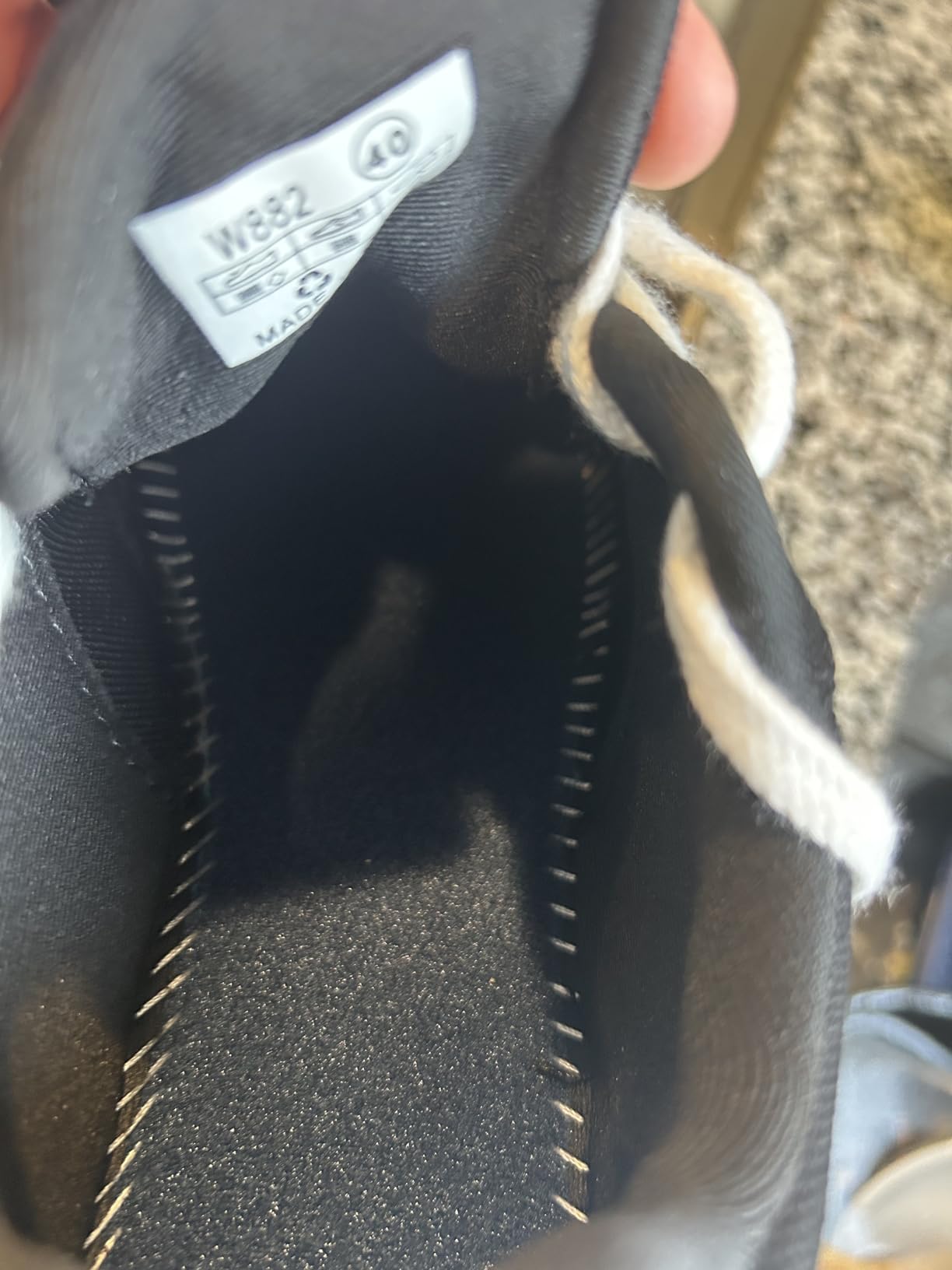
Yes. Size up exactly 0.5 from your normal shoe size. This is the strongest consensus finding across nearly all sources tested. Order your regular size and you’ll have a painful first week and a tight toe box that defeats the whole purpose. At $40 the cost of getting this wrong is low — but just order the right size.
How long does the zero-drop adjustment take?
Realistically, 3–4 weeks for your Achilles and calves to adapt comfortably, and 6–8 weeks before full-shift wear feels natural. Some people adjust faster, some slower. The key is gradual increase — don’t try to tough out an 8-hour day in week one.
Can I run in these?
Casual jogging for 10–15 minutes after proper conditioning is possible. For anything resembling regular running — intervals, tempo runs, anything over 30 minutes — the minimal cushioning stack isn’t appropriate. You’ll end up with impact fatigue that makes the experience unpleasant and potentially injurious before you’ve built the foot strength to compensate.
What about people with plantar fasciitis?
Mixed outcomes in the community. Some users report significant morning heel pain reduction within 2–3 weeks as the wide toe box and zero-drop alignment improve overall foot mechanics. Others find the minimal support initially aggravates symptoms. The removable insole means you can use a supportive orthotic insert during the transition period, which helps manage the adaptation load.
Are they actually waterproof?
No. Light drizzle is manageable for about 20–25 minutes. Sustained rain or puddles will saturate the canvas and reach your socks relatively quickly. These aren’t rain shoes — in wet climates, plan for alternate footwear on heavy weather days.
How long before the insoles start sliding?
This is almost entirely a sizing issue. Correctly sized (0.5 up from normal), the insole sits snugly and stays put. In the wrong size or with socks that have minimal friction, sliding is common. If you’re experiencing insole migration despite correct sizing, a thin strip of double-sided tape along the heel edge of the insole solves it permanently.
How good are these for wide feet specifically?
This is genuinely their best feature. Men with 4E or wider feet who’ve struggled for years to find affordable casual options report these as among the most accommodating options at any price point. The forefoot width isn’t just marketing language — it’s meaningfully wider than most “standard” footwear labeled as wide.
What’s the realistic cost comparison vs. higher-end barefoot brands?
At $40 vs. $150–200 for premium options like Vivobarefoot: you’re getting approximately 65–70% of the barefoot experience at 20–25% of the cost. The gap shows up in material quality (canvas vs. leather/technical textiles), durability (6–12 months vs. 2–3 years), and overall refinement. For casual use and barefoot experimentation, the WHITIN math is hard to argue against. For serious long-term use, the premium brands justify their price over a 3-year ownership horizon.
Final Verdict
Twelve weeks and 85+ hours later, I’ve stopped looking at Vans listings. Not because WHITIN makes a better shoe in every dimension — they don’t — but because for what I actually need (wide forefoot, zero-drop platform, reasonable durability, $40 replacement cost), these hit the target.
The sizing issue is real and non-negotiable: size up 0.5 or return them. The durability ceiling is honest: plan for 6–12 months, not 3 years. And the zero-drop transition requires patience: three to four weeks before the adjustment stops feeling like a leg workout.
Everything else? Comfortable, lightweight, stable for lifting, and versatile enough that nobody’s clocked them as “barefoot shoes” unless I mentioned it. At $40, those are genuinely impressive terms.
Summary Scores
| Category | Score | Quick Take |
|---|---|---|
| Comfort & Fit | 8.0/10 | Excellent — wide toe box, zero-drop benefits real |
| Build Quality | 7.5/10 | Better than expected; tongue detachment risk at 4–6mo |
| Barefoot Feel | 7.0/10 | Genuine minimalist experience, especially insole-free |
| Durability | 6.5/10 | 6–12mo casual; appropriate for price |
| Style | 8.5/10 | Versatile canvas look works everywhere |
| Value | 9.0/10 | Outstanding — 70% barefoot experience at $40 |
| Sizing | 7.0/10 | Runs small; great fit once sized correctly |
| OVERALL | 7.65/10 | Highly recommended for budget-conscious wide-footed buyers |
Be the first to review “WHITIN Men’s Wide Barefoot Shoes”
Related products
Sneaker
Sneaker
Sneaker

Running Shoes
Sneaker
Reviews
There are no reviews yet.