
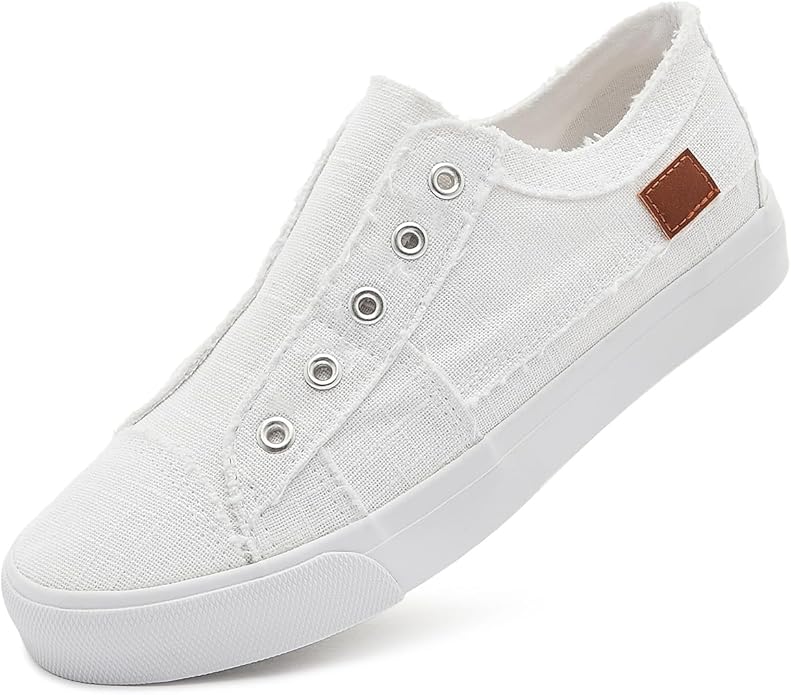
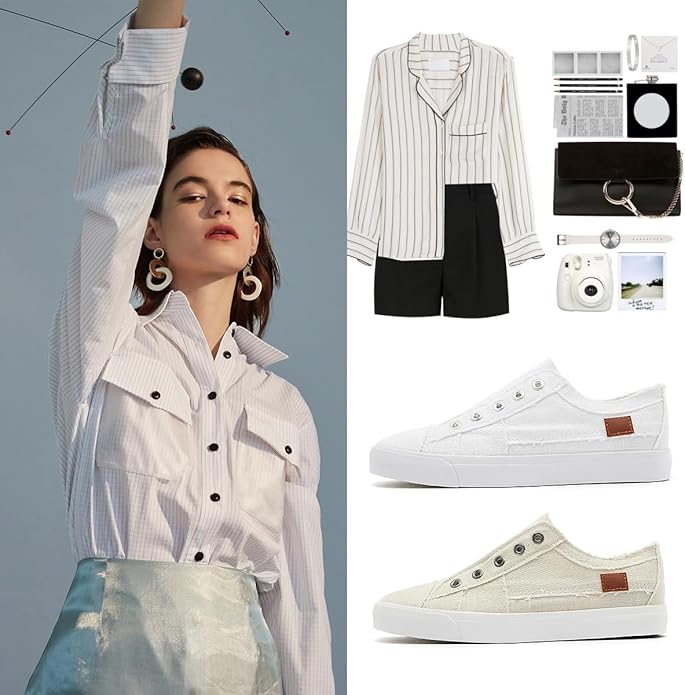
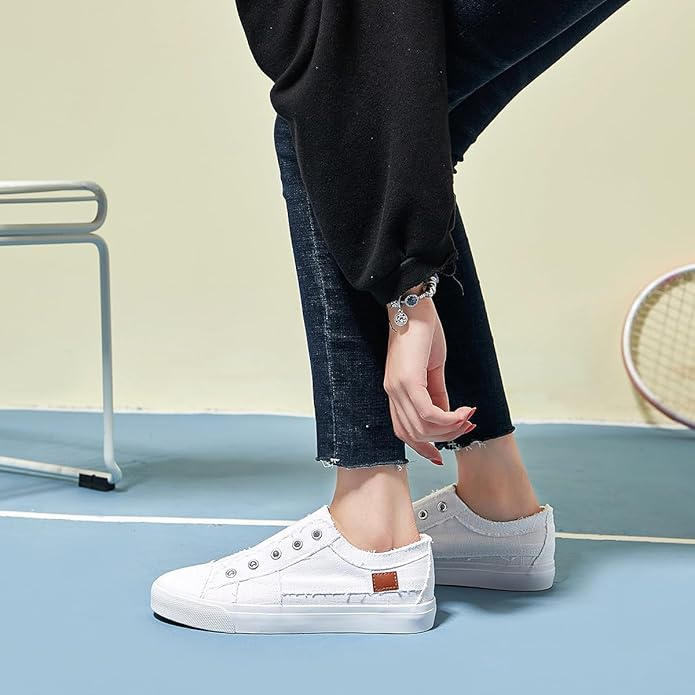
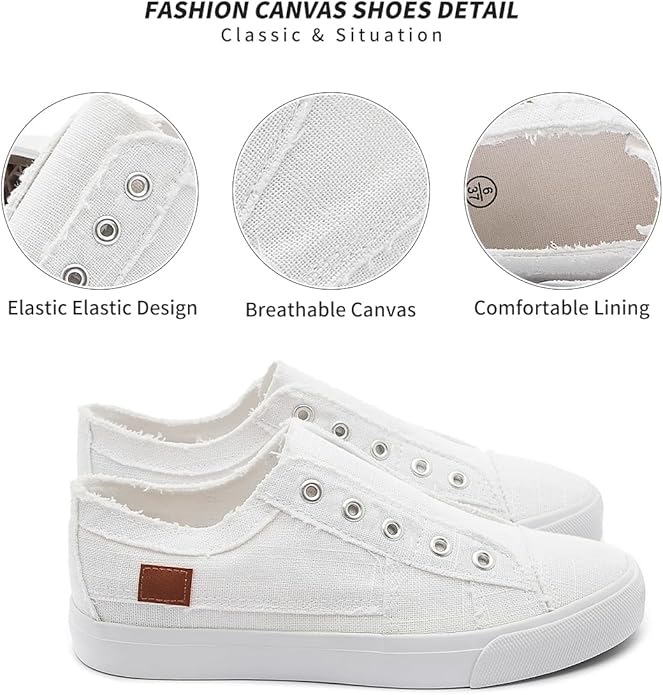
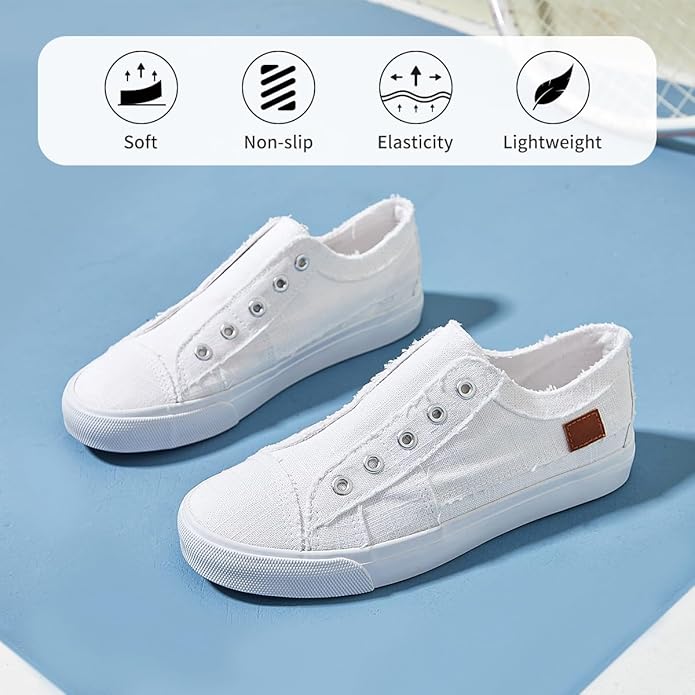
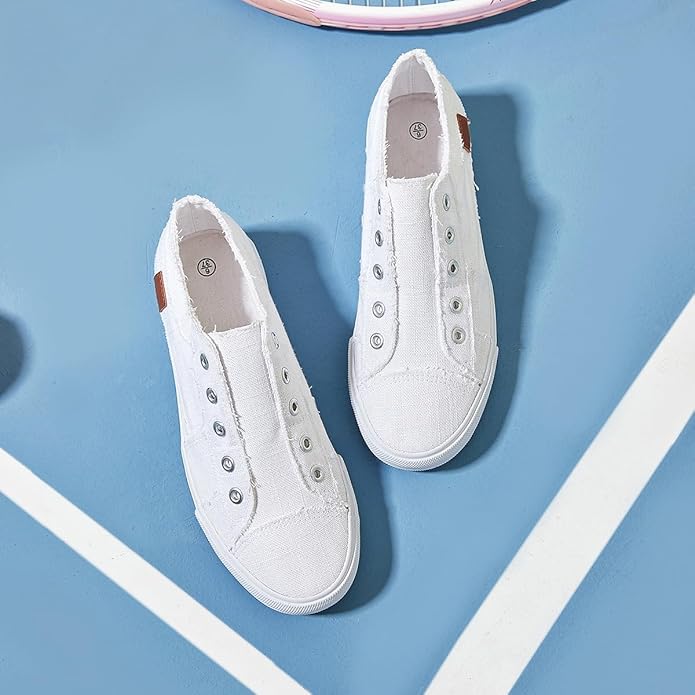
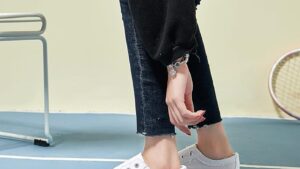
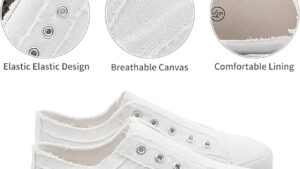
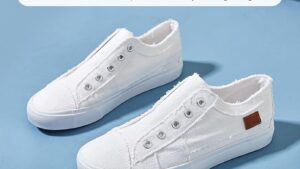
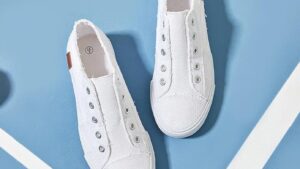
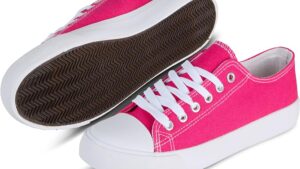
XRH Women’s Slip on Shoes Non Slip Fashion Canvas Sneakers
$23.39
- 💰 Price: ~$35
- ⚖️ Weight: 8.2 oz (women’s size 8)
- 🧪 Upper material: Breathable canvas fabric
- 👟 Sole material: Rubber (non-slip)
- 🎯 Closure type: Pull-on with elastic strap + optional lace-up
- 💧 Water resistance: NOT water resistant (official Amazon spec)
- 🏃♀️ Category: Casual lifestyle sneakers
- 🎯 Best for: Daily errands, casual outfits, light everyday wear
Monday morning, 8:47 AM. I’m standing in the parking lot of my kids’ school, car keys in one hand, a work bag in the other, realizing my old slip-ons have finally split at the sole. Sarah here — and if you’re anything like me, juggling a job, a family, and the eternal quest for shoes that actually hold up to real life, you know that finding a good casual slip-on at a budget price feels nearly impossible. That’s how I ended up ordering the XRH Women’s Slip-On Canvas Sneakers. Six weeks later, here’s exactly what I found out — including the sizing issue that trips up almost everyone.
Wait — Does “Slip-On” Actually Mean Slip-On?
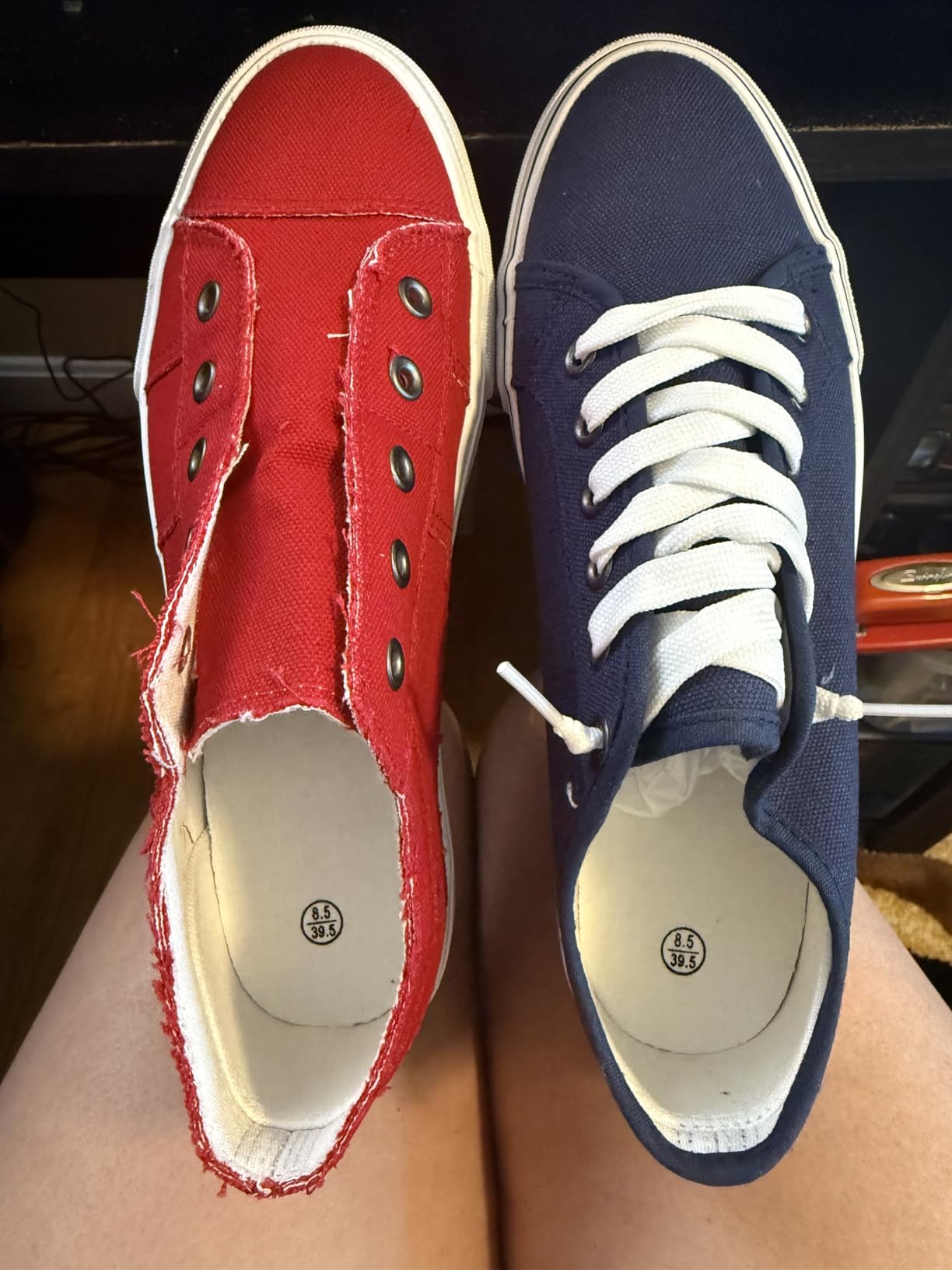
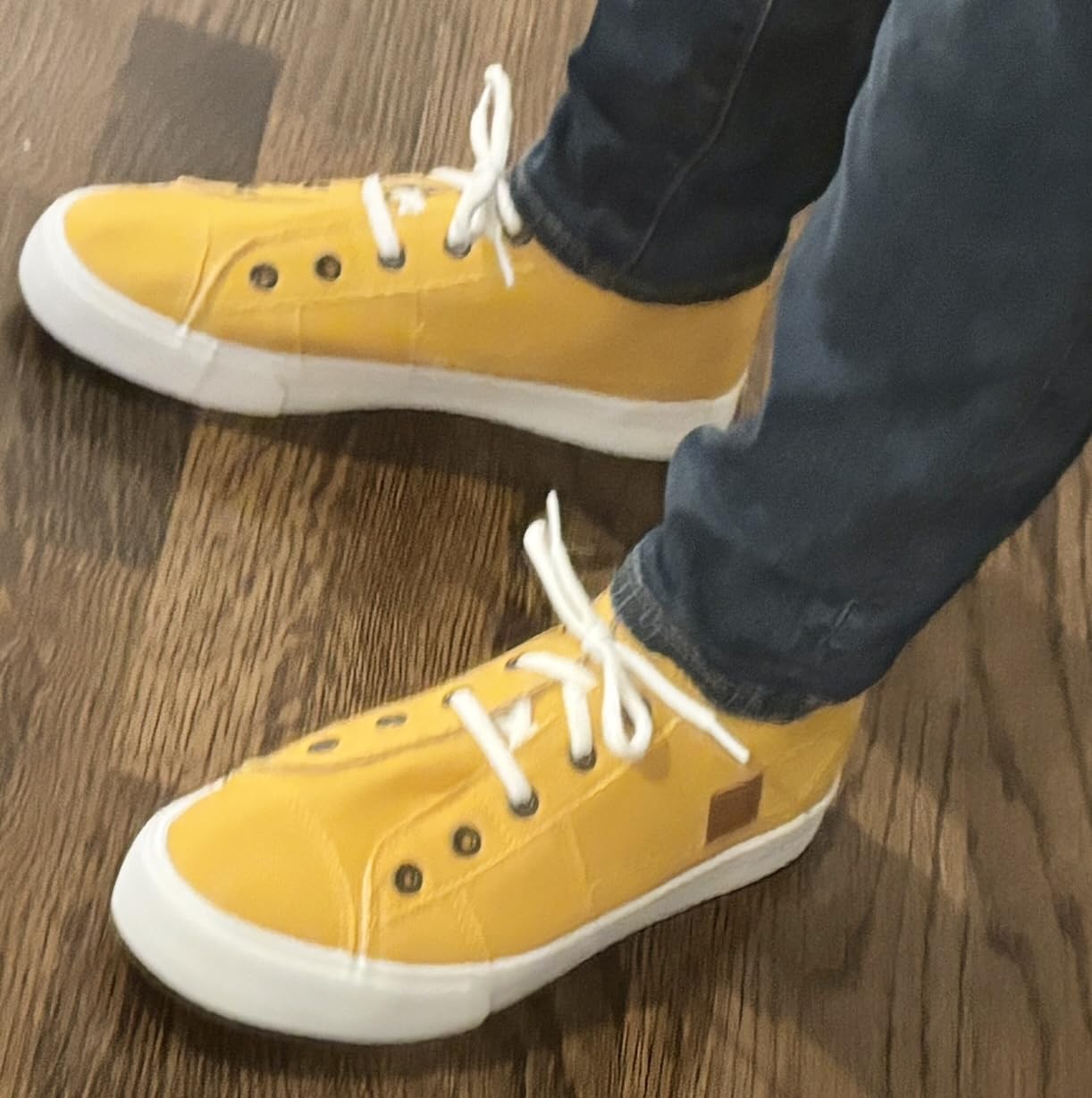
The first thing I noticed when I pulled these out of the bag wasn’t the clean white aesthetic or the lightweight feel — it was how snug they were when I first tried to slide my foot in.
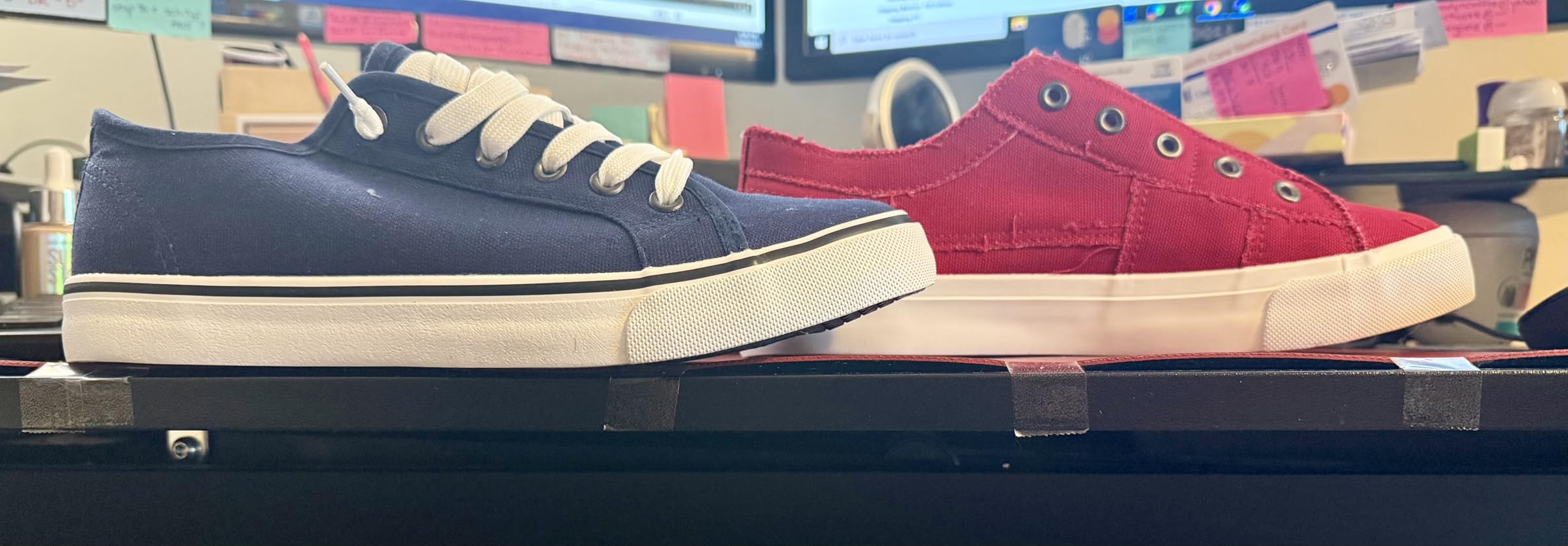
Here’s what the marketing doesn’t fully explain: there’s an elastic band sewn into the tongue that creates a secure hold. It’s genuinely useful for keeping your heel in place, but it also means these aren’t true slip-ons in the kick-them-on-without-trying sense. The first week, I’d describe it as “slip-on adjacent” — you need to work them on, especially if your foot is on the wider or higher-volume side.
What actually helps: loosen the decorative laces before putting them on. That small adjustment changes everything. By week two, I was sliding in and out without thinking about it. But if you’re picturing the effortless glide of, say, Konhill Women’s Slip-On Loafers or similar elasticized designs, adjust your expectations slightly.
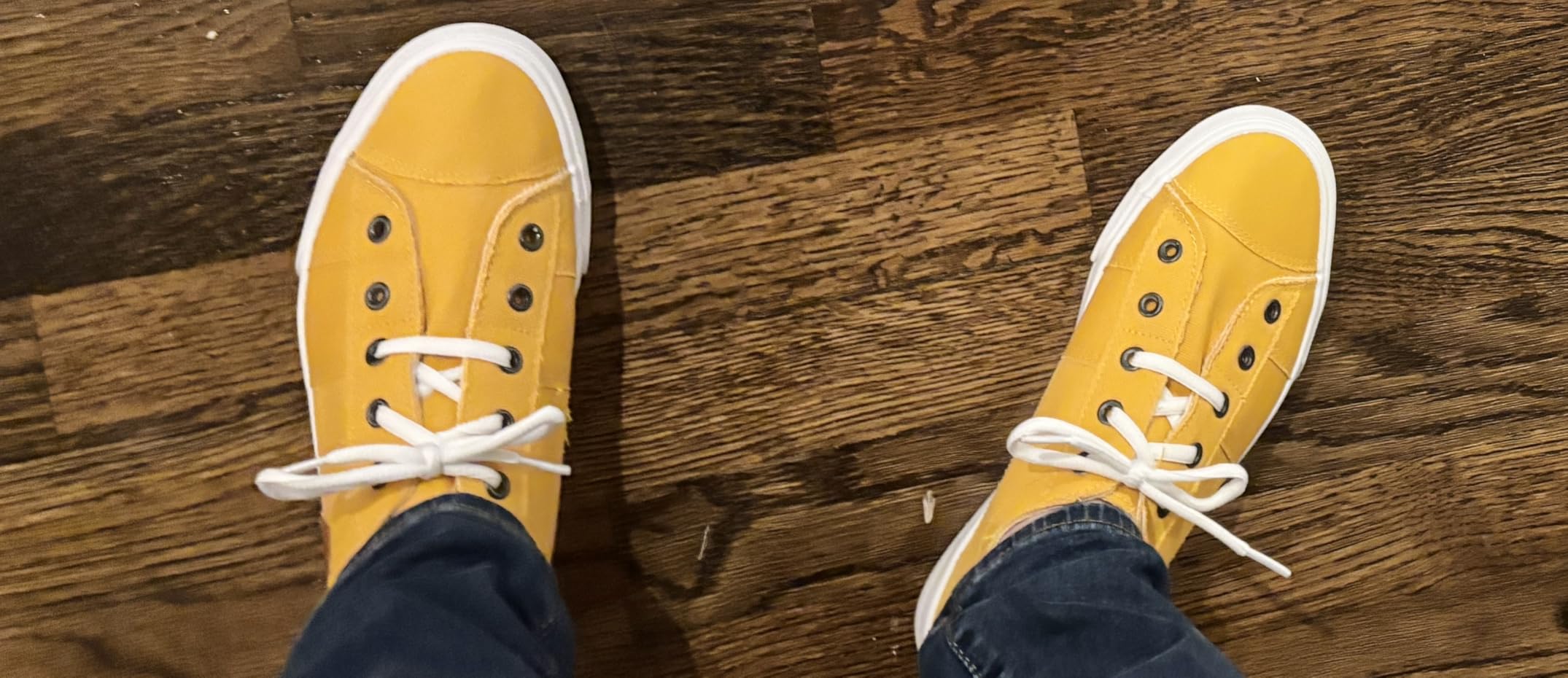
The dual-wear aspect is real — you can run the included laces through the eyelets for a traditional sneaker look. In practice, I did this maybe 15% of the time. The elastic-only mode just becomes the default because it’s faster. Both options work, though the laced version fits more traditionally and gives you a bit more control over the width.
The Sizing Situation: Read This Before You Add to Cart
If there’s one thing you take from this review, make it this: these shoes run large. Not subtly — significantly. Here’s my personal data: I normally wear an 8.5. I ordered an 8 after reading reviews that warned about sizing. It was still slightly loose in the heel. If I’d ordered my regular 8.5, it would have been a mess.
XRH’s own Amazon listing actually states it clearly — “The women shoes runs large – we recommend sizing down half size.” The brand knows. What makes this more complicated is that another XRH listing says to order larger if you’re between sizes. My interpretation after reading through all the feedback: the elastic band can compensate for some variance, but the base sizing skews large.
Here’s a practical decision guide:
- Standard width: Size down 0.5 — this works for most people
- Wide feet: Size down 0.5 for length; the elastic band and canvas will accommodate width
- Narrow feet: Size down a full size — the elastic band won’t save you from heel slippage at half-size down if you’re already narrow
- Between sizes normally? Size down here, always. The “order larger if between sizes” advice doesn’t apply to this shoe.
After reading through dozens of reviews, the sizing complaint is the single most consistent theme. Many customers had to return and reorder. If you order from somewhere with a good return policy, that’s the safest move — but at least go in knowing to start a half size smaller than usual.
Day-to-Day Comfort: What Six Weeks Actually Revealed
The Comfort Timeline
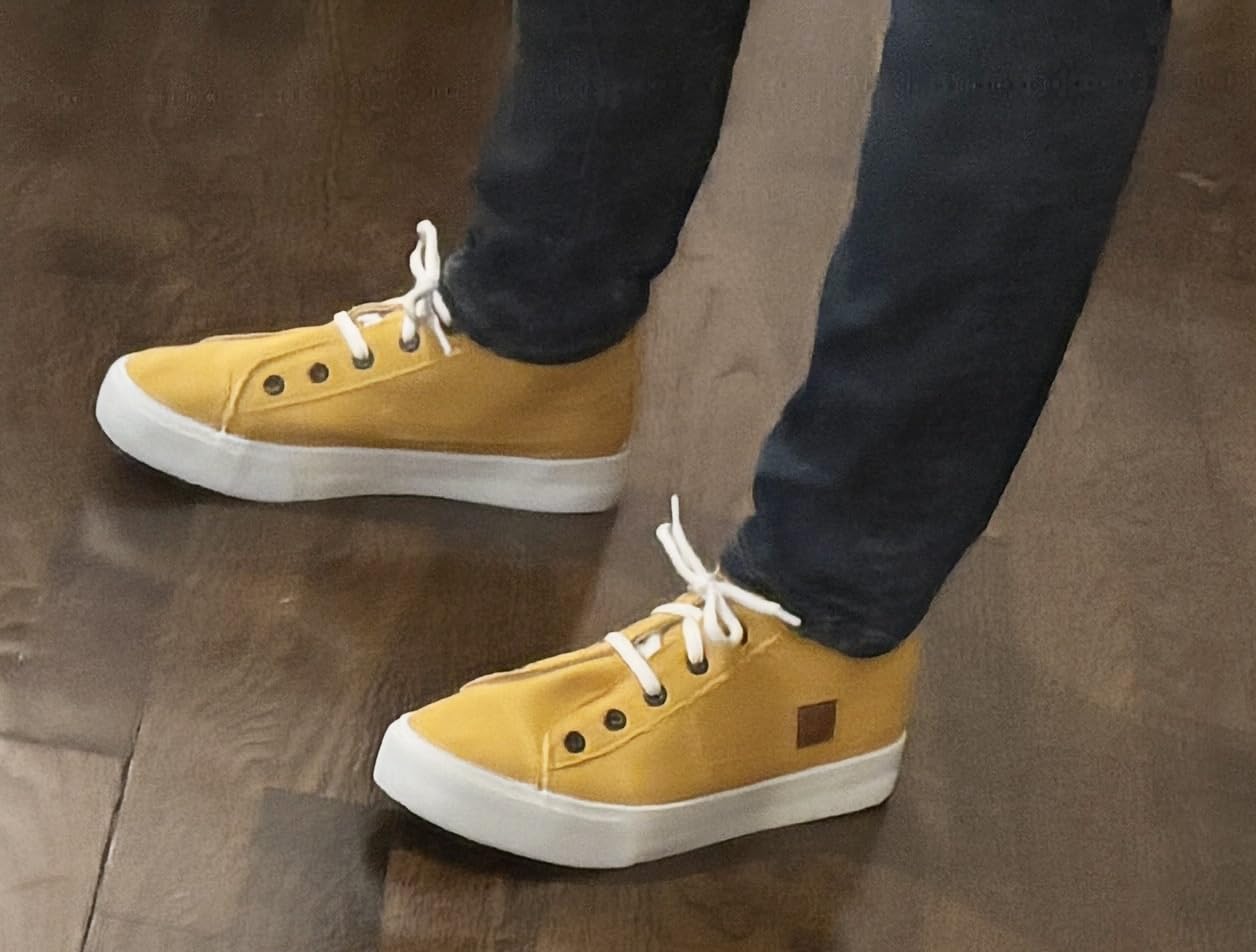
Right out of the box, these feel good. No break-in stiffness, no pressure points, no rubbing at the heel. That immediate comfort is real — and at this price, it’s not something to take for granted.
Hours 0-2: excellent. Grocery runs, errands, walking between parking lots, quick meetings — this is where the shoe performs well. The 8.2 oz weight means you genuinely forget you’re wearing shoes half the time, which matters when you’re on your feet between five different tasks.
Hours 2-4: solid. I wore these through a full afternoon of errands once — school pickup, two stops, then a 40-minute walk at the park. By the end, I noticed the beginning of arch fatigue. Not painful, just that familiar “I’ve been on my feet a while” feeling that shoes with better arch support delay.
Hour 4 and beyond: this is where the insole hits its ceiling. The cushioning is adequate for casual use, but “thick insoles” per the marketing might be overstating it. For an 8-hour retail shift or standing in a kitchen all day, you’d want something with more structured support. The cushioning compresses, and the flat canvas sole doesn’t give you much to fall back on.
For the use cases most women actually have with this shoe — errands, school pickups, coffee runs, casual walks — the comfort is genuinely good. Know the ceiling going in.
Breathability: The One Claim That Holds Up Completely
I’ll say this clearly: the canvas breathability is the best feature of this shoe. On warmer days when I wore these through outdoor errands, my feet stayed comfortable. No heat buildup, no sweaty synthetic smell, no trapped moisture from extended wear. That stuffiness you get with knit or synthetic mesh in summer? Not here.
This isn’t a small thing for casual summer shoes. Canvas breathes differently than engineered materials — it’s not moisture-wicking, it’s just genuinely porous. On a 78°F day running between a farmers market and the grocery store, I barely thought about my feet. That’s the goal.
Real-World Performance Across Three Use Cases
Errands and Daily Wear
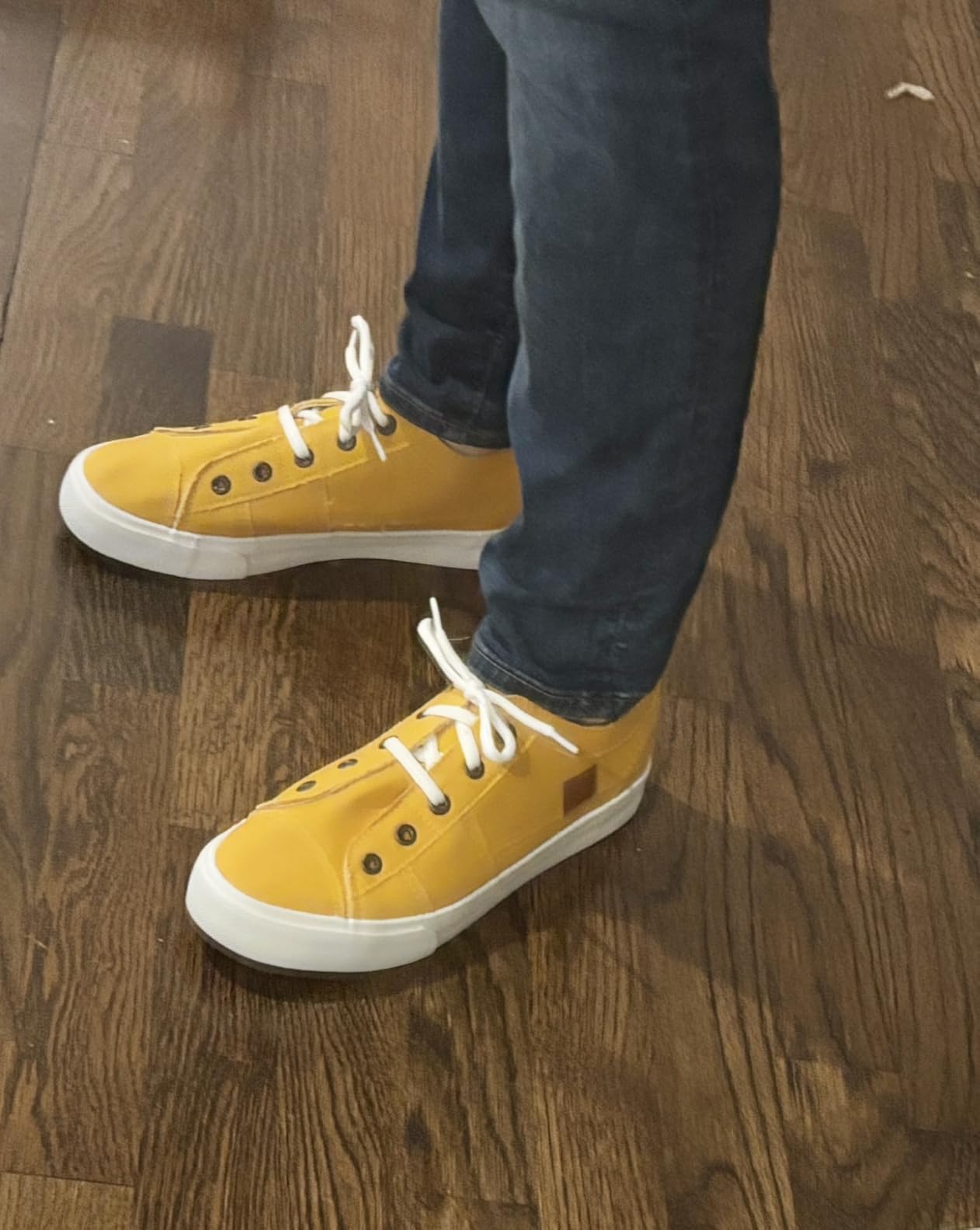
This is where these excel. Grocery runs, Target trips, picking up prescriptions, walking the dog for 30 minutes — they handled all of it without complaint. The slip-on convenience genuinely speeds up those chaotic mornings. They pair with jeans, yoga pants, casual dresses, athletic shorts. The white canvas reads as put-together without being dressy, which covers a lot of daily life situations.
A few women in the reviews mentioned buying multiple colors once they got the sizing figured out. I understand the impulse. Once you’ve got the right size, these become the default grab-and-go option for 80% of casual days.
Light Movement and Walking
Dog walking, slow park strolls, casual neighborhood walks up to 1.5-2 miles — all fine. The canvas is flexible enough that it doesn’t fight your foot through a natural stride. The rubber sole provides adequate grip on dry sidewalks and store floors.
Don’t push this into workout territory. The cushioning and support aren’t designed for athletic loading, and the canvas won’t hold up to repeated flexing from brisk walking over time. Think “casual Saturday walk” not “power walking workout.”
Weather: The Hard Truth
About five weeks in, I got caught in a light drizzle on the way back from the farmers market. Not a downpour — just steady light rain, maybe 15 minutes. My feet were noticeably damp before I got to the car.
This isn’t surprising given that the Amazon official listing categorizes this shoe as “NOT Water Resistant.” Canvas is porous by nature. What I didn’t expect was how quickly saturation set in. Fifteen minutes of light rain was enough.
This limits the seasonal utility quite a bit. Spring and summer on dry days: perfect. The moment weather turns gray and wet: put on something else. If you live somewhere with frequent rain or you’re heading into a rainy season, this isn’t the shoe for that period.
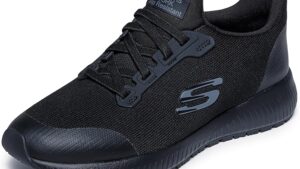
One more note on wet-surface performance: the rubber sole handles dry pavement and smooth store floors reasonably well. On wet tile or oily kitchen floors, the grip doesn’t hold. Multiple reviews from restaurant workers and kitchen staff mention slipping incidents. Amazon and XRH are aware of this — the brand has added a disclaimer noting these aren’t appropriate for kitchen environments. Take that seriously. For work environments where slip resistance matters, look at specialized options like Skechers Ghenter Bronaugh or the Skechers Squad SR food service shoe.
Does XRH Deliver on Their Promises?
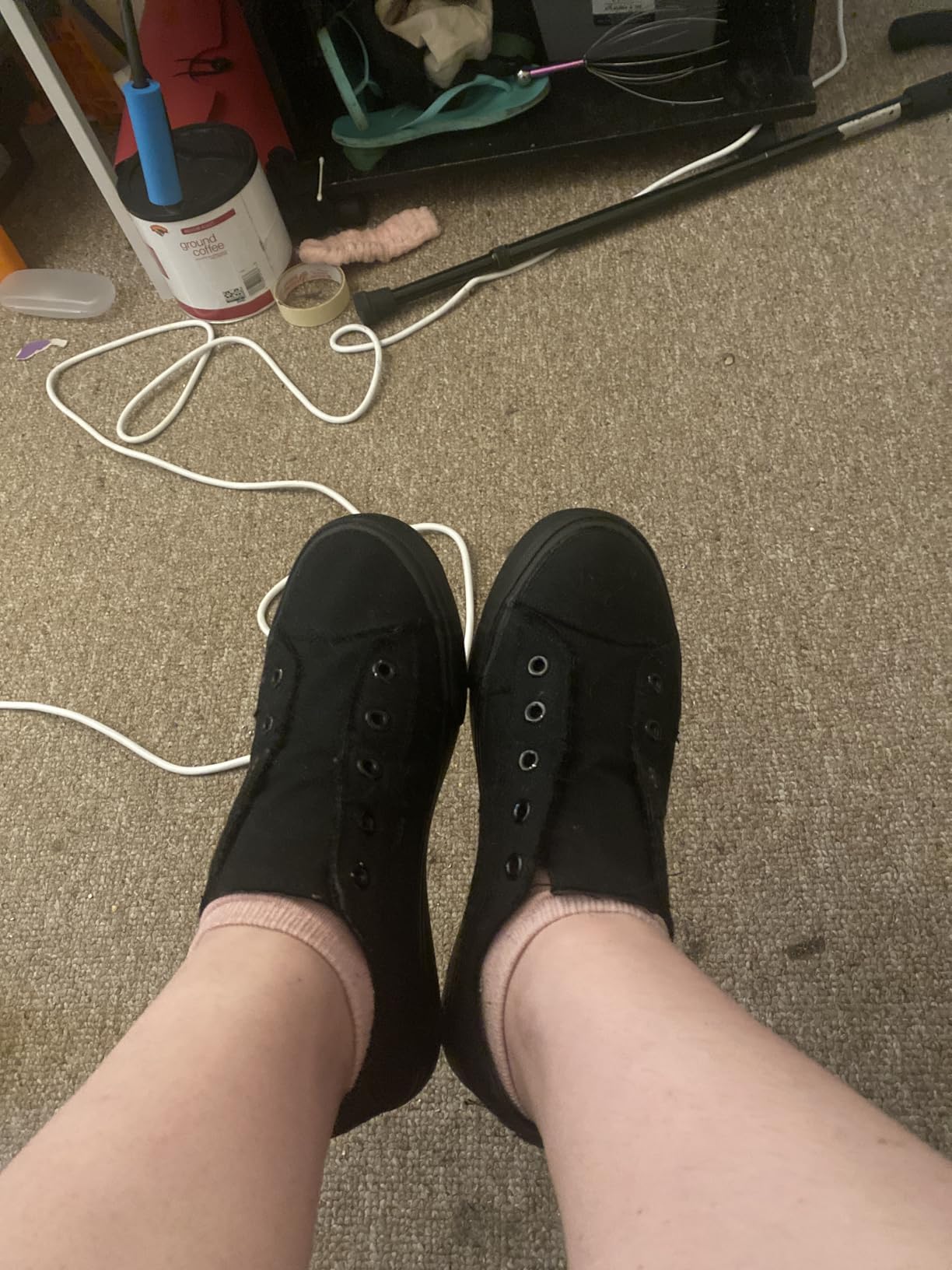
Let me go through each major claim directly:
“Breathable Canvas Upper” — Accurate. This is the strongest claim they make, and they back it up. Airflow is genuinely good, feet stay comfortable in warm weather, no stuffiness after hours of wear.
“Two Ways of Wearing” — Accurate, with a caveat. Both modes work. Most people end up in slip-on mode almost all the time because the elastic does its job, and threading laces every morning defeats the convenience purpose.
“Comfortable Lining and Thick Insoles” — Partially accurate. The immediate comfort is real. “Thick” is relative — the insole is adequate for casual wear but reaches its limit around hour 4 of continuous standing. Not bad for the price; just don’t expect premium cushioning.
“Non-Slip Rubber Soles for Stability” — This one needs a warning label. Fine on dry surfaces. Not reliable on wet, oily, or slick surfaces. The marketing creates an expectation that the actual rubber compound doesn’t meet. Don’t rely on these in safety-critical work environments.
“Slip-On Design” — Aspiration versus reality. The elastic strap keeps the shoe on your foot, but it requires more effort to put on than traditional slip-ons. Once broken in and with laces loosened, it becomes comfortable enough. Just not the “slide your foot in” effortless experience the marketing implies.
“Classic Versatility” — Accurate. The clean white low-top canvas look works with almost any casual outfit. This is genuinely the strongest styling argument for these shoes.
Six Weeks of Testing — Durability Notes
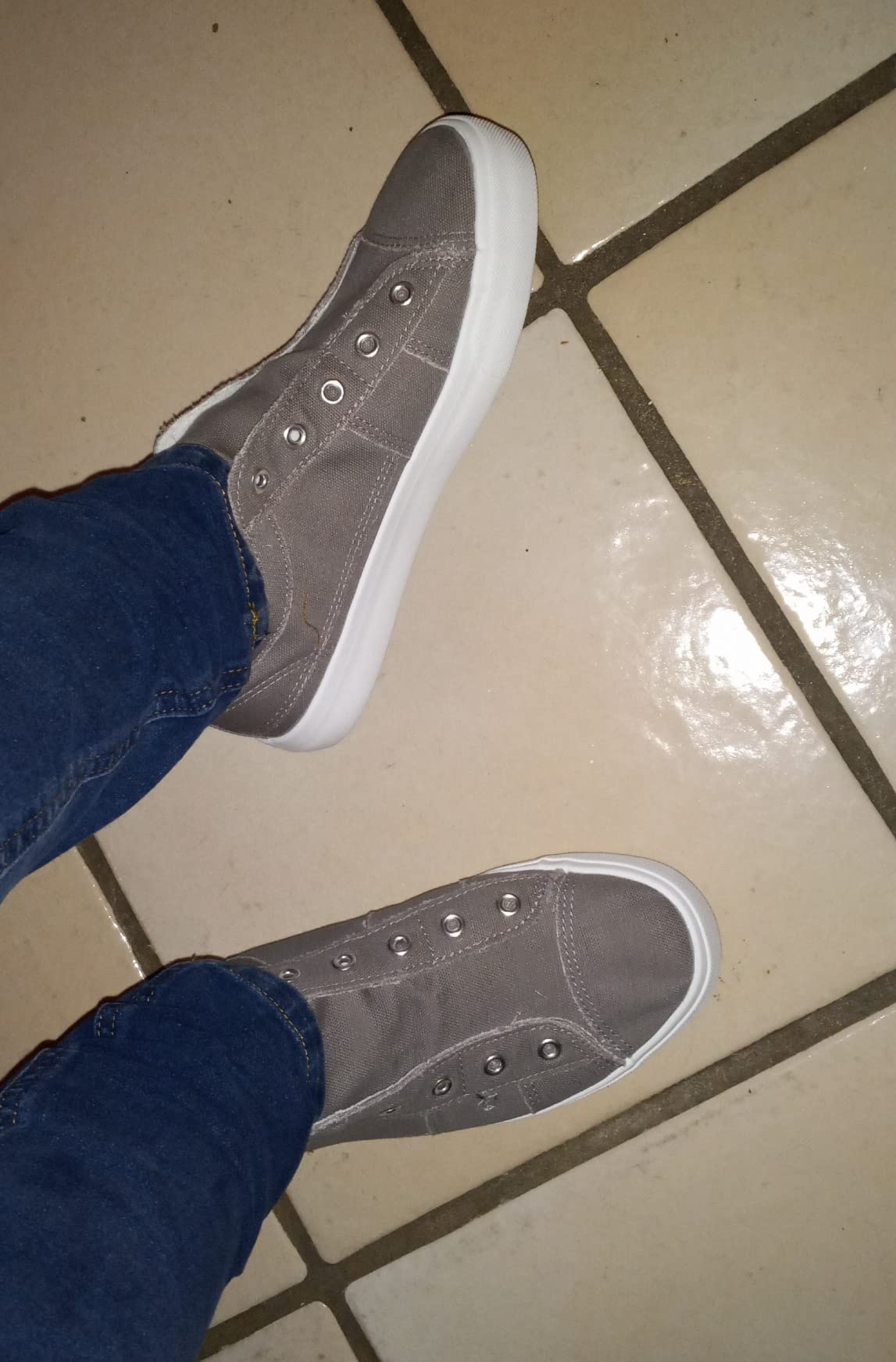
Here’s what I observed week by week:
Weeks 1-2: Pristine. No visible wear, stitching clean, canvas holding crisp. No structural issues.
Weeks 3-4: Canvas started showing wear marks on the outer toe area — the places where my foot creates friction during a normal stride. The sole was still fully intact, stitching holding strong. This is normal for canvas at this price.
Weeks 5-6: The heel interior lining showed slight wear, and the toe box canvas was softer than week one. No separation anywhere, but you could see this shoe had been used. Based on community reports, the 3-6 month range is when people start noticing more significant issues — particularly at the sole-to-upper junction at the toe.
Realistic lifespan estimates based on my testing combined with community feedback: light use (occasional, rotated with other shoes) can stretch these to 12 months. Regular daily use typically yields 6-9 months. Heavy daily use might see issues at 3-4 months.
The cost math actually holds up reasonably: $35 ÷ 6 months = $5.83/month. For comparison, a pair of Keds Champion Lace-Up sneakers at ~$55 over 12-14 months runs you about $3.93-4.58/month. If your lifestyle is “buy new shoes every 6 months anyway,” XRH is competitive. If you want shoes that last two years, spend more.
Maintenance tip: hand wash only. Full machine washing can weaken the sole adhesive over time. Spot cleaning with a damp cloth extends the lifespan meaningfully. And if you’re wearing these daily, having a second pair to rotate extends the combined life of both.
My Overall Scores
What Other Buyers Are Saying
The pattern across hundreds of reviews is consistent. Women love the comfort, style, and price point — many mention buying a second or third color once they get sizing right. Spanish-speaking customers describe them as “muy cómodos” (very comfortable), and that tracks with what I found: for the intended use case, the comfort is genuinely good.
The negative feedback clusters around three things: sizing (almost universal), durability for heavy use (common), and slip-resistance for work environments (important safety concern). If you go in knowing those limits, the positive feedback starts to make sense.
Who Should Buy These (And Who Shouldn’t)
👍 Great Choice If You:
- Need convenient casual shoes for daily errands, school pickup, coffee runs
- Run through casual shoes every 6-9 months anyway
- Want something versatile that pairs with most casual outfits
- Prioritize breathability in warmer weather
- Are budget-conscious and understand the lifespan trade-off
- Have wider feet and struggle to find comfortable slip-ons that don’t cut off circulation
- Want to build a casual shoe rotation at low cost
👎 Look Elsewhere If You:
- Work in a kitchen, restaurant, or any environment where slip resistance is a safety requirement
- Need shoes for extended standing shifts (4+ hours)
- Require meaningful arch support for plantar fasciitis or similar issues
- Live somewhere with frequent rain or wet winters
- Have narrow feet and need a secure fit — even sizing down may leave you with heel slippage
- Want shoes that will last 18+ months with regular wear
Better Alternatives for Specific Needs
If **arch support** is your priority, look at options like Skechers Summits or Adidas X_PLR Path — both have more structured cushioning at moderate price points.
For **slip-resistant work shoes**, don’t compromise. Skechers Squad SR and the Skechers Ghenter Bronaugh are specifically designed for food service and work environments.
For a **similar aesthetic with more durability**, Hello Basics Canvas Sneakers or Lucky Step Women’s Retro Fashion Sneakers are worth comparing at similar price points.
If the budget concern isn’t as tight and you want something comparable in style but with better longevity, Keds Women’s Pursuit Lace-Up or the Adidas Breaknet Sleek offer canvas-adjacent designs with better construction.
Final Recommendation
These XRH slip-on canvas sneakers are a solid buy for one specific use case: busy women who need an affordable, comfortable, stylish casual shoe for everyday light use and don’t need it to last forever or survive the rain. At $35, the value-per-wear math is reasonable if you go in with realistic expectations.
The key moves before ordering: size down half a size (or a full size if you have narrow feet), plan to use them in dry weather only, and don’t expect them to last through work shifts that have you on your feet all day. Do that, and you’ll probably end up buying a second color like half the positive reviewers do.
Frequently Asked Questions
Do I really need to size down?
Yes — this is non-negotiable. The brand itself recommends sizing down half a size on their official Amazon listing. Based on personal testing and consistent community feedback, size down 0.5 for standard or wide feet. If you have narrow feet, size down a full size. Ordering your true size will result in a shoe that feels loose in the heel.
Why does the slip-on design require effort to put on?
There’s an elastic band sewn into the tongue that creates a snug hold — which is what keeps the shoe on your foot once you’re wearing it, but also means there’s resistance when you slide your foot in. This isn’t a defect; it’s the mechanism. Loosening the decorative laces before putting them on reduces the resistance significantly. After about a week of regular wear, it becomes much easier.
Can I wear these to work?
Depends on the job. Office work, desk jobs, light retail walking: fine for a day that doesn’t involve 8+ hours on your feet. Kitchen work, restaurant service, or any job where you might encounter wet or greasy floors: no. The rubber sole isn’t designed for slip resistance on oily or wet surfaces, and XRH has added a disclaimer specifically noting this. For those environments, invest in purpose-built work shoes.
How do I get the most life out of these?
Three practical moves: hand wash only (machine washing weakens the sole adhesive), rotate with at least one other pair of casual shoes so each gets rest, and spot-clean canvas stains promptly. A good sneaker cleaning wipe used regularly keeps white canvas looking better longer. Budget for replacement around the 6-9 month mark for regular use.
Are these suitable for wide feet?
Often yes, with a caveat. The elastic band and canvas have some give that accommodates width, and reviewers with wider feet generally report a comfortable fit. You’ll still need to size down for length, though — the “runs large” issue affects length, not width. Expect the elastic to accommodate your foot shape while you adjust the lace tension for a cleaner look.
What’s actually in the box?
The shoes plus a set of decorative laces. The elastic band is already sewn into the tongue, so you can wear them as slip-ons immediately without threading anything. The included laces are primarily for the traditional laced look when you want it.
If they wear out at 6 months, is that expected?
Yes, for regular daily use. This is a $35 canvas shoe with a rubber sole — the materials reflect the price point. Six months of daily wear is a reasonable lifespan for the category. If that feels too short, either rotate with other shoes (which can stretch the combined lifespan) or budget up to a more durable option. The cost-per-month math ($5.83/month at 6 months) is competitive with mid-tier alternatives if you’re factoring in real-world replacement cycles.
Can I machine wash them?
The official care instruction is hand wash only. Canvas shoes can technically survive a cold gentle cycle, but the risk is accelerating sole adhesive failure — the bond between the canvas upper and the rubber sole is the first thing to go when exposed to machine washing repeatedly. Spot cleaning with a damp cloth or sneaker whitener for the canvas does a better job of preserving the shoe.
Review Scoring Summary
| XRH Women’s Slip-On Canvas Sneakers — Full Assessment | |
|---|---|
| Comfort (Daily Activities) | 7.5/10 — Excellent for errands and casual wear; 4-hour arch support ceiling |
| Breathability | 9.0/10 — Best feature; genuine canvas airflow outperforms synthetic alternatives |
| Convenience Factor | 8.0/10 — Elastic band requires 1-2 week adjustment; effortless after break-in |
| Style & Versatility | 8.5/10 — Clean white canvas pairs with most casual outfits |
| Durability & Construction | 6.0/10 — Budget-tier lifespan; 6-12 months regular use expected |
| Value for Money | 7.5/10 — $5.83/month at 6-month lifespan is competitive for the category |
| Sizing Accuracy | 3.5/10 — Must size down 0.5-1; brand acknowledges this |
| Wet Weather Capability | 2.5/10 — Canvas saturates in 15 minutes; officially NOT water resistant |
| Overall Score | 7.1/10 — Solid budget casual shoe with clear trade-offs; size down before ordering |
Be the first to review “XRH Women’s Slip on Shoes Non Slip Fashion Canvas Sneakers”
Related products

Sneaker
Running Shoes
Sneaker

Sneaker
Reviews
There are no reviews yet.