
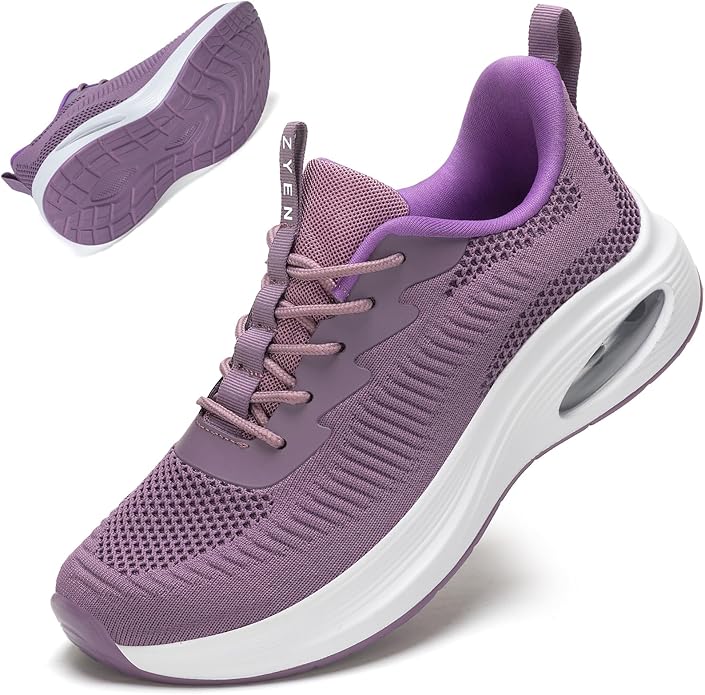
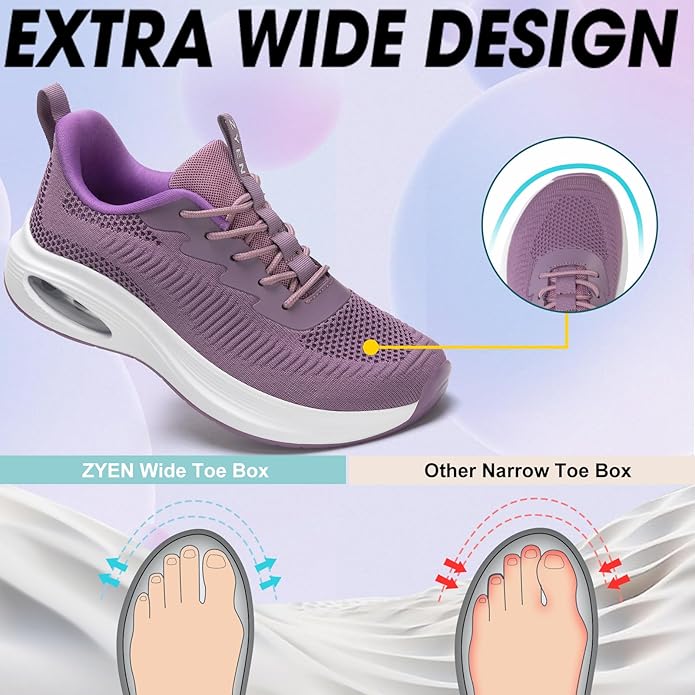
There’s a specific kind of shoe shopping exhaustion that only people with wide feet understand. You find something cute, it claims to be wide, you order it, and the moment your bunion presses against that unyielding seam, you know. Again. That was me at 2 AM, six weeks before I’m writing this, going down an internet rabbit hole until I landed on the ZYEN Wide Toe Box Shoes. Sarah here — I’ve been testing footwear for over a decade, and I went into this one with genuine skepticism. Another $45 promise? I’ve heard them all. Six weeks and 40+ hours later, I have some things to tell you — including a few things no one else seems to be saying.
Quick Take: What You Actually Need to Know
Before the deep dive — if you’re coming here with a specific question, here’s the short version.
The ZYEN 8811 (that’s the air cushion lace-up women’s model, not their separate zero-drop barefoot line — a distinction that matters, and I’ll get to it) genuinely delivers on its two most important promises: the wide toe box is real, and the breathability is real. For women with bunions, hammertoes, or just feet that don’t fit the “average” mold, that combination at $45 is legitimately hard to find.
The catches? Sizing requires attention — the default guidance “true to size” is only accurate if you have wide feet. Standard-width buyers need to go half a size down. And durability tops out around 3–6 months of regular use, which means you need to factor that into your cost math.
Overall: 7.5/10 — excellent for its audience, honest about its limits.
First Impressions: The Box (Or Lack Thereof)
Mine arrived in a vacuum-sealed plastic bag. No box, no tissue paper, just the shoes compressed into a clear bag. A few online buyers have reported finding their heel counters slightly crushed on arrival — mine were fine, but it’s worth knowing that ZYEN cuts costs here. At $45, that’s not surprising or particularly condemnable. Just set expectations.
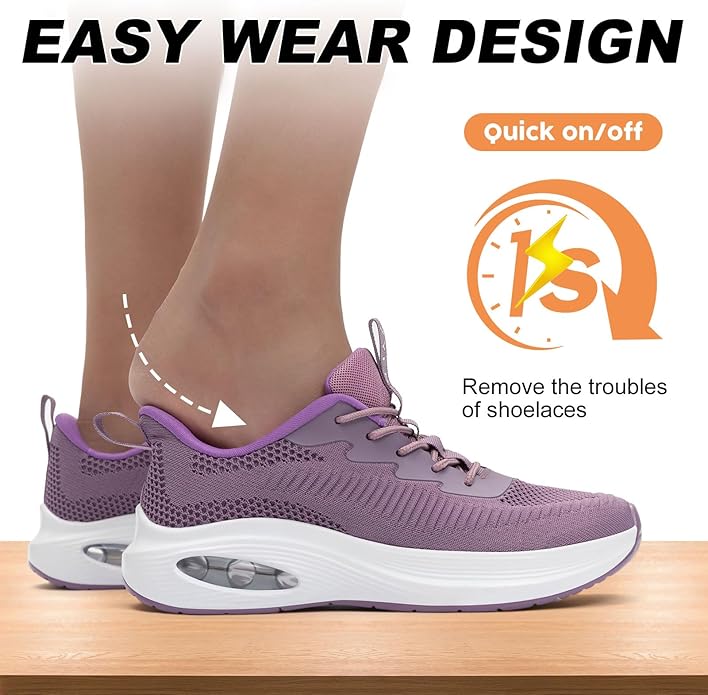
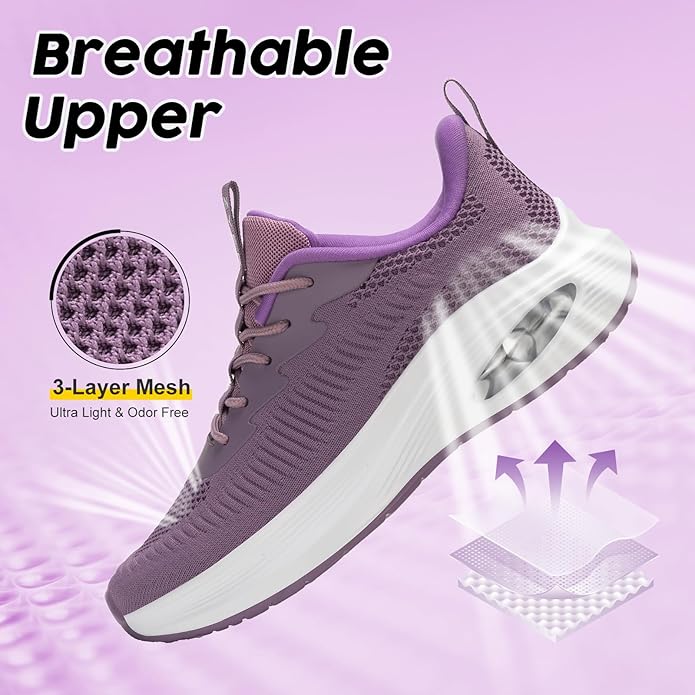
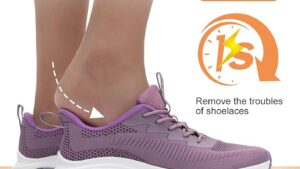
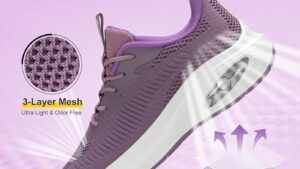
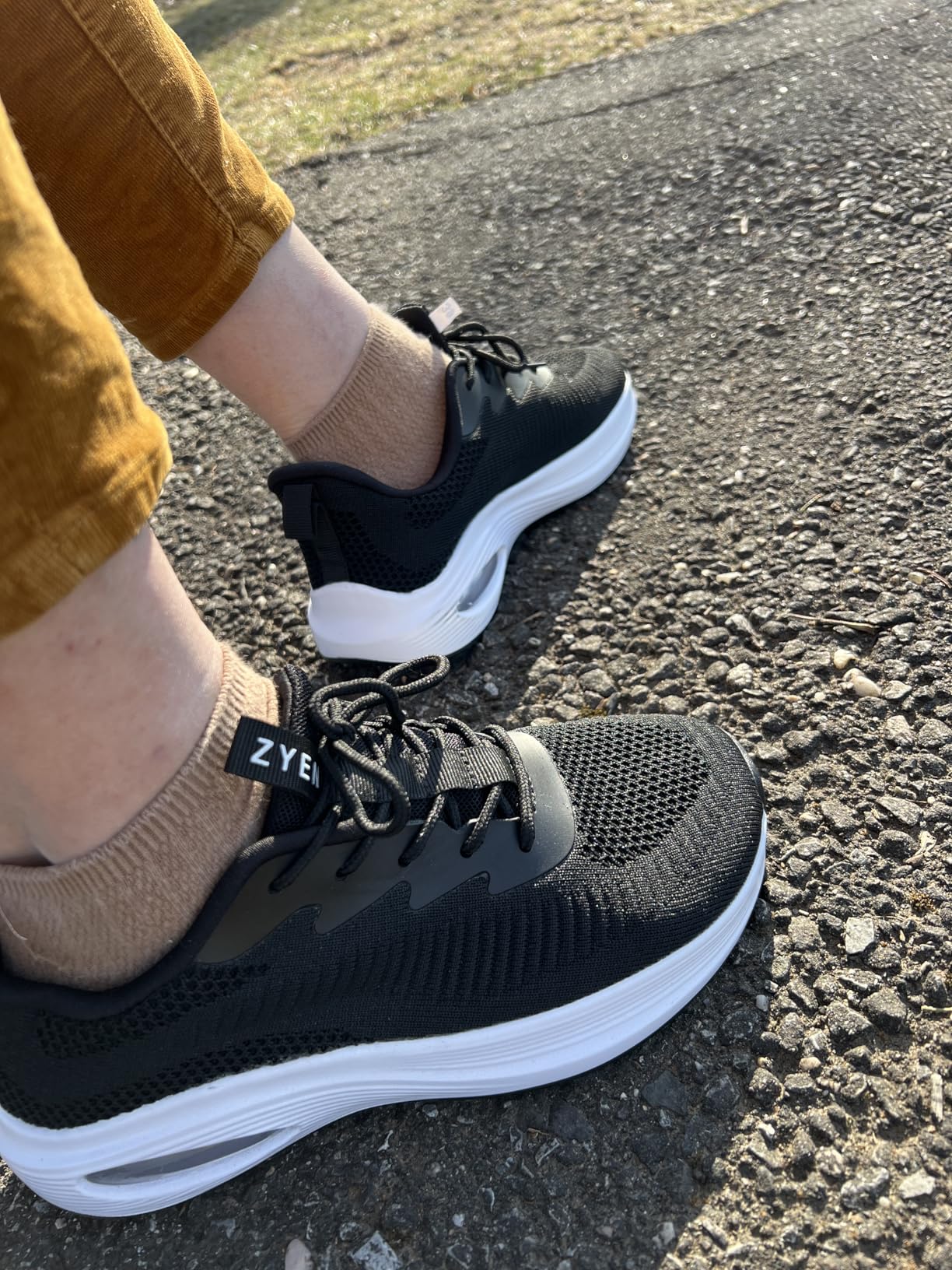
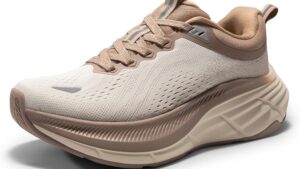
Once I got them out and in my hands: light. Genuinely light. The mesh upper has a knit sock quality — it gives a little when you squeeze it, which is exactly what you want if your foot needs room to breathe and move rather than conform. The lacing runs long, which I actually appreciated. You can cinch the midfoot snug while keeping the toe box relaxed, which I hadn’t been able to do easily with most “wide” options.
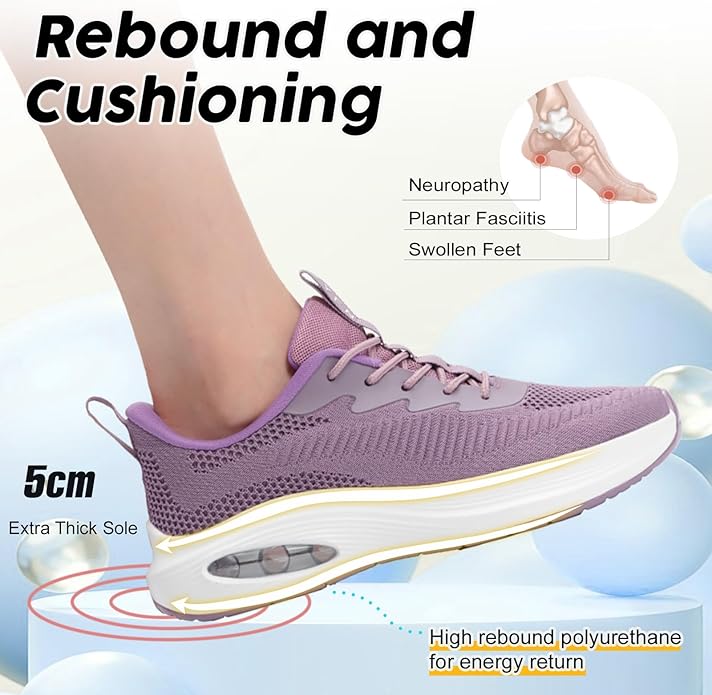
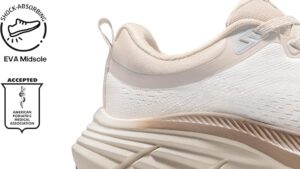
The air cushion sole has a satisfying firmness — not gel-like, more like a thick foam with a little give at the heel. That heel responsiveness matters. And yes, I said heel specifically. More on that when we get to comfort.
Sizing Reality Check — This Is Where Most Reviews Go Wrong
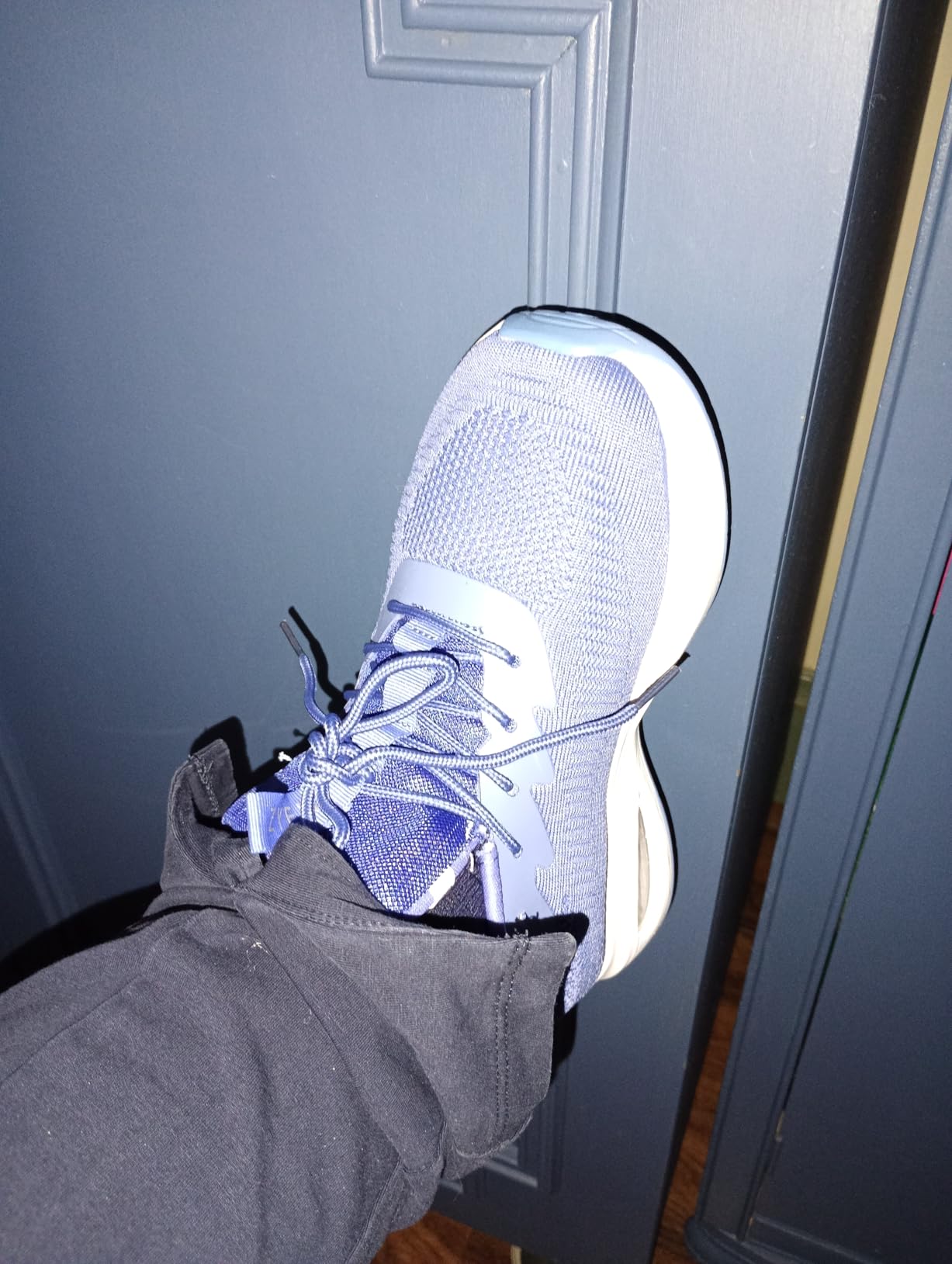
The standard guidance across most ZYEN reviews is “runs slightly large.” That’s technically correct but incomplete in a way that will cause you to make the wrong call.
Here’s what’s actually happening:
The wide toe box creates space that standard-width feet read as “too roomy,” which triggers the instinct to size up — and then the shoe falls off your heel. If you have wide feet, you don’t experience that looseness the same way, because your foot fills the volume differently. So the sizing logic depends almost entirely on your foot type:
Standard width? Size down half a size. The shoe will still feel roomier than your usual, but it’ll fit properly in length and heel.
Wide or extra-wide? Your regular size works. The wide toe box is accommodating enough that TTS gives you the room you need without heel slippage.
Narrow feet? Proceed with caution. You’ll likely want to go down half a size, and even then the wide design may feel sloppy. This shoe wasn’t made for you, and forcing it probably won’t end well.
One more note: a few Amazon reviewers have flagged that sizing can vary slightly between colorways in the same batch. If you’re between sizes, buy somewhere with an easy return policy. The color you want may fit fractionally differently.
Comfort Timeline: Weeks 1–4 vs. What Actually Happens After
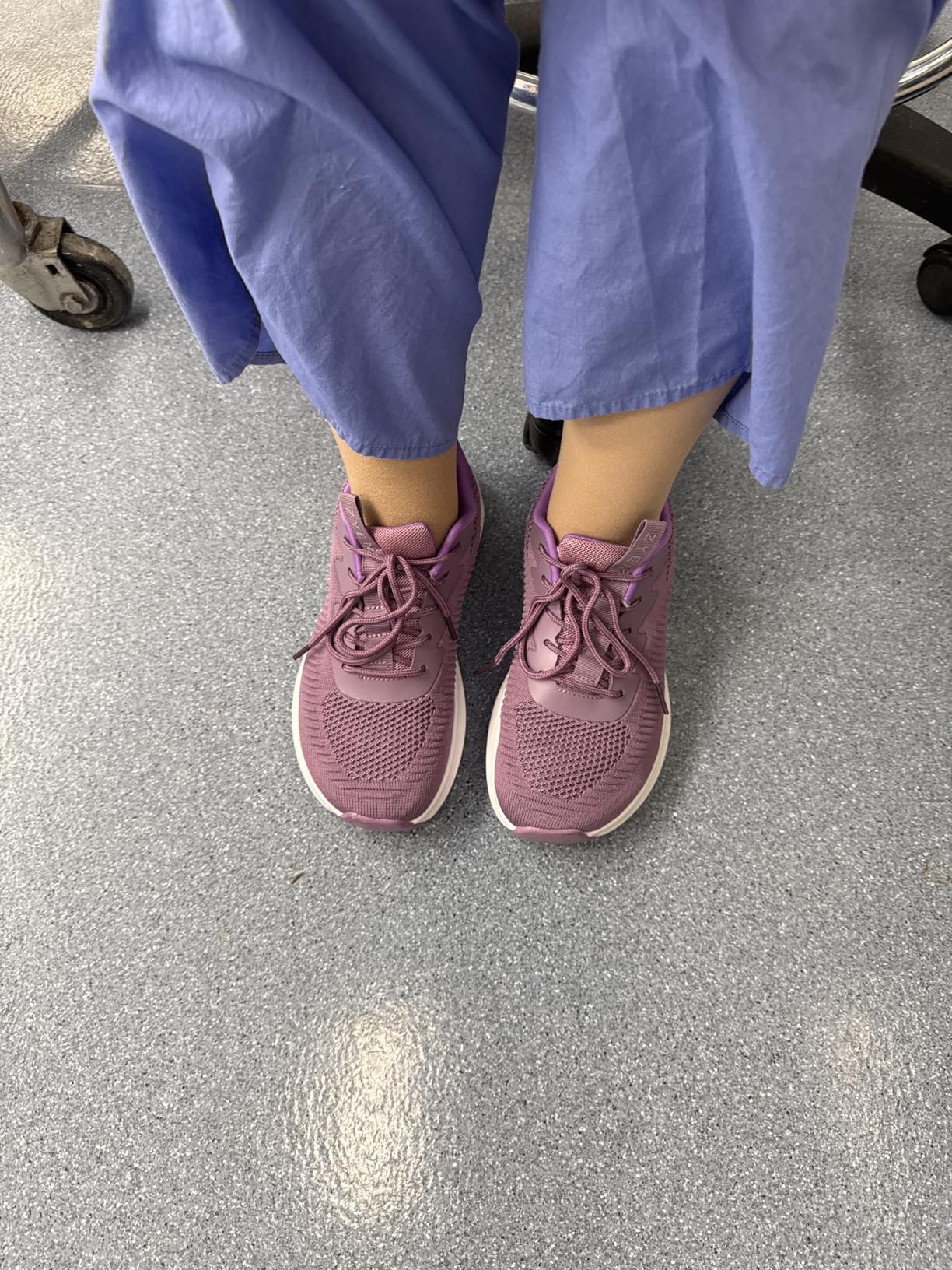
Most reviews describe comfort in a simple arc: “great at first, then not great.” I tracked it more carefully, and the picture is more interesting than that.
Weeks 1–4: This is the honeymoon. The air cushion in the heel is responsive in a way that reads as energetic — not bouncy like a running shoe, but engaged, like the floor is slightly cooperative. My first Saturday in these was a long one: grocery store, kids’ soccer sidelines, two hours wandering around a big box store, dinner prep on a hard kitchen floor. Eight hours. I didn’t think about my feet once. That’s the metric I care about most, and it passed.
Weeks 5–8: The air unit compresses. The heel cushioning is still there, but that initial responsiveness is gone — it’s now more “adequate” than “engaged.” Worth knowing: the air cushion in this shoe appears to sit in the heel only. The forefoot was always firmer by comparison, which I didn’t notice at first but became more apparent as the heel softened. For walking and standing, this progression is fine. For longer sessions on hard surfaces, you’ll start to feel it.
Month 3 and beyond: This is the durability conversation, and I’ll cover it in its own section. The short version: the comfort you experienced weeks 1–4 is not the comfort you’ll have at month 4.
Wide Toe Box: Does It Actually Deliver?
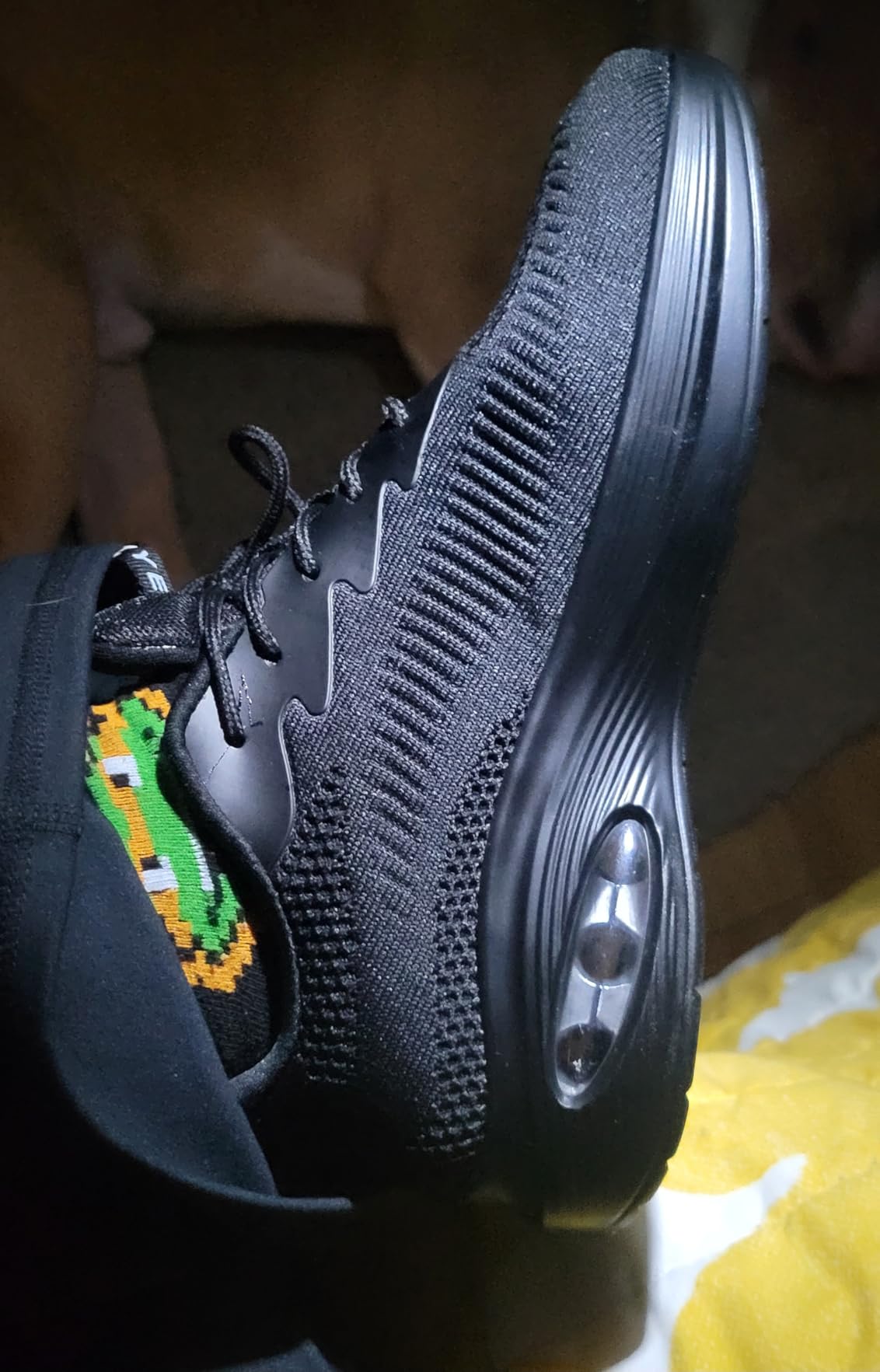
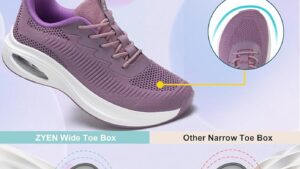
Yes. And I mean this specifically, not as marketing-speak.
I’ve worn a lot of shoes that claim wide fit. Most of them are wider in the midfoot but still taper to a standard toe box, which does nothing for bunion relief. The ZYEN’s roominess starts at the ball of the foot and extends through the toe box. My bunion — which typically presses against the medial seam of any shoe claiming to be “wide” — sat with zero contact pressure for the entire six weeks.
That’s not common. And it’s not a size thing; I tested these at my standard size (per the sizing guidance above for wide feet) and the fit was precise in the heel and midfoot while giving my toes actual room to exist.
For reference: I’ve tried shoes in the same category from several other daily sneaker brands at higher price points that didn’t do this as well. The ZYEN wide toe box is the real differentiator, and it’s worth the $45 just for that if bunion pressure is your primary problem.
Cushioning, Arch Support, and the Orthotic Question
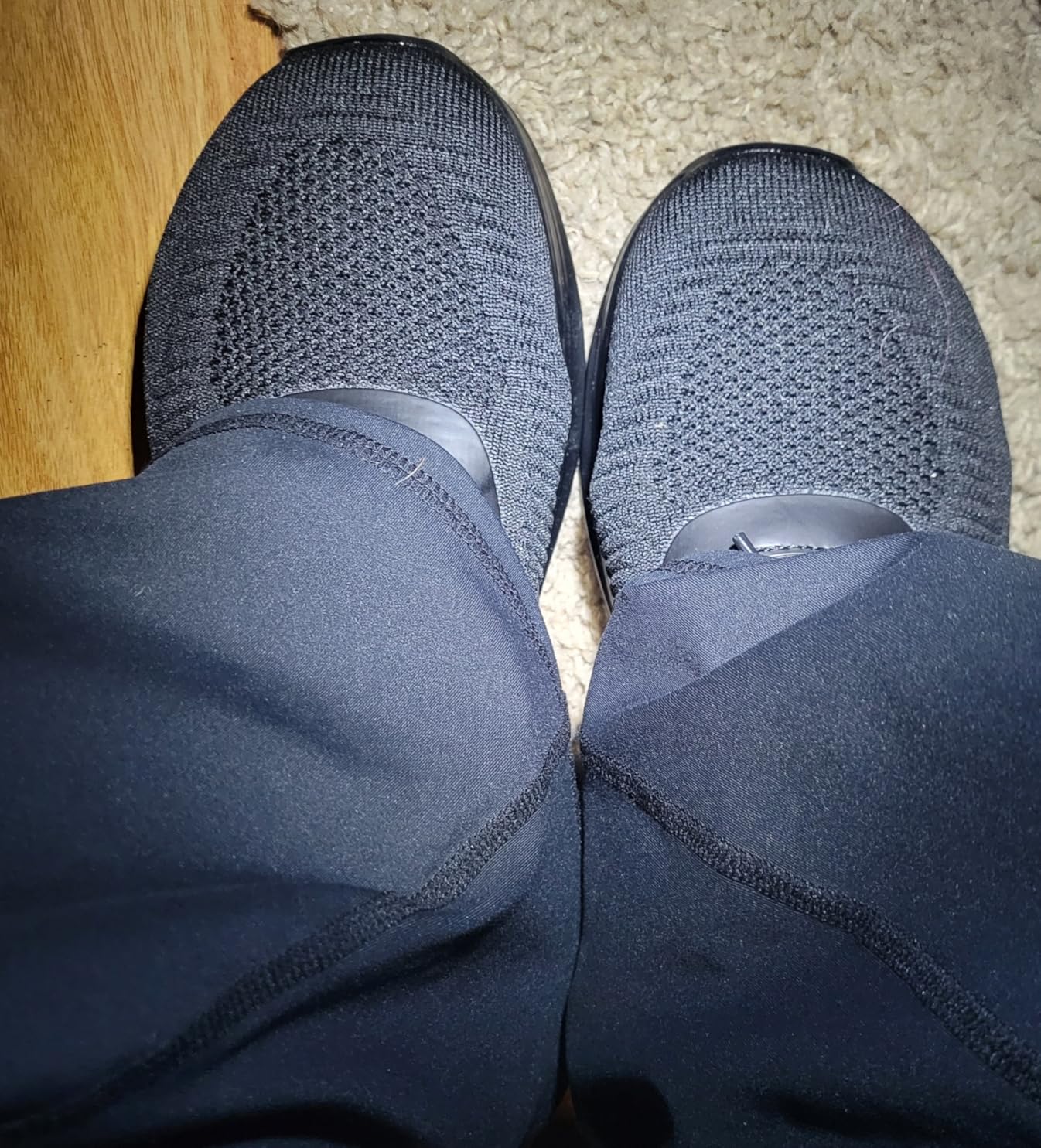
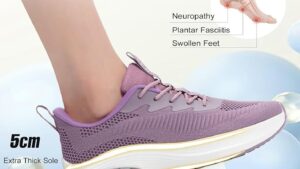
Arch support: 4/10. That’s not me being harsh — it’s just accurate. The insole is thin, the arch contour is minimal, and if you have high arches, plantar fasciitis, or flat feet that need real support, you’ll feel the absence within the first few hours.
But here’s what most reviews stop short of saying: the removable insole and the generous interior volume make this shoe genuinely orthotic-compatible. I swapped in a pair of Valsole orthotic insoles around week three to test the fit, and they stayed in for the rest of the six weeks. No bunching, no heel lift, no issues. The shoe accommodated them without any modification.
If you’re dealing with plantar fasciitis specifically: the wide toe box reduces forefoot pressure that exacerbates the condition, but without insole support, you’re not solving the root issue. Budget $20–25 for quality insoles, and you’ve spent $65–70 total on a functional wide-foot walking shoe that would cost $120+ from a specialty brand.
For people with neutral arches who just need width? The stock insole is adequate. Not impressive, but adequate.
One more thing: this is NOT a training shoe or a running shoe. A 45-minute treadmill session during week four made this clear — the moment I started side-to-side movement and anything resembling lateral footwork, the shoe offered no support for it. The midsole isn’t built for dynamic sports movement. Stick to walking, standing, and casual gym use where you’re not cutting or pivoting.
Six Weeks Across Six Scenarios
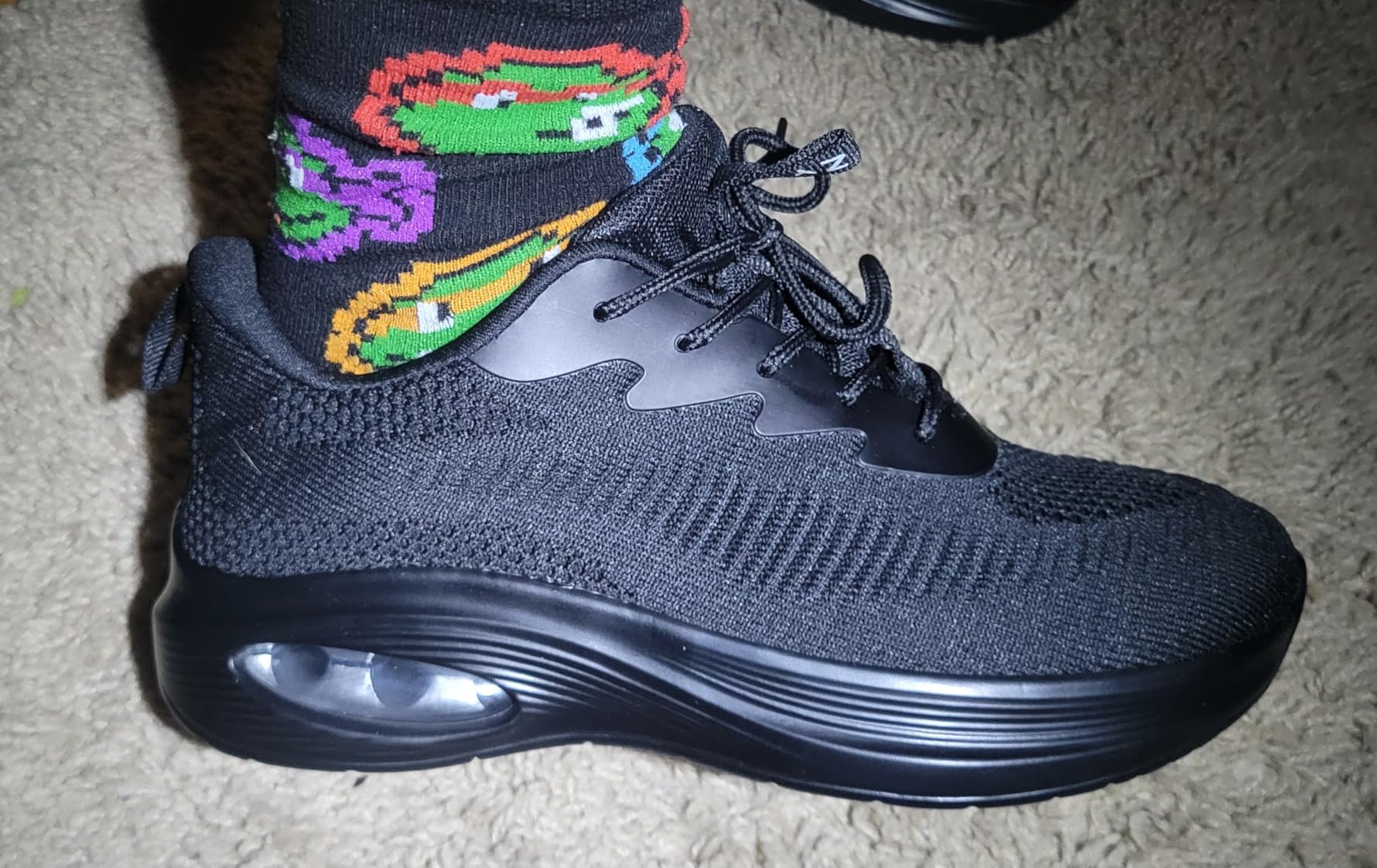
I made a point of testing these across the range of things a typical active mom actually does — not lab conditions.
School pickup (30–45 min standing on pavement): No foot fatigue. No bunion pressure. The lightweight design (8.5 oz) meant no perceptible weight on my feet, which sounds trivial until you’ve worn a heavier shoe for the same duration and felt the difference.
Target run (45–60 min walking + browsing): Excellent. Variable pace, hard floors, sharp turns — comfort held consistently. No hot spots.
Neighborhood walk, 2 miles: Adequate cushioning throughout. No blisters, no pressure points. I pushed the pace in the final half-mile and felt the lack of forefoot propulsion — these are not a momentum shoe — but for a leisurely to moderate walk, no complaints.
Kids’ soccer sidelines, 2+ hours standing: This is where things started to get interesting. The first 90 minutes were fine. By hour two, I noticed arch fatigue — not pain, just awareness. The heel cushioning was still doing its job, but the arch support gap was showing.
Treadmill, 45 minutes: This was the most instructive test. Walking felt fine. The moment I tried a brief interval run, I wanted ankle support that wasn’t there. Lateral shuffles on the treadmill felt unstable. This shoe is not a gym shoe, and pretending otherwise would be setting yourself up for disappointment.
Hot July afternoon errands: The breathability claim is legitimate. Humid afternoon, three hours of on-and-off walking, parking lots and air-conditioned stores alternating — my feet stayed comfortable throughout. The mesh upper ventilates well, and I never had the hot-feet problem I typically get in synthetic-upper shoes at similar prices.
The Durability Question — Honest Timeline
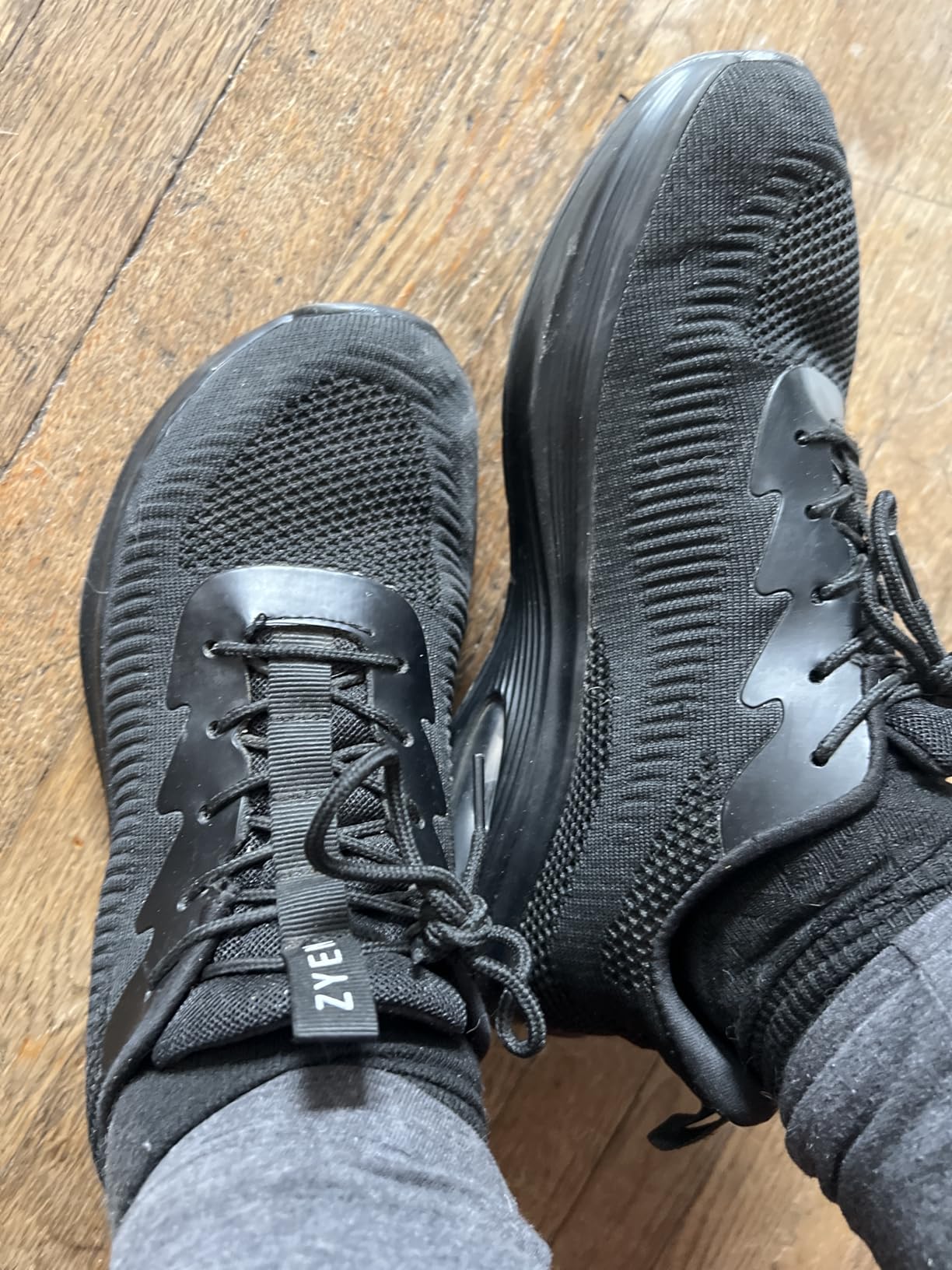
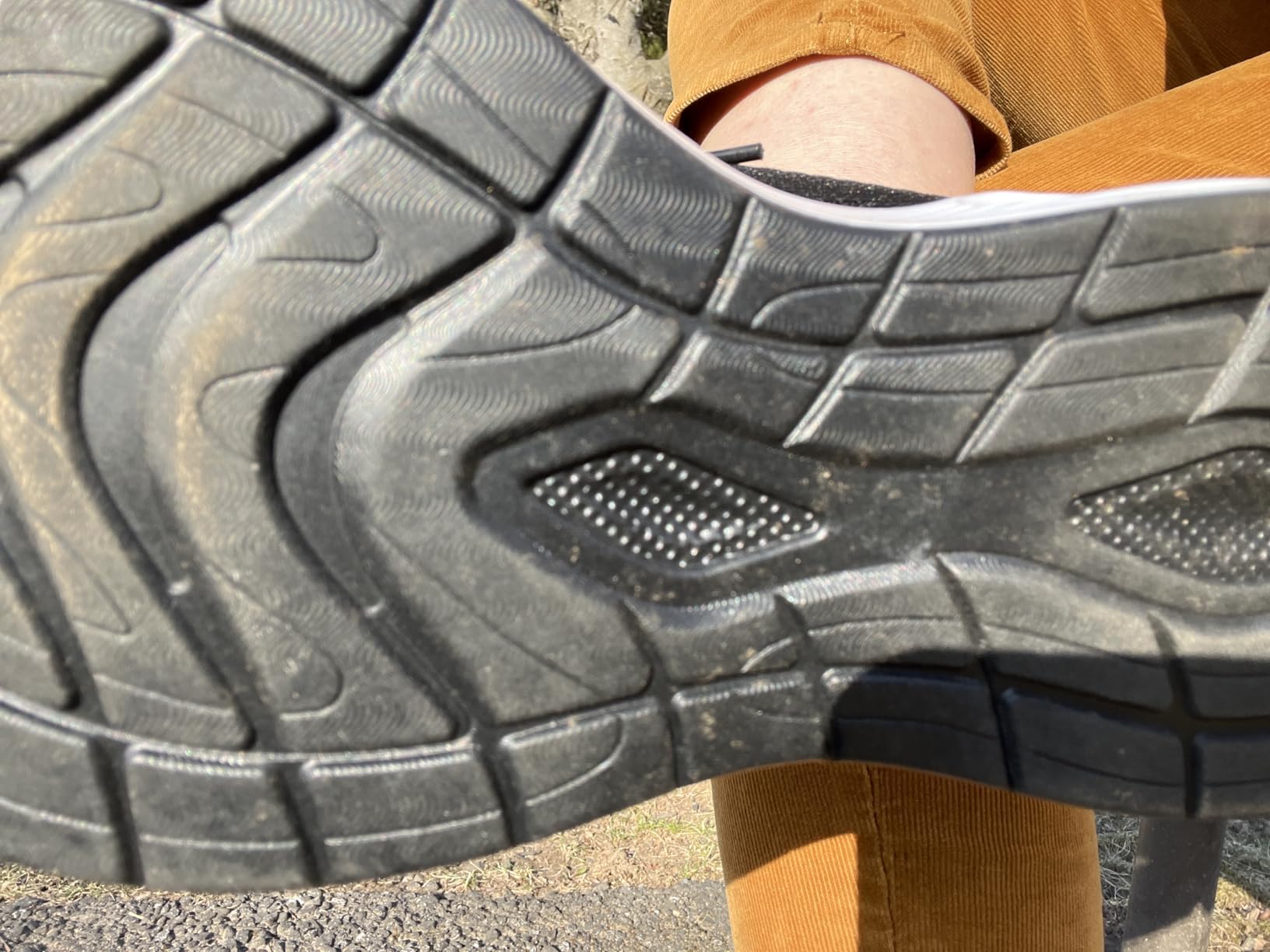
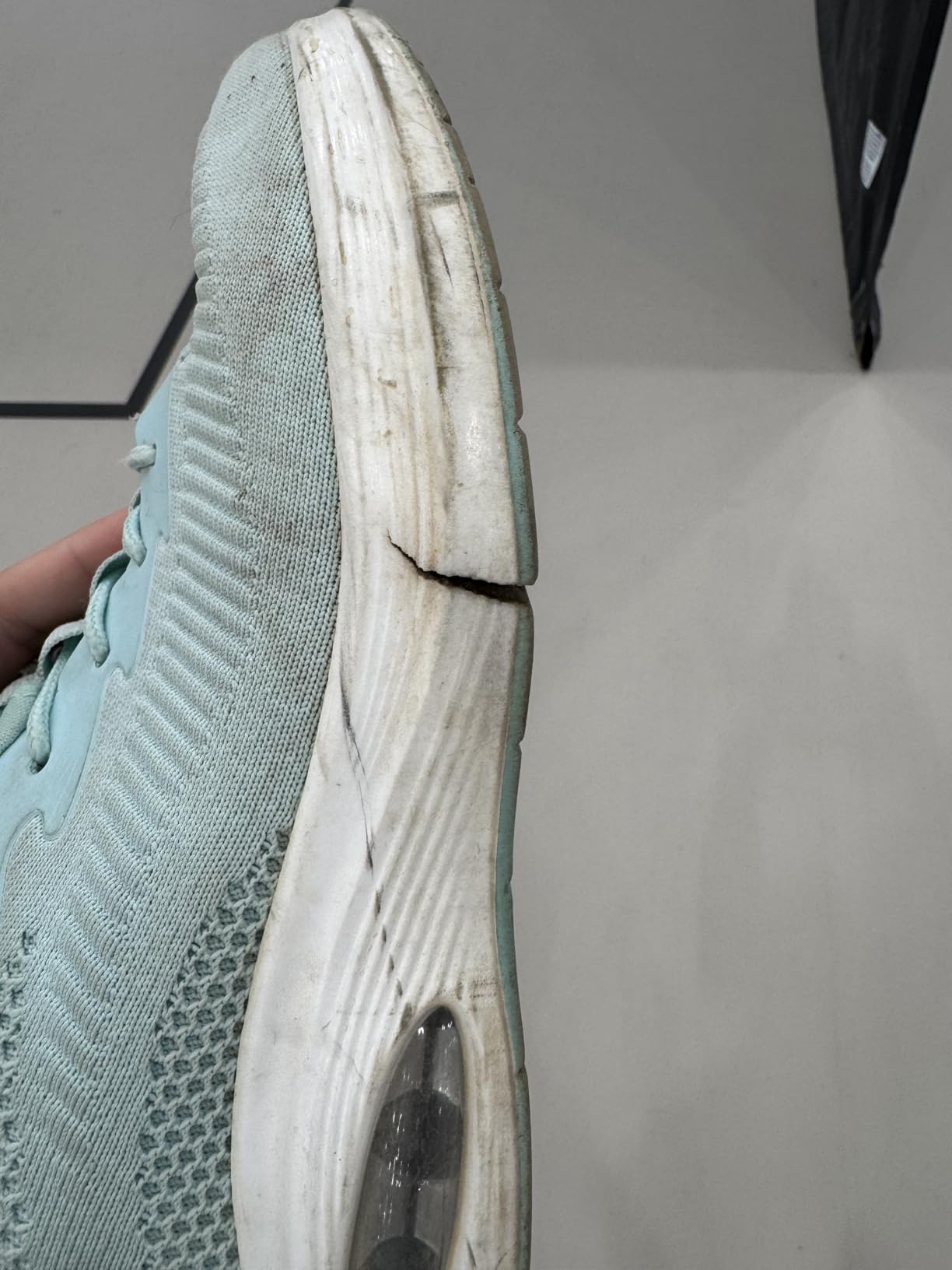
The outsole is a thin rubber layer over an EVA foam base. That’s the honest construction, confirmed by multiple reviewers who’ve seen the brown foam peek through once the black rubber surface scuffs. It’s not premium rubber. It doesn’t have to be at this price — but you should understand what it means for lifespan.
At week six, I noticed minor wear patterns at the outer heel edge. Not alarming, just visible. The sole-to-upper bond at the toe box flex point looked solid at six weeks, which is where separation typically starts showing stress. Based on community feedback across 1,500+ reviews, the pattern is:
– **Month 1–2:** No issues, shoe performing as described
– **Month 3–4:** Wear patterns visible; sole seam stress beginning at high-flex zones
– **Month 5–6:** Sole separation begins for regular daily users
– **Month 6–12:** Expected lifespan for occasional wearers
For daily use, budget for replacement at month four or five and you won’t feel deceived. The cost math: $45 ÷ 5 months = $9/month. If these shoes are solving a real problem for your feet, that’s money well spent. Two pairs in rotation — buying one when the first shows wear — brings your cost down further while extending total lifespan.
This isn’t the shoe you buy and wear until it falls apart. It’s the shoe you build a rotation around.
Who Should Buy These (And Who Shouldn’t)
These are for you if:
– You have wide feet, bunions, or hammertoes and need genuine toe box room
– You’re primarily walking, standing, or doing light daily activity
– You value breathability in warm weather
– You’re comfortable with a 3–6 month daily lifespan at a $45 price point
– You use custom orthotics and need orthotic-compatible footwear
– You’re building a shoe rotation and want an affordable wide-foot option
These probably aren’t for you if:
– You need a shoe to last 12+ months with daily use
– You do gym training, running, or any lateral athletic movement
– You have narrow feet (the wide design won’t serve you well)
– You need serious arch support without adding aftermarket insoles
– You’re primarily wearing in wet conditions (the mesh soaks through)
– You have cold weather as your primary use case (breathable mesh works against you in winter)
If you need a wide toe box but want something more durability-focused, Somiliss Wide Toe Box sneakers and Joomra Wide Barefoot shoes are worth comparing. For arch support-first shoppers, Romensi Women’s Arch Support Walking Shoes offer more built-in support at a similar price.
Performance Scores
| Category | Score | Notes |
|---|---|---|
| Wide Toe Box | 9.5/10 | Best-in-class at this price; genuine bunion relief |
| Breathability | 9/10 | Exceptional mesh; consistent through lifespan |
| Comfort (Daily Wear) | 8.5/10 | Weeks 1–4 excellent; declines gradually after |
| Value for Money | 8/10 | Strong at $45 if lifespan expectations are accurate |
| Style/Appearance | 7/10 | Clean casual look; subtle sparkle detail; not premium |
| Sizing Accuracy | 7/10 | Runs large for standard width; TTS only for wide feet |
| Durability | 6/10 | 3–6 months daily use; acceptable at price point |
| Arch Support | 4/10 | Minimal; removable insole allows aftermarket upgrade |
| OVERALL | 7.5/10 | Recommended for wide-foot daily wearers; honest about limits |
Sizing Guide by Foot Type
| Your Regular Size | Foot Width | Order This Size | Why |
|---|---|---|---|
| 7.5 | Standard | 7 | Runs half-size large for standard width |
| 7.5 | Wide/Extra-Wide | 7.5 | Wide toe box design fills correctly at TTS |
| 8 | Standard | 7.5 | Standard sizing guideline |
| 8 | Wide/Extra-Wide | 8 | Your feet fill the volume appropriately |
| 9 | Standard | 8.5 | Consistent half-size-down guidance |
| Any | Narrow | Go down 0.5 or consider alternative | Risk of sloppy heel fit; wide design not ideal for narrow feet |
Frequently Asked Questions
Q: Do these run true to size?
A: It depends on your foot width. Wide feet: true to size works correctly. Standard width: size down half a size, or you’ll get heel slippage. Narrow feet: down half a size, and even then, these may not be the right shoe for you. The confusion in reviews comes from wide-foot buyers and standard-foot buyers giving opposite advice — they’re both right for their own foot type.
Q: Are they really wide enough for bunions?
A: Yes, and more genuinely so than most shoes at this price claiming the same. The width starts at the ball of the foot and extends through the entire toe box, which is where bunion relief actually comes from. I wore these with no medial bunion contact pressure for six consecutive weeks.
Q: How long do they last?
A: 3–6 months with daily use is the realistic expectation based on community consensus across 1,500+ reviews. Occasional wearers can expect longer. The failure mode is typically sole separation at the toe box flex point. This is a known pattern — budget accordingly rather than treating it as a defect.
Q: Can I use my custom orthotics?
A: Yes. The insole is removable, and the interior volume is generous enough to accommodate most standard aftermarket orthotics and custom insoles without cramping. I tested this personally with a pair of Valsole orthotic insoles — they fit without issue and stayed comfortable.
Q: What about plantar fasciitis?
A: The wide toe box helps with forefoot pressure that can aggravate plantar fasciitis, but the minimal arch support means you’re not addressing the underlying issue without insoles. Buy the shoe, add a $20–25 arch support insole, and you’ve built a functional solution for around $65–70 total — significantly less than specialty footwear.
Q: Are they good for gym use?
A: For treadmill walking and light standing exercises, yes. For running, lateral movement, or dynamic training, no. The midsole doesn’t provide the ankle support or lateral stability those activities require. If gym work is your primary use, look at dedicated cross-training shoes with wider toe boxes instead.
Q: What’s the breathability like in summer?
A: Excellent — this is one of the shoe’s two strongest points (the other being the wide toe box). I tested through a humid July heat wave and multiple long outdoor days. The mesh upper provides real airflow, not the illusion of it. Downsides: mesh is not waterproof, so light rain soaks through quickly, and it’s not ideal for cold weather.
Q: I’m between sizes — what should I do?
A: Wide feet: go true to size with your larger measurement. Standard width: go with your smaller measurement and size down half. And buy from a retailer with an easy return policy (Amazon works) in case the colorway you chose runs slightly different.
Final Verdict
Six weeks in, my honest answer to “is it worth it” depends entirely on what you’re bringing to this shoe.
If you’ve been through the experience of ordering “wide” shoes that arrive and immediately press against your bunion, the ZYEN is one of the few options at this price that genuinely does what it says. The wide toe box is real. The breathability is real. The lightweight design makes all-day casual wear significantly more comfortable than the orthopedic alternatives at higher prices.
The limits are real too: a 3–6 month daily lifespan, minimal arch support out of the box, and no business being on a treadmill during anything faster than a walk. These aren’t defects. They’re design choices appropriate for a $45 lifestyle shoe. The problem comes when buyers expect premium performance at budget pricing, and then feel let down.
My actual recommendation: if you’re a wide-footed woman who spends long days on her feet doing everyday life — shopping, school runs, standing at a counter, neighborhood walks — the ZYEN solves your problem for about $9 a month. Add a pair of insoles if arch support matters to you and that number goes to $13–14 a month for your first pair. When the sole starts to show wear at month four or five, you’ll buy another pair because you already know they work.
That’s a reasonable deal. Just go in knowing exactly what you’re buying.
Be the first to review “ZYEN Wide Toe Box Shoes Women Air Cushion Road Running Shoes”
Related products
Running Shoes
Hiking/Trekking Shoes
Running Shoes
Running Shoes
Hiking/Trekking Shoes

Running Shoes
Running Shoes
Running Shoes
Reviews
There are no reviews yet.