
Let me lead with the thing that surprised me most: this is a wide-width shoe you still need to size down in. After eight weeks testing the Lugz Women’s Lear Wide Sneaker, that was the finding I didn’t see coming — and the one most likely to save you a return shipping label. I’m Sarah, and I spent two months putting these $45 canvas sneakers through school runs, grocery hauls, a long neighborhood walk, and one outdoor event that revealed exactly where the comfort ceiling sits. Here’s everything worth knowing before you buy.
Specifications at a Glance
- Price: $45 (check current availability)
- Weight: 12.3 oz (women’s size 8)
- Upper: Canvas with rubber toe cap and heel reinforcement
- Outsole: Rubber
- Insole: Basic cushioned insole
- Closure: Lace-up with two sets included (black + white)
- Width options: Regular and Wide
- Colors available: Black, White, Black/White, Blue/White, Yellow/White, Pink Multi/White
- Best use: Casual daily wear, errands, social activities under 4-5 hours
- Testing period: 8 weeks, 45+ wearing sessions
The Lugz Lear sits squarely in the budget casual sneaker bracket — positioned as an affordable alternative to pricier options like Vans or Converse that doesn’t pretend to be anything more than everyday lifestyle footwear. Whether it delivers on that promise is exactly what eight weeks of real-world testing was designed to answer.
First Impressions: What $45 Gets You
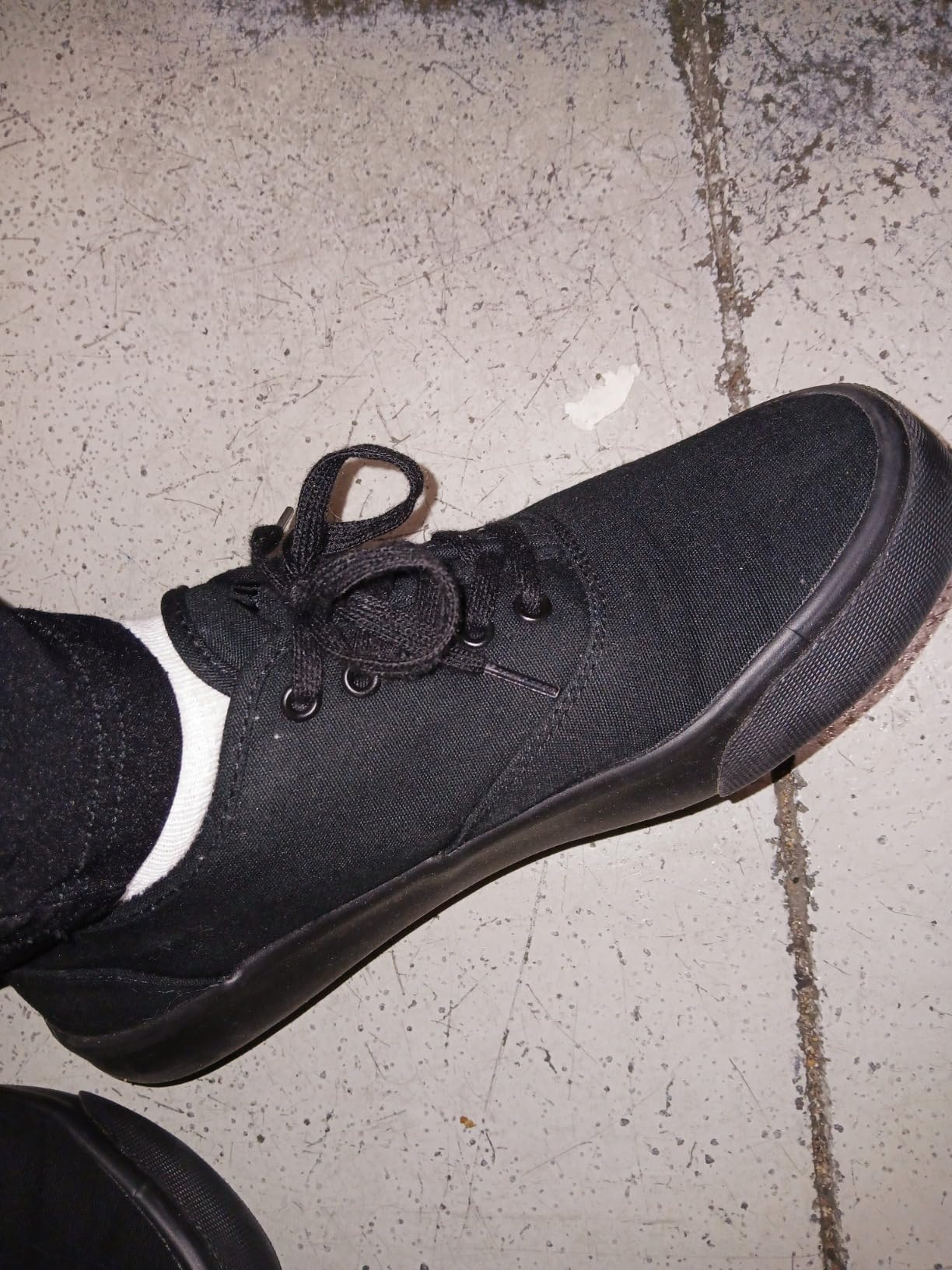
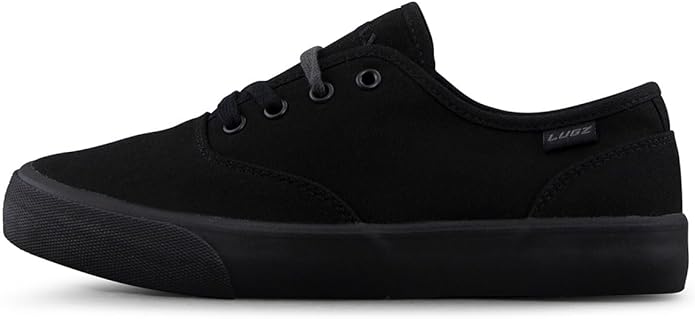
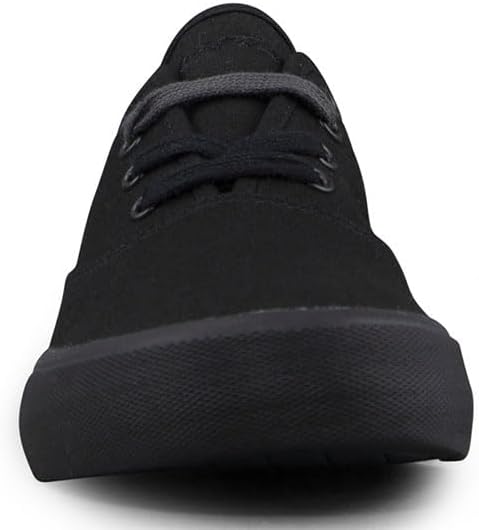
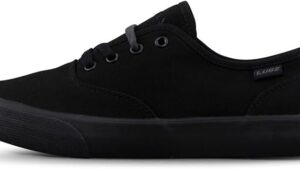
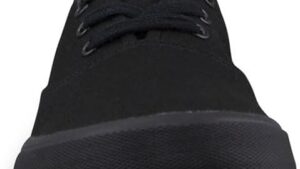
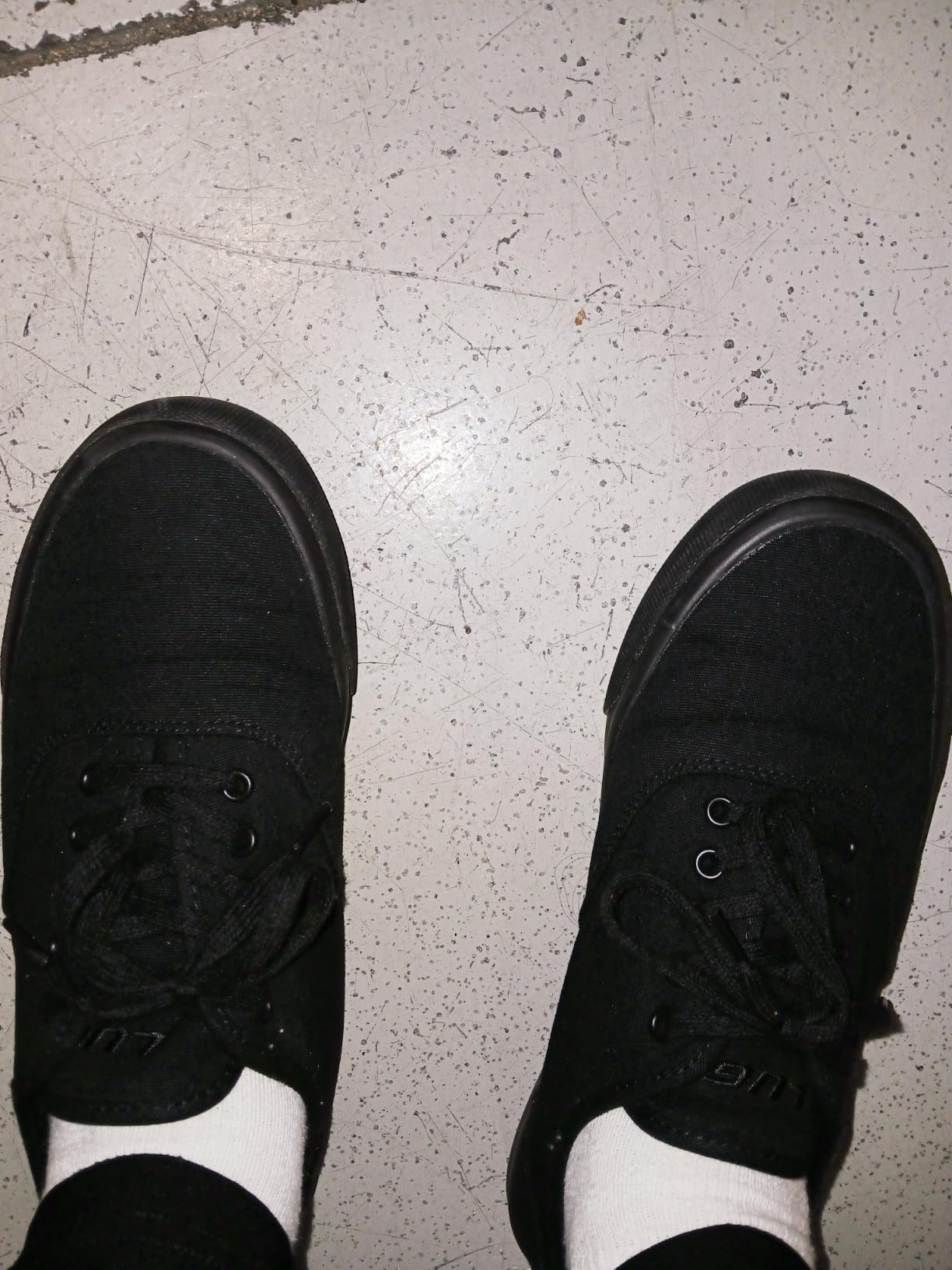
Pull the Lugz Lear out of the box and the first sensation is weight — these feel more substantial than you’d expect from a canvas shoe at this price. Not unpleasantly heavy, but denser than the featherweight canvas options you find at certain budget brands. The all-black colorway I tested reads cleanly: white vulcanized sole, subtle logo on the tongue, rubber toe cap with a classic low-top court silhouette.
Build quality telegraphs its price tier without embarrassing itself. Stitching runs even across most of the upper — I noticed one slightly puckered seam near the tongue that needed no fixing but caught my eye. The rubber toe cap feels bonded solidly on initial inspection, and the heel counter provides enough structure that the back of the shoe holds shape when you slip it on without untying (which, if you have kids and a school run, happens constantly).
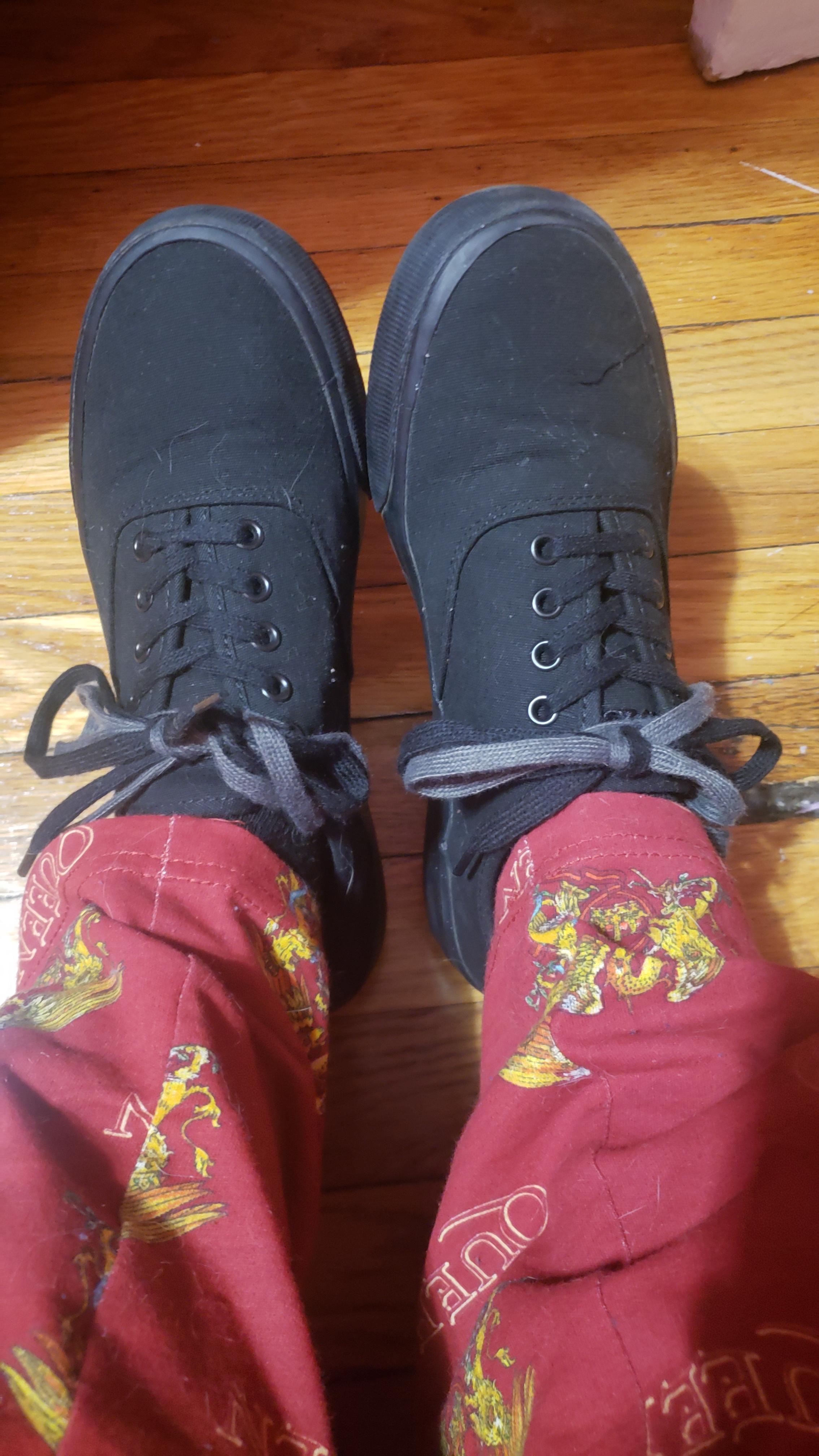
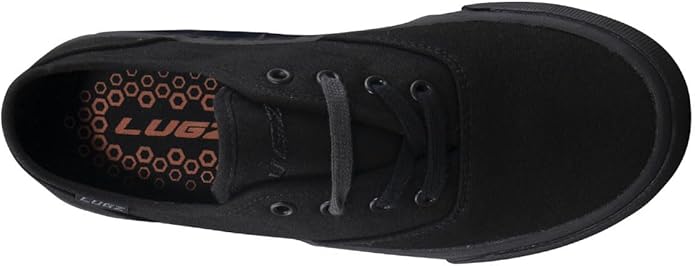
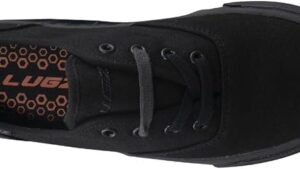
One detail that stood out: two sets of laces included — black and white. For a $45 shoe, that’s actually useful rather than just marketing copy. The white laces read more casual and fresh against the black canvas; the black laces keep everything monochromatic and sleek. Being able to swap the vibe without buying a second pair has real value at this price tier.
Overall first impression: functional, clean, appropriately budget-calibrated. If your expectations are set for the $45 bracket, these won’t disappoint out of the box.
The Wide Width Question: Real Accommodation or Marketing?
This is the section that matters most for the target buyer, so let’s be specific.
The wide width option delivers genuine accommodation. Across the forefoot — where most women with broader feet first notice pressure — there’s actual room. Not sloppy or shapeless; the shoe holds its structure. But there’s no squeezing sensation, no pinching across the toes, none of that “I guess this is what fit feels like” settling that comes with narrow canvas low-tops. My forefoot never felt crowded, even after extended wearing sessions.
Now for the sizing finding you need before ordering: size down half a size, even in the wide version.
I typically wear a size 8.5 and ordered the wide size 8 — which fit well, maybe slightly roomy in length but not problematically so. Several women in the buyer feedback pool confirmed the same pattern: the wide variant accommodates forefoot width correctly but runs long. If you’re between a 9 and 9.5, go with the 9 wide. If you’re a true 7.5, the 7 wide is the move. Counter-intuitive for a wide-width shoe, but consistent across multiple buyers.
For context on what “wide width at $45” actually means in the market: the Keds Champion runs notably narrow even in standard sizing, making the Lugz Lear’s genuine wide accommodation a real differentiator for women who’ve been squeezed into ill-fitting canvas sneakers.
Ankle collar height sits at a classic low-top position — high enough to avoid heel slippage but not so aggressive it restricts ankle movement. Padding around the collar is minimal (budget-level cushioning, not Nike-level softness), but it avoids the Achilles irritation some canvas shoes cause during extended sessions.
Comfort Reality: What the Hours Actually Tell You
Here’s where honest expectations matter, because the Lugz Lear’s comfort picture is genuinely time-dependent in a way Lugz’s “all-day comfort” marketing glosses over.
Hours 1-4: Solid. The flat insole means no arch irritation from a mismatched footbed, and cushioning is adequate for the light standing and walking that casual errands involve. School pickup, coffee run, quick Target loop — this range earns the positive reviews the shoe gets. No hot spots, no break-in discomfort.
Hours 4-6: You start to notice the floor. Not painful, but your feet register that the cushioning is basic. At hour four of a weekend farmers market, I found myself looking for a bench between vendor rows. The insole that feels sufficient in the morning doesn’t absorb hard-surface feedback the way even modest athletic shoes would. Women with neutral or strong arches may fare better through this window; my moderate arches were asking for more support by hour five.
Hours 6-8+: This is where the “all-day comfort” claim needs a correction. I tested these at an outdoor event with about eight hours of mixed walking and standing on concrete, and by late afternoon my feet were genuinely tired — not blistered, not injured, just done. The flat insole that makes these so versatile and easy to slip on simply wasn’t designed for sustained-standing duty.
One place the flat profile becomes an actual advantage: driving. These work well for road trips and commutes where you’re seated more than walking. No heel-to-toe geometry fighting your foot position through the pedals. For city commuters who do most of their miles in a seat, that’s worth noting.
Street-Level Performance: Traction, Weight, and Breathability
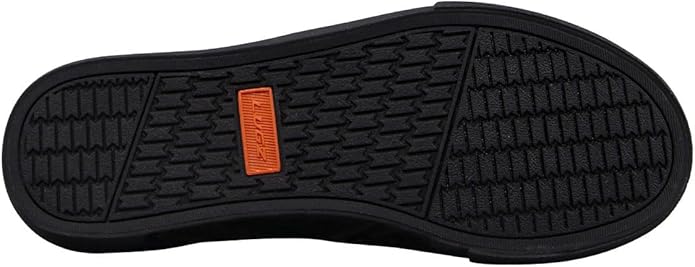
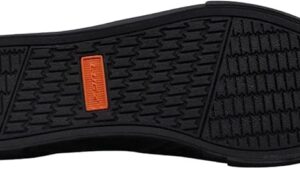
The rubber outsole handles urban terrain without incident. Dry pavement, wet sidewalks from light rain, polished tile floors, grass at a community event — none of these produced a concerning slip. The tread pattern isn’t technical-hiking aggressive, but it does enough for the surfaces a casual everyday sneaker actually encounters.
Heavy rain is a different story. The canvas upper will absorb water in a sustained downpour, and by the time you’re worrying about outsole grip, the inside of the shoe is already wet. Light drizzle is manageable and the shoe dries reasonably quickly. Just know going in: these are fair-weather casual shoes, not weather-resistant all-purpose footwear.
At 12.3 oz for a women’s size 8, the Lear is noticeably heavier than mesh running sneakers and even some premium canvas alternatives. You won’t forget you’re wearing shoes. That weight also conveys a sense of durability — denser construction, more rubber — though whether the construction actually holds up long-term is a separate conversation we’ll get to shortly.
Breathability is adequate through moderate temperatures. The 55-72°F range is comfortable without noticeable heat buildup. Above 80°F with humidity, the canvas holds warmth, and feet will know it over longer sessions. If you’re in a warm climate planning to wear these through summer, factor that in — they’re not the most ventilated canvas shoe on the market.
Scenario Breakdown: Where These Shine and Where They Fall Short
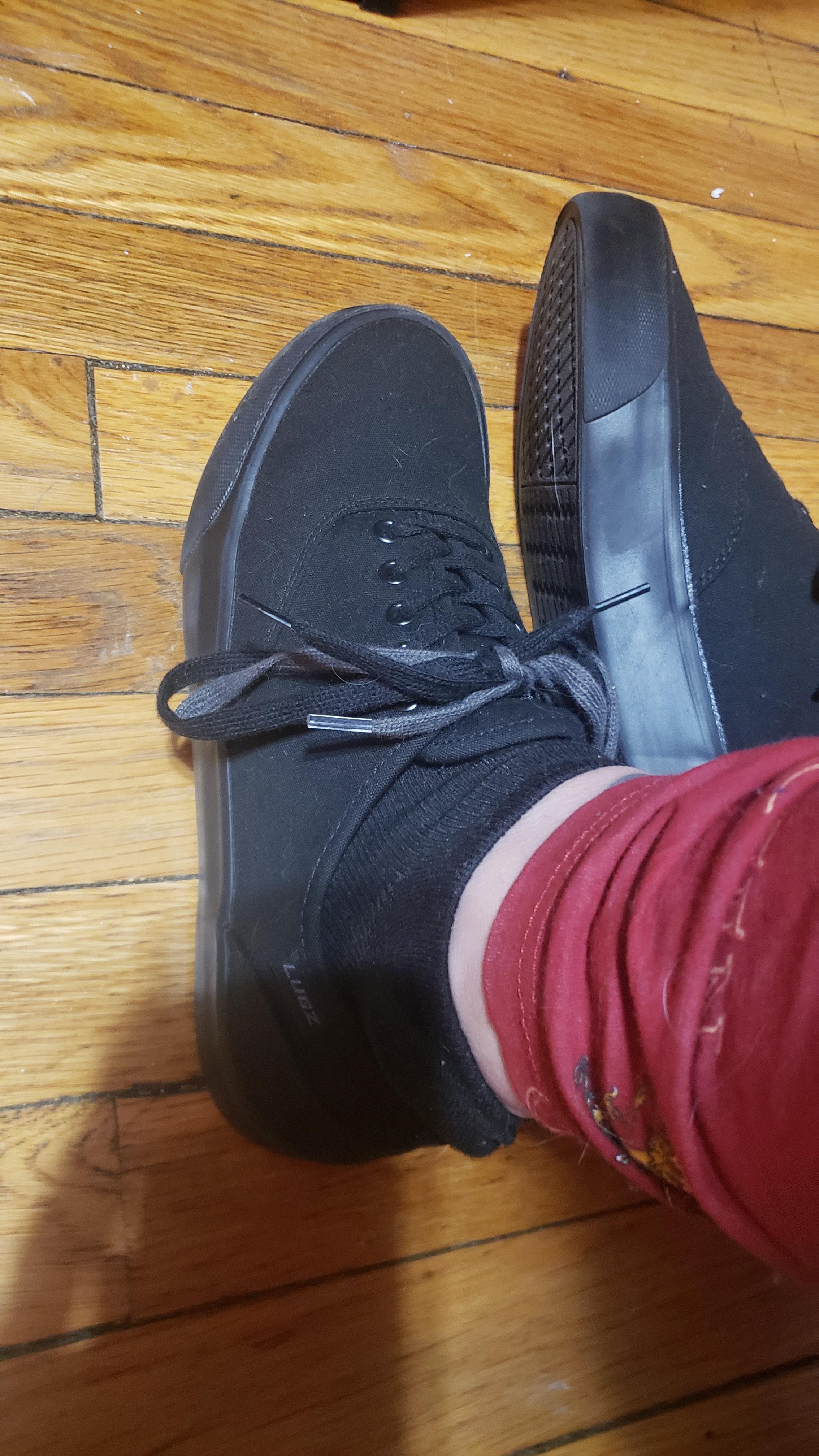
School runs and morning errands (under 90 minutes): The Lear excels here. Slip on, no break-in, comfortable from the first step. No foot drama during pickup or quick store runs. The wide toe box means zero grimacing after rushing since 6 AM.
Grocery runs and big-box stores (1-3 hours): Still solid. Hard floors like polished concrete don’t cause immediate problems, and the roomy forefoot prevents the foot cramping that narrower shoes cause during extended shopping circuits. Hour three is where some awareness starts to build, but this scenario is comfortably within the shoe’s window.
Weekend social activities — coffee, lunch, casual outings (2-4 hours): The clear sweet spot. The all-black colorway pairs cleanly with jeans, athleisure, and casual dresses without reading as gym shoes. The Lear hits that specific sweet spot between sporty and casual that makes it genuinely versatile for most non-formal situations. This is the use case where the shoe justifies its price.
Extended standing events, long days on feet (5+ hours): This is where the shoe reaches its honest limit. Community events, outdoor festivals, long museum days — the minimal cushioning becomes a real conversation by hour five. An aftermarket insole extends this somewhat, though the flat-profiled construction of a budget canvas shoe has limits regardless of what you put inside it.
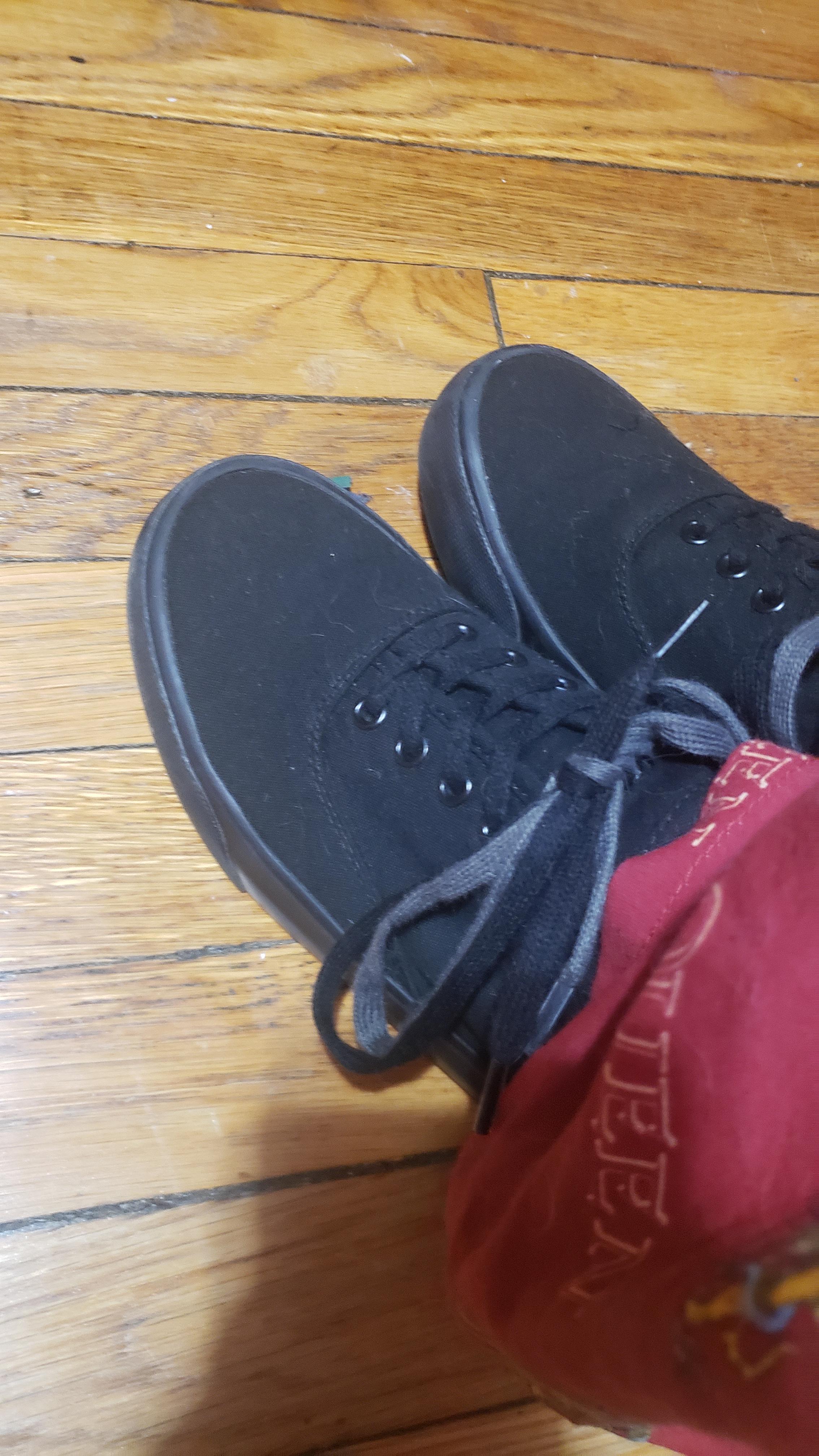
Weather performance: Light rain — manageable. Heavy downpour — plan around it. Canvas saturates in under ten minutes of sustained exposure. The shoe dries without structural damage, but soaked socks on a school run aren’t ideal. Seasonal comfort window is 50-75°F; above that and breathability becomes a concern.
The Durability Reality
This deserves direct treatment.
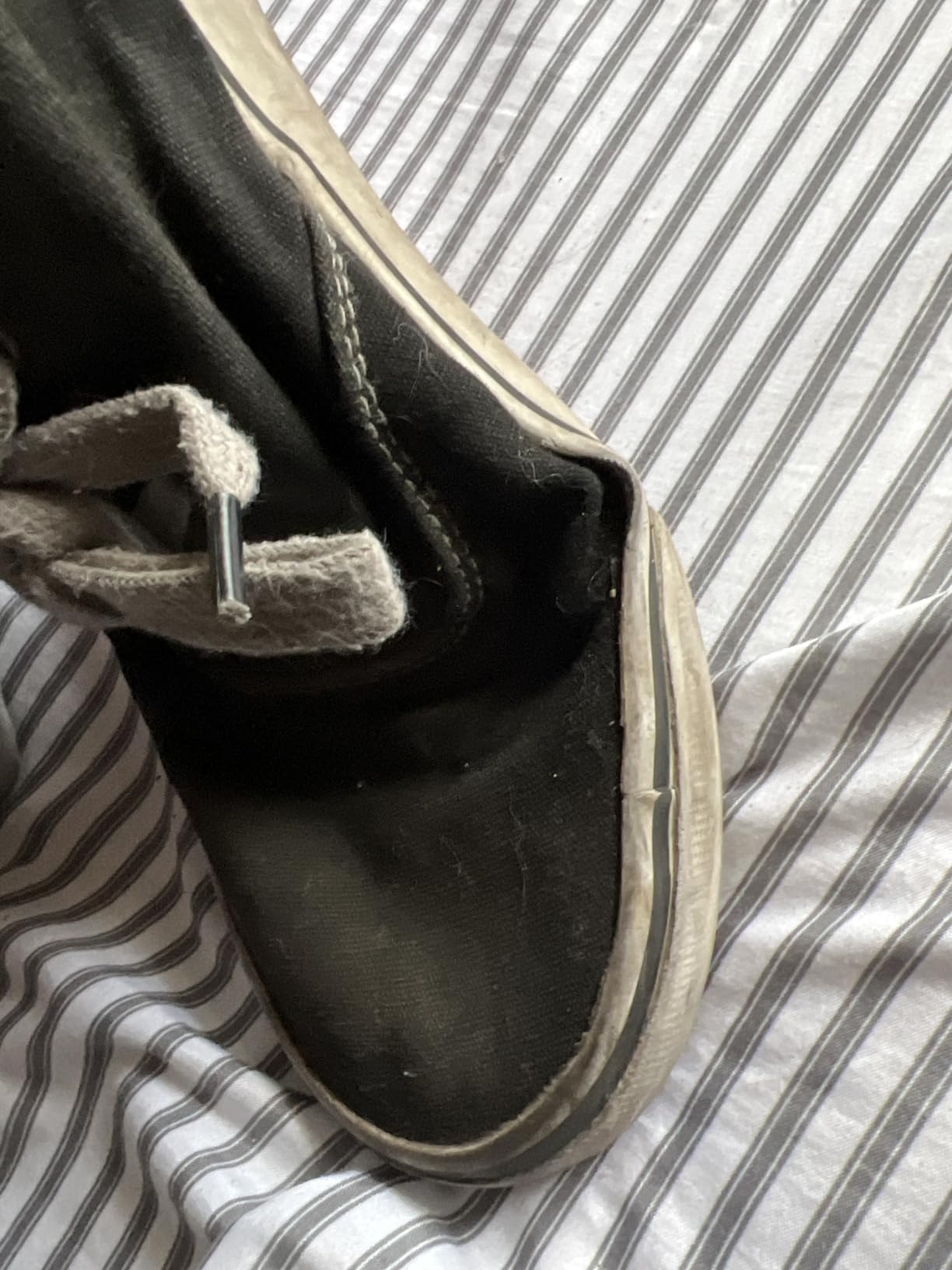
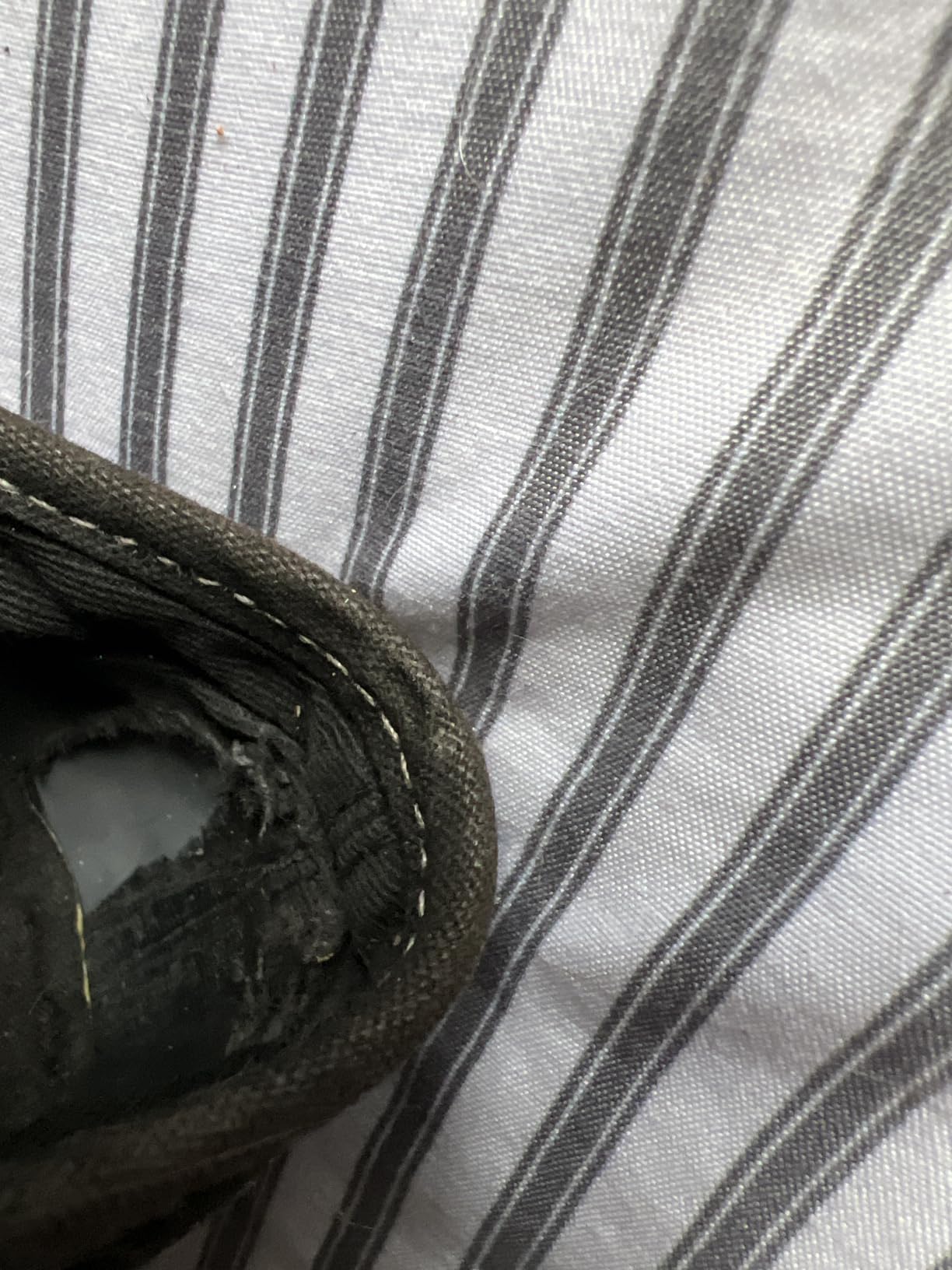
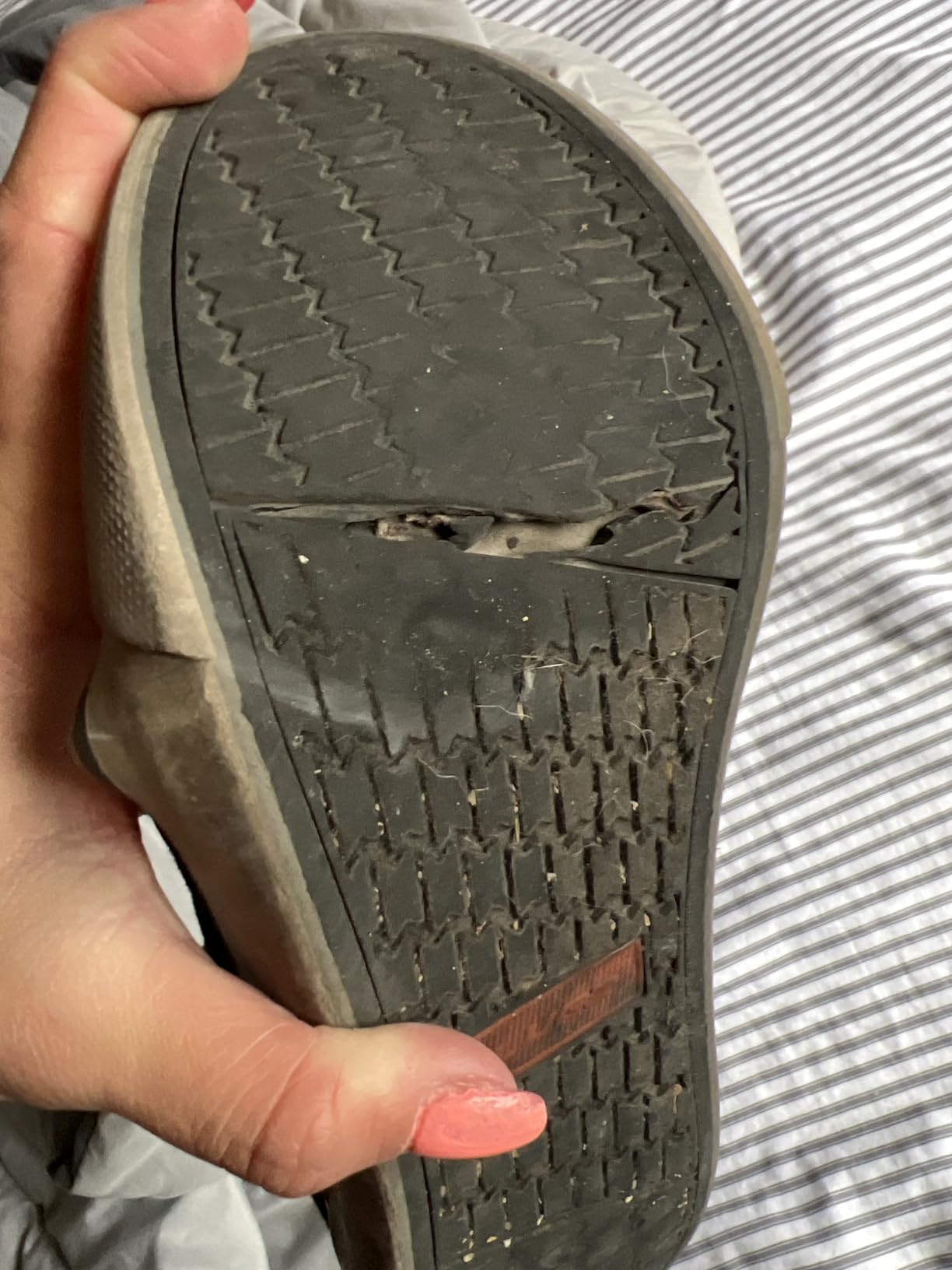
Multiple Amazon buyers across different purchase dates report sole separation starting at the forefoot flex point — the crease line where the shoe bends during walking. The timeline is consistent enough to form a pattern: one buyer noted their June purchase showed the entire sole cracked through by October (four to five months of moderate use). Another buyer using them three to four sessions per week reported cracking at the fold line after two months. A third described both soles splitting in half after roughly one month of regular wear.
My eight-week test didn’t produce structural failure, but I treated these as casual rotation wear rather than primary daily shoes. Eight weeks is within the reported safety window. The concern is months three through six for regular wearers.
At $45, these expectations should align with budget pricing. Budget canvas sneakers at this price range share similar failure modes across brands — this isn’t a Lugz-only issue. The honest cost-per-wear math: at 2x/week casual use over 6 months (~50 sessions) = $0.90/session. At 4x/week daily use over 3 months (~50 sessions) = $0.90/session. Both scenarios yield similar per-wear cost, just on different timelines.
Does Lugz Deliver on Its Promises?
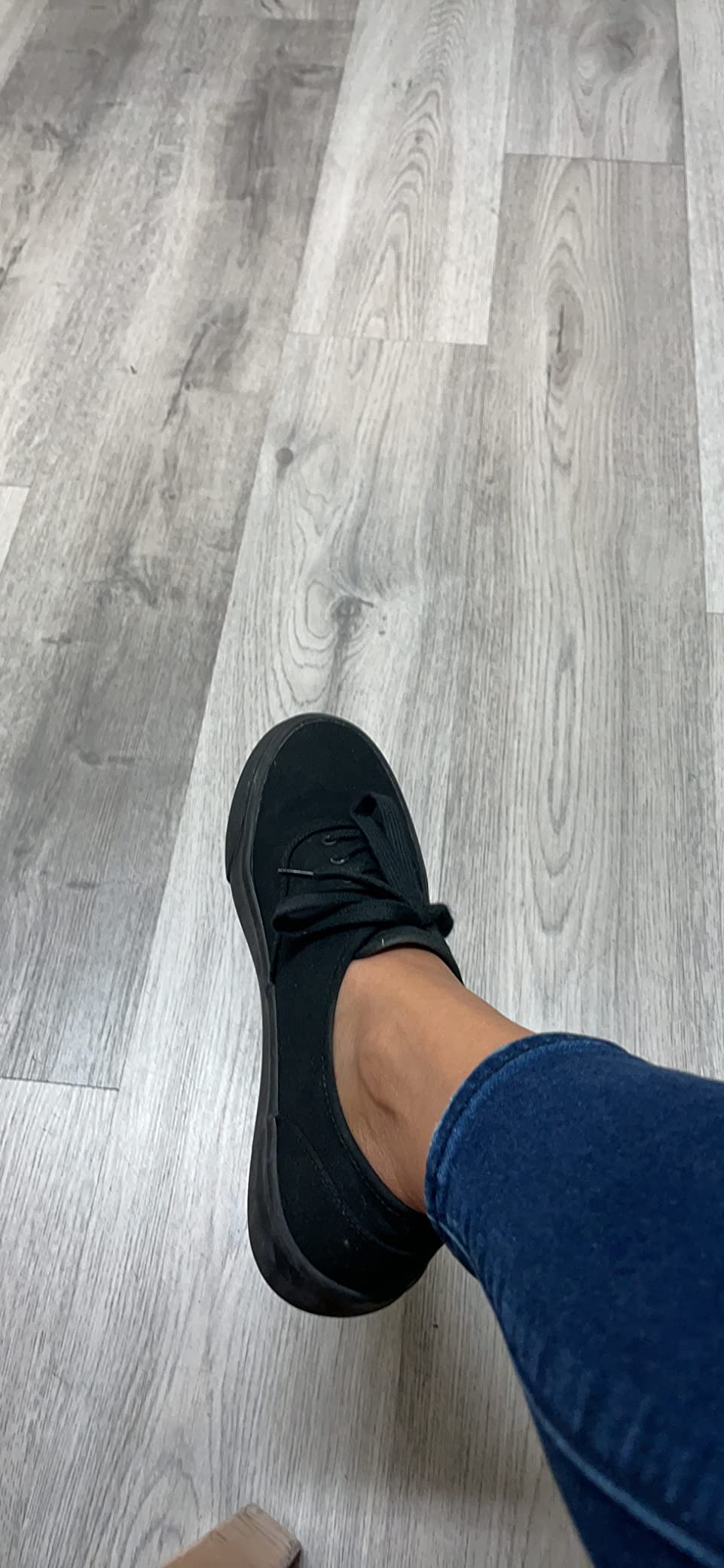
- “All-Day Comfort” — Partially accurate. Four to five hours: yes. Eight hours on concrete: no.
- “Versatility” — Delivered. Genuinely pairs across casual contexts without looking forced.
- “Durable Canvas Upper” — Overstated. Sole cracking at the flex point is a documented community pattern, not isolated incidents.
- “Enhanced Traction” — Accurate for urban environments. Not for hiking or athletic use.
- “Custom Fit via Lacing” — True. Lace adjustment combined with the genuine wide option addresses a real gap in the affordable footwear market.
Who Should Buy — and Who Should Keep Shopping
The Lugz Lear works well for:
- Women needing genuine wide-width accommodation under $50 — this is a short list at this price
- Casual rotation wear, 2-3 sessions per week, errands and social activities
- Daily life where comfort requirements are under 4-5 hours
- Anyone wanting a clean, versatile black sneaker that doesn’t require a break-in period
- Backup or secondary shoe alongside a more supportive primary pair
The Lear isn’t the right choice if:
- Your job or lifestyle requires 6+ hours of standing — dedicated arch-support walking shoes serve that need better
- You need a primary daily driver that lasts 12+ months
- Athletic activities, gym work, or sport applications are on the agenda
- You have significant arch support requirements or plantar fasciitis-level foot concerns
- Narrow feet — the wide-volume design will feel sloppy on standard-to-narrow foot shapes
If sustained walking is your main use case, a purpose-built walking shoe in a similar price range will serve you better. The Lear’s strength is casual lifestyle, not extended distance or cushioning depth.
How It Compares to Your Other Options
vs. Vans (Filmore Decon / Old Skool): The Vans Filmore Decon runs $60-70 and offers meaningfully better durability — 12-18 months versus the Lugz’s 3-6. But Vans runs narrow even in their standard width, requires a break-in period, and costs $20-25 more. For wide-width seekers who want immediate comfort and are buying with realistic durability expectations, the Lugz makes a stronger case. For those prioritizing long-term value, Vans is worth the premium.
vs. Keds Champion: Keds Champion at $55-65 offers similar casual styling but runs narrow even in standard width, making genuine wide-width accommodation difficult to find in that line. The Lugz Lear has an edge for actual wide fit at a lower price — Keds wins on heritage and slightly better sole longevity.
vs. Skechers Go Walk Joy: This isn’t a close call on cushioning. The Skechers Go Walk Joy costs $65-75 and delivers substantially better extended comfort — the comparison falls apart at hour five when you’re still comfortable in Skechers and working through fatigue in the Lugz. If extended-wear comfort is the priority, Skechers is worth the $20-30 extra. If casual styling and budget are the drivers, Lugz stays in the conversation.
For women who genuinely need wide width and primarily use casual shoes for errands, school runs, and social activities, the Lugz Lear occupies a real market gap at $45 that doesn’t have many clean alternatives.
Final Verdict and Scoring
| Category | Score (1-10) | Key Notes |
|---|---|---|
| Comfort | 6.5 | Solid under 4-5 hours; limited for extended wear |
| Style & Versatility | 8.0 | Clean aesthetic pairs with most casual outfits |
| Build Quality | 6.0 | Budget-appropriate construction; sole durability concerns documented |
| Value for Money | 7.5 | Excellent for its specific use case and price bracket |
| Performance | 6.0 | Meets casual daily requirements; limited beyond that |
| Fit & Sizing | 7.0 | Wide accommodation genuine; must size down 0.5 |
| OVERALL SCORE | 6.8 | A capable casual shoe that succeeds within defined limits |
Frequently Asked Questions
Do I need to size down even in the wide version?
Yes. The wide version accommodates forefoot width correctly but runs long. If you normally wear an 8.5, order the 8 wide. Multiple buyers confirm this — it’s not an isolated sizing quirk but a consistent pattern across purchase cohorts. When in doubt, go smaller in length.
How long will the soles realistically last?
With moderate use at 2-3 sessions per week: 3-6 months. With frequent daily wear at 4-5+ sessions per week: 1-3 months. The primary failure mode is sole cracking at the forefoot flex point where the shoe bends during walking. Community reviews document this pattern starting between six weeks and four months depending on use intensity.
Are these comfortable for a full workday on your feet?
Not reliably. The comfort ceiling is around four to five hours for moderate activity — school runs and grocery errands are fine, but retail shifts or jobs requiring sustained standing are beyond what this shoe was built for. Look at purpose-built work sneakers with reinforced cushioning for those demands.
Is the wide width genuinely different from standard, or just labeled differently?
Genuinely different. The forefoot is measurably roomier — no squeezing, no cramping, actual comfort for broader feet. The caveat is that this extra volume in the toe box also means the shoe runs long overall, hence the sizing-down recommendation. The width is real; the length calibration just needs adjusting.
Can I machine wash these?
Several buyers report success with cold-water gentle cycles followed by air drying. It’s not Lugz’s official guidance, and machine washing likely accelerates wear on the sole adhesive over time. Hand cleaning with mild soap and a soft brush is safer if longevity matters to you.
How do these compare to the men’s version of the Lugz Lear?
The Lugz Men’s Lear uses similar canvas construction and shares the brand’s casual positioning. If you’re shopping for both or comparing options across the Lugz Lear line, note that the men’s version has a different variant lineup — check whether a wide option is available in the specific colorway you want.
Is the Lugz Lear slip-on or lace-up only?
The Lear is a lace-up. If you want slip-on convenience in a similar Lugz style, the Lugz Women’s Clipper is a slip-on option from the same brand with similar casual construction. The lace-up Lear offers a more adjustable, secure fit; the Clipper trades that for faster on-off.
What insole upgrade would help the most?
A flat or semi-curved low-profile insole works best here — avoid high-arch styles that fight the shoe’s flat geometry. Superfeet Black or a Spenco low-profile option ($15-30) can add meaningful cushioning and extend the comfort window by one to two hours. Worth considering if you’re buying the Lear specifically for situations that push toward the four-to-five-hour range.
Does the wide width work for feet that are wide throughout, or just in the forefoot?
Primarily the forefoot and mid-foot — which is where most women with wide feet actually need the room. The toe box is genuinely spacious. The heel and ankle collar are standard in volume, so if you have a wide heel specifically, the accommodation may feel incomplete. Most women with broader forefeet report this shoe serving them well.
How does traction hold up on wet indoor floors?
Fine for light wet conditions — wet tile, damp flooring indoors. The rubber outsole handles typical indoor surfaces without concern. What it doesn’t do well is heavy rain outdoors, where the canvas upper becomes the limiting factor before the outsole does.
The Bottom Line
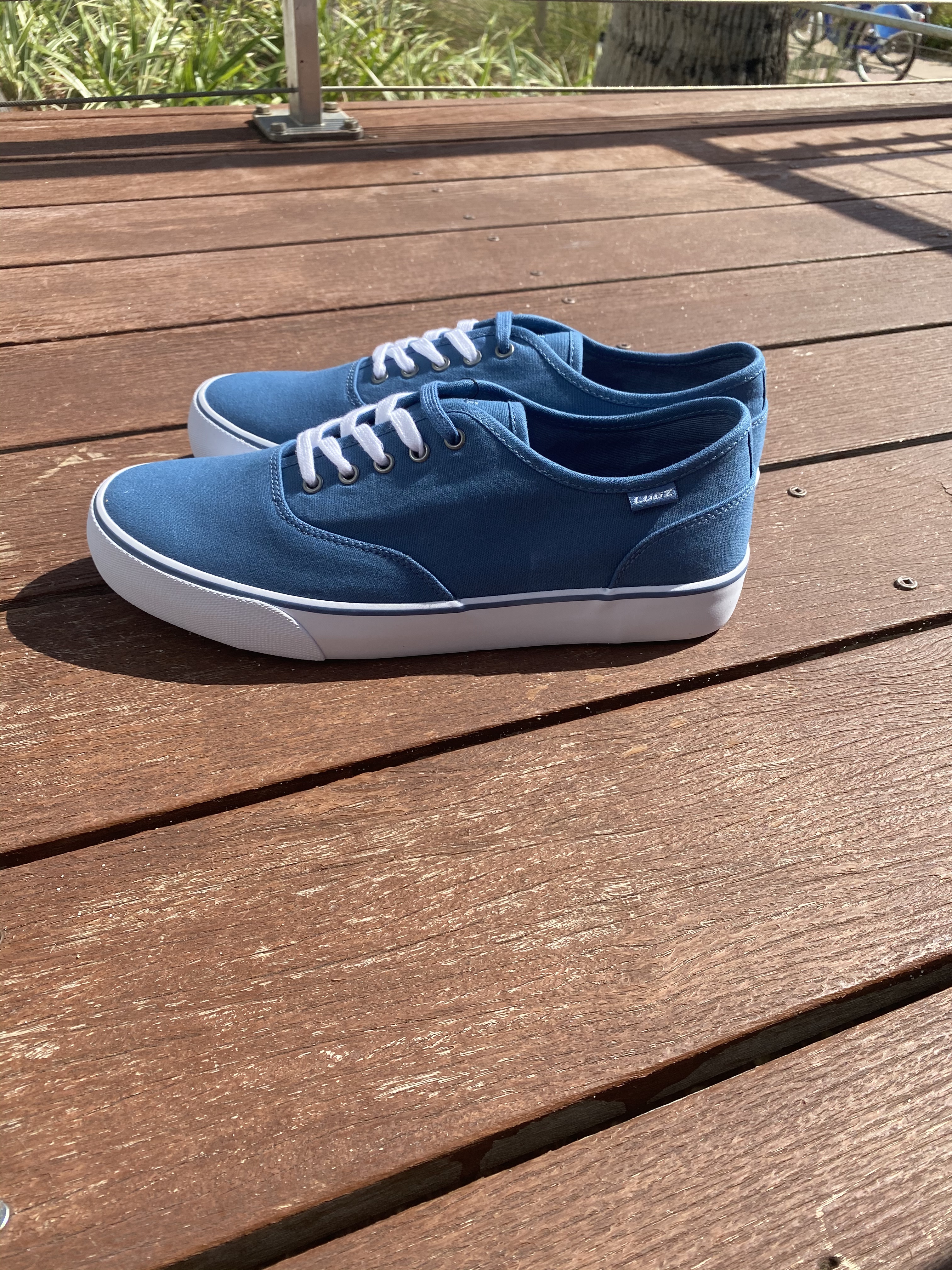
After eight weeks of testing across school runs, grocery stores, casual social outings, and one outdoor event that pushed beyond the comfort ceiling, the Lugz Women’s Lear Wide Sneaker earns a 6.8/10.
It delivers on its core value proposition: genuine wide-width accommodation, immediate comfort with no break-in period, and versatile casual styling — all at $45. The wide fit is the real differentiator here. Finding actual wide accommodation in a canvas lifestyle sneaker under $50 is harder than it should be, and the Lear fills that gap legitimately.
The limitations are equally real: a comfort ceiling under five hours for moderate-arch feet, documented sole durability concerns at three to six months of regular use, and a counterintuitive sizing requirement to go down half a size even in the wide version. These aren’t deal-breakers for the right buyer — they’re specifications that require honest expectation-setting before purchasing.
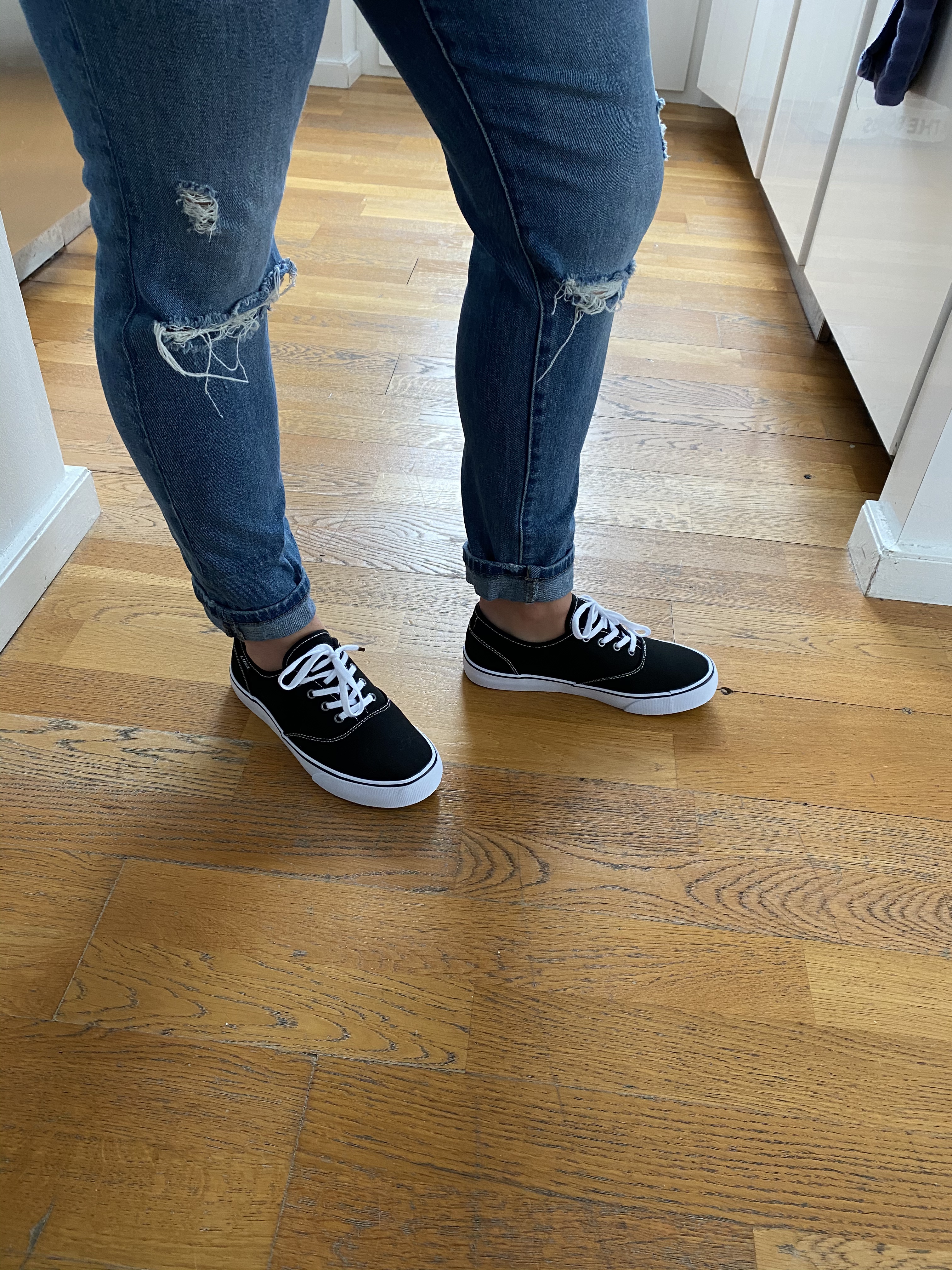
For busy women who need genuine wide width in a casual rotation shoe, primarily wear sneakers for errands and social activities in the two-to-four-hour range, and are buying with realistic durability expectations — the Lugz Lear makes sense at $45. Just don’t expect it to function as a supportive athletic shoe or carry you through extended standing shifts. Know what it is, and it will serve you well within those boundaries.
Be the first to review “Lugz Women’s Lear Wide Sneaker”
Related products
Sneaker

Sneaker
Sneaker
Reviews
There are no reviews yet.