
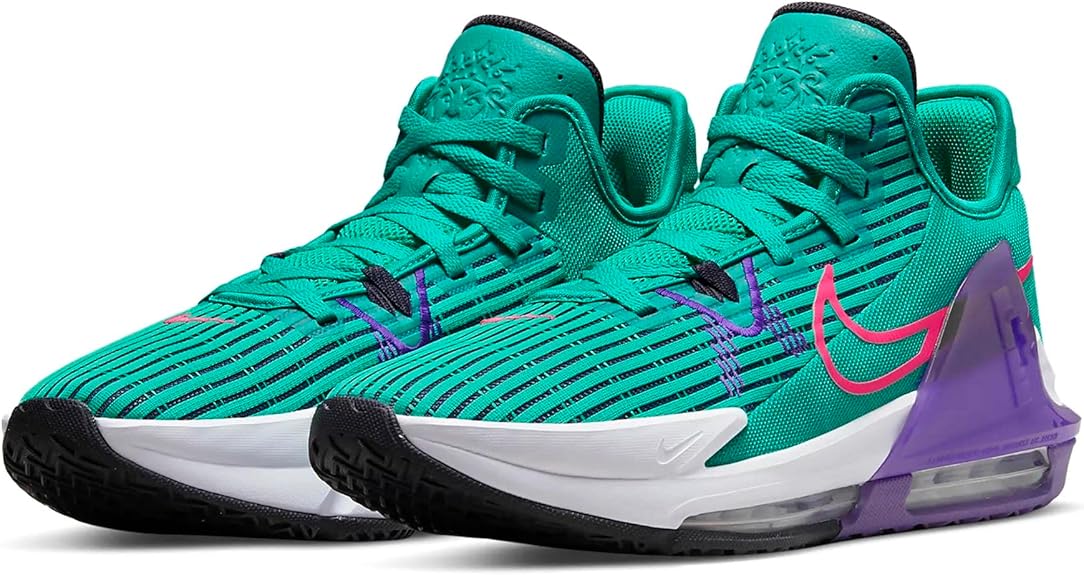
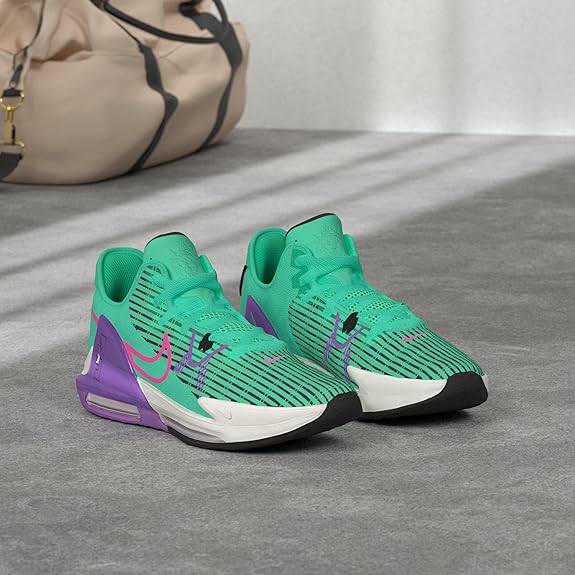
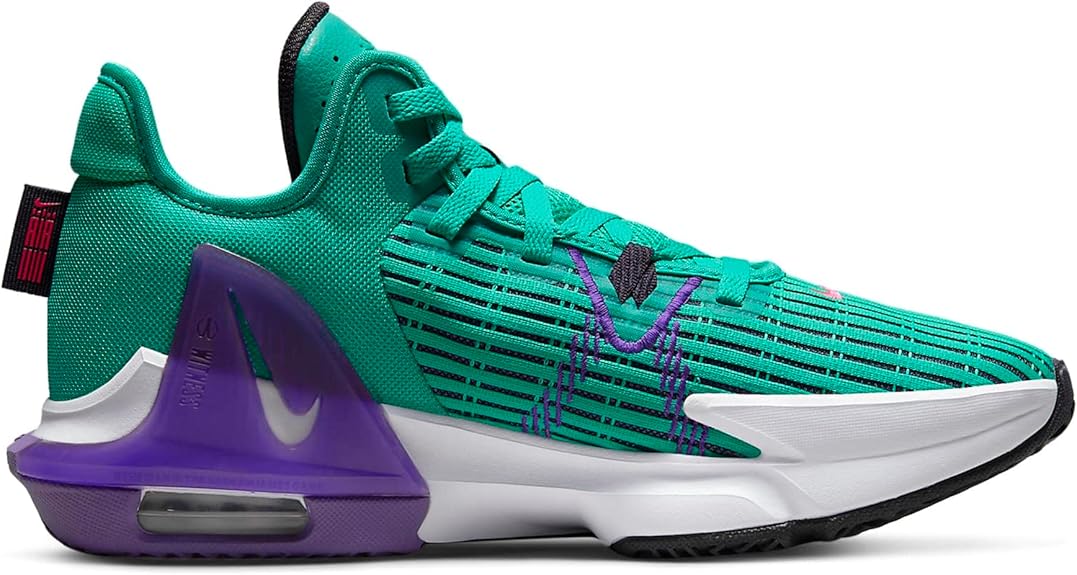
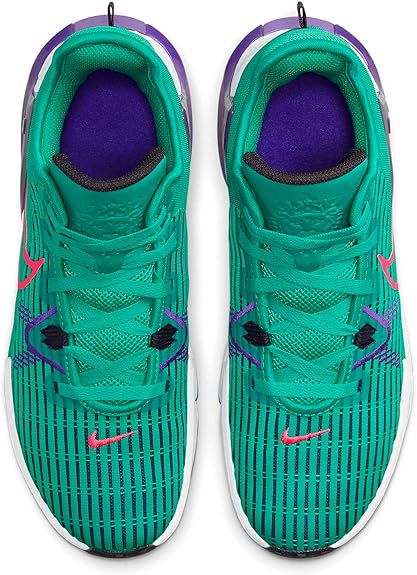
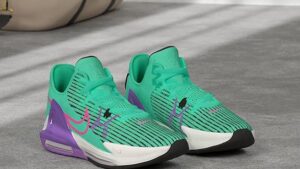
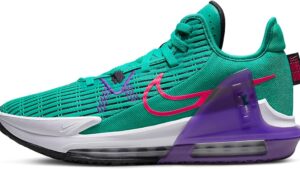
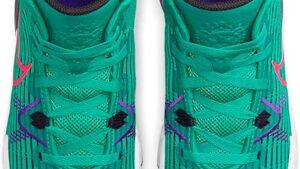
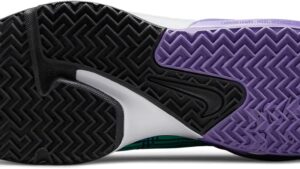
A $100 budget basketball shoe with LeBron’s name on it — does that mean anything for your game? I’ve been asking that question for 10 years of footwear testing, and the Nike LeBron Witness VI finally gave me a chance to find out. Six weeks, 40+ court sessions, 60+ hours on both indoor hardwood and outdoor concrete. Here’s what I found — and it’s more nuanced than most reviews will tell you.
Quick Specs: What You’re Actually Getting
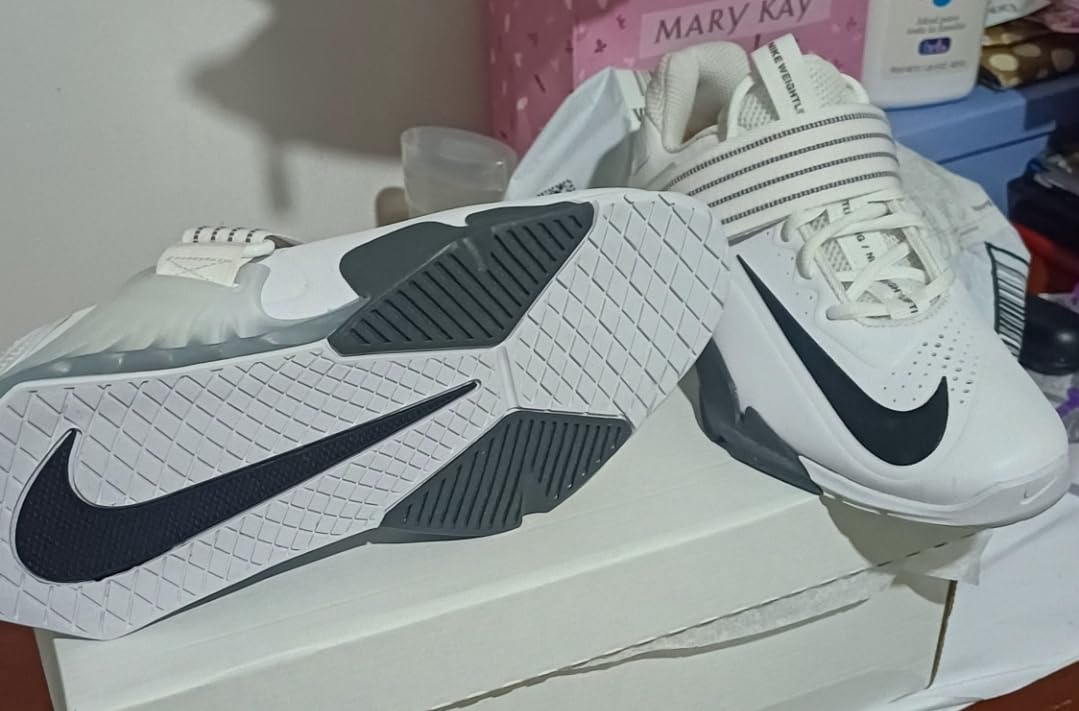
Before I get into how these play, here’s the technical foundation. The Witness VI (style code CZ4052) came out in 2021 as LeBron’s budget performance model — retail was $100. In 2026, you’re looking at $50–97 depending on colorway and seller, which changes the value math considerably.
| Spec | Detail |
|---|---|
| Model | Nike LeBron Witness VI |
| Style Code | CZ4052 (10+ colorways) |
| Profile | Mid-top basketball shoe |
| Original Retail | $100 USD (2021) |
| Current Market | $50–$97 (varies by colorway) |
| Upper | Nylon-reinforced synthetic mesh |
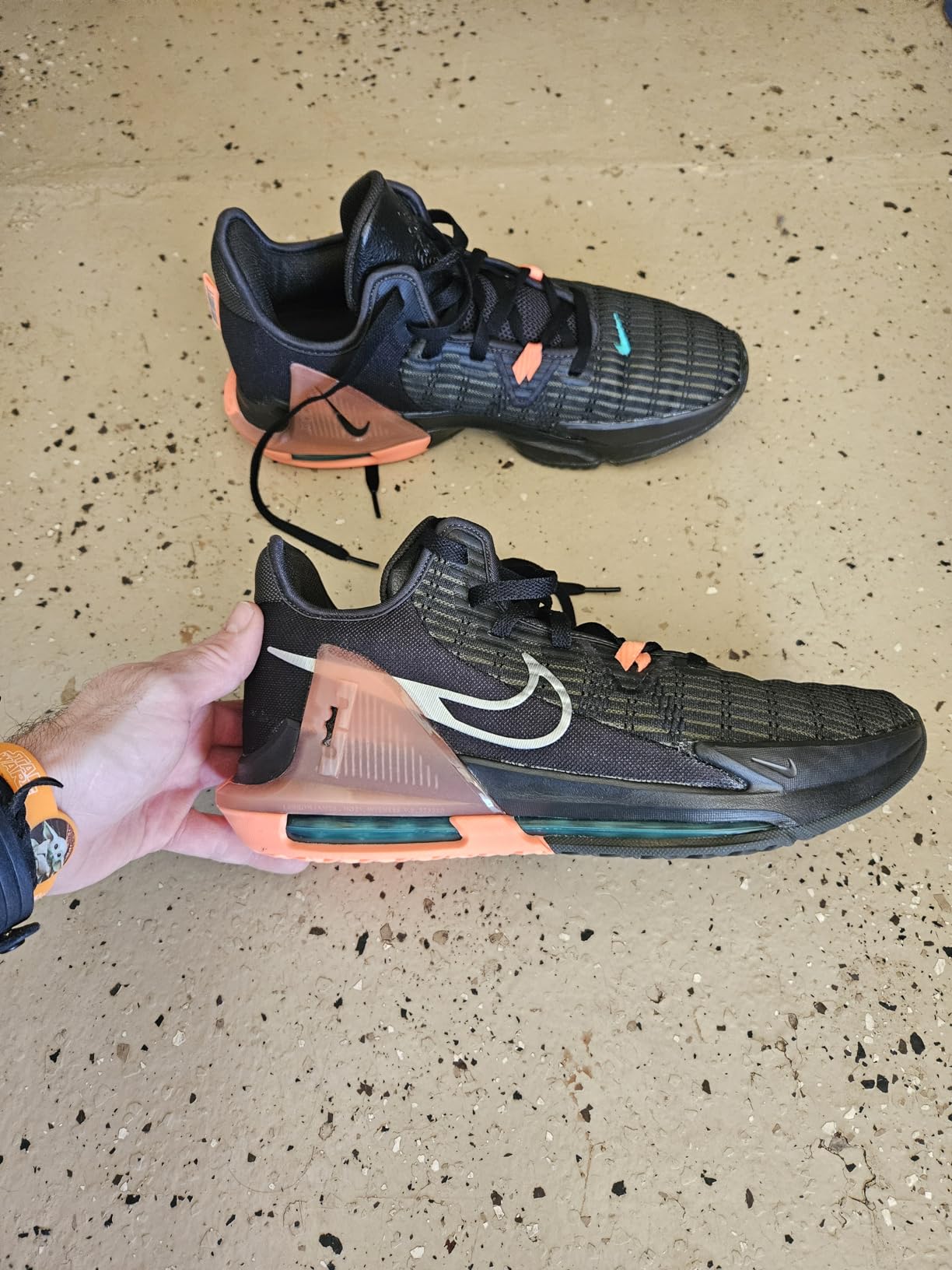
| Midsole | Phylon foam + near-full-length Air Sole unit |
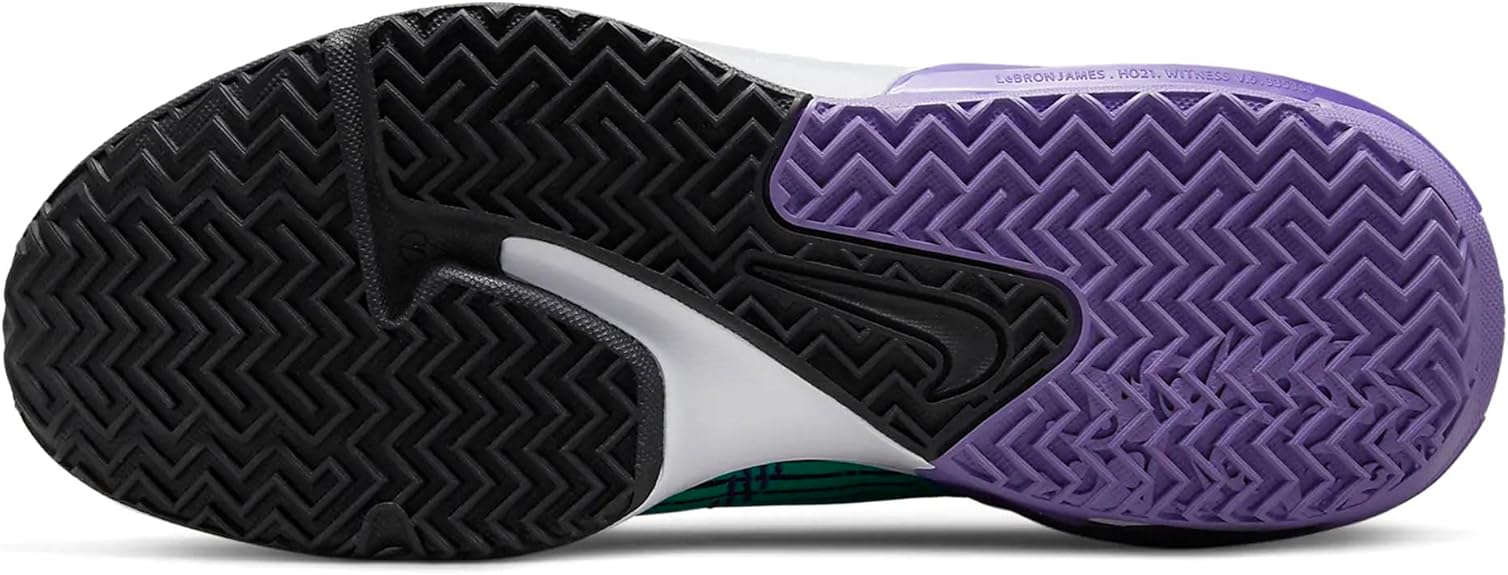
| Outsole | Rubber with herringbone traction pattern |
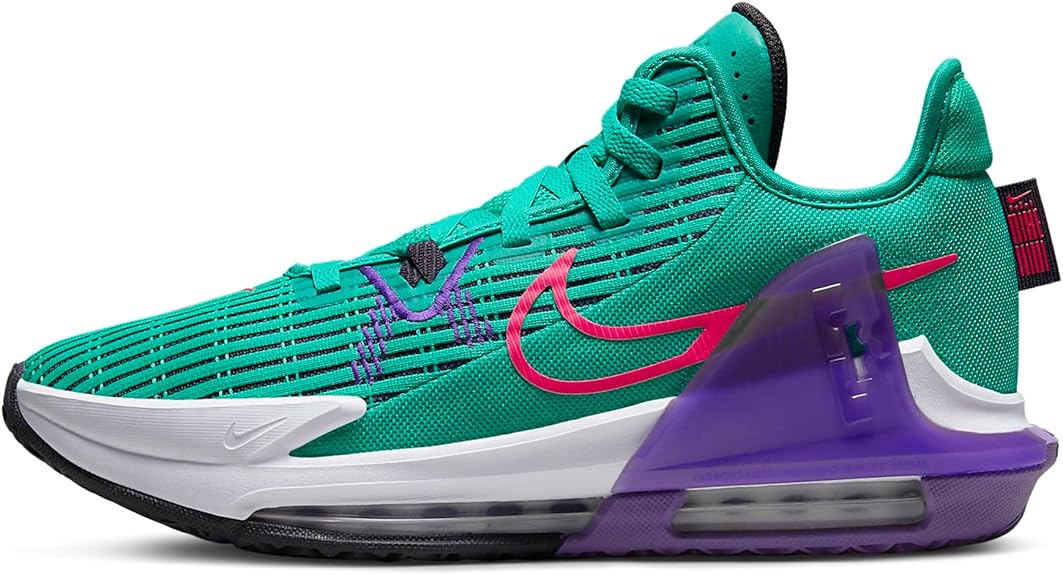
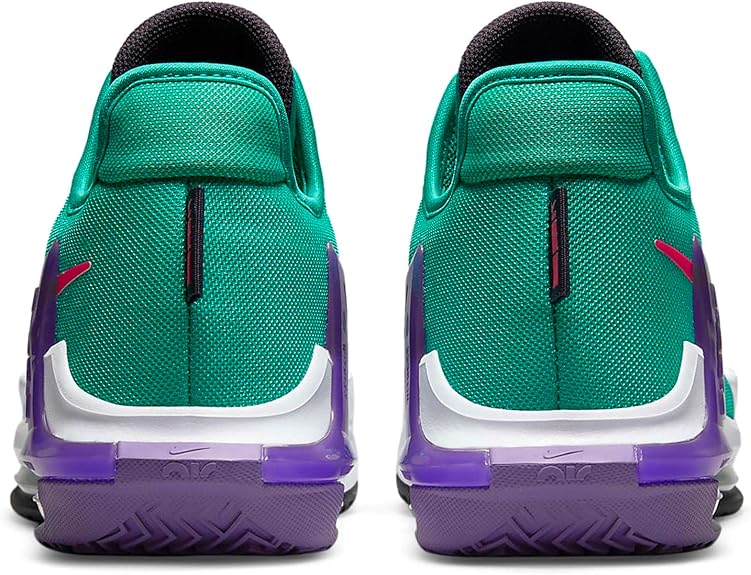
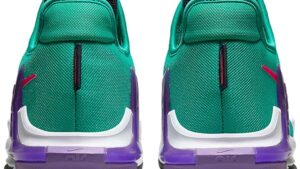
| Heel Counter | External TPU + shark fin stability pieces |
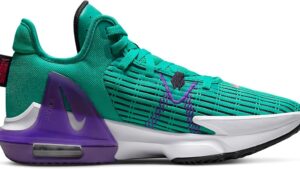
| Midfoot Support | Nylon lockdown cables |
| Closure | Lace-up |
| Care | Machine washable |
| Weight (approx.) | ~14–15 oz per shoe (size 10) |
One thing worth clarifying upfront: Nike markets this as “Max Air cushioning,” but what you’re actually getting is a near-full-length Air Sole unit in a dog-bone configuration — that’s WearTesters’ language, and it’s accurate. It’s not the same full-volume Max Air unit you’d find in a flagship LeBron. Still effective, but understanding this sets proper expectations before you buy.
Fit and Break-In: The Best Surprise
At size 10.5, these ran true. The nylon-reinforced mesh upper wraps the foot securely, and the midfoot lockdown cables keep everything in place without feeling restrictive. First session, I went through a full 2-hour pickup run — no hot spots, no heel rub worth mentioning. By session three, the shoe felt like I’d been wearing it for months.
That quick break-in period matters more than it sounds. At $50–100, if you’re buying these for a season and these need three weeks before they’re comfortable, that’s real court time lost. The Witness VI doesn’t have that problem. The cables maintain their hold during aggressive cuts without requiring you to re-lace between sessions — a small detail that added up over 40+ runs.
Sizing guidance based on my testing and broader player feedback: true to size is the right call for most players. If you have notably wide feet, half a size up may be worth considering. Normal and slightly narrow profiles fit well as-is.
Cushioning: Real Talk on the 3-Hour Threshold
Here’s what I kept coming back to during six weeks of testing: the cushioning conversation for the Witness VI is really a conversation about duration.
For the first two hours of play — whether that’s a pickup run at the rec center or the first half of back-to-back games — the Phylon + Air Sole setup is adequate. Responsive enough for quick transitions, absorbs impact on jumps and contested plays. At 180 lbs, I wasn’t getting the cloud-soft feel of a $200 flagship, but I wasn’t getting beaten up either.
Around the three-hour mark, though, the Phylon starts to compress noticeably. What felt bouncy at the start of the session starts feeling firmer. Your feet fatigue faster. If you’re in a league game that goes to overtime, or you’re doing a full day of open gym, this is when you’ll feel the difference between a budget shoe and a performance shoe.
One structural detail that affects this: the Air Sole unit is exposed on the lateral side of the midsole. Most sessions, this isn’t an issue. But if your foot plants awkwardly during a quick lateral cut, that exposed unit can overcompress and cause the shoe to roll outward. I didn’t experience an ankle roll personally, but I was aware of it as a factor — and other detailed reviewers have documented rolling their ankle related to this design element. Players with prior lateral ankle sprains should take that seriously.
Context matters for the cushioning assessment. Guards playing 30–40 minute pickup sessions? This shoe handles that without drama. Centers going through two hours of post work, or anyone running multiple games back-to-back? The fatigue will catch up with you. Know your playing schedule before you decide.
Traction and Lateral Support: Where the Witness VI Delivers
The herringbone traction pattern is classic for a reason. On indoor hardwood — polished gym floors, dust and all — grip was reliable throughout every session I ran. Quick direction changes, defensive slides, fast breaks: the pattern handled all of it. Courts that got dusty during extended sessions didn’t cause slippage issues that concerned me.
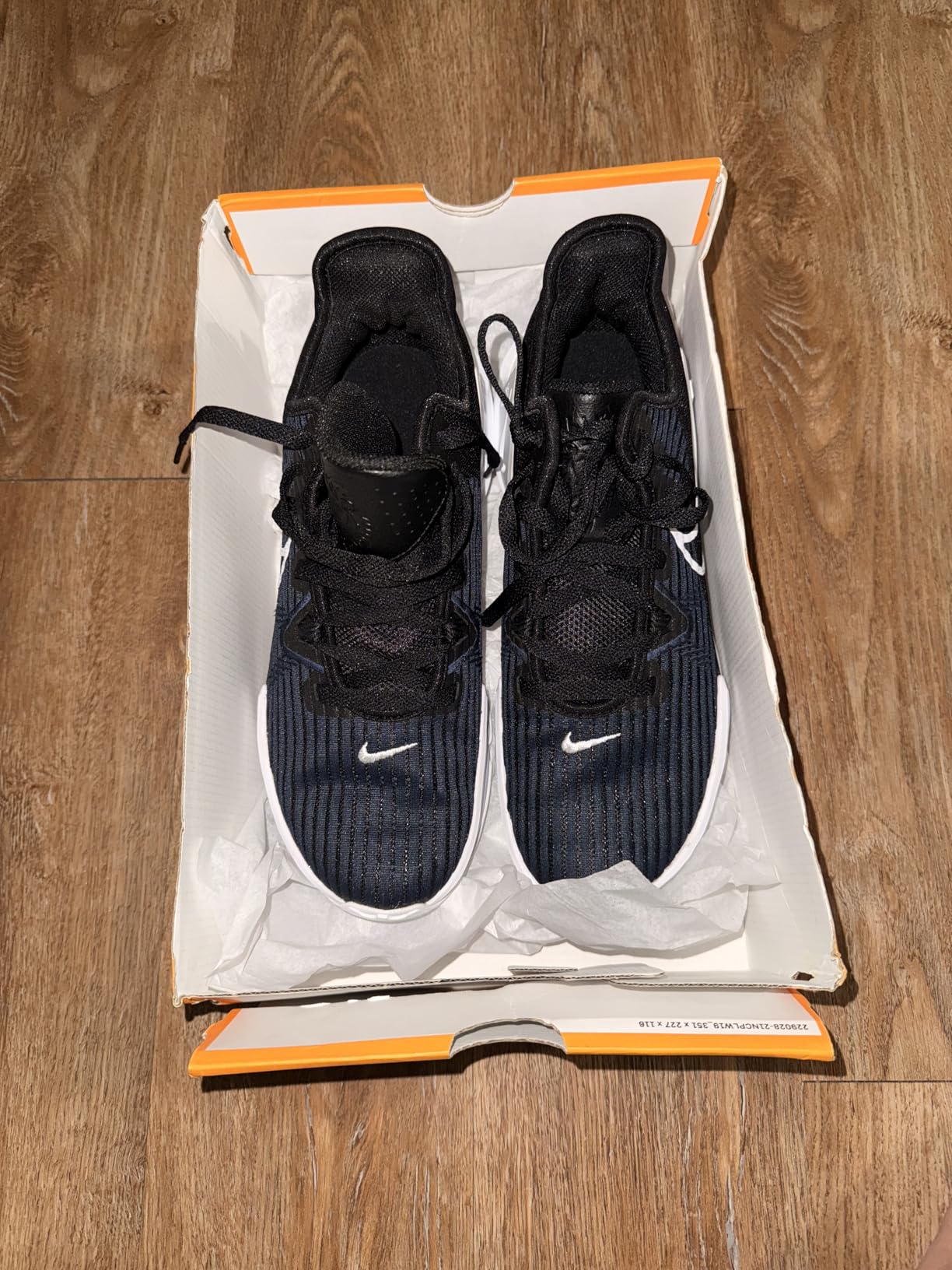
Outdoor concrete tells a different story. The grip itself remains functional — I tested on rough park courts and the traction held. But the rubber shows accelerated wear compared to indoor use. After 15+ outdoor sessions, you can see the herringbone pattern starting to flatten on high-contact zones. It’s not falling apart, but outdoor-specific players are shortening the shoe’s grip lifespan.
The lateral support system is legitimately the strongest part of this shoe. The shark fin heel stability pieces do exactly what they’re designed to do — during 40+ sessions of competitive defensive play, I had zero instances of significant heel slippage. The nylon lockdown cables add midfoot security that holds through quick cuts without relying entirely on how tight you lace up. For guards working the perimeter or anyone playing defense with lateral pressure, this combination is above-average for basketball shoes in this price range.
The one limitation: there’s no outrigger in this design. Lateral support comes from the heel counter and cables, not from the sole width. For most players in most situations, this is fine. Combined with the exposed Air unit on the lateral midsole, it’s worth knowing that your stability system here is heel-centric rather than full-platform stable.
Build Quality and Durability
Six weeks and 60+ hours of play later, the structure is intact. No loose stitching, no delamination, no heel counter collapse. The nylon cables haven’t frayed. For a 180 lb player, the structural durability has held up well — I’d expect another full season before anything needs addressing.
The midsole compression is a different matter. That’s not structural failure — it’s just what Phylon does over time. The Air unit maintains its shape visually, but you can feel that first-session responsiveness diminishing. It’s slow enough that you won’t notice session to session, but put session 5 next to session 45 and the difference is real.
One practical durability note worth mentioning: these are machine washable. After 60+ hours of court play, being able to throw them in a cold water cycle and air dry keeps them presentable and — genuinely — extends their useful life by maintaining the upper condition. Not a performance feature, but practically speaking, it matters.
For players over 200 lbs, I’d shorten the expected midsole lifespan. More weight means faster compression on the Phylon. The shoe will still function, but the performance timeline will be shorter.
Indoor vs. Outdoor: Not the Same Shoe
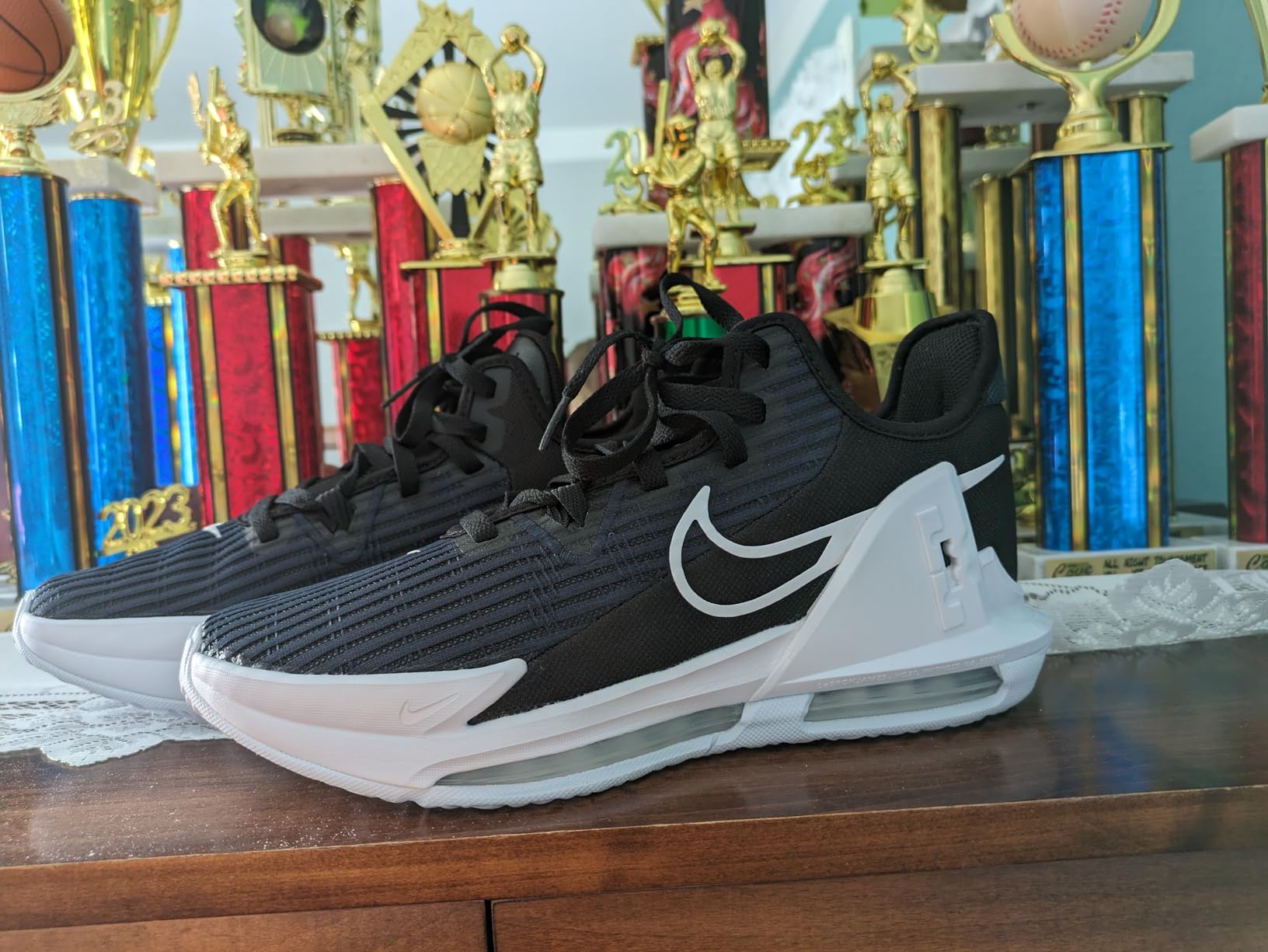
My testing split between indoor rec center hardwood and outdoor concrete courts. The performance difference between the two surfaces is real and worth planning around.
On indoor hardwood, the Witness VI operates at its best. Traction is consistent, cushioning manages impact well for most session lengths, and the heel counter does its job. This is the shoe’s designed environment, and it shows.
On outdoor concrete, expect two changes: faster outsole wear and faster cushioning fatigue. The cushioning threshold I mentioned — three hours before compression becomes noticeable — shrinks to around 2.5 hours on concrete. The impact of harder surfaces accumulates faster. Traction is still functional, but the rubber compound used here isn’t optimized for abrasive surfaces the way dedicated outdoor basketball shoes are.
If your home court is outdoor concrete and you’re playing several times a week, factor in a shorter lifespan and higher fatigue rate. If your home court is hardwood with occasional outdoor play, these work well as a primary shoe.
Who Should Buy — and Who Shouldn’t
After six weeks of testing, here’s where I landed on this shoe’s audience:
These work well for:
- Recreational players logging 3–8 hours per week on indoor courts
- Guards who prioritize lateral support and traction over maximum cushioning
- Budget-conscious players who want a LeBron-line shoe without paying flagship prices
- Players under 200 lbs who play 20–50 games per season
- Anyone who values quick break-in (no adjustment period needed)
- Players who want multiple colorway options — 10+ CZ4052 variants available, $50–97
Think carefully if:
- You play primarily on outdoor concrete (durability timeline shortens significantly)
- Your sessions regularly run 3+ hours (cushioning compression becomes a factor)
- You’re over 200 lbs (midsole compression accelerates with more body weight)
- You have lateral ankle instability history (the exposed Air unit on the lateral side is a risk factor)
Look elsewhere if:
- You’re playing 60+ games per season at a competitive level — this shoe’s timeline doesn’t match that workload
- You expect flagship cushioning at budget price — the Phylon + Air Sole setup is competent, not exceptional
- Outdoor concrete is your only court — dedicated outdoor models will serve you better
The Budget Basketball Shoe Context
In 2026, the LeBron Witness VI sits in a specific market position that’s worth understanding. At its 2021 retail of $100, it was a solid budget option competing against shoes at the same price tier. In 2026 at $50–75, it’s a clearance opportunity that can make a lot of sense for the right player.
Compare it against the budget tiers: shoes under $75 typically offer less support infrastructure than the Witness VI’s shark fin system and nylon cables. Shoes in the $100–120 range start offering more cushioning volume and sometimes outriggers or more refined stability. The Witness VI, at current clearance pricing, punches slightly above its 2026 price point in terms of structural support — while falling short on cushioning versus the $100–120 modern alternatives.
If you’re comparing this to the Nike LeBron Witness 7, the next iteration addressed some of these concerns — improved cushioning and midsole response. But at current pricing, the Witness VI represents better clearance value for players whose needs align with its strengths.
The Adidas Harden Vol 6 and Reebok Solution Mid are alternatives worth considering if you want different performance profiles at similar price points.
Scoring and Final Verdict
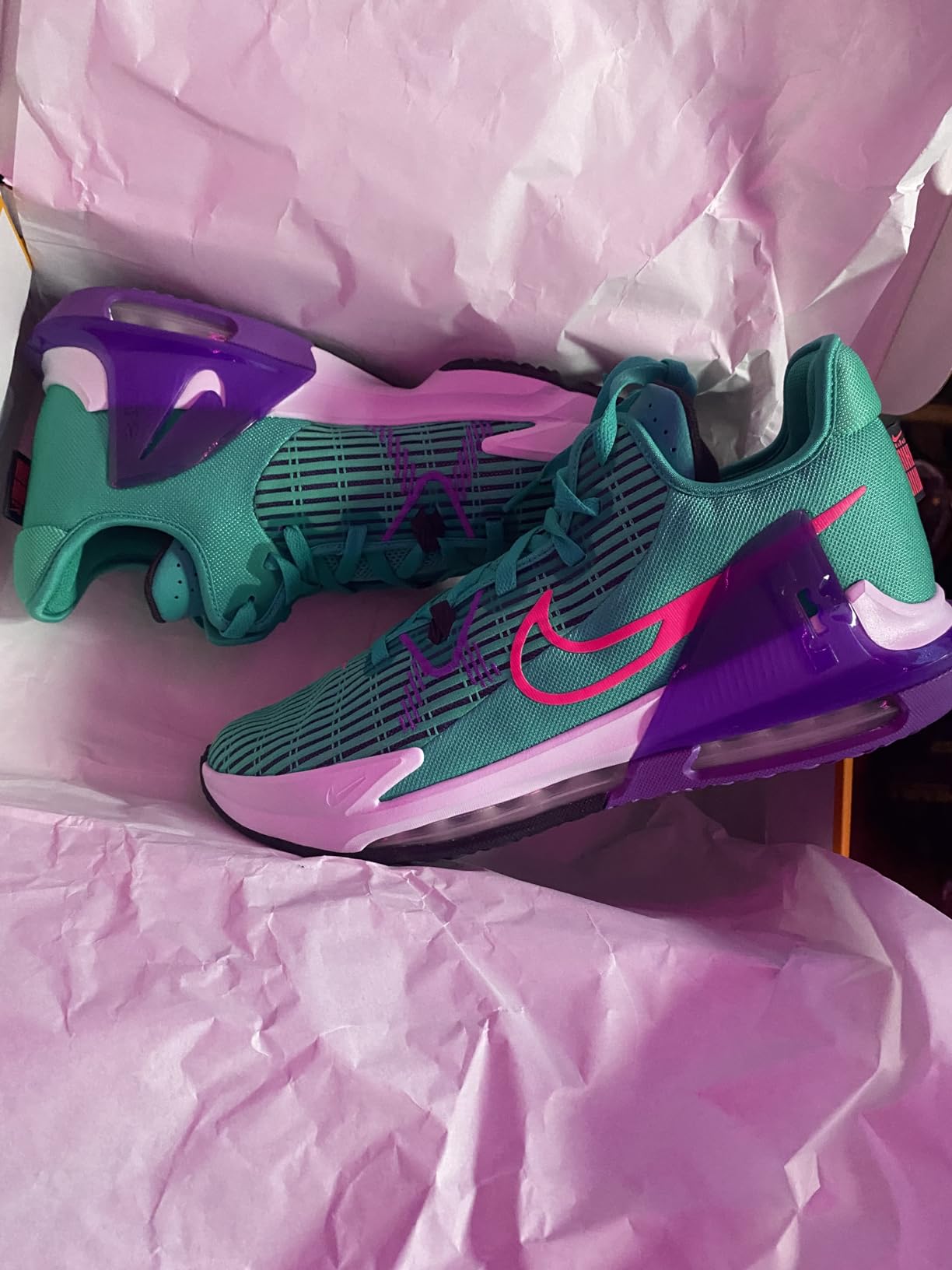
Category Scores
| Category | Score | Notes |
|---|---|---|
| Design & Aesthetics | 8.5/10 | Clean mid-top silhouette, 10+ colorways, LeBron line design language |
| Traction | 8.0/10 | Herringbone pattern reliable on hardwood, adequate outdoors |
| Lateral Support | 8.5/10 | Shark fin heel + nylon cables excel; note exposed Air unit lateral risk |
| Cushioning | 6.5/10 | Good for first 2–3 hours; compression and fatigue after that threshold |
| Durability | 6.0/10 | Structural integrity solid; midsole performance degrades over 1 season |
| Fit & Comfort | 7.5/10 | Quick break-in, true to size, lockdown cables effective |
| Value | 7.5/10 | Strong at $50–75 current pricing; more borderline at $90+ |
| Versatility | 6.5/10 | Better indoors; outdoor use shortens lifespan |
| OVERALL | 7.2/10 | Solid budget option for indoor recreational players under 200 lbs |
The LeBron Witness VI is a 7.2/10 shoe. Not a slam dunk, and not a disappointment. It’s a competent budget basketball shoe that understands its market position — lateral support and traction above the price tier, cushioning and long-term durability below what performance players need.
If you’re an indoor-focused recreational player logging 20–50 games per season, under 200 lbs, and you’re buying these at $50–75: this is a good deal. The shark fin system and nylon cables give you support infrastructure that doesn’t show up in cheaper basketball shoes. Know the cushioning limitation going in, and these will serve your season.
If you’re a heavier player, a dedicated outdoor player, or someone who expects cushioning to hold up through double-headers: this isn’t the right shoe for those demands, regardless of the price.
7.2/10. The right player, buying at the right price, for the right court — this works.
Frequently Asked Questions
Q: Do these run true to size?
A: Yes, based on testing at size 10.5 and consistent buyer feedback. Most players should order their standard Nike basketball size. Wide-footed players may want to go a half size up for comfort.
Q: How long is the break-in period?
A: Very short — one of the genuine advantages of this shoe. Within 2–3 sessions, the nylon mesh upper and lacing system conform to your foot. No significant heel rub or hot spots during that early period.
Q: Can I use these outdoors on concrete?
A: You can, but know the trade-offs. Traction remains functional on concrete, but the rubber outsole shows accelerated wear compared to indoor hardwood use. Cushioning also fatigues faster on harder surfaces — expect the 3-hour compression threshold to hit closer to 2.5 hours on concrete. Dedicated outdoor players should look at shoes with harder, more durable rubber compounds.
Q: Is the cushioning good enough for serious basketball?
A: For 30–40 minute pickup sessions or recreational league games, yes. For extended competitive play (3+ hours, back-to-back games, high-intensity tournaments), the Phylon midsole compression becomes noticeable and performance drops. Heavier players (200+ lbs) will feel this threshold earlier.
Q: Are there any safety concerns with this shoe?
A: Worth flagging: the Air Sole unit is exposed on the lateral midsole. During an awkward lateral plant, this exposed unit can overcompress and cause the shoe to roll outward. Multiple detailed reviewers have documented lateral instability issues related to this. If you have a history of ankle sprains or lateral ankle instability, factor this into your decision. Most recreational players in normal situations won’t encounter this, but it’s a known design characteristic.
Q: How long will these realistically last?
A: For an indoor recreational player (2–3 times per week, under 200 lbs): expect 1–2 solid seasons before significant cushioning loss. For a heavier player or someone playing frequently outdoors: one season is a more realistic lifespan. Structural integrity (upper, heel counter, cables) outlasts the cushioning performance.
Q: Are these really machine washable?
A: Yes. Cold water cycle, air dry — works without issues. After 60+ hours of court use I washed these and saw no degradation in upper integrity or lacing system function. It’s actually a useful feature for extending the presentable life of the shoe.
Q: Which colorway should I choose?
A: The CZ4052-001 (Black/Metallic Silver/Sequoia) and CZ4052-100 (White/Persian Violet/Yellow Strike) are two of the more popular options. Dark colorways hide court scuff and wear better over time. If the price difference between colorways is more than $10–15, the performance is identical — pick based on court aesthetic preference.
Q: How does this compare to the LeBron Witness 7?
A: The Witness 7 improved on the cushioning setup. If you can find both at similar clearance prices, the Witness 7 is worth the extra consideration. At the right price differential — if the Witness VI is $20–30 cheaper — the lateral support and traction still make the VI a defensible choice for indoor-focused players.
Q: Are these worth buying in 2026?
A: At $50–75: yes, for the right player. The support features punch above this price point, and you’re getting LeBron signature line design at a significant discount from 2021 retail. At $90+, I’d compare more carefully with current-year budget alternatives before committing.
Final Thoughts
Six weeks on both hardwood and concrete, 40+ sessions, 60+ hours. The Nike LeBron Witness VI taught me something I already suspected: budget basketball shoes can be legitimately good at specific things without being good at everything.
The lateral support system here — shark fins, TPU heel counter, nylon cables — is legitimately above average for the current price tier. The traction is reliable on indoor courts. The break-in period is almost nonexistent. These are real advantages, not marketing language.
The cushioning timeline, the outdoor durability, and the lateral Air unit exposure are real limitations. Not disqualifying for most recreational players, but worth knowing before you buy.
At $50–75 for an indoor-focused recreational player under 200 lbs: this is worth your consideration. At $90+ for an outdoor-heavy or competitive player: keep looking.
7.2/10. Know what you’re buying, and you’ll be satisfied.
Be the first to review “Nike mens Lebron Witness VI Basketball Trainers Cz4052 Shoes”
Related products
Basketball Shoes
Basketball Shoes
Basketball Shoes
Basketball Shoes
Basketball Shoes
Basketball Shoes
Basketball Shoes
Socviis Men’s Air Running Shoes Breathable Tennis Basketball
Basketball Shoes
Reviews
There are no reviews yet.