
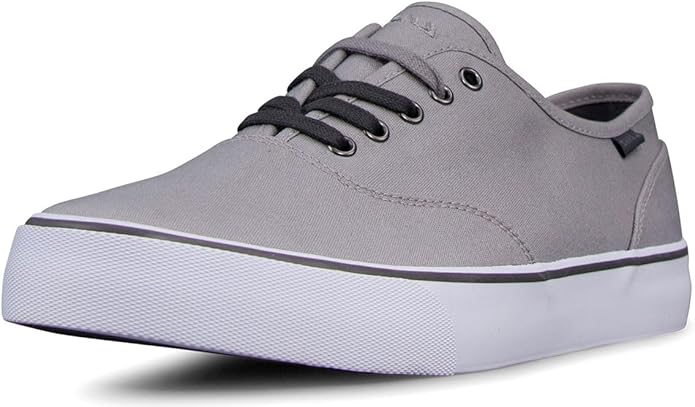
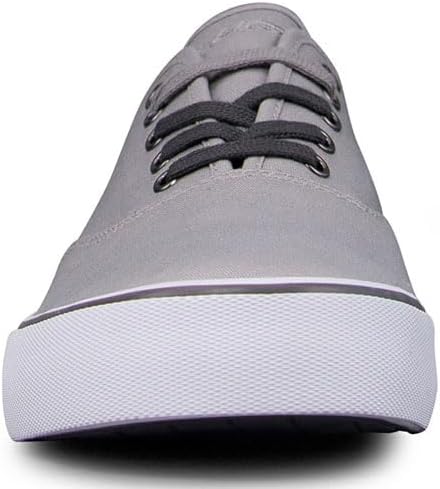
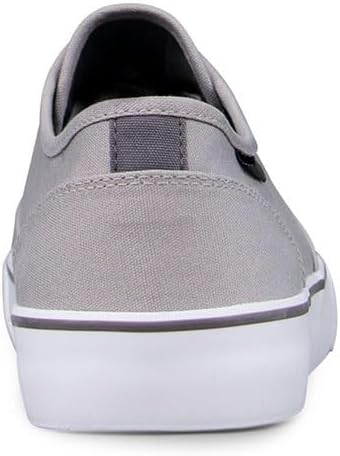
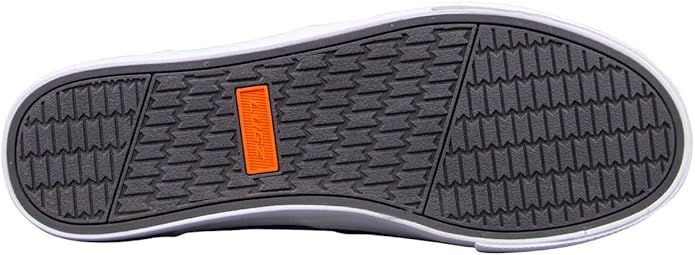
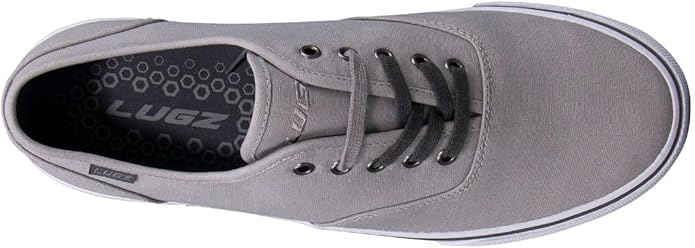
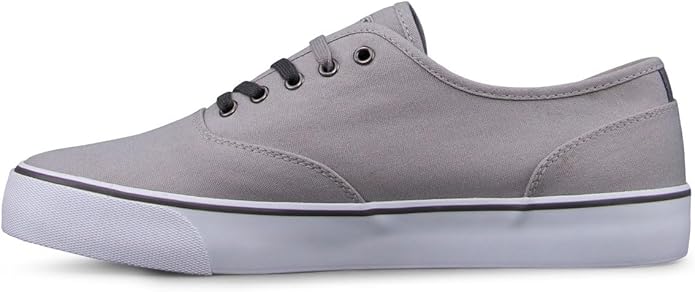
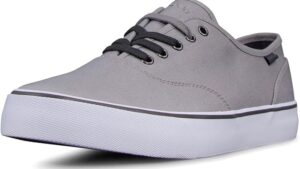
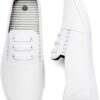
Twenty-five dollars. That’s about what a burger and fries costs these days. So when I spotted the Lugz Men’s Lear on Amazon looking suspiciously close to a pair of Vans from across the room, I figured worst-case scenario I’d wasted a dinner out. Mike here — 180 lbs, slightly wider feet — and I spent 8 weeks wearing these through everything I could think of to find out if that $25 was a steal or just a slow-burn disappointment.
Technical Specifications
- 💰 Price: ~$25
- ⚖️ Weight: 12 oz (men’s size 9)
- 🧪 Upper material: 100% Canvas
- 👟 Sole material: Vulcanized rubber
- 🎯 Category: Casual lifestyle sneaker
- 🎯 Best for: Light casual wear, fashion styling, occasional use
- ⏱️ Testing period: 8 weeks, 45+ wear sessions, 3-4x per week
- 💡 Key features: Padded collar, cushioned insole, two sets of laces included, wide width available
- 🎨 Colors: Black, Charcoal, White, Blue/White, and others
First Look: What You Get for $25
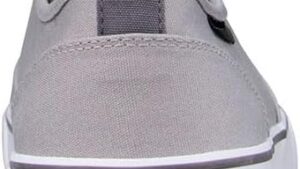
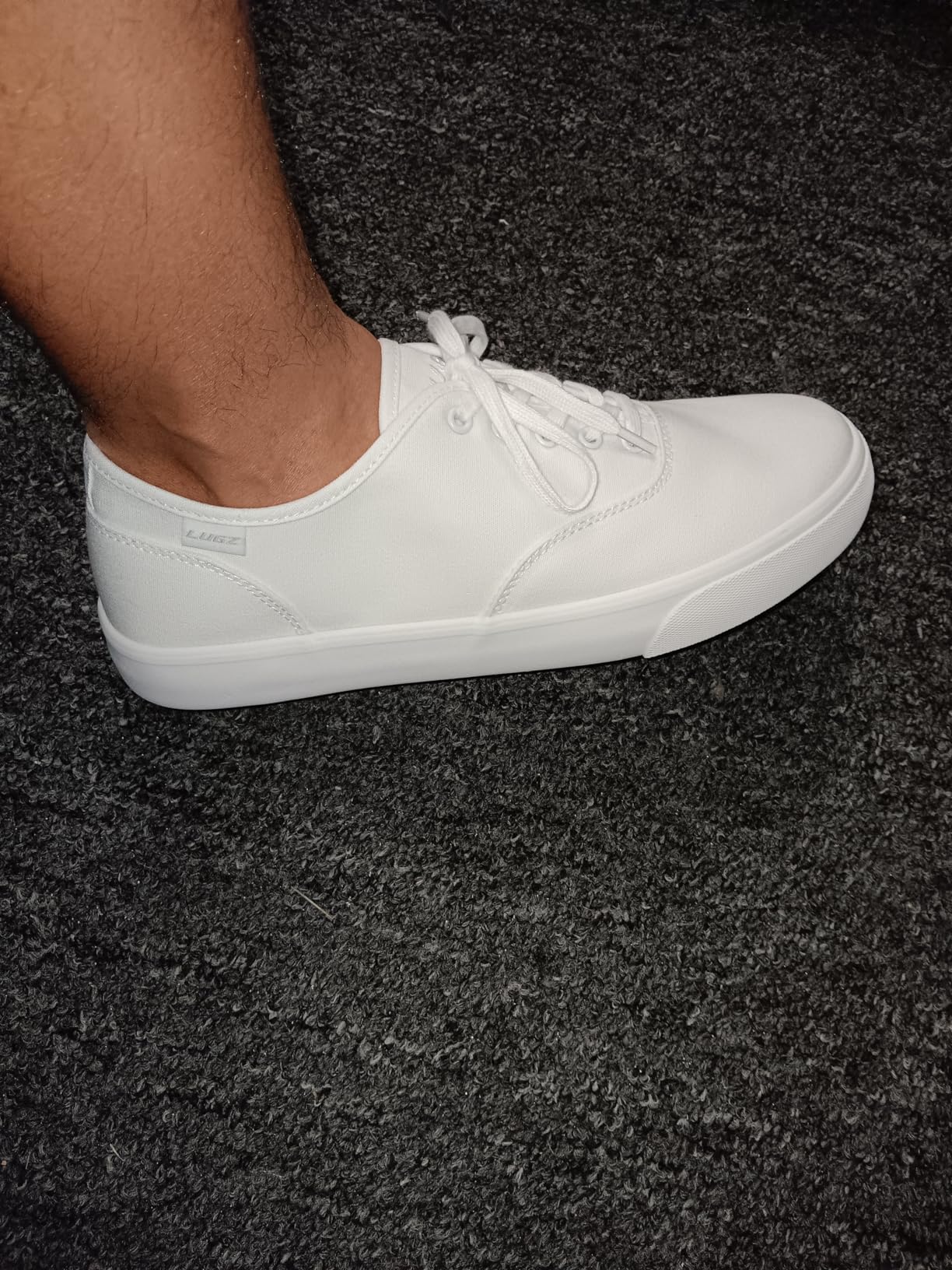
Pull these out of the box and your first reaction is probably something like: “Wait, these actually look pretty good.” That was mine. The canvas upper has real weight to it — none of that tissue-thin feel you get from truly cheap footwear. For reference, I’ve tested a bunch of budget shoes over the years, and most feel hollow in the hand before you even put them on. The Lear doesn’t.
The padded collar is a legitimate feature, not just marketing language. Run your thumb around the ankle opening and there’s actual foam backing there. On a $25 shoe, that’s genuinely unusual. A lot of budget canvas options skip padding entirely and your ankle pays for it on day one.
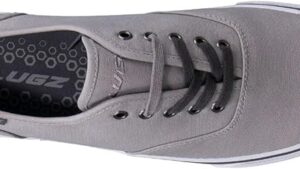
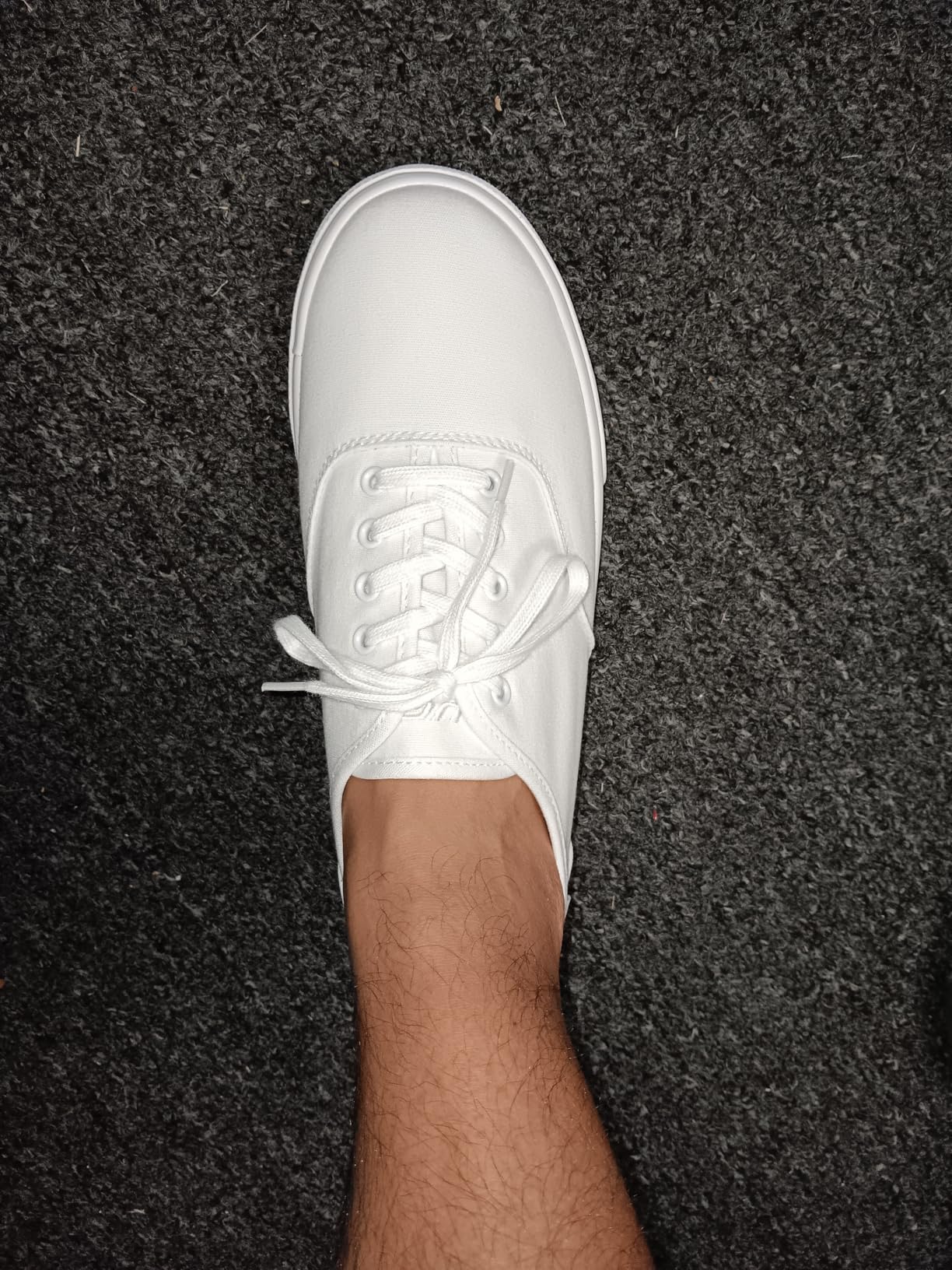
Then there are the two sets of laces. Lugz throws in a second pair in a slightly different tone — a small detail, but it shows someone thought about styling options. The lace-up system pulls smooth and holds tension without any weird friction. Nothing to complain about there.
My slightly wider feet found the toe box comfortable right away. Not sloppy-wide, just enough room to not feel squeezed. No break-in period — these were wearable from the first session, which is more than I can say for a lot of shoes in this style.
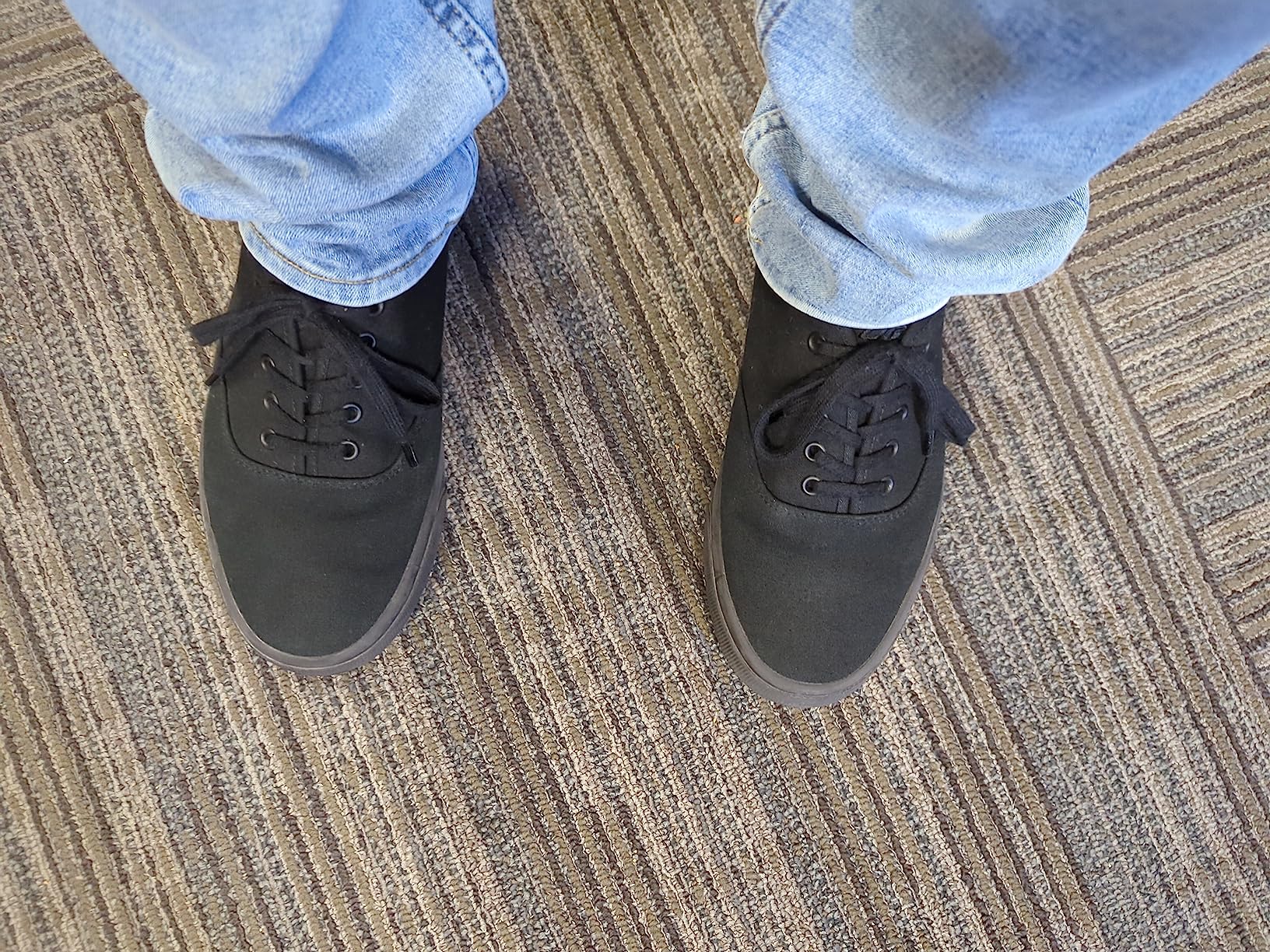
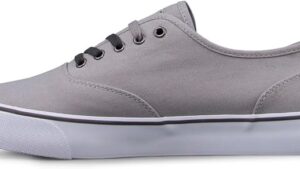
The look translates well on foot too. That low-profile silhouette reads cleaner than the price tag suggests — jeans, shorts, khakis, it works with all of them. If your goal is a canvas sneaker that doesn’t look budget, the Lear accomplishes that for the first several weeks.
8 Weeks of Honest Testing: The Full Timeline
I wore these across the same kinds of days most people use casual sneakers for: city sidewalks, standing in lines, light yard work, social events, and a few sessions where I just wore them around the house or walked to grab coffee. Here’s how each phase of the 8 weeks actually played out.
Weeks 1-2: Genuinely impressed. These felt broken in immediately, comfortable for 4-6 hour stretches without any foot fatigue. The padded collar kept ankle rubbing completely away. Laces held well. Dry sidewalk traction was fine. No signs of wear at this point — canvas stayed clean-looking and the sole showed no stress marks.
Weeks 3-4: Settled into a comfortable routine. I pushed longer wear sessions — 6 to 7 hours — and the comfort held reasonably well for casual scenarios, though the insole was noticeably softer than week one. That’s compression happening earlier than I expected. Small visible wear marks on the canvas from normal use, but no fraying, no color issues.
Weeks 5-6: Here’s where things started changing. I noticed a subtle flex-point crinkle developing on the sole where my foot bends during walking. Easy to dismiss as normal shoe flex, but I took photos at this point because I’d seen enough customer reviews to know what was coming. Canvas upper still looked solid — no performance problems there at all.
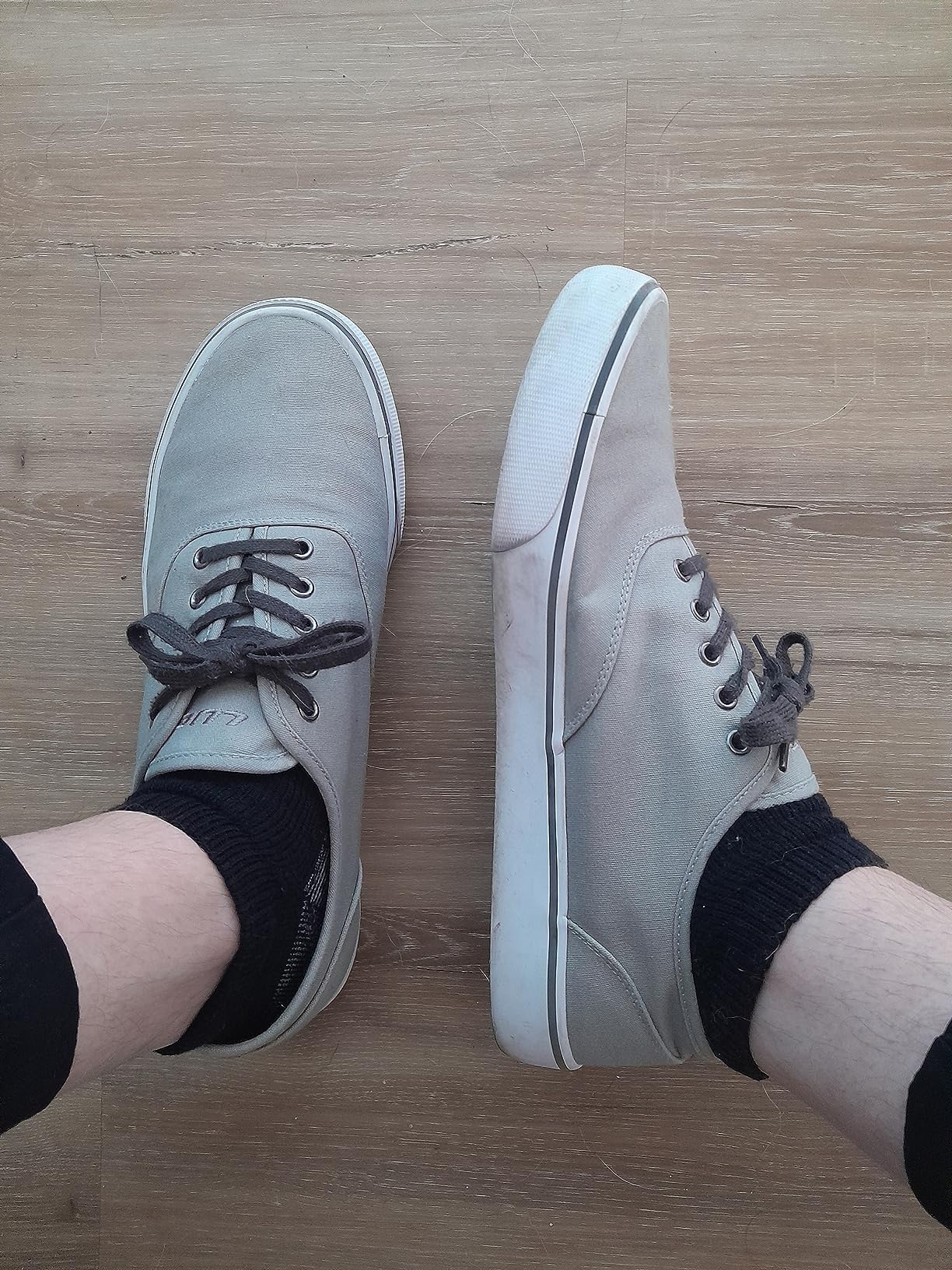
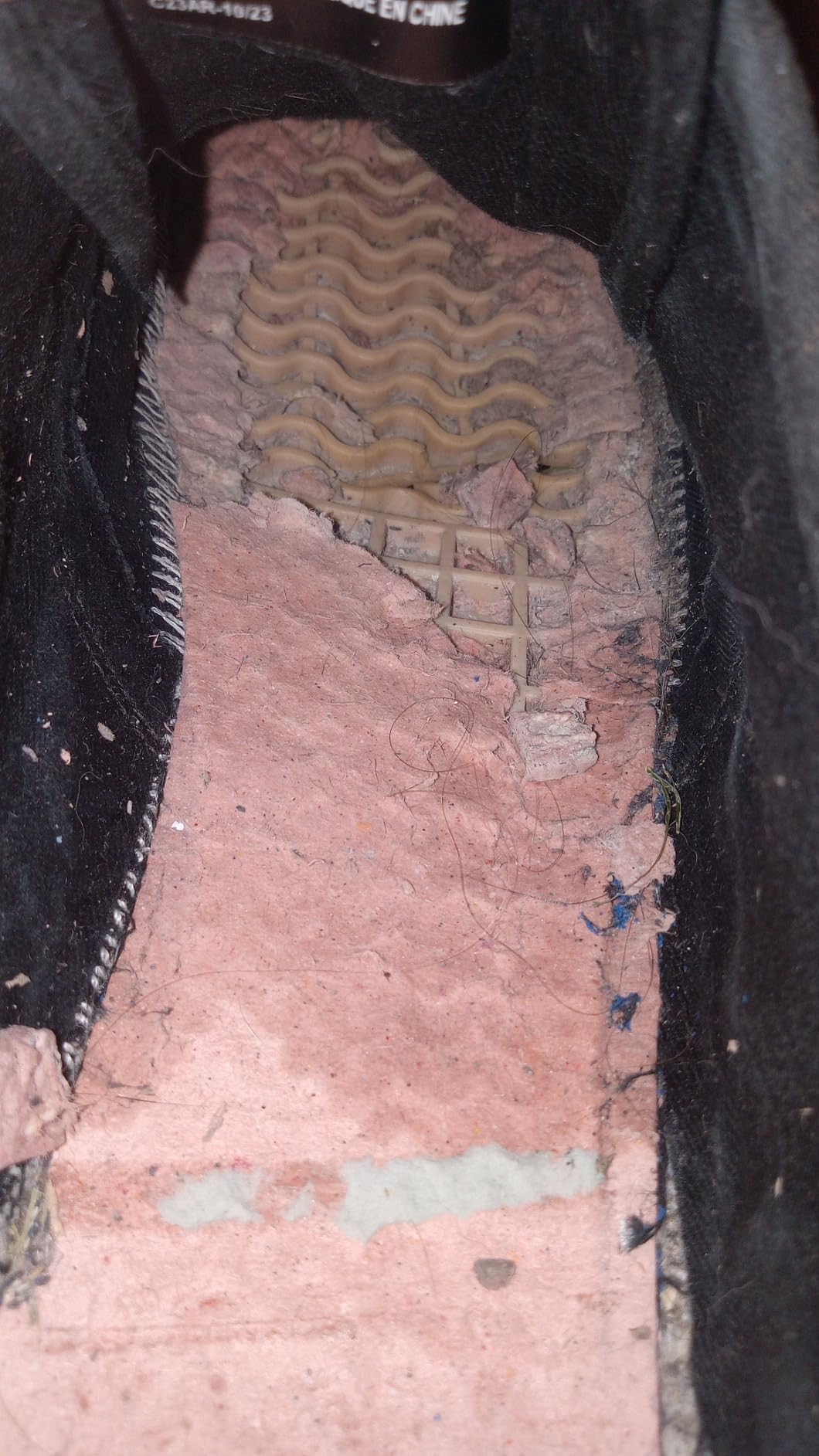
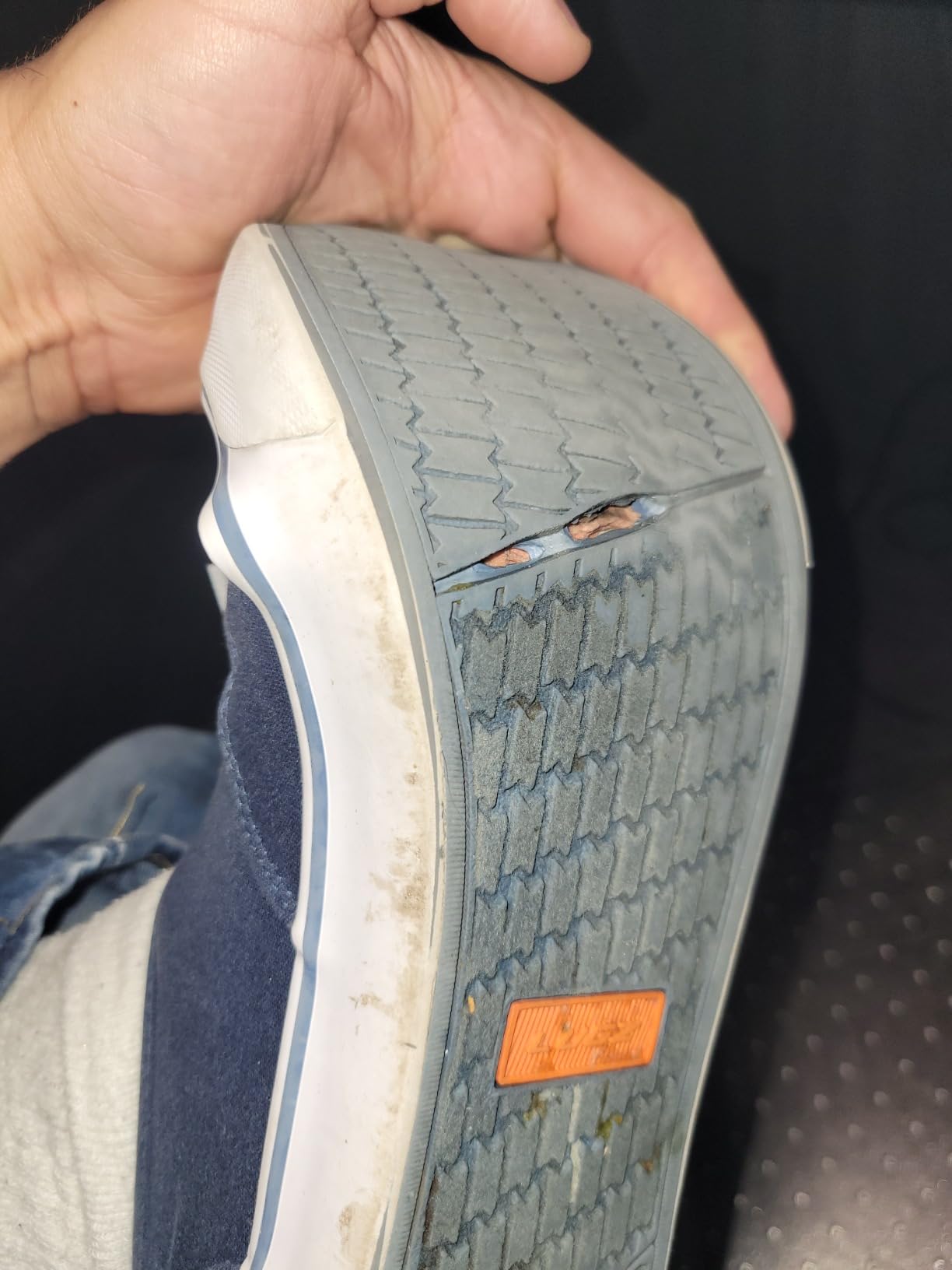
Week 7: The flex-point crinkle became a visible separation gap. On the left shoe first, then the right shoe followed within days. Not a crack in the rubber — the rubber itself was fine. The problem was the bond holding the canvas upper to the rubber sole had started failing along the exact line where the foot bends during each step. Once you see it, you can’t unsee it.
Week 8: Both shoes showed identical separation patterns at the same location. The symmetry was almost impressive. This isn’t a “I got a bad pair” situation — it’s a consistent construction failure that happens to essentially everyone who wears these regularly.
Scenario-specific notes from the full 8 weeks:
- Office wear (mostly sitting/standing): Excellent comfort for full 8-hour days
- Weekend errands (2-4 hours walking): Very comfortable throughout
- Social events (4-6 hours on feet): Held up well
- Short walks under 2 miles: Fine — traction adequate on dry surfaces
- Rain exposure: Became a problem once sole separation started — water found its way in through the gap
Comfort Analysis: The Hour-by-Hour Reality
The cushioned insole is real — but there are limits to what it can do, and that ceiling arrives earlier than the marketing implies.
Hours 1-4: Comfortable enough that you stop thinking about your shoes, which is the best outcome. The padded collar handles ankle irritation. Lightweight construction means no heaviness or leg fatigue. For casual outings in this window, there’s nothing to complain about.
Hours 5-6: Still comfortable for light activity, but insole compression is noticeable. You won’t be in pain, but you’ll be aware that you’re wearing budget shoes. Fine for a dinner out or a casual social setting.
Hours 7-8: This is where the lack of arch support becomes the dominant sensation. The insole is now fully compressed in the heel and ball zones. Extended standing or walking in this range will leave your feet feeling it. Still wearable, but not comfortable by any meaningful definition if you’re on your feet most of the time.
Hours 8+: Not recommended. There’s simply not enough structure in the canvas upper or support in the insole to sustain this without discomfort. If your job requires 8+ hours on your feet, these aren’t your shoes — look at something with real arch engineering like the Sof Sole Athlete Insoles upgrade at minimum, or a completely different shoe.
For people with plantar fasciitis or flat feet, the support gap here is a dealbreaker regardless of hour count. A Valsole Orthotic Insole swap can extend the comfort window, but it adds $20-25 to your total cost and doesn’t solve the sole separation timeline.
The Durability Problem — Explained Properly
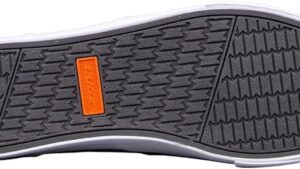
Here’s what’s actually happening: the vulcanized rubber outsole itself is fine. The rubber doesn’t crack, wear through, or fall apart. What fails is the adhesive bond connecting the canvas upper to the rubber sole, specifically at the flex point where your foot bends with every step. Every time you walk, that bond experiences stress. For the Lear, that bond gives way consistently around week 6-8 at regular wear frequency.
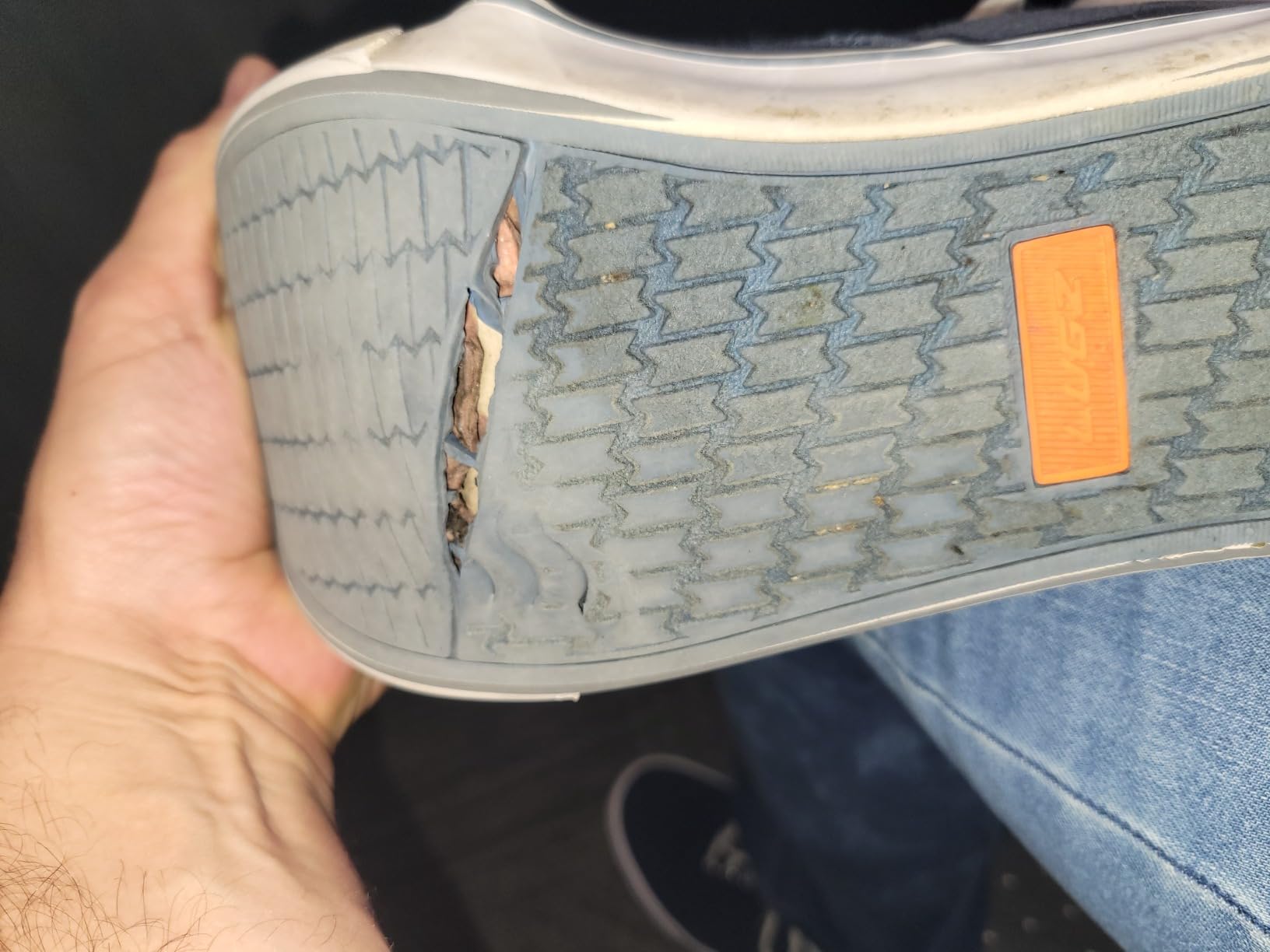
The progression runs like this: micro-stress marks appear in the flex zone around week 5. By week 7, a visible gap opens. By week 8, the separation is wide enough that wet conditions push water directly into the shoe through the gap. At that point, the shoes are functionally done.
What makes this especially clear-cut is the customer pattern confirmation. The failure appears at the same location on essentially every pair — left shoe, right shoe, big guy, small guy, different climates, different usage intensities. My own testing ended with both shoes showing identical separation at the same spot. That’s not bad luck; it’s a predictable outcome of the construction method.
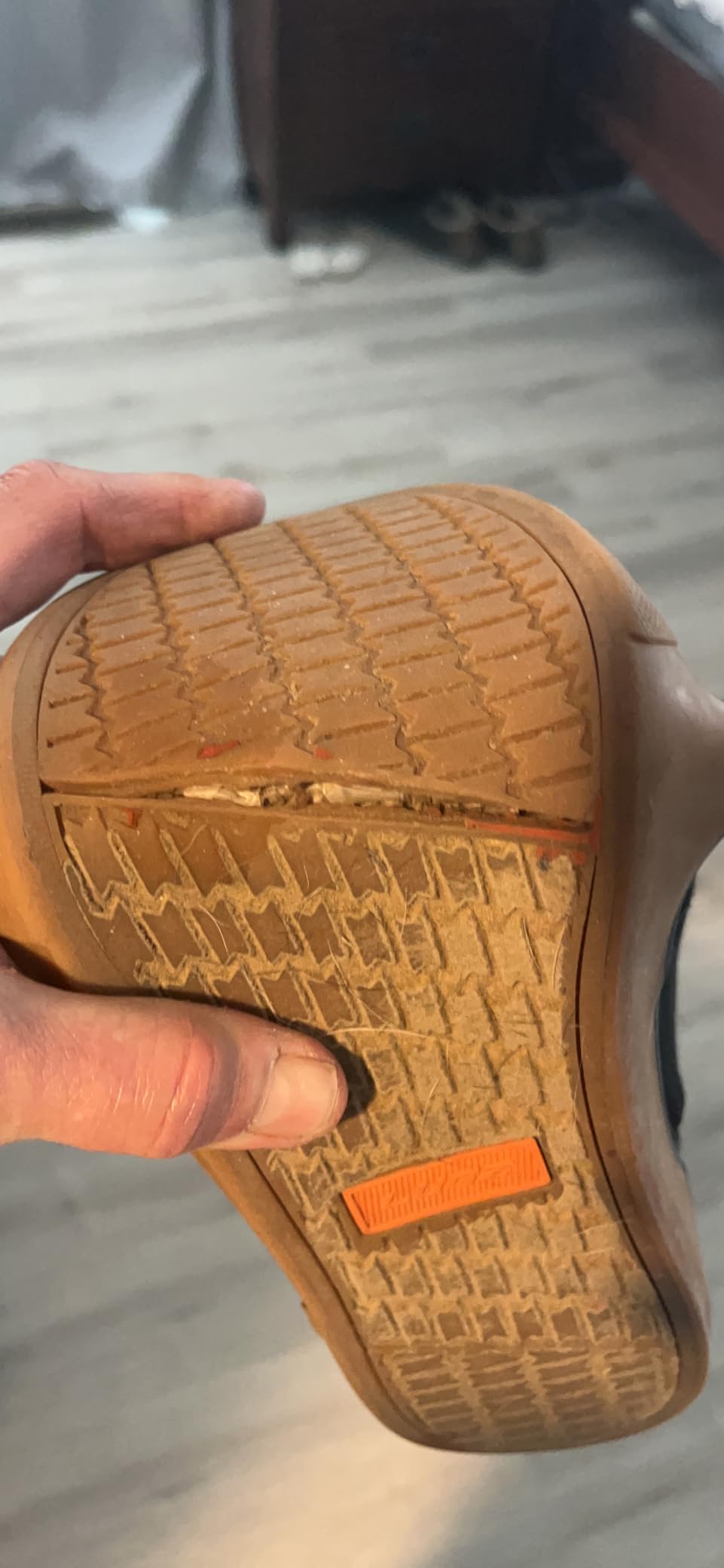
Can you prevent it? Not really. Using them less often extends the timeline — light wear (once a week) might stretch you to 6+ months. But the failure mechanism is built into the design. Being gentle with them just delays the inevitable.
A cobbler can reglue the separation for roughly $20-30, but that’s a temporary fix on a construction issue. Most people go through the repair once, then replace.
Marketing Claims vs. 8 Weeks of Reality
Lugz markets the Lear as a “fashion ready canvas sneaker” with “durable canvas and rubber outsole.” Let’s actually check that:
Canvas Upper Durability: ✅ VERIFIED. After 8 weeks of regular use, the canvas showed minimal fraying and essentially no color degradation. This part of the claim is legitimate. The canvas is the strongest component of this shoe.
Rubber Outsole Durability: ⚠️ MISLEADING. The rubber doesn’t fail — but the attachment does. Sole separation at the flex bond is a structural failure that’s distinct from rubber wear. Marketing this as a durability feature while the construction method undermines it is the kind of half-truth that frustrates buyers.
Cushioned Insole: ✅ PARTIALLY TRUE. Cushioning is present and genuine for the first 4-6 hours. But it’s basic foam that compresses with use, and there’s no arch support in the system. Adequate for casual wear; insufficient for extended standing.
Padded Collar: ✅ TRUE. The ankle padding works as advertised throughout the full testing period. This is a legitimate differentiator at the price point.
Breathable Lining: 🔲 UNTESTED (gap acknowledged). Canvas is inherently more breathable than most synthetics, but whether the lining adds meaningfully to this wasn’t isolated in testing. Summer heat performance remains an open question.
“Goes with just about everything”: ✅ TRUE. Clean aesthetic, versatile silhouette. Stylistically, this shoe punches above its price class.
Sizing & Fit Guide
The Lear fits true to size for most people. Canvas doesn’t stretch or break in width-wise — the fit you get on day one is essentially the fit you’ll have throughout the shoe’s life.
Standard width feet: Order true to size with confidence. The toe box has adequate room without being sloppy.
Slightly wider feet: True to size also works here — I have slightly wider feet and the standard width was comfortable from day one. For genuinely wide feet, Lugz does offer a wide width option (the MLEARC series includes W variants).
Narrow feet: May find the toe box slightly loose. Sizing down 0.5 is worth considering.
Between sizes: Size down 0.5 if you prefer a snug fit. Size up 0.5 only if you have high-volume feet that struggle to close laces comfortably.
A couple of practical fit notes: standard athletic socks work fine. If you’re planning to go sockless — which the canvas breathability technically supports — the lace system is adjustable enough to compensate for the slightly looser fit. The laces hold tension well throughout a wear session.
If you want to replace the standard laces (the included ones are adequate, but you might want something different in color or style), standard flat laces fit the eyelets perfectly. VSUDO flat shoe laces and Handshop oval athletic shoelaces are good options for customizing the look.
The Value Math — What You’re Actually Paying Per Wear
At $25, this looks like the obvious choice against a $65 Vans or $60 Converse. But the real number to track is cost per wear, and that changes the math considerably.
| Wear Frequency | Estimated Lifespan | Total Sessions | Cost Per Wear | Annual Cost |
|---|---|---|---|---|
| 1x/week (light) | 6+ months | 26-30 sessions | ~$0.85/wear | ~$50-65/yr |
| 2-3x/week (moderate) | 3-4 months | 15-18 sessions | ~$1.50/wear | ~$75-100/yr |
| 4-5x/week (heavy) | 2-3 months | 8-12 sessions | ~$2.50/wear | ~$100-150/yr |
| Daily | 2 months | ~50-60 sessions | ~$0.45/wear | ~$150-200/yr |
Compare that to a $65 Vans Authentic at 12-18 months of regular wear — you’re looking at roughly $0.10-0.15/wear and $43-65/year. The math firmly favors Vans for anyone wearing canvas sneakers more than twice a week.
Where Lugz makes financial sense is specific: occasional wearers who touch these 1-2x/week, growing teenagers who’ll outgrow shoes in 4-6 months anyway, people needing a short-term solution while they save up for a better pair, or anyone who wants to try the canvas look before committing to a premium brand.
For everything else, the upfront savings evaporate quickly. And there are solid alternatives at modest price bumps — the Adidas Daily 3.0 and Adidas Advantage 2.0 offer significantly better construction longevity at $45-55. If you want to stay in the canvas sneaker lane, Hello Basics Canvas Sneakers and the Hash Bubbie Slip-On Canvas are worth comparing at similar price points.
Final Verdict
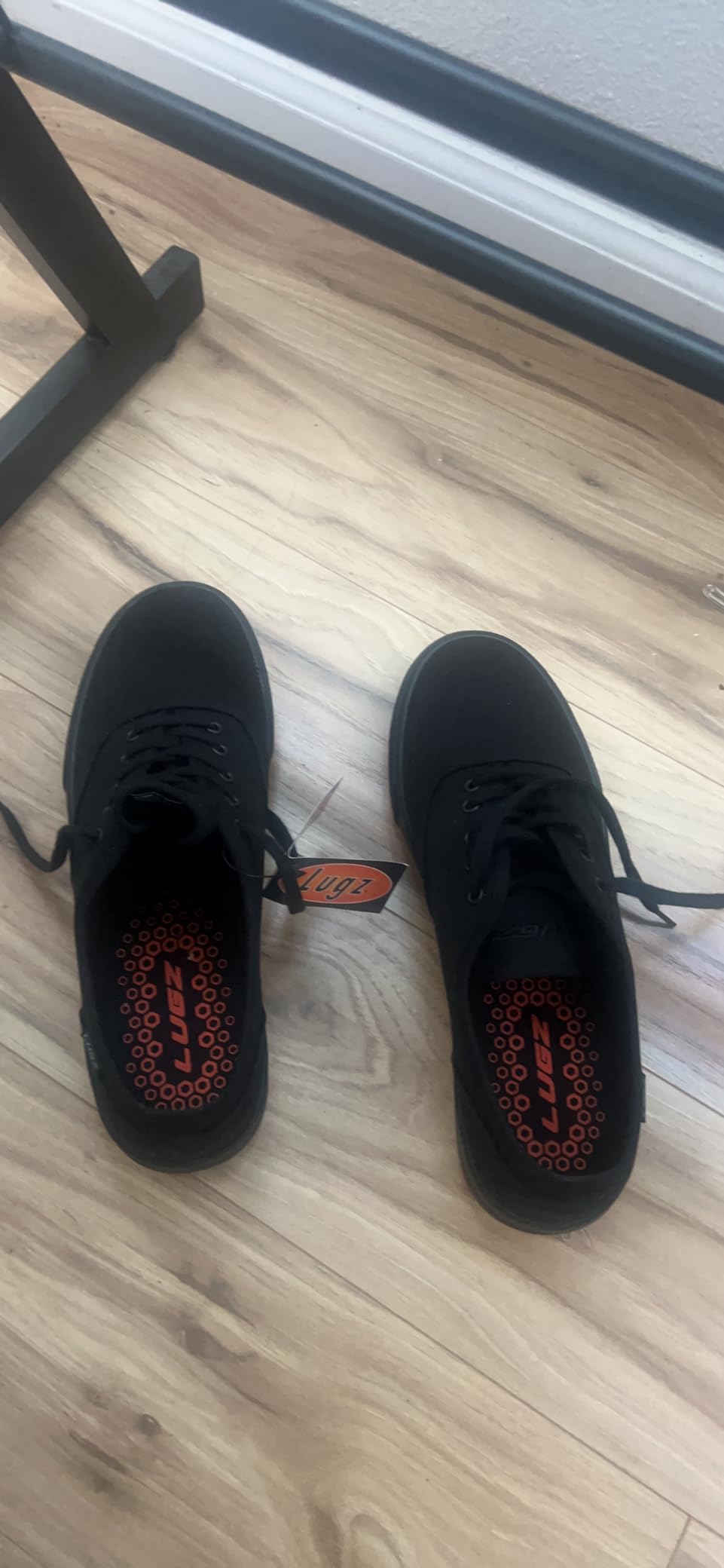
The Lugz Men’s Lear is a shoe with genuinely good qualities buried under one consistent, predictable failure. The canvas holds up. The padded collar works. The style is clean and versatile. Out of the box, these feel like a real win for $25.
But the sole separation problem isn’t random bad luck — it’s a pattern confirmed across thousands of buyers. At 3-4x/week wear, you have roughly 6-8 weeks before the flex-point bond starts failing. That’s not enough lifespan to call this good value for most people.
| Strengths | Weaknesses |
|---|---|
| Canvas upper holds up well through lifespan | Sole bond fails at flex point within 2-6 months |
| Padded collar genuinely prevents ankle rubbing | Minimal arch support — ceiling at 6-8 hours |
| Comfortable out-of-box, no break-in | Annual cost rivals premium options for regular wearers |
| Versatile clean aesthetic | Water infiltration after sole separation begins |
| Excellent $25 price and two laces included | Construction issue can’t be prevented through careful use |
| Wide width option available | Insole compresses faster than expected (week 4) |
Who should buy these: Occasional wearers (1-2x/week max), growing teenagers likely to outgrow in 3-6 months, people needing a short-term style solution, or anyone testing canvas sneakers before investing in a premium pair.
Who should skip these: Daily or near-daily wearers, anyone needing reliable arch support, people who need rain-worthy footwear, workers who log 6+ hours on their feet, and anyone expecting shoes to last 12+ months.
If you buy these with accurate expectations — a 3-6 month casual rotation shoe at the absolute bottom of the price ladder — they’ll deliver. If you expect anything more, the disappointment is already baked in.
Better options if you want durability: Vans Authentic (~$65, 12-18 months) or Converse Chuck Taylor (~$60, 12-18 months) for canvas specifically. For something different but around the same price, Hello Basic Classic Low Top Slip-On is worth a look, and Lugz also makes the Lugz Clipper for women in the same brand family.
Frequently Asked Questions
Do Lugz Lear sneakers run true to size?
Generally yes. Most wearers report accurate sizing, though a small percentage note they run slightly large. If you prefer a snug fit or are between sizes, size down half a step. Canvas material doesn’t stretch with wear, so however the shoe fits on day one is how it’ll fit at week eight. For slightly wider feet, standard width works fine. Genuinely wide feet should look at the wide width version.
How long do these shoes typically last?
Honest answer: 2-6 months depending on wear frequency. At 3-4x/week (how I tested), the sole bond fails around week 6-8. At once a week, you can stretch closer to 6 months. The canvas upper itself holds up well past the point of sole failure — it’s the upper-to-sole attachment that determines the shoe’s end-of-life date.
Are they comfortable for all-day wear?
For mostly-seated office work, yes — the initial cushioning handles light activity across long days. For standing or walking-heavy situations, the 6-8 hour mark is where support limitations become noticeable. The insole is basic foam without arch engineering. If your job requires 8+ hours on your feet, these won’t be sufficient. Adding a Sof Sole Athlete Insole or similar aftermarket insert extends the comfort window but adds to your total cost.
Can I wear these in wet weather?
Before the sole separation begins, canvas will absorb light moisture but the shoe holds together. After the sole starts separating — which typically begins around week 6-8 at regular wear — water enters through the gap at the flex point and the shoe is effectively done for wet conditions. Canvas itself is never waterproof, so these belong in dry-weather rotation regardless.
How do they compare to Vans or Converse?
Visually similar. The Lear reads as a convincing canvas sneaker at a fraction of the price, which is genuinely impressive for the first few months. But construction quality diverges significantly: Vans and Converse are built with construction methods that routinely last 12-18+ months. The Lugz sole attachment isn’t. For annual cost calculation at 3x/week wear, Vans costs less per year despite the higher upfront price.
What’s the return policy if the soles fail quickly?
Amazon’s standard window is 30 days. The sole failure pattern almost always shows up after that window closes — you’ll be 6-8 weeks in before it’s obvious. Document any early failure with photos immediately. Some buyers have reported success contacting Lugz customer service for early failures, but warranty coverage for this type of construction issue varies. Keep purchase confirmation regardless.
Are they good for teenagers?
Actually a reasonable fit for that use case specifically. The $25 price is appropriate for a shoe a growing kid will likely outgrow in 4-6 months anyway. The lifespan aligns better with growth cycles than adult rotation needs. Style plays well for casual school and weekend wear. Just set expectations clearly — these aren’t a sports shoe or a shoe for intensive use.
Can I replace the insoles for better comfort?
Yes, and it genuinely helps for comfort. The stock insole is removable, making this a compatible upgrade. A Valsole Orthotic Insole or similar aftermarket option adds real arch support the stock shoe lacks. Just understand that insole upgrades don’t address the sole separation issue — that’s a construction bond problem, not a cushioning problem. You can improve comfort; you can’t prevent the failure.
Review Scoring Summary
| Category | Score | Notes |
|---|---|---|
| Style & Appearance | 8.0/10 | Clean aesthetic, versatile for casual outfits |
| Initial Comfort | 7.5/10 | Good out-of-box, 4-6 hour sweet spot |
| Canvas Build Quality | 8.0/10 | Holds up well past sole failure point |
| Sole Construction | 3.0/10 | Bond failure at flex point week 6-8 consistent pattern |
| Arch Support | 4.0/10 | Minimal; aftermarket insoles improve this |
| Durability (overall) | 3.5/10 | 2-6 months depending on frequency |
| Value for Money | 5.5/10 | Good for 1-2x/week; poor value for daily wear |
| Overall Score | 5.5/10 | Budget short-term canvas option with known lifespan limits |
Be the first to review “Lugz Men’s Lear Fashion Sneaker”
Related products

Running Shoes

Sneaker
Running Shoes

Sneaker
Reviews
There are no reviews yet.