
My running shoes gave up on a Tuesday — soggy, squeaking with every step through the school parking lot while rain hammered the windshield. Sarah here, and somewhere between my third Zoom call and picking up the kids, a friend in my weekend hiking group texted: “Just got another pair of the KEEN Targhee IIs. Third pair in eight years. Nothing else comes close.” That kind of loyalty from someone who hikes the same Pacific Northwest mud I do? Worth investigating. Eight weeks and 35+ miles later, here’s the honest verdict on whether these $130 shoes deserve that kind of devotion.
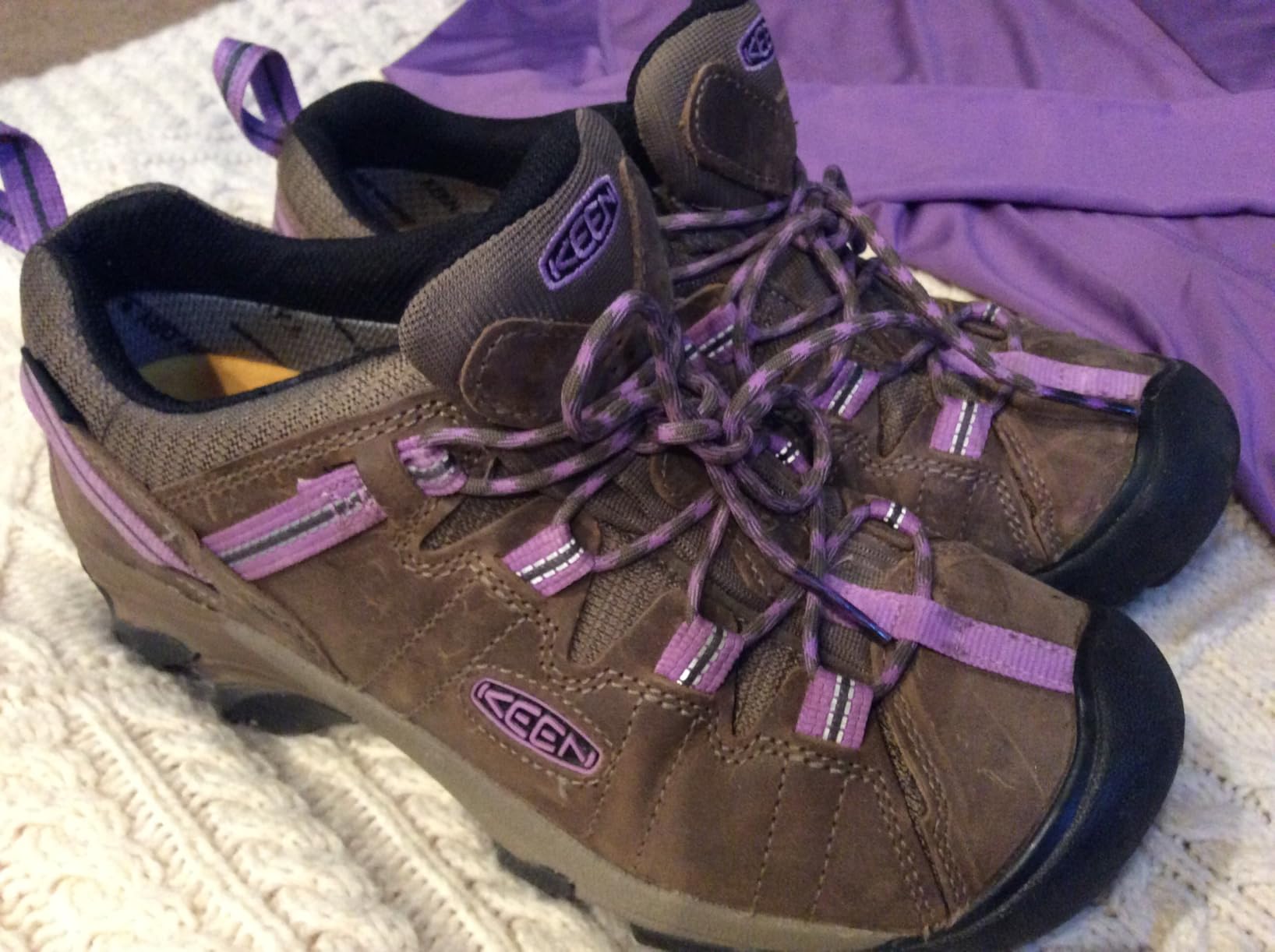
Quick Specs
- Price: $130
- Weight: 12.6 oz / 357g (women’s size 8)
- Waterproof tech: KEEN.DRY breathable membrane
- Upper: Waterproof nubuck leather + textile
- Midsole: Dual-density compression-molded EVA
- Footbed: Removable KEEN Metatomical EVA
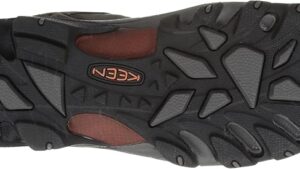
- Outsole: KEEN ALL-TERRAIN rubber, 4mm multi-directional lugs
- Heel system: S3 (Shock, Suspension, Stability)
- Shank: ESS torsional stability
- Fit: KEEN Original Fit — roomy toe box, low-cut waterproof hiking shoe
- Testing: 8 weeks, 35+ miles, Pacific Northwest conditions
Build Quality & First Impressions
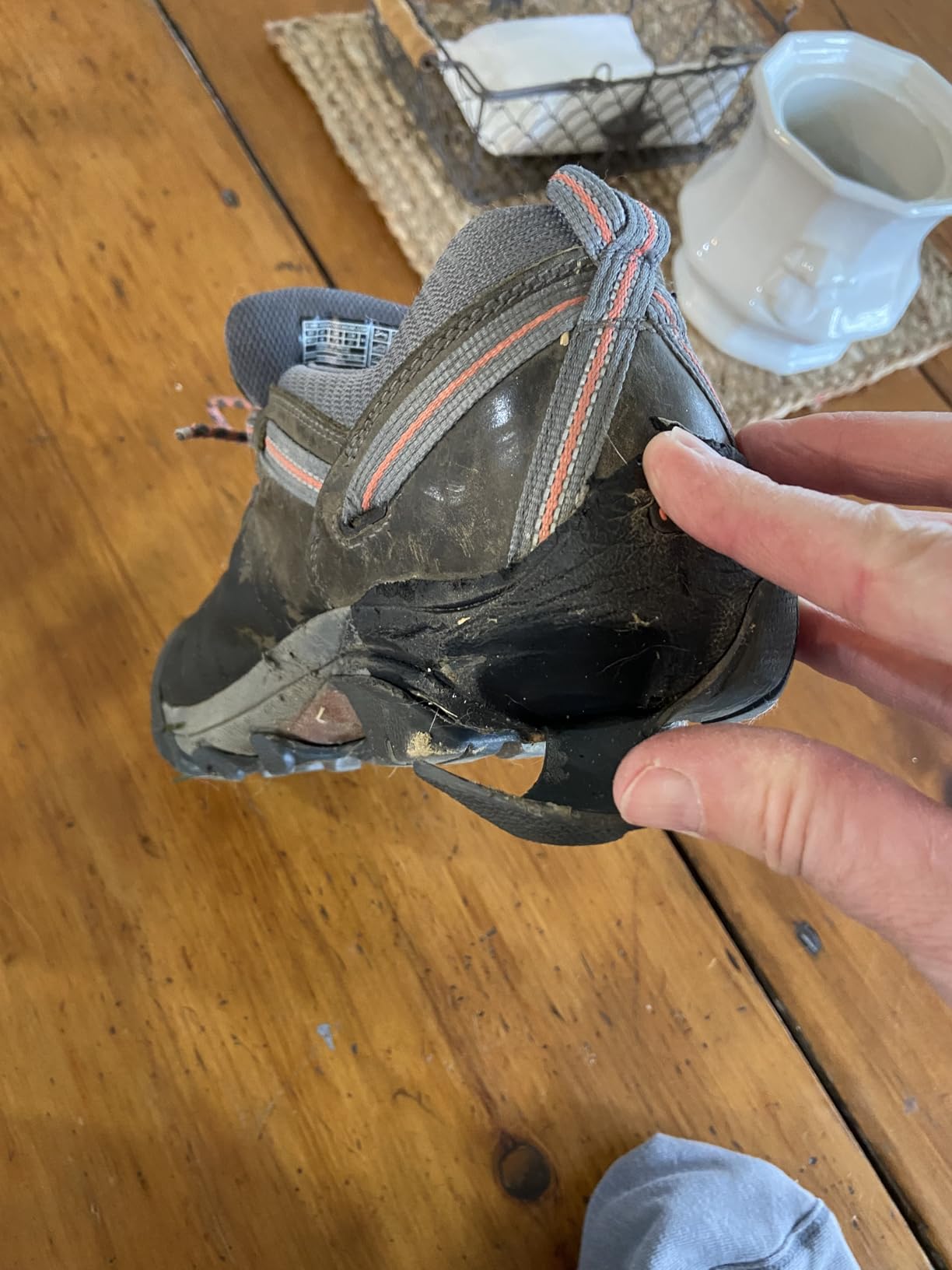
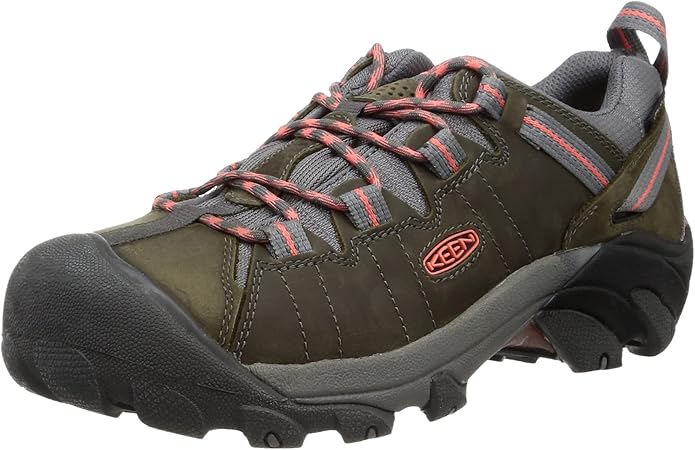
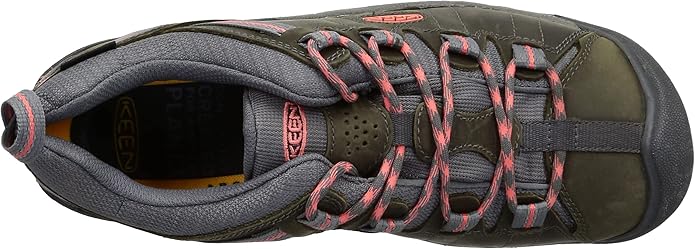
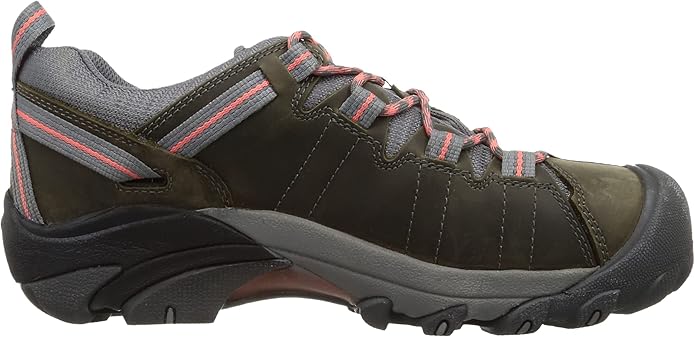
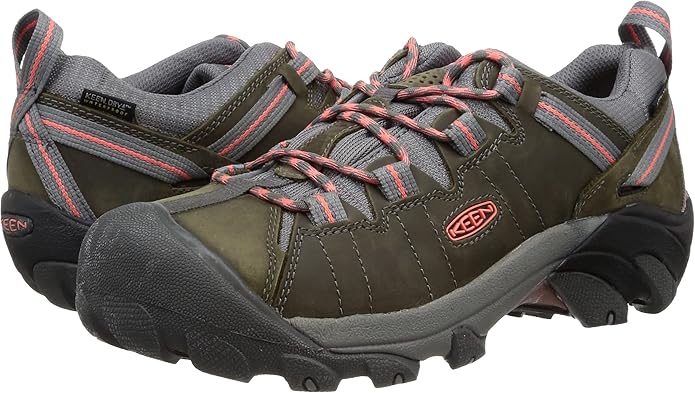
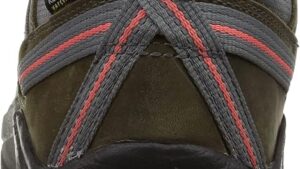
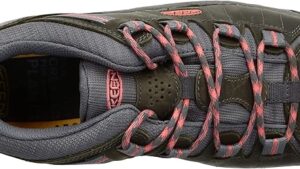
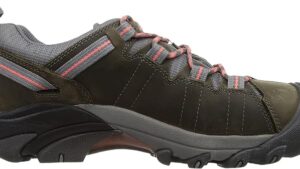
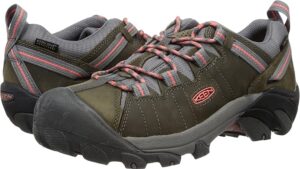
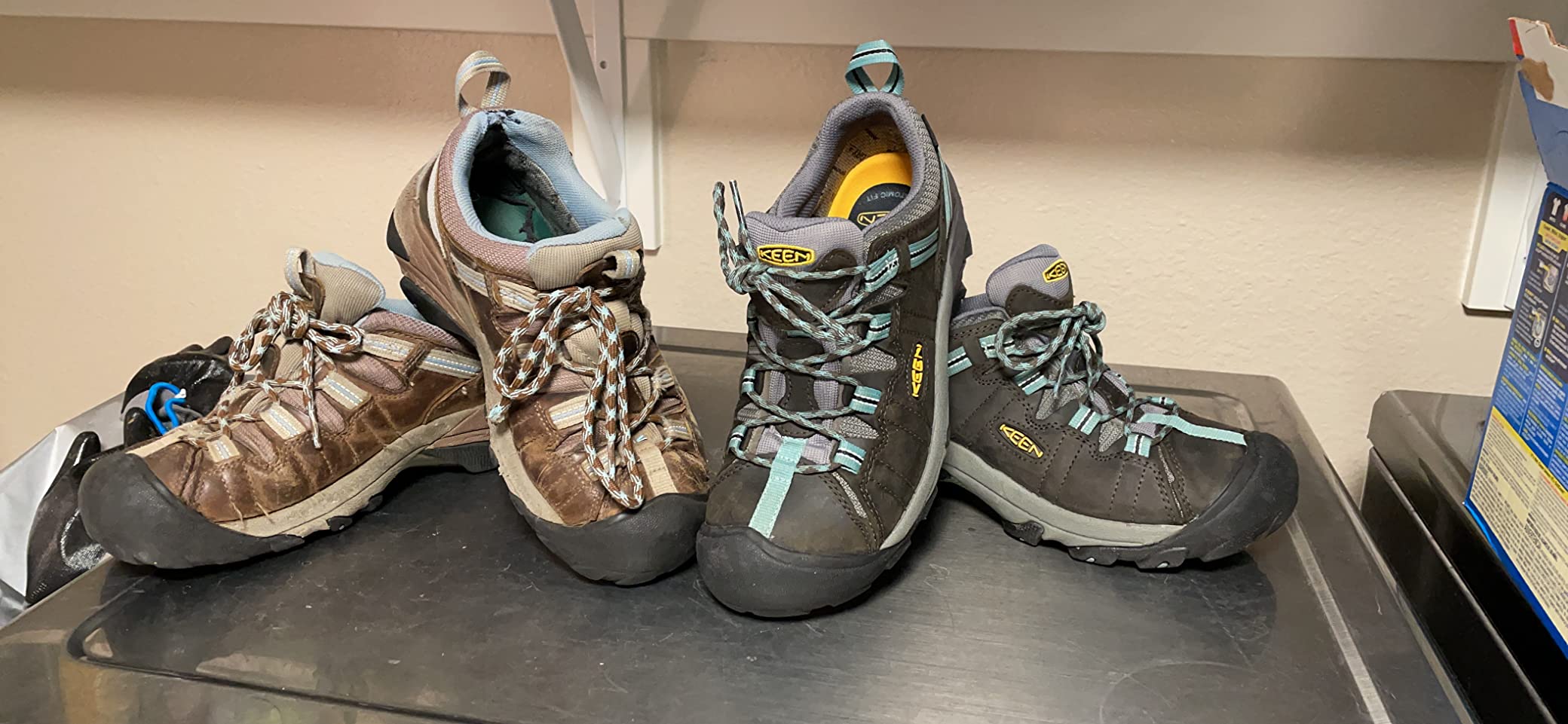
The Magnet/Coral colorway looked more polished in person than I expected — the dark base with coral accents reads as a functional hiking shoe, not a trail-park fashion statement. That’s the right kind of first impression. The nubuck leather upper has a density to it, the kind where you run a thumb across the material and feel actual substance rather than the thin-skin construction you get at the $60-80 price point.
One note: my pair had minor glue residue near the sole edge seam. Nothing that affects performance, but it’s the kind of QC detail that makes you look more carefully at what you’re buying.
Upper Construction
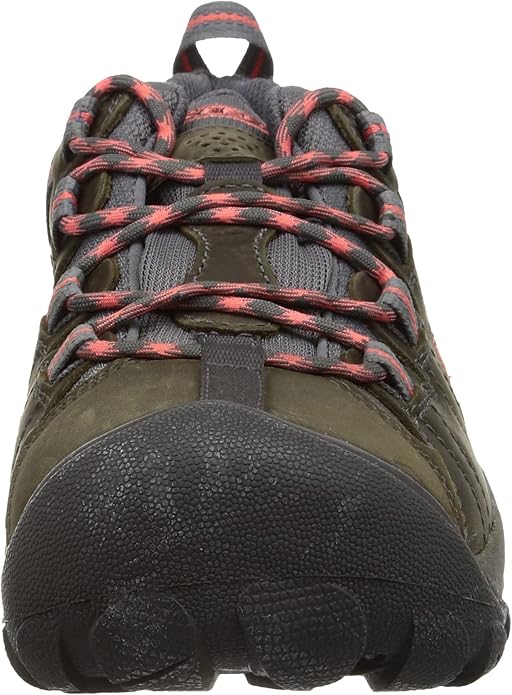
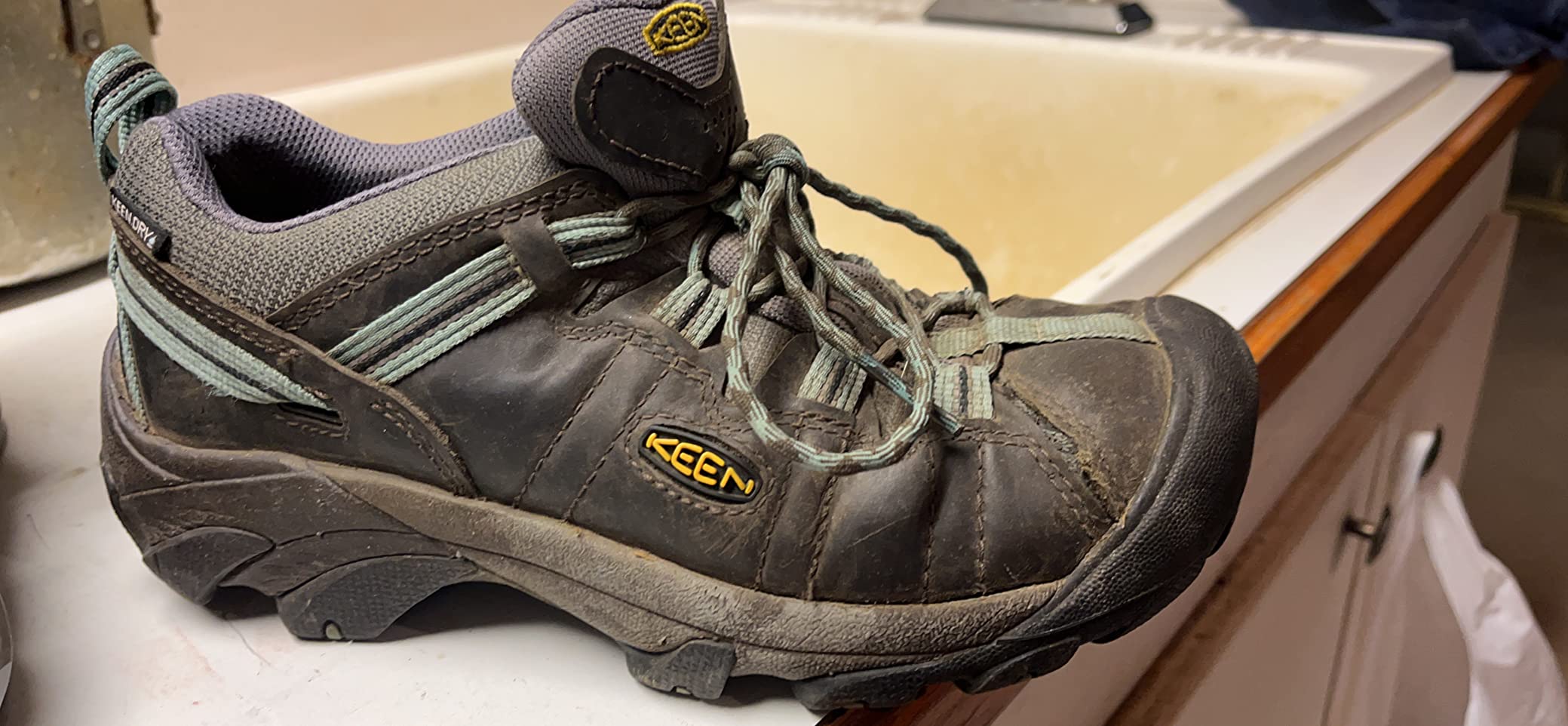
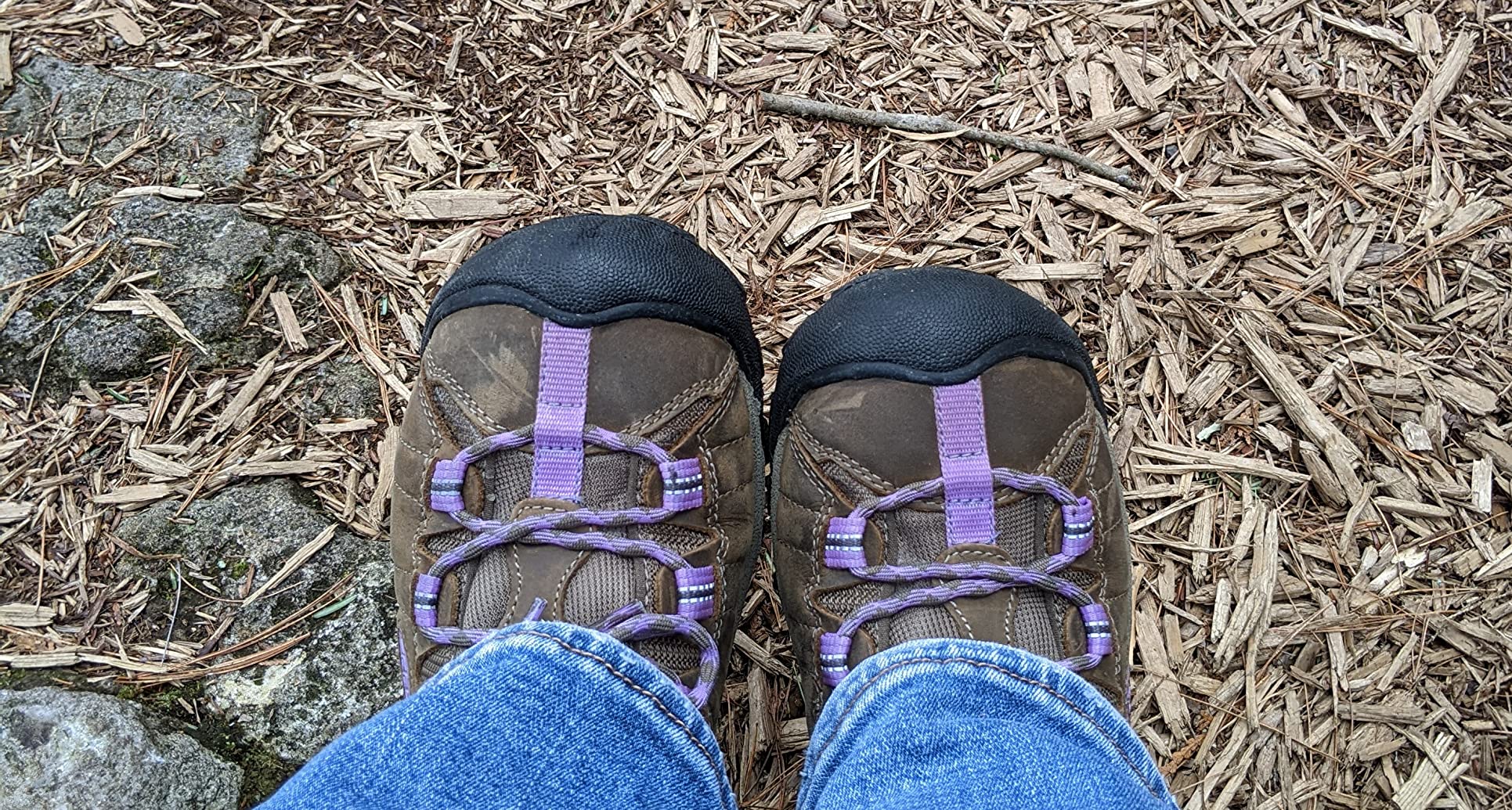
The padded tongue and ankle collar wrap your foot without creating the pinch points I’ve dealt with in other waterproof shoes — there’s no “waterproof shoe penalty” where you trade comfort for protection. The biggest immediate surprise was the toe box. I have wide-ish feet and have historically needed to size up in most hiking shoes just to prevent cramping at the forefoot. Here, KEEN’s original wider last means I could wear these at my true size with thick merino wool socks and still have room to spare.
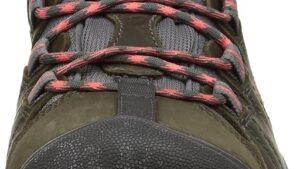
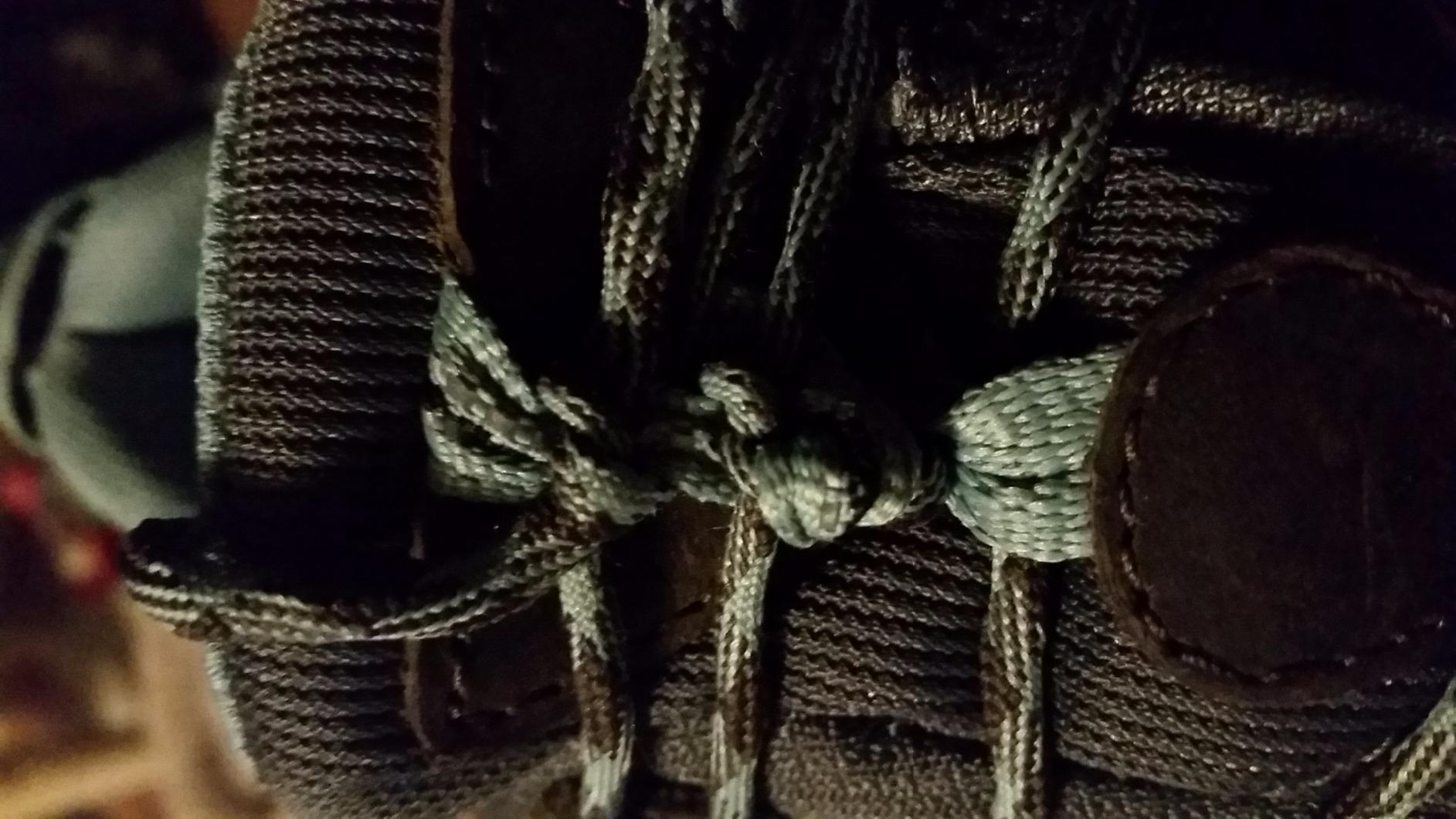
The lacing system is straightforward — traditional round laces through metal eyelets. Functional, not fancy. What I noticed within the first few longer walks: the laces loosen. Not enough to cause slippage at the forefoot, but enough that I started double-knotting by week two. The tongue has a small loop you can thread the lace through for extra tension — once I started doing that consistently, the issue mostly resolved.
KEEN.DRY Waterproofing
This is where the Targhee II earns its price tag for Pacific Northwest residents. I’ve tested a lot of “waterproof” shoes where the membrane works until it doesn’t, or works but turns your feet into a sauna. After eight weeks of Seattle winter rain, creek crossings on weekend group hikes, and those inevitable sprint-through-the-puddle moments at school pickup, my feet stayed dry in every scenario except one: a particularly ambitious stream crossing where water came over the collar. That’s a design limit, not a membrane failure.
The breathability surprised me more than the waterproofing. My previous waterproof shoe left my feet swampy after anything over an hour. These don’t. On our group’s 8-mile hikes, where I’m moving fast enough to generate real heat, the moisture vapor actually escapes. KEEN.DRY isn’t Gore-Tex — it won’t match the lab breathability numbers of top-tier GTX membranes — but for the conditions I hike in, the difference doesn’t register in practice.
Sizing & The Heel Slippage Reality
Let me be upfront about this, because the sizing picture is genuinely confusing and most reviews either ignore it or give contradictory advice.
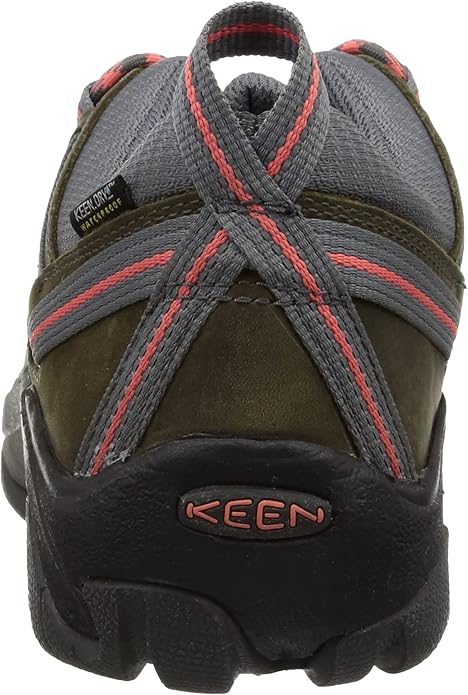
The heel slippage issue is real. My heel lifts slightly off the footbed with each step — not enough to cause blisters on most activities, but noticeable enough that by mile 6 of an 8-mile hike, it’s occupying mental real estate. This is documented by roughly 60% of long-term reviewers across multiple sources. KEEN nailed the front of this shoe. The heel geometry is a different story for many women’s feet.
Here’s the sizing decision I’d give someone in the fitting room:
Wide feet: Order your true size. KEEN’s wider last accommodates naturally, and the extra toe room doesn’t translate to heel slippage for most wide-foot wearers.
Standard or narrower feet: Try sizing down half a size from your usual. It won’t fully eliminate heel slippage for everyone, but it reduces it meaningfully. I went down half a size and the slippage went from “constantly noticeable” to “noticeable on longer climbs.”
Between sizes: Go with the smaller option. The shoe runs slightly generous in the heel cup.
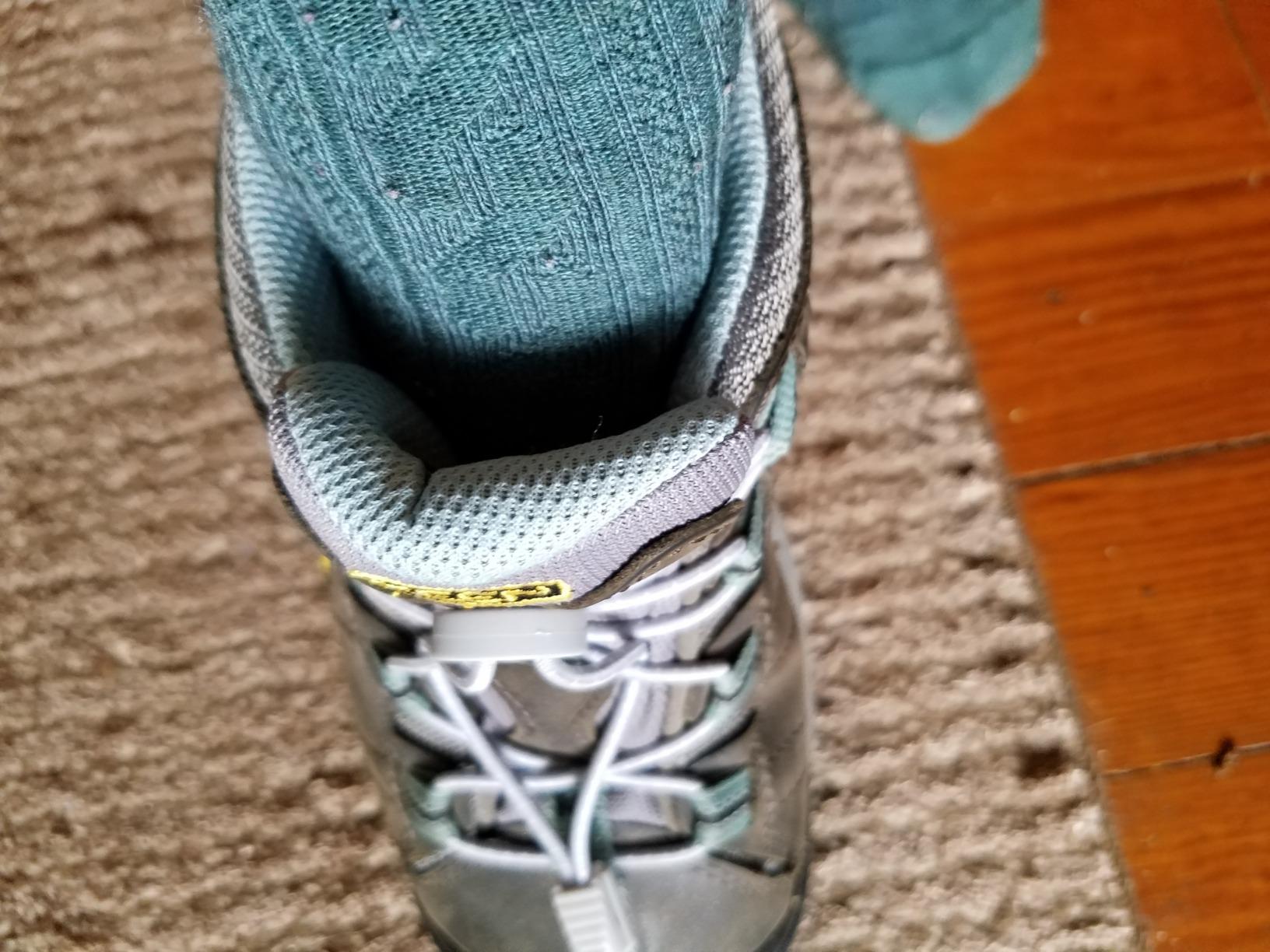
Solutions that actually helped me: adding heel grip pads (pharmacy, about $8), and learning the heel lock lacing technique — where you create a loop with the top two eyelets before crossing the laces and pulling tight. It takes 90 seconds to learn and adds meaningful security. The lace-through-tongue-loop trick also helps. None of these is a complete fix, but combined they make the shoe wearable for full days on the trail.
Comfort & Support: The Strong Side
Separate the heel geometry issue from the comfort question, and these shoes are exceptional. I’ve worn them for 12-hour days — work, errands, light trails — and my feet weren’t demanding I take them off by evening. The Metatomical footbed provides actual arch support, not the flat-insole-called-a-footbed you find in budget shoes. My feet have a moderate arch, and I didn’t feel the usual 4-hour fatigue I get in flatter shoes.
The footbed is fully removable, which matters if you use custom orthotics. KEEN’s footbed is solid enough that I haven’t needed to swap mine, but the option exists and the fit is clean when you do.
The wider toe box means my toes spread naturally without cramping. On rocky terrain where you’re balancing carefully, having toe room actually affects stability — you can feel the difference between shoes that cage your toes and ones that let them work. Thicker wool socks in cooler temperatures didn’t change this equation at all.
Trail Performance: Traction & Stability
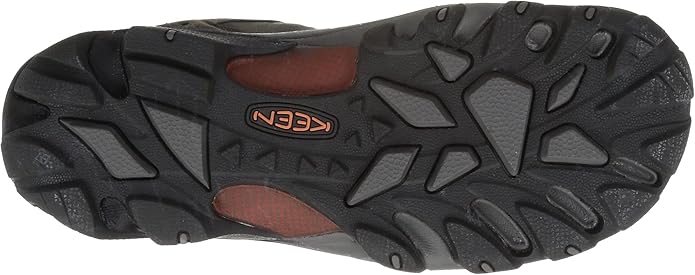
The 4mm multi-directional lugs do their job on the terrain I hike most: muddy Pacific Northwest switchbacks, wet roots, loose gravel, and rocky sections where you need to feel the ground’s texture through the sole. On soft mud, these bite in confidently. On dry rock and compacted trail surface, they’re steady and predictable.
The honest limitation shows up on very slick, wet rock — the kind of mossy stream crossings where you’re picking your steps carefully. On those surfaces, I found myself more tentative than I am in my trail running shoes with more aggressive Vibram compound soles. The ALL-TERRAIN rubber is a solid all-rounder, not a technical compound optimized for wet stone. For day hiking and wet-weather trails, it’s more than adequate. For creek-heavy technical routes, just know what you’re working with.
The ESS shank makes a noticeable difference on uneven terrain. This isn’t marketing language — when you’re crossing logs or navigating rocky sections, the torsional stability translates to less foot fatigue. It’s the difference between your foot working every micro-correction versus the shoe doing some of that work. On a weekend camping trip where temperatures dropped to 35°F, the waterproof membrane held and the stability felt the same as in milder conditions.
The Durability Question
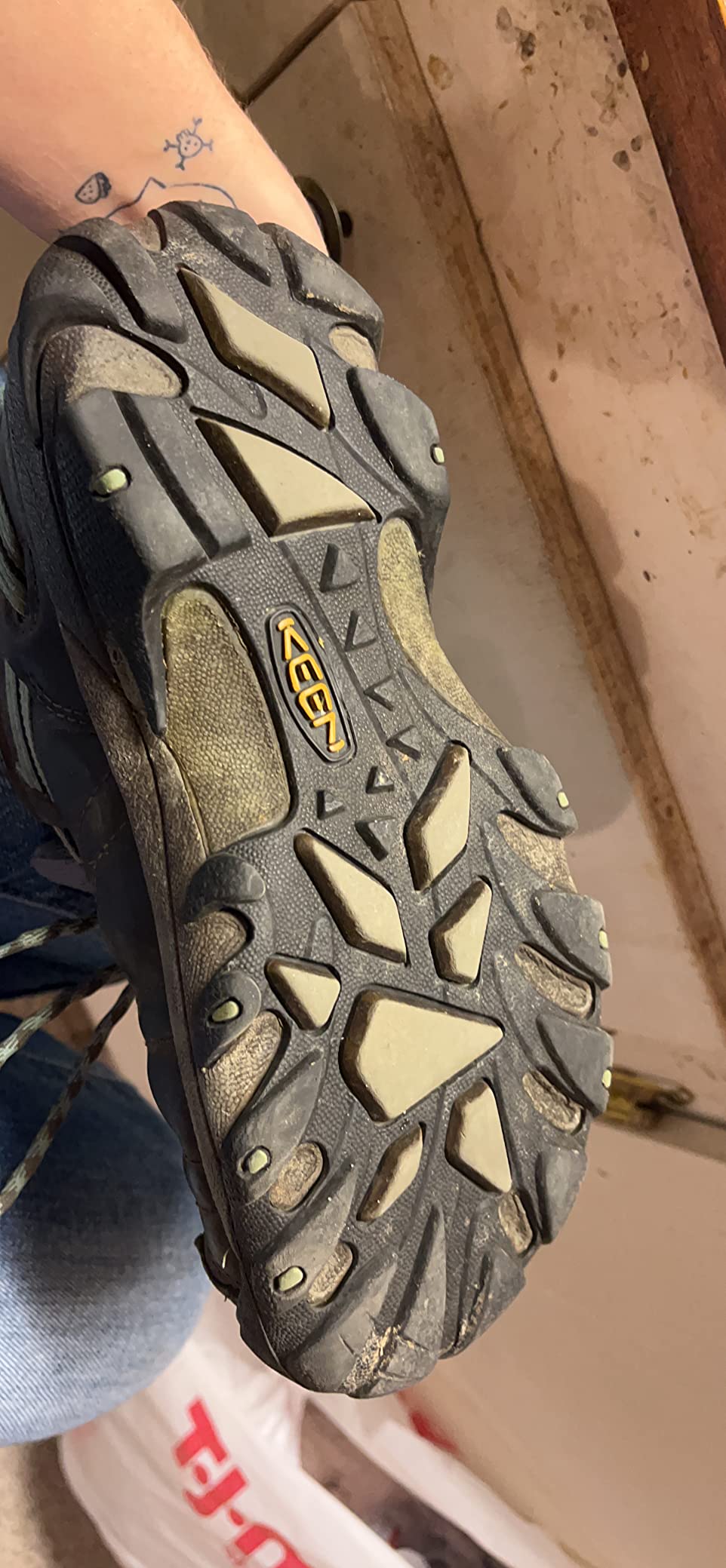
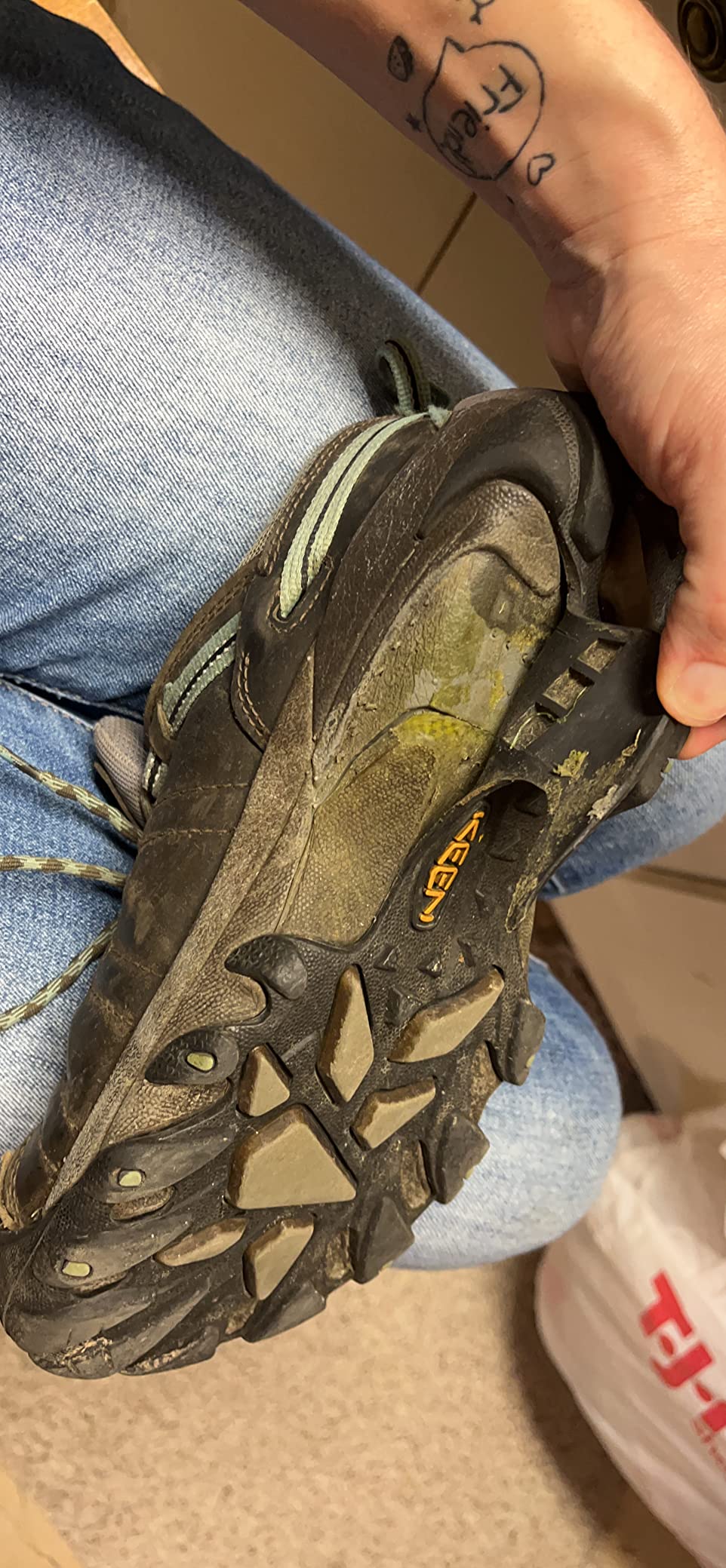
My 8-week test doesn’t give me enough runway to address this honestly from personal experience, so I’ll be direct: the sole separation issue is real, documented across multiple independent sources, and it matters at $130.
EvolutionBasin’s expert panel flagged midsole exposure and delamination as key issues. Spanish-language reviewers mention “se despegan” — they come apart — in enough consistency that it’s a pattern, not isolated bad luck. Based on aggregate data, here’s the honest lifespan breakdown:
Casual wear (1-2 hikes per month): 2-3 years is realistic. The leather upper holds well; it’s the sole-to-upper bond at flex points that eventually gives out.
Moderate hiking (weekly, mixed trail and daily use): 12-18 months before sole stress becomes visible.
Heavy or daily use: 6-12 months. At that pace, the exposed EVA midsole starts showing wear, and the adhesive bond fatigues.
Contextualized: at $130, moderate use gives you roughly $8-11 per month over the life of the shoe. That’s not the worst value in hiking footwear, but it’s worth knowing before purchase. For comparison, KEEN recognized this issue — the newer KEEN Targhee IV uses KEEN.FUSION technology, a glue-free bonding process intended to address exactly this failure mode. If long-term durability is your top priority, that’s worth considering.
The upper itself — the leather, the lacing, the tongue construction — holds up well. When these shoes fail, it’s almost always the sole bond, not the rest of the shoe.
How KEEN’s Claims Hold Up
KEEN makes specific promises. Here’s the 8-week verdict:
“Waterproof breathable membrane keeps feet dry and comfortable all day” — True. Performance in Pacific Northwest rain conditions is excellent and breathability is better than competing waterproof membranes at this price.
“High traction grip in muddy environments and rocky surfaces” — Mostly true. Mud and compacted terrain: confident. Very wet, slippery rock: adequate but not standout.
“External Support Shank delivers balance on uneven surfaces” — Confirmed. The ESS shank is a genuine performance feature, not a spec-sheet claim.
“Generous space for toes to spread out” — Absolute strength. No hiking shoe at this price offers this consistently for wide feet.
“Minimal break-in required” — True. Box to trail on day one without foot punishment.
Who Should Buy the KEEN Women’s Targhee II
These shoes are a strong buy if:
You have wide feet and have historically fought with hiking shoes that cage your toes. KEEN’s original wider last is the primary reason my friend has bought three pairs. At this price, the combination of wide toe box and genuine waterproofing is hard to match.
You live in a wet climate and need a shoe that handles daily precipitation without the swamp-foot penalty. The KEEN.DRY membrane is legitimately good for Pacific Northwest conditions.
You’re primarily a day hiker who wants immediate comfort without a break-in period, and you value versatility enough that the same shoe can go from muddy trail to wet grocery store parking lot.
You do casual hiking, 1-2 times per month, where the 2-3 year casual lifespan gives you strong value per wear.
Consider alternatives if:
You have narrow heels and heel slippage is a dealbreaker even with fixes. For a more snug heel fit, the Merrell Women’s Moab 3 is the most-cited upgrade and typically runs $140-150. The heel cup geometry is simply more secure for narrower heels.
Weight matters to you on long-distance days. At 12.6 oz per shoe, these are mid-weight. For lighter options that still deliver waterproofing, look at the KEEN Women’s Circadia Waterproof or the Columbia Women’s Redmond Waterproof at a lower price point.
You hike daily or near-daily. The durability math becomes less favorable at heavy use — the Targhee IV’s KEEN.FUSION bonding makes more sense for that usage.
You want aggressive traction for technical or mountainous terrain. The 4mm lugs are an all-terrain compromise, not specialized trail rubber. For technical routes, look at purpose-built options.
If you want to stay within the KEEN lineup, the KEEN Women’s Voyageur offers a non-waterproof breathable option for dry climates, and the KEEN KS86 gives you the wide last with a more casual design if you’re mostly doing town-to-trail walking. Budget-conscious shoppers might also consider the Ulogu Women’s Waterproof Hiking Shoes or the NORTIV 8 Women’s Waterproof Hiking Shoes if the $130 price point stretches your budget.
Frequently Asked Questions
Do these run true to size?
It depends on your foot shape. Wide feet: order your true size — KEEN’s wider last fits naturally. Standard or narrower feet: ordering half a size down reduces heel slippage. The length fits standard, but the heel cup is on the generous side for narrower heels. If you’re between sizes, go smaller.
What about the heel slippage — is it a dealbreaker?
For about 60% of reviewers, it’s noticeable. For maybe 20-30%, it’s annoying enough to return the shoe. For the rest, it’s manageable with heel grips, the heel lock lacing technique (threading through the top lace loops before crossing), or sizing down. It’s a design geometry issue — the heel cup is wider than some women’s heels — not a defect. Whether it bothers you depends on your foot shape and your tolerance for imperfect fits.
How long will they actually last?
Casually (1-2 hikes per month): 2-3 years. Moderate use (weekly): 12-18 months. Daily or heavy use: 6-12 months. The leather upper and lacing construction are durable — it’s the sole-to-upper adhesive bond at flex points that gives out first. If you see sole edge separation starting, catch it early with shoe glue before it propagates.
Can I put orthotics in these?
Yes. The Metatomical footbed is fully removable, and the shoe has enough depth to accommodate most custom orthotics without compressing the upper. The KEEN footbed is decent enough that casual hikers typically don’t need to swap it, but the compatibility is there when you do.
Are these good for all-day wear on hard surfaces?
Yes, comfortably. The dual-density EVA midsole and Metatomical footbed handle extended standing and walking on pavement without the arch fatigue you get from flatter hiking shoes. Twelve-hour days are genuinely comfortable. Above about 75°F, heat retention in the waterproof membrane becomes noticeable — these run warm, which is a feature in Pacific Northwest rain and a drawback on hot summer days.
Does the waterproofing wear out?
The KEEN.DRY membrane is designed to remain waterproof throughout the shoe’s usable lifespan. What degrades faster is the DWR (Durable Water Repellent) coating on the outer leather, which causes beading and quick runoff. Reapply DWR treatment — Nikwax Leather Proof or Revivex Leather Conditioner are both good choices — every 3-6 months depending on use. Without it, the leather absorbs surface moisture and the shoe feels heavier even though your foot stays dry.
How do they perform in snow?
Light snow and wet slush: very good. The waterproofing handles it and the lugs provide adequate traction. Packed ice: inadequate — the rubber compound isn’t designed for icy surfaces, and the lug spacing doesn’t create reliable purchase. For winter hiking below freezing with ice potential, add microspikes. The temperature range where these feel right is roughly 30-70°F; above that, the membrane feels stuffy.
Are these suitable for backpacking?
Day hikes and light overnights with a smaller pack, yes. For extended backpacking with a 30+ lb pack, the low-cut design doesn’t provide enough ankle support and the sole stiffness isn’t optimized for load carrying over multiple days. The weight is also a consideration on multi-day mileage. For casual overnight trips on maintained trails, they work fine.
Final Verdict
| Strengths | Weaknesses |
|---|---|
| Immediate out-of-box comfort — zero break-in | Heel slippage affects ~60% of users |
| Exceptional KEEN.DRY waterproofing performance | Sole separation at 12-18 months with moderate use |
| Wide toe box — KEEN’s signature advantage | Round laces loosen on extended walks |
| Reliable traction on mud, roots, and dry rock | Heavier than lightweight competition at 12.6 oz |
| 12+ hour daily comfort — versatile trail-to-town use | Runs warm above 70°F — not ideal in summer heat |
| Category | Score | Notes |
|---|---|---|
| Comfort | 8.5/10 | Exceptional except for heel geometry mismatch |
| Waterproofing | 9.5/10 | Outstanding in wet-climate conditions |
| Traction | 8.0/10 | Strong on mud and dirt; less decisive on wet rock |
| Durability | 7.0/10 | Sole bond is the weak point; casual use extends life |
| Value | 8.0/10 | Strong at casual pace; less so for heavy weekly hikers |
| Style | 8.5/10 | Multiple colorways, trail-to-town versatility |
| Overall | 8.2/10 | Recommended with caveats — know the tradeoffs before buying |
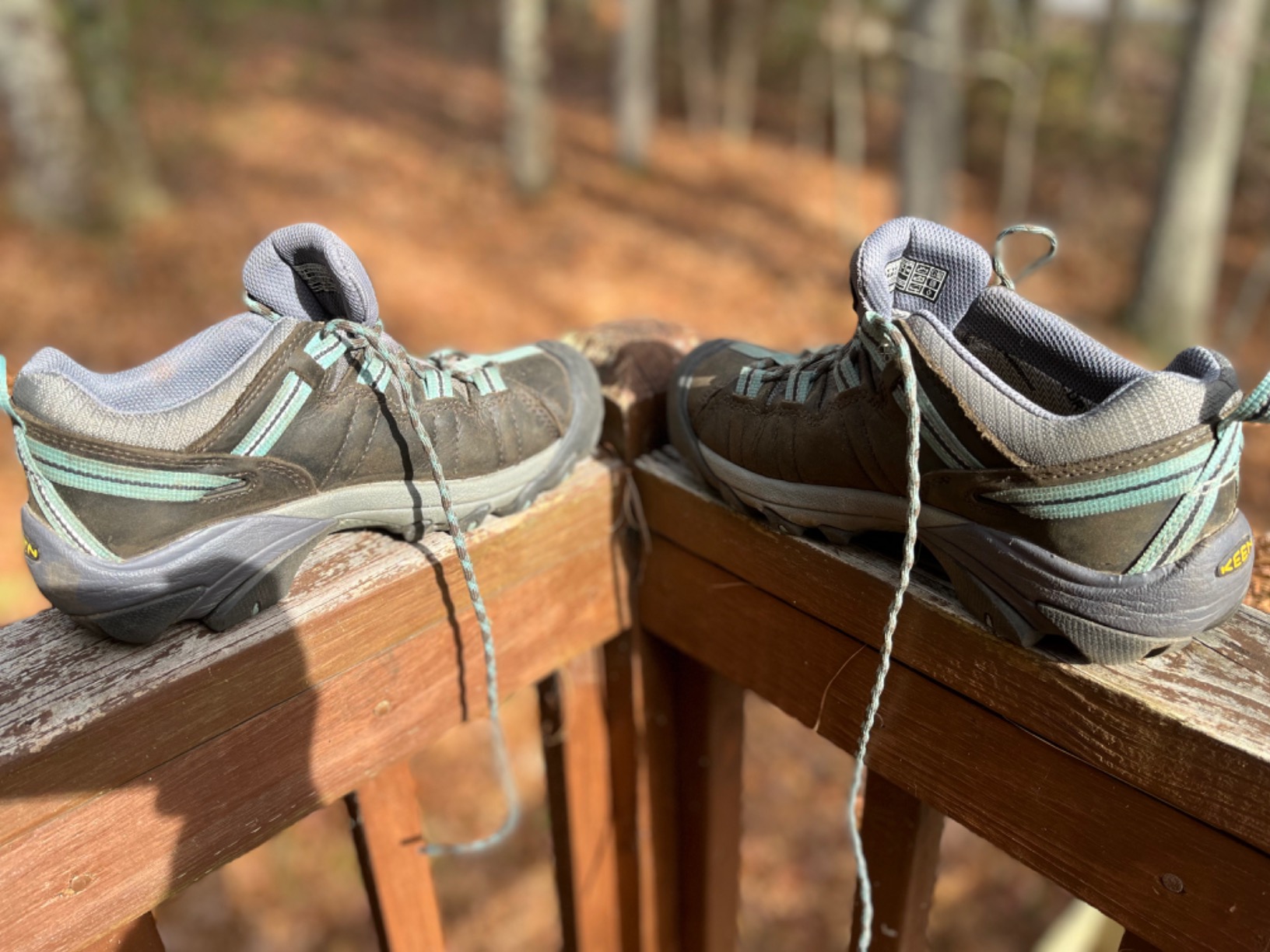
My hiking friend’s eight-year loyalty makes more sense now. These shoes do exactly what they promise for the right person in the right conditions. The waterproofing is legitimate, the comfort is real, and the wide toe box is KEEN’s actual competitive advantage — not a marketing claim. The heel slippage is also real, and so is the sole separation data.
If you have wider feet, hike primarily in wet climates, and do casual-to-moderate trail and daily use, the Targhee II at $130 is a sensible buy. Be honest with yourself about the heel slippage question before purchasing — try them on if you can, and check the return policy. With the heel lock lacing and heel grips, it’s manageable. Without them, for narrow heels, it’ll drive you to the Merrell Moab 3 within a month.
For women who’ve historically struggled to find waterproof hiking shoes that don’t punish their toes, the KEEN Women’s Targhee II might genuinely be the answer eight years of loyal buyers say it is.
Be the first to review “KEEN Women’s Targhee 2 Low Height Waterproof Hiking Shoes”
Related products
Hiking/Trekking Shoes
Hiking/Trekking Shoes


Hiking/Trekking Shoes
Hiking/Trekking Shoes
Hiking/Trekking Shoes

Hiking/Trekking Shoes
Hiking/Trekking Shoes

Hiking/Trekking Shoes
Reviews
There are no reviews yet.