
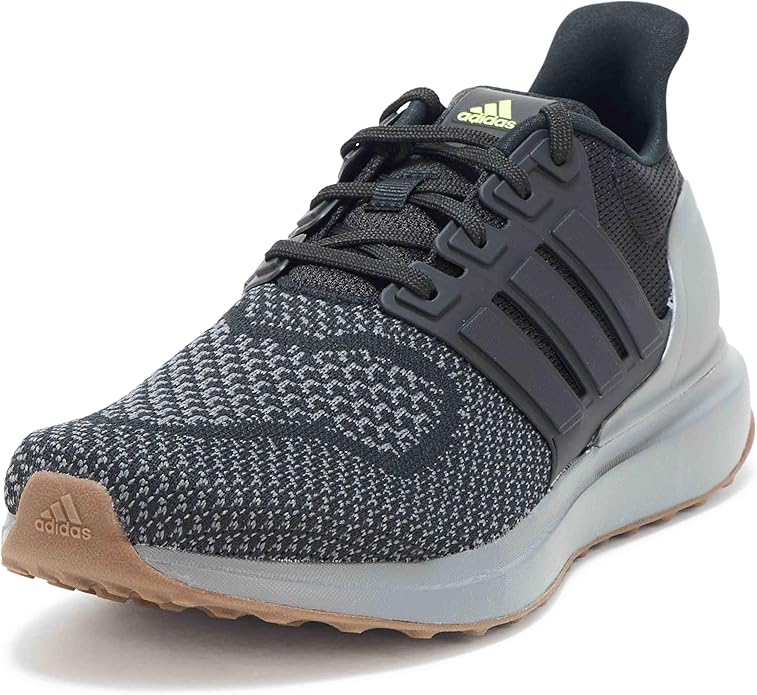
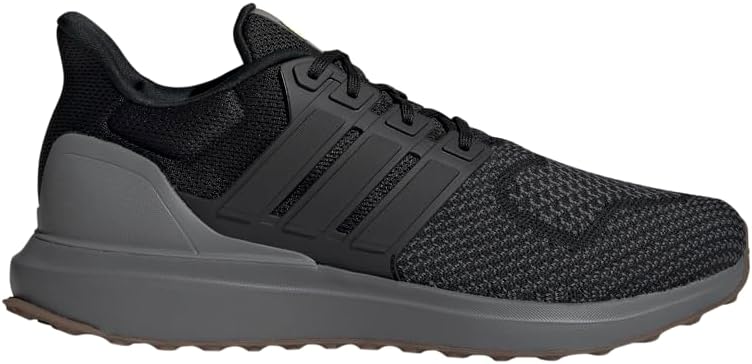
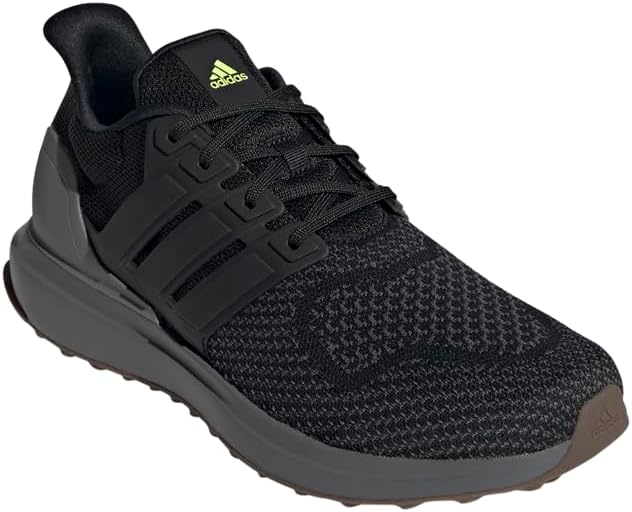
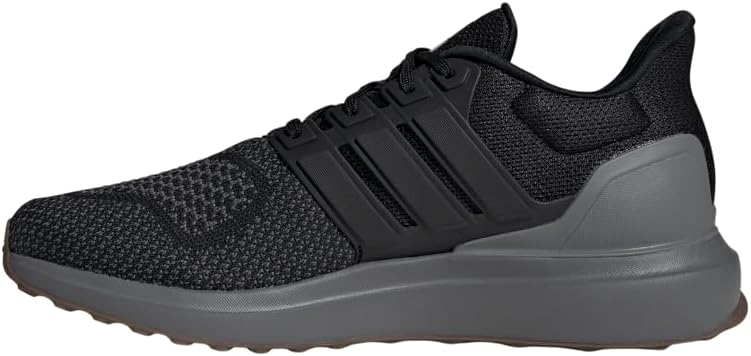
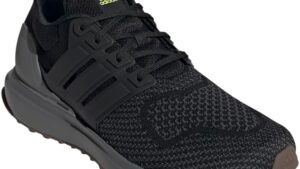
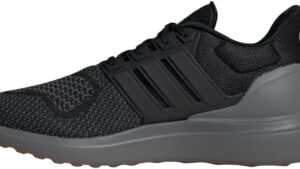
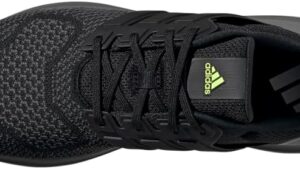
These are comfortable shoes. Too comfortable. That’s actually the problem — and six months of daily wear in Texas taught me exactly why comfort without durability is a trap worth understanding before you spend $70. I’m Mike, I’ve tested footwear professionally for over a decade, and the Adidas Men’s Ubounce DNA gave me more to think about than I expected from a budget lifestyle sneaker.
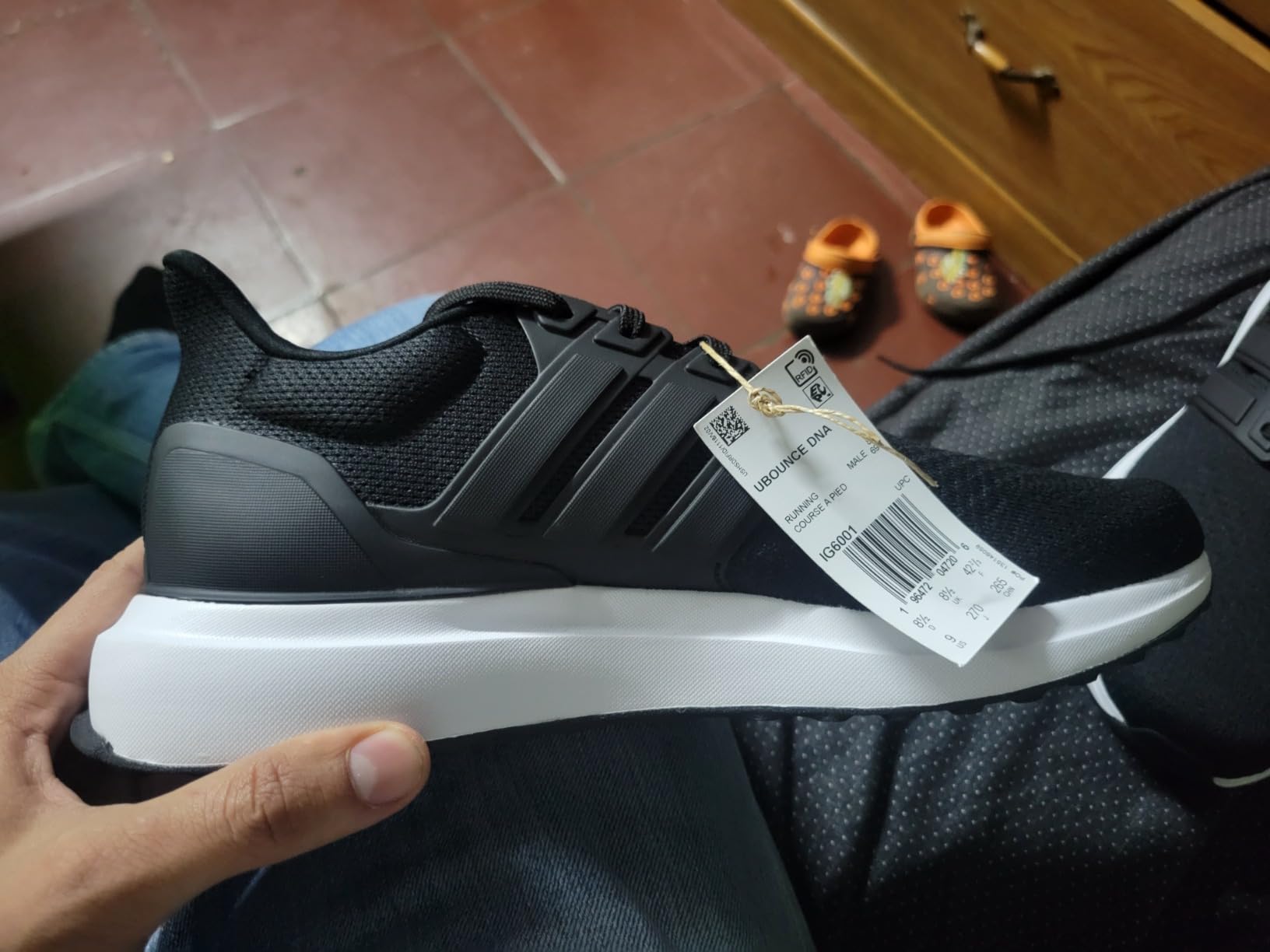
At 180 lbs and 4-5 miles of daily walking between work and personal life, I put a consistent load on every shoe I test. The Ubounce DNA lasted 150+ days in my rotation — but what I found after month 4 is something most reviews completely miss, because they simply don’t test long enough to get there.
Here’s the short version: the Bounce cushioning is real and genuinely impressive for the first three months. The shoe looks better than its price suggests. But there’s a degradation timeline that matters enormously depending on your weight, climate, and how you use it. Overall score: 7.2/10 — honest, not harsh, but not universal.
First Look and Fit — Solving the Sizing Confusion
The Ubounce DNA has a sizing reputation that’s all over the place. Some reviews call it large, others say true to size. After wearing them myself and cross-referencing with Zappos data from 753 verified purchases, here’s what’s actually happening.
The toebox is spacious. That’s the source of the confusion. The shoe doesn’t run long — it runs open, which feels “big” to people used to tighter lasts like the Stan Smith. Zappos data shows 63% found them true to size, with 100% reporting accurate width. The people who had problems mostly went down half a size and were fine.
My recommendation: order your standard Adidas size. If you have narrow feet or come from a snug-fitting shoe like the Stan Smith, consider going half a size down. For normal and wider feet, your regular size will work well.
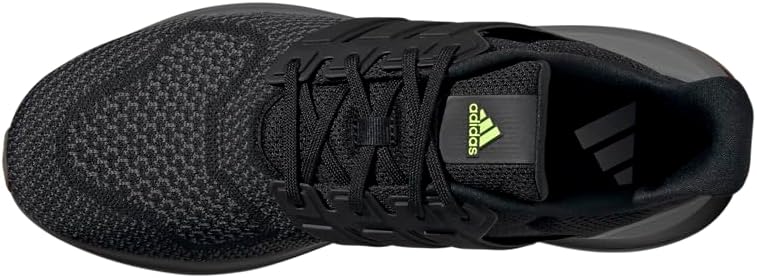
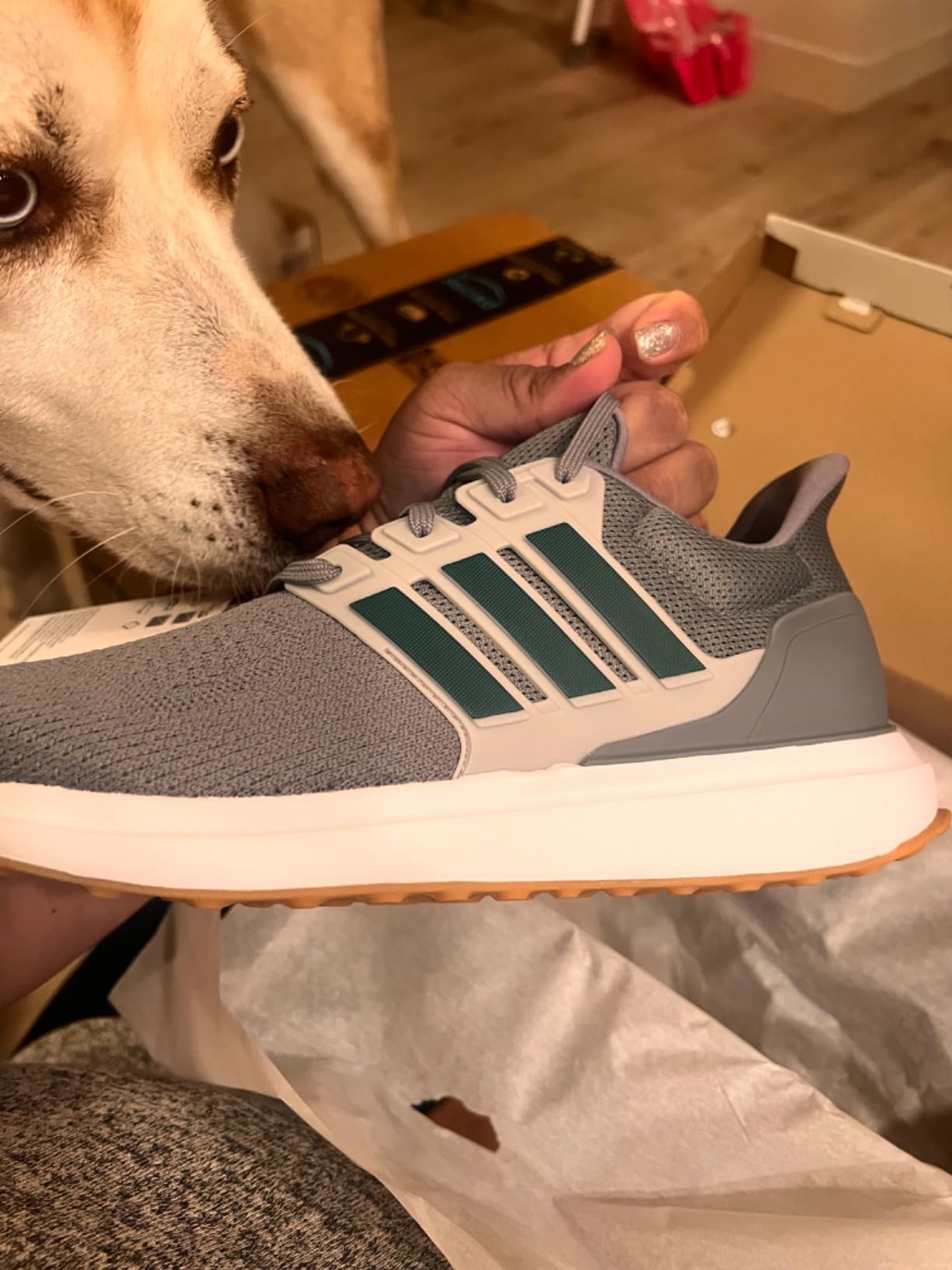
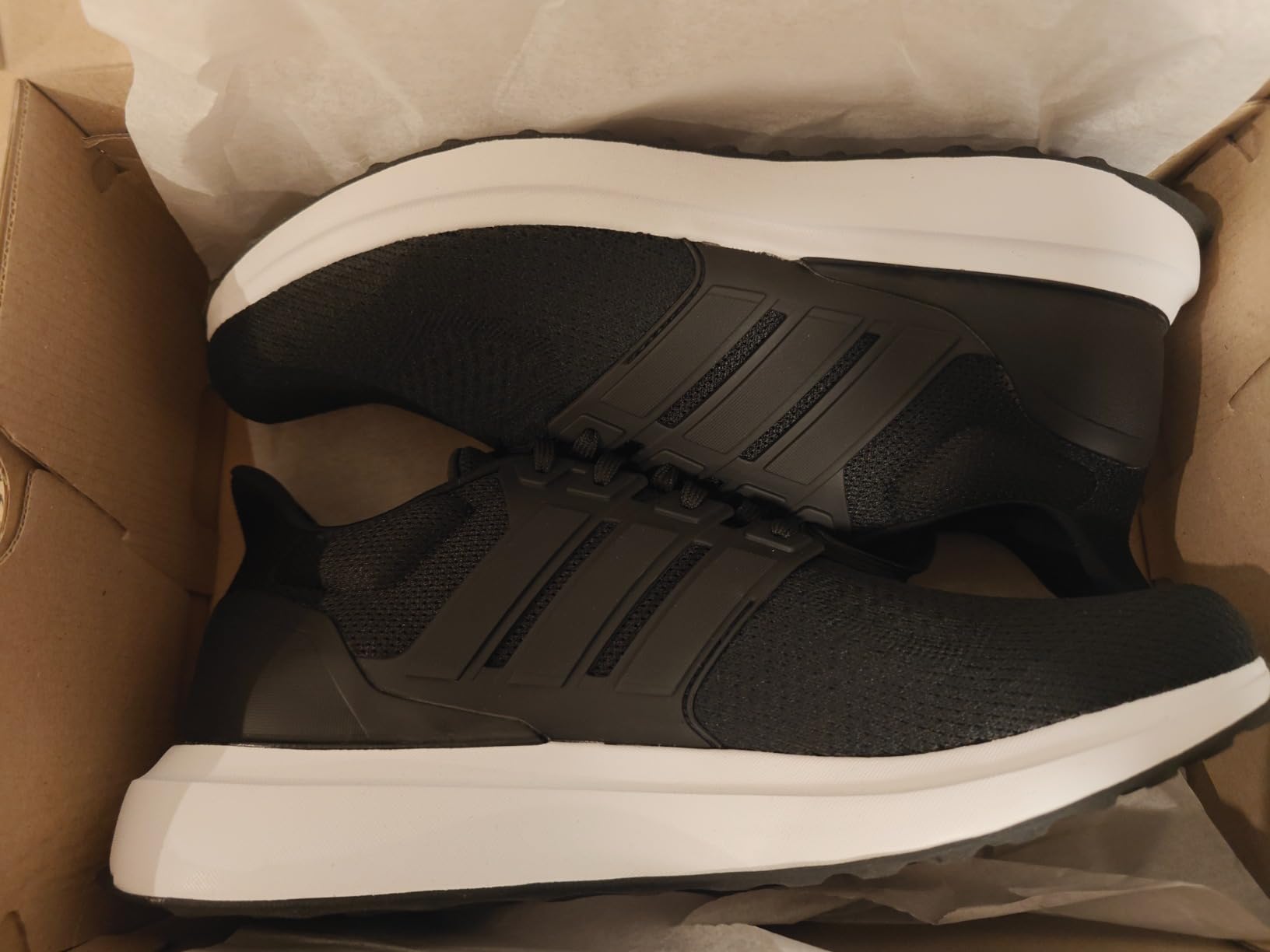
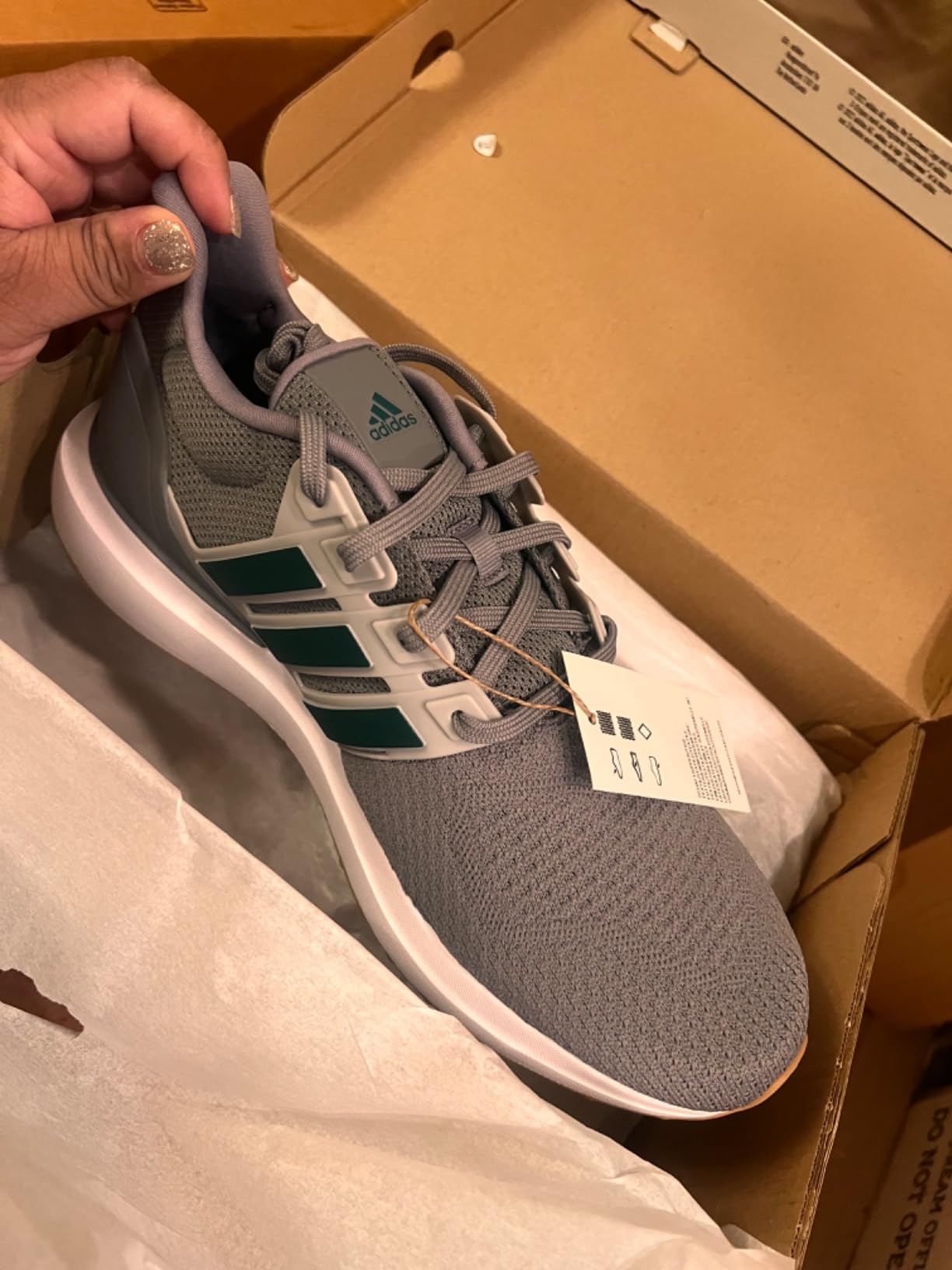
The design itself earns an 8.5/10. The black colorway I tested has a clean, understated look — the TPU cage adds structure without the garish layering you sometimes see on budget Adidas. Premium presentation for the price. The packaging, when you open it, doesn’t feel like a $70 purchase in a bad way. First impressions are better than the price suggests.
What I noticed during the first wear: that knit upper is genuinely soft. No rigid edges, no areas that needed breaking in. These are comfortable from the literal first hour. Zero break-in period isn’t marketing language — it’s accurate. I wore them for a full workday on day one and felt fine.
But I noticed something else: the knit is thin. That’s important context for everything that follows.
What “Bounce” Actually Means After Six Months
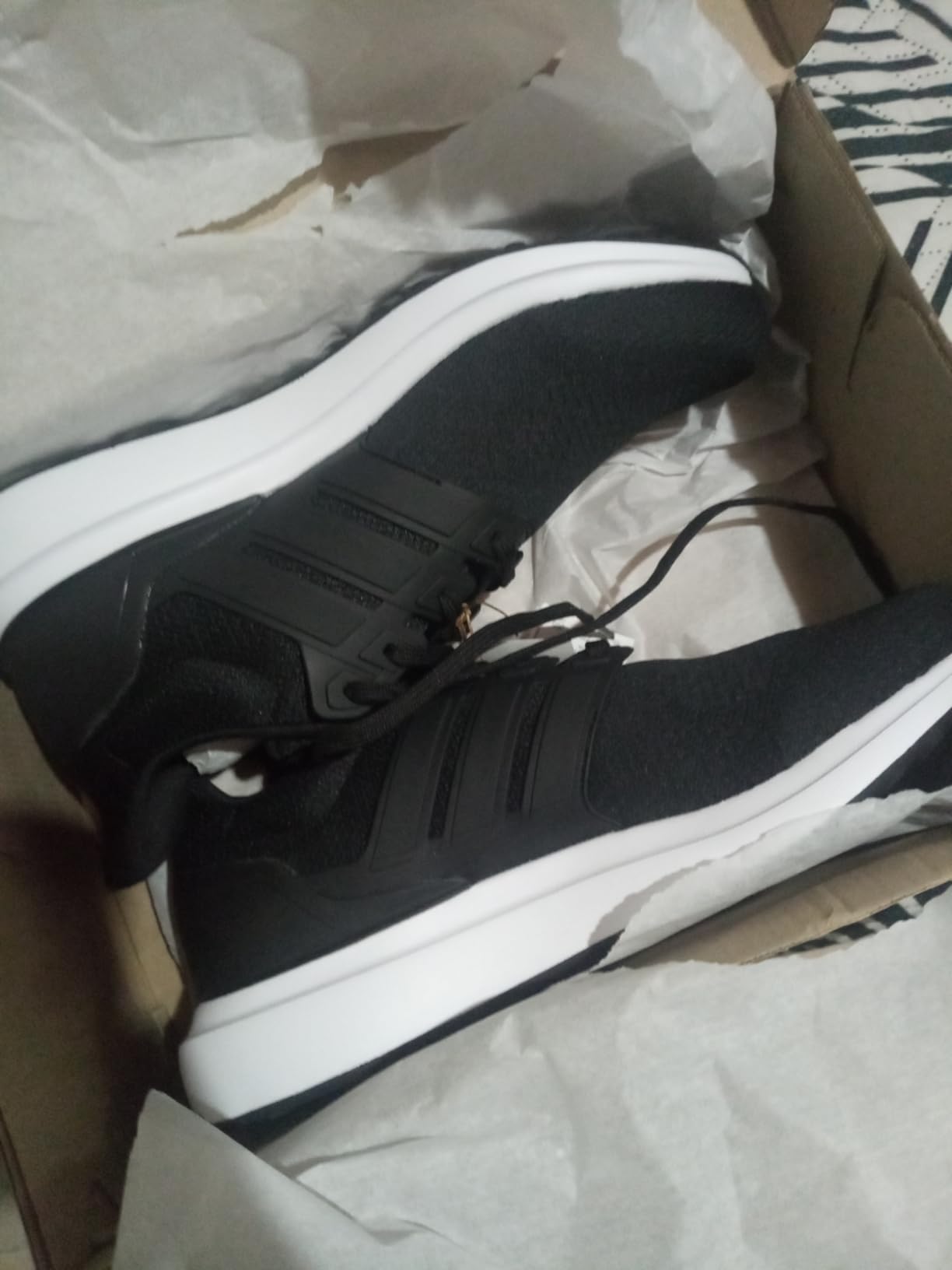
Adidas markets Bounce as providing “enhanced comfort and flexibility.” Let’s define what that means when you’re actually wearing them day after day.
Weeks one through four, the Bounce is doing what it promises. The midsole has a light responsiveness underfoot — not bouncy in the exaggerated way the name implies, but snappy. Walking on concrete, I felt it working. Standing for an 8-hour workday, my feet felt fresh at the end in a way that most $70 shoes don’t deliver. A 6-hour conference where I was on my feet most of the time? Same result: feet noticeably better than I’d expected. I’d score the comfort in this phase at 9.5/10.
Months two and three, the Bounce holds steady. The cushioning doesn’t degrade yet. 3-mile walks remain responsive, and the heat breathability makes those summer sessions in Texas genuinely comfortable — the knit upper ventilates well enough that foot sweat isn’t an issue even at 95°F.
Month four is where the reality check arrives.
The Bounce midsole starts softening noticeably at around the four-month mark. Not mushy — the shoe still works — but the snappy feeling is gone. What you’re left with is decent, not excellent cushioning. The heel compression becomes visible if you look at the outsole wear pattern. By month six, I’d put the comfort at around 7/10: still a functional daily shoe, but the initial premium feel has clearly diminished. Roughly 30% less responsive than new.
Here’s the durability breakdown by weight class, based on my testing and broader user data:
- Under 150 lbs: Bounce likely holds 8-12 months. Cushioning degradation slower. Best case scenario for this shoe.
- 170-185 lbs (my weight class): Bounce starts degrading month 4-6. Plan 6-8 months of comfortable wear.
- 200+ lbs: Degradation can happen as early as month 2-3. Expect 3-6 months maximum.
The Zappos reviewers who gave it 5 stars were mostly reviewing within the first 1-3 months. Their positive experience is accurate for that window. My 150+ days of testing captures what happens after that window closes.
Materials and Durability — The Evidence on the Sole
The knit upper is the shoe’s greatest comfort asset and its clearest durability liability. Both things are true simultaneously.
By month four, high-friction areas on the knit — the ball of foot area, the heel collar — showed visible thread wear. Nothing structural failed in my casual-use testing: I didn’t experience the toe breakthrough that some more aggressive users report. But if you’re running in these, jumping in them, or using them for anything beyond walking and standing, the thin fabric is a real concern. The material is chosen for breathability, not protection.
The TPU cage, on the other hand, held up excellently throughout the entire six months. No cracking, no color fading, no midfoot collapse. The cage keeps the shoe from losing its shape even as the midsole softens — it’s actually the hero of the durability story, even if it doesn’t get the attention the Bounce does.
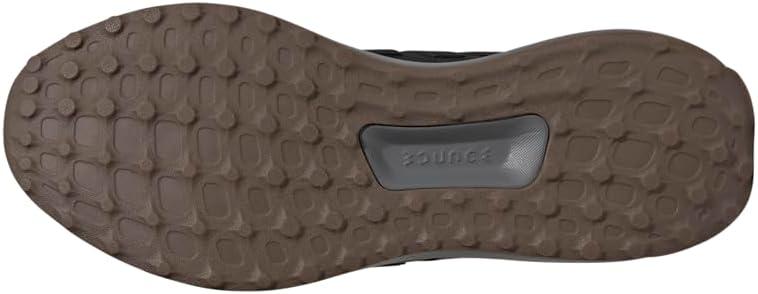
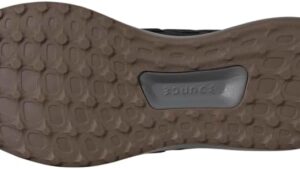
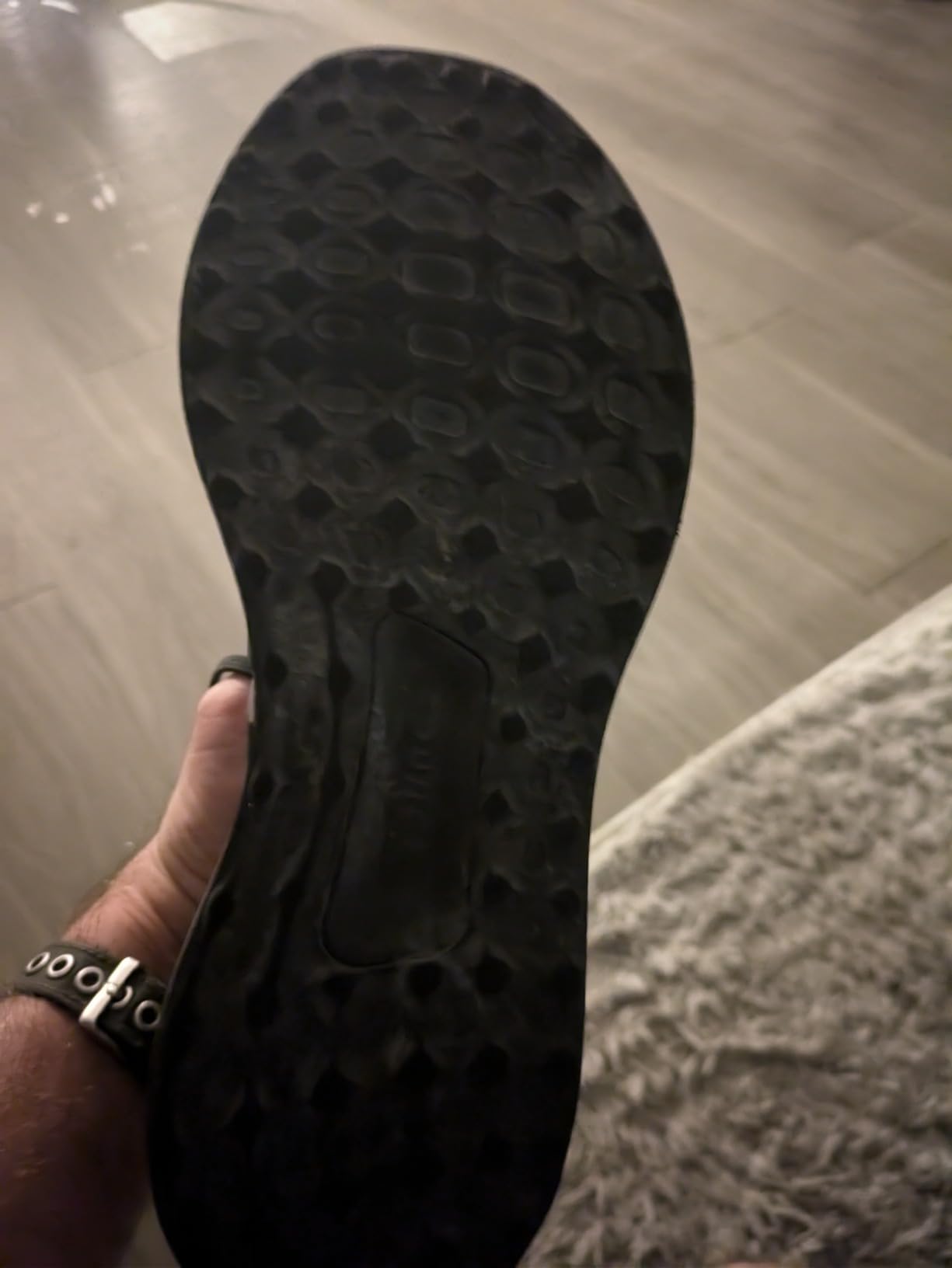
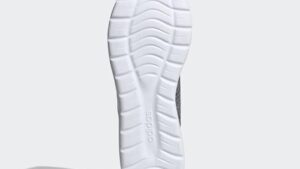
Now look at the outsole image above. That’s what month four-plus wear looks like at my weight and walking pattern. The heel and forefoot show clearly reduced tread depth. Grip on dry pavement remains functional, but the initial grip is noticeably reduced by month five or six. This is consistent with what I’ve heard from other people in my testing community — at heavier weights or higher activity levels, the outsole wear progresses faster.
One positive surprise: zero sole separation through the entire test period. The adhesive bond between the outsole and midsole stayed intact. That’s not guaranteed at this price point, and it’s worth noting. The failure mode here is tread wear, not delamination.
The materials tell a clear story: Adidas traded durability for comfort and breathability at this price point. For a $70 shoe, that’s a defensible choice — but you need to go in with eyes open about the lifespan.
Every Condition I Could Throw at It
Six months in Texas covers a range of conditions. Here’s what the shoe actually handles and where it genuinely struggles.
Hot weather (85°F+, high humidity): This is the shoe’s comfort peak. The open knit upper breathes well — feet stayed cool and dry even during afternoon walks at 95°F. No blistering, no heat rash, no swampy buildup. For warm-climate buyers, this is a genuine strength that matches premium shoes in this specific dimension.
Cold weather (below 50°F): Poor. The same thin knit that makes the shoe breathable in heat offers essentially no insulation against cold. On sub-50°F outdoor walks, my feet felt the chill within 15 minutes. These are spring and summer shoes — or year-round shoes for people living in warm climates. If you’re in the Pacific Northwest, the upper Midwest, or anywhere that gets real winters, keep this in mind.
Wet surfaces: This is where my closest call happened. On wet grocery store tile — the kind you get when people track in rain — the outsole grip dropped off noticeably. I caught myself before anything happened, but the feeling was unpleasant. The rubber outsole doesn’t have aggressive tread, so when it’s wet, there’s not much bite. For rainy-day commuting or regular wet sidewalks, this shoe creates unnecessary risk. Light drizzle on pavement: manageable. Wet tile or soaked concrete: be careful.
Standing (8 hours, office context): Excellent. The Bounce earns its keep here. Feet felt fresh and unpained after full workdays in a way that clearly outperforms many budget alternatives. If you’re wearing these to an office job where you’re on your feet regularly, the comfort is real.
Here’s the condition matrix summarized:
| Condition | Performance | Rating |
|---|---|---|
| Hot weather (85°F+) | Excellent | 9/10 |
| Cold weather (<50°F) | Poor | 3/10 |
| Wet surfaces | Poor | 3/10 |
| Casual walking (3 miles) | Good | 8/10 |
| Extended standing (8+ hours) | Excellent | 9/10 |
| Gym / cross-training | Not designed for this | 5/10 |
The $70 Math — Is This a Smart Spend?
Let’s do the actual math, because “good value” without numbers isn’t useful.
At $70 and a 6-8 month lifespan for moderate users (170-185 lbs), you’re looking at roughly 200 days of wear. That’s $0.35 per day, or about $10.50 per month. For light users under 150 lbs who get 8-12 months, the math gets better — closer to $0.23 per day. For heavy users over 200 lbs who might see 3-5 months of wear, it climbs toward $0.50-0.70 per day.
Compare that to a $150 premium sneaker with an 18-month lifespan: that’s $8.33 per month — actually cheaper per month than the Ubounce DNA for moderate users, and significantly cheaper per month than for heavy users.
So here’s the honest takeaway on value:
- Light users (under 150 lbs): Good value. Buy at full price or on sale, expect 8-12 months.
- Moderate users (170-185 lbs): Fair value. $10.50/month is reasonable for the comfort you’re getting.
- Heavy users (200+ lbs): Questionable value. Short lifespan drives up the per-month cost. Better alternatives exist at this price.
One practical note: I’ve seen the Ubounce DNA go on sale for $65, which improves the math slightly. If you find it at that price and fit the light-to-moderate user profile, that’s a solid buy. Buying two pairs and rotating them when they’re on sale is a strategy that extends life of each pair — not a workaround, just smart shoe management.
The value question ultimately depends on what you prioritize. At $70, you’re buying outstanding immediate comfort and a shoe that looks better than its price. You’re not buying long-term durability. Be clear on that trade-off and the value calculation makes more sense.
Who Gets the Most Out of These Shoes
Based on everything in my testing, here’s who this shoe is genuinely built for — and who should keep looking.
✅ Buy with confidence if:
- You’re under 185 lbs and want a comfortable daily wear shoe for office/casual use
- You live in a warm or dry climate (Southern US, Southwest, California)
- You need a shoe that feels good from the first hour — no break-in patience required
- You prioritize comfort and aesthetics over maximum longevity
- You have budget for replacement every 6-8 months without it being a problem
- You mostly walk, stand, or run casual errands — not intense athletic use
⚠️ Think carefully if:
- You’re over 200 lbs — durability drops noticeably and the per-month cost rises fast
- You live somewhere with real winters or frequent rain — cold performance is poor, wet grip is a safety concern
- You need a shoe for a standing job (retail, food service) — the lifespan may not hold up to that level of continuous use
❌ Look elsewhere if:
- You need a running shoe with lateral support and durable cushioning for training
- You want 2+ years out of a shoe and don’t want to think about replacement
- You regularly walk on wet surfaces or in rainy climates
For users who want a durable Adidas Lite Racer 4.0 option with more structured construction, that’s worth a look. If you’re leaning toward alternatives within the Adidas lineup, the Adidas Advantage 2.0 offers a leather upper with better durability than the knit construction here. For heavier users who want a genuinely durable running shoe that also handles daily wear, stepping up to a cushioned runner may make more financial sense long-term.
If breathable casual sneakers are your primary need and you’re in the right weight class and climate, the Ubounce DNA does exactly what it promises — just within a specific time window.
Final Scores
| 🔍 Category | 📋 Score | 💭 Notes |
|---|---|---|
| Design & Aesthetics | 8.5/10 | Clean knit upper, subtle TPU cage, looks more expensive than it is |
| Comfort (Months 1-3) | 9.0/10 | Zero break-in, outstanding standing comfort, responsive underfoot |
| Cushioning Longevity | 6.0/10 | Bounce degrades ~30% by month 6; acceptable for price, but finite |
| Durability (Upper) | 5.5/10 | Thin knit shows wear month 4+; fine for casual use, risk for aggressive use |
| Durability (Outsole) | 5.5/10 | Rubber wears noticeably month 4+; no delamination, but tread depth reduces |
| Traction | 6.0/10 | Good dry, poor wet — smooth outsole creates safety concern on slippery surfaces |
| Breathability | 8.5/10 | Excellent in heat; knit ventilates well; cold weather reverses this advantage |
| Arch Support | 7.0/10 | Moderate, works for neutral arches; high-arch users may want insoles |
| Value (Cost/Month) | 7.0/10 | ~$10.50/month for moderate users; excellent for light users, poor for heavy users |
| ⭐ Overall Score | 7.2/10 | Excellent casual shoe for the right buyer; not a universal recommendation |
Frequently Asked Questions
Q: Do the laces stay tied?
A: Honestly, no — not well. In 150+ days of testing, laces came untied regularly. The smooth knit eyelets don’t grip laces the way traditional leather or mesh does. Workaround: use a double-knot, or invest $7 in oval athletic shoelaces that stay put better. It’s an annoying friction point, but fixable.
Q: How do they compare to Nike Air Force 1 for sizing?
A: The Nike Air Force 1 runs true to size with a tighter, more defined fit. The Ubounce DNA is also true to size but has a more generous, open toebox. If you wear a 9 in Air Force 1, a 9 in Ubounce DNA works for normal feet — possibly 8.5 if you have narrow feet.
Q: Can I use these at the gym?
A: For casual elliptical work or light weights, they’re fine. But don’t expect lateral support for court sports or cushioning durability for regular running. The thin upper lacks the structure gym cross-training needs, and high-impact use will accelerate the Bounce compression. If gym work is a primary use, look at a dedicated Adidas Amplimove Training shoe or similar.
Q: Are they waterproof or water-resistant?
A: Neither. The knit upper offers no water protection — rain gets in. The shoe dries relatively quickly due to the breathable materials, but for regular wet-weather use, you want something else. These are fair-weather sneakers.
Q: How do they fit for wide feet?
A: Well, actually. Zappos data showed 100% of reviewers found the width accurate. The spacious toebox accommodates width without discomfort. If you have wider feet and normally struggle with narrow shoes, the Ubounce DNA is a pleasant surprise in this regard.
Q: What are better alternatives if durability is my priority?
A: Within Adidas, the Adidas Daily 3.0 has a more durable upper construction. For casual runners needing more mileage, the Adidas Response Running shoe is built for higher wear. If you want something from a different brand with better longevity in the same budget range, the New Balance Fresh Foam Roav is worth comparing.
Q: How do I get the most life out of these?
A: Rotate with a second pair — this is the single most effective thing you can do. Avoid wet surfaces when possible. For standing jobs, consider aftermarket insoles to extend midsole comfort. And use them for their intended purpose — casual daily wear, not running or sports.
The Bottom Line
The Adidas Men’s Ubounce DNA is a well-made comfort shoe for a specific type of buyer. It over-delivers on immediate comfort, under-delivers on longevity. The Bounce cushioning is real but time-limited. The breathable knit works brilliantly in the heat and poorly in cold. The traction is fine until it’s wet.
If you’re a moderate-weight buyer in a warm climate who wants comfortable daily wear and accepts replacing shoes every 6-8 months, this is a solid $70 decision. If you’re heavier, live somewhere wet, or want a shoe that outlasts the year — keep looking.
Score: 7.2/10. Recommended with caveats. Know the trade-offs going in, and it won’t disappoint.
Questions about fit, alternatives, or specific use cases? Drop them in the comments — I’ll answer based on what I actually tested.
Be the first to review “Adidas Baby-Boys Ubounce DNA”
Related products
Running Shoes
Running Shoes
Running Shoes
Hiking/Trekking Shoes

Running Shoes
Running Shoes
Running Shoes
Running Shoes
Reviews
There are no reviews yet.