
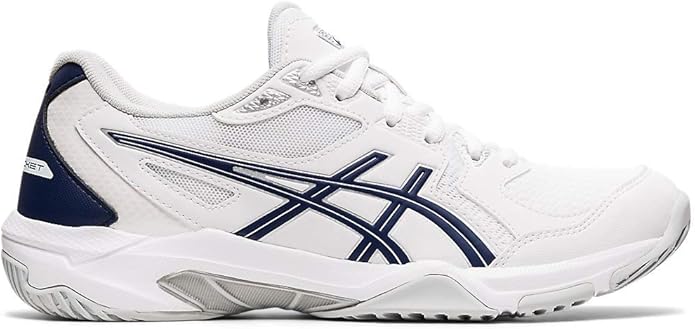
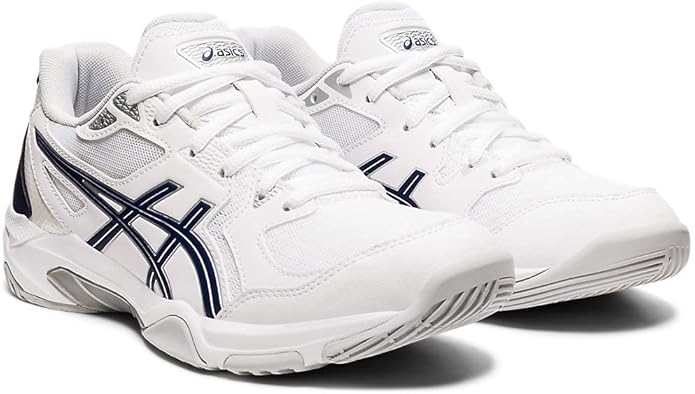
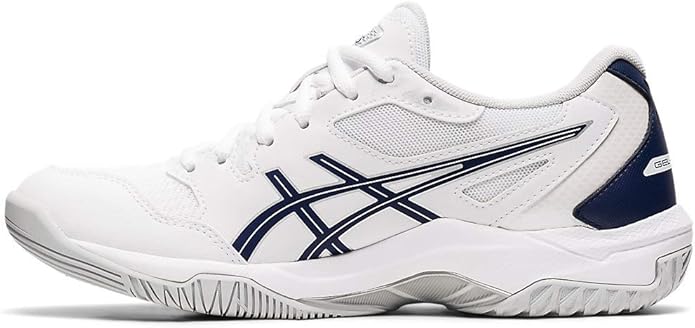
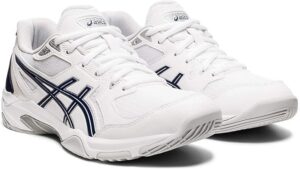
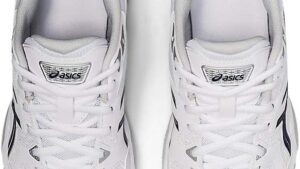
Friday night, 6:47 PM. I was frantically scrolling Amazon for volleyball shoes because my daughter’s tournament was the next morning and her old pair had finally called it quits. Between managing three kids’ sportsschedules and trying to keep my own fitness routine alive, I’ve gotten pretty good at last-minute decisions. That’s exactly how I stumbled onto the ASICS Women’s Gel-Rocket 10. Eight weeks, 24 volleyball sessions, and 12 pickleball games later, I have opinions. Real ones — not the kind where everything is amazing and there are zero downsides.
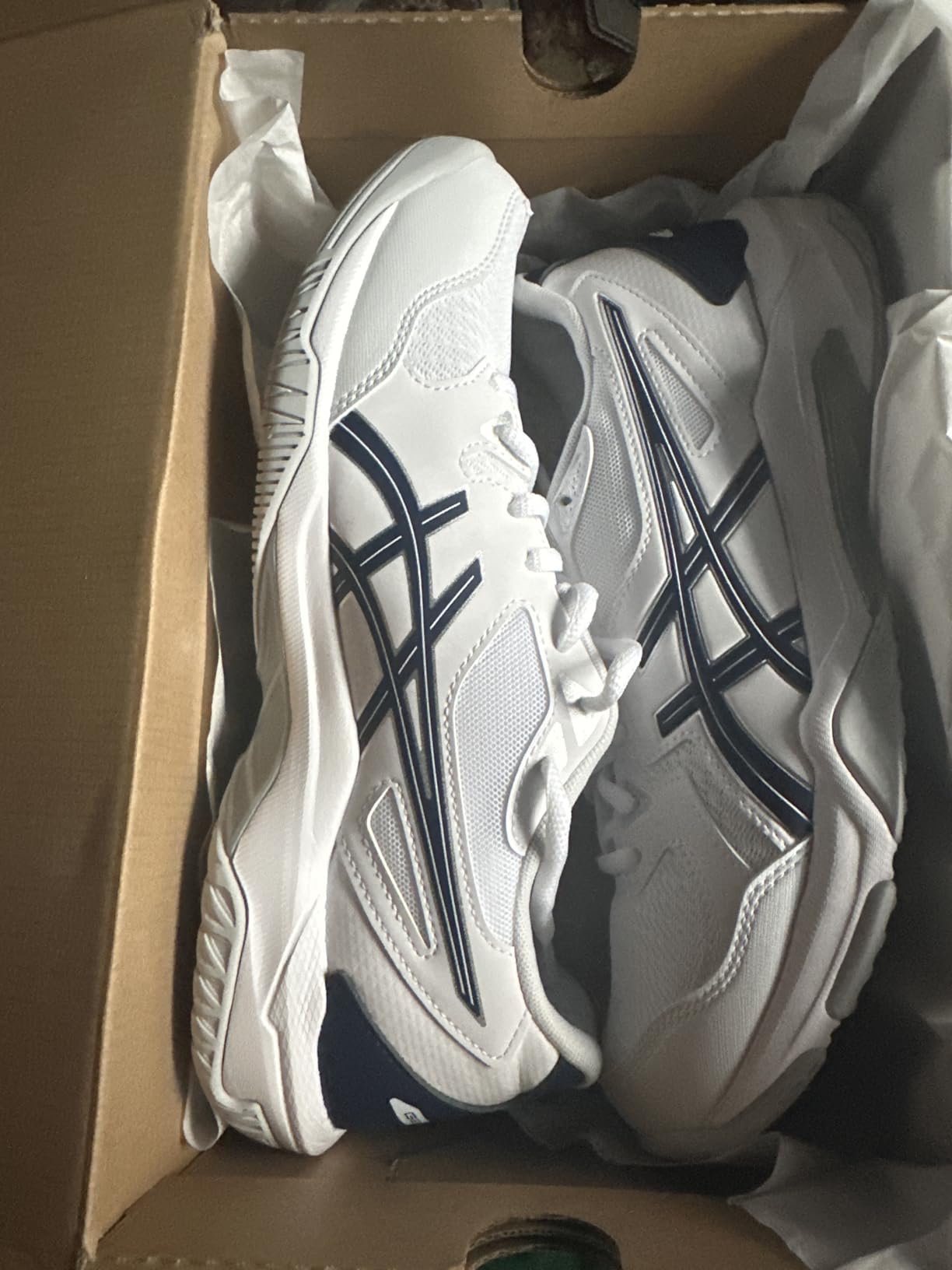
Technical Specifications
- 💰 Price: $75 MSRP (frequently on sale $45–67 — check current price)
- ⚖️ Weight: 9.29 oz / 263g (women’s size 8.5, per authorized retailer)
- 📐 Heel Drop: 10mm (confirmed via Pickleball Galaxy Q&A)
- 🧪 Midsole: Standard EVA + rearfoot GEL® cushioning unit
- 🔩 Stability: TRUSSTIC™ System (midfoot torsion control)
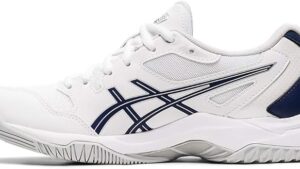
- 👟 Upper: Breathable mesh with faux leather overlays
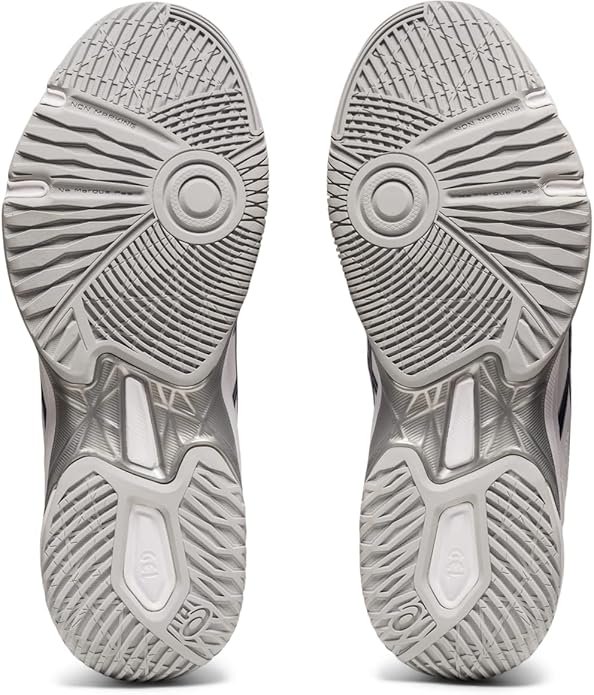
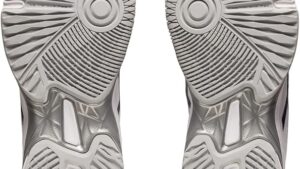
- 🦶 Outsole: N.C. RUBBER™ (Non-Marking Court Rubber) with flex grooves
- 🛏️ Insole: Removable OrthoLite™ sockliner (orthotic-compatible)
- 📏 Width: Standard (B/Medium) only — no wide option
- 🏐 Category: Indoor court sports (volleyball, pickleball, badminton)
- ⏱️ Testing period: 8 weeks, 24 volleyball sessions, 12 pickleball games
- 👩👧👦 Tested by: Mom (recreational) + teenage daughter (competitive club)
Design, Build Quality, and First Impressions
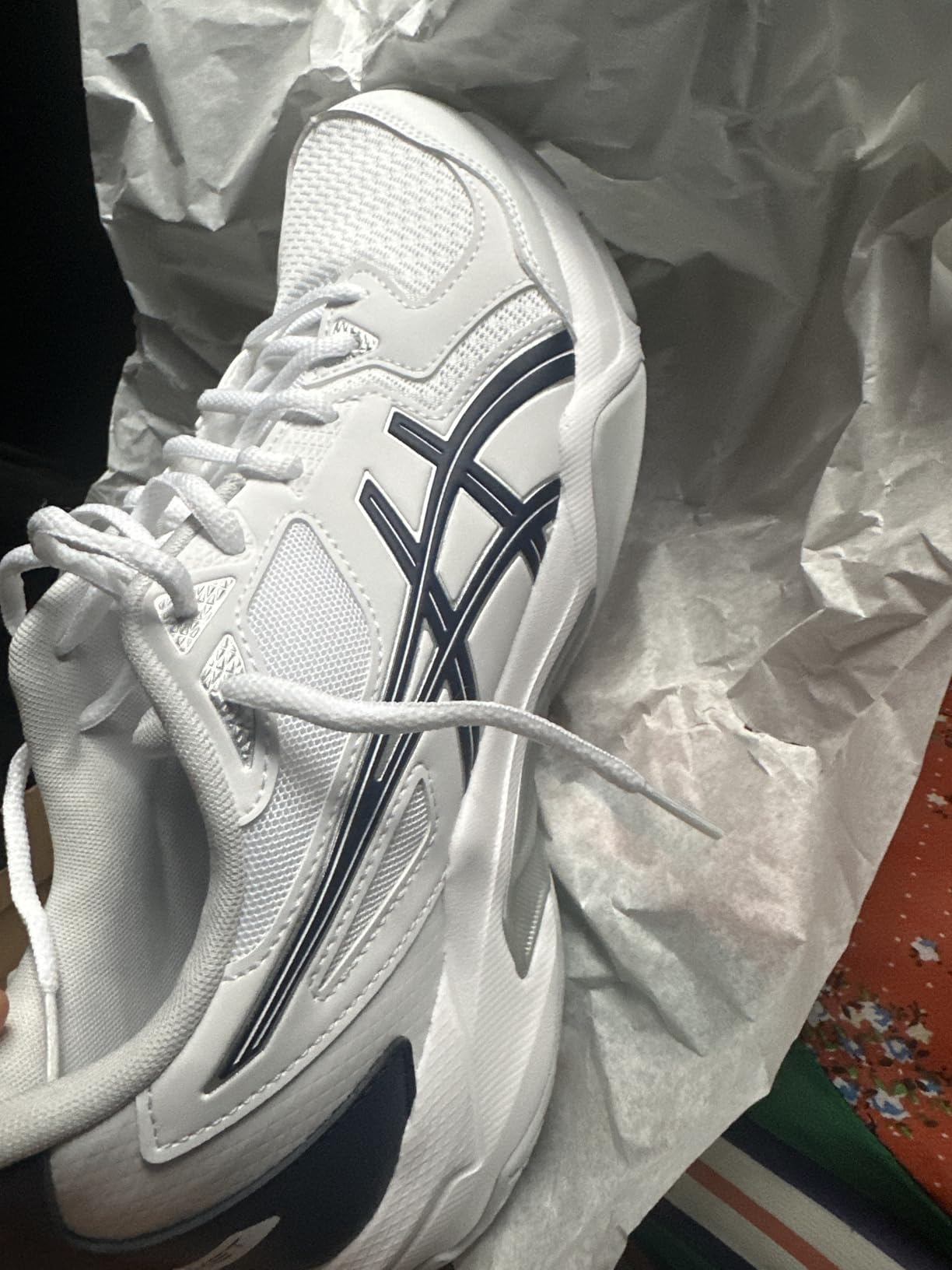
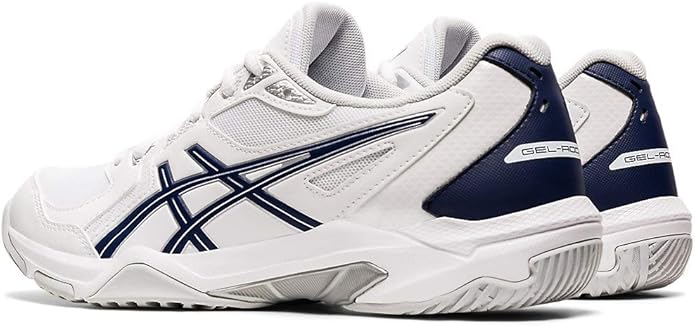
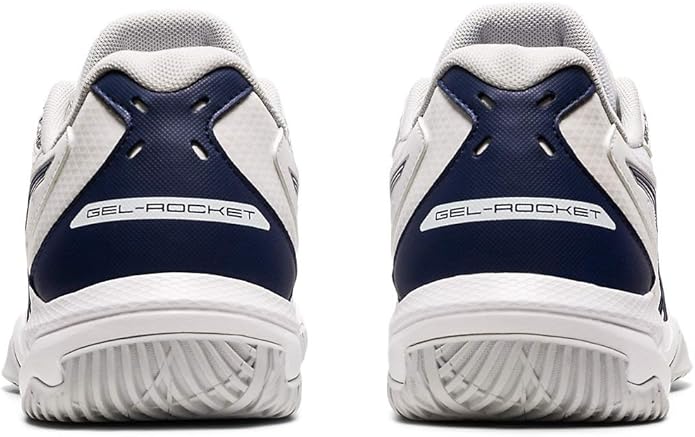
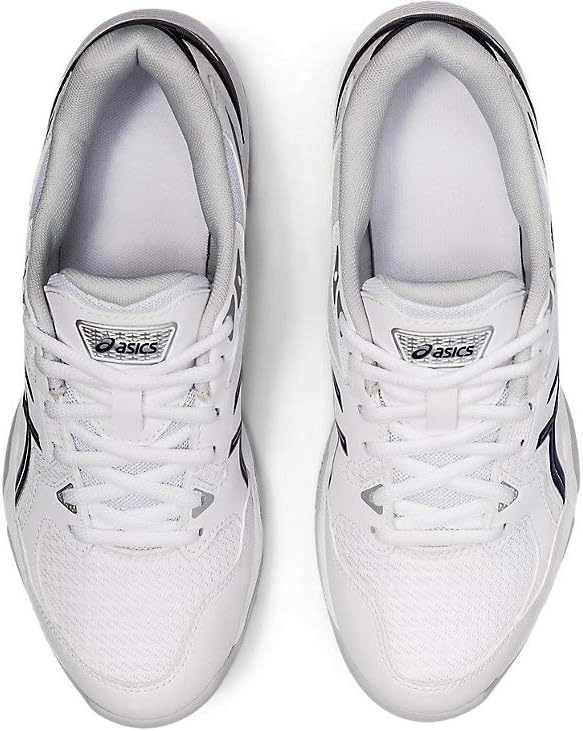
Out of the box, these feel more put-together than you’d expect at this price. The white and peacoat navy colorway is classic ASICS — clean enough to satisfy team uniform requirements, distinct enough that you can actually spot your own shoes in the bag. The mesh upper breathes well from the start, and the faux leather overlays along the midfoot and toe strike a decent balance: they add structure without the stiffness penalty you’d get from full leather construction.
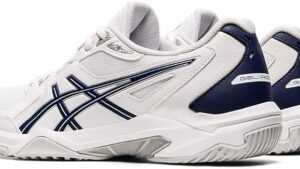
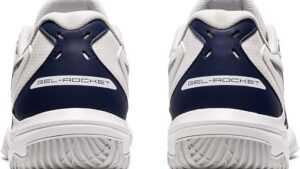
What stood out immediately was the heel wrap-up design — the way the outsole material curves up the back of the shoe and the heel counter locks your foot in place. After months of watching my daughter’s ankle roll sideways in cheaper court shoes, this felt genuinely different. The structure isn’t aggressive or restrictive. It just… supports.
The TRUSSTIC™ System is ASICS’ midfoot torsion control component — a rigid plastic bridge built into the midsole that prevents excessive twisting during lateral movement. You can actually see it if you flex the shoe sole-to-sole. It’s subtle in practice, but you notice when it’s working: the shoe doesn’t let your midfoot collapse sideways during quick cuts the way a basic EVA-only shoe might.
One note on construction quality: after 8 weeks of hard use, the stitching on both pairs (mine and my daughter’s) remains clean. No fraying at the faux leather edges, no separation at the overlays. The tongue stays centered during play without creative lacing strategies — a detail that sounds minor until you’ve spent a set with a tongue migrated toward your little toe.
Fit and Sizing: Read This Before You Order
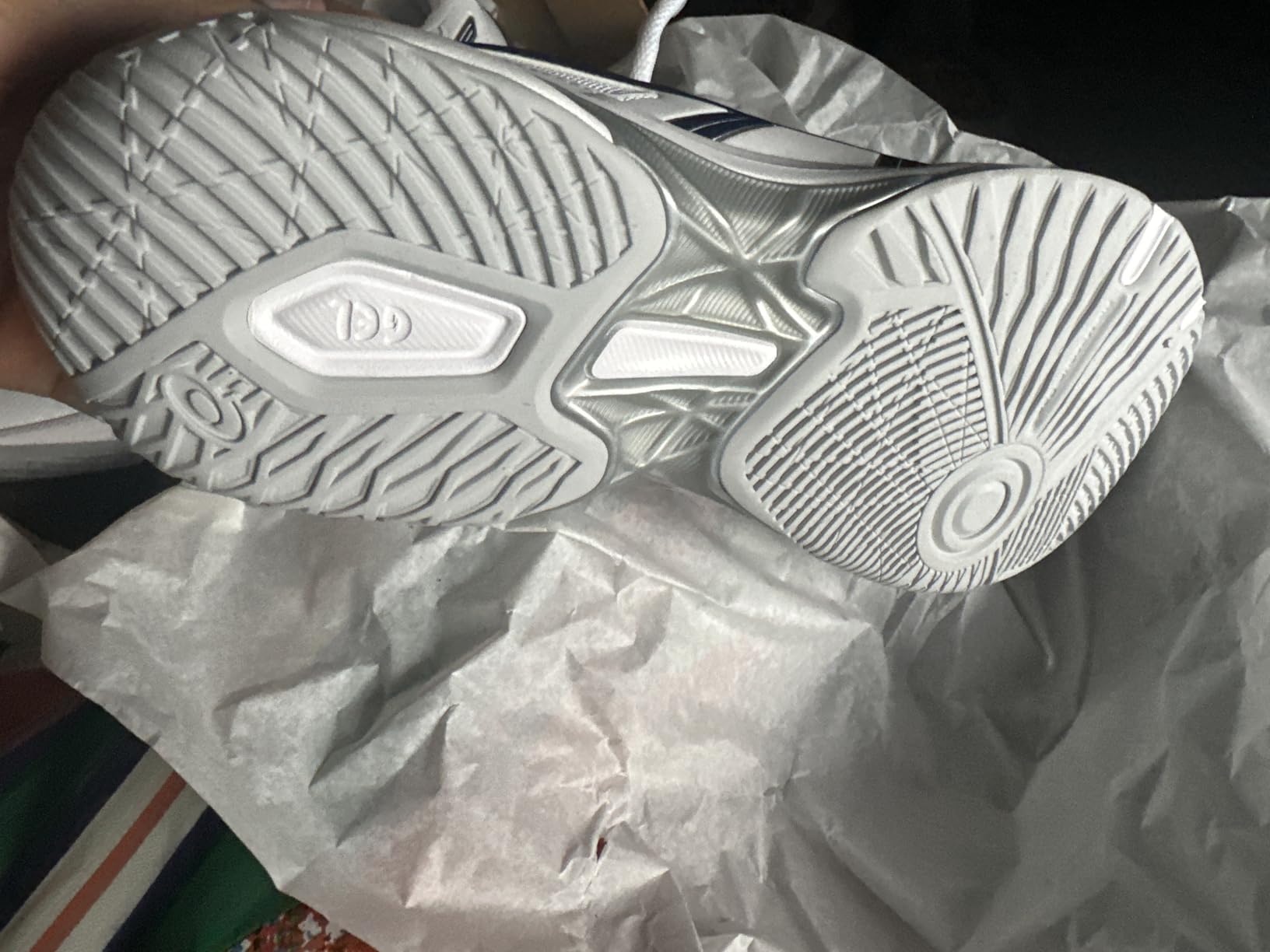
This is the section that will actually affect your purchase decision, so I’m putting it near the top instead of burying it in the FAQ.
The Gel-Rocket 10 runs narrow. That’s not a design flaw — it’s a deliberate performance fit. ASICS builds these for a locked-in feel during lateral movement, and a snug midfoot is part of that. But the practical implication is real: if you have medium-wide or wide feet, you’ll want to size up at least half a size, and even then the toe box may feel cramped.
Here’s how it worked out for us:
– My daughter (teenage, standard-to-narrow foot): ordered her usual size — fit TTS, no complaints
– Me (medium width, standard length): ordered TTS and felt forefoot compression by session 3. Exchanged for half size up. Problem solved.
The community consensus tracks with this. Multiple verified reviews report going up 0.5 for comfort, and a Pickleball Galaxy Q&A confirmed these run as a standard D-width equivalent for women — which, because women’s standard is narrower than men’s, will feel narrow to anyone accustomed to roomy toe boxes.
Sizing guide by foot type:
- Narrow feet: True to size — may actually feel slightly roomy in the toe
- Standard/medium feet: TTS, or half size up for extra comfort
- Medium-wide feet: Half size up minimum
- Wide feet: These are not the right shoe. Even sized up, the toe box stays narrow. Consider the Mizuno Women’s Wave Momentum 3 or Mizuno Cyclone Speed 3 instead, which offer more generous fit across the forefoot.
One genuine positive: zero break-in period. You can pull these out of the box on tournament morning and play six games without developing a single hot spot. That’s not always the case with court shoes that have stiffer heel counters.
Court Traction and Stability: Where These Earn Their Reputation
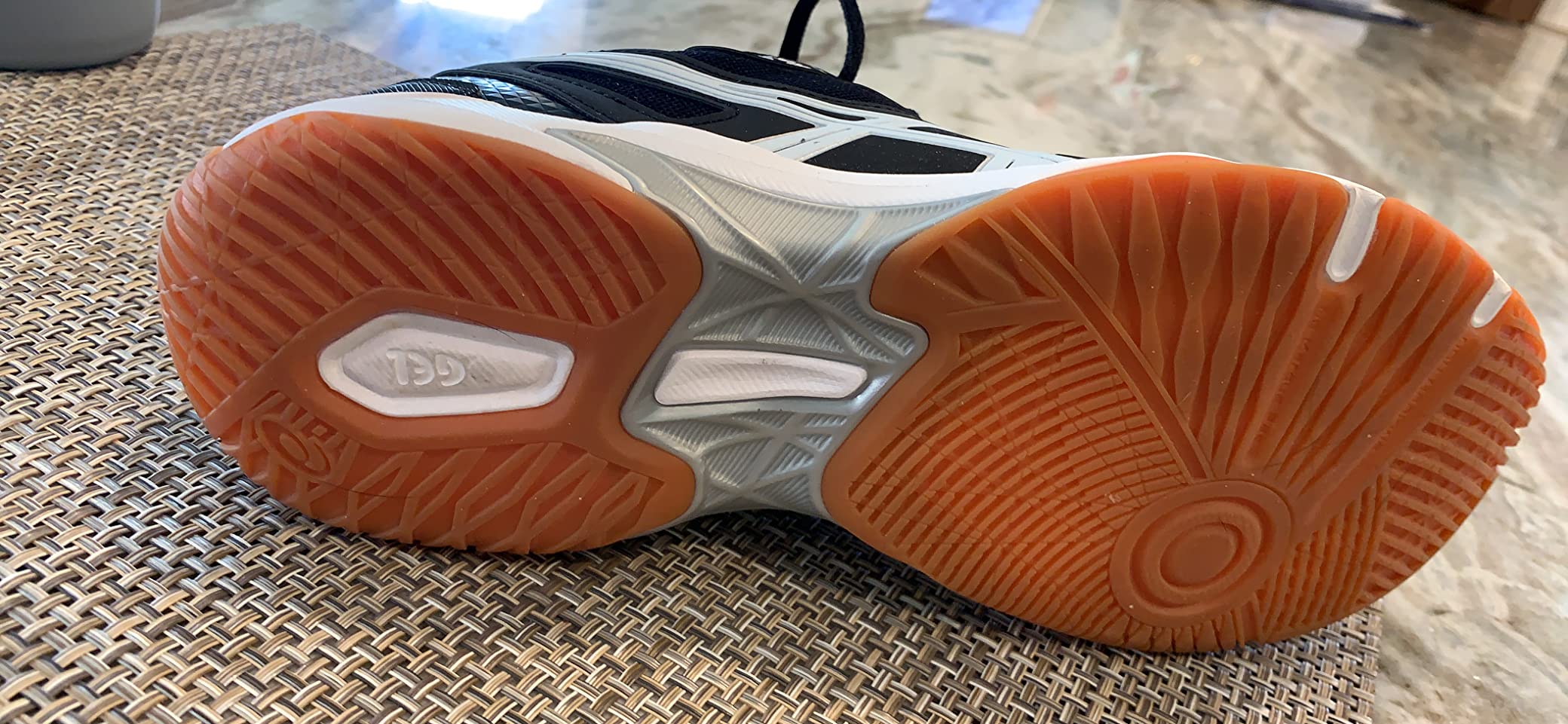
The N.C. RUBBER™ outsole — ASICS’ non-marking court compound — is the single best feature on these shoes. On polished hardwood volleyball courts, the grip is immediate and consistent. During defensive plays where I had to move laterally at speed, I never felt the micro-slide that you get with general-purpose athletic shoes on polished floors. My daughter described it as “feeling glued down,” which is exactly the sensation you want when you’re diving for a ball in the back row.
The flex grooves cut into the outsole aren’t decorative. They allow the shoe to bend naturally along the ball of your foot during pivots and transitions, so the shoe moves with you instead of creating resistance. This matters most during quick direction changes — the shoe doesn’t fight your foot’s natural mechanics.
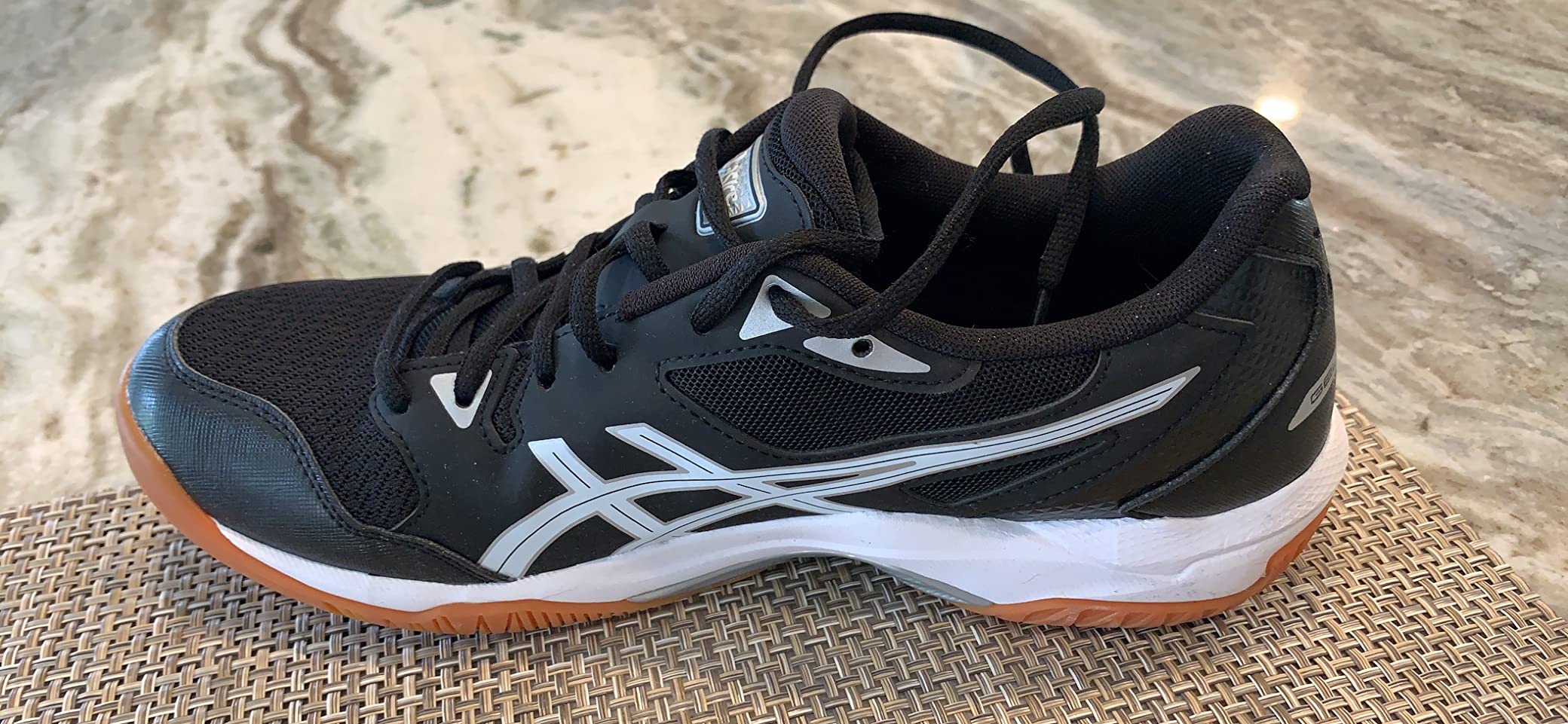
The TRUSSTIC™ stability comes into its own during lateral movement. During defensive saves where I had to plant and push off sideways, the shoe held its structure — no rolling outward, no feeling like the midsole was compressing unevenly. After dealing with my daughter’s ankle roll history, this gave both of us real confidence in aggressive defensive positioning.
We also tested these at the local rec center, which has slightly textured synthetic flooring rather than polished wood. Performance was comparable — maybe 10% less grip, still reliable. The outdoor concrete test was the honest limitation: during one tournament held on a covered concrete surface, sole wear was noticeable after just three sessions. The N.C. RUBBER™ compound is calibrated for indoor courts. It’s not engineered for abrasive outdoor use, and it shows.
Traction assessment by surface:
- Polished hardwood: Excellent — grip is immediate, zero sliding during lateral play
- Synthetic gym flooring: Very good — consistent across different textures
- Outdoor concrete: Poor — wear accelerates, grip degrades. These are indoor shoes.
The lacing system was a small revelation for my daughter, who’d spent most of the previous season retying her shoes during timeouts. The Gel-Rocket 10’s laces hold tension through two hours of competitive play without loosening. The tongue stays centered without tie-around systems. For a recreational player, this sounds trivial. For a teenager who plays club volleyball with a coach who dislikes timeout interruptions, it was legitimately significant.
Cushioning and Impact Protection
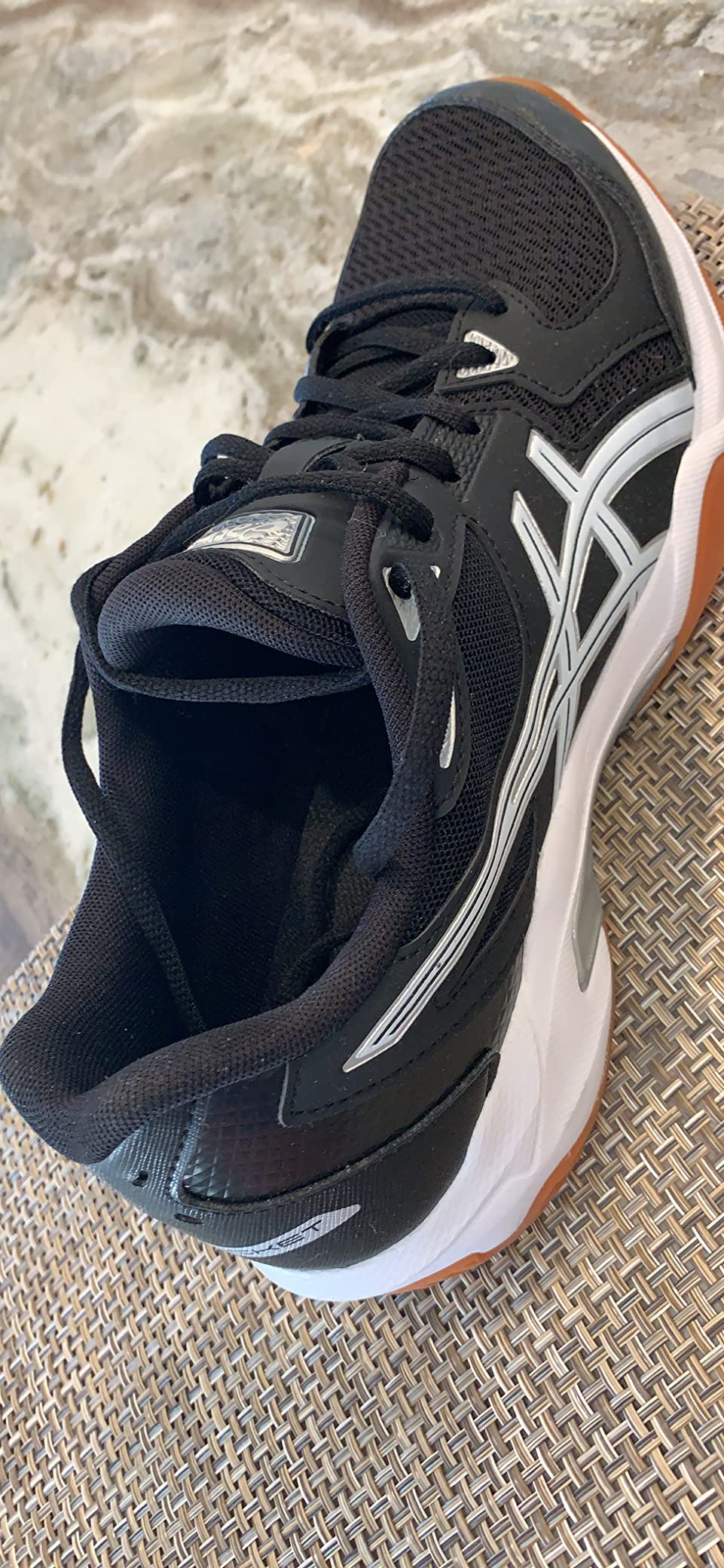
The cushioning profile here is court-specific — which means it’s firm and responsive rather than plush and forgiving. The midsole is standard EVA with a GEL® cushioning unit in the heel. The GEL is rearfoot only, not forefoot — worth noting because some reviews incorrectly suggest cushioning throughout the full length of the shoe.
What this means in practice: landing from spikes and blocks feels controlled rather than jarring. The heel unit absorbs the initial shock of impact, and then the EVA midsole provides a stable platform for your next movement. You’re not losing energy in a bouncy midsole, and you’re not taking raw impact on a minimal platform.
The 10mm heel drop sits at a moderate point — lower than many running shoes (which often run 10-12mm), higher than true court-specialist models. In practice, it means the shoe gives you a stable, flat-feeling platform without the adjustment period of a zero-drop design.
What the cushioning doesn’t do: provide the marshmallow comfort of a walking or running shoe. During my first volleyball practice, the flat, firm feel was briefly strange. By session 3, I’d adjusted, and by session 5, I noticed I wasn’t thinking about my footwear at all — which is usually the sign of a shoe doing its job. My feet felt recovered after a two-hour tournament day. Not every court shoe I’ve worn can say the same.
For players with plantar fasciitis or high arch needs, the firm arch support may not be sufficient. The removable OrthoLite sockliner is compatible with aftermarket inserts — Valsole Heavy Duty Orthotic Insoles fit the cavity well and work with the existing heel drop geometry.
Breathability and Comfort During Long Sessions
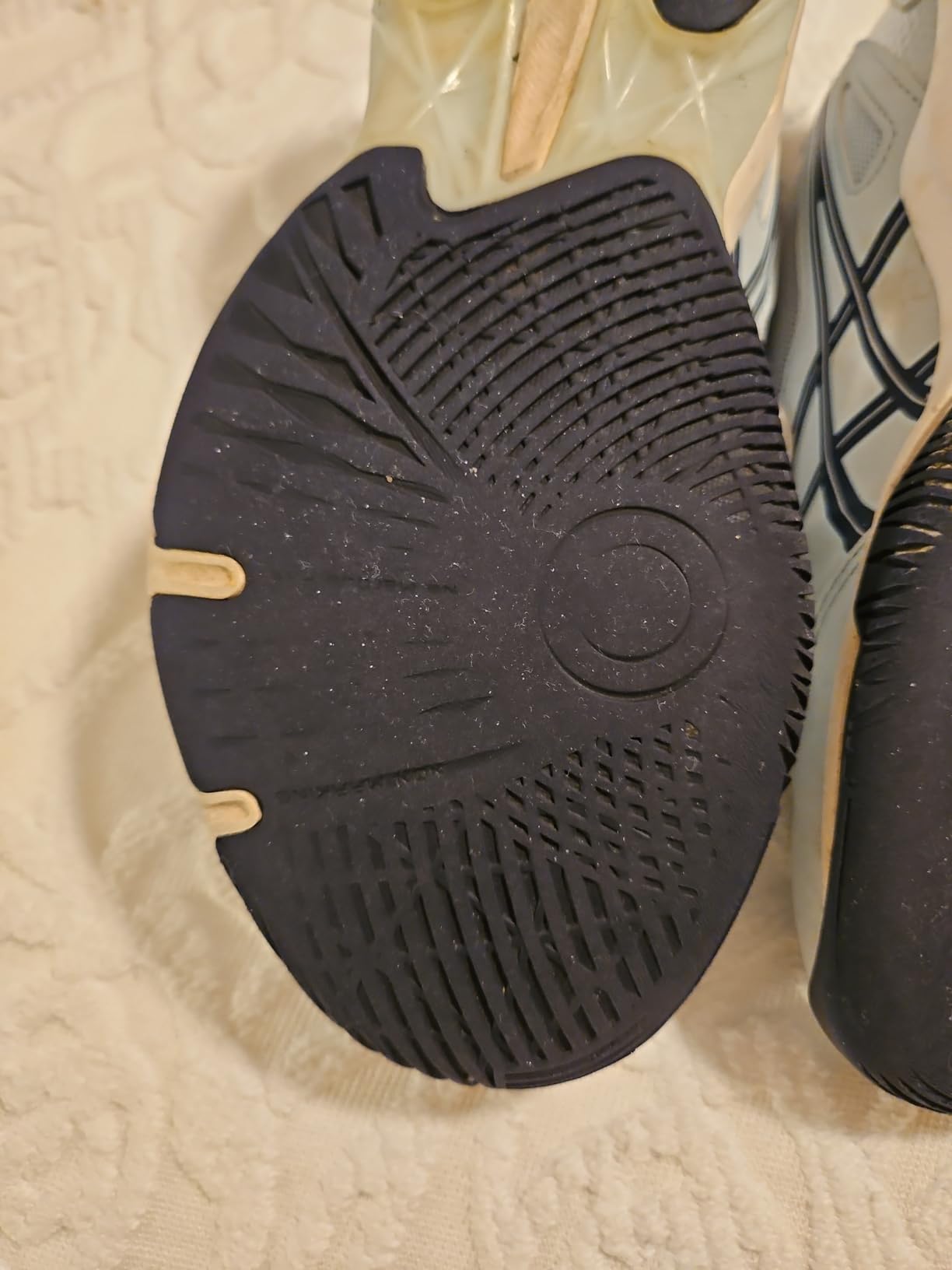
The mesh upper earns its billing. During early-morning practices in a cold gym, the shoes held warmth well enough to not feel stiff. During hot, humid afternoon tournament sessions — the kind where everyone in the gym is struggling — my feet stayed comfortable. The mesh doesn’t wick sweat away aggressively (that would require moisture-wicking lining material), but it allows enough airflow that heat buildup stays manageable.
The faux leather overlays cover roughly 30–40% of the upper surface and are positioned at high-stress zones rather than ventilation zones, so they don’t meaningfully interfere with breathability.
One caveat: these are not water-resistant. Light rain, puddles, or any wet outdoor play will soak the mesh immediately. For indoor court use — which is the intended environment — this is a non-issue.
Durability: Eight Weeks In, and the Honest Long View
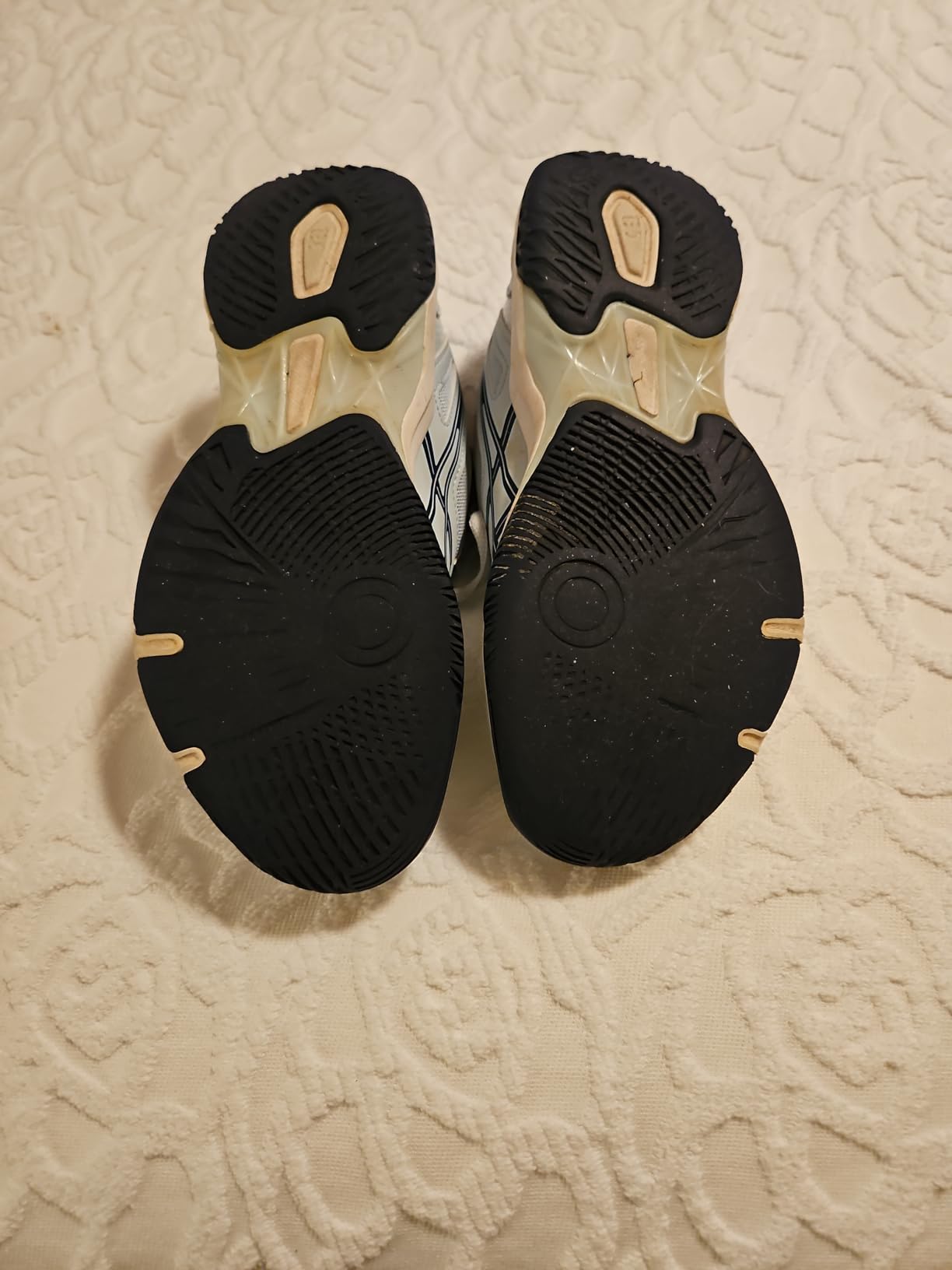
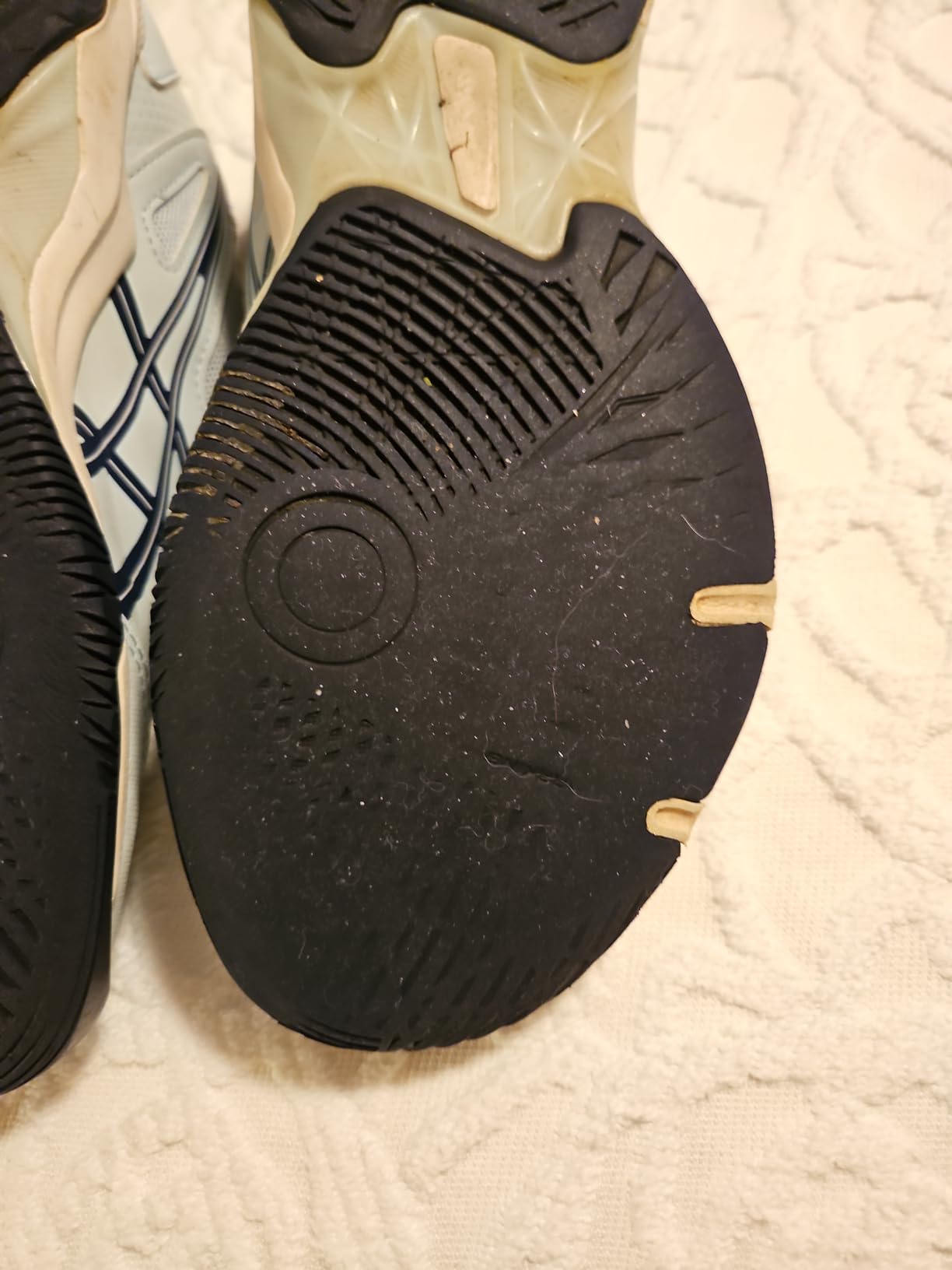
At eight weeks — 24 volleyball sessions and 12 pickleball games — both pairs still look remarkably fresh. The mesh shows no stress marks, the outsole edges show minor surface wear on the outer lateral edge (normal), and the midsole hasn’t compressed noticeably. The stitching at the overlay joints is clean on both pairs.
What happens beyond eight weeks? Based on ASICS’ own review data, Amazon community reports, and data from a six-month field test on the same shoe:
| Use Pattern | Sessions per Week | Expected Lifespan | Primary Failure Mode |
|---|---|---|---|
| Casual recreational | 1–2x/week | 8–12 months | Outsole grip reduction |
| Moderate club play | 3–4x/week | 4–6 months | Outsole wear + midsole compression |
| Heavy / daily | 5+/week | 3–4 months | Outsole wear, possible mesh stress |
The main failure point in this shoe is the outsole, not the upper — grip reduction and sole wear precede any structural failure. One pickleball player who plays daily reported replacing court shoes roughly every three months but noted the Gel-Rocket 10 runs “longer lasting than most” at that intensity.
Cost-per-month math at MSRP ($75):
- Casual players: ~$6–9/month at 8–12 month lifespan
- Moderate players: ~$12–19/month at 4–6 month lifespan
- Heavy daily players: ~$19–25/month at 3–4 month lifespan
For comparison, dedicated pickleball shoes like the Skechers Women’s Viper Court Pro ($100 MSRP) or Ryka Courtside Pickleball ($85 MSRP) cost more upfront but may offer comparable or longer lifespan. The Gel-Rocket 10 earns its value case most strongly for casual-to-moderate players.
Value: Understanding What You’re Actually Paying For
The original pricing I saw — $45 — was a sale price. The MSRP is $75. Both are relevant.
At $75 MSRP, you’re getting TRUSSTIC™ stability technology, a rearfoot GEL® cushioning unit, N.C. RUBBER™ outsole, and removable OrthoLite sockliner. That feature set typically appears in shoes priced $90–120 from competing brands. The Wilson Women’s Rush Pro Ace ($130) and Head Grid 2.0 Court ($100+) offer more aggressive durability guarantees but not dramatically better performance for recreational play.
At $45 on sale, the Gel-Rocket 10 is one of the better value plays in court shoes. For families managing multiple sports seasons, it’s an option that actually delivers instead of just being cheap.
The honest alternative at lower price: the ASICS Women’s Upcourt line, which starts around $55–65 and drops the GEL heel unit. If budget is the primary driver, the Upcourt works. But the Gel-Rocket’s rearfoot cushioning is noticeable on hard court landings, and at the same sale price point, the Rocket 10 represents meaningfully more shoe.
Who Should Buy — and Who Shouldn’t
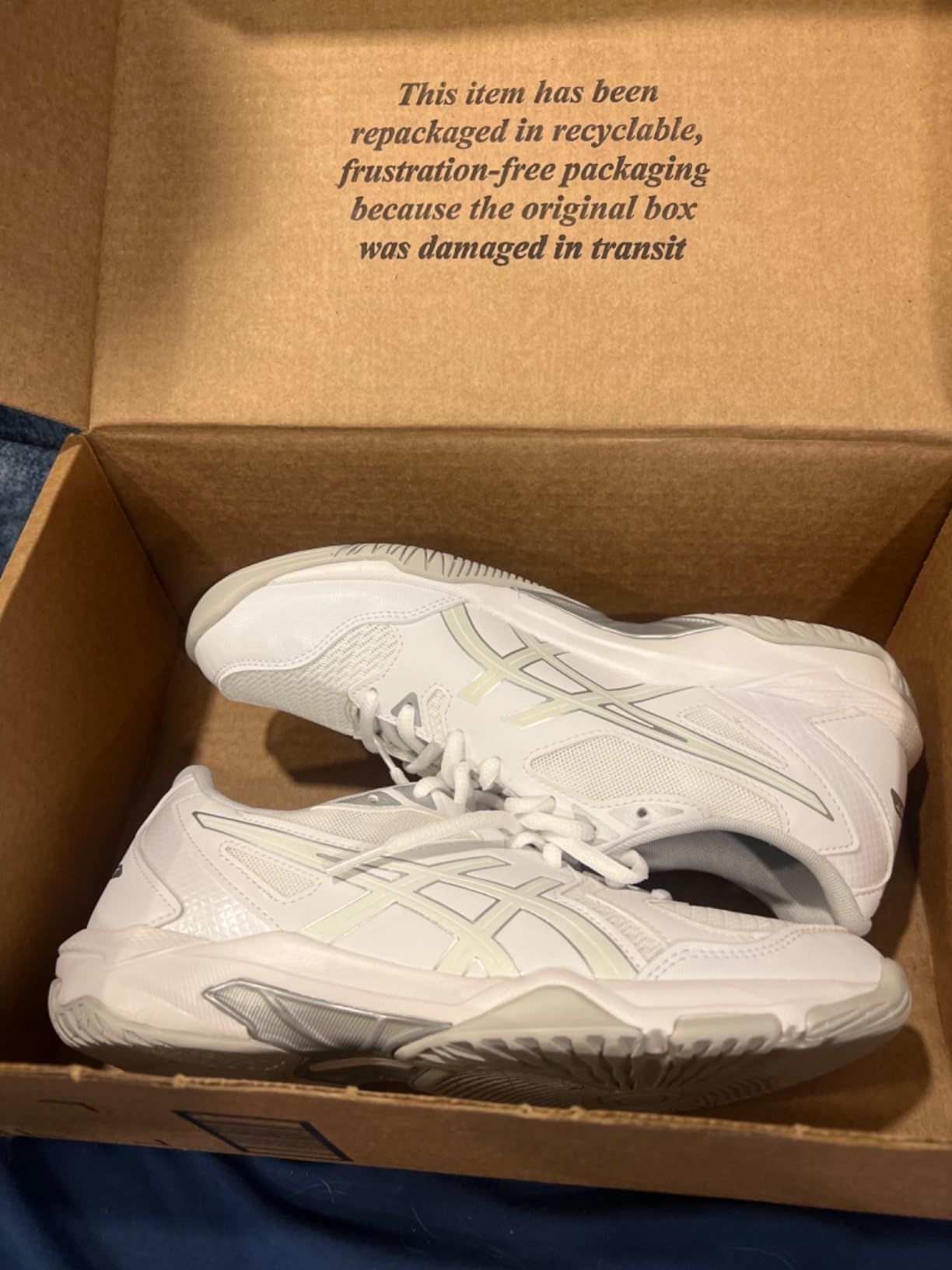
Strong fit for:
- Recreational to competitive volleyball players — the TRUSSTIC lateral support and N.C. RUBBER grip are genuinely court-specific features
- Pickleball players switching from cross-training shoes — multiple players reported immediate stability improvements from the lateral design
- Budget-conscious families — at sale prices, excellent value for growing players who’ll need a replacement in a season anyway
- Multi-sport court athletes — volleyball, pickleball, badminton all work well on this platform
- Narrow to standard-width feet — the fit is designed for this profile and works well
- Players who need zero break-in — genuinely immediate comfort from session one
Consider alternatives if:
- Wide feet — even with half-size-up adjustment, the toe box stays narrow. Look at the Mizuno Women’s Wave Momentum 3 (wider toe box, similar stability) or FILA Volley Zone (more forgiving width)
- High arch / plantar fasciitis — the firm arch support helps some users but may not be enough for serious plantar fasciitis without aftermarket insoles
- Outdoor court play — the N.C. RUBBER compound degrades quickly on abrasive surfaces. The ASICS Gel-Challenger 14 or K-Swiss Women’s Court Express Pickleball are better for outdoor hard courts
- Maximum cushioning seekers — the court-specific firm feel is a feature, not a bug, but if you want plush cushioning comparable to a running shoe, this isn’t it
- Dedicated pickleball with premium demands — the Ryka Courtside Pickleball and Skechers Viper Court Pro offer pickleball-specific outsole patterns and wider outsole coverage for slides
Frequently Asked Questions
Q: Does this require a break-in period?
A: No. Pull them out of the box, put them on, go play. We had zero hot spots across both pairs from session one. The heel counter is supportive without being aggressive.
Q: Should I size up?
A: Depends on your foot width. Narrow feet: order your regular size. Standard width: your regular size is usually fine, or half-up for extra toe room. Medium-wide or wide feet: go at least half size up, though the narrow toe box will still feel snug. Wide feet should look at other options entirely — no wide-width variant exists for women.
Q: How long do these typically last?
A: Realistic estimate: 8–12 months at 1–2x/week; 4–6 months at 3–4x/week; 3–4 months at daily play. Outsole grip degrades before structural failure.
Q: Are these good for pickleball?
A: Yes — among the most popular recommendations in pickleball communities at this price point. The lateral support and court grip translate directly from volleyball. Multiple players have switched from tennis shoes and reported immediate improvement in planted-feeling stability.
Q: What about the arch support?
A: Firm arch support — works well for neutral arches. High-arch users often find these sufficient through week 3–4, then benefit from adding an aftermarket insole. The OrthoLite sockliner is removable, so custom orthotics or supportive insoles drop straight in.
Q: Can I use these for tennis?
A: Functionally, yes — the lateral stability and court grip work on tennis courts too. For dedicated tennis play on outdoor hard courts, the ASICS Gel-Challenger 14 has a more durable outsole compound suited to abrasive surfaces. The Gel-Rocket 10’s N.C. RUBBER is optimized for indoor courts.
Q: Can I use custom insoles with these?
A: Yes. The OrthoLite sockliner pulls out easily, and the cavity accommodates standard aftermarket insoles without creating heel lift.
Q: How does traction compare across different court types?
A: Polished hardwood: excellent — grip is immediate and consistent. Synthetic gym floors: very good. Outdoor concrete or asphalt: poor — compound isn’t designed for abrasive surfaces and wears noticeably faster.
Q: What are the actual colors available?
A: At least seven colorways across the Gel-Rocket 10 women’s line: White/Black, Black/Black, White/White, French Blue/White, White/Pink Cameo, White/Safety Yellow, and Soothing Sea/Night Shade. Availability varies by retailer.
Q: How do these compare to the Gel-Rocket 11?
A: The Gel-Rocket 11 (2024) has largely replaced the 10 at most retailers. The 11 adds minor midsole updates and a revised upper. The Rocket 10 remains a strong value when found at clearance pricing; the Rocket 11 is the right choice at full MSRP.
Final Verdict
After eight weeks across multiple court types, two different athletes, and enough tournament days to form actual opinions — the ASICS Gel-Rocket 10 delivers what it promises for most players. The TRUSSTIC™ lateral stability is real and noticeable. The N.C. RUBBER grip on polished courts is excellent. The GEL rearfoot cushioning makes hard landings manageable. And the zero break-in means you can buy these the night before a tournament without risking a blister.
The sizing situation is real — order knowing your foot width and plan accordingly. The indoor-only limitation is real — outdoor play accelerates wear significantly. And the MSRP is $75, not $45; if you find these on sale, the value equation gets considerably stronger.
Scoring
| Category | Score | Notes |
|---|---|---|
| Court Performance | 9.5/10 | N.C. RUBBER grip + TRUSSTIC stability deliver on their promises |
| Comfort | 9.0/10 | Excellent for standard/narrow feet; narrow fit reduces score for wider feet |
| Value for Money | 9.2/10 | Exceptional on sale; strong at MSRP relative to feature set |
| Durability | 8.5/10 | 4–12 months depending on intensity; outsole is primary failure point |
| Breathability | 8.9/10 | Mesh upper performs well in humid conditions |
| Style | 8.3/10 | Classic ASICS aesthetic — clean and functional, not trendy |
| Sizing/Fit | 7.5/10 | Narrow profile; no wide option; manageable with proper sizing research |
| Overall Score | 9.0/10 | Weighted: Court Perf (25%) + Comfort (20%) + Value (20%) + Durability (15%) + Breathability (10%) + Sizing (10%) |
| Excellent | Know Before You Buy |
|---|---|
| Court grip on polished wood | Narrow — size up if medium-wide |
| TRUSSTIC lateral stability | Indoor only — outdoor wear accelerates |
| Zero break-in period | No wide-width option for women |
| Laces stay tied through full sessions | GEL is rearfoot only, not full-length |
| Strong value on sale | MSRP $75, not $45 |
The Gel-Rocket 10 is the kind of shoe that earns trust quietly — you stop thinking about your footwear by session 3, which means it’s doing exactly what a court shoe should do. For recreational to moderately competitive volleyball and pickleball players with standard-width feet, it’s among the best options at this price. Order knowing your foot profile, and you’re unlikely to be disappointed.
Be the first to review “ASICS Women’s Gel-Rocket 10 Volleyball Shoes”
Related products


Tennis/Squash Shoes
Tennis/Squash Shoes
Tennis/Squash Shoes
Tennis/Squash Shoes
Tennis/Squash Shoes
Tennis/Squash Shoes


Tennis/Squash Shoes
Tennis/Squash Shoes
Reviews
There are no reviews yet.