

Weekend trail plans have a way of making you ruthlessly practical about gear. After getting soaked through two consecutive “waterproof” budget boots — one failed at a puddle, one gave out during a light drizzle — I’d become the kind of skeptic who reads the fine print. So when the HI-TEC Ravus WP Mid kept surfacing in hiking forums as a legitimate $60 option, I decided to test it properly rather than take anyone’s word for it. Six weeks, 45+ miles, and 12 trail sessions later, I have some genuine findings. I’m Mike, and this is an honest look at what these boots actually deliver.
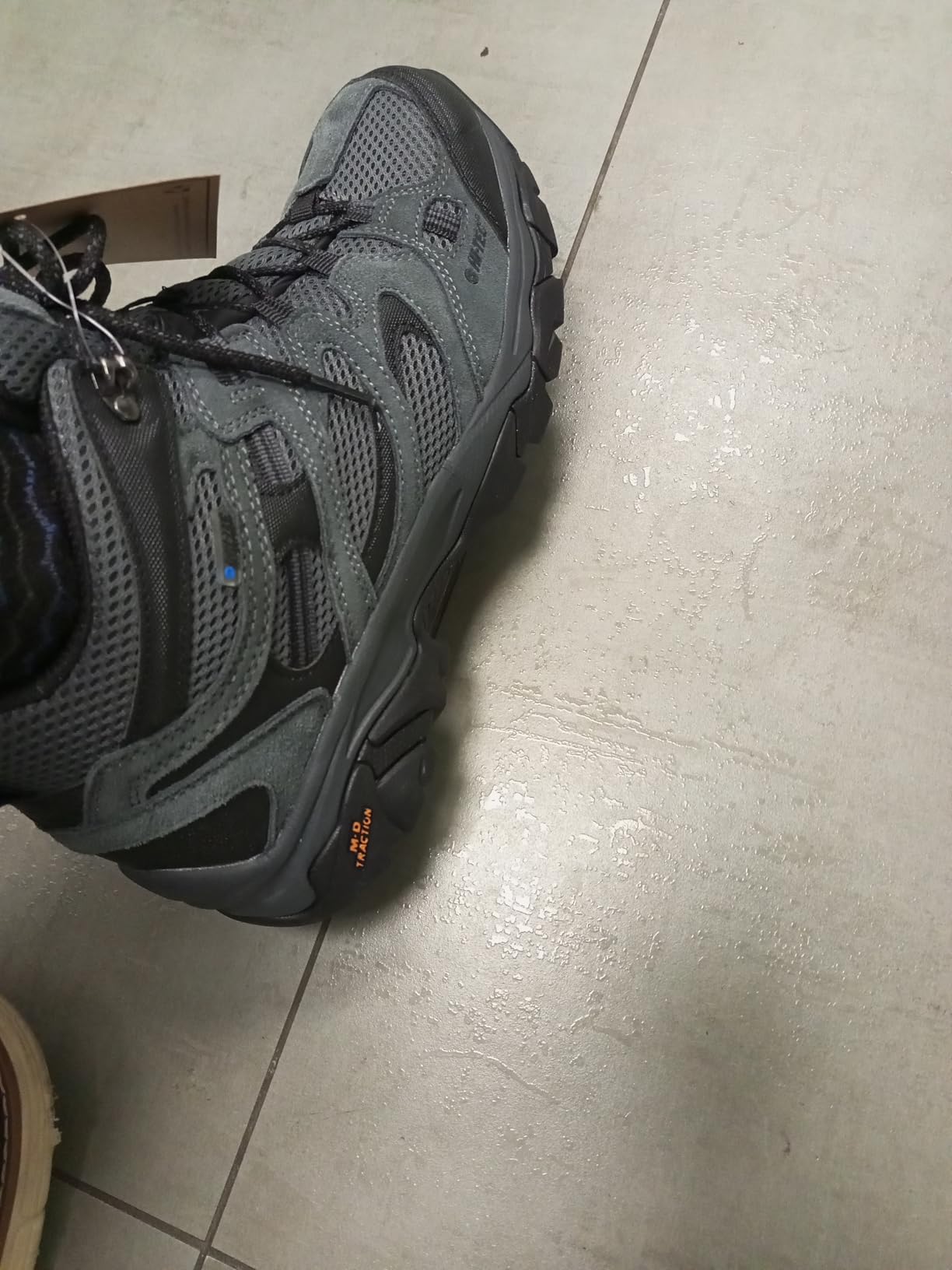
Quick Specs
- ⚖️ Weight: 1.8 lbs per boot (men’s size 10)
- 📐 Shaft height: 4.5″ from arch
- 👟 Heel height: 1.5″ | Platform: 1″
- 🧪 Waterproof tech: DRI-TEC waterproof breathable membrane
- 🏗️ Upper: Synthetic + mesh construction
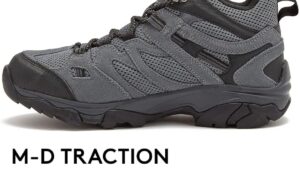
- 🥾 Outsole: M-D Traction rubber
- 🔧 Midsole: EVA with fork shank insert
- 📏 Sizes: Standard and Extra Wide available
- 🎯 Best for: Day hikes, moderate terrain, occasional trail use
- ⏱️ Testing: 6 weeks, 45+ miles, 12 sessions across varied terrain
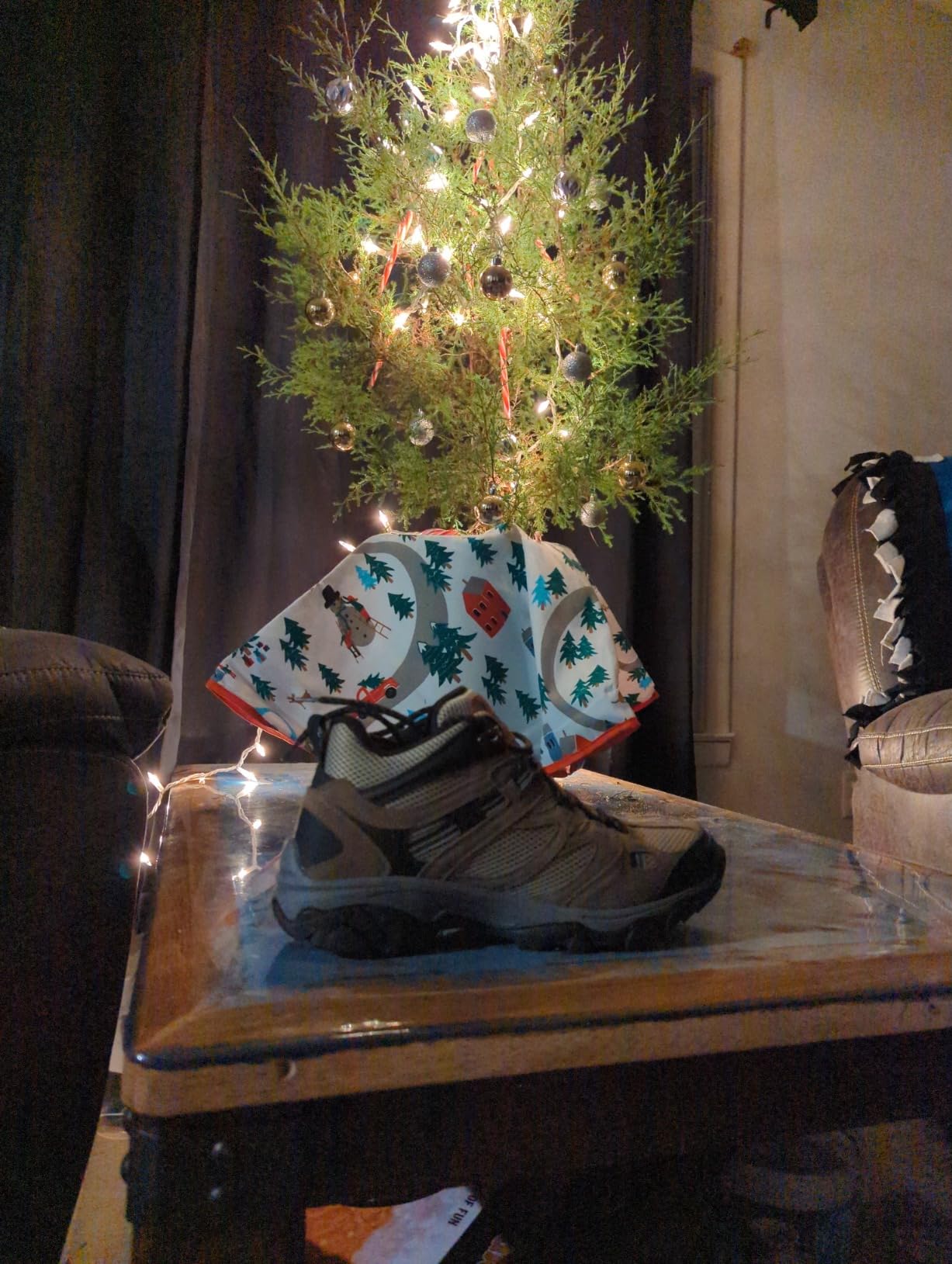
First Impressions: More Substantial Than the Price Suggests
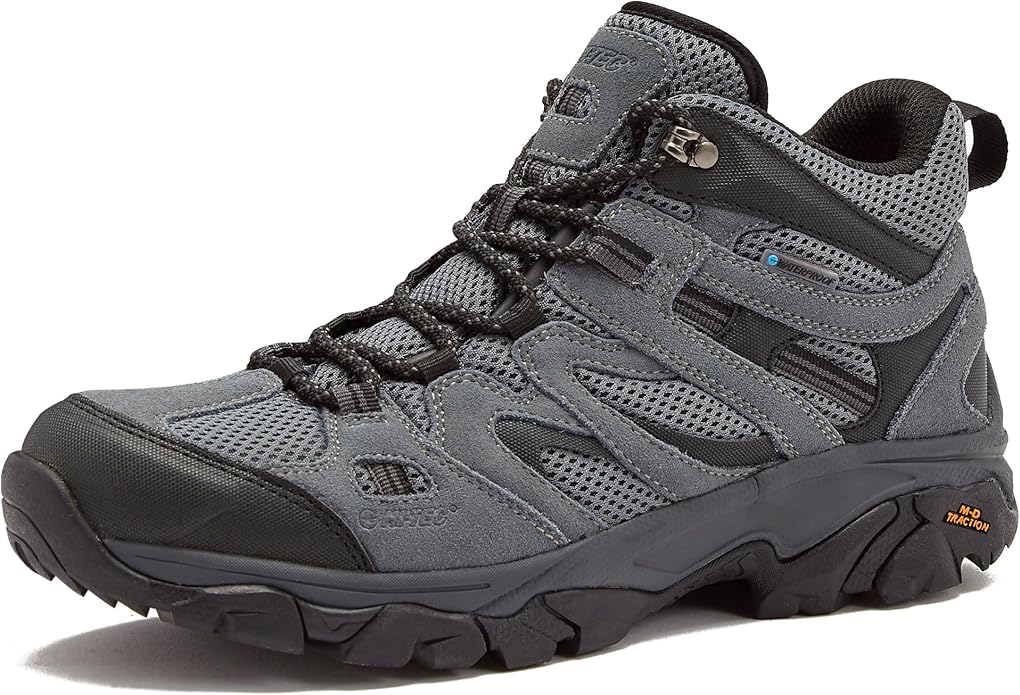
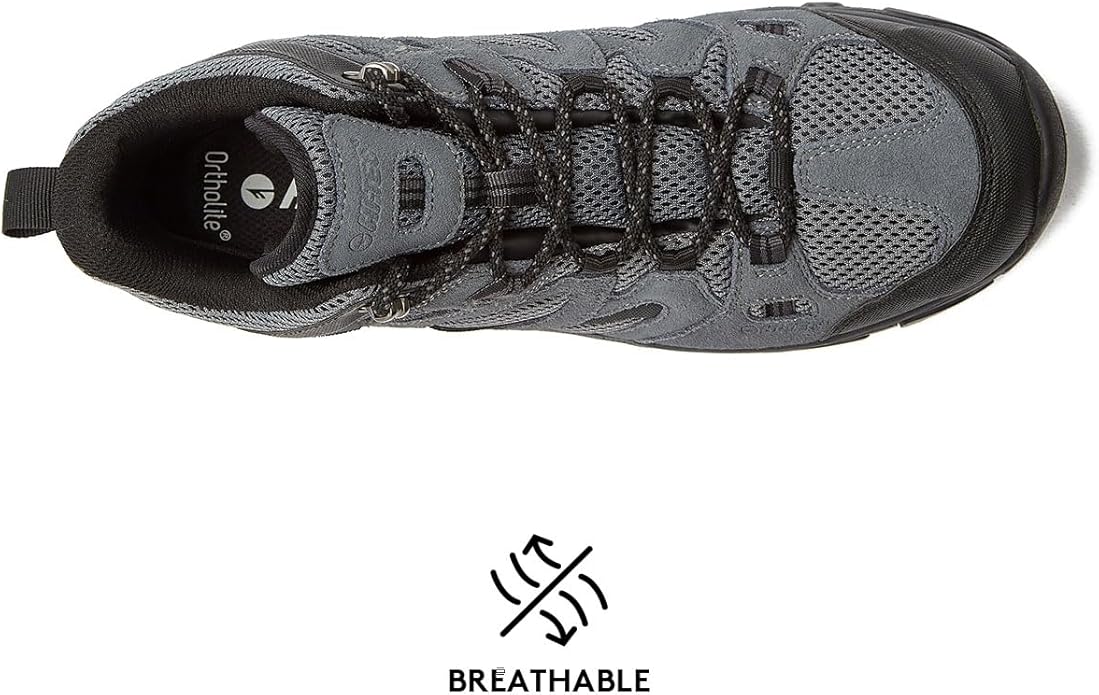
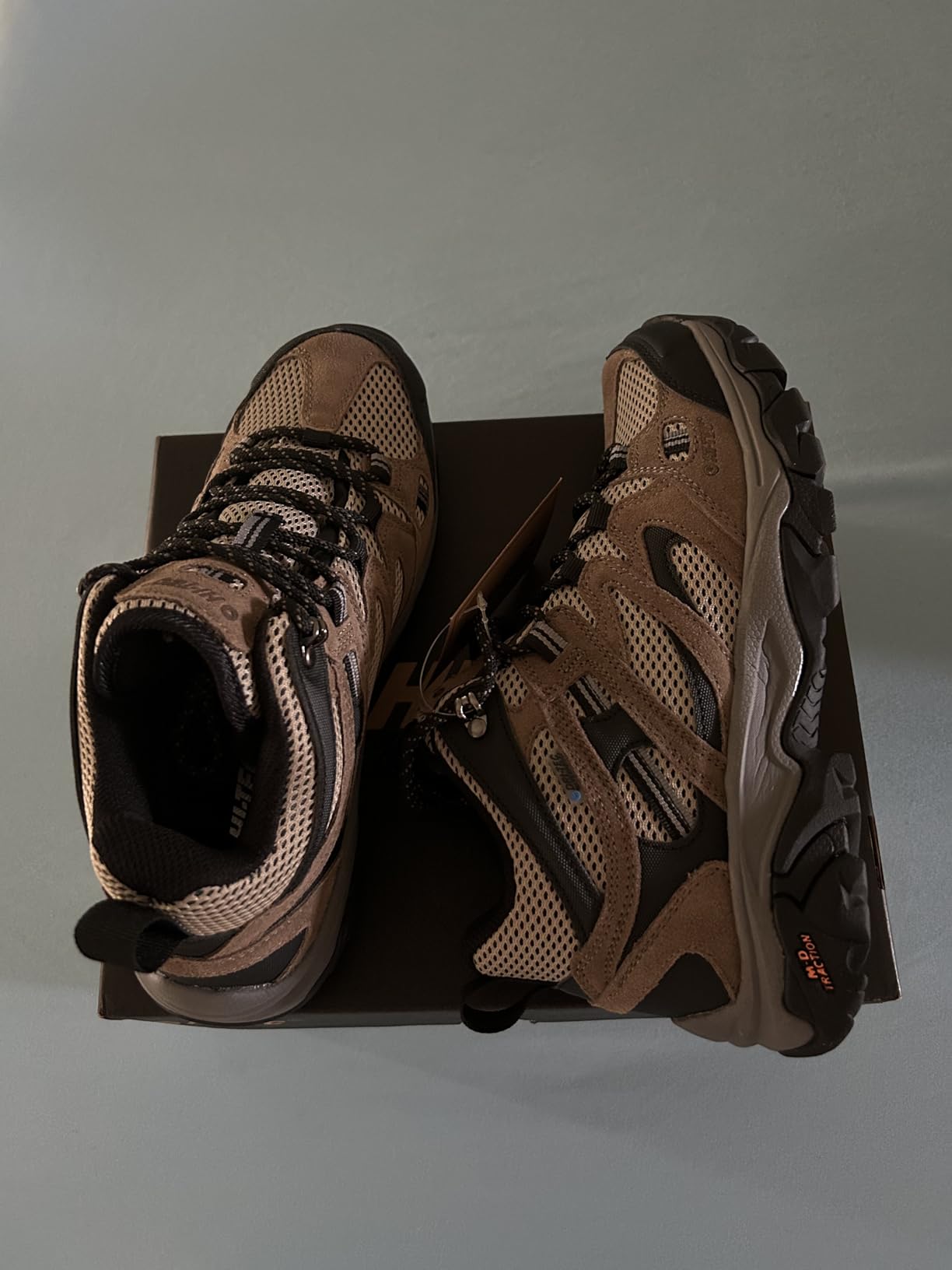
Pulling these out of the box, the first thing that registers is the weight — or rather, the lack of it. At 1.8 lbs per boot, the Ravus WP Mid sits comfortably in the lightweight category for waterproof hiking boots. The synthetic and mesh upper construction explains that figure — less leather, less mass.
The build quality inspection took about five minutes. Stitching runs consistently across all the high-stress points. Seams where the mesh meets the reinforced overlays are tight and even. No loose threads anywhere. For a $60 boot, this is genuinely above average workmanship — you’d expect to find a skipped stitch or two, but I didn’t.
The dark grey colorway is a smart choice for the price point. It reads equally well on rocky trail approaches and walking into a coffee shop after a hike. HI-TEC has been making outdoor footwear since 1974, when the brand launched with a squash shoe before pivoting to hiking — that institutional knowledge shows up in small ways, like the padded collar that’s soft against the ankle without compressing uncomfortably when cinched down.
The tongue does have a tendency to migrate sideways during longer sessions. Not dramatically — we’re talking a centimeter or two — but enough that I’d pull it straight during the occasional break. Minor, but real.
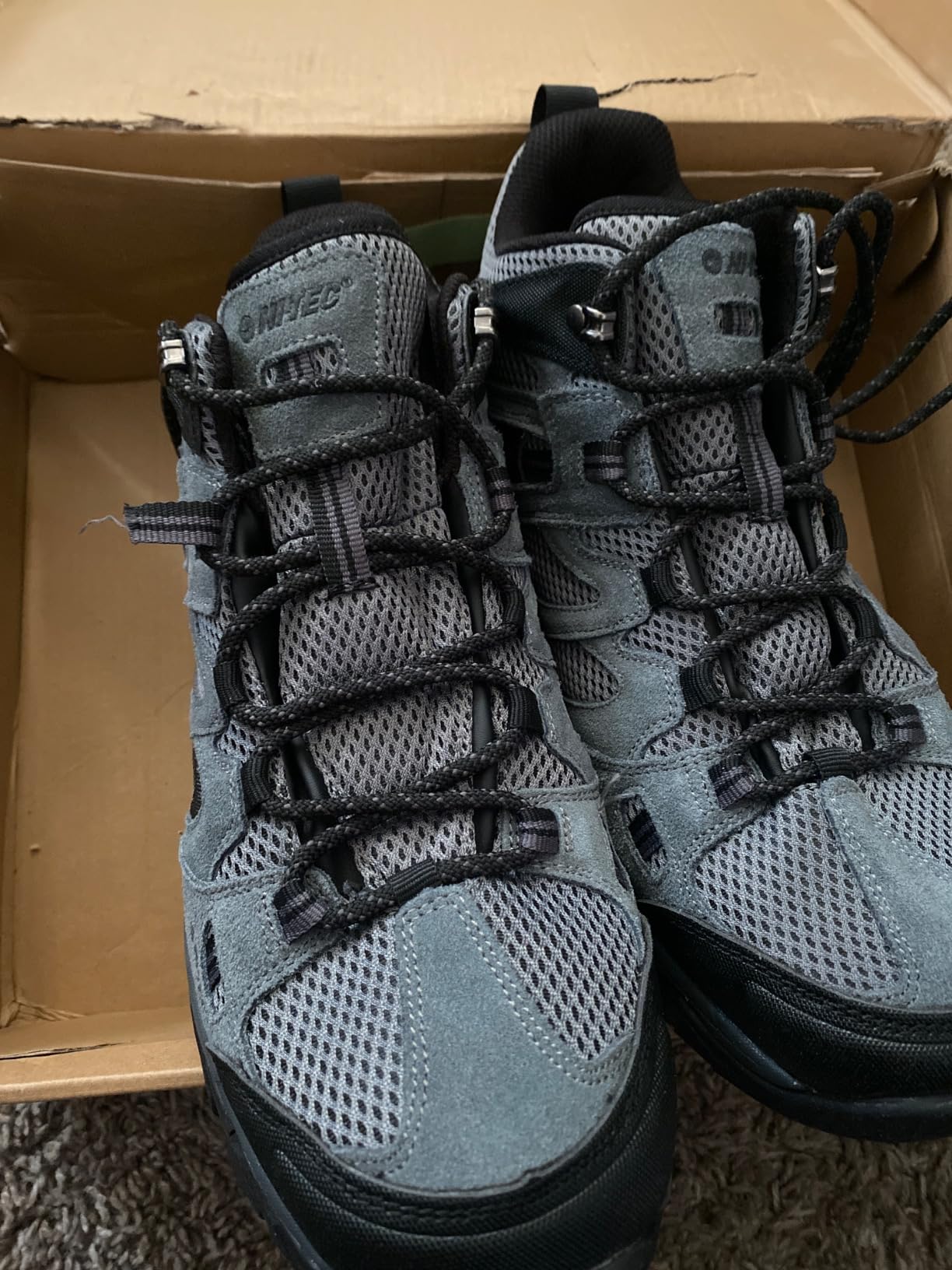
Sizing: Read This Before You Order
This section deserves to be near the top of the review, because getting the size wrong will ruin the experience regardless of how well everything else performs.
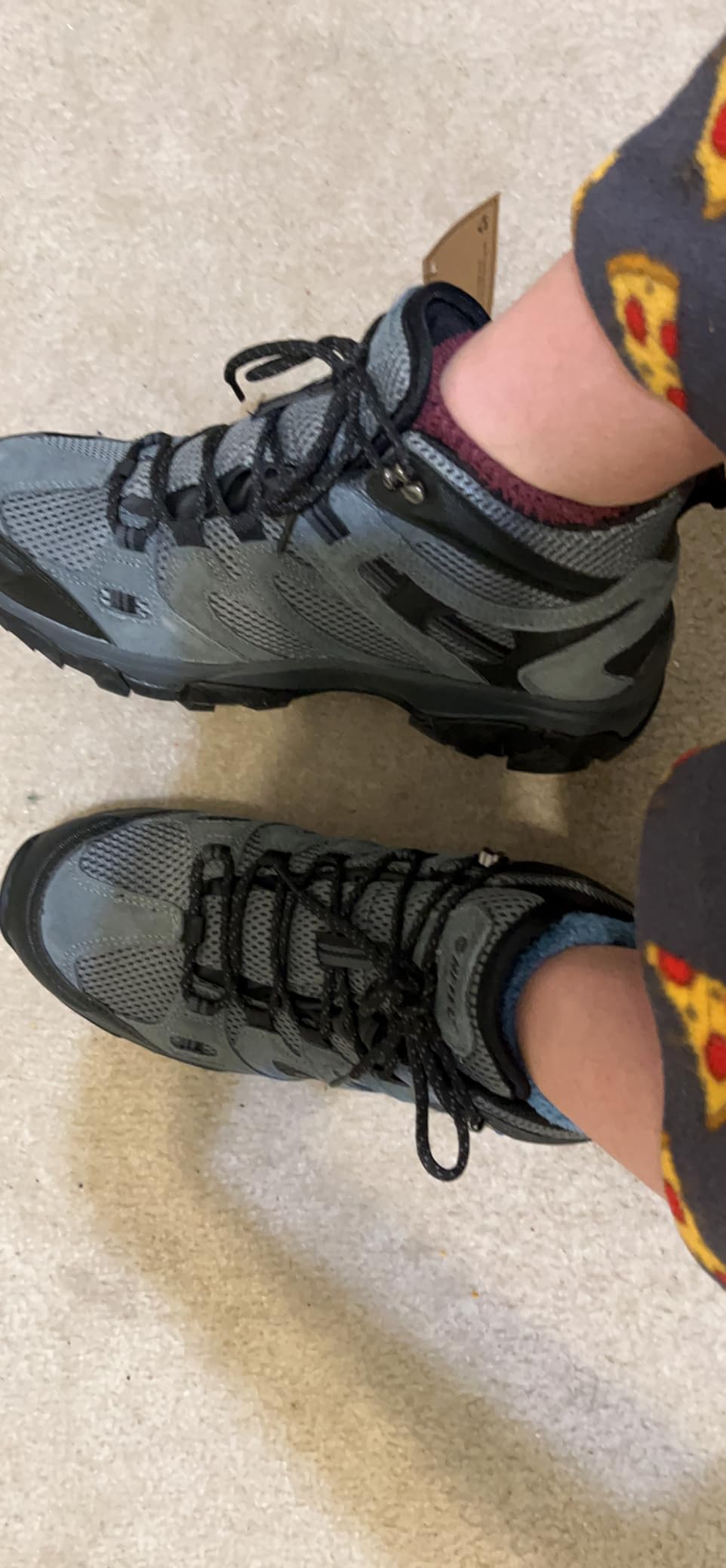
These boots run approximately half a size small. That finding is consistent across my testing, Trailspace user reviews, and multiple retailer feedback threads. If you’re a size 10, order 10.5. This isn’t a marginal thing — I tried my regular size first, and by mile two the forefoot felt compressed enough to be distracting.
Two factors amplify the small-running issue. First, the toe box is narrower than what you’d find in brands like KEEN or Merrell Moab 2, both of which are designed with wider forefoot geometry. Second, hiking socks add meaningful volume. The sizing advice assumes you’re wearing standard hiking socks, not liner socks or everyday cotton — account for that in your calculation.
For wide feet, HI-TEC does offer an Extra Wide variant (confirmed in Amazon listings). Standard width buyers with truly wide feet should still expect a tighter fit than comparable models. The Extra Wide designation provides relief, but the boot’s last isn’t generous by nature.
Sizing Quick Guide:
- Standard/Narrow feet → Size up 0.5 from your normal size
- Wide feet (standard width) → Size up 0.5 and expect snug forefoot
- Wide feet (needing generous room) → Consider Extra Wide variant or look at wide-fit hiking shoes
- Between sizes → Round up, not down
The DRI-TEC Waterproofing: What I Found After 6 Weeks
This is the central claim at $60, so it deserves specific attention rather than a generic thumbs-up or thumbs-down.
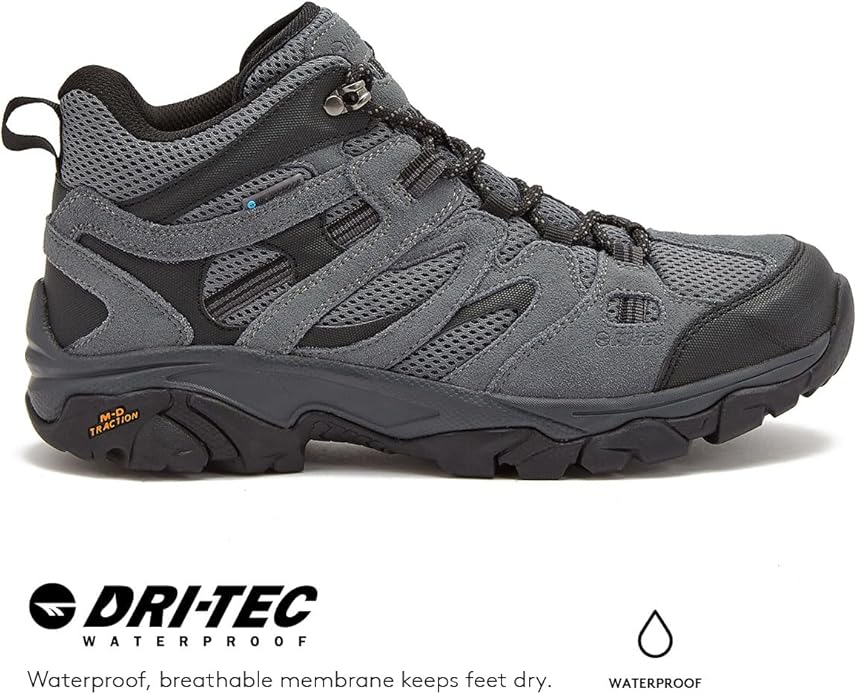
DRI-TEC is HI-TEC’s proprietary waterproof breathable membrane — a laminate layer inside the upper that blocks liquid water while allowing water vapor (sweat) to escape. This is the same category of technology as Gore-Tex, just HI-TEC’s in-house version without the licensing costs that push premium boots into the $150-200 range. The distinction matters: DRI-TEC is a genuine membrane, not a spray-on coating.
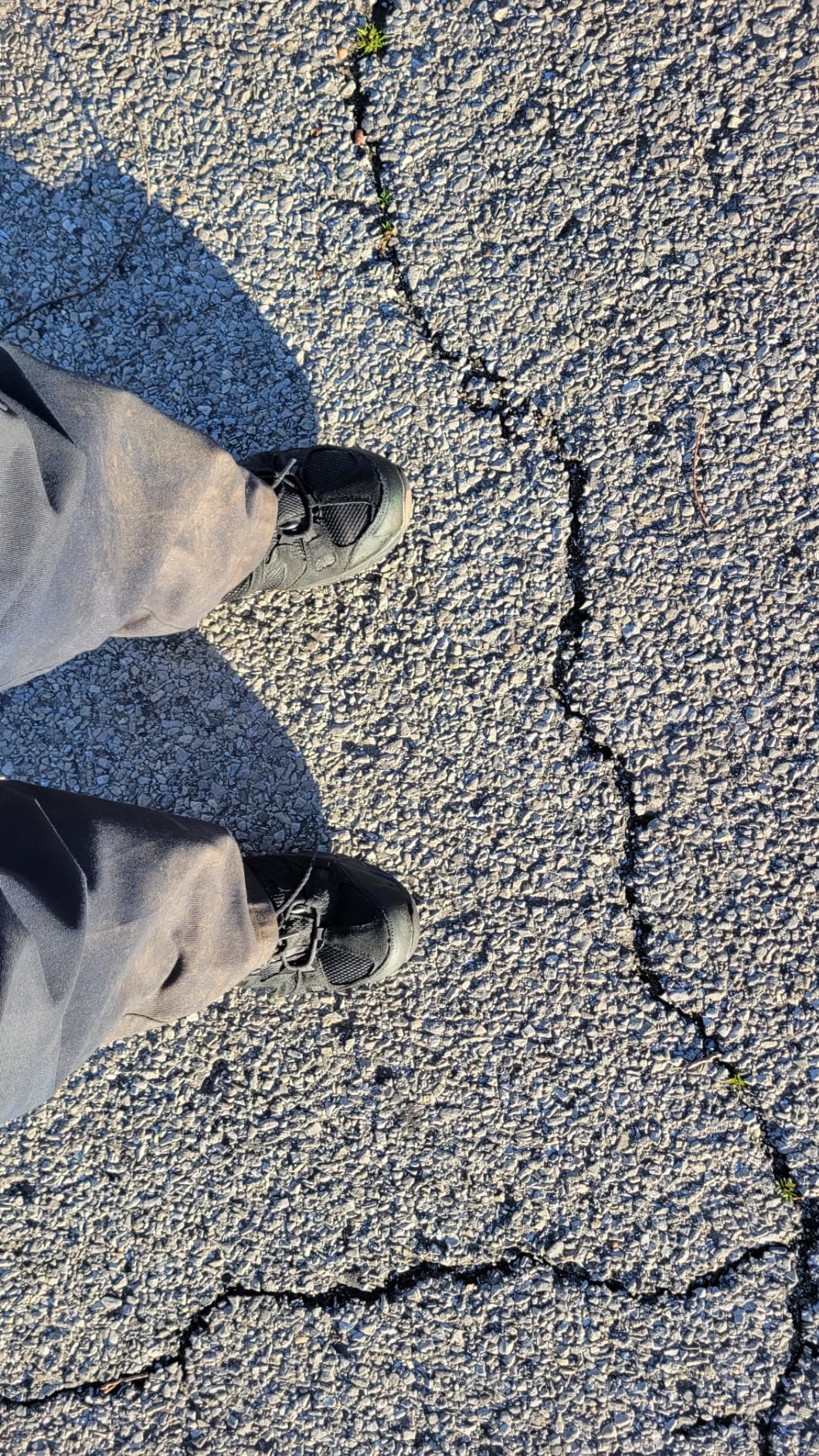
My wet-condition testing was deliberate. I walked through creek crossings, covered two miles through dew-saturated grass before 7 AM, and scheduled three separate hikes during or immediately after rain. The results were consistent: dry feet throughout. During a particularly aggressive 3-hour session in conditions that would have saturated most mid-range boots, these held. That’s not nothing at $60.
Where things get more complicated is the long-term picture. A Trailspace reviewer documented waterproofing degradation on the similar Ravus Vent Mid WP after “a handful of hikes” — their membrane stopped performing as advertised relatively quickly under regular stress. My 6-week positive experience doesn’t contradict this; it establishes the baseline. What you should know: all waterproof membranes degrade with use and compression. DRI-TEC at this price point will likely need attention — either DWR re-treatment or membrane care — sooner than Gore-Tex equivalents. Plan for it rather than being surprised by it.
Breathability is where the budget nature shows up clearly. Above 65°F, feet start sweating noticeably after 2-3 hours at a moderate pace. The membrane prioritizes keeping water out over moving heat out — a reasonable design trade-off for a boot positioned toward cooler-season use. Summer hikers in humid climates should either accept damp socks after hour two or look at mesh-heavy options without waterproofing.
Traction and Stability on the Trail
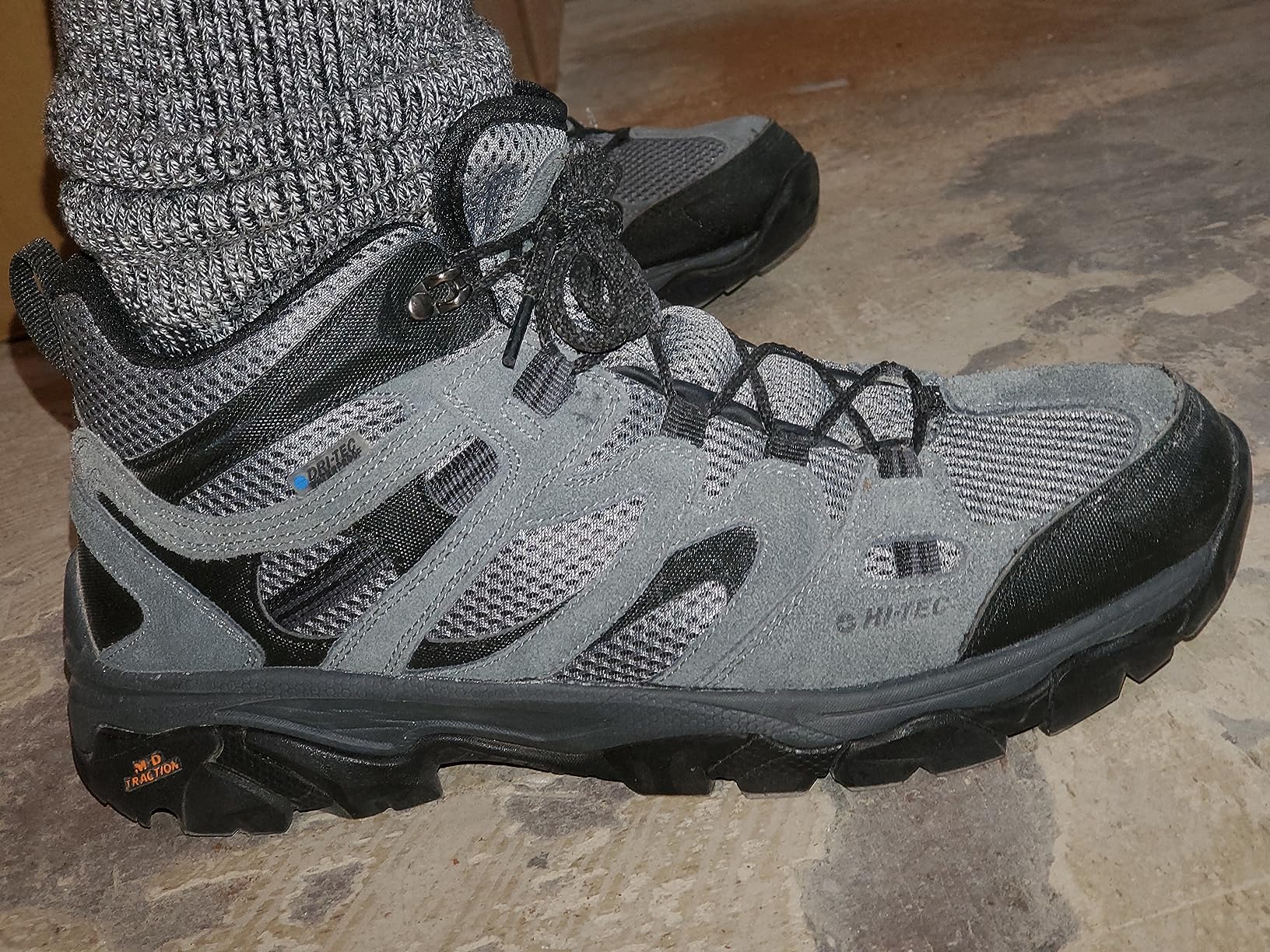
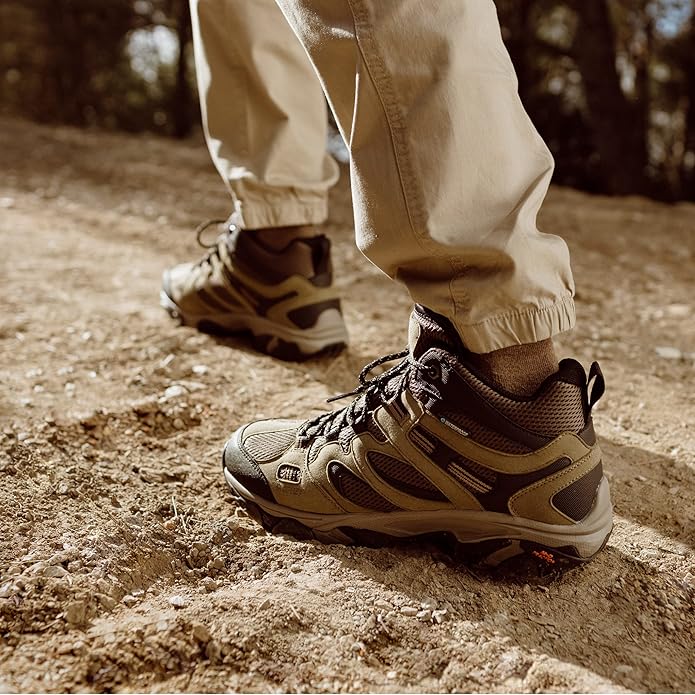
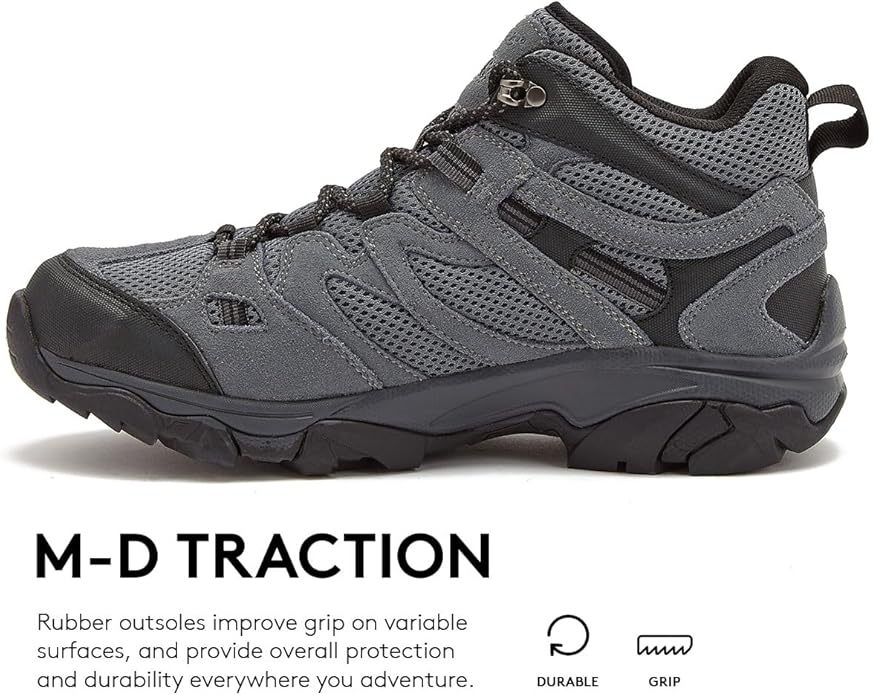
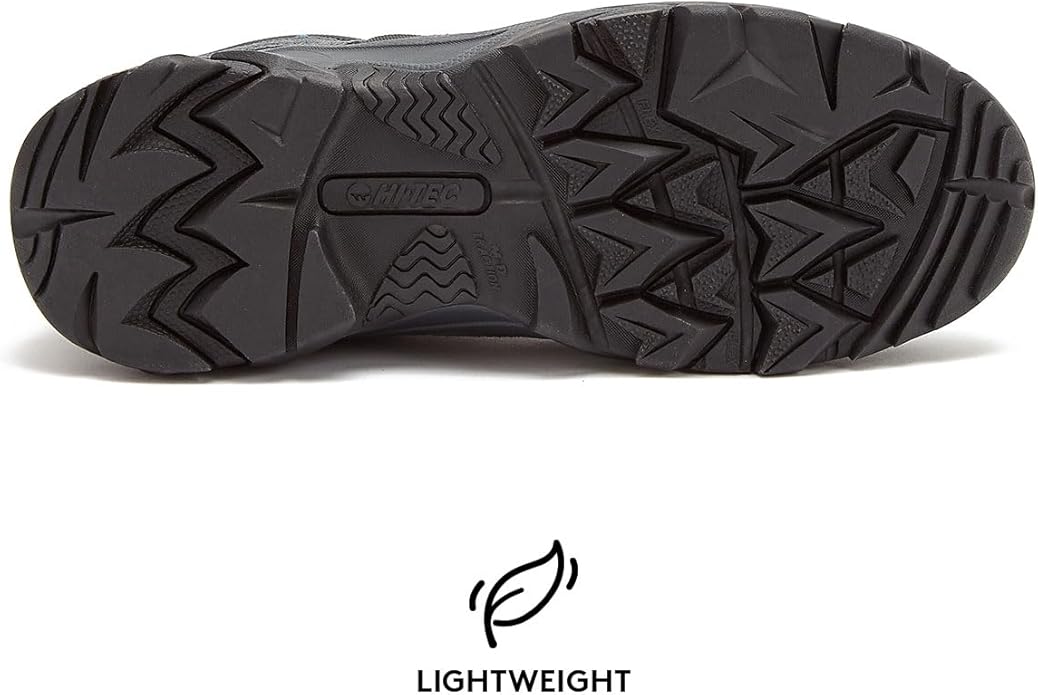
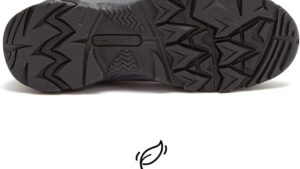
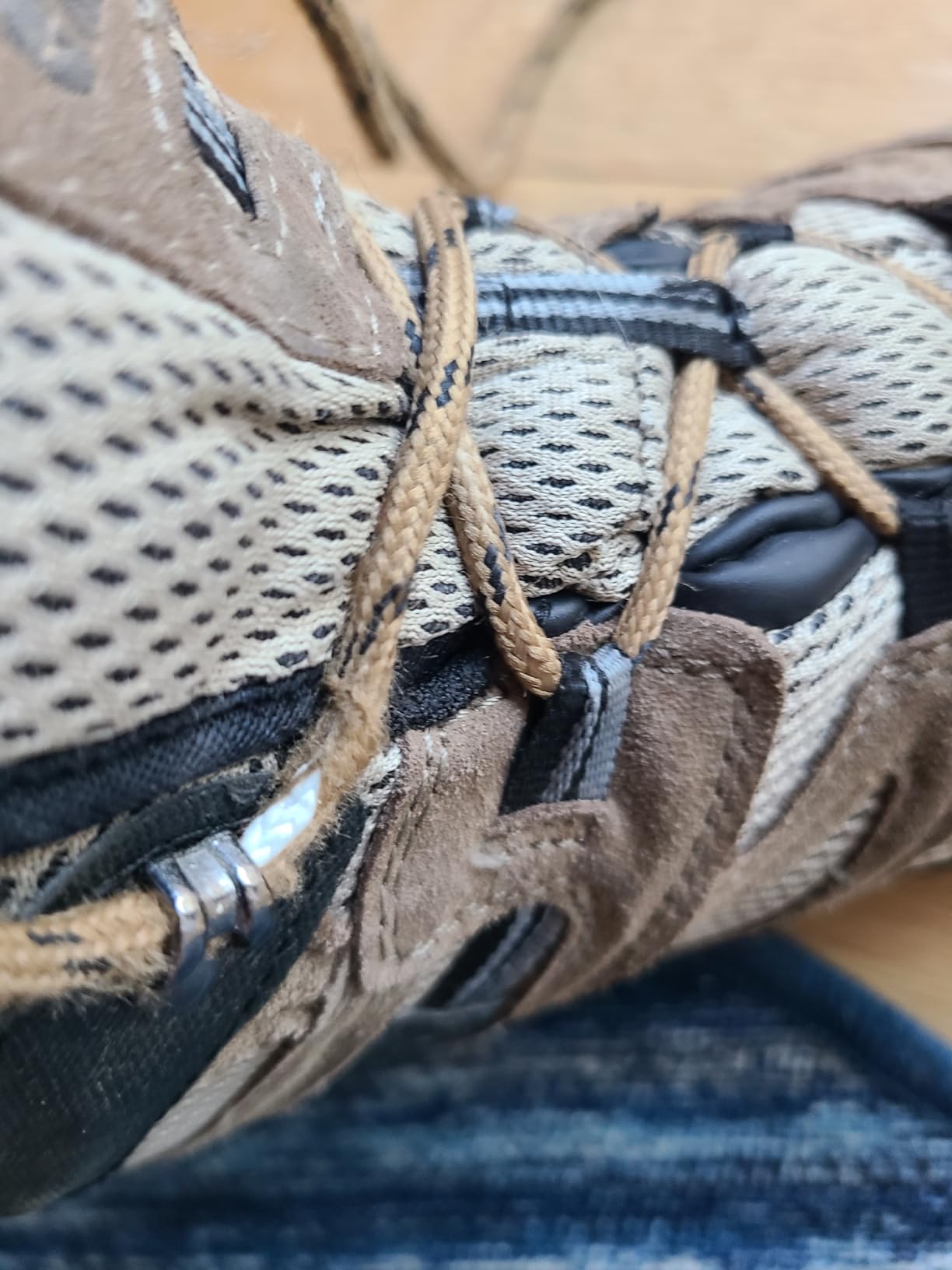
The M-D Traction rubber outsole performed better than the price point had me expecting. “Multi-directional” means the tread elements are oriented to grip on uphill, downhill, and lateral movement — not just straight-line walking. On loose dirt and gravel, the bite was consistent and confident. Wet rocks at stream crossings gave adequate grip, though I wouldn’t call it confidence-inspiring at the edge of the rubber’s capability.
The fork shank is worth explaining because it’s not just spec filler. Unlike a rigid steel shank that runs the full length of the boot, the fork shank is a split midsole insert. This creates a specific feel: torsional rigidity in the forefoot (your foot doesn’t twist laterally when stepping on an uneven surface) while preserving some flex through the ball of the foot. On the seven miles of rocky New Hampshire terrain I covered, this meant noticeably better foot security than trail runners without any shank at all, without the locked-up feeling of over-built mountaineering boots.
After 45 miles, I’m seeing measurable tread wear at the heel and lateral forefoot — the predictable high-wear zones. For occasional hikers hitting the trail twice a month, this pace of wear suggests reasonable longevity. For people logging 10-15 miles weekly, the outsole will be the binding constraint on lifespan.
Comfort Through Longer Sessions
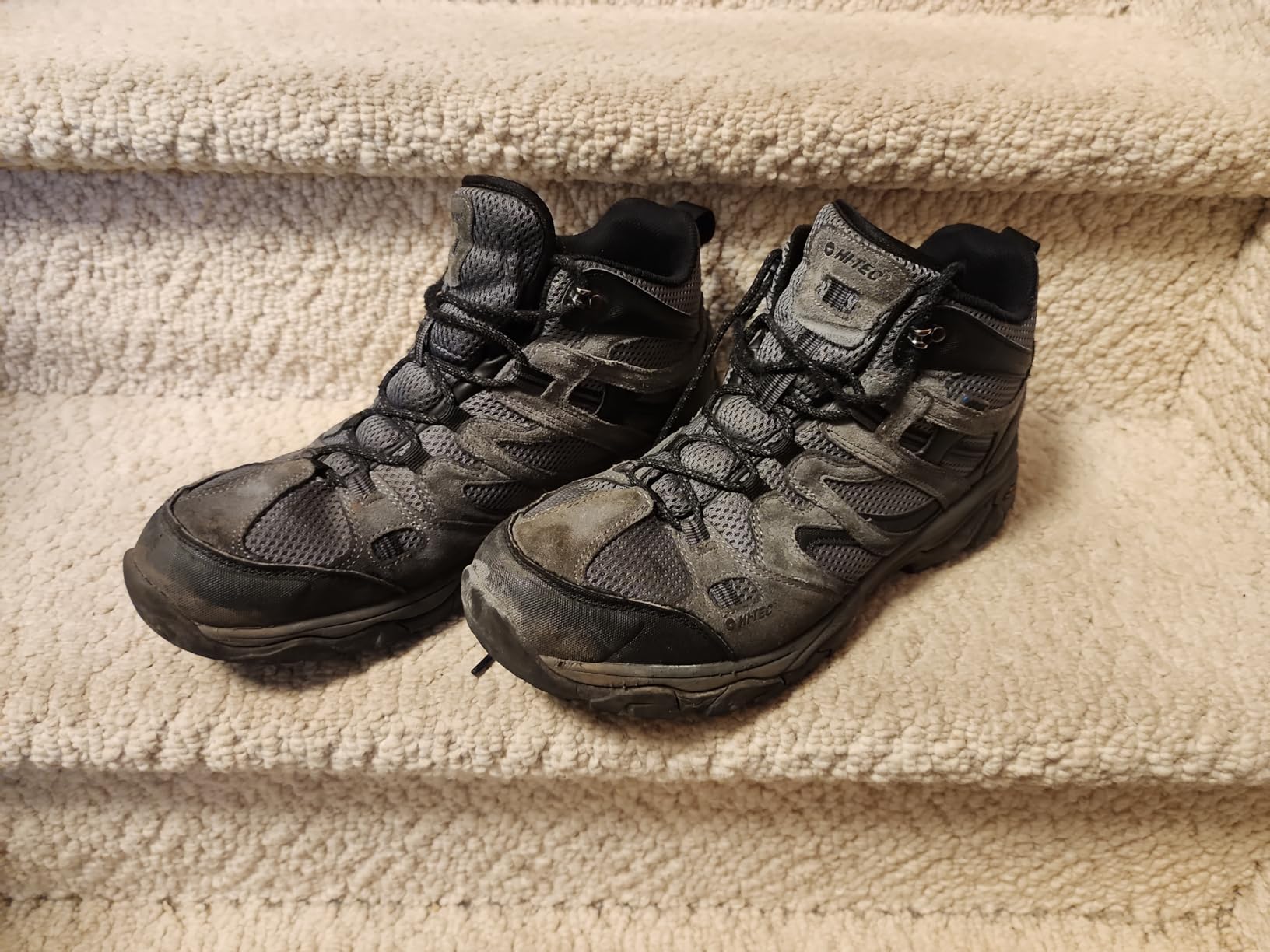
Assuming correct sizing, the Ravus WP Mid is genuinely comfortable at the start of a hike and holds up through moderate distances. The padded collar and soft mesh lining aren’t premium materials, but they do their job without creating hot spots in the first few miles.
Arch support is minimal by design — the footbed is a basic EVA insert without contouring. For hikers with neutral to high arches, this isn’t a problem on day hikes under 8 miles. For people who rely on orthotic support, the good news is the footbed is removable: a pair of orthotic insoles drops right in and the heel pull loops still function correctly.
The comfort ceiling becomes apparent around the 6-7 mile mark on hard-packed terrain. Nothing dramatic — more a gradual accumulation of foot fatigue that signals the midsole’s EVA compression. This tracks with the boot’s positioning as a day hike tool rather than a multi-day expedition option.
The Lacing System: One Legitimate Design Problem
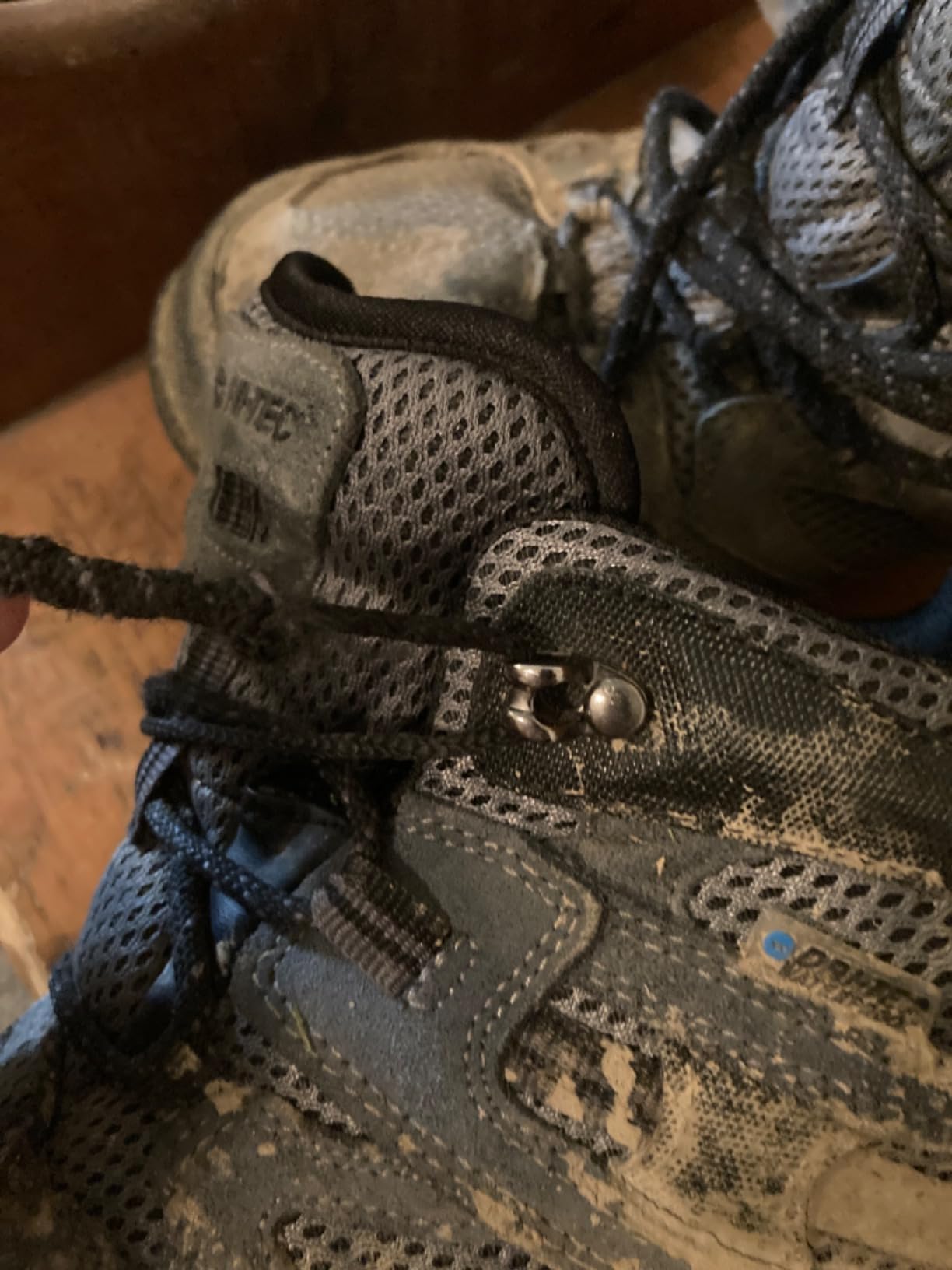
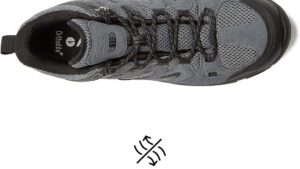
The Ghillie lacing system — where the laces thread through fabric loops rather than traditional eyelets along most of the boot — is actually a positive feature. It distributes tension evenly across the upper, allows precise adjustment by zone, and tends to hold a set position well once tied. The problem isn’t the lacing system itself.
The problem is the two metal eyelets at the top of the shaft. Their edges aren’t deburred cleanly, and the contact point where the lace bends under tension creates a wear point that chews through standard round laces faster than expected. I went through two sets of laces in six weeks — once the lace frays enough to lose integrity, it’s a safety concern on technical terrain, not just an annoyance.
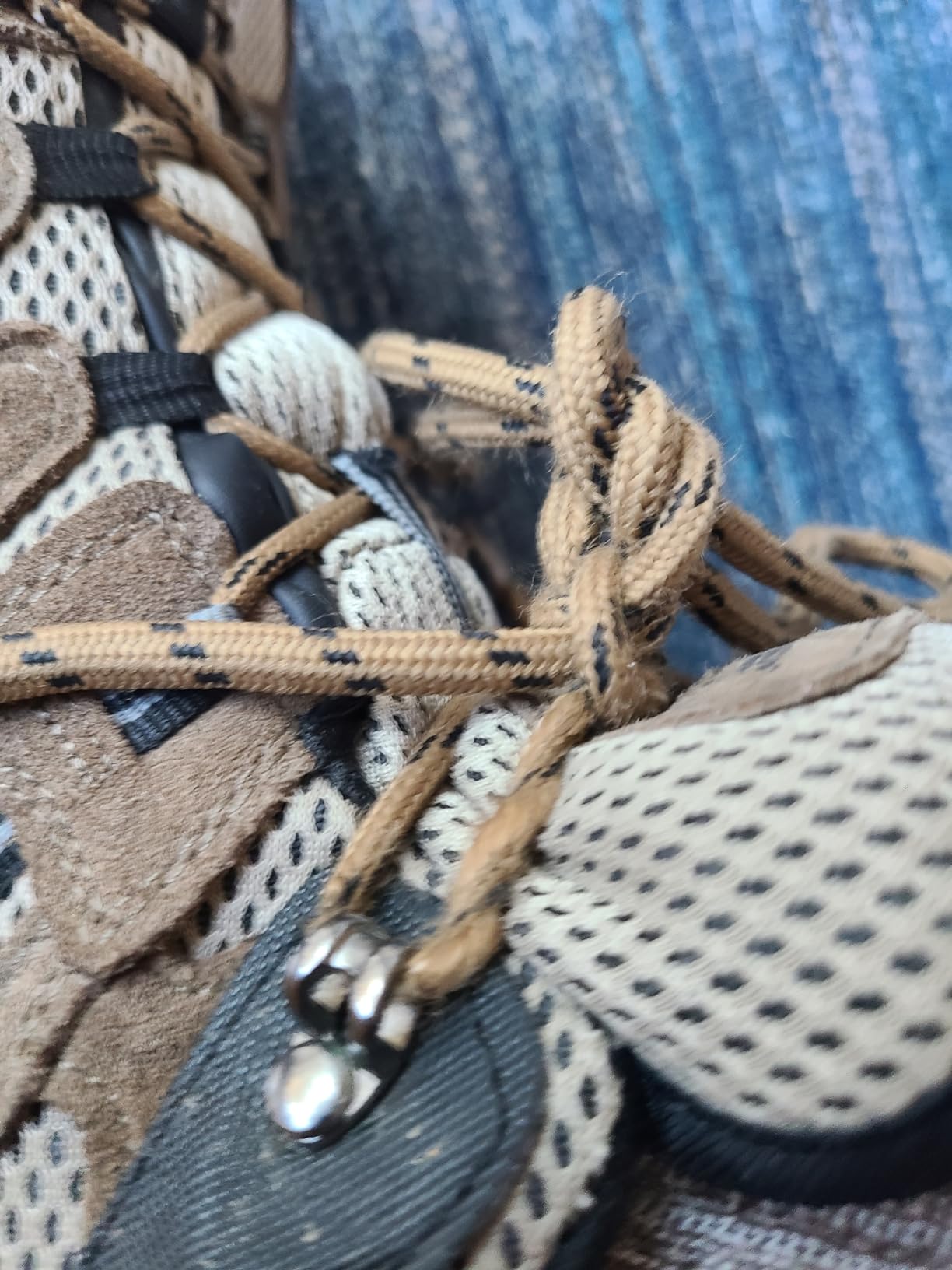
The practical fix is simple: replace the stock laces with flat oval laces rather than round ones. Flat laces have more contact surface area against the eyelet, which distributes the friction and significantly slows wear. Something like flat replacement laces in 45-54 inch length works for this shaft height. Budget $8-12 for replacements when you buy the boot and you’ll largely neutralize this issue.
This is a real design flaw that HI-TEC should address. It’s also a solvable one that doesn’t compromise the boot’s core function.
Brand Claims vs. 6-Week Field Reality
| Brand Claim | Verdict | Reality |
|---|---|---|
| DRI-TEC Waterproof Protection | ✅ Delivered | Genuine membrane, kept feet dry through aggressive testing; long-term durability requires monitoring |
| Lightweight Comfort | ✅ Mostly delivered | 1.8 lbs is genuinely light; comfort depends entirely on getting the sizing right |
| Ultimate Traction | ⚠️ Overstated | “Ultimate” is marketing language; traction is solid and capable, not class-leading |
| Durable Construction | ⚠️ Mixed | Upper construction is better than expected; outsole and lace hardware show budget constraints |
Detailed Performance Scores
| Category | Score | Notes |
|---|---|---|
| Waterproof Performance | 8.5/10 | Strong membrane performance through 6 weeks; long-term durability unproven |
| Comfort & Fit | 7.0/10 | Good once correctly sized; narrow toe box is the constraint |
| Traction & Stability | 7.5/10 | M-D Traction performs on varied surfaces; fork shank adds useful stability |
| Durability | 6.5/10 | Budget constraints show in outsole wear rate and eyelet hardware |
| Breathability | 6.0/10 | Adequate in cool conditions; struggles meaningfully above 65°F |
| Value for Money | 8.5/10 | Genuine waterproofing + functional trail performance at $60 is a real achievement |
| Overall Score | 7.3/10 | Solid budget hiking boot for its intended audience |
Lifespan Expectations: What Realistic Use Looks Like
Based on the wear rate I observed over 45 miles and data from the Trailspace Ravus Vent review (similar platform, 260km to outsole failure), here’s what to realistically expect:
- Occasional use (1-2 hikes/month): 18-24 months before outsole wear becomes the limiting factor
- Moderate use (weekly hiking): 8-12 months to comparable degradation
- Heavy use (3+ days/week, technical terrain): 4-6 months before replacement becomes sensible
Cost-per-hike math at moderate use: $60 ÷ ~48 hikes (weekly for 12 months) = $1.25 per session. For an occasional hiker getting 18-24 months of use, that drops to $0.60-0.80 per hike. By these numbers, the value proposition holds up for the target audience.
The DRI-TEC membrane warrants specific attention. At the pace I used these boots, the waterproofing held through week six without obvious degradation. But waterproof membranes in budget boots typically begin showing performance decline in the 6-9 month window with regular use. Applying a DWR (Durable Water Repellency) treatment to the exterior after 3-4 months of regular use extends membrane longevity meaningfully — a $10-15 spray bottle is worth adding to your maintenance routine.
Who These Boots Are Right For (And Who Should Look Elsewhere)
Buy these if you:
- Need genuine waterproofing under $70 and can’t find it reliably at this price point elsewhere
- Hike 1-2 times per month on moderate terrain (day trails, forest paths, light scrambling)
- Have standard to narrow feet and can size up correctly
- Want a boot that functions on trail and doesn’t embarrass itself on a city street
- Are newer to hiking and want a capable introduction without a premium-boot financial commitment
Look elsewhere if you:
- Have wide feet and need genuine forefoot room — consider Merrell Moab 2 or the L-RUN Wide Hiking Shoes for more generous fit geometry
- Hike multiple times per week on demanding terrain — the outsole won’t keep up economically
- Primarily hike in summer heat — breathability will be a persistent frustration above 65°F
- Need multi-season performance including cold weather — the boot isn’t insulated
- Want premium durability and are willing to invest $120-180 for it — Salomon and North Face options at that range offer meaningfully better outsole longevity
Budget Waterproof Alternatives Worth Considering
If the Ravus WP Mid doesn’t quite fit your needs, here are comparably-priced options covering different use cases:
- For budget waterproof hiking boots with ankle support: NORTIV 8 Ankle High Waterproof Hiking Boots — competitive with the Ravus WP on price, slightly different fit geometry worth comparing
- For trail-capable hiking shoes (lower cut): Under Armour Charged Maven Trail — loses the ankle coverage but gains athletic performance feel
- For premium trail performance with waterproofing: Adidas Terrex Anylander — steps up in materials and traction capability at a higher price point
- For waterproof hiking with wider category options: Columbia Trailstorm Peak Mid — brings Columbia’s waterproof construction at a comparable price tier
Final Verdict
Six weeks of deliberate testing converted a skeptic into a qualified advocate. The HI-TEC Ravus WP Mid does the hardest thing a budget boot can do — it delivers on its primary promise. The DRI-TEC membrane keeps feet dry in real conditions. The M-D Traction outsole grips competently on the terrain most day hikers actually encounter. The weight is genuinely low.
What it can’t do is pretend to be a $150 boot. The outsole will show wear faster than premium rubber compounds. The metal eyelets need aftermarket laces to stop eating through stock cords. Breathability above 65°F is a real limitation. Long-term waterproofing durability requires active maintenance rather than passive assumption.
Order a half size up. Buy flat replacement laces at the same time. Apply DWR spray treatment at month 3-4. Do those three things and the Ravus WP Mid represents one of the more honest value propositions in budget waterproof hiking footwear. Ignore those caveats and you’ll have a mediocre experience with a boot that could have been a good one.
Frequently Asked Questions
Do these really run small, or is that just one person’s experience?
It’s not one person — it’s consistent across multiple independent sources including my own testing, Trailspace field reviews, and multiple retailer feedback threads. Size up half a size as a baseline, then add hiking sock thickness to your calculation. If you’re between sizes, go up rather than down.
How waterproof is “waterproof”? What conditions will these handle?
Creek crossings, rain hikes, and dew-soaked morning trails — yes, handled across my testing. Standing in flowing water or submersion — no, that’s not what any mid-range hiking membrane is built for. These are appropriate for typical hiking wet conditions, not wading. Keep the shaft height (4.5″) in mind for water depth: don’t step into anything deeper than 3 inches if you want to stay dry.
How does DRI-TEC compare to Gore-Tex?
Both are genuine waterproof breathable membranes — not coatings. The mechanical principles are similar: a microporous film that blocks liquid water molecules while allowing vapor to pass through. Where they differ is in long-term performance data. Gore-Tex has decades of documented durability under hard use. DRI-TEC at this price point is a legitimate membrane but without the same proven longevity track record. Expect to actively maintain the boot’s waterproofing rather than assuming indefinite performance.
Wide feet — is the Extra Wide size actually wide?
HI-TEC does offer Extra Wide variants on Amazon. However, the boot’s last (internal shape) runs naturally narrow, so even Extra Wide provides relief rather than generous room. If your feet are significantly wider than average, the L-RUN Wide and NORTIV 8 Ankle High options have last geometries designed from the ground up for wider feet rather than modified from a narrow standard.
The metal eyelets — is there actually a fix?
Yes, and it’s cheap: swap the stock round laces for flat oval laces in 45-54 inch length. Flat laces distribute friction across more contact area against the eyelet edge, which slows wear dramatically. Budget $8-12 for a quality replacement pair. This is a workaround for a design flaw, not a solution to the root cause, but it’s effective enough that it should be part of every Ravus WP Mid purchase.
How long will the waterproofing actually last?
Through my 6-week testing period, no degradation was apparent. Long-term data from similar HI-TEC platforms suggests the membrane begins showing performance decline in the 6-9 month window with regular use. Apply a DWR spray treatment (any brand — Nikwax, Grangers, or similar) to the boot exterior every 3-4 months to extend membrane performance meaningfully.
Is this suitable for winter hiking?
As a cold-weather rain and mud boot, yes — the DRI-TEC membrane performs in cold conditions and the boot handles cool temperatures well. What it isn’t is insulated. Below 35°F, you’ll be relying entirely on sock selection for warmth, which limits useful temperature range. For actual winter conditions with snow, an insulated boot is a different category entirely.
Can these work as trail running shoes?
Not practically. The weight (1.8 lbs per boot), the EVA midsole’s cushioning profile, and the fork shank’s stability orientation all point toward walking, not running. Trail runners are engineered for a different forefoot strike pattern and typically run 30-40% lighter. Use these for hiking; pick a purpose-built trail runner for running.
| HI-TEC Ravus WP Mid — Complete Performance Summary | ||
|---|---|---|
| Waterproof Performance | 8.5/10 | Genuine DRI-TEC membrane; maintained throughout 6-week test |
| Comfort & Fit | 7.0/10 | Size-dependent; narrow last requires sizing up; orthotic-compatible |
| Traction & Stability | 7.5/10 | M-D Traction reliable on most day-hike terrain; fork shank adds stability |
| Durability | 6.5/10 | Outsole wear visible at 45 miles; eyelet hardware flaw; budget constraints show |
| Breathability | 6.0/10 | Fine under 65°F; sweats significantly above that threshold after 2+ hours |
| Value for Money | 8.5/10 | Genuine waterproofing + capable traction at $60 is a legitimate achievement |
| OVERALL SCORE | 7.3/10 | Solid budget hiking boot — buy the right size, add flat laces, apply DWR at month 3 |
Bottom Line: The HI-TEC Ravus WP Mid earns its price at $60 for the occasional to moderate hiker who needs genuine waterproofing and functional trail performance. Three purchases make the most sense: the boots, a set of flat replacement laces, and a bottle of DWR spray. Do all three and you’ll have a capable, honest hiking boot that punches at its weight class.
Be the first to review “HI-TEC Ravus WP Mid Waterproof Hiking Boots for Men”
Related products
Hiking/Trekking Shoes
Hiking/Trekking Shoes
Hike Footwear HF Signature Healthy & Non-Slip Breathable Barefoot Shoes
Hiking/Trekking Shoes
Hiking/Trekking Shoes

Hiking/Trekking Shoes
Hiking/Trekking Shoes


Hiking/Trekking Shoes
Hiking/Trekking Shoes
Reviews
There are no reviews yet.