
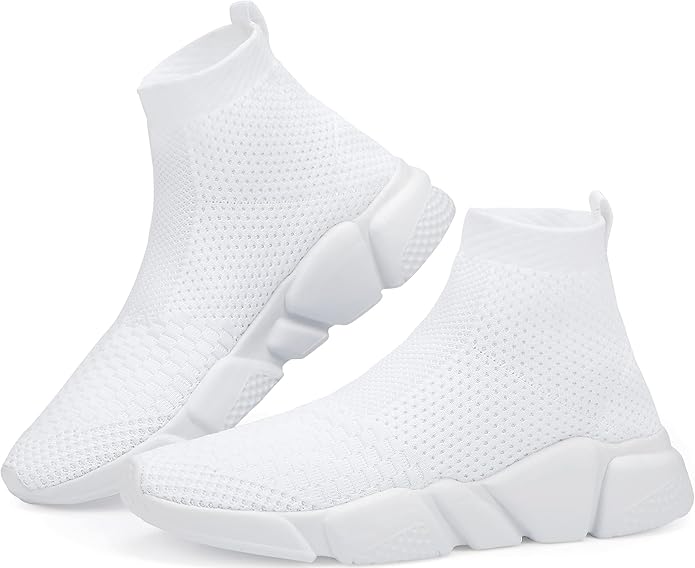
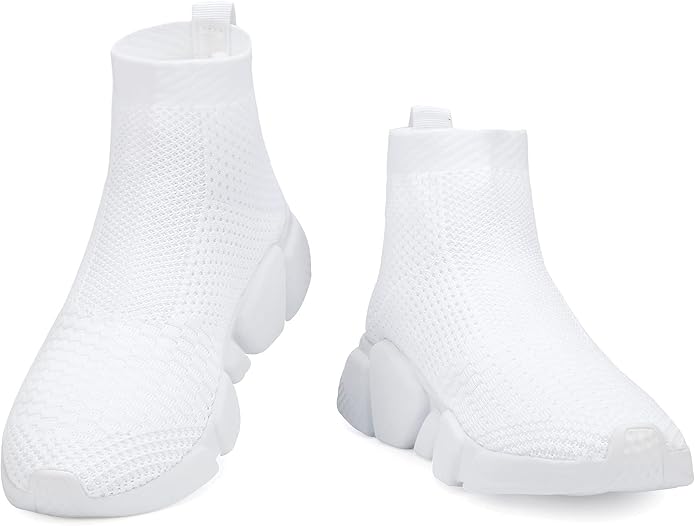
Someone at a work conference last fall looked at my feet and asked if those were from some boutique brand he hadn’t heard of. When I said they were $40 shoes from Amazon, he pulled out his phone mid-conversation to find them. That moment prompted me to actually test these seriously instead of just casually wearing them around. I’m Mike, 180 lbs, a father of teenage sons who destroy every decent shoe I buy for them — so budget footwear that holds up is a personal priority. Here’s six weeks of honest testing.
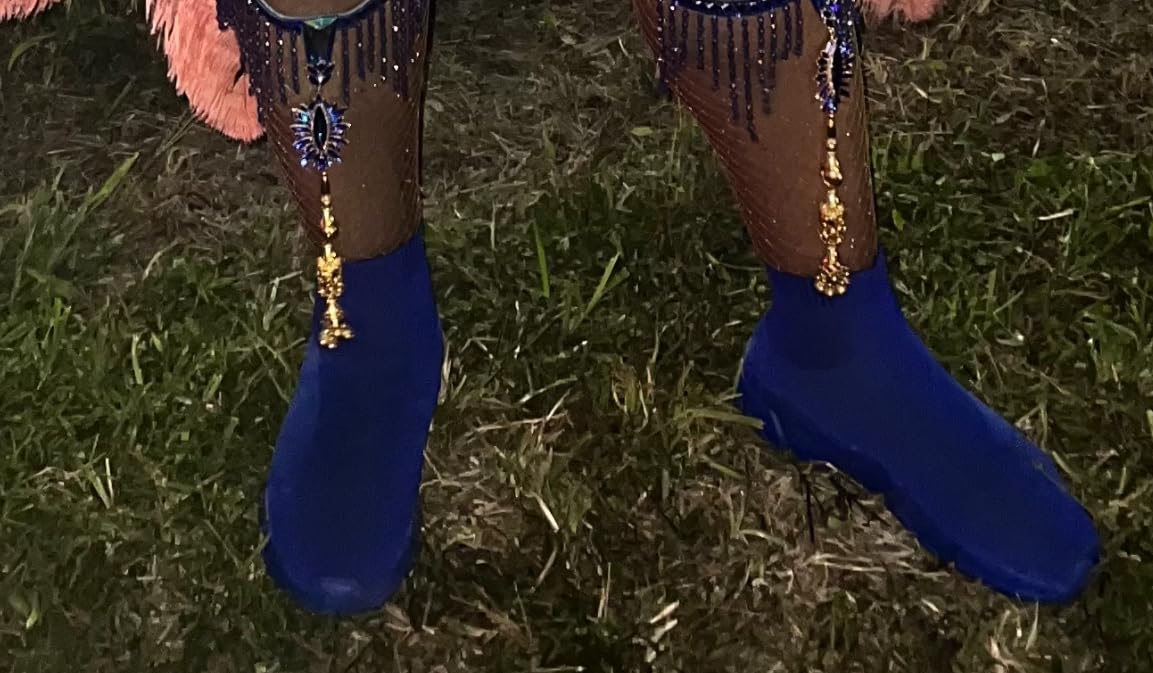
What You’re Actually Getting
Before the experience breakdown, here’s the product on paper:
- 💰 Price: $32–47 depending on retailer (Amazon runs cheaper; Walmart lists around $46)
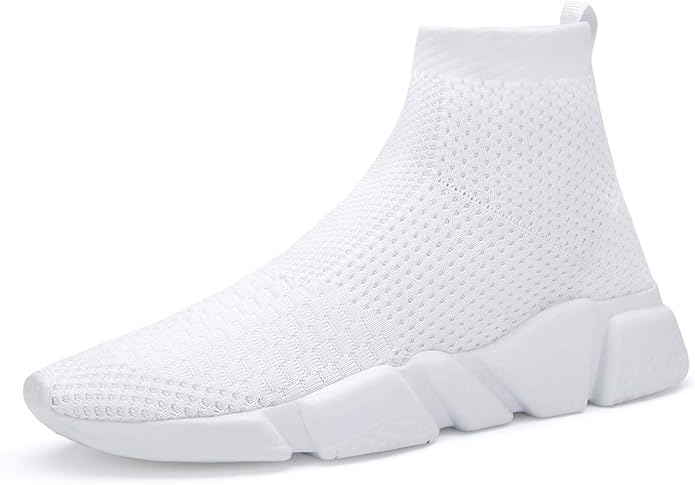
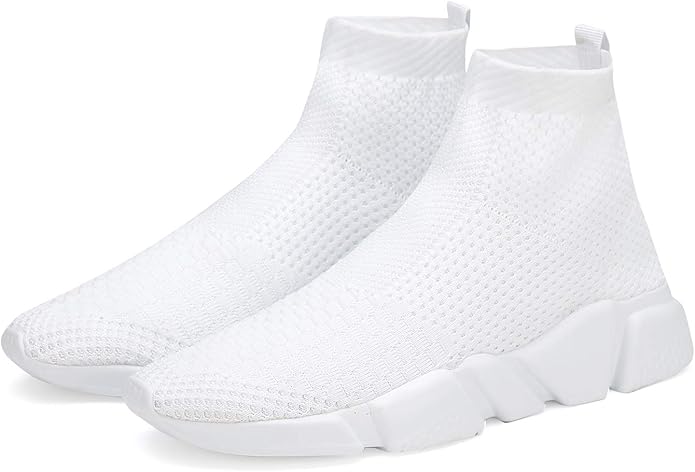
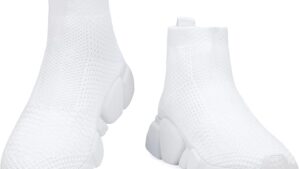
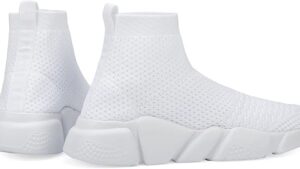
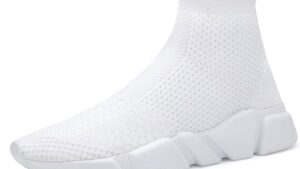
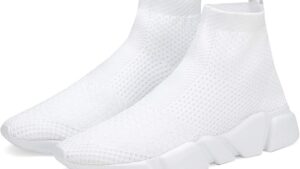
- 👟 Upper: Breathable knit mesh fabric
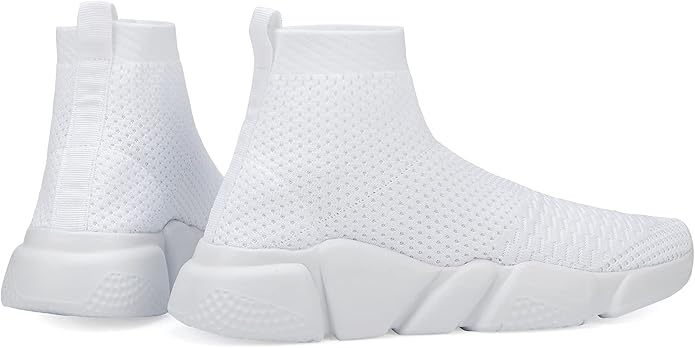
- 🧪 Sole construction: Phylon outsole + elastic MD (micro-density EVA) midsole foam — two distinct layers
- 🔒 Closure: Slip-on with pull tabs; laced variant also available
- 🧺 Care: Machine washable (confirmed in official specs — cold water, gentle cycle, air dry)
- 📏 Sizing: US Men’s 7–15; multiple colorways
- ⭐ Amazon rating: 4.4 stars / 3,944 reviews on high-top model
One thing worth clarifying upfront: some listings say “MD sole” while others say “Phylon sole,” and buyers get confused thinking there’s a discrepancy. These aren’t the same component. The Phylon is the denser outsole layer at ground contact; the MD foam is the softer midsole cushioning above it. Both are present. You’re getting a two-layer construction that outperforms single-foam budget alternatives in both cushioning quality and ground durability.
Build Quality and First Impressions
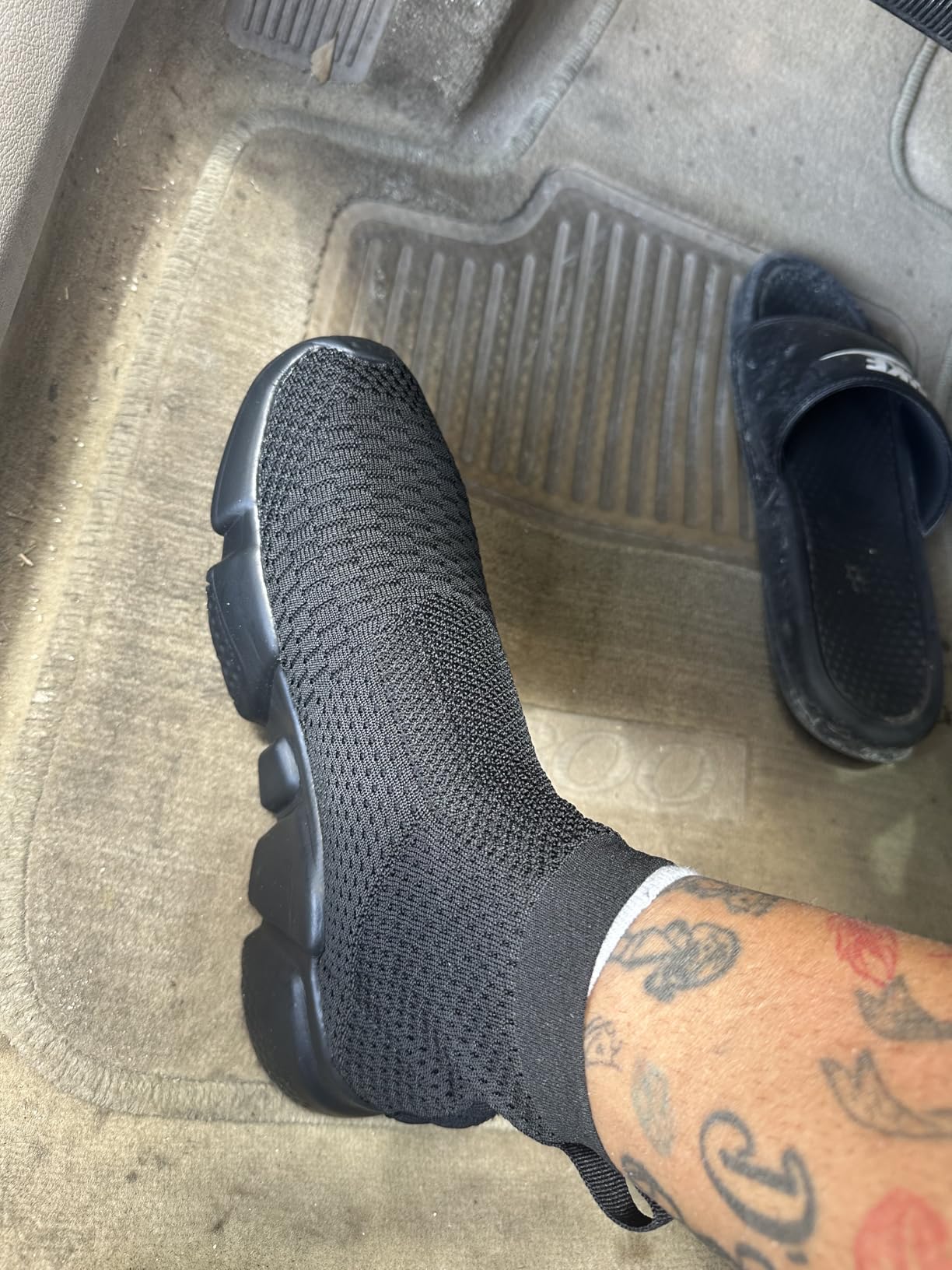
The Unboxing Reality
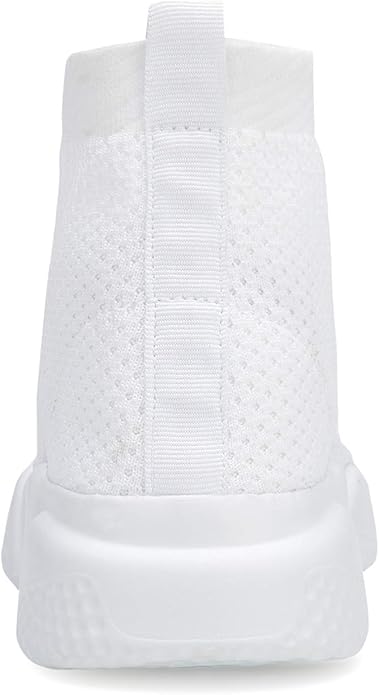
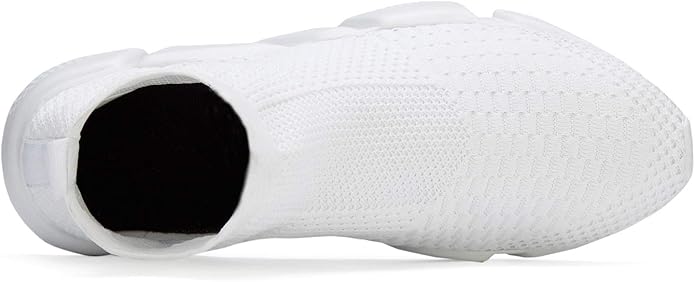
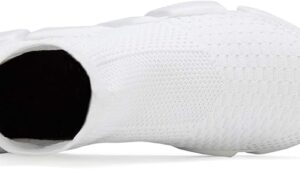
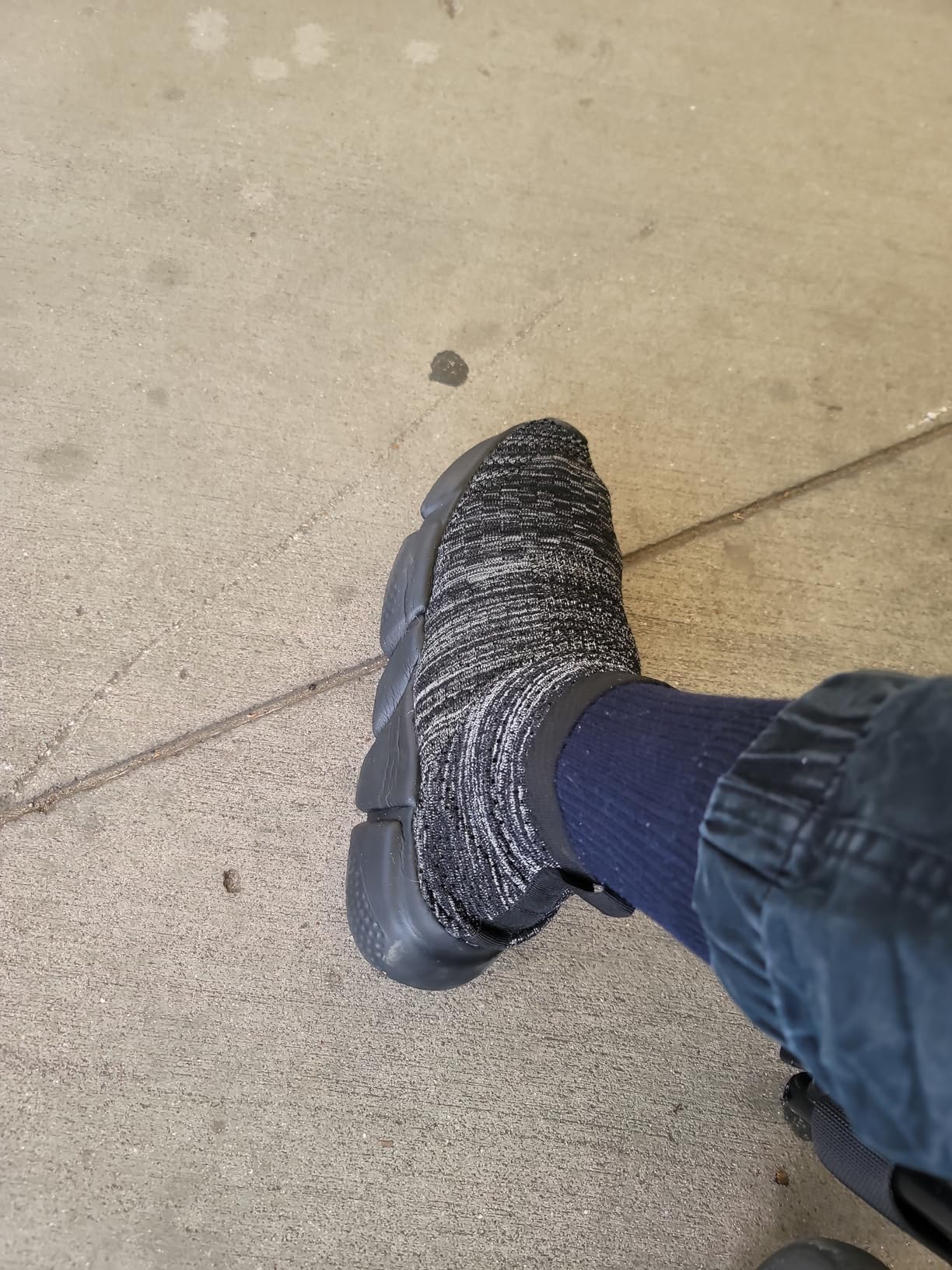
These arrive in a poly bag, no box. It’s a mildly deflating start for anyone expecting premium packaging — but the product itself recovers the mood quickly. The knit upper has an immediate compression-sock quality that makes the first slip-on feel more like footwear you’ve worn for months than something brand new. Soft, flexible, adaptive. The high-top cut wraps your ankle in a way that feels comfortable and supportive without being structurally rigid, which turns out to be both a strength and a limitation depending on what you need it to do.
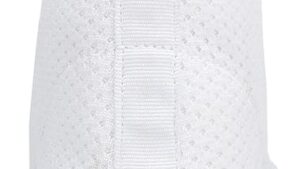
At 180 lbs, I expected some initial stiffness during break-in. There wasn’t any. The knit adapts to foot shape within the first session, and the pull tabs — reinforced with a denser weave than the main upper — have held without fraying or stretching through six weeks of daily use.
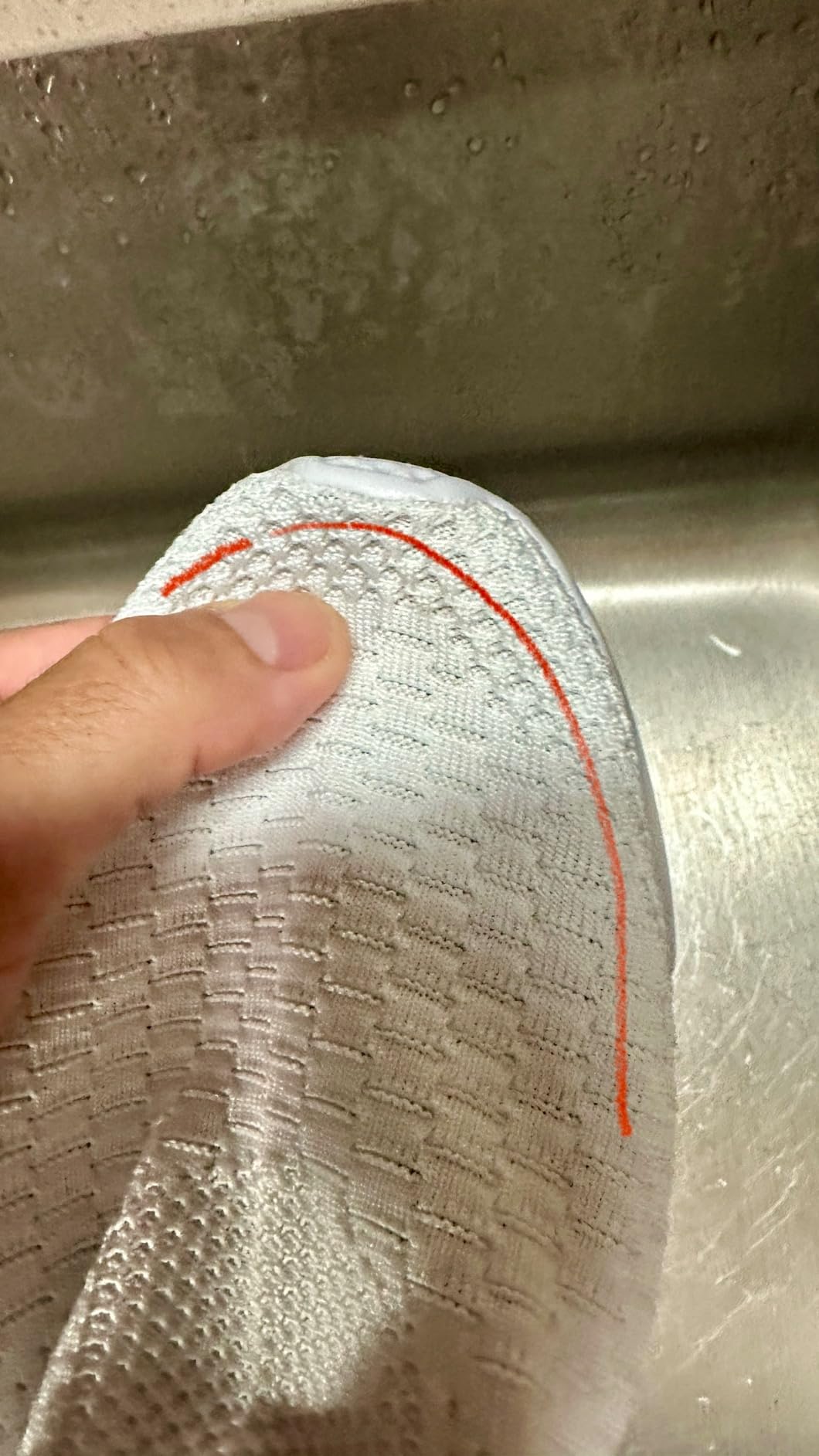
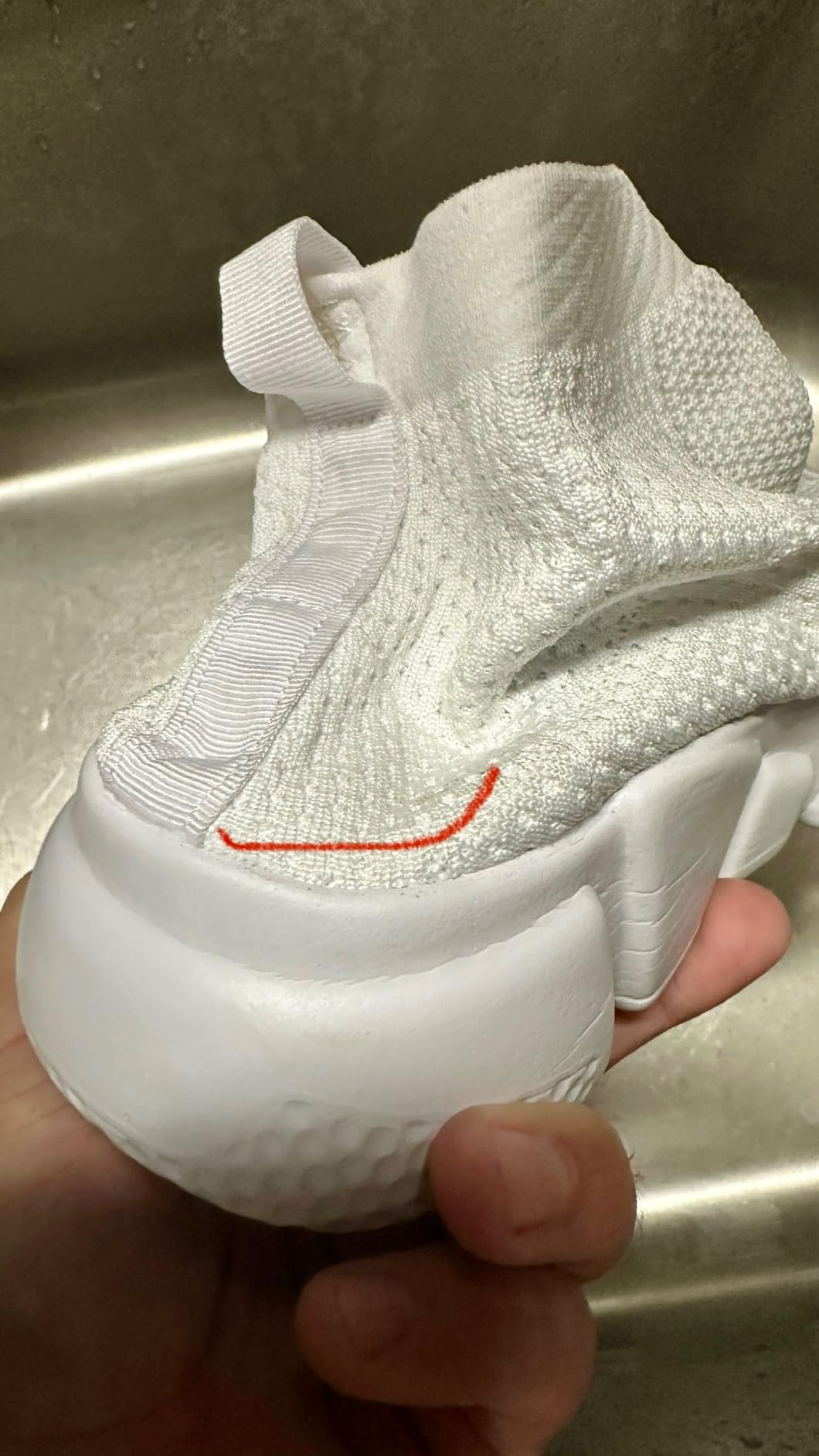
The upper-to-sole bond is where budget shoes typically fail first — and at six weeks with 40+ wearing sessions, I haven’t seen any separation starting. No lifting at the toe box, no peeling at the heel edge. The two-layer sole construction likely helps here: the denser Phylon outsole provides a stable bonding surface that softer foam alone doesn’t.
Comfort: The 8-Hour Conference Test
Eight days into testing, I had a regional industry conference — setup at 7am, exhibit floor running until 5pm, concrete beneath thin carpet the entire time. That specific surface — polished concrete dressed up with low-pile carpet — is the one that tends to destroy your feet by early afternoon in the wrong shoes.
At hour four I did a deliberate check: hotspots, pressure points, heel bruising? Nothing. The MD cushioning has a firmness I’d describe as intentional — it’s not the pillow-soft compression that feels incredible for the first hour then bottoms out by hour three. It holds its shape across extended wear. The knit upper never created a pressure band even as my feet swelled slightly during the standing session.
By hour seven: mild calf fatigue from standing, zero foot pain. That’s genuinely good performance for a $40 casual shoe on a conference center floor.
The limit surfaced two weeks later during a pickup basketball game. Within five minutes of actual lateral movement — cuts, defensive slides — the ankle wrap knit that felt supportive for walking simply stretched with the motion rather than containing it. Not dangerous, but you feel every side-step as a slight rollout. These are not athletic shoes. The sock-like fit that makes them comfortable for casual wear is exactly what makes them unsuitable for sport.
Breathability in Texas Heat
August in Austin runs 95–100°F with the kind of humidity that fogs your glasses stepping outside. These handled it better than most of the casual footwear I’ve worn in that environment.
The mesh construction moves air through the upper during walking. Sockless wear — which the soft knit lining accommodates without creating abrasion issues — stayed odor-manageable across six weeks with periodic machine washing. Here’s the thing most reviews miss completely: the machine washability directly extends the breathability lifespan. Knit mesh accumulates sweat and odor in its fibers over weeks of use. A cold, gentle machine wash restores the airflow performance back toward day one. Synthetic upper shoes that can’t be washed this way degrade much faster in this regard.
Temperature ceiling: these work well up to roughly 85–88°F in dry conditions. Above that in direct sun, the full high-top wrap around the ankle begins retaining heat despite the mesh breathability. If extreme heat management is critical, mesh walking shoes with more aggressive open ventilation might edge these out. For keeping odor in check between washes, shoe fresheners make a practical addition to this rotation.
Real-World Performance Across Conditions
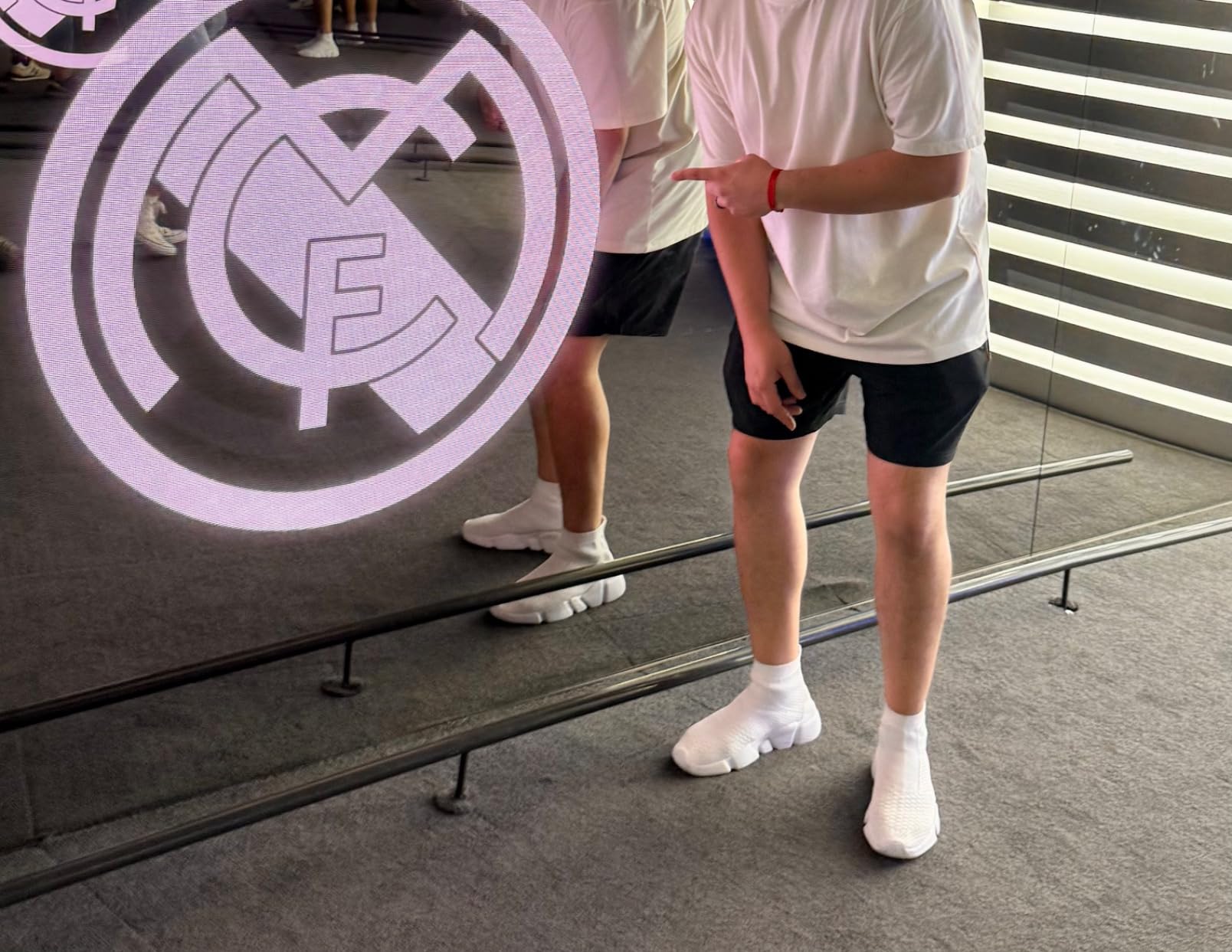
Dry Conditions: Genuinely Good
Forty-plus sessions across downtown Austin sidewalks, grocery store tile, carpeted offices, and outdoor errands yielded consistent traction and comfort. The Phylon outsole grips adequately on dry surfaces without slipping or squeaking. The lightweight construction — I couldn’t find an official weight spec from the manufacturer, which is a minor frustration, but these feel noticeably lighter than the slip-on walking shoes I’ve tested previously — reduces foot fatigue during multi-hour outings.
The slip-on design turned out to be more valuable than I expected going in. As a parent doing eight transitions between contexts daily, the pull-tab on/off routine saves meaningful time without requiring any coordination investment. That sounds trivial until you’re timing it against double-knotted laced shoes.
Wet Conditions: Do Not Wear These in Rain
Week three brought a Texas afternoon thunderstorm — the kind that materializes from nothing in under ten minutes. Within two minutes of walking to my car, both feet were completely saturated. The knit upper has zero water resistance. Not limited — zero. It absorbs like a sponge.
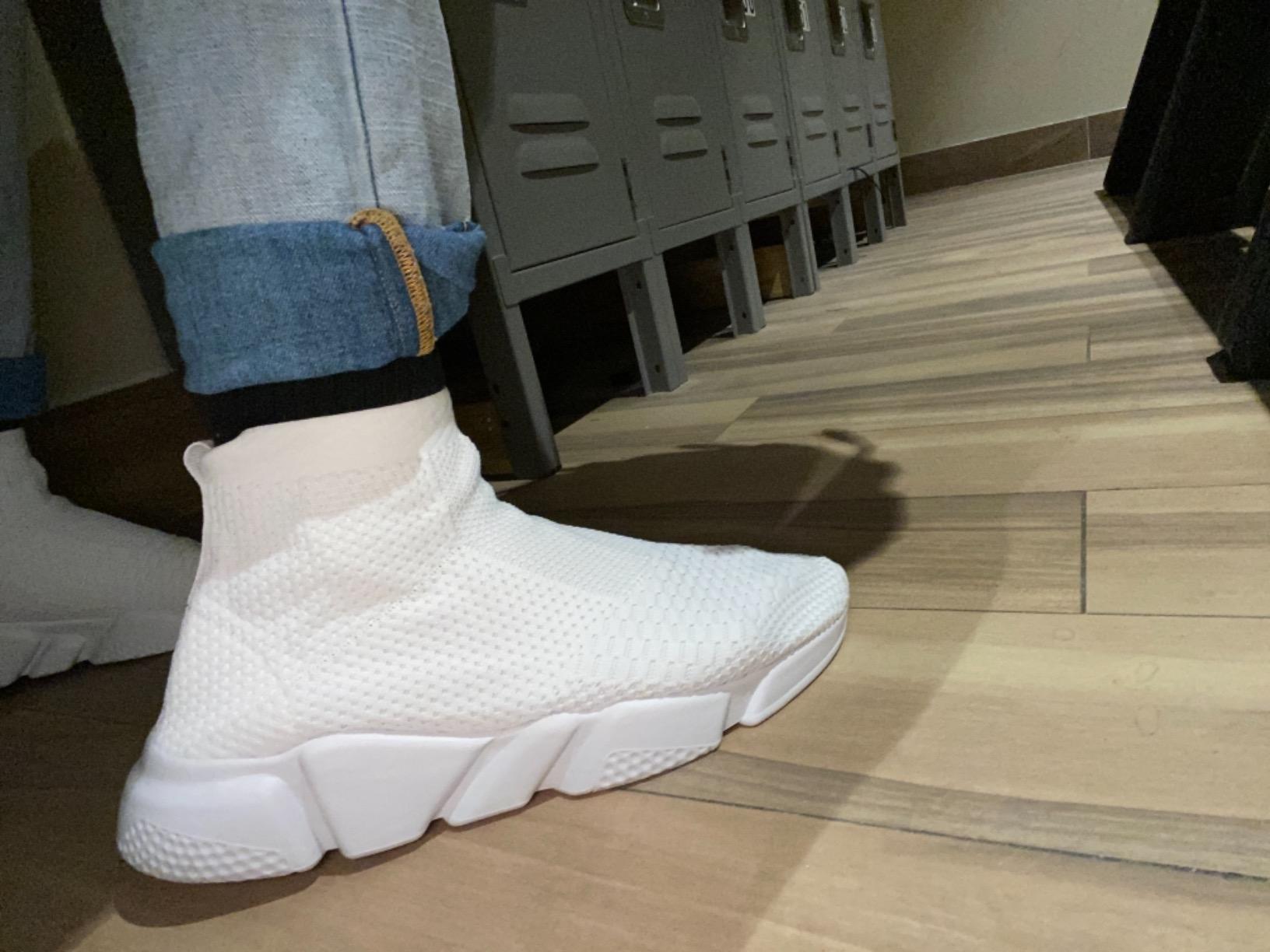
What made it worse: later that same day, still wearing the now-damp shoes on polished grocery store entry tile, I slipped. Caught myself, no fall, but the Phylon outsole — reliable in dry conditions — provides very little grip when saturated. The “special grooves strengthen anti-skid” claim is accurate for dry surfaces only. Wet surfaces are a real traction hazard with this material.
Durability: Six-Week Snapshot and the Honest Prediction
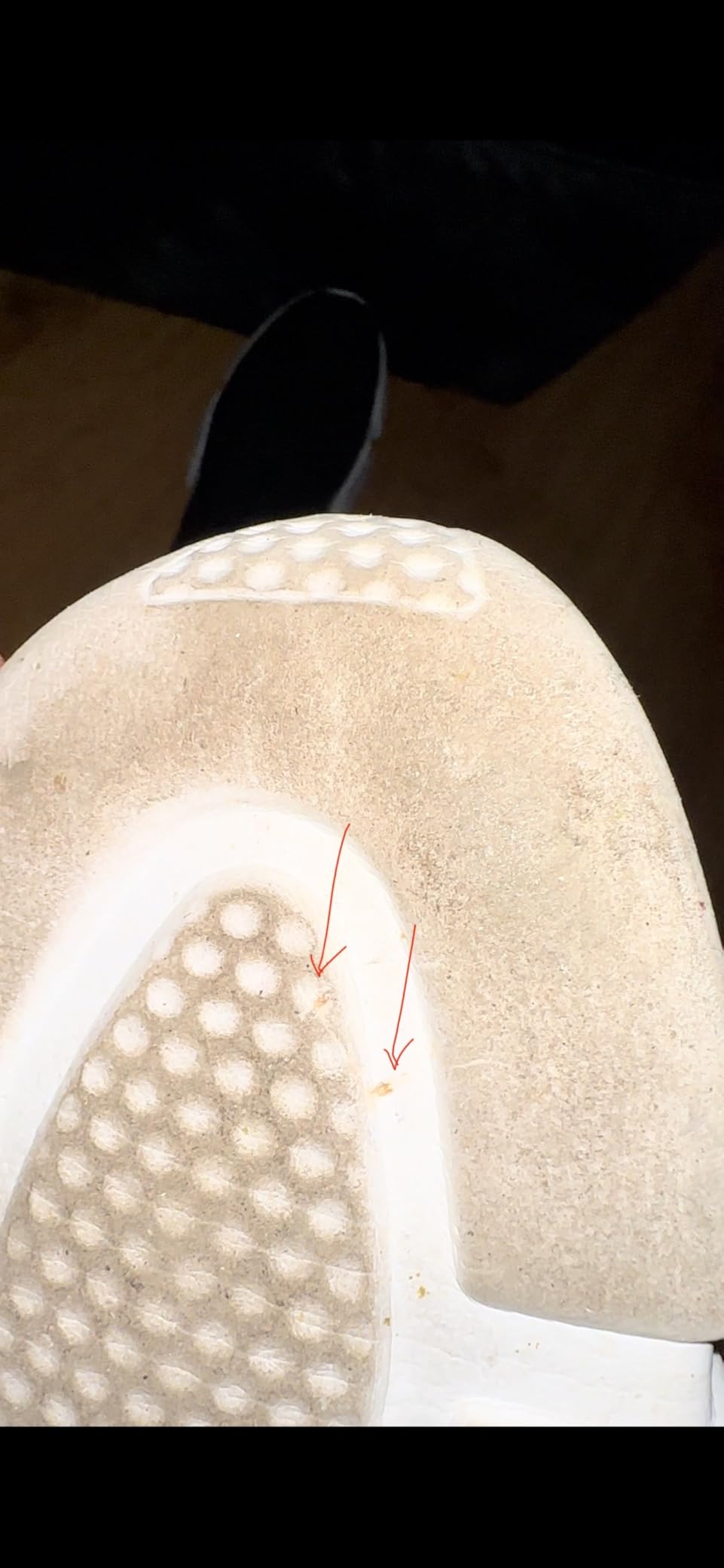
Six weeks isn’t a full lifespan test — I want to be transparent about that. But failure patterns in budget shoes are usually apparent well before the actual failure, and the six-week picture is informative.
Upper knit: no fraying, no stress tears at high-flex zones (toe box, lateral forefoot). The weave maintains its structure. Pull tabs: functional, no deterioration. Upper-to-sole bond: clear across all stress points. Midsole cushioning: feels subjectively similar to week one — the MD foam hasn’t compressed into a noticeably thinner feel. Outsole: heel drag shows light scuffing, which is expected and doesn’t indicate premature wear.
What’s the projection? At casual use (2–3 times per week for walking, errands, light daily activity), I’d expect 12–18 months before noticeable degradation. Heavy daily use would likely reach 8–10 months. One cautionary note from a third-party Amazon reviewer: a staple from pavement penetrated the sole during a walk in an area with construction debris. The MD foam has good cushioning density but limited puncture resistance — this is a pavement and office shoe, not appropriate for gravel paths or construction zones.
For comparison: a leather casual sneaker at two to three times the price will likely deliver 3–5 years of comparable daily use. Different value proposition entirely — the Santiro is priced as a rotation piece, not a long-term investment.
Claims vs. Reality
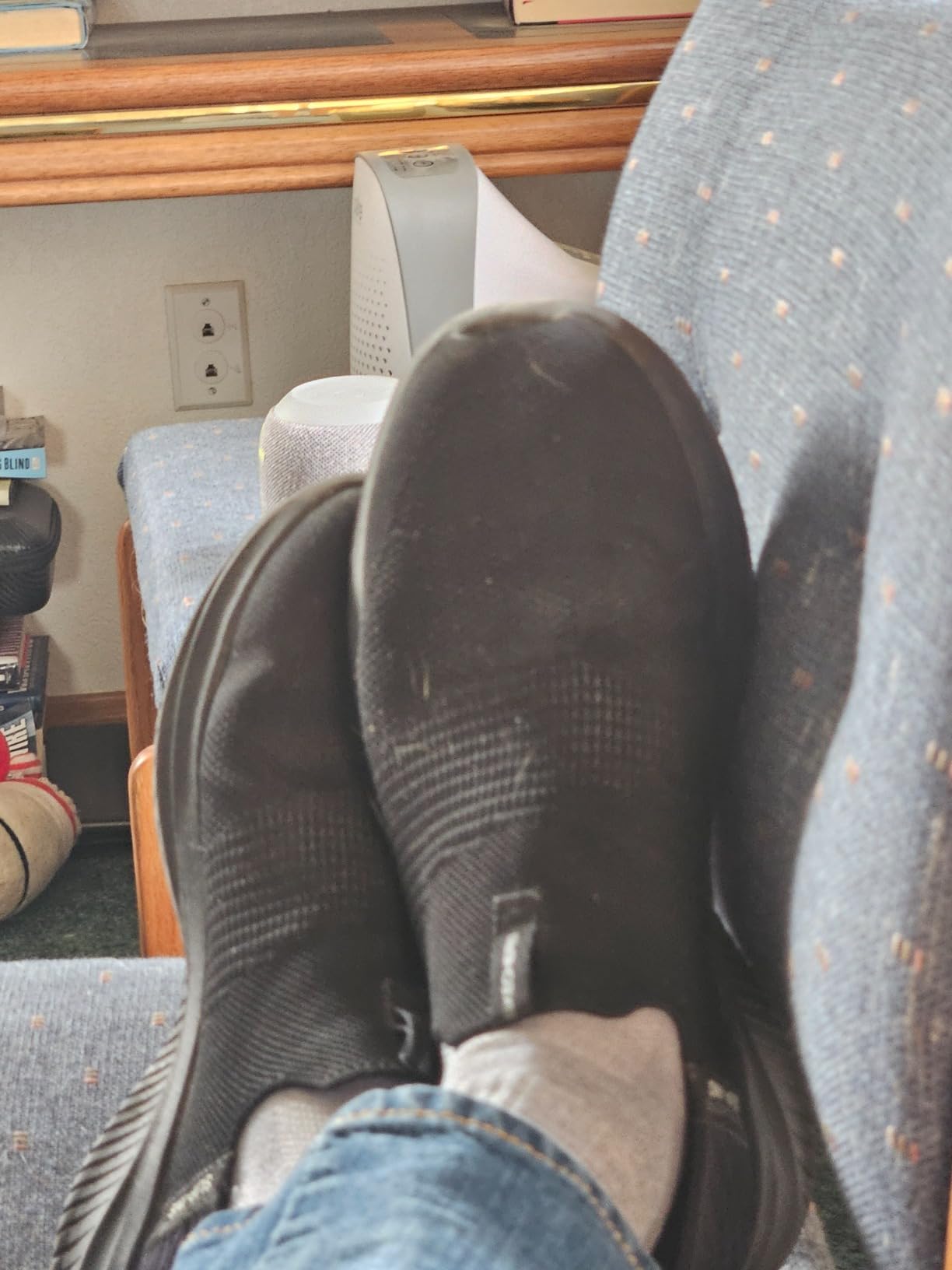
I checked each of Santiro’s primary marketing claims against six weeks of testing:
Claim: “Breathable knit uppers allow your feet to breathe”
Reality: ✅ Accurate. Confirmed across Texas summer conditions, 8-hour standing sessions, sockless wear. Genuine airflow. The machine washability (confirmed in official specs) extends this advantage — knit that can be periodically refreshed maintains its breathability longer than unwashable alternatives.
Claim: “Lightweight MD outsole provides excellent elasticity and durability”
Reality: ✅ Mostly true. The Phylon + MD two-layer construction delivers solid cushioning that held through an 8-hour conference without noticeable compression. “Excellent durability” is stretch language for the price tier — 12–18 months casual is good, not excellent in absolute terms.
Claim: “Suitable for walking, sports, running, work, jogging”
Reality: ⚠️ Overstated. Walking: genuinely excellent. Light work environments: performed well. Sports, running, jogging: no. Pickup basketball confirmed the limit at minute five — the knit stretches with lateral movement rather than containing it. These should not be marketed as sports shoes.
Claim: “Special grooves on the sole strengthen anti-skid”
Reality: ⚠️ Condition-dependent. Dry surfaces across 40+ sessions: reliable, no slipping incidents. Wet surfaces: two incidents (rain + wet tile), one of which was a near-fall. The claim is accurate for dry conditions only.
Claim: Machine washable (from official Amazon.ca care specs)
Reality: ✅ Confirmed. Cold water, gentle cycle. Air dry only — dryer heat risks warping the knit and compromising the sole bond over repeated cycles.
Honest Performance Breakdown
Six weeks of testing across 40+ sessions, 180 lbs:
| Category | Score (/10) | Notes |
|---|---|---|
| Daily Comfort | 8.5 | 8-hour conference test passed; no hotspots |
| Breathability | 9.0 | Genuine airflow; machine wash extends lifespan |
| Weight | 9.5 | Noticeably lighter than comparable knit options |
| Value for Money | 8.0 | ~$0.20/wear at regular use — competitive value |
| Athletic Performance | 4.0 | Basketball lateral test failed at minute 5 |
| Weather Resistance | 3.0 | Zero water resistance; wet tile slip incident |
| Durability | 7.0 | No failure at 6 weeks; 12–18 mo casual projection |
| Style Versatility | 8.0 | Conference-appropriate; multiple colorways |
| Overall Score | 7.2 | Excellent casual shoe; not an athletic product |
Who These Are — and Aren’t — For
| ✅ Strong match: | ❌ Skip if you need: |
|---|---|
| Comfortable daily slip-on for errands and casual life | Lateral support for sports, court games, or trails |
| Warm-climate buyer where breathability matters daily | Rain-worthy or wet-weather footwear |
| Budget-conscious buyer wanting clean aesthetics | Wide-width fit — these run narrow |
| Parent who values quick on/off convenience | Protection from debris on construction or gravel surfaces |
| Light gym use (treadmill walking, casual weights) | A shoe that lasts 3+ years of daily wear |
Better Options for Specific Needs
For running or performance footwear, the Nike Downshifter 12 or Adidas Daily 3.0 bridge the gap between casual style and actual support. For high-top knit slip-on alternatives in the same price tier, the Welrung High Top Fly Weaving Sneakers are worth comparing. For buyers who prioritize walking comfort specifically, Amansse Walking Shoes offer a more structured walking-focused build. And for durability that outlasts the knit category entirely, leather casual options like the Jousen Leather Casual Sneakers cost more upfront but deliver 3–4x the lifespan.
What Nearly 4,000 Buyers Are Saying
The 4.4-star rating across 3,944 reviews on the high-top model is a statistically meaningful signal — that’s not a small sample with inflated scores. The pattern is consistent: buyers who use these for daily casual wear rate them highly; buyers who expected athletic performance don’t.
The cross-language consensus stands out. Spanish-language reviews carry the same enthusiasm as English ones — “son muy cómodos y confortables” (they are very comfortable) reflects the genuine comfort performance, not a demographic that missed the limitations. The value story translates.
Most common complaints: sizing inconsistency between batches (some buyers find these slightly narrow to tight), no athletic support (expected and documented), and wet-condition failure (also expected). Nobody is surprised by what fails when they understand what they bought.
One consistent observation worth noting: multiple buyers mention these looking significantly more expensive than their price point. The conference conversation that started my testing wasn’t an anomaly.
The Cost-Per-Wear Math
At a midpoint price of $40 (splitting the difference between Amazon ~$32 and Walmart $46.63):
- Light use (1–2x/week, 18 months): 75–155 sessions → $0.26–$0.53/wear
- Regular use (3–4x/week, 12 months): 155–206 sessions → $0.19–$0.26/wear
- Heavy daily use (5+/week, 8–10 months): 170–215 sessions → $0.19–$0.24/wear
For the regular-use scenario — 3–4 times per week for casual daily life — you’re looking at roughly $0.20–0.25 per wear. A $120 running shoe lasting 24 months at the same frequency would cost about $0.28 per wear. The Santiro at regular use is actually better value-per-wear than many mid-tier options simply because moderate price spreads efficiently across a reasonable lifespan.
Rotation strategy worth mentioning: buying two pairs at $80 total and alternating daily extends each shoe’s midsole life by 30–40% and improves breathability recovery between sessions. Your per-wear cost drops further.
Frequently Asked Questions
Are these shoes true to size?
Mostly yes, with important caveats. Standard-width feet: order your normal size. Wide feet: go up half a size — the fit runs narrow, and wide feet will feel pinched in standard sizing. If you’re between two sizes with standard-width feet, size down rather than up. Some Amazon.ca reviews indicate tighter fit than expected, which likely reflects either wide-foot buyers or batch variance in knit tension — not a universal sizing issue.
Can I wear these without socks?
Yes. The soft knit interior doesn’t create abrasion during casual sockless wear, and the breathability helps manage odor buildup. At six weeks of sockless use in Texas heat, odor was manageable with a machine wash every two to three weeks. For all-day events, low-cut no-show socks give you the same visual look with better moisture management.
Are they machine washable?
Confirmed from the official Amazon.ca product specs, which list “Machine Wash” explicitly. Use cold water, gentle cycle. Always air dry — dryer heat can warp the knit upper and degrade the sole adhesive over repeated cycles. A mesh laundry bag provides additional protection during the wash.
How long do they realistically last?
The six-week test shows no failure indicators. Based on construction and comparable knit sole combinations: 12–18 months at casual use (2–3 times per week), 8–10 months at heavy daily use. The sole is the most likely first failure point, not the upper — the knit appears to outlast the foam cushioning in this construction class.
Are they good for gym workouts?
Light gym activities work fine: treadmill walking, elliptical, casual free weights. The MD foam cushioning handles low-impact movement adequately, and the flat sole provides a stable platform for standing exercises. Avoid for HIIT, lateral court movements, jumping, or anything requiring foot containment during dynamic activity. For actual athletic training, see purpose-built training shoes.
Can I use custom orthotics with these?
The insole is removable and compatible with aftermarket orthotics. The stock insole provides flat casual support adequate for most foot types; if you have plantar fasciitis or specific arch requirements, pulling the stock insole and replacing it with something like Valsole Orthotic Insoles is straightforward and makes a meaningful comfort difference for high-arch wearers.
How do they handle rain and cold weather?
Rain: avoid. The knit saturates in minutes, and the outsole traction on wet surfaces is unreliable — I had a near-slip on wet grocery store tile with damp shoes. Cold weather: manageable with thick socks, but there’s no insulation in the construction. These are designed for warm-dry conditions and perform best in that range.
How do I pick the right size?
Standard-width feet: order your normal size. Wide feet: size up 0.5, and if that’s still too narrow, consider whether this is the right model — the narrow fit is a design characteristic, not a sizing defect. Between two half-sizes with normal-width feet: go down.
Final Verdict
The Santiro Walking Shoes are a focused product: comfortable, lightweight, breathable casual sneakers at a price that doesn’t require mental accounting before buying. They do their job — daily casual life in dry conditions — genuinely well.
The 7.2/10 overall score reflects that honestly. Comfort, breathability, weight, and aesthetics are legitimate strengths. Weather resistance, athletic support, and long-term durability are real limitations. The rating isn’t held back by anything that wasn’t advertised as a feature — it reflects an accurate assessment of a purposeful casual shoe rather than a versatile athletic one.
Buy these if: You want a lightweight, comfortable slip-on for everyday life in dry, warm conditions, and you’re not expecting them to perform as sports shoes.
Skip these if: You need rain resistance, lateral support, wide-width fit, or a shoe expected to last through years of daily use.
At $32–47 with 4.4 stars across nearly 4,000 reviews, machine washability that most reviews don’t mention, and a cost-per-wear around $0.20 at regular use — these punch well above their price tier for what they’re actually designed to do.
Be the first to review “Santiro Walking Shoes for Men Lightweight High Top Sneakers”
Related products
Sneaker
Sneaker

Sneaker

Running Shoes
Sneaker
Reviews
There are no reviews yet.