
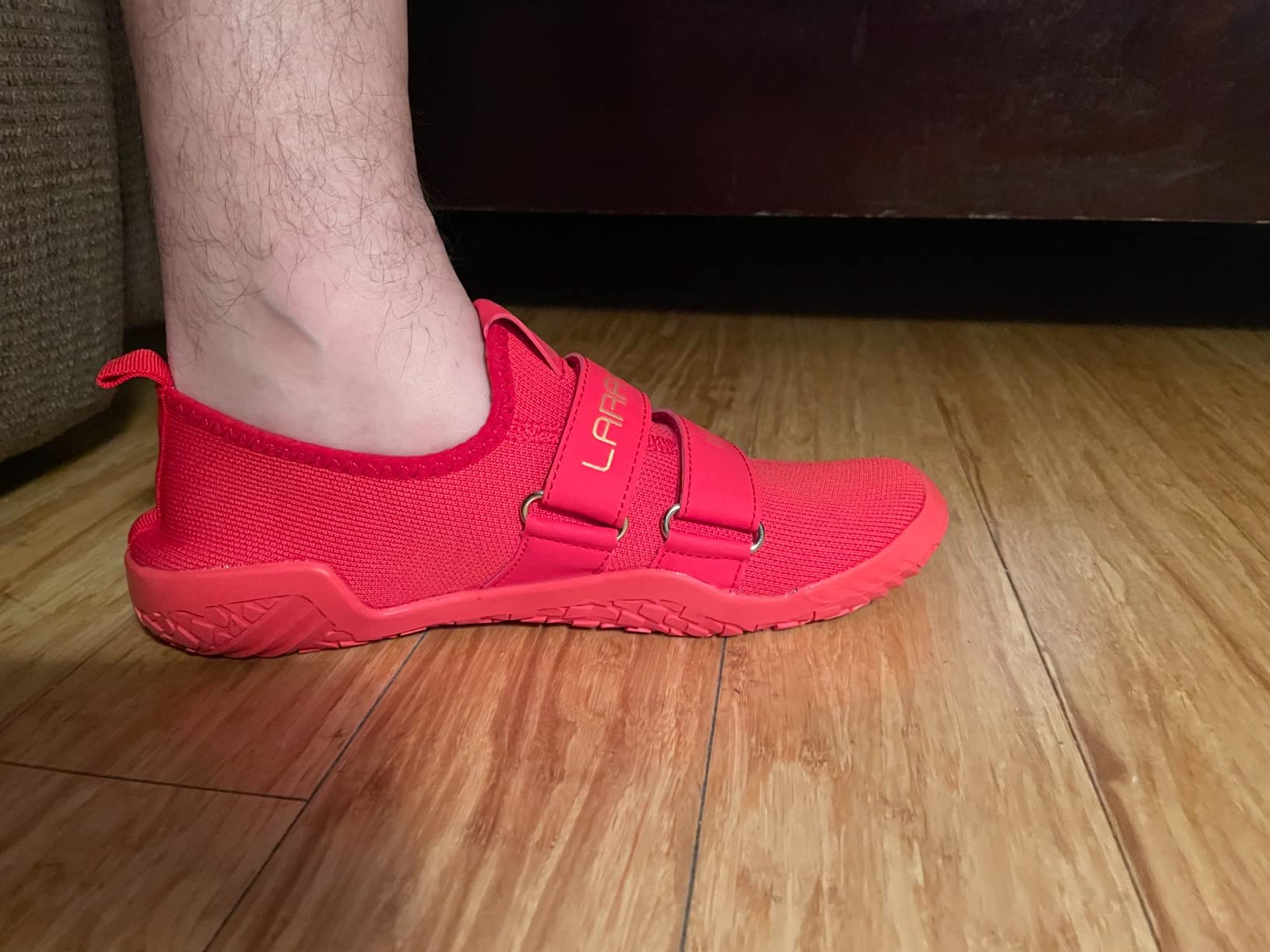
My buddy Jake wouldn’t stop talking about these $30 deadlift shoes. After 10+ years testing footwear across every sport imaginable, I’ve learned to be skeptical of budget gear that promises premium performance. But Jake’s a serious lifter—he’s not the type to get excited about gimmicks. So when he told me these training shoes transformed his deadlift sessions, I figured I’d give them a shot.
Spoiler alert: Four weeks and 16 lifting sessions later, I had to admit he might be onto something.
I’m writing this after putting these shoes through their paces with deadlifts up to 365 lbs, heavy squats, and various cross-training movements. I tested them on both rubber gym flooring and the wooden deadlift platform at my gym. At my 180 lbs bodyweight, I wanted to see if a $30 shoe could actually deliver what $200+ options like the Adidas Powerlift promise.
Here’s what I found: These shoes deliver core powerlifting functionality at an almost absurd price point. But—and this is important—only if you navigate some very real quirks and understand exactly what you’re buying.
Technical Specifications
Price: $30
Weight: 8.5 oz (men’s size 9)
Heel-to-toe drop: 0mm (completely flat)
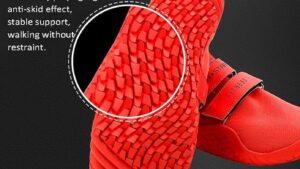
Sole material: Rubber with aggressive grip pattern
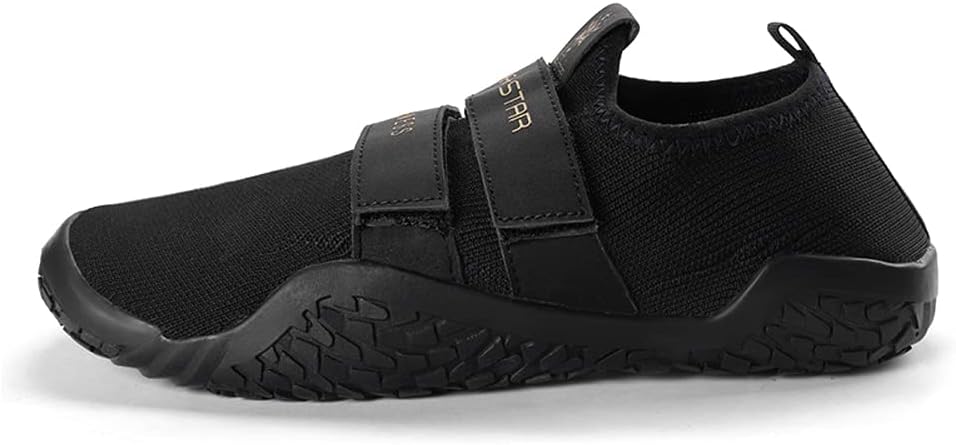
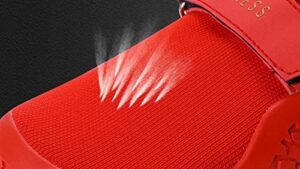
Upper material: Textile knit construction
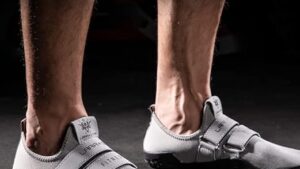
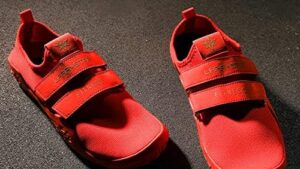
Closure: Lace-up with dual velcro straps
Category: Minimalist deadlift/powerlifting shoe
Best for: Deadlifts, squats, powerlifting movements
Testing context: 4 weeks, 16 lifting sessions, 45+ total hours
That zero drop number matters more than you might think. It means the shoe is completely flat from heel to toe—you’re as close to standing on the platform as possible while still wearing shoes. This is fundamentally different from running shoes that typically have 10-12mm of heel elevation.
Design, Build Quality & Real-World Performance
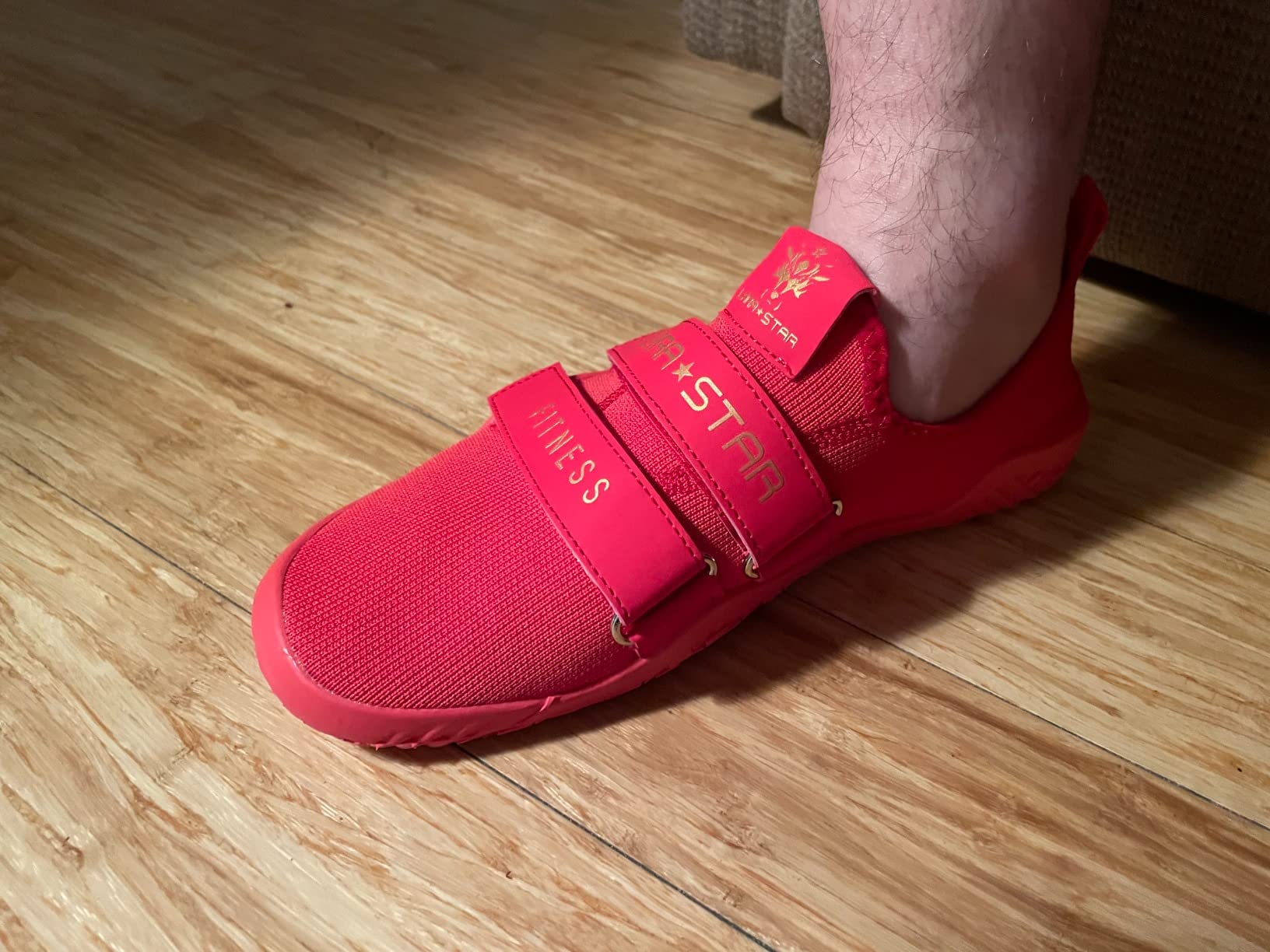
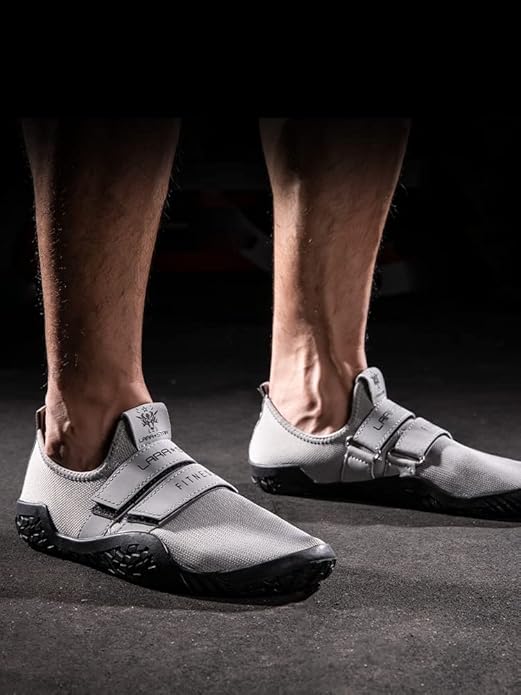
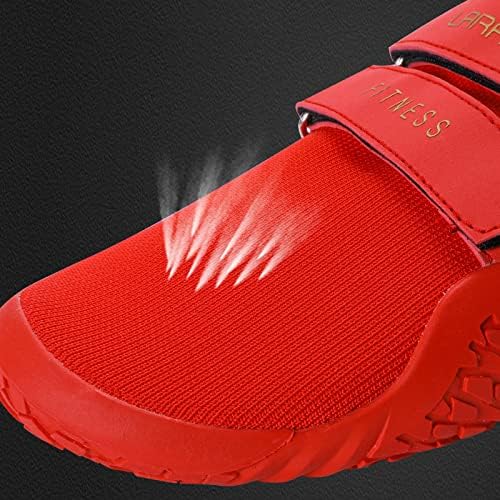
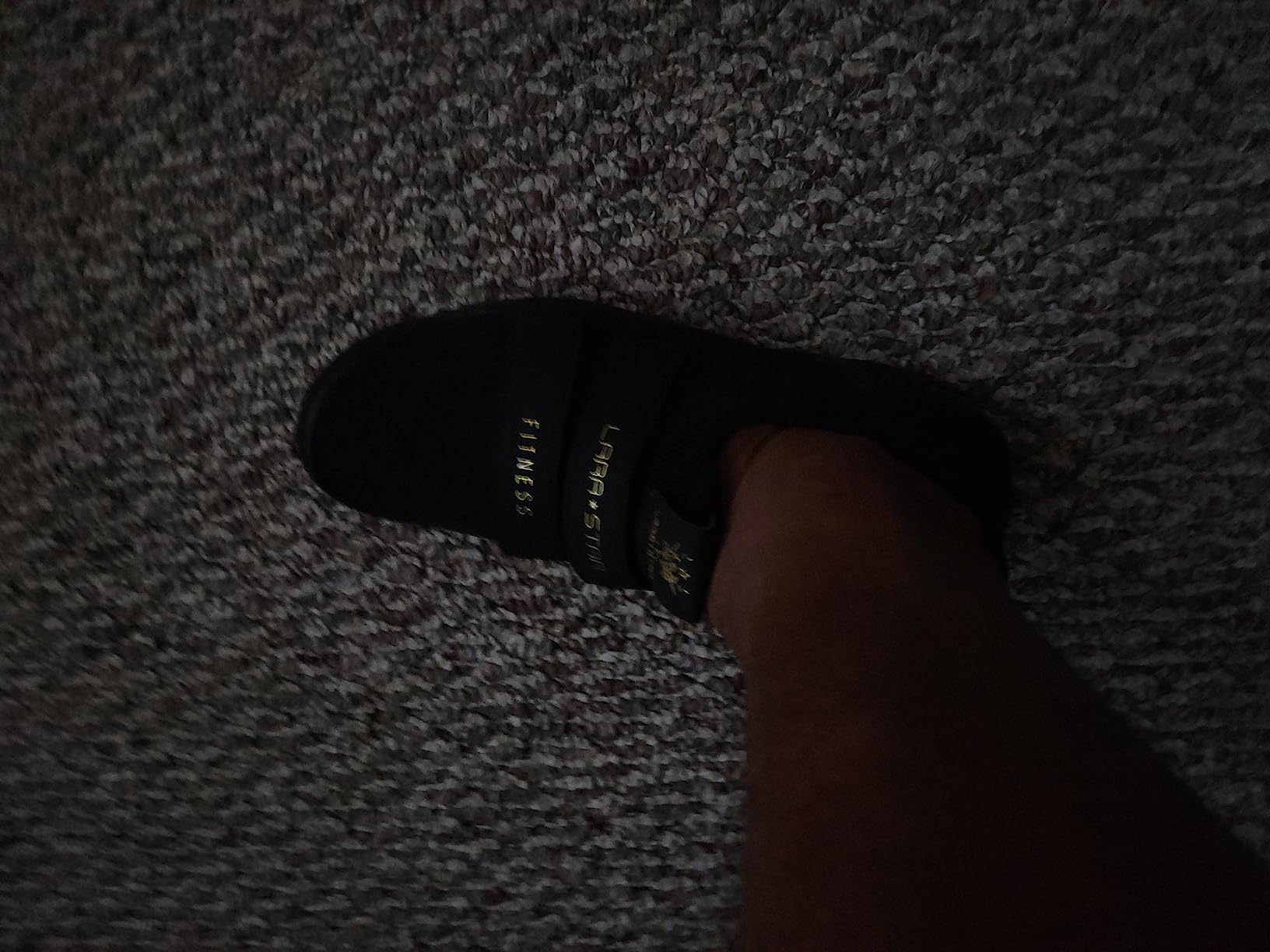
Right out of the box, these shoes look exactly like what they are: budget minimalist training footwear. The textile upper has a sock-like construction that’s surprisingly breathable. During my heaviest sessions—warm-up sets through personal record attempts—my feet never felt like they were cooking inside the shoes.
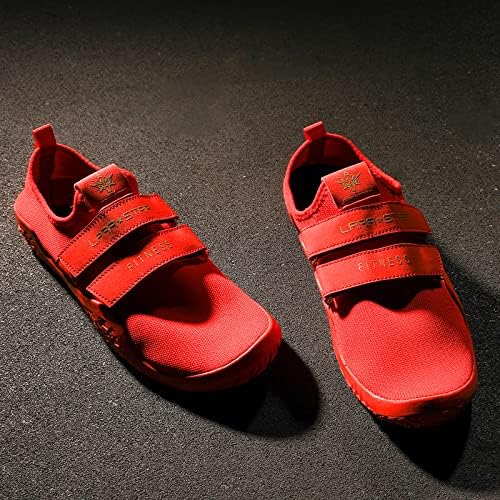
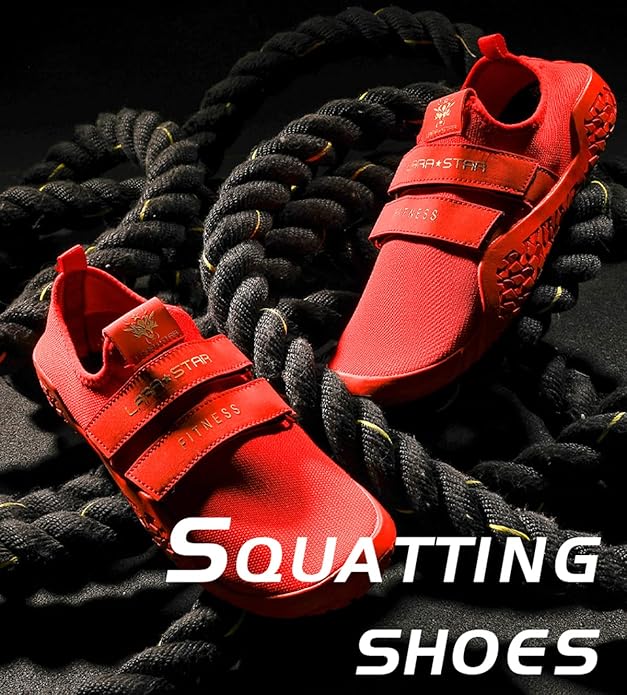
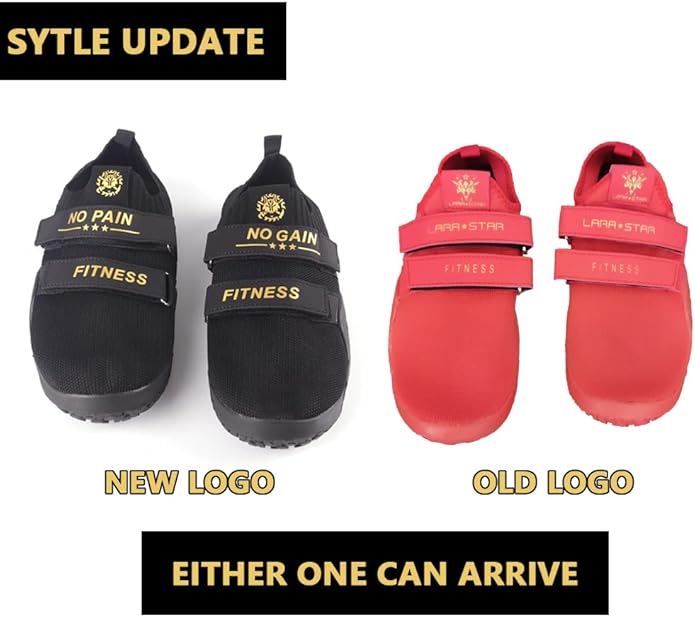
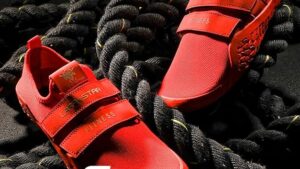
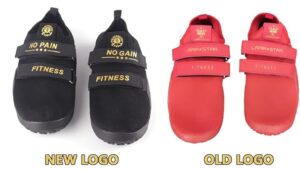
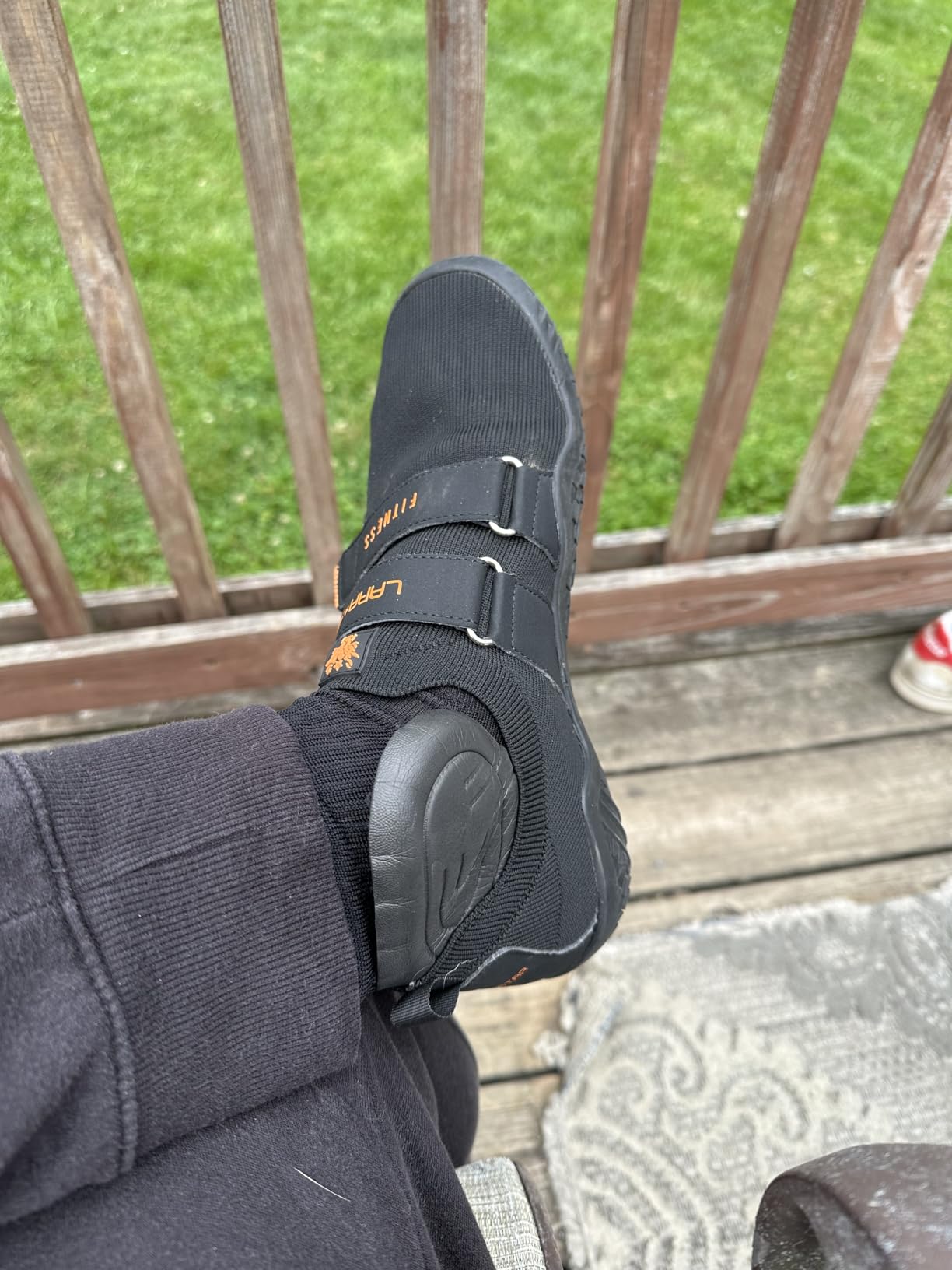
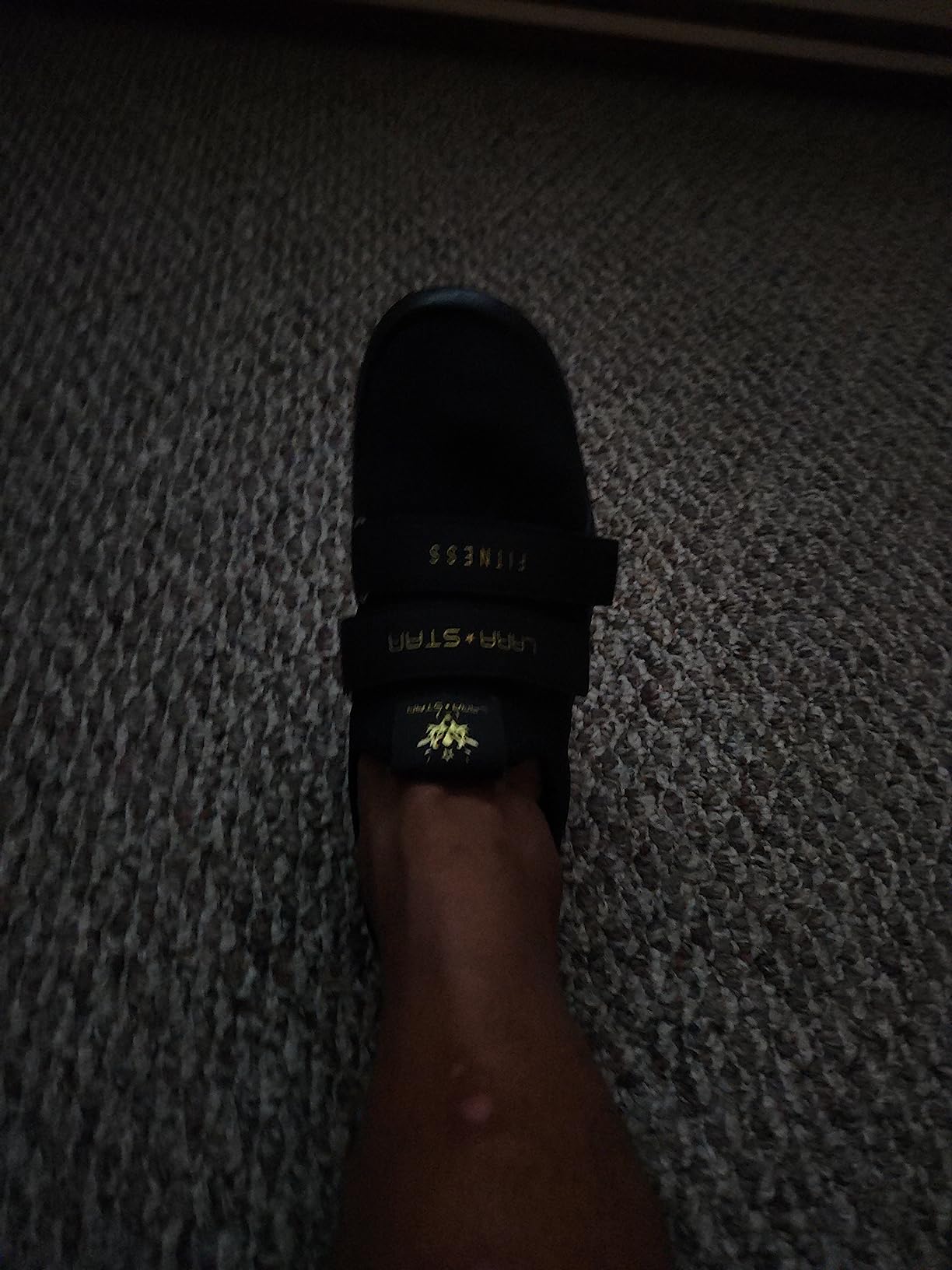
The dual velcro straps turned out to be one of the smartest features here. During my 315 lb deadlift sessions, I could tighten them down for maximum stability, then loosen them between sets for comfort. That level of adjustability isn’t something you get with traditional lace-only systems. One reviewer mentioned the logos on the straps are pretty bold—I agree they’re not subtle, but function trumps aesthetics when you’re pulling heavy weight.
After four weeks of testing, the upper has held up better than I initially expected for a $30 shoe. No visible wear, no stress points appearing around the flex zones. That surprised me.
Ground Connection & Lifting Performance
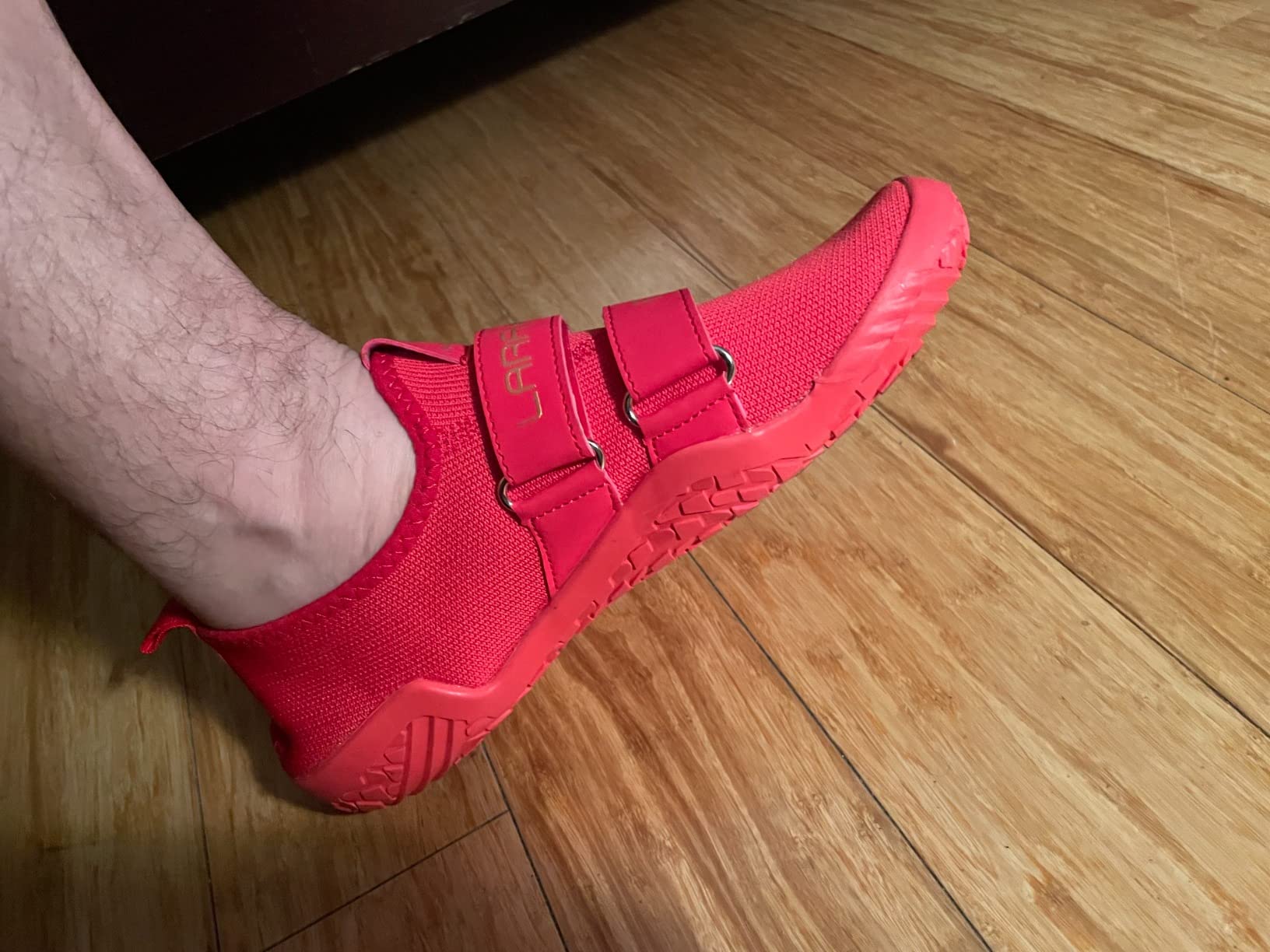
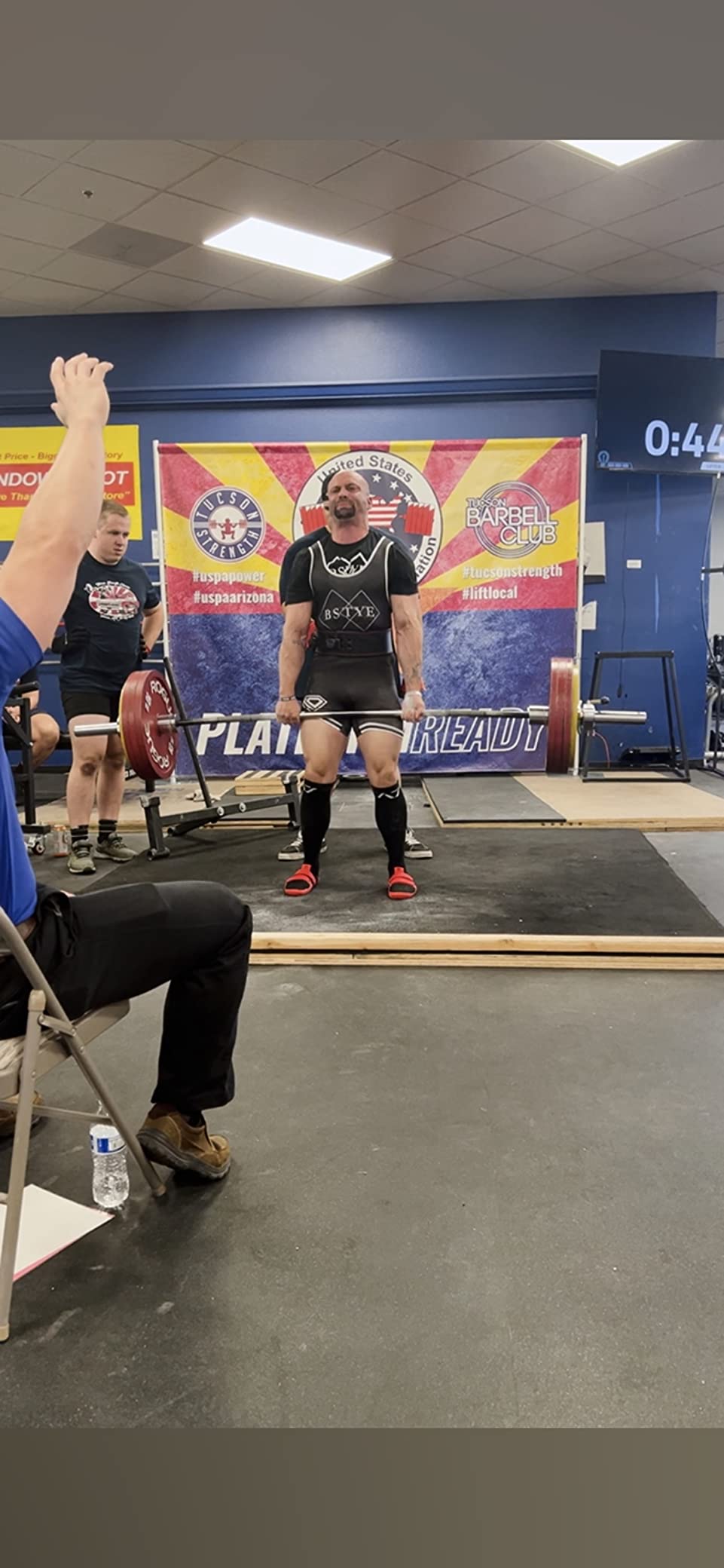
Here’s where these shoes really shine. The completely flat sole puts you as close to the platform as possible while still wearing shoes. My first deadlift session felt immediately different from lifting in my old running shoes—no more squishy, unstable feeling. Just solid connection with the floor.
During my heavier sessions (working up to 365 lbs), these shoes provided the stable platform I needed. No compression, no energy loss through a squishy sole. When I picked up the pace during my working sets, that platform stability translated directly into better form and confidence.
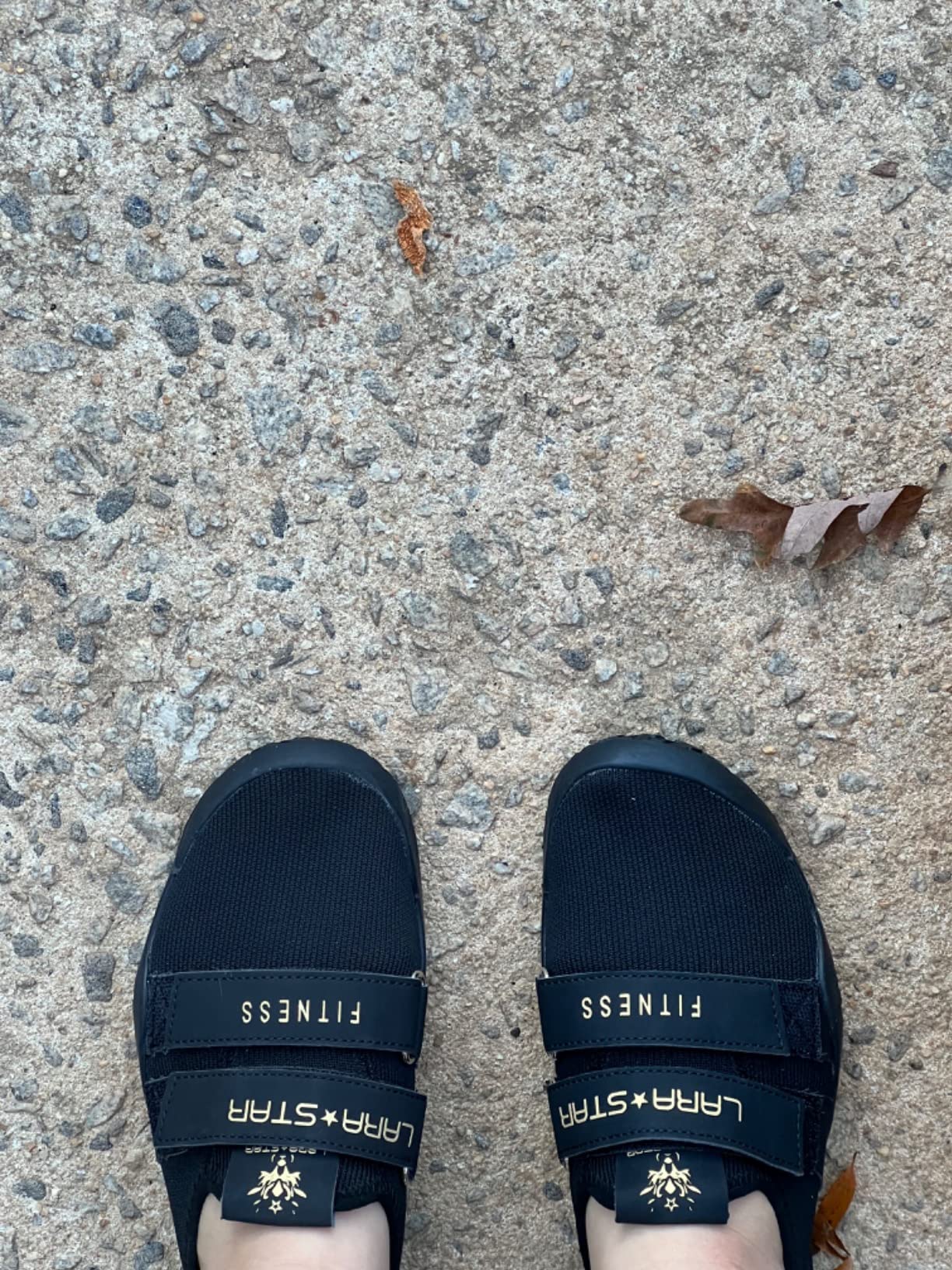
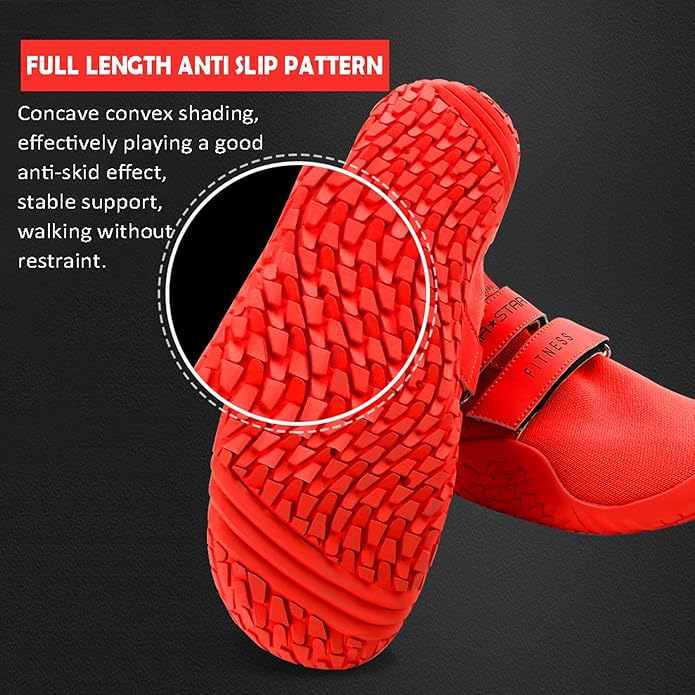
The rubber sole has an aggressive grip pattern that actually works. On my gym’s rubber floor, these shoes felt locked in during heavy squats and deadlifts. No slipping, no sliding, just solid traction when you need to drive through your heels. I also tested them on the wooden deadlift platform—same story. Grip held throughout the full range of motion.
What impressed me most was the barefoot feel. I could spread my toes naturally and feel the ground beneath me, which improved my balance and helped me maintain proper form throughout my reps. Compared to my old Converse Chuck Taylors, these provided similar stability but with better grip and a more natural foot position.
Sizing Reality Check – Critical Information
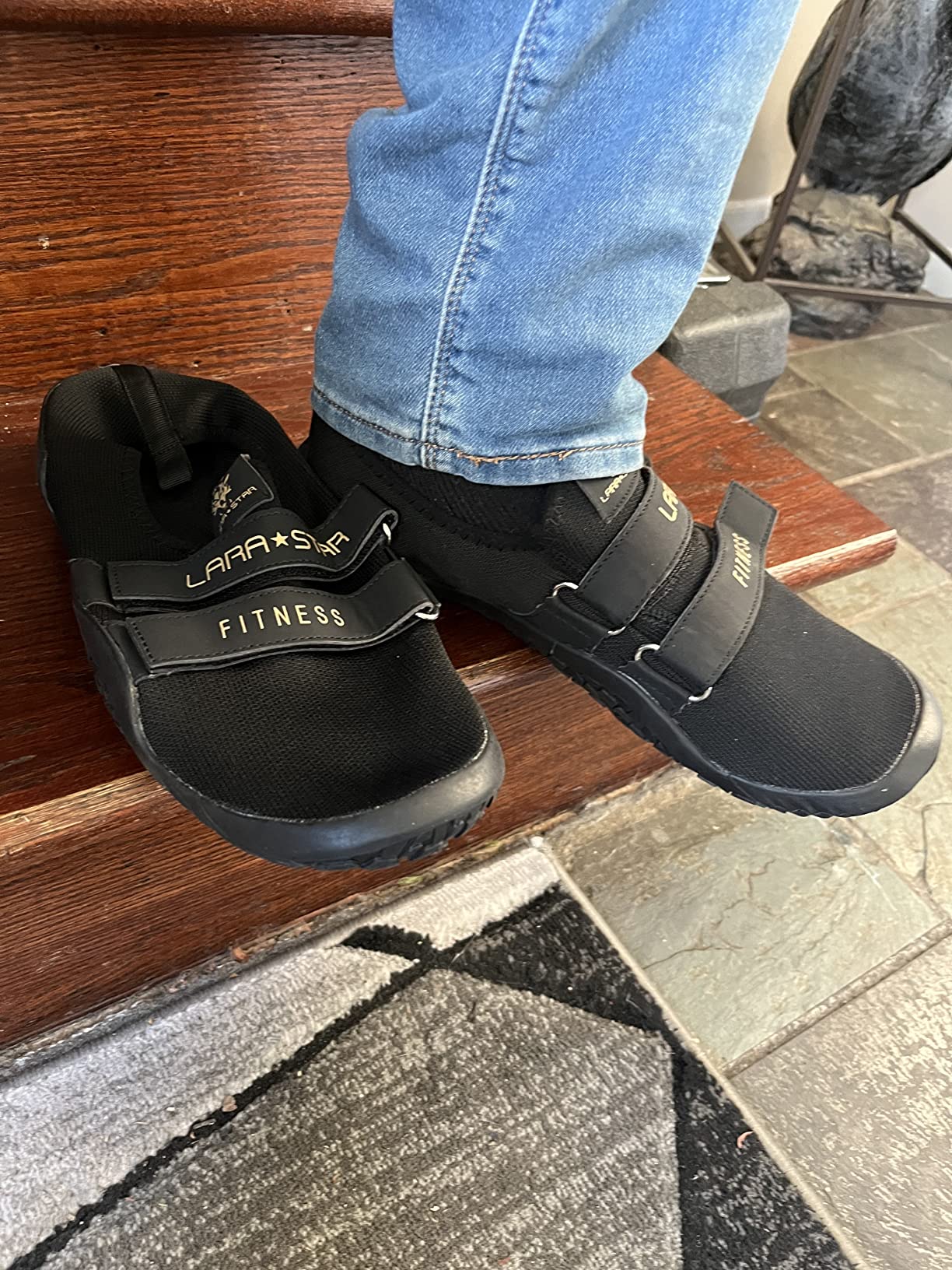
Let me address the elephant in the room: sizing. Nearly every reviewer mentions these run large, and they’re absolutely right. I wear a size 9 in most athletic shoes, but I ordered an 8.5 based on the reviews and it was perfect. If I had ordered my usual size 9, these would have been swimming on my feet.
The good news is that when you get the right size, the fit is actually quite good. The sock-like upper adapts to your foot shape, and the velcro straps let you fine-tune the lockdown. I tested these with both thin and thick socks, and the adjustability worked well for both scenarios.
My sizing recommendation: Order half to one full size down from your normal athletic shoe size. If you’re between sizes or have particularly narrow feet, go a full size down. Wide feet? You might still size down half, but proceed with caution—the toe box runs narrower than the barefoot marketing suggests.
Performance Across Different Lifting Movements
Over my 4-week testing period, I put these through a variety of lifting scenarios. For core powerlifting movements—deadlifts, squats, and even bench press setup—they excelled. The flat sole means your natural foot position is maintained, balance feels secure, and there’s zero energy loss through cushioning.
Deadlifts felt planted. Squats allowed me to spread my toes and maintain balance through the full depth. During heavy pulls, I never once felt like the shoe was compromising my form or stability. At 180 lbs working up to 365 lbs on deadlifts, that stable foundation matters.
Cross-Training Limitations
For cross-training movements, these shoes were more limited. While they handled box jumps and basic agility work fine, they’re definitely not designed for high-impact activities. The minimal cushioning means your feet will feel every step if you’re doing extended cardio or plyometric work.
Versatility score: 5/10. These are specialized tools, not Swiss Army knives. Excellent for powerlifting, poor for cardio or high-impact activities.
Durability Reality for Budget Category
At this price point, you’re not getting premium materials, but here’s what you CAN expect. After four weeks of testing, the upper has held up well—no visible wear, no stress points. The sole shows minimal wear despite testing on various surfaces. That’s better than I expected for $30.
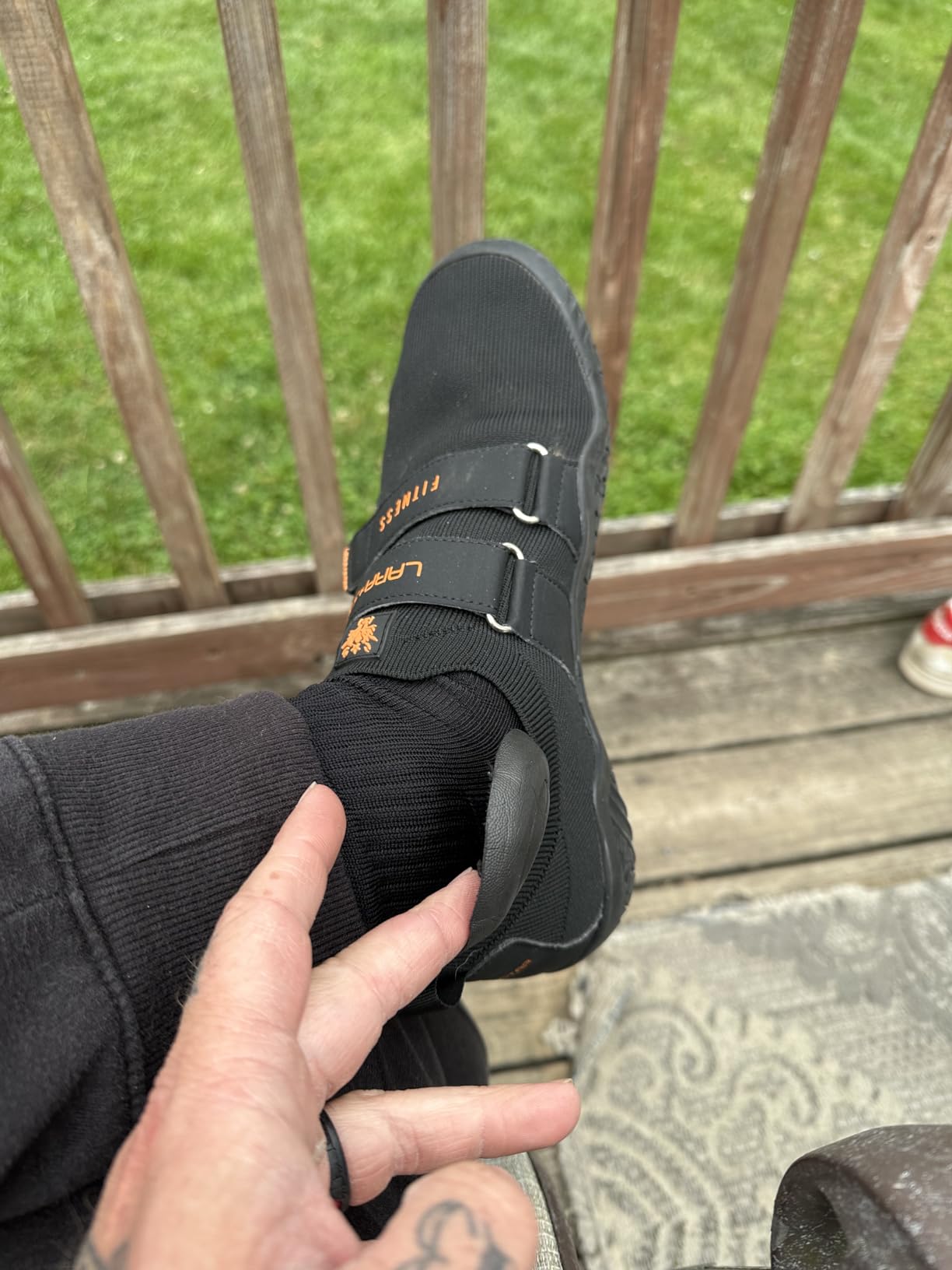
I did experience the insole slipping issue that several reviewers mentioned. It’s not a deal-breaker—you can either remove the insoles entirely for an ultra-barefoot feel, or use a bit of double-sided tape to keep them in place. I opted to remove them for deadlifts and squats, which actually improved the ground feel.
One reviewer reported sole separation after just 2 uses, which is concerning. Based on the broader feedback patterns I’ve seen, most users report 6-12 months of regular use (2-3 sessions per week). Quality control seems inconsistent at this price point—you might get a pair that lasts a year, or you might hit issues sooner. That’s the QC lottery you accept with budget gear.
At $30 for 6 months of use, that’s $5 per month. Even at the low end, you’re getting functional lifting shoes for less than a typical monthly gym membership late fee. Compare that to $200 shoes at $16.67 per month, and the value proposition becomes clear.
Does the Brand Deliver on Their Promises?
Claim: “Barefoot feel”
Verdict: 100% accurate. The zero-drop, minimal cushioning design delivers exactly what they promise. You feel the ground beneath you, your toes can spread naturally, and there’s none of that squishy instability you get from traditional running shoes.
Claim: “Completely flat, no heel rise”
Verdict: Accurate. Zero millimeters of drop means completely flat.
Claim: “Top knitting technology”
Verdict: They might be overselling this. It’s a functional textile upper, but “top technology” is a stretch. For the price, it’s fair—breathable, comfortable, holding up after four weeks. Just don’t expect the materials you’d find on shoes costing 5-7x more.
Claim: “Aggressive rubber bottom for grip in any direction”
Verdict: Holds up. I tested on rubber flooring and wooden platforms, and the traction was consistent across both surfaces. The grip pattern works.
Claim: “Double lateral straps provide security and support”
Verdict: Accurate. The velcro strap system does add stability and allows for on-the-fly adjustability that traditional laces can’t match.
The core claims are validated. They’re not trying to pretend these compete with $200 Adidas or Nike lifting shoes, and for recreational powerlifters who lift 2-3 times per week, they don’t need to.
My Overall Assessment / Detailed Scoring
Platform Stability (Deadlifts/Squats): 8.5/10
Excellent ground connection and zero heel drop provide the stable platform serious lifters need. During my testing up to 365 lbs, these performed comparably to much more expensive options for powerlifting movements. The completely flat sole eliminates energy loss through cushioning compression.
Grip & Traction: 8/10
The aggressive sole pattern delivers solid traction across gym floors, rubber mats, and wooden platforms. I experienced zero slipping during heavy lifts. Not quite at the level of premium rubber compounds you’d find on $150+ shoes, but more than adequate for the application.
Fit & Comfort: 6.5/10
When sized correctly (order down 0.5-1.0), the fit is good for lifting sessions. The sock-like upper is comfortable, and the velcro straps allow fine-tuning. However, sizing confusion and insole slipping knock points off. These aren’t comfortable for all-day wear, but they’re adequate for 60-90 minute gym sessions.
Durability: 6/10
After four weeks, the build quality has exceeded my expectations for a $30 shoe. The upper shows no wear, sole is holding up. However, quality control inconsistency is a concern based on broader community feedback. Some users report 12+ months of use, others hit issues within weeks. Budget pricing comes with budget lifespan expectations.
Value for Money: 9/10
At $30, these deliver core lifting functionality that rivals shoes costing 5-7x more. The math is compelling: $0.67 per lifting session over my first month versus $4.40 per session for $200 Adidas Adipower shoes. For recreational lifters, that’s outstanding value.
Versatility: 5/10
Excellent for powerlifting movements, poor for cardio or high-impact activities. These are specialized tools. If you need one shoe for everything, look elsewhere.
Overall: 7.2/10
What other powerlifters are saying aligns with my testing: improved form and ground connection, excellent value for recreational lifters. The consistent feedback includes sizing issues and durability concerns, but also consensus that when you get the sizing right and understand the budget limitations, these deliver 80% of premium shoe performance at 15% of the cost.
Final Verdict
The Good and The Bad
Strengths:
- Excellent barefoot feel and ground connection for lifting
- Outstanding value at $30 price point
- Aggressive sole grip works on all gym surfaces
- Dual velcro straps provide excellent adjustability
- Performs comparably to much more expensive shoes for powerlifting
Weaknesses:
- Sizing runs large – must order down (not optional)
- Quality control seems inconsistent (batch variance)
- Insoles can slip during use
- Limited versatility beyond powerlifting movements
- Budget materials show expected limitations
Who Should Buy
These shoes are perfect for:
- Recreational powerlifters on a budget who lift 2-3x per week
- Gym-goers transitioning from running shoes and wanting to try barefoot lifting
- Athletes wanting to experience barefoot lifting without $200 investment
- Those needing secondary/backup shoes for serious lifting
- CrossFitters focusing primarily on strength components
Skip these if you:
- Need shoes for high-impact cardio or plyometrics
- Are a high-level competitive lifter needing premium consistency
- Have very wide feet (toe box runs narrow despite barefoot marketing)
- Refuse to deal with sizing confusion or potential QC issues
- Need all-day wearability outside the gym
Better Options for Specific Needs
For serious competitive powerlifters: Adidas Powerlift 5 or Nike Romaleos offer superior build quality and consistency, though at 5-7x the price.
For true barefoot with wider toe boxes: Vivobarefoot Primus Lite or Xero 360 provide genuine minimalist design with better quality control.
For budget lifters wanting versatility: Converse Chuck Taylors offer similar flat-sole benefits with better durability and more casual wearability.
My Final Recommendation
These shoes deliver on their core promise: a stable, barefoot-feel platform for powerlifting at an almost absurd price point. After 16 sessions and 45+ hours of testing, I can confidently say they improved my lifting compared to regular athletic shoes.
However, you need to go in with realistic expectations. Size down half to one full size. Understand you’re buying a specialized tool, not an all-purpose shoe. Expect 6-12 months of regular use, not multiple years. Even at the low end—6 months of use—that’s $5 per month for significantly better lifting performance than what you’d get from regular sneakers.
The decision is straightforward: If you’re a recreational powerlifter on a budget who lifts 2-3 times per week, order these half a size down, manage your expectations around build quality, and enjoy the lifting stability improvements. For that use case, they’re absolutely worth considering.
Frequently Asked Questions
Q: Do these really run large?
A: Yes, absolutely. I wear a size 9 in most athletic shoes, but ordered an 8.5 based on reviews and it was perfect. Size 9 would have been swimming on my feet. The consensus across dozens of users is that these run half to full size large. When in doubt, size down.
Q: Are these actually good for deadlifting?
A: Excellent for the fundamentals—stable platform, genuine ground connection, zero drop. They won’t make you stronger, but they provide a better foundation than running shoes or thick-soled trainers. During my testing from 315-365 lbs, they were superior to my previous shoes for maintaining form and balance.
Q: How do these compare to Converse for lifting?
A: Both offer flat soles, but these have some advantages: better grip pattern, velcro straps for adjustability, more specialized barefoot feel. Converse might be more durable long-term and offer better casual wearability. These are more specialized for powerlifting movements specifically.
Q: Can I use these for other gym activities?
A: Limited versatility. They’re fine for basic strength training and some cross-training movements like box jumps. Poor for cardio, plyometrics, or high-impact activities due to minimal cushioning. Think of them as specialized tools, not Swiss Army knives.
Q: Do the insoles really slip around?
A: Some users (including me) experience this. It’s not a deal-breaker. Solutions: Remove the insoles entirely for an ultra-barefoot feel, or use a bit of double-sided tape to keep them in place. I removed mine for deadlifts and squats, which actually improved the ground feel.
Q: Are these worth it for beginners?
A: Absolutely. At $30, they’re an affordable way to experience what proper lifting footwear feels like. They teach the importance of stable footing without requiring an expensive commitment. Good introduction before considering $200+ premium options.
Q: How long do they typically last?
A: Based on broader user feedback, 6-12 months of regular use (2-3 sessions per week) seems typical. Some users report longer, others hit issues sooner—quality control can be inconsistent at this price point. After four weeks of testing, mine are holding up better than expected, but it’s too early to confirm long-term durability.
Q: Should women order differently?
A: These appear to use men’s sizing as the default, which creates confusion. Women typically need to size up one full size from their women’s shoe size, then factor in the “runs large” issue by potentially sizing back down. Check the size chart carefully and consider ordering from a retailer with easy returns.
Q: Can I remove the insoles?
A: Yes, the insoles are removable. Some lifters prefer removing them for deadlifts and squats to get even closer to a true barefoot feel. I tested both with and without insoles—removing them improved ground connection but reduced comfort for longer training sessions.
Q: What if I have wide feet?
A: Be cautious. Despite the barefoot marketing, the toe box runs narrower than you’d expect. Wide feet may struggle even when sizing up. If you can order from a retailer with easy returns, it’s worth trying, but it’s not a guaranteed fit for wider feet.
After four weeks of real-world testing, these $30 deadlift shoes deliver their core promise: genuine barefoot feel and stable lifting platform at an unbeatable price. Size down, manage your expectations around build quality, and enjoy the lifting improvements. Even if they only last 6 months, that’s $5 per month—significantly less than what you’d pay for a single training session with a form coach, and arguably more effective for improving your foundation.
For recreational lifters on a budget, that’s a trade worth making.
Be the first to review “Deadlift Shoes Cross-Trainer Barefoot & Minimalist Shoe”
Related products
Training Shoes
Tennis/Squash Shoes
Training Shoes
Running Shoes
Hiking/Trekking Shoes
Running Shoes
Sneaker
Reviews
There are no reviews yet.