
Thursday morning, 7:23 AM. I’m standing in the garage with a toothbrush in one hand and my kid’s grass-stained cleats in the other, watching Grandma’s Secret Sneaker Cleaner do something I genuinely didn’t expect — actually work. This is Mike, and four weeks earlier, I was about as skeptical as anyone could be. I’d been burned by too many cleaning sprays that smelled impressive and cleaned nothing. But my buddy wouldn’t stop recommending this stuff, and with a full season’s worth of damage on 25+ pairs of shoes, I figured $12 was worth the experiment. Here’s what I actually found.
What You’re Actually Buying
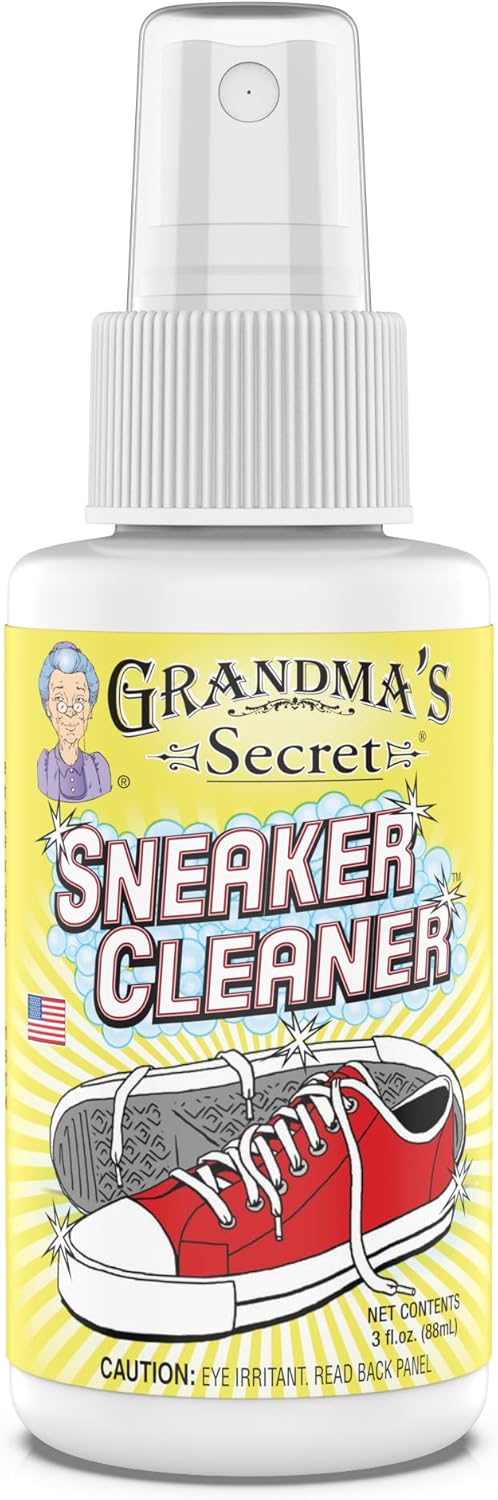
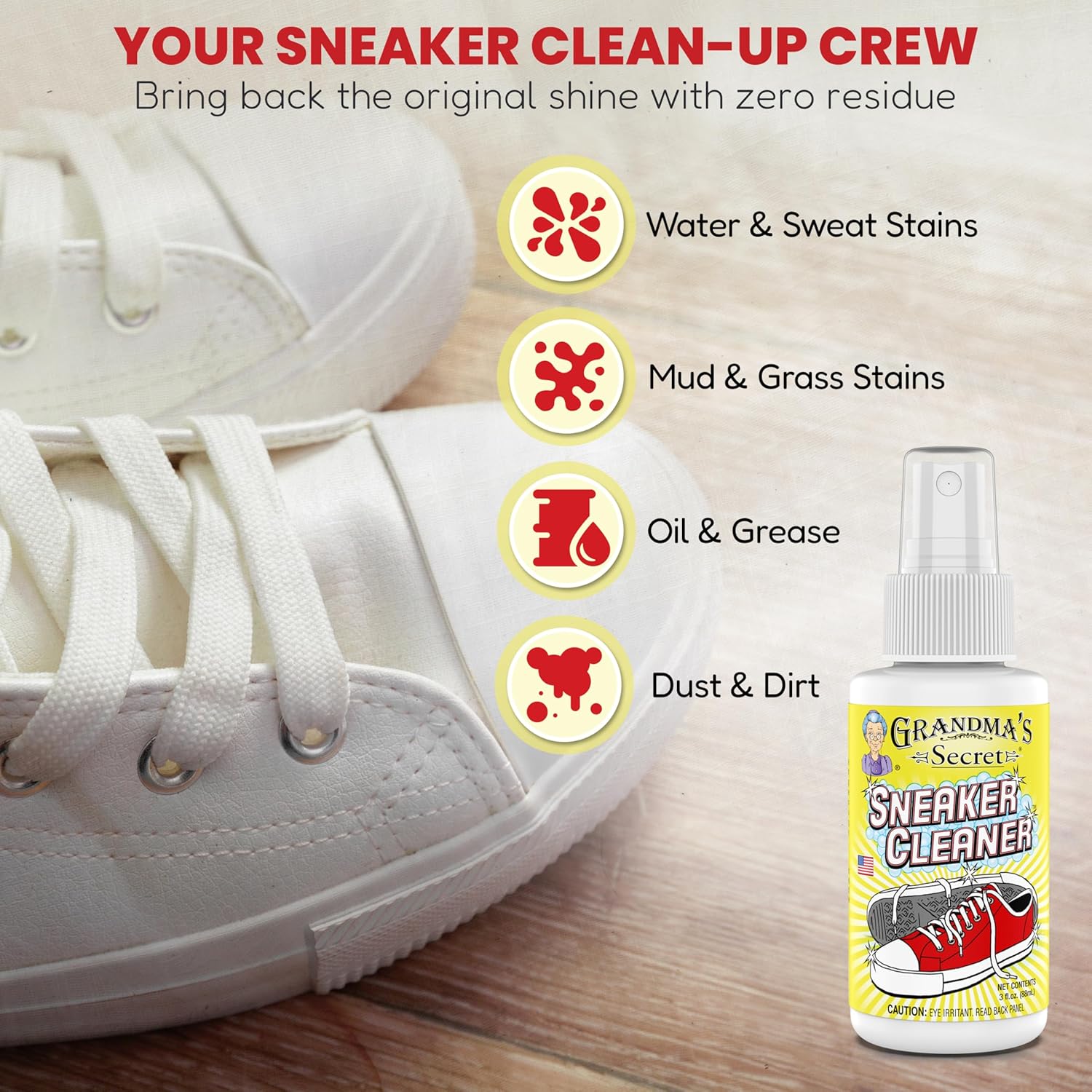
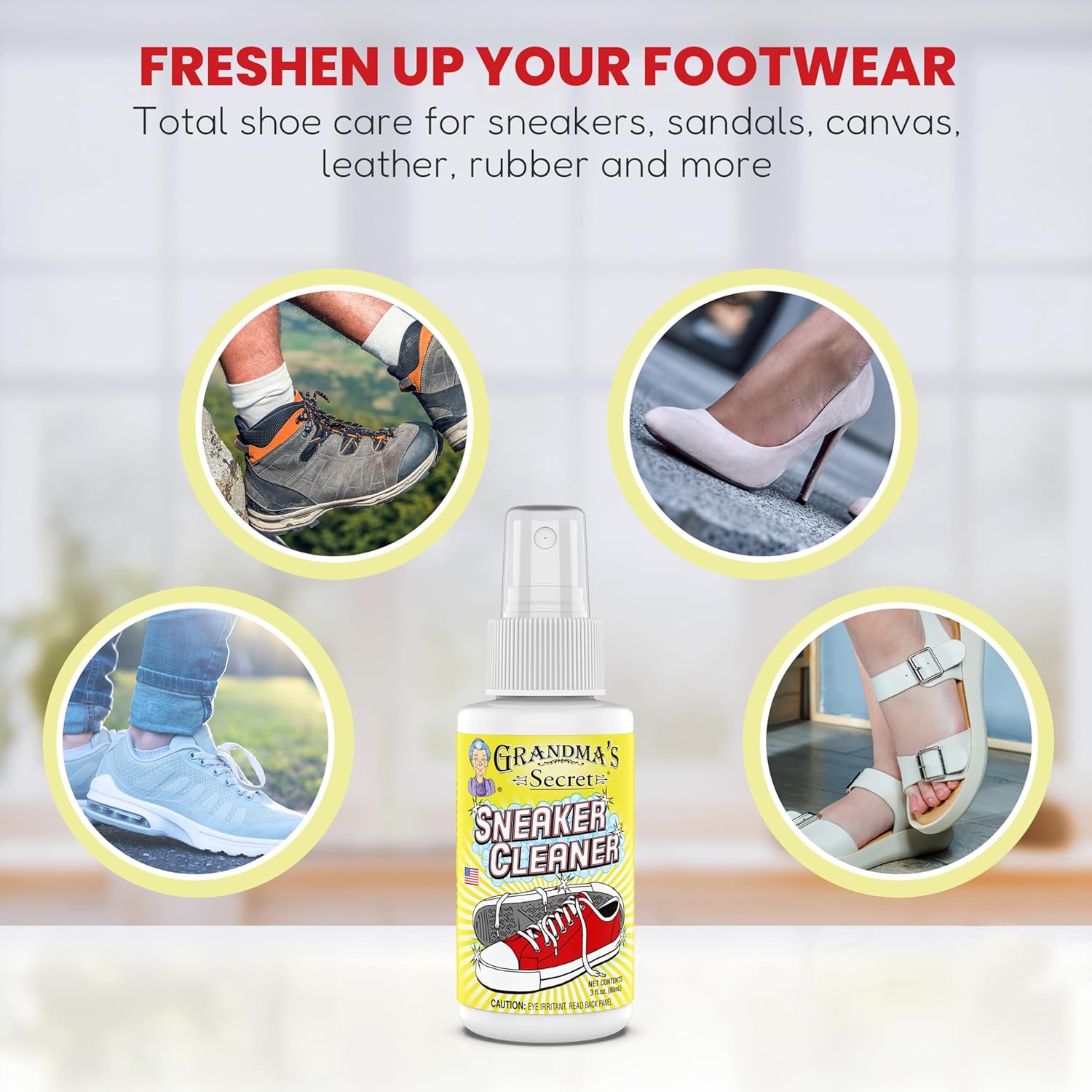
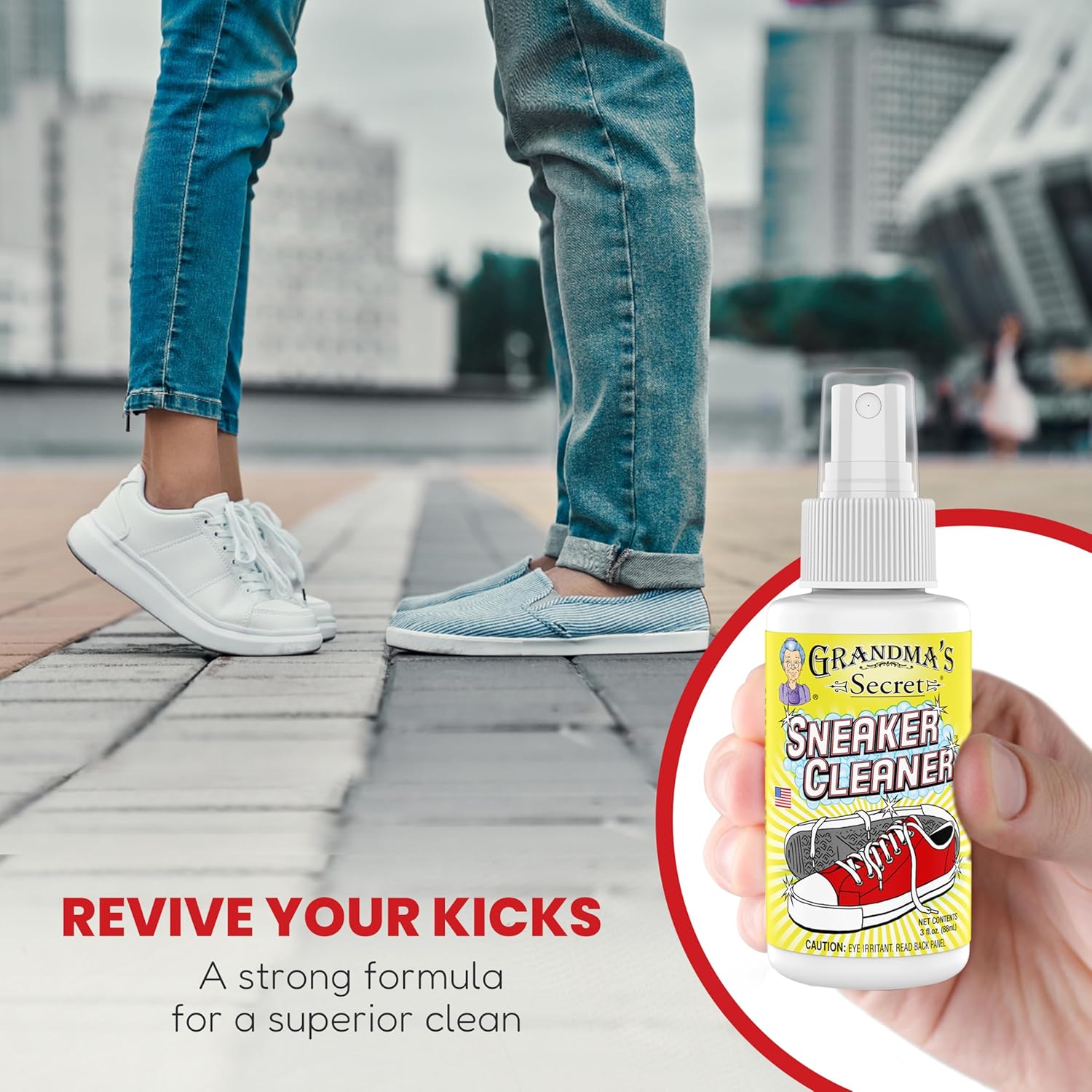
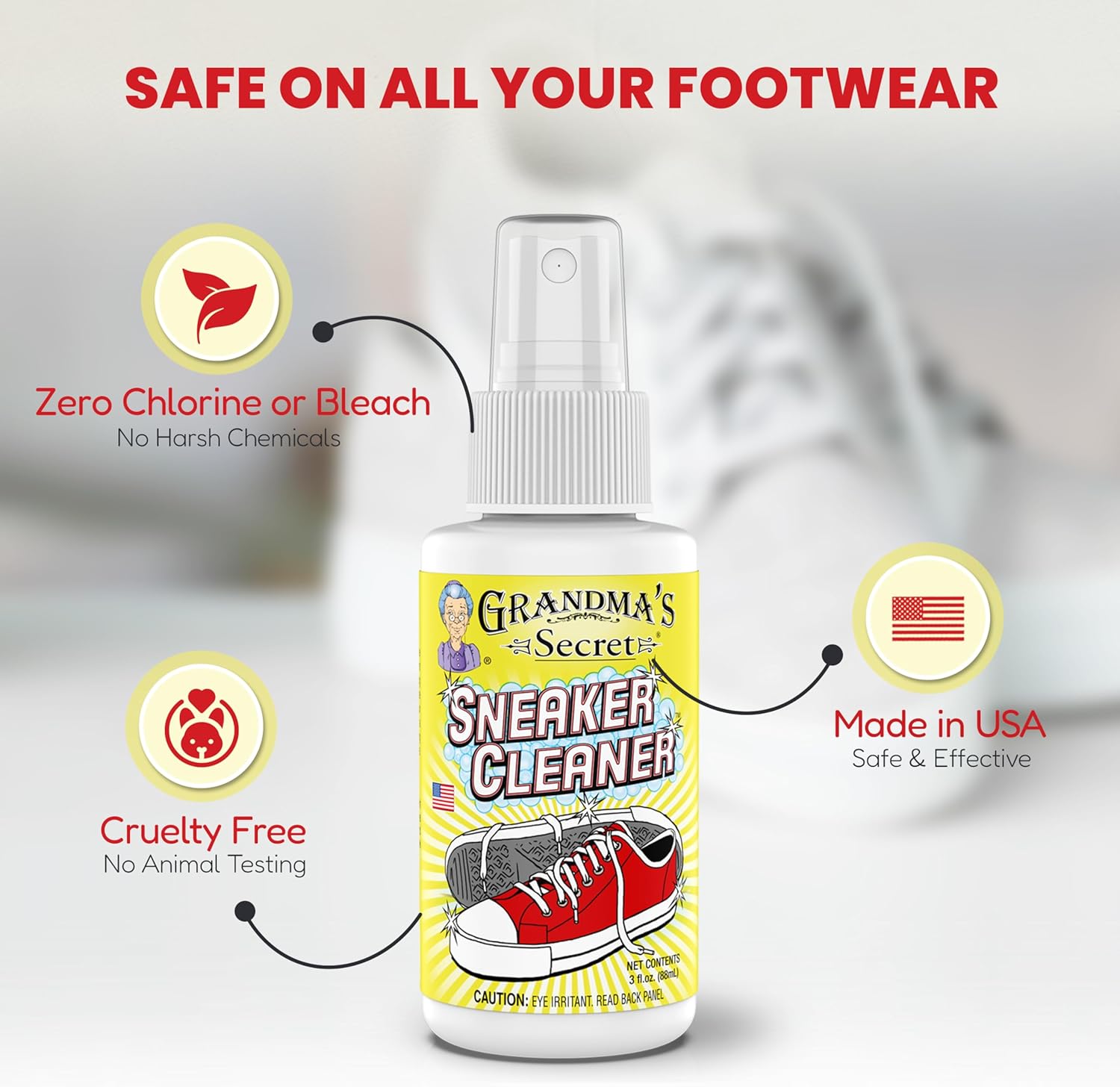
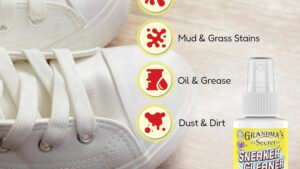
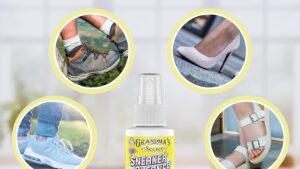
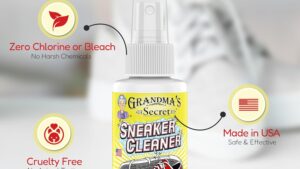
Let’s get the basics out of the way. Grandma’s Secret Sneaker Cleaner is a spray-format liquid cleaner designed for rubber soles, canvas uppers, leather, mesh, and cloth. The 3oz bottle runs $12 on Amazon or $9.99 at Walmart — there’s also a 16oz version worth considering if you have a larger household (more on that later). The formula is proprietary and toxin-free per the manufacturer, with a citrus scent that’s noticeable but not overwhelming.
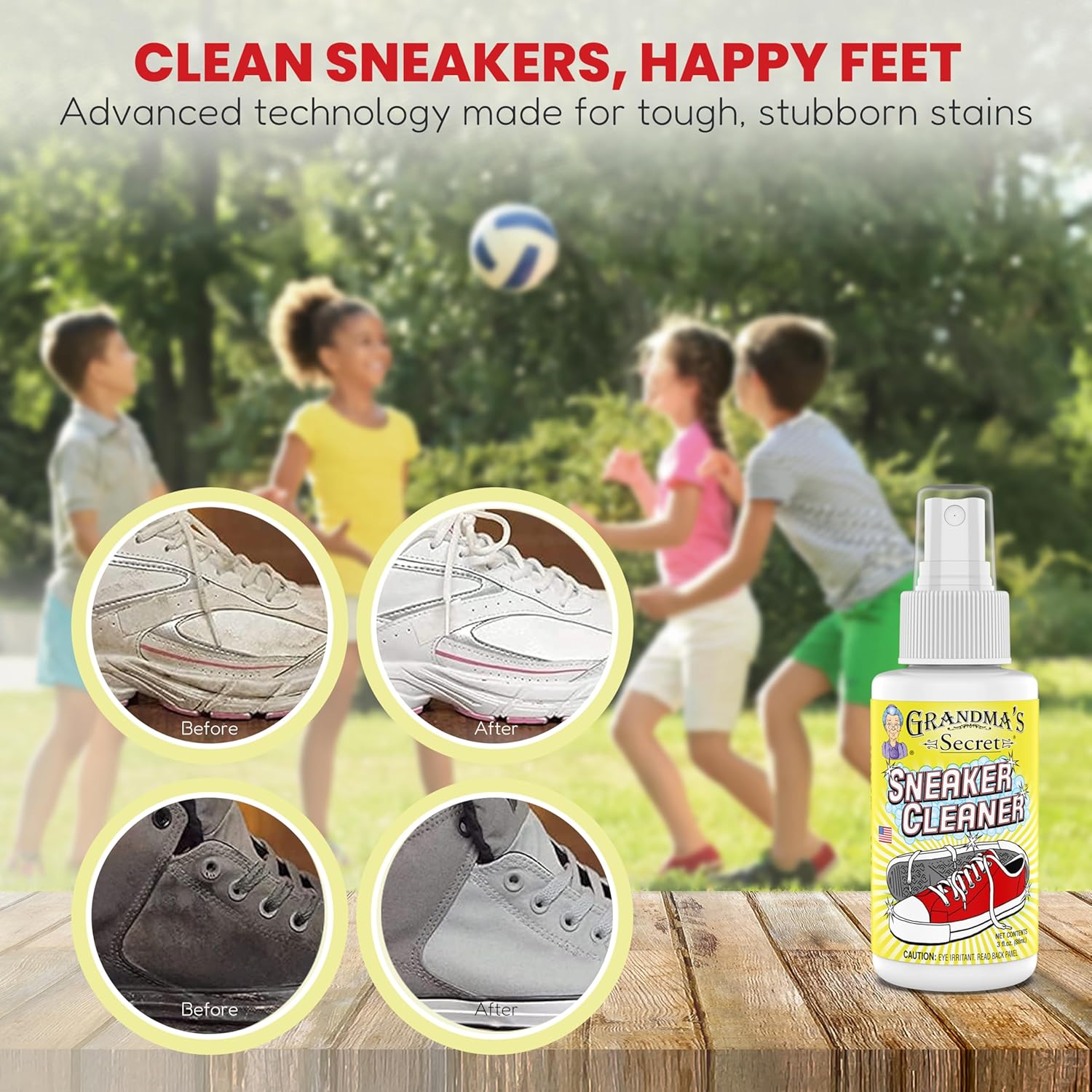
What it claims to do: remove dirt, grime, and grass stains across multiple shoe materials without damaging finishes. What I actually found after four weeks and 25+ pairs of shoes: mostly true, with two significant asterisks that the label conveniently leaves out.
- Price: $9.99–$12 (3oz) | Also available in 16oz
- Formula: Proprietary blend, toxin-free, citrus scent
- Compatible materials: Rubber, canvas, leather, mesh, cloth
- Testing scope: 4 weeks, 25+ pairs — soccer cleats, running shoes, basketball sneakers, work boots, kids’ shoes, leather dress shoes
- Not for: Suede, specialty finishes, shoes with color fastness warnings
How the Cleaning Actually Works
The application is dead simple: remove the laces (pick up some fresh flat laces while you’re at it if yours are beyond saving), spray the problem areas, wait, then scrub with an old toothbrush. The formula creates a foaming action that visibly lifts dirt as you scrub — you can actually watch it happen, which is satisfying in a weird way.
Here’s where the label and reality diverge for the first time: the bottle says “2 sprays per shoe.” For a shoe that got light dust on it, maybe. For my kid’s cleats after a Tuesday game — six sprays minimum, usually eight. I went through more product than expected on the first few cleanings before I recalibrated my expectations. Not a dealbreaker, but worth knowing before you’re halfway through a 3oz bottle and wondering if you did something wrong.
The second discovery was dwell time. The label says 15 seconds. What actually works better is letting it sit for 30-60 seconds before you touch the brush. I stumbled onto this while grabbing a different brush from across the garage — came back 45 seconds later to find the cleaner had already loosened most of the stain. That extra wait time is especially noticeable on canvas, where the formula needs time to penetrate the fibers. Patience beats elbow grease here.
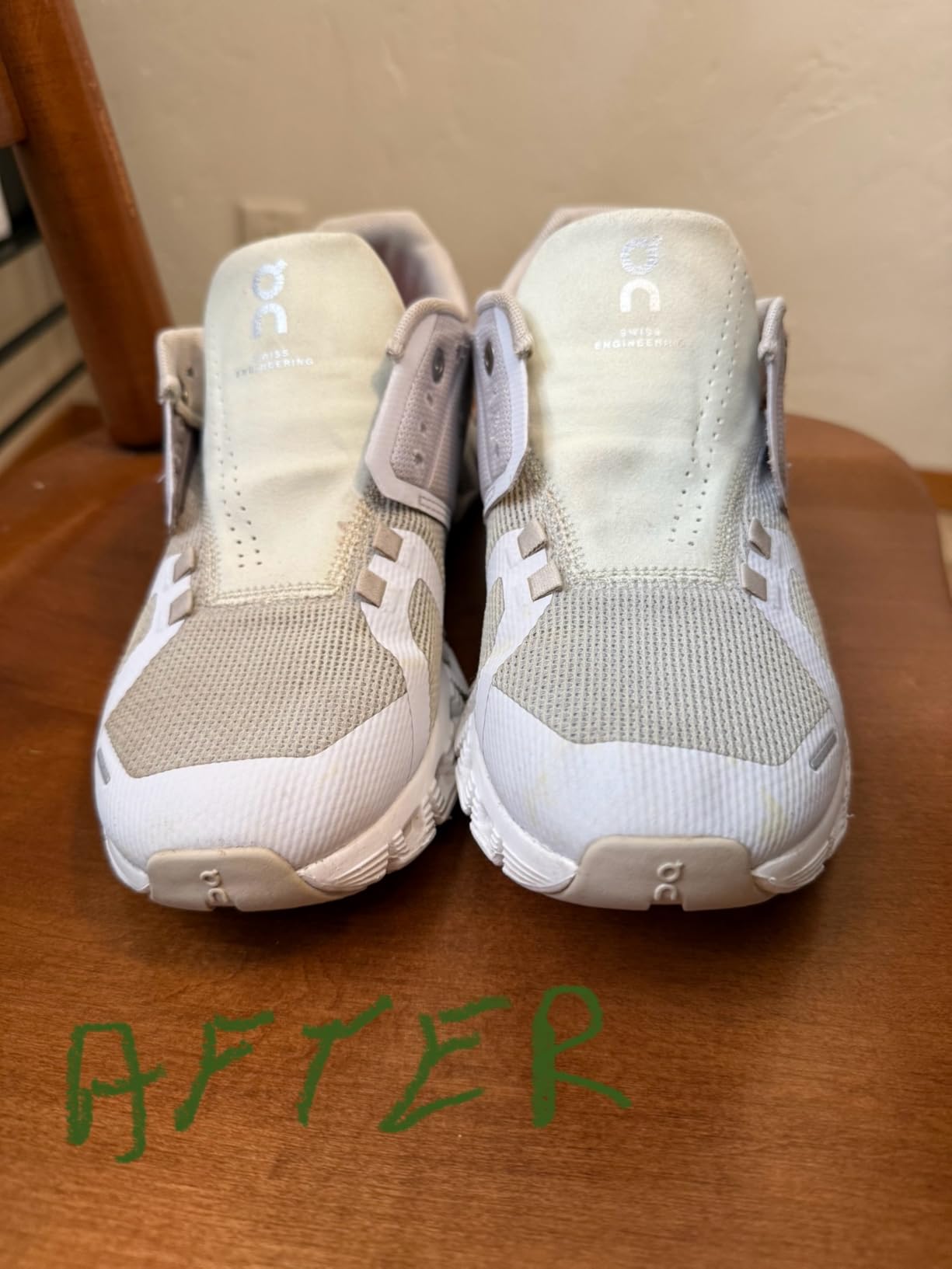
One more thing the label skips: ventilation. The citrus scent is pleasant enough outdoors but gets concentrated fast in a small bathroom or laundry room. I noticed mild throat irritation during a few indoor sessions. After moving the operation to the garage with the door open, zero issues. It’s not dangerous — but don’t clean shoes in a closet-sized space without airflow.
Material-by-Material Results
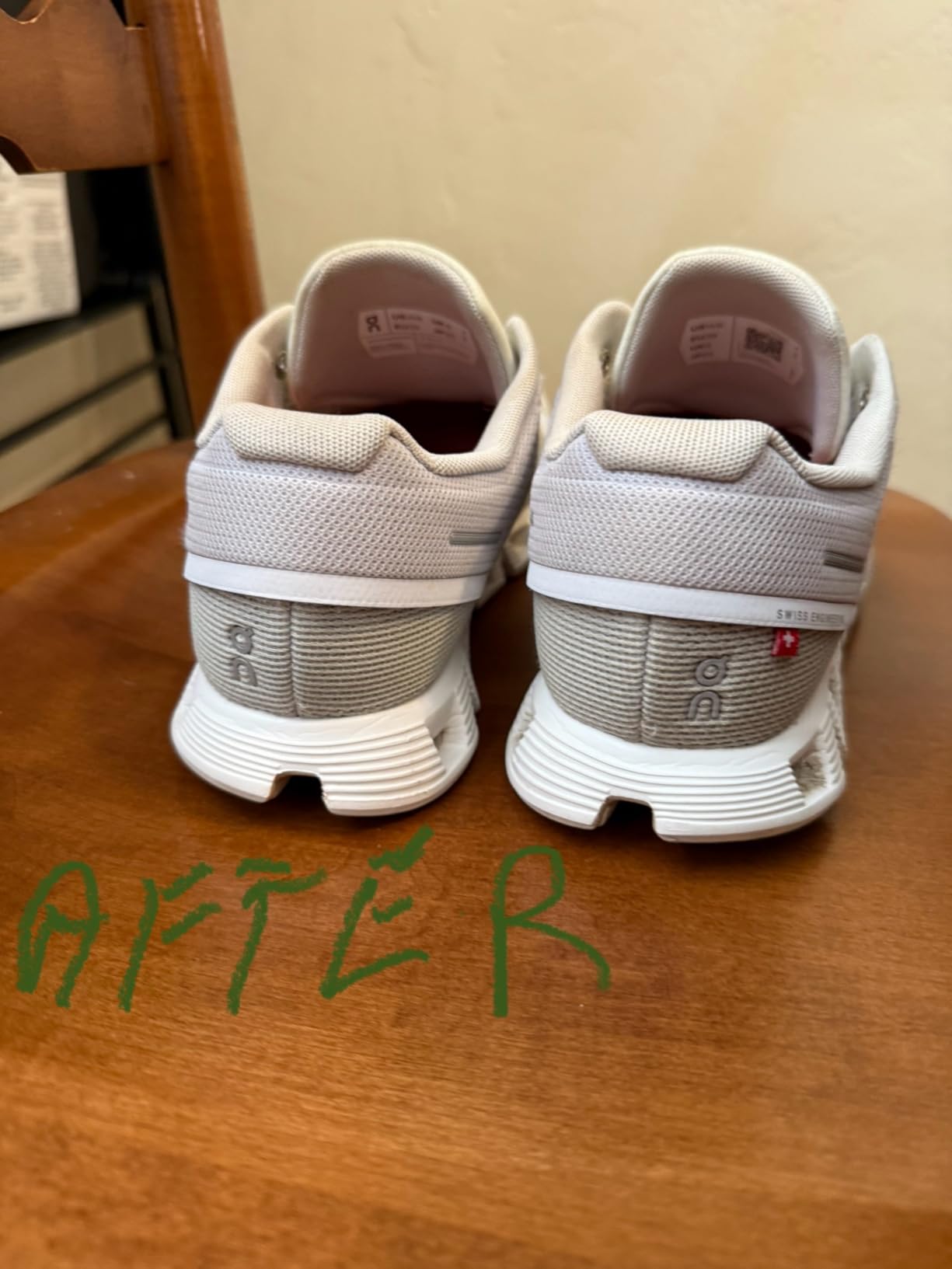
Not all materials respond equally. Here’s what four weeks of testing actually showed:
Rubber Soles — 9/10
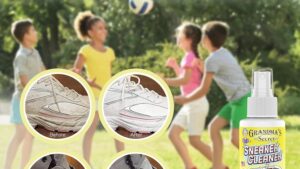
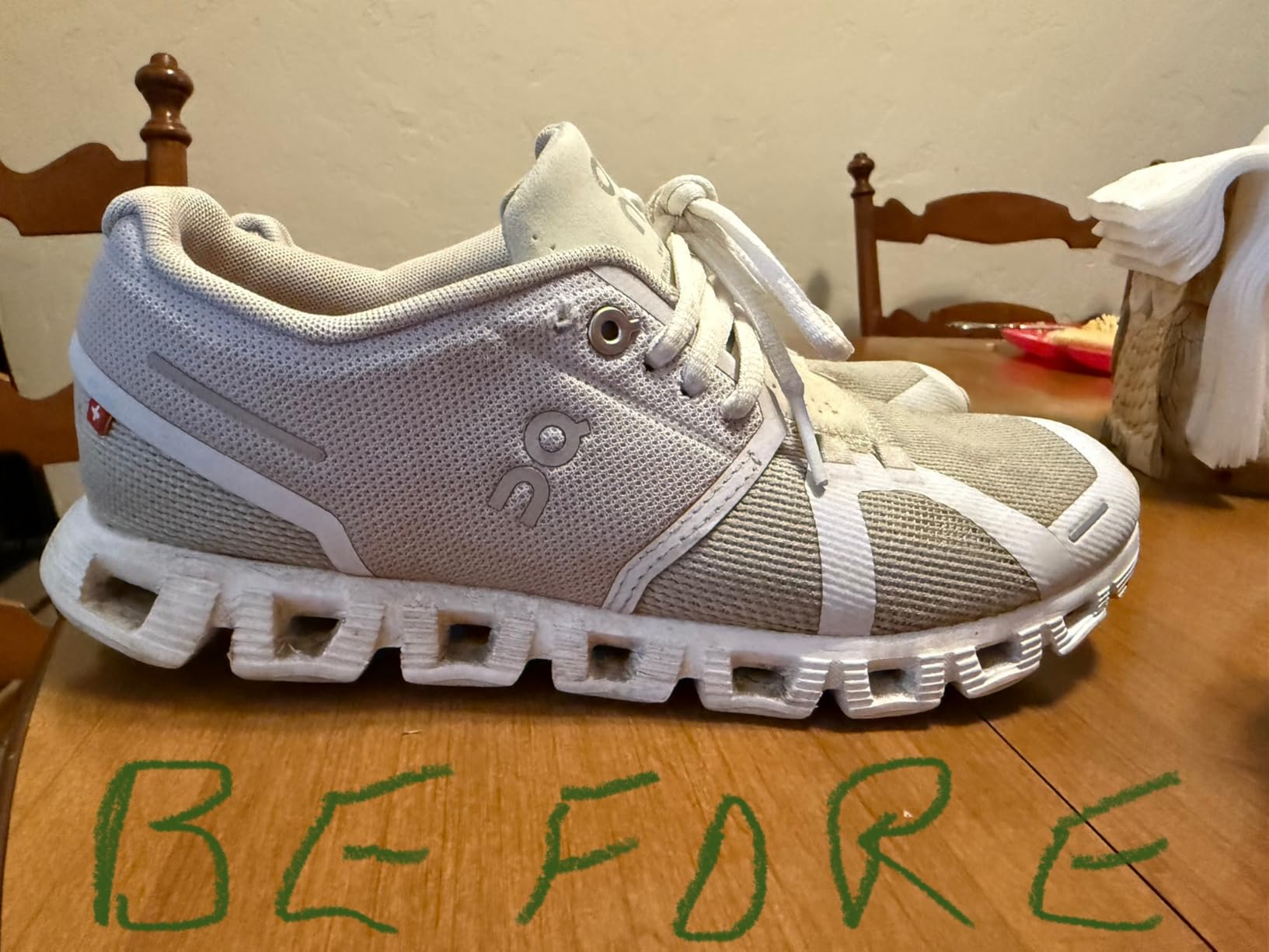
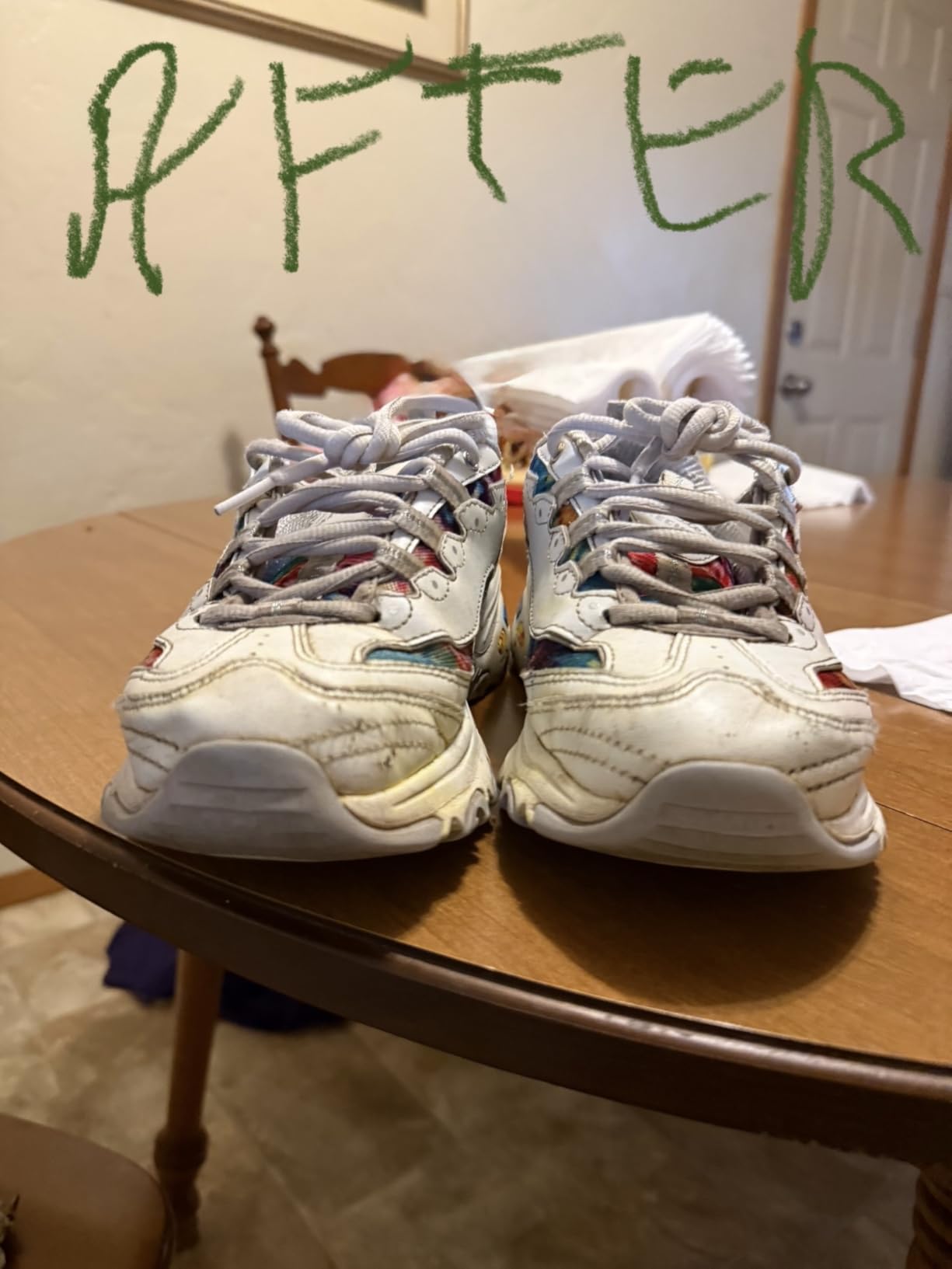
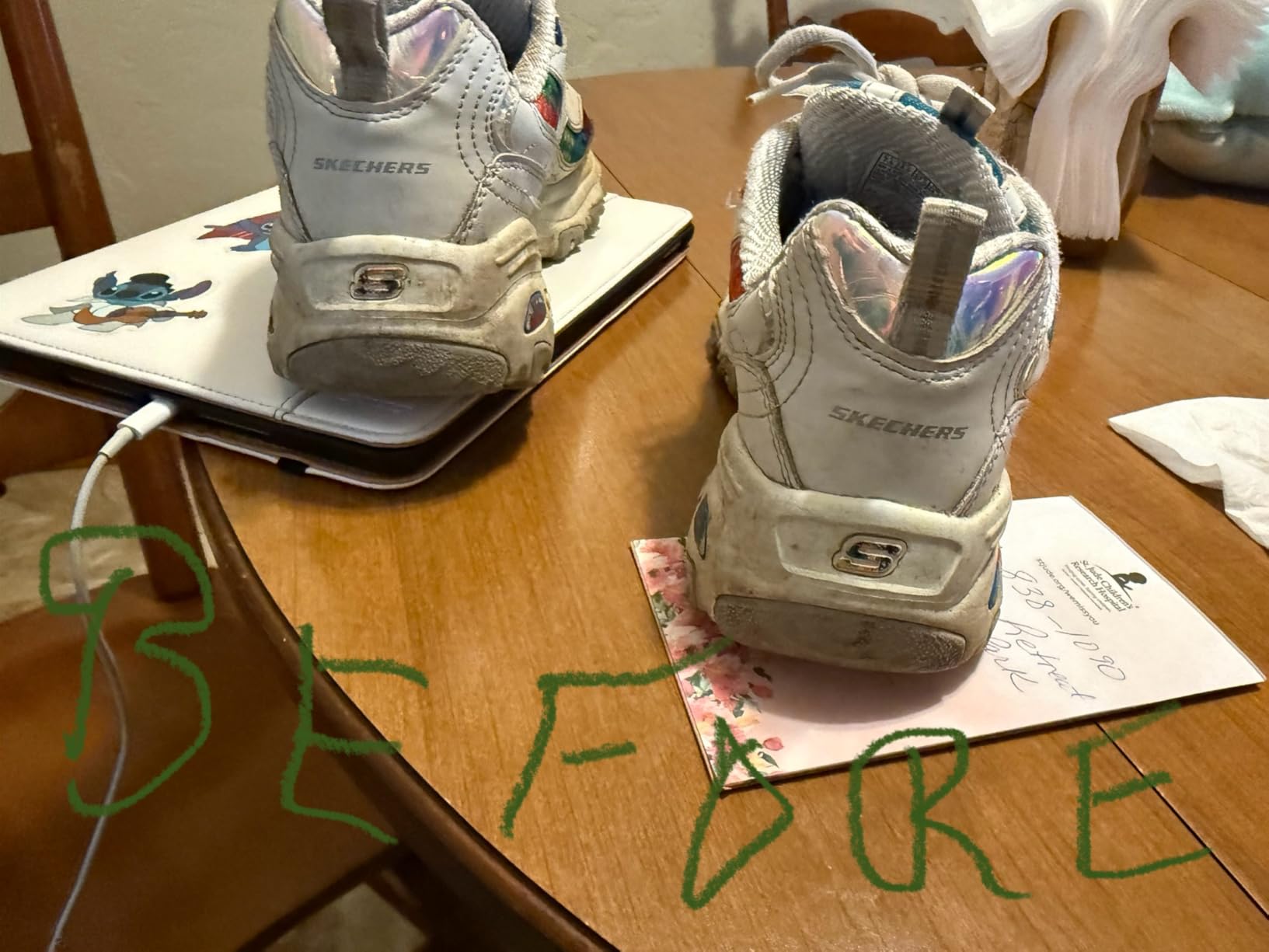
This is where Grandma’s Secret earns its reputation. Rubber is non-porous, so dirt and scuff marks sit on the surface rather than embedding in fibers. The formula lifts them fast — even years-old scuff marks on the sidewall of older sneakers came off with moderate scrubbing. The white rubber on my kid’s cleats went from brown-green to nearly factory-fresh inside two minutes. If rubber cleaning were all this stuff did, it’d still be worth the price.
Canvas Uppers — 7/10
Canvas works, but it demands more from you. The fibers trap dirt below the surface, so you’ll need longer dwell time (go 45-60 seconds), more sprays, and more passes with the brush. For light dirt and scuffs, one treatment is usually enough. For deeply set stains on worn canvas, expect two or three applications spread over a few days — repeat same-day treatments are less effective than letting the material dry and breathing between sessions.
One thing competitors rarely mention: white canvas has a yellowing risk. It’s avoidable, but only if you rinse thoroughly and air-dry the shoes completely. I had one close call with a canvas slip-on when I rushed the rinse. Made sure to rinse properly every time after that, no yellowing issues.
Leather — 8/10
Strong performance, and an important distinction: the formula doesn’t dry out leather. Some cleaners strip the natural oils and leave leather looking dull or cracked after a few uses. This one doesn’t. I used it on leather dress shoes and a pair of leather work boots — the finish stayed supple and the color remained consistent. Surface scuffs came off cleanly. The one caveat is raw or unfinished leather, which I’d test in a hidden area before going to town on the full shoe.
Real Shoes, Real Results
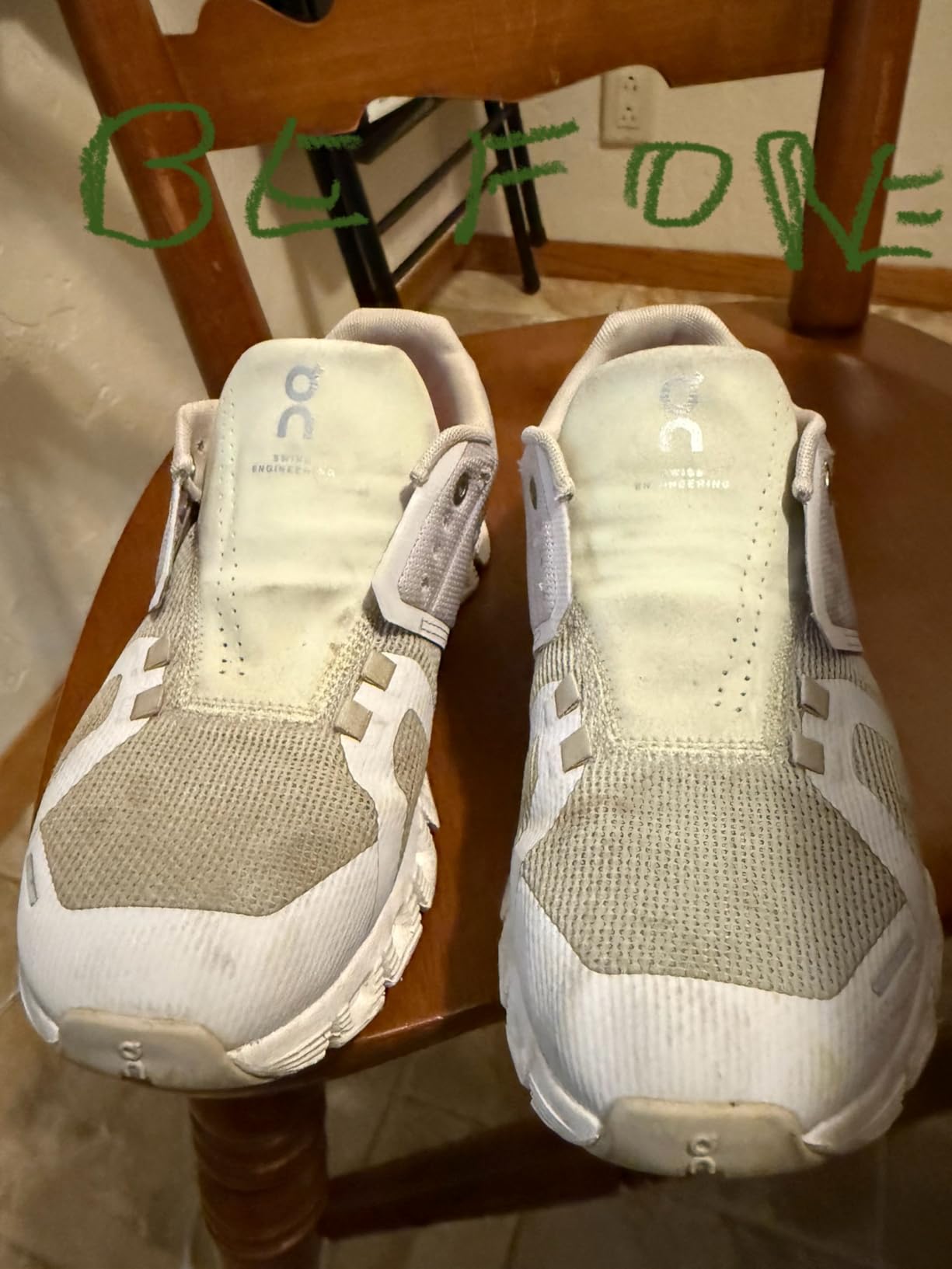
Testing on 25+ pairs over four weeks covers enough ground to actually say something useful:
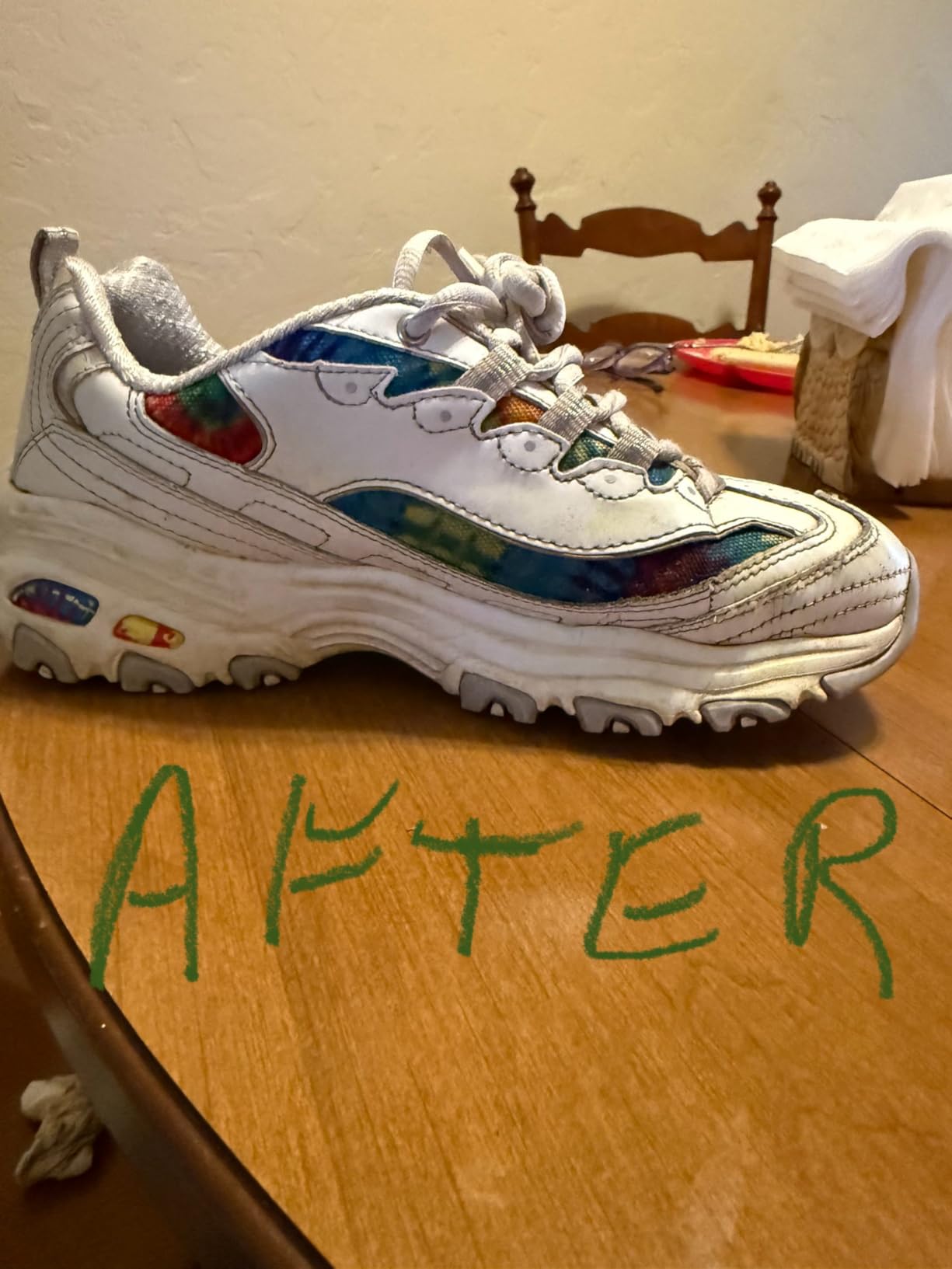
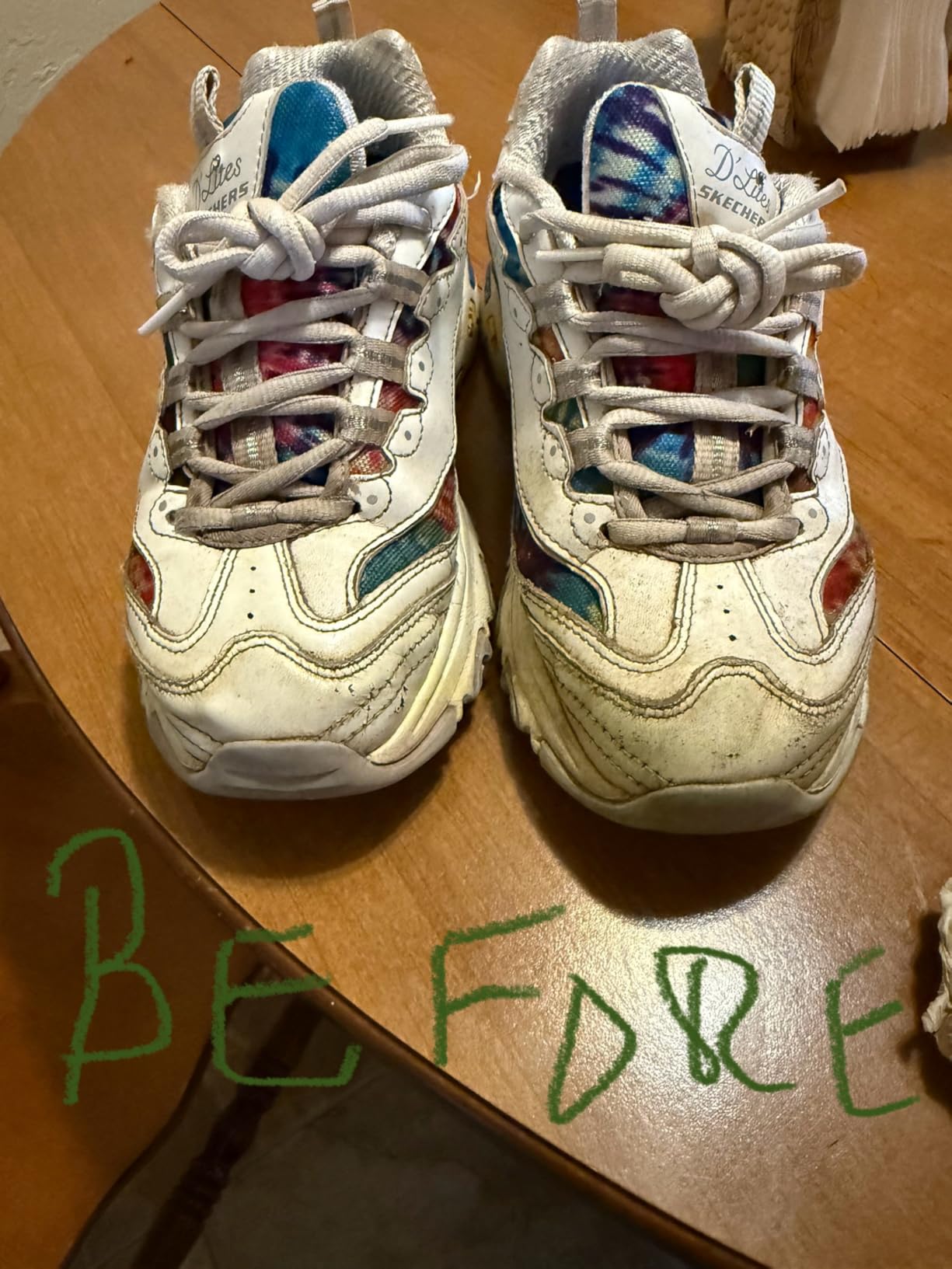
Kids’ soccer cleats: The highest-abuse test in this whole evaluation. Grass stains, embedded turf pellets, mystery mud from a Thursday game — single treatment on the rubber studs and outsole, two treatments on the canvas/synthetic upper panels over a week. Result: cleats looked playable again instead of ready for retirement.
Nike running shoes (mesh/foam combo): One treatment handled trail dust and court scuff marks. The white midsole foam cleaned up well without any bleaching or streaking. I was ready to replace this pair before the cleaning; kept them for another two months after.
Work boots (leather/rubber, construction use): Surface dirt came off cleanly. Old embedded grime lightened but didn’t fully disappear — three treatments over two weeks got them to “presentable for a job site” rather than “fresh from the box.” That’s honest; heavily embedded construction site dirt is a marathon, not a sprint.
Kids’ playground shoes: Second highest abuse tier. Light stains gone in one pass. Heavy dirt accumulation (the kind where you can’t identify the original shoe color) needed two treatments. Still impressive.
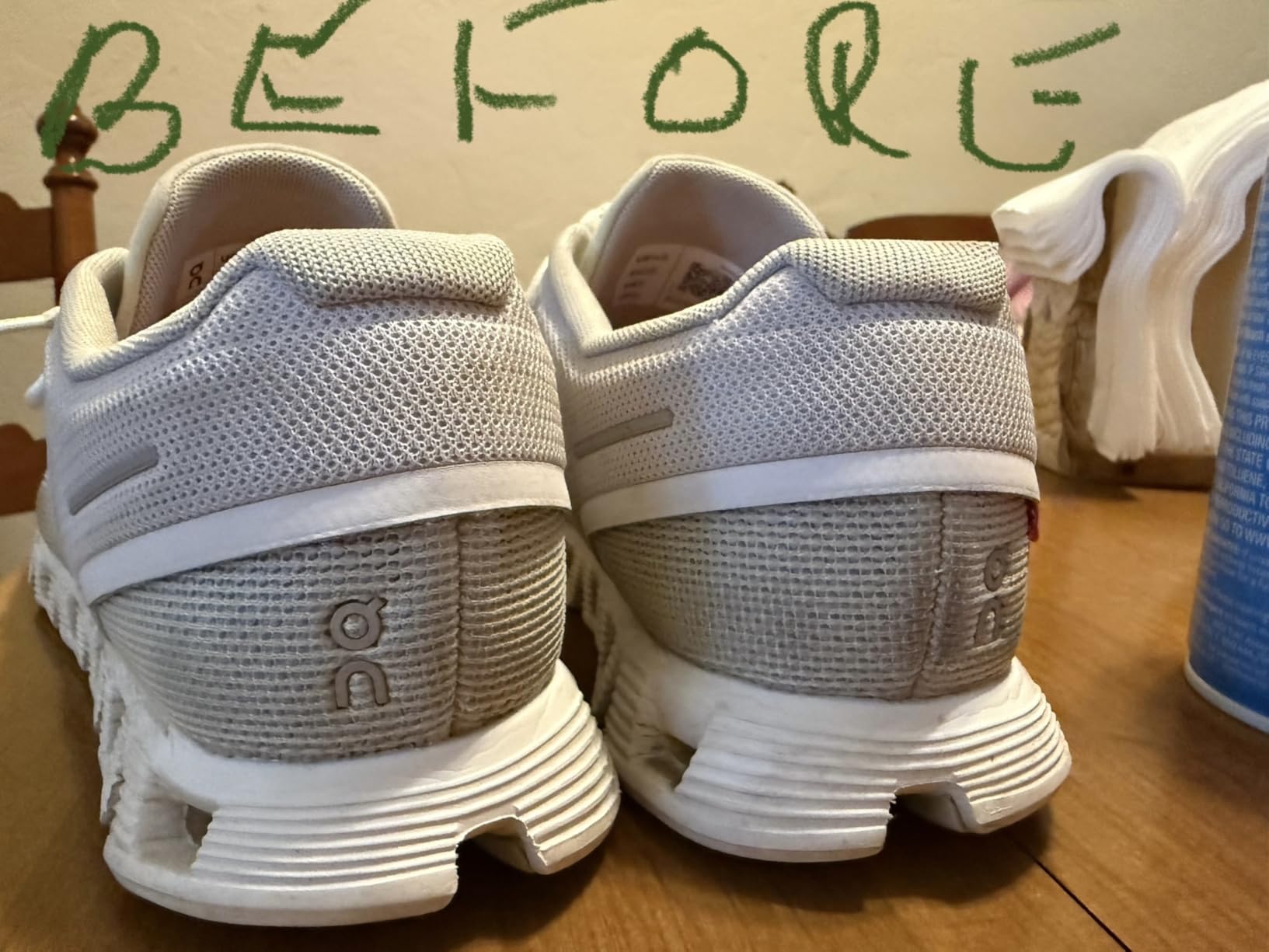
What the Label Claims vs. What Testing Showed
| Claim | Reality | Notes |
|---|---|---|
| “Removes dirt, grime, grass stains” | ✅ True | Consistently, across all shoe types tested |
| “Works on rubber, canvas, leather” | ✅ True | Results vary by material (rubber leads, canvas trails) |
| “2 sprays per shoe” | ❌ False (for dirty shoes) | Real need: 6-8 sprays per shoe with actual stains |
| “15-second dwell time” | ⚠️ Incomplete | 30-60 seconds produces noticeably better results |
| “Non-greasy, zero residue finish” | ✅ True | Confirmed — no sticky film after proper rinse |
| “Safe for all compatible materials” | ✅ True | Test first on specialty finishes; suede excluded |
| “Pleasant scent” | ✅ True (outdoors) | Can irritate respiratory tract in small enclosed spaces |
The Honest Cost Breakdown
The 3oz bottle costs $9.99 at Walmart (or $12 on Amazon). Based on actual testing:
- Light cleaning / maintenance: 8-12 pairs per bottle → roughly $0.85-1.25 per pair
- Heavy cleaning / multiple treatments: 4-6 pairs per bottle → roughly $1.65-2.50 per pair
That math makes the 16oz version a significant upgrade for bigger households. At roughly $15 for 16oz vs. $9.99 for 3oz, you’re paying $0.94/oz versus $3.33/oz. If you have 20+ shoes in the rotation or kids who treat footwear like disposable equipment, the 16oz format is an easy decision.
For comparison, the DIY alternatives I used before:
- Dish soap + water: Essentially free, decent on rubber, leaves residue on leather, tedious for heavy stains
- Magic eraser: $0.15-0.25 per pad, excellent on rubber soles, not safe for mesh or canvas uppers
- Baking soda paste: Cheap, abrasive texture creates surface-wear risk on delicate materials over time
For a household cleaning 10-15 pairs per year, one or two 3oz bottles at ~$20-25 total beats professional cleaning at $8-20 per pair. It’s not even close.
What I Liked, What I Didn’t
The good stuff:
- Actually removes stains — not just on light dust but real-world, game-day, construction-site grime
- Multi-material in one bottle: rubber, leather, canvas, mesh without switching cleaners
- Doesn’t strip leather or damage shoe finishes
- No residue when you rinse properly
- Citrus scent is pleasant rather than chemical-harsh
- Works on expensive shoes too — used on $130+ Nikes without hesitation after a small test patch
The honest limitations:
- Label math is wrong — budget for 6-8 sprays per dirty shoe, not two
- Canvas results are notably weaker than rubber; set realistic expectations
- Use with ventilation — the scent concentrates quickly in small spaces
- Deeply embedded construction or field dirt needs patience and multiple sessions
- 3oz disappears faster than you’d think for a heavy-shoe household; consider 16oz upfront
- Suede and specialty finishes are not compatible — you’ll need a dedicated product for those
Frequently Asked Questions
Does it work on dark-colored shoes, not just white?
Yes — I tested it on black, navy, and dark grey shoes without color bleeding or fading. The results are just visually less dramatic on dark colors since you’re cleaning rather than whitening. If you specifically need white shoe restoration, a product like Wilkins Sneaker Whitener is a complementary tool for that specific use case.
How many pairs can one 3oz bottle clean?
8-12 pairs at light maintenance use. 4-6 pairs if you’re dealing with heavily soiled shoes requiring multiple applications. The label’s math assumes you’re barely touching the spray trigger — budget for more in real-world use.
Is the “2 sprays per shoe” instruction accurate?
For a shoe with light surface dust, maybe. For anything with actual dirt, grass, or scuff marks, expect 6-8 sprays per shoe. This isn’t a flaw in the product — it’s just a marketing-optimistic label claim. The formula is concentrated, but “2 sprays” is aspirational, not practical.
Can I use it on suede?
Not recommended. The manufacturer doesn’t list suede as a compatible material, and I didn’t test it for that reason. Suede and nubuck need dedicated products designed for their open-grain texture. Don’t risk a nice pair on a formula that wasn’t designed for it.
What if my shoes have really old, set-in stains?
Multiple sessions work better than one marathon session. Apply, let it work, rinse, let the shoes dry completely, then come back in a day or two and repeat. The same-day repeat approach gives diminishing returns; spaced treatments let the cleaning chemistry work more effectively.
What brush works best?
An old toothbrush handles most situations well. Medium bristle for rubber soles and leather, soft bristle for mesh and canvas. If you’re cleaning laces, an extra brush dedicated to just that keeps the main brush cleaner. While you have the laces out, it’s worth checking if they need replacing — fresh flat athletic laces make clean shoes look noticeably better than grime-stained originals.
Is the scent safe?
The formula is toxin-free per the manufacturer, and the citrus scent is pleasant at low concentration. The practical issue is ventilation: in a small bathroom or laundry room, the scent builds up and can irritate your throat. Clean in a garage, outdoors, or near an open window. Once I moved my cleaning sessions outside, no issues whatsoever.
Should I buy 3oz or 16oz?
3oz if you have fewer than 20 shoes or want to test the product before committing. 16oz if you have a family with multiple active shoe-wearers, any kids in soccer or athletics, or just want better value per ounce. At 3.3x the volume for roughly 1.5x the price, the 16oz math is hard to argue with.
Can I use it without a brush, just wiping?
You can wipe off surface dust with a cloth after spraying, but embedded stains need mechanical action — brush bristles agitate the foam and lift dirt out of pores and fibers. For quick maintenance between deep cleans, a damp cloth works. For actual stains, get the toothbrush.
Any tips for keeping shoes cleaner longer after treatment?
Let them dry completely before wearing again. Consider sneaker balls inside the shoes between wears to manage odor and moisture. For leather shoes, cedar shoe trees maintain the shape and absorb moisture after a cleaning session. Clean shoes stay clean longer when they’re properly stored.
My Overall Assessment
Performance Ratings
| Category | Score | Notes |
|---|---|---|
| Cleaning Effectiveness | 8.5/10 | Rubber 9/10, Leather 8/10, Canvas 7/10 |
| Ease of Use | 9/10 | Spray-and-scrub is intuitive; brush work required |
| Material Safety | 9/10 | No finish damage or color stripping observed |
| Value for Money | 7.5/10 | 3oz disappears fast; 16oz bulk is better value |
| Versatility | 8.5/10 | Handles most materials; only suede excluded |
| Overall Score | 8.5/10 | Recommended — works as advertised with realistic expectations |
Who Should Buy Grandma’s Secret Sneaker Cleaner
Good fit:
- Parents with active kids: Soccer, baseball, playground dirt — this handles all of it. Factor in the frequency and the 16oz version makes financial sense immediately
- Athletes and gym-goers: Training shoes and court shoes take abuse; this keeps them presentable without harsh chemicals that could dry out materials
- Anyone with white sneakers: The rubber and midsole restoration alone justifies the purchase price for a single pair of white shoes
- Work boot owners: Surface dirt and grime clean up well; realistic expectations for embedded dirt apply
- Casual sneaker collectors: Maintaining 10-15 pairs with one bottle is economical and effective
Skip it if:
- You own mostly suede shoes — this product isn’t for you
- You want a completely hands-off spray-and-rinse solution — brushing is non-negotiable for real results
- You have respiratory sensitivities and can’t work outdoors or near ventilation — the scent concentration is real in enclosed spaces
The Bottom Line
After four weeks and enough dirty shoes to exhaust a car wash, I’m a convert. Not an enthusiastic convert — I don’t think shoe cleaning products need to be exciting — but a practical one. Grandma’s Secret does what it says it does, at a price that makes sense, without damaging the shoes you care about. The label math on spray count is a fiction, and the 15-second dwell time recommendation leaves performance on the table. Use 6-8 sprays, wait 30-60 seconds, brush properly, and this product earns its 8.5/10.
My kid’s cleats made it through the rest of the season. That’s a better endorsement than any five-star rating.
Related Shoe Care at footgearusa.com
- Browse our full shoe care accessories collection
- Sneaker Balls Shoe Fresheners — keep shoes fresh between cleaning sessions
- Wilkins Sneaker Whitener — for targeted white sneaker whitening
- FootFitter Cedar Shoe Trees — preserve shoe shape and absorb moisture post-cleaning
- Sof Sole Athlete Insoles — replace worn insoles after deep cleaning
Be the first to review “Grandma’s Secret Sneaker Cleaner”
Related products
Accessories
Accessories
Accessories
Accessories
Accessories
Accessories
Accessories
Reviews
There are no reviews yet.