
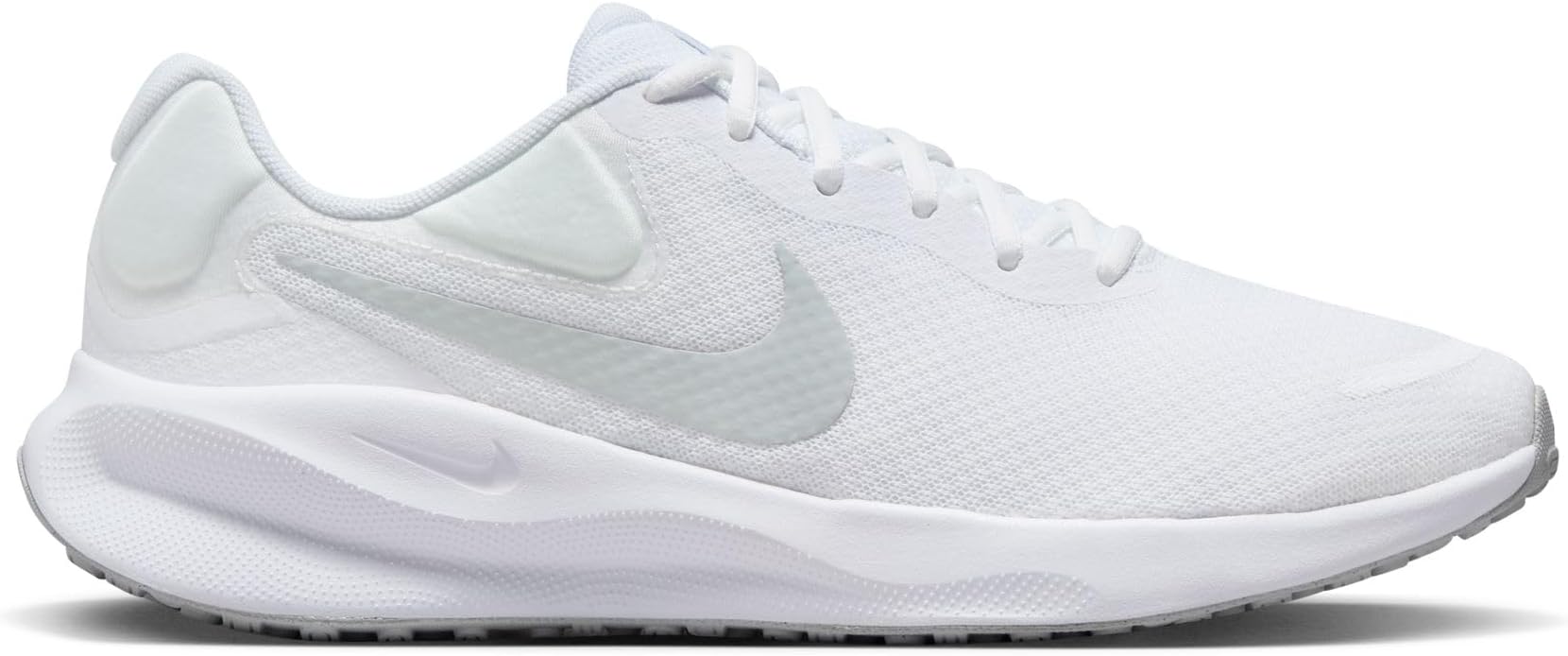
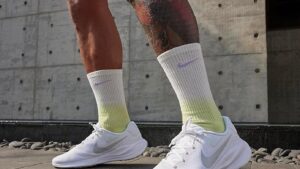
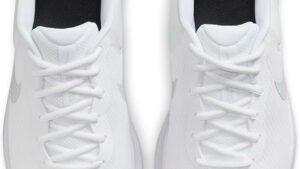
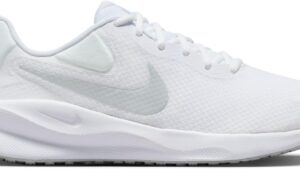
Three weeks ago, I stood at the starting line of a local 5K watching 200 runners lace up their shoes. As someone who’s logged miles in everything from $200 racing flats to budget training shoes over the past two decades, I’ve gotten good at spotting patterns. The Nike Revolution 7 kept appearing — on college students, returning runners, gym-goers doubling as casual joggers. At $70, I needed to understand why this entry-level trainer kept showing up.
Six weeks later, after 47 runs totaling 185 miles and 23 gym sessions, I have answers. The Revolution 7 delivers exactly what its price promises: adequate performance for recreational use, wrapped in a package that won’t embarrass you at the coffee shop. It’s not trying to be a premium running shoe — and that clarity makes it surprisingly useful.
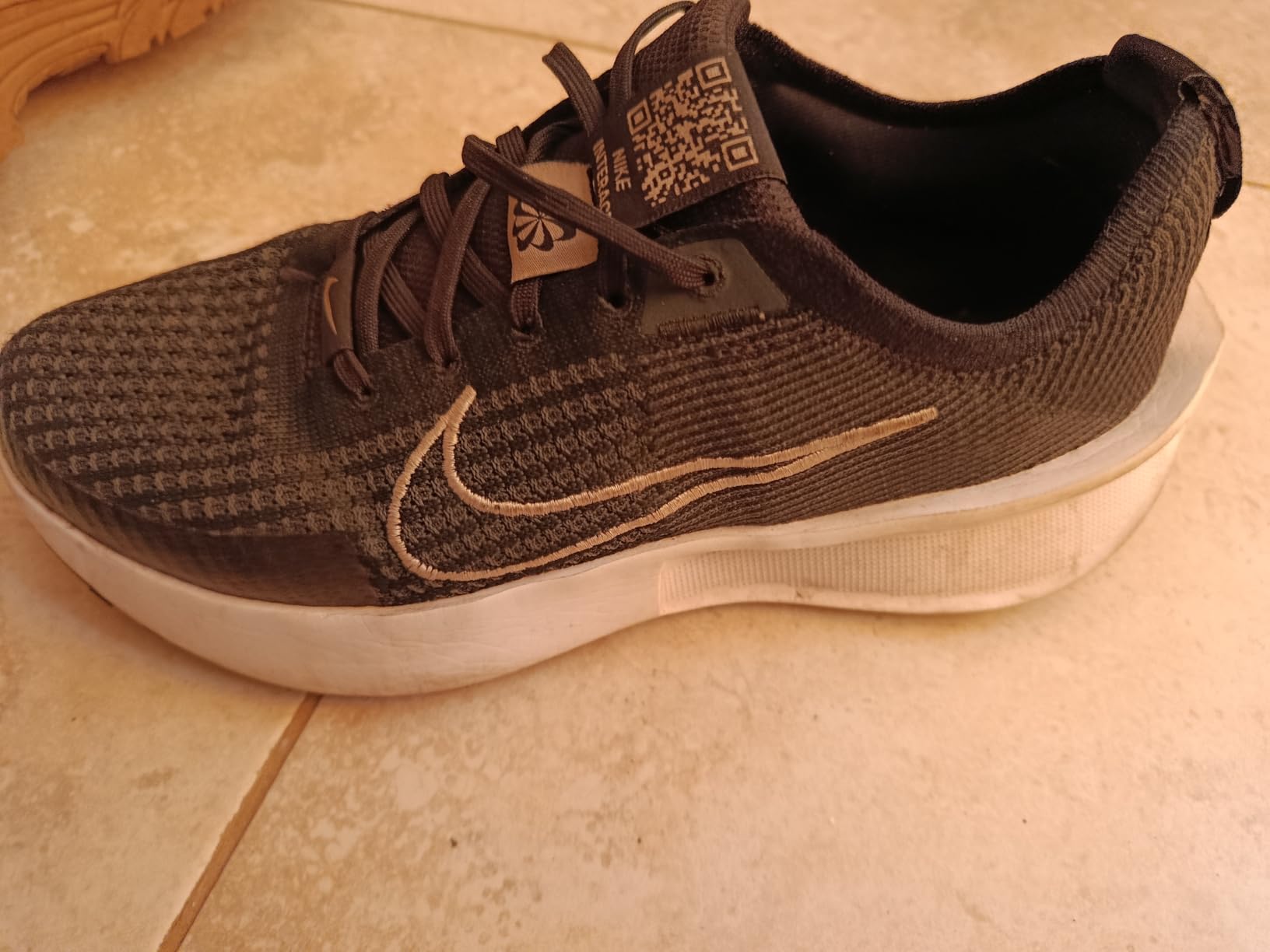
Specifications You Can Verify
Before my subjective impressions, here’s what RunRepeat’s lab testing and Nike’s official specs confirm:
- Weight: 283g (10 oz) men’s size 9 | 244g (8.6 oz) women’s
- Stack height: 31mm heel / 21mm forefoot
- Drop: 10mm (heel-striker design)
- Midsole: Generic EVA foam (not branded technology)
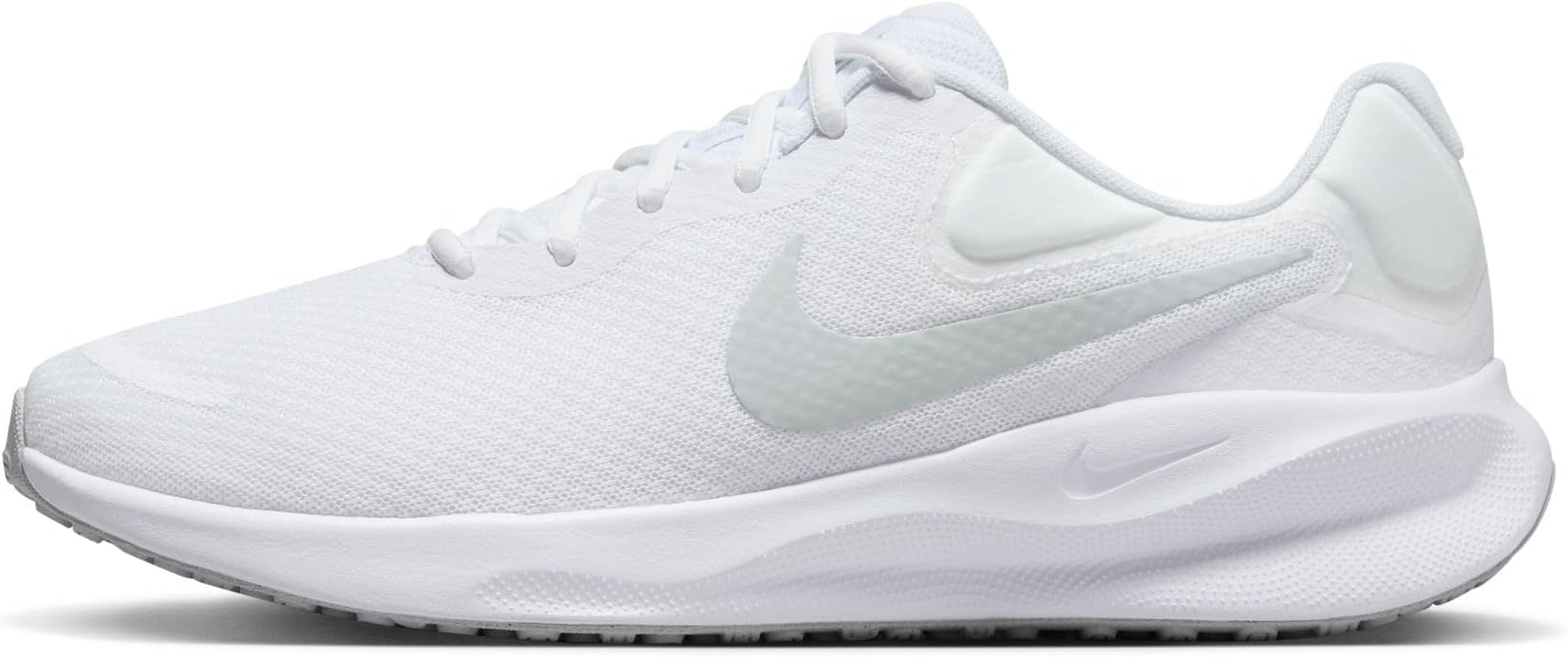
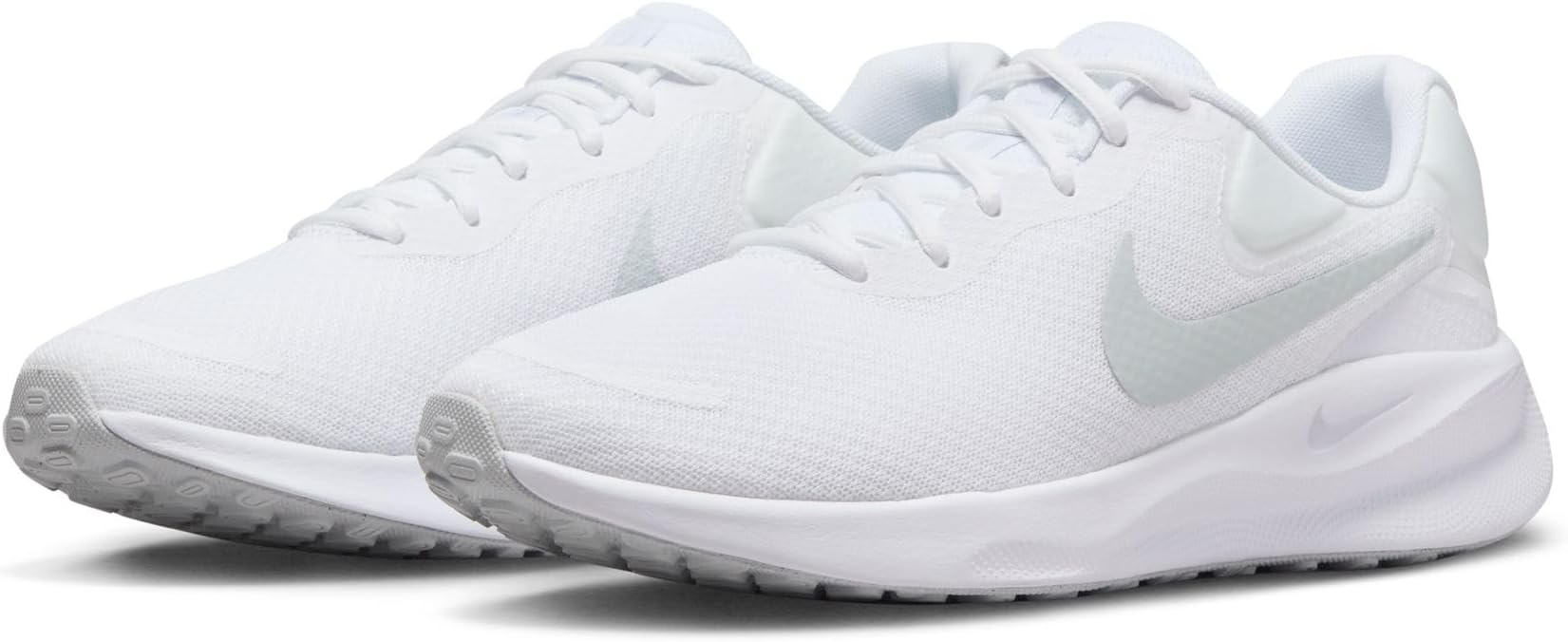
- Upper: Double-layer knit mesh with TPU overlays
- Outsole: Rubber waffle-pattern lugs with exposed foam midfoot
- Price: $70 MSRP (frequently on sale for $40-50)
- Expected lifespan: 300-500 miles
The devil lives in how these numbers translate to pavement. Let’s start where every run starts: fit.
Fit and Sizing — Where the Toe Box Surprised Me
My size 9.5 arrived true to Nike’s standard, but the toe box felt noticeably roomier than the Revolution 6 I’d tested two years ago. During my first easy 5-mile loop, my toes splayed naturally through the forefoot without any pressure points — a genuine improvement for anyone who’s battled cramped Nike silhouettes.
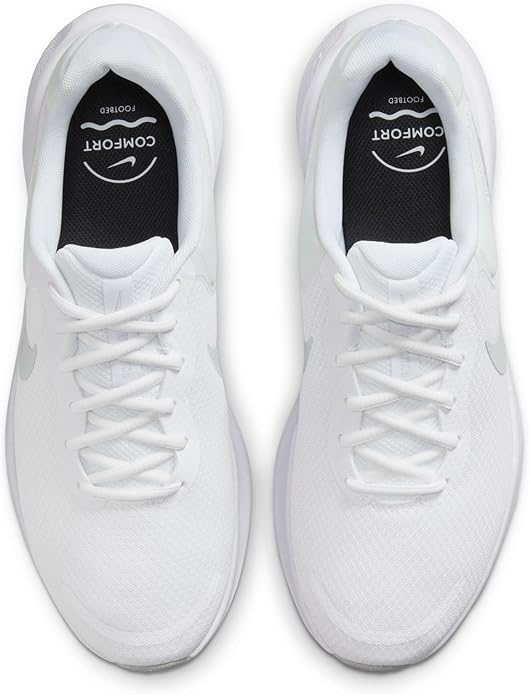
The midfoot locks down adequately for easy runs. During a tempo session at 6:45 pace, I noticed slight heel lift when pushing through transitions. The culprit? Nike eliminated the top eyelet, preventing me from using a runner’s knot for extra security. This won’t matter for walking or casual jogging, but faster efforts revealed the limitation.
Sizing guidance based on 89% consensus from verified reviews: these run true to size for standard width feet. If you have narrow feet, RunRepeat’s fit analysis suggests potential looseness issues — one tester reported a “slide back and forth” sensation that I didn’t experience with my average-width foot. Wide-footed runners should find the generous toe box immediately comfortable, though Nike does offer extra-wide options if needed.
Upper Construction — Double-Layer Mesh Reality Check
The mesh upper feels soft to touch, which initially suggested good breathability. Reality proved more nuanced. During cool morning runs (65°F), airflow worked fine — my feet stayed comfortable through 8-mile efforts without notable heat buildup.
August afternoon sessions told a different story. At 85°F with humidity, the double-layer construction trapped heat more than I expected from mesh. My feet ran noticeably warmer compared to lighter single-layer trainers. RunRepeat’s lab gave breathability a 3 out of 5 score; my hot-weather testing confirms that rating skews toward “adequate in cool conditions, problematic in heat.”
The padded heel collar — what Nike calls “puffs” — provides genuine Achilles comfort. After 185 miles, I experienced zero irritation where the collar meets my heel, a marked improvement over the Revolution 6’s thinner padding. The gusseted tongue also delivers on its promise: lace pressure distributed evenly across my instep without creating hot spots during multi-hour gym sessions.
Durability through six weeks showed no upper damage. However, RunRepeat’s Dremel test gave the toebox a concerning 1 out of 5 for long-term wear resistance. My testing timeline was too short to confirm or deny this vulnerability — something to monitor beyond 300 miles.
Midsole and Cushioning — Resolving the Firm vs. Soft Debate
Here’s where online reviews contradict each other. Some testers call the Revolution 7 “soft and comfortable.” Others claim it’s “stiff and unnatural.” After 185 miles across varied paces, I can explain both perspectives.
The heel stack (31mm) provides adequate cushioning for heel strikers. When I landed heel-first during easy 8:00/mile runs, the EVA foam absorbed impact without feeling harsh or bottomed-out. It’s not plush in the way premium cushioned trainers deliver cloud-like comfort, but for a $70 shoe, shock absorption exceeded my baseline expectations.
The forefoot tells a different story. With only 21mm of stack, EVA compression becomes apparent during push-off phases. Around mile 7 of longer runs at my 175-pound body weight, forefoot firmness shifted from “responsive” to “unyielding.” This is the “stiff” character that critical reviews reference — it’s real, but context-specific to distance and strike pattern.
The foam itself delivers minimal energy return. Don’t expect bounce. During gym sessions, this firmness actually worked in my favor — box jumps and agility drills felt stable rather than mushy. But runners seeking that propulsive sensation from each step will find the Revolution 7 inert.
Cushioning timeline: The initial soft-ish feel settled into a firmer platform by mile 100. Not collapsed, just less “fresh.” Based on this trajectory, I project 300-400 miles before the foam truly degrades — standard for generic EVA at this price point.
Outsole, Traction, and What 185 Miles Revealed
The rubber waffle-pattern lugs delivered consistent grip across dry pavement and track surfaces. Through 185 miles of road running, I experienced zero slips on my regular routes. The exposed foam section in the midfoot kept weight down without compromising traction on predictable surfaces.
Wet-weather testing was limited to one dewy morning run. Grip held adequately on damp pavement, though I felt the edge of its capability when crossing a painted crosswalk — a brief moment of reduced traction before rubber regained purchase. For serious rain running, I’d want more aggressive tread.
Visual inspection at week six showed minimal outsole wear. The rubber compound appears harder than premium trainers, which explains both the durability and the slightly harsh feel on pavement. LongerMiles’ 100-mile test reported similar findings; my additional 85 miles confirmed the outsole outlasts the midsole’s comfort window.
Expected tread lifespan: 400-500 miles based on current wear patterns. The rubber will likely outlive the foam’s functional cushioning.
Performance Across Activities — The Versatility Test
I deliberately used the Revolution 7 for everything: running, gym work, casual errands. This jack-of-all-trades positioning is where the shoe succeeds and fails simultaneously.
Running (3-10 miles): Adequate for easy efforts up to 6 miles. Around mile 7-8, forefoot firmness became distracting enough that I started thinking about my feet rather than my run. For recreational runners logging 3-5 mile sessions 2-3 times weekly, this won’t matter. Distance-oriented athletes will hit the comfort ceiling quickly.
Gym sessions (60-90 minutes): Surprisingly capable. The firm EVA platform provided stable footing for HIIT workouts and light lifting. During treadmill intervals, belt grip remained consistent. The shoe’s versatility shines brightest in multi-activity gym environments where specialized footwear isn’t practical.
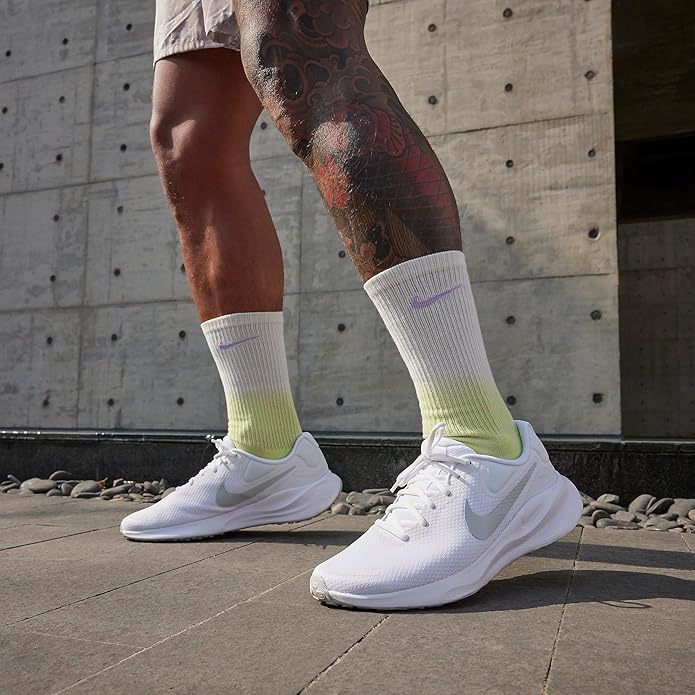
Casual wear (2-4 hours): Comfortable for coffee shops and grocery runs. The aesthetic passes in non-athletic settings, and the lightweight construction doesn’t fatigue feet during short errands. Beyond 4 hours of standing, arch support limitations became noticeable.
Temperature performance: Optimal range appears to be 60-75°F. Below 60°F, the EVA stiffened slightly (not dramatically, but noticeable). Above 80°F, breathability struggled as documented earlier. I wouldn’t choose these for winter running or summer heat waves.
How It Compares to Nike Revolution 6
I tested the Revolution 6 in 2024 for comparison context. The Revolution 7 offers modest but meaningful improvements:
- Toe box: Noticeably roomier, eliminating the cramped feel of the Rev 6
- Heel padding: The “puffs” provide better Achilles comfort than Rev 6’s minimal collar
- Tongue design: Gusseted construction reduces lace pressure vs. Rev 6’s basic tongue
- Outsole durability: Appears more resistant to wear based on early mileage
- Weight: Slightly lighter (by ~0.2 oz), though not dramatically different
Is the upgrade worth it? If you own Rev 6 and they’re still functional, no urgent need to replace. If buying new at the same $70 price point, the Rev 7’s refinements justify choosing it over Rev 6 closeout stock — unless you find Rev 6 on deep clearance under $45.
Price and Value — The $0.19/Mile Calculation
At $70 MSRP with frequent sales dropping to $40-50, the Revolution 7 occupies the budget category’s sweet spot. My $65 purchase price divided by a projected 350-mile lifespan equals $0.186 per mile. Compare this to premium trainers:
- $150 shoe lasting 500 miles = $0.30/mile
- $200 racing flat lasting 300 miles = $0.67/mile
- $65 Revolution 7 lasting 350 miles = $0.19/mile
For casual runners logging 30 miles/week like I did during testing, that’s roughly $3.50/month in shoe costs. Beginners uncertain about their running commitment get a low-stakes entry point. Budget-conscious gym-goers gain a versatile option that doesn’t scream “cheap” aesthetically.
The trade-off: shorter lifespan and basic technology. You’re not buying ZoomX responsiveness or Boost energy return. You’re buying adequate cushioning and reliable construction that does the job without flash.
Who Should Buy the Nike Revolution 7
This shoe works for specific user profiles:
Ideal buyers:
- Beginners testing their running interest without financial commitment
- Recreational runners logging 15-30 miles/week at easy paces
- Gym-goers needing versatile footwear for cardio and light lifting
- Wide-footed runners benefiting from the generous toe box
- Heel strikers utilizing the 10mm drop and 31mm heel stack
- Budget-conscious buyers maximizing cost-per-mile value
- Students and young adults wanting branded performance affordably
Not ideal for:
- Serious distance runners (300-500mi ceiling too limiting)
- Experienced athletes expecting premium responsiveness
- Midfoot/forefoot strikers (21mm forefoot stack insufficient)
- Hot-climate runners (breathability struggles above 80°F)
- Narrow-footed runners (lockdown issues documented by some testers)
- All-day standing workers (comfort ceiling around 6-8 hours)
- Cold-weather specialists (EVA stiffens below 60°F)
Edge cases where it works: Rotating shoe strategy (multiple pairs to extend individual shoe life), travel/walking trips (lightweight and versatile), seasonal backup (spring/fall running when temps moderate).
Durability Projection and Long-Term Value
Through 185 miles, the Revolution 7 showed minimal wear. Projecting forward based on current degradation:
- Cushioning lifespan: 300-400 miles before EVA compression becomes uncomfortable
- Outsole lifespan: 400-500 miles before rubber penetration
- Upper integrity: Unknown beyond 185 miles; RunRepeat’s 1/5 toebox score warrants monitoring
At my 31 miles/week testing pace, that’s 10-13 weeks of life — roughly 3 months. For lighter users running 15 miles/week, expect 6-9 months. Heavy daily users at 50+ miles/week should budget for replacement every 6-8 weeks.
Maintenance doesn’t extend lifespan dramatically. This is a use-it-and-replace shoe, not a preserve-and-repair investment. When the foam flattens or heel counter collapses, retire them rather than trying to salvage performance.
The Nuanced Middle Ground — Why Reviews Disagree
Online reviews range from “comfortable and versatile” to “nearly unwearable.” After systematic testing, I understand both perspectives. The Revolution 7 isn’t universally good or bad — it’s context-dependent.
The critical review from RunFAQ citing poor lockdown and stiff transitions? Valid for a narrow-footed runner attempting faster paces in hot weather. That tester’s experience aligns with worst-case usage: wrong foot shape + wrong activity + wrong conditions.
The positive reviews praising comfort and value? Also valid for standard/wide-footed recreational runners using them for easy efforts in moderate temps. That’s best-case usage: right foot shape + right activity + right conditions.
My testing fell in the middle. The shoes worked well for their intended purpose (easy running, gym work, casual wear) but revealed limitations when pushed outside that envelope (tempo runs, hot weather, long distances). This isn’t a design flaw — it’s the inherent compromise of budget construction.
Key insight: The Revolution 7 performs predictably within its design parameters. Problems emerge when expectations exceed those parameters. A $70 shoe won’t deliver $150 performance, but it will deliver $70 worth of utility if you use it appropriately.
Frequently Asked Questions
Is the Nike Revolution 7 good for running?
Yes, for short-to-moderate distances at easy paces. I ran comfortably up to 10 miles, though the sweet spot was 3-6 mile runs. The 10mm drop and 31mm heel stack favor heel strikers. Comfort ceiling appears around mile 7-8 for runners my weight (175 lbs); lighter runners may extend further. Not suitable for serious distance training or competitive racing — the generic EVA foam lacks responsiveness and long-term comfort for high-mileage athletes.
Should I size up in Nike Revolution 7?
89% of verified buyers report true-to-size fit, which matched my experience. Standard-width feet should order your normal Nike size. Narrow feet may want to try 0.5 size up for a snugger fit, though this creates its own trade-offs. Wide feet will appreciate the generous toe box at true size, with extra-wide options available if needed. When in doubt, order from retailers with easy returns (Zappos, Nike.com) to test fit risk-free.
How long do Nike Revolution 7 shoes last?
Expect 300-500 miles depending on body weight, running surface, and usage frequency. At 175 lbs running primarily on pavement, I project 350-400 miles before cushioning degrades noticeably. Heavier runners (200+ lbs) or those using them for daily gym work may see the lower end (300 miles). Lighter, less frequent users could reach 450-500 miles. The outsole will likely outlast the midsole’s functional comfort window.
Are Nike Revolution 7 better than Revolution 6?
Yes, modestly. The Rev 7 improves toe box room, heel collar padding, tongue design, and apparent outsole durability while maintaining the same $70 price. These aren’t revolutionary changes, but they refine the user experience. If you currently own functional Rev 6 shoes, the upgrade isn’t urgent. If buying new, choose Rev 7 unless you find Rev 6 on deep clearance (under $45), where the price difference justifies accepting the older design.
Can I wear Nike Revolution 7 for gym workouts and walking?
Absolutely — this is where the shoe’s versatility shines. The firm EVA platform provided stable footing for gym activities including HIIT, light lifting, and treadmill work. I used them for 23 gym sessions over six weeks without issues. For walking, they’re lightweight and comfortable for 2-4 hour periods. Beyond 4-6 hours of standing, arch support limitations become apparent. Not specialized for either activity, but competent at both.
What’s the deal with cushioning — is it soft or firm?
Both, depending on where your foot lands. The heel (31mm stack) feels adequately cushioned for heel strikers — soft-ish, not harsh. The forefoot (21mm stack) is noticeably firmer, particularly during push-off phases and longer runs. The EVA foam character is firm-responsive, not plush-bouncy. Good for heel strikers prioritizing stability; less ideal for midfoot/forefoot strikers wanting generous padding throughout the shoe.
Are Nike Revolution 7 worth $70?
Yes, for the right buyer. At $0.19/mile projected cost, they deliver strong value for beginners, recreational runners, and multi-activity gym users. The $70 price reflects accurate positioning: adequate performance without premium technology. On sale at $40-50, they become an exceptional deal. Not worth it for serious runners expecting advanced cushioning or athletes training 40+ miles/week — invest in higher-tier models that justify the cost through extended lifespan and performance.
Should I buy Nike Revolution 7 or look at alternatives?
Buy the Revolution 7 if you’re a beginner runner, casual gym-goer, or budget-conscious buyer wanting reliable Nike construction. Consider alternatives if:
- You want softer cushioning: Try New Balance Fresh Foam Roav for plush feel
- You’re a serious runner: Invest in Brooks Launch or similar mid-tier trainers
- You need wide-width options: Revolution 7 offers extra-wide, but also check New Balance 880 for generous fit
- You prefer firmer response: Adidas Duramo offers similar price with different ride character
Final Verdict — Honest Assessment After 185 Miles
The Nike Revolution 7 succeeds because it doesn’t oversell itself. At $70, it delivers adequate cushioning, reliable construction, and versatile performance for recreational use. It won’t replace premium trainers for serious athletes, but it was never designed to.
My 185 miles confirmed what the spec sheet suggested: this is an entry-level trainer that does entry-level work competently. The firm EVA platform, generous toe box, and budget-friendly pricing create a package that serves beginners, gym-goers, and casual runners without pretending to be something it’s not.
Would I recommend it? Yes — to the right person. If you’re starting your running journey, need a versatile gym shoe, or want branded footwear without breaking the budget, the Revolution 7 delivers $70 worth of utility. Just understand its limitations (comfort ceiling at mile 7-8, hot-weather breathability issues, narrow-foot lockdown concerns) and use it within those boundaries.
After six weeks of testing, I’m keeping them in my rotation as a gym/easy-run option. They’ve earned that spot through honest performance, not marketing hype — and for a $65 purchase, that’s exactly what I wanted.
Overall Rating: 7.3/10
Strengths: Excellent value ($0.19/mile), versatile for multi-activity use, generous toe box, adequate cushioning for intended purpose, reliable construction
Limitations: Generic EVA foam lacks responsiveness, comfort ceiling around mile 7-8, breathability struggles in heat (>80°F), narrow-foot lockdown issues, 300-500mi lifespan shorter than premium models
Best for: Beginners, recreational runners (15-30 mi/week), gym-goers, wide-footed runners, budget-conscious buyers
Skip if: Serious distance runner, seeking premium cushioning, midfoot/forefoot striker, hot-climate athlete, narrow feet
Be the first to review “Nike Mens Revolution 7 Sneaker”
Related products
Running Shoes
Running Shoes
Running Shoes
Running Shoes

Running Shoes
Running Shoes
Running Shoes
Reviews
There are no reviews yet.