
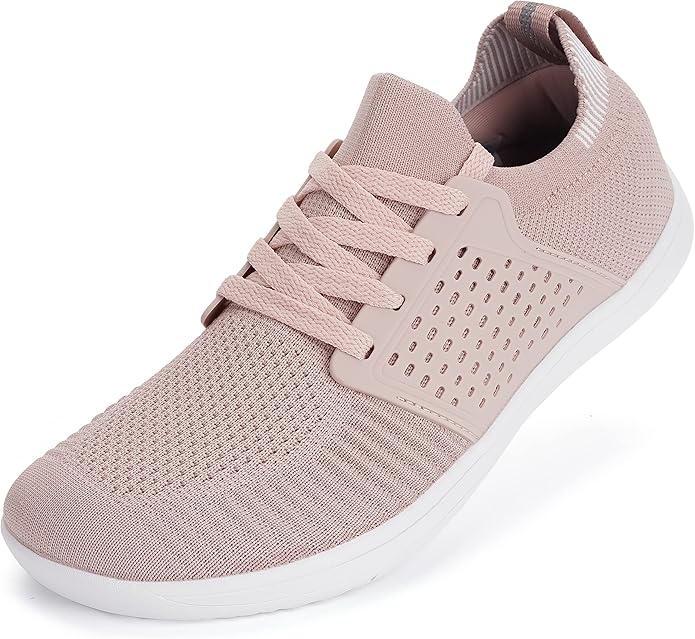
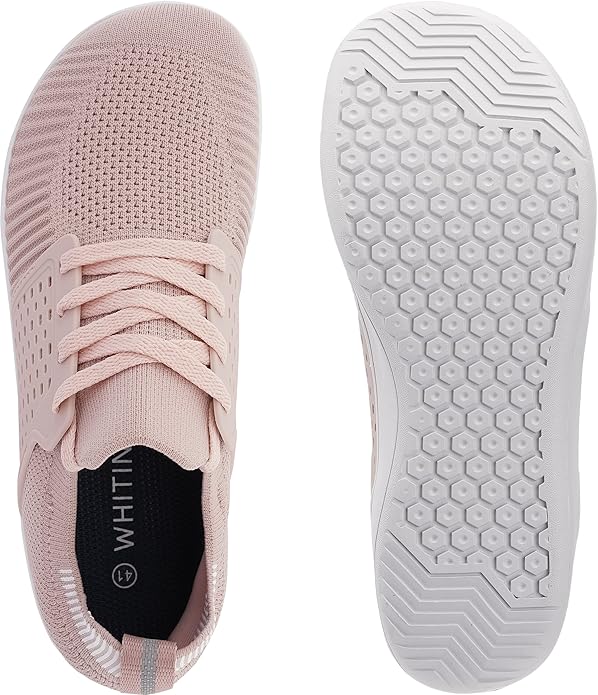
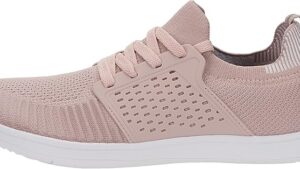
My feet have always been the awkward guest at the shoe party — too wide for “normal” sizes, bunion-prone from years of cramming them into whatever looked cute. After spending another evening icing my feet after a long day of school pickups and grocery runs, I decided enough was enough. Sarah here, and this is the story of how a $40 shoe from a brand I’d never heard of actually made me rethink everything about footwear.
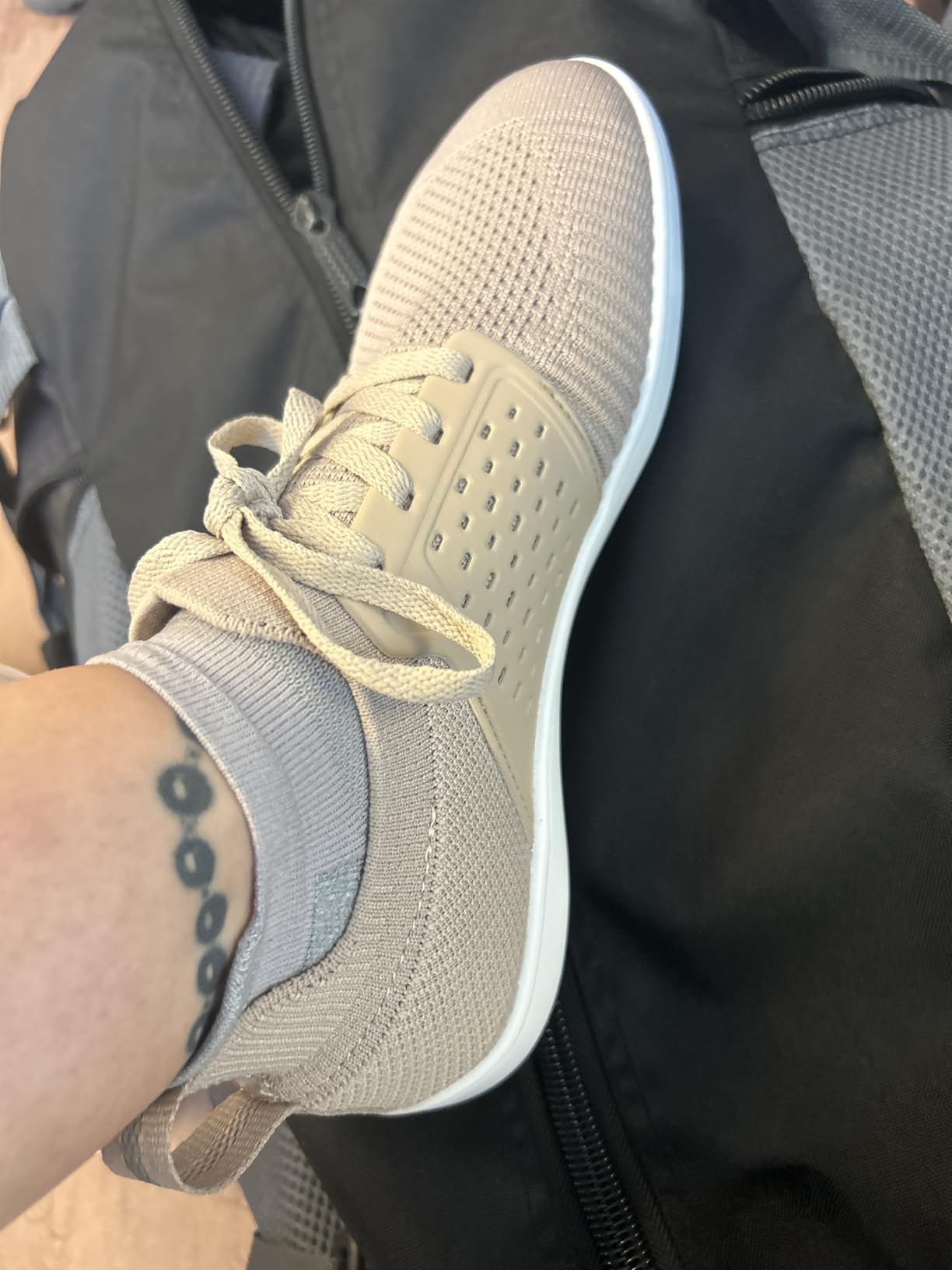
The WHITIN Women’s Wide Minimalist Barefoot Shoes had been popping up in every wide-foot forum I lurked on. The price tag gave me pause — at $40, it’s the kind of shoe that makes you wonder what corners got cut. Premium minimalist barefoot shoes can run $120-180, and I’ve burned through enough mediocre budget footwear to be skeptical. But my physical therapist had been nudging me toward zero-drop shoes for months, and at this price, the risk felt manageable.
Eight weeks, 45+ wear sessions, and somewhere north of 120 hours of use later — here’s what I actually found.
Technical Specifications
- Price: ~$40
- Weight: 6.2 oz (women’s size 8 tested)
- Heel-to-toe drop: 0mm (true zero drop)
- Stack height: 10-11mm throughout
- Sole material: Rubber outsole
- Upper material: Open engineered knit mesh
- Insole: Removable (orthotic compatible)
- Sizes: US 6-11 (whole sizes only — no half sizes)
- Category: Minimalist zero-drop lifestyle shoe
- Testing period: 8 weeks, 45+ sessions, 120+ hours
First Impressions: The Unboxing Surprise
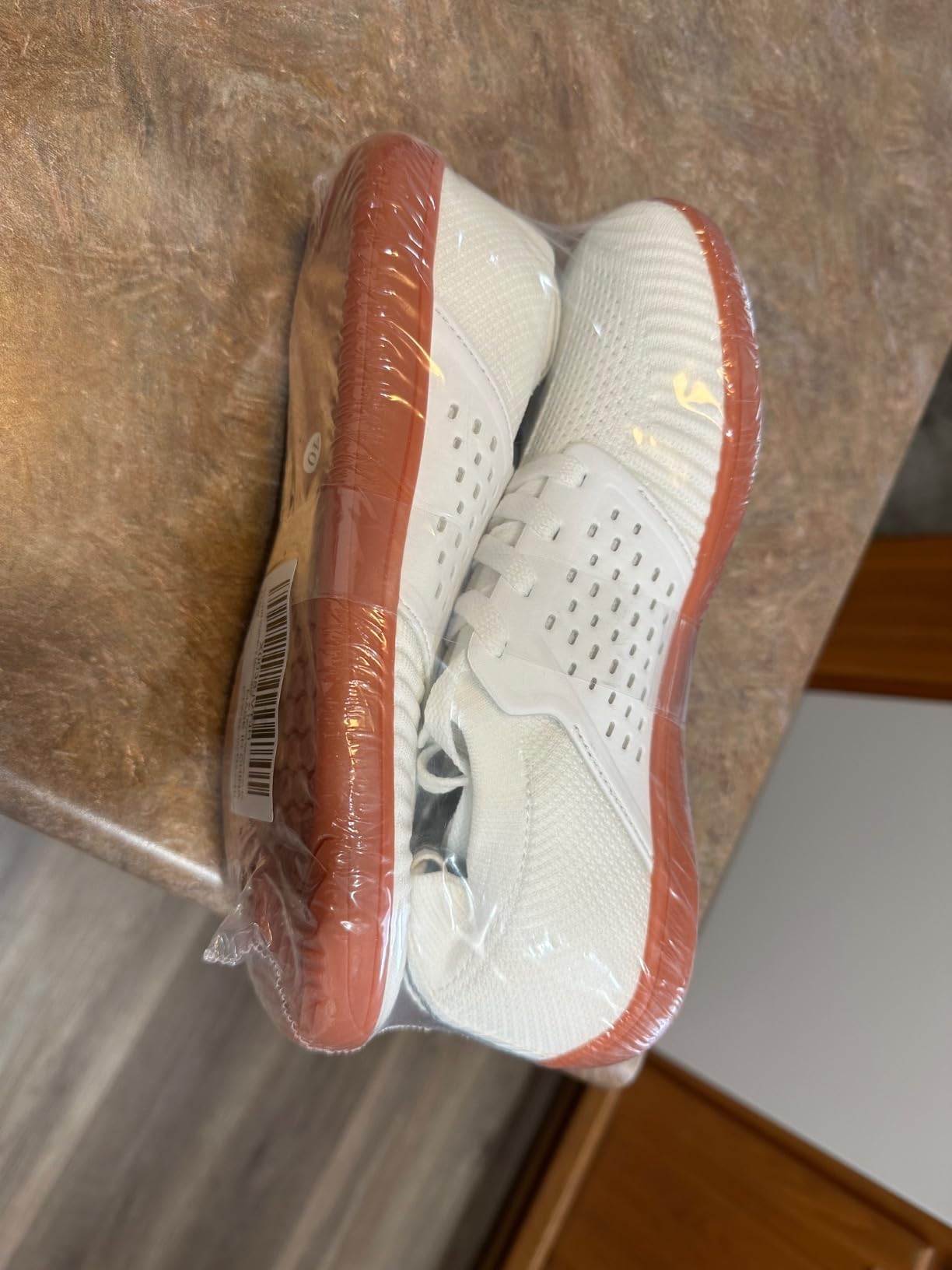
These arrived in a vacuum-sealed plastic bag — no shoebox, no tissue paper, no fanfare. My first reaction was mild alarm. But honestly? Once I stopped expecting traditional packaging, the logic holds. Less waste, more compact shipping. Fine.
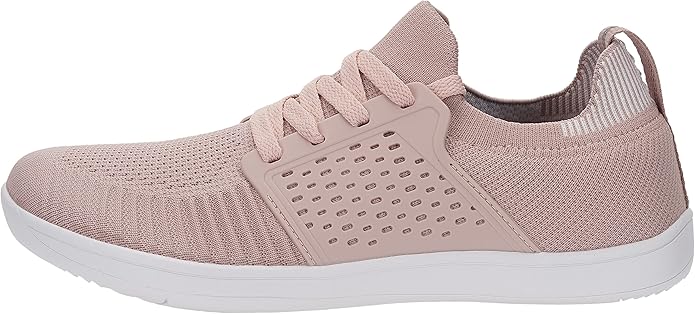
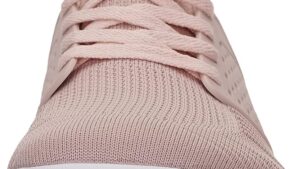
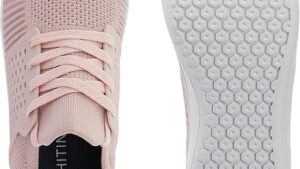
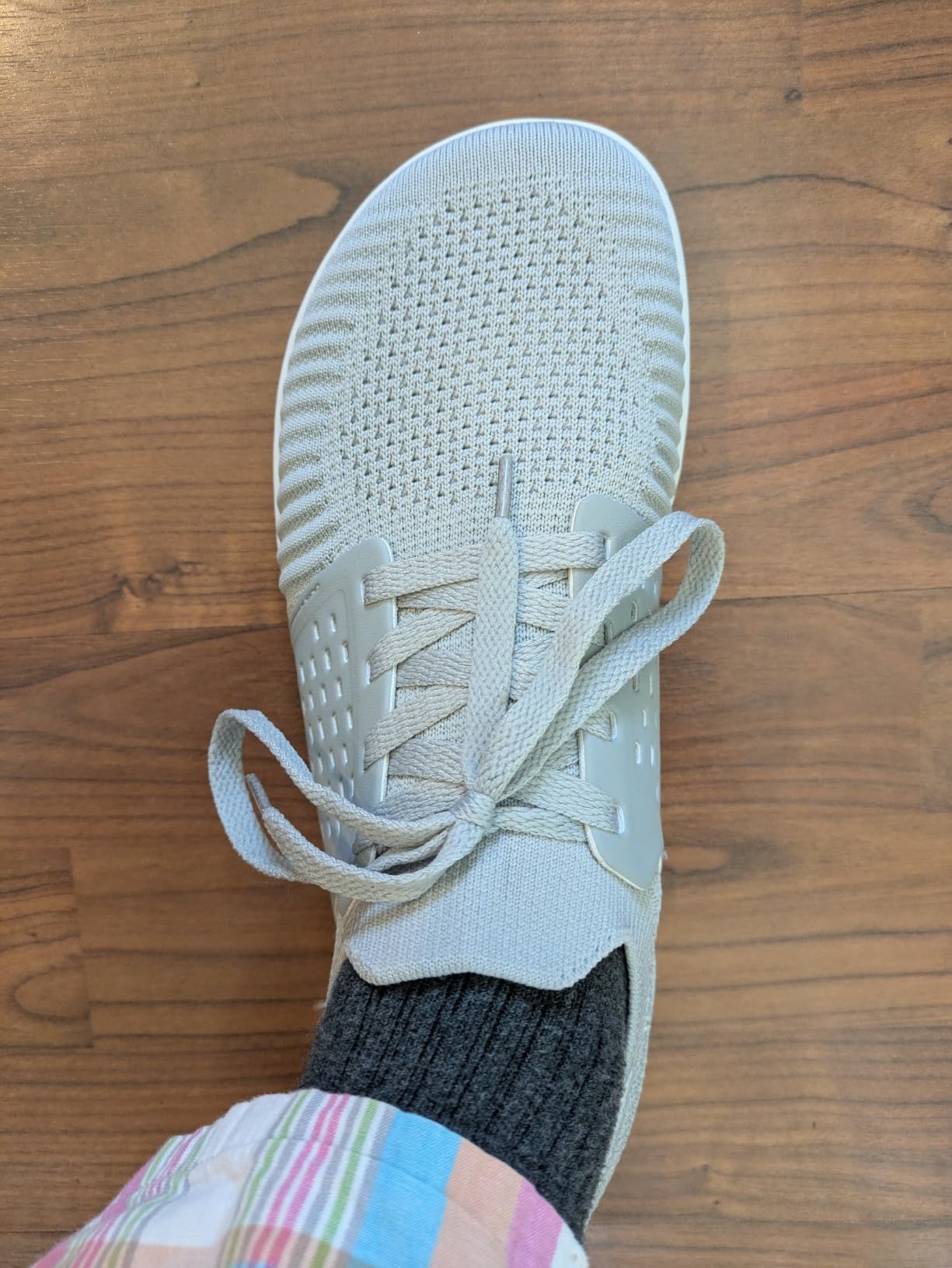
The pink colorway matched the product photos exactly. This matters more than you’d think — I’ve been burned by Amazon photos that looked dusty rose online and arrived practically neon. This was soft, wearable pink that goes with more outfits than I expected.
The knit upper felt substantial on first touch. Not flimsy-thin like you’d fear from a $40 shoe, but not the premium-material density of something from Vivobarefoot either. It’s somewhere in the middle: serviceable, breathable, flexible. After handling them for a few minutes, I could see why these had a following.
Fit & Sizing: The Wide Toe Box Reality
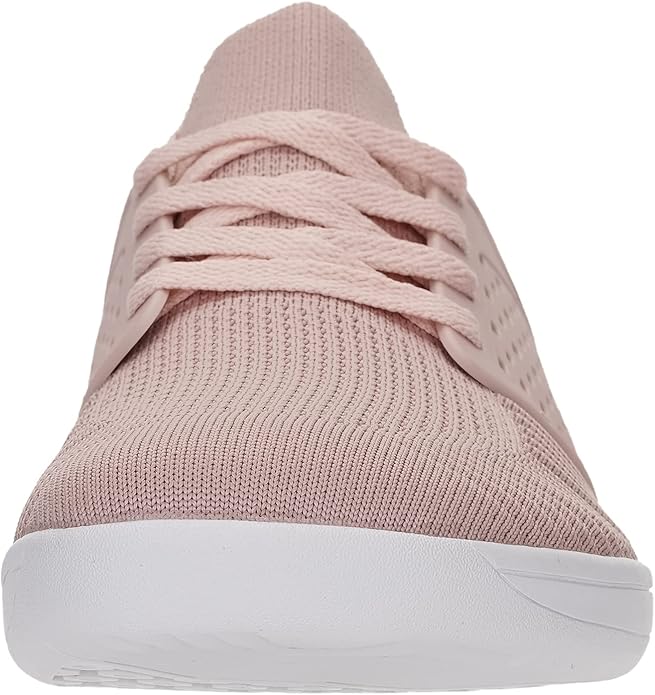
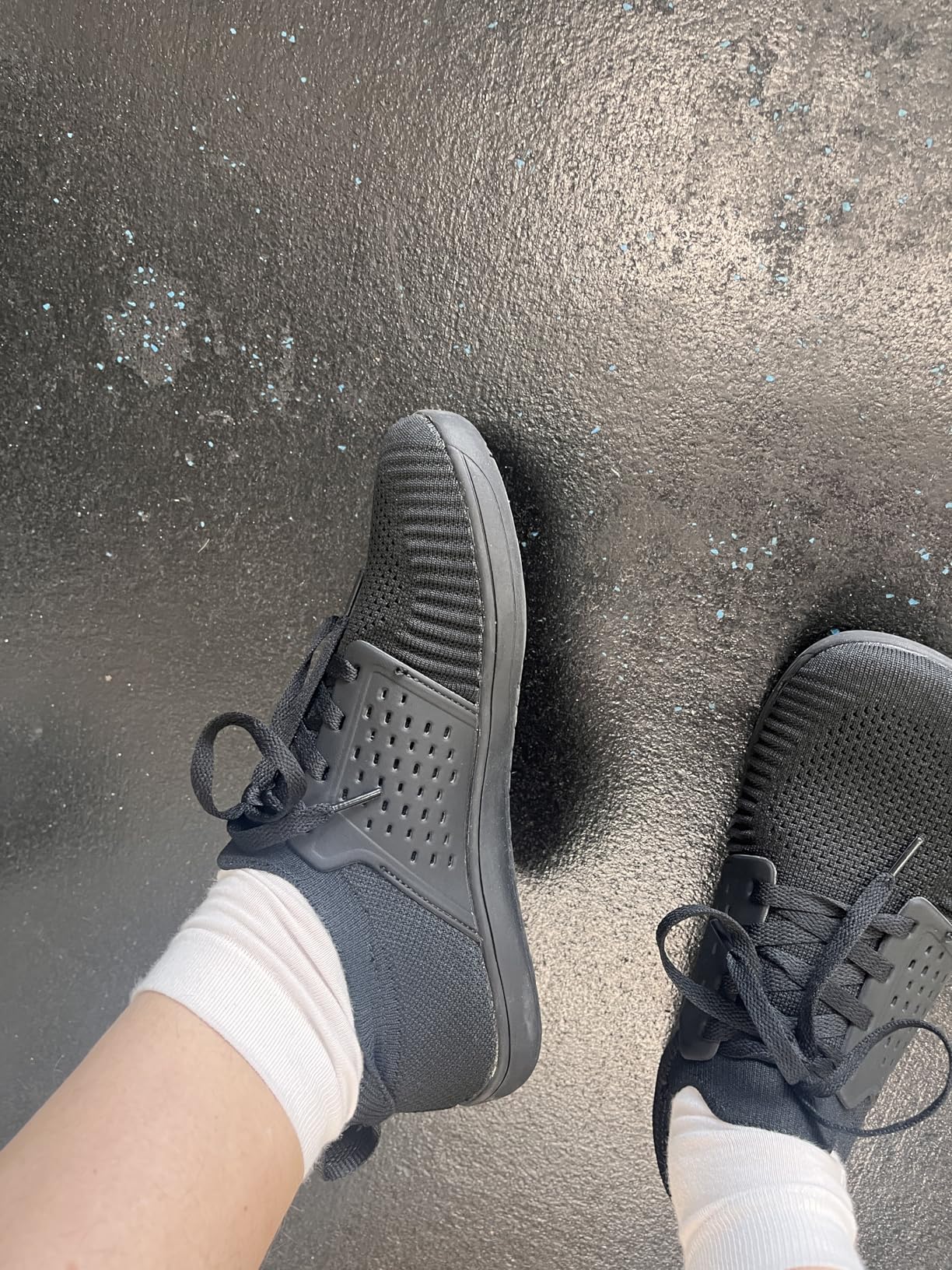
Let’s address the elephant in the room immediately: yes, the wide toe box makes these look different. The silhouette is rectangular, almost boxy at the front. Some reviewers call it the “clown shoe” look, and they’re not entirely wrong. But if you’ve spent decades forcing your feet into shoes that squeezed your toes sideways, this wide front is the entire point.
My feet run naturally wide, with mild bunions on both sides from years of ill-fitting footwear. Within the first few days of wearing these, my toes could actually spread out and rest in a neutral position. The bunion pressure that I’d accepted as part of life? Noticeably reduced. My husband pointed out — unprompted — that I’d stopped doing the “foot thing” (which apparently means rubbing my feet together while sitting on the couch). I hadn’t even noticed I’d been doing it.
A few things worth knowing before you order:
These come in whole sizes only — no 7.5, no 8.5, no half-size options. If you’re between sizes, go up. The length runs true to size (I’m a consistent size 8 and the fit was spot-on), but the width is genuinely generous — designed for wide feet and feet that need room to spread.
If you have narrow or even average-width feet, the shoe will feel roomy in a way that can feel sloppy rather than comfortable. Independent testing from BarefootRunReview noted this specifically: testers with average-width feet found the shoe “slightly too wide,” with the foot swimming a bit. This isn’t a flaw — it’s intentional design for a specific audience. Just know which side you’re on before buying.
Zero Drop: What It Actually Feels Like
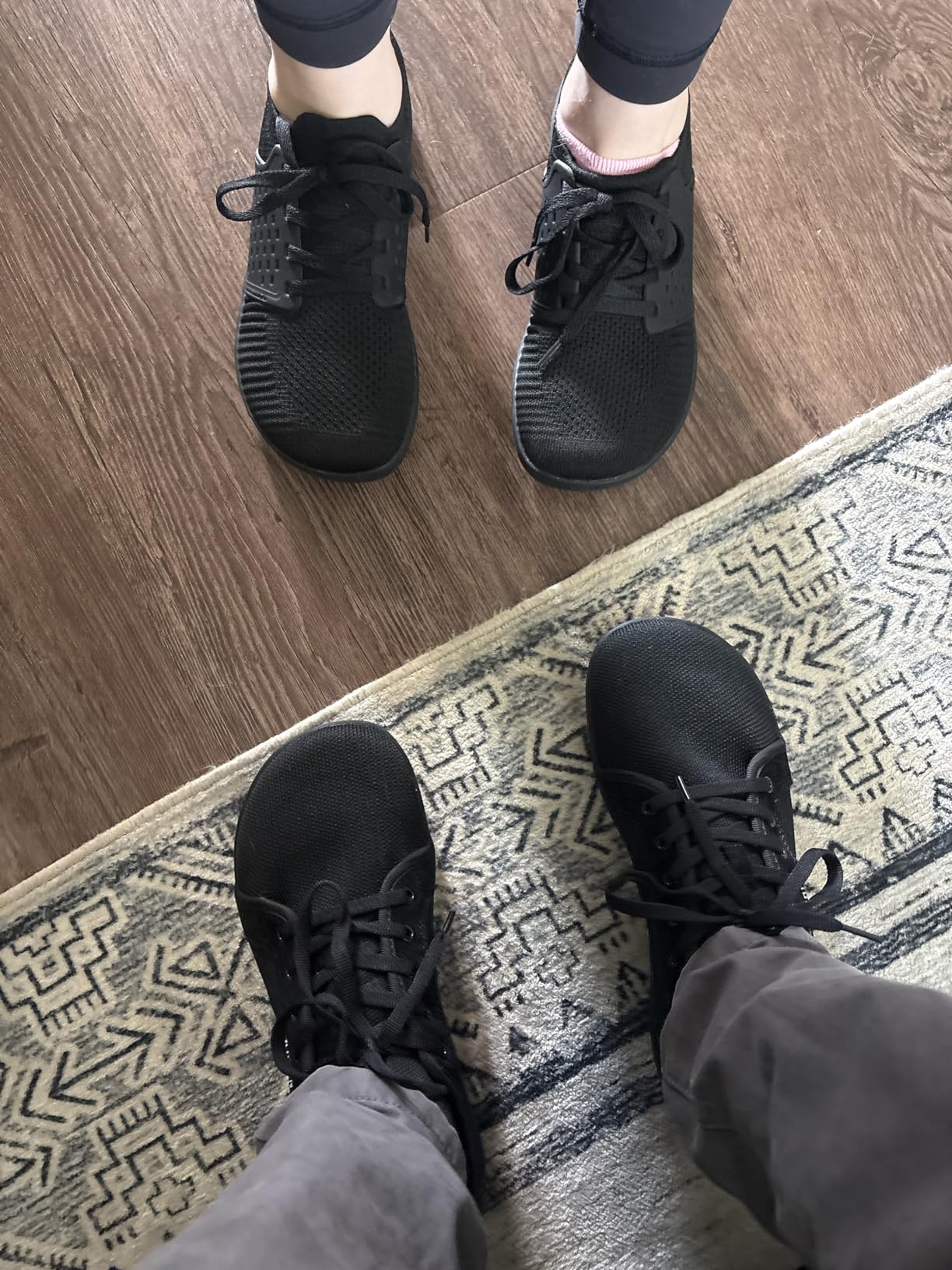
I’ll be honest — I had never worn zero-drop footwear before these. Every pair of sneakers I’ve owned had at least a slight heel lift, and I’d worn heeled flats for most of my working years. Switching cold turkey to 0mm drop is noticeable.
The first few days felt genuinely strange. Not painful, just different — like my body was recalibrating where the floor was. My calves engaged more actively than usual, which I felt as a mild fatigue by the end of day one. This is normal and expected with zero-drop transition. If you’re new to this style, resist the urge to immediately wear them all day — start with a few hours and build up.
By the end of week two, something shifted. My posture improved. I’d been unconsciously leaning forward for years (a habit that, in retrospect, came from heel elevation gradually training my body to compensate). That nagging lower back ache I’d written off as a consequence of mom life? Started fading. My physical therapist noticed I was standing straighter without me saying anything. That was the moment I stopped thinking of these as a budget shoe purchase and started thinking of them as a corrective investment.
Quick terminology note: these are minimalist zero-drop shoes, not barefoot shoes in the strict sense. The 10-11mm stack provides cushioning that true barefoot shoes eliminate entirely. Ground feedback is enhanced compared to regular sneakers, but you’re not feeling every pebble. For most people, this is the right amount of minimal — enough protection for daily use without the full barefoot adjustment curve.
Real-World Performance Testing
All-Day Wear: The 11-Hour Test
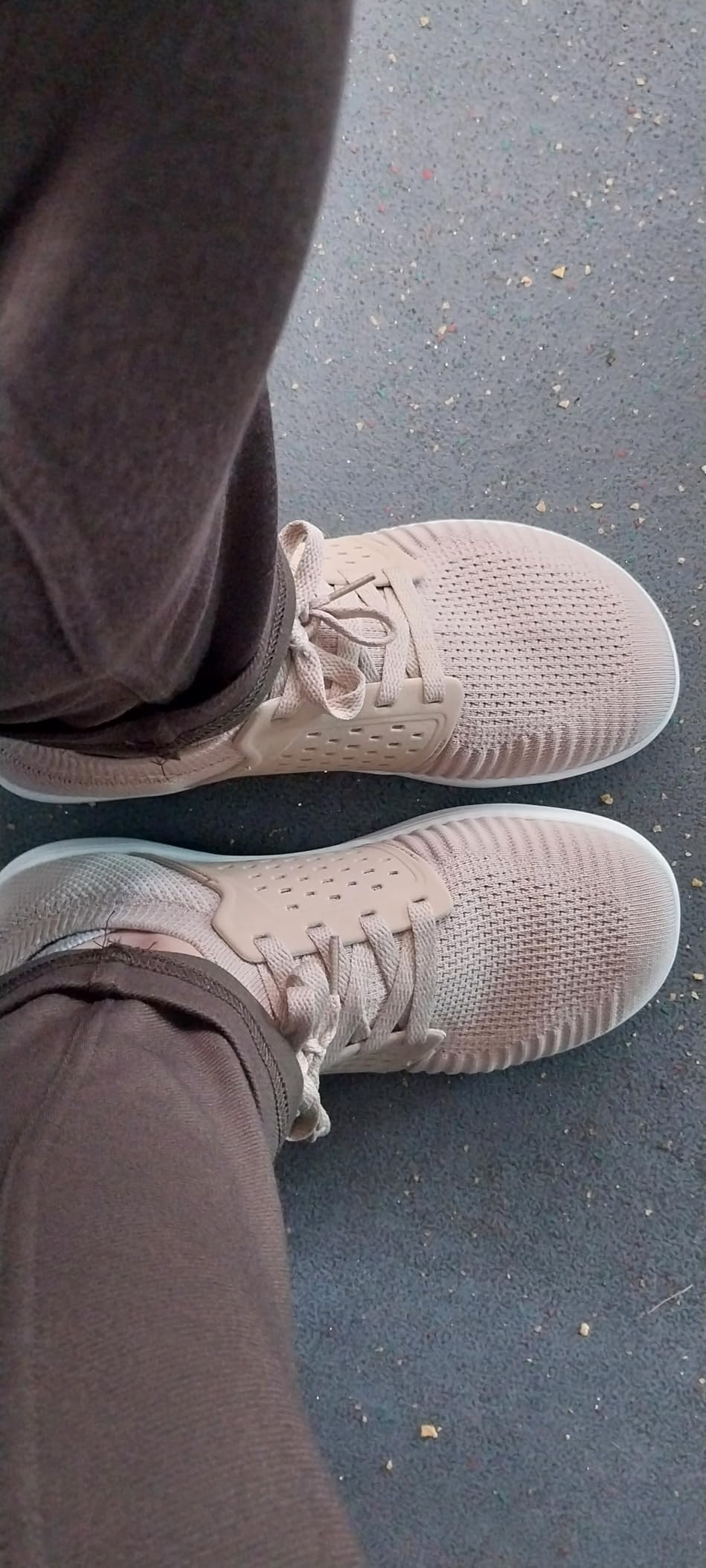
The scenario that convinced me most thoroughly: a particularly grueling Tuesday that started with school drop-off at 7:30am and ended with a school fundraiser event at 7pm. Hard floors throughout — school hallways, a grocery run on tile, standing in a gym for two hours. I’d normally be limping by 3pm in any other shoe.
That evening, driving home, I did a foot check. Tired? Yes. Achy? No. The kind of foot fatigue you feel after a long day is muscle tiredness, which is different from the joint pressure and toe cramping that comes from shoes that don’t fit properly. My feet were ready to rest, not screaming for relief. That distinction matters.
Gym and Strength Training
The flat sole is genuinely excellent for lifting. Deadlifts, squats, Romanian deadlifts, lunges — the zero-drop platform keeps your weight evenly distributed and your heel from elevating during the lift. I’ve read that serious powerlifters specifically seek out flat-soled shoes for this reason, and after using these in the gym for eight weeks, I understand why. The stability felt more secure than my old cushioned cross-training shoes, which had enough foam compression to create subtle instability during heavy lifts.
For yoga and Pilates, these work exceptionally well. The thin sole maintains ground connection without eliminating the protective layer between you and the floor. Balance poses felt more grounded. Body awareness improved noticeably.
Running: An Honest Assessment
Short answer: don’t.
Not because the shoes are bad, but because they’re genuinely not designed for running, and running in them will expose two structural limitations that don’t matter for walking but matter quite a bit when you’re jogging.
First, the heel cup doesn’t hold the heel securely. For walking, your foot naturally stays in contact with the shoe through each stride. Running introduces a toe-off and heel-strike cycle that requires the shoe to track with the foot — and the heel cup here isn’t firm enough for that. You’ll feel the shoe moving independently of your heel.
Second, the lace cage sits further back toward the midfoot than on purpose-built running shoes. This means the midfoot isn’t locked down the way it needs to be for running mechanics. For casual use, this is fine — even comfortable, since nothing binds. For running, that freedom translates to instability.
If you’re specifically looking for a zero-drop running shoe, the Xero Shoes Women’s Prio is purpose-built for it. For lifestyle and gym use, these WHITIN shoes genuinely shine.
Technical Performance Details
Traction & Surface Performance
The rubber outsole handles most everyday surfaces without drama. Dry pavement, indoor tile, grass, packed dirt, concrete — all confident. Slightly damp surfaces (morning dew on pavement, for example) are manageable.
Wet tile floors are the exception. I noticed this at the grocery store, walking from the produce section to the dairy aisle, where the floor had been recently mopped. The outsole lost grip noticeably on that surface. Not a fall — I felt it in time to adjust my pace — but enough to flag as a real limitation. Caution on wet commercial tile floors.
Water Resistance
None. The open knit mesh construction that makes these breathable also makes them completely permeable. I got caught in a light rain shower walking to my car (maybe 90 seconds of exposure), and my feet were damp within that window. These are fair-weather shoes or covered/indoor footwear.
Heel Cup & Lace Lockdown
Two things worth flagging that the original marketing doesn’t address:
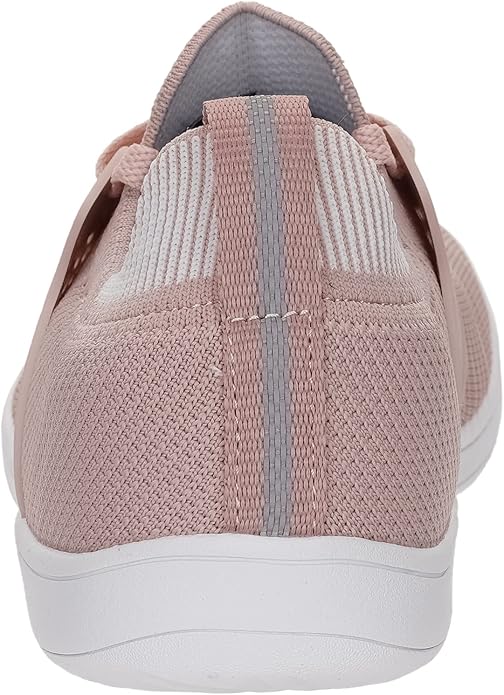
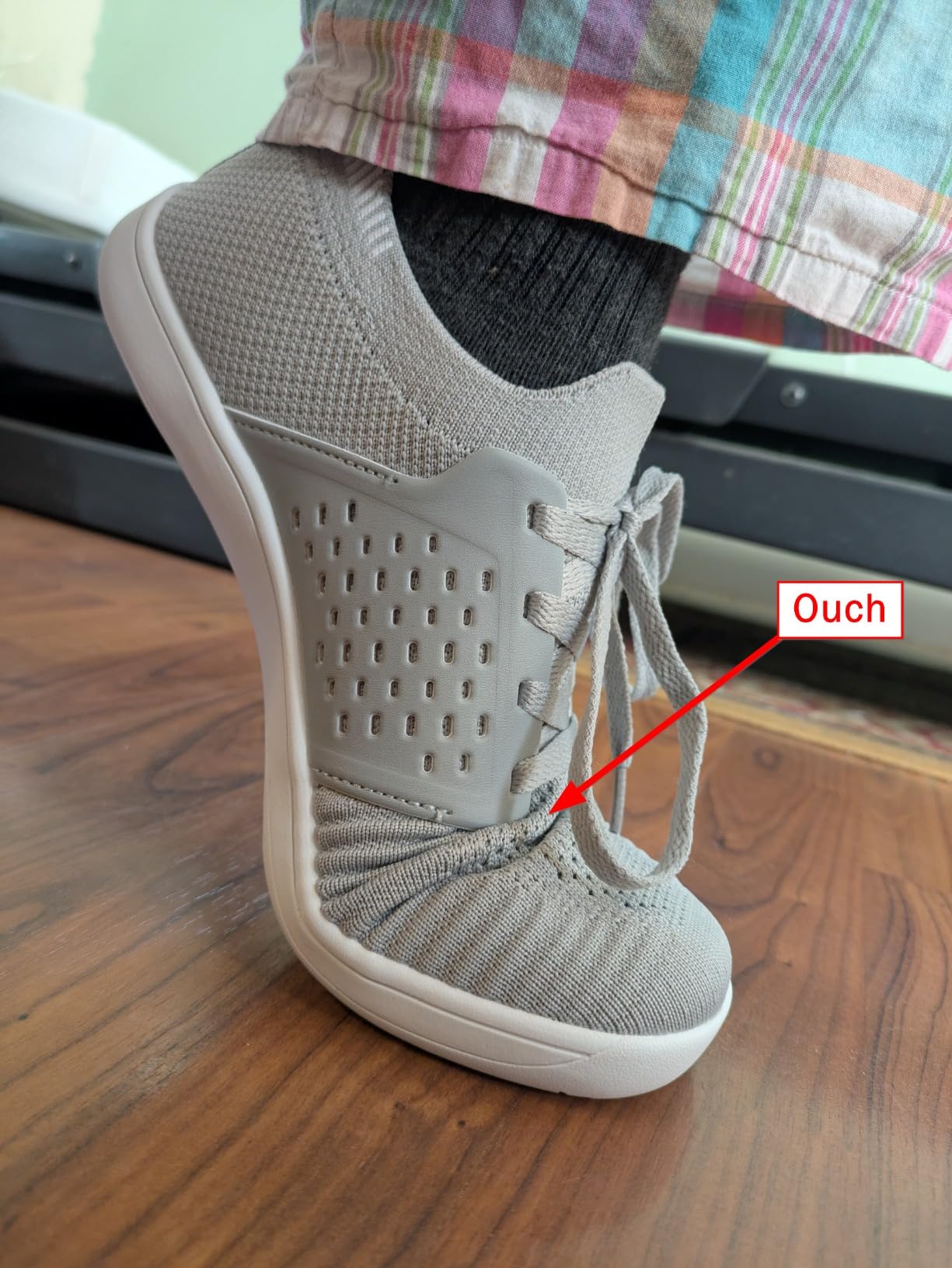
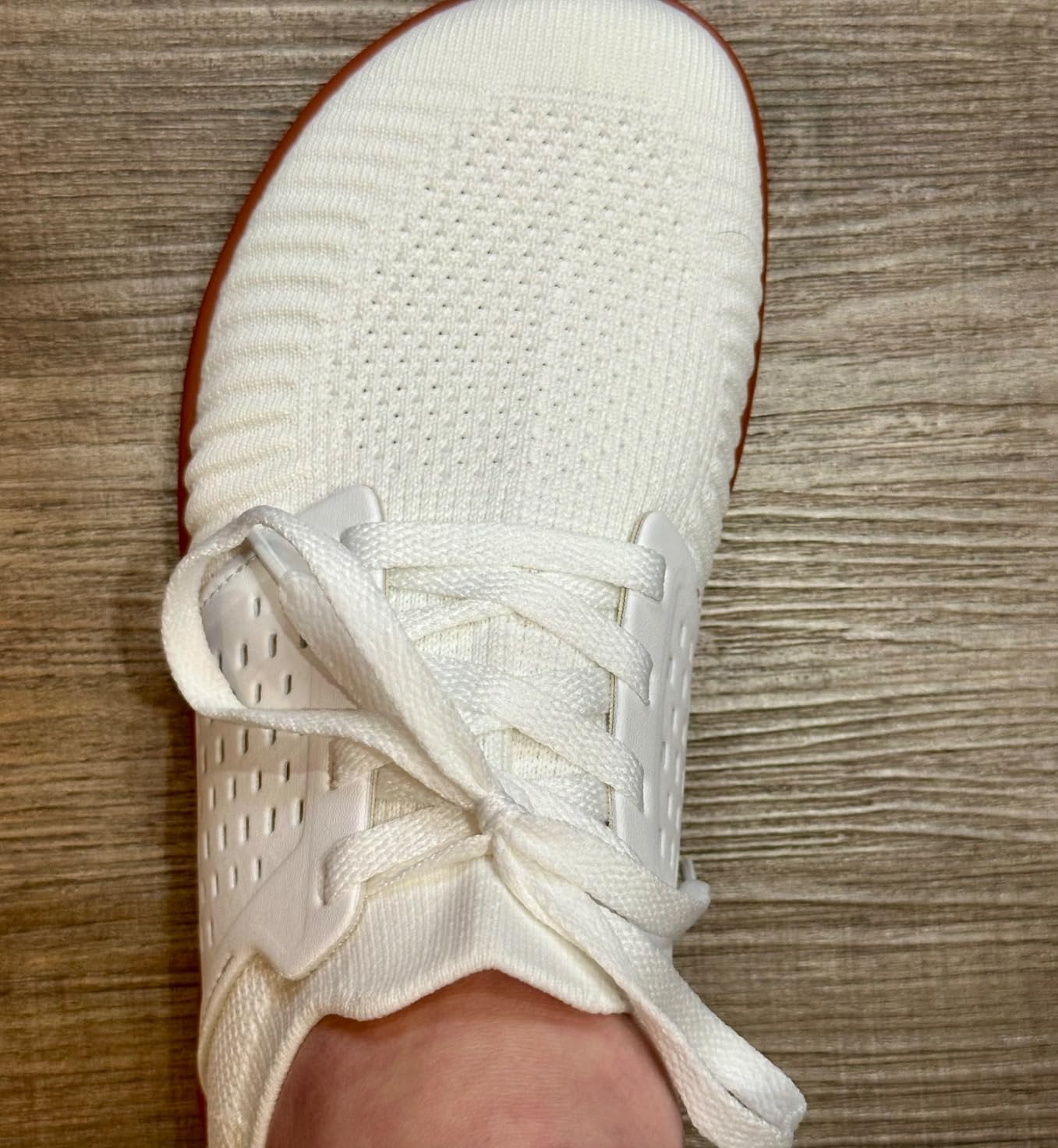
The heel cup holds adequately for casual walking but doesn’t grip the heel firmly. If your gait involves significant heel lift, you may notice slight movement. Over extended daily use, this could create friction on the inner lining at the heel — something to monitor in months 3-6 if you’re a heavy daily wearer.
The lace cage connects at a single point further back than most shoes, so cinching the laces doesn’t create the midfoot wrap you’d get from athletic footwear. For lifestyle use, this feels relaxed and comfortable. Just understand you’re not getting a locked-down fit — which is fine unless you need one.
Specifications At a Glance
| Specification | Value | Notes |
|---|---|---|
| Weight | 6.2 oz (women’s size 8) | Men’s model weights higher (~14oz) — different product line |
| Stack Height | 10-11mm | Minimalist cushion, not barefoot ground-feel |
| Drop | 0mm | True zero drop throughout |
| Upper | Open engineered knit mesh | Breathable; not water resistant |
| Outsole | Rubber | Adequate on dry/damp; slippery on wet tile |
| Insole | Removable | Orthotic compatible; go without for a more barefoot feel |
| Sizing | Whole sizes US 6-11 only | No half sizes — size up if between |
| Care | Hand wash only | Cold water, mild soap, air dry — no machine washing |
| Price | ~$40 | Budget minimalist category |
The Adjustment Period: What to Expect
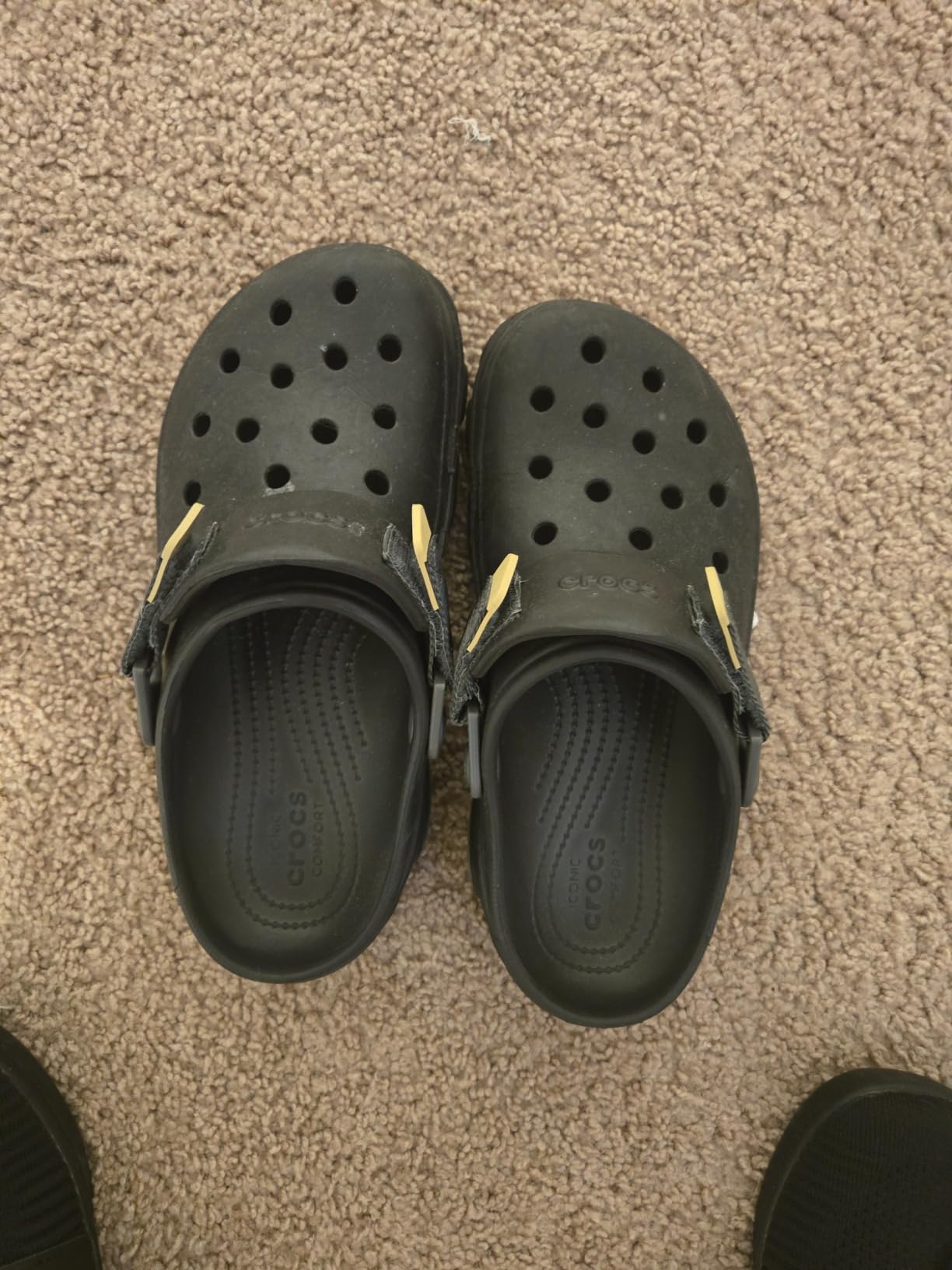
If you’re coming from conventional sneakers with heel elevation, plan for two weeks before you feel fully comfortable in zero-drop shoes. This isn’t a manufacturing issue — it’s anatomy. Your calf muscles and Achilles tendon have adapted to a shortened position from years of heel elevation, and they need time to lengthen and strengthen.
Week one: wear these for a few hours at a time. Let your calves get accustomed to the new range of motion before doing a full day. Week two: you can extend wear time. Most people hit their stride (pun intended) somewhere in days 10-14.
For wide-foot wearers with existing discomfort, the transition is gentler on the foot itself — the toe box relief can be immediate even while the calf adjustment is still underway. I noticed distinct foot comfort within the first few days, while the calf adaptation took until about day ten.
If you want to go even more minimal, the insole is removable. Without it, you’re at roughly 5mm of cushioning — a genuinely close-to-barefoot experience. I tried this for a few yoga sessions and it felt fantastic on a mat; I wouldn’t recommend it for hard floors for extended periods if you’re new to this style.
Who Should (and Shouldn’t) Buy These
Strong fit for:
- Women with wide feet or bunions — the toe box is the real differentiator here. If you’ve struggled to find footwear that doesn’t squeeze, these are worth trying at this price.
- Yoga and Pilates practitioners — the flat sole and flexible construction make them genuinely excellent for studio use.
- Strength training and gym workouts — flat-soled shoes are objectively better for squats and deadlifts, and these deliver that benefit at a fraction of the cost of dedicated lifting shoes.
- Zero-drop curious but uncertain — at $40, the cost of testing whether zero-drop agrees with your body is low. Premium options from Grand Attack or established brands run 3-4x more. Start here.
- Healthcare workers and people who stand all day — multiple users in this category report sustained comfort over 10-12 hour shifts.
Not a good fit for:
- Runners — the heel cup and lace system aren’t designed for running. Look at the Xero Prio or the Altra Lone Peak 8 for zero-drop running capability.
- Narrow feet — the shoe will feel excessively wide and the foot will shift within it.
- Wet climates or rainy day use — the open knit mesh offers zero weather protection.
- Half-size wearers — if you’re a 7.5 or 8.5, you’re forced to commit to a full size in either direction. Consider this before ordering.
- People who can’t tolerate a transition period — zero-drop takes two weeks to feel natural if you’re coming from cushioned shoes. That adjustment is non-negotiable.
Durability: Eight Weeks In
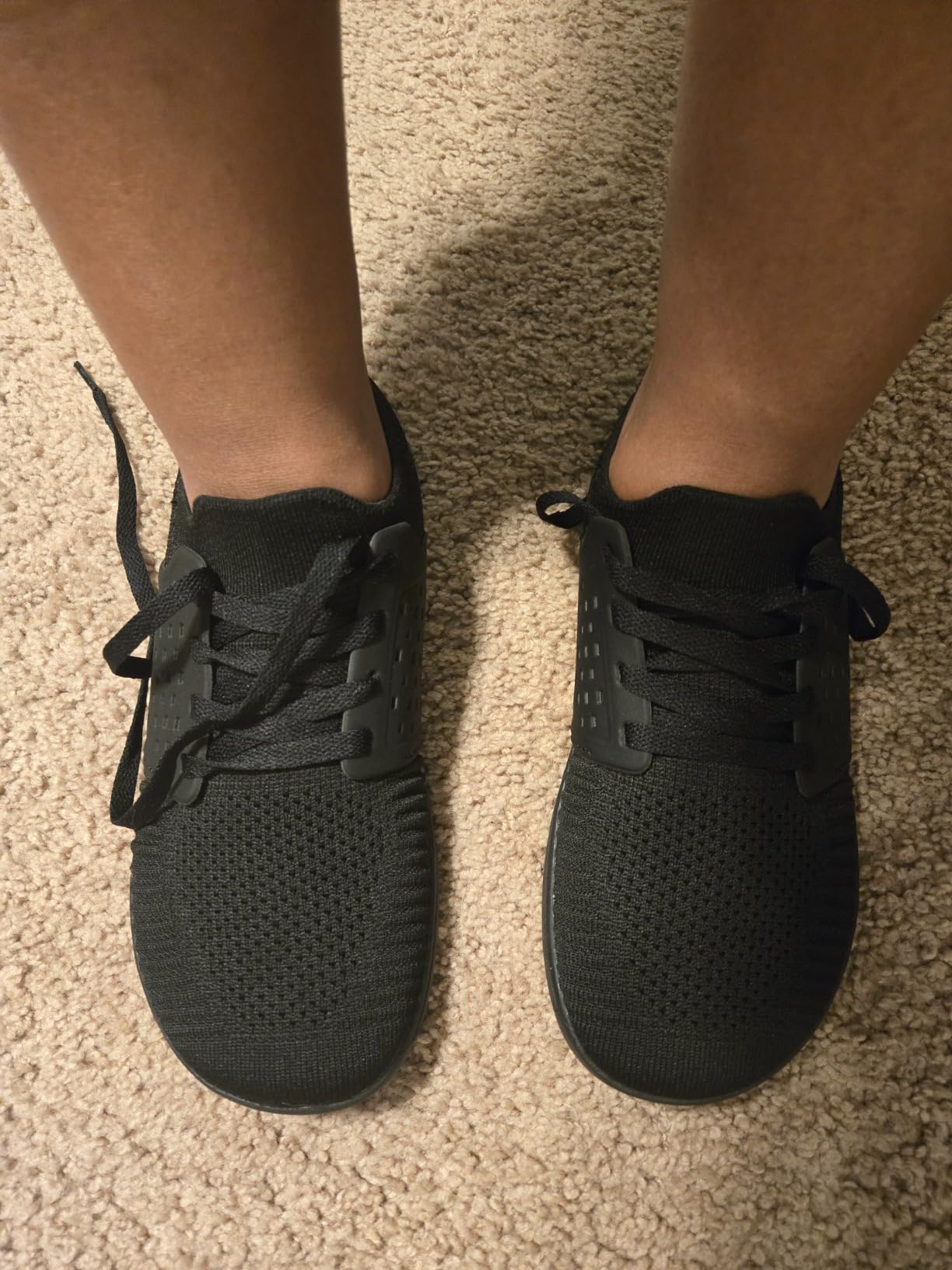
At eight weeks of mixed casual and gym use, the upper shows no pilling or tearing. The outsole has very light scuffing but no significant wear pattern. The removable insole is still intact and hasn’t compressed noticeably.
Two things I’m monitoring that I’d recommend you watch too: the heel cup inner lining (where foot friction from slight heel movement can wear over time) and the outsole at the toe box area (the wide forefoot creates a different flex pattern than narrower shoes, and this can concentrate wear differently). Neither has shown concerning signs at eight weeks, but these are the structural points to watch at the six-month mark.
Broader durability data from other users suggests this shoe holds up reasonably well at casual/moderate pace — some users report 6-12 months of comfortable use before the sole thins noticeably. Heavy daily use will accelerate that timeline.
Care note: hand wash with cold water and mild soap, then air dry. Don’t machine wash — the agitation can stress the knit adhesion points and knit structure. The shoes clean up well with hand washing and don’t hold odor badly given the breathable construction.
Value at $40: The Honest Math
At $40, you’re not getting the materials or construction quality of a $150+ premium minimalist shoe. The sole will wear faster. The knit isn’t as durable. But for someone who wants to explore zero-drop lifestyle footwear without a significant financial commitment, the value proposition is compelling.
Premium alternatives like dedicated zero-drop barefoot shoes or Vivobarefoot options run $120-180. If you discover zero-drop agrees with you — and for many people it does, dramatically — then graduating to a premium option makes sense. These WHITIN shoes work as an excellent first step in that exploration, or as secondary shoes for gym use once you’ve invested in a primary pair.
If $40 delivers eight months of usable life at moderate wear, that’s $5/month. Even half that lifespan makes the math reasonable relative to alternatives. You can always complement them with aftermarket insoles if you want a bit more cushioning for hard floor days.
Performance Scorecard
| Category | Score | Notes |
|---|---|---|
| Wide Foot Comfort | 9.5/10 | Genuinely excellent — primary differentiator |
| Zero Drop Benefit | 9.0/10 | Real posture/back pain improvement at week 2 |
| Gym/Yoga Use | 8.5/10 | Flat sole ideal for lifting; thin sole great for mat work |
| Daily Casual Wear | 8.0/10 | 11+ hours comfortable on varied surfaces |
| Breathability | 8.5/10 | Open knit = excellent airflow in warm weather |
| Durability (8wk) | 7.5/10 | Holding up well; long-term TBD at 6+ months |
| Traction | 6.5/10 | Wet tile failure is a real concern |
| Value for Money | 9.0/10 | $40 delivers outsized benefit for the target use case |
| Overall (intended use) | 8.2/10 | Exceptional for wide-foot lifestyle/gym use |
Final Verdict
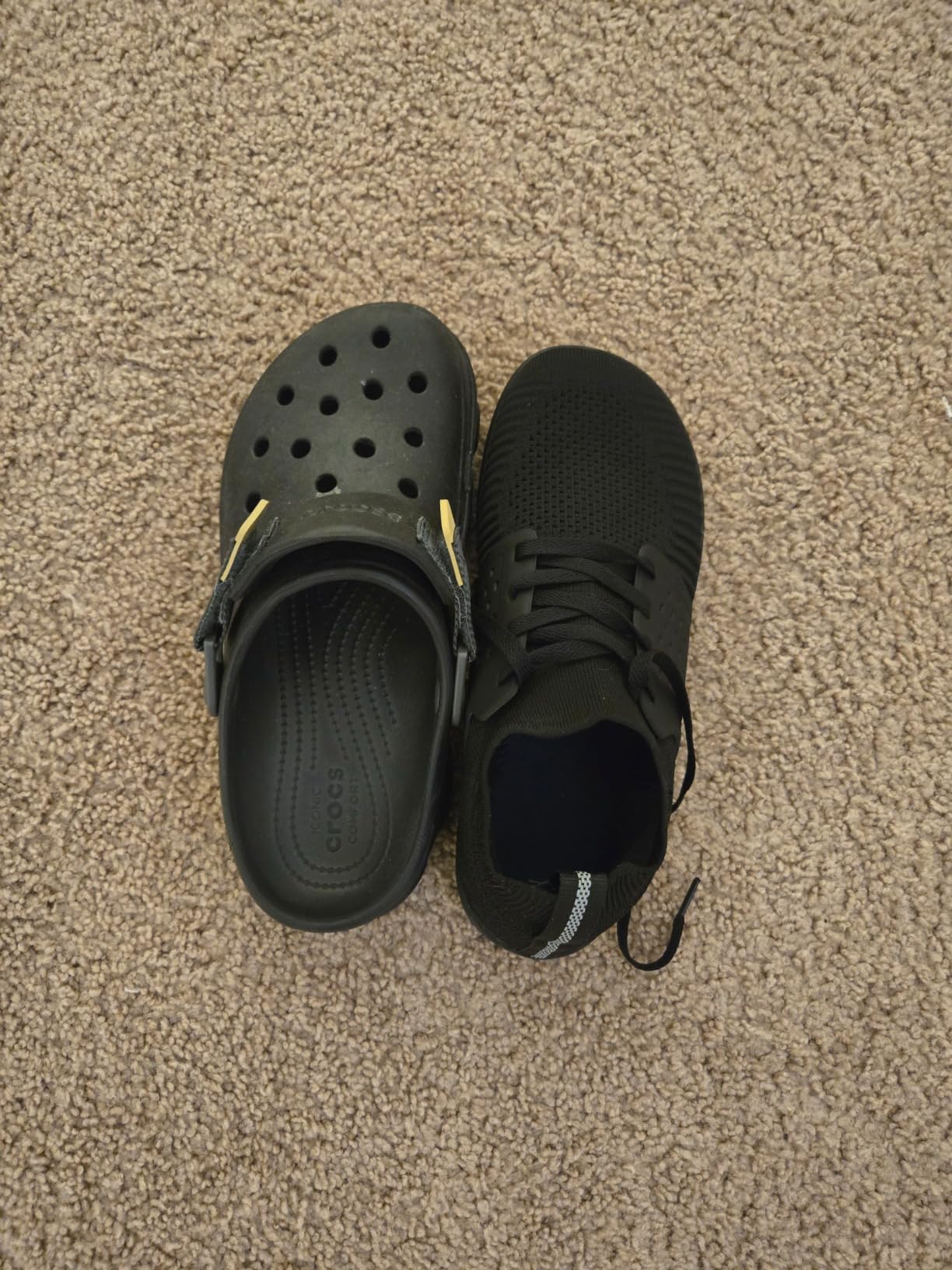
These aren’t shoes that try to do everything. They’re very specifically designed for wide-foot wearers who want zero-drop comfort without paying premium prices, and within that lane, they deliver genuinely well.
The wide toe box relief is real and immediate for feet that have been chronically compressed. The posture benefits from zero-drop are real, though they take two weeks to manifest. The gym and yoga performance is legitimately good. And $40 is an appropriate price to pay to test whether minimalist footwear is right for your body before investing in premium options.
The limitations are equally real: not for running, not for wet weather, not for narrow feet, not for half-size wearers. These aren’t disqualifying if you know them going in — they’re just parameters.
I ordered a second pair in black before I even finished writing this. That tells you where I landed.
Frequently Asked Questions
Do these run true to size?
Yes for length — I’m a consistent size 8 and the fit was accurate. The width is deliberately generous: wide feet and wide-toed feet should order their usual size. Narrow feet should probably look elsewhere — the shoe will feel too roomy. Since there are no half sizes, if you fall between sizes, go up a full size.
How long does the zero-drop adjustment take?
Expect 10-14 days before it feels completely natural if you’re coming from cushioned shoes. The discomfort is primarily calf and Achilles engagement, not foot pain. Start with a few hours per day and build up gradually. I was fully comfortable by day ten.
Are these good for weightlifting?
Yes — this is one of the strongest use cases. The flat sole keeps weight evenly distributed through squats and deadlifts in a way that cushioned training shoes don’t. Several powerlifting coaches specifically recommend flat-soled shoes for this. These deliver that benefit at a low price point.
Can you wash them in the machine?
No — hand wash only. Cold water, mild soap, remove the insoles first, then air dry. Machine washing risks damaging the knit structure and adhesive points. They clean up easily with hand washing and the breathable material doesn’t hold odor badly.
Are they waterproof or water resistant?
Neither. The open knit upper has no weather protection at all — 90 seconds of light rain left my feet damp. These are fair-weather shoes or indoor/covered-area footwear. For wet conditions, you’d want a different shoe entirely.
Can I use my own orthotics with these?
Yes. The insole is removable, making room for custom orthotics or aftermarket insoles like Sof Sole Athlete Insoles. That said, the zero-drop philosophy works against heavy arch support — the point of minimalist footwear is encouraging natural foot strength. If you depend heavily on orthotics, have a conversation with your podiatrist before making the switch.
How does this compare to the men’s version?
The WHITIN Men’s Wide Minimalist Barefoot shares the same zero-drop wide-toe-box concept but uses a different construction — notably heavier at around 14 oz versus the 6.2 oz women’s model. Different upper materials, different target use cases. The women’s knit model is notably lightweight for the style.
How long do they last?
At casual/moderate daily use, most users report 6-12 months before the sole thins to the point of needing replacement. Eight weeks in, mine show minimal wear. Heavy daily use on rough surfaces will shorten that timeline. The $40 price point means replacement is manageable even at the lower end of that range.
What are the best alternatives if these don’t work for me?
For running: Xero Shoes Prio or Altra Lone Peak 8. For a similar budget barefoot option with different construction: JMZB Barefoot Shoes or UBFEN Minimalist Barefoot. For more premium zero-drop with better weather protection and durability, look at Vivobarefoot or similar established brands.
Be the first to review “WHITIN Women’s Wide Minimalist Barefoot Shoes”
Related products
Running Shoes
Sneaker
Tennis/Squash Shoes
Running Shoes


Hiking/Trekking Shoes
Sneaker
Sneaker
Reviews
There are no reviews yet.