
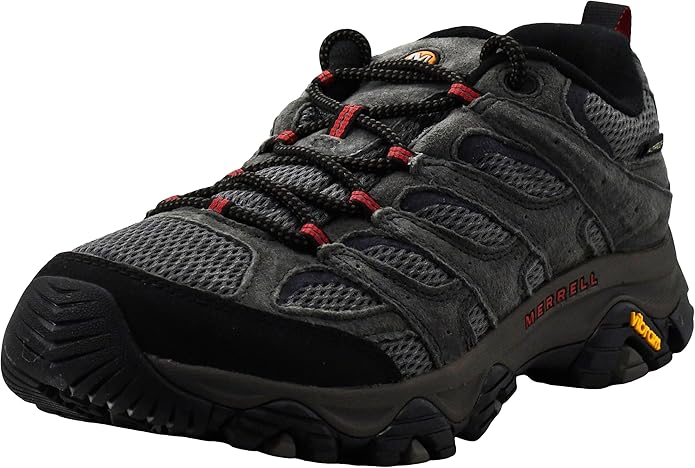
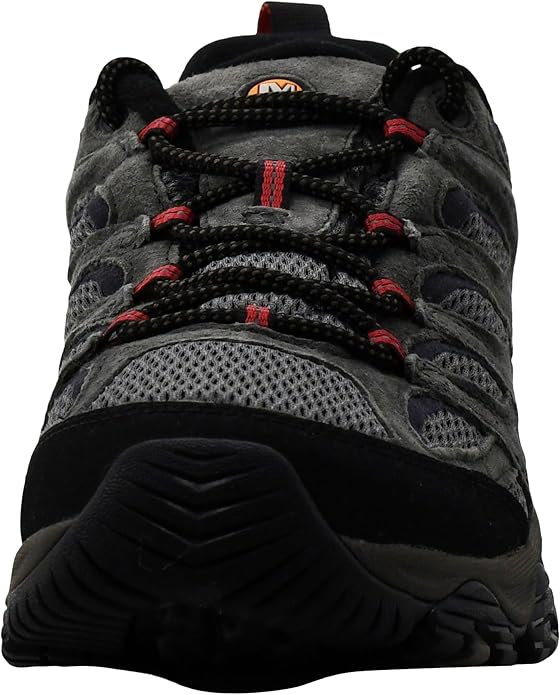
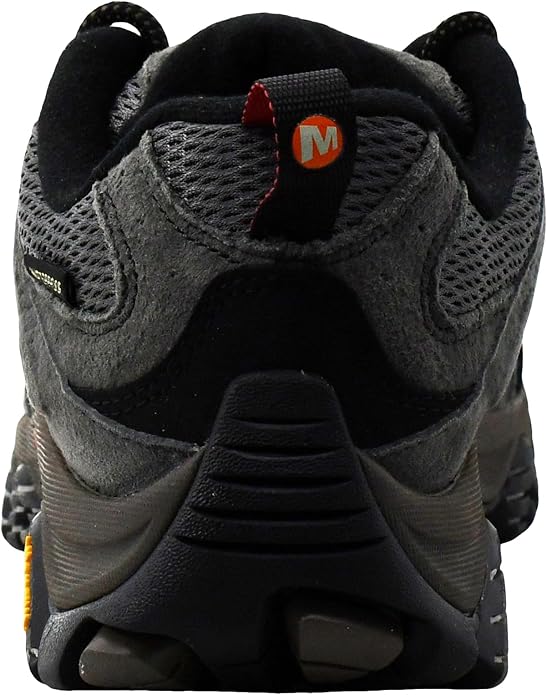
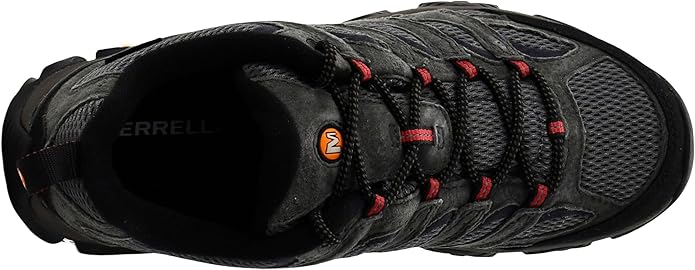
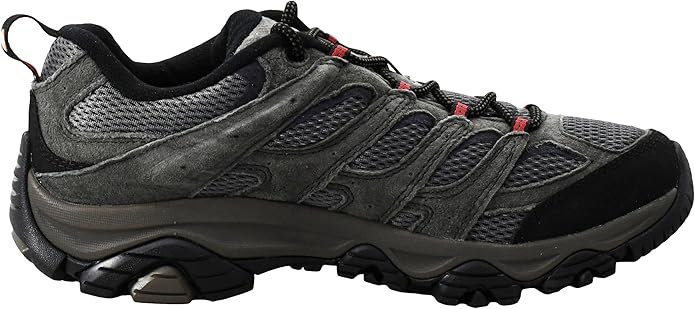
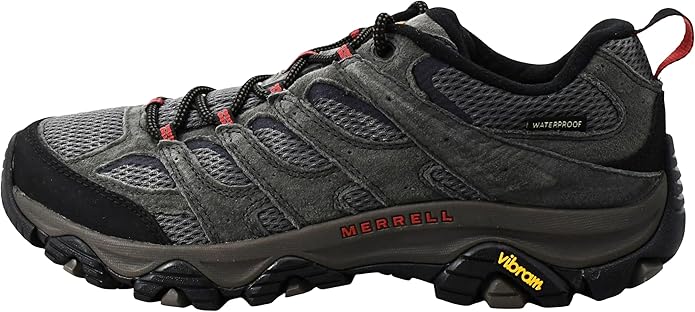
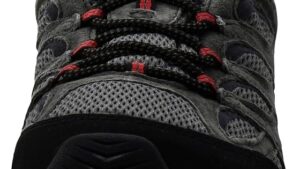
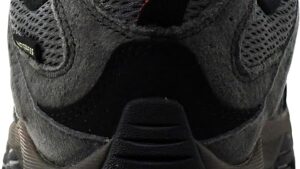
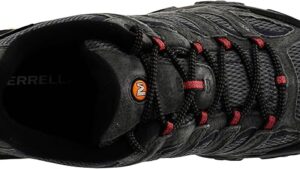
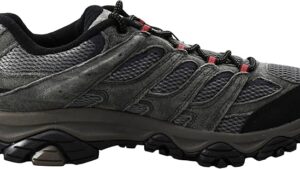
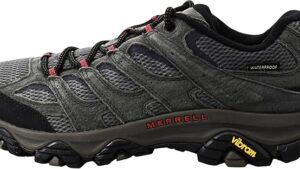
Three pairs of hiking shoes in two years. That’s my track record before I pulled the Merrell Men’s Moab 3 Waterproof out of the box. Sole separation on one, a waterproof membrane that gave up around month four on another, and a third pair that developed a stress crack at the heel after a particularly rough scree scramble. My buddy Jake had been telling me to just try the Moab for years — “Mike, it’s the world’s number one hiking shoe, just try it.” I’d been skeptical. That skepticism is what drove me to put these through 6 weeks of real testing: 15 sessions, 75+ miles, everything from rocky granite ridges to ankle-deep creek crossings to the kind of muddy forest trail that turns shoes into plows. Here’s what I found — and it’s more nuanced than the marketing suggests.
The short version: the traction and out-of-box comfort are genuinely excellent, but the waterproofing has a shelf life, and at $160 in 2026, the value conversation is more complicated than it was two years ago when most of these reviews were written. Wide-footed weekend hikers are going to love this shoe. Narrow-footed speed hikers probably should look elsewhere.
Quick Specs
| Spec | Value |
|---|---|
| Price (2026 MSRP) | $160 |
| Weight | ~15.3 oz per shoe (size 9 measured); ~2 lbs/pair at size 10.5 |
| Drop | 11.5mm |
| Midsole | Super Rebound Compound + Merrell Air Cushion heel |
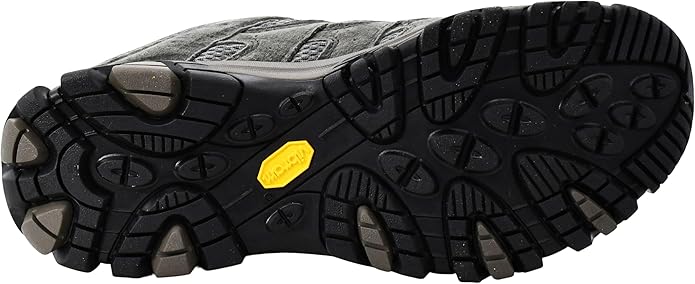
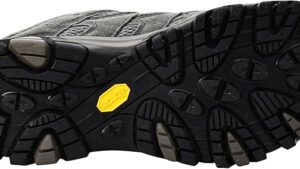
| Outsole | Vibram TC5+ (4.8–5mm lug depth) |
| Upper | Pig suede leather + breathable mesh |
| Waterproofing | Proprietary Merrell membrane (not Gore-Tex) |
| Widths | Medium + Wide (separate SKU) |
| Best for | Day hiking, wide feet, mixed terrain weekenders |
| Overall Score | 7.3/10 |
First Impressions & Fit — The Moab Surprise
Pulled these on at home the evening they arrived, before I’d even planned my first trail session. Expected the stiffness that comes with any leather-upper hiking shoe — that two-week “earning it” phase where you limp around until the materials break down to fit your foot. Didn’t happen. The Moab 3 felt ready from the first step, which is honestly rare at this price tier.
The fit is worth talking about in detail because it’s where this shoe is most polarizing. Lab measurements clock the toe box at 74.8mm — noticeably roomier than the 72.5mm average across hiking shoes. That’s not a small gap in a category where millimeters matter for hot spots and nail blackening on descents. For my wider forefoot, the space felt just right. I never had a pressure point or a pinched sensation even on rocky sections where my feet were taking lateral impact.
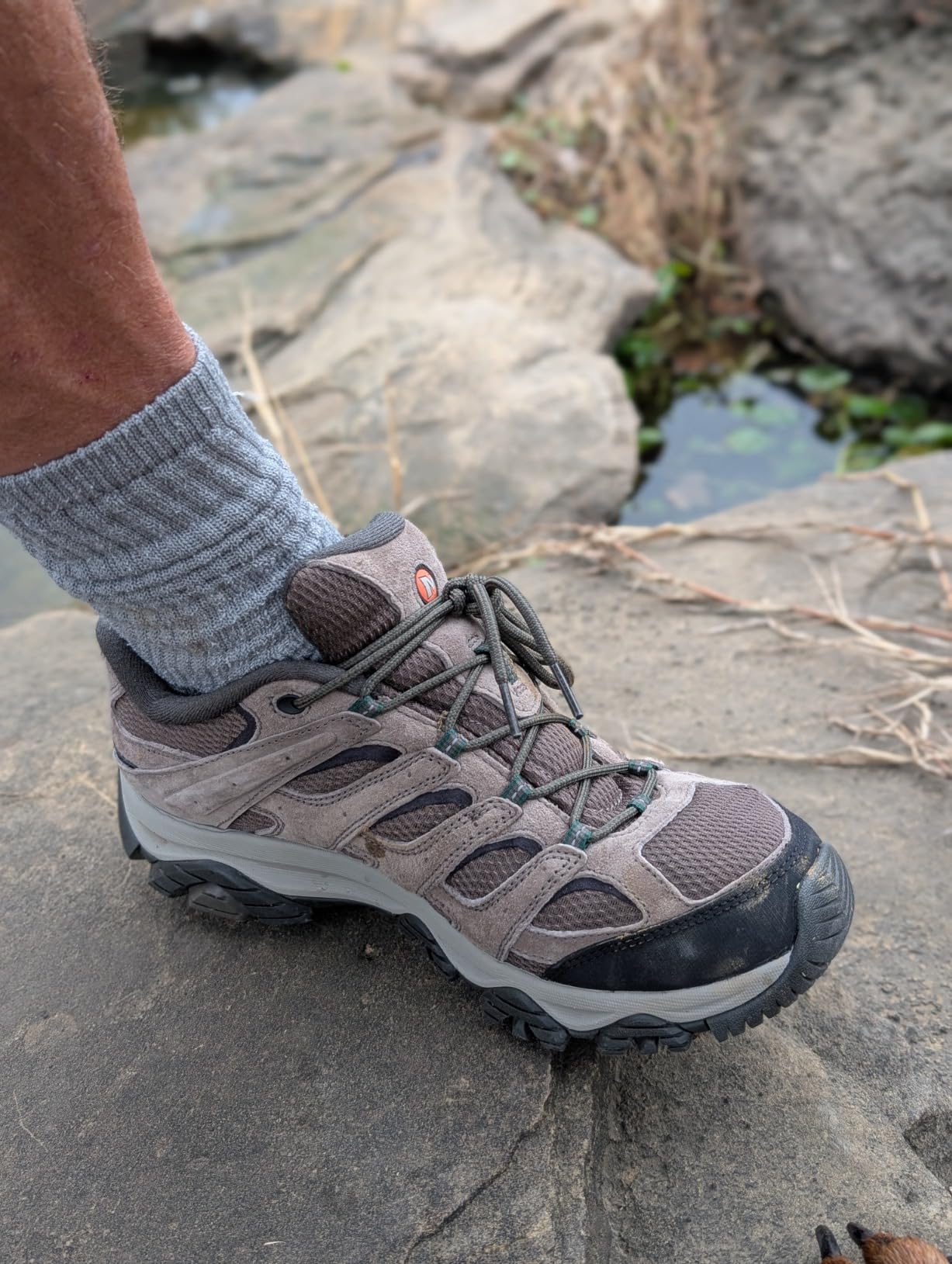
Here’s the other side of that coin: if you have standard-narrow feet, the Moab 3 may give you more room than you want. A couple of longer descents in week 3, my heel was moving in the shoe more than I’d like — not blistering, but noticeable slop that required lacing adjustments. I’ve heard the same from a few friends who’ve tried the regular width. Worth knowing before you buy.
Sizing runs true to size — 223 data points from RunRepeat confirm TTS, and my size 10.5 fit was spot-on for length. One thing I’ll flag: the previous generation Merrell Moab 2 had a slightly snugger feel through the midfoot. The Moab 3 sits looser. Not dramatically, but enough that former Moab 2 loyalists sometimes feel like they’re in a half-size up. If you’re switching from the 2, try these on before committing online.
Comfort & Cushioning — Good, Then Settled
The midsole on the Moab 3 is interesting. Lab testing clocks the foam at 54.8 AC hardness — that’s about 17% firmer than the average hiking shoe. On paper, that doesn’t scream “comfort.” But the energy return came in at 54.4%, above the 50.2% average, which means the foam isn’t dead underfoot even though it’s firm. What you’re actually feeling in that first-week plush sensation is mostly the Merrell Air Cushion heel pod doing its job — it’s a distinct stability and absorption unit under your heel that feels noticeably softer than the rest of the midsole.
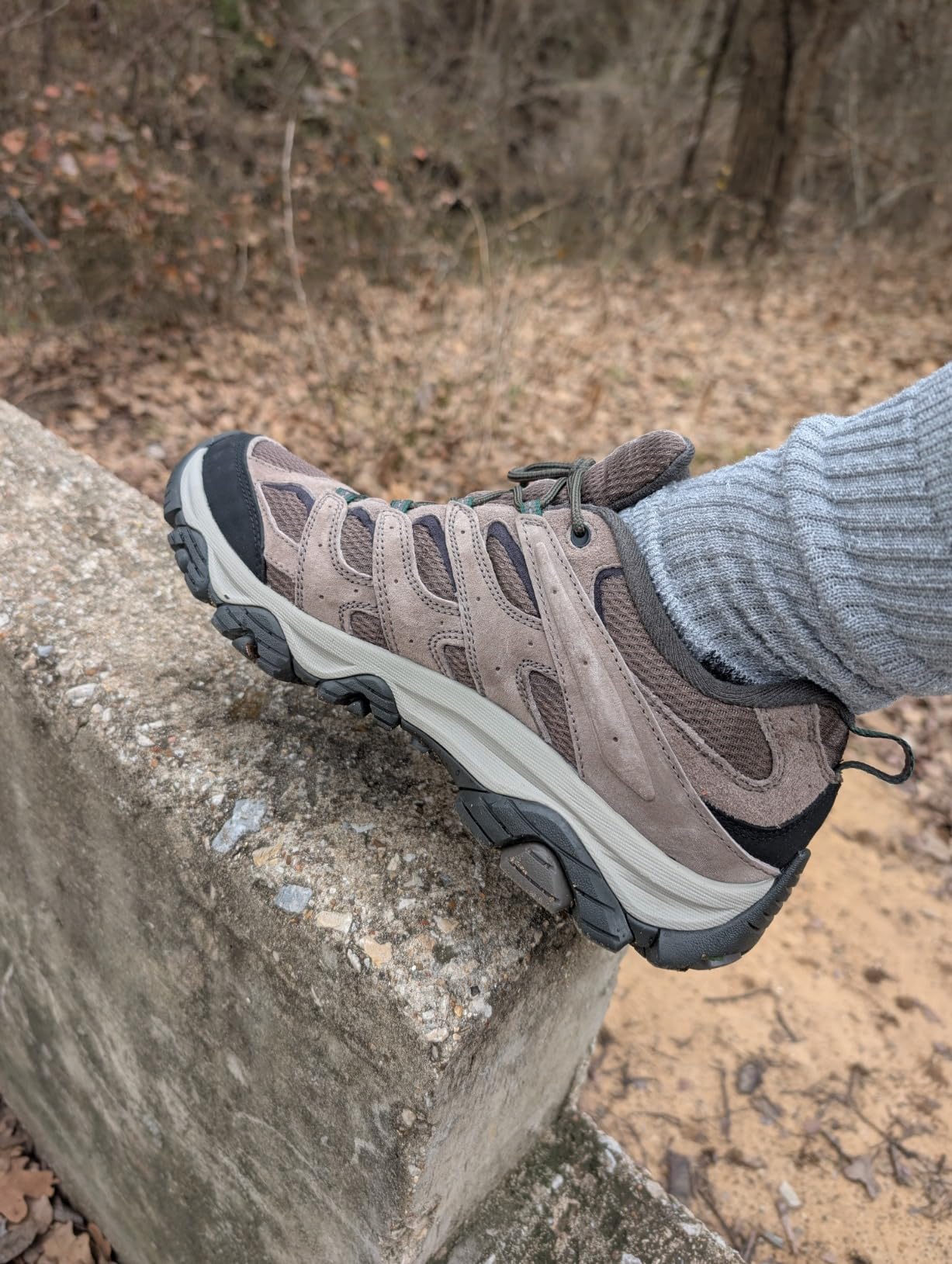
By week 2, the initial impression was: this is one of the more comfortable hiking shoes I’ve tested straight out of the box. No hot spots, no break-in pain, no forefoot numbness on longer days. At 175 pounds, that matters — heavier hikers stress cushioning more than lighter ones, and the Moab 3 held up well through the first couple of weeks.
Then around week 3-4, the cushioning settled. Didn’t collapse — just became less plush and more baseline. By week 6, the underfoot feel was competent and serviceable but no longer the selling point it was on day one. I’ve seen this pattern in other EVA-based hiking shoes; it’s not a defect, just the physics of foam compression under consistent load.
The Kinetic Fit footbed is worth noting separately: it’s removable, which means the Moab 3 is orthotic-compatible. Most reviews don’t even test this, but if you run custom insoles or aftermarket arch support, the stock footbed slides right out. The stock support is medium-arch — good for normal to mild flat feet, probably insufficient for very high arches on all-day hikes.
Traction Reality — The Vibram TC5+ Story
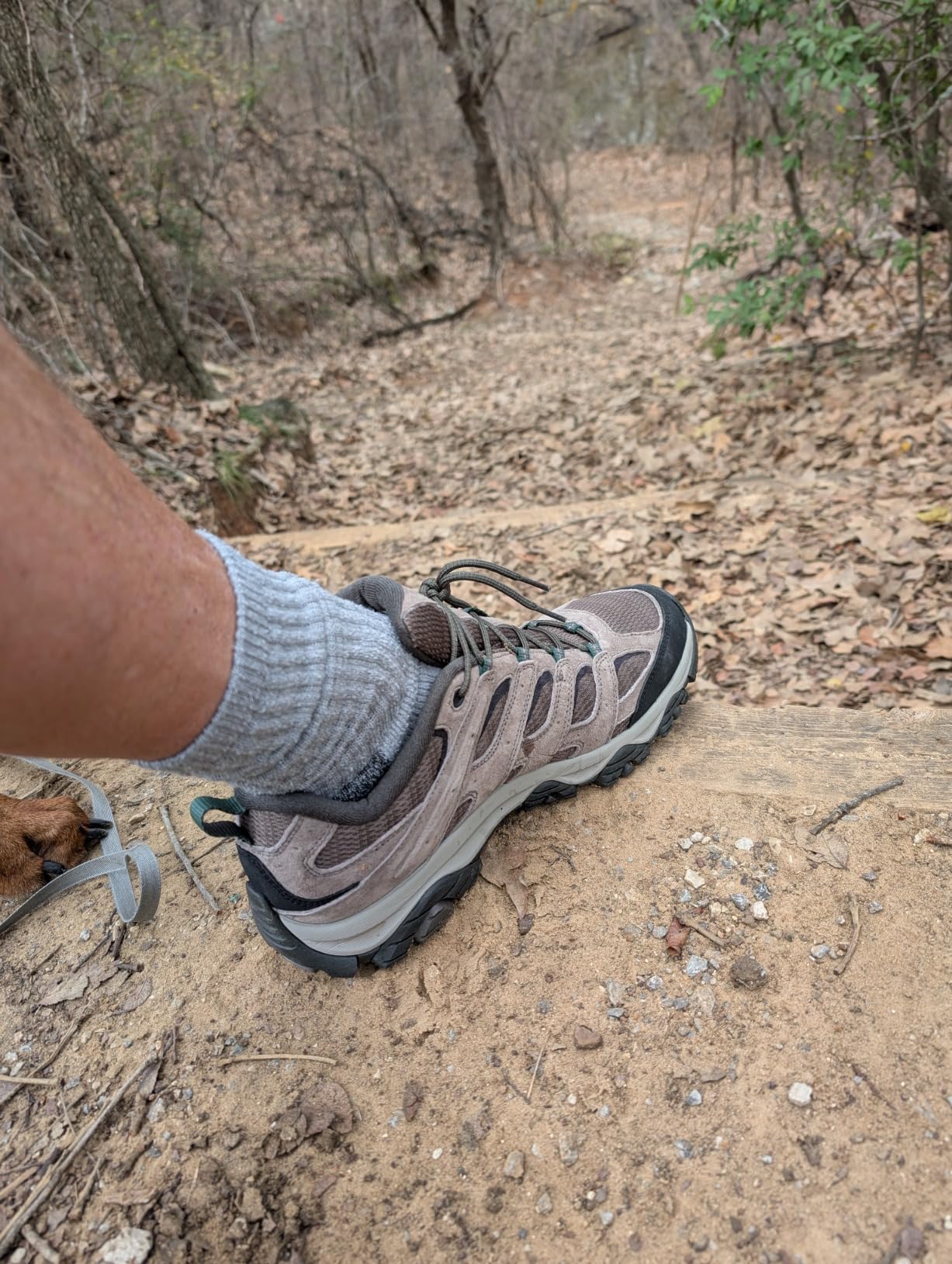
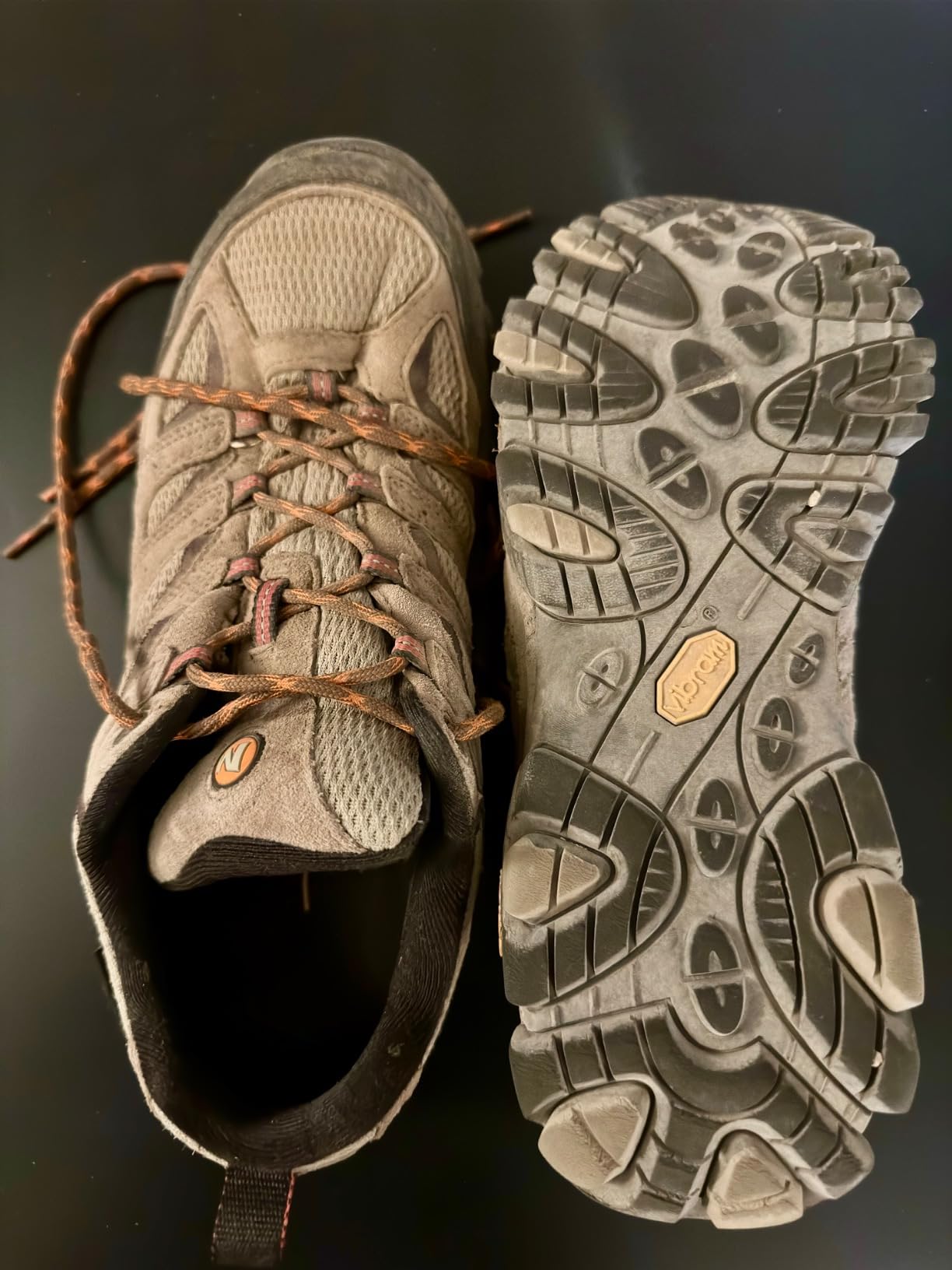
Week 2, I hit a section of exposed granite with the Moab 3 loaded with a 20-pound day pack. On stream-washed rock that had dried in the morning sun — the kind of surface where one wrong weight shift sends you scrambling — the TC5+ felt locked. Not sticky in the way of a fresh rubber shoe that loses it once the sole glaze wears off, but genuinely confident traction that I trusted on steep angles. That’s where this outsole earns its reputation.
The lug depth is 4.8mm — shallower than what you’d find on a dedicated trail runner or aggressive backpacking boot. On packed dirt, gravel, and rocky surfaces, that’s not an issue. On muddy terrain, it becomes one.
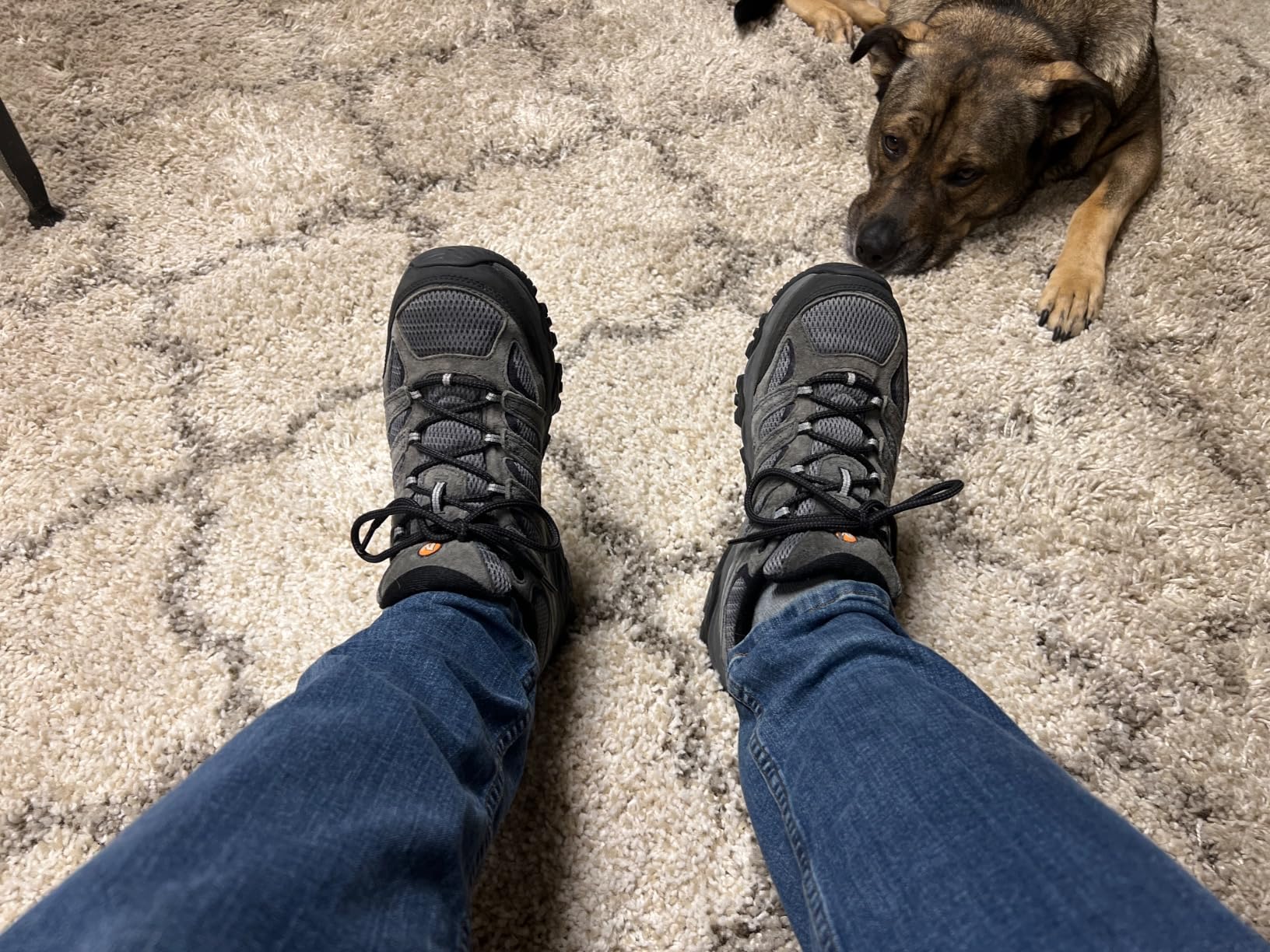
Three of my 15 sessions ran through wet forest trails — the kind of late-March mud that fills every depression and coats whatever you put in it. On those days, the TC5+ started clogging within the first quarter mile. The shallow lugs don’t self-clean the way deeper aggressive patterns do, and once packed, traction drops noticeably. I had a couple of moments on moderate-grade muddy descents where the shoe was clearly pushing through the mud rather than gripping through it. Not a fall situation, but the kind of confidence drop that makes you take smaller steps and mentally tax yourself more than needed.
This isn’t a bug — it’s the physics of a 5mm lug on a shoe optimized for rocky terrain. But if your local trails run wet for six months of the year, this lug profile may cost you. For dry or mixed terrain, it’s outstanding. For PNW mud or soggy spring conditions, budget for extra caution. If lightweight trail performance is your priority, dedicated trail runners with deeper lugs will serve you better in soft conditions.
Waterproofing — The Clock Is Already Ticking
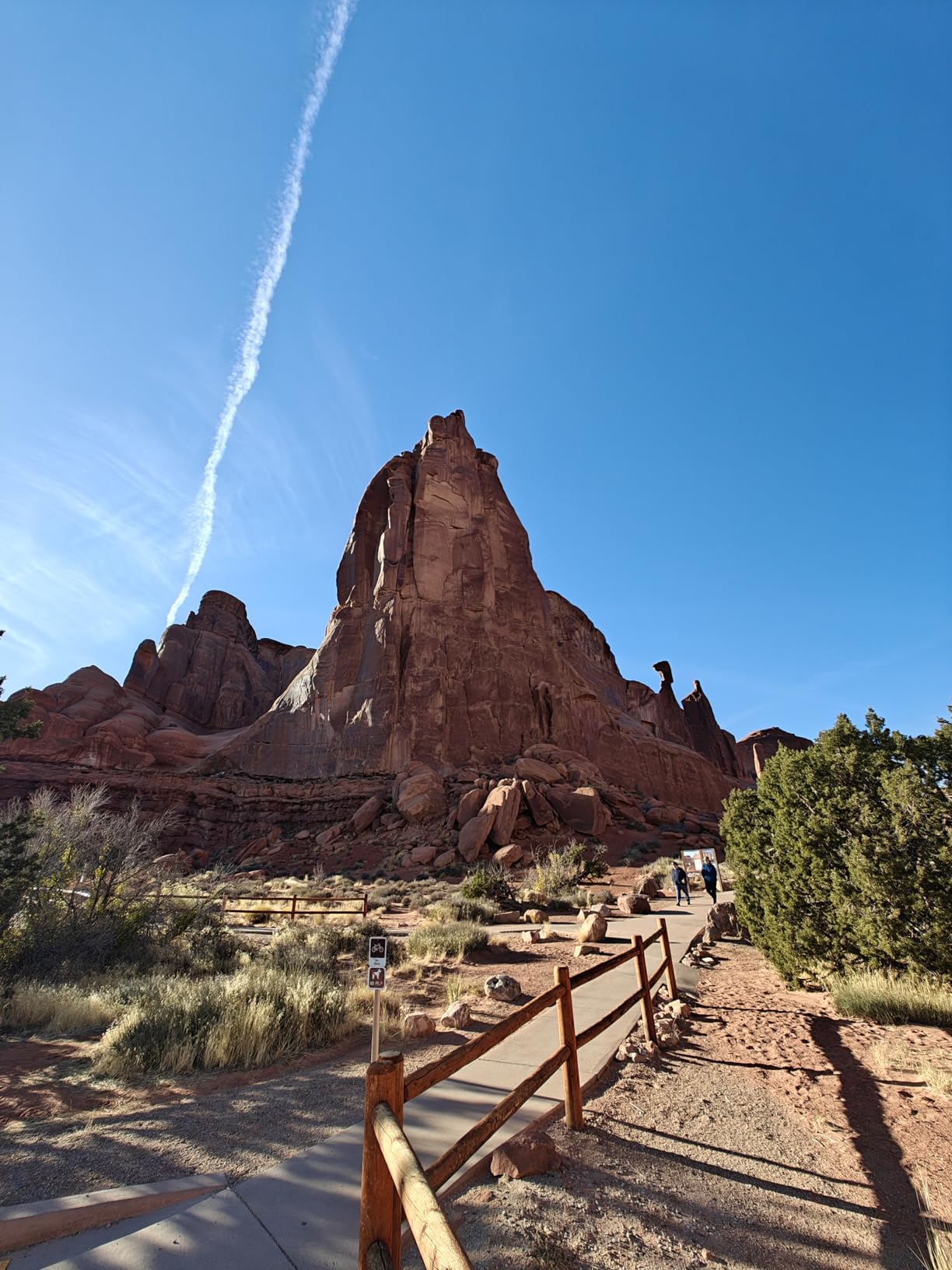
The waterproofing section deserves the most honest treatment of this entire review. And the honest treatment is this: in weeks 1-4, it worked. Creek crossings up to ankle depth, light rain, grass heavy with morning dew — feet stayed dry, no issues. The proprietary membrane did what Merrell claims.
But the Moab 3 uses pig suede leather on the upper. Suede is naturally porous. The DWR (durable water repellent) surface treatment that sheds water early on wears off with trail use and friction, usually faster on suede than on synthetic materials. When that coating degrades, water reaches the membrane directly rather than beading off the surface — and the membrane, working harder without that external barrier, starts allowing more moisture transmission.
By week 5, I noticed water beading on the upper more slowly after creek crossings. Not soaking through, but the “immediate bead-off” behavior of the early weeks was clearly gone. Week 6, after a particularly wet session, the interior felt slightly clammy even though I hadn’t fully submerged the shoe. That’s the beginning of the degradation arc that longtime users flag at the 4-6 month mark.
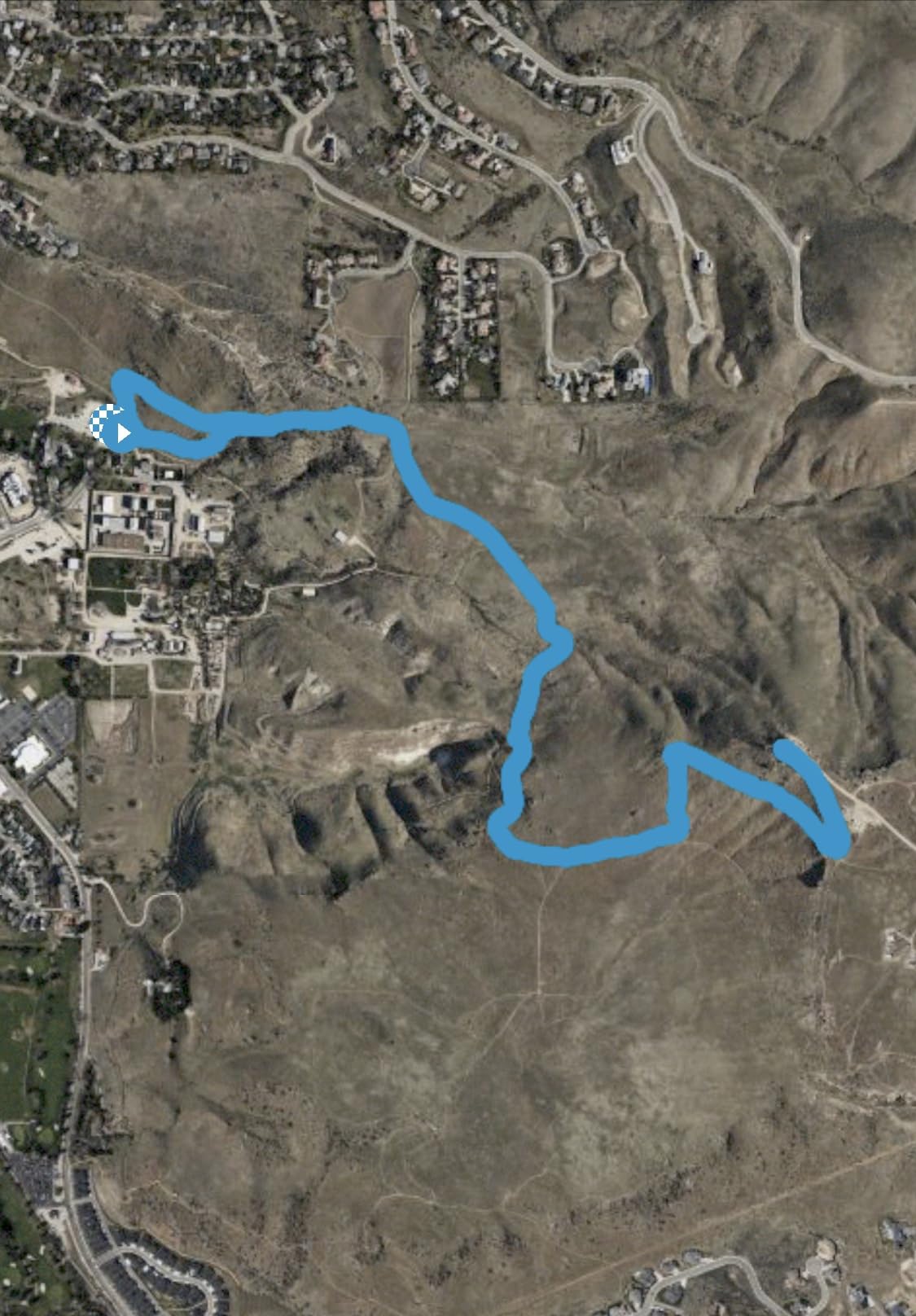
The fix is periodic re-treatment with a waterproofing spray (Nikwax or similar) — plan on applying this every 2-3 months with regular use. If you want a membrane that holds longer without re-treatment, the Moab 3 GTX version with Gore-Tex exists at a premium, or look at waterproof hiking options with synthetic uppers that don’t have the same suede absorption issue.
One thing I want to be clear about: the waterproofing working in weeks 1-4 is genuine, not incidental. This isn’t a shoe where the first rain exposes a gap in the membrane. The system functions as advertised early on. The concern is longevity, not initial performance.
Weight & Breathability — The Honest Trade-off
At around 15.3 oz per shoe (measured at size 9), the Moab 3 Waterproof comes in at roughly 2 lbs per pair at size 10.5. That’s not heavy for a hiking shoe with suede leather construction, Air Cushion technology, and a Vibram rubber outsole. But it’s noticeably heavier than the modern trail runner hybrids that have been eating into this market.
For my first 3-5 mile sessions, weight wasn’t a factor at all. The shoe felt substantial but manageable. By week 4-5, running 10-12 mile days with some elevation gain, the cumulative foot fatigue from carrying that extra mass was distinguishable from muscular fatigue. I’ve had trail runners that weigh about 10.5-11 oz per shoe, and at mile 11, that 4-oz-per-foot difference is real. The Moab 3 is well-suited for casual day hikers; it’s a different ask for high-mileage or fast-light hikers.
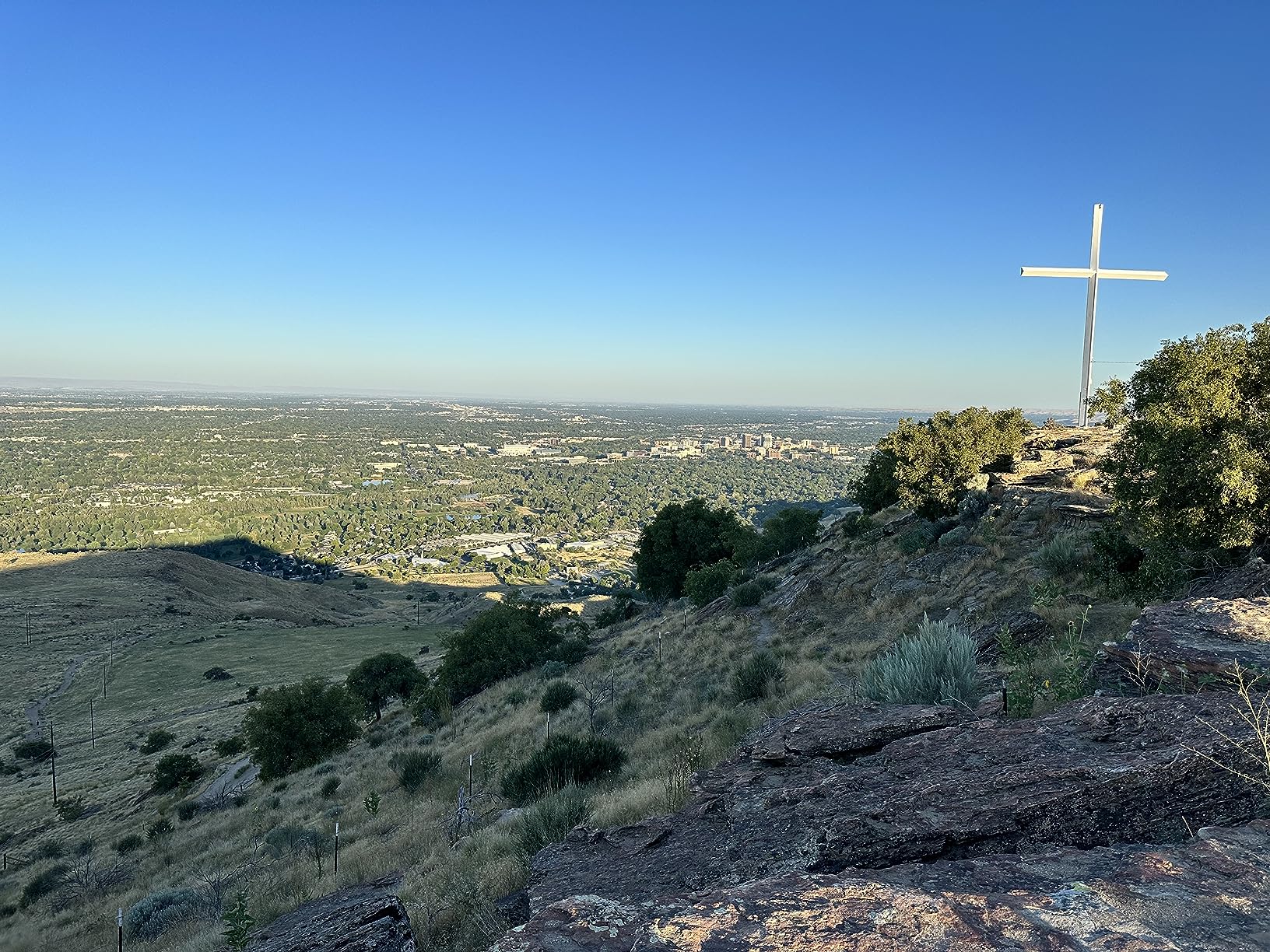
On breathability: the mesh panels do ventilate, and below about 65°F the temperature regulation felt reasonable. In warmer weather (sessions around 68-70°F in week 6), my feet ran warm and slightly clammy inside. The waterproof membrane is doing its job keeping moisture out — which also means it’s restricting moisture vapor from escaping. Classic waterproof trade-off. Nothing catastrophic, but worth knowing if you primarily hike in summer heat.
Durability & QC — What the 6-Week Mark Tells You
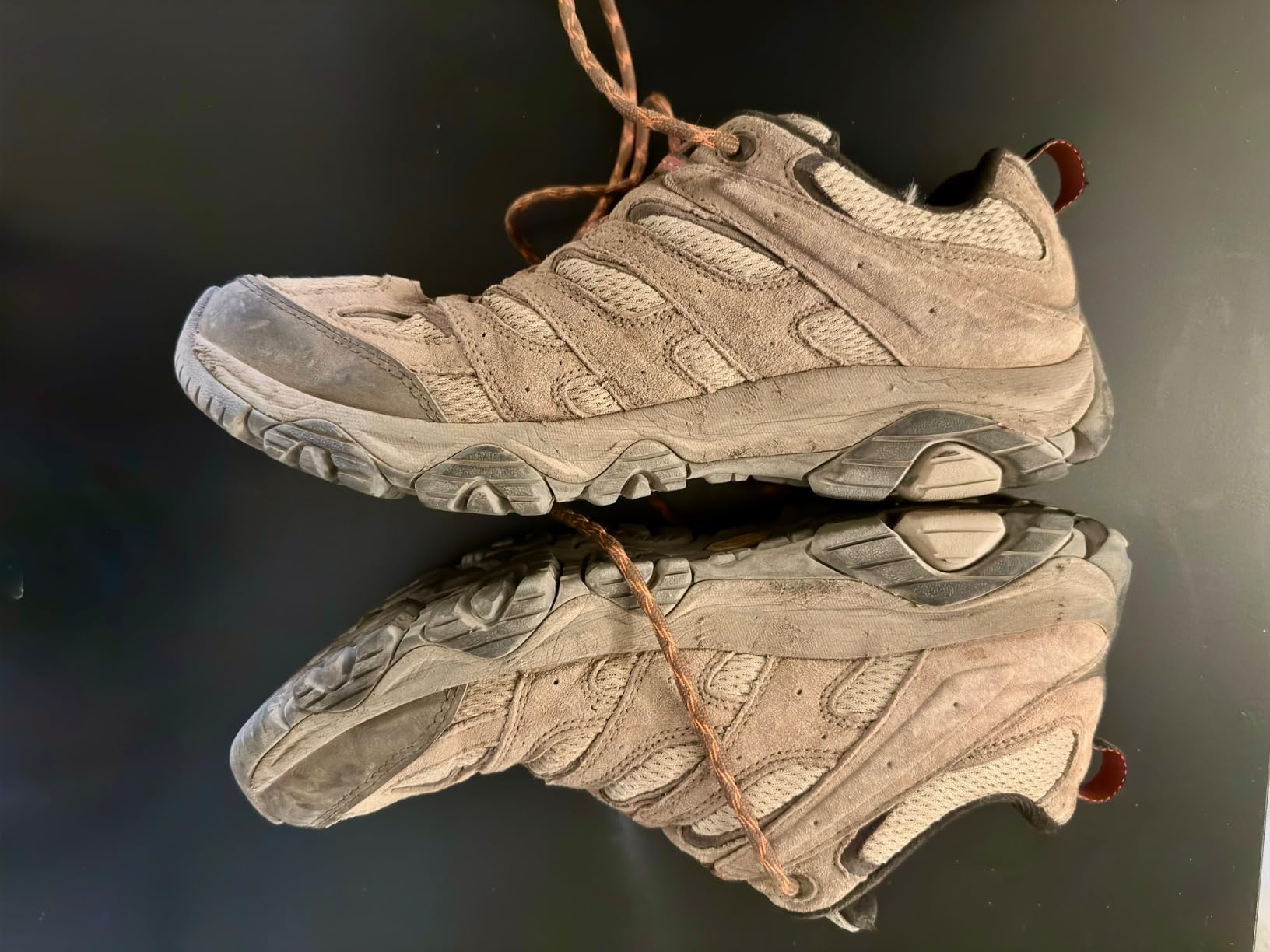
At week 5, I did a deliberate inspection of the Moab 3’s stress points before continuing testing. What I found: the Vibram outsole-to-upper bond was solid — no edge lifting, no peeling. The lug rubber showed light wear on the heel strike zone but nothing that would concern me about near-term failure. The lacing eyelets and hardware were all intact.
The area I’m watching: the junction where suede meets mesh at the toe box perimeter. At 75+ miles, you can see the earliest signs of the two materials working against each other — micro-flex stress at the seam, slight pilling at the boundary. This is the historical failure point that longer-term Moab users report as fraying. My pair wasn’t there yet, but the trajectory was visible.
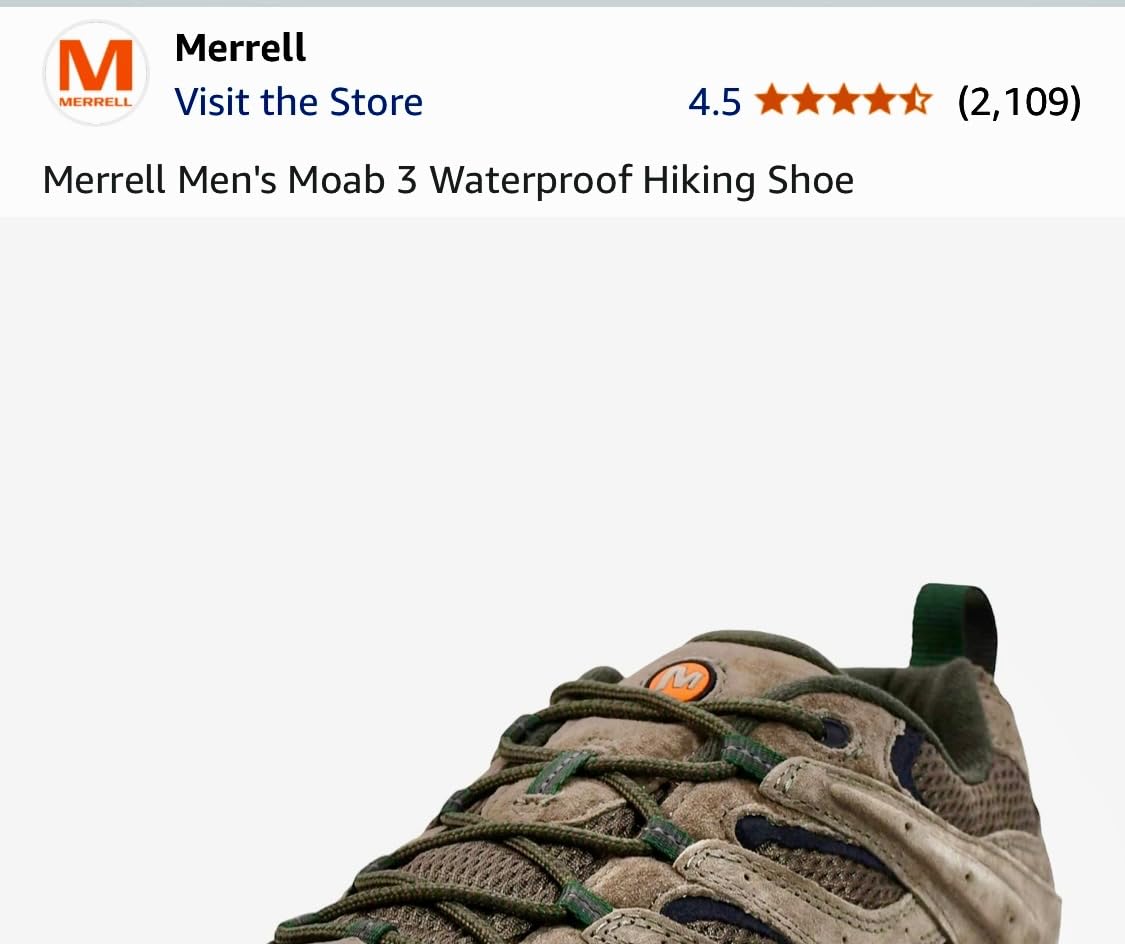
The glue separation issue that appears in community reports is batch-dependent rather than universal — some users report it at 4-5 months, others have gone 18+ months without issues on the same model. That inconsistency is frustrating for a $160 shoe. If you have issues early on, Merrell’s warranty covers manufacturing defects; it’s worth documenting the problem early if it appears.
At the current price, the cost math looks like this: $160 ÷ 400 miles average lifespan = $0.40/mile. That’s acceptable for a hiking shoe. If you’re on the lower end of durability (300 miles), that climbs to $0.53/mile. For context, something like the Oboz Sypes Low Leather costs more upfront but tends to last significantly longer for heavy-use hikers — potentially $0.25-0.35/mile over 600+ miles. For rugged terrain where you want serious construction, the North Face Fastpack Hedgehog 3 is another durable leather option worth comparing at a similar price point. Both are worth looking at if longevity is what you’re optimizing for.
Who Should Buy This — And Who Shouldn’t
Buy the Moab 3 Waterproof if:
You have wider feet and struggle to find hiking shoes that accommodate your forefoot without pressure points. You prioritize comfort and zero break-in time over lightweight performance. Your hiking profile is mainly day hikes, casual weekend trips, or moderate mixed-terrain, generally 5-8 miles at a stretch. You’re okay with periodic waterproofing maintenance (DWR re-treatment every few months). Your climate is mostly dry to moderate — not consistently wet or muddy.
Look elsewhere if:
You have narrow feet or prefer a snug, wrapped feel — the roomy toe box will feel sloppy on steep descents. You’re logging 15+ mile days regularly and weight fatigue over long distances is a concern. Your trails are consistently wet and muddy — the shallow lug pattern will frustrate you. You need waterproofing to hold for 12+ months without maintenance — the Moab 3 GTX is the right call then, or look at full synthetic uppers. You want a zero-drop or low-drop platform — 11.5mm isn’t aggressive, but it’s a traditional hiking shoe geometry that doesn’t suit minimalist preferences. For wide toe box with a lower drop, the Altra Lone Peak 8 is worth considering as an alternative.
How It Compares
vs. Merrell Moab 3 GTX: Same platform, Gore-Tex replaces the proprietary membrane. Better waterproof longevity, a bit less breathable, typically $40-60 more. If you hike in consistently wet conditions and don’t want to manage DWR maintenance, the GTX version is worth the premium.
vs. Salomon X Ultra Pioneer: The Salomon is noticeably lighter and better suited for technical terrain. Its ClimaSalomon waterproofing is also more durable than the Moab’s proprietary membrane. Trade-off: narrower fit and a firmer ride out of the box. If you have standard-width feet and prioritize performance over comfort-first fit, this competes seriously at $10-20 more.
vs. KEEN Targhee IV Waterproof: KEEN uses KEEN.DRY membrane which generally holds up longer, and the Targhee has more structured ankle support in both low and mid versions. The Moab 3 is more flexible (12.9N vs typically 15-18N for KEEN), better for speed and agility, and comes in wider widths. The Targhee’s toe box is narrower than Moab 3’s 74.8mm — wide-footed hikers consistently prefer the Moab here.
vs. Moab 3 non-waterproof: Available at roughly $120-130, and if you hike primarily in dry or mild conditions, the ventilation improvement and cost savings are significant. Worth considering seriously if you don’t cross water regularly.
Frequently Asked Questions
Do the Merrell Moab 3 Waterproof run true to size?
Yes — 223 measured data points and consistent tester feedback confirm true to size. Length is accurate. Width is the variable: the toe box is generously wide (74.8mm vs 72.5mm average), which works well for wide-footed hikers but can feel roomy for narrow feet. If you’re between sizes, go true to size rather than sizing up.
How long does the waterproofing actually last?
Initial waterproof performance holds for roughly 4-8 weeks of regular use before noticeable degradation begins. This aligns with what I observed in my 6-week test. The membrane itself doesn’t fail catastrophically — what happens is the DWR surface coating wears off the suede upper, and water then reaches the membrane without being shed first. Applying Nikwax or a similar waterproofing spray every 2-3 months extends performance significantly. If you want longer-lasting waterproofing without maintenance, the Moab 3 GTX with Gore-Tex is a better option.
Are they good for people with wide feet?
Yes — this is genuinely one of the Moab 3’s strongest points. The 74.8mm toe box width puts it comfortably above average, and a wide-width version is available as a separate SKU for additional volume. Multiple wide-footed testers across the review community cite the Moab 3 as one of the few performance hiking shoes that accommodates a broader forefoot without compromising the overall fit.
Can I use custom orthotics in the Moab 3?
Yes. The Kinetic Fit footbed is fully removable. Pull it out, drop in your custom insole, and you’re set. This is more useful than it sounds — many hiking shoes at this price have glued-in footbeds that make insole swaps impractical.
How does it compare to the Moab 2?
The Moab 3 carries enhanced cushioning and a grippier outsole compound compared to the Moab 2 Vent Mid, but fits slightly roomier through the midfoot. Long-term Moab loyalists often describe the Moab 2 as having a snugger, more wrapped feel; the Moab 3 is more spacious, particularly in the forefoot. Both use similar construction approaches; the outsole compound upgrade is the most meaningful functional difference.
Is the Moab 3 good for backpacking?
Light day trips and single-night trips with modest pack weight (under 15 lbs): yes. Full backpacking with 30-40 lb loads over multiple days: the midsole compression timeline accelerates under heavy load, and the weight of the shoe adds up over long miles. Purpose-built backpacking boots with higher ankle support and firmer midsoles are better for that use case. For multi-day trips where you want a proven waterproof low-cut option, the KEEN Men’s Voyageur is worth looking at — it runs lighter and breathes better for high-output days.
What’s the break-in period?
Essentially zero for most hikers. The suede upper is supple from day one and the Moab footbed doesn’t require foot-shaping the way stiffer leather boots do. If you experience discomfort early, it’s more likely a fit issue (width mismatch or heel slippage from the roomy toe box) than a break-in issue.
At $160 in 2026, is it still a good value?
This is the harder question. At $100-120 (where this shoe was priced two years ago), it was an easy recommendation. At $160, you’re now competing with more durable waterproof options like the Oboz and KEEN lines at similar price points. The Moab 3 still offers genuine value for hikers who prioritize wide-fit accommodation and zero break-in comfort — those remain relatively rare at any price. But the “budget-friendly” framing you’ll find in older reviews no longer applies.
Final Verdict
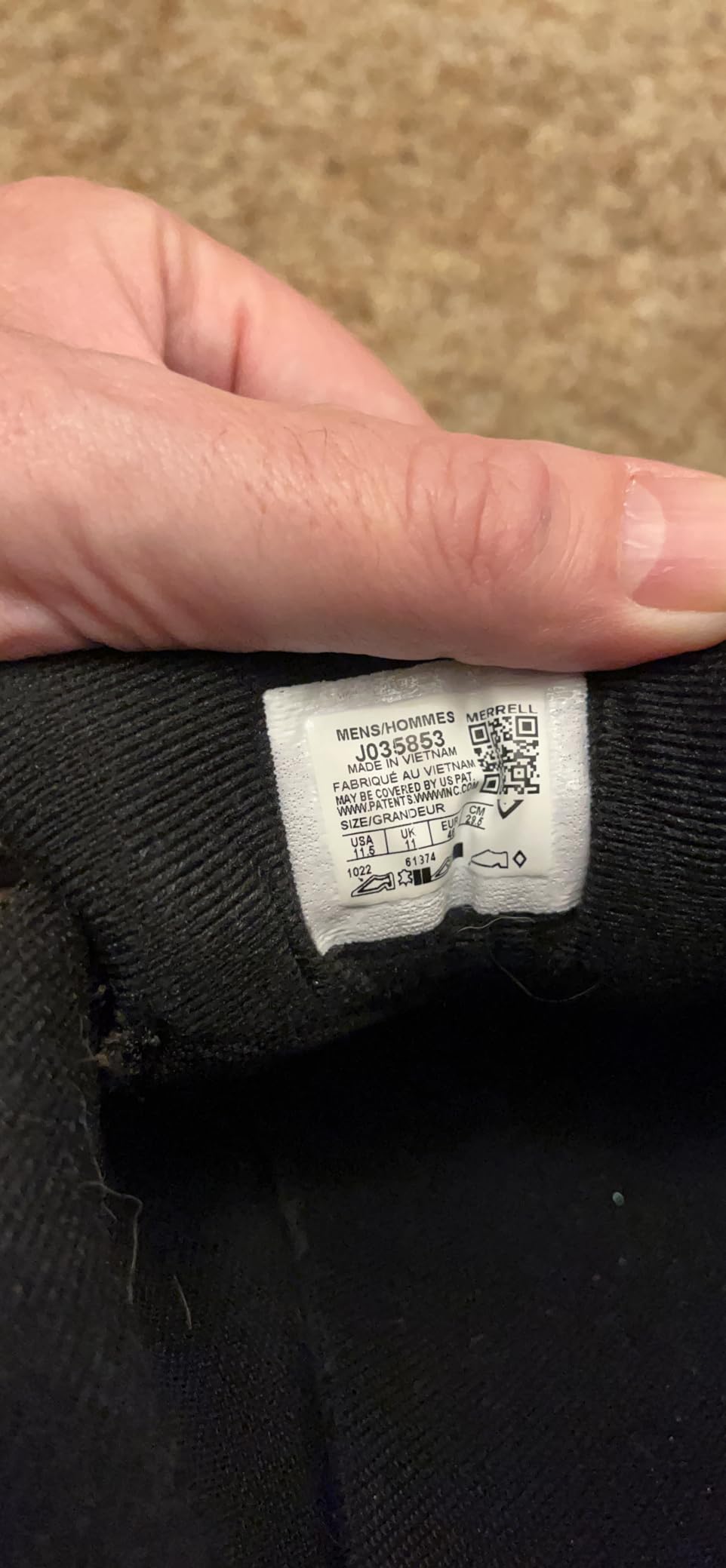
Six weeks in, 75+ miles later, I can say this: the Merrell Moab 3 Waterproof surprised me on traction and comfort, delivered exactly what I expected on weight, and is going to require more waterproofing maintenance than the marketing implies. Whether that’s a deal-breaker depends entirely on how you hike and what you’re hiking in.
The shoe did something I didn’t expect it to do: it made me feel stable and protected on rocky technical terrain without a punishing break-in period. The TC5+ outsole genuinely earns its reputation on hard surfaces. The waterproof membrane works when it’s fresh — it’s the long-term maintenance that requires commitment.
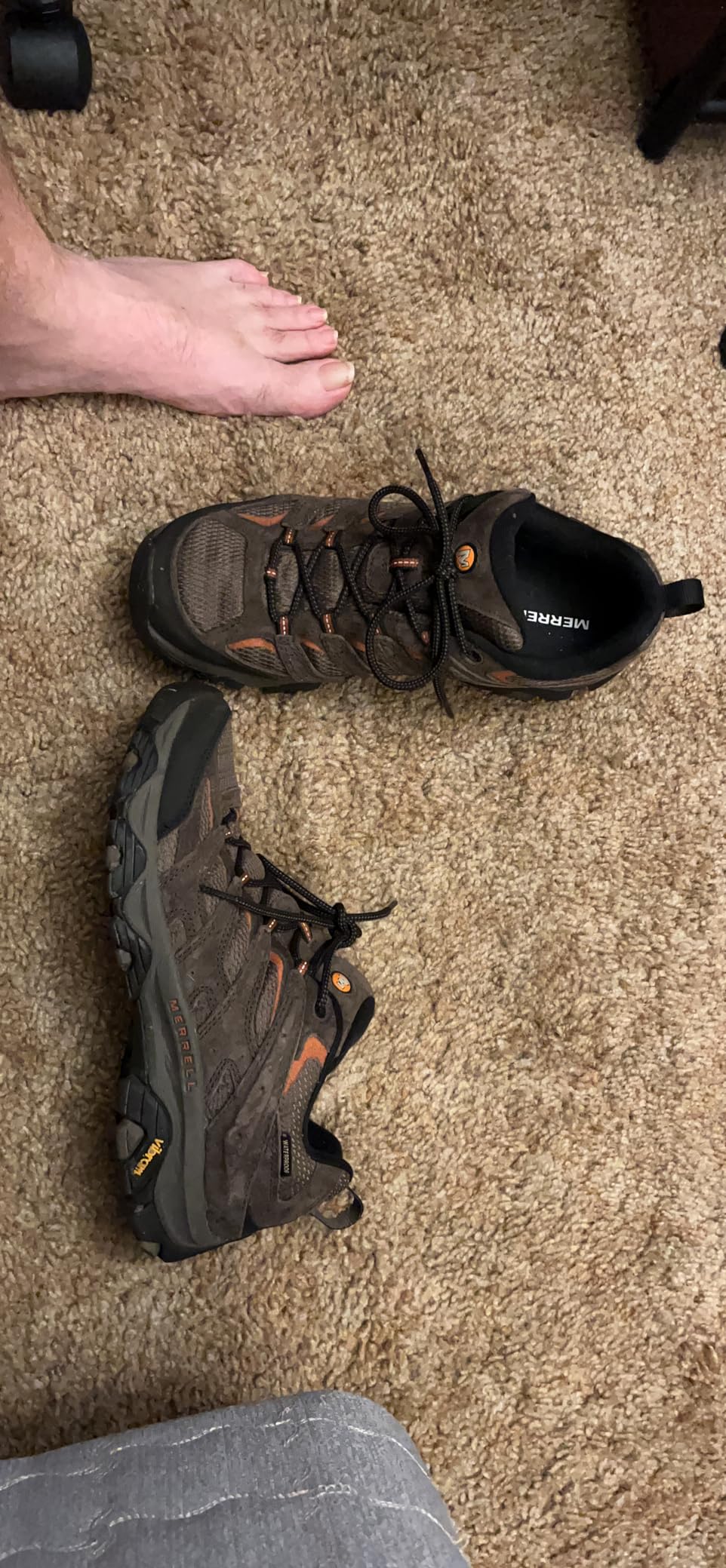
At 7.3/10, the Moab 3 Waterproof is a solid performer for a specific hiker: wide-footed, comfort-first, day-hiking on mixed or rocky terrain, willing to manage the waterproofing. For that person, there aren’t many better options at this price tier. For the narrow-footed speed hiker, the ultralight enthusiast, or the constant rain-country hiker, there are better-suited alternatives.
I’ll revisit at the 12-month mark — curious to see how the suede-mesh junction holds up and whether the waterproof degradation arc lands where the community consensus says it will. If your experience with the Moab 3 (good or bad) differs from what I found, I’d genuinely like to hear it.
Performance Summary Table
| Category | Score | Notes |
|---|---|---|
| Comfort | 7.5/10 | Zero break-in genuine; cushioning settles by week 3-4 but stays competent |
| Traction | 9.0/10 | Vibram TC5+ exceptional on rock; shallow lugs clog in mud (5-6/10 in wet conditions) |
| Durability | 7.0/10 | Solid at 75+ miles; suede-mesh junction is long-term stress point; QC batch-dependent |
| Waterproofing | 6.5/10 | Works weeks 1-4; DWR coating degrades on suede; re-treat every 2-3 months |
| Weight | 6.0/10 | ~2 lbs/pair; fine for casual day hikes; cumulative fatigue on 10+ mile days |
| Value | 7.0/10 | $160 MSRP (2026) narrows the value gap vs. alternatives; sale price improves proposition |
| Overall Score | 7.3/10 | Best for wide-footed weekend day hikers; requires waterproofing maintenance |
Be the first to review “Merrell Men’s Moab 3 Waterproof Boots”
Related products
Hiking/Trekking Shoes

Hiking/Trekking Shoes
Hiking/Trekking Shoes

Hiking/Trekking Shoes
Hiking/Trekking Shoes
Hiking/Trekking Shoes

Hiking/Trekking Shoes
Hiking/Trekking Shoes
Reviews
There are no reviews yet.