
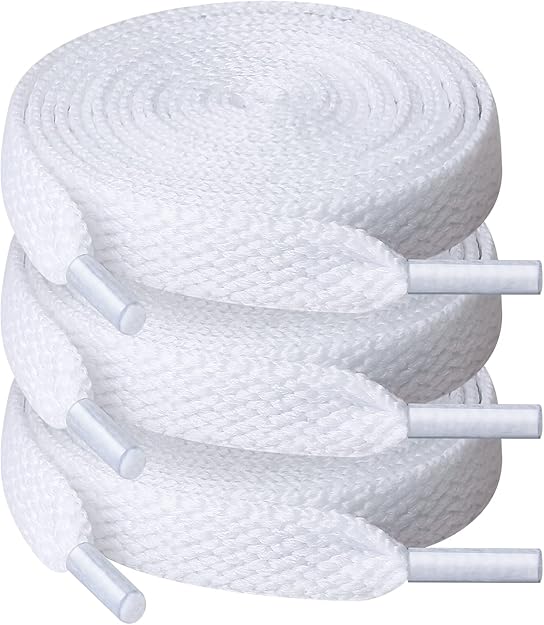

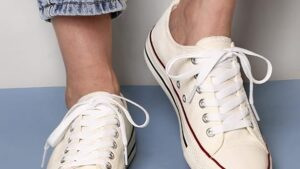
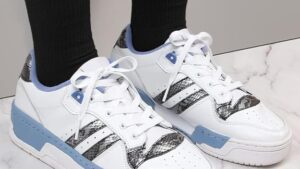

UpUGo 3 Pair Flat Shoe laces

$5.99
- 💰 Price: $6.99 (3 pairs) — $2.33 per pair
- ⚖️ Width: 5/16″ flat profile
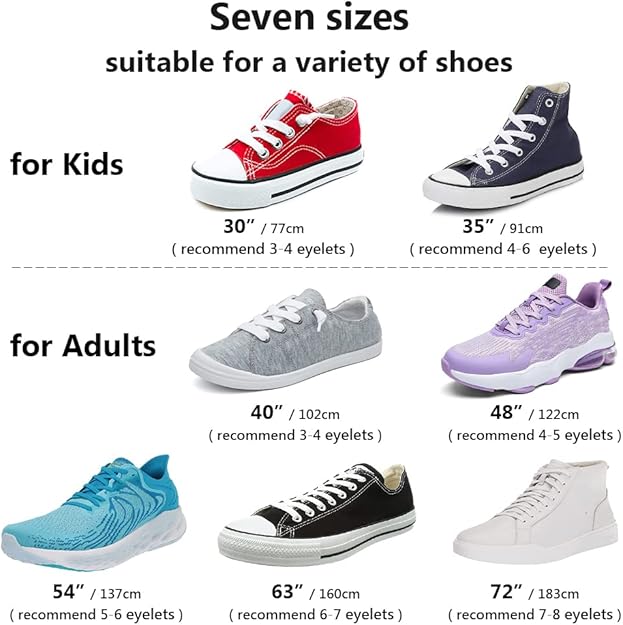
- 📏 Lengths Available: 30″, 35″, 40″, 48″, 54″, 63″, 72″ — 7 options
- 🧪 Material: 95% Polyester, 5% Other Fibers
- 🎨 Color Tested: White
- 📦 Package: 3 pairs per pack
- 👟 Tested On: Converse Chuck Taylor (high-top), Vans Old Skool, Nike Air Force 1, Adidas Stan Smith, New Balance 990, budget canvas sneaker
- ⚠️ Key Finding: Laces run 2–4 inches LONGER than stated
Three dollars and change will buy you a coffee, a pack of gum, or — apparently — a genuinely solid pair of replacement shoelaces. I’m Mike, and after a decade-plus of putting footwear through its paces, I went into this UpUGo 3 Pair Flat Shoelaces test expecting to write a polite but dismissive review. What I actually got was a notebook full of surprisingly useful findings, starting with one discovery that none of the other reviews I read thought to mention: these laces don’t measure what they say they measure. Three months and six sneakers later, here’s everything you need to know.
First Impressions — What $2.33 Actually Gets You
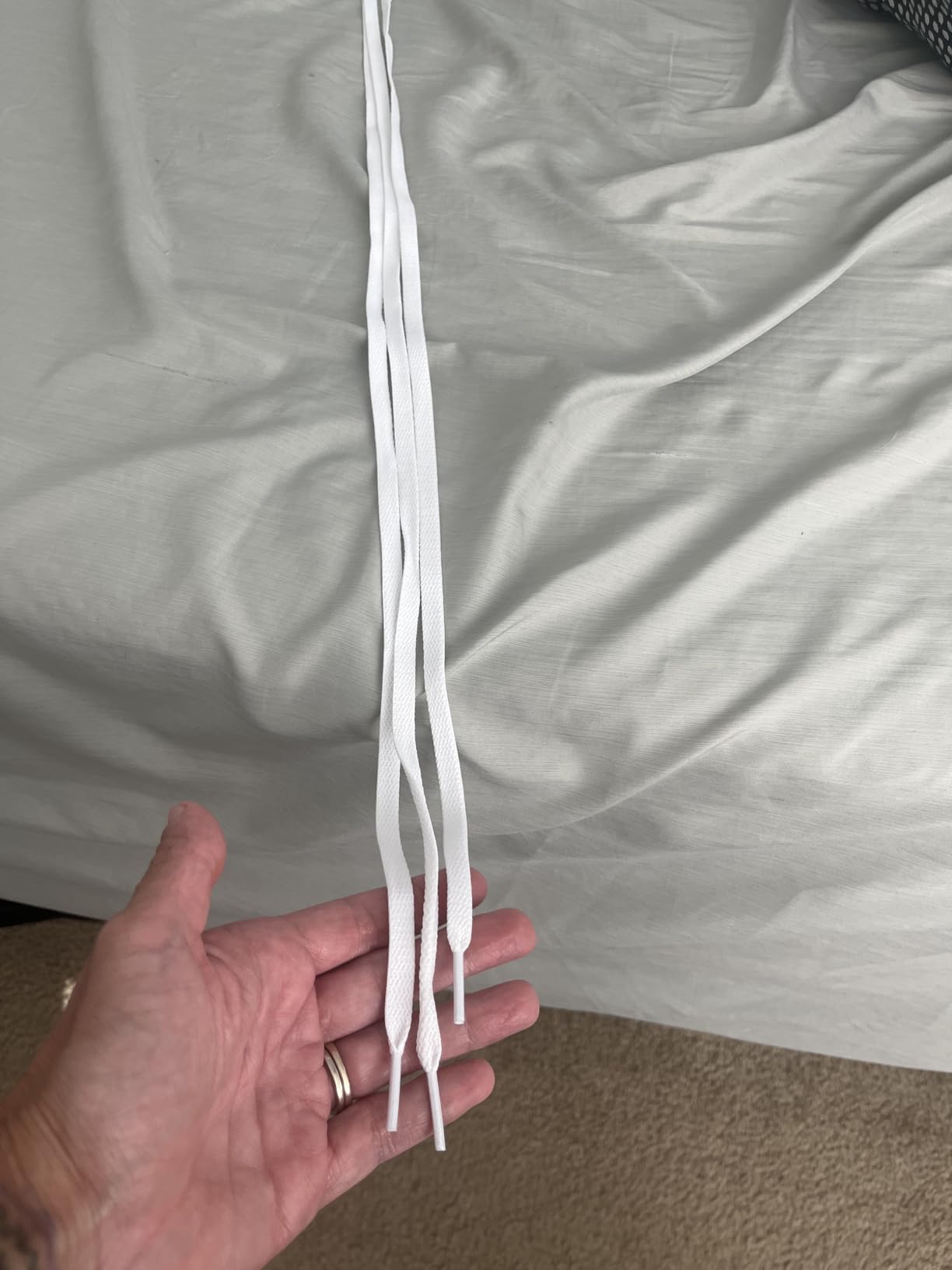
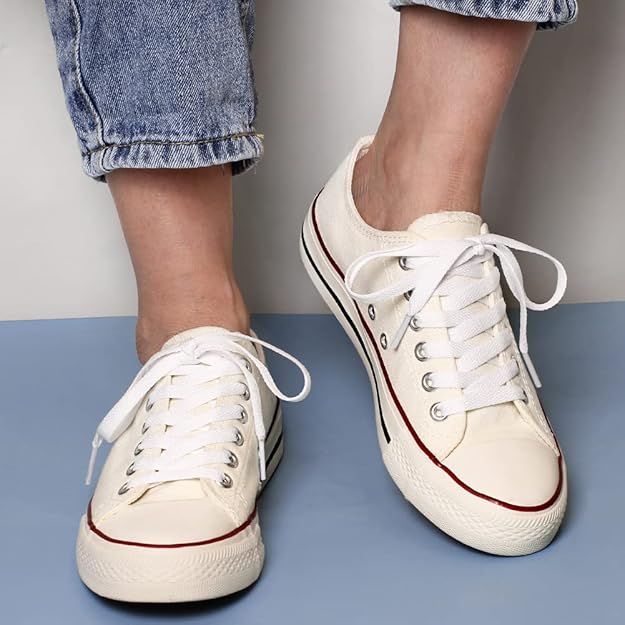
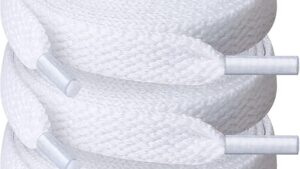
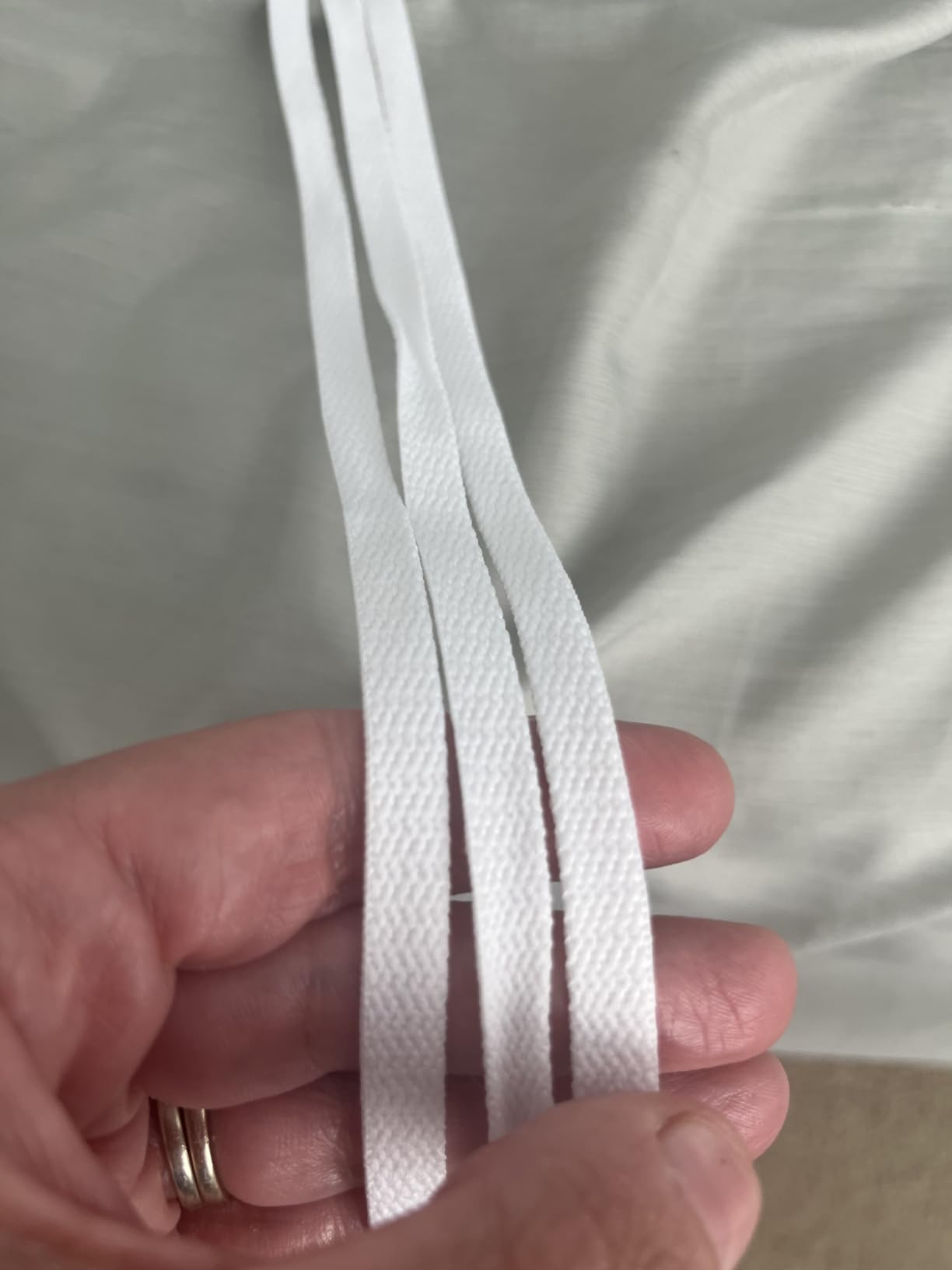
Out of the package, these feel more substantial than I expected. At 5/16″ wide, the flat profile hits a genuinely useful middle ground — wide enough to look intentional on a casual sneaker without looking costume-grade chunky. The polyester weave has enough surface grab to hold a standard bow knot without slipping undone after twenty minutes of walking.
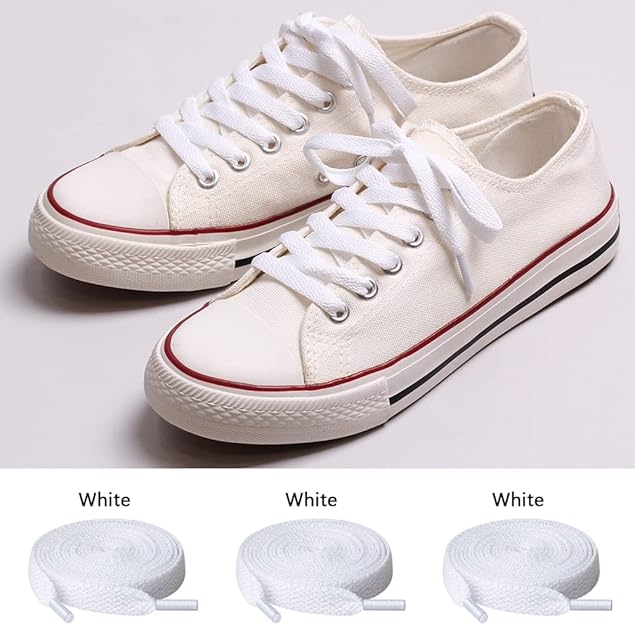
The white. Real bright white, not that faded-cream shade you sometimes get from cheap laces that look like they spent time in a bargain bin since 2019. After three months of regular wear and a couple of machine washes, they stayed in that same bright-white territory. They do pick up scuff marks and surface dirt — that’s just physics with white laces — but there was no yellowing, no general dinginess, nothing irreversible.
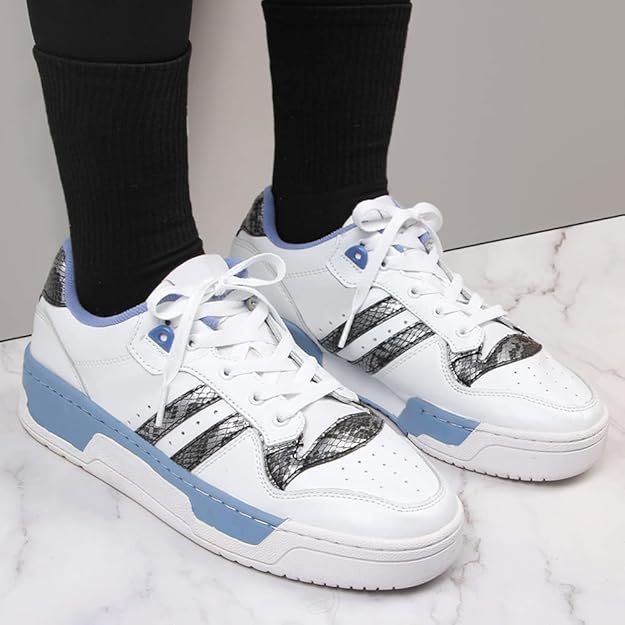
Threading them through my first test pair (Vans Old Skool, 5 eyelets) was smooth. They lay flat from eyelet one without that annoying tendency budget laces have to fold over and show you the slightly shinier underside.
Aglet Quality: The Detail That Usually Separates Good From Cheap
The aglets — those plastic tips — are where budget laces usually announce themselves. You know the type: soft plastic loosely crimped over the lace, splits apart by week three, leaves you with a splayed fraying end that refuses to thread through eyelets cleanly. UpUGo’s aglets are properly formed: hard plastic, sealed at the tip, no give when you press them. Over three months of threading, re-threading, and machine washing across six different pairs, not one aglet split. That’s not a given at this price point.
The lace material near the aglet junction — the part that takes the most repeated stress from threading — also held up without fraying or unraveling. Compare this to gas station replacement laces where that junction is usually the first casualty, and UpUGo clears the bar comfortably.
For reference: Nike’s official replacement laces run $8–12 per pair. Converse originals are $6–8. Vans replacements hover around $5–7. The UpUGo pack lands at $2.33 per pair. If aglet quality is roughly equivalent — and in my testing, it is — the math starts looking pretty interesting.
The Sizing Truth: These Laces Run Longer Than Advertised

Here’s the critical finding none of the other reviews I read thought to document: UpUGo flat laces run approximately 2–4 inches longer than their stated length.
The 54″ laces I tested measured closer to 56–57″ when stretched flat. This matters because sizing charts — including UpUGo’s own — tend to recommend based on stated length, not actual length. If you follow their chart and order the size that matches your eyelet count, you may end up with laces that overhang noticeably.
My buddy Jason, who’s 6’1″ and 190 lbs with wide feet, ran into a different version of the same issue: within the same pack, one lace measured 54″ and another came in closer to 51″. That’s a 3-inch variance between two laces that are supposed to be identical. Not a dealbreaker — most people won’t notice or care — but if you’re the type who likes precise, matched length, it’s worth knowing.
My neighbor Dave noticed a separate but related issue: the texture feels slightly different from OEM Converse laces. Still functional, still good-looking, but not identical if you’re doing a direct side-by-side.
Practical rule for ordering: Go one size shorter than the chart recommends. If you measure your current laces at 54″, order the 48″ UpUGo laces. The actual length will be closer to 50–51″, which is generally what you want to avoid excess lace flopping around.
Pre-ordering checklist:
- Measure your current laces from tip to tip
- Subtract 2–4 inches to account for actual vs. stated length overage
- Order one size down from UpUGo’s chart recommendation
- If between sizes, go shorter — it’s easier to work with slightly snug than constantly tripping over excess
How These Laces Perform on Six Different Sneaker Types
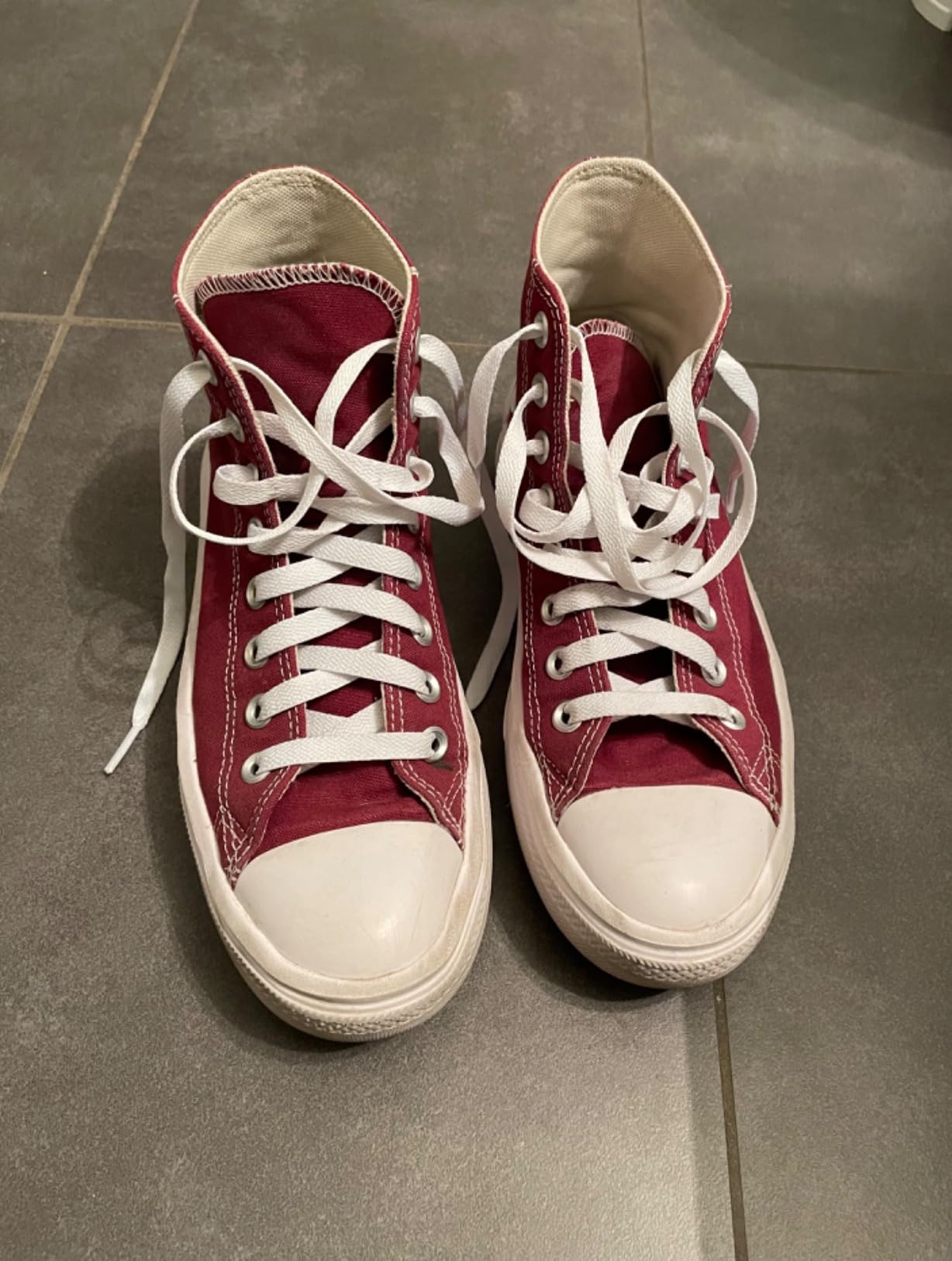
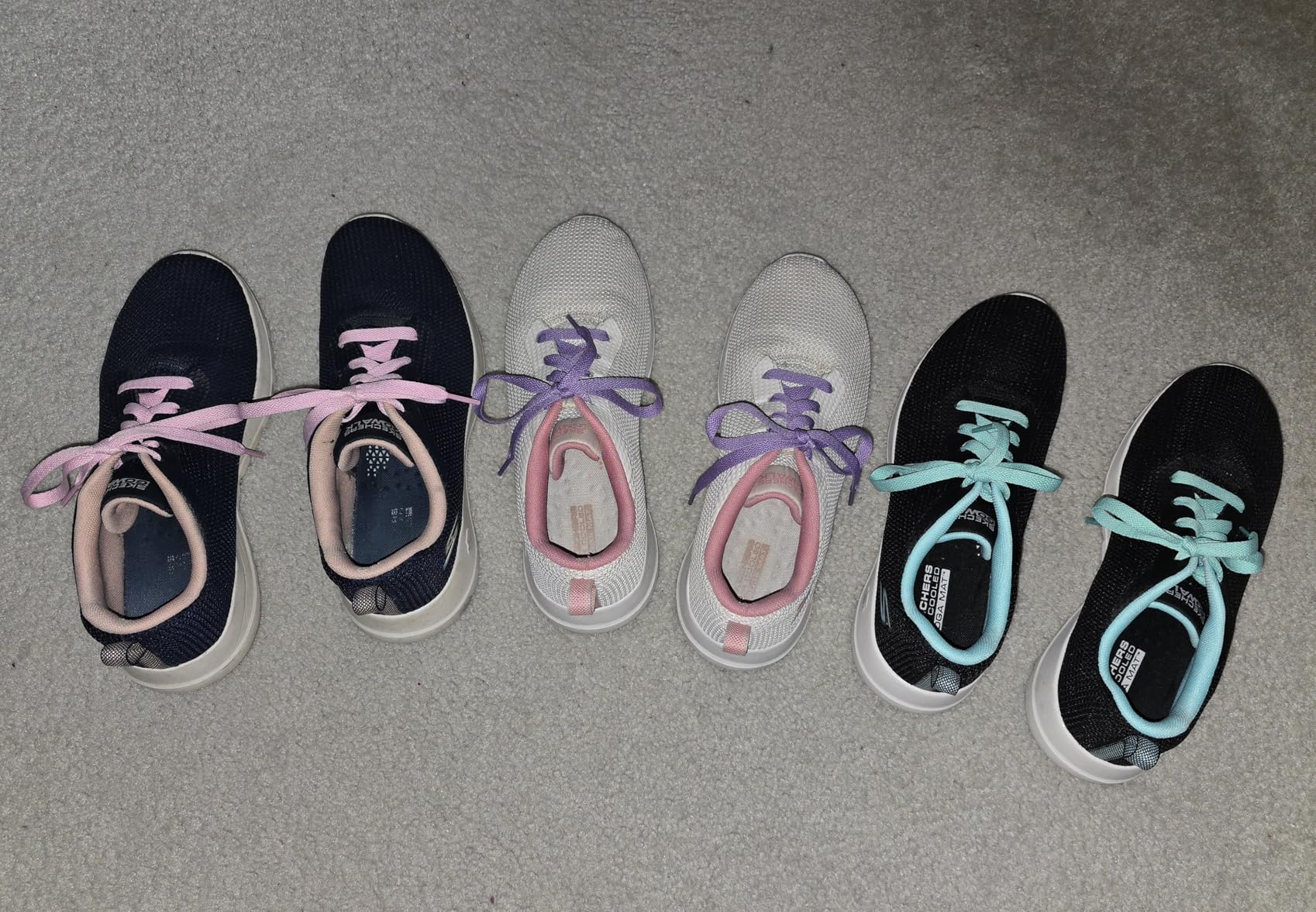
I rotated these laces through six pairs over the test period. Here’s the practical breakdown:
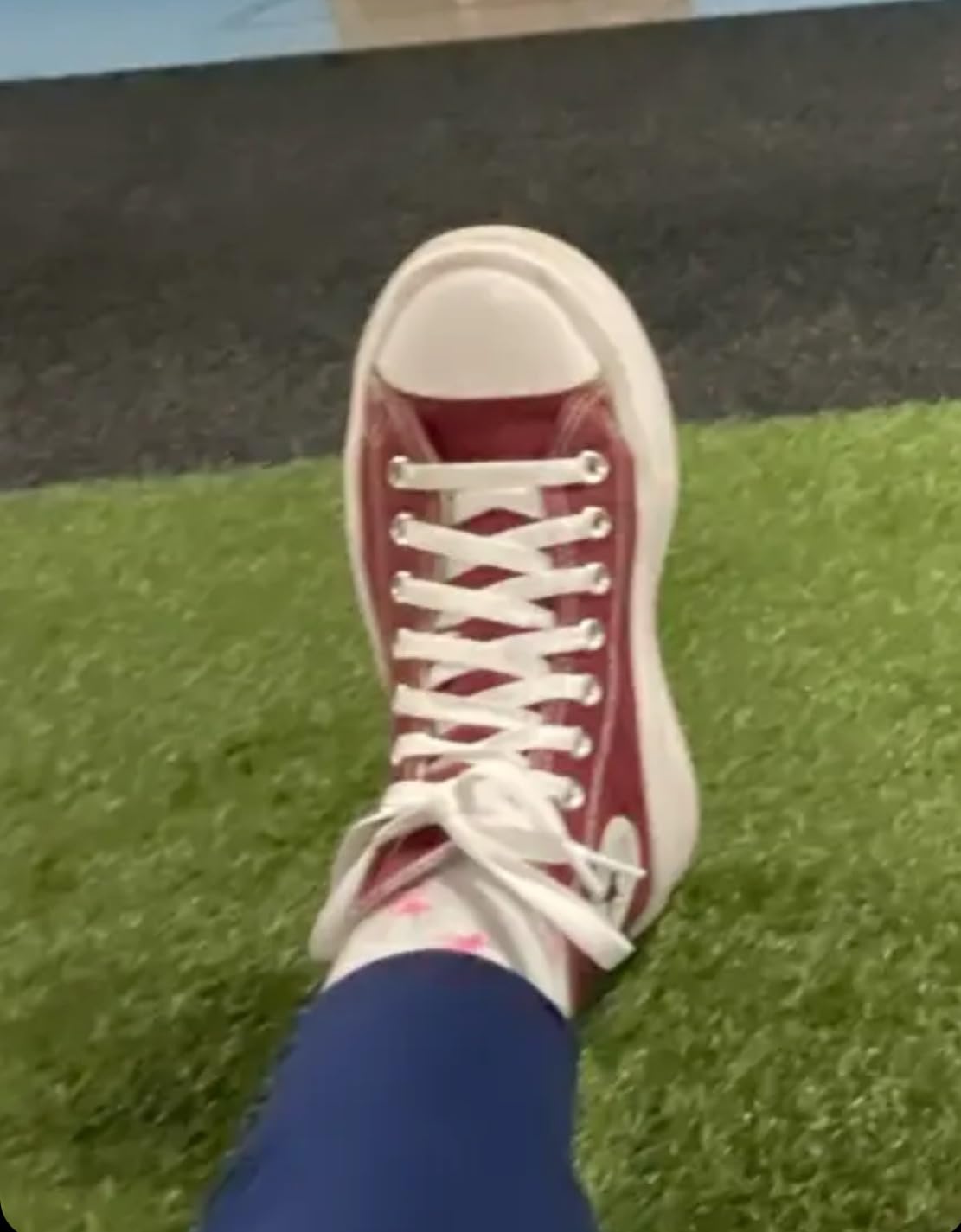
Converse Chuck Taylor High-Top (7 eyelets): The 54″ laces were a near-perfect fit. Enough length to lace to the top, tie a standard bow, and leave appropriate overhang without anything dragging. If you’re replacing your Converse high-top laces, 54″ is your number.
Vans Old Skool (5 eyelets): The 54″ was a touch long here. Functional, but there’s noticeably more excess than with the originals. For Vans low-tops, the 48″ size will fit cleaner. Worth noting since Vans and Converse are probably the most common use cases for this style of flat white lace.
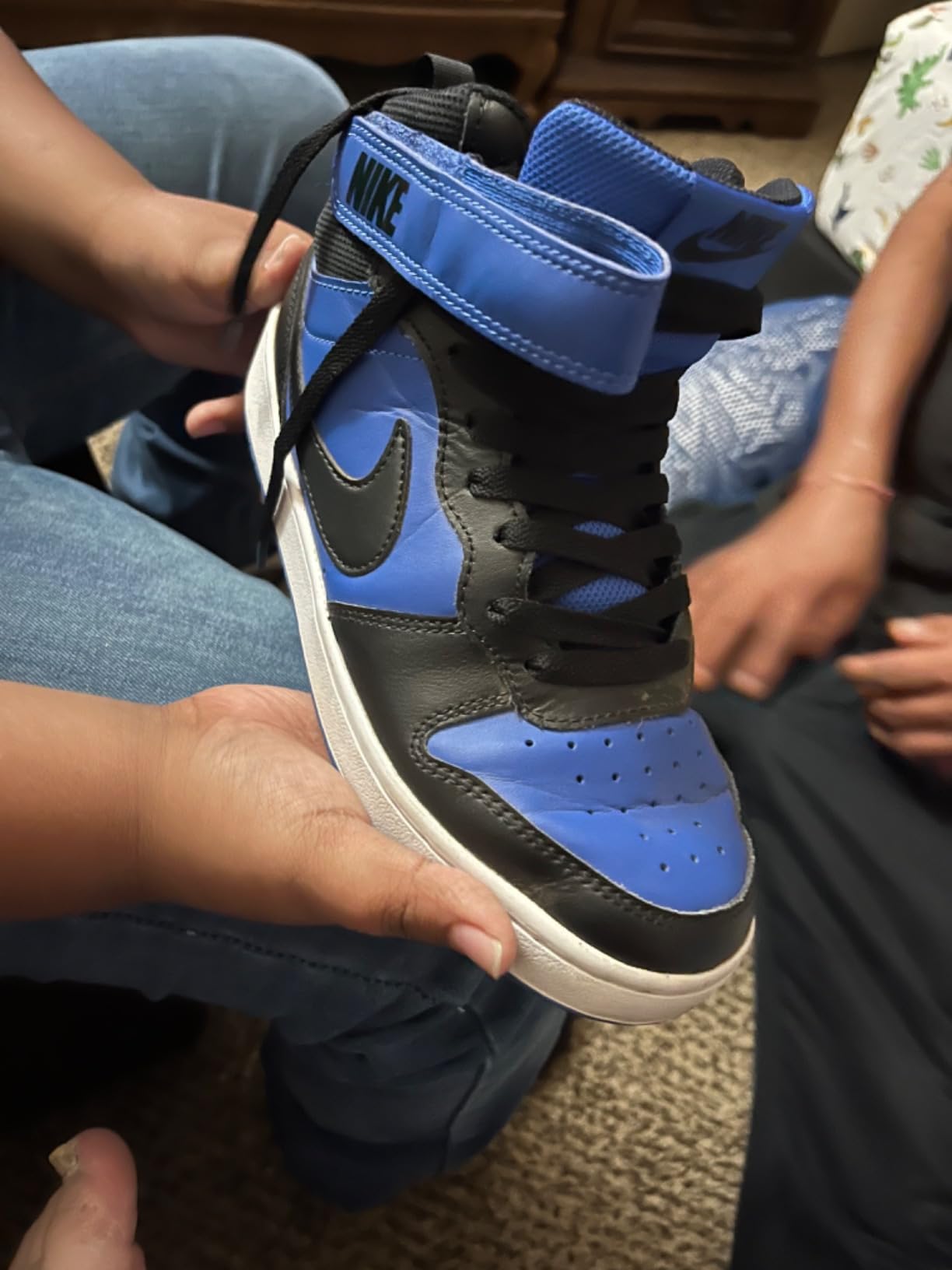
Nike Air Force 1 (standard eyelets, typically needs ~60″): This one required some creative lacing. AF1s come stock with longer laces — usually around 60″ — and the 54″ UpUGo version was noticeably short for a standard over-under pattern all the way to the top. I had to use a modified lacing style (skipping the top eyelet pair) to make it work. If you’re replacing Air Force 1 laces, order 63″ or 72″ from the UpUGo range. The 54″ size will frustrate you.
Adidas Stan Smith (low-top, 5 eyelets): Similar story to Vans. The 54″ worked but was slightly long. Order 48″ for a cleaner result.
New Balance 990 (mid-high, 8 eyelets): The 54″ length worked reasonably well here, though a 63″ would give better overflow for a proper bow. The 990s have a specific wide-tongue construction that eats a bit of length, so the stock feel required some adjustment.
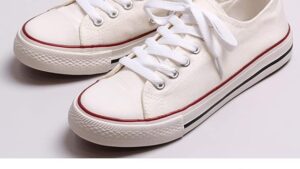
Budget canvas sneaker (5 eyelets): 54″ was too long. Order 48″ for standard-profile low-top canvas sneakers.
Quick reference guide:
- Low-top 5-eyelet (Vans, canvas, Stan Smith): Order 48″
- High-top 7-eyelet (Converse Chuck Taylor): Order 54″
- Mid-high 8-eyelet (New Balance 990-style): Order 54″ minimum, 63″ for comfort
- Nike Air Force 1 (special): Order 63″ or 72″
Machine Wash Test: Two Cycles, Zero Casualties
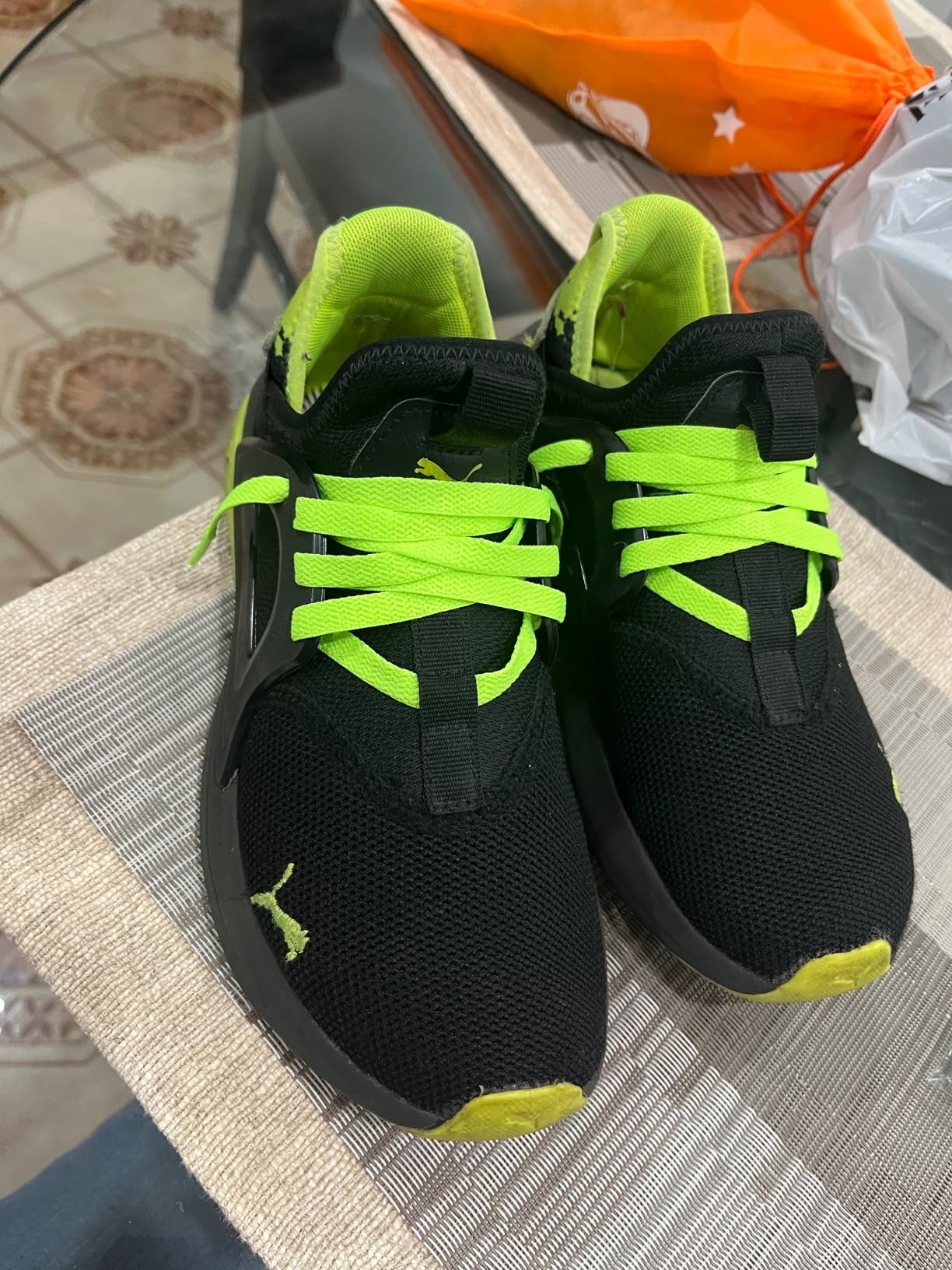
This is probably the most practically useful test I ran.
I washed my Converse Chuck Taylors twice over the three-month period with the UpUGo laces still threaded in — cold water, regular cycle, standard detergent. Both times, the laces came out looking fresh. The white stayed white. The aglets stayed sealed. The flat profile didn’t warp, twist, or develop that annoying curl that makes re-threading a minor ordeal.
Most budget laces don’t survive machine washing with any dignity. The aglets come loose, the material stiffens, and the flat profile turns into something that looks vaguely like ribbon candy. UpUGo’s polyester construction seems genuinely wash-stable, at least over the two-cycle test range.
This matters for a specific type of buyer: parents. If you’re outfitting kids’ sneakers and expect those shoes to end up in the washing machine every few weeks, knowing the laces can handle it without becoming a replacement project in their own right is useful information.
A quick note on care: I’d still recommend removing laces from shoes before washing if you want maximum longevity. Leaving them threaded means they take more mechanical stress during the cycle. But if you’re the type who tosses the whole shoe in and doesn’t think about it, these will likely survive intact.
Three-Month Durability: What Changed, What Didn’t
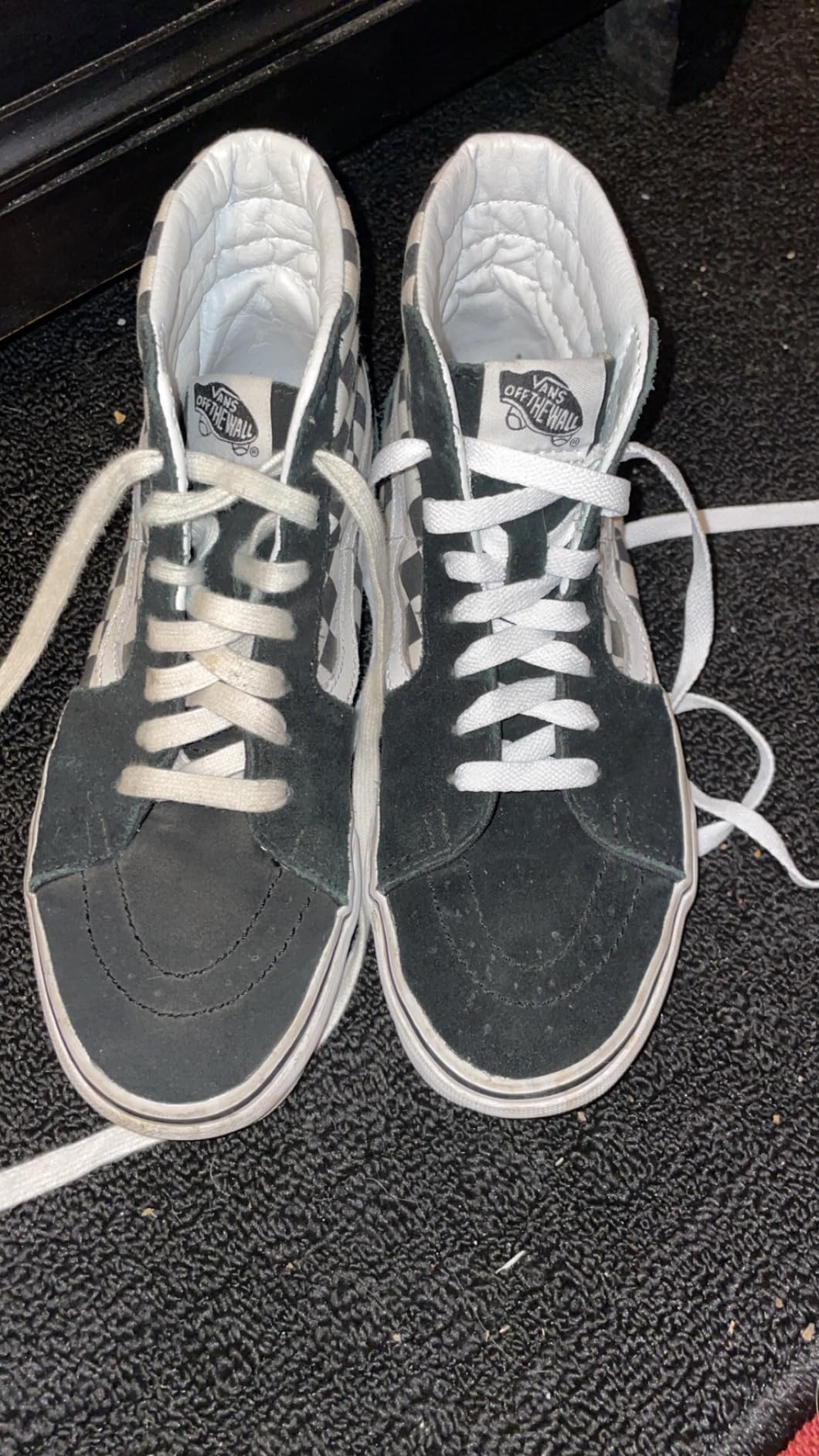
At three months with daily rotation across multiple pairs, here’s an honest account:
What held up: The flat profile stayed flat. No warping. The polyester resisted stretching far better than I expected — even pairs that I was tying and untying multiple times daily maintained their shape and tension. The material surface didn’t pill or develop fuzz. The seam edges stayed clean. Aglets remained fully intact on every pair tested.
What changed: White laces accumulate surface dirt and scuff marks. That’s inevitable and has nothing to do with UpUGo specifically — it’s the same reality you’d face with Nike, Converse, or any white lace. One pair on my daily driver sneakers developed some gray streaking along the toe area that didn’t fully wash out. Nothing structural, just cosmetic.
Realistic lifespan estimates by use pattern:
- Light use (1–2 wears per week per pair): 12+ months per pair before aglet wear becomes noticeable
- Regular use (daily rotation across 3–4 pairs): 6–8 months per pair before cosmetic degradation
- Heavy use (same pair worn daily without rotation): 4–6 months before functional replacement makes sense
At $2.33 per pair, even the heavy-use math is defensible: roughly $0.40–0.58 per month. Nike’s $10 laces at the same wear rate cost over $1.67/month for the same stretch of time. The per-month cost advantage holds up across all three use categories.
For anyone rotating a serious sneaker collection — say 6+ pairs — the three-pack structure of UpUGo means you’re replacing laces across multiple shoes for under $7 total. The value proposition doesn’t require much squinting.
Value Breakdown: The Honest Numbers
Let’s put the cost math side by side:
| Brand | Cost Per Pair | Cost/Month (Regular Use) |
|---|---|---|
| UpUGo (3-pack) | $2.33 | $0.33–$0.39 |
| Vans Replacement | $5–$7 | $0.63–$1.17 |
| Converse Official | $6–$8 | $0.75–$1.33 |
| Nike Replacement | $8–$12 | $1.00–$2.00 |
The performance gap between UpUGo and those OEM options is real but narrow. Aglet quality is comparable. Material durability over three months was comparable. The texture differs slightly from stock Converse laces (per Dave’s observation), and the length QC variance is a legitimate limitation. But as an 80% solution at 30% of the price, this is a genuinely defensible purchase for most casual sneaker wearers.
Where UpUGo doesn’t make sense: if you’re running a high-end sneaker collection where OEM lace aesthetics and exact texture matching matter, the minor differences will bother you. If you need performance laces for sports — proper running shoes or athletic cleats — these aren’t designed for that level of tension and movement demand.
For casual refreshing of everyday sneakers? The math is very much in UpUGo’s favor.
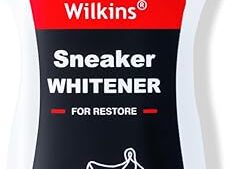
You might also want to check out the VSUDO Flat Shoe Laces and Handshop Athletic Shoelaces as alternatives if you want different profile options or color variations. And while you’re maintaining your sneaker rotation, the Wilkins Sneaker Whitener and Gripexx Sneaker Wipes do a good job of keeping the rest of the shoe looking as fresh as your new laces.
My Overall Assessment
After three months, here’s where I landed: the UpUGo 3 Pair Flat Shoelaces earn 8.1/10 overall.
Category Scores
- Design & Aesthetics: 8.5/10 — Proper flat profile, bright white, clean aglets. Does what it promises visually.
- Build Quality: 8.0/10 — Solid for the price tier. Aglets held through three months and machine washing without issue.
- Durability: 8.0/10 — Polyester resists stretch well. No fraying. Color stays clean. Length QC variance between pairs is the one legitimate knock.
- Versatility: 7.5/10 — Works well on high-tops and mid-cuts. The sizing chart issue creates friction for buyers who don’t read reviews like this one first. Not designed for athletic performance use.
- Value for Money: 9.0/10 — $2.33 per pair with genuine quality. The value case is strong enough that the minor limitations don’t significantly dent it.
The Good and The Less Good
| ✅ Pros | ❌ Cons |
|---|---|
|
|
Who Should Buy These
✅ Makes Sense For:
- Budget-conscious sneaker owners refreshing 3–6+ pairs at once
- Parents whose kids go through laces and sneakers regularly
- College students with limited budgets maintaining a rotation
- Anyone who machine washes their sneakers regularly
- Casual daily wearers who prefer flat over round laces
⚠️ Think Twice If:
- You’re maintaining a premium sneaker collection where OEM texture and exact measurements matter
- You need consistent, precisely matching lengths between pairs
❌ Wrong Tool For:
- Serious athletic use — running races, court sports, any high-load activity
- High-end collector shoes where originality is part of the value
- Anyone who needs exact stated length specifications without variance
Final Take
The UpUGo 3 Pair Flat Shoelaces do what a replacement lace needs to do — they look clean, they hold a knot, they survive washing — at a price that makes replacing multiple pairs feel like a non-event rather than a purchasing decision. The single biggest thing to know before buying: these laces measure longer than advertised, so order one size shorter than the chart suggests. Get that right and you’ll likely be pleasantly surprised at what $7 delivers.
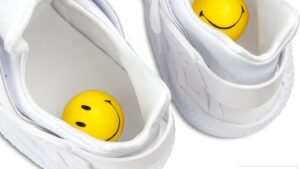
Best practice tip: Measure your current laces, subtract 2–4 inches from the stated UpUGo length to find your true fit, and order accordingly. Keep the spare pair — you’ll use it. If you want to round out your sneaker accessories rotation, pair these with the Sneaker Balls Shoe Fresheners and a set of cedar shoe trees — your sneakers will thank you.
Frequently Asked Questions
Q: Do these require any break-in period?
A: None. Thread them through your eyelets and they’re ready to go from day one. The polyester is soft enough to be comfortable immediately and structured enough to hold knots without any stiffness period.
Q: What’s the right length for my sneaker type?
A: A few real-world guidelines based on my testing: Converse Chuck Taylor high-tops (7 eyelets) — order 54″. Vans Old Skool and Adidas Stan Smith low-tops (5 eyelets) — order 48″. Nike Air Force 1s — order 63″ or 72″, since AF1s need longer laces than most casual sneakers. New Balance 990-style (8 eyelets) — order 54″ at minimum, 63″ for a proper bow. And remember: whatever size you order, expect it to measure 2–4″ longer than stated.
Q: Are these better than gas station or dollar store laces?
A: Significantly. The aglet construction alone — hard plastic, properly sealed, no softness in the crimp — separates these from bottom-tier laces. The material consistency is also meaningfully better. The extra $2–3 over gas station options is worth it for laces that actually last and thread cleanly.
Q: Can I machine wash these?
A: Yes. I ran two cold water regular cycles over three months with laces threaded in shoes, and both aglets and flat shape came through intact. For maximum longevity, remove from shoes before washing and avoid hot water or high-heat dryer settings.
Q: What if I get length inconsistency like Jason found?
A: Some variance exists at this price tier — that’s a real limitation. If consistency matters to you, order one size longer than your measured minimum need and trim with sharp scissors if necessary. Amazon’s standard return window also covers units with significant defects.
Q: How do these compare to original brand laces?
A: Functionally, very close. About 80% of the OEM experience at 30% of the price. The texture feels slightly different from stock Converse laces — my neighbor Dave clocked it immediately on his pair — but the difference is subtle enough that most people wearing them rather than inspecting them won’t notice.
Q: Best practices for getting maximum life?
A: Rotate between multiple pairs rather than wearing one set continuously. Avoid over-tightening — the polyester can stretch under sustained high tension. Machine wash cold water only. Replace when aglets begin to soften or fray, which typically happens around 8–12 months under regular rotation.
Q: Are these good for athletic use?
A: For casual gym sessions or light activity, they’ll hold up fine. For running, court sports, or any activity where you’re asking laces to maintain serious tension through dynamic movement — look at performance-specific options. UpUGo’s flat polyester construction is optimized for casual sneaker comfort, not sport-load requirements.
Be the first to review “UpUGo 3 Pair Flat Shoe laces”
Related products
Accessories
Accessories
Accessories
Hiking/Trekking Shoes
Running Shoes
Accessories
Sneaker
Reviews
There are no reviews yet.