
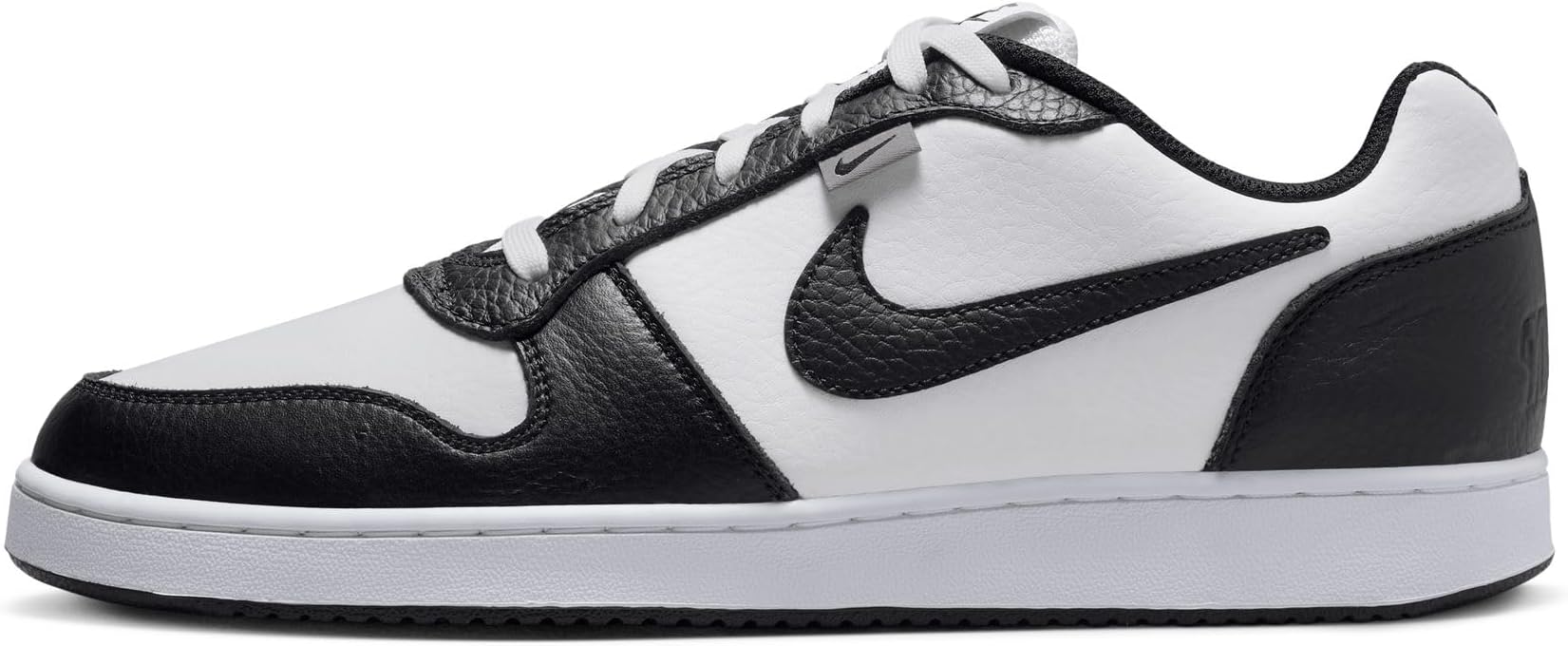
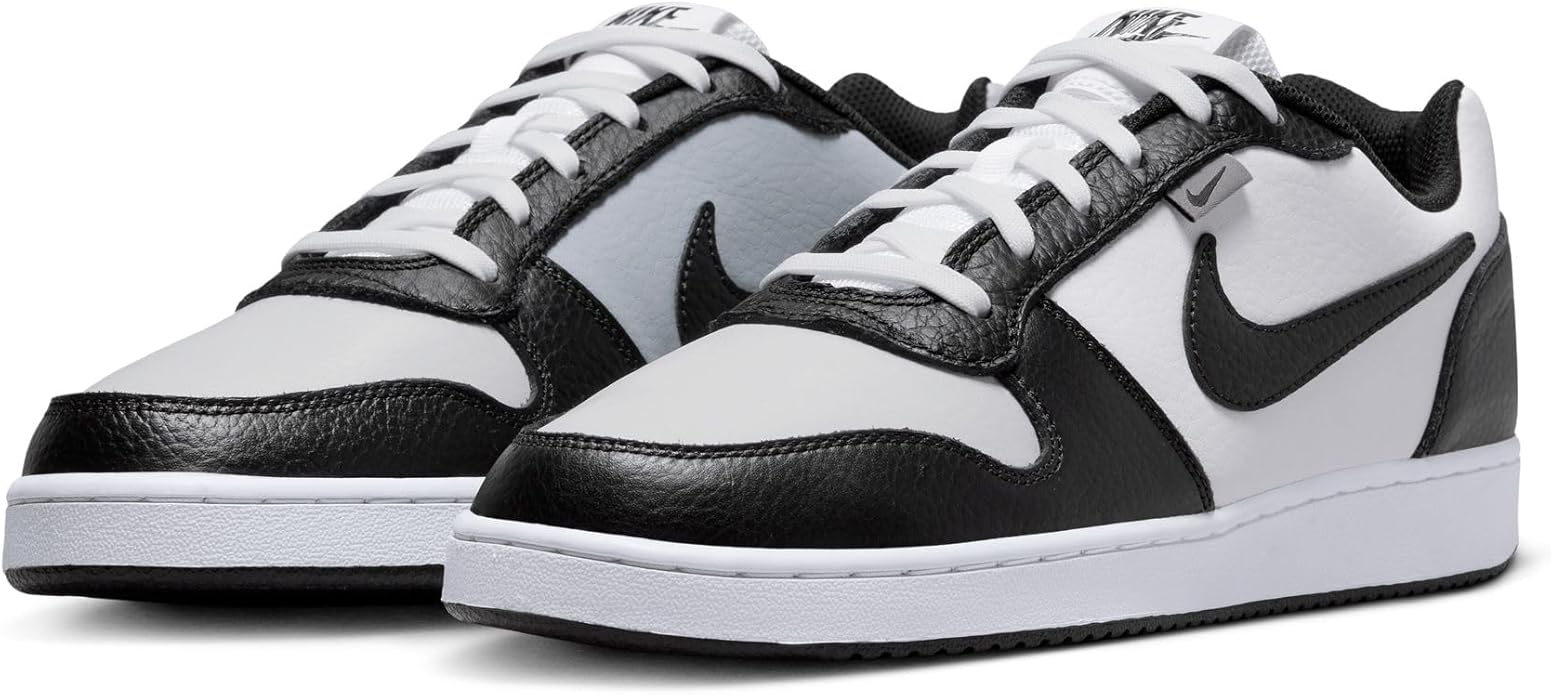
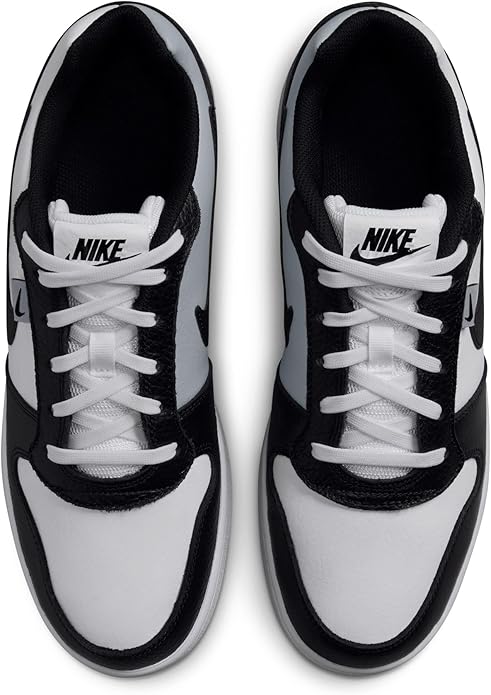
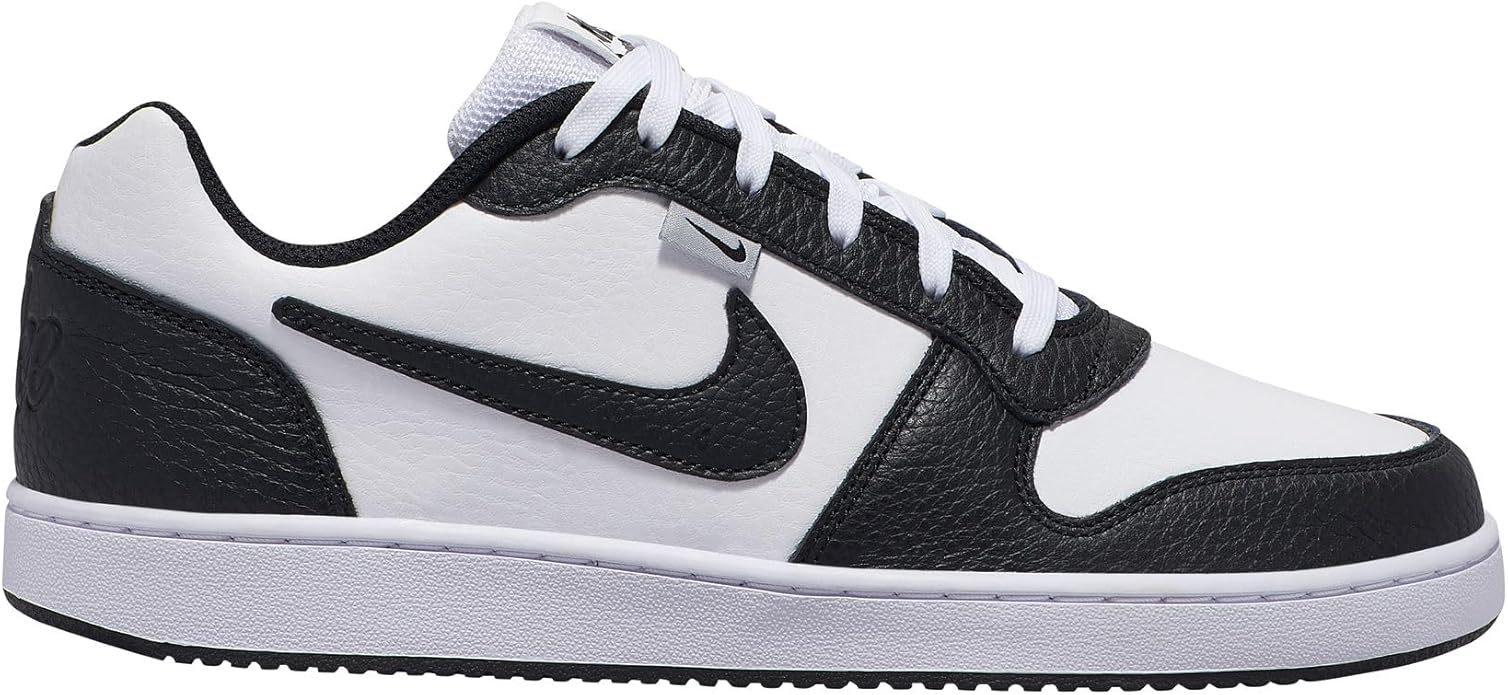
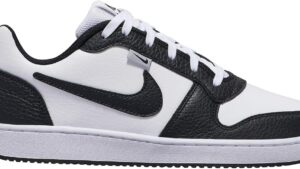
Burned through two pairs of budget sneakers in six months — that’s where I was when I started looking at the Nike Men’s Ebernon Low. Mike here, and after watching the soles peel off my previous two pairs right around month four each time, I needed something that could actually keep up with work shifts, weekend errands, and the occasional pickup game without demanding a premium price. I spent six weeks and 45-plus hours putting the Ebernon Low through its paces — here’s what I found out.
Quick Specs
- 💰 Price: ~$70 (check current pricing at FootGearUSA)
- ⚖️ Weight: 12.2 oz (men’s size 9)
- 🧪 Midsole: Foam cushioning with rubber cupsole
- 👟 Upper: Genuine tumbled leather + synthetic overlays
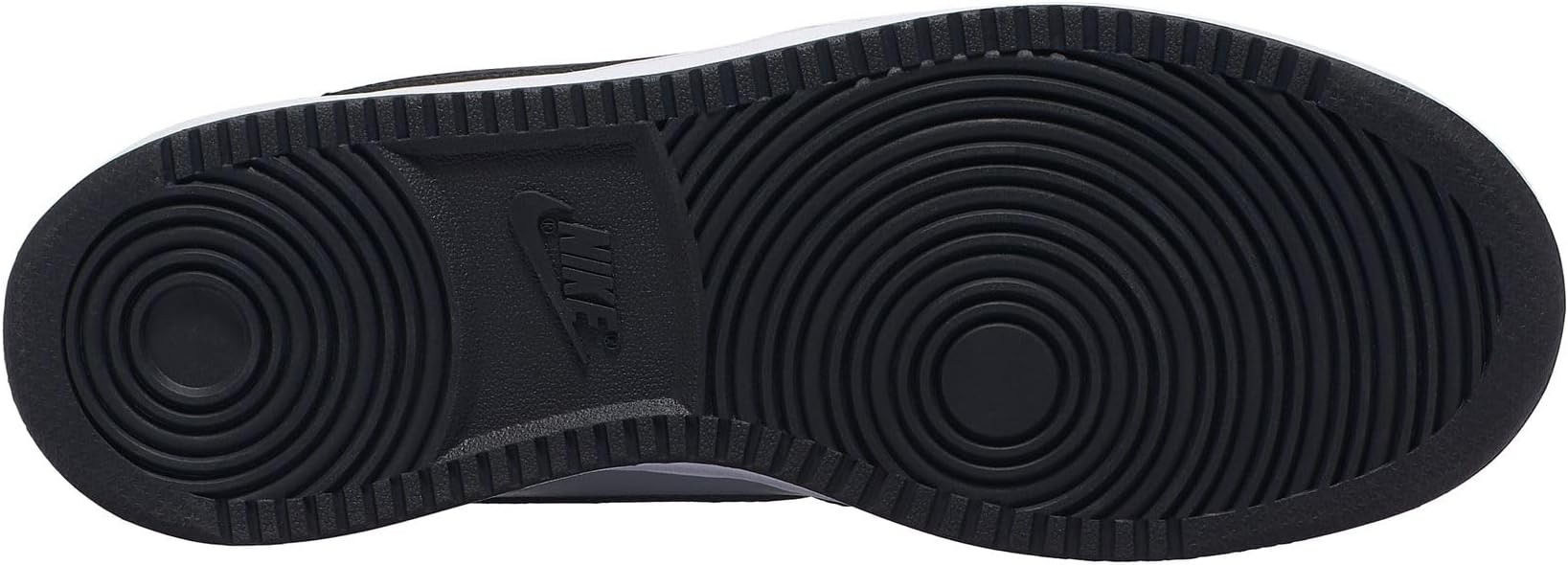
- 👟 Outsole: Rubber, circular grip pattern
- 📦 Model Numbers: AQ1775 (standard) / AQ1774 (Premium variant)
- 🏃 Category: Lifestyle / Casual sneaker
- ⏱️ Testing: 6 weeks, 45+ hours, 15 different activities
The Design Story: 80’s Basketball Heritage Done Right
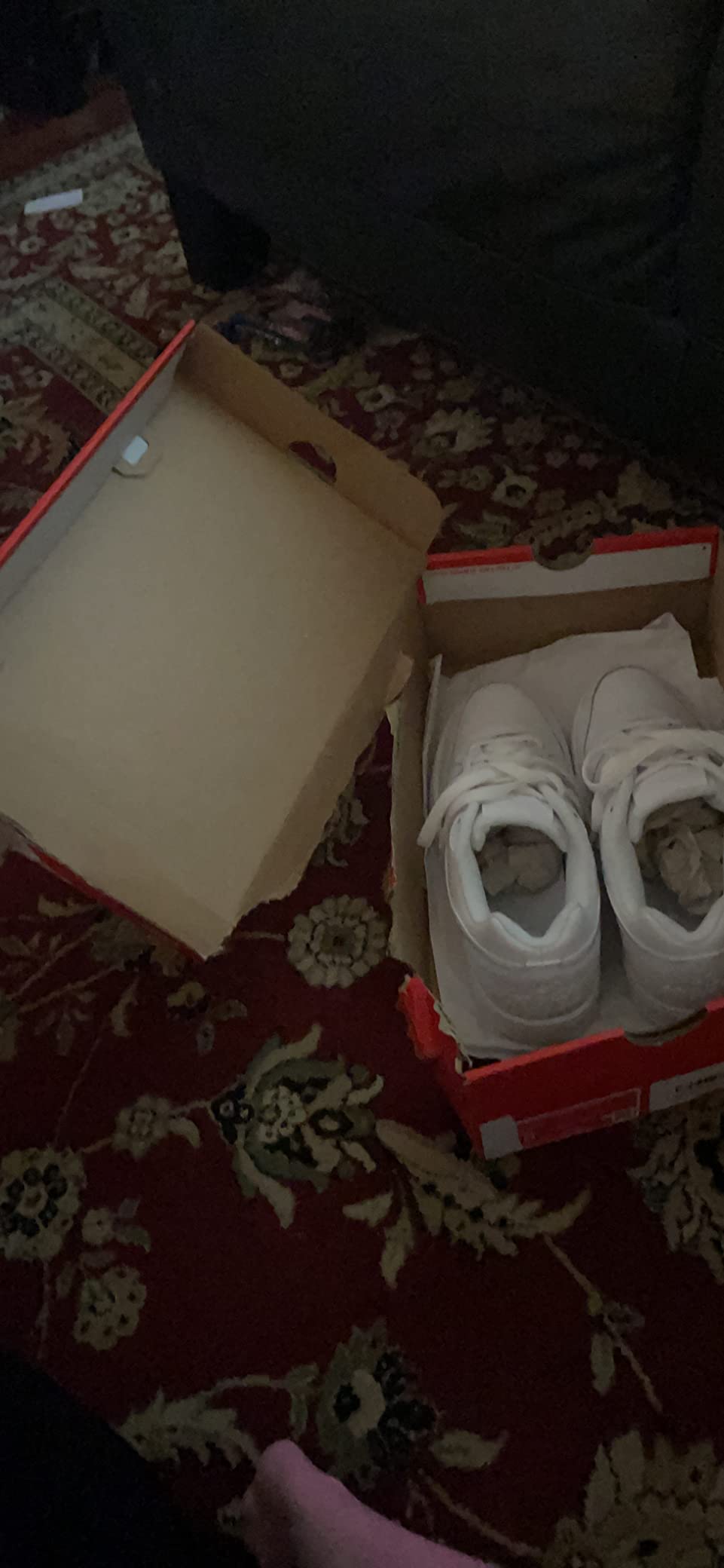
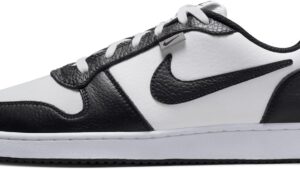
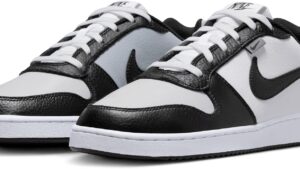
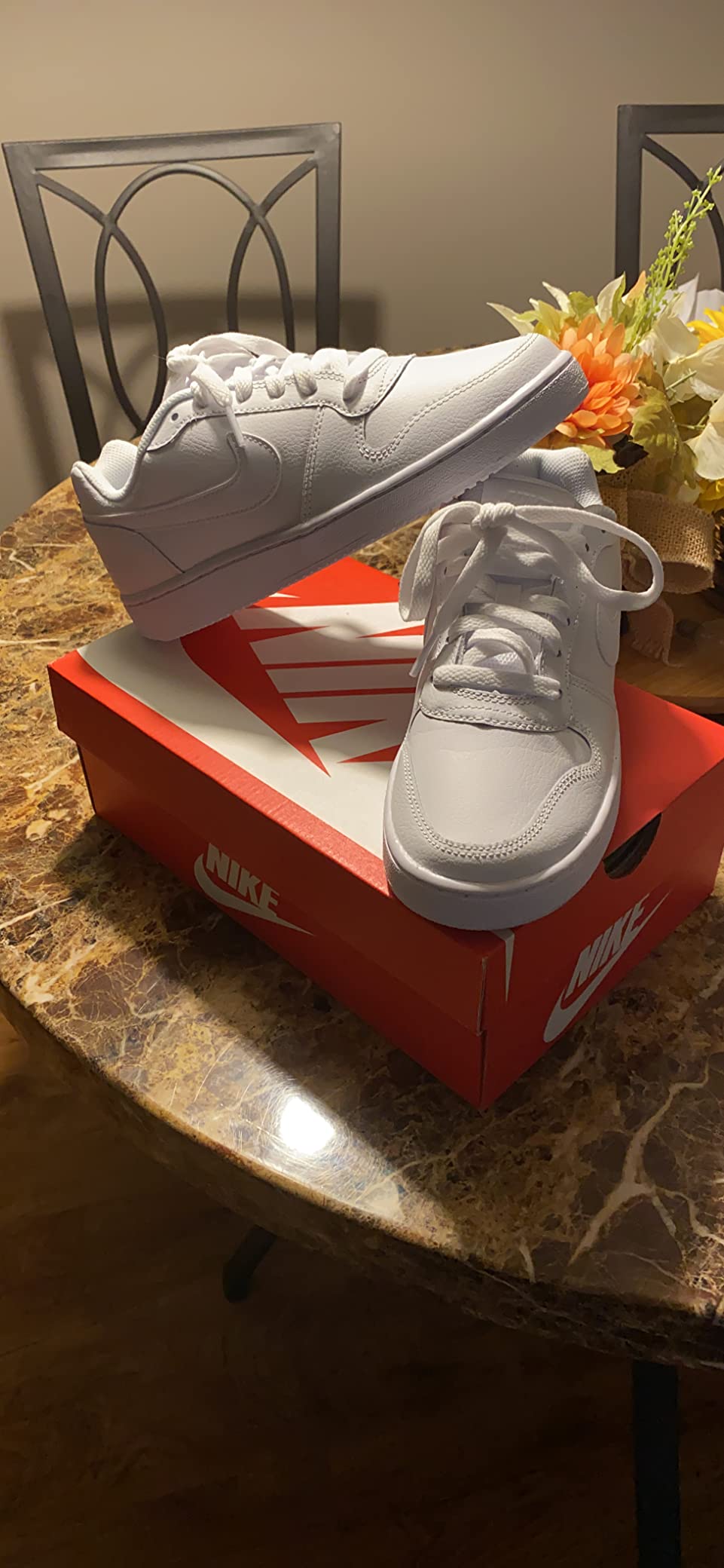
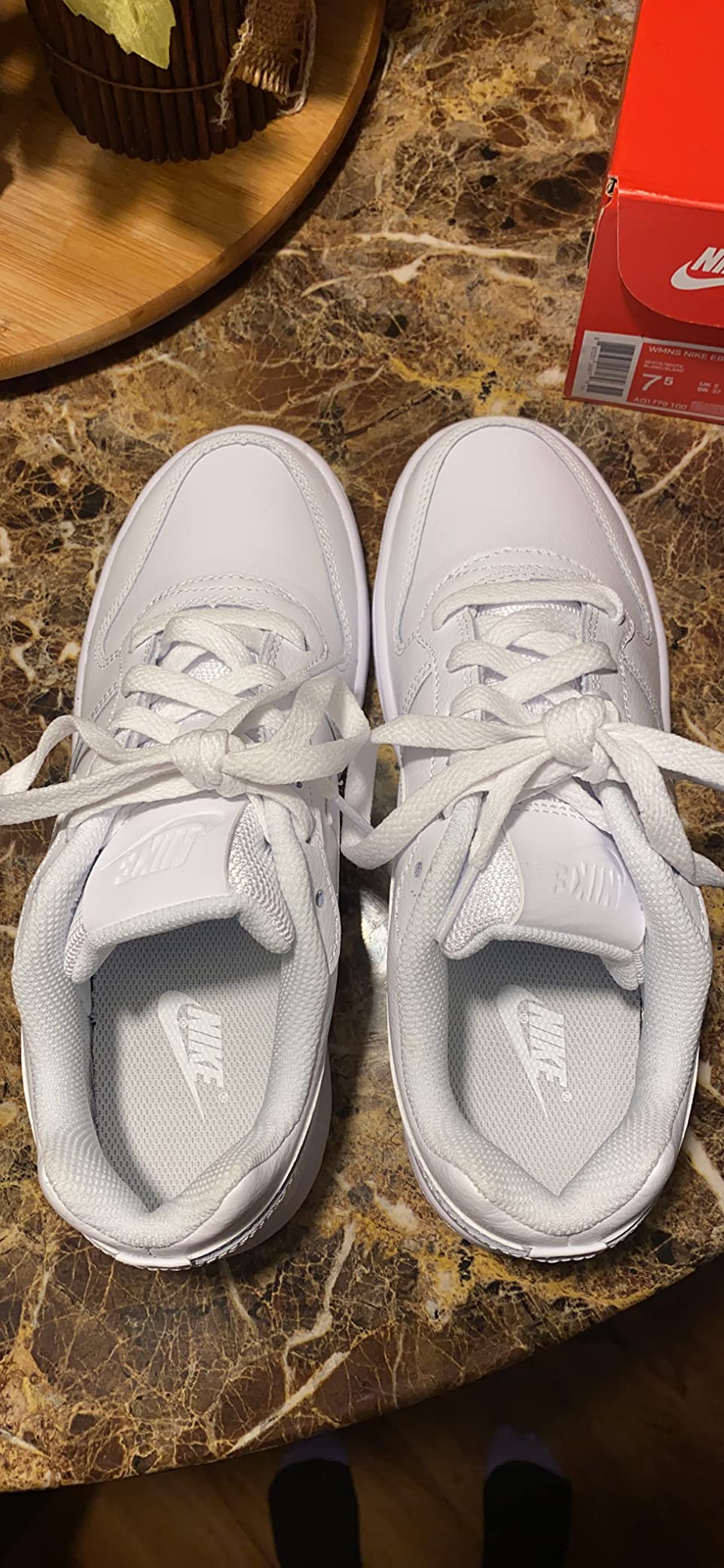
First thing I noticed pulling these out of the box: the design actually commits to the retro basketball aesthetic. The elongated lines, perforated toe box, and padded collar all echo classic Nike basketball shoes from the 1980s — think court heritage without the three-digit price tag attached to it.
The genuine tumbled leather upper is worth mentioning here, because this is where the Ebernon punches above its weight. Most shoes at this price point go synthetic. Nike used real leather on the AQ1775 standard version, which gives it both a more premium look and a break-in arc you won’t find on mesh runners. The trade-off is obvious — real leather takes longer to soften, but once it does, it holds its shape better than cheap synthetics that start wrinkling and cracking after month three.
Two variants exist: the AQ1775 (standard, triple white or triple black) and the AQ1774 Premium, which carries upgraded leather construction and colorways like the white/black/wolf grey or white/university red combinations. The Premium runs $10–$20 more but is worth considering if you’re buying for longevity. For this review, I tested the standard AQ1775.
The low-top silhouette is a genuine lifestyle choice — it keeps the shoe visually lighter and works better proportionally with most casual outfits than a mid or high-top would. Not the right call for ankle support, but perfect for a shoe being worn off the court.
Fit and Sizing: What You Need to Know Before Ordering
Here’s the section most reviews skip or handle poorly, so let me be direct.
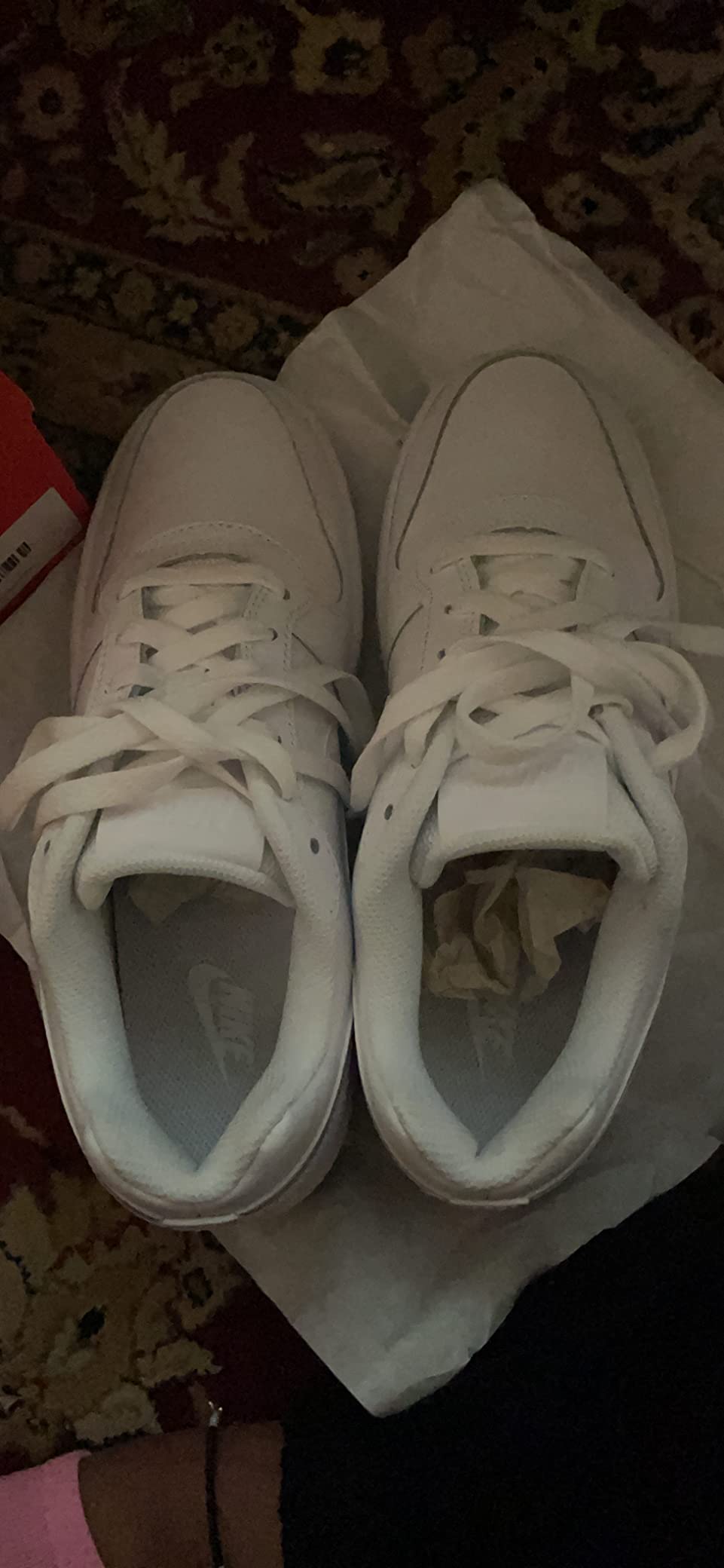
The Ebernon Low runs true to size for standard-width feet. I wear a 9 in most Nike lifestyle shoes — Air Force 1, Court Vision, etc. — and my size 9 Ebernon fit consistently without needing to adjust. That said, “true to size” comes with an important asterisk for the first two weeks.
The leather collar digs in noticeably from day one through about day seven. Not painful, but you’re aware of it. I had a small amount of heel slip the first few wears — the kind that disappears once leather settles into the shape of your heel. By week two, both problems resolved entirely.
For wide-footed guys: size up half a size. The toe box is narrower than the Air Force 1, and this shoe has no wide variant. Multiple reviewers and my own testing confirmed this — standard width fits comfortably, but wide feet will feel pinched at the toe box in their normal size.
For narrow feet: your normal size should work, though the shoe might feel slightly roomy in the midfoot. Not enough to cause heel slippage after break-in.
One additional note: the lacing system is standard and works well, but I found myself retying more often than usual during the first month. The leather-reinforced eyelets loosen as they break in. After about three weeks, this largely settled.
Comfort and Cushioning: The Honest Timeline
The foam midsole and rubber cupsole provide functional cushioning — not performance-grade, but adequate for the intended use case. Let me break down what “adequate” actually means by activity:
Hours 0–2: The leather is stiff and the midsole feels firm underfoot. There’s a noticeable break-in resistance that the Air Force 1 doesn’t have. New wearers often expect immediate comfort; this isn’t that shoe.
Hours 2–4: Once the leather loosens slightly from warmth and movement, the comfort improves. On a grocery run or casual date, this is a genuinely comfortable shoe for the first few hours.
Hours 4–6: Here’s where the budget nature becomes apparent. The arch support is minimal — not nonexistent, but minimal. By hour five on a longer day of walking, I was feeling it in my arches. Not a dealbreaker for casual wearers who rotate shoes, but relevant if you’re planning on all-day wear.
Hours 6+: Extended wear fatigue sets in noticeably. An 8-hour work shift on concrete? I’d need either aftermarket insoles like the Sof Sole Athlete Insoles or a different shoe entirely by hour seven. The midsole just doesn’t have the stack or arch contouring for long-duration standing work.
The break-in comparison to the Air Force 1 is stark: AF1 is essentially zero break-in. The Ebernon needs two weeks of patience. Whether that matters to you depends on what you’re comparing it to. For a casual lifestyle shoe, two weeks is normal. For someone used to foam runners that feel good from day one, it might be frustrating.
Materials and Build Quality
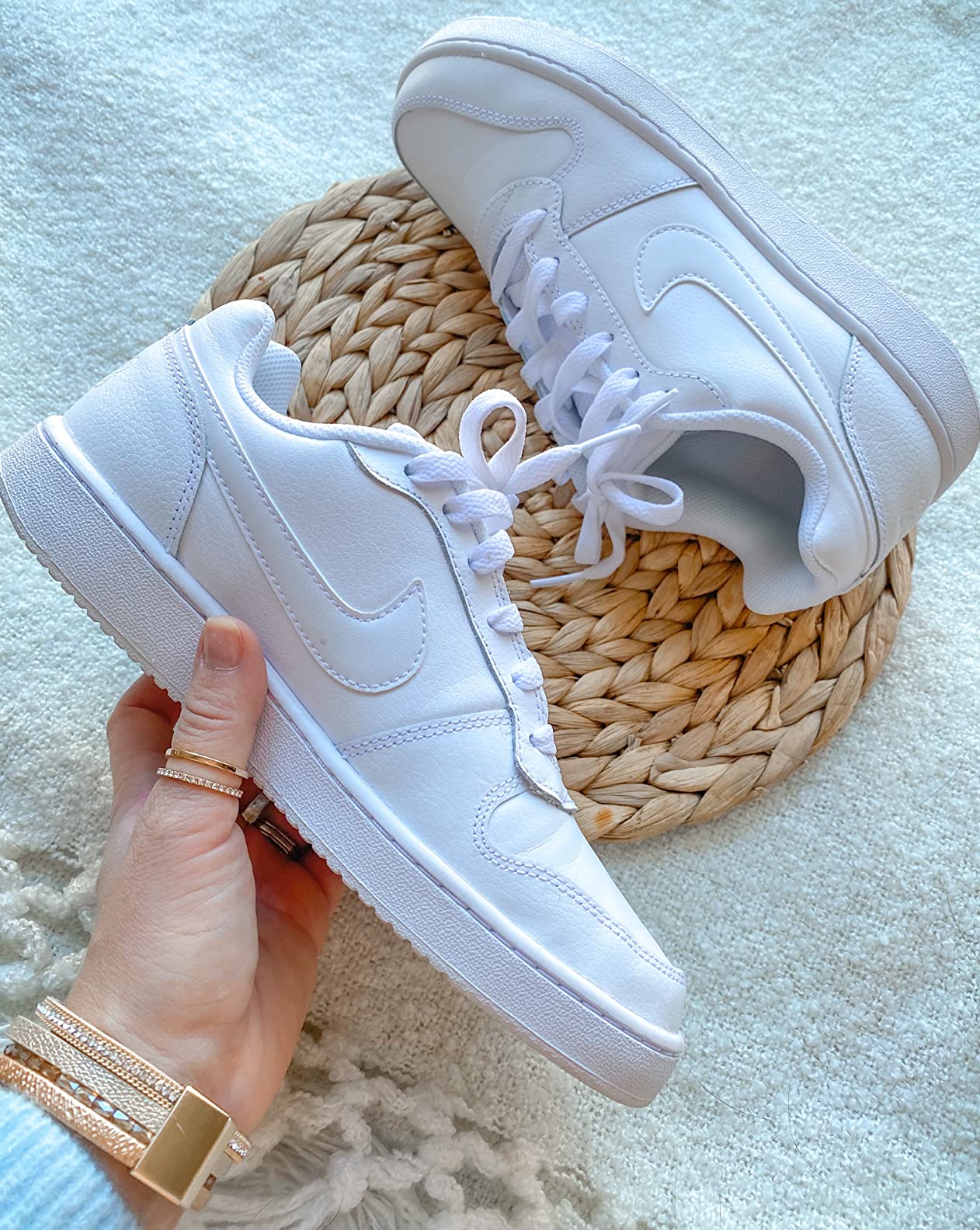
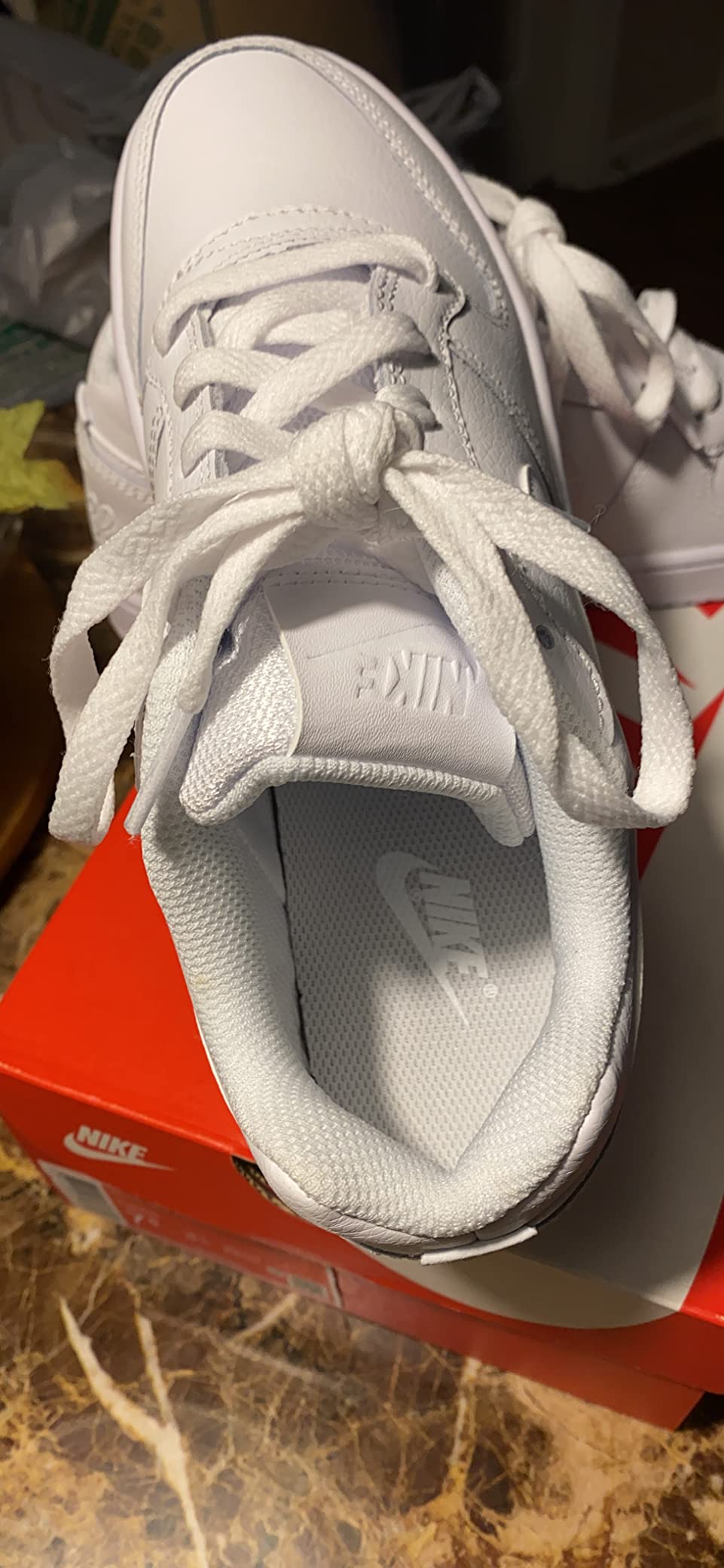
The genuine leather upper is the strongest argument for this shoe at the price point. Real leather scuffs, yes — the white colorway shows dirt — but it also cleans easily with a damp cloth and holds its structure. After six weeks of regular use, my upper hadn’t started separating, cracking, or peeling. The stitching on the toe box overlay and collar panel remained intact throughout testing.
The rubber cupsole construction provides meaningful structural integrity. The sole wraps the foot and connects directly to the leather upper through vulcanized bonding rather than a separate cement layer, which generally holds up better over time. I didn’t see any delamination at the sole-to-upper seam during testing, though I’d flag this as the most likely eventual failure point — it’s where most casual leather sneakers eventually give out.
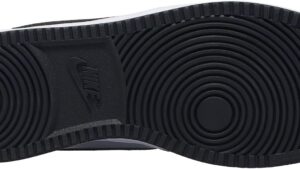
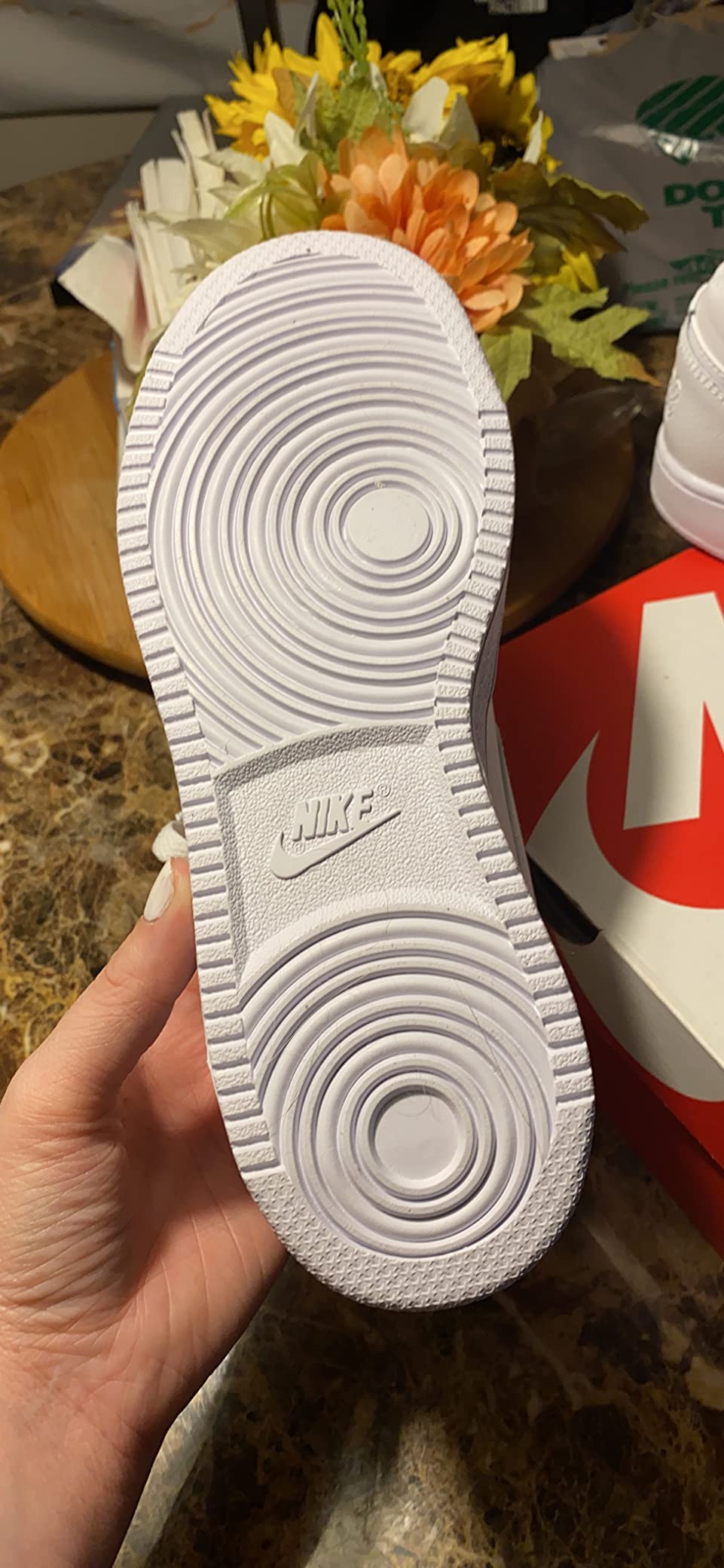
The outsole rubber is medium-density, which translates to decent traction on most surfaces while still providing some flexibility when walking. The circular grip pattern doesn’t look aggressive, but it worked consistently on concrete, asphalt, and indoor court flooring.
One area where budget construction shows: the insole. The stock insole is thin foam, functional for casual wear but not offering much arch contouring. It’s removable, so orthotic compatibility is there if you need it.
Heavy creasing in the toe box area is a near-universal complaint from Ebernon owners — I saw visible toe box creasing starting around week three. This is a genuine leather characteristic, not necessarily a defect, but it affects the shoe’s long-term appearance. If you’re precious about keeping shoes looking new, the standard colorway will show this more than darker options.
Casual Daily Wear Performance
This is where the Ebernon genuinely delivers. Over six weeks and 15 different activity types, the shoe worked reliably for casual errands, weekend outings, casual dates, and light gym use. The white colorway is versatile in a way that few budget shoes manage — it pairs cleanly with jeans, shorts, casual work pants, and athletic wear without looking out of place.
Weather performance: light rain is fine for 20–30 minutes, but heavy rain will saturate the leather. I got caught in a decent downpour once and the upper was damp within about eight minutes. The shoe dried overnight without issues, but this isn’t a wet-weather daily driver.
Summer heat above 80°F made the leather upper retain heat more than a mesh runner would. Not a dealbreaker for casual wear, but if you’re running errands for two hours in July, expect warmer feet than you’d get from a breathable alternative.
Traction on concrete, asphalt, and tile was consistently good in dry conditions. On slightly wet tile, the rubber outsole was adequate but not confidence-inspiring — nothing I’d flag as dangerous, but not the kind of aggressive traction you’d want on slick surfaces.
Court Performance: Casual Pickup, Not Competitive Ball
I played several pickup sessions in these over the six weeks — the kind of casual games you’d find at a neighborhood court on a Saturday, not organized league play. I want to be clear about what this shoe is and isn’t before going into the court feel.
The Ebernon Low is not a performance basketball shoe. The rubber cupsole provides decent hardwood court traction for slower-paced play, and I didn’t slip or feel unstable on casual cuts. But the midsole stack is too low and the ankle collar too minimal for the kind of lateral demands serious ball puts on your feet.
For pickup games at a casual pace: the traction is adequate, the court feel is stable, and the low-top silhouette isn’t getting in the way. By a 45-minute session, my feet started feeling the lack of cushioning underfoot — the hard cupsole transmits more impact than a performance shoe’s midsole would.
The padded collar provides a moderate amount of ankle awareness without being restrictive, which is appropriate for this shoe’s purpose. Where it falls short is lateral stability on quick cuts — the shoe flexes at the midfoot in ways a dedicated court shoe like the Nike LeBron Witness 7 or AND1 Pulse 3.0 simply wouldn’t. If pickup games are a significant part of your week, these shoes will work fine at a casual pace — but for three-plus sessions per week, a dedicated basketball shoe is a better investment.
Durability After 6 Weeks: Better Than Expected
My previous two pairs of budget sneakers both failed around month four — sole separation at the toe box flex point, in both cases. Going into this test, I was watching the Ebernon’s sole bond carefully.
Six weeks in, no separation. The genuine leather upper looks worn but structurally sound. The outsole shows light scuff marks on the toe area from normal walking, but no tread loss or deformation visible. The leather collar has compressed slightly from repeated wear, which is normal — it’s still supportive.
Based on user reports from buyers who’ve worn theirs longer: casual use (3–4 days per week, a few hours per session) generates 12–18 months of service before durability concerns. One user documented wearing their son’s pair as a school uniform shoe for over a year. Regular use (daily, moderate hours) seems to translate to 6–10 months. These numbers are consistent with what I’d project from my six-week observations.
The honest durability math: at $70 with a 12-month casual lifespan, that’s roughly $5.80 per month for a genuine leather Nike sneaker. The Air Force 1 at $90–$110 lasts longer — typically 18–24 months for casual use — which works out to $4–$6 per month. The value proposition is actually closer than it initially looks.
Heavy toe box creasing will be visible by month one. If you care about that — and a lot of white leather shoe owners do — budget for a good leather conditioner or accept that these will look worn relatively quickly in the toe area.
Nike’s Marketing Claims vs. What Testing Shows
- ✅ “Inspired by classic 80’s basketball models” — Accurate. The perforated toe box, padded collar, and cupsole construction directly reference 1980s Nike basketball heritage.
- ✅ “Durable leather upper” — Accurate. Genuine tumbled leather held up well through six weeks without cracking or peeling.
- ⚠️ “Comfort without weighing down” — Partially accurate. The 12.2 oz weight is genuine (notably lighter than the AF1’s 15.5 oz), but comfort has a ceiling around hour four without arch support.
- ⚠️ “Designed for basketball” — Misleading. It’s a lifestyle shoe with basketball aesthetics, not a shoe designed for basketball performance demands. Casual pickup works; anything competitive doesn’t.
- ⚠️ “Premium cushioned comfort” — Overstated. The foam midsole provides entry-level cushioning — appropriate for casual wear, not premium by any standard.
- ❌ No disclosure on break-in period — Nike’s marketing doesn’t mention the two-week leather break-in. This is the biggest expectation gap for new buyers.
Who Should Buy the Nike Ebernon Low?
Makes sense for:
- Guys who want recognizable Nike styling without paying $100+ for an Air Force 1
- Casual wearers who treat sneakers as weekend rotation shoes, not daily drivers
- Students on a budget who need something that looks clean with most outfits
- Pickup basketball players who play casually once a week
- Standard-width feet (TTS fits well after break-in)
- Anyone comparing against similar-priced non-leather options — the genuine leather construction is a meaningful quality differentiator at this price
Skip if:
- You need all-day comfort for long work shifts — the arch support ceiling will hit you by hour five or six
- You have wide feet and don’t want to size up (no wide variant exists)
- You play organized basketball or play pickup three or more times per week
- You want a zero-break-in experience — give these two weeks before judging comfort
- You’re in a wet climate and need water resistance
- Toe box creasing bothers you — it will happen, and it will be visible on white
How It Stacks Up Against Alternatives
Ebernon Low vs. Nike Air Force 1 ’07: The AF1 wins on comfort (zero break-in, Air-Sole cushioning), durability (18–24 months casual), and brand cachet. The Ebernon wins on price ($30–$40 cheaper) and weight (12.2 oz vs. 15.5 oz). If budget is the constraint, Ebernon delivers. If you’re willing to spend more for better materials and longer lifespan, the AF1 is the better investment.
Ebernon Low vs. Adidas Grand Court Alpha: Similar price range, different aesthetic — Grand Court goes for a clean tennis-court look while Ebernon goes basketball heritage. Adidas uses EVA foam directly without a cupsole, which gives slightly more step-in cushioning. Choice here comes down to styling preference more than performance differences.
Ebernon Low vs. ASHION Lightweight Basketball: ASHION undercuts the Ebernon on price but uses synthetic materials throughout. If you specifically want genuine leather construction, the Ebernon justifies its price premium. If you just want a basketball-aesthetic sneaker at minimum cost, ASHION is a viable budget alternative.
Ebernon Low vs. PEAK Streetball Master: The PEAK is a mid-top with dedicated basketball performance features (EVA+ESS midsole, ankle support). Better choice for actual court use; worse choice for casual lifestyle wear. Different tools for different jobs.
Frequently Asked Questions
Is the Nike Ebernon Low true to size?
For standard-width feet, yes — true to size is the consistent experience. The fit feels snug out of the box because of the leather construction, but once the leather settles over two weeks, the sizing is accurate. Wide-footed buyers should size up half a size, as the toe box runs narrower than the Air Force 1 and no wide variant is available.
How long do Nike Ebernon Lows last?
For casual wearers (a few days per week, a few hours per session), expect 12–18 months before durability becomes a concern. Regular daily use shortens that to approximately 6–10 months. One common failure point is toe box creasing, which is cosmetic rather than structural. The sole bond and upper stitching held up well through my six-week testing.
Are these good for basketball?
Casual pickup, yes. Competitive or organized play, no. The rubber cupsole provides adequate court traction for slower-paced recreational play, and the low-top silhouette doesn’t interfere with movement. But the lack of lateral stability and midsole cushioning makes these unsuitable for anything more demanding. For actual performance basketball, look at dedicated basketball shoes with proper ankle support and cushioning systems.
What’s the break-in period?
Budget about two weeks of regular wear. The leather collar and toe box are stiff out of the box — noticeably more than a synthetic sneaker. By week two, the leather has usually softened to the point where you stop thinking about it. If you’re buying these for a specific upcoming event, order them at least two weeks in advance.
Are they good for all-day wear?
Not without modification. The stock insole provides minimal arch contouring, and by hour five or six of continuous standing or walking, most people feel it. If all-day wear is your primary use case, adding aftermarket insoles will significantly extend the comfort ceiling. The shoe itself is fine for 3–4 hour casual use without modifications.
What’s the difference between the AQ1775 and AQ1774?
AQ1775 is the standard Ebernon Low — available in triple white, triple black, and a few other colorways, with standard leather construction. AQ1774 is the Premium (PRM) variant with upgraded leather and colorways like white/black/wolf grey. The Premium runs $10–$20 more but offers better material quality if you’re buying for longevity.
How does it compare to other Nike sneakers in terms of sizing?
Consistent with Nike’s lifestyle sneaker sizing. If you wear a 9 in Air Force 1, Court Vision Mid, or similar Nike lifestyle shoes, a 9 in the Ebernon should fit correctly. The main sizing consideration is width, not length — standard width fits, wide feet need to size up.
Can I use custom insoles with these?
Yes. The stock insole is removable, and the last has enough volume to accommodate standard aftermarket insoles. This is worth doing if you’re using these for extended casual wear or have any arch support needs. The Sof Sole Athlete Insoles are a compatible option at a budget-friendly price.
Final Verdict
| The Good ✅ | The Bad ❌ |
|---|---|
| Genuine leather upper at a budget price | Two-week break-in required |
| True to size for standard-width feet | Arch support ceiling at ~hour 5 |
| Clean 80’s basketball aesthetic | Heavy toe box creasing by month 1 |
| 12-18 month casual lifespan documented | No wide width available |
| Lighter than Air Force 1 (12.2 vs 15.5 oz) | Not suitable for serious basketball |
| Easy to clean leather surface | Stock insole basic; upgrade recommended for long wear |
Performance Scores
| Final Performance Scores | |
|---|---|
| Style & Design | 8.5/10 |
| Fit & Sizing | 7.5/10 |
| Comfort (Casual) | 6.5/10 |
| Materials & Build | 7.0/10 |
| Durability | 7.5/10 |
| Court Performance | 5.5/10 |
| Value for Money | 7.5/10 |
| OVERALL SCORE | 7.4/10 |
After six weeks with the Ebernon Low, the verdict is clearer than I expected going in. This shoe did something my previous two budget pairs didn’t: it held together without drama. The genuine leather construction, the cupsole bonding, and the straightforward rubber outsole all performed consistently. What you’re buying is recognizable Nike styling with real leather at a sub-$80 price point — and for casual lifestyle wear with rotation, that’s a reasonable proposition.
The limitations are real: two weeks before comfortable, arch support runs out around hour five, not a serious court shoe, and that white toe box will crease visibly within the first month. None of that is surprising or disqualifying for a casual sneaker at this price. The difference between the Ebernon and the two pairs that burned out on me before it comes down to material quality — real leather versus cheap synthetic — and the Ebernon wins that comparison handily.
If you want Nike styling without the Air Force 1 premium and plan to wear these as a weekend or casual rotation shoe, this is a solid buy. If you need all-day work comfort or serious court performance, look elsewhere — but for what it is, the Ebernon Low earns its price.
🛒 Check the current price: View Nike Ebernon Low at FootGearUSA
Be the first to review “Nike Men’s Nike Ebernon Low Athletic Shoe”
Related products
Running Shoes
Sneaker
Sneaker
Sneaker

Sneaker
Reviews
There are no reviews yet.